

Soft, Textured, Personal: 14 Bedroom Wall Decor Ideas That Go Beyond Art
Bedroom walls get a strange kind of attention. They’re the last thing you see before sleep and the first thing you see in the morning, yet many of them stay bare for years, or end up with one print hung slightly too high above the bed.
Framed art is lovely, but it’s only one option. Bedroom walls can carry texture, color, fabric, light, and even useful storage, and many of those choices suit a calm, restful room better than a busy display of frames.
Before getting into the bedroom wall decor ideas themselves, there’s one bedroom-specific issue worth sorting out first.
A Quick Word About the Wall Above the Bed
The wall above the headboard is often the main focal point of a bedroom. It’s also the one spot where a falling object lands on someone who’s asleep.
A few simple rules keep it safe:
- Choose lighter pieces for this wall, and avoid heavy frames or anything with glass directly over the bed
- Use fixings rated for the weight and suited to your wall type, not just a single nail
- Skip shelves over the bed, since anything sitting on them can fall
- In areas prone to earthquakes, keep this wall especially light
Every idea below can work either above the bed or elsewhere in the room. Some change the surface of the wall itself, some add fabric and softness, and some bring in objects that are useful as well as decorative.
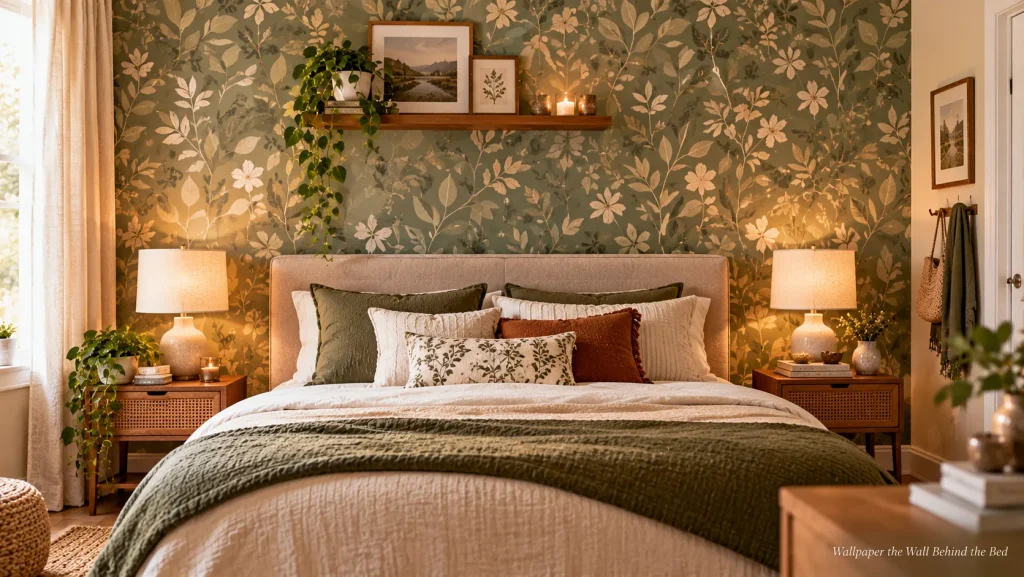
Wallpaper the Wall Behind the Bed
Wallpapering just the wall behind the headboard gives a bedroom personality while leaving the other three walls calm.
Because you see it while lying down, you can choose a pattern that feels restful: soft botanicals, a gentle stripe, a muted geometric, or a textured grasscloth-look paper. Bolder patterns can work too, since they sit behind you rather than in your line of sight when you’re in bed.
Peel-and-stick wallpaper is a popular option for renters and for anyone nervous about committing, though it’s worth testing a small hidden area first, since removal can lift some paints. Traditional pasted wallpaper tends to look more seamless on large walls.
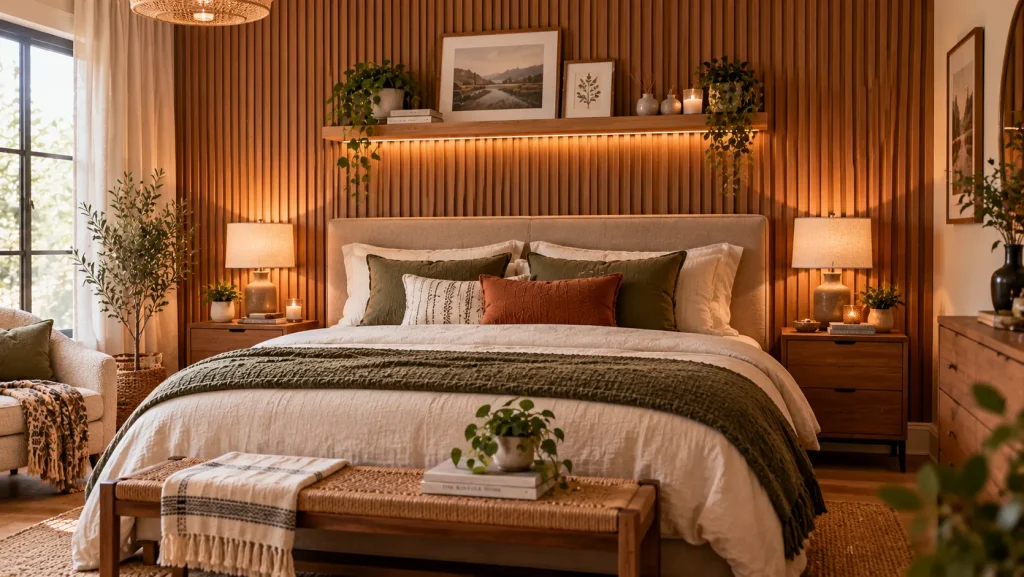
Add Wood Slat Panels
Vertical wood slats draw the eye upward and bring the warm grain of timber into a room that’s otherwise all paint and fabric. They suit modern, Scandinavian, and Japanese-inspired bedrooms.
You can cover a full wall or just a section behind the bed, the width of the headboard and up to the ceiling. Many slat panels come mounted on felt backing, which can simplify installation and help absorb some sound.
For example, a plain bedroom with white walls might get oak slat panels running the width of the bed and up to the ceiling, with two plug-in wall lights mounted on the slats either side. It acts like an oversized headboard and makes the bed the clear focus of the room.
Panels need secure fixings suited to your wall, and it’s important to check for pipes and wiring before drilling. In a rental, ask before installing anything this permanent.
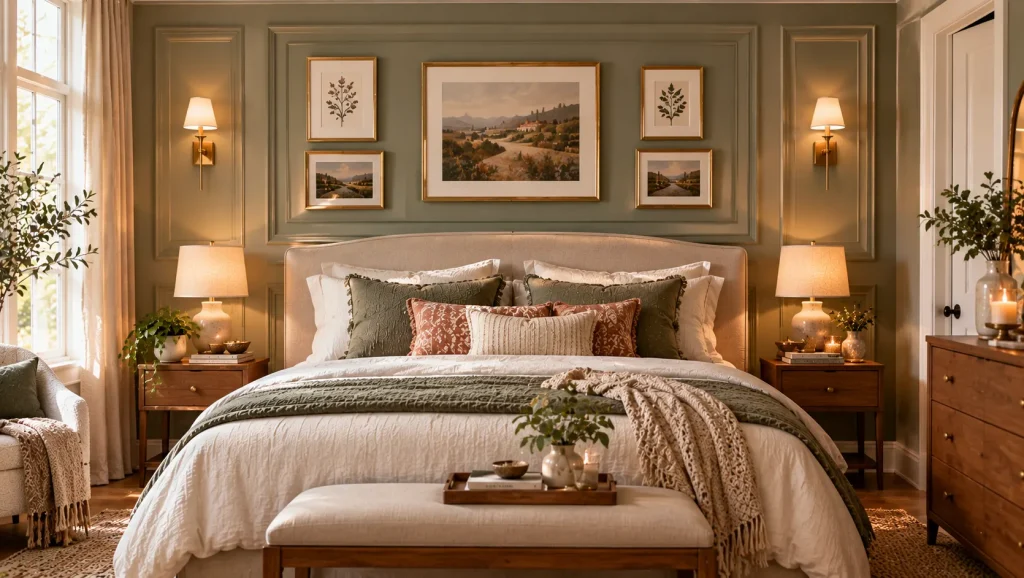
Try Picture-Frame Molding
Picture-frame molding, also called wall paneling or applied molding, uses thin strips of trim arranged in rectangles on the wall. Painted the same color as the wall, it adds quiet detail and a slightly traditional, elegant look.
It works well in bedrooms with plain modern walls that feel a bit flat. Two or three tall rectangles behind the bed, or a row of boxes across one wall, can make the room feel more finished.
Picture a bedroom with a plain white wall behind the bed. Three tall molding rectangles, the center one slightly wider and lined up with the bed, all painted in a soft greige along with the wall, give it the look of an older home without any color change at all.
Plan the layout on paper first. Measuring and marking the rectangles with painter’s tape before cutting any molding helps you check the proportions and spacing. Molding is usually attached with construction adhesive and small nails, then filled, caulked, and painted.
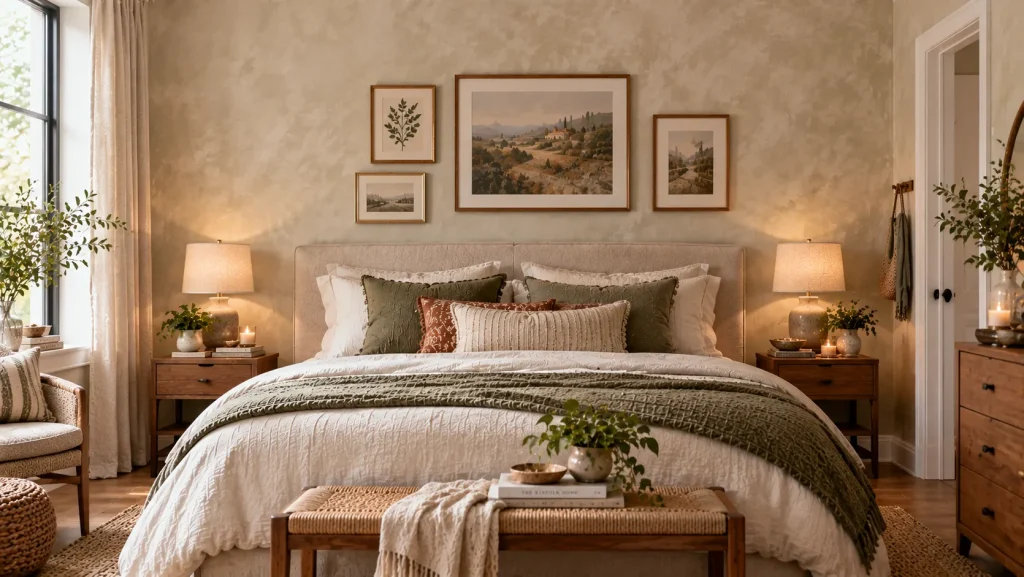
Give the Walls a Limewash Finish
A plain, flat wall can look a little lifeless, especially in a new build. Limewash, and paints designed to imitate it, replace that flatness with a soft, cloudy finish that has gentle movement, a bit like aged plaster.
It feels calm and natural in a bedroom, particularly in earthy colors like clay, sand, soft gray, or muted green.
A clay-toned limewash behind a simple linen-covered bed, for example, can make a newly built room feel warmer and more lived in, which is hard to achieve with flat paint.
It’s applied with a large brush in overlapping, crisscross strokes, and the look depends a lot on technique. Practicing on a piece of board first is a good idea. Surface requirements vary by product, so follow the manufacturer’s instructions for preparation and priming.
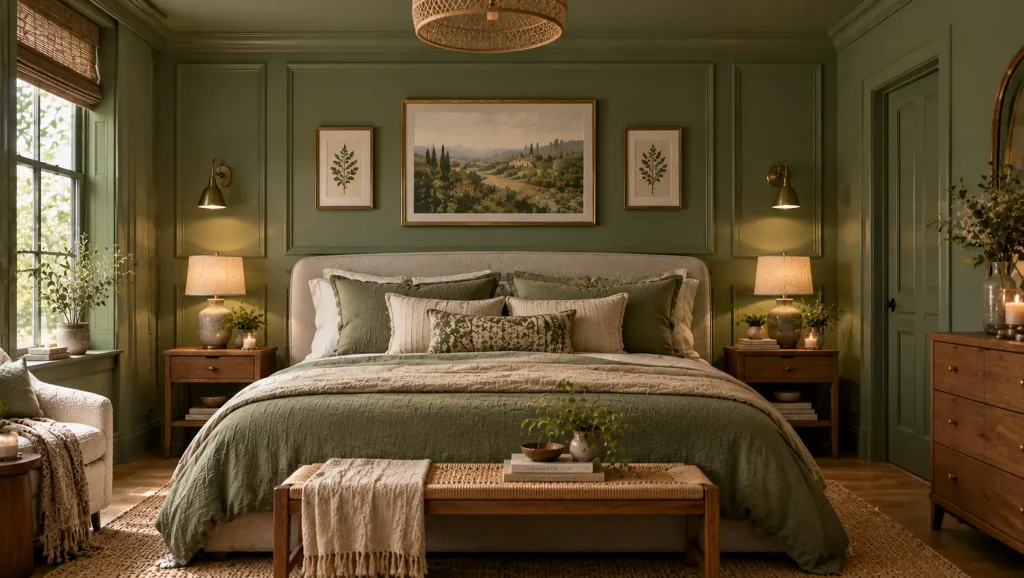
Color Drench the Room
Of all the bedroom wall decor ideas here, this is the one that changes the whole room rather than one wall. Color drenching means painting the walls, trim, doors, and sometimes the ceiling in one color, or shades very close to it. It can feel surprisingly cozy in a bedroom, almost like being wrapped in color.
Mid-tone and deeper shades often work best: dusty blue, muted terracotta, olive, warm taupe, or deep green. Using similar colors on the walls, trim, and doors reduces visual contrast and can make the room feel more cohesive. Some people find it makes a room feel larger too, though that depends on the room and its light.
Choose finishes carefully. Many people use a matte or eggshell finish on walls and a more durable satin finish on trim and doors, in the same color.
Ventilate the room while painting, and give it time to air out before sleeping in it, following the paint manufacturer’s guidance.
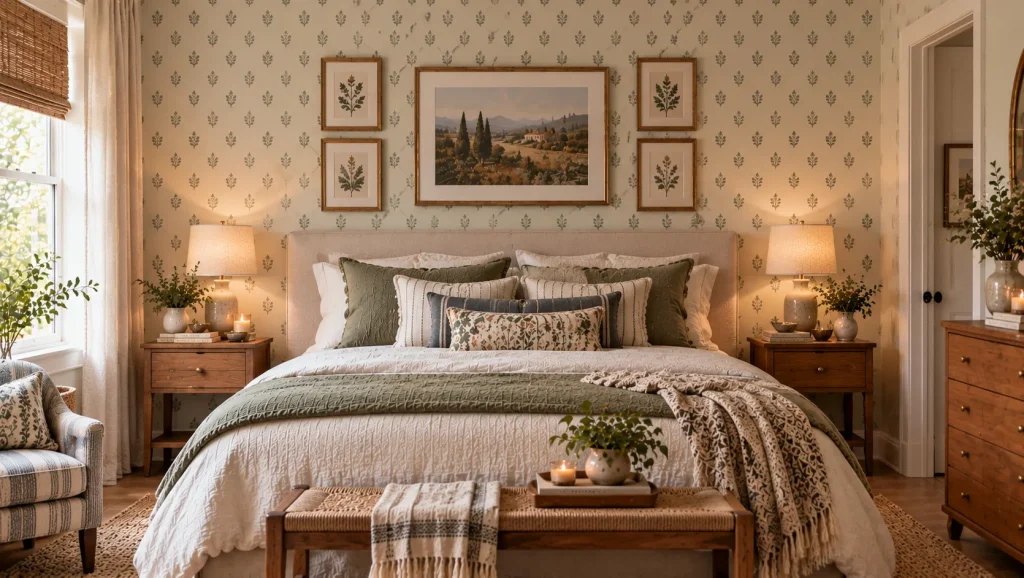
Stencil a Small Repeating Pattern
If wallpaper feels too expensive or permanent, a stencil can give a similar effect with paint. Small repeating motifs, like dots, tiny leaves, or simple geometric shapes, create an allover pattern that looks hand-finished.
Use a stencil designed for walls, a stencil brush or small foam roller, and very little paint, dabbing off the excess so it doesn’t bleed under the edges. Starting at the top center of the wall and working outward helps keep the pattern straight.
It’s also a forgiving project for a small wall. A sloped ceiling in an attic bedroom or the short wall beside a wardrobe can be stenciled in an afternoon, and small imperfections tend to disappear in a repeating pattern.
A stenciled pattern in a shade only slightly darker than the wall looks subtle and sophisticated, while a contrasting color makes a bolder statement.
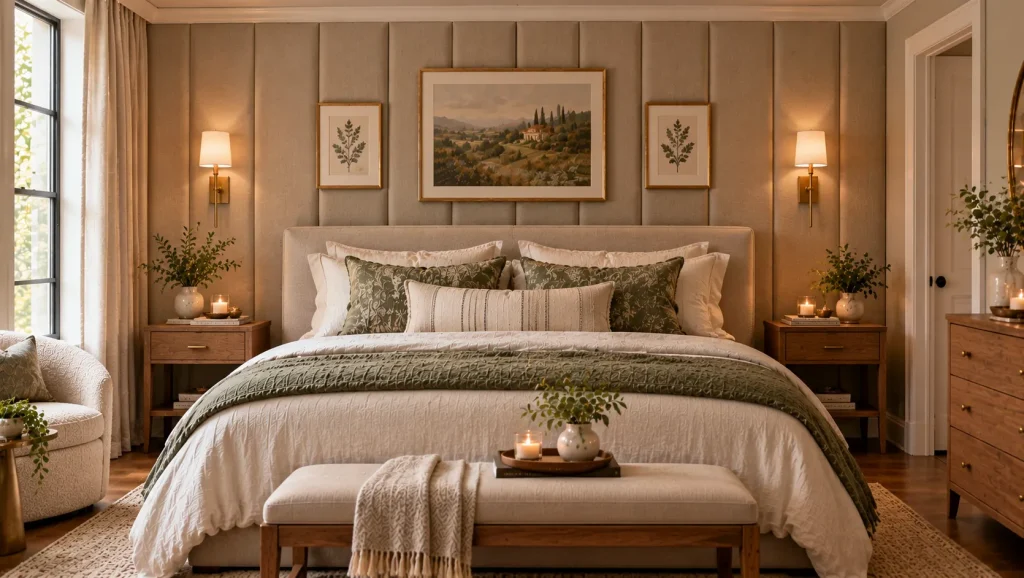
Install Upholstered Wall Panels
Upholstered wall panels are fabric-covered padded panels mounted on the wall behind the bed, usually running wider than the bed itself. They act like an extended headboard, adding softness, color, and texture.
They’re comfortable to lean against when sitting up in bed and can absorb a little sound, which makes the room feel quieter.
Panels come in many shapes, including rectangles, vertical channels, or rounded tops. Choose a fabric that’s easy to spot-clean, since this wall will be touched a lot. Check fixing instructions carefully, and follow any fire-safety guidance for fabric wall coverings.
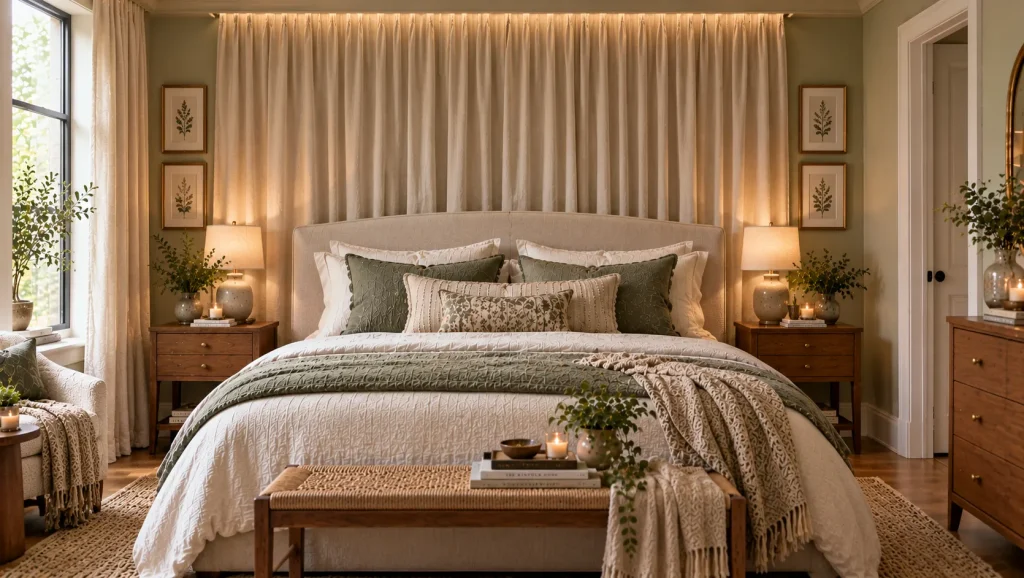
Hang a Curtain Behind the Bed
A floor-to-ceiling curtain hung behind the bed softens the wall and adds a cozy, hotel-like feel. It can also hide a less attractive wall or an awkward window behind the headboard.
A ceiling-mounted track, or a curtain rod mounted high on the wall, works best. Choose a fabric with some weight, like linen or velvet, so it hangs in neat folds, and run it the full width of the bed or wider.
For example, in a bedroom where the bed has to sit under a window, a full-width sheer linen curtain behind the headboard can let daylight through while making the window feel like part of the design.
Keep curtains well away from heaters, and avoid lamps or bulbs touching the fabric.
Mount Wall Sconces Beside the Bed
Wall sconces free up nightstand space and add decorative detail to the wall. Swing-arm styles let you angle the light for reading, while simple fixed sconces give a soft glow.
Plug-in sconces are the easier option, since they don’t need new wiring. A cord cover painted the same color as the wall hides the cable neatly.
Hardwired sconces look cleaner but need a qualified electrician. Either way, choose bulbs with a warm tone for the evening, and keep shades and bulbs away from curtains, bedding, and fabric panels.
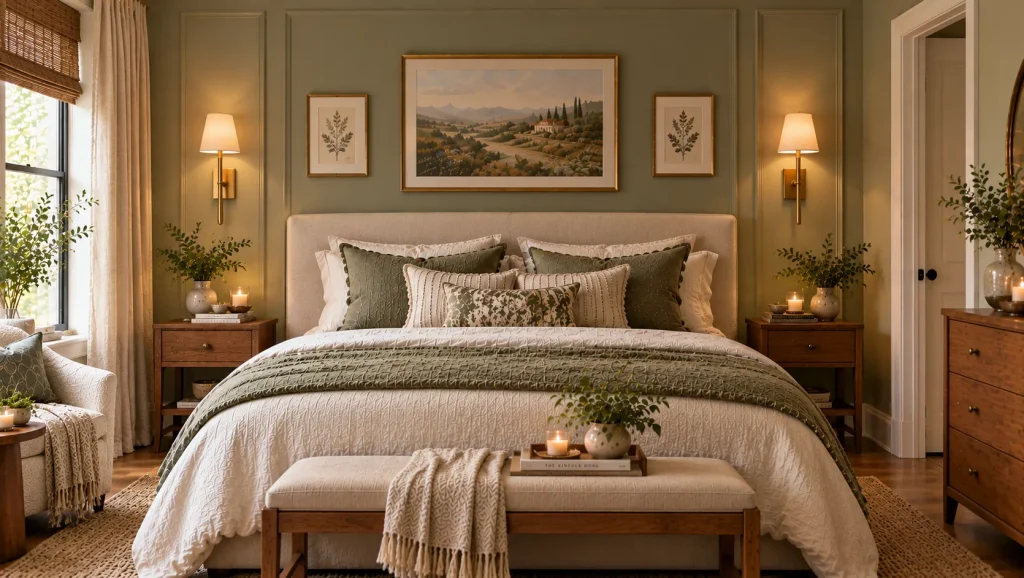
Create a Wall Basket Arrangement
Woven baskets and flat wicker trays hung on the wall in a loose cluster add texture and warmth. They suit boho, coastal, and natural-style bedrooms.
Mixing sizes, weaves, and slightly different natural tones looks relaxed and collected. Start with the largest basket in the center and arrange smaller ones around it, testing the layout on the floor first.
Baskets are light, which makes them a good choice for the wall above the bed. Choose hooks or anchors rated for their weight and suitable for your wall material.
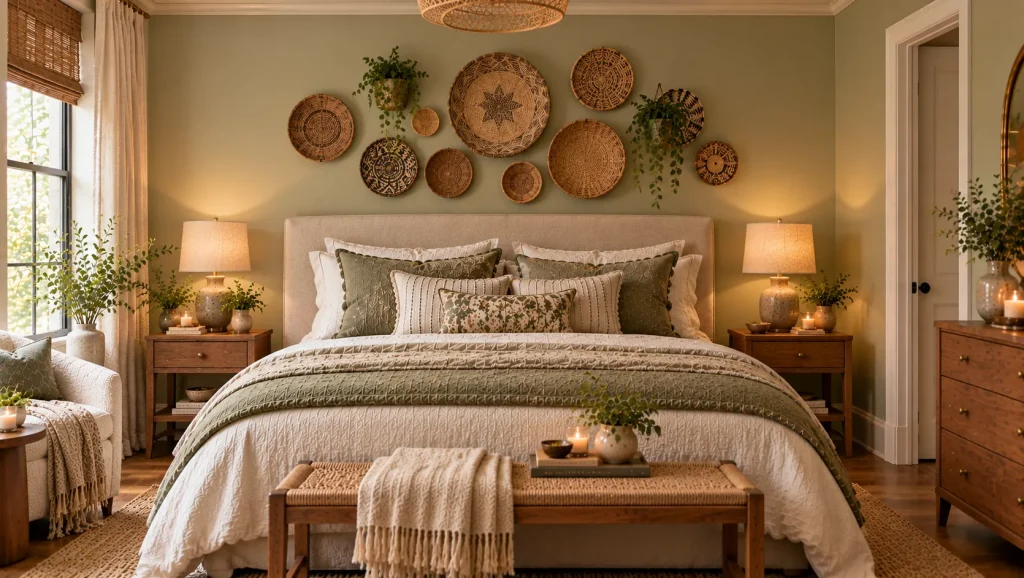
Add a Shaker Peg Rail
Every bedroom has a chair that slowly disappears under clothes that aren’t dirty but aren’t going back in the wardrobe either. A Shaker-style peg rail, a strip of wood with evenly spaced pegs, gives those things a proper home.
It can hold a robe, tomorrow’s outfit, a hat, a tote bag, or a small mirror or plant, and it looks good doing it. It also creates a strong horizontal line, which can make a narrow room feel wider.
Mount it securely into wall studs or with fixings suited to the load, since a rail full of bags and coats gets heavy. In children’s rooms, keep straps and cords well away from cribs and beds.
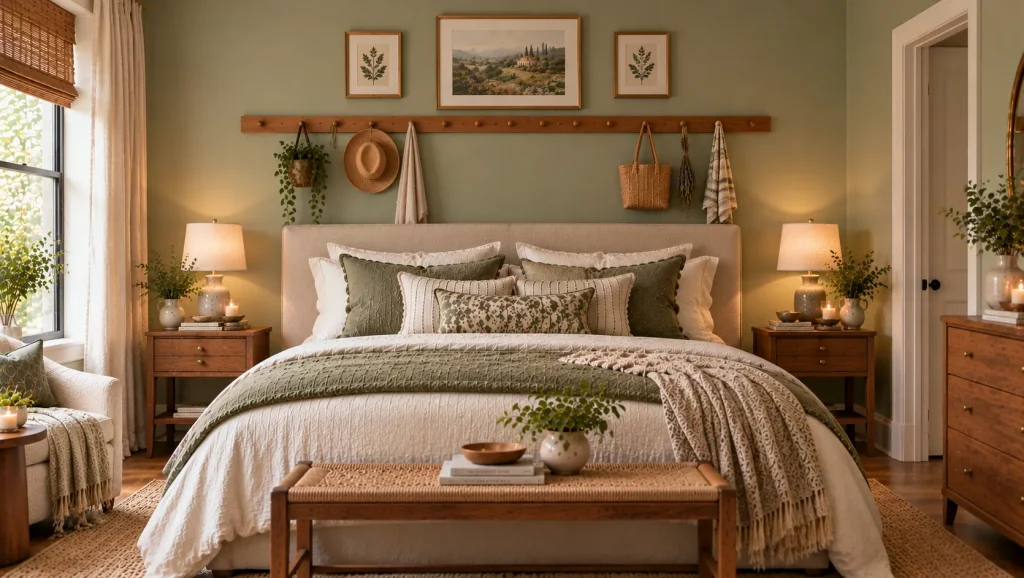
Bring Plants Onto the Walls
Wall-mounted planters, hanging pots, and narrow plant shelves add life and color without using floor or dresser space.
Trailing plants, like pothos or string of hearts, look lovely spilling from a wall planter. If watering feels like too much, high-quality faux plants can give a similar look.
Place real plants away from the bed, since watering can drip, and choose waterproof planters or saucers to protect the wall. Avoid putting plants on shelves directly above where you sleep.
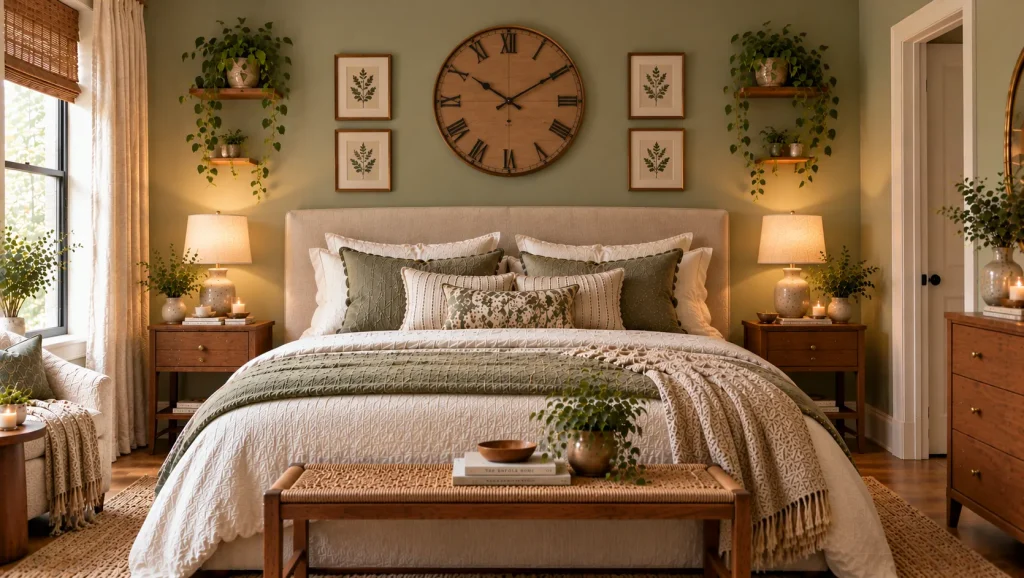
Hang a Statement Wall Clock
A large wall clock can work as a single focal point, especially on a wall opposite the bed or above a dresser. Oversized clocks with simple faces, wooden frames, or metal designs act almost like art.
A round wooden clock around the width of a dresser, hung centered above it, can anchor that wall in the same way a large print would, while also being genuinely useful.
Choose a clock with a silent or sweep movement, which glides instead of ticking. A ticking clock that seems charming during the day can become very noticeable at night.
Display a Quilt or Textile on a Rail
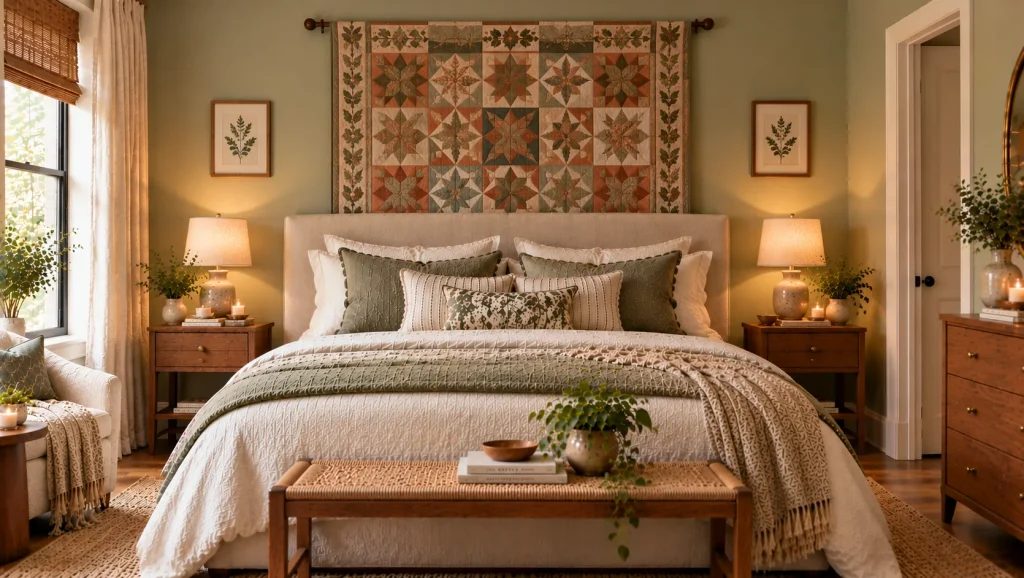
A handmade quilt, woven blanket, or embroidered textile hung on a wooden rail adds warmth and a personal story to the wall. It’s also a good way to enjoy family heirlooms that are too precious to use daily.
A simple wooden dowel or blanket rail, with the textile folded or hung flat, is easy to install. Choose a spot away from direct sunlight, since strong light can fade fabrics over time, and support the full width of heavier pieces so the weight is spread evenly.
Which Wall Should You Decorate First?
If you’re not sure where to start, the wall behind the bed is usually the strongest choice, because it’s the natural focal point of the room. Wallpaper, slats, molding, upholstered panels, or a curtain can all turn it into a feature.
The wall you face from bed is next. Since you see it every time you wake up, calm, simple choices like a statement clock, a textile, or a plant wall tend to work best here.
Side walls and the area beside the door are good spots for more practical bedroom wall decor ideas like a peg rail or wall sconces.
Budget matters too. Paint-based ideas, like stenciling, color drenching, and limewash-look paint, are usually the least expensive, along with baskets, a peg rail, and plug-in sconces. Wallpaper and molding sit in the middle, while wood slat panels, upholstered panels, and hardwired sconces tend to cost the most.
Questions About Bedroom Wall Decor
What’s the best wall decor above a bed?
Lightweight, securely fixed pieces work best, such as wallpaper, wood slats, a fabric curtain, upholstered panels, or a basket arrangement. Avoid heavy frames, glass, and shelves directly above the bed.
How can I decorate bedroom walls in a rental?
Peel-and-stick wallpaper, removable hooks for light items, plug-in sconces, and freestanding plants are all renter-friendly options. Even removable products can damage some paint finishes, so test them in a hidden spot first, and ask your landlord before drilling or painting.
What colors work well for bedroom walls?
Many people prefer calm, muted colors like soft blue, green, gray, or warm neutrals in a bedroom, but deeper shades can feel cozy, especially with color drenching. Test samples on the wall and look at them in both daylight and evening light.
How do I make a bedroom wall look less bare without clutter?
Choose one feature, such as a textured wall finish, wallpaper, or slat panels, instead of lots of small items. Texture and color can fill a wall without adding objects.
Mistakes That Make Bedroom Walls Feel Off
Hanging sconces at the wrong height. Sit up in bed with a book before marking the wall. The light should fall on the page without shining in your eyes.
Forgetting about lighting. Textured finishes like limewash, slats, and molding look best with soft side lighting, such as sconces or lamps, rather than a single bright ceiling light.
Ignoring scale. Small decor on a large wall can look lost. Tape the outline of a feature on the wall first, and aim for something at least as wide as the bed.
Skipping the test patch. Paint finishes, stencils, and removable wallpaper can all look or behave differently on your wall. Always test first.
Pick One Wall, Then One Idea
You don’t need to try all of these bedroom wall decor ideas at once. One thoughtfully chosen wall feature can give the bedroom a finished look without making it feel cluttered, so start with the wall behind your bed and build from there.