

Practical Bedroom Ideas: 15 Ways to Love Your Room From Morning to Night
The bedroom is often the last room in a home to get any attention.
It makes sense. Guests rarely see it, so the living room and kitchen get the budget and the weekends. The bedroom ends up with whatever furniture was left over, a stack of laundry on the chair, and a bare wall above the bed that has been “temporary” for years.
Yet it’s the room where most of us start and end every single day.
That’s the thinking behind this guide. Instead of a random list of pretty pictures, these 15 bedroom ideas follow the way you actually use the room. Waking up, getting ready, how the room looks during the day, winding down, and finally, sleeping. Three ideas for each part of the day, so you can focus on whichever moment bothers you most.
Try the View From the Pillow First
Before you change anything, lie down on your bed the way you would at night. Then look around.
What do you see? For many people, the answer is a pile of clothes, a tangle of chargers, a glowing light from some device, or a closet door that never quite closes. That view is the last thing you see before sleep and the first thing you see in the morning.
Make a quick note of anything that bothers you from that spot. Then do the same from the doorway, since that’s how the room looks when you walk in.
Those two lists will tell you which of the bedroom ideas below deserve your attention first.
When You Wake Up
Mornings set the tone for the day. These ideas make the first few minutes a little easier.
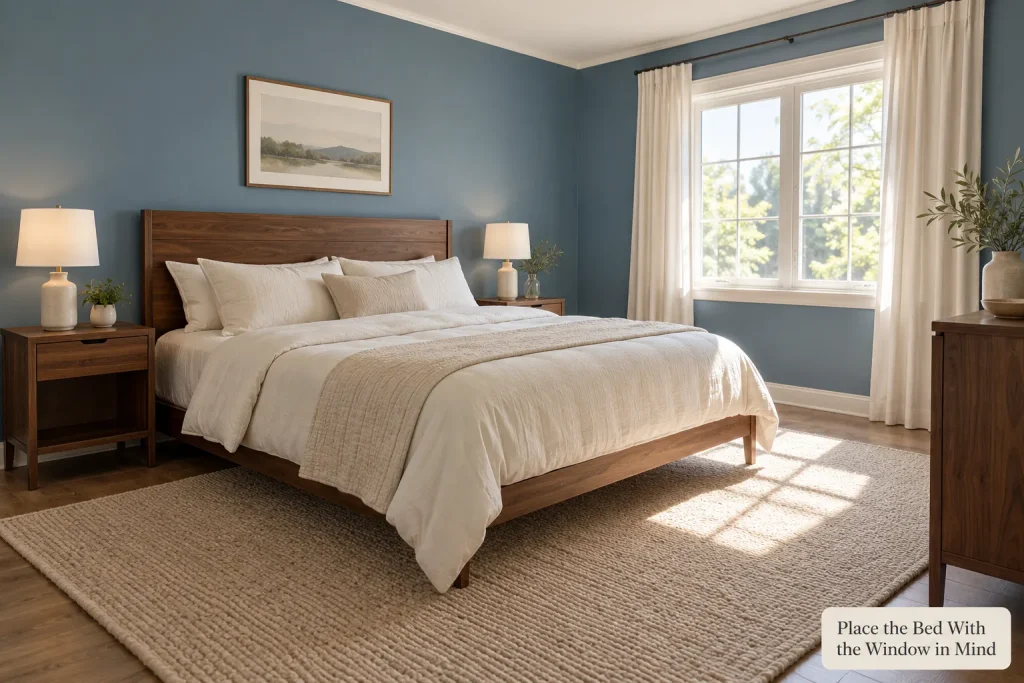
Place the Bed With the Window in Mind
Bed placement affects more than looks. Where you put it changes how light hits you in the morning and how the room flows.
Many people like their bed positioned so they can see the window but aren’t facing it directly, which avoids a blast of sun straight in the eyes. Placing the headboard against a solid wall usually gives a more settled, secure feel than having it under a window.
If you share the bed, check that both sides have room to get in and out. Leaving a clear path on each side makes mornings much smoother, especially when one person gets up earlier than the other.
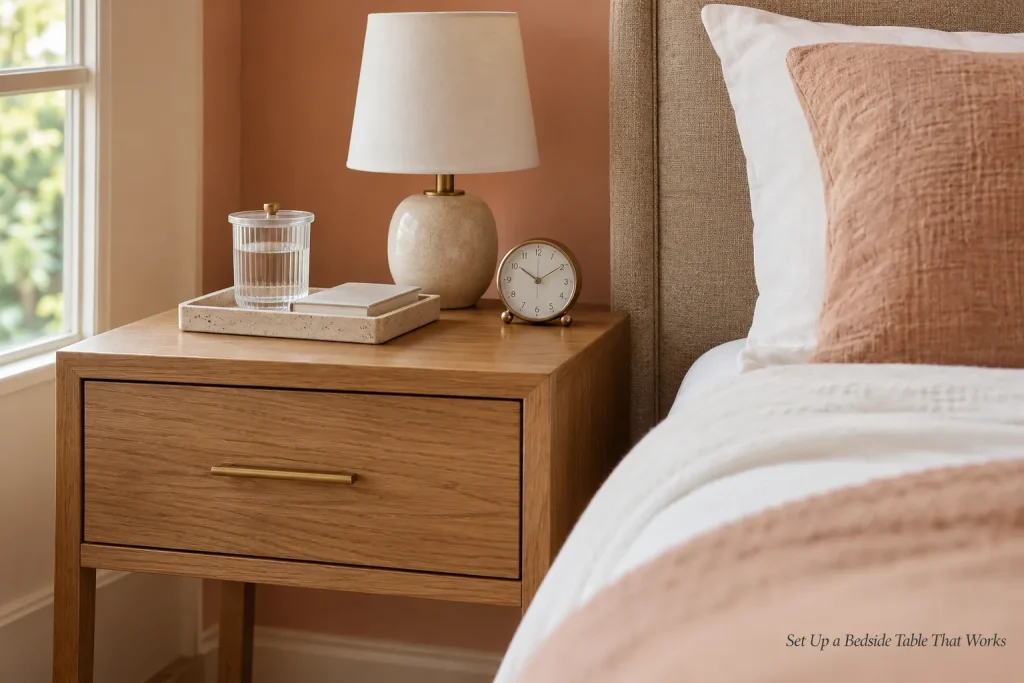
Set Up a Bedside Table That Works
A cluttered nightstand makes mornings slower. A well-planned one makes them easier.
Think about what you actually reach for. Usually that’s a lamp, a glass of water, your phone or alarm, and maybe a book or hand cream. A small tray keeps those items together, and a water bottle or a covered glass means you don’t need to get up for a drink.
A nightstand with a drawer hides the less attractive bits like lip balm, reading glasses, chargers, and tissues. If yours is open, a small lidded box works well.
Match the nightstand height roughly to the top of your mattress. Too low or too high, and reaching for things in the dark gets awkward.
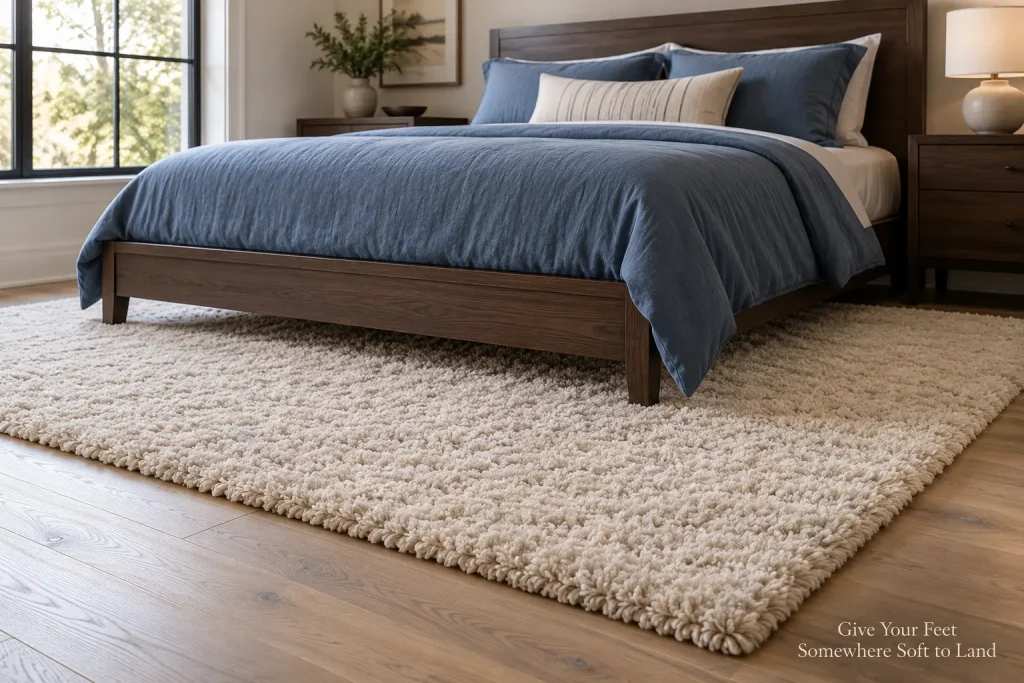
Give Your Feet Somewhere Soft to Land
Stepping onto a cold floor first thing is not a great start. A rug beside the bed fixes that.
A large rug under the bed works well if it extends a good distance beyond each side, so your feet land on it when you stand up. If a large rug isn’t in the budget, two small rugs or runners, one on each side of the bed, can do the job.
Washable rugs are practical in bedrooms, especially in homes with pets. Choose something soft underfoot rather than a flat, scratchy weave.
While You Get Ready
The time between getting up and walking out the door is often rushed. These help the room support that routine.
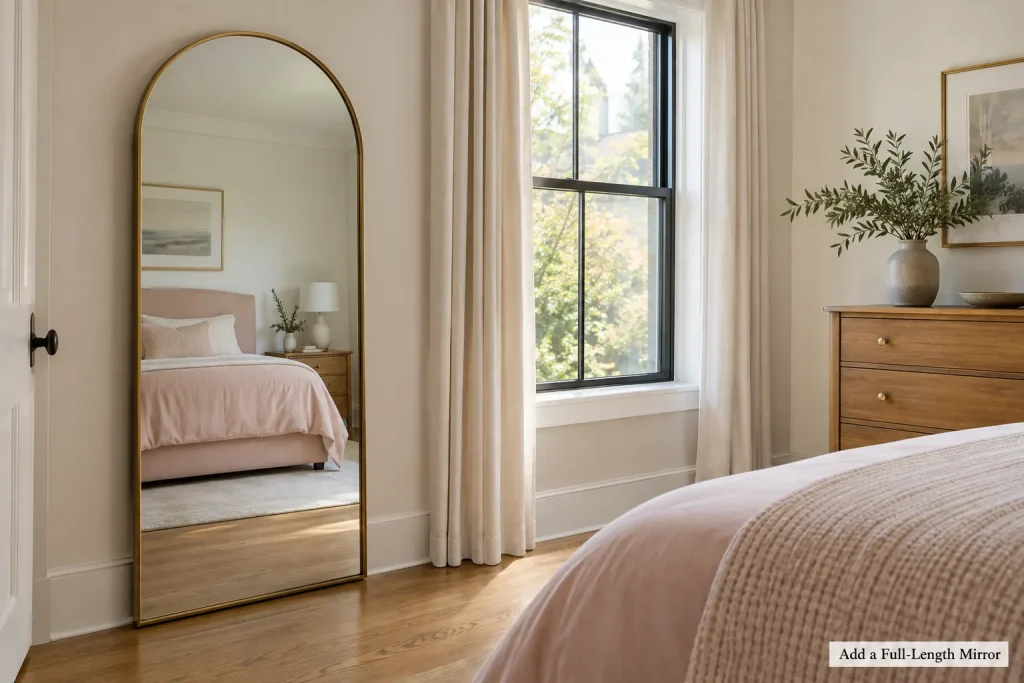
Add a Full-Length Mirror
A full-length mirror is useful for checking an outfit, and it also brightens a bedroom by reflecting light.
A leaning floor mirror is the easiest option. Large mirrors can tip, though, so secure it with an anti-tip strap or follow the manufacturer’s anchoring instructions. Over-the-door mirrors save floor space in small rooms. A mirror placed across from or beside a window helps spread daylight further into the room.
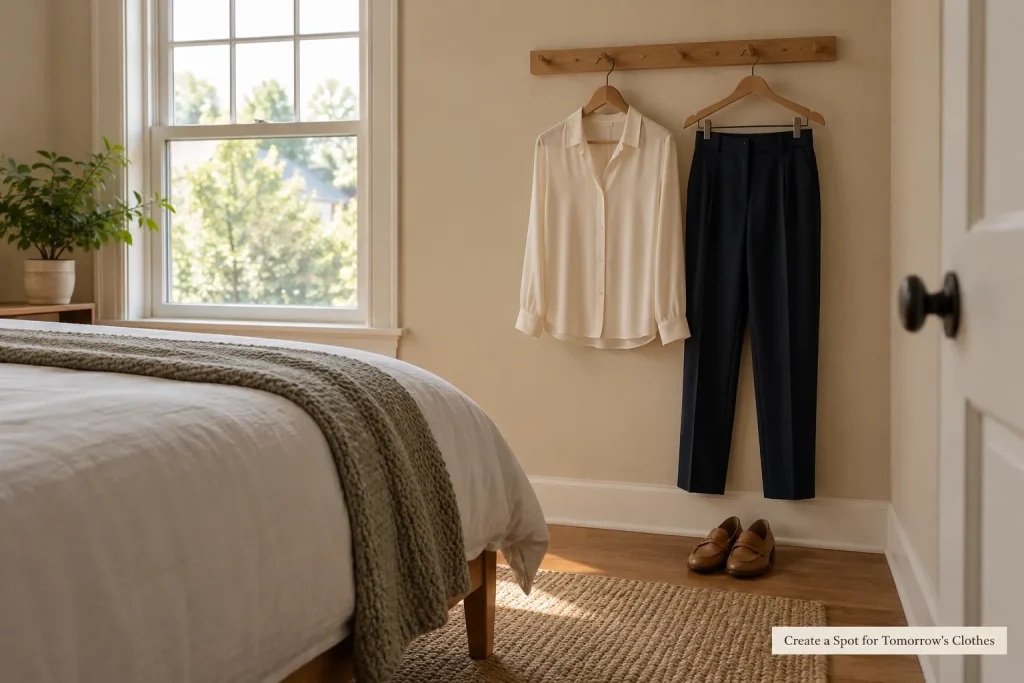
Create a Spot for Tomorrow’s Clothes
The chair piled with clothes is one of the most common bedroom problems. Usually it happens because worn-once items have nowhere else to go.
Giving those clothes an intentional home helps. A few options:
- A wall-mounted valet hook or a row of peg hooks
- A slim clothing rail for tomorrow’s outfit
- A small bench at the foot of the bed with a basket underneath
- A dedicated chair, but with a hook nearby so items get hung rather than piled
The goal isn’t to hide clothes completely. It’s to give them a tidy place to wait, so they don’t spread across the room.
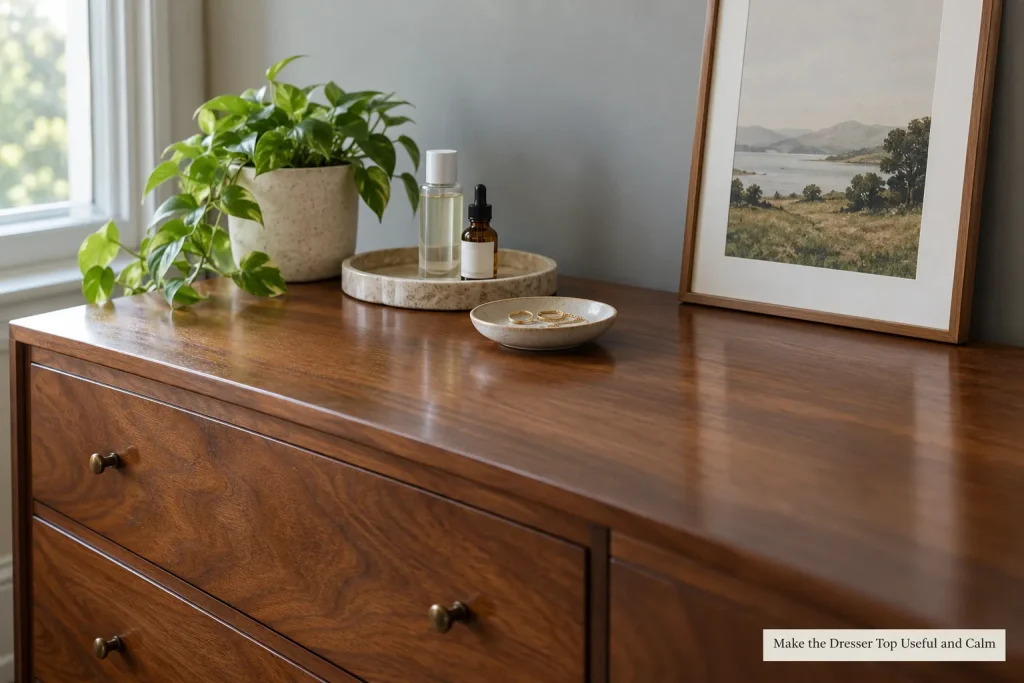
Make the Dresser Top Useful and Calm
The top of a dresser easily turns into a dumping ground for jewelry, receipts, perfume, and loose change.
A small catchall dish for everyday jewelry and a tray for perfume or skincare bottles make the surface look organized. Add one or two decorative pieces, like a small plant or a framed print leaning against the wall, and leave the rest of the surface clear.
During the Day
Even though you’re not in it much during the day, the bedroom should look inviting when you walk past. These bedroom decorating ideas focus on how the room looks.
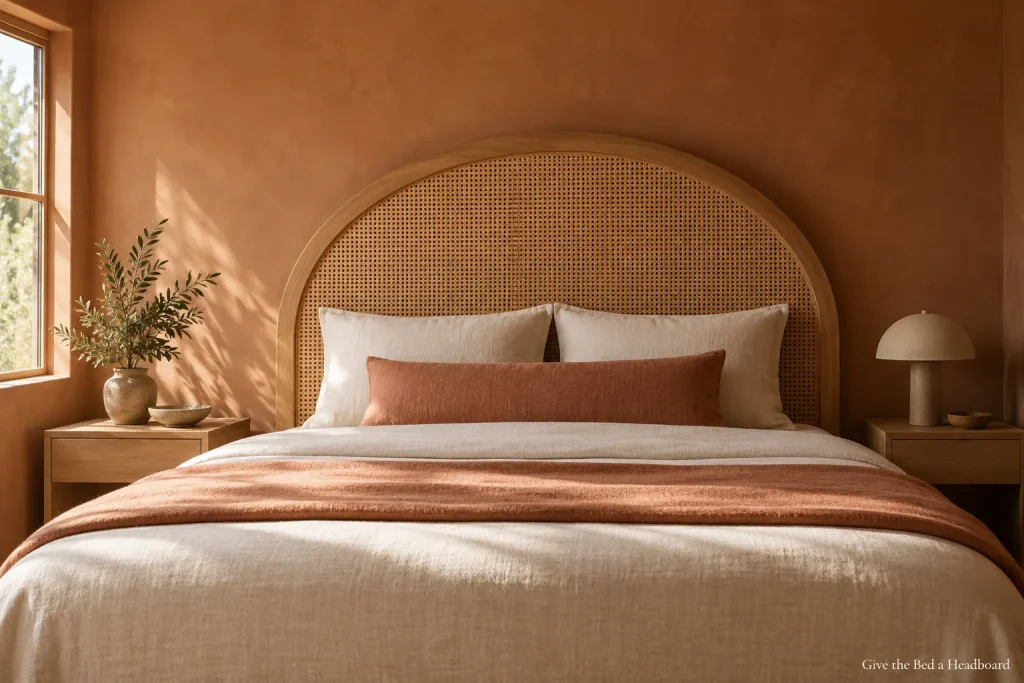
Give the Bed a Headboard
A bed without a headboard can look unfinished. Adding one gives the room an instant focal point.
Upholstered headboards add softness and are comfortable to lean against while reading. Wood or cane headboards suit relaxed, natural styles. If you’d rather not buy one, a painted headboard shape on the wall, a large textile hung behind the bed, or a row of wall-mounted cushions can create a similar effect.
Check the height before buying. A headboard should rise well above your pillows so it remains visible when the bed is made.
Layer the Bedding Without Overdoing It
This one is purely about looks. A well-made bed changes the whole appearance of a bedroom, and the trick is to layer for style without creating a mountain of pillows you have to remove every night.
A simple, practical setup:
- A fitted sheet and a duvet or comforter
- A quilt or light blanket folded across the bottom third of the bed
- Two sleeping pillows plus one or two decorative cushions
Mixing textures, like crisp cotton with a waffle or knit throw, keeps things interesting. Sticking to two or three colors helps the bed look calm rather than busy.

Hang Art Above the Bed Safely
The wall above the bed is a natural spot for art, but safety matters here more than anywhere else in the home.
Choose lightweight pieces, like canvas prints or frames with acrylic instead of glass. Secure them with two hooks or picture-hanging strips rated for the weight, so they can’t swing or fall.
As a rough guide, art above the bed often looks balanced when it spans about two thirds of the headboard width. A single wide piece, a pair of matching prints, or three smaller frames in a row all work well.
If you live somewhere with earthquakes, it may be safer to choose a textile or skip heavy wall art above the bed entirely.

When You Wind Down
Evenings are when the bedroom matters most. These ideas help the room shift into rest mode.
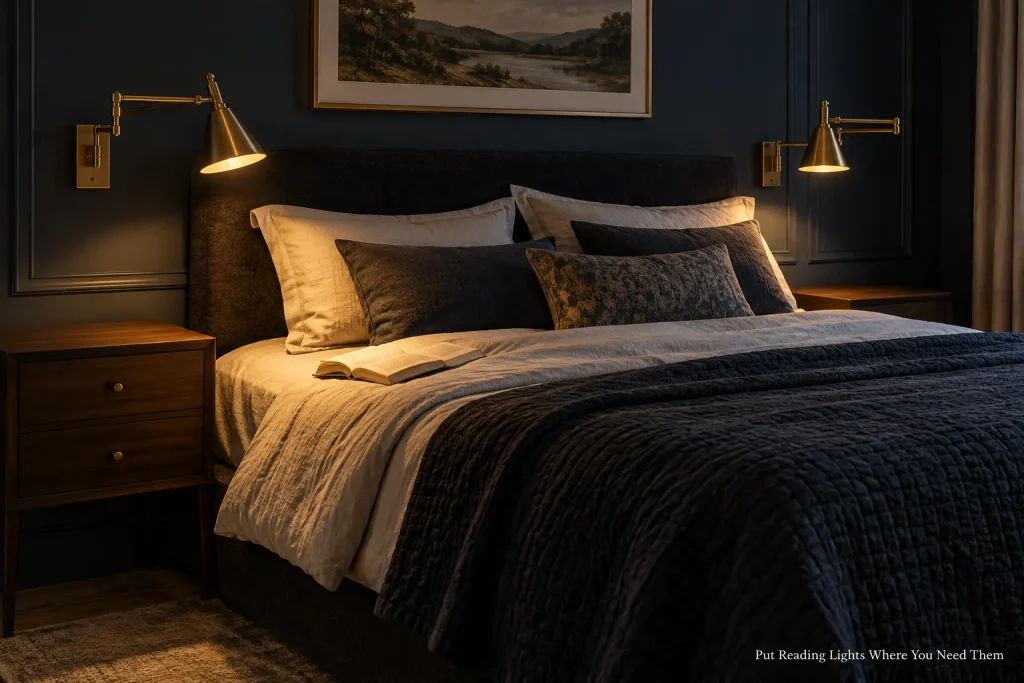
Put Reading Lights Where You Need Them
Overhead lighting is often too bright for the evening. Bedside lamps or wall-mounted reading lights give softer, more focused light.
Swing-arm wall lights are practical in small rooms because they free up nightstand space and can be angled toward a book. If you share the bed, each person having their own light lets one read while the other sleeps.
Many people find warm bulbs more relaxing in the evening. A dimmer or lamps with adjustable brightness give you more control as the night goes on.
Choose a Soft, Restful Wall Color
Wall color sets the mood of the whole room. For bedrooms, many people prefer soft, muted shades that look calm in both daylight and lamplight.
Gentle greens, dusty blues, warm greiges, and soft clay tones are popular choices. Darker colors like deep navy or forest green can also look cozy, especially if the room is mainly used at night.
Test samples on more than one wall and look at them in the evening as well as during the day. Bedroom paint often looks quite different under lamplight.

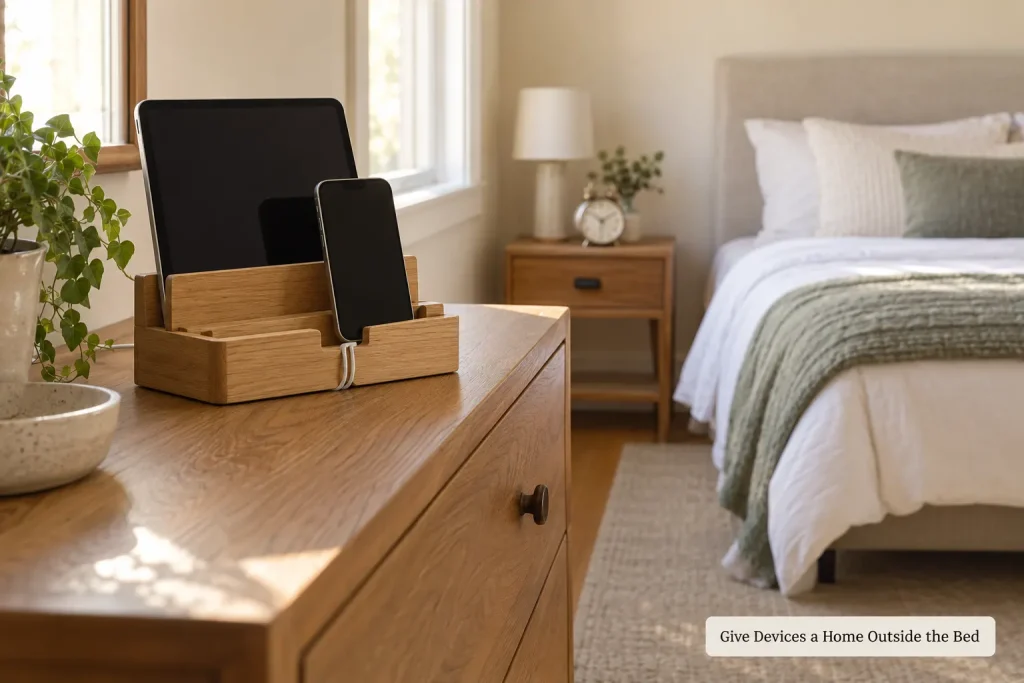
Give Devices a Home Outside the Bed
Phones, tablets, and chargers tend to end up scattered across the bed and nightstand. Besides looking messy, many people find the glow from screens distracting at night.
A charging station on the dresser or in a drawer gives devices a place to go. Some nightstands have built-in charging drawers, or you can add a small charging box with a lid.
If you use your phone as an alarm, a simple alarm clock lets you keep the phone across the room instead.
While You Sleep
Finally, the ideas that help the bedroom do its main job well.
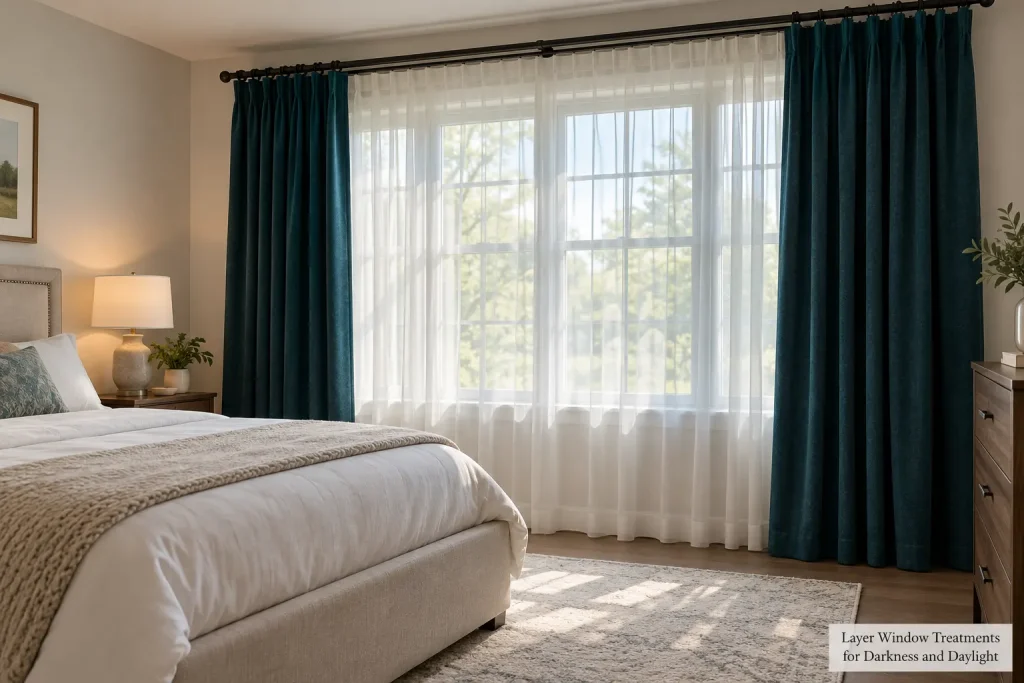
Layer Window Treatments for Darkness and Daylight
Thin curtains let in streetlights and early sunrise. Heavy blackout curtains can make the room dark during the day.
Layering solves both. Pair a light sheer with a lined or blackout curtain, or combine a blackout roller shade with lighter curtains in front. Use the sheer during the day for privacy and soft light, then close the heavier layer at night.
Mount the rod wider than the window so the curtains overlap the edges. This helps reduce the light that leaks in around the sides.
Choose Bedding for the Season
Where the earlier bedding idea was about how the bed looks, this one is about temperature. Sleeping too hot or too cold is a common complaint, and fabric choice plays a big part.
In warmer months, cotton percale or linen sheets tend to feel cool and breathable. Sateen and microfiber can hold more heat, so some people save those for cooler weather. In colder months, flannel sheets or a heavier duvet add warmth.
Rather than buying a whole new set each season, think in adjustable layers. Two duvets of different weights, or one lighter duvet plus a wool or cotton blanket you can add or remove, makes it easy to adapt as the weather changes. Keeping an extra throw within reach of the bed helps on nights when the temperature drops unexpectedly.
If two people share the bed and one runs warmer, separate blankets on each side can solve a lot of nighttime tug-of-war.

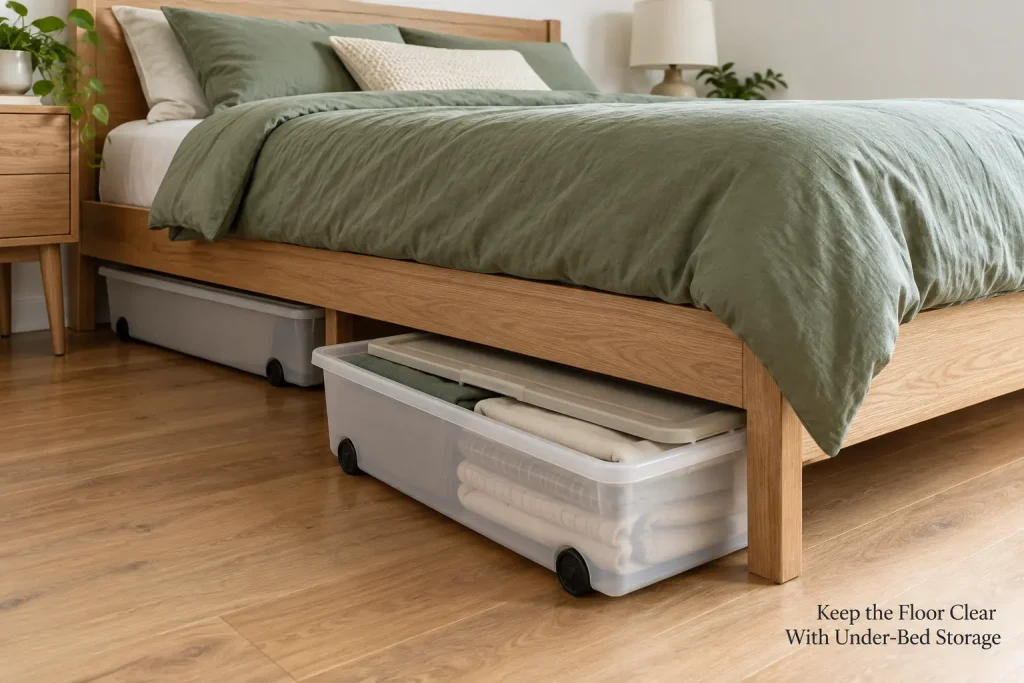
Keep the Floor Clear With Under-Bed Storage
A clear floor makes a bedroom look calmer and easier to clean. Under-bed storage is one of the most useful bedroom ideas for small spaces.
Rolling bins, lidded boxes, or drawers designed to slide under the bed are great for spare bedding, out-of-season clothes, and extra shoes. If your bed sits too low, bed risers can add a few inches of clearance.
Try to keep the space under the bed for planned storage only, rather than a hiding spot for random items.
Bedroom Ideas That Look Better Than They Live
Some popular ideas work beautifully in photos but cause problems day to day. Watch for these:
Too many decorative pillows. They look lovely but end up on the floor every night.
White bedding in a home with pets. It’s not impossible, but expect to wash it often.
Glass shelves or heavy decor above the bed. These can be unsafe if anything falls.
A desk facing the bed. If you work from home, looking at your work from bed can make it harder to switch off. A screen or curtain helps if the desk has to share the room.
Matching furniture sets. A bed, nightstands, and dresser all from one collection can sometimes make a room look overly uniform. Mixing in one or two different pieces is an easy way to add character.
Where to Start, Depending on Your Room
Not every room needs all 15 ideas. If you’re unsure where to begin, this quick guide may help.
Short on space? Start with under-bed storage and wall-mounted reading lights.
Sharing with someone on a different schedule? Start with separate reading lights and layered curtains.
Room looks unfinished? Start with a headboard and art above the bed.
Mornings feel chaotic? Start with the bedside table and a spot for tomorrow’s clothes.
Decorating a guest room? Focus on the bedside table, simple bedding, and a few empty hangers.
Quick Questions About Bedroom Ideas
Is it a good idea to put a TV in the bedroom?
It depends on your habits. Some people enjoy it, while others find it makes winding down harder. If you include one, placing it inside a cabinet or on a wall where it isn’t the main focus helps the room stay restful.
How can I decorate a rented bedroom?
Focus on things you can take with you. Bedding, rugs, lamps, a leaning mirror, plug-in wall lights, and peel-and-stick wallpaper are all renter-friendly. Check your lease before drilling into walls.
What are good bedroom ideas on a very small budget?
Start with what you already own. Clear the floor, restyle the nightstand, and rearrange the bed if needed. New pillowcases, a throw, or a secondhand mirror are affordable next steps.
How often should I wash my bedding?
Many people wash sheets and pillowcases every week or two, and duvets or quilts a few times a year. Check the care labels, since some fabrics need gentler washing or lower temperatures.
How do I make a bedroom work for two different styles?
Pick a neutral base for the large items, like walls and bedding. Then let each person choose a few personal pieces for their side of the bed, using one shared accent color to tie it together.
Small Changes, Noticed Every Day
Most rooms in a home get a quick glance as you pass through. The bedroom is different. You spend hours in it, often with nothing to do but look around, which means every small improvement gets noticed again and again.
That’s good news if your budget or energy is limited. A clear nightstand, a soft rug where your feet land, or curtains that finally block the streetlight won’t take long, but you’ll appreciate them every single day.
So go back to the view from your pillow, pick one thing, and start there.