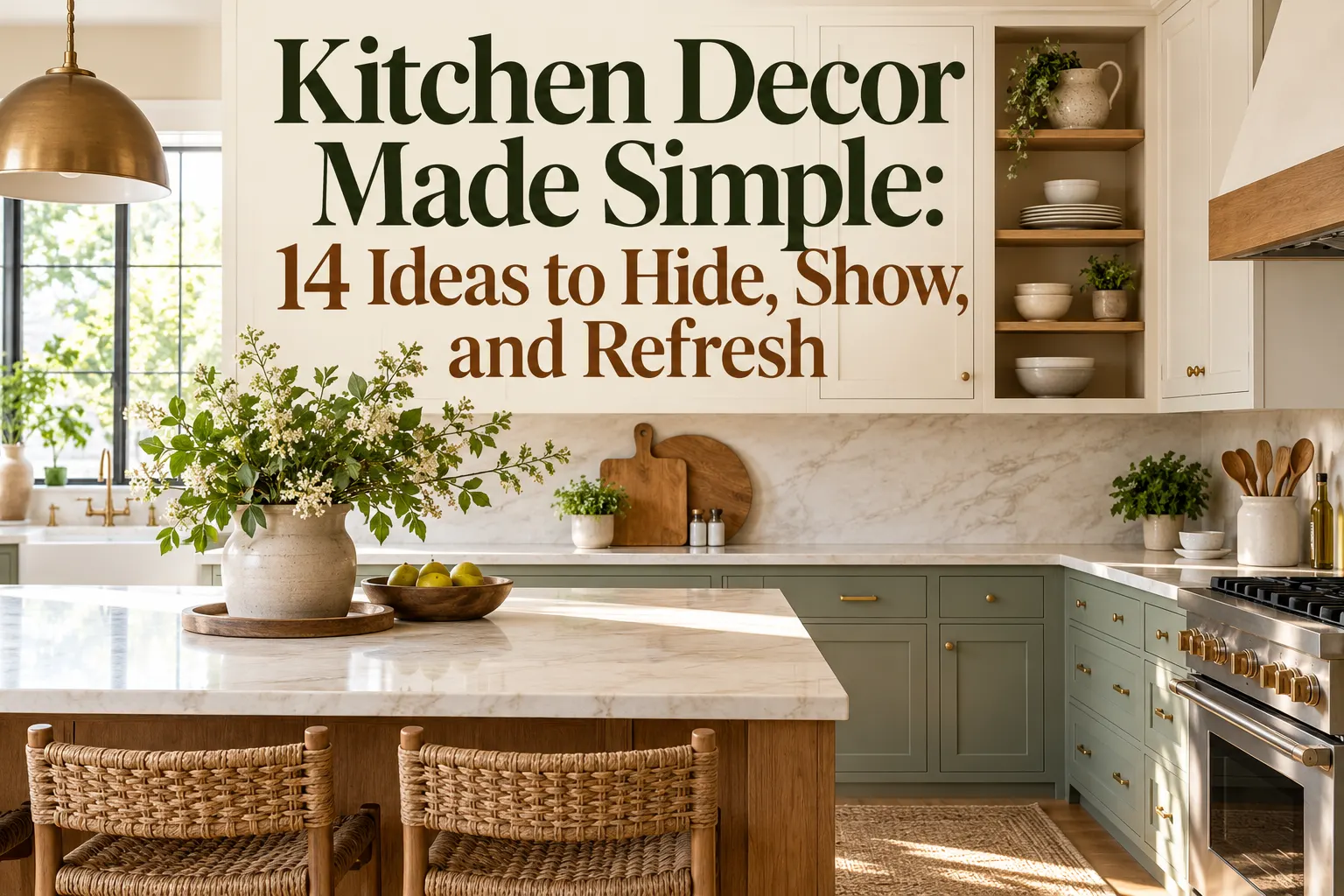
Kitchen Decor Made Simple: 14 Ideas to Hide, Show, and Refresh
Every kitchen holds two kinds of things.
There are the pieces you love seeing. A favorite mixing bowl, a stack of well-used cookbooks, the pretty plates you actually eat from. And there’s everything you need but would rather not look at. The toaster cord, the dish sponge, the recycling bin, the pile of mail.
Most kitchens that look cluttered aren’t short on style. They simply have those two groups mixed together on every surface.
That’s the idea behind this guide. The 14 kitchen decor ideas below are grouped into four simple jobs: hiding what’s not pretty, showing off what is, refreshing tired surfaces, and rethinking a few bigger elements when you’re ready. You can start with any group, but most kitchens benefit from a little hiding before anything else.
Start With the Hide or Show Test
This takes about fifteen minutes and costs nothing.
Pick up each item on your counters, one at a time, and ask two questions. Do I use this most days? Do I like looking at it?
- Used often and nice to look at: it can stay out
- Used often but not attractive: it needs a hiding spot that’s still easy to reach
- Rarely used: it goes into a cupboard, whatever it looks like
Most people find that only a handful of things belong in the first group. Everything else is a candidate for the ideas in the next section.
Once the counters are sorted, you’ll have a much clearer sense of which kitchen decor changes will actually help, and which would just add more things to the pile.
Ideas That Hide the Everyday Mess
Hiding comes first because no amount of styling can compete with visual clutter. These four ideas keep the necessary but unlovely things close at hand and out of sight.
Give Small Appliances a Garage
Toasters, blenders, and coffee grinders take up a surprising amount of counter space. An appliance garage is simply a dedicated spot where they live behind a door.
If you’re not remodeling, you can create one by clearing a cabinet or a pantry shelf close to an existing outlet. A tall rolling cart with doors or a freestanding cabinet works too. The appliances live inside, then come out onto the counter when you use them.
Follow each appliance’s instructions, use them out in the open where heat and steam can escape, and let them cool before putting them away. If you want outlets added inside cabinetry, that’s a job for a qualified electrician.
For example, in a small galley kitchen, moving just the toaster and blender off the counter can free up an entire prep area.

Hang a Fabric Skirt Under the Sink
Older kitchens and some rentals have open space under the sink, or cabinet doors that have seen better days. A fabric skirt on a tension rod hides cleaning supplies and pipes while adding softness and pattern.
Choose a washable cotton or linen in a color that picks up something else in the room, like the backsplash or the towels. Gathered fabric looks relaxed and cottage-like, while a flat panel looks a bit more tailored.
It’s a renter-friendly way to bring in fabric without hanging curtains. Check under the sink every so often for leaks, since damp fabric can develop mildew, and keep any fabric well away from the stove.

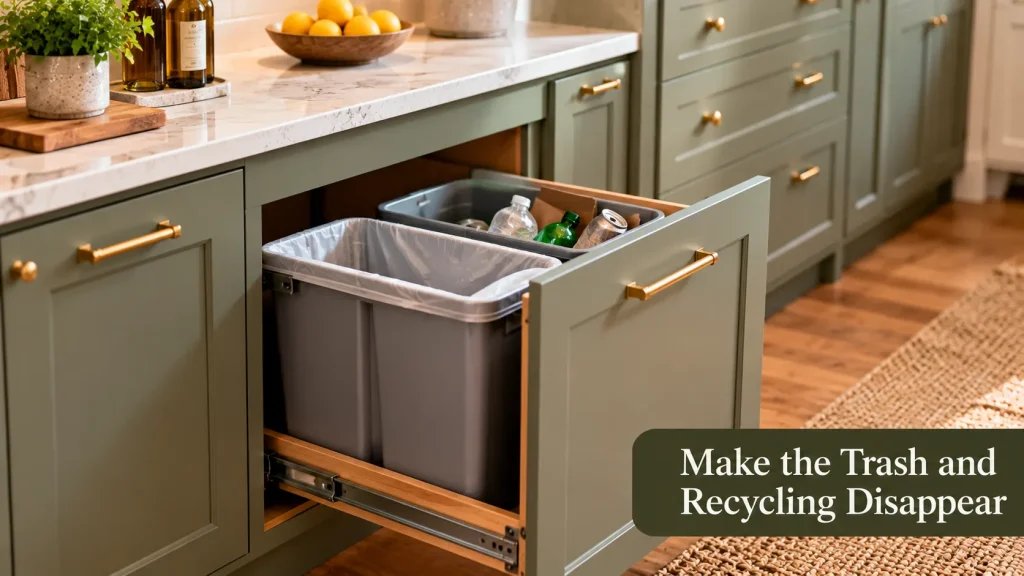
Make the Trash and Recycling Disappear
Bins are one of the least attractive things in a kitchen, and they’re often in the most visible spot.
If you have a spare base cabinet, a pull-out bin system tucks everything away. Kits are available for many cabinet sizes and can often be installed without professional help, though it’s worth measuring carefully first.
If that’s not an option, look for bins in materials that blend in, like brushed metal or a color that matches your cabinets. A dual-compartment bin keeps recycling and trash together in one footprint instead of two. Bins with well-fitting lids help contain odors.
Tidy the Sink Area
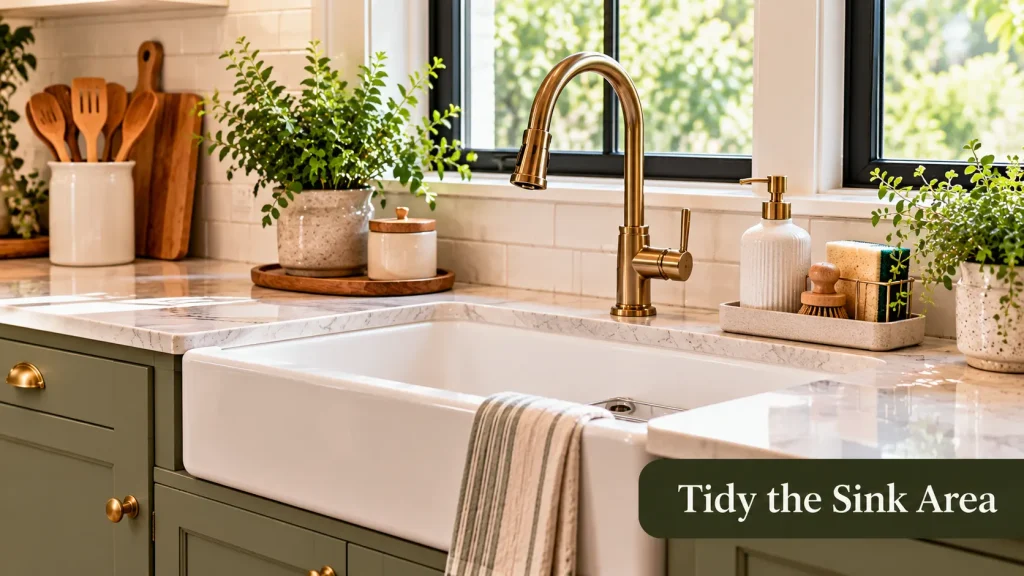
The sink is used constantly, which is why it collects so much. Sponges, scrubbers, soap bottles, and dish towels pile up around it.
A small sink caddy or a tray keeps those items contained. A pump dispenser for dish soap is easy to use with one hand and cuts down on drips, and one in a plain finish keeps the area looking tidier than a row of bright bottles. A sponge holder that drains well helps things dry and stay fresh.
Ideas That Show Off What You Love
Once the clutter has a home, it’s time to give the good stuff some room. These ideas turn everyday items into part of your kitchen decor.
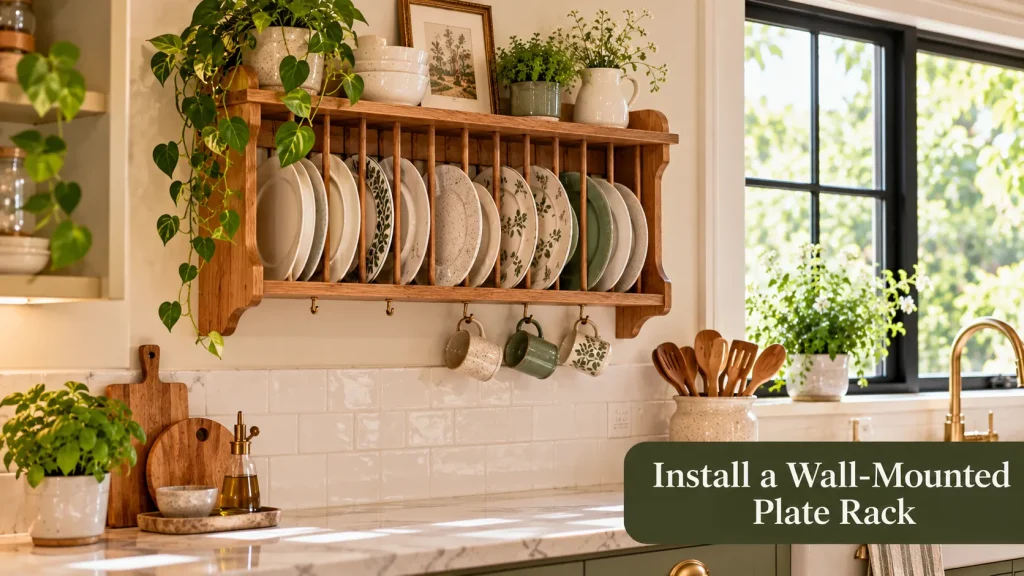
Install a Wall-Mounted Plate Rack
A plate rack holds dishes upright on the wall, a bit like a drying rack you never put away. It’s practical and has a lovely, slightly old-fashioned charm.
Wooden racks work well in farmhouse or cottage kitchens. Slim metal racks suit more modern spaces. Display your everyday plates rather than delicate pieces, since you’ll want to grab them often. If the rack can sit near the dishwasher or sink, it can make unloading a little easier too.
Mount the rack securely into studs or with anchors rated for the weight. Plates are heavier than they look when stacked.
Use a Rail or Pegboard for Tools and Pans
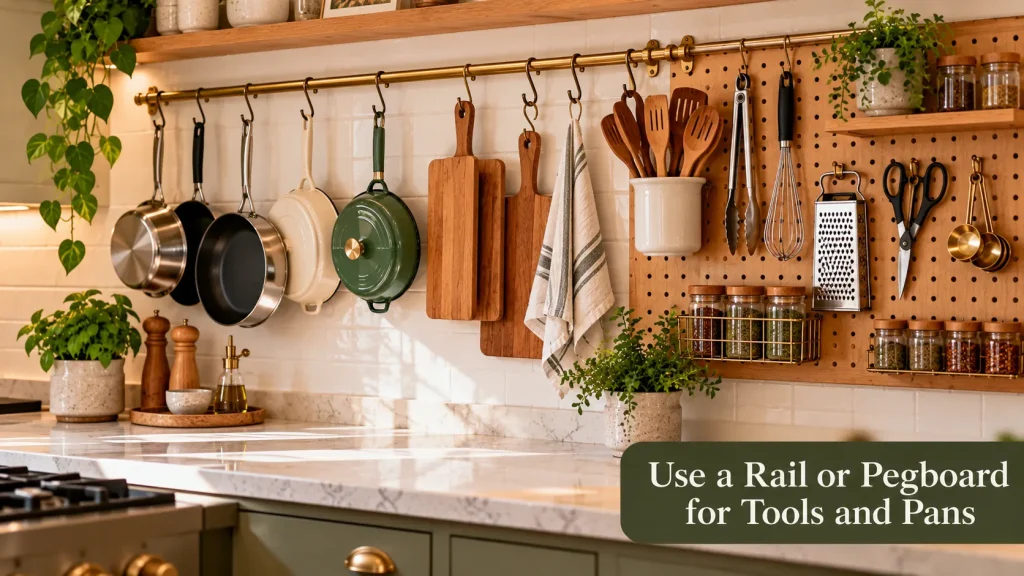
Hanging utensils, pans, and mugs frees up drawer space and puts nice-looking tools on display.
A simple metal rail with S hooks along the backsplash holds spatulas, ladles, and small pans. A painted pegboard is more flexible, since you can move the pegs as your collection changes. Both suit kitchens with limited cabinet space.
Hang only what you use and like. A rail packed with every utensil you own looks more like storage than decor.
Place the rail where it’s easy to reach from your main prep area, but not directly above the cooktop, where tools can get hot and pick up grease.
Turn One Cabinet Into a Display
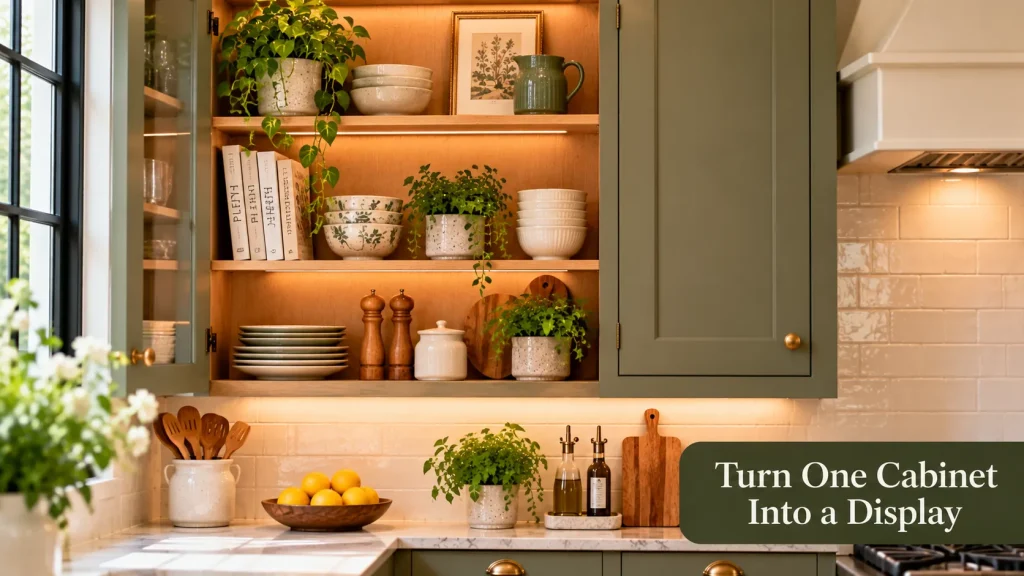
You don’t need open shelving to show off a few favorite things. Choosing one upper cabinet and changing how it looks can create a focal point.
A few ways to do it:
- Remove the door and paint or wallpaper the back wall
- Replace a solid door panel with glass, or buy a glass-front replacement door
- Add a small battery-operated light inside to make the display glow in the evening
If you rent, ask before changing doors, and store the original door so it can go back on when you move.
Fill it with things that look good grouped together, like glassware, a collection of mugs, or serving bowls. Stick to a limited color palette so it looks intentional rather than crowded.
Give Cookbooks and Recipes a Spot
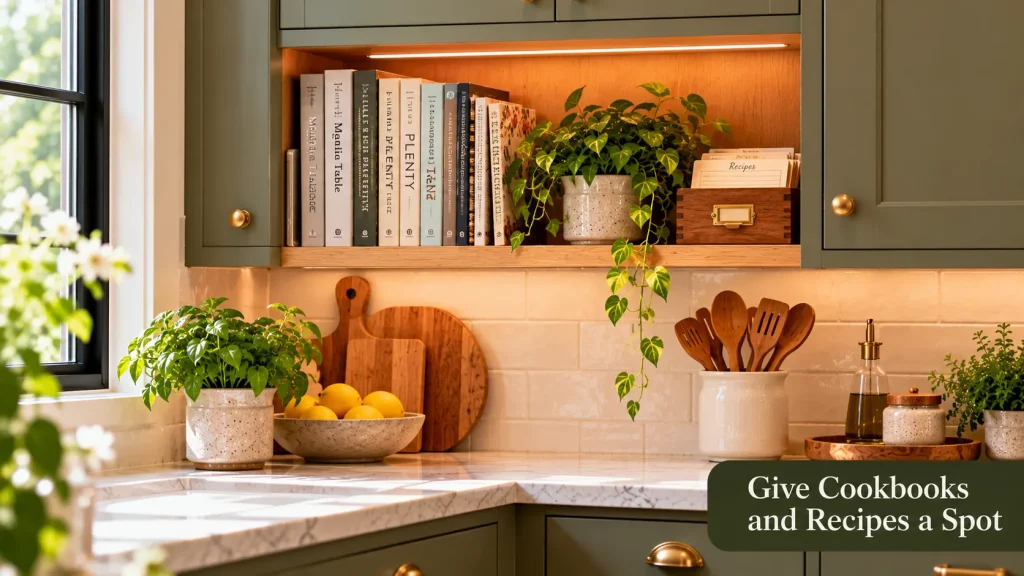
Cookbooks add color and personality, but they often end up stacked in a corner or hidden away entirely.
A short shelf near your prep area, a stand on the counter for the book you’re cooking from, or a narrow ledge for leaning a few favorites with their covers facing out all work well. If you have handwritten family recipe cards, a small ledge or clip display can show a few of them off.
Keep cookbooks away from the sink and stove, where splashes and steam can damage pages.
Where Kitchen Decor Goes Wrong
Before moving on to the bigger updates, it helps to know what tends to backfire. A few patterns show up again and again.
Decorating counters before clearing them. Adding decor to a cluttered surface just makes more clutter. The hide or show test should always come first.
Hiding everyday items too well. If the kettle or coffee maker ends up somewhere awkward to reach, it will be back on the counter within a week. Hidden things still need to be easy to grab.
Choosing decor that’s hard to clean. Kitchens collect grease and dust quickly. Intricate or fuzzy decor needs constant cleaning.
Showing everything at once. A full plate rack, a crowded rail, a packed display cabinet, and open cookbook shelves all in one small kitchen can look as cluttered as the counters did. Pick one or two display spots and let the rest stay calm.
Forgetting the people who cook there. A styled kitchen still needs to work for daily cooking, especially on busy weeknights.
Ideas That Refresh Without Remodeling
These three updates change the look of the kitchen without major construction. They’re good choices for renters or anyone working on a budget.
Try a Peel-and-Stick Backsplash
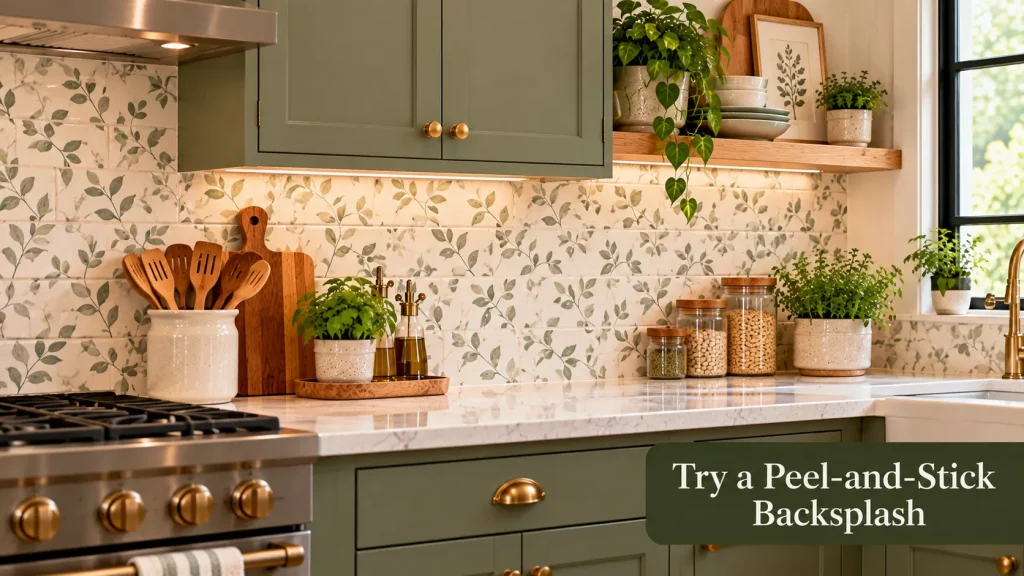
A plain or dated backsplash can drag down an otherwise nice kitchen. Peel-and-stick tiles are an affordable way to update it. Some are designed to be removable, but check the product and wall surface requirements first.
Look for thicker vinyl or gel tiles, which tend to look more realistic. Patterns like subway tile, zellige-style squares, or simple geometric designs work well in most kitchens.
Check the product’s heat rating before installing it near a stove. Many peel-and-stick products aren’t designed for direct heat, so you may need to leave the area right behind the cooktop bare or choose a heat-rated option. Clean and dry the wall thoroughly first so the tiles stick properly.
Update the Seating
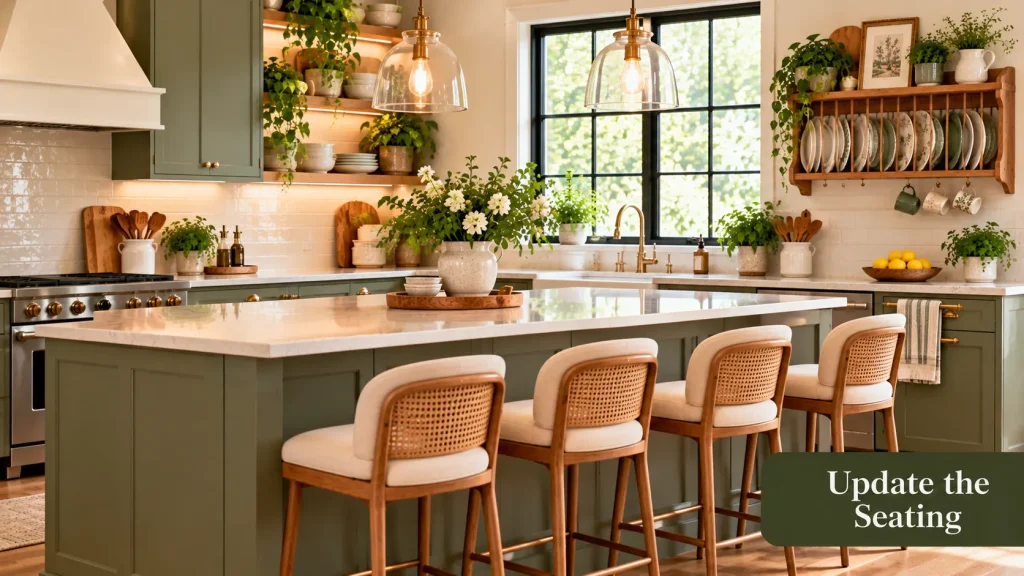
Bar stools and kitchen chairs are a surprisingly big part of kitchen decor, especially in open-plan homes where they’re visible from the living area.
Swapping tired stools for ones in a new material, like woven seats, warm wood, or upholstered tops, can change the whole style of the room. Mixing chairs around a kitchen table is another option, as long as they share a color or finish so they look connected.
Measure before buying. Counter-height and bar-height stools are different, and the gap between the seat and the counter needs to be comfortable. Think about who will use them, too. Seat height, a stable base, a footrest, and a backrest can all affect comfort, especially for kids or anyone with limited mobility.
Add a Family Command Board
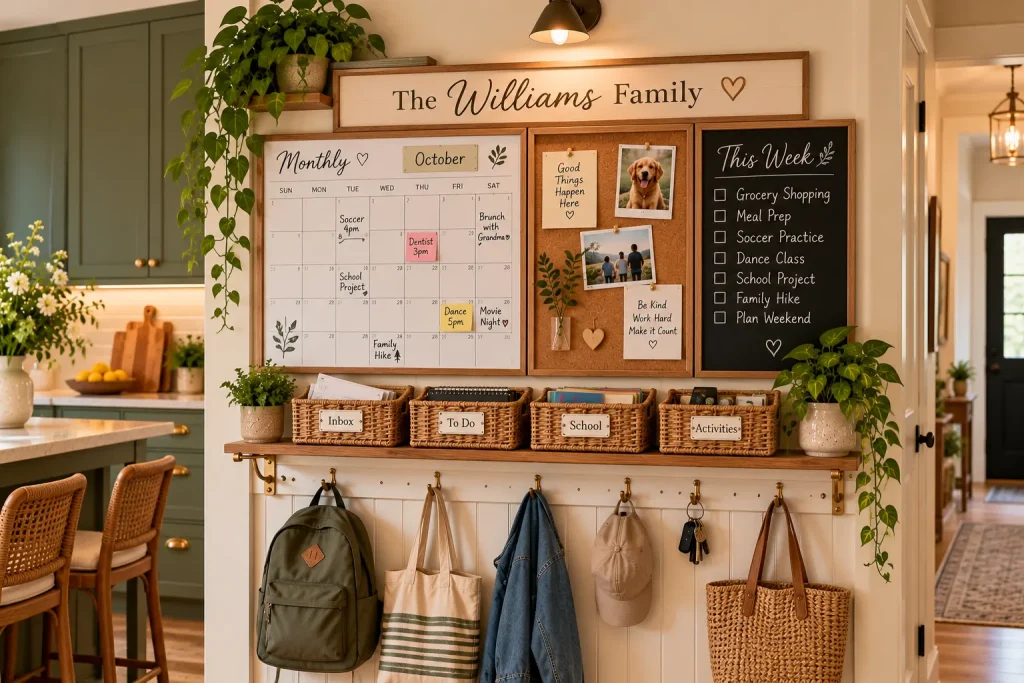
A kitchen is usually where the family schedule gets talked about. A command board keeps notes, calendars, and reminders in one place instead of scattered across the fridge.
Options include a framed chalkboard, a large corkboard, a magnetic board painted to match the wall, or a simple wall calendar with a few clips for invitations and school notes. Hang it near the entrance or on the end of a cabinet run, away from cooking areas. Choosing a frame or finish that matches your cabinet hardware or other wood in the room helps it look like part of the decor rather than an office notice board.
A tidy command board also clears the front of the fridge, which makes the whole kitchen look calmer.
Ideas That Rethink the Bigger Picture
When you’re ready for a bigger project, these ideas make a lasting difference to how your kitchen looks.
Paint Cabinets in Two Tones
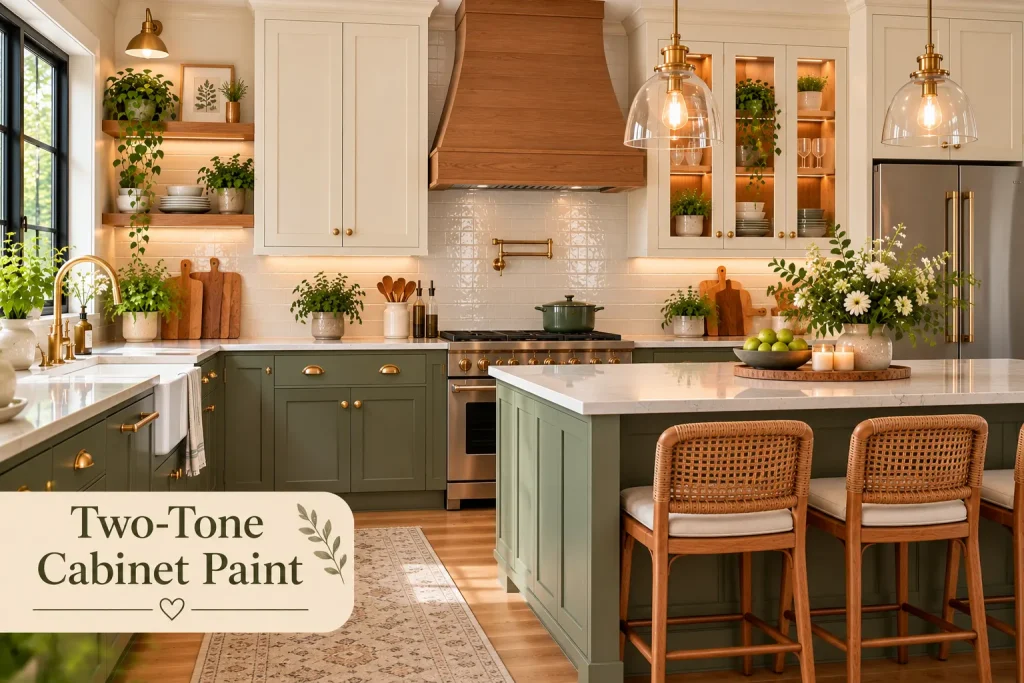
Painting all the cabinets is a big job. Painting just the lower cabinets, or just the island, gives you a strong new look with less work.
Darker lower cabinets with lighter uppers keep the room bright while hiding scuffs near the floor. A colored island in a white kitchen creates a focal point. An easy way to choose the second color is to pull it from something already in the kitchen, like the countertop, the floor, or your favorite dishes.
Proper preparation matters. Cabinets need cleaning, sanding, and primer before paint, and a durable cabinet paint will hold up much better than standard wall paint. If you’re unsure, a test door is a good place to start.
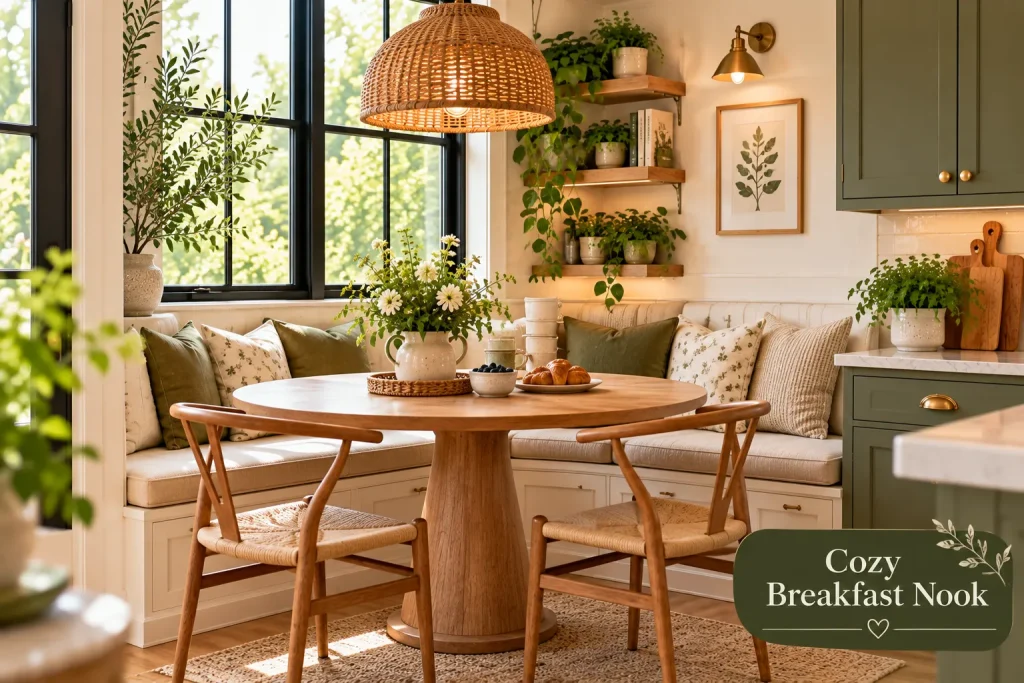
Build a Cozy Breakfast Nook
A banquette or built-in bench in a corner can turn an awkward space into a favorite spot for breakfast, homework, or morning coffee.
You don’t need custom carpentry. A pair of storage benches pushed into a corner, a round pedestal table, and a few chairs on the open side can create the same effect. Add cushions in a washable fabric. A pendant over the table looks lovely if suitable wiring is already there. Otherwise, a plug-in pendant or a nearby lamp gives a similar effect.
Storage benches also give you extra room for table linens or seasonal items. If you have young children, a wipeable cushion fabric or a removable cover will make spills far less stressful.
Make the Range Hood a Focal Point
The range hood is often the largest single object on the kitchen wall. Instead of letting it blend in, you can make it a feature.
Some people paint the hood to contrast with the walls. Others add a decorative cover in wood, plaster, or painted panels around an existing hood insert. A simple shelf or ledge just above the hood can display a few items, as long as they’re well away from heat.
Any change near the cooktop needs care. Follow the hood manufacturer’s clearance guidelines and use heat-safe materials. For anything more than paint, it’s worth getting advice from a professional or checking local building requirements.

Questions About Kitchen Decor
How do I decorate a kitchen with no window?
Focus on lighting and light colors. Under-cabinet lights, a pendant, and pale walls or cabinets help a windowless kitchen look brighter. A mirror or glossy backsplash can bounce light around too.
How do I keep a white kitchen from looking sterile?
Add warmth through materials rather than color alone. Wood cutting boards, woven stools, brass or bronze hardware, and a few plants can soften an all-white space.
Should kitchen decor match the dining area?
It doesn’t need to match exactly, but repeating one or two colors or materials helps the spaces look connected, especially in open-plan homes.
How do I decorate the space above kitchen cabinets?
Keep it simple. A few large pieces, like baskets, pitchers, or tall vases, look better than many small items and are easier to dust. Some people leave the space empty, which is perfectly fine, especially in kitchens with low ceilings.
How can I add seasonal touches without more clutter?
Swap rather than add. Change the towels, the contents of a fruit bowl, or a few items in your display cabinet with the seasons, and store the off-season pieces together in one box.
Start With What’s on the Counter
Kitchens rarely need a new style. More often, they need a little editing, so the pieces with character aren’t competing with sponges and cords.
Spend fifteen minutes with the test from the start of this guide, then pick one idea from whichever group your kitchen needs most. Small changes in a room you use several times a day are noticed quickly, and they tend to make the next decision easier.