

Living Room Furniture Guide: 17 Pieces and Ideas You’ll Actually Use
An empty living room is exciting for about five minutes.
Then the questions start. Which sofa? How big? Do you need a coffee table, or will it just collect clutter? Should the chairs match? And how do you avoid spending a lot of money on something that turns out to be the wrong size?
Buying living room furniture is one of the bigger decor decisions most of us make, mainly because these pieces are expensive and tend to stay for years. Getting them right makes everything else easier. Getting them wrong means living with a sofa that blocks the doorway or a coffee table you bump into every day.
This guide takes the order most people actually furnish a room in. It starts with the anchor pieces you buy first, moves to the supporting furniture, then the pieces that add personality, and finally a few problem solvers for small or busy spaces. Along the way you’ll find 17 living room furniture ideas, plus the measurements and mistakes worth knowing before you shop.
Three Things to Do Before Buying Anything
These take less than an hour and can save you from expensive returns.
Measure the room and the route in. Note the room’s dimensions, but also measure doorways, hallways, stairwells, and any tight corners. Plenty of sofas fit the room and still can’t get through the front door.
Mark the walkways. Most rooms need clear paths between the door, the seating, and any other exits. Around 30 to 36 inches (75 to 90 cm) can be a useful starting point for a main walkway, where space allows, so people can move without squeezing past furniture.
Tape it out. Use painter’s tape to outline the size of a sofa or table on the floor before you buy it. Walk around the outline for a day or two. It’s the easiest way to check scale.
Buy First: The Anchor Pieces
These are the largest and most used pieces of living room furniture. They set the layout, so it makes sense to choose them before anything else.
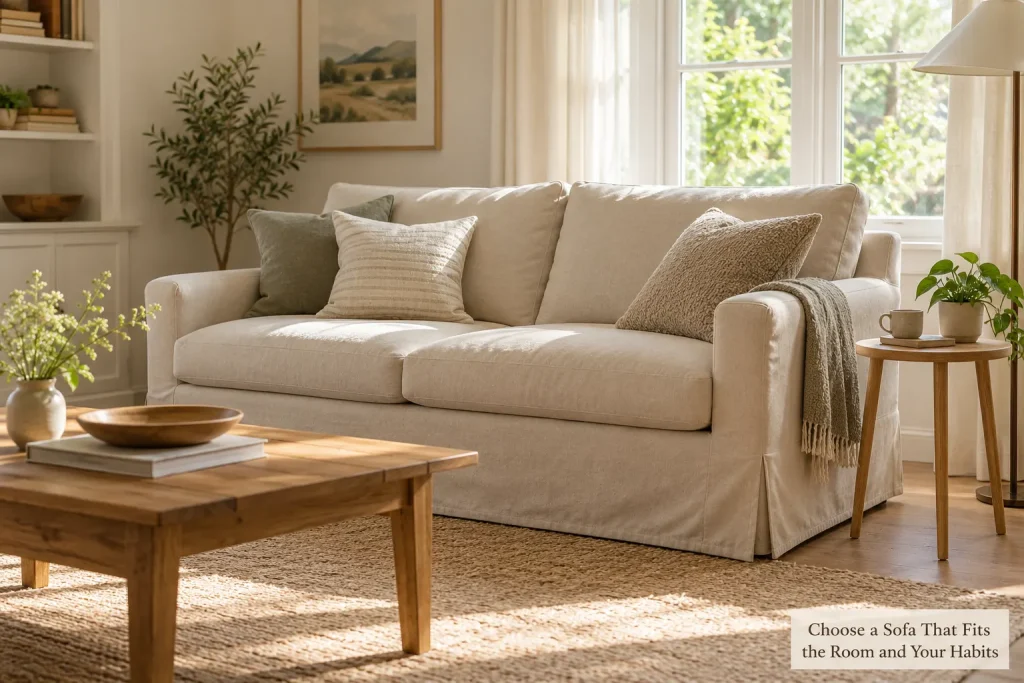
Choose a Sofa That Fits the Room and Your Habits
The sofa is usually the biggest purchase, and size is where most problems start. A sofa that looks modest in a large showroom can overwhelm an average living room.
Think about how you use it. If you like to lie down and nap, look for a length that fits you comfortably and arms you can rest your head on. If you mostly sit upright, a shallower seat may suit you better. Deep seats look inviting but can be uncomfortable for shorter people unless you add extra back cushions.
Fabric matters as much as shape. In homes with kids or pets, performance fabrics, tightly woven textiles, or washable slipcovers make life easier. Light colors can still work if the covers come off for washing.
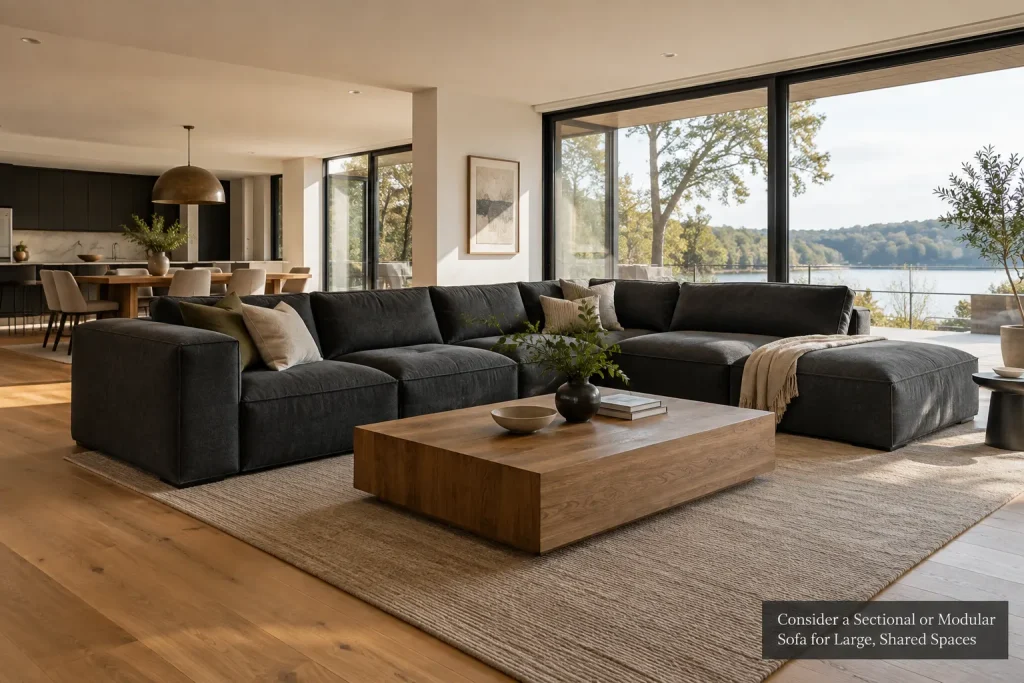
Consider a Sectional or Modular Sofa for Large, Shared Spaces
This one is specifically for bigger rooms and households where several people use the living room together most evenings. In that situation, a sectional or modular sofa can make more sense than a sofa plus chairs.
Modular sofas come in separate sections you can rearrange. That’s useful if you move house often, or if your needs change over time. You can start with a few pieces and add more later.
The downside is that sectionals take up a lot of floor space and can block the flow of a room. They work best when one side backs onto a wall or creates a natural divider in an open-plan layout. Check which way the chaise faces before ordering, since many can’t be switched later.
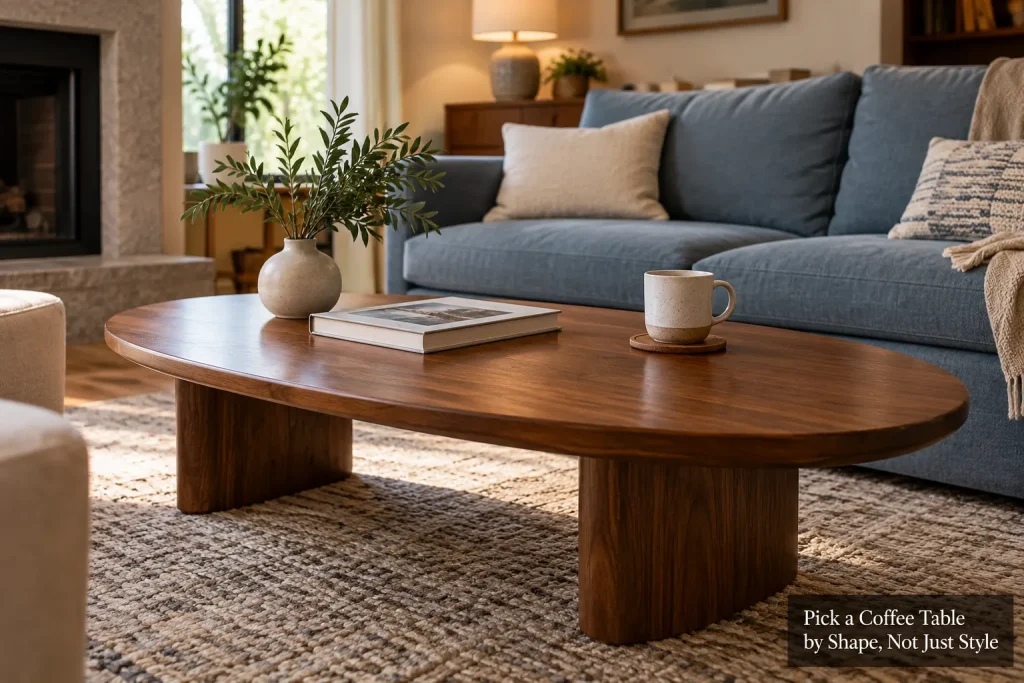
Pick a Coffee Table by Shape, Not Just Style
The coffee table shape affects how easily people move around it.
Round and oval tables suit tight spaces, and many families like them because there are no sharp corners to bump into, though no table is fully child-proof. Rectangular tables pair well with long sofas and offer more surface area. Square tables tend to work best with sectionals or seating arranged on all sides.
As a loose guide, a coffee table about two thirds the length of the sofa usually looks balanced. Its height should be close to the sofa’s seat height, or slightly lower, so it’s comfortable to reach.
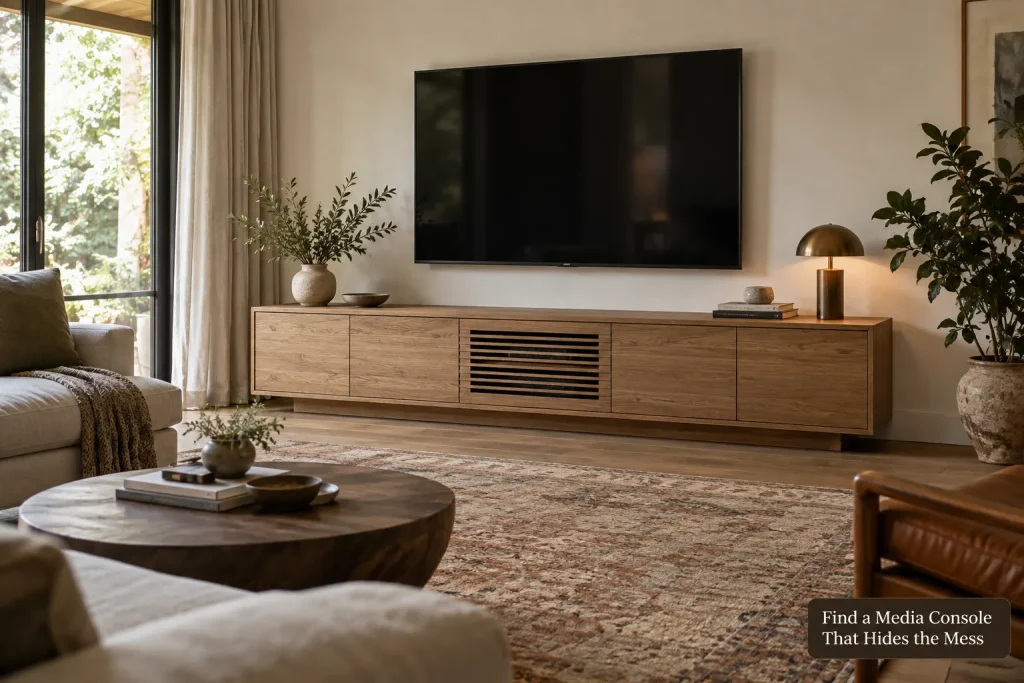
Find a Media Console That Hides the Mess
If there’s a TV in the room, the media console does more work than it gets credit for. It holds the screen, hides cables, and stores everything from game controllers to board games.
Closed cabinets with doors keep the look tidy. Open shelving suits people who want quick access to devices, though it shows clutter more easily. Many consoles offer a mix of both.
A console that’s somewhat wider than the TV often looks more balanced, so the screen doesn’t seem to be perched on top. Wall-mounted floating consoles are a good option in small rooms, since leaving the floor visible underneath makes the space look less crowded.
Buy Next: The Supporting Cast
Once the main seating and tables are in place, these pieces fill the gaps and make the room more comfortable.
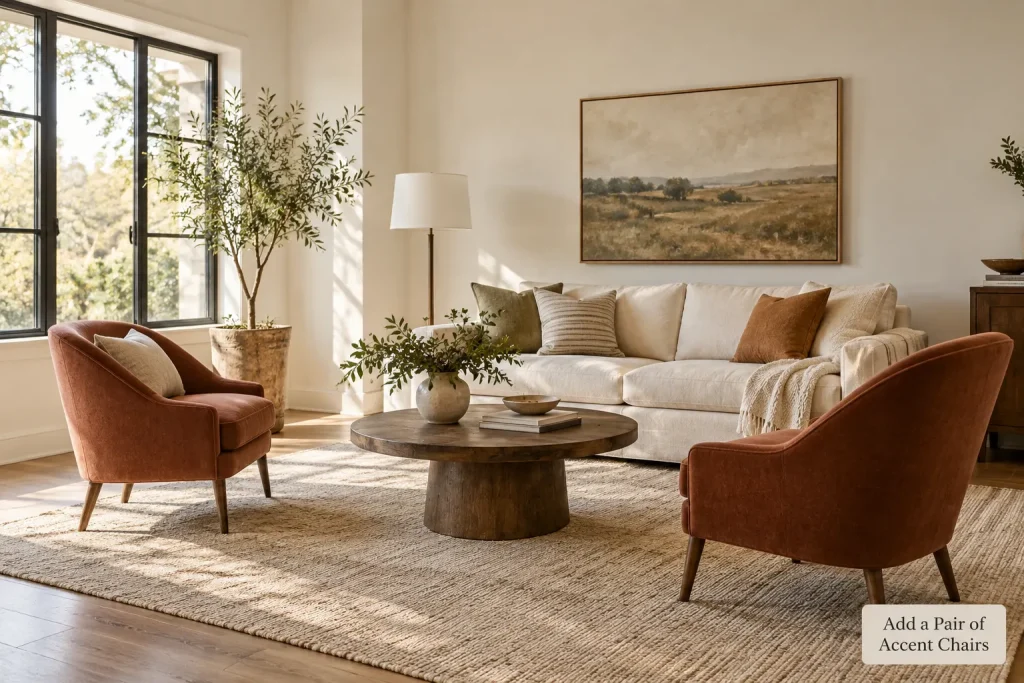
Add a Pair of Accent Chairs
Two chairs facing the sofa, or angled toward it, create a conversation area. A matching pair looks calm and balanced, while two different chairs in a shared color or material look more relaxed.
Check the seat height and depth before buying. Chairs that sit much higher or lower than the sofa can look unbalanced, and a seat that’s too deep or too low may be hard for some guests to get out of.
If space is tight, choose armless or slim-armed chairs. They take up less visual room and are easier to move when you need extra seating.
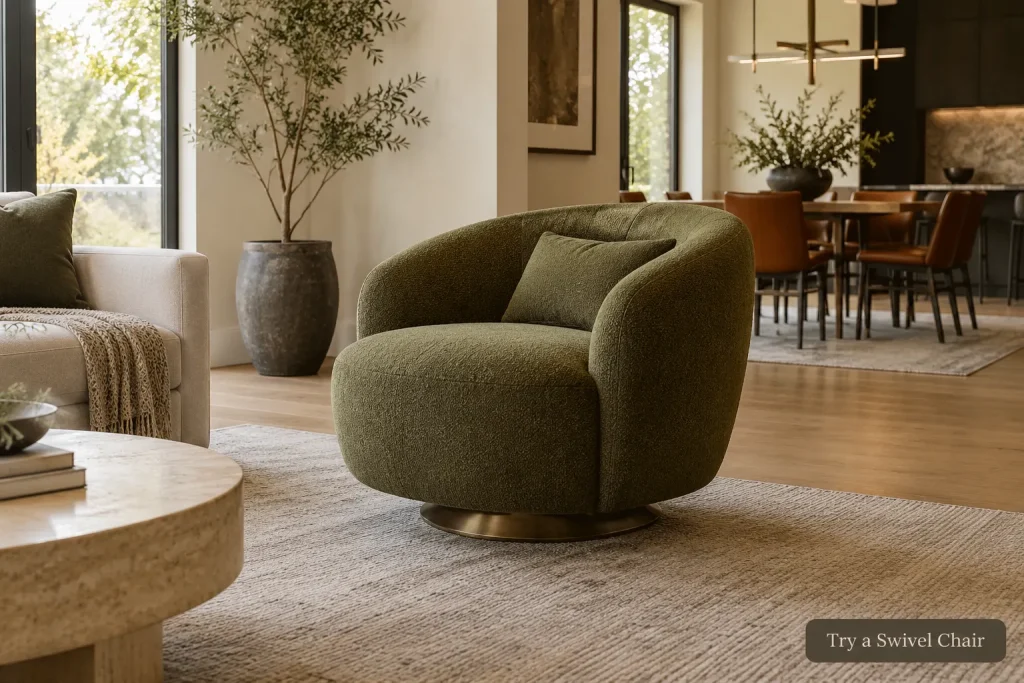
Try a Swivel Chair
A swivel chair is one of the most practical pieces of living room furniture in open-plan homes. It can turn toward the TV, the dining table, a window, or a conversation without being moved.
They’re especially useful in corners or between two zones of a room. Look for one with a stable base and a smooth, quiet swivel. If you have small children, check that it doesn’t spin too freely.
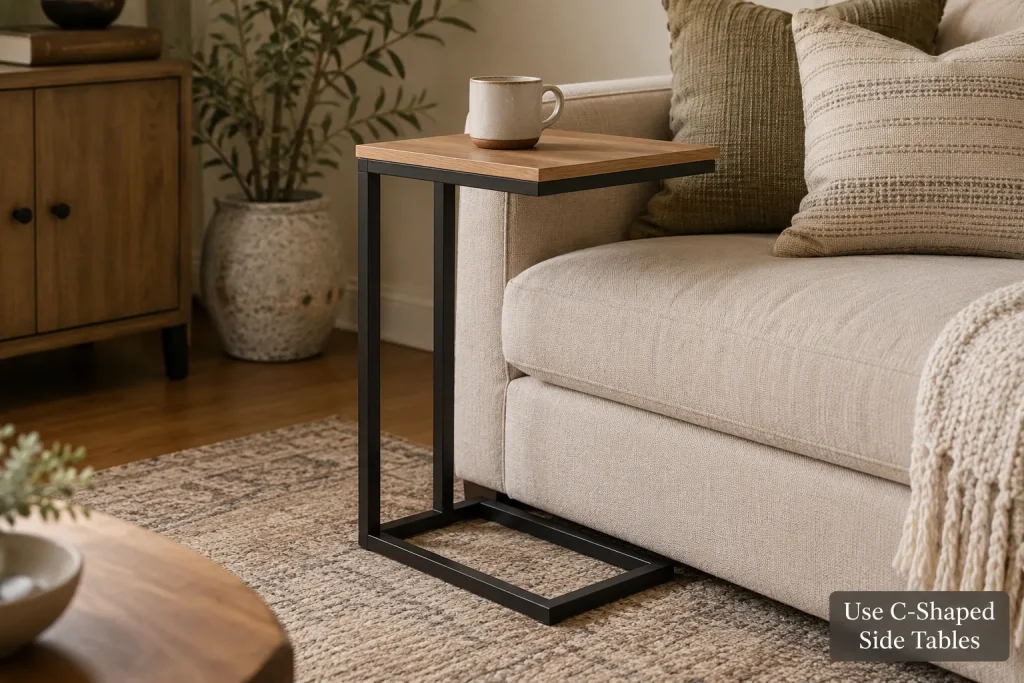
Use C-Shaped Side Tables
Traditional side tables need space beside the sofa, which isn’t always available. A C-shaped table slides under the sofa or a chair, so the top sits over the seat.
They’re ideal for holding a drink or a laptop while you sit, and they can be pulled over the arm or moved between seats as needed. Many are lightweight and tuck neatly against the wall when not in use.
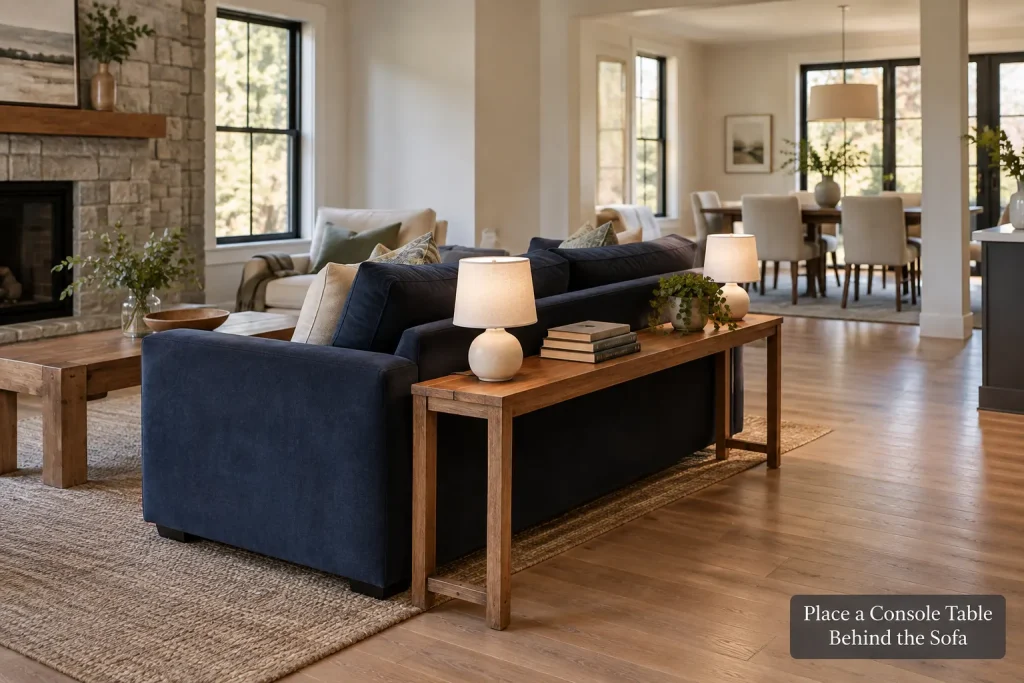
Place a Console Table Behind the Sofa
If your sofa floats in the middle of the room rather than sitting against a wall, a console table behind it is very useful.
It gives you a place for lamps, which helps with lighting in the center of the room. It also offers a surface for books, a tray, or a drop spot for keys. In open-plan spaces, it can help define where the living area ends.
Choose one that’s no taller than the sofa back, and a little shorter than the sofa’s length.
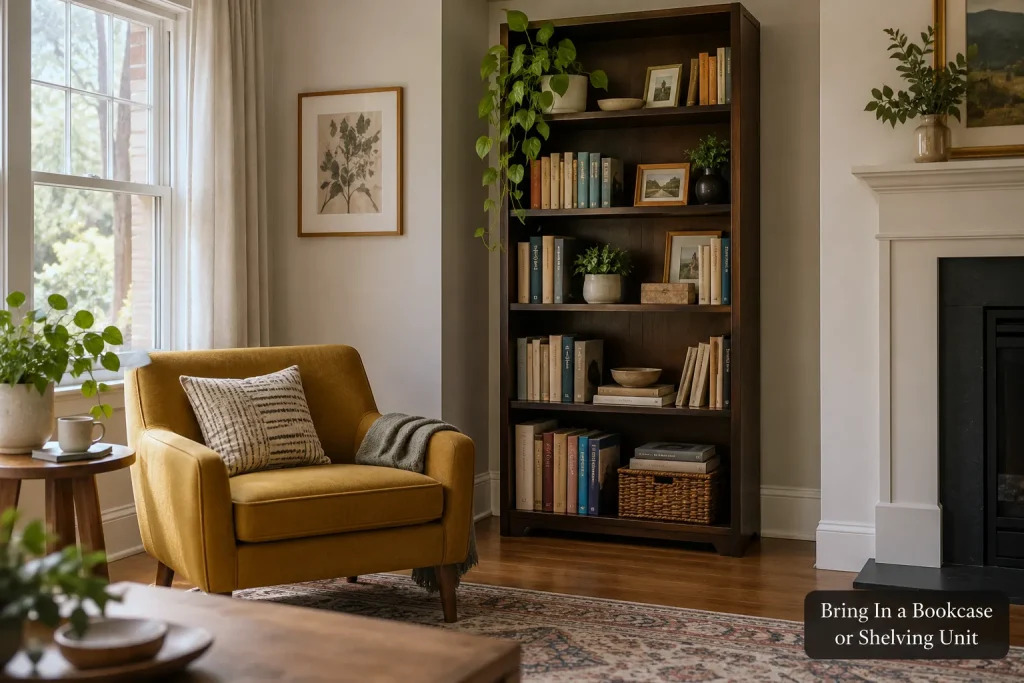
Bring In a Bookcase or Shelving Unit
If your living room needs somewhere for books, photos, or the small things a household collects, a bookcase or shelving unit gives those items a home and adds height to the room.
Tall, narrow bookcases fit beside windows or in alcoves. Low, wide units can double as a media console or a surface for lamps and plants.
Anchor tall bookcases to the wall following the manufacturer’s instructions. Even a sturdy-looking unit can tip, especially when the top shelves are loaded or someone pulls on it.
Add Later: Pieces With Personality
These aren’t essential, but they’re often the pieces that give a living room its character. It’s fine to wait and find the right one rather than buying in a rush.
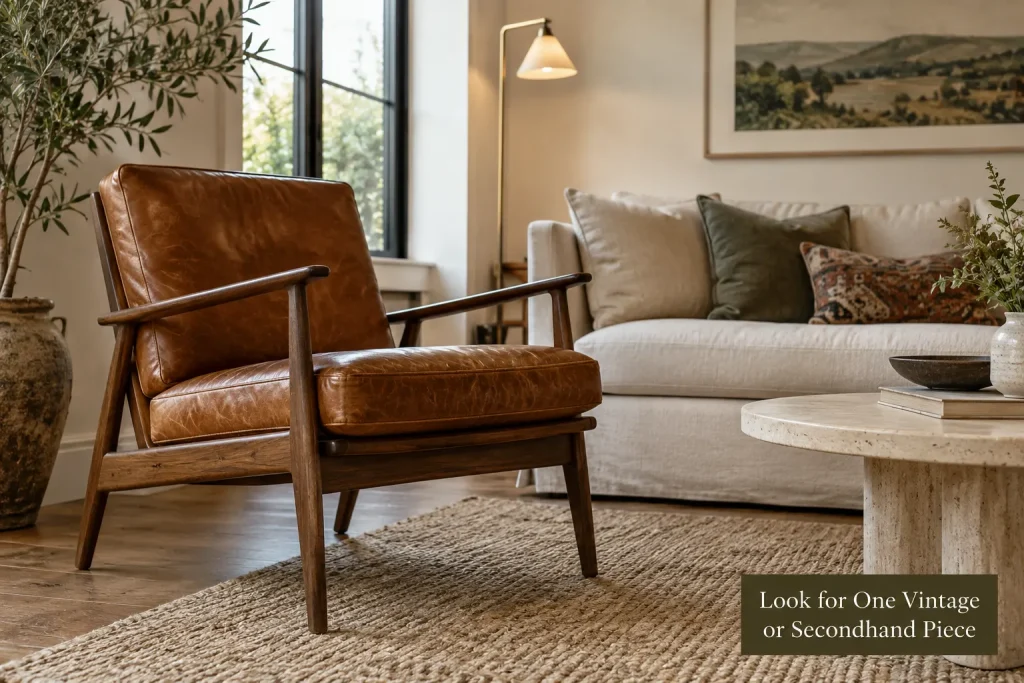
Look for One Vintage or Secondhand Piece
A single older piece, like a wooden chest, a mid-century armchair, or a carved side table, adds history and contrast to newer furniture.
Secondhand shops, estate sales, and online marketplaces are good places to look. Bring your measurements and check that drawers open smoothly and joints are solid. For upholstered pieces, look closely at the condition of the fabric and seams, check for odors, stains, or signs of pests, and decide whether professional cleaning is worth the cost before you buy.
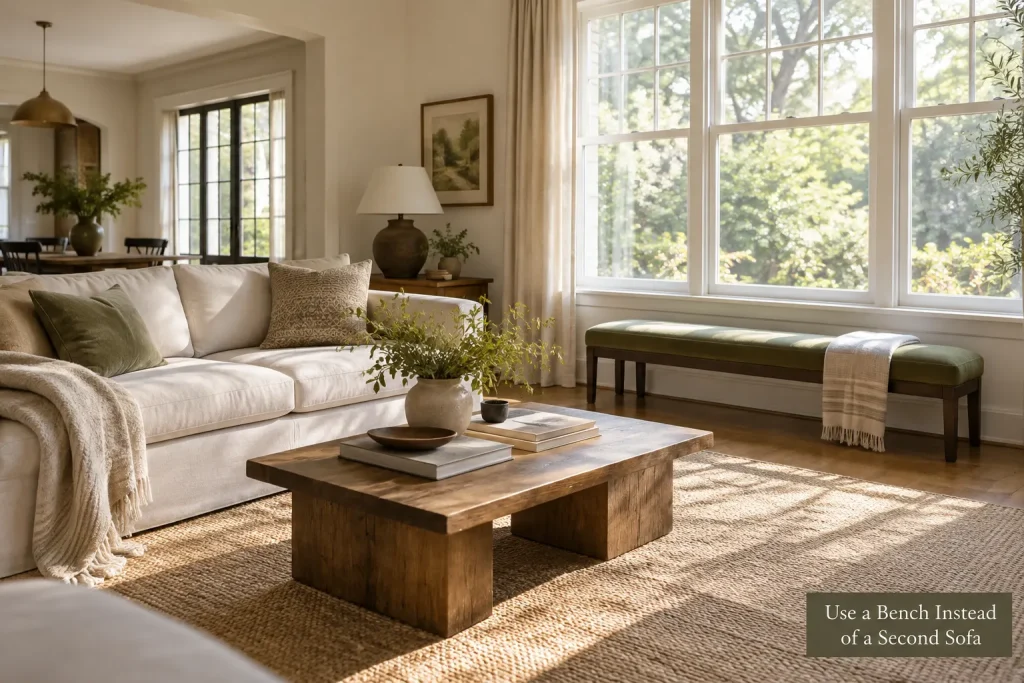
Use a Bench Instead of a Second Sofa
In rooms where a second sofa won’t fit, a bench can provide extra seating without the bulk. Upholstered benches work at the end of a seating area or under a window. Wooden benches are useful along a wall and are easy to wipe clean.
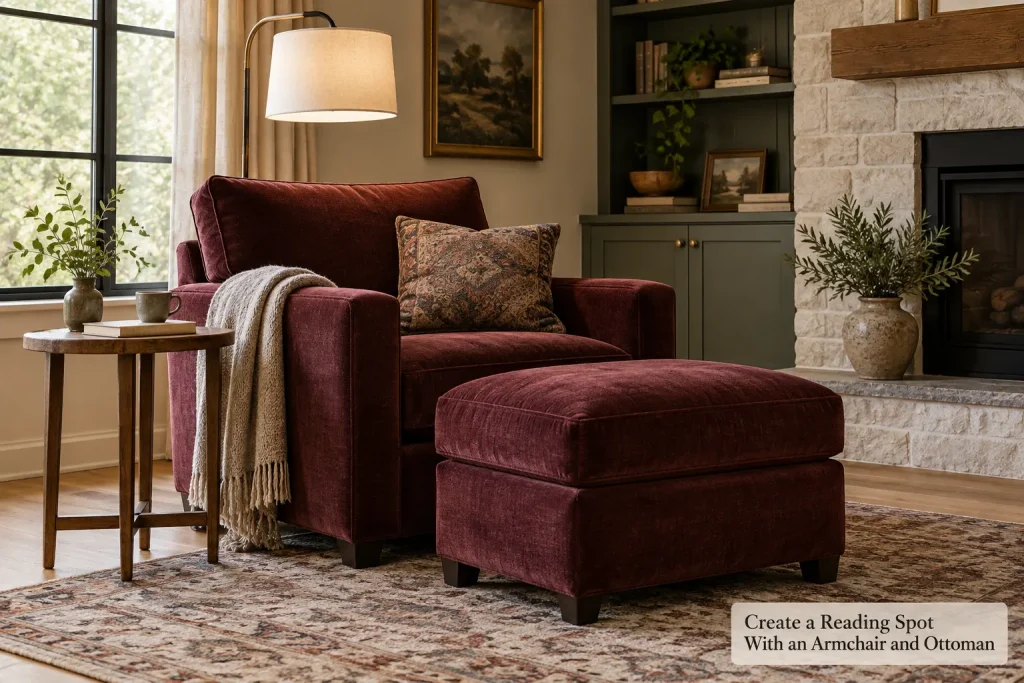
Create a Reading Spot With an Armchair and Ottoman
A comfortable armchair with an ottoman makes a natural reading or relaxing spot. It gives one person somewhere to settle in without taking up the whole sofa. Check that the ottoman is close to the chair’s seat height, so your legs rest comfortably rather than dropping too low or angling up.
Look for a chair with good back support and arms at a comfortable height. Pair it with a floor lamp and a small side table, and the spot is ready to use.
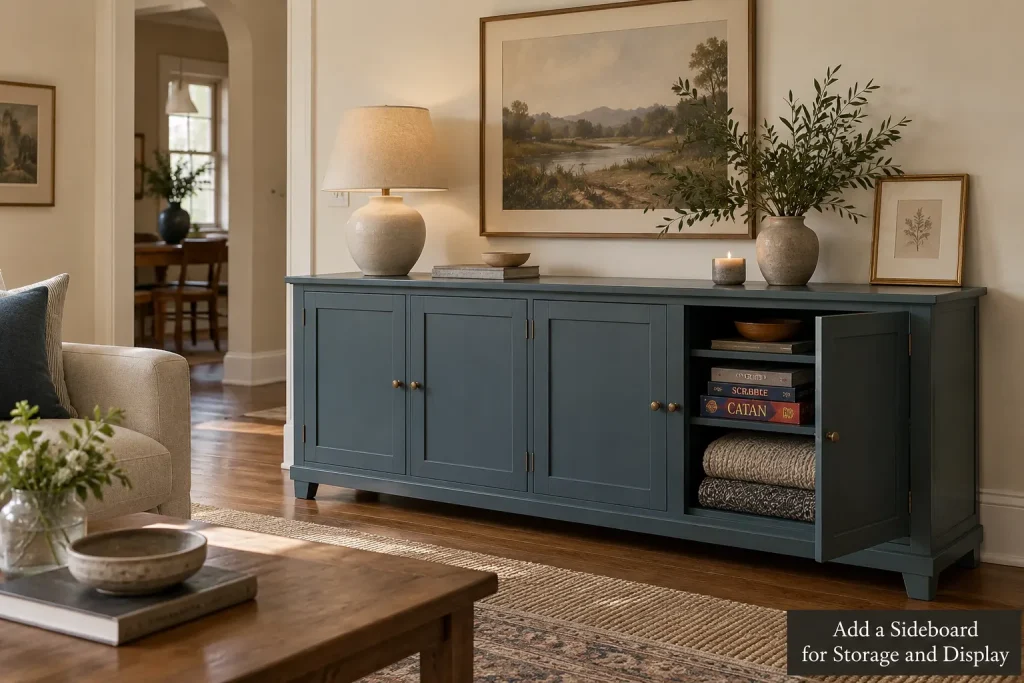
Add a Sideboard for Storage and Display
A sideboard or low cabinet is useful along a long wall. The cabinets below hide everything from board games to spare blankets, while the top becomes a place for lamps, art, and a few decorative pieces.
Problem Solvers for Small or Busy Rooms
These pieces earn their place by doing more than one job.
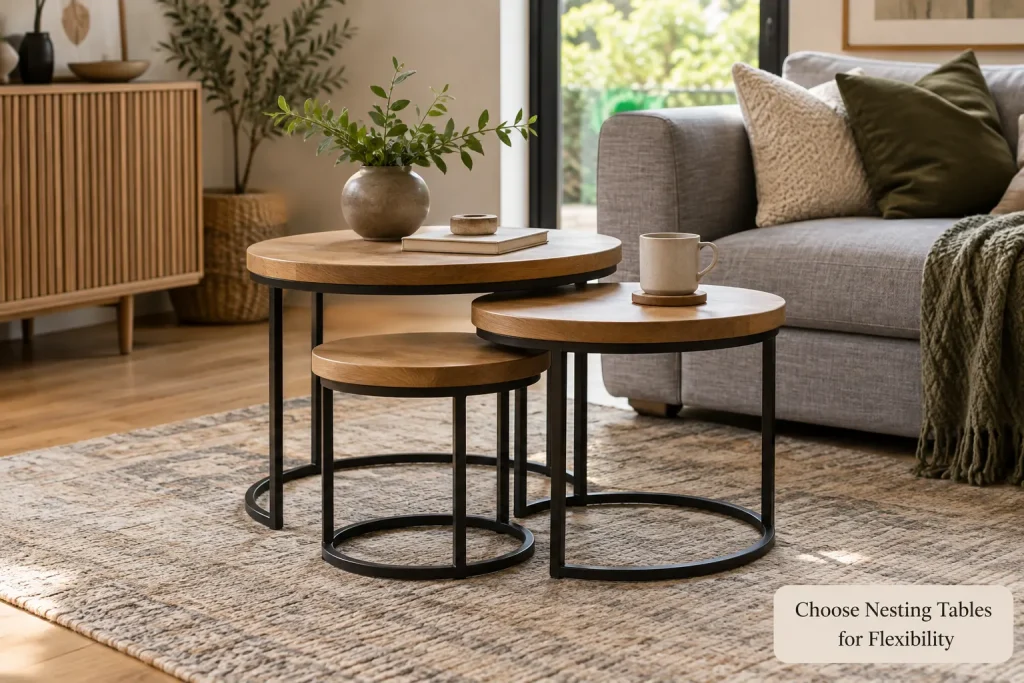
Choose Nesting Tables for Flexibility
Nesting tables slide together when not in use and pull apart when you need more surface. They’re ideal for small rooms or homes that host occasionally.
Use the largest one as a side table day to day, then spread them out when guests arrive. Look for sets where the smaller tables slide fully underneath without scraping, and choose finishes that resist water rings if they’ll hold drinks.
Pick a Storage Ottoman
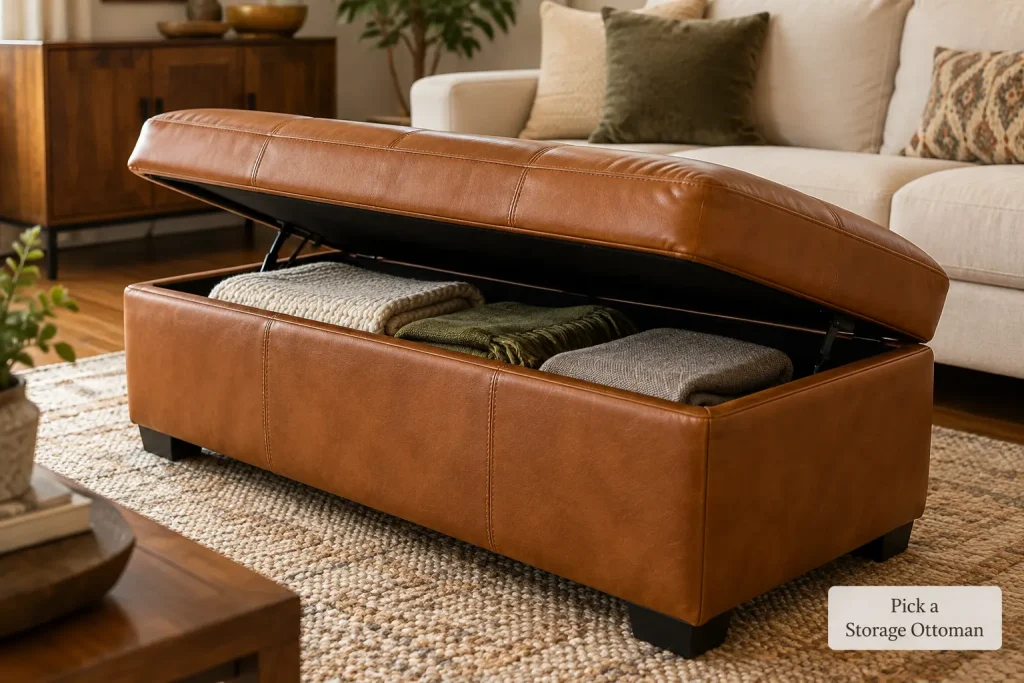
A storage ottoman works as a footrest, extra seating, and a coffee table when you place a tray on top. The inside holds blankets, toys, or magazines.
Choose one with a lid that’s easy to lift and a soft-close hinge, which helps prevent pinched fingers and sudden lid drops. Leather or faux leather tops are easy to wipe if the ottoman will often hold a tray of snacks.
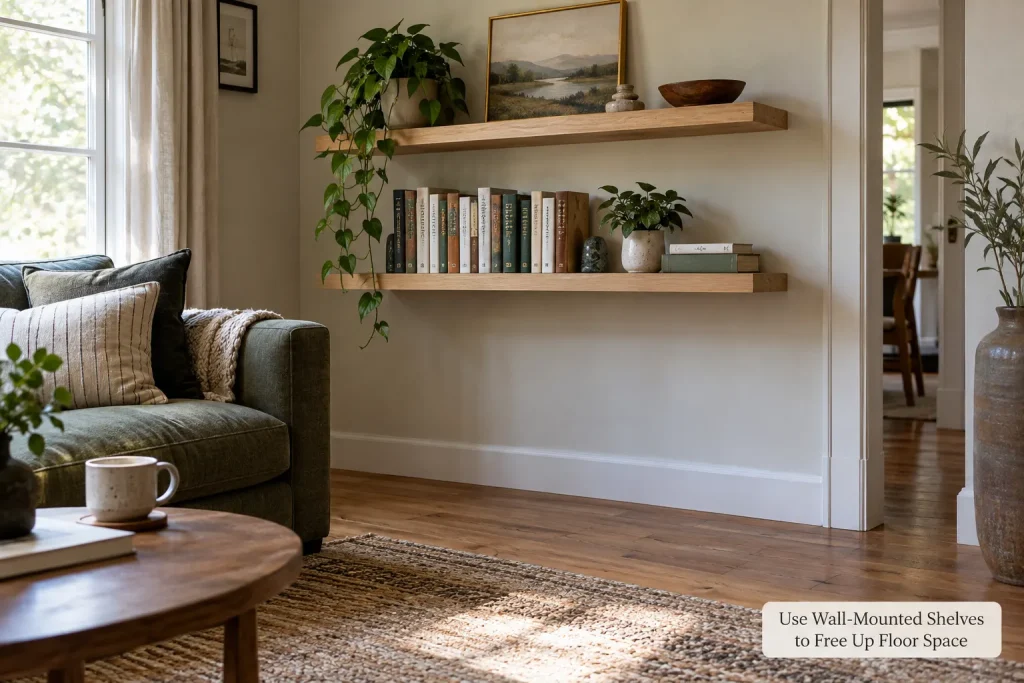
Use Wall-Mounted Shelves to Free Up Floor Space
Floating shelves keep books, plants, and decor off the floor. In small living rooms, keeping more floor visible tends to make the space look larger.
Install them into wall studs or with anchors rated for the weight you plan to store. Keep heavier items like books on lower shelves and lighter decor higher up.
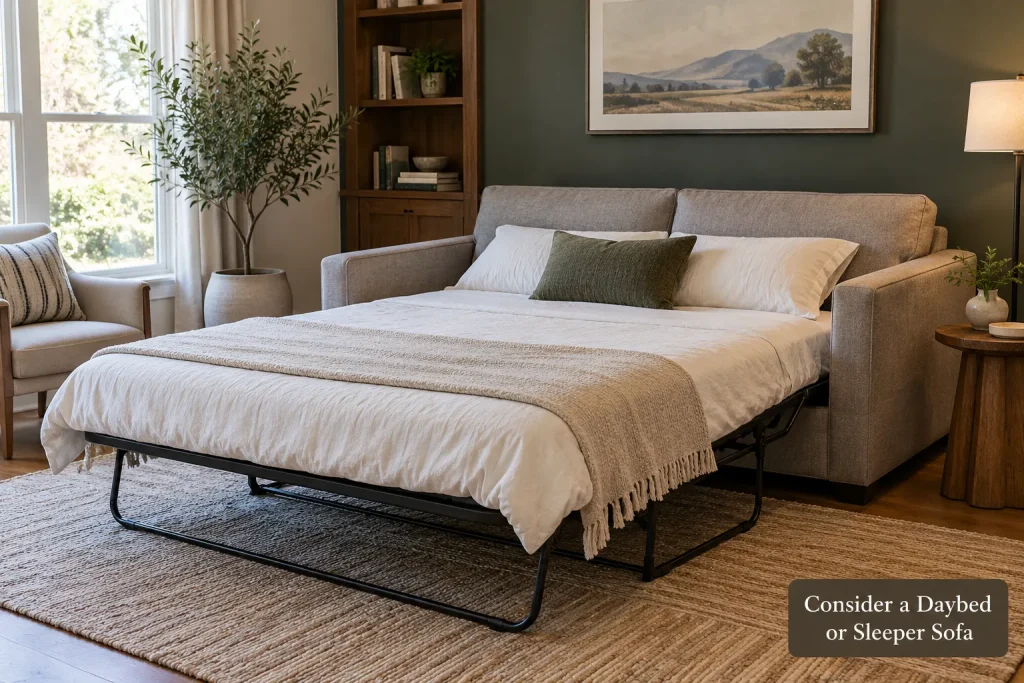
Consider a Daybed or Sleeper Sofa
If your living room sometimes hosts overnight guests, a daybed or sleeper sofa saves the need for a separate guest room.
Test the seat comfort as well as the sleeping comfort, since you’ll sit on it far more often than you’ll sleep on it. Check how easily the mechanism opens, too.
A daybed usually holds a regular twin mattress that stays ready to sleep on, while a sleeper sofa folds a mattress away inside. Sleeper mattresses vary a lot in thickness and comfort, so lie on one in the store if you can before deciding.
Living Room Furniture Mistakes That Are Hard to Undo
Some mistakes are easy to fix. These usually aren’t.
Ignoring outlet locations. A reading chair or console placed far from an outlet means cords stretched across the floor or a lamp you can’t use.
Choosing a seat depth no one finds comfortable. Sit on a sofa in person if you can, ideally for several minutes.
Blocking walkways. Furniture that cuts across a main path makes the room frustrating to use every day.
Buying everything at once. Filling a room in one shopping trip often leads to pieces that don’t quite fit together. Buying the anchors first and adding gradually tends to work better.
Forgetting who else uses the room. Very low or very deep seating may be hard for older relatives or guests with limited mobility. Having at least one chair with a firmer seat and sturdy arms helps.
Where to Start Depending on Your Room
Small room? Prioritize a compact sofa, a floating media console, and pieces that do two jobs.
Busy family room? Start with durable seating and closed storage.
Open-plan space? Use a console table or sectional to mark where the living area begins.
Hosting guests often? A sleeper sofa or daybed and a few movable seats are worth planning early.
Questions About Living Room Furniture
Should living room furniture match?
It doesn’t need to. Coordinating colors, woods, or metals helps pieces look connected, but a room where everything comes from one collection can look a little uniform.
How do I arrange furniture in a long, narrow living room?
Try dividing it into two zones, such as a main seating area and a reading corner or desk. Floating the sofa away from the wall and using a rug under each zone helps define them.
Where is it worth spending more, and where can I save?
Many people spend more on pieces they use every day, like the sofa and a comfortable chair. Side tables, shelves, and decorative pieces are easier places to save.
Can I mix different wood tones in living room furniture?
Yes. Picking one main wood tone for the larger pieces and repeating any second tone at least twice usually keeps the mix looking intentional. Pieces with similar undertones, such as warm or cool, tend to sit well together.
How much space should be between the sofa and coffee table?
Around 14 to 18 inches (35 to 45 cm) is a common starting point. It leaves legroom while keeping drinks within reach, though comfort, mobility needs, and the size of the room can all change what works best.
An Empty Corner Is Allowed
There’s a lot of pressure to fill a room quickly, especially after a move. But an empty corner costs nothing, while the wrong armchair costs money and keeps taking up space.
Get the sofa, the main table, and the storage right first. Then live in the room for a while. You’ll notice where you keep wishing for a surface, a seat, or a shelf, and those gaps will tell you exactly what to buy next.