

Beyond the Gallery Wall: 7 Living Room Art Ideas With a Fresh Angle
The sofa is in, the rug is down, the curtains are up, and yet the living room still looks unfinished. Often the missing piece is art, and the usual answer is a gallery wall above the sofa.
That can work, but art can also sit on a shelf, stand on an easel, spread across a painted wall, or even appear on a screen. Using it in two or three of these ways gives the eye more than one place to land. The seven living room art ideas below cover a mix of budgets and living situations, so some will suit renters, some suit people who like to change things often, and some are best for a home you own.
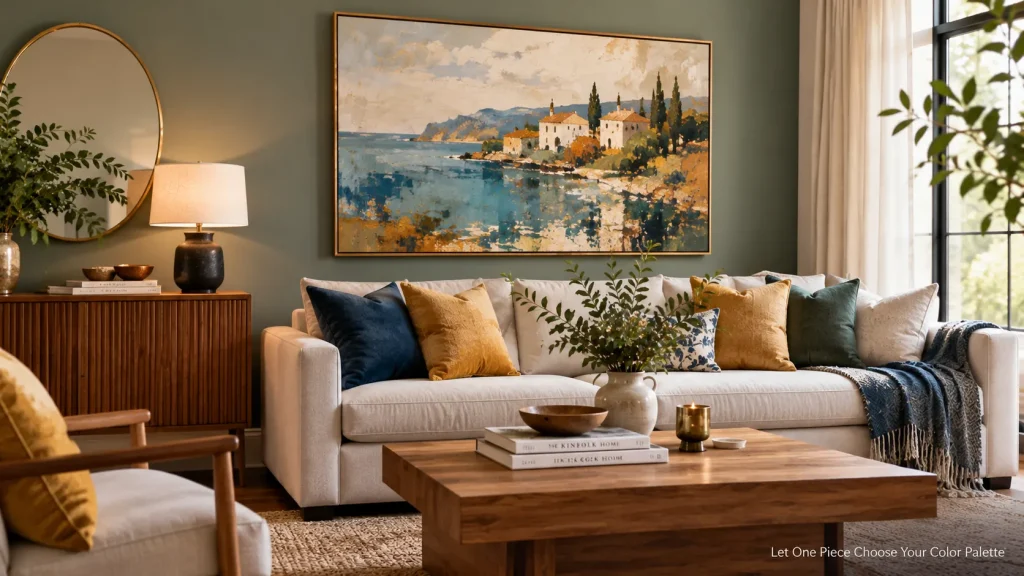
Let One Piece Choose Your Color Palette
Most people decorate a living room first and look for art afterward, hoping something will match. Try flipping that around.
Start with a single piece you really love, whether it’s a print, a painting, or a textile. Then pull two or three colors from it and repeat them around the room in cushions, a throw, a vase, or a rug.
For example, a landscape print with dusty blue sky, olive hills, and a touch of rust could lead to:
- Blue-gray cushions on a neutral sofa
- An olive green throw over the armchair
- A rust-colored vase or lamp base on a side table
Already have the sofa and rug? Look for a piece that includes the main color of your largest furniture plus one or two accents you’d like to bring in.
This works best with art that has a few distinct colors rather than dozens. Hold small items up against the piece in daylight before buying, since colors can look quite different on a screen or in shop lighting.
Paint a Simple Mural or Shape on the Wall
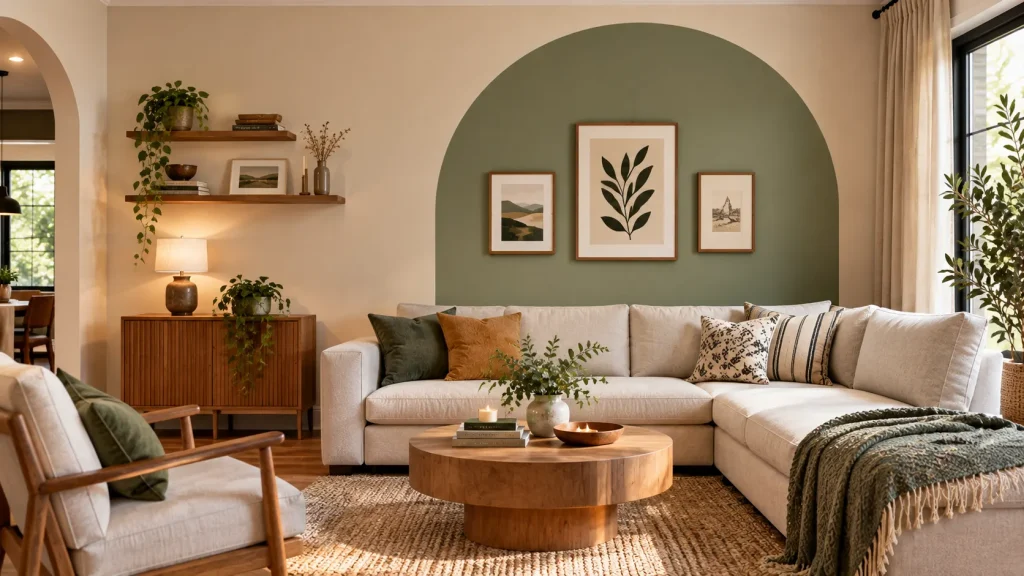
Sometimes the wall itself can become the art. A painted shape or simple mural adds color and personality without a single frame.
Easy shapes to start with
You don’t need to be an artist for this. Popular shapes are simple:
- An arch behind a sofa, reading chair, or console
- A large circle or half circle, like a setting sun
- Color blocking, where the lower part of a wall or a tall rectangle is painted in a second color
- A soft wavy line running across the wall
Start on a clean, dry wall in sound condition. Painter’s tape helps with straight edges. For a large arch or circle, a pencil tied to a length of string, pinned at the center point, works like a big compass, while a cardboard or paper template is often easier for smaller shapes.
A painted shape usually looks more planned when it relates to the furniture. Center an arch on the sofa or chair in front of it, make it a little wider than that piece, and run it right down to the skirting board so it looks grounded rather than floating. Used this way, the paint can frame the seating like a backdrop, in a way a framed print usually can’t.
Thinking about color
A slightly deeper shade of the wall color looks calm, while a contrasting color makes more of an impact. Test a sample patch and check it in daylight and evening light.
If you rent
Ask your landlord before painting, and expect to repaint at the end of your lease. Peel-and-stick wall murals and removable decals are an alternative living room wall decor option. Test a small, hidden area first, since even products sold as removable can lift delicate paint or damage wallpaper.
Open windows while painting and follow the paint’s instructions for drying time, especially in a room where people will be sitting soon after.
Treat Sculpture and Ceramics as Art Too
Living room art doesn’t have to hang on the wall. Three-dimensional pieces on tables and shelves can add shape and texture that flat art often doesn’t.
A handmade ceramic vase, a small sculpture in wood or stone, or a carved candle holder with an interesting shape all count. A coffee table, console, sideboard, or deep windowsill can all work as a display spot. A group of three pieces in different heights is one approach, while a matching pair can look just as good when the objects are substantial or the setting is symmetrical, like either end of a mantel.
Give a favorite piece a clear patch of surface around it, roughly its own width on each side, and keep remotes and magazines in a basket or drawer instead.
A table lamp placed beside a sculpture throws shadows that show off its shape in the evening, while a ceramic piece near a window looks different through the day as the light moves.
Think about safety, too. Heavy or fragile pieces are best kept on low, stable surfaces rather than high shelves, especially in homes with young children or pets that jump. A small pad of museum putty under a lightweight object can help keep it in place on a surface that gets bumped.

Tuck Small Art Into Your Bookshelves
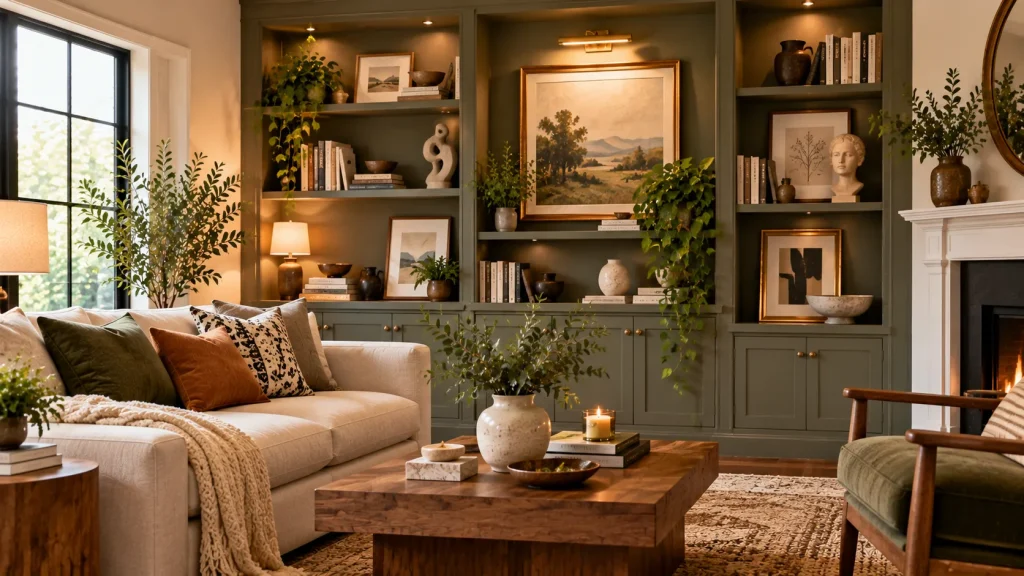
Bookshelves full of nothing but books can look like a solid wall of spines. Adding a few small pieces of art breaks that up and makes the shelves look more personal.
Small framed prints, postcards in mini frames, little paintings on canvas, or a tiny sculpture can all sit in front of books or on a shelf by themselves. Leaning a frame against the back of a shelf is enough. No nails required.
Good bookshelf styling ideas usually work with the books you already have rather than clearing them out:
- Lay a short stack of books flat and stand a small frame or object on top, so the books become a pedestal
- Lean a frame in front of upright books on a shelf where the spines are less interesting
- Spread the art across different shelves, and leave some shelves with books only
For example, a tall bookcase might have a ceramic bowl on a lower shelf, a small framed botanical print at eye level, and a light unframed card on the top shelf. Keep heavier or fragile pieces on the lower, sturdier shelves, especially with children or pets around, and anchor a tall freestanding bookcase to the wall.
Put a Large Canvas on an Easel
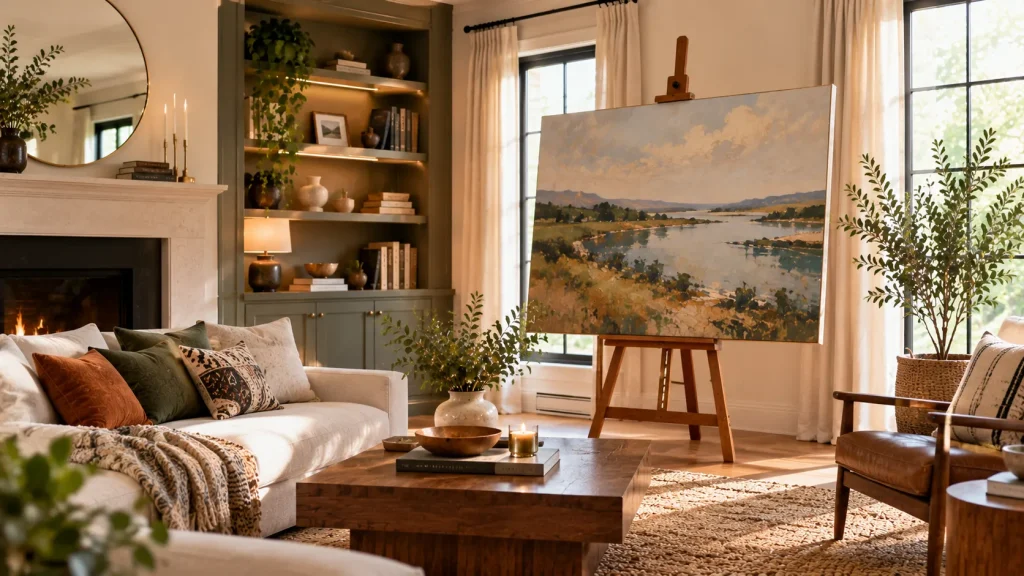
An easel isn’t just for artists. A floor-standing easel holding a large canvas or framed print gives art a gallery-like feel and doesn’t involve putting any holes in the wall.
An easel suits an awkward corner that’s too small for furniture, beside a fireplace, or near a window where a piece can catch the light. Angling the easel slightly toward the main seating, rather than flat against the wall, makes it read as a separate focal point instead of a picture that hasn’t been hung yet. It also makes art easy to swap.
For example, a reading corner with an armchair and floor lamp could have a large abstract canvas on an easel tucked beside the lamp. It fills the corner, adds height, and can be swapped out for a different piece in winter.
Look for a display easel rather than a lightweight painting easel. Display easels are built to hold finished pieces, with a stated weight capacity and a ledge or clamp that supports the frame securely. A light folding artist’s easel can be too wobbly for anything heavy.
An easel is easier to knock over than art on a wall, so place it out of busy walkways. In homes with toddlers or large, playful pets, it may be safer to save this idea for a quieter room or a spot that’s hard to reach.
Make a Piece Yourself
Some of the most meaningful living room art is homemade. These DIY wall art ideas don’t need any special training to look good on the wall:
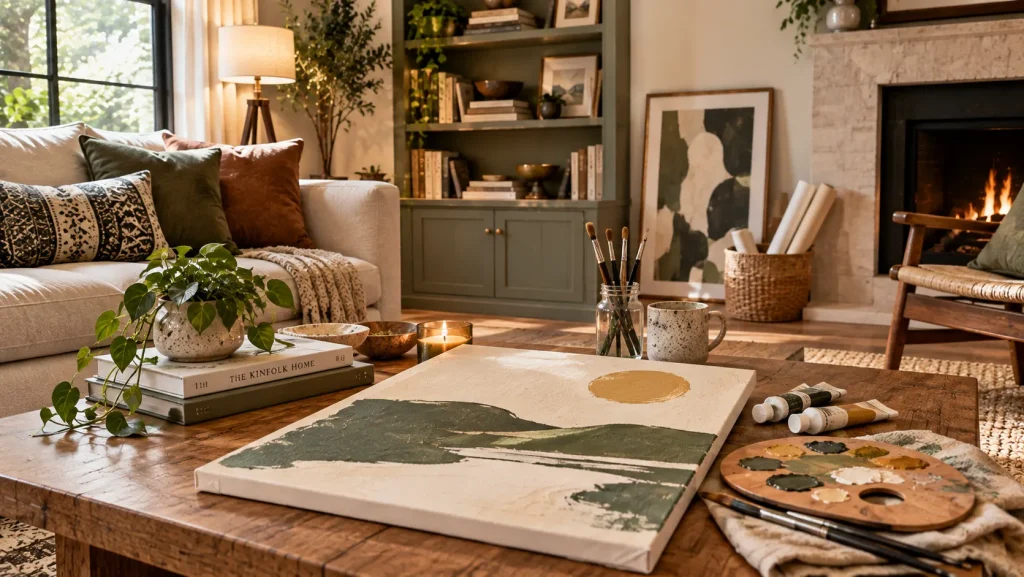
Abstract painting. Simple shapes, brushstrokes, or blocks of color on a large canvas can look striking, especially in colors that match your room. Many people start by choosing two or three paint colors and keeping the composition loose.
Pressed botanicals. Leaves, ferns, or flowers pressed flat between sheets of paper inside heavy books, then mounted in a glass frame, make delicate natural art. Wait until they’re completely dry before framing, which can take a couple of weeks, and expect some colors to soften or fade over time. Picking from your own garden or a walk adds a personal story to each piece.
An enlarged photograph. A photo you took on a trip, or a simple close-up of something like ocean waves or tree bark, can look great printed large. Black and white printing often gives casual photos a more polished, artistic look. Use the highest-resolution version of the image you have, since small or compressed files can look blurry when enlarged.
Homemade art works especially well in matching frames, which help it look finished and planned. Secondhand shops are a good source of inexpensive frames, and a coat of paint can make mismatched ones look like a set.
Show Art on a Screen
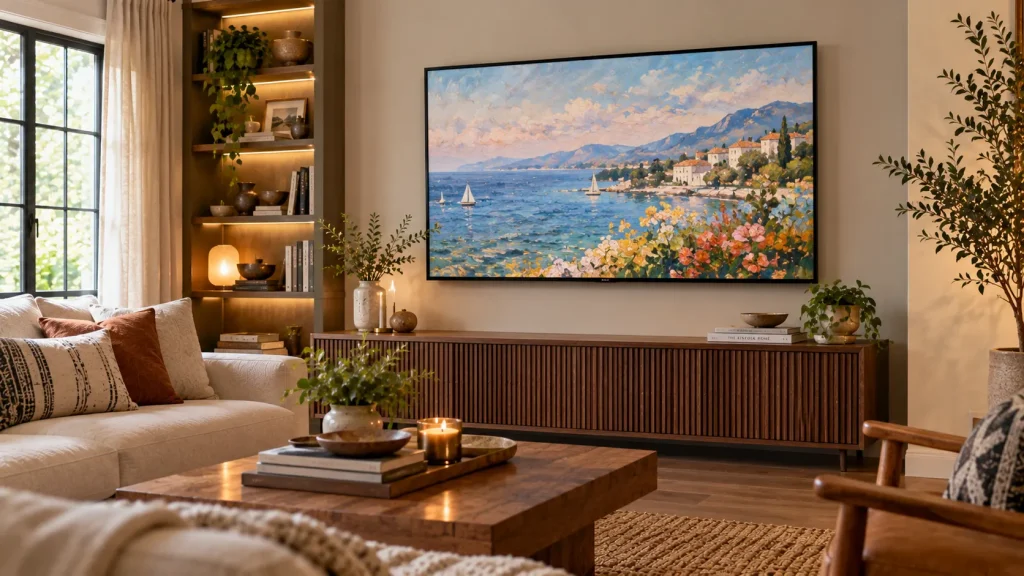
Some TV models offer an art mode, showing artwork or photos when the TV isn’t in use, so the screen looks more like a framed picture than a black rectangle. Digital photo frames can do something similar on a smaller scale, rotating through family photos or favorite artworks on a shelf or side table.
Finding images to display is easier than many people expect. Some museums offer open-access collections of artworks you can download, and many artists sell digital files of their work. Some art-mode features also need a compatible device or a subscription for their artwork library. Being able to download an image doesn’t automatically mean you can use it any way you like, so read the usage terms, and support independent artists where you can.
Before setting one up:
- Screens use power, so check the energy settings and use timers or sleep modes if the product offers them
- Choose matte or anti-glare settings if the screen faces a window
- Tidy away cables, using cable covers or a cord-management kit
If you’re mounting a television, follow the TV and bracket manufacturer’s installation instructions, use fixings suited to your wall, and consider professional installation for larger screens.
How These Ideas Work Together
You don’t have to choose just one. Many of these living room art ideas combine naturally, and using two or three at once usually looks more relaxed than relying on a single big statement.
Here’s one layout for a living room with a neutral sofa:
- Above the sofa: a large botanical print in sage, cream, and terracotta sets the palette
- Bookshelf to one side: two small framed sketches on separate shelves and a terracotta bowl on a stack of books
- Coffee table: one handmade ceramic vase in sage
- Corner by the window: an easel holding a homemade abstract canvas in the same colors
Which Idea Suits Your Living Room?
This quick comparison of these living room art ideas can help you decide where to start:
| Idea | Rough cost | Rental friendly? | Good for |
|---|---|---|---|
| One piece sets the palette | Low to high | Yes | Pulling a room together |
| Painted mural or shape | Low | Ask first | A big impact on a budget |
| Sculpture and ceramics | Low to high | Yes | Adding texture and shape |
| Art in bookshelves | Low | Yes | Personalizing shelves |
| Canvas on an easel | Medium | Yes | Corners and no-drill homes |
| Homemade art | Low | Yes | Personal, budget-friendly art |
| Art on a screen | Medium to high | Usually | Changing art often |
Costs depend mostly on what you already have. Leftover paint and secondhand frames keep things cheap, though homemade art still needs supplies and usually a frame. Original artwork, handmade ceramics, and a compatible art-mode TV push the cost up. Treat the table as a rough comparison only.
A Few Mistakes to Avoid
Ignoring where you’ll view it from. Fine details and small text disappear from across the room. For a piece you’ll mostly see from the sofa, bold shapes and colors read better than intricate linework.
Placing art where it will get damaged. Direct sun can fade prints and photographs, and heat or steam from radiators, fireplaces, or an open kitchen can warp paper and canvas. Choose a spot away from those, or use UV-protective glazing for framed pieces.
Leaving displays unsecured. Easels, leaning frames, and objects on high shelves can all tip. If something wobbles when you brush past it, move it, secure it, or swap it for a lighter piece.
Picking pieces too small for the spot. A tiny frame on a deep shelf or a postcard-sized print on a large wall can disappear. Test the size with a paper template before buying, or group two or three smaller pieces closely together so they read as one larger display.
Questions About Living Room Art
How can I check if a piece is the right size before buying?
Cut a sheet of paper or cardboard to the artwork’s measurements and tape it where the piece will go. Look at it from your usual seat and from the doorway. If it looks lost, go bigger; if it crowds the furniture, go smaller.
Can I mix different styles of art in one living room?
Yes. A modern abstract and a vintage landscape can sit happily in the same room if they share a color or a frame finish. Matching frames are one of the easiest ways to make very different pieces look related.
What art works in a small living room?
Pieces that don’t need floor space are the safest bet, such as shelf art or a painted shape on one wall. If you want an easel, measure the walkway first and keep a comfortable path clear beside it.
How often should I change my living room art?
It’s entirely up to you. Some people keep the same pieces for years, while others swap things seasonally. Easels, bookshelves, and digital screens make changing art much easier than rehanging frames.
Choose One Spot and Start There
Pick one display spot this week, maybe the wall behind the sofa, a bookshelf, or an empty corner. Check how the light falls on it at different times of day, test the size with a paper template, and then choose a piece to suit it. Once that first spot works, the rest of these living room art ideas are much easier to slot in around it.