

Living Room Decor That Feels Good: 13 Ideas Beyond Just Looks
Try a small experiment next time you sit down in your living room. Close your eyes for a minute.
What do you notice? Maybe the TV from another room echoes off bare walls. Maybe the sofa cushion is a little scratchy, or the air smells faintly of last night’s dinner. Maybe the room seems cold, even though the thermostat says otherwise.
Most living room decor advice focuses on how a room looks. Colors, art, furniture placement. Those things matter, but a living room is also a place you hear, touch, and smell. A space can look lovely in photos and still be uncomfortable to spend an evening in.
So this guide takes a slightly different route. The 13 living room decor ideas below are grouped by sense: sight, touch, sound, and scent. Sight gets the most ideas, simply because that’s where most decorating choices happen. The others cover the parts of a room you only notice when they’re missing.
A Five-Minute Sense Check
Before changing anything, walk through your living room with these questions in mind. Your answers will point you toward the ideas that matter most.
- Sight: Does anything in the room catch your eye, or does it all blend together?
- Touch: When you sit down, is there something soft within reach, and somewhere to set a drink?
- Sound: Do voices and footsteps echo, or does the room sound calm?
- Scent: Does the room smell fresh, stale, or like nothing at all?
If one area stands out as weak, start there. You don’t need all 13 ideas. Three or four chosen well will usually do more than a full overhaul.
Ideas for the Eyes
Visual changes are where most people start, and for good reason. They’re often the quickest way to make living room decor look more considered.
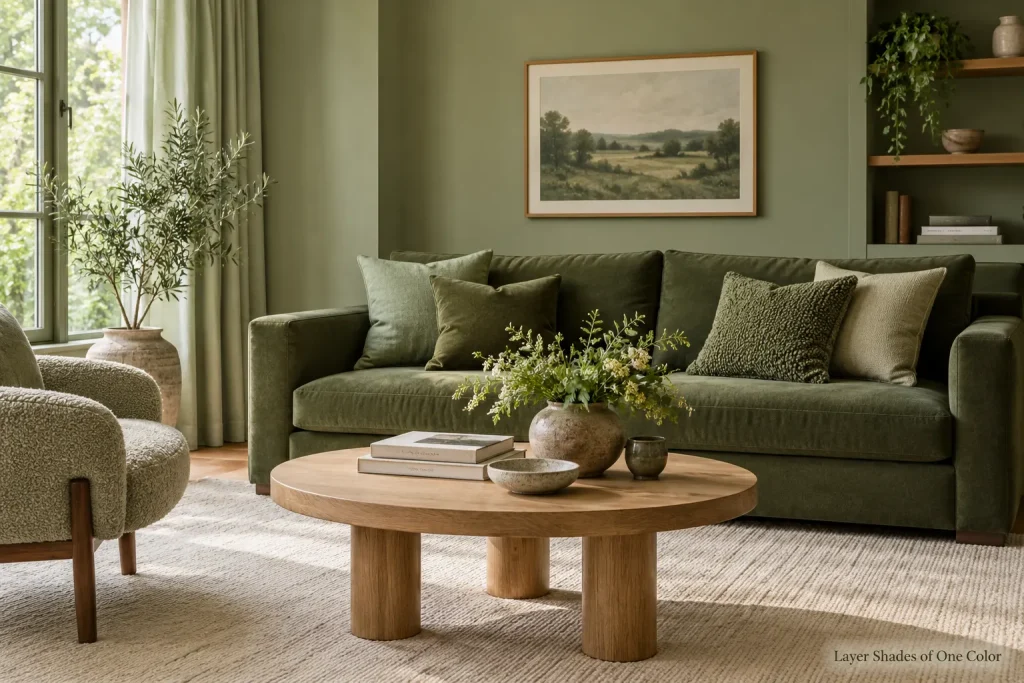
Layer Shades of One Color
A tonal palette means choosing one color family and using several shades of it throughout the room. Think soft sage walls, a deeper olive sofa, pale green curtains, and a moss-colored throw.
This approach looks calm and sophisticated, and it’s surprisingly forgiving. Since everything is related, it’s hard to choose a piece that clashes.
To keep a tonal room from looking flat, vary the materials. Linen, wood, wool, and ceramic in similar shades give the eye plenty to explore. A small amount of contrast, like a natural wood table or a cream rug, helps too.
Lean Art Instead of Hanging It
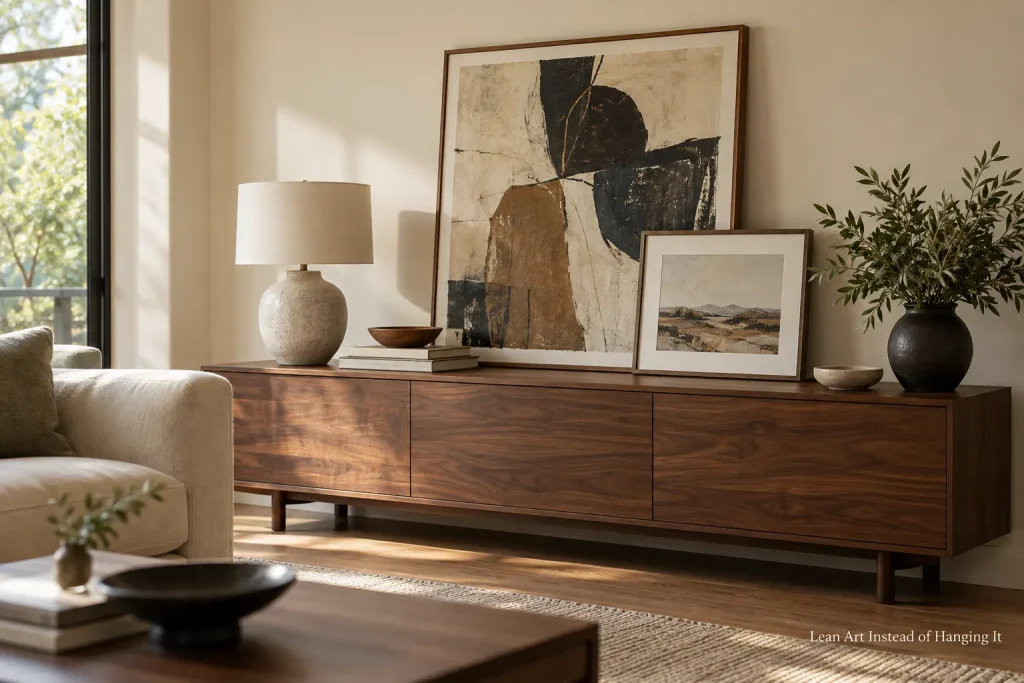
Not every piece of art needs a nail. Leaning frames against the wall on a console, mantel, bookshelf, or even the floor gives living room decor a relaxed, collected look.
Leaning also makes it easy to change things around. You can overlap a small frame in front of a larger one, swap pieces seasonally, or move art between rooms without patching holes.
A few tips for leaning art:
- Overlap frames slightly rather than lining them up side by side
- Mix sizes, with the largest piece at the back
- Use a small strip of museum putty on the bottom edge if you have kids or pets
- For floor leaning, choose a large piece so it doesn’t look lost
Add Picture Frame Molding
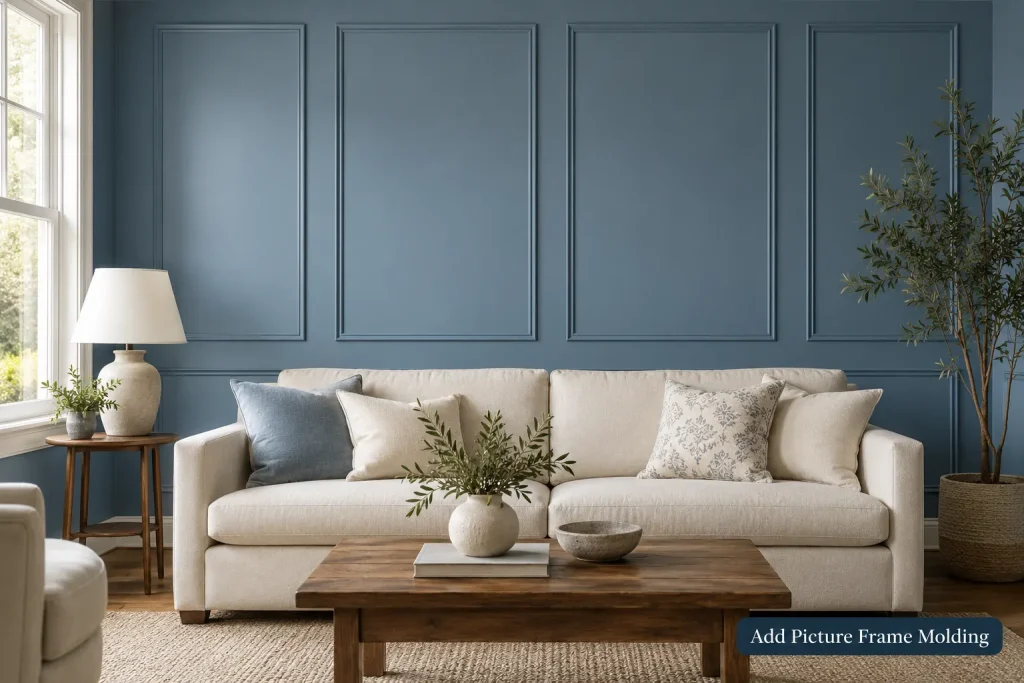
Picture frame molding is a series of thin rectangles of trim applied to a wall, usually painted the same color as the wall itself. It adds subtle detail and a bit of architectural character, especially in newer homes with plain walls.
It can be a manageable weekend project. You’ll need thin trim, a miter saw or miter box, wood glue or adhesive, small nails, and paint. Measure carefully and sketch the layout on paper first so the spacing looks even.
If you’re not ready for a wall project, look at peel-and-stick molding. It’s easier to remove later, though it may not look quite as crisp as real trim.
Refresh Your Lampshades
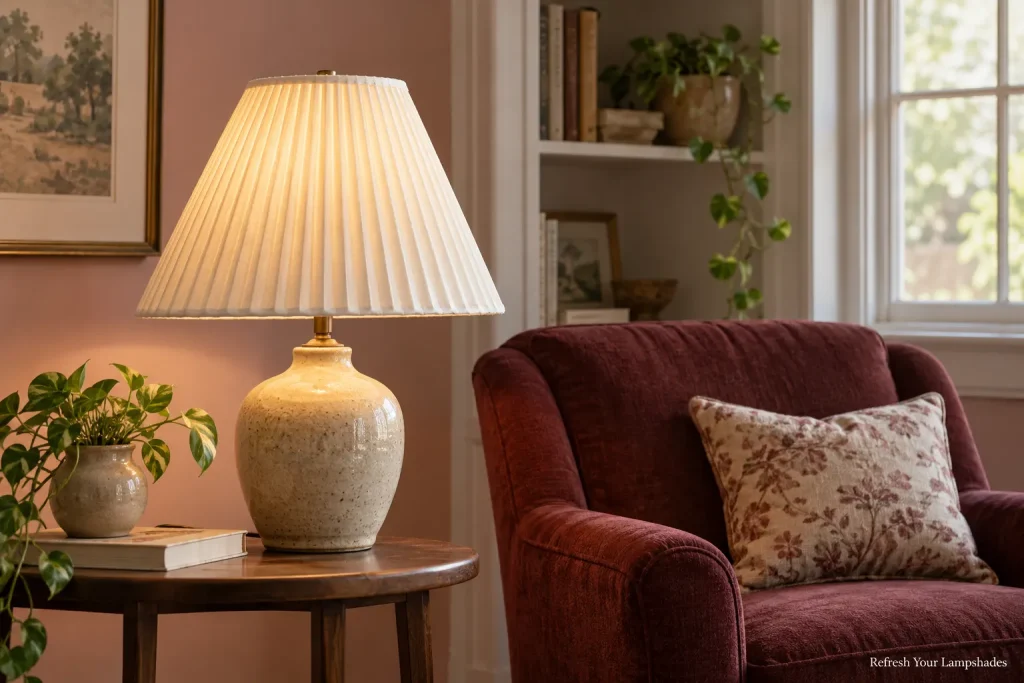
Lampshades are easy to forget, but a tired, yellowed shade can drag down an otherwise nice room.
Swapping shades is one of the most affordable living room decor updates around. Pleated shades add softness and a slightly vintage touch. Patterned fabric shades bring color in a small dose. Woven or rattan shades cast pretty shadows in the evening.
Color matters more than people expect. A white or cream linen shade lets plenty of light through and keeps things bright. A darker or patterned shade glows more softly and pushes light up and down instead of out into the room, which suits a cozy reading corner better than a main lamp.
Take your lamp base with you when shopping, or measure the harp and fitter type first. A shade that’s too small looks top-heavy, while one that’s too large swallows the base.
If you have two lamps that don’t match, giving them the same style of shade is an easy way to make them look like they belong together.
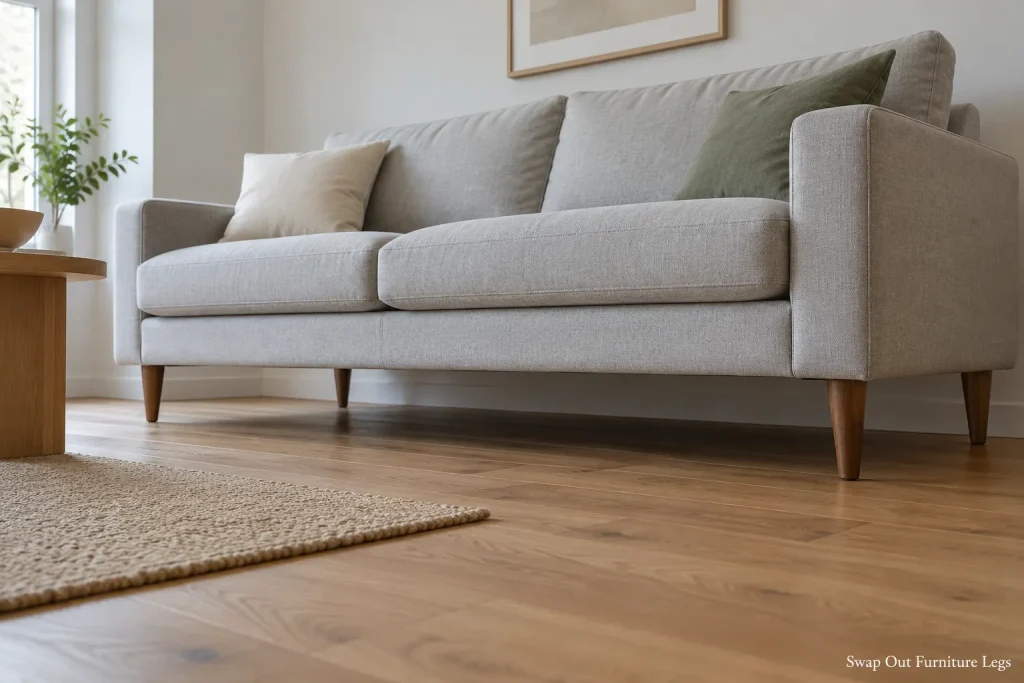
Swap Out Furniture Legs
Many sofas, chairs, and ottomans come with screw-in legs that can be replaced. Switching from short, chunky feet to tapered wood legs or slim metal ones can change the whole style of a piece.
Raising a sofa slightly on taller legs also shows more floor underneath, which can make a small living room look more open.
Before ordering, flip the furniture over and check how the existing legs attach. Most use standard screw sizes, but it’s worth confirming. Measure the current height too, so the new legs don’t leave your seat uncomfortably high.
When Looks Start Working Against You
Visual ideas are fun, but they’re also where living room decor tends to go wrong. A few things to watch for:
Styling for photos instead of people. A room arranged to look perfect from one angle may be awkward to actually sit in.
Using too many focal points. If the art, the rug, the wallpaper, and the light fixture all compete for attention, nothing stands out.
Ignoring scale. Small pieces scattered around a large room look lost, while oversized pieces crammed into a small room look heavy.
Copying a trend you don’t love. If a style doesn’t appeal to you, it won’t suit your home just because it’s popular online.
Ideas for Touch
Texture is what makes people want to settle in. These ideas are about what your hands and feet notice, plus one about the small comforts that decide whether a seat actually gets used.
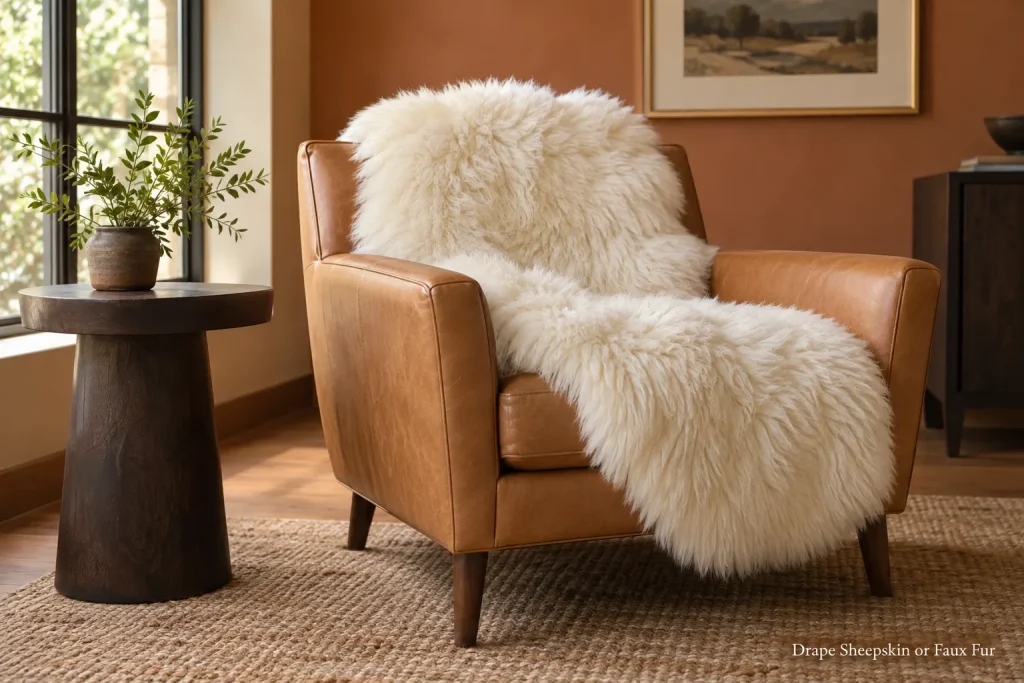
Drape Sheepskin or Faux Fur
A sheepskin or faux fur throw draped over a chair or bench instantly softens hard furniture. It’s especially useful on wooden, metal, or leather chairs that can seem cold.
Small rugs of this type also work on the floor beside a reading chair, where bare feet will appreciate them on chilly mornings. They’re handy for softening a window seat or a storage bench too, turning a hard perch into somewhere you’d actually sit.
Faux versions are easier to wash and suit homes where real sheepskin isn’t preferred. Shake them out regularly and follow the care label, since some can be machine washed on a gentle cycle.
Hang a Textile on the Wall
Woven wall hangings, quilts, rugs, and fabric panels add softness to a wall in a way framed art can’t. They bring color, pattern, and texture all at once.
A large textile above the sofa can be a striking focal point. Smaller woven pieces work well on narrow walls or above a console.
Hanging is usually simple. A wooden dowel or curtain rod through a sleeve on the back works for many pieces, and some come with built-in loops. For valuable or delicate textiles, consider framing them behind glass to protect them from dust and sunlight.
There’s a practical bonus too. Fabric on a wall soaks up some sound, so a large hanging can quiet a room with bare walls.

Use Linen Roman Shades
Roman shades in linen or a linen blend add soft texture at the window while keeping things tidy. They fold up neatly when open and lie flat when closed.
Linen filters daylight beautifully, giving a gentle glow rather than harsh glare. If you need privacy or darkness, look for shades with a lining.

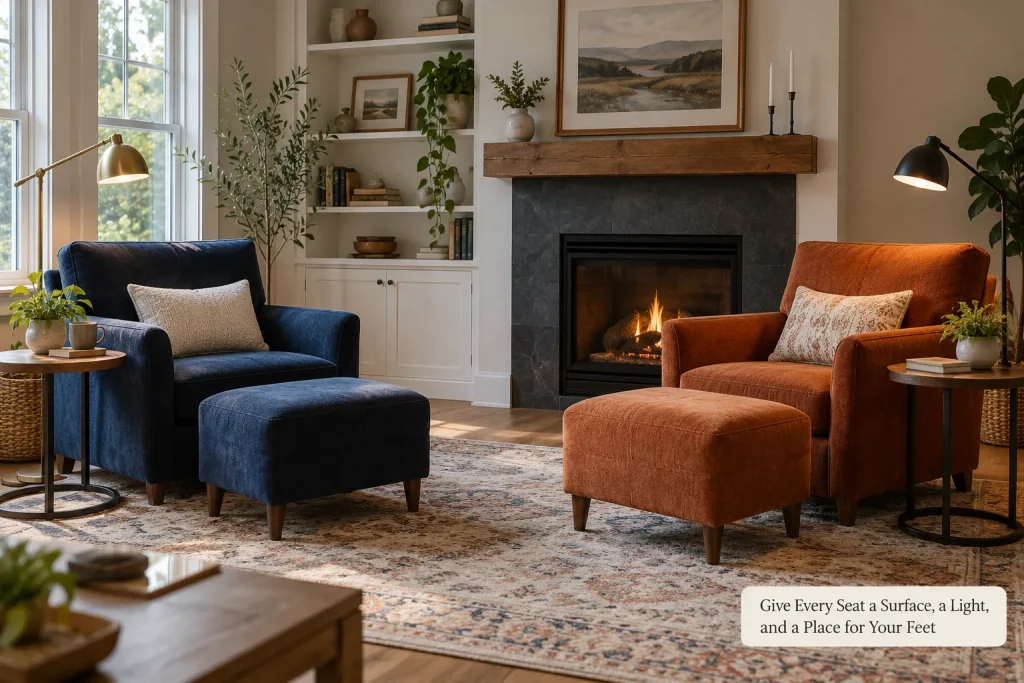
Give Every Seat a Surface, a Light, and a Place for Your Feet
This one is less about texture and more about everyday comfort. Sit in each seat in your living room and ask three questions. Is there somewhere to set a drink? Is there enough light to read? Is there somewhere to rest your feet?
If the answer is no, a few small additions fix it:
- A side table, a C-shaped table that slides over the sofa arm, or a small stool
- A floor lamp or table lamp within easy reach
- A footstool, pouf, or ottoman
When every seat is comfortable, people use the whole room instead of fighting over one spot on the sofa.
Ideas for Sound
Sound is easy to overlook in living room decor, but an echoing room is tiring to spend time in.
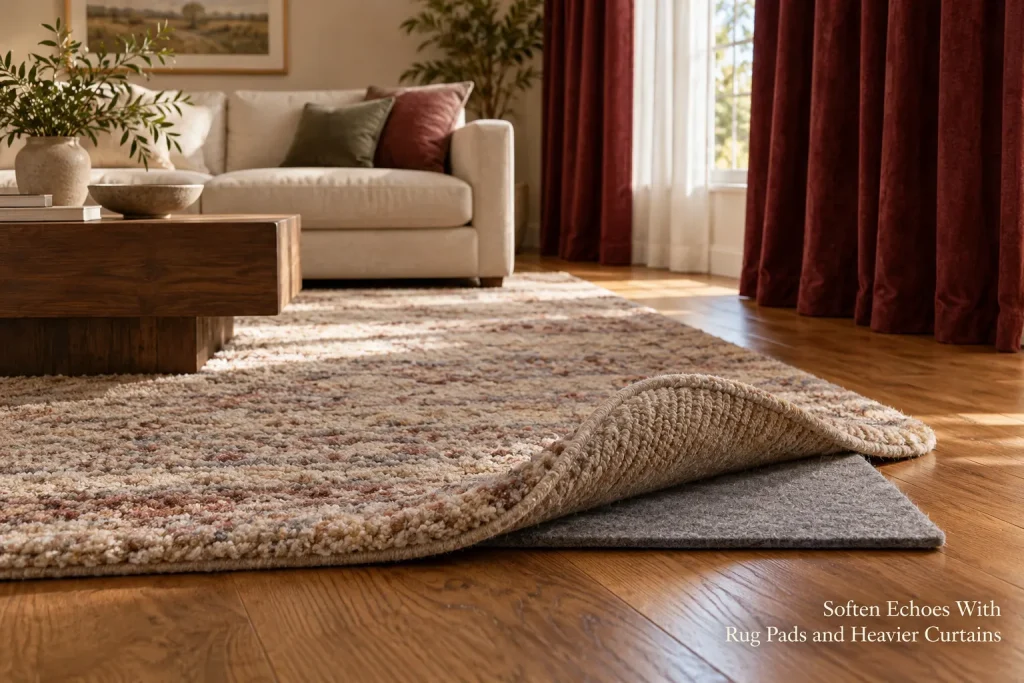
Soften Echoes With Rug Pads and Heavier Curtains
If your living room has hard floors, a thick rug pad under your rug makes a noticeable change. It cushions footsteps, absorbs sound, and makes the rug more comfortable to walk on. Felt and rubber combination pads can work well, but check that the pad suits your floor type, since some rubber backings aren’t recommended for certain finishes like vinyl or freshly refinished wood.
Curtains help too. Thicker fabrics, lined panels, or velvet curtains absorb more sound than thin sheers. Even adding curtains to a window that currently has only blinds can quiet a room.
Upholstered furniture, cushions, and floor poufs also soak up sound. If your room sounds echoey, adding a few soft pieces often helps more than you’d expect.
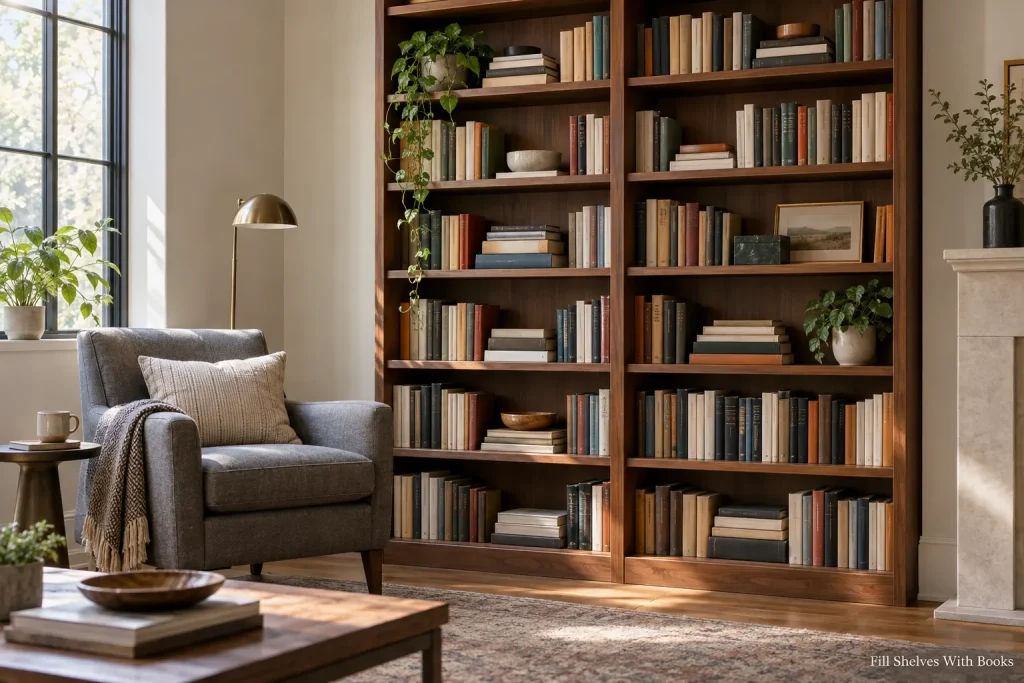
Fill Shelves With Books
A bookshelf packed with books does more than look good. Books absorb and scatter sound, which helps reduce echo in rooms with high ceilings or hard surfaces.
Arrange them in a mix of upright rows and horizontal stacks so the shelves still look styled. Tuck in a plant or two and a few objects for variety.
Ideas for Scent
Scent is easy to forget when decorating, yet it shapes first impressions. A pleasant, subtle fragrance makes a living room more welcoming the moment someone walks in.
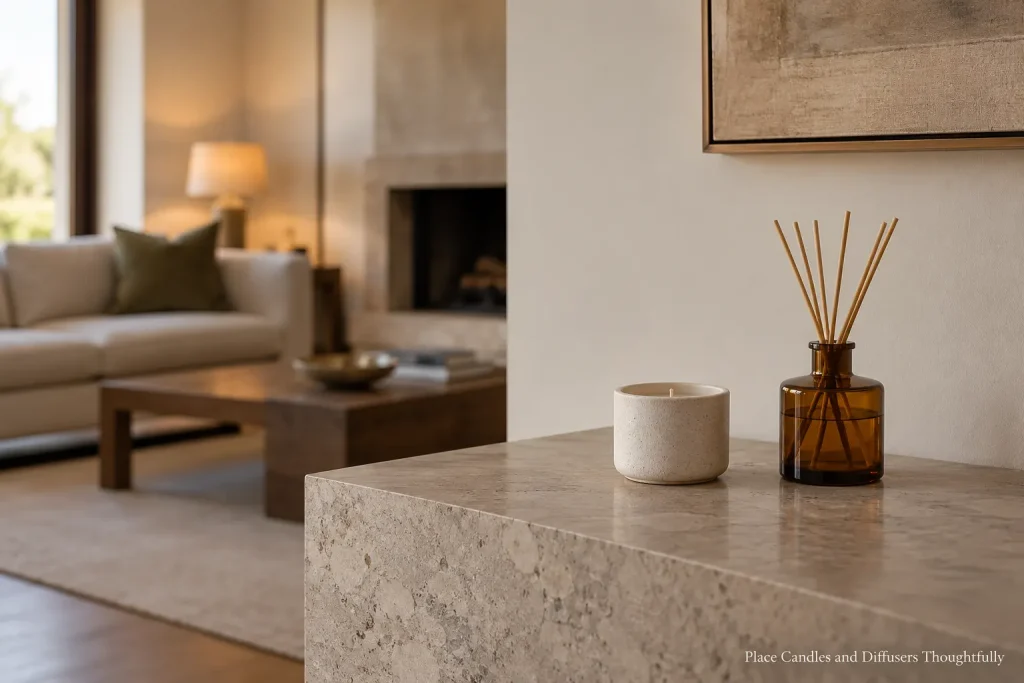
Place Candles and Diffusers Thoughtfully
Candles and reed diffusers are simple ways to add fragrance. Keep scents light so they don’t overpower the room, and stick to one or two scents rather than mixing several.
Place candles on stable surfaces away from curtains, plants, and anything flammable, and never leave them burning unattended. In homes with young children or pets, flameless candles and reed diffusers on higher shelves are safer choices.
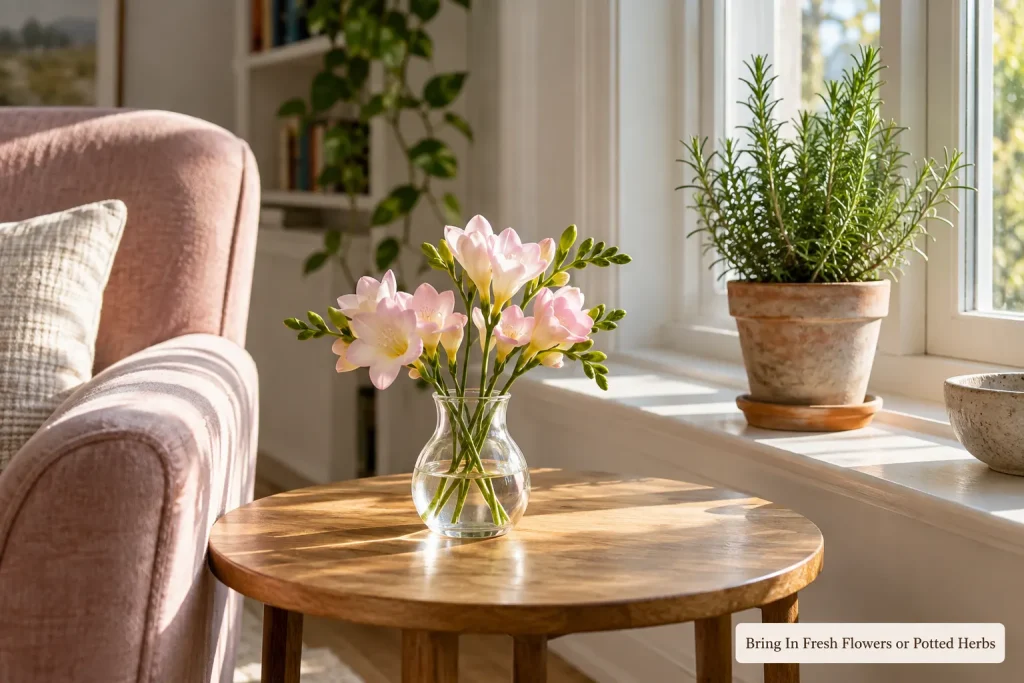
Bring In Fresh Flowers or Potted Herbs
Fresh flowers add natural fragrance along with color. Lightly scented varieties like stocks, sweet peas, or freesia work well in a living room without being overwhelming.
Potted herbs on a sunny windowsill offer a gentle scent too. Rosemary, lavender, and mint release fragrance when you brush past them.
A small bunch in a simple vase on the coffee table or side table is enough. Keeping the water fresh every couple of days and trimming the stems at an angle helps flowers last longer.
If fresh flowers every week aren’t realistic, a pot of lavender or a scented geranium gives you fragrance that keeps going for months with just a little sun and water. Keep in mind that some plants and flowers are toxic to cats and dogs, so check before bringing anything new home if you have pets.
If You Only Do Three Things
Thirteen ideas is a lot to take in, so here is one way to prioritize, depending on what your room needs most.
If your room echoes: start with a thick rug pad, then lined curtains, then a large wall textile. Sound changes tend to be the ones people notice immediately, even if they can’t say why the room seems calmer.
If your room looks plain: start with lampshades and furniture legs, since both are quick and affordable. Save picture frame molding for later, once you know the rest of the room is staying the way it is.
If nobody lingers in the room: go seat by seat first. A side table, a lamp, and a footrest at each spot often do more than any visual change, because they decide whether a seat is actually comfortable to use.
Questions Readers Ask
What’s the simplest living room decor idea to try first?
Refreshing lampshades or adding a soft throw are two of the easiest. Both are affordable, take minutes, and change how the room looks and how it is to sit in.
Are candles and diffusers safe if I have pets?
Some essential oils and fragrances can irritate or harm pets, cats in particular. It’s worth checking with your vet before using diffusers, keeping candles out of reach, and making sure the room is well ventilated.
Is a tonal color scheme boring?
It doesn’t have to be. Using several shades of one color plus a mix of materials like wood, linen, and ceramic gives a tonal room depth and interest.
Can I lean art if I have kids or pets?
Yes, but secure it. Museum putty or a thin ledge lip helps prevent frames from sliding, and placing breakable pieces higher up is safer than leaving them on the floor.
What scents work best in a living room?
Light, fresh, or woody scents tend to suit living rooms well. Strong or heavily sweet fragrances can become overpowering in shared spaces.
How do I know which living room decor ideas to choose?
Use the five-minute sense check. Whichever sense stands out as weakest is usually the best place to start.
Bringing It All Together
Think about the living rooms you’ve enjoyed spending time in, whether at a friend’s place, a relative’s home, or a favorite cafe. Chances are you remember the deep chair, the soft lamp glow, or the way the room smelled when you walked in, more than the exact color on the walls.
That’s worth keeping in mind as you make changes. Run the sense check again in a few weeks, once the first updates have settled in, and see which sense still needs attention.
A room people want to stay in is built from those small, quiet details. The paint color matters, but it’s rarely the reason anyone curls up on the sofa for another hour.