
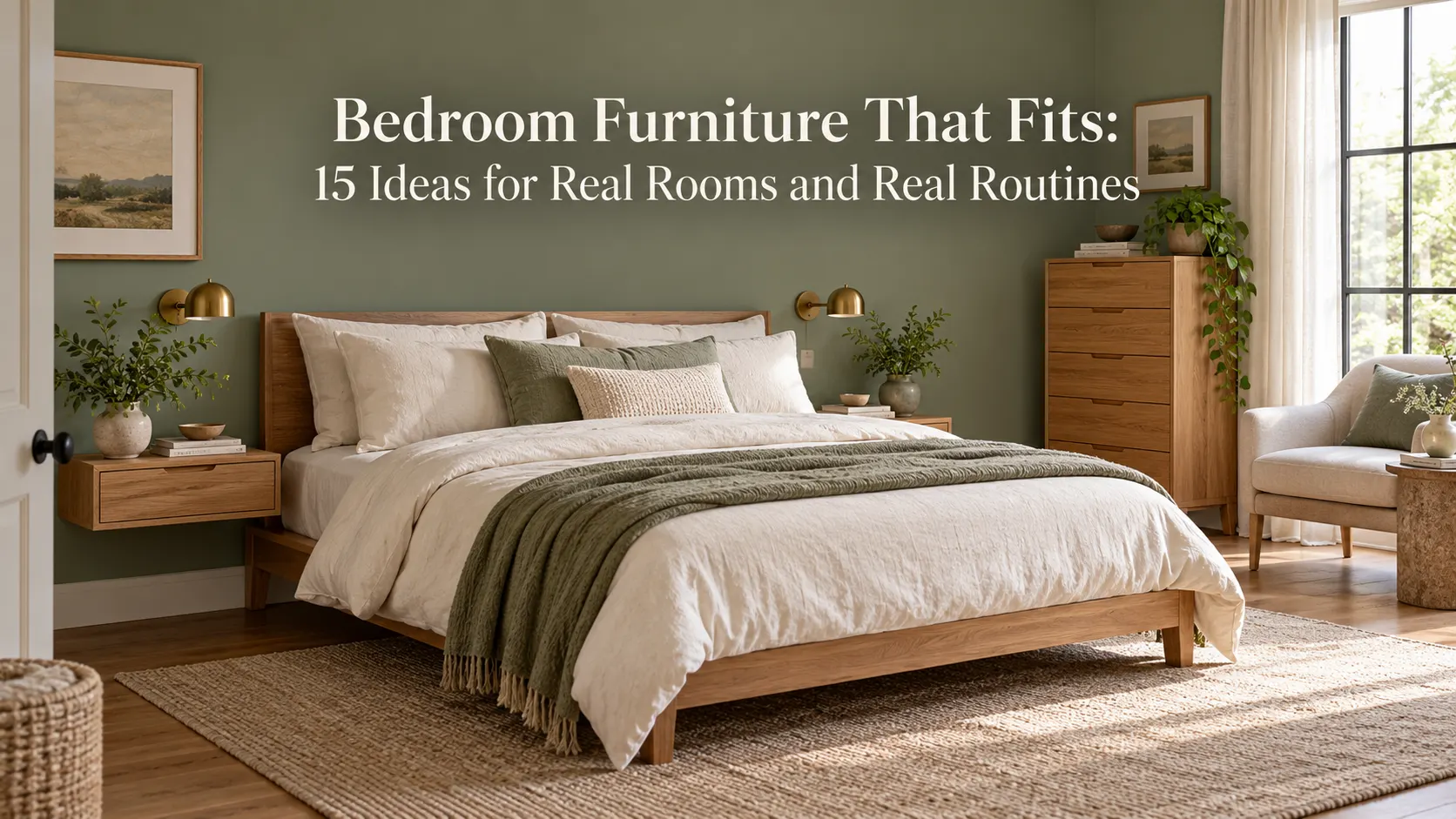
Bedroom Furniture That Fits: 15 Ideas for Real Rooms and Real Routines
A bedroom set can look perfect in the store.
The bed, two nightstands, a dresser, and a mirror, all in matching wood, arranged on a showroom floor with plenty of space to walk around. Then it arrives at home, and the dresser blocks half the closet door, the nightstands are too low to reach, and there’s barely room to make the bed.
It’s rarely about bad taste. A showroom floor is often more spacious than a typical bedroom, and a set chosen for its looks doesn’t always suit the way a room is actually used.
Good bedroom furniture starts with three things: the size of the room, how you store your clothes, and what else the room has to do besides sleep. The 15 ideas below are grouped around the jobs furniture does in a bedroom, so you can skip straight to the part that matches your problem.
Before You Shop: Mark the No-Go Zones
Grab a tape measure and a roll of painter’s tape. Then mark these on the floor:
- Door swings: the bedroom door, closet doors, and any wardrobe doors you’re planning
- Drawer pulls: the depth of a drawer pulled fully open, plus room for you to stand in front of it
- Walkways: a path around at least one side of the bed, and to the closet and window
- Fixed points: radiators, vents, outlets, and windows you’ll want to open
Everything inside those taped areas needs to stay clear. Whatever space is left is what your furniture actually has to work with, and it’s often less than people expect.
As a rough planning reference, some guides suggest around 24 to 30 inches (60 to 75 cm) of clear space beside the bed. The right amount for your room depends on its size, the furniture, and the needs of the people using it, including anyone who needs more room to move or use a mobility aid.
Where You Sleep
The bed takes up more floor space than anything else, so these decisions shape the rest of the room.
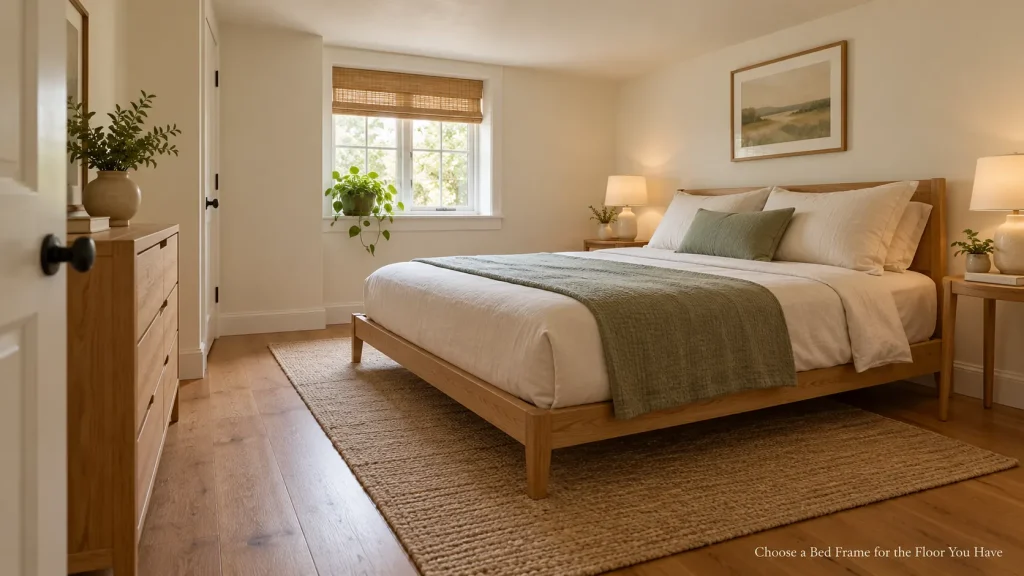
Choose a Bed Frame for the Floor You Have
Bed frames vary more in size than the mattress inside them suggests. A chunky sleigh bed or a frame with a thick footboard can add several inches in each direction.
In a small room, a simple platform frame or a bed without a footboard keeps the footprint close to the mattress size.
Bed height matters too. Choose a height that lets the main user get in and out comfortably, since a bed that’s too low can be just as awkward as one that’s too high. Taller frames also leave more space underneath for storage. A low platform bed can make a room with a sloped or low ceiling look less cramped.
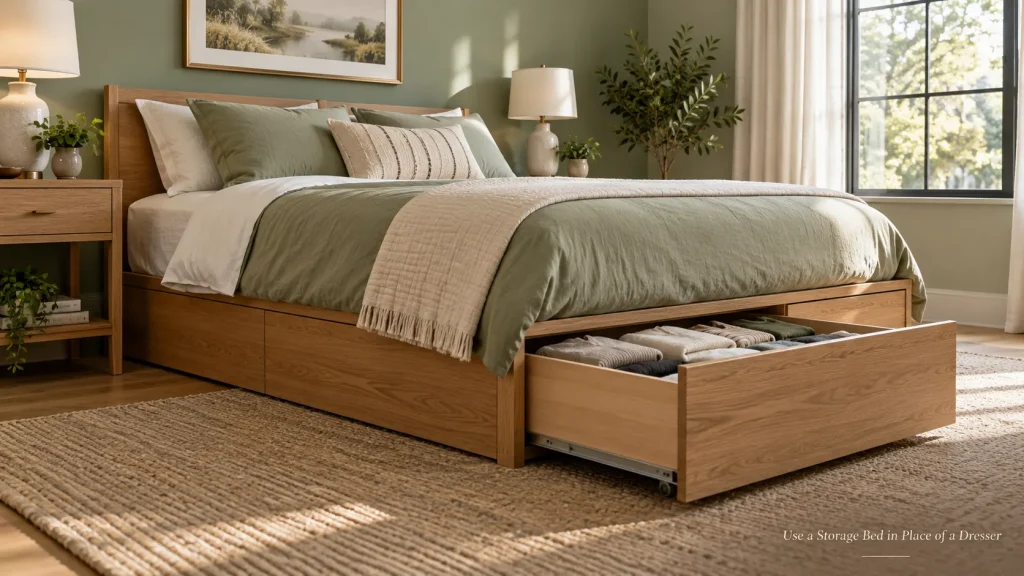
Use a Storage Bed in Place of a Dresser
If floor space is tight, a bed with drawers underneath or a lift-up base may reduce or even remove the need for a separate dresser.
Drawer beds work well for clothes you reach for often, but the drawers need clear floor space to open, so check that against your taped no-go zones. Lift-up or ottoman beds suit bulkier, less-used items like spare bedding and off-season clothes, and they don’t need drawer clearance, though you’ll still need room beside the bed to lift the base safely.
Check the manufacturer’s mattress weight range and follow the operating instructions, since a mattress that’s too heavy or too light can affect how safely the lift works.
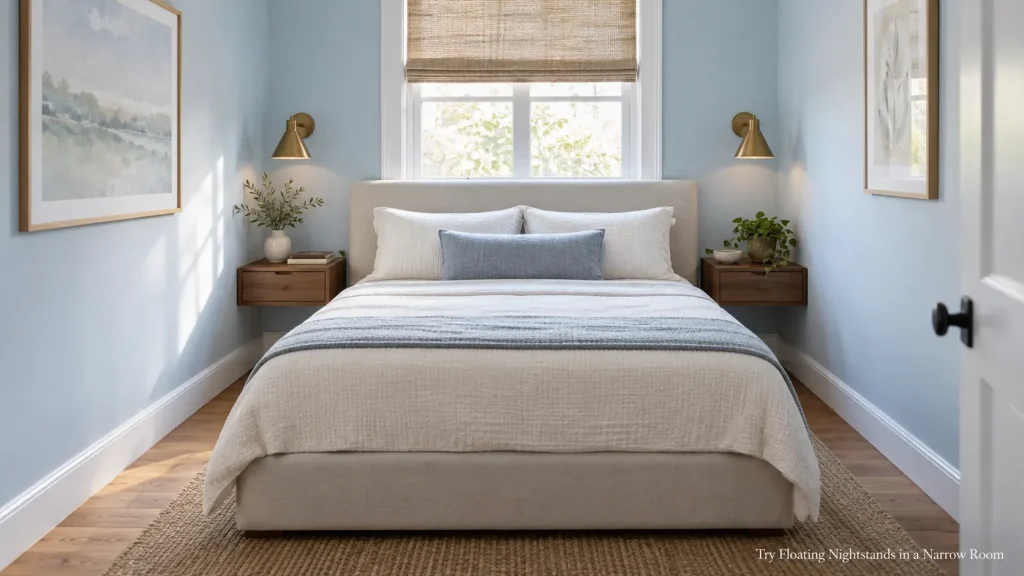
Try Floating Nightstands in a Narrow Room
Standard nightstands take up floor space on both sides of the bed. Wall-mounted shelves or floating nightstands with a small drawer free up that floor and make the room look more open. A good starting point is to have the top roughly level with the top of the mattress, but what matters most is that you can reach it comfortably while lying in bed.
Mount them into wall studs or with anchors rated for the weight, since they can get bumped when you reach for something in the dark.
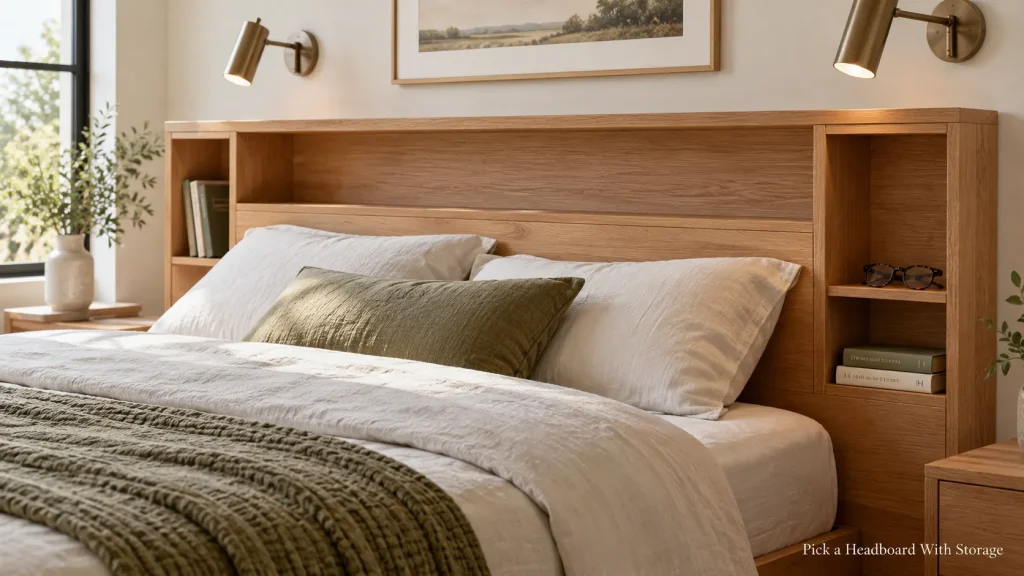
Pick a Headboard With Storage
Headboards don’t have to be purely decorative. A bookcase headboard or one with built-in shelves gives you a spot for books, glasses, and a phone without needing nightstands at all. If you want a light there, choose a headboard designed with built-in lighting or a safe cord route, or use a wall-mounted reading light instead. Keep heavy or breakable items off the top shelf above your head, and secure the headboard firmly to the bed frame or wall so it can’t wobble.
Where Clothes Live
Clothing storage is usually where furniture gets bulky. Choosing the right shape matters more than choosing the biggest piece.
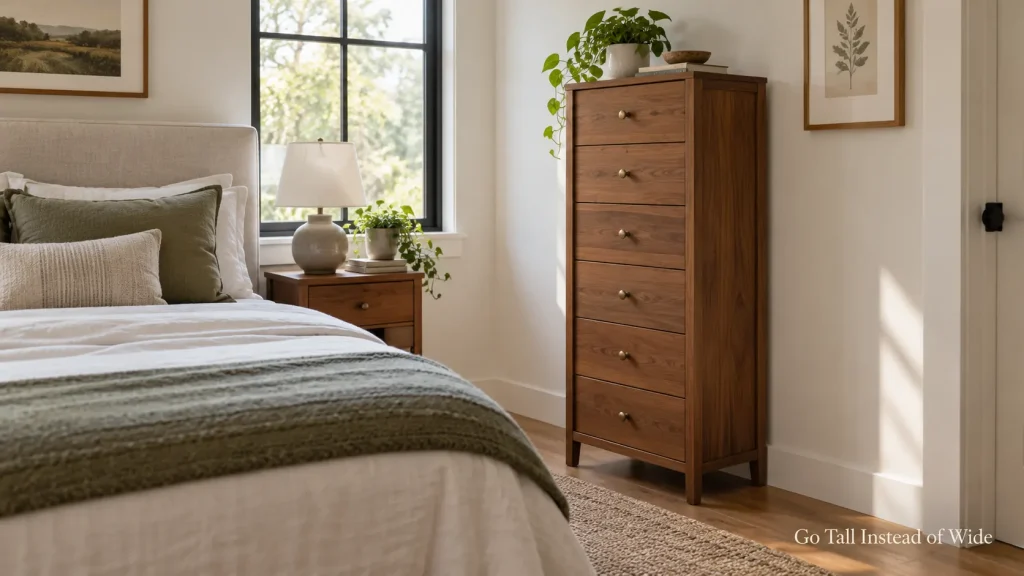
Go Tall Instead of Wide
A wide, low dresser looks lovely but takes up a lot of wall. In small bedrooms, a tall chest of drawers can hold a similar amount of clothing in noticeably less floor space.
The trade-off is that the top drawers are harder to see into and the top surface is less useful for display. Keep everyday items in the middle drawers. The top ones can hold lighter, less-used items, as long as the people using them can reach safely without climbing.
Tall chests should always be secured to the wall with an anti-tip kit, following the manufacturer’s instructions. A chest can tip if several drawers are pulled open at once or if someone climbs it.
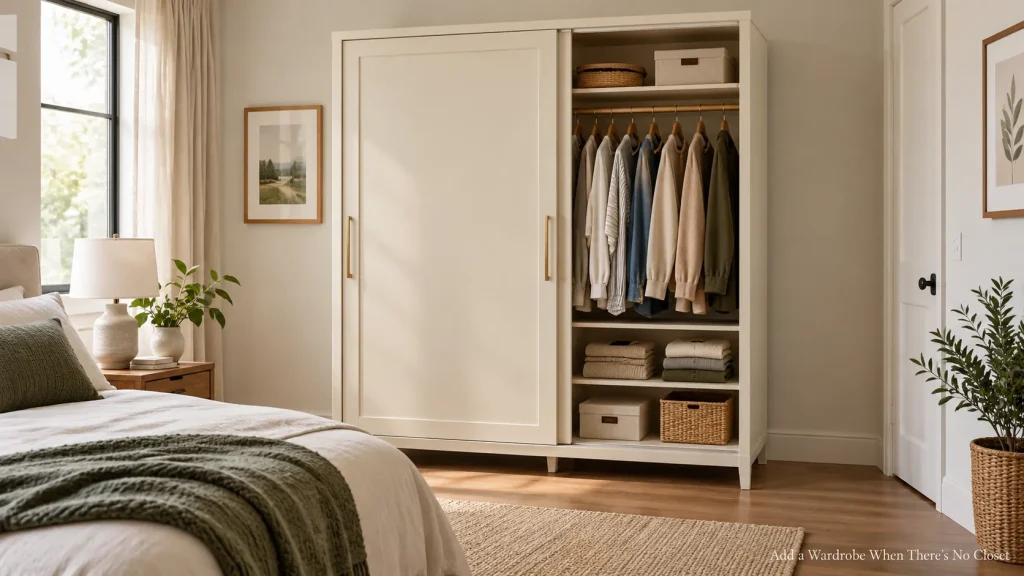
Add a Wardrobe When There’s No Closet
Older homes and some apartments have small closets or none at all. A freestanding wardrobe or armoire can fill that gap.
Check door clearance carefully, since wardrobe doors need nearly their full width to open. Sliding doors can be a useful alternative in tight spaces, though they only let you reach one section of the wardrobe at a time. Large wardrobes also need anchoring to the wall.
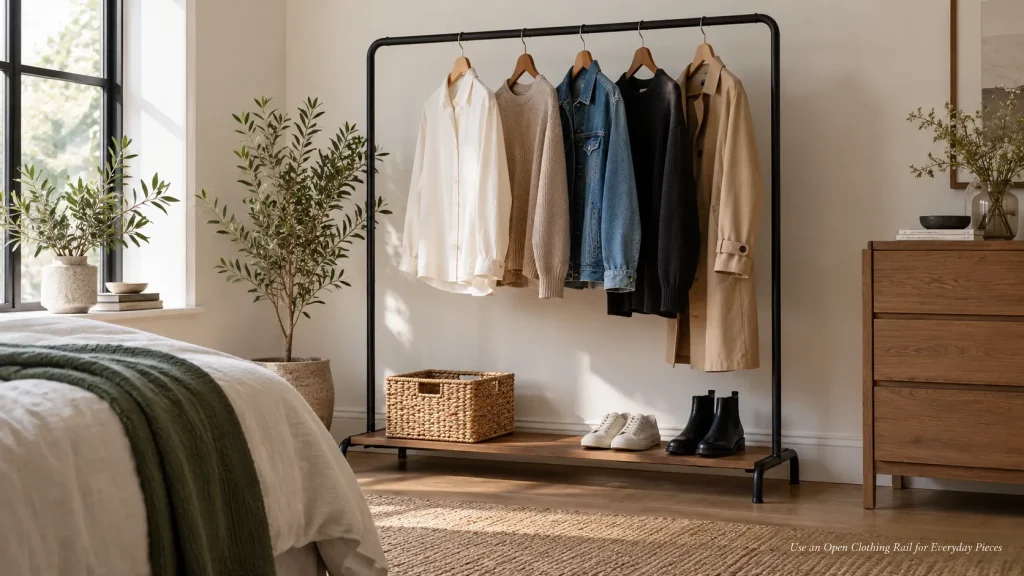
Use an Open Clothing Rail for Everyday Pieces
A freestanding clothing rail is a simple, flexible option for renters or anyone short on closet space. It’s also useful for organizing tomorrow’s outfit or a capsule wardrobe.
Check the rail’s weight limit before loading it, since winter coats and jeans add up quickly, and choose one with a sturdy base or locking wheels so it doesn’t tip or roll. Most freestanding rails hold less than a closet, so they work best for the clothes you wear most, with everything else stored elsewhere.
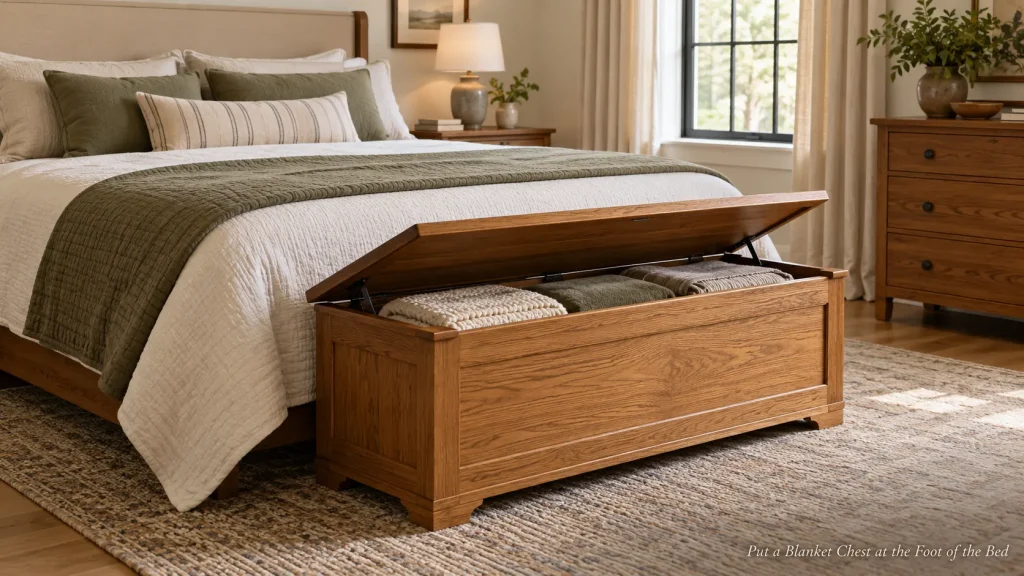
Put a Blanket Chest at the Foot of the Bed
A chest or storage bench at the foot of the bed holds spare blankets, pillows, or seasonal clothes. If you’d also like to sit on it while putting on shoes, choose a storage bench that’s designed and rated for seating, since not every chest is.
Look for one with a lid that closes slowly and stays open safely, since heavy lids can drop on fingers.
Mistakes That Make Bedroom Furniture Hard to Live With
A few problems come up again and again, and most are easy to avoid at the planning stage.
Forgetting the delivery route. A wardrobe or bed frame that fits the room can still get stuck on a tight staircase or turn in a hallway. Measure doorways and stairs before ordering, or choose flat-packed or modular pieces.
Blocking heating, vents, or windows. A headboard or dresser placed over a radiator or vent can affect heating and cooling, and furniture under a window can make it hard to open in a hurry.
Overlooking outlet locations. A bed or nightstand that ends up far from an outlet means extension cords across the floor for lamps and phone chargers.
Filling every wall. A bedroom with furniture on every wall can look crowded. Leaving one wall mostly clear can make the room feel less cramped.
Where You Sit, Work, and Get Ready
Many bedrooms need to do more than store clothes and hold a bed. These pieces help the room support daily routines.
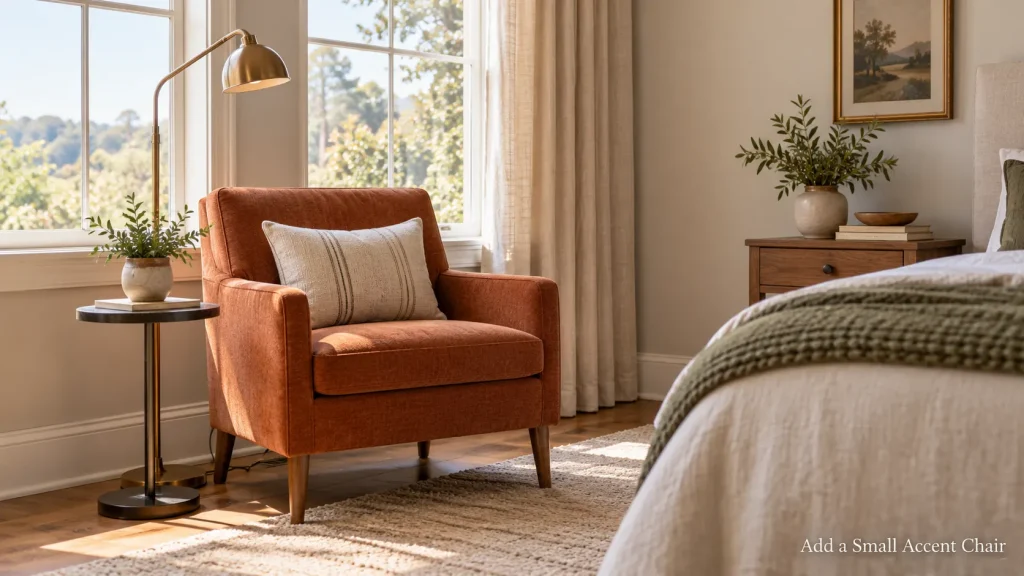
Add a Small Accent Chair
A comfortable chair gives you somewhere to sit that isn’t the bed.
In a small bedroom, choose a chair with slim arms or none at all, and legs that let you see the floor underneath. A chair placed near a window or a lamp is more likely to be useful for reading than one tucked in a dark corner.
Try sitting in it before you buy if you can, or check the seat height and depth measurements and the return terms when buying online. Seat height and depth make a big difference to comfort, and a chair that looks good but is awkward to sit in usually ends up holding clothes instead of people.
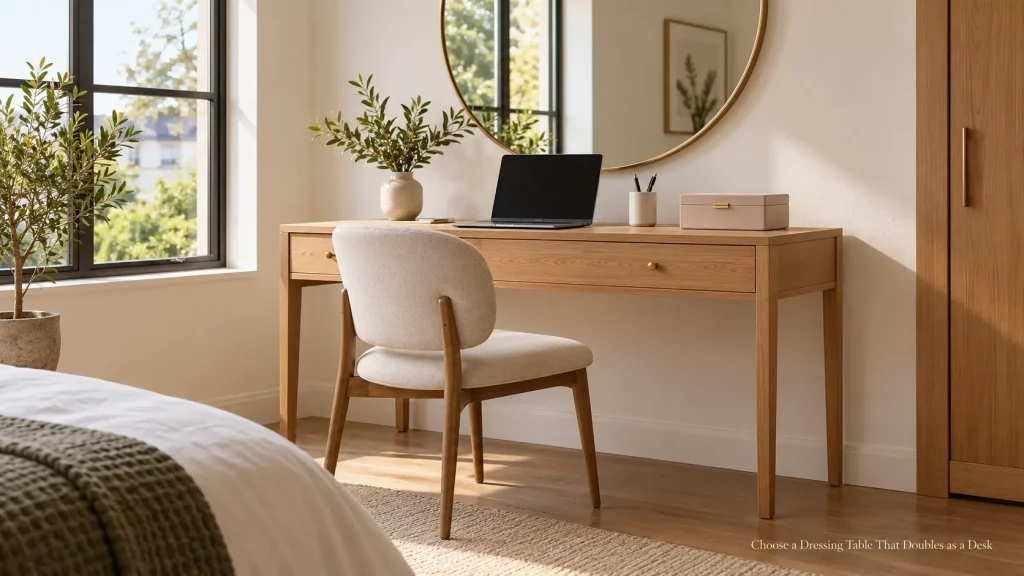
Choose a Dressing Table That Doubles as a Desk
A simple table with a drawer can work as a dressing table in the morning and a desk in the evening. That saves you from finding space for two separate pieces.
Pick one deep enough for a laptop, with enough legroom underneath and a height that suits typing, and add a mirror on the wall above rather than an attached one, so the surface stays flexible. A chair with good back support helps for longer work sessions, though for full-time work a dedicated desk setup may suit you better.
Keep a small lidded box or a drawer organizer for each use, one for makeup or skincare and one for chargers and notebooks. That makes switching between the two jobs much easier.
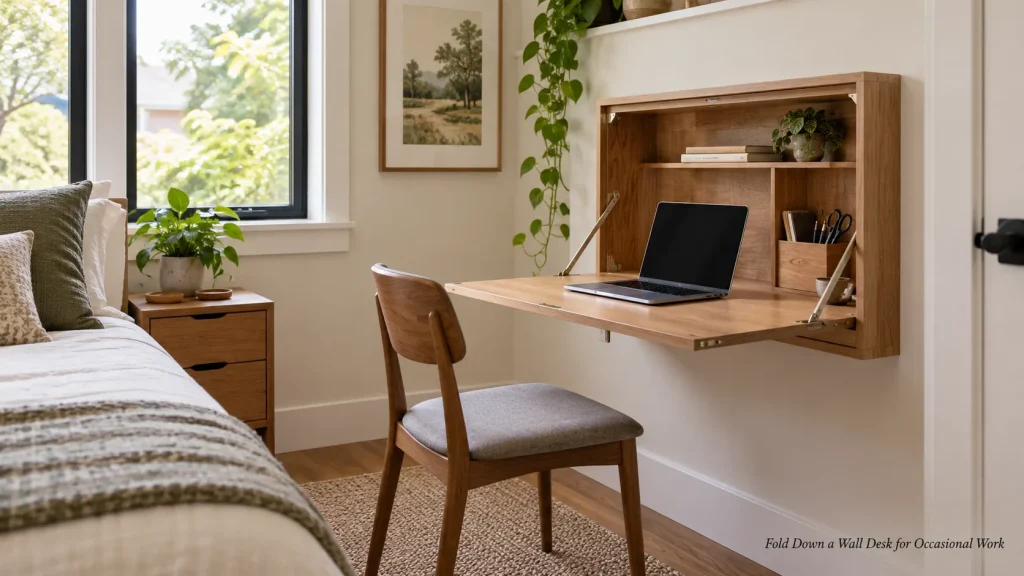
Fold Down a Wall Desk for Occasional Work
If you only work from the bedroom occasionally, a fold-down wall desk can be closed at the end of the day so work stays out of sight.
These desks usually have a small shelf or cubbies inside for pens and chargers. Install them using the mounting method and hardware the manufacturer specifies for your wall type, and check the rated load before resting a laptop and books on the surface.
Placing the desk where it isn’t visible from the bed can help separate work from rest.
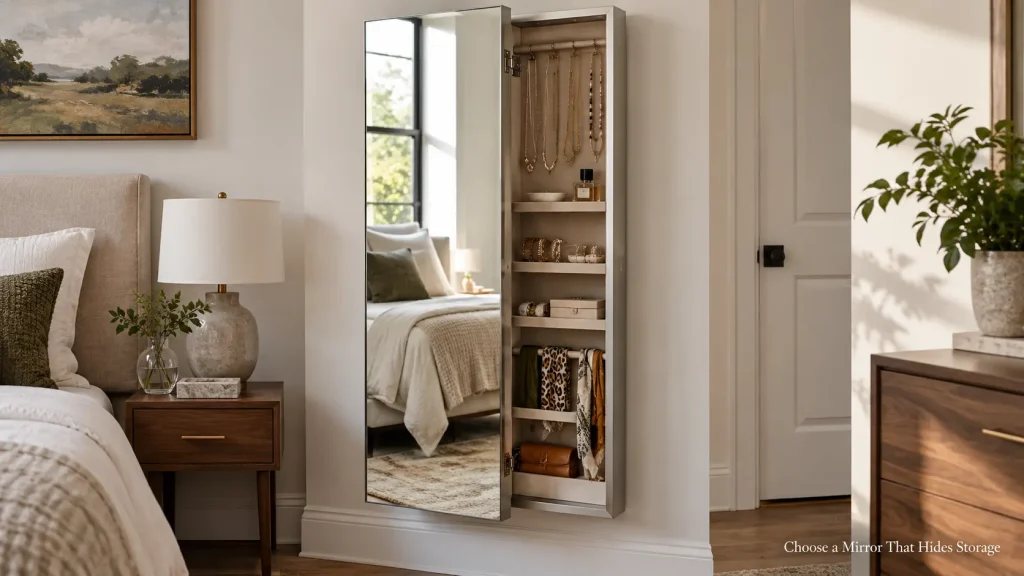
Choose a Mirror That Hides Storage
A full-length mirror can be useful in a bedroom, and a mirror cabinet does two jobs at once. From the front it looks like an ordinary tall mirror. Behind it, shallow shelves or hooks hold jewelry, scarves, belts, or small accessories that would otherwise clutter the dresser top.
Wall-mounted versions take up no floor space, which suits small rooms. Freestanding ones can sit in a corner but should still be secured to the wall, since a tall mirror with weight inside it can tip.
Before buying, check that the door has room to swing open fully and that the mirror is tall enough for the people using it. Some versions lock, which can help keep certain items out of reach, though a lock alone doesn’t make a cabinet child-safe.
When One Room Has to Do More
Some bedrooms are also guest rooms, playrooms, or the only private space in a small apartment. These ideas help the furniture handle more than one role.
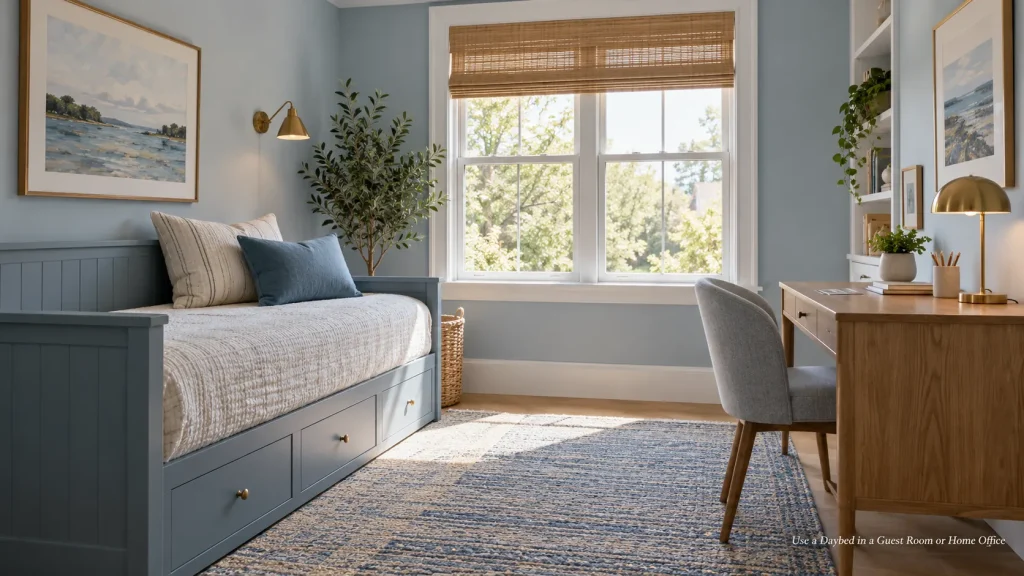
Use a Daybed in a Guest Room or Home Office
A daybed looks like a sofa during the day and works as a bed at night. It’s a practical choice for a room that serves as an office or reading room most of the time.
Many daybeds hold a standard twin mattress, so you can choose a mattress with the support and comfort you’d want for guests.
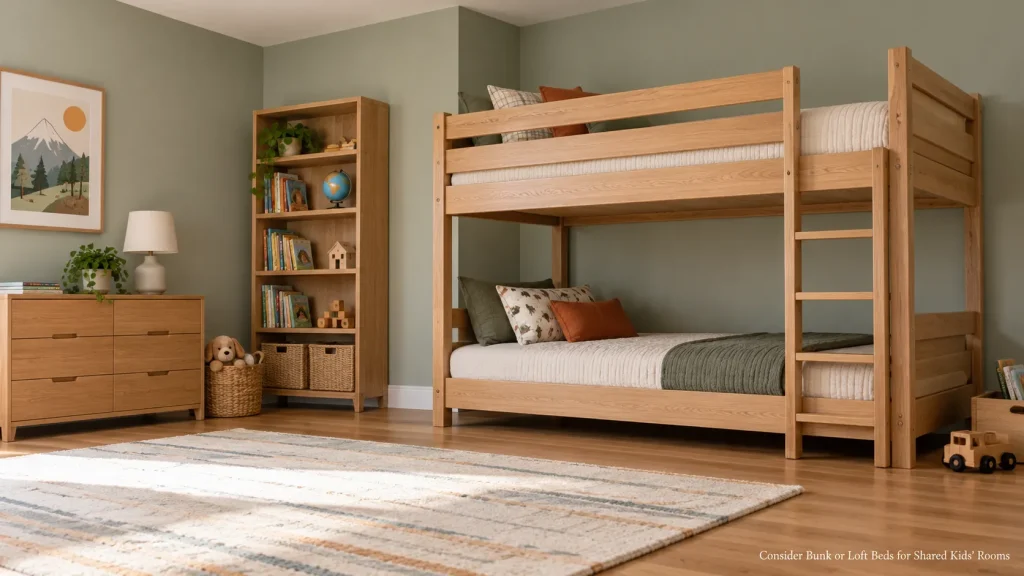
Consider Bunk or Loft Beds for Shared Kids’ Rooms
When two children share a room, bunk beds stack the sleeping space and free up the floor for play.
Safety matters a lot here, and the manufacturer’s instructions should come first. Follow their age and weight limits, guardrail requirements, mattress specifications, and any clearance guidance. Beyond that, keep upper bunks away from ceiling fans and windows, and check that there’s comfortable headroom above the top mattress.
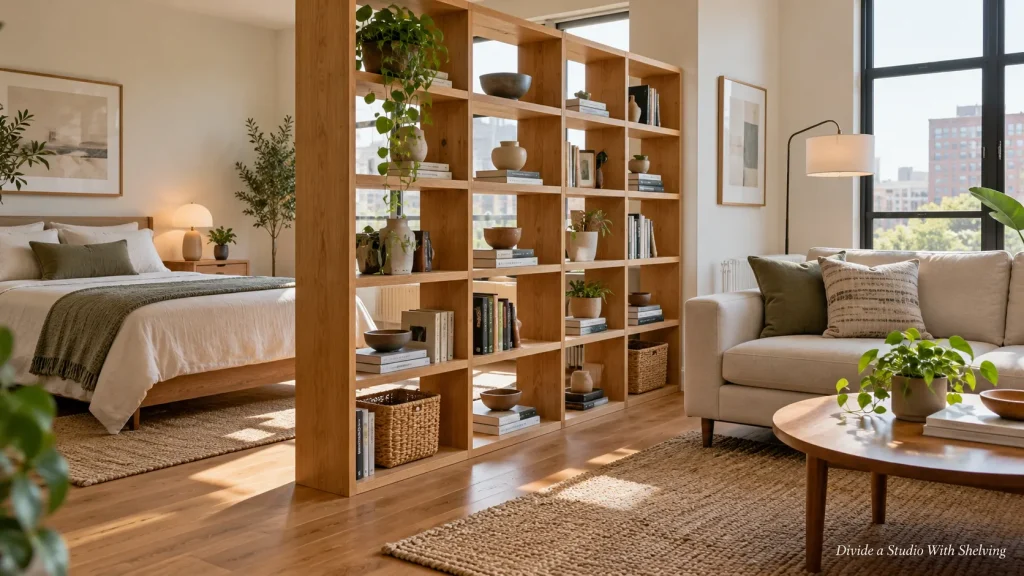
Divide a Studio With Shelving
In a studio apartment, the bed often sits in full view of the living area. An open bookcase or shelving unit placed between the bed and the rest of the room creates a sense of separation while still letting light through.
Open shelves can preserve more borrowed light than a solid divider, though a closed unit may suit you better if privacy matters more. Anchor tall shelving securely, since freestanding units in the middle of a room are more likely to tip. Keep the walkway past it wide and clear.
Solving Two Awkward Layouts
The window is on the only long wall. Putting the bed under a window can work, but it makes curtains and cleaning harder. An alternative is to place the bed on a shorter wall, use floating nightstands so the sides stay clear, and put a low dresser under the window where it won’t block the view.
The door, closet, and window are all on different walls. With so many interruptions, there may be no clear wall for a dresser. A storage bed and a tall chest in the one remaining corner often work better than trying to fit a wide dresser where it blocks a door.
Questions About Bedroom Furniture
Should bedroom furniture match?
It doesn’t need to. Coordinating wood tones, finishes, or colors helps different pieces sit well together, and many people like the more relaxed look of a mix.
How do I arrange furniture in a small bedroom?
Start by testing the bed in the position that keeps the clearest path to the door, closet, and window. Then fit storage around those walkways, using taller pieces where floor space is limited.
Which pieces are worth spending more on?
It usually makes sense to spend more on the pieces you use most and that would be hardest to replace, which often means the bed and the main clothing storage. Smaller accent pieces are easier places to save.
How can I tell if secondhand bedroom furniture is in good condition?
Check that drawers slide smoothly, joints feel solid, and the piece doesn’t wobble. Upholstered items need more care, since pests and hidden damage aren’t always visible. Look for stains, odors, and signs of pests, and consider professional cleaning, or skipping secondhand upholstery altogether if you’re unsure.
Plan the Floor, Then the Furniture
A bedroom looks calmer when every piece has a clear job and enough space around it to be used comfortably. That usually matters more than whether the furniture matches.
It’s fine to buy in stages. Start with the bed and the main storage, live with them for a few weeks, and you’ll quickly notice whether you really need that chair, desk, or extra chest, or whether the room is better with a bit of breathing space.