Entryway Ideas That Work Hard: 13 Ways to Make Coming Home Easier
The entryway is one of the hardest-working spots in most homes.
It’s where keys get dropped, shoes get kicked off, bags land, and the mail gets set down somewhere it probably shouldn’t be. It’s also the first thing guests see. That’s a lot to ask of a space that, in many homes, is little more than a strip of floor beside the front door.
The good news is that a well-planned entry doesn’t need much room. It needs a clear place for each of the things that usually end up on the floor.
Most entryway ideas focus on how the space looks. The 13 below start with how it works, then move on to looks. They’re grouped into five sections, and each smaller heading is one idea.
Before getting into them, it’s worth trying a quick reset. It isn’t one of the 13, but it often shows which of them your entry needs.
Try a Ten-Minute Entry Reset
Set a timer and clear everything from the entry area. Shoes, bags, coats, mail, umbrellas, the lot. Then look at what you’ve gathered and sort it into three groups:
- Used every day: keys, the coat you’re wearing this season, everyday shoes
- Used sometimes: spare umbrellas, sports bags, off-season boots
- Doesn’t belong here: old mail, things that live in another room
Prioritize the first group by the door. Depending on your storage, some of the second group may fit there too, or it can go somewhere close but out of sight, and the third goes back where it belongs.
Now look at the empty space. Notice where the daily items would naturally land if nothing stopped them. Those landing spots are where your entryway storage needs to go.
The Drop Zone
The first few seconds after walking through the door decide whether things get put away or dropped wherever there’s room.
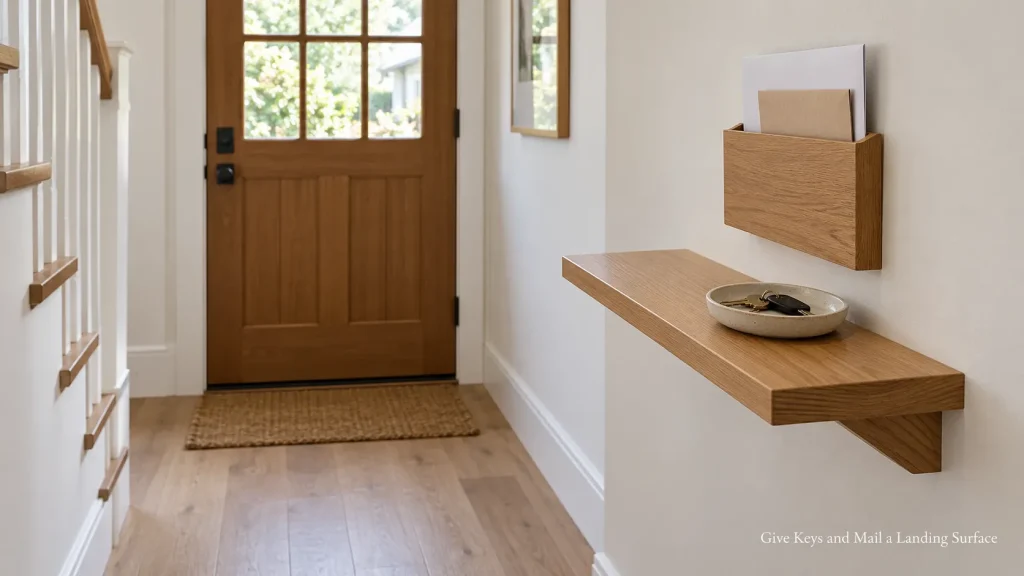
Give Keys and Mail a Landing Surface
Most entries work better with one flat surface at about hand height, where keys, sunglasses, and mail can land as you walk in. In a very tight space, a wall-mounted key holder or a slim wall pocket for mail can do the same job without a surface at all.
In a wider entry, a console table works well. In a narrow hallway, a wall-mounted shelf or a slim floating console takes up very little depth. Keep the surface mostly clear, with a small dish or tray for keys and a single slot or basket for mail.
For example, in a hallway too narrow for furniture, a very shallow shelf with a ceramic dish and a small wall-mounted mail holder beneath it can handle everything a family drops on the way in.
Mount any shelf into wall studs or with anchors rated for the load, since it will get bumped and loaded more often than most shelves in the house.
Add a Place to Sit
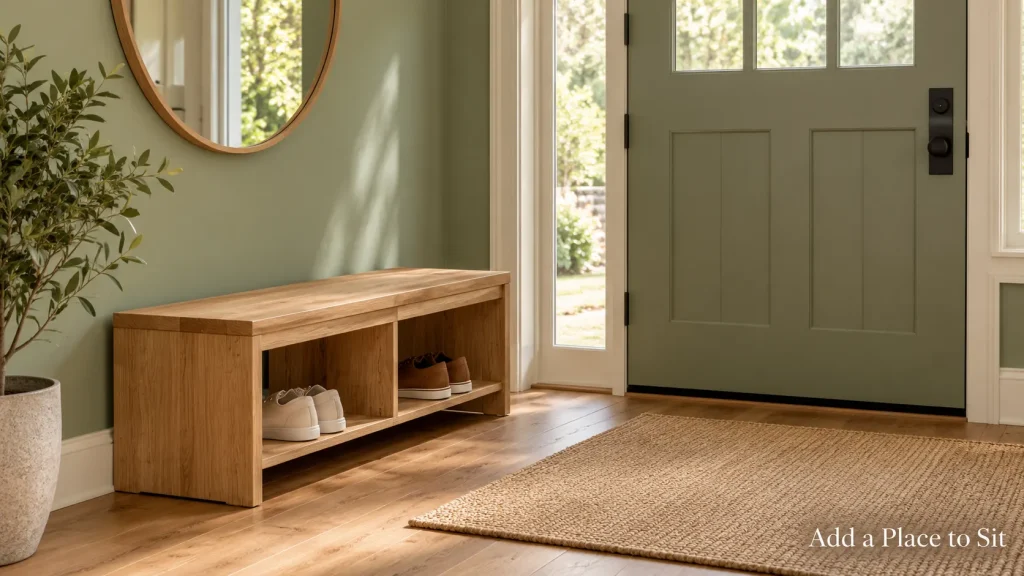
Putting shoes on and taking them off can be much easier sitting down, especially for kids, older family members, and anyone with boots to lace.
A bench is the most common choice. Ones with storage underneath, either open cubbies or a lift-up seat, do double duty for shoes or seasonal items. In smaller spaces, a slim stool that tucks under a console table or a wall-mounted fold-down seat can work.
Check the depth before buying. A bench that sticks out too far into a narrow hallway can turn into something everyone trips over.
Shoes, Coats, and Bags
This is where most entries get overwhelmed, and where the most useful entryway ideas tend to focus. It helps to plan for the actual number of people and things in your home, not an ideal version of it.
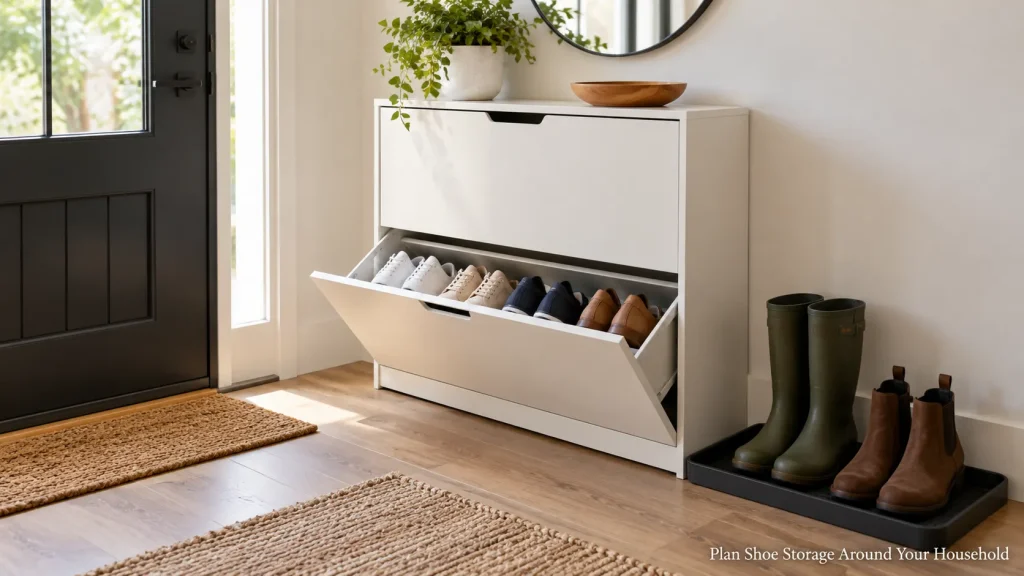
Plan Shoe Storage Around Your Household
Shoe storage needs depend a lot on the household. A single person might manage with a small tray by the door, while a larger household may need more dedicated shoe storage, whether that’s a cabinet, cubbies, or part of a nearby closet.
A few options, depending on space:
- Slim tilt-out shoe cabinets add shoe storage without taking up much floor depth
- Open cubbies under a bench make it easy for kids to put shoes away
- Low trays work well for a few everyday pairs and catch dirt and water
One approach that works for many households is to keep only the shoes worn most days at the door, with everything else stored in closets. Tall shoe cabinets should be anchored to the wall, following the manufacturer’s instructions, since they can tip when doors or drawers are pulled open.
Hang Hooks at Two Heights
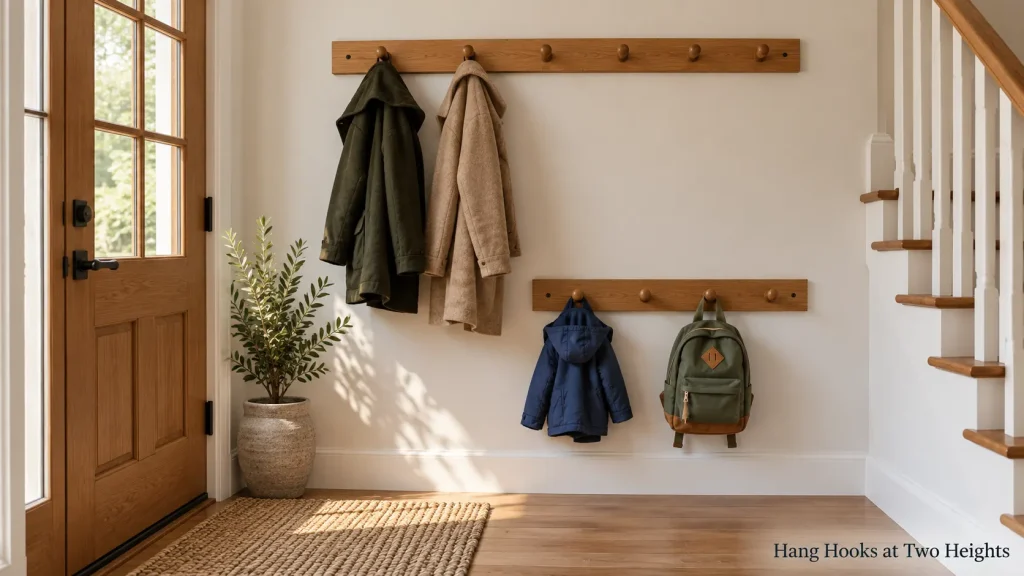
Hooks at a single height suit only some of the people using them. A second, lower row makes it easy for children or shorter family members to hang their own coats, and it’s a handy spot for bags that are too heavy for the upper hooks.
Sturdy hooks screwed into studs or a mounted rail hold heavy winter coats and bags better than adhesive versions. Leave enough space between hooks so coats don’t pile on top of each other.
If coats are constantly stacked over one another, either add more suitable hooks or move less-used coats somewhere else for now. A good test is whether each person can hang their everyday coat without moving someone else’s first.
Use Baskets for Small Everyday Gear
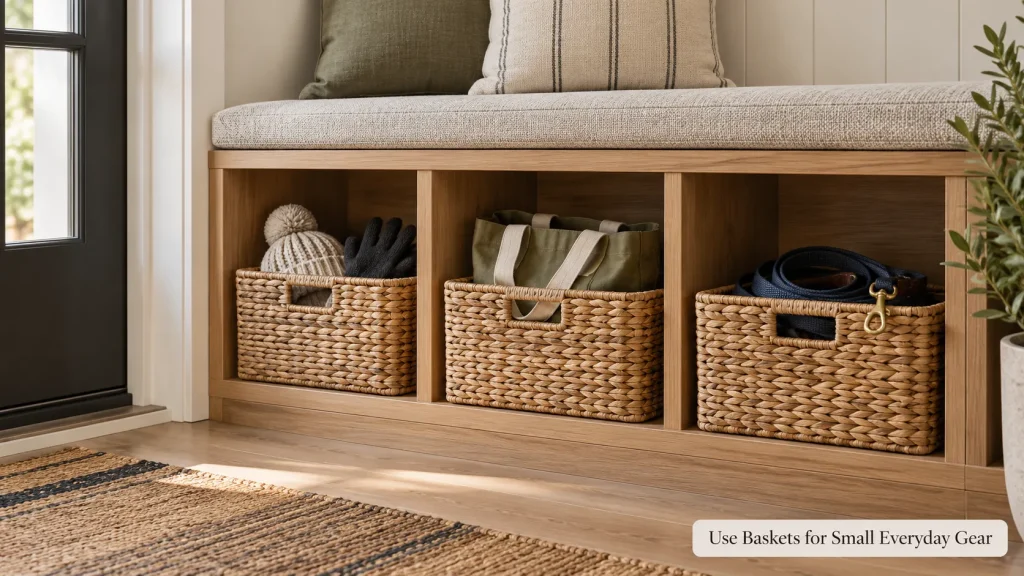
Hats, gloves, scarves, dog leashes, and reusable shopping bags tend to drift around the entry. A few baskets or bins, whether one per person or one per type of item, keep those small things sorted.
Labeled baskets on a shelf above the hooks or in bench cubbies work especially well in family homes. Kids can find their own things, and nobody has to search the whole hallway for a missing glove on the way out.
Mistakes That Make an Entry Harder to Use
Before moving on to the finishing touches, a few common problems are worth avoiding.
Blocking the door swing. A console, bench, or shoe cabinet placed too close to the door can stop it from opening fully. Open the door all the way before deciding where furniture goes.
Choosing furniture that’s too deep. Standard-depth furniture can eat up a narrow hallway. Look for slim pieces designed for tight spaces.
Storing everything at the door. The entry works best when it holds only what’s used daily. Treating it as overflow storage for the whole house leads straight back to clutter.
Forgetting about wet gear. Rain boots, umbrellas, and wet or muddy shoes need somewhere to drip. A boot tray or an umbrella stand protects floors and keeps puddles contained.
The Last Look Before You Leave
These ideas help with the final check on the way out the door.
Hang a Mirror Near the Door
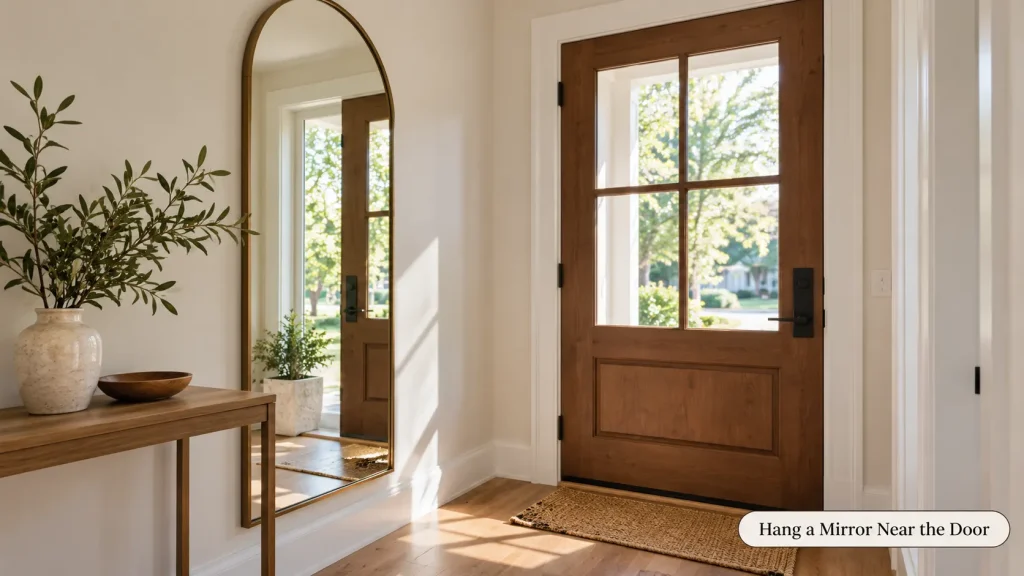
A mirror by the entrance is practical for a quick check before heading out, and it also bounces light around what is often a dim part of the home.
Hang it at a height that works for the main users of the space. In a shared home with people of different heights, a taller or full-length mirror can suit everyone. If you lean a floor mirror against the wall, secure it with the anchoring hardware or anti-tip kit the manufacturer recommends, since entry mirrors are easy to bump.
Heavy mirrors should be hung with hardware rated for their weight, ideally into studs. A mirror above a console table also creates a natural focal point that makes the whole entry look more finished.
If the entry is dark, placing the mirror where it catches light from a nearby window or a lamp helps spread that light further.
Light the Entry Properly
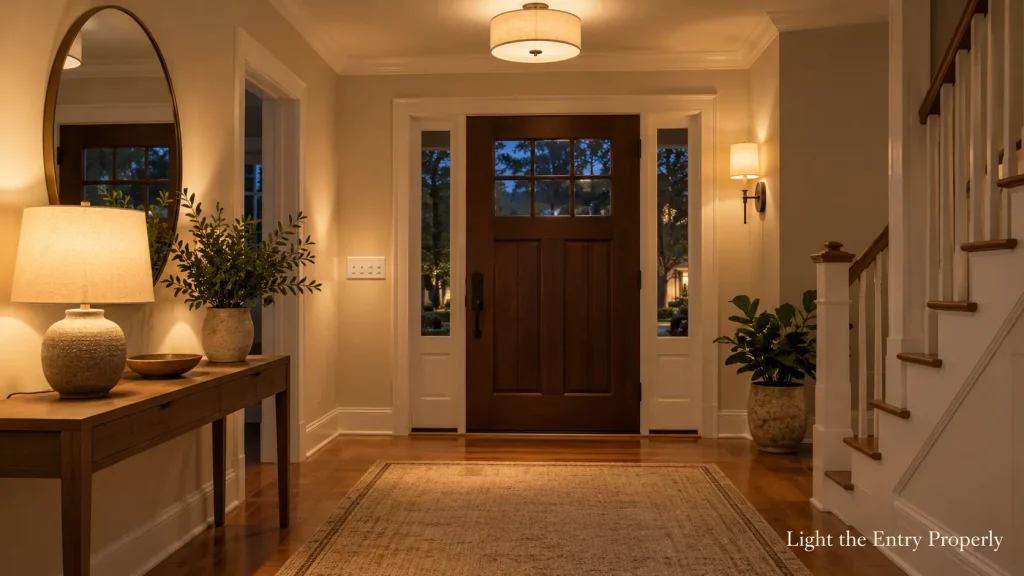
Many entries rely on a single ceiling light that doesn’t quite reach the corners. Adding a second light source makes it easier to find keys and see who’s at the door, and it makes coming home in the evening more welcoming.
The goal is simple: being able to see clearly the moment you step inside. A small table lamp on a console is the easiest option. Plug-in wall sconces can work in narrow halls where there’s no room for a lamp.
It also helps if the switch is right beside the door, so nobody has to cross a dark hallway with full arms, and if the porch light works, so keys are easy to find on the way in.
Any hardwired fixtures should be installed by a qualified electrician according to local requirements.
First Impressions
The final group of ideas is about how the entry looks. These details make the space more welcoming, both for you and for visitors.
Lay Down a Durable Runner
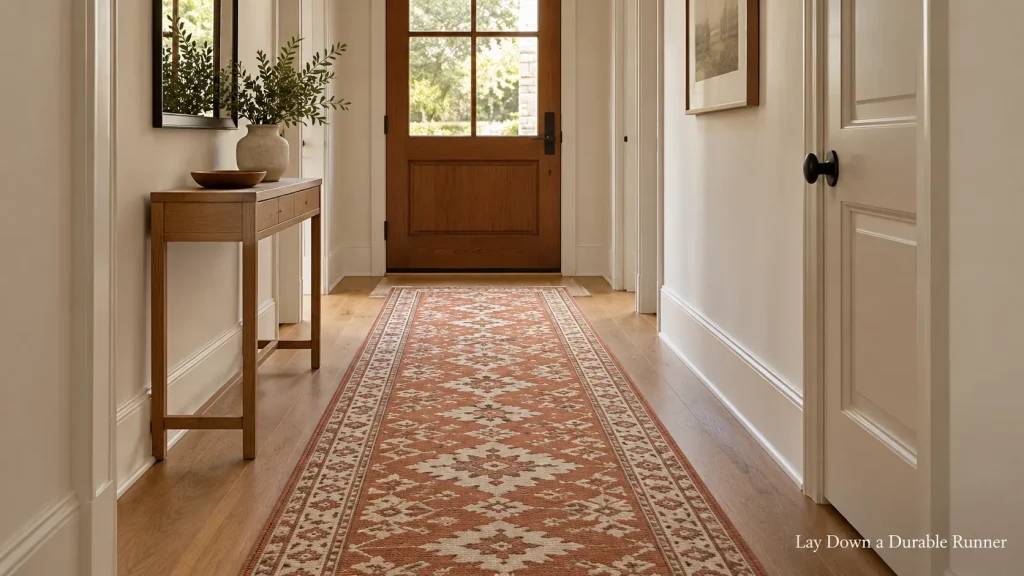
A rug at the entrance catches dirt before it spreads through the house. In a hallway, a runner can make a long, narrow space look more inviting.
Choose a low-pile or flat-weave rug that’s easy to clean, and consider a washable one if you have kids or pets. A non-slip rug pad underneath helps keep it in place on hard floors and reduces the chance of tripping.
Make sure the rug sits clear of the door so it doesn’t catch every time the door opens.
Paint the Inside of the Front Door
The inside of the front door is a large surface that’s often left plain. Painting it a color can give the entry a focal point without changing anything else. An easy way to choose is to pick up a shade from something nearby, such as the runner, a piece of art, or the color of the next room.
Use a durable, washable paint suitable for doors, following the product’s instructions, since it gets touched constantly. Removing or carefully taping off the hardware makes for a cleaner finish.
If you’re renting, check with your landlord first. A large door wreath or a hanging organizer can add character without paint.

Add Wallpaper or Paneling
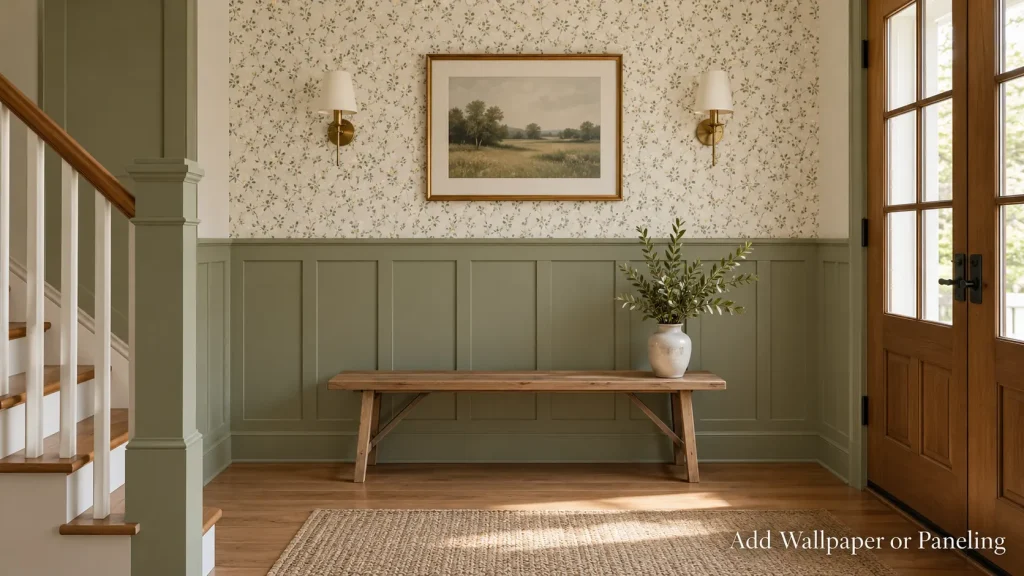
Because the entry is small, it’s a good place to try a wall treatment you might hesitate to use in a larger room. A small floral or striped wallpaper, or paneling on the lower half of the wall, can make the space look more finished.
Paneling also has a practical side. It can help protect the lower part of the wall from scuffs caused by bags, shoes, and strollers. A scrubbable paint finish above it makes fingerprints easier to wipe away.
Peel-and-stick wallpaper is an option for renters, though removability and finish vary by product, so test a small area first.
Bring In Something Personal
Once the practical parts are working, a single personal touch makes the entry look like it belongs to your home.
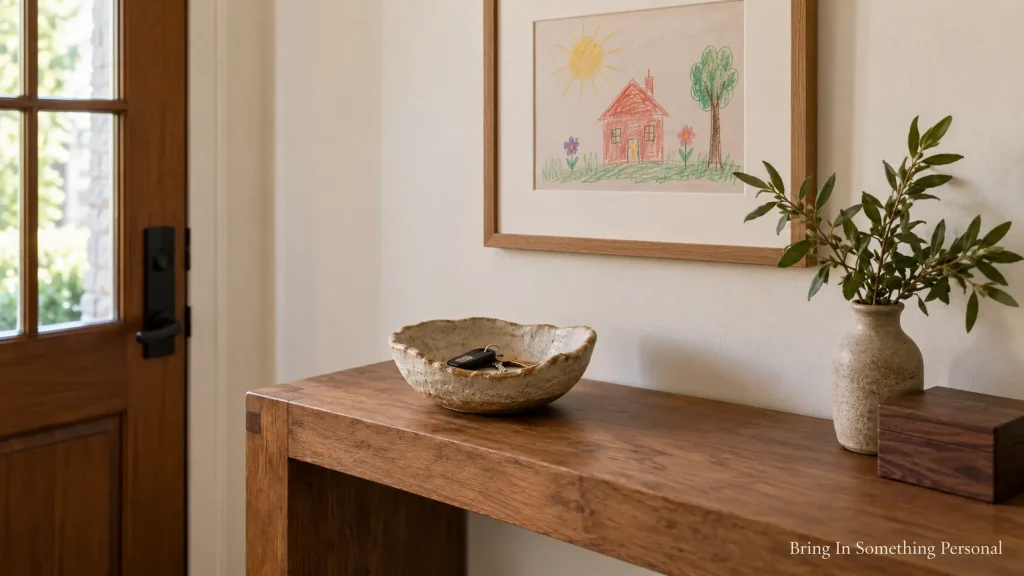
The entry is a good place for something with a story behind it, because you’ll see it every time you come home. That could be a handmade bowl used as the key dish, a small print of the street or town you live in, or a framed note or drawing from someone in the family.
Choose one or two things rather than a collection, since entry surfaces fill up quickly with everyday items. Giving a personal object an everyday job, like holding keys, also stops it from becoming one more thing to dust.
When There’s No Real Entryway
Plenty of homes don’t have an entry at all. The front door opens straight into the living room or kitchen. That doesn’t mean you can’t have an entry, just that you’ll need to create one.
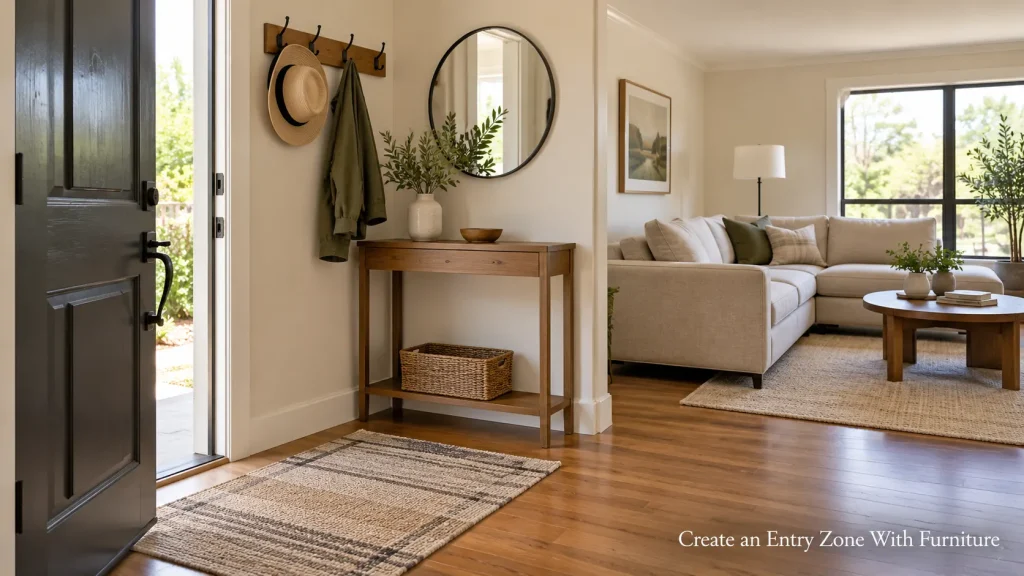
Create an Entry Zone With Furniture
A slim console or bench and a row of hooks beside the door can create a small entry area within a larger room. A rug in front helps visually mark the zone, while the hooks and surface do the practical work of giving everyday items a home.
If there’s no wall space beside the door, look behind it. When the door opens against a wall, an over-the-door rack or a slim set of hooks on that wall can hold coats, while a small shoe tray sits just past the door’s swing.
Use a Divider for More Separation
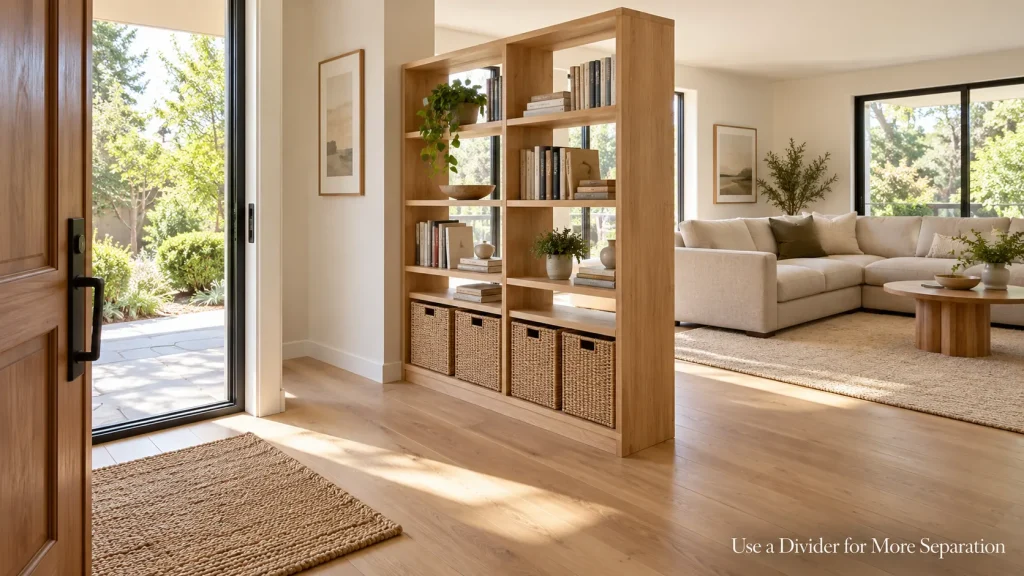
If you want a stronger sense of arrival, a piece of furniture can act as a partial wall. An open bookcase placed at a right angle to the door, a folding screen, or a tall plant can separate the entry from the living area without closing it off completely. Place it so the door opens fully and the walking path to and from the door stays clear and wide enough to move through easily, including in an emergency.
Open shelving works particularly well, since it lets light through while adding storage on both sides. Baskets on the lower shelves can hold shoes facing the door, while books and decor face the living room, so each side looks like it belongs to its own space. Anchor any tall freestanding shelving to the wall or floor following the manufacturer’s instructions, since an open unit standing in the middle of a room can tip more easily than one against a wall.
Questions About Entryway Ideas
How do I handle shoes when guests visit?
If your household removes shoes at the door, a small basket of clean slippers by the door, and a friendly mention when guests arrive, usually makes it clear. A bench or chair also makes it easier for visitors to take their shoes off comfortably.
How can I decorate an entryway for the seasons without adding clutter?
Keep seasonal touches to one spot, like the front door or the console, and change that spot rather than adding to every surface. Storing the seasonal pieces together in one box makes the switch quick.
What if my entryway is right at the bottom of the stairs?
Use the wall beside the stairs for hooks or a slim shelf rather than placing furniture in the path of the stairs. Keep the bottom step and landing clear to avoid trips.
How do I make a narrow entry look less crowded?
Keep furniture slim and wall-mounted where possible, so more floor stays visible. Pale walls, a runner that runs lengthwise, and a mirror can make the hallway look wider, and keeping only one or two items on any surface stops it looking busy.
A Better Arrival
An entryway doesn’t need to be large or expensive to make a difference. Its job is to make two moments of the day go more smoothly: leaving the house and coming back to it.
You won’t need all of these entryway ideas. Pick the two or three that fix whatever slows you down most at the door, live with them for a couple of weeks, and only then decide whether the space needs anything more.