
Living Room Lighting Made Simple: 9 Ideas for a Room That Works Day and Night
Try a simple test one evening.
Once it’s dark, turn off every light in your living room. Then switch on only the one you usually rely on, which in many homes is the ceiling light. Sit in your favorite spot and look around.
Chances are the middle of the room is bright, the corners are dim, and faces look a little flat. Maybe the TV reflects a glare spot. Maybe there’s nowhere comfortable to read without squinting.
That’s the limitation of relying on a single overhead light. A ceiling light is useful for general brightness, but on its own it can’t cover everything. Layered living room lighting, with several smaller sources at different heights, lets each light do a different job.
The first seven ideas below are grouped by where the light sits: down low, at seating level, and up high. The last two cover the whole room, making the most of natural daylight and controlling the lamps you have.
What to Notice During the Test
While you’re sitting there with one light on, make a note of a few things:
- Dark corners. Which parts of the room fall into shadow?
- Task spots. Where do people read, knit, do homework, or use a laptop, and is there light there?
- Glare. Does the light bounce off the TV, a glass table, or a shiny floor?
- Mood. Does the room look inviting, or more like a waiting room?
Those notes will tell you which of the ideas below to start with. Most rooms don’t need all nine. Fixing two or three of the gaps you noticed usually makes a clear difference.
Down Low: Light Near the Floor
Light from low sources is often overlooked, but it’s one of the easiest ways to make a room look deeper and softer.
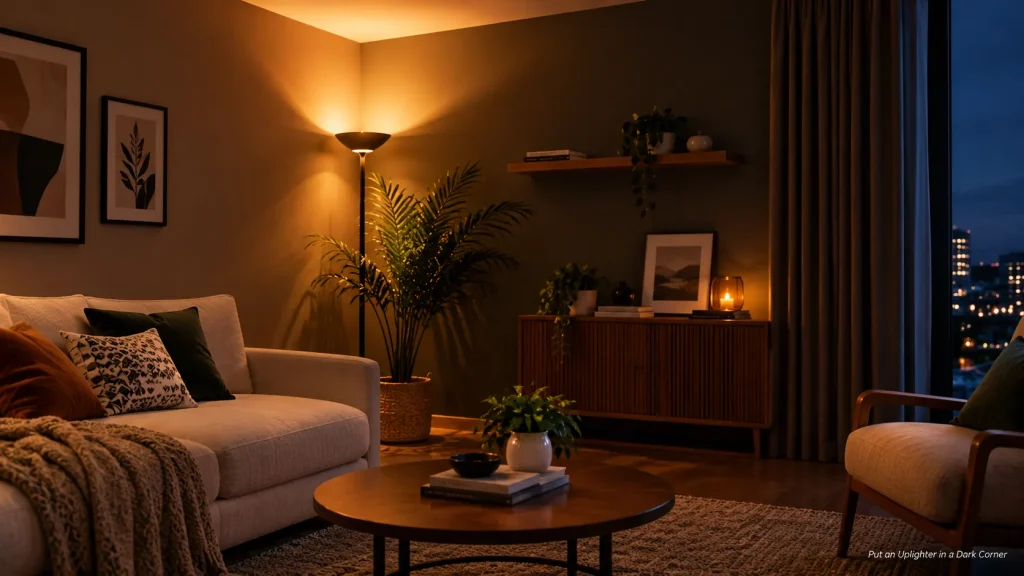
Put an Uplighter in a Dark Corner
A dark corner can make a room look smaller at night, since the shadow seems to mark where the room ends.
A small uplighter, which is a lamp that sits on the floor and points light upward, can change that. It lights up just that one corner, which can make it feel more defined and less shadowy. Tucked behind a large plant, it can also cast soft leaf shadows onto the wall, which some people love in the evening.
Plug-in uplighters are inexpensive and need no installation. LED bulbs run much cooler than traditional incandescent ones, but they still produce some heat, so keep uplighters away from curtains and fabric and follow the fixture’s instructions. Tuck the cord along the wall so it doesn’t become a trip hazard.
Glow From Inside Shelves and Cabinets
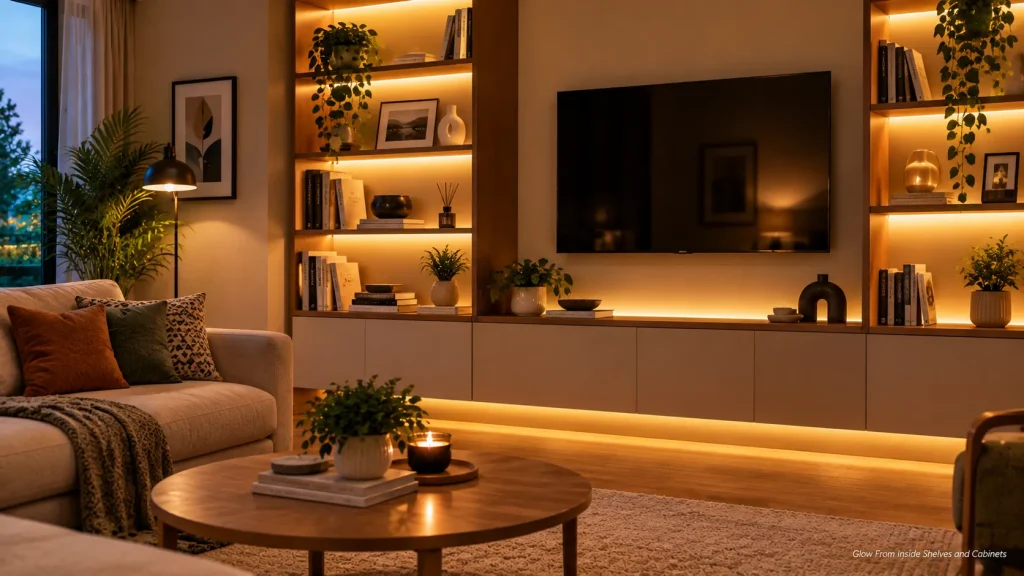
Bookcases, glass cabinets, and the space under a floating media unit can all hold a little light.
Battery-powered or plug-in LED puck lights and strips are the simplest options. Fitted inside the top of a shelf, they light the books and objects below. Run along the underside of a floating console, they cast a soft glow onto the floor that makes the piece look as though it’s hovering.
This kind of light isn’t meant for reading. It adds a gentle background glow in the evening and helps the things on display, like a ceramic piece or a framed photo, stand out from the shadows.
Choose a warm white so it doesn’t look clinical, and check how the lights attach and charge before buying, since methods vary by product.
At Seating Level: Light Where People Sit
Most activities in a living room happen while sitting down, so this is where light does the most practical work.
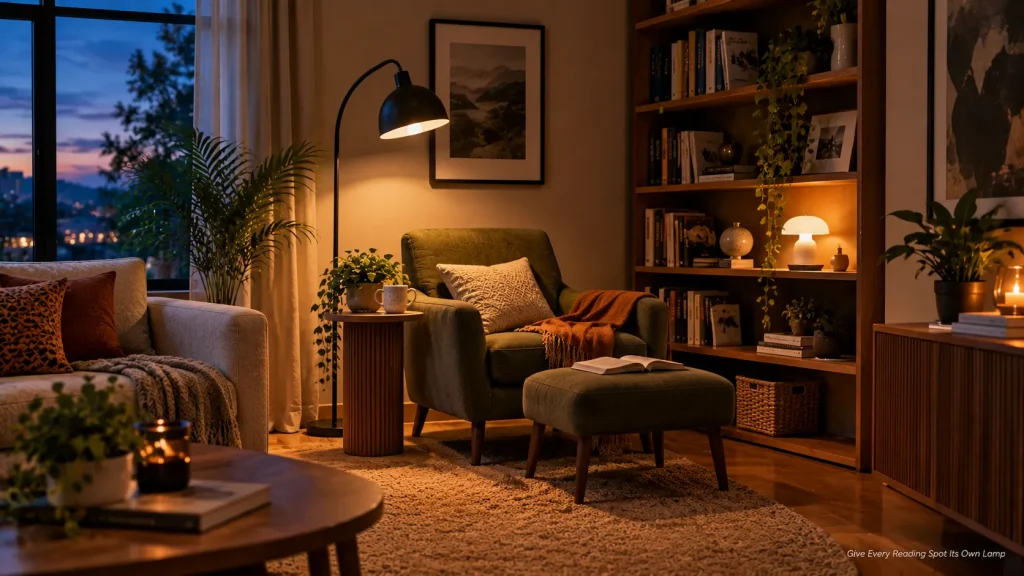
Give Every Reading Spot Its Own Lamp
Think about where people actually read, scroll, or do crafts. Often it’s one corner of the sofa or a particular armchair. That spot needs its own light, positioned so it falls on the page rather than in your eyes.
A few setups that work well:
- A table lamp on a side table, with the shade positioned so you can’t see the bulb from your seat
- An adjustable floor lamp with a swing arm, angled over the chair
- A slim task lamp clipped to a bookshelf beside the seat
Light from the side or slightly behind you usually works well. Adjust the lamp until there’s no glare in your eyes and your hand or head isn’t casting a shadow on the page. Lampshades in lighter fabrics let more light through, which suits reading better than dark or heavily patterned ones.
If two people often read at opposite ends of the sofa, a lamp at each end means both have decent light. A small lamp with its own switch within reach of the seat also makes it far more likely to get used than one controlled from across the room.
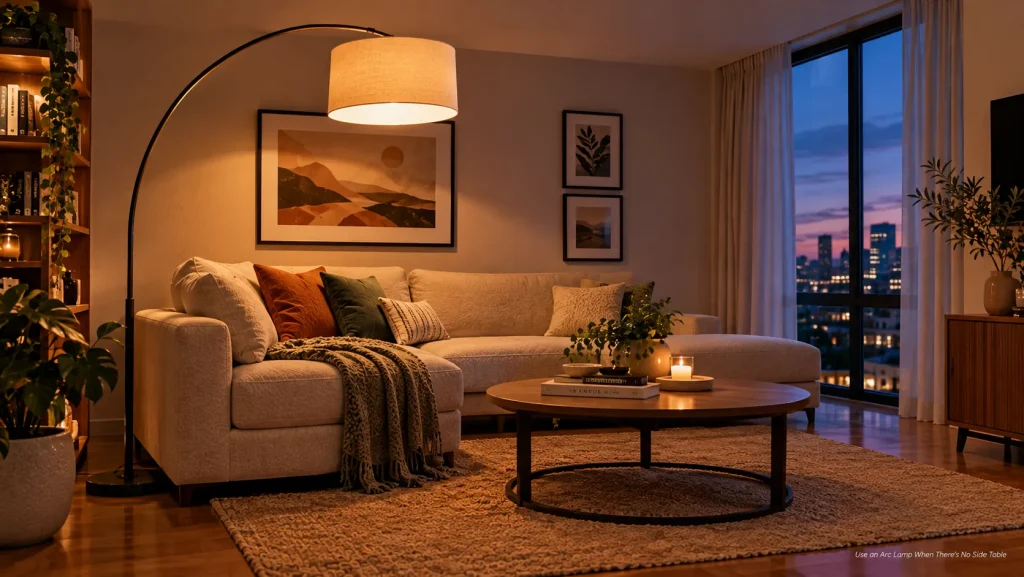
Use an Arc Lamp When There’s No Side Table
Some sofas don’t have room for a side table, especially in small living rooms or where the sofa floats in the middle of the room.
An arc floor lamp solves this. Its base sits behind or beside the sofa, and a long curved arm reaches over, putting the light above the seat or the coffee table. You get overhead-style light exactly where you want it, without wiring or a table.
Arc lamps need a heavy, stable base to balance the long arm. Assemble them following the manufacturer’s instructions, and position the arm where people won’t bump into it, since a knock to the extended arm can tip the lamp. Measure the reach and height too, so the shade sits comfortably above people’s heads when they stand up.
Because an arc lamp is visually large, it tends to become a feature in its own right. In a room with plenty of straight lines, the curve adds some contrast. In a very small room, a slimmer arc or a simple adjustable floor lamp may suit better.
Add Soft Light Behind the TV
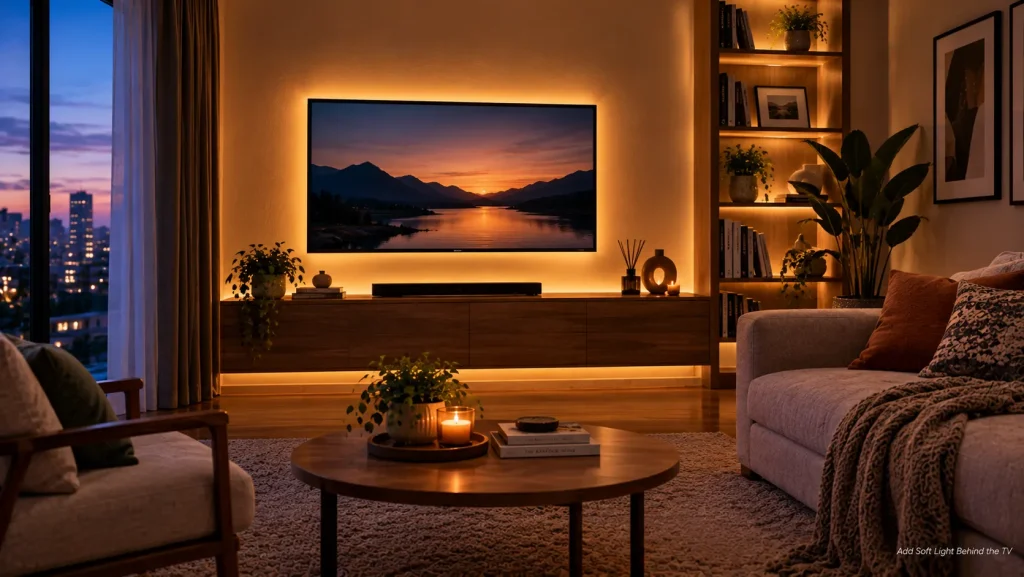
Some people find watching TV in a completely dark room uncomfortable, with a bright screen surrounded by a black wall. Turning on the ceiling light, though, can cause glare on the screen.
A soft light behind the TV, often called bias lighting, sits in between. An LED strip on the back of the screen, or a small lamp placed behind it, lights the wall gently. Many people find this makes viewing more comfortable, and the room isn’t left in total darkness.
Many TV backlight kits plug into the TV’s USB port and switch on with it. A neutral or warm white light is usually less distracting than bright colors, though color-changing strips are an option if you enjoy them. Make sure any strip doesn’t cover the TV’s ventilation openings.
Up High: Light From Above
Ceiling and upper-wall light has a bad reputation because it’s often the only light in the room. Used with the lower layers, it still has a place.
Choose a Ceiling Fixture That Spreads Light
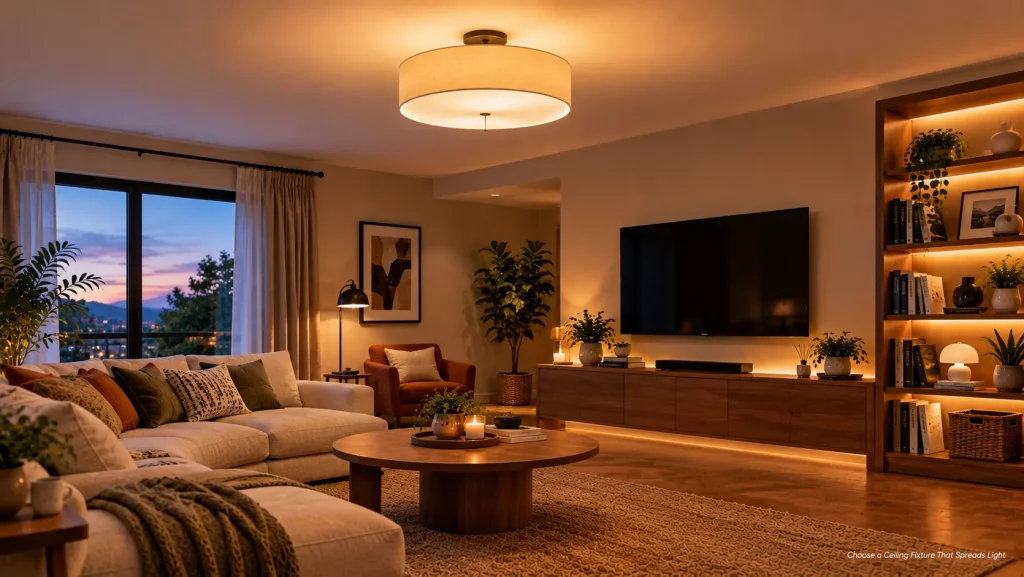
An exposed bulb or a fixture with little diffusion can be a source of glare. A fixture that softens and spreads the light can make the whole room more comfortable.
Fabric drum shades and frosted diffusers soften the light. Fixtures that send some light up onto the ceiling can make the room look taller and brighter. Depending on their placement and shades, several smaller pendants can sometimes cover a wider area than one central light.
For example, in a living room with a low ceiling, a flush-mount fixture with a frosted or fabric diffuser can light the room evenly without anyone bumping into it. In a room with a higher ceiling, a pendant can hang lower, but leave enough headroom where people walk.
Changing a hardwired ceiling fixture should be done by a qualified electrician, following local electrical requirements. Renters can ask a landlord about swapping a basic shade, or use a plug-in pendant designed to hang from a hook, installed with a hook and fixing suited to the ceiling and the pendant’s weight.
Bounce Light Off the Walls and Ceiling
Where the uplighter works on one corner, this idea brightens the whole room. Light that reflects off a large surface looks softer than light shining straight at you, so using the walls and ceiling as reflectors can lift the general brightness without glare.
Floor lamps with shades that open at the top, sometimes called torchiere lamps, send light up to the ceiling, where it spreads across the room. Wall lights that shine up and down create a wash of light on the wall around them.
This works especially well in rooms where people sit facing each other, since nobody ends up looking straight into a bright lamp.
Paler wall and ceiling colors reflect more light than dark ones. If your room has deep-colored walls, you may need a few more lamps to get the same brightness.
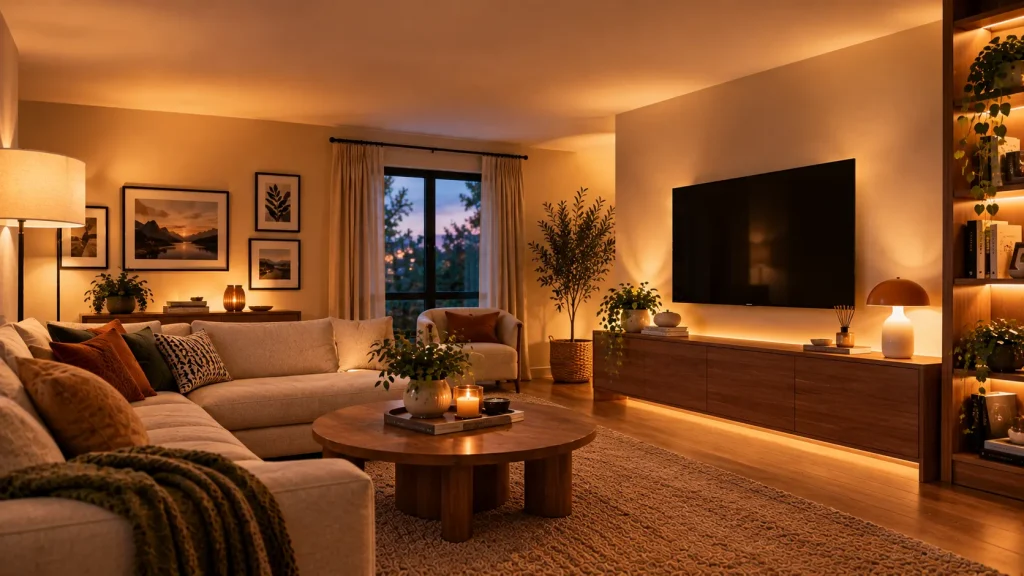
Bringing It Together
Make the Most of Daylight
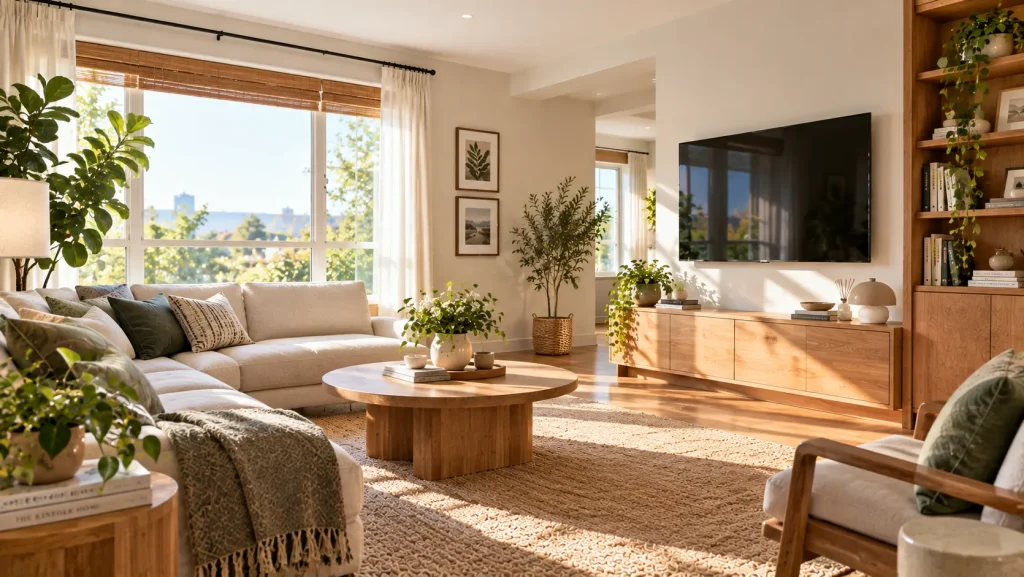
The best living room lighting during the day is often the window. Small changes can let more of it reach the room.
Pull curtains fully clear of the window when they’re open, by extending the rod a little beyond the frame on each side. Sheer curtains or light-filtering blinds soften harsh sun while still letting light through. A mirror placed where it catches window light can bounce it deeper into the room.
Keep window sills fairly clear, and trim any outdoor plants that block the window if that’s possible. Even moving a tall bookcase away from the side of a window can make a difference to how bright the room looks.
Think about glare too. If sunlight falls straight across the TV in the afternoon, an adjustable blind can solve that without darkening the whole room.
Rooms that get little direct sun can still look brighter. Pale walls and a light rug don’t create light, but they reflect more of what comes in, and a lamp in the dimmest spot can fill the gap during the day.
Control It With Dimmers and Smart Bulbs
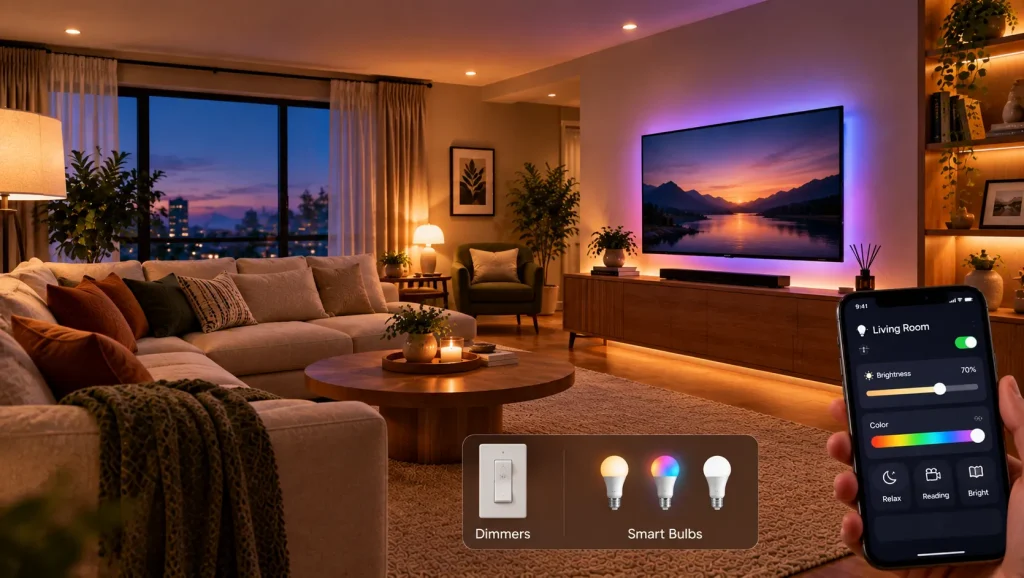
Having several lights only helps if they’re easy to adjust. Dimming lets the same lamp do different jobs, bright for a board game, low for a film, while switching controls let you turn several lamps on or off together.
There are a few ways to add control:
- Plug-in dimmers sit between a lamp and the outlet, with no wiring needed
- Smart bulbs can be dimmed and scheduled from a phone or voice assistant
- Smart plugs switch lamps on and off together or on a timer, though most don’t dim
- Dimmer switches for hardwired lights, which should be installed by a qualified electrician
Check that bulbs are compatible with your dimmer, since not all LED bulbs dim smoothly. Mismatched bulbs and dimmers can flicker or hum.
A simple setup might be a timer that turns two lamps on at sunset. That way nobody walks into a dark room after work, and it’s one less switch to think about.
A Quick Bulb Guide
Choosing bulbs can be confusing, so here are the basics in plain terms.
Brightness. On packaging, brightness is usually listed in lumens. Higher numbers mean more light. A reading lamp needs more than a decorative accent light.
Color temperature. This is listed in kelvins. Lower numbers give a warmer light, and around 2700K is a popular choice for living rooms. Higher numbers look cooler and whiter. Personal preference and the rest of your lighting matter more than any single number.
Color rendering. Some packaging lists a CRI number. Higher CRI bulbs show colors more naturally, which helps if you want artwork, fabrics, and skin tones to look true.
Keeping color temperatures fairly similar is a good starting point, so lamps look like they belong together. Some people deliberately use warmer accent lights with a slightly cooler task lamp, which can also work.
Lighting Mistakes to Avoid
Buying bulbs too bright for the lamp. A very bright bulb in a small decorative lamp can create glare. Check the lamp’s maximum wattage and choose brightness to suit its purpose.
Ignoring cord paths. Lamps placed far from outlets often end up with cords across walkways. Plan lamp positions around outlets, or use cord covers along the wall.
Overloading outlets with extension cords. Several lamps on one strip is common, but avoid plugging power strips into each other, and stay within the strip’s rated load.
Forgetting the switch. If the main lamps are hard to reach, they won’t get used. Smart plugs or a lamp near the door can help.
Questions About Living Room Lighting
How many lamps does a living room need?
There’s no set number. Many rooms look and work better with light from at least three different spots, but the right amount depends on the room size, wall color, and how you use the space.
What color light is best for a living room?
Many people prefer warm white, around 2700K, for relaxing in the evening. If you also use the room for work during the day, a slightly cooler bulb in a task lamp can help.
How can I light a living room with no ceiling light?
Use floor lamps and table lamps around the room, ideally plugged into outlets controlled by a wall switch, or connected to smart plugs so you can turn them on together.
How do I light an open-plan living room?
Treat the living area, dining area, and kitchen as separate lighting zones. A rug and a floor lamp can mark the seating zone, a pendant over the dining table can mark where you eat, and the kitchen keeps its own task lighting. Putting each zone on its own switch, smart plug, or dimmer lets you light only the part of the room you’re using.
Are LED bulbs good for living rooms?
Generally, yes. They use less energy than older bulbs, run cooler, and come in warm tones that suit living rooms. Choose ones labeled dimmable if you plan to use a dimmer.
Turn Off the Big Light
The simplest change is often the one people resist most: turning off the ceiling light in the evening and letting lamps do the work.
Try it for a week. This evening, move a lamp you already own to your favorite reading spot and switch the ceiling light off. Over the next few nights, note which corner or task still feels too dim, and let that tell you what to add next to your living room lighting.