Kitchen Ideas That Fix Small Annoyances: 8 Changes That Make Cooking Easier
A kitchen doesn’t have to be badly designed to be full of small irritations.
The lid that falls out every time you open the pot cupboard. The corner cabinet where things go to disappear. A drawer so crowded with knives and gadgets that it jams halfway. A cabinet door that bangs shut loud enough to make everyone jump.
None of these are big problems on their own. But they happen every day, sometimes several times a day, and together they make the kitchen more tiring to use than it needs to be.
That’s what these kitchen ideas are for. Each of the eight below tackles a common everyday annoyance. Some are as simple as clearing out a drawer. A couple, like swapping a faucet, take more work or a professional’s help. None of them involve tearing out cabinets or changing the layout.
Notice What Slows You Down
Before picking a project, spend a few days paying attention while you cook. Keep a note on your phone, and every time something slows you down or makes you sigh, jot it down.
It might be digging for the right lid, kneeling to reach the back of a cabinet, or running out of space to set down the shopping. After a few days, you’ll start to notice which problems come up most often. Those are the ones worth fixing first, because you’ll feel the difference every time you cook.
The Eight Fixes
Put the Backs of Cabinet Doors to Work
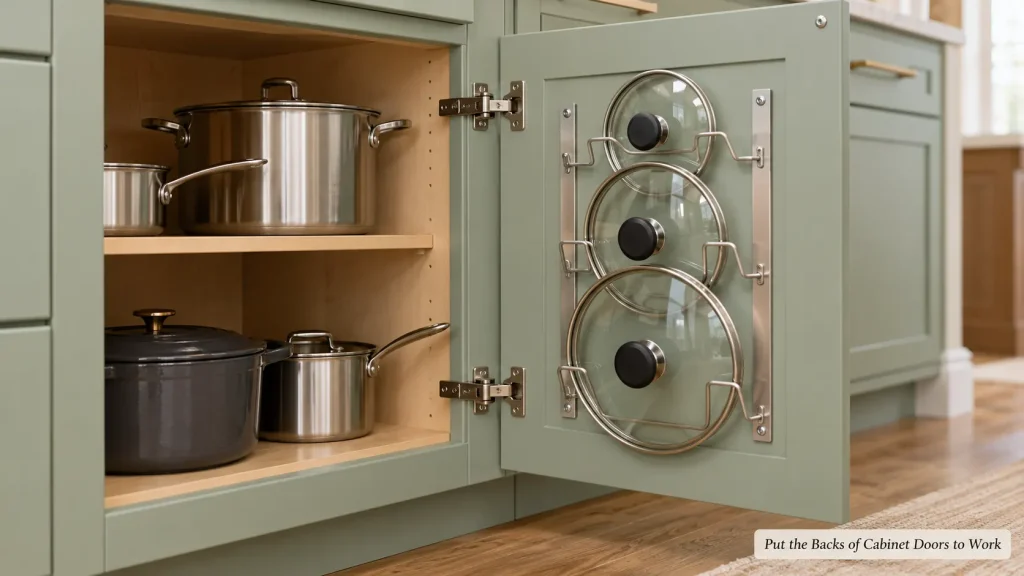
Pot lids sliding around, spice jars crowding the counter, foil and wrap boxes with no proper home. If any of that sounds familiar, look at the inside of your cabinet doors. It’s a useful surface that usually sits empty.
Slim racks mounted there can hold pot lids, small spice jars, thin cutting boards, or boxes of foil and baking paper. A few things to check before buying:
- Depth. Measure the gap between the inside of the door and the front of the shelves. Many cabinets have very little to spare, and a rack that’s too deep will stop the door from closing.
- Weight. Doors and hinges aren’t designed for heavy loads, so keep this for lighter items and stay within the rack’s weight limit.
- Mounting. Use the hardware and method the rack’s maker recommends for your door’s material and thickness, so nothing shows through on the front.
A lid rack on the door beside the pots cupboard keeps lids separate from the pans, so both are easier to grab.
The door under a prep counter is another good spot. A slim holder for measuring cups and spoons, or a narrow rack for cutting boards, keeps those things right where you use them instead of buried in a drawer. Start with one door and see how it works before adding racks to every cabinet, since too many can make doors feel heavy and crowded.
Rescue the Corner Cabinet
Corner cabinets are awkward because the back is hard to see and harder to reach. Plenty of people have a roasting pan or a slow cooker they’ve half forgotten about, simply because getting it out means kneeling and reaching into the dark.
There are a few ways to bring things forward:
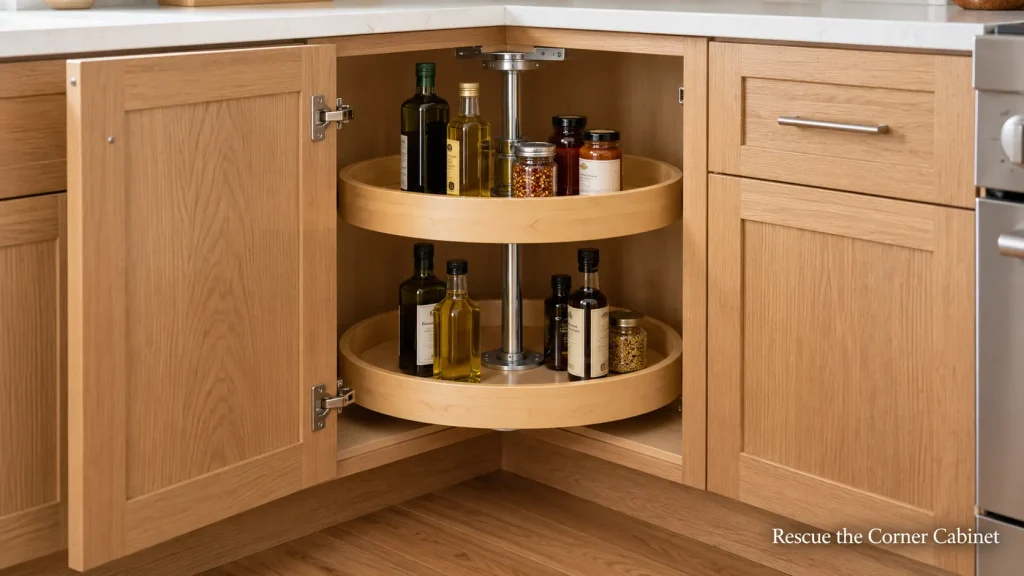
- Lazy Susans, or turntables, spin so items at the back come round to the front
- Pull-out corner units slide shelves out of the cabinet and along the side
- Bins with handles let you pull a whole group of items out at once
Freestanding turntables are usually the simplest to add. Pull-out systems can make much better use of the space, though they need careful measuring and more fitting.
When measuring for a turntable, check the narrowest part of the cabinet opening, not just the inside. A turntable that fits the shelf but not the door opening won’t go in. Measure the height between shelves too, so tall bottles still clear the shelf above.
If the deepest part of the corner stays awkward to reach, save it for things you only use now and then.
For example, a corner cabinet that currently holds a jumble of baking tins might work better with a two-tier turntable for oils and sauces on top and a bin of rarely used tins tucked behind it on the bottom shelf. Grouping items by type makes it much easier to remember what’s in there.
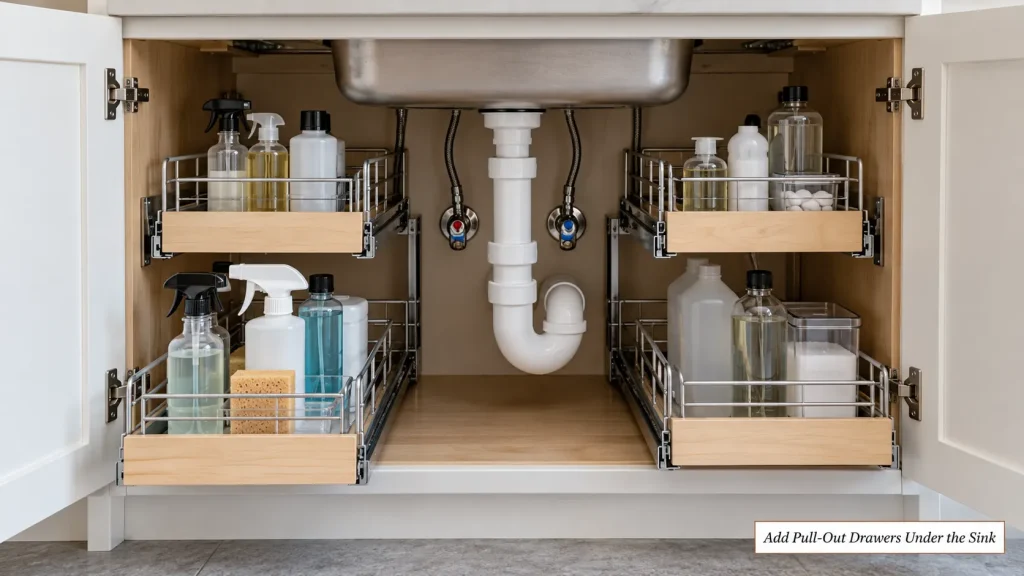
Add Pull-Out Drawers Under the Sink
The cupboard under the sink tends to become a tangle of spray bottles, sponges, and spare bags, with something always tipping over when you reach in.
Pull-out drawers or sliding baskets designed for this space work around the pipes, so you can pull the whole collection toward you. Two-tier units that sit either side of the drainpipe are common. Some are freestanding, while others screw into the cabinet floor.
Measure carefully, including the position of the drainpipe and any garbage disposal unit. Leave space around the pipes and shut-off valves so you can reach them quickly if you ever need to turn off the water.
A tray or mat on the cabinet floor can catch small drips and may make some leaks easier to spot, though it’s still worth looking under the sink properly every so often. If you have young children, keep cleaning products behind a cabinet lock or in a higher cupboard, since pull-out drawers make them easier to reach.
Give Kids a Snack Spot of Their Own
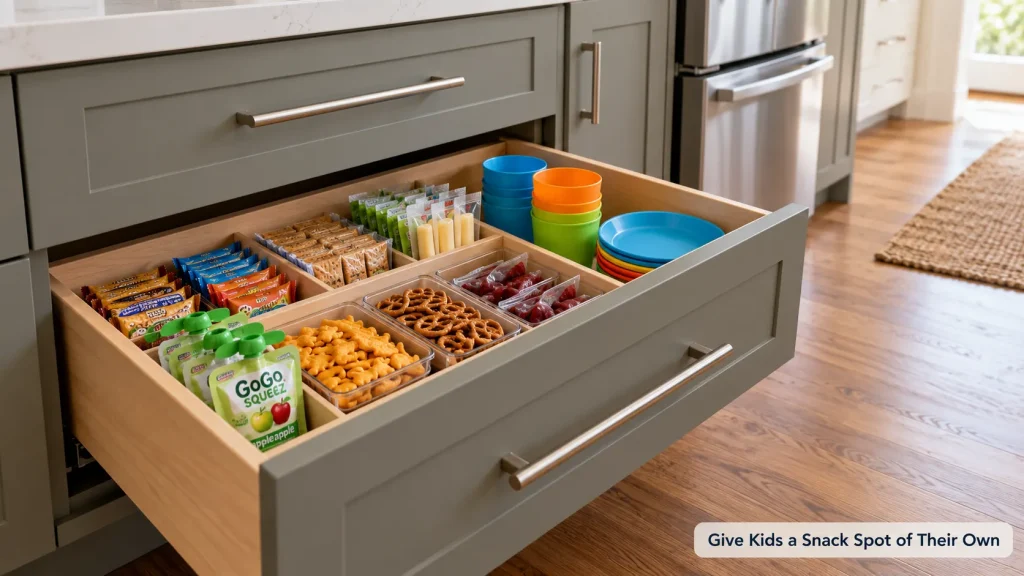
For children who are old enough to choose and handle snacks on their own, a low drawer or shelf set aside just for them can save a lot of back and forth.
Stock it with things you’re happy for them to take without asking, chosen with your child’s age in mind. Non-breakable cups and plates suit this spot better than glass or ceramic.
The same idea can work in the fridge, with a small bin on a lower shelf holding refrigerated snacks that suit their age.
Placement matters as much as contents. A drawer away from the stove, oven, and knife storage keeps small hands out of the busiest and riskiest part of the kitchen.
Keeping the spot small and clearly theirs also helps with tidying. When there’s only one place for their cups and snacks, it’s easier for kids to put things back, and easier for adults to notice when it needs restocking. As children grow, the contents can change, perhaps to include lunch-packing supplies.
Create Counter Space That Moves
Not enough room to roll out pastry, set down the shopping, or let two people prep at once is one of the most common kitchen complaints, especially where there’s no space for an island.
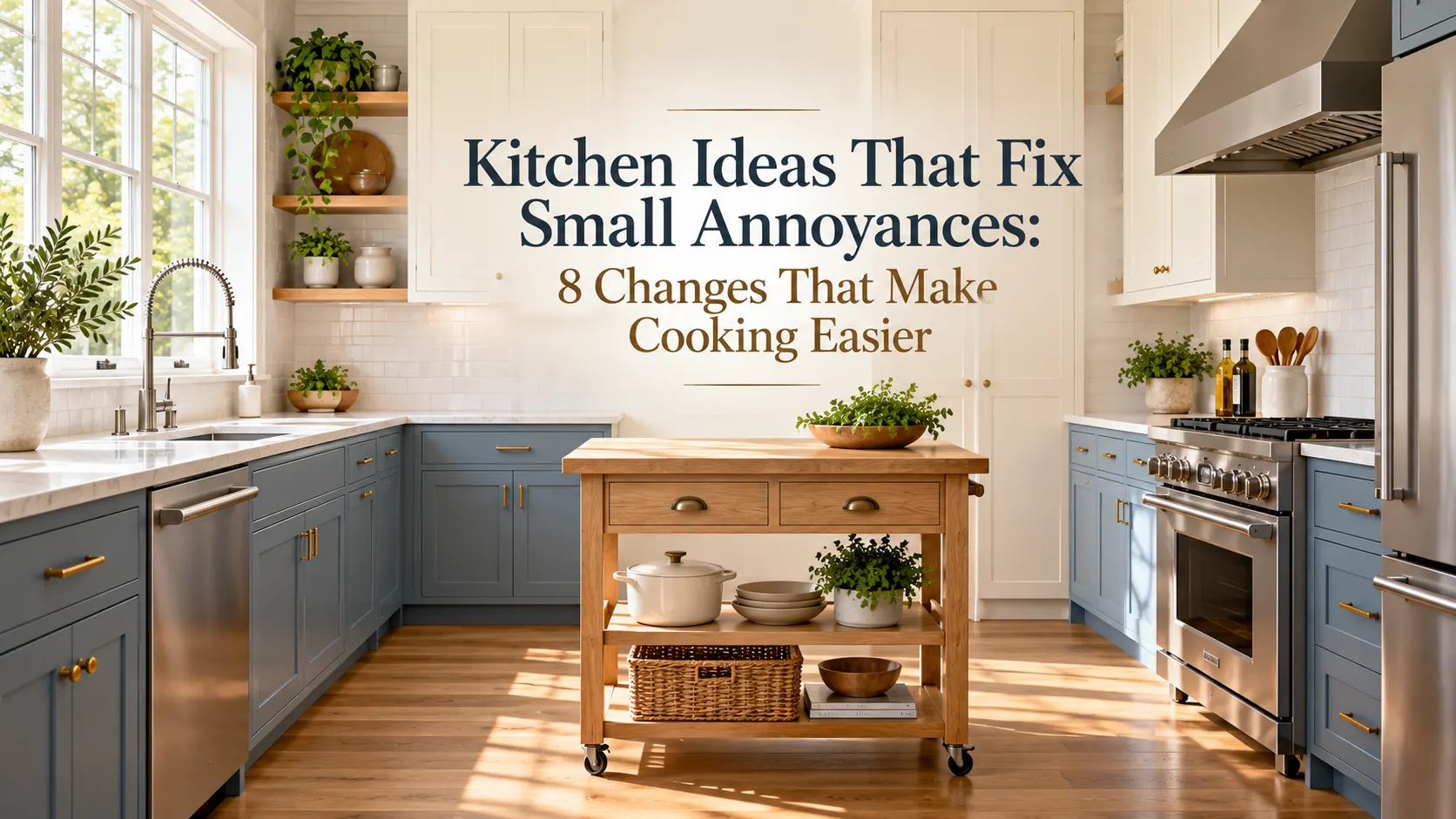
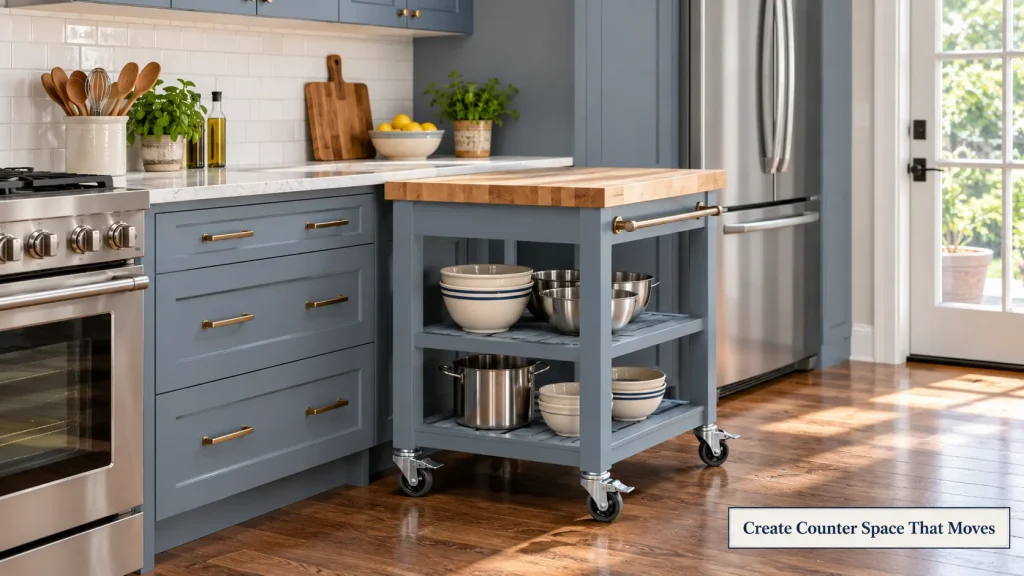
A rolling kitchen cart can help. It can sit in a corner most of the time, then move near your prep area when you’re cooking. If you plan to chop or knead on it, choose a cart designed to be used as a work surface, with sturdy construction and wheels that lock. Keep it clear of the stove, oven door, and walkways while it’s in use.
A cart close to the height of your counters makes it easier to slide bowls and boards from one surface to the other. Shelves underneath can hold mixing bowls or small appliances.
In very small kitchens, a wall-mounted fold-down table can work as a prep surface or breakfast spot and then fold flat. Install it with the fixings the manufacturer specifies for your wall type, and check its weight rating before using it for heavier tasks.
Another option is an over-sink cutting board designed to fit securely across your sink, which can add a little chopping space in a pinch.
It also helps to look at what’s already on your counters. Moving a rarely used appliance or a stack of mail somewhere else can free up a surprising amount of workspace before you buy anything at all.
Get Knives Out of the Drawer
Loose knives rattling around in a drawer can dull each other’s blades and make reaching in a careful business.
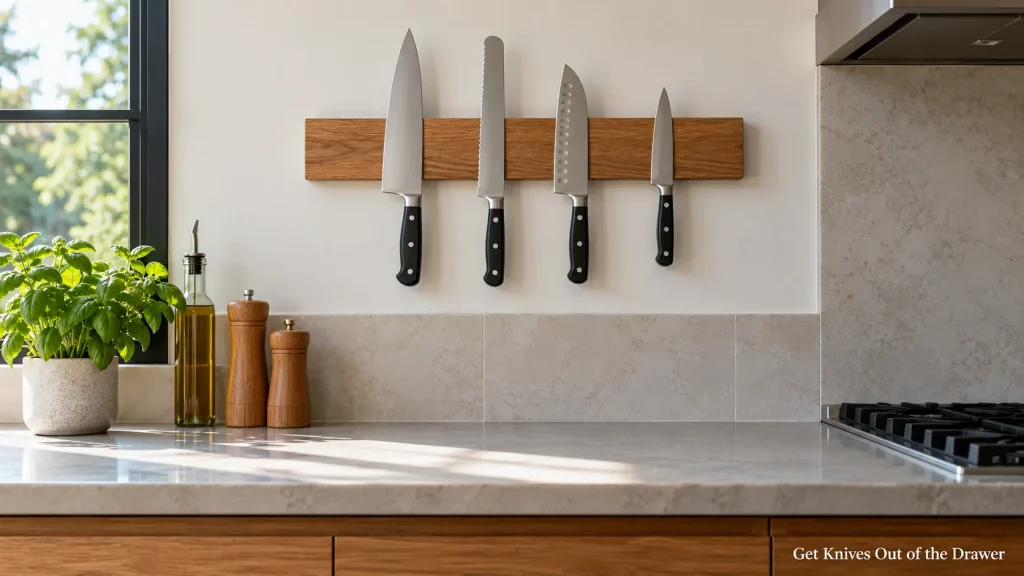
A wall-mounted magnetic knife strip keeps knives separated and visible, and frees up a drawer for other tools. Mount it where you do most of your prep, in a spot young children can’t reach or climb to, and follow the manufacturer’s installation and load guidance. Once it’s up, check that each knife is held firmly before letting go.
When putting knives on or taking them off, do it slowly and avoid scraping or striking the edge against the strip.
If you’d rather keep knives out of sight, or need them fully inaccessible to children, an in-drawer knife organizer with a child-resistant latch on the drawer is another route. Used correctly, either option can reduce the risks that come with loose blades in a drawer.
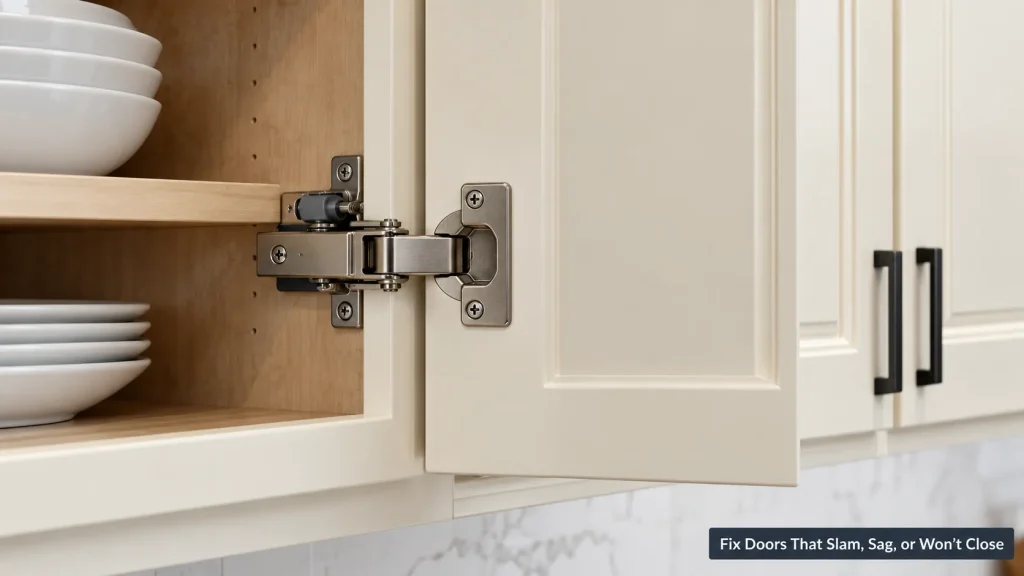
Fix Doors That Slam, Sag, or Won’t Close
Cabinet doors that bang shut, sit crooked, or drift open are easy to ignore and surprisingly irritating to live with.
Many cabinet hinges can be adjusted with a screwdriver. Small adjustment screws on the hinge usually move the door up and down, side to side, or in and out, which can fix uneven gaps or a door that won’t sit flush. The hinge maker’s instructions, often available online, show which screw does what.
For slamming doors, soft-close add-ons or hinge dampers can slow the door down as it closes. Small stick-on bumpers inside the cabinet frame are an even simpler way to quiet the noise. Drawers that slam can sometimes be fitted with soft-close runners, though that’s a bigger job and depends on the existing drawer system.
If a hinge is cracked or the screws keep pulling loose from the cabinet, replacing the hinge or repairing the screw holes may be needed. Check the hinge type before buying replacements, since there are several common styles. Taking the old hinge to the store, or photographing it alongside a tape measure, makes finding a match much easier.
This is one of the most satisfying fixes on the list, because it often costs very little and the difference is noticeable straight away.
Choose a Faucet That Matches How You Use the Sink
Because the faucet is used throughout the day, one that doesn’t suit you is a constant small frustration. Maybe it’s too low to fill a stockpot, splashes everywhere, or makes rinsing the sink a chore.
Think about what bothers you most:
- Pull-down or pull-out sprayers can make it easier to fill tall pots and rinse the corners of the sink
- A higher or longer spout can leave more room for large pans, though in a shallow sink it may also increase splashing, so consider sink depth and where the water lands
- Single-lever handles can be easier to operate with one hand
- Finish affects cleaning, since some show water spots and fingerprints more than others
If you’re happy with the faucet itself and only the spray is the problem, a new aerator, the small screen at the tip of the spout, can sometimes reduce splashing for very little cost.
Before buying a new faucet, check how many holes your sink or countertop has for it, and measure the space behind the sink so a tall spout or handle won’t hit the wall or window.
Replacing a faucet can be a manageable DIY project for people comfortable with basic plumbing, but setups vary, and shut-off valves and supply lines aren’t always straightforward. If you’re unsure, a plumber can fit it and help avoid leaks.

What Tends to Undo Good Intentions
Organizing around today’s mess instead of daily habits. It’s easy to buy organizers to fit whatever is currently in a cupboard. Thinking first about what you reach for most, and where you stand when you need it, leads to more useful choices.
Forgetting to tell everyone else. A new home for lids or snacks only works if the whole household knows about it. A quick mention, or a small label for the first few weeks, helps the change stick.
Doing everything at once. It’s tempting to tackle every annoyance in one weekend. Fixing one or two and seeing how they work in daily life makes it easier to tell what actually helped.
Overlooking the simplest fix. Sometimes a door just needs a hinge adjusted, or a drawer just needs half its contents removed. It’s worth checking the free fix before buying a product.
Questions About Kitchen Ideas
Are these kitchen ideas suitable for renters?
Many are. Freestanding turntables, freestanding under-sink organizers, a rolling cart, a kids’ snack shelf, and stick-on cabinet bumpers don’t require permanent changes. Anything that involves screws, such as door racks, a knife strip, or a fold-down table, is worth checking against your lease. Replacing a faucet usually needs your landlord’s permission.
How do I know if my cabinets are worth keeping?
Signs that cabinets are in reasonable shape include sturdy boxes, level shelves, hinges that hold, and doors that line up properly. Swelling, soft spots, or signs of mold usually point to moisture problems. In that case, finding and fixing the source of the moisture comes first, since new cabinets can be damaged the same way if the cause remains.
Which of these changes helps a small kitchen most?
In a small kitchen, the biggest gains often come from using space that’s currently wasted, such as cabinet doors, the corner cabinet, and the area under the sink. Movable counter space can also help if there’s room to park a cart.
Should I fix storage before updating the look of my kitchen?
It often makes sense. Sorting out storage first shows you what you really use and need, which can change your plans for any later cosmetic updates.
One Annoyance at a Time
The best kitchen ideas aren’t always the most photogenic ones. Often they’re the small changes that quietly remove a bit of friction from cooking dinner on a busy evening.
Go back to your note, pick the problem that bothers you most, and start there. Then move on to the next one when you’re ready.