

Dorm Room Ideas That Actually Work: 9 Ways to Make a Small Room Feel Like Yours
Picture opening the door on move-in day to a room with painted block walls, a thin mattress on a metal frame, a desk that’s seen a few decades of students, and a closet about the width of a coat. Your parents or friends are carrying boxes up the stairs behind you. Someone across the hall is already hanging lights.
Then you look at the pile of things you brought and realize half of it won’t fit.
Dorm rooms are small, shared, and come with rules about what you can do to them, which is why so many online photos don’t help much. The 9 dorm room ideas below are chosen for real dorms: tight floor space, a roommate with their own plans, walls you may not be able to nail into, and a budget that also has to cover textbooks.
Three Things to Check Before You Buy Anything
Your housing rules. Check your college’s housing handbook, or ask the housing office for the current rules. They often cover candles, extension cords, cooking appliances, wall adhesives, string lights, and whether you can raise or loft the bed. Reading it first can save you money and a conversation with your resident advisor later.
The actual room. Many schools post floor plans or photos, and some list furniture dimensions. If yours doesn’t, ask current students or look for videos of the building. Knowing the bed size, desk width, and closet type helps you buy things that fit.
Your roommate. A quick message before move-in can stop you both bringing a mini fridge, a microwave, and a rug the same size. It’s also a chance to agree on a rough color scheme if you’d like the room to look cohesive.
Where You Sleep and Sit
In most dorms, the bed is also the couch, the dining table, and sometimes the desk.
Raise the Bed to Gain Storage
The space under a dorm bed is one of the biggest storage areas in the room, but only if there’s enough clearance.
Many dorm beds can be adjusted to different heights. Check whether yours can, and ask housing staff about the process, since some schools handle it for you. Bed risers are a different matter. Only use them if housing staff approve them for your bed, since some institutional frames aren’t designed to be raised that way, and the risers need to fit the frame properly as well as handle the weight.
Once there’s room underneath, rolling bins, lidded boxes, or a small set of plastic drawers can hold extra clothes, shoes, snacks, and the things you only need now and then. Measure the clearance before buying anything, so the bins actually slide in.
It helps to sort what goes under there by how often you need it. Things you reach for weekly, like spare towels or snacks, belong in the bins closest to the edge. Winter clothes or a suitcase full of off-season items can go further back. A bed skirt or a long throw can hide the bins if you’d rather not see them, as long as fabric stays clear of outlets, heaters, and anything electrical, in line with your hall’s fire-safety rules.

Turn the Bed Into a Place to Hang Out
If your bed doubles as seating when friends visit, a few changes make it more comfortable for everyone.
- A large backrest pillow or a couple of firm cushions against the wall create a sofa-like back
- A throw blanket over the duvet protects your bedding from shoes and snacks
- A small folding side table, or a clip-on bedside shelf that’s securely attached and rated for what you’ll put on it, gives people somewhere to set a drink
If your bed is pushed against a wall, a long, firm bolster along the wall side keeps pillows from slipping into the gap. Washable covers on everything make life easier, since this is where most snacking happens.
During the day, folding the duvet or using a bedspread that’s easy to straighten makes the room look tidier, even when the rest of it isn’t.

Walls and Light
Bare walls and harsh overhead lighting are what make many dorm rooms feel so institutional.
Decorate the Walls Without Damaging Them
Many dorms restrict nails, and some limit adhesives too, so check your rules before buying anything for the walls.
Options that are often allowed include:
- Removable adhesive hooks and strips, used within their weight limits
- Poster putty for light paper prints
- A lightweight, unglazed print or a shatter-resistant mirror propped on a desk or dresser, with something to stop it sliding
- A fabric hanging, if your school permits them, since many require flame-retardant materials
This is also where the room starts to look like yours. A cork board or small wire grid, attached in an approved way, gives you one spot for photos from home, ticket stubs, postcards, and notes from friends. Add to it through the year, and it slowly becomes a record of your time there.
Prints that reflect what you actually like, such as a favorite city, a band, a film, or your own photography, say more than generic dorm posters. Grouping a few together above the bed or desk looks more intentional than spreading single posters around.
Even removable strips can lift paint on some walls, so test one in an inconspicuous spot first if you can. When you move out, remove them slowly, following the instructions.

Replace Harsh Light With Softer Layers
Overhead dorm lights tend to be bright and flat. They’re useful for cleaning, less so for winding down at night or studying comfortably.
A desk lamp with an adjustable arm gives focused light for reading and homework. A clip-on lamp on the bed frame or headboard lets you read in bed without keeping your roommate awake. Look for one with an adjustable head, so you can point the light at your book rather than across the room. If your dorm allows them, battery or plug-in LED string lights can add a softer glow, but many schools have specific rules about where and how they’re used.
Candles, incense, and halogen lamps are banned in most residence halls because of fire risk, so leave them at home. Battery-operated candles are a flameless alternative that gives a similar look.
Follow your school’s rules on power strips, since some halls only allow specific approved types. Avoid overloading outlets, keep cords along the wall rather than across walkways, and never run them under a rug.

Making Small Storage Go Further
Dorm closets and drawers fill up fast. Most rooms have more usable space than it first seems.
Use the Backs of Doors and the Inside of the Closet
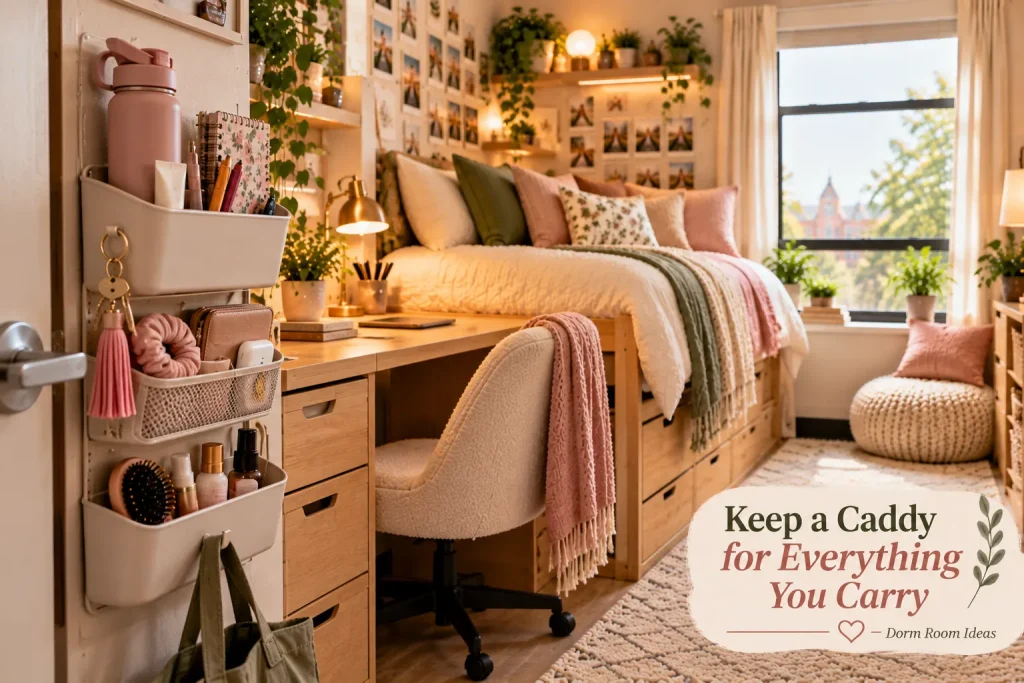
The back of the room door and the closet door are often completely empty. An over-the-door rack or hanging pocket organizer, if your dorm permits them, can hold shoes, toiletries, scarves, or cleaning supplies. Check that the door still closes fully and latches with it in place, since room doors in residence halls are often fire doors that need to close properly.
Inside the closet, a hanging shelf organizer turns a single rail into stacked cubbies for folded clothes. Slim, non-slip hangers fit more clothes in less space than chunky ones. A second, lower rod that hangs from the main one can add hanging space for shorter items like shirts.
For example, a student with a narrow wardrobe might keep jackets and dresses on the main rail, folded sweaters in a hanging organizer to one side, and shoes in an over-the-door rack, leaving the dresser free for everyday clothes.

Keep a Caddy for Everything You Carry
If your dorm has communal bathrooms down the hall, you’ll be carrying toiletries back and forth every day.
A shower caddy with drainage holes keeps everything in one place. Pick one that’s easy to carry, and keep it stocked with only what you use daily, so it isn’t too heavy.
Shower shoes are worth packing too, especially for shared bathrooms, along with a towel hook or two somewhere with a bit of airflow, so damp towels can dry properly instead of sitting in a pile.
The same idea works for laundry supplies and library books. A tote for each saves hunting for things and keeps loose items from piling up.
Studying and Sharing
Build a Study Zone That Helps You Focus
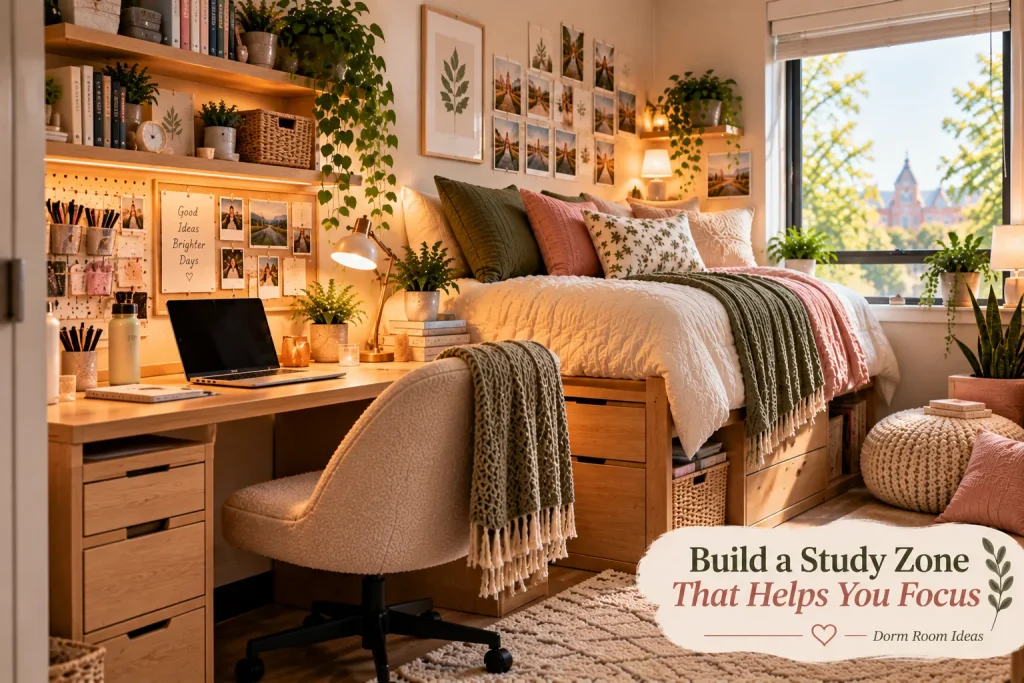
The dorm desk is usually fine, just bare, and it can take some adjusting before long study sessions are comfortable.
Think about comfort first. A seat cushion or a lumbar pillow can help if the desk chair is hard. A laptop stand with a separate keyboard and mouse can bring the screen closer to eye level, though it works best when chair height, screen position, and typing height are set up together.
Then think about clutter. A desk organizer or a few small trays keep pens, chargers, and sticky notes in order. A wall calendar or whiteboard, mounted in a way your hall allows, helps track deadlines.
For example, a student with a small corner desk might add a freestanding desktop shelf for textbooks, keep only a laptop, a lamp, and a pen cup on the surface, and store everything else in a rolling drawer unit tucked underneath.
Finally, think about noise. If your roommate’s schedule differs from yours, noise-cancelling headphones or earplugs can make a big difference.
Plan Shared Items With Your Roommate
Sharing a small room works best when you agree on a few things early.
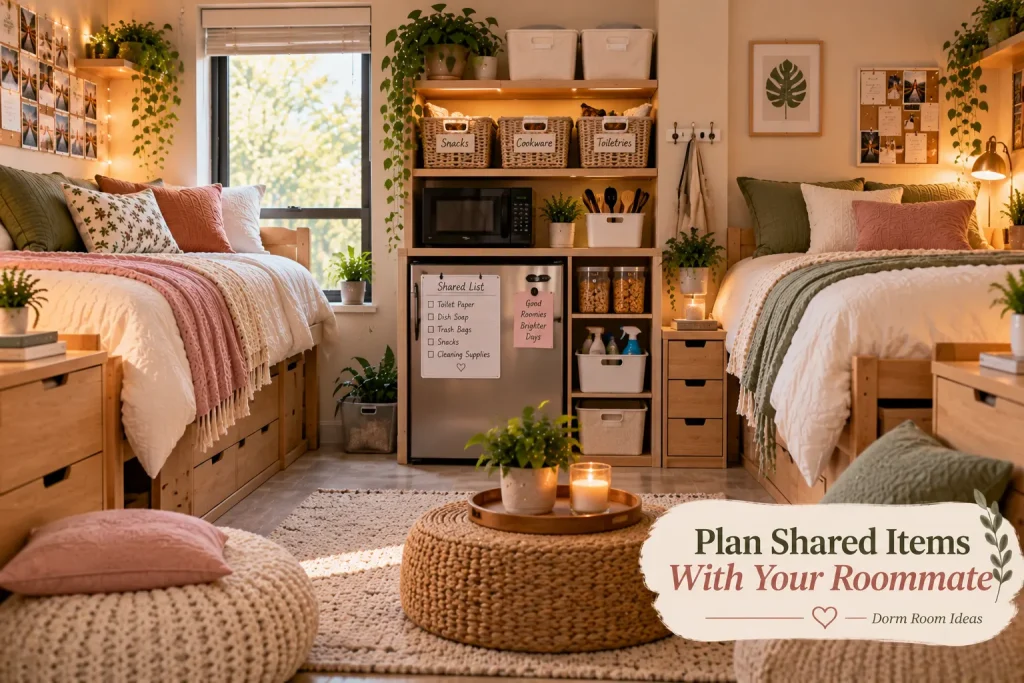
Talk about who brings shared items like a mini fridge, microwave, rug, or storage cart, if your dorm allows them. Deciding who brings each one, or splitting the cost of a single item, avoids doubling up and frees up space.
Habits are worth discussing too, like when you each go to sleep, whether guests are okay late at night, and how you’ll handle cleaning. Many schools provide a roommate agreement form, and it’s worth actually filling it in.
Some roommates enjoy coordinating bedding or a shared color, while others keep their sides completely separate. Either can work.
A simple example: one roommate brings the mini fridge and the other brings the rug and a microwave, if microwaves are allowed. Shared cleaning supplies go in one caddy by the door, and each person keeps personal items on their own side. It doesn’t need to be formal, just clear enough that nobody ends up buying the same thing twice.
Add a Rug to Soften the Room
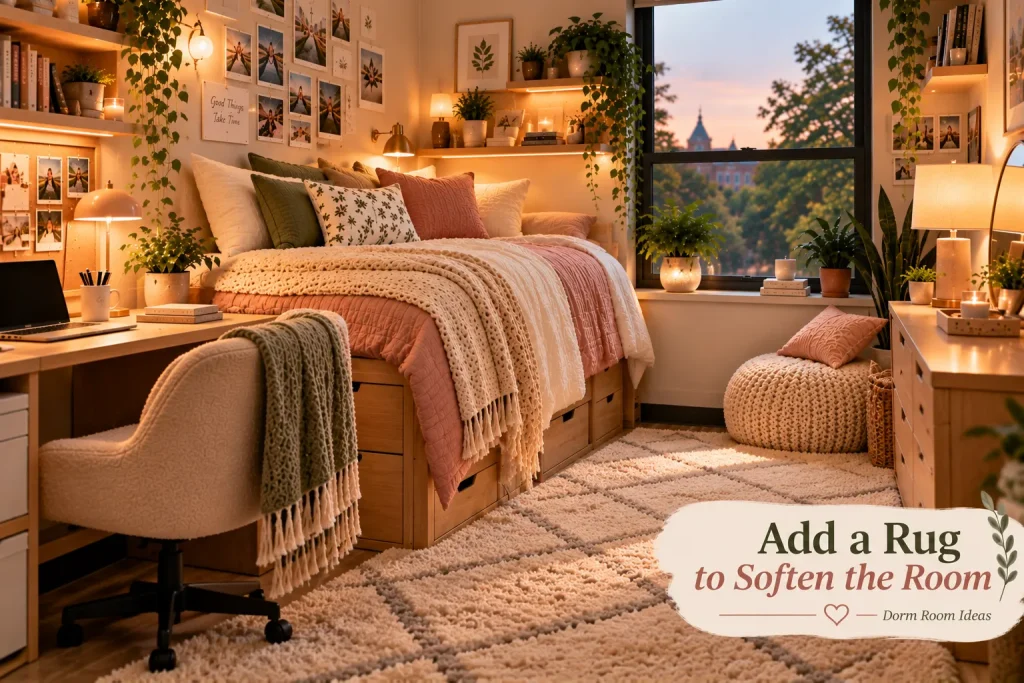
Dorm floors are often hard tile or thin carpet. A rug makes the room warmer underfoot, softer to sit on, and a little quieter.
Choose a size that fits the open floor space between beds or in front of your bed without catching the door as it opens, and check your housing rules, since a few dorms have restrictions on rug size or type. Low-pile or flat-weave rugs are easier to vacuum, and a non-slip pad underneath helps keep the rug from sliding on hard floors.
Washable rugs are worth considering in a dorm, since spills tend to happen and there’s rarely space to deep clean a rug in place.
Essentials Versus Nice-to-Haves
Most dorm room ideas work best when you start small, so it helps to split your list in two.
Usually essential: bedding that fits your mattress, a desk lamp, a laundry bag or basket, and basic storage like hangers and a couple of bins. If your bathroom is communal, add a shower caddy.
Nice to have, once you’ve seen the room: a mattress topper, a backrest pillow, a clip-on reading light, a rug, extra organizers, and wall decor.
Mattress sizes vary between schools and even between buildings, so check your bed’s dimensions before buying sheets.
Dorm Mistakes Worth Avoiding
Covering smoke detectors or sprinklers. Never hang anything on or near them, and keep decorations away from lights and heaters.
Blocking the window or radiator. Furniture or storage pushed against a heater or vent can affect heating, and anything stacked in front of the window makes it harder to open in an emergency.
Forgetting about move-out. Everything you bring has to go home again. Foldable bins and items that pack flat make the end of the year much easier.
Not photographing the room on arrival. A few quick photos of the walls, floor, and furniture on move-in day can help if there’s any question about damage when you leave.
Questions About Dorm Room Ideas
What should I not bring to a dorm?
Check your school’s list first. Common banned items include candles, incense, space heaters, hot plates, and halogen lamps. Large furniture usually isn’t practical either, since the room comes furnished.
How can I make my dorm room feel more like home?
Bring a few personal things, like photos, a favorite blanket, or a familiar pillow. Softer lighting and a rug also make a noticeable difference to how cozy the room feels.
How do I decorate a dorm room on a tight budget?
Start with bedding and lighting, since they affect the room most. After that, removable wall decor, secondhand finds, and storage bins from discount stores can stretch a small budget. If you buy a secondhand rug or textile, check it carefully and clean it before bringing it into a shared room.
How do I keep a small dorm room smelling fresh?
Take trash out often, wash bedding and towels regularly, and wipe out the mini fridge every few weeks. Open the window when the weather allows. A closed bin with a lid and a small box of baking soda in the fridge can also help, without needing candles or sprays. If the room smells musty or damp no matter what you do, report it to housing maintenance, since leaks or moisture problems need fixing at the source.
What can I do if my roommate and I have different schedules?
Small things help a lot: a sleep mask or earplugs for the person going to bed earlier, a clip-on light and headphones for the one staying up, and an agreement about quiet hours. If tensions build, your resident advisor can help you both find a workable arrangement.
A Room That Works for the Year Ahead
A dorm room is only yours for a year or so, which takes some of the pressure off. None of these dorm room ideas need to happen on the first day.
The rooms that end up feeling most like home tend to fill in gradually: a photo pinned up after a weekend away, a lamp moved to a better spot, a rug added once you know what the floor feels like in winter. Let yours grow the same way, and pay attention to what actually makes your days easier as the term goes on.