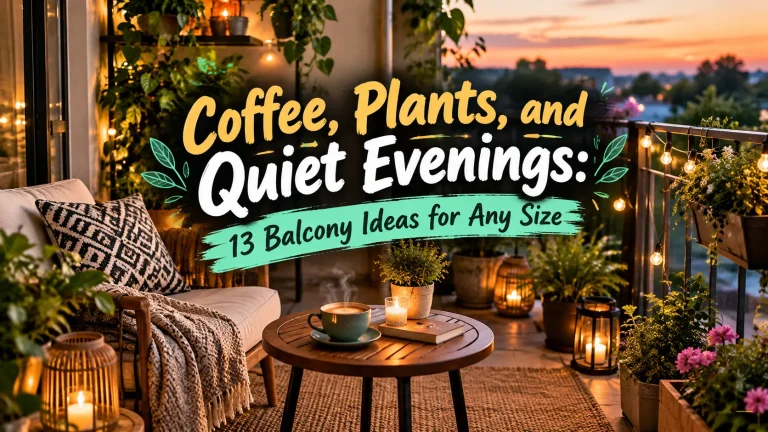

From Bare to Beautiful: 10 Balcony Decor Ideas That Add Real Personality
A lot of balconies are furnished but not decorated.
There’s a table, a couple of chairs, maybe a plant that’s hanging on. Everything works. But step outside and it still looks like an outdoor storage area with seating, not a space anyone put thought into.
Fortunately, a few well-chosen colors, textures, and finishing touches can make a furnished balcony feel much more inviting, the same way they make an indoor room look lived in. The ten balcony decor ideas below focus on exactly that, so they work whether your balcony is already set up or you’re starting from scratch.
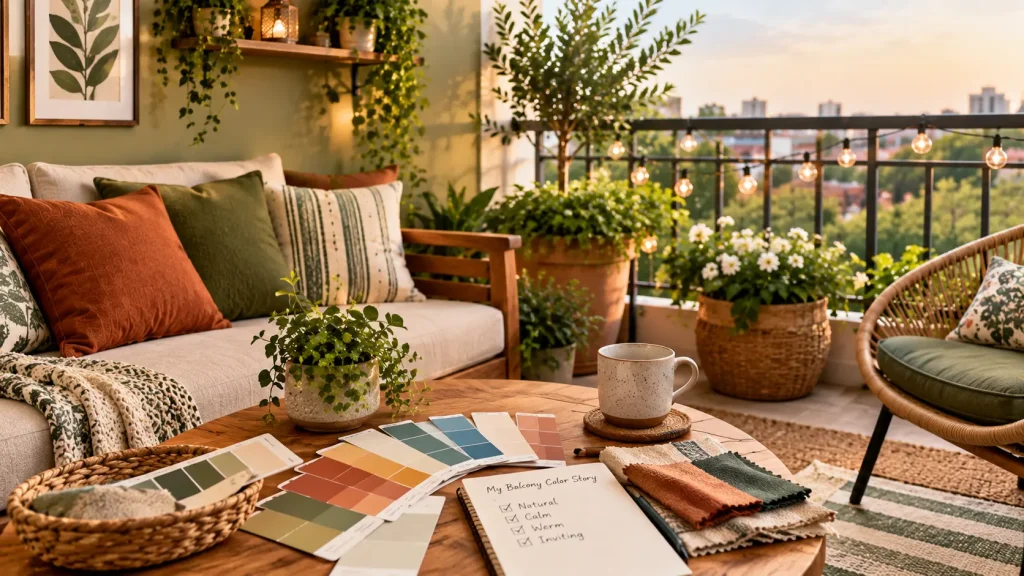
Pick a Color Story Before You Buy Anything
Many balconies look cluttered because everything was bought separately. A green chair, a striped cushion, and three differently colored pots can make the space feel disconnected when they have nothing in common.
Choosing a color story first fixes that. Pick two or three colors and let every decor purchase fit within them. When the same colors repeat in the cushions, pots, and wall decor, the eye reads the balcony as one finished space instead of a collection of separate things.
Combinations that suit outdoor spaces well:
- Mediterranean: white, cobalt blue, and terracotta
- Desert warmth: sand, rust, and olive green
- Calm coastal: soft gray, navy, and natural wood
- Garden fresh: cream, sage, and a pop of yellow
Look at what can’t change first, such as the color of the railing, the walls, and the floor, and choose a palette that sits comfortably alongside them. A rust and olive scheme can look lovely against warm brick, while blue and white often suits a white or gray building.
Once you have a palette, shopping gets much easier. If something doesn’t fit, it’s an easy pass.
Paint a “Rug” Onto the Floor
A concrete balcony floor can be turned into a design feature with paint. Instead of covering the whole floor, you paint a rectangle in the middle with a simple pattern, so it looks like a rug that never blows away.
Simple patterns work best:
- A checkerboard in two soft colors
- Wide stripes
- A stenciled tile pattern inside a plain border
Painter’s tape gives you crisp edges, and a stencil makes repeating patterns much easier than freehand.
This is one idea to check carefully before starting. Many buildings don’t allow changes to balcony floors, and rentals almost always need permission. Use a paint made for exterior concrete floors, follow the instructions for surface prep and drying, and choose a finish with good slip resistance, since painted surfaces can get slippery when wet. Keep the drain and any slope that carries water away completely clear.
If painting isn’t an option, an outdoor floor decal can give a similar look, but only if it’s specifically rated for your floor surface, sun exposure, and wet conditions, since some decals lift in heat, trap moisture, or turn slippery. A removable outdoor rug is the simpler alternative, as long as it doesn’t block drainage or curl at the edges.

Hang Outdoor-Safe Wall Art
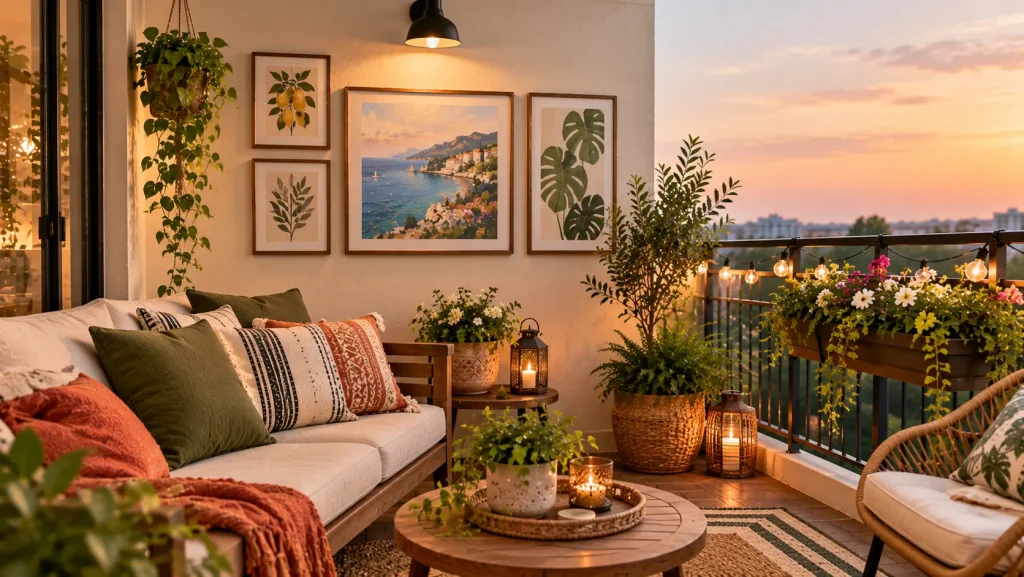
The wall beside the balcony door is often completely bare. Treating it like an indoor wall, with art, instantly makes the space feel more like a room.
Indoor prints and canvases won’t survive rain and sun, so look for pieces made for outdoor use. Options include:
- Metal wall art, such as a sun, leaf, or geometric design
- Outdoor canvas prints with weather-resistant inks
- Painted wooden signs sealed for outdoor use
- Decorative ceramic tiles hung as a small grouping
For example, a narrow balcony with a plain white wall might get a cluster of three round metal leaves in brass and black, matching the finish on a small side table. The metallic finish also connects the wall display to the side table, so the two read as a coordinated pair.
An outdoor mirror is another option. It bounces light into a shady balcony and can make a narrow space look wider. Place it where it won’t reflect strong sun into your home or a neighbor’s window, and avoid positioning it where birds might fly into it.
Wind is the main concern here. Fix wall decor securely with fixings suited to your wall, and avoid anything lightweight that could catch a gust. In a rental, check what’s allowed before drilling.
Group Your Pots Like a Display
Plants are the obvious balcony addition, but the pots themselves can be decor too. A random mix of plastic containers looks very different from a planned group.
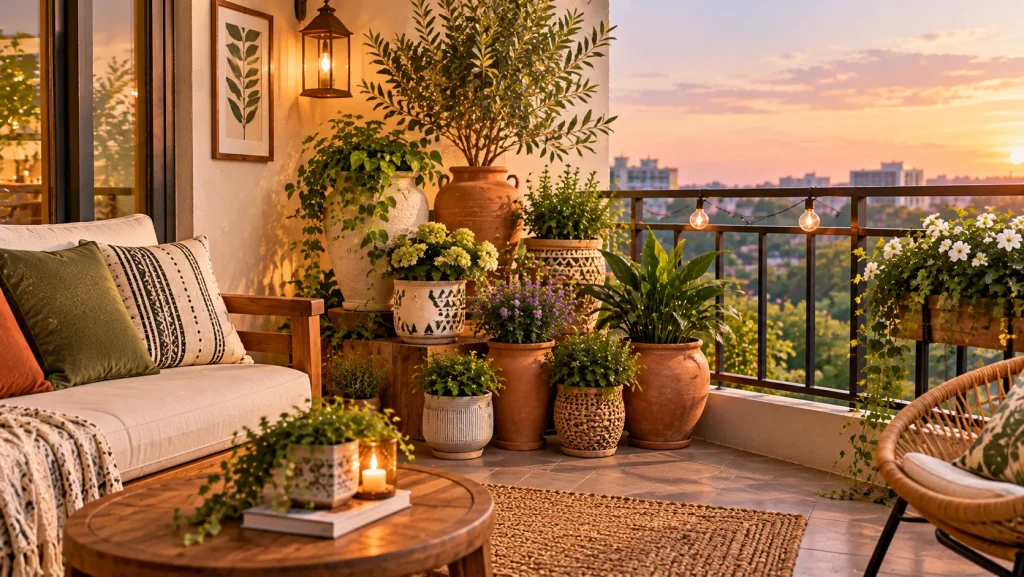
Try choosing pots that share something, such as the same material, color, or finish, then vary the heights. Three tall pots in matte charcoal, or five terracotta pots in different sizes clustered in a corner, can look like a deliberate arrangement rather than a collection that just happened.
When arranging them:
- Put the tallest pot at the back or in the corner
- Stand smaller pots on an upturned pot, a crate, or a plant stand to create layers
- Leave a little gap between groups so the balcony doesn’t look crowded
Heavy ceramic and stone pots look beautiful but add a lot of weight once they’re filled with wet soil. On a balcony with a load limit, lightweight fiberglass or resin pots that imitate stone can give the same look with less strain.
Layer Patterns With Outdoor Textiles
Textiles are one of the quickest ways to change how a balcony feels. A plain metal chair with a patterned seat pad and a cushion looks completely different from the same chair left bare.
Mixing patterns works best when the scale varies. A larger pattern, a smaller pattern, and a solid color usually sit happily together, especially if they share colors from your palette.
For example, a balcony with a blue and white color story might pair:
- A wide navy stripe on a seat cushion
- A small blue and white print on a throw pillow
- A solid white outdoor throw folded over the chair back
Fabrics labeled for outdoor use are designed to resist fading and dry faster. Even so, bringing textiles in during heavy rain and over winter helps them stay bright for longer. Covers that zip off and go in the washing machine make life easier.
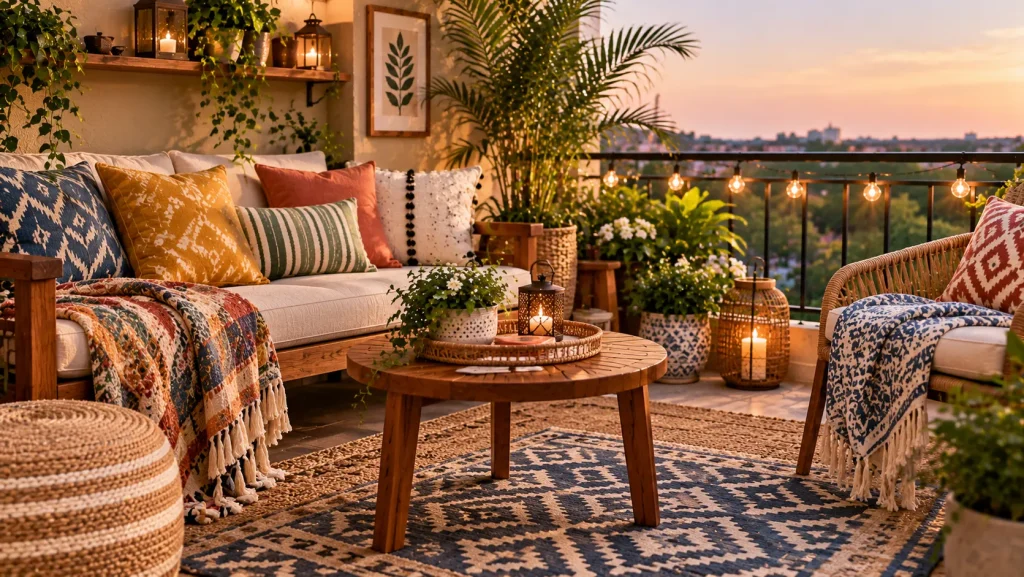
Upcycle Something Into a Side Table
A small side table next to a chair is useful for holding a drink or a book, and it’s a great place to add some character.
Instead of buying new, look at what you can reuse:
- A wooden crate turned on its side, which doubles as a small shelf
- An upturned large terracotta pot with a round tray on top
- A sturdy tree stump or log round, sealed for outdoor use
- An old wooden stool painted in one of your palette colors
Sand and seal anything made of untreated wood, or it will weather and splinter quickly outside. A coat of exterior paint or wood sealer helps it last longer.
Keep side tables and crates away from the railing, especially if children use the balcony, since anything sturdy enough to stand on can become a step up.
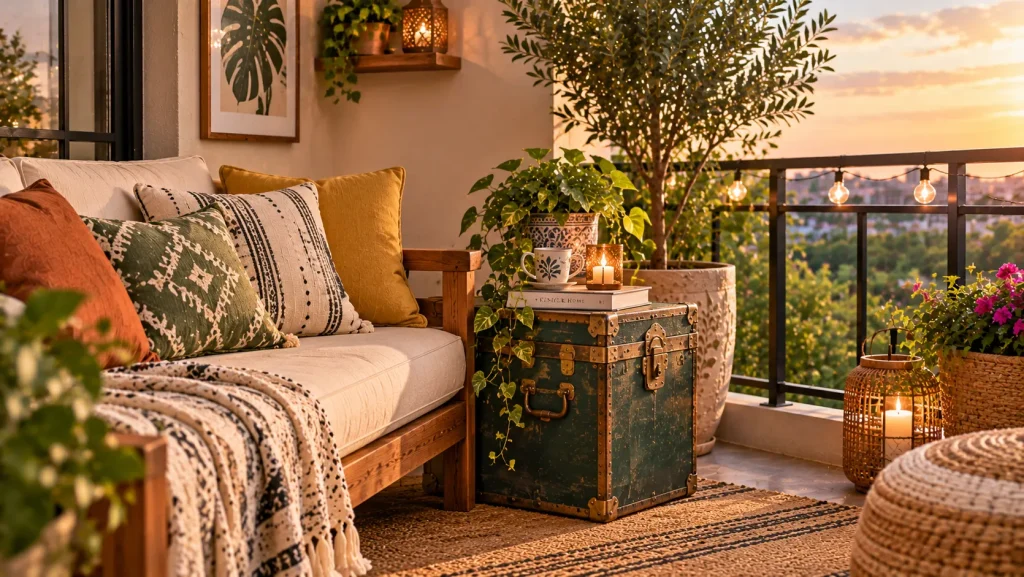
Style a Tray for the Table
A tray is a small decor trick that makes a big difference. It gathers a few items into one neat spot and makes a plain table look styled rather than empty.
A simple balcony tray might hold:
- A small potted plant or a few herbs
- An LED candle or lantern for the evening
- A pair of coasters
- A small bowl for keys or a phone
Choose a tray in a material that copes with the weather, such as metal, outdoor-rated rattan, or sealed wood. A tray with raised edges is more practical, since it stops things sliding off in a breeze.
It also saves time. When you need the table for a meal, you lift the whole tray off in one go instead of clearing it piece by piece.
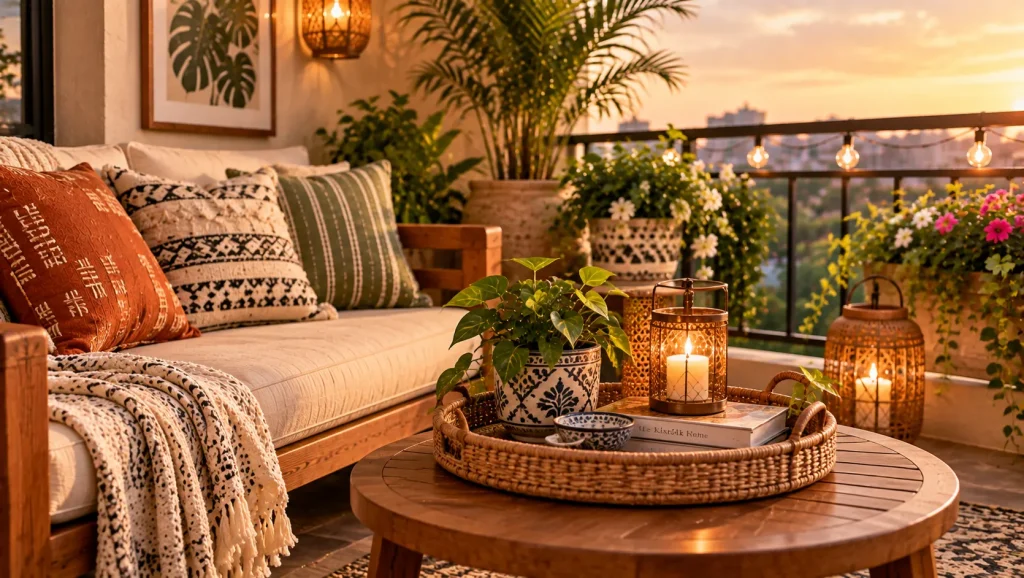
Bring in Gentle Sound
Personality isn’t only visual. A soft sound changes the mood of a balcony the moment you step outside, and the chime or fountain itself becomes a decorative object, especially one in wood, bamboo, or glazed ceramic.
A wind chime is the classic choice. Bamboo and wooden chimes tend to make a softer, lower sound, while metal chimes are brighter and carry further. A small tabletop water fountain is another option, adding the sound of trickling water, as long as it’s rated for outdoor use and kept topped up.
On a balcony facing a busy road, for instance, a small bamboo chime hung in a sheltered corner can soften the background noise without adding a sound that carries far.
Be considerate of neighbors. A chime that sounds lovely to you can become irritating to someone else in a strong wind, so hang it somewhere sheltered or take it down during stormy weather. Check your building rules too, since some don’t allow anything hung from ceilings or railings.

Use Faux Greenery Where Real Plants Struggle
Not every balcony is plant-friendly. Some get harsh afternoon sun, others barely see daylight, and some are simply too windy for delicate leaves.
Good-quality faux plants can fill the gap. Artificial boxwood balls, faux grasses, and trailing ivy are popular for balconies, and they stay green without watering.
Choose products marked as UV-resistant or suitable for outdoor use, since cheaper faux plants can fade quickly in direct sun. Mixing a few real, hardy plants with faux ones, like a real rosemary next to a faux boxwood, often looks more natural than an all-faux display.
Secure faux plants in weighted pots, since they’re often much lighter than real ones and can tip or blow away. Rinse them off occasionally to remove dust.
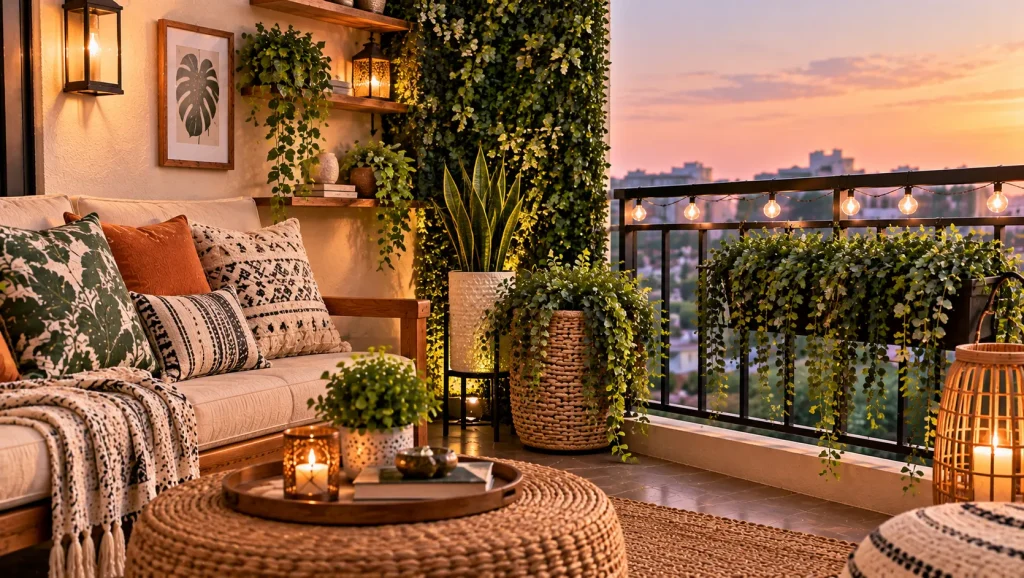
Decorate for the Seasons
Seasonal decor keeps a balcony from looking the same all year, and you don’t need much to make a change.
Through the year, that might look like:
- Spring: pots of bulbs like tulips or daffodils, and lighter pastel cushions
- Summer: bright textiles and potted flowers in your palette colors
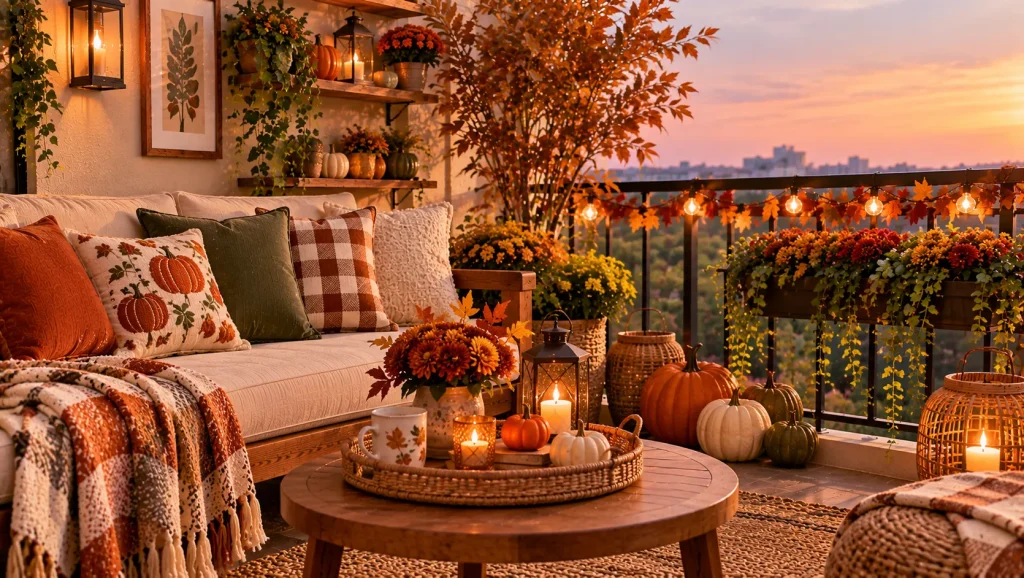
- Autumn: small pumpkins or squash, warm-toned throws, and dried grasses
- Winter: evergreen sprigs in pots, a wreath on the balcony door, and LED lanterns
Keep seasonal pieces small and easy to store. A single storage box can hold most of them between seasons.
Real gourds and pumpkins look great but will eventually soften and attract pests, so check them regularly and remove them before they spoil.
Balcony Decor Ideas in Action: One Balcony, Two Looks
To see how these ideas work together, picture the same small balcony with a gray floor, white walls, and a black metal railing, styled two different ways.
Version one, Mediterranean: a painted blue and white tile pattern in the middle of the floor, three white pots of different heights holding olive and rosemary, blue striped seat pads on the chairs, and a terracotta pot turned upside down as a side table. A round metal sun hangs on the wall.
Version two, desert warmth: no painted floor, but a cluster of terracotta pots with faux grasses and a real succulent, rust and olive cushions with a small-scale print, a sealed log round as a side table, and a tray holding an LED lantern. A bamboo chime hangs in the corner.
Notice that the second version skips the painted floor and anything drilled into the wall except one chime hook. Renters can get a fully styled balcony from freestanding pieces alone.
Choosing Decor That Lasts Outdoors
Even the best balcony decor ideas fall flat if the pieces fade or crack within a season, so materials matter.
Metals: powder-coated steel and aluminium tend to resist rust better than plain steel. Brass and copper develop a natural patina, which some people love.
Woods: teak, acacia, and other hardwoods treated for outdoor use usually outlast softwoods, especially if they’re re-oiled or resealed once a year.
Plastics and resins: lightweight and easy to clean, though cheaper plastics can turn brittle in strong sun.
Hardware: the small parts matter too. Plain steel screws and hooks can rust and leave orange streaks down a wall, so stainless steel or coated fixings are worth the small extra cost for anything you hang.
Questions About Balcony Decor
How can I decorate my balcony on a small budget?
Start with a color story so you’re not buying random pieces. Then focus on low-cost changes like a few matching pots, a couple of outdoor cushions, a styled tray, and upcycled side tables. Secondhand shops can be a good source of crates, stools, and trays.
What balcony decor works in a rental?
Freestanding pieces are the safest choice, such as pots, textiles, trays, and side tables. For anything that needs drilling, painting, or attaching to railings, check your lease and ask your landlord first.
How do I keep balcony decor from blowing away?
Choose heavier items where possible, weight down pots and faux plants, and bring cushions and lightweight decor inside before strong winds. Anything that blows off a balcony can be a danger to people below.
Can I use indoor decor on a covered balcony?
A fully covered balcony offers some protection, but humidity, temperature changes, and wind-blown rain can still affect indoor items. Choosing outdoor-rated decor is usually the safer option, even under a roof.
Mistakes That Hold Balconies Back
Choosing scale that’s too small. Lots of tiny pots and little decorations can look busy. A few larger pieces often look calmer and more intentional.
Forgetting about the view from inside. You’ll see your balcony through the window far more often than you sit on it. Arrange the main decor so it looks good from the living room or bedroom too.
Blocking the walkway or door. Pot groups and side tables can creep outward over time. Keep a clear route from the door, and check that the balcony door still opens fully.
Ignoring how it looks after dark. Decor that looks great at noon can disappear in the evening. A single LED lantern or a light-colored cushion near the door keeps the space looking welcoming at night.
Finish With One Small Change This Week
You don’t need to work through all of these balcony decor ideas at once. Start with the corner you see most often from indoors. A coordinated planter group or a pair of outdoor cushions there gives you a clear starting point, and the rest of the balcony can follow at its own pace.