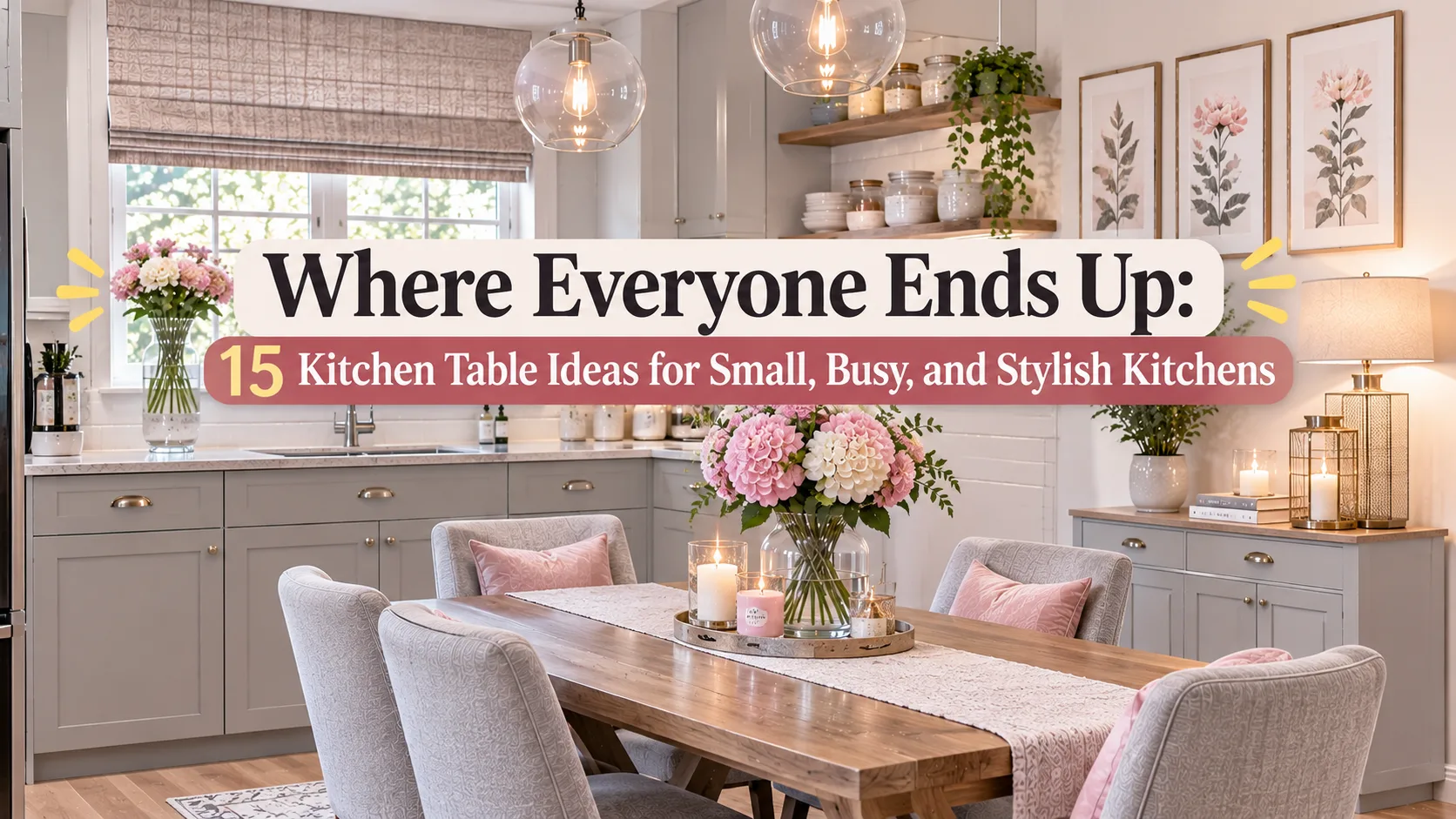
Where Everyone Ends Up: 15 Kitchen Table Ideas for Small, Busy, and Stylish Kitchens
Put out snacks in the living room, and somehow everyone still ends up in the kitchen. Coats come off, someone puts the kettle on, and chairs get pulled up around the table.
That table does a lot. It’s where breakfast happens in a rush, where homework gets spread out, where friends linger over tea, and where the mail somehow always lands.
So it’s worth getting right. The kitchen table ideas below cover shapes, sizes, seating, and style. Some suit tiny apartment kitchens. Others are made for big family dinners. A few are simple ways to make the table you already own look and work better.
Measure First: The Numbers That Matter
Before choosing a table, a few rough measurements save a lot of frustration.
Space to pull out a chair. As a general guideline, many people aim for around 36 inches (about 90 centimeters) between the table edge and a wall or counter. The right amount depends on your chairs and how much foot traffic passes behind them, so a busy walkway usually needs more.
Elbow room per person. Roughly 24 inches (about 60 centimeters) of table edge per seat is a common guide.
Table height. Standard dining tables are usually around 30 inches (about 75 centimeters) high. Counter-height tables are taller, closer to 36 inches (about 90 centimeters), and need taller stools.
These are starting points, not strict rules. A quick way to test is to mark the table’s outline on the floor with painter’s tape and walk around it for a day.
For small kitchens (six ideas): tables that save space without feeling cramped.
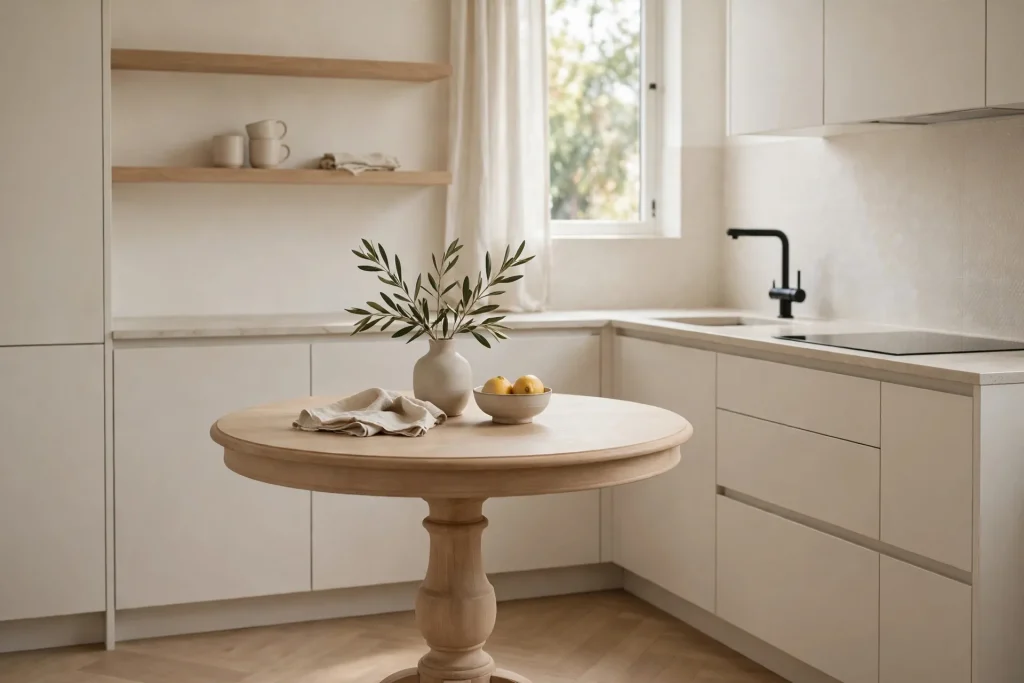
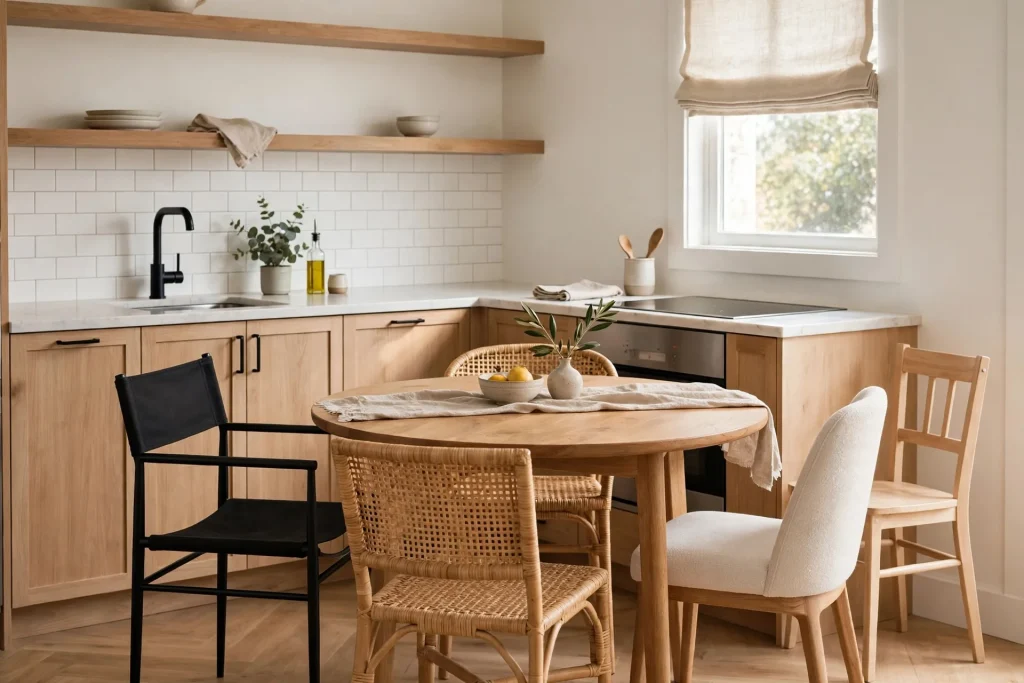
Choose a Round Pedestal Table
A round table with a single central pedestal is one of the most practical shapes for a small kitchen. There are no corners to bump into and no legs to trip over.
A 36 to 42-inch round table can seat four, depending on chair size. A white or light wood top keeps it feeling airy, while a dark wood pedestal adds a classic touch.
Rounded edges also mean fewer sharp-corner bumps for small children, though supervision still matters.
Try an Oval Table in a Narrow Kitchen
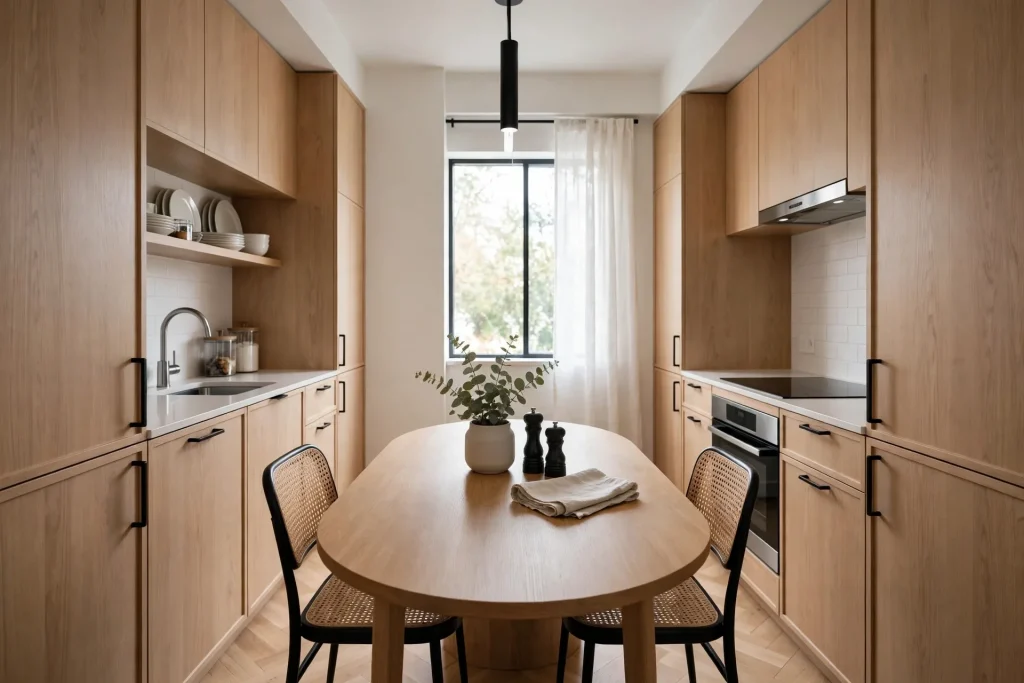
In a long, narrow kitchen, a round table can block the walkway, while a rectangle can feel boxy. An oval table sits nicely in between.
The rounded ends make it easier to walk past, but you still get the seating length of a rectangle.
For example, a galley-style kitchen with a dining area at one end might fit a slim oval table with two chairs on each side. Push the table toward the end wall rather than into the main path between the counters, so the cook can still move freely. The curved ends soften the space and make it feel less tight.
Build a Banquette Corner Nook
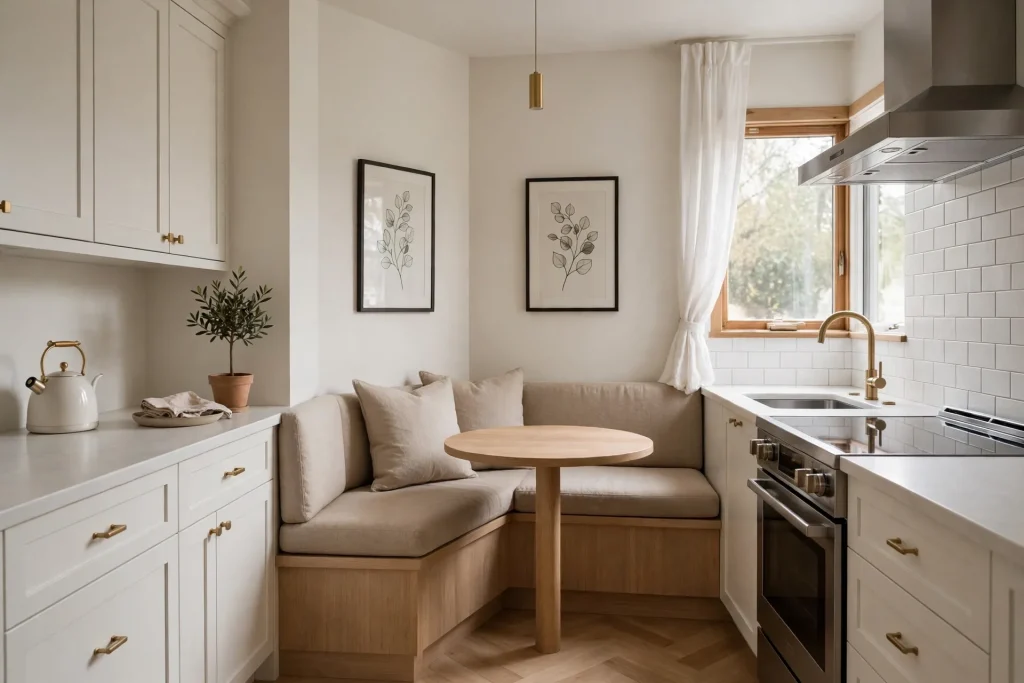
A banquette is built-in bench seating, often in an L-shape around a corner. Paired with a table, it creates a cozy breakfast nook.
Why it works:
- It uses a corner that might otherwise be wasted
- Benches seat more people than chairs in the same space
- Lift-up seats or drawers underneath can add storage
Cushions on the bench and a round or rectangular table in front make it feel like a little café booth. Add a couple of chairs on the open side for flexible seating.
Imagine an empty corner beside a kitchen window. An L-shaped bench with striped cushions wraps around it, a round white table sits in front, and two chairs close the circle. Suddenly the corner is the coziest spot in the house. How many people fit depends on the bench length and table size.
Built-in banquettes are usually made by a carpenter. Freestanding corner benches are available too if you rent or want something simpler. Choose wipeable cushion covers, especially if you have kids.
Use a Drop-Leaf Table
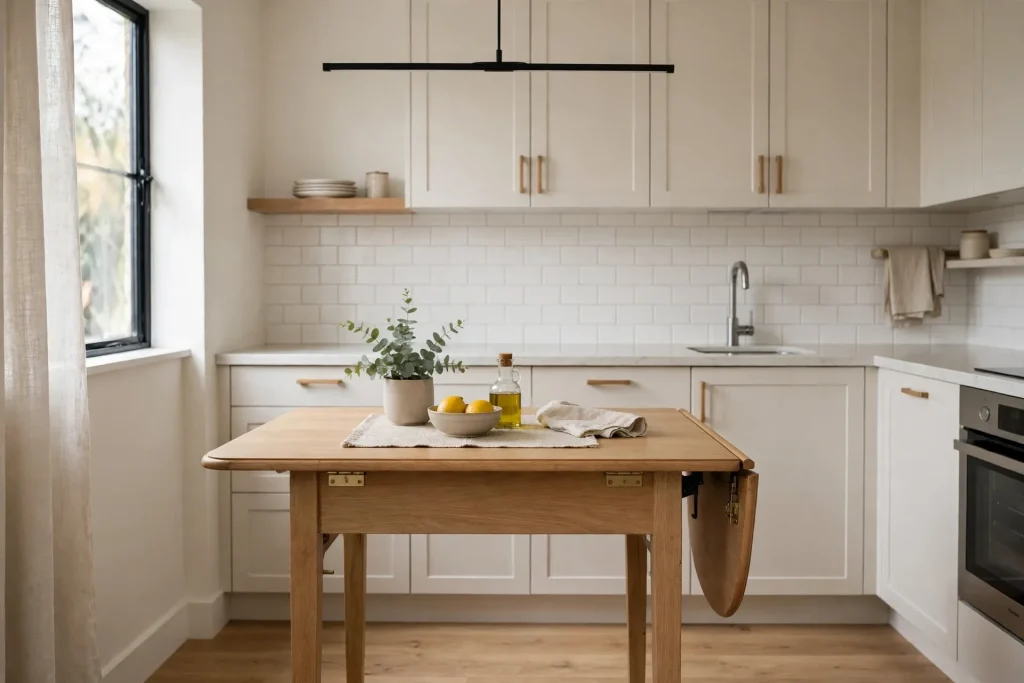
A drop-leaf table has hinged sections that fold down when you don’t need them. With the leaves down, it can sit neatly against a wall. With them up, it can seat four or more.
Its main benefit is flexible seating, switching easily between a quiet breakfast for one and dinner for friends. In a studio apartment, for instance, one leaf can stay up for everyday meals, with both raised only when guests come over.
Check that the hinges and supports feel sturdy, especially on secondhand tables. Keep fingers clear when lifting and lowering the leaves.
Mount a Fold-Down Wall Table
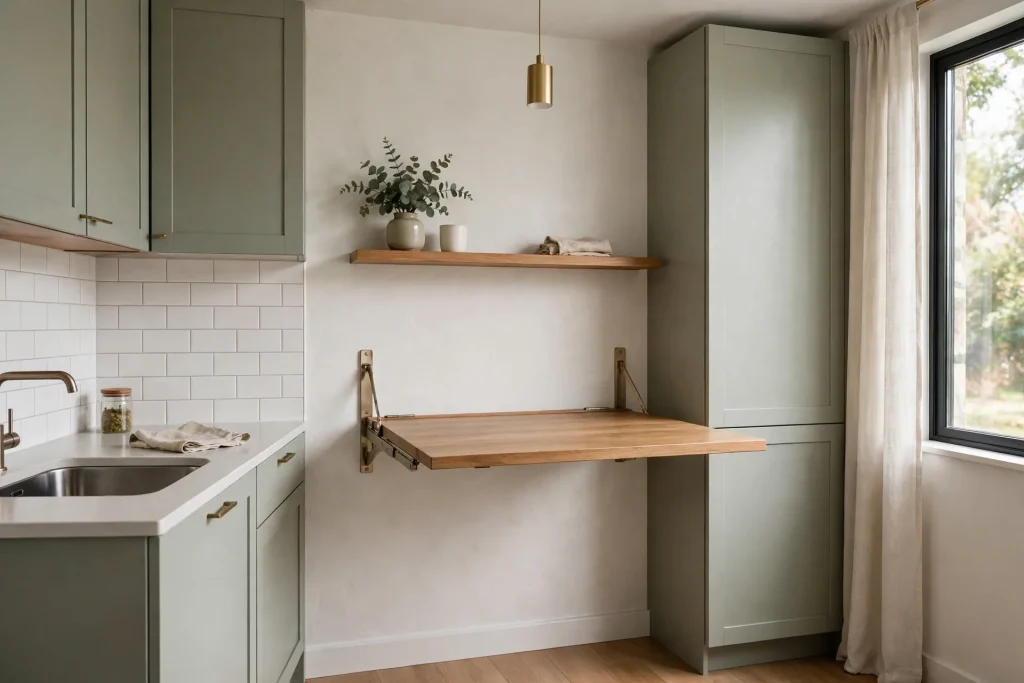
In very small kitchens, even a drop-leaf table might be too much. A wall-mounted fold-down table saves the most floor space, folding flat against the wall when not in use.
It works best for light meals, a quick coffee, or a laptop corner, rather than big family dinners. Pair it with folding chairs or stools that hang on wall hooks.
Use fixings that suit your wall material, whether that’s studs, masonry, or plasterboard, and that are rated for the table plus anyone leaning on it. Renters should check with their landlord before drilling.
Set Up a Bistro Table for Two
Sometimes you only need a permanent dining spot for two. A small round bistro table, the kind you might see outside a café, can fit in a corner or by a window.
A marble-look top with a slim metal base feels classic, while a painted wooden bistro set feels more relaxed.
Imagine a tiny apartment kitchen with a narrow window. A little round bistro table sits under it, with two rattan chairs tucked in. It becomes the spot for morning coffee and quiet dinners.
For family and entertaining (five ideas): larger tables and layouts for busy households and guests.
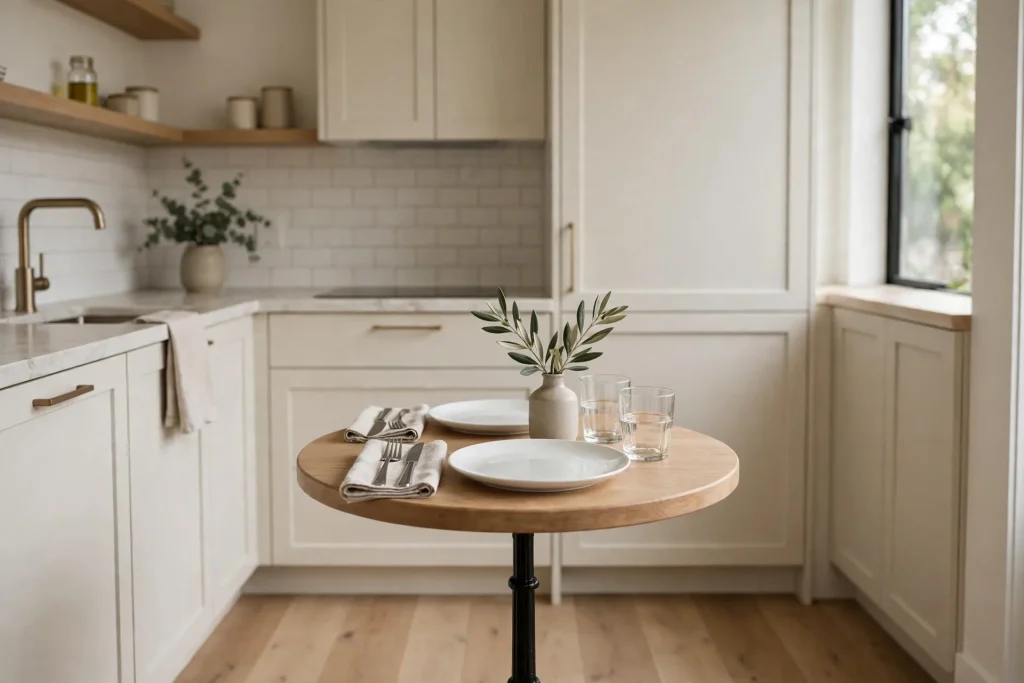
Choose an Extendable Table
An extendable table can grow when you need it to, usually with a leaf that slides or folds into the middle.
Day to day, it stays compact. For holidays and family gatherings, it stretches to fit more people.
A family of four might use a compact rectangle most of the year, then pull out the leaf for birthdays and holiday meals so eight people fit around it. Before buying, measure the fully extended length and make sure there’s still room to pull chairs out on every side.
Many extendable tables store the extra leaf inside the table itself, which saves you from finding a place for it in a cupboard. Test the mechanism before buying, since some are much easier to extend than others. Watch fingers when sliding the sections apart or back together.
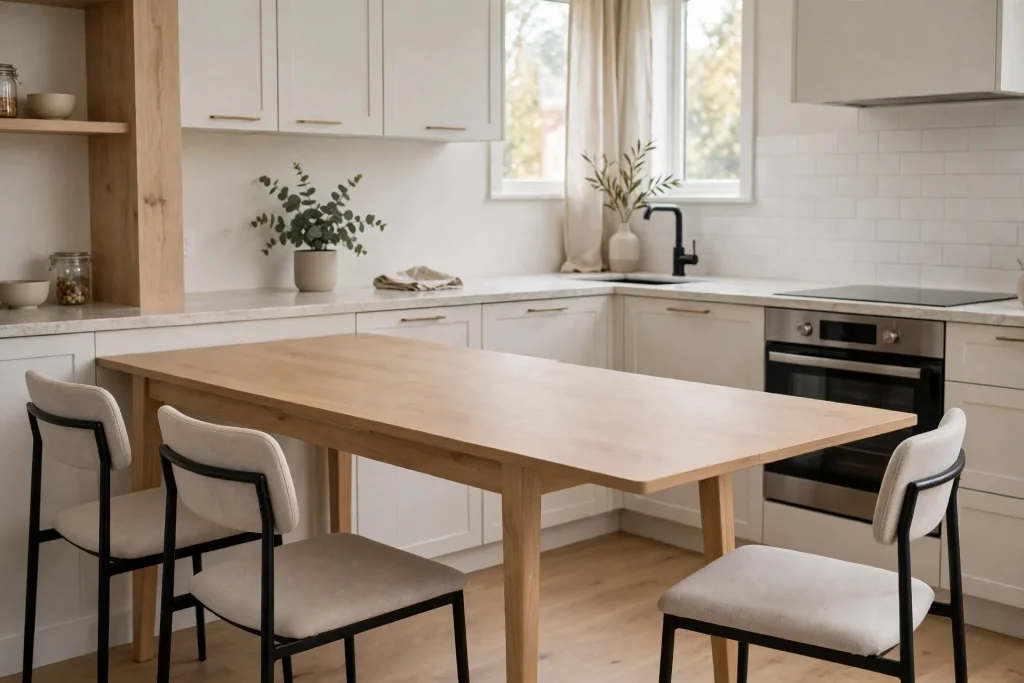
Go Long With a Farmhouse Trestle Table
Long trestle tables, often in chunky solid wood with crossed or H-shaped legs, feel warm and welcoming. They suit family kitchens, rustic styles, and anyone who loves hosting.
Pairing one side with a bench and the other with chairs adds flexibility. Children can squeeze onto the bench, and it slides under the table when not in use. A long oak trestle table with a bench on one side and three mismatched chairs on the other looks relaxed and easygoing, especially at a busy Sunday lunch.
Solid wood can scratch and stain, but many people like the character this adds over time. A matte finish or regular oiling, depending on the wood and finish, helps keep it looking good.
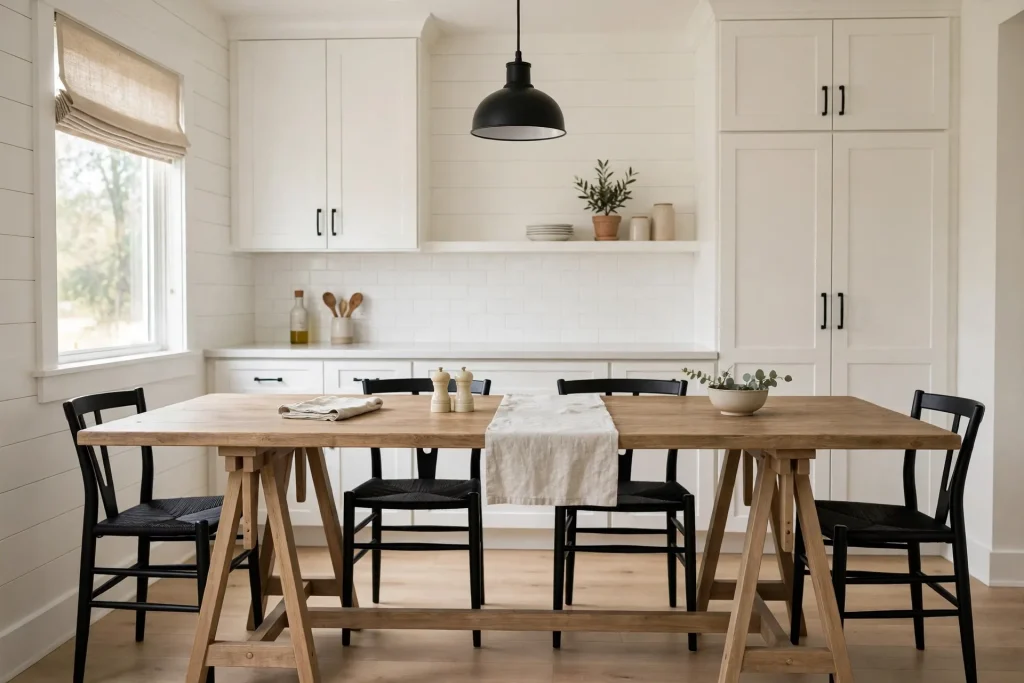
Choose a Counter-Height Table With Stools
A counter-height table sits taller than a standard dining table, closer to the height of the kitchen counter. Paired with stools, it feels casual and sociable.
It works well in open-plan kitchens, where the table can double as a serving spot when guests visit, or extra prep space if the top is a suitable, easy-to-clean surface. On party nights, it becomes a natural place to set out snacks while people stand and chat around it.
Stools with backs are usually more comfortable for longer meals. For young children, stable stools with footrests are safer, and very young children may be better off at a standard-height table.
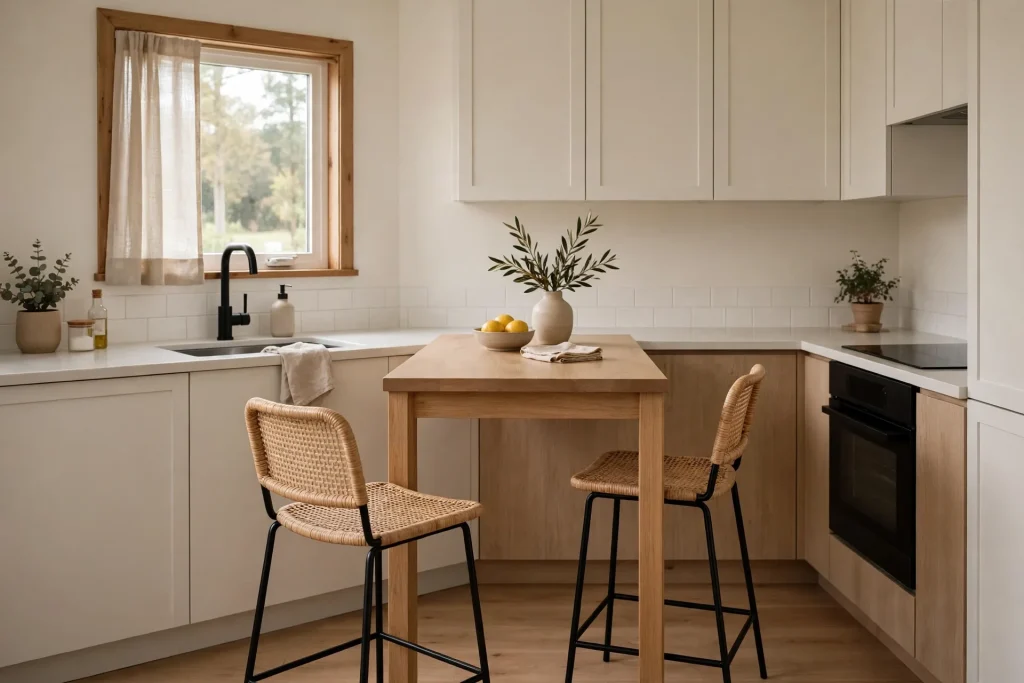
Attach a Table to the End of the Island
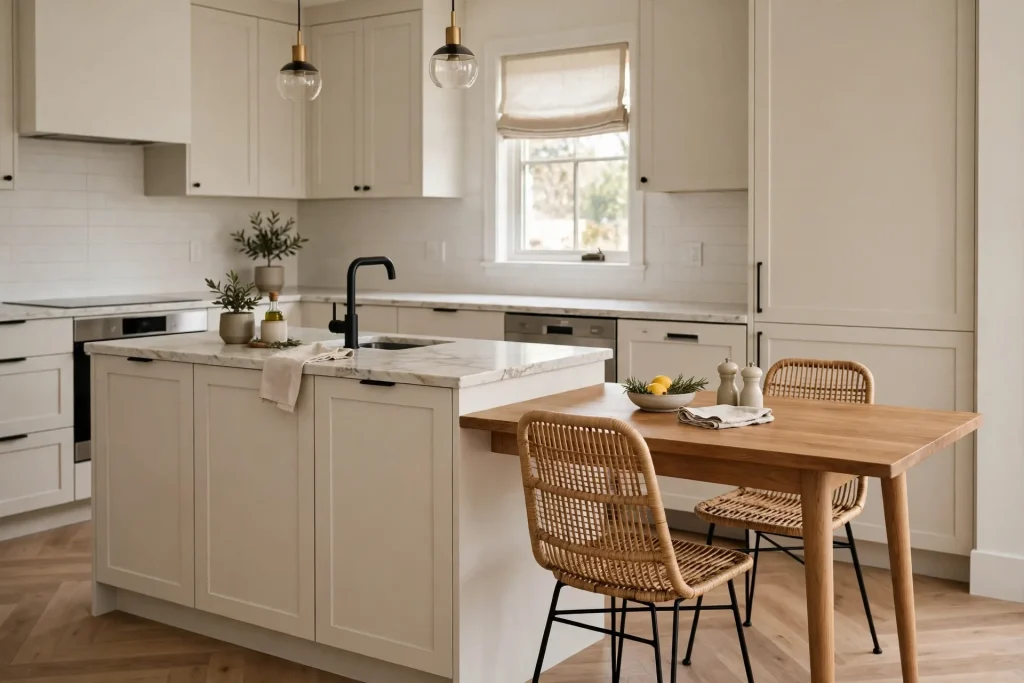
If you already have a kitchen island, a table attached to one end creates a natural place to eat without needing a separate dining area.
The table is usually at standard dining height, so regular chairs can be used. It feels connected to the kitchen but more comfortable than perching on island stools.
For example, a family kitchen might extend a wooden table from the end of a white island, with four chairs around it. The cook can prep at the island while the kids do homework at the table, all in the same space.
This is usually part of a renovation, and a kitchen fitter can help make sure it’s properly supported.
Turn a Window Ledge Into a Breakfast Bar
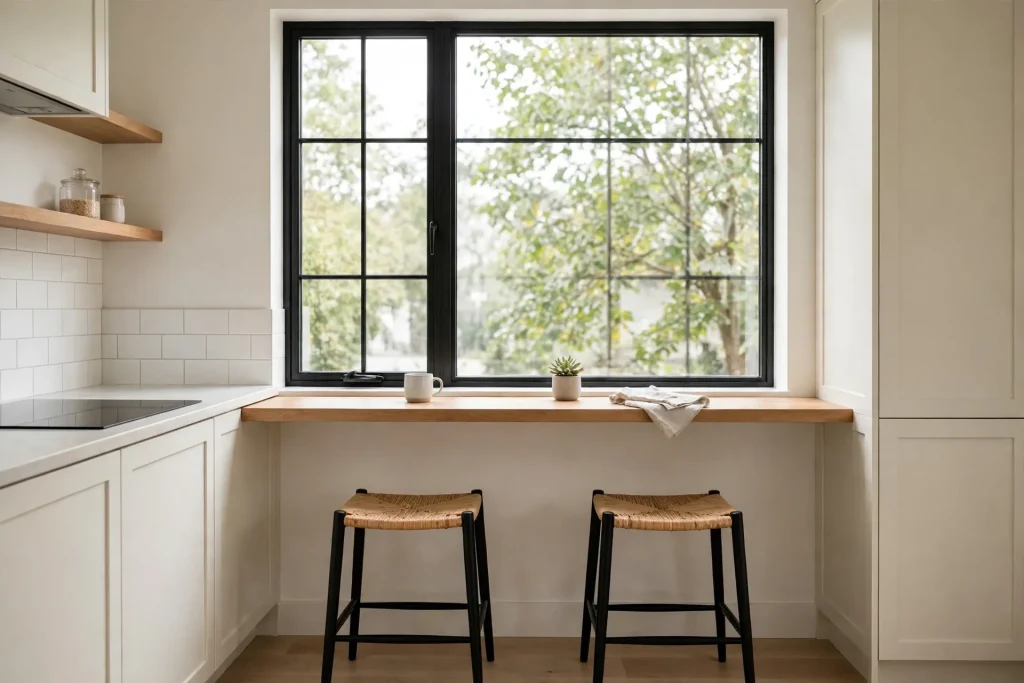
If your kitchen has a wide window with a view, a narrow counter or table along it can make a lovely breakfast bar.
It doesn’t take up much space, and you get natural light while you eat. A couple of stools tucked underneath keep the floor clear.
A depth of around 12 to 16 inches (30 to 40 centimeters) usually fits a plate and a mug. Think about glare from strong sun, and make sure you can still open the window and reach the latch. Fix the counter securely to the wall. Keep stools away from walkways and doors so no one trips.
This is one of those kitchen table ideas that turns an overlooked spot into the favorite seat in the house.
For style and character (four ideas): ways to make the table a feature.
Choose a Marble or Marble-Look Top
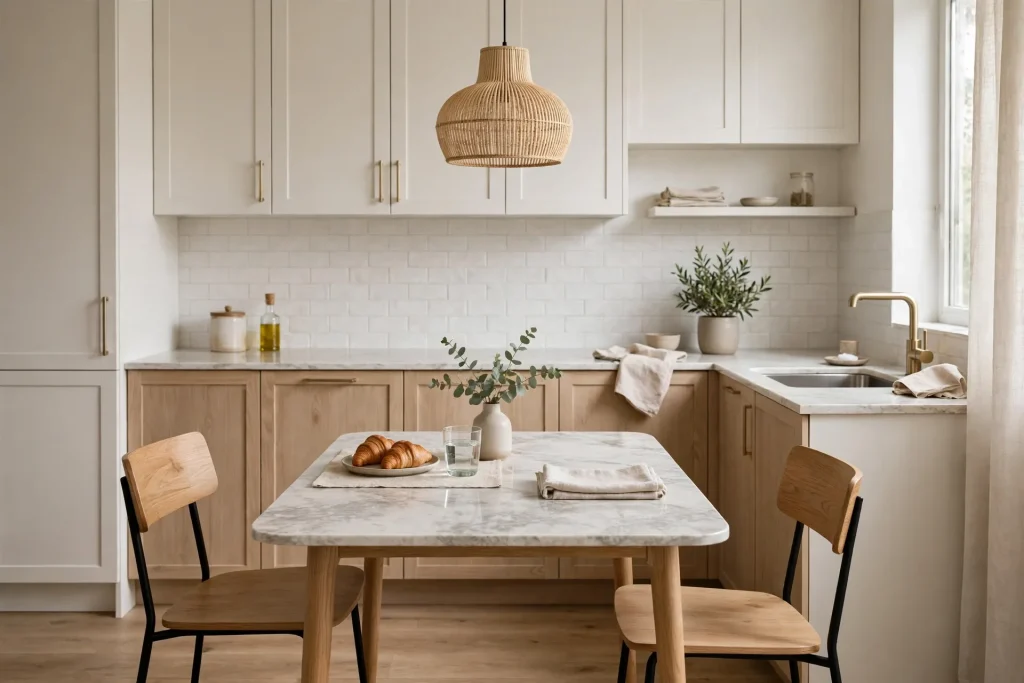
A marble or marble-look table top feels elegant and modern, especially with a curved pedestal or a slim metal base.
Real marble is beautiful but can stain or etch from acidic foods like lemon juice and tomato sauce. Sealing it and wiping spills quickly helps.
Marble-look quartz, porcelain, or laminate tops can give a similar look with less maintenance and often at a lower price.
A round white marble-look top on a curved oak pedestal, paired with four cane chairs, feels light and modern. It suits both small apartments and bright family kitchens.
Use Butcher Block for Eating and Prep
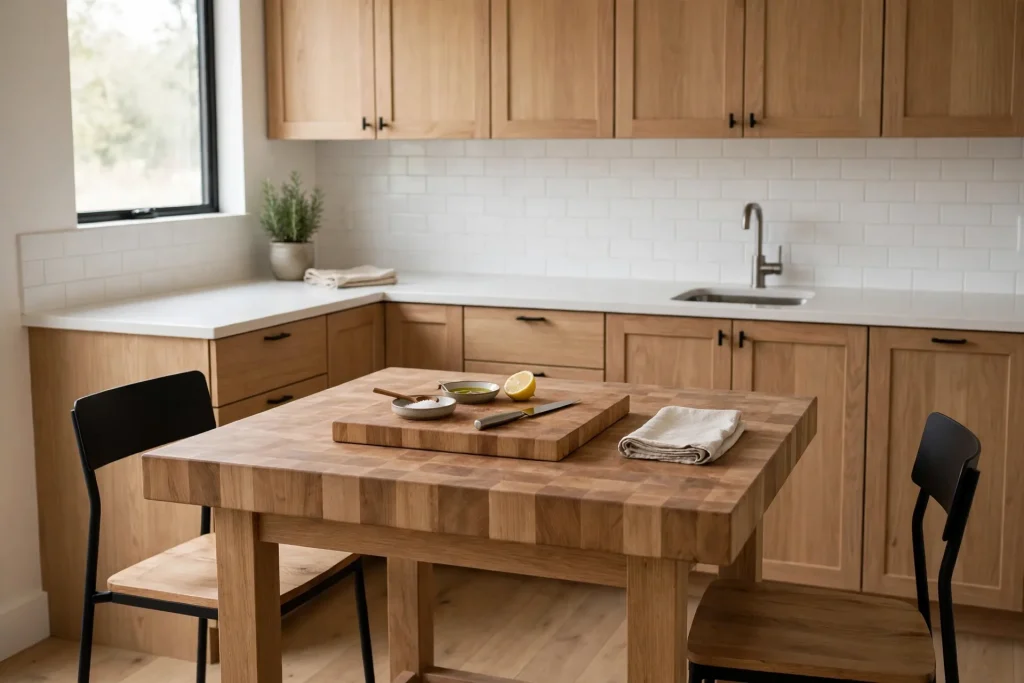
A butcher block table top, made from strips of wood glued together, is warm, hardwearing with regular care, and great for kitchens where the table doubles as extra workspace.
It’s handy for rolling dough, sorting groceries, or letting kids do crafts.
Wood tops need regular oiling with a food-safe oil to resist moisture and staining, and spills should be wiped up quickly. Use cutting boards rather than cutting directly on the table if you want it to stay smooth.
Picture a small kitchen with a butcher block table in the middle. In the morning, it’s the breakfast table. In the afternoon, it’s where cookies are rolled out. In the evening, it’s where the family eats dinner.
Mix and Match the Chairs
Matching chair sets are easy, but mismatched chairs can make a kitchen table feel more personal and collected.
To make it look intentional rather than random:
- Keep chairs a similar height
- Repeat one element, like color or material
- Mix styles but stick to one color family
For example, four different vintage wooden chairs all painted the same soft sage can look charming. Or keep them in natural wood but choose different shapes.
Secondhand chairs are often inexpensive. Check that they’re sturdy and tighten any loose joints before use.
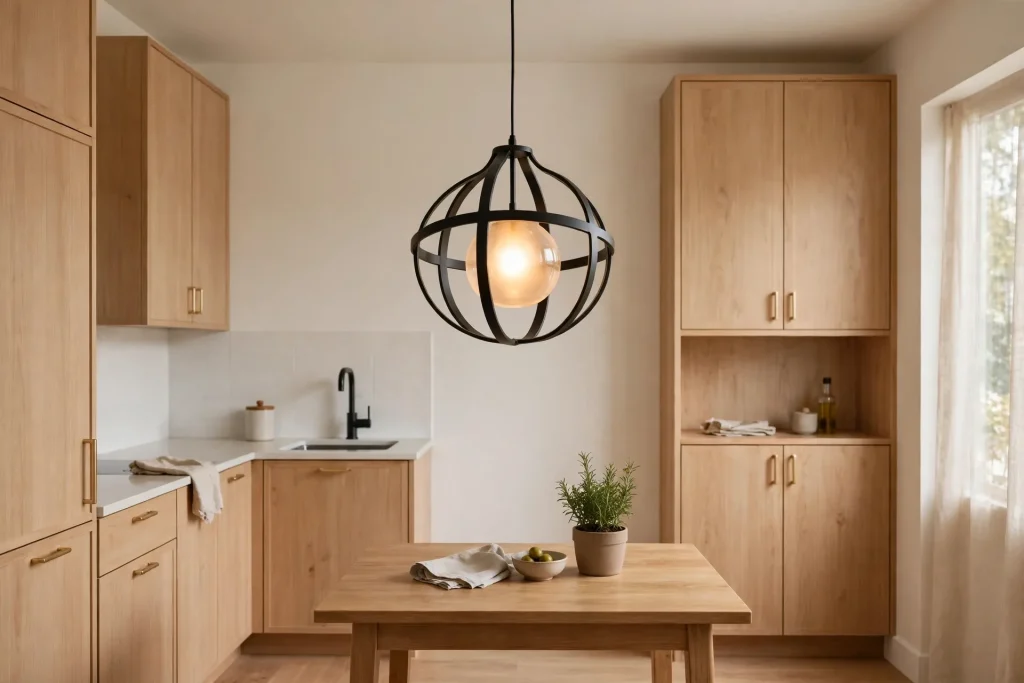
Hang a Statement Pendant Above the Table
A pendant light above the kitchen table helps define the eating area and adds warmth.
Some popular choices include:
- A woven rattan pendant for a relaxed feel
- A pleated fabric shade for soft, cozy light
- A glass globe for a classic look
- A row of small pendants above a long table
Hang it high enough that people don’t bump into it, but low enough to light the table. Many people start at roughly 30 to 36 inches above the tabletop, then adjust for ceiling height, the size of the fixture, and whether it blocks the view across the table.
Over a long farmhouse table, two or three matching pendants spaced evenly along its length often look better than one large light. Over a round table, a single generous pendant centered above it usually works best.
New light fittings should be installed by a qualified electrician. Choose a dimmer if you’d like softer light for evening meals.
Kitchen Table Mistakes to Avoid
Choosing a table that’s too big. A huge table in a small kitchen can block walkways and make the room feel cramped.
Forgetting chair space. Measure with chairs pulled out, not just tucked in.
Picking the wrong finish for daily use. Delicate tops can stain or scratch easily in a busy kitchen.
Ignoring the light. A table in a dark corner can feel uninviting. A pendant or nearby window helps.
Questions About Kitchen Table Ideas
What is the best kitchen table shape for a small kitchen?
Round and oval tables often help because they have no sharp corners, but size matters more than shape. A table that fits with room to move will always work better. Drop-leaf and fold-down tables are also great space-saving kitchen tables.
How many people can a round table seat?
As a rough guide, a 36-inch round table seats about four, while a 48-inch round table can seat four to six.
What size kitchen table is best for a family of four?
A round table of about 36 to 42 inches, or a rectangle of roughly 48 by 30 inches (about 120 by 75 centimeters), often suits four people. Check that the chairs tuck fully underneath, and leave space to pull them out.
What is the best kitchen table material for families with children?
Laminate, quartz, and sealed solid wood tend to handle spills and daily use well. Laminate is usually easiest to wipe, while wood and marble-look tops need more care, so check the manufacturer’s instructions.
Should my kitchen table match my cabinets?
It doesn’t have to. A contrasting table, like a warm wood table in a white kitchen, often adds more character.
Can I put a rug under a kitchen table?
Yes, but choose a flat-weave, washable rug that’s large enough for chairs to stay on it when pulled out. A non-slip pad underneath helps keep it in place.
Pull Up a Chair
The best kitchen table ideas start with how you actually live. Do you need a quick breakfast spot, a homework station, or room for big family dinners?
Measure your space, pick the shape that fits, and then add the details that make it feel like yours. Before long, it’ll be the spot everyone gathers around.