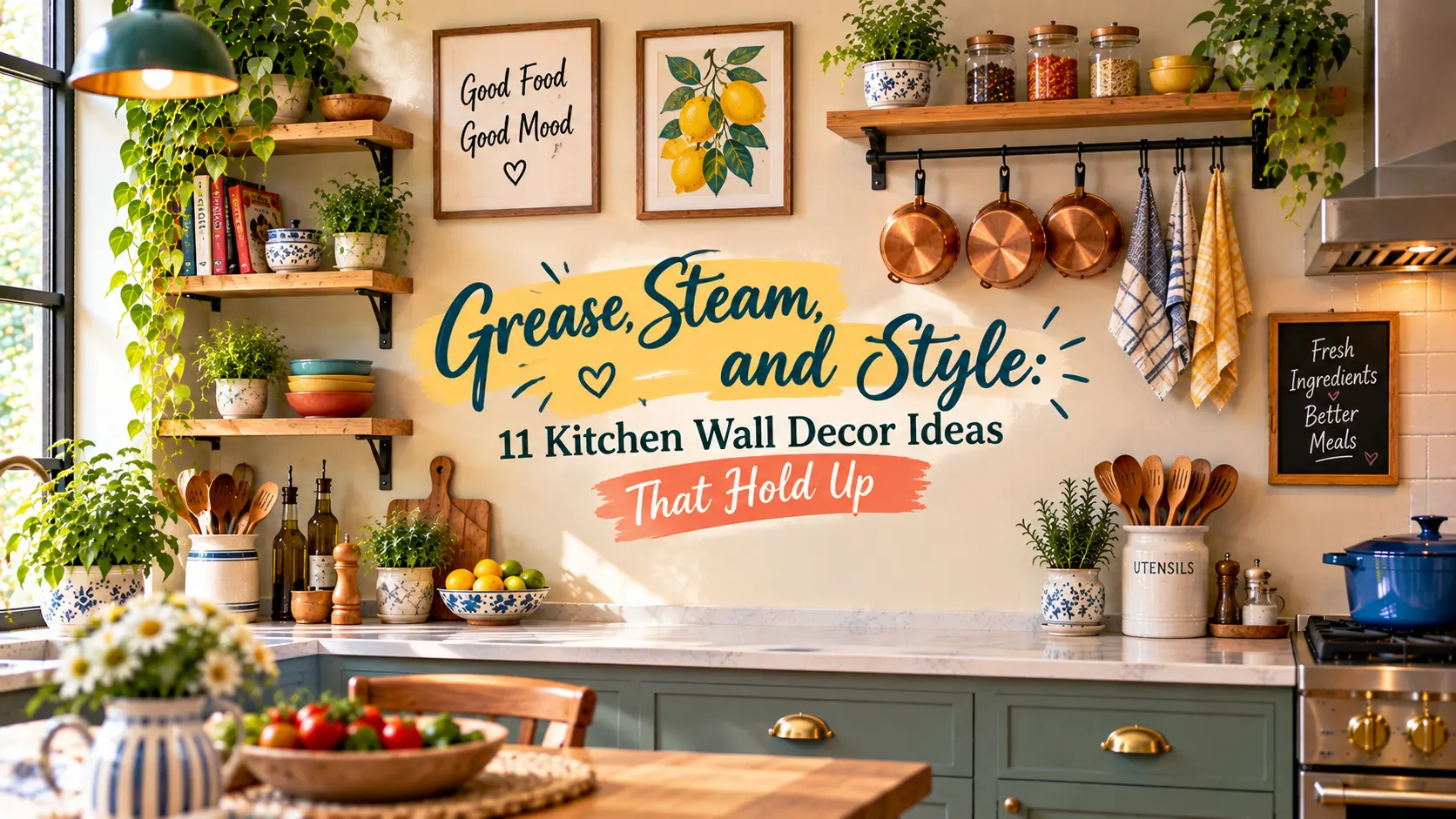
Grease, Steam, and Style: 11 Kitchen Wall Decor Ideas That Hold Up
Here’s a quick test. Run a finger along the top of your range hood or the highest cabinet nearest the stove. That faint, sticky film is what every piece of kitchen wall decor has to live with.
Kitchens are hard on walls. Steam drifts up from the kettle, grease floats out of the frying pan, and the area near the sink gets splashed several times a day. A framed print that looks perfect in the living room can warp, fade, or turn grimy in a few months here.
That doesn’t mean kitchen walls should stay bare. It just means the best kitchen wall decor ideas are a little different from those for other rooms. Many of them are useful as well as good-looking, and almost all of them can be wiped clean.
First, Know Your Kitchen’s Wall Zones
Before choosing anything, it helps to think of kitchen walls in three rough zones.
The heat zone is the wall around and above the stove or cooktop. It gets hot, greasy, and steamy. Keep anything flammable, delicate, or hard to clean out of this area entirely.
The splash zone is the wall around the sink and dishwasher. It gets wet. Anything here needs to cope with water and frequent wiping.
The calm zone is everything else: the wall at the end of a counter, the space beside a doorway, a breakfast nook, or the wall by the fridge. This is where more delicate decor can live.
Each idea below explains where it fits best, so you can match it to your own kitchen layout.
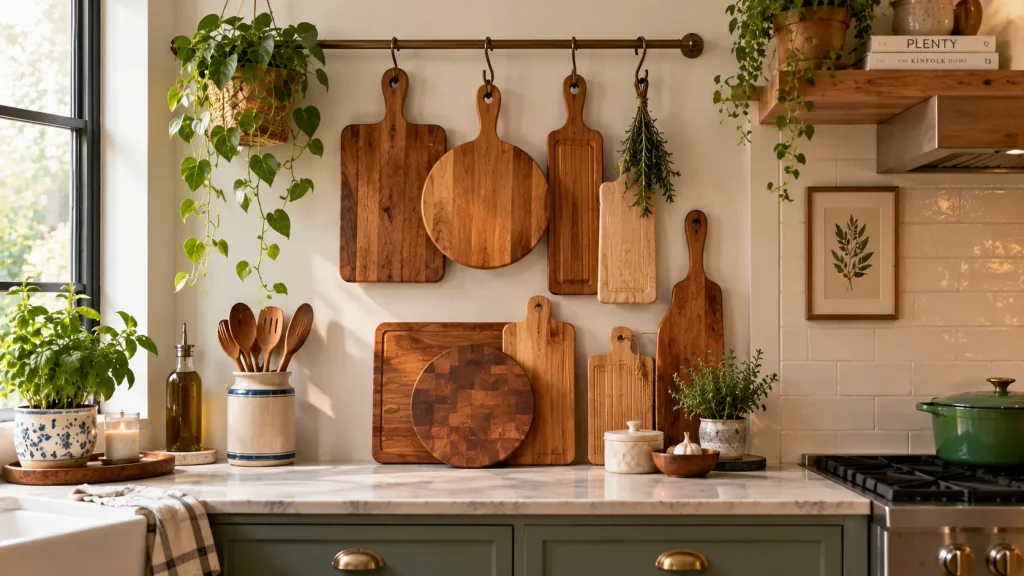
Lean and Hang a Cutting Board Collection
Wooden cutting boards and bread boards have lovely shapes and grain, and a group of them leaning against the backsplash or hanging from hooks looks warm and lived-in, as long as they’re displayed well away from burners and other hot surfaces.
Mixing sizes and shapes works well: a large rectangular board at the back, a round one in front, and a small paddle-shaped board with a handle. Boards with a hole in the handle can hang on a single sturdy hook.
The bonus is that they’re still useful. You can pull one down to slice bread and put it back afterward. Many people keep their display boards for bread, cheese, and serving, and use separate boards for raw meat, so the pretty ones stay in good condition.
Steam can warp or crack wood too, so the far end of the counter, away from both the stove and the sink, is usually the best spot. Oil them occasionally with a food-safe board oil to keep them looking good.
Install a Rail for Pans and Utensils
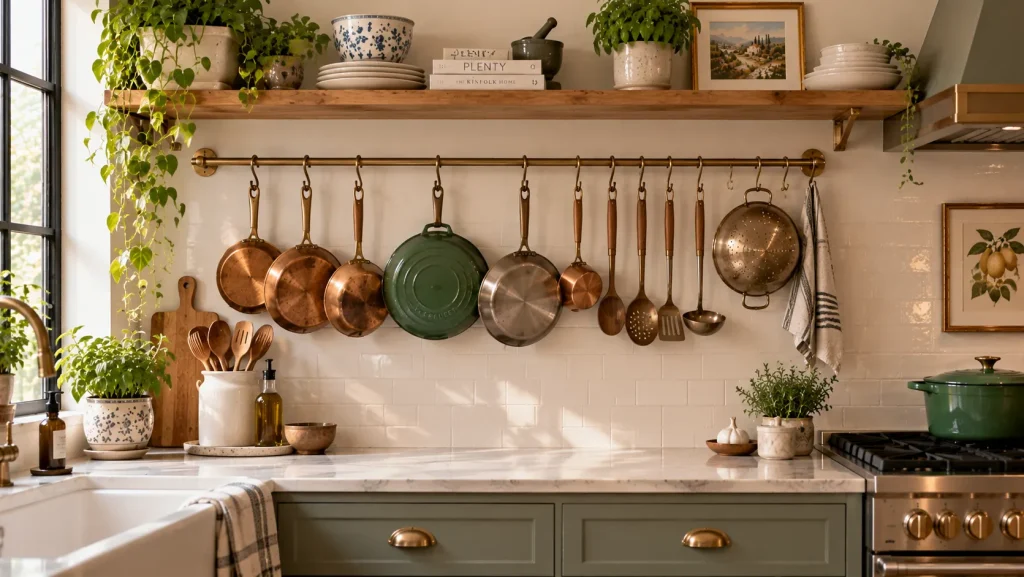
A metal rail mounted on the wall, with S-hooks hanging from it, turns everyday kitchen tools into a display. Copper pans, cast iron skillets, wooden spoons, whisks, and ladles all look good hanging in a row.
It also frees up drawer and cabinet space, and the things you use most are always within reach.
Some practical points matter here:
- Add up the combined weight of everything you plan to hang, and choose a rail with a manufacturer’s load rating above it
- Use anchors suited to your wall construction, ideally fixing into studs, since plasterboard alone may not hold heavy cast iron
- Hang the rail where people won’t bump their heads, often above the counter rather than over a walkway
- Leave enough space below so pans don’t knock against the counter or backsplash
A single rail running the length of the counter, with two copper saucepans, a cast iron skillet, and a cluster of wooden spoons hanging from it, can do more for a plain kitchen wall than any print, and everything on it still gets used.
A rail near the stove is convenient, but items there will collect grease and need more frequent washing. Many people keep the pans they use daily near the stove and decorative pieces further away.
Frame a Handwritten Family Recipe
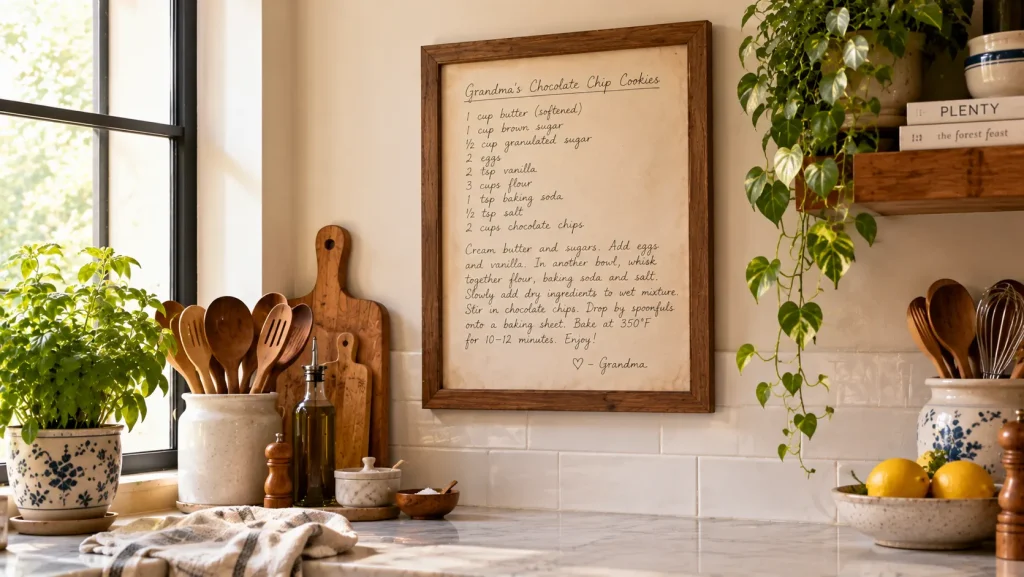
A recipe card written by a parent, grandparent, or friend, with smudges, notes in the margins, and all, can be one of the most personal pieces of kitchen wall decor you’ll ever own.
Rather than framing the original, many people scan or photograph it and frame a high-quality print. The original stays safely stored away from steam and sunlight, and the copy can hang in the kitchen without worry.
For example, a simple wooden frame holding a printed copy of a handwritten bread recipe, hung beside the kitchen doorway, tells a story every time someone walks past. A small group of three recipes from different family members can work too.
Keep framed paper on a dry stretch of wall, away from the stove and sink, and choose a frame with a backing that seals well to keep out moisture.
Display Cookbooks With Their Covers Facing Out
Cookbooks often have beautiful covers, but stacked spine-out on a shelf, they just look like a row of colored stripes.
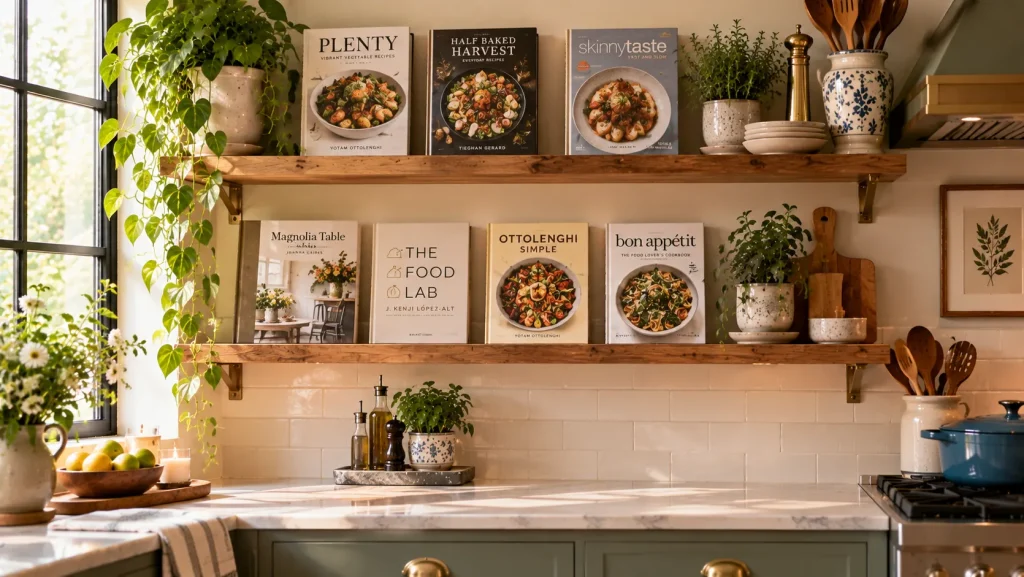
A narrow ledge or picture shelf mounted on the wall lets you display a few cookbooks face-out, like art. Choose the ones you use most, or the ones with the most attractive covers, and swap them around now and then.
A ledge with a small lip at the front stops books from sliding off. Keep it away from the stove, where grease and steam can damage covers and pages.
A ledge beside the kitchen doorway holding three cookbooks, one with a bright illustrated cover, one in black and white, and one well-worn family favorite, looks almost like a small gallery. It also means the recipe you want tonight is right there.
This idea suits a kitchen with very little wall space, since a single ledge only needs a narrow strip of wall.
Give Spices a Wall Display
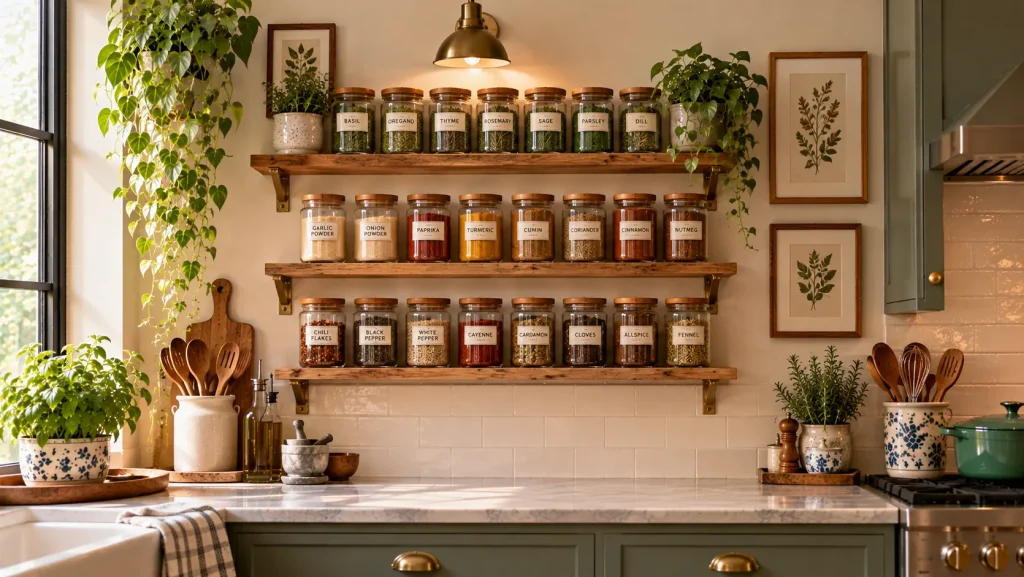
The most common spice rack mistake is putting it right above the stove. It seems logical, since that’s where you cook, but heat, light, and humidity make spices lose flavor more quickly. A spot an arm’s reach away from the cooktop, out of direct sunlight, keeps them fresher for longer.
Once it’s in the right place, a wall-mounted rack with matching glass or ceramic jars looks neat and lets you see every spice at a glance. Simple labels give a calm, organized look, while a mix of vintage tins feels more relaxed. Buying spices in smaller amounts and refilling the jars more often also keeps them tasting fresher.
Hang Mugs on Hooks
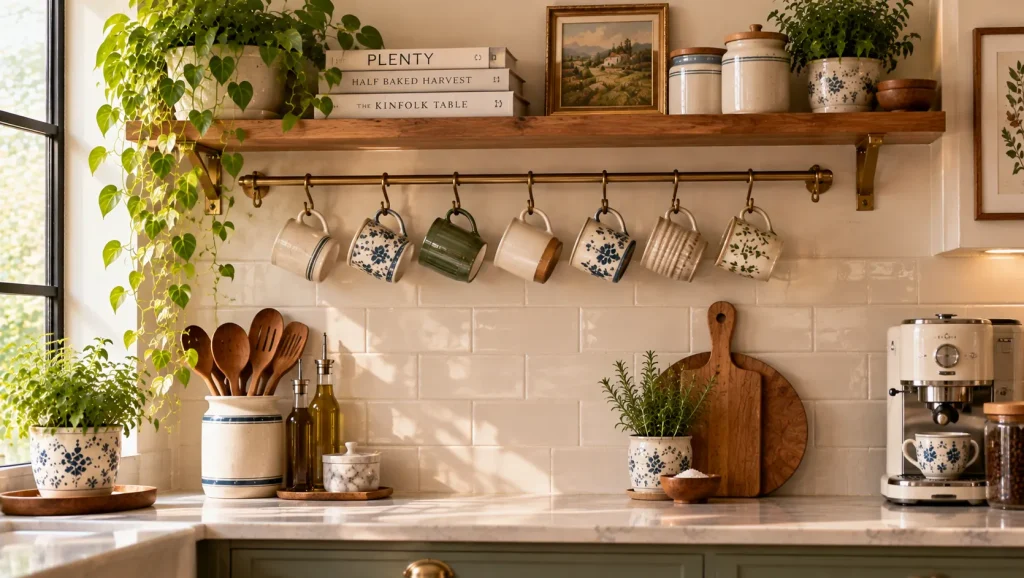
A row of hooks under a shelf or on a wooden board turns a mug collection into a cheerful display, especially if the mugs are handmade, colorful, or picked up on trips.
It also frees cupboard space and makes your morning coffee or tea routine quicker.
Use sturdy hooks screwed into a solid board or shelf, and space them so the mugs don’t knock into each other. Avoid hanging mugs directly above the kettle, where steam can make them damp and dusty, or above the stove.
Picture a short wooden rail with six hooks above a coffee station, with a small shelf above it holding coffee and tea jars. It’s a little corner that’s useful every morning and looks inviting the rest of the day.
Store Produce in Wall Baskets
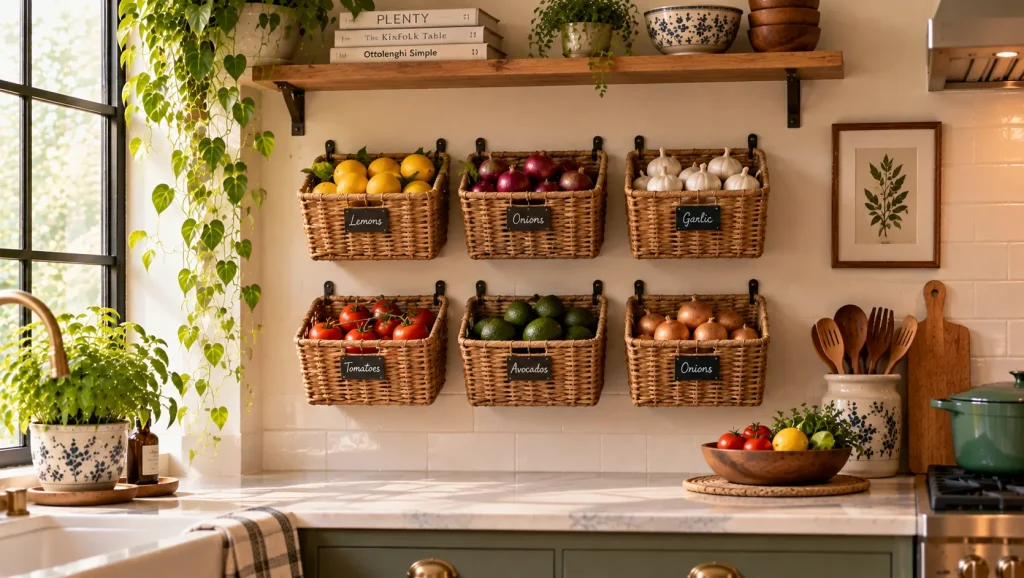
Wire or woven baskets mounted on the wall can hold onions, garlic, potatoes, or fruit, keeping the counter clear and adding texture to the wall.
Tiered wire baskets are popular in farmhouse and vintage kitchens, while woven baskets suit a softer, more natural look.
A few things help produce last longer:
- Choose a cool, dry, well-ventilated spot away from the stove and direct sunlight
- Keep onions and potatoes in separate baskets, since storing them together can make potatoes sprout faster
- Remember that temperature, humidity, airflow, and light all affect how long produce keeps, so a warm, sunny wall shortens storage life whatever you do
- Check baskets regularly and remove anything that’s starting to spoil
A three-tier wire basket on the narrow wall beside the back door, with onions on top, garlic and lemons in the middle, and potatoes at the bottom, keeps everyday produce visible so it gets used before it goes soft.
Baskets also need secure fixings, since a full basket of potatoes is heavier than it looks.
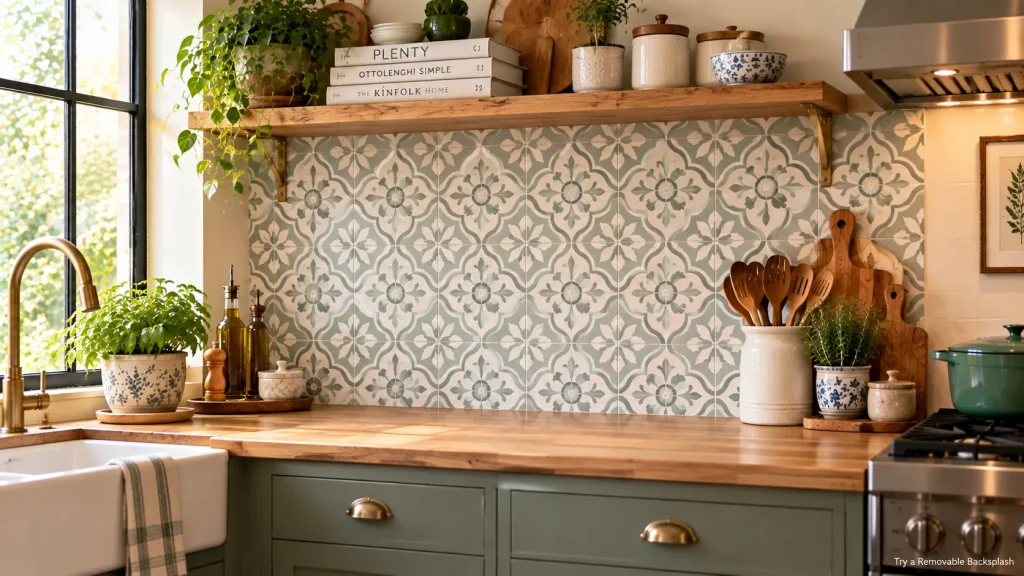
Try a Removable Backsplash
Renters often live with a plain painted wall or an old backsplash they can’t change. Peel-and-stick tiles and removable backsplash panels give the look of tile without permanent changes.
They come in many styles, from subway tile and patterned encaustic designs to marble-look and wood-look finishes.
Before installing, check the product’s heat rating. Many peel-and-stick products aren’t suitable directly behind a cooktop, especially a gas hob, so read the manufacturer’s guidance carefully. Test a small area first too, since removing some adhesives can damage paint.
A renter with a dated beige backsplash, for instance, could cover just the strip behind the sink in white zellige-look tiles, which changes the whole feel of that corner and may peel off cleanly at move-out, depending on the product and wall surface.
Even if it’s not suitable behind the stove, a removable backsplash can still transform the wall behind the sink or a coffee station.
Paint the Wall Behind Open Shelves
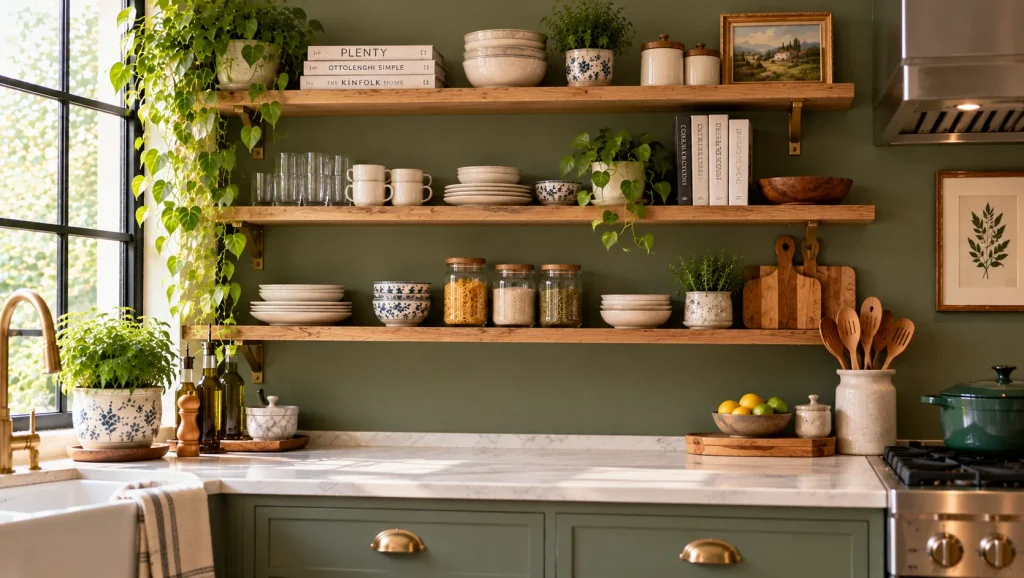
Pick the color by looking at what sits on the shelves. White and cream dishes pop against sage, terracotta, or navy, while wooden bowls and colorful pottery often look best against a soft neutral that doesn’t compete.
If your kitchen has open shelves, painting just the section of wall behind them makes the shelves stand out and turns everyday plates and glasses into a display.
Choose a washable paint labeled for kitchens or high-moisture areas, since this wall will be exposed to cooking steam and splashes. A satin or eggshell finish is often easier to wipe than flat paint, though washability depends on the specific product.
Of all the kitchen wall decor ideas here, this one is probably the quickest and cheapest, and it’s easy to repaint if you change your mind.
Add a Hand-Painted Tile Inset
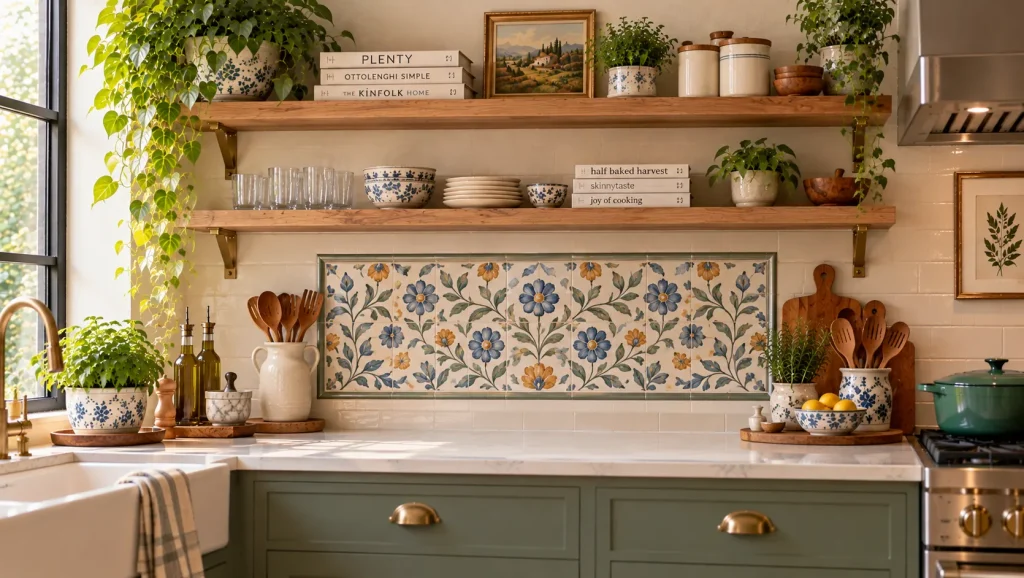
A small panel of hand-painted or patterned tiles set into a plain backsplash can act like a piece of art. A square of decorative tiles behind the stove, or a single row running through plain tiles, adds personality without overwhelming the kitchen.
Tile suits the heat zone better than most decor, since it’s heat-resistant and easy to clean. The whole installation matters, though: the backing board, adhesive, and grout need to suit the location, and any clearances required by your cooktop or range manufacturer still apply. Seal the grout if the manufacturer recommends it.
For example, a kitchen with plain white subway tile might have a small panel of blue and white patterned tiles, roughly the width of the cooktop, set in directly behind it. It becomes a focal point and is just as practical as the surrounding tile.
Keep the pattern’s colors in step with the rest of the kitchen, perhaps echoing a cabinet color or the shade of your mugs, so the inset looks planned rather than random.
This one is usually part of a renovation or retiling project, and a tiler can help with layout and cutting.
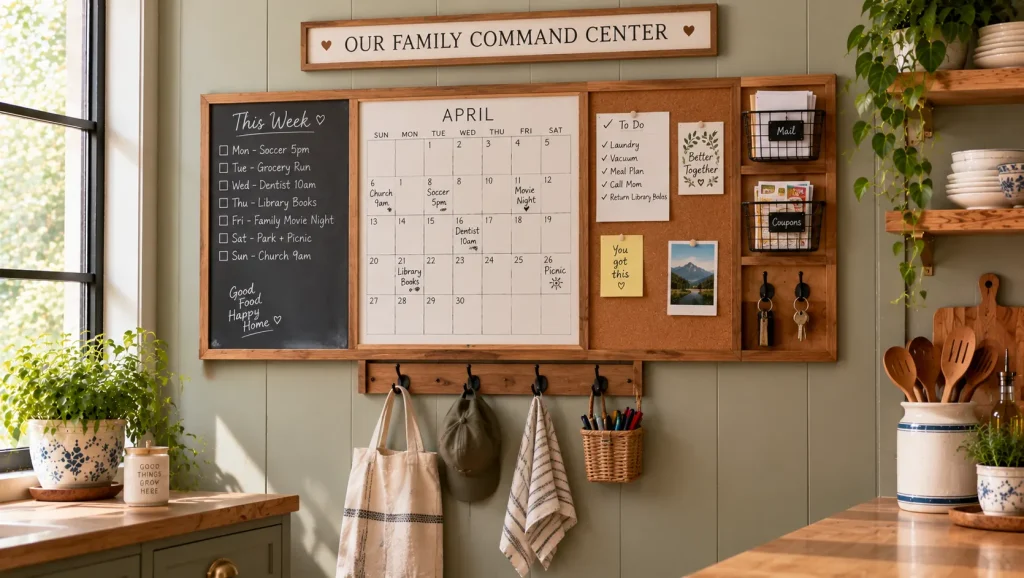
Create a Family Command Board
Kitchens are often the hub of the home, which makes a kitchen wall a natural spot for a family command board.
This could combine:
- A chalkboard or whiteboard section for shopping lists and weekly meal plans
- A cork or felt board for school notes and invitations
- A calendar for appointments and activities
- A few hooks for keys or lunch bags
Framing everything in matching wood or metal frames keeps it looking tidy. A chalkboard painted directly onto a section of wall, using chalkboard paint, is another option.
Place it in a low-splash area, away from cooking appliances, and at a height everyone in the household can reach. Keeping it updated is what makes it work, so a quick weekly clear-out of old notes and expired invitations stops it from turning into clutter.
What to Keep Off Kitchen Walls
Part of choosing good kitchen wall decor ideas is knowing what to skip. Some things simply don’t belong on kitchen walls, or at least not near the stove and sink:
Fabric and paper near the stove. Tea towels, fabric hangings, paper prints, and wooden pieces can be a fire risk close to burners and will quickly collect grease.
Unsealed canvas and delicate originals. Steam and grease can damage them over time. Keep valuable art in other rooms or well away from cooking areas.
Heavy items over walkways. Pan rails, shelves, and baskets should be positioned so nobody hits their head on them, and fixed securely enough to hold their full load.
Too many small pieces. A wall covered in lots of little items can make a kitchen feel cluttered and harder to clean. A few well-chosen pieces usually look better.
Questions About Kitchen Wall Decor
What can I put on my kitchen walls that won’t get greasy?
Tile, metal, glass, and items you use and wash regularly, like cutting boards, mugs, and pans, are the easiest to keep clean. Anything delicate should go on a dry wall away from the stove.
Is it safe to hang decor above the stove?
Only heat-resistant, non-flammable items like tile should go directly above or beside the stove. Keep fabric, paper, wood, and anything flammable well away from burners.
How can renters decorate kitchen walls?
Removable backsplash panels, adhesive hooks rated for the weight, a freestanding cutting board display, and a leaning cookbook ledge on the counter are all renter-friendly. Ask your landlord before drilling or painting.
How do I make a small kitchen wall look less bare?
Choose one or two pieces that fit the space, like a narrow cookbook ledge, a short mug rail, or a framed recipe. In a small kitchen, practical decor often works better than purely decorative items.
Choose One Wall and Check It First
You don’t need to try all of these kitchen wall decor ideas at once. Pick one wall, then check how much heat, steam, and splashing it really gets: watch where the steam drifts while the kettle boils and something is frying, and look for a sticky film on nearby surfaces afterward. Choose a piece that suits that exposure, and once it’s up, you’ll know exactly what the next wall can handle.