

Sleep First, Style Second: 8 Bedroom Design Ideas for a Room That Actually Rests
Next time you’re lying in bed with the lights off, pay attention for a minute or two. What can you see? A glowing charger, a line of streetlight around the curtain? What can you hear? Is the air too warm or stuffy? Could you reach the bathroom in the dark without tripping over something?
Small details like these often shape how a bedroom feels more than the color of the cushions. Many of them can be eased with a little planning rather than more shopping, though a few, like heavy outside noise, may need bigger fixes.
The bedroom design ideas below focus on how the room works for sleep and everyday routines, from where the bed goes to where the phone charges overnight.
Match Your Problem to an Idea
Use whatever you noticed as a shortcut to the sections that matter most for you:
- Light from outside or electronics: start with light control at the window, then charging and cables
- Noise: go to making the room quieter
- Too warm, cold, or stuffy: see temperature and airflow
- Getting up to switch lights off: read controlling lights from bed
- Awkward paths in the dark: start with bed placement and zoning
- Two people on different schedules: jump to designing for two sleepers
Before Any of These: Sketch a Floor Plan
This isn’t one of the eight ideas, but it makes all of them easier. Before moving furniture, sketch the room on paper:
- Measure the walls, doors, and windows
- Mark outlets, switches, radiators, and vents
- Draw the door swing and any windows that open inward
- Cut out paper shapes for the bed and other furniture, using the same scale
- Move them around until paths are clear and nothing blocks a door, window, or heater
It’s a convenient way to compare layouts without hauling a heavy bed around the room more than once.
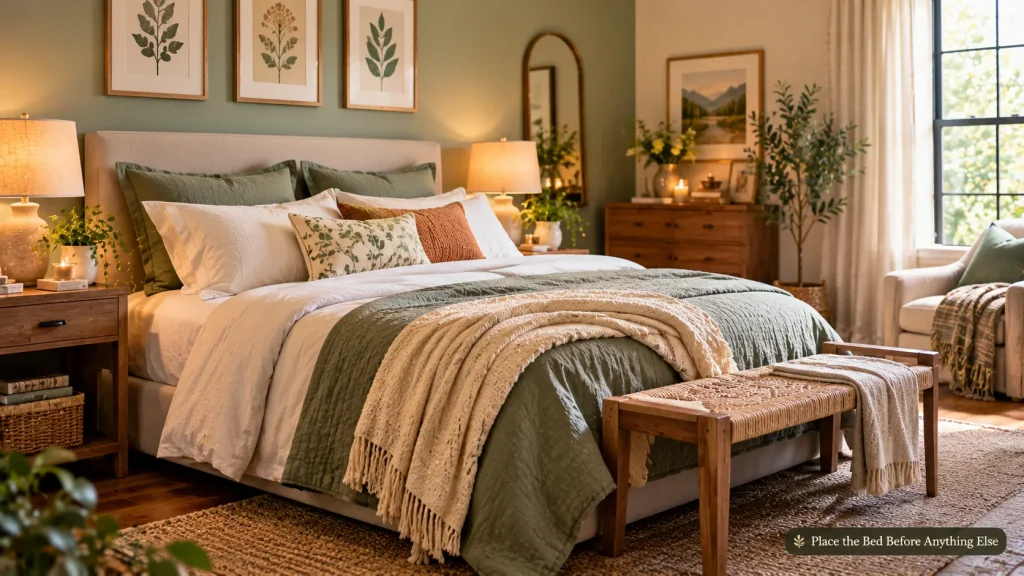
Place the Bed Before Anything Else
The bed is the largest piece of furniture in the room, and its position affects almost everything else, so it’s worth settling first.
A solid wall behind the headboard is often the easiest choice, since windows can bring drafts, light, or street noise depending on the room. That said, a bed under a window can work perfectly well, especially if the window is well sealed and you add good curtains.
Some people also prefer being able to see the door from bed without lying directly in line with it. It’s a personal comfort thing rather than a rule, so trust your own sense of what feels restful.
In a square bedroom with the door in one corner and a window opposite, placing the bed against the wall beside the door, facing the window, often gives a view of both without sleeping directly under the glass. When radiators, wardrobes, or an awkward door make that impossible, use your paper plan to test the next-best wall.
Bed height matters too. A mattress top roughly at knee height is easy to sit on and get up from for most adults, while very low platform beds look relaxed but can be harder for some people to use.
Aim for a clear path on at least one side of the bed, and on both sides if two people share it. In very narrow rooms, a bed pushed against one wall may be the only workable option, which is fine as long as the route to the door stays clear. Whatever the layout, keep any window that might be needed as an emergency exit unblocked.
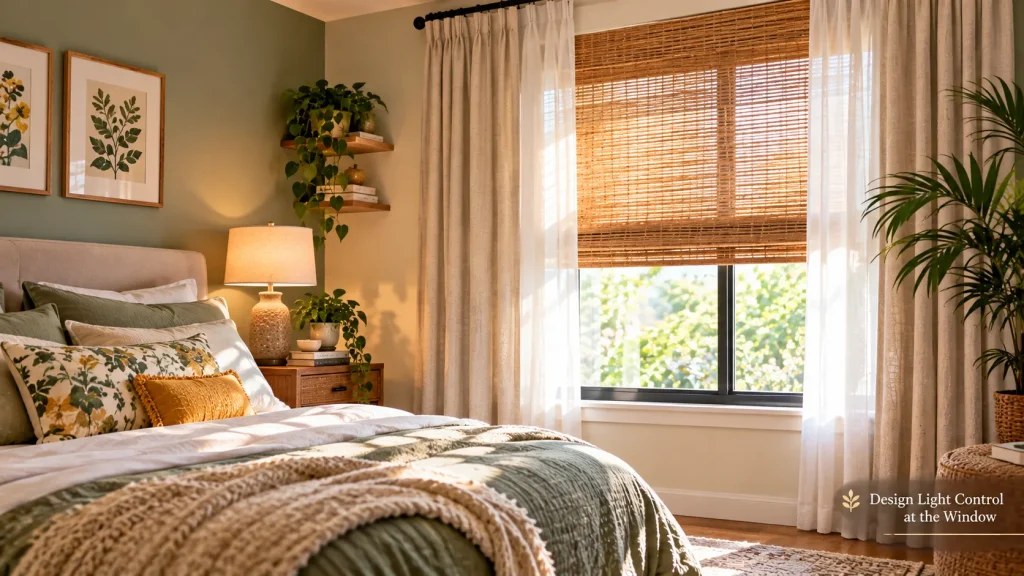
Design Light Control at the Window
Unwanted light from streetlights or an early sunrise can make it harder to fall asleep or stay asleep for some people.
How dark you want the room is personal. Some people love waking with the daylight, while shift workers or light sleepers may want near-total darkness. Layering lets you choose:
- A blackout or dim-out layer, such as a lined blind or curtains with blackout lining, for nights and early mornings
- A lighter layer, like sheer curtains, to filter daylight while keeping privacy
Of all the bedroom design ideas here, this is the one that’s easiest to tailor. A light sleeper on a night shift might pair a blackout blind with blackout curtains, while an early riser who likes a gentle wake-up could use dim-out curtains that let a little morning light through.
Light tends to leak around the edges. Hanging curtains a little wider and higher than the window frame, with enough fabric to overlap in the middle, usually reduces those gaps. A blind fitted inside the recess often leaves thin strips of light at the sides, which a curtain over the top can cover.
For blinds, cordless designs are the safest choice, especially in children’s rooms. If a blind does have cords, choose one that meets current child-safety standards, with cords fixed out of reach.
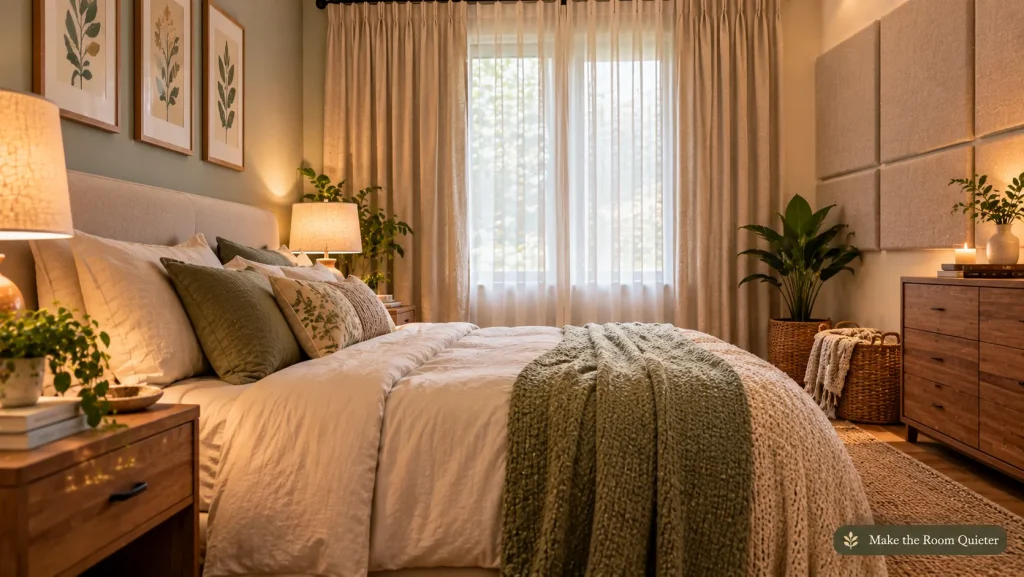
Make the Room Quieter
It helps to separate two kinds of noise: echo inside the room, and sound coming in from outside.
Echo is the easier one. Rooms with hard floors, bare walls, and little fabric can sound harsh, and rugs, curtains, and upholstered headboards absorb some of those reflections, making the space feel softer.
Sound coming through walls, windows, and doors is harder to stop, and soft furnishings only help a little. Practical steps include:
- A door sweep or seal at the bottom of the bedroom door to reduce hallway noise and light
- Heavy, lined curtains, which can take the edge off some street noise
- A thick rug pad under the rug on wooden floors, which can soften footsteps and reduce sound traveling to the room below
- Moving the bed away from a shared wall with a noisy neighbor or bathroom, which often helps more than any single product
For persistent traffic noise, secondary glazing or acoustic window inserts actually reduce what comes in, though they’re a bigger investment. A fan or white noise machine works differently: it doesn’t block sound, but it can mask what’s left so it’s less noticeable.
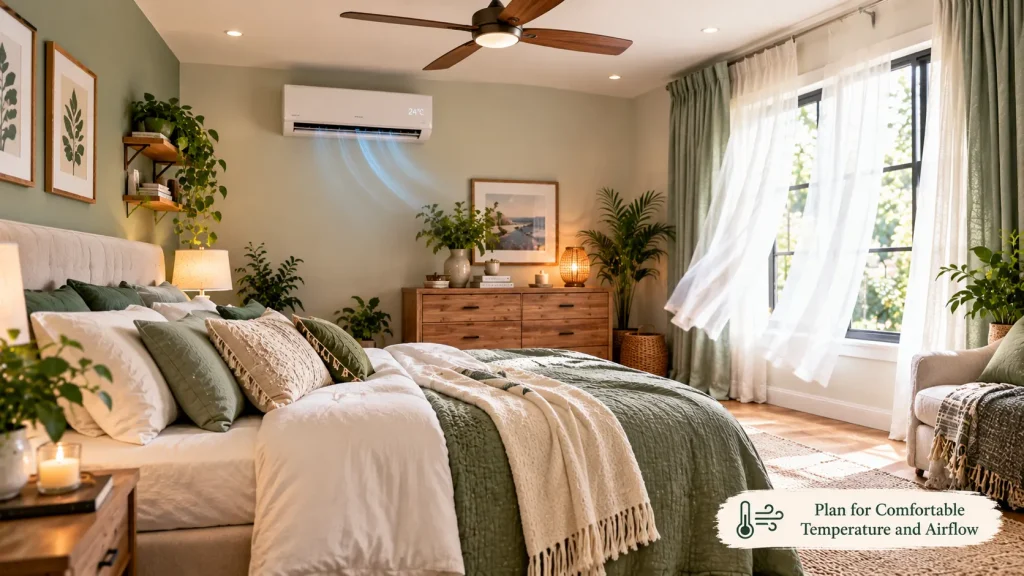
Plan for Comfortable Temperature and Airflow
Many people sleep better in a room that feels comfortably cool, but comfort depends on bedding, sleepwear, humidity, and personal preference. Good design simply makes it easier to adjust.
What tends to help:
- Keeping radiators and heaters clear of furniture and curtains, for safety and so warmth can circulate
- Making sure windows open easily, with window restrictors in children’s rooms
- A ceiling fan, installed by a qualified electrician, for gentle air movement in warm months
- Layered bedding, like a lighter duvet plus a throw, so you can adjust at night without changing the whole room
In a sun-facing bedroom that heats up during the day, drawing thermal-lined curtains in the afternoon may help keep some heat out, though results depend on the lining and how much direct sun the window gets.
If the room feels stuffy in the morning, opening a window for a while can freshen the air when outdoor conditions, noise, and security allow.
Control the Lights From Bed
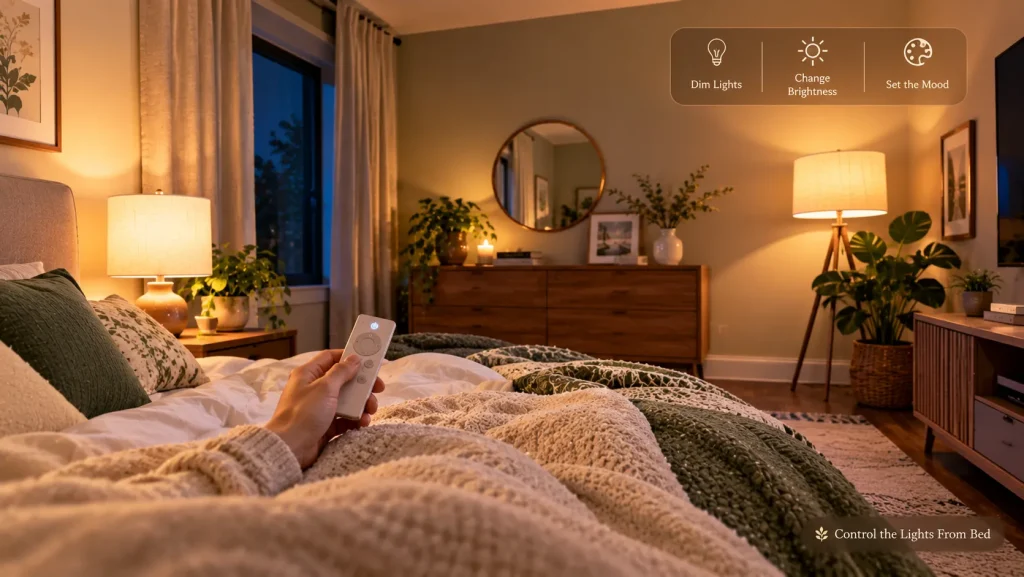
In plenty of bedrooms, the main light switch is by the door, which means climbing out of a warm bed to turn it off. A few changes can fix that.
Without any wiring: bedside lamps with switches you can reach from the pillow, plug-in lamps with inline switches, or smart bulbs paired with a small physical remote, which suits anyone who keeps their phone out of the bedroom.
During a renovation: two-way switching, so the main light works from both the door and the bed, and dimmers for softer evening light. These need a qualified electrician.
For night trips: a low, motion-activated light near the floor can light the path to the door or bathroom. Position it so it shines across the floor rather than toward the bed, so it doesn’t catch anyone’s eyes.
A good goal is being able to turn off the lights and find your way out at night without switching on anything bright.
Divide the Room Into Zones
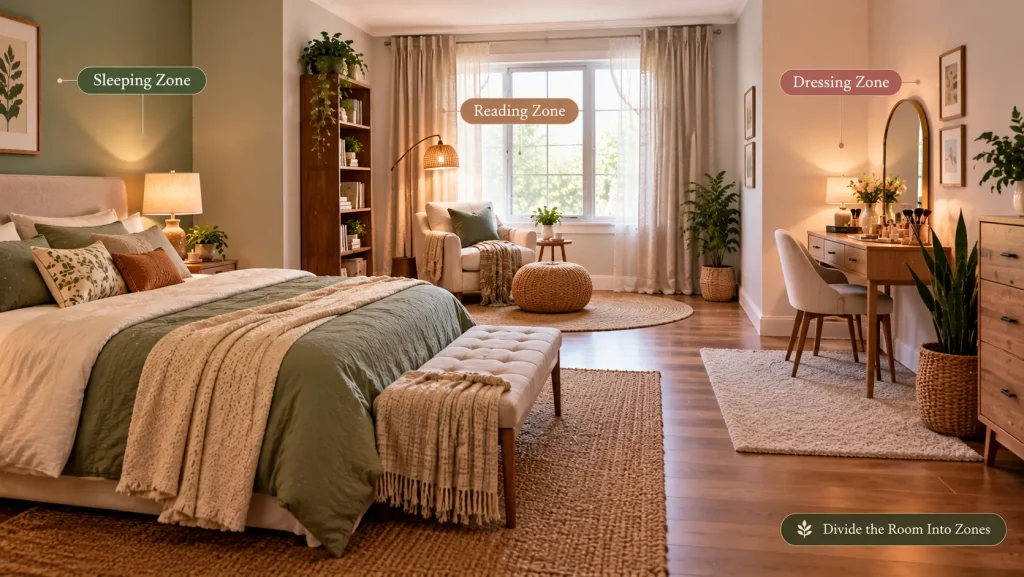
Even a small bedroom often does several jobs: sleeping, dressing, reading, and sometimes working. That’s why zoning shows up in so many bedroom design ideas, and giving each activity a loose area helps the room feel calmer.
You might have a sleep zone around the bed, a dressing zone with the wardrobe and mirror, and a reading spot with a chair and lamp if there’s space. Zones don’t need walls. A rug, a lamp, or the way furniture faces can mark the change.
In a long, narrow room, placing the wardrobe and mirror nearer the door, where the layout allows, means early-morning dressing happens away from someone still asleep.
In a genuinely small bedroom, zoning can be as simple as lighting. A focused lamp by the wardrobe for dressing, a warm bedside lamp for reading, and nothing else in the sleep area can separate activities without adding furniture.
If you work from home in the bedroom, try to keep the desk out of sight from the bed. Where that’s not possible, a folding screen or simply clearing the desk at the end of the day can make it easier to switch off.
Design for Two Different Sleepers
One person reads until midnight while the other is up at six. One kicks off the covers while the other is always cold. Designing for both prevents a lot of nightly friction.
- Focused reading lights: a lamp with a narrow, directional beam on each side, such as a wall-mounted swing-arm light, keeps light on the book rather than across the other pillow
- Separate covers: two single duvets on one bed let each person choose their own warmth and stop the tug of war over blankets
- Morning items by the door: the early riser’s clothes, alarm, and essentials kept away from the bed mean less rustling in the dark
- Less motion transfer: if one person’s tossing and turning wakes the other, a mattress designed to reduce motion transfer, or two single mattresses on one frame with a connector, can help
- A usable bedside surface for each person: somewhere to put a glass of water, glasses, and a phone avoids reaching across the bed at night

Plan Charging and Cables Thoughtfully
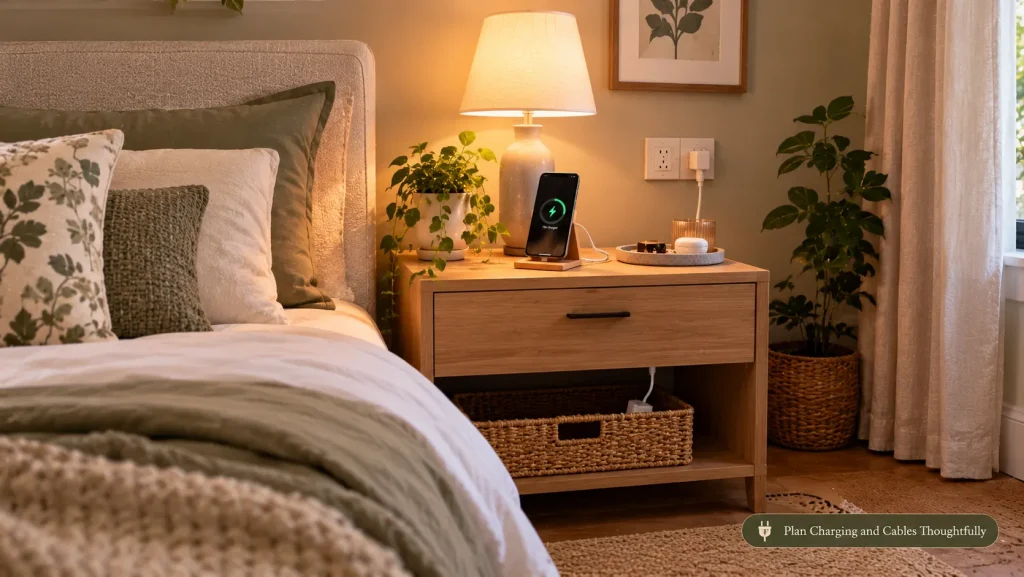
Charging cables tend to end up in a tangle behind the bedside table, trailing across the floor, with small lights glowing all night.
A little forethought fixes most of that:
- Decide where each device will charge, close to an outlet, so cables don’t stretch across walkways
- Use cable clips, a cable box, or cord covers to keep wires tidy and reduce tripping hazards
- Cover or turn away small glowing lights on chargers and electronics, or choose devices with dimmable displays
For example, a bedside table with a drilled cable hole and a small clip on the back can route a single charging cable up to the surface, with the plug hidden behind the table rather than stretched across the floor.
Where you charge is also a habit question. Some people find that charging phones on a dresser or by the door, rather than within reach of the bed, makes it easier to put the screen down at night.
A charging box on a dresser can hide cables neatly, but choose one with ventilation, since chargers and phones produce some heat while charging. For the same reason, avoid charging phones under pillows or on soft bedding, and don’t overload extension leads. If you’re renovating, extra outlets beside the bed, including models with built-in USB ports, can help, as long as they suit your devices and are installed by a qualified electrician.
Mistakes That Catch People Out
Even well-planned bedroom design ideas can stumble on small practical details like these.
Measuring the room but not the route in. A bed frame or wardrobe that fits the room may not fit up the stairs or through the bedroom door. Measure the narrowest point first.
Bedside tables at the wrong height. A table much lower or higher than the top of the mattress makes reaching a lamp switch or glass of water awkward. Roughly level with the mattress is usually easiest.
A rug that stops short of the bed. If your feet land on cold floor when you get up, the rug is too small or in the wrong place. Let it extend beyond the sides of the bed where you step out.
Filling every wall. Even with good placement, a room crammed with furniture is harder to move through in the dark. Leave some breathing room.
Questions About Bedroom Design
Where is the best place to put a bed?
There’s no single right spot. Start with a solid wall and a clear path to the door, then adjust for your room’s windows, heaters, and door swing.
What if my bed has to go under a window?
That’s fine. Choose well-fitting curtains or a blind to control light and drafts, keep a headboard between you and the glass, and make sure the window can still be opened if needed.
How do I design a bedroom for an older family member?
Beyond clear paths and good night lighting, consider a bed at a height that’s comfortable for sitting down and standing up, light switches reachable from bed, and lever handles on doors and wardrobes.
Which of these ideas suit a small bedroom?
Most of them. Bed placement, light control, bedside light switches, and tidy charging need no extra space, and zoning can be done with lighting and furniture arrangement alone.
Can good bedroom design help with sleep?
A darker, quieter, comfortable room may make it easier for many people to wind down. If sleep problems continue, though, it’s worth talking to a doctor.
Start With the Night, Then Decorate
Pick the problem you noticed first, whether that’s a glowing charger, a drafty window, or a light switch across the room, and fix that before anything else. Once the room works well at night, choosing colors, textiles, and decor is easier to do with confidence, even if it still takes some trial and error.