
Every Inch Counts: 9 Wardrobe Ideas for Small Bedrooms Beyond the Basics
Here’s something that surprises people: a small bedroom doesn’t always need a small wardrobe. What it needs is a wardrobe that plays nicely with everything else in the room, including the bed, the door, the window, and the person trying to get dressed in a hurry.
Most advice stops at “buy something slim.” That helps, but it leaves out a lot. Doors that need less swing space, wardrobes that double as a desk, furniture that lets you see more floor, and even a smarter way of choosing what goes inside can all make a tight bedroom feel easier to live in.
The nine wardrobe ideas for small bedrooms below each solve a slightly different problem, with a note on who each one suits.
Combine a Wall Bed With Wardrobe Storage
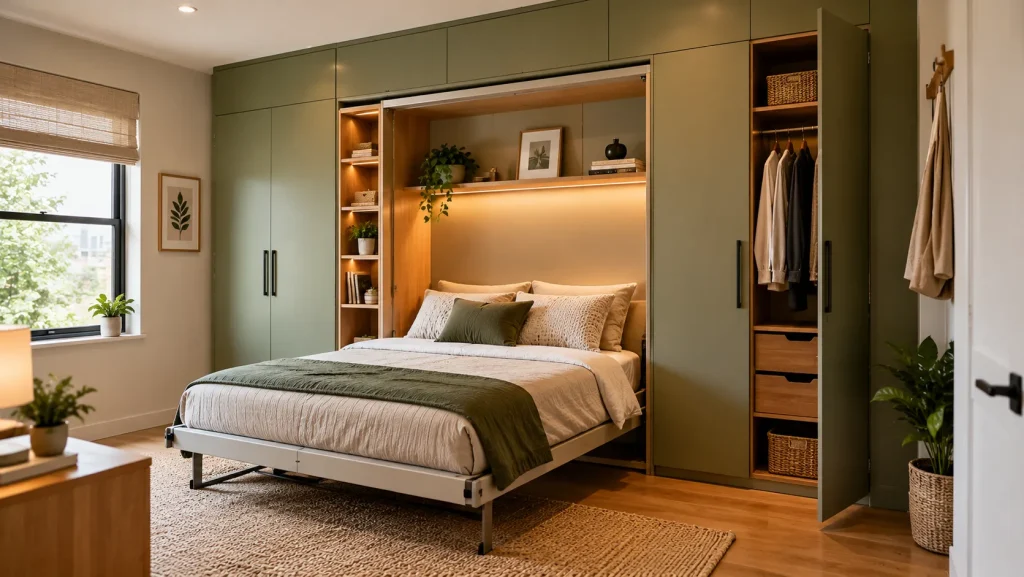
In a really tiny bedroom, or a room that has to work as a guest room or home office too, the bed itself is often the biggest obstacle. A wall bed, sometimes called a Murphy bed, folds up vertically into a cabinet when you’re not using it.
Many wall bed systems are designed with tall wardrobe units on either side. When the bed is folded up, the whole wall looks like a run of fitted storage, and the floor in front of it is completely free. When it’s down, you still have full access to the wardrobes beside it.
For example, a small spare room might have a double wall bed in the center with a hanging wardrobe on one side and shelves and drawers on the other. During the day, the room becomes a workspace or play area, and nobody would guess there’s a bed in the wall.
Wall beds are heavy, so install yours according to the manufacturer’s anchoring requirements, using a qualified installer where needed. Keep the area in front clear when lowering the bed, and check any guidance about use around young children.
Best for: multi-purpose rooms, guest rooms, and studio apartments where floor space matters during the day.
Choose a Wardrobe With a Built-In Desk or Dressing Table
Small bedrooms often need to hold more than a bed and clothes. A spot to work, study, or do your hair and makeup can be hard to fit in as a separate piece of furniture.
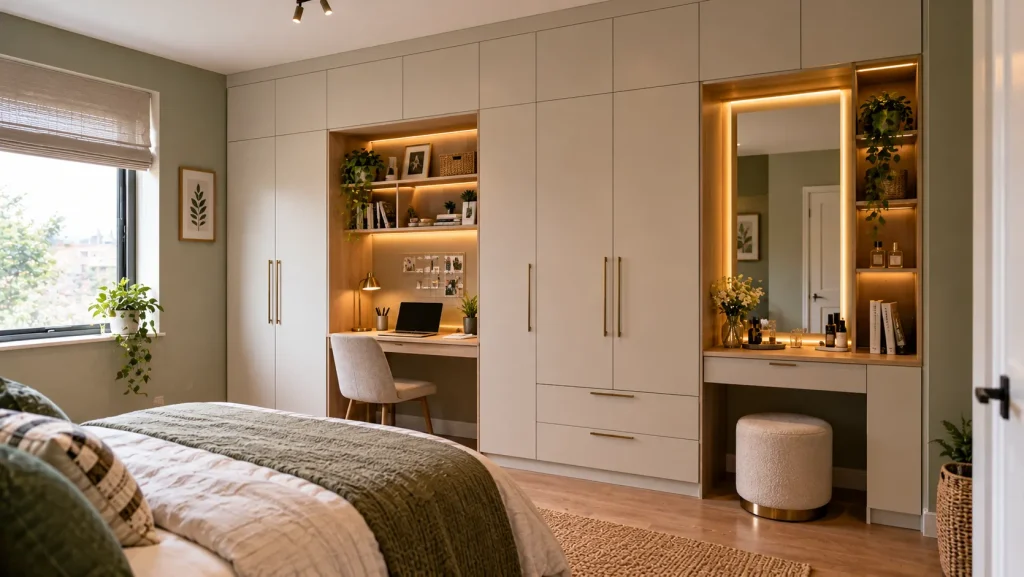
Some wardrobe systems solve this with a built-in desk or dressing table between two tall cabinets, often with shelves above. One continuous unit replaces two pieces of furniture fighting for the same wall.
This works especially well along one wall of a narrow room. The wardrobe sections sit at either end, the desk sits in the middle, and a chair tucks underneath when it’s not in use.
A few details make it more comfortable to use:
- Leave enough knee space under the desk section
- Add a light above or beside the desk, since a wardrobe wall can cast shadows
- Plan an outlet nearby for a laptop or hairdryer, with any new wiring done by a qualified electrician
A good fit for: students, people who work from home, and anyone who needs a dressing area but can’t fit a separate table.
Switch to Bifold or Pocket Doors
Standard hinged wardrobe doors need a lot of clear space in front of them. In a small bedroom, that space often overlaps with the bed, a chair, or the path to the window.
Two door styles can help.
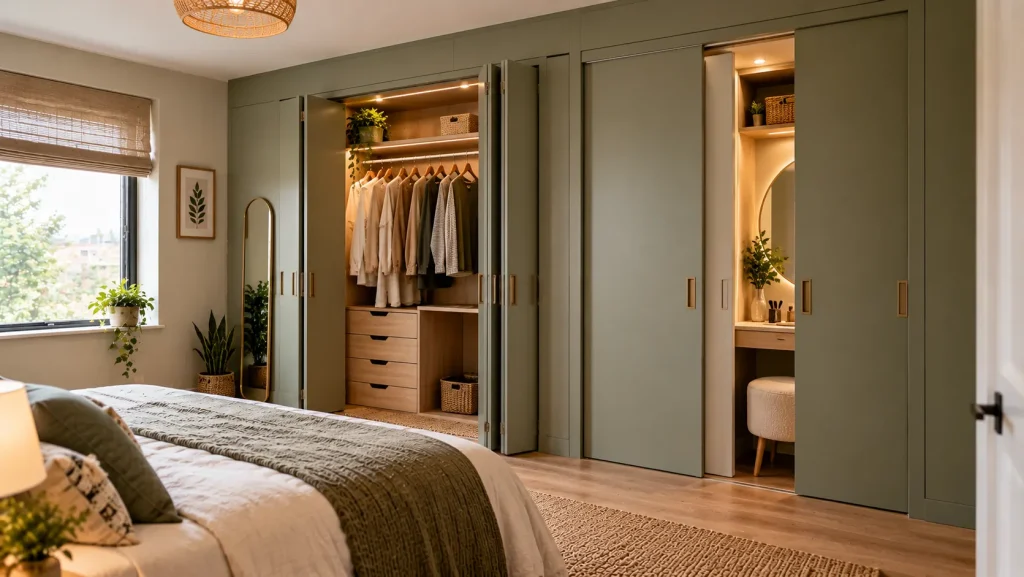
Bifold doors are hinged panels that fold in half as they open, so each door only swings out about half as far as a single wide door. They also let you see the whole wardrobe at once, which sliding doors don’t.
Pocket doors disappear completely when open. Traditional pocket doors slide into a cavity inside the wall, which makes them a renovation project, though some wardrobe systems offer similar retracting doors built into the cabinetry itself.
Bifolds are especially useful when a wardrobe sits just beyond the foot of the bed, where full hinged doors would hit the bed frame before opening fully.
Bifold tracks need occasional cleaning and adjustment to keep them running smoothly. Check that the folded panels won’t catch on clothes or block drawers inside.
Works particularly well in: rooms where the wardrobe faces the bed or sits in a narrow passage.
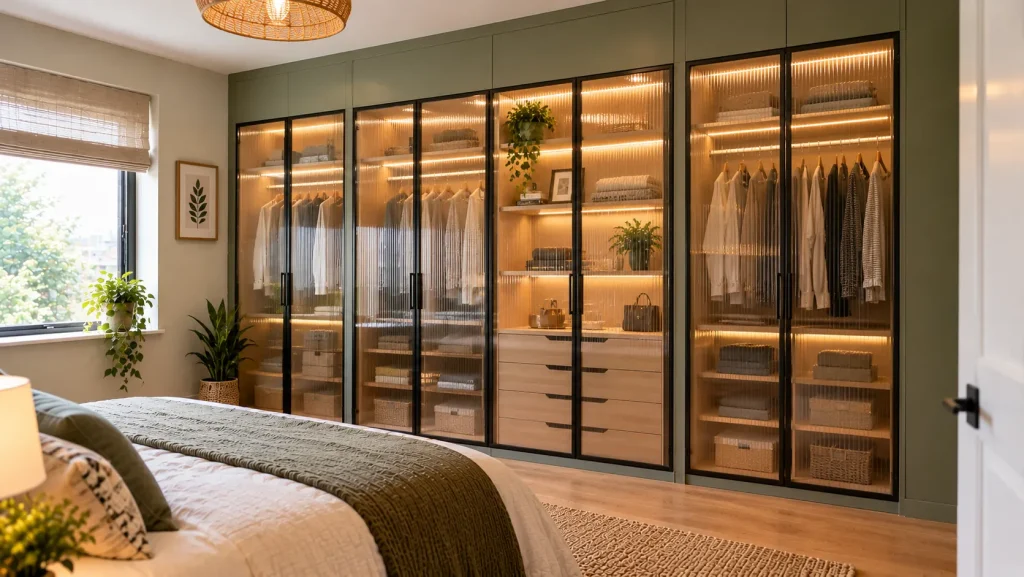
Try Glass or Reeded Glass Doors
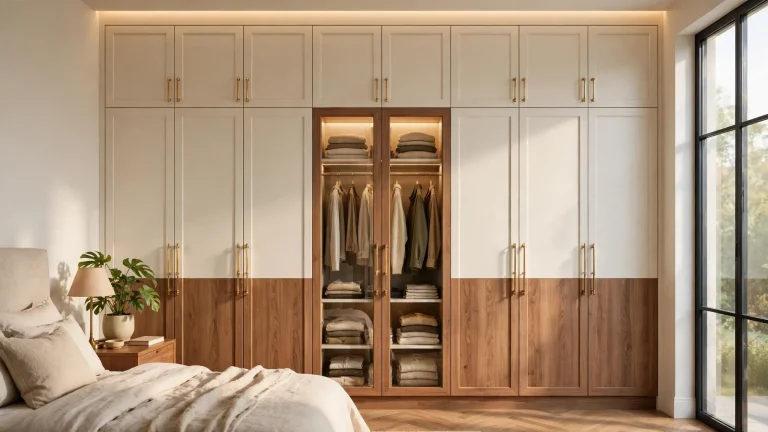
Glass doors are about visual weight. They break up a solid block of wardrobe fronts and let the eye see some depth beyond the surface.
Clear glass shows everything inside, which suits people who keep their clothes neatly organized and color-sorted. Reeded or fluted glass, which has vertical ridges, blurs the view so the outline of clothes is visible but the details aren’t. Frosted glass hides the contents almost completely while still feeling lighter than solid wood.
For example, a small bedroom with a white wardrobe might swap two of its solid doors for reeded glass in a slim black frame. The wardrobe still hides the clutter, but it no longer looks like one big block against the wall.
Any glass in doors should be safety glass, such as tempered or laminated glass, designed to reduce the risk of injury if it breaks. This matters even more in children’s rooms. Interior lighting, if you have it, will make the contents more visible through the glass, so keep that in mind if you prefer a calmer look.
Consider this if: you like an airy look and keep your wardrobe fairly tidy.
Raise the Wardrobe on Legs
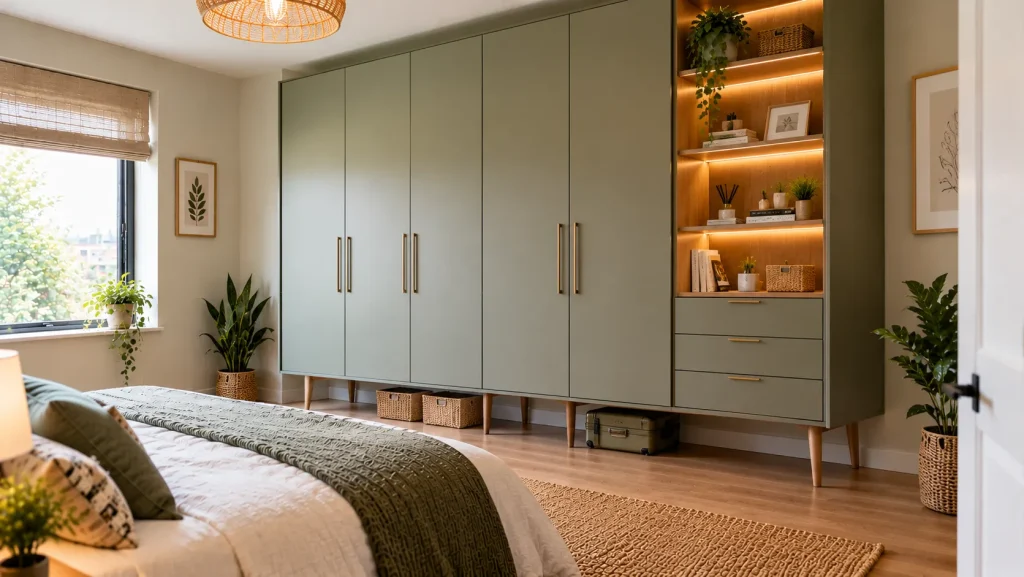
The practical win with a raised wardrobe is cleaning: you can get a vacuum or mop right underneath, so dust doesn’t collect against the base. It also looks lighter, since you can see a strip of floor below it.
Many modern and mid-century style wardrobes come with tapered legs. Some flat-pack wardrobes can also be fitted with legs instead of a plinth, if the design allows.
The space underneath can be useful, too. Shallow boxes or baskets for shoes, bags, or spare bedding can slide under, as long as they don’t make the area look cluttered.
Wardrobes on legs can be a little less stable than those with a solid base, especially if the floor is uneven. Use adjustable feet to level it, and anchor it to the wall with an anti-tip kit, following the manufacturer’s instructions.
A good fit for: anyone who wants a more furniture-like piece that’s easy to clean around.
Use the Corner Behind the Bedroom Door
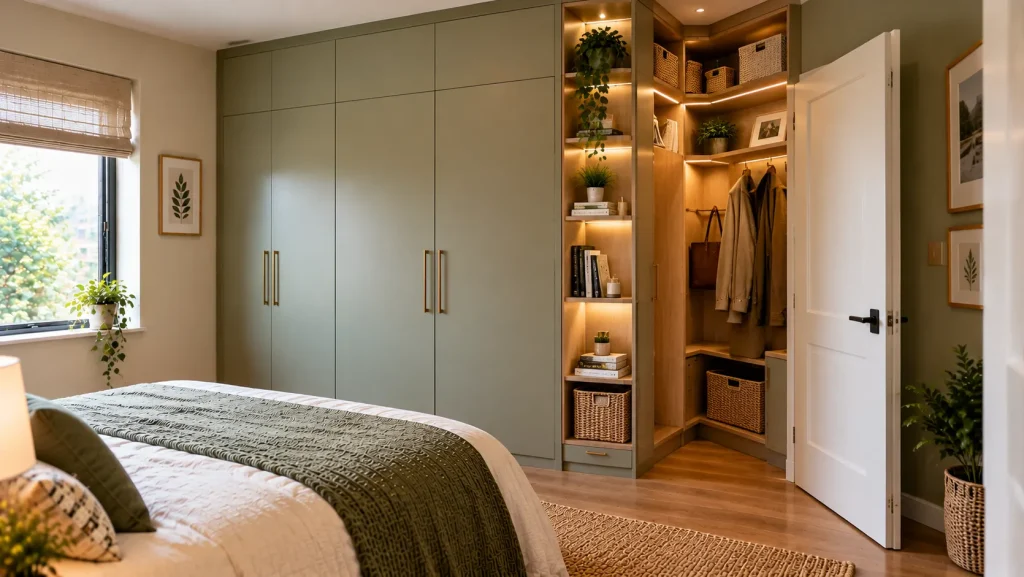
The area behind an inward-opening bedroom door often goes unused, because anything placed there gets hit by the door. But if the door doesn’t open all the way to the wall, there may be a gap you can use.
A narrow, shallow wardrobe or a tall slim cabinet can sometimes fit in that space, tucked behind the open door. When the door is closed, the wardrobe is visible and fully accessible. When it’s open, the wardrobe is mostly hidden.
Measure carefully before buying:
- How wide is the gap between the door and the corner when the door is fully open?
- How deep can the wardrobe be without stopping the door from opening fully?
- Will the door handle hit the wardrobe?
A doorstop fitted to the floor or skirting board can protect both the door and the wardrobe from bumps. If the gap is too small for a wardrobe, a slim set of hooks or an over-door hanging rail may be a better fit.
Works particularly well in: rooms with an inward-opening door and a wasted corner beside the hinges.
Split One Wardrobe Between Two People
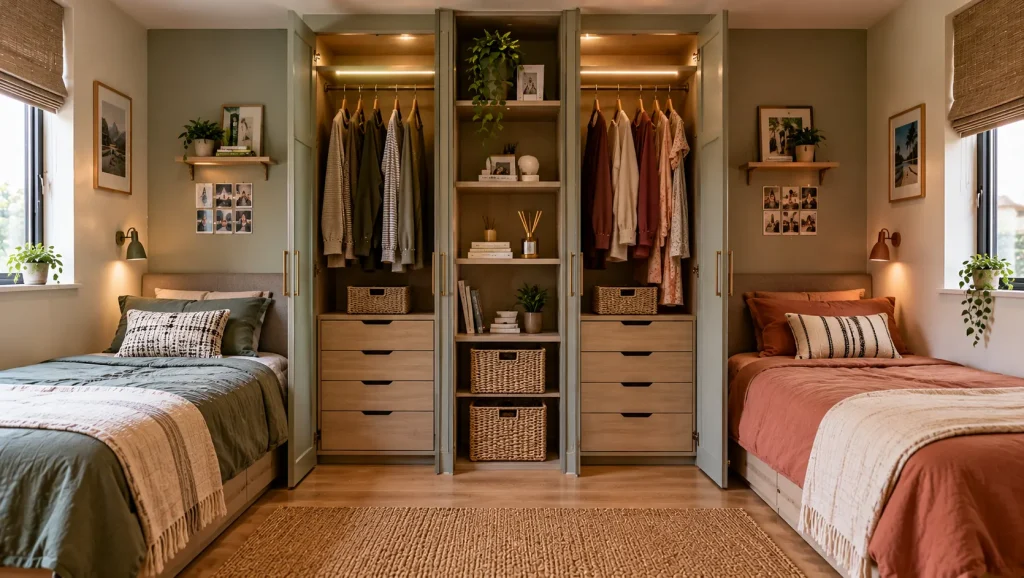
In a small shared bedroom, there’s often no space for two wardrobes. Sharing one is common, but without a plan, one person’s clothes slowly take over.
Give each person a clear section. In a two-door wardrobe, the simplest split is one side each. In a single wide wardrobe, use a sturdy divider or a different color of hanger for each person.
Think about what each person actually stores. Someone with lots of long dresses or coats needs more full-height hanging, while someone who mostly wears folded clothes may prefer more shelves or drawers. Dividing by space needed rather than exact halves is often fairer.
Shared storage in the rest of the room helps take pressure off the wardrobe. A chest of drawers can be split by drawer, and a bench at the foot of the bed can hold the clothes that need hanging least.
Matching wooden hangers for one person and black velvet hangers for the other, with a small label inside the door marking each section, sounds almost too simple, but it ends a lot of morning frustration.
Best for: couples, siblings, and anyone sharing a small room.
Shrink What Needs Storing
It’s the least glamorous of these wardrobe ideas for small bedrooms, and often the most effective. A compact wardrobe only works if what goes inside fits comfortably, and no clever design can fix one that’s packed beyond its limits.
A capsule wardrobe is a smaller collection of clothes that mix and match easily, built around a few colors you like wearing. Instead of keeping every item you might wear someday, you keep a selection you actually reach for.
There’s no fixed number of items. Some people keep a few dozen pieces per season, others more. A practical way to start:
- Turn all your hangers the same way, then reverse each one when you wear that item
- After a few months, look at the hangers you never turned
- Donate, sell, or store anything you clearly don’t wear
Assess formalwear, seasonal clothes, and special-occasion pieces separately. A winter coat or a wedding outfit won’t get turned in a few summer months, but that doesn’t mean it should go.
With fewer items, a small wardrobe has room to see everything and nothing gets crushed.
Consider this if: your wardrobe feels permanently overfull, no matter how it’s organized.
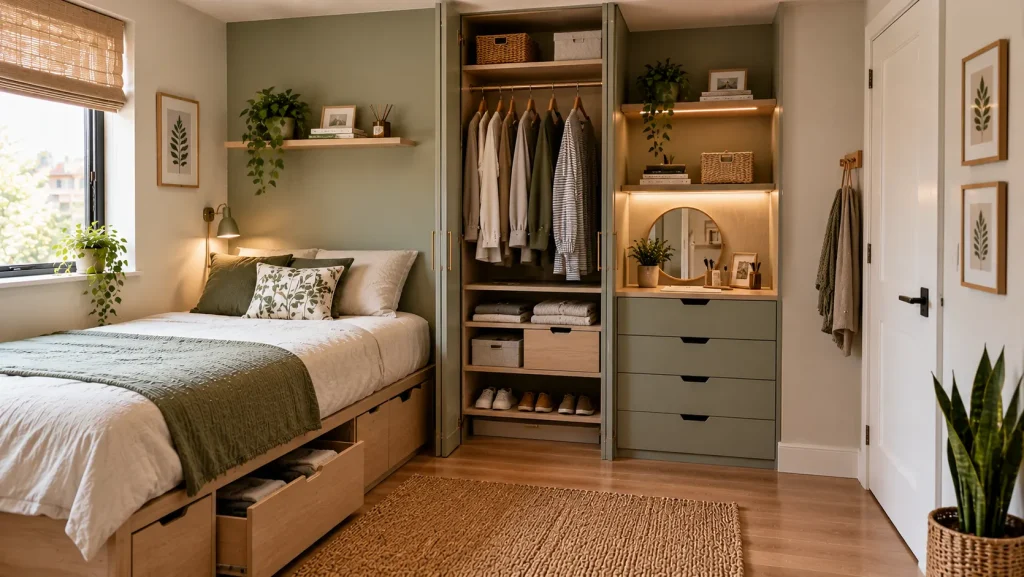
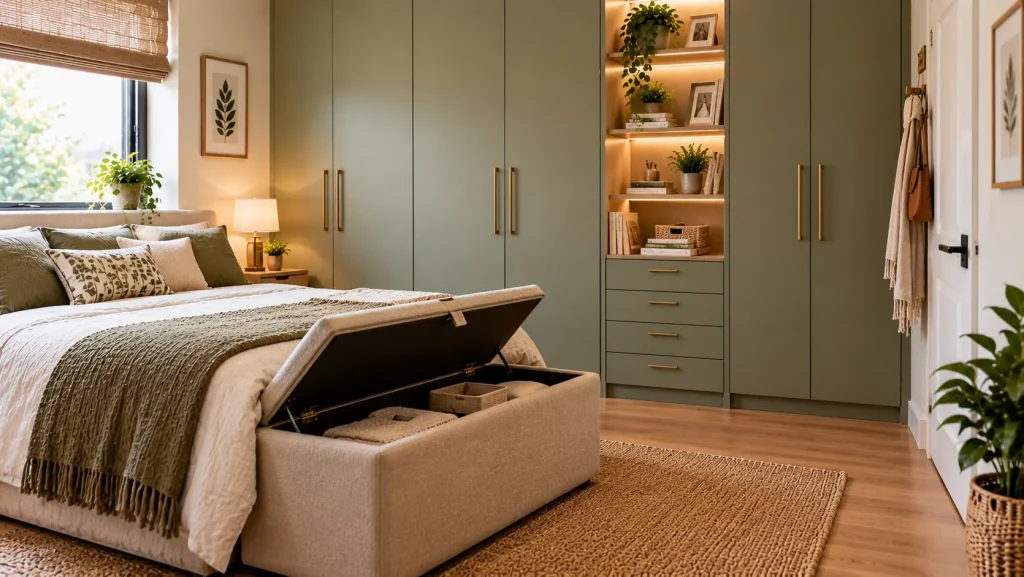
Add a Storage Bench or Ottoman
This one supports the wardrobe rather than replacing it. A storage ottoman or bench at the foot of the bed takes folded jumpers, spare blankets, or out-of-season items out of the wardrobe, freeing its shelves and rail for everyday clothes. It’s also a handy place to sit while putting on shoes.
Choose one with a lid that’s easy to lift and, ideally, a soft-close or slow-closing hinge, which helps prevent pinched fingers, especially in homes with children. Upholstered ottomans can also add color or texture to the room.
In a shared room, a long, low bench with two lift-up sections could hold one person’s jumpers on the left and the other’s on the right, which takes a whole shelf’s worth of folded clothes out of a shared wardrobe.
Measure the space at the foot of the bed before buying. You’ll want enough room to walk past comfortably, especially if the wardrobe or a door is nearby.
Best for: small bedrooms with a little space at the foot of the bed.
Before You Buy: Check Your Bedroom Layout
In a small bedroom, the wardrobe is only part of the puzzle. The space between the bed, the door, the window, and the wardrobe matters just as much.
Before choosing any of these wardrobe ideas for small bedrooms, map the route you take every day: from the door to the bed, from the bed to the wardrobe, and from the wardrobe to the window. Lay painter’s tape on the floor to mark where a new wardrobe would sit, including how far its doors or drawers open.
Then walk the route a few times. If you have to turn sideways, step over something, or close one door to open another, the layout needs rethinking. There should be enough room to stand in front of the open wardrobe and choose clothes without pressing against the bed.
Mistakes That Make Small Bedrooms Feel Smaller
Choosing the wardrobe before the bed. The bed usually takes up the most space. Decide where it goes first, then fit the wardrobe around it.
Ignoring the radiator or heater. A wardrobe pushed against a heat source can block warmth from the room and dry out clothes. Follow the heater manufacturer’s required clearance, which matters especially with electric heaters, or choose a different wall.
Overlooking natural light. A tall wardrobe placed beside a small window can shade the whole room. Keep the window wall as open as possible.
Buying everything to match. A matching wardrobe, bed, and drawers in the same heavy finish can feel oppressive in a small room. Mixing in lighter pieces or open storage often looks more relaxed.
Questions About Small Bedroom Wardrobes
What type of wardrobe is best for a small bedroom?
It depends on the layout. Bifold or sliding doors suit tight spaces in front of the wardrobe, wardrobes on legs or with glass doors feel lighter, and combined units with a desk or dressing table save floor space in multi-purpose rooms.
Can a wall bed replace a wardrobe?
Not usually on its own, but many wall bed systems include wardrobes on either side, giving you both sleeping and clothes storage in one wall.
How do I share a small wardrobe fairly?
Divide by how much hanging and folded space each person needs, rather than splitting exactly in half. Different hanger colors or a divider help keep sections clear.
Should a wardrobe go next to or opposite the bed?
Either can work, as long as there’s room to open the doors fully and stand in front of them comfortably. Opposite the bed often suits sliding or bifold doors, while beside the bed suits a narrow wardrobe that doesn’t block a window.
A Better Fit, Not a Bigger Room
None of these wardrobe ideas for small bedrooms will add square footage, but one well-chosen change, like bifold doors where hinged ones keep hitting the bed, can make daily life in the room noticeably easier. Walk your route through the bedroom tonight, note where you get stuck, and start there.