

Busy Home, One Bathroom: 11 Bathroom Ideas That Make Daily Life Easier
It’s 7:15 on a weekday morning. One person is in the shower, someone else is knocking on the door asking how much longer, and a third is searching the counter for a hairbrush that was definitely there last night. The towels from yesterday are still damp on the floor.
Plenty of homes have a bathroom that looks fine but doesn’t work very well for the people sharing it. The problem usually isn’t the tiles or the paint. It’s the small daily friction: nowhere to hang things, nowhere to put things, and no system for who uses what.
The bathroom ideas below roughly follow a day in a busy home: the morning rush, shower time, the daily wipe-down, late-night trips, and the moment guests arrive. Most are simple and affordable, and a few involve a bit of installation work.
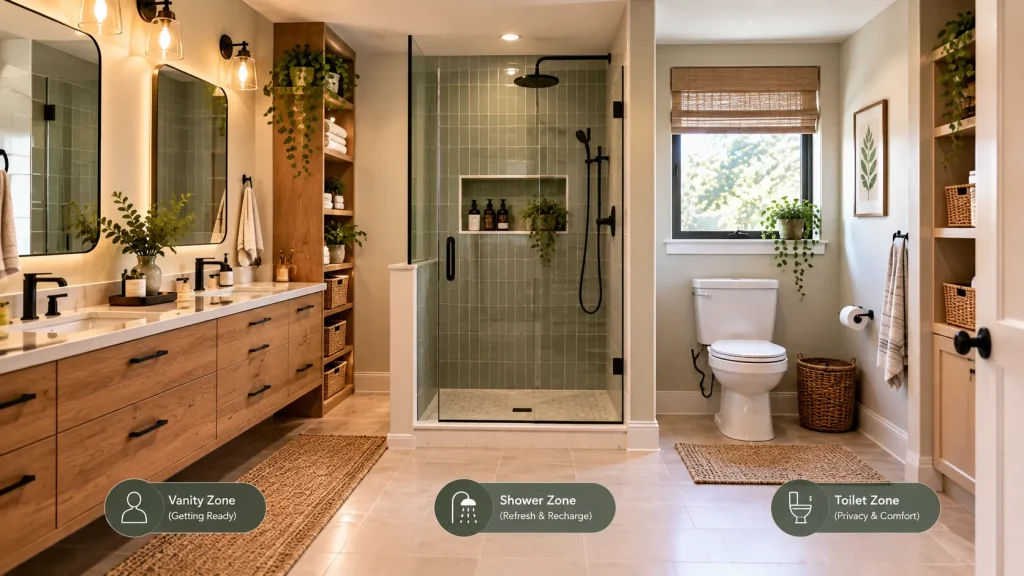
Give Everyone Their Own Zone
The quickest way to cut morning chaos in a shared bathroom is to stop everyone’s things from mixing together.
Give each person their own container for daily items. That could be a small caddy, a basket on an open shelf, or a labeled drawer in the vanity. Toothbrush, hairbrush, skincare, and anything else they use every day lives in their zone and nowhere else, while shared items like hand soap and toothpaste stay in one fixed spot by the sink.
If counter space is tight, a wall-mounted shelf holding one basket per person keeps the vanity clear.
Color-coding works well for families. One person gets blue, another gets green, and their caddy, towel, and toothbrush holder all match. Even young children can tell at a glance what’s theirs.
A portable caddy has a bonus: people can carry it to their room when someone else needs the bathroom, which takes pressure off the busiest half hour of the day.
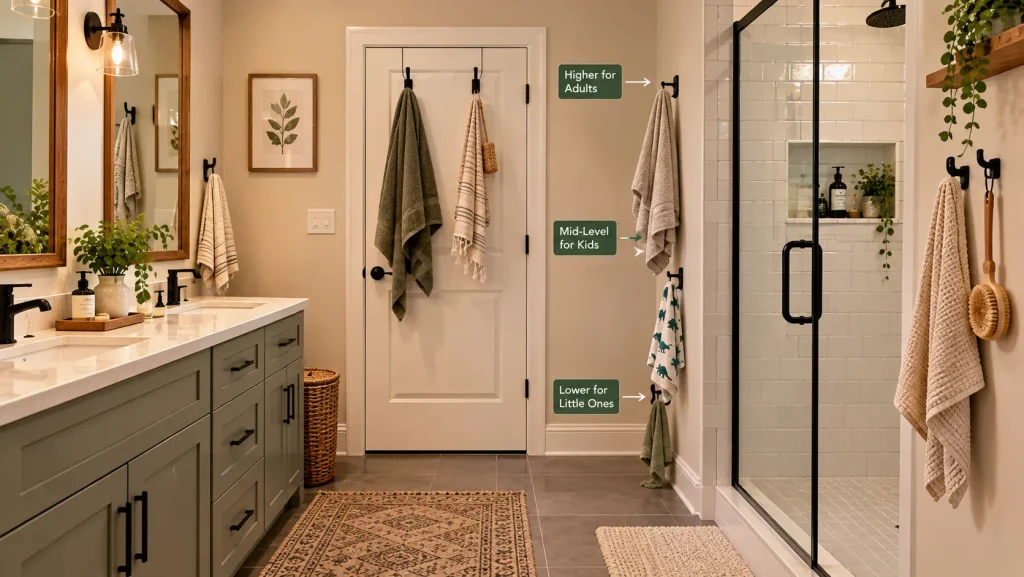
Add Hooks at More Than One Height
Towels end up on the floor for a simple reason. Hanging them neatly on a bar takes effort, and a hook doesn’t.
Swap or add to towel bars with a row of sturdy hooks. One hook per person, plus one spare, usually works. If children use the bathroom, add a second row lower down at a height they can reach easily.
Hooks also save space. A single towel bar might hold two folded towels, while the same wall width can fit four or five hooks.
Labels or a towel in each person’s color above every hook remove any doubt about whose is whose.
Think about what else needs hanging, too. A robe, a kid’s hooded towel, and a shower cap all need a spot. Adhesive hooks work for light items, but heavier wet towels and robes usually need screwed-in hooks with fixings suited to your wall.
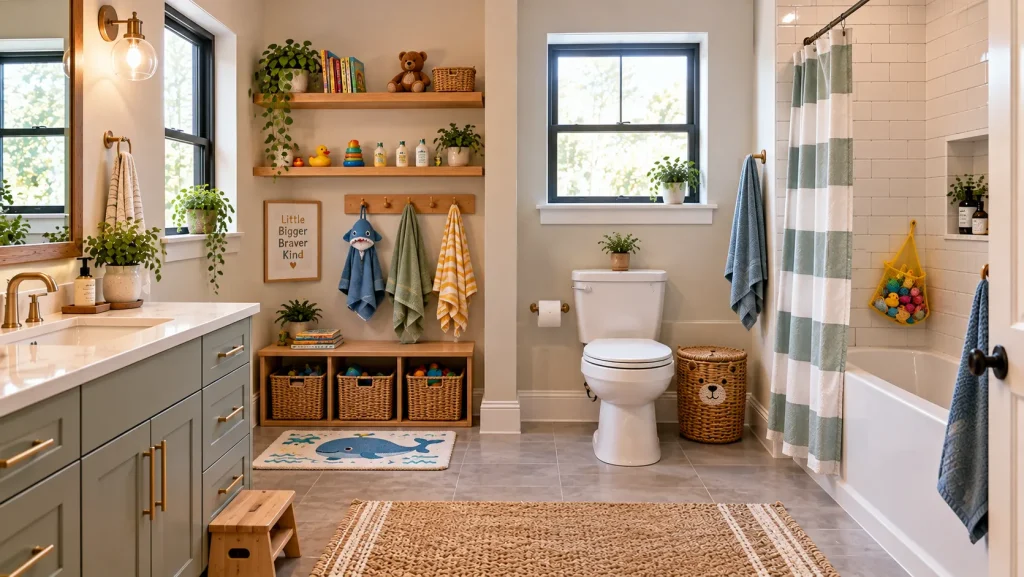
Make a Kid-Friendly Corner
Children can’t reach the sink, they spill toothpaste, and bath toys tend to pile up in the corner of the tub. Giving them their own setup helps them do more for themselves.
- A sturdy step stool with a non-slip top and base lets them reach the sink. Keep the floor around it dry, and choose one that doesn’t wobble
- A faucet extender, a simple plastic spout that clips onto the tap, brings the water closer to small hands
- A mesh bath toy bag on a securely mounted hook lets toys drain and dry instead of sitting in puddles. Suction hooks can work on smooth tile but may let go under a heavy, wet bag
- A low hook and a low basket give them their own towel and toothbrush spot
A folding step stool that hangs flat on the wall when not in use keeps the floor clear for everyone else.
Young children should always be supervised around water, especially in the bath. Keep medicines, razors, and cleaning products out of reach or locked away.
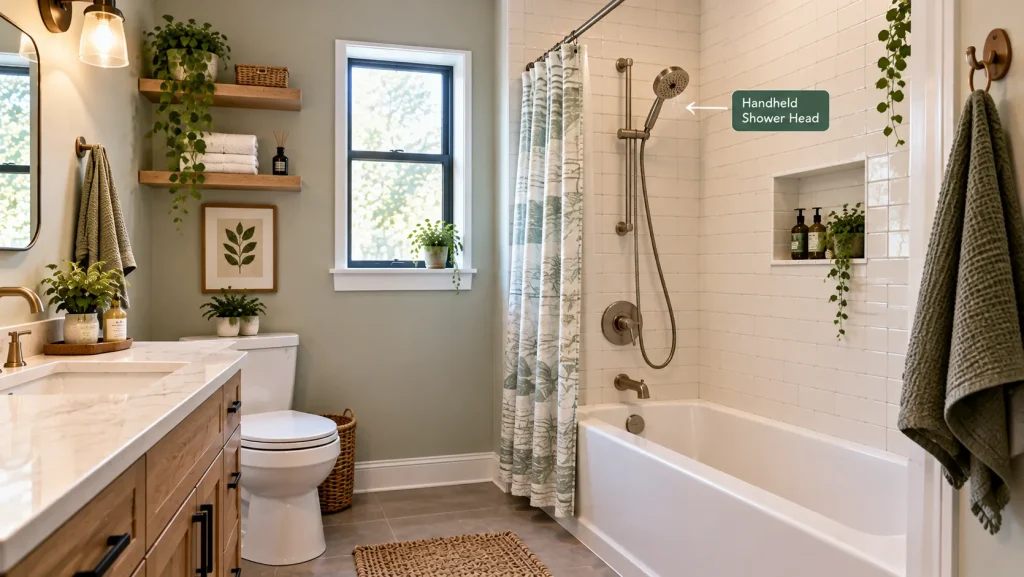
Swap to a Handheld Shower Head
A handheld shower head, on a hose with a holder or a slide bar, is one of the most useful upgrades for a family bathroom.
Rinsing children’s hair gets easier, since you can hold the spray low and away from their eyes. Someone sitting on a shower seat can wash comfortably, and cleaning the tub or shower walls takes half the effort.
Many handheld heads attach to the existing shower arm without any plumbing work. A slide bar lets you adjust the height for different family members.
If young children or older adults use the shower, it’s worth talking to a plumber about anti-scald or thermostatic valves, which help prevent sudden temperature spikes.
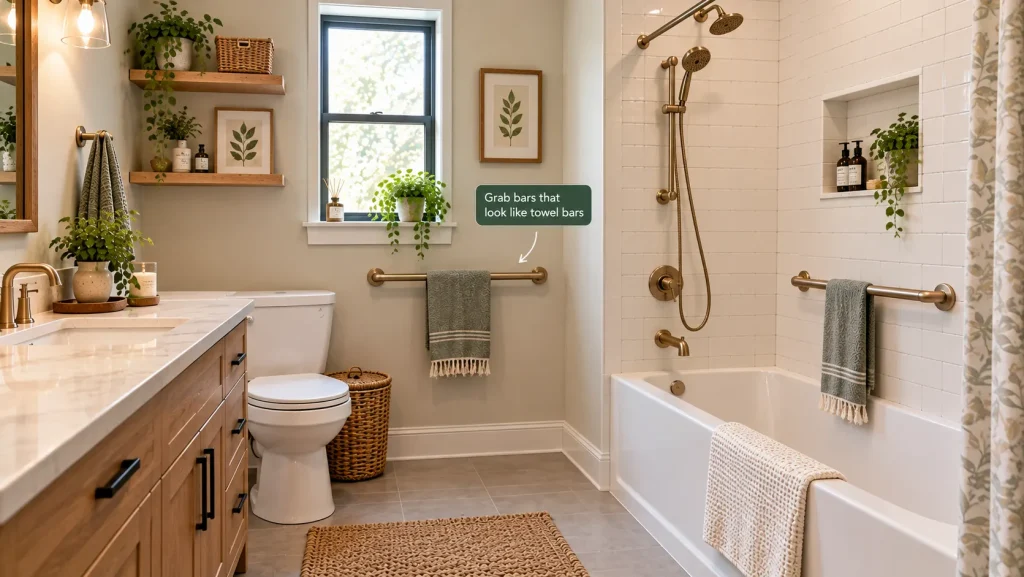
Install Grab Bars That Look Like Towel Bars
Grab bars aren’t only for older adults. Anyone recovering from an injury, pregnant, or simply stepping out of a slippery tub can benefit from something solid to hold.
The good news is that many grab bars now look much like regular towel bars, in finishes like brushed nickel, matte black, or brass. Some combine a grab bar with a shelf or toilet roll holder, so they blend into the room.
Common spots include beside the toilet, inside the shower, and along the tub wall. Stand in the bathroom and go through the motion of stepping in and out, then place the bar where your hand naturally reaches.
Installation matters most. A grab bar is only safe if it’s rated for the job and fixed securely into wall framing or proper blocking, using fixings rated for the load. Suction-cup bars may help with balance but shouldn’t be relied on to support someone’s full weight. If you’re unsure, have a professional install them.
A decorative towel bar is not a substitute, however sturdy it looks. Most aren’t designed to hold a person’s weight.
Give Wet Things Somewhere to Dry
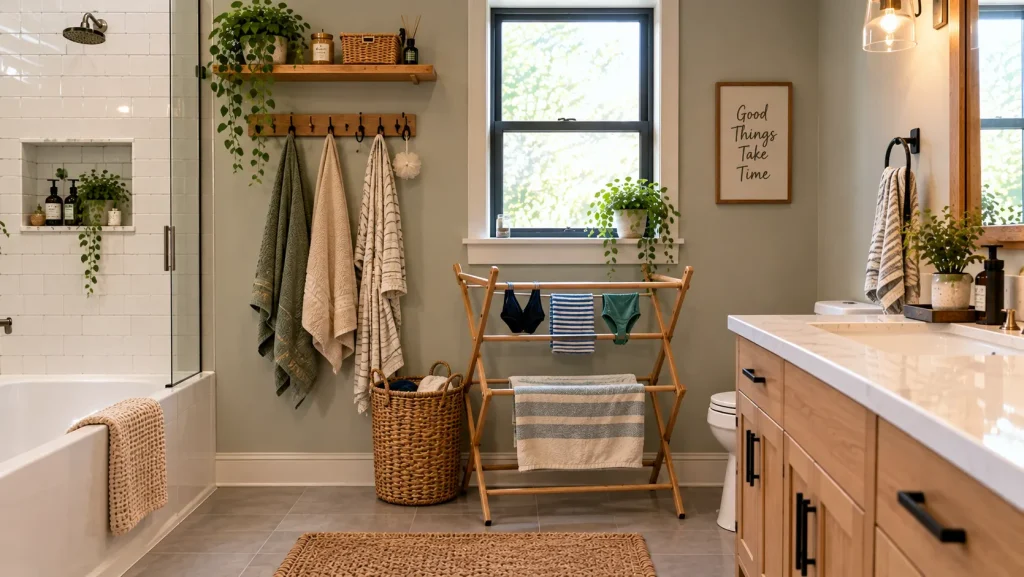
Damp towels, bath mats, and swimsuits are a common source of musty smells in a bathroom. If they can’t dry properly, they stay damp and can start to smell.
Ways to keep them drier:
- Hang towels spread out rather than bunched up on a single hook
- Add an over-door rack or a slim freestanding drying rack for extra hanging space
- Hang the bath mat over the edge of the tub or a rail after use instead of leaving it flat on the floor
- Wash bath mats regularly, following the care label
In a small bathroom with no room for another rail, an over-door hook rack can hold two or three towels spread out, which dries them much faster than stacking them on one hook.
Thick, plush towels take longest to dry, so lighter waffle-weave or cotton-linen towels can suit a bathroom without much airflow.
A heated towel rail is another option, keeping towels warm and drying them faster. Hardwired versions should be installed by a qualified electrician.
Upgrade the Bathroom Fan
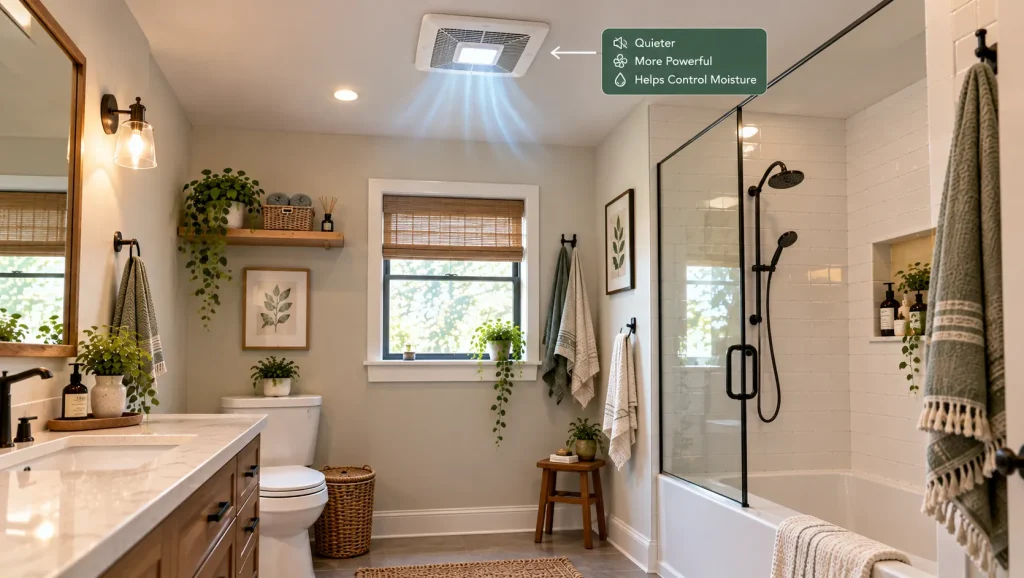
If the mirror stays fogged long after a shower, or you’re seeing mildew on the ceiling, the ventilation probably isn’t keeping up.
A replacement fan needs to be sized for your bathroom, since a small fan in a large room won’t move enough air. Useful features include:
- A timer, so the fan keeps running for a set time after you leave
- A humidity sensor, which switches on automatically when moisture rises
If your current fan is noisy, look for a replacement with a quieter sound rating, since a fan people actually leave on does far more good than a powerful one they switch off after a minute.
To check an existing fan, hold a single sheet of toilet paper near the cover while it runs. If the paper isn’t drawn toward it, airflow may be weak or the duct may be blocked.
Keep the fan running during showers and for a while afterward, and clean the cover now and then, since dust buildup reduces airflow.
Fan replacement involves wiring and, often, ducting to the outside, so it’s a job for a qualified electrician. Fans should vent outside rather than into an attic or ceiling space, where moisture can cause damage.
Keep a Cleaning Kit Where the Mess Happens
Bathrooms stay cleaner when cleaning takes less effort. If the supplies live in a cupboard in another room, quick wipe-downs rarely happen.
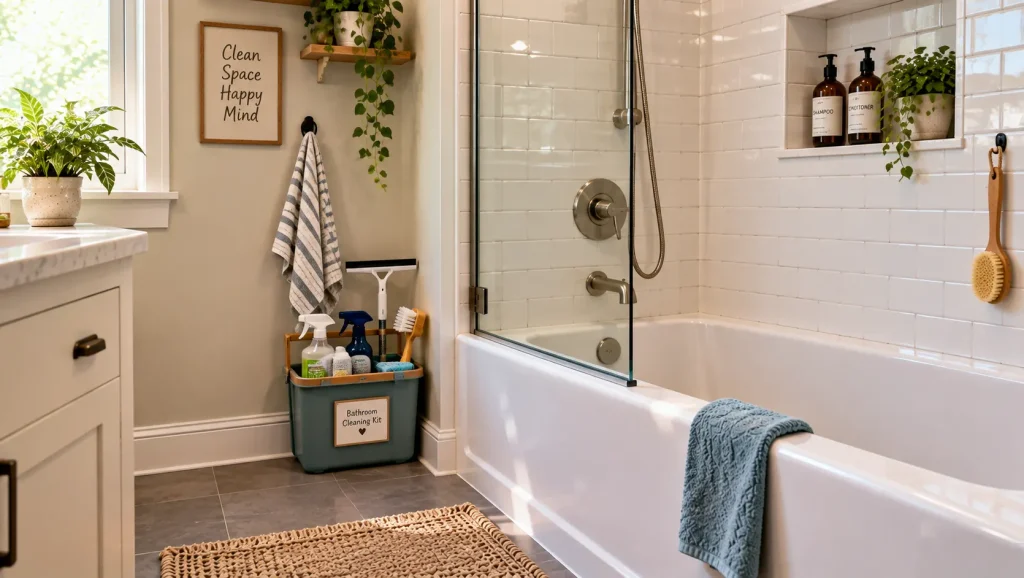
Keep a small cleaning kit in the bathroom itself:
- A squeegee hung in the shower, for a quick swipe of the glass or tiles after each use
- A microfiber cloth for the mirror and faucet
- A gentle all-purpose cleaner suitable for your surfaces
- A toilet brush in a covered holder
Thirty seconds with the squeegee and cloth each morning can mean far less scrubbing at the weekend. Once a week, a quick go at the drain cover, grout lines, and the base of the toilet stops buildup from turning into a big job.
Store cleaning products out of children’s reach, and never mix cleaners, especially bleach with ammonia or acids, since the combination can release harmful fumes.
Keep Spare Rolls and Towels in Sight
Running out of toilet paper at the wrong moment is a classic household frustration, especially for guests who don’t want to go searching through cupboards.
Store spares where they’re easy to see and reach. Options include:
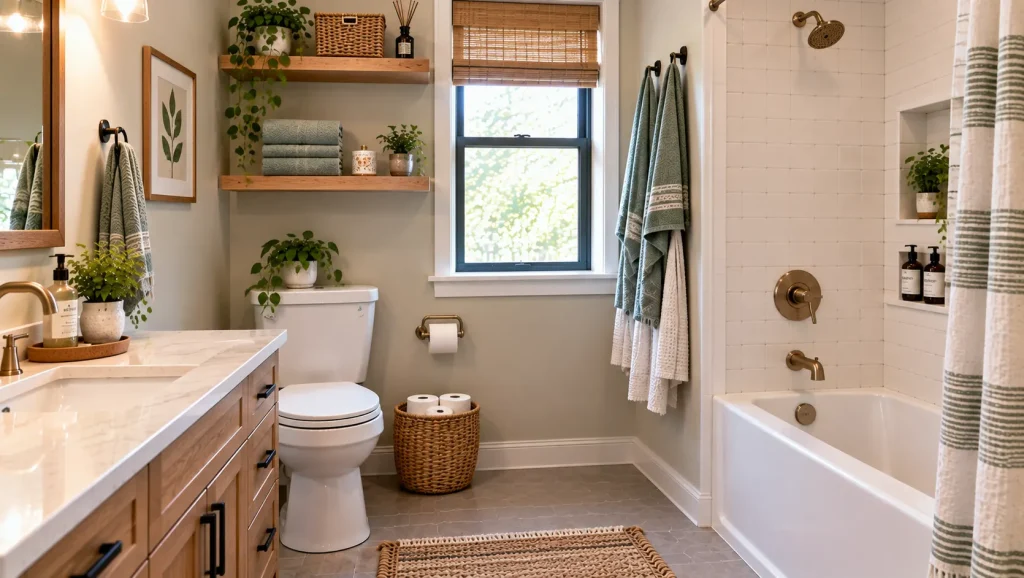
- A basket on the floor next to the toilet
- A narrow freestanding stand that holds a few rolls
- Open shelving over the toilet, with rolls and rolled towels stacked neatly
- A ladder shelf leaning against the wall, holding folded towels
Over-toilet shelving should be secured to the wall if it’s tall or freestanding, so it can’t tip.
Seeing the spare supply at a glance also tells you when it’s time to restock, before anyone is caught short. Adding toilet paper to the shopping list when the basket drops to two rolls keeps you from running out.
Light the Way at Night
Late-night bathroom trips often mean flicking on a bright overhead light that wakes you up fully, or stumbling around in the dark.
A small motion-sensor night light, placed low near the floor, solves this. It turns on as you walk in, gives just enough light to see, and switches off by itself.
Battery-powered or rechargeable versions can go almost anywhere. Plug-in versions are a different matter. Bathroom outlets are often subject to specific electrical rules and protection requirements, so distance from water alone isn’t the whole story. If you’re unsure whether an outlet is suitable, ask an electrician, or stick with a battery model.
A small rechargeable light on the side of the vanity near the floor can light the path to the toilet without lighting up the whole room. Models with adjustable brightness help when family members prefer different levels.
A low, warm glow is usually more comfortable at night than bright white light, and it helps children, older family members, and guests find their way safely.

Set Up a Guest Basket
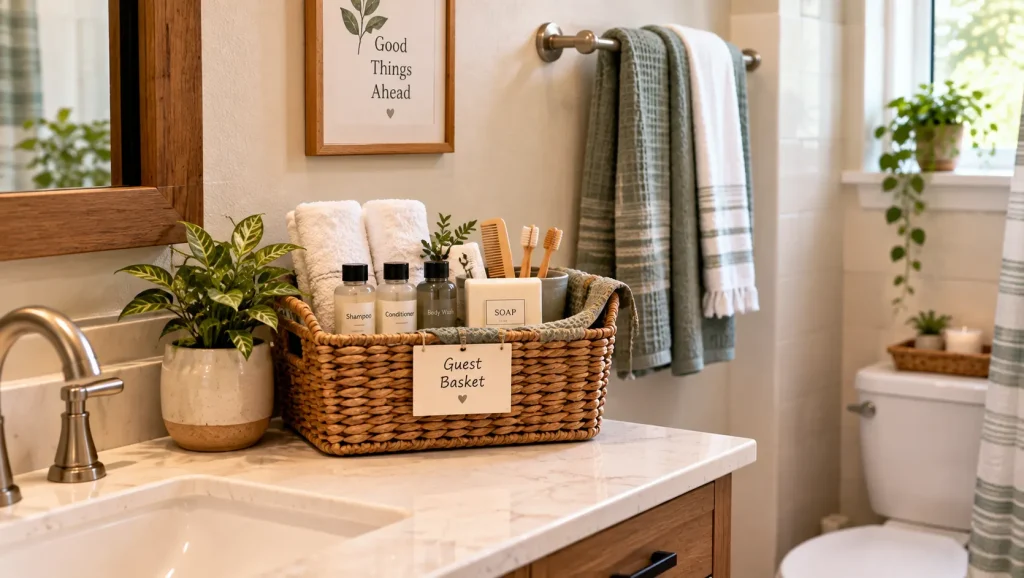
When friends or family stay over, a small basket of essentials saves them from having to ask for things.
It might include:
- Spare toothbrushes, still in their packaging
- Travel-size toothpaste, shampoo, and body wash
- A clean hand towel and washcloth
- Cotton pads, hair ties, and a few plasters
In a shared family bathroom, a guest basket also stops visitors from borrowing someone else’s towel or products by mistake.
Keep the basket somewhere visible, like on the counter or a shelf, and point it out when guests arrive. Restock it after each visit so it’s ready next time.
Try This Quick Bathroom Check Tonight
Before buying anything, spend five minutes in your bathroom and notice:
- Where do towels end up after a shower?
- Is there a clear spot for each person’s daily items?
- Does the mirror stay fogged long after a shower?
- Can a child or guest find what they need without asking?
- Is there enough light to find your way at night without the main light?
Your answers will point you to the two or three bathroom ideas worth starting with.
Mistakes That Make Shared Bathrooms Harder
Buying storage before decluttering. Old products, empty bottles, and things nobody uses take up space. Clear them out first, then decide what storage you actually need.
Storing medicines in the bathroom by default. Heat and humidity from showers can affect some medicines. Check the storage instructions on the label, and keep all medicines out of children’s reach, which may mean a high cupboard in another room.
Overloading adhesive hooks. They’re handy for light items, but a heavy wet towel or bag can pull them off the wall, often taking paint with it. Match the hook to the weight.
Using the wrong fixings. Hooks, shelves, and especially grab bars need fixings suited to the wall and the load. Something that pulls out of the wall when you lean on it is a real safety risk.
Questions About Bathroom Ideas
How can I make a shared bathroom less stressful in the morning?
Give each person their own zone or portable caddy, add enough hooks, and consider staggering shower times. Keeping daily items separate stops the hunting and arguing.
Which bathroom ideas work for renters?
Portable caddies, adhesive hooks for light items, freestanding storage, a handheld shower head that attaches to the existing arm, and battery night lights are all renter-friendly. Ask your landlord before drilling or installing fixed items like grab bars.
How do I stop my bathroom smelling musty?
Improve ventilation, let towels and bath mats dry fully, wash them regularly, and clean any visible mildew promptly. If smells persist, check for hidden leaks or damp.
Are grab bars worth adding if no one needs them yet?
Many people add them during a remodel, since installing proper blocking in the walls is easier then. Styles that double as towel bars or shelves look like ordinary bathroom fittings, so they don’t make the room feel clinical.
Start Where It Hurts Most
You don’t need to try all of these bathroom ideas at once. Pick the moment that causes the most friction in your home, whether that’s getting everyone out the door, bath time with the kids, or guests staying over, and start with the one or two ideas that fix it. More hooks and a caddy per person are often the cheapest places to begin.