
Sit Pretty: 8 Living Room Chair Ideas That Look Good and Feel Even Better
You know the corner. It’s the one next to the window or beside the bookshelf, and it’s been empty since you moved in. Maybe there’s a plant there, or a basket of blankets, or nothing at all.
Every time you look at it, you think, “A chair would be nice there.” Then you start browsing, find 400 options, and close the tab.
Choosing a chair feels like it should be easy, and most living room chair ideas online make it look effortless. But a chair has to fit the space, match the sofa, suit the way you sit, and still look good when nobody’s in it. That’s a lot to ask from one piece of furniture.
This guide makes it simpler. Below you’ll find eight living room chair ideas, each with a different job, from cozy reading spots to small-space solutions. You’ll also get measuring tips, fabric advice, and a few mistakes worth skipping.
Three Quick Checks Before You Shop
Do these before you fall in love with anything online.
Measure the floor space. Use painter’s tape to mark the chair’s footprint on the floor. If the chair sits beside a main walkway, keep about 30 to 36 inches (75 to 90 cm) clear for that path. The other sides can be much closer to walls or tables.
Check the seat height. Most sofas have a seat height of around 17 to 19 inches (43 to 48 cm). A chair at a similar height looks and feels more natural next to it.
Think about who will sit there. A tall person reading for hours needs something very different from a guest who perches for 10 minutes with a cup of tea.
Once you know those three things, check a few details on the product page too. Look at seat depth (around 20 to 22 inches, or 51 to 56 cm, suits many people), back support, weight capacity, whether covers are removable and washable, and whether assembly is needed. For online orders, read the return policy before buying, since some retailers charge for furniture returns.
For curling up and relaxing (three ideas):
These are the comfortable accent chairs you sink into at the end of a long day.
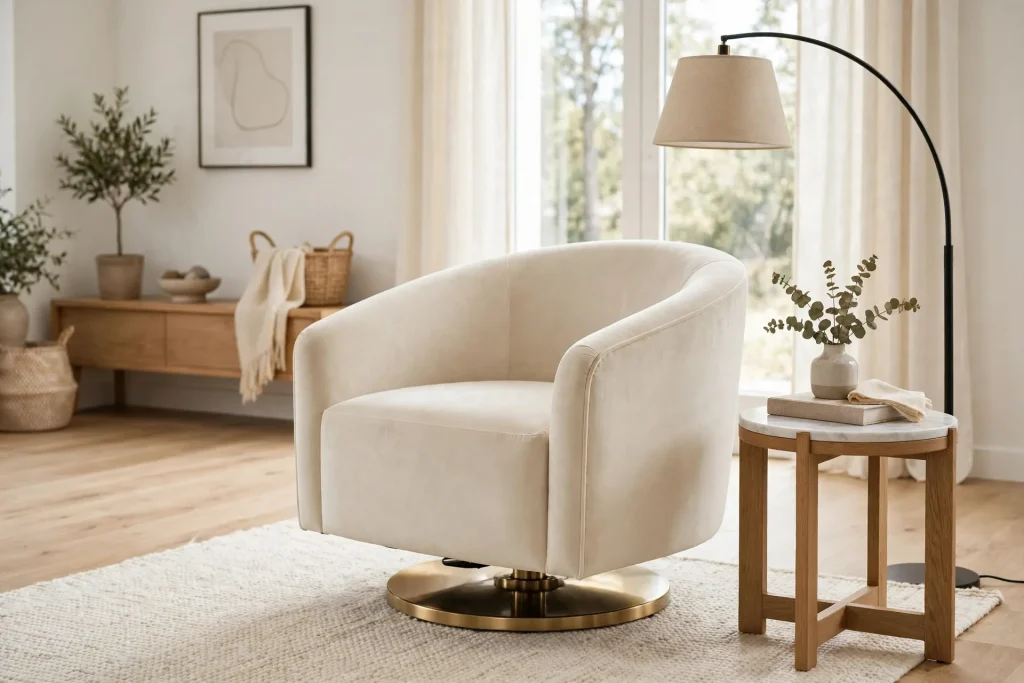
The Swivel Barrel Chair
Barrel chairs have a rounded back that wraps around you like a hug. Add a swivel base, and you’ve got one of the most practical chairs for open living spaces.
Why swivel? Because you can turn toward the TV, then spin to chat with someone in the kitchen, all without moving furniture.
Where it works best:
- Open-plan rooms where the living area faces more than one direction
- Conversation areas with a sofa on one side
- Corners where a fixed chair would feel stuck
Look for a low-profile swivel base that sits close to the floor. Some also rock gently, which is lovely, though younger children may treat it like a ride. If you have little ones, a model with a smooth, controlled swivel is a safer bet.
The Chair-and-a-Half
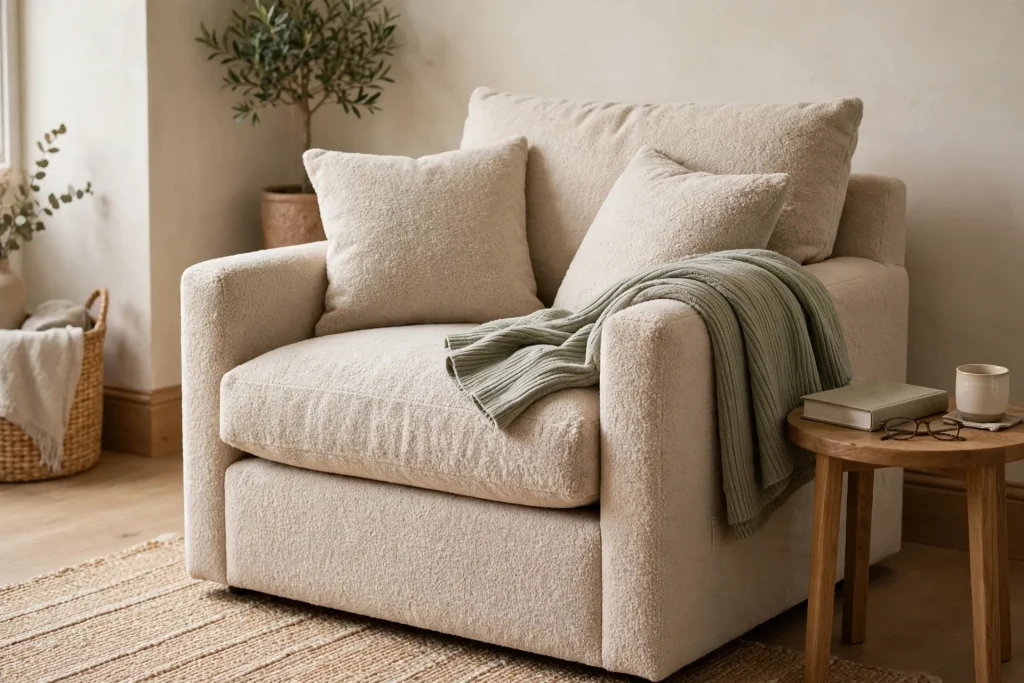
Sometimes a regular armchair just isn’t big enough. A chair-and-a-half is wider than a standard armchair, often somewhere around 50 to 60 inches (127 to 152 cm), though sizes vary by brand and design, so you can tuck your legs up, share it with a child, or curl up with a dog.
It’s the seat kids pile into for a movie and adults claim for Sunday naps.
Picture one in soft gray linen, with a chunky knit throw over the arm and a small round side table nearby. It feels like a mini sofa without taking over the room.
Look for firm, high-density foam cushions with a soft topper. They keep their shape better than very soft fillings, which can sag in the middle after a year or two of daily use.
A small warning: it takes up real floor space. In a compact living room, it may work better as the main seat opposite a loveseat, rather than as an extra chair squeezed beside a full sofa.
The Modern Rocking Chair
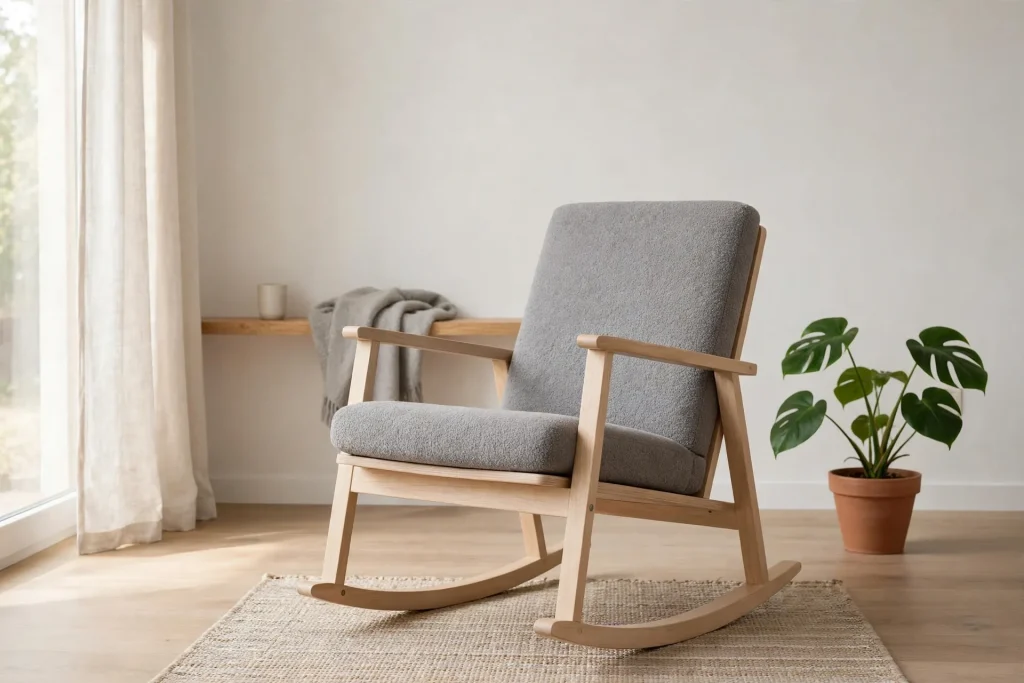
Rocking chairs aren’t only for nurseries or porches anymore. Modern versions come in clean wood frames, upholstered seats, and even swivel-glider combinations.
They’re soothing. The gentle motion makes them great for winding down, reading, or holding a sleepy baby.
Here are a few styles worth looking at:
- Wooden rockers with slim spindles feel classic and light
- Upholstered gliders move smoothly on a track and stay quieter on hard floors
- Mid-century rockers with molded seats add a retro touch
Leave enough space behind and in front of a rocker so it doesn’t bump walls or tables. On hardwood, felt pads or a rug underneath help protect the floor.
For reading and quiet corners (two ideas):
Both of these chairs create a little retreat, even in a busy room.
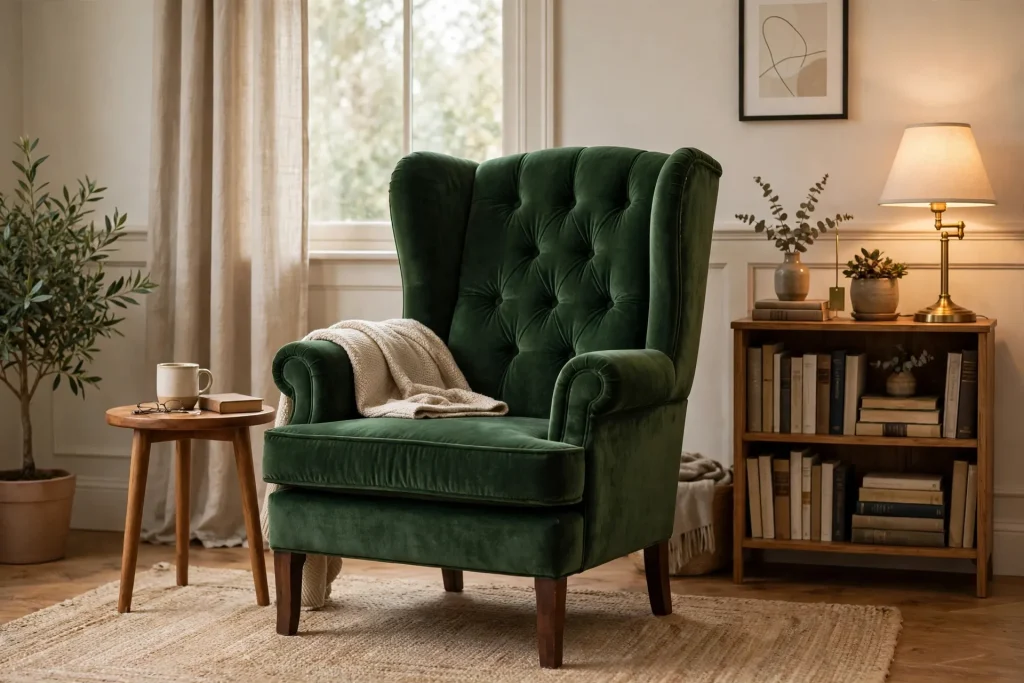
The Wingback Reading Chair
The wingback is a classic for a reason. Its tall back supports your head, and the “wings” on either side block drafts and make the chair feel tucked away.
The high back means your head has support during a long chapter, and the wings help block out a noisy room.
Traditional wingbacks come in floral prints or leather with rolled arms. Modern versions are slimmer, with tapered legs and fabrics like velvet, tweed, or solid cotton.
How to style it:
Place it at an angle in a corner, with a floor lamp behind one shoulder and a small table on the other side for a mug. Add a footstool if you like to stretch out.
If your living room is small, choose a wingback with a narrow frame and visible legs. Raised legs let light pass underneath, so the chair feels lighter even though it’s tall.
The Leather Sling Chair
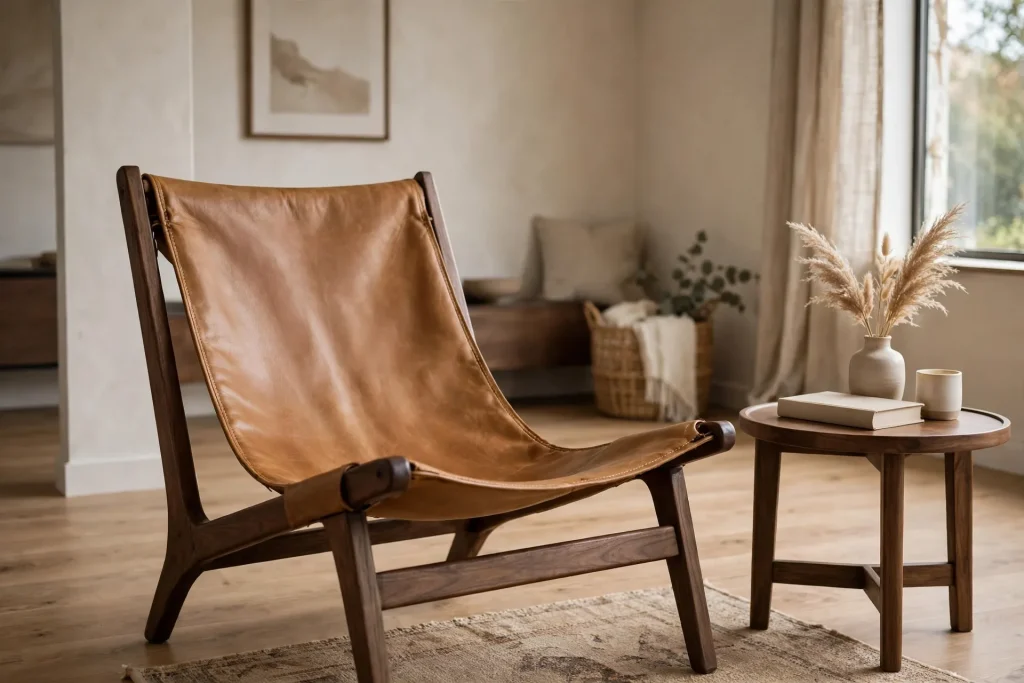
A sling chair has a frame, often wood or metal, with leather or canvas stretched across it to form the seat and back. You’ll often see these called safari chairs. The butterfly chair is one famous sling design, with a cover stretched over a folding metal frame, but not every sling chair is a butterfly chair.
It’s relaxed, a little bohemian, and very easy to move around.
Leather sling chairs in cognac or tan look especially warm next to linen sofas, wool rugs, and plants. Canvas versions in cream or olive feel more casual.
Good to know: sling chairs sit lower and lean back further than a typical armchair. They’re wonderful for lounging but can be harder to get out of, so they may not suit everyone, especially older relatives who need a firmer push-off.
Real leather softens and develops a patina over time. Wipe it with a dry or slightly damp cloth and use a leather conditioner now and then.
For small spaces and natural style (three ideas):
These small living room chair ideas save floor space while adding shape and texture.
A Pair of Slipper Chairs
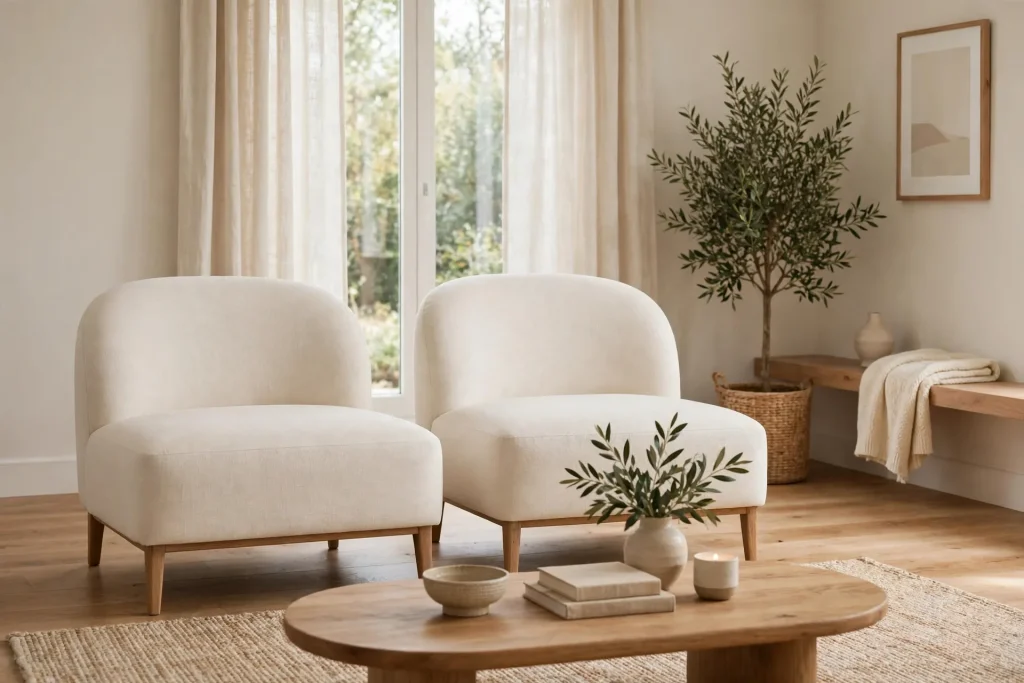
Slipper chairs are armless, with a low seat and a fairly upright back. Because there are no arms, they take up less width than most armchairs.
That makes them perfect for small living rooms.
Two slipper chairs side by side, facing a sofa, create a balanced, conversation-friendly layout. You can tuck them near a window, at the ends of a coffee table, or on either side of a fireplace.
Styling ideas:
- Choose a bold pattern, like stripes or a small geometric print, to add personality
- Keep them in a solid color and add printed cushions instead
- Pick slim, tapered legs to keep the look airy
Since they’re armless, slipper chairs are easy to pull closer when guests arrive. They also work well in dining or bedroom corners later if you move.
The Curved Bouclé Accent Chair
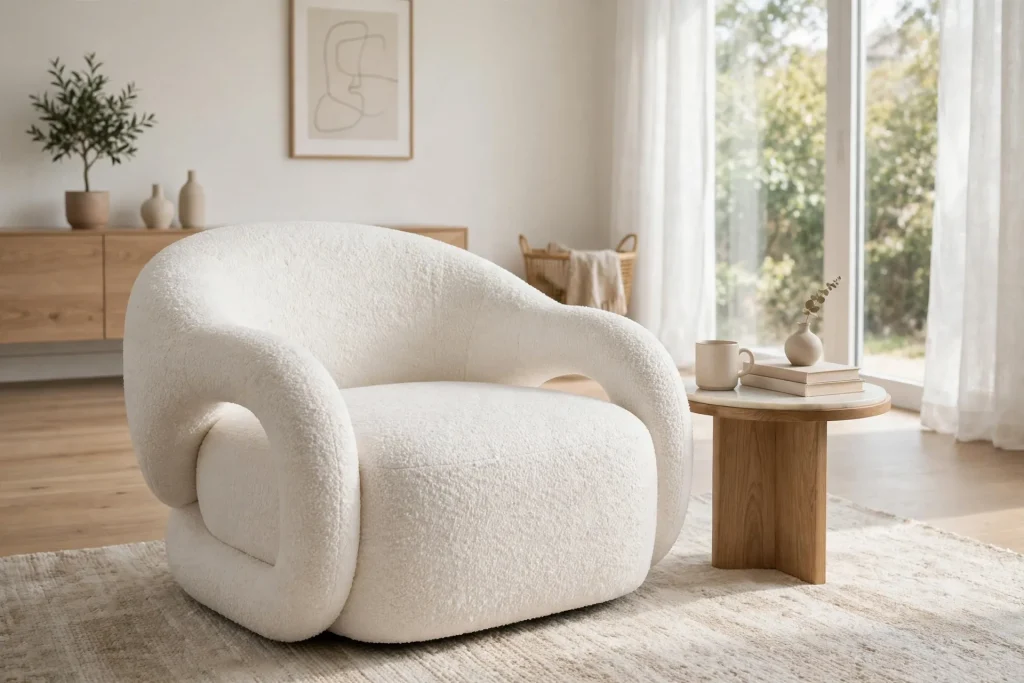
Bouclé is a looped, nubby fabric that looks soft and cozy. On a curved chair with rounded arms, it feels modern and inviting.
This chair is more about shape and texture than size. It’s a great way to soften a room full of straight lines, like square sofas, rectangular rugs, and boxy shelves.
Colors that work well:
- Creamy white or oatmeal for a calm, airy feel
- Warm caramel or rust for something richer
- Sage green or soft gray for a gentle pop
Bouclé can snag on pet claws and may show dirt, especially in light colors. If you have pets or young children, a performance bouclé or a darker shade may be easier to live with. Performance fabrics vary, though, so check the manufacturer’s cleaning instructions and abrasion rating before buying.
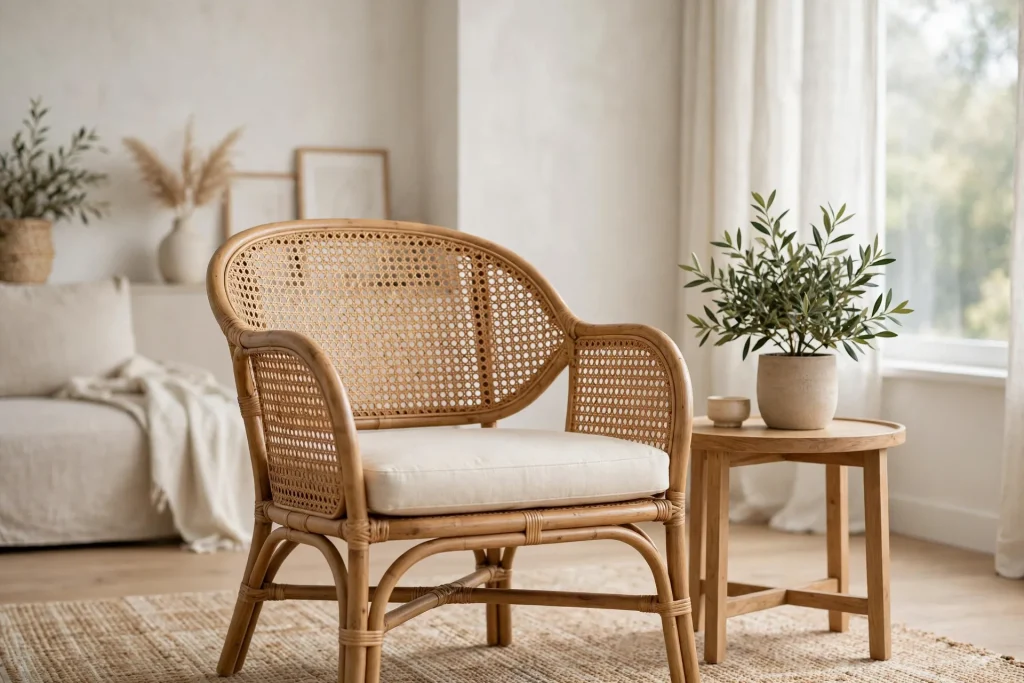
The Rattan or Cane Accent Chair
Rattan and cane chairs bring natural texture and a relaxed, airy feel. They suit everything from coastal and boho rooms to modern spaces that need some warmth.
Rattan comes from the stems of a climbing palm. It can be used whole for sturdy frames, split into strips, or woven. Cane is the thin outer skin of rattan, and it’s most often woven into seat panels or backs.
Why they work in living rooms:
- Open weaves let light and views pass through, so the chair doesn’t block a corner visually
- They pair beautifully with plants and linen
- Adding a cushion makes them comfortable for longer sitting
Keep them out of direct, harsh sunlight for long periods, which can dry out natural fibers. A light dusting and an occasional wipe with a damp cloth keep them looking fresh.
Where to Put Your New Chair
The same chair can feel completely different depending on where it sits.
By a window: natural light makes this the best spot for reading chairs like a wingback or rattan chair.
Facing the sofa: a pair of slipper chairs or swivel chairs across from the sofa creates an easy conversation area.
Beside the fireplace: if there’s enough space and safe clearance from the hearth, angled chairs on either side frame the fireplace and make it the focal point.
Floating in an open room: a swivel chair placed at the edge of a rug can mark where the living area ends and the dining space begins.
Many living room chair ideas fail simply because the chair is pushed into the wrong spot. Try a few positions before deciding.
Making a Chair Work With Your Sofa
A chair doesn’t need to match your sofa. In fact, a little contrast usually looks better.
Change one thing at a time. If your sofa is a smooth gray fabric, try a chair in a textured fabric like bouclé, or a different material like leather or rattan.
Keep the heights close. As mentioned earlier, similar seat heights make the room feel balanced and comfortable.
Repeat a color somewhere. If your chair is rust, add a rust cushion to the sofa or a rust-toned vase on a shelf. That small echo ties everything together.
Mind the scale. A tiny chair next to a huge sectional can look lost. A giant chair next to a small loveseat can feel heavy.
Choosing the Right Fabric
The fabric affects how a chair looks, feels, and lasts.
Performance fabric: great for kids, pets, and busy homes, though it can feel less natural than linen.
Velvet: rich color and softness, but it shows marks and pressure lines.
Linen: relaxed and airy, but it wrinkles easily.
Leather: often durable, though care depends on the type and finish. Protected leather wipes clean easily, while aniline leather stains more readily. It can feel cool in winter and warm in summer.
Bouclé: cozy and modern, but it snags and shows dirt more than flat weaves.
If you’re unsure, ask for a fabric sample and keep it in the room for a few days. Look at it in daylight and at night under your lamps.
A Real-Life Room Example
Imagine a small living room with a cream sofa, a jute rug, and a TV on one wall. There’s an empty corner near the window and not much floor space.
The challenge: add seating without making the room feel crowded.
A smart fix: a rattan accent chair with a sage green cushion goes in the corner, angled slightly toward the sofa so it joins the conversation.
It sits a few inches in front of the window rather than pressed against it, so curtains still open and close. The chair faces into the room, leaving the path to the door clear. A slim floor lamp tucks behind it, and a small round side table sits on the side away from the walkway.
The corner becomes a reading nook instead of dead space, without blocking light or traffic.
Chair Mistakes Worth Avoiding
Buying without sitting in it. Comfort is personal. If you’re shopping online, check the seat depth and height, and read the return policy.
Ignoring the walkway. A chair that blocks a door or path quickly becomes annoying.
Choosing a chair only for looks. If it’s uncomfortable, it’ll end up as a place to pile laundry.
Pushing every chair against the wall. Pulling chairs slightly inward usually creates a cozier, more connected room.
Your Living Room Chair Questions, Answered
What type of chair is best for a small living room?
Armless slipper chairs, rattan or cane chairs, and modern living room chairs with slim frames and raised legs usually work best, since they look lighter and take up less width.
Should my accent chair match my sofa?
It doesn’t have to. Contrast in texture or color often looks better. Just keep the seat heights and overall scale fairly similar.
How many chairs should a living room have?
It depends on the room size and how you use it. Many living rooms have one sofa plus one or two chairs, which offers plenty of seating without feeling cramped.
What is the most comfortable living room chair?
Comfort depends on your body and habits. Many people find chair-and-a-half designs, wingbacks, and well-padded swivel chairs especially comfortable for long sitting.
How far should a chair be from the sofa?
Aim to keep chairs close enough for easy conversation, often within about 8 feet (2.4 meters), with a clear walking path between pieces.
Pick the Chair You’ll Actually Sit In
The best living room chair ideas aren’t just about style. They’re about finding a seat that fits your space, your sofa, and the way you really live.
Start with the empty corner or awkward gap that’s bothering you. Measure it, think about who’ll use it, and choose the chair that suits that job. Before long, that forgotten spot might become your favorite place in the house.