
Pretty Enough to Notice: 8 Kitchen Decoration Ideas for Everyday Kitchens
Kitchens are hard to decorate. Not because they lack space, but because of everything that happens in them.
There’s steam from the kettle, splatter from the pan, and sticky fingers on the cupboard doors. Anything you add has to cope with heat, water, and constant use, and it can’t get in the way when you’re rushing to make dinner.
That’s why many kitchens end up with very little decoration, or with decorative pieces that get packed away after a few weeks.
The kitchen decoration ideas below were chosen with that in mind. None of them involve replacing cabinets or tearing out counters. Most are simple updates you can make over a weekend, while a few may take longer depending on what you choose. All of them are meant to look good on a busy Tuesday night, not just in photos.
Three Rules Before You Decorate a Kitchen
If it can’t be wiped, keep it away from the stove. Fabric, paper, and natural fibers belong on the far side of the room, away from heat and splatter.
If you use it daily, it can be decor. A good-looking olive oil bottle, a wooden spoon crock, or a nice dish soap dispenser can do double duty.
Leave some counter empty. A clear stretch of counter is what makes a kitchen look calm and usable. Try to keep at least one prep area completely bare.
Keep those three rules in mind, and you’ll have an easier time choosing ideas that suit your kitchen.
Mix Your Metals With New Hardware and a Faucet
Good for: owners and renters (if you keep the original hardware)
Watch out for: handle sizes that don’t match the existing holes
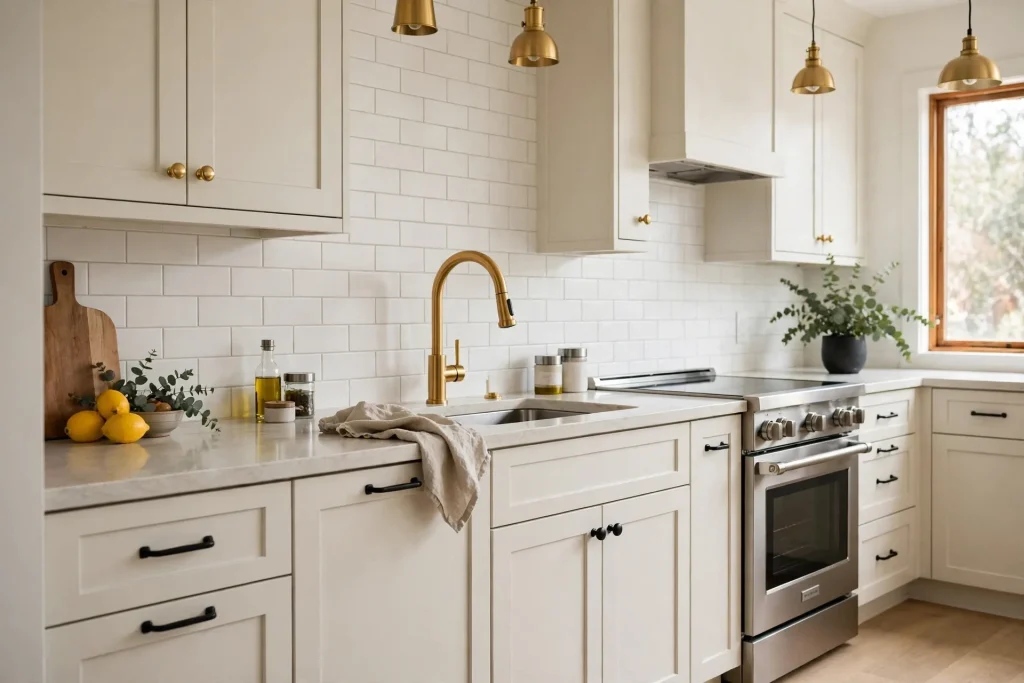
Swapping cabinet handles and knobs is one of the quickest ways to change the whole personality of a kitchen. Brass feels warm and classic. Matte black looks modern and crisp. Brushed nickel stays quiet and timeless.
Many designers like to mix two finishes, rather than matching everything. For example, brass cabinet pulls with a matte black faucet, or brushed nickel knobs with an aged brass light fitting.
A simple way to mix metals:
- Choose one main finish for most of the hardware
- Pick a second finish for one or two bigger pieces, like the faucet or pendant
- Repeat each finish at least twice so it looks intentional
Before buying, measure the distance between the screw holes on your current handles. Choosing new pulls with the same spacing saves you from drilling or filling holes.
Replacing a faucet is a more involved project. Before choosing one, check the number of mounting holes, your sink setup, and the water connections. If you’re unsure, ask a qualified plumber to confirm compatibility and handle the installation.
Renters can store the original hardware in a labeled bag and swap it back before moving out.
Lay a Washable Runner
Good for: galley kitchens, long walkways, cold floors
Watch out for: slipping, and anything that can’t be cleaned
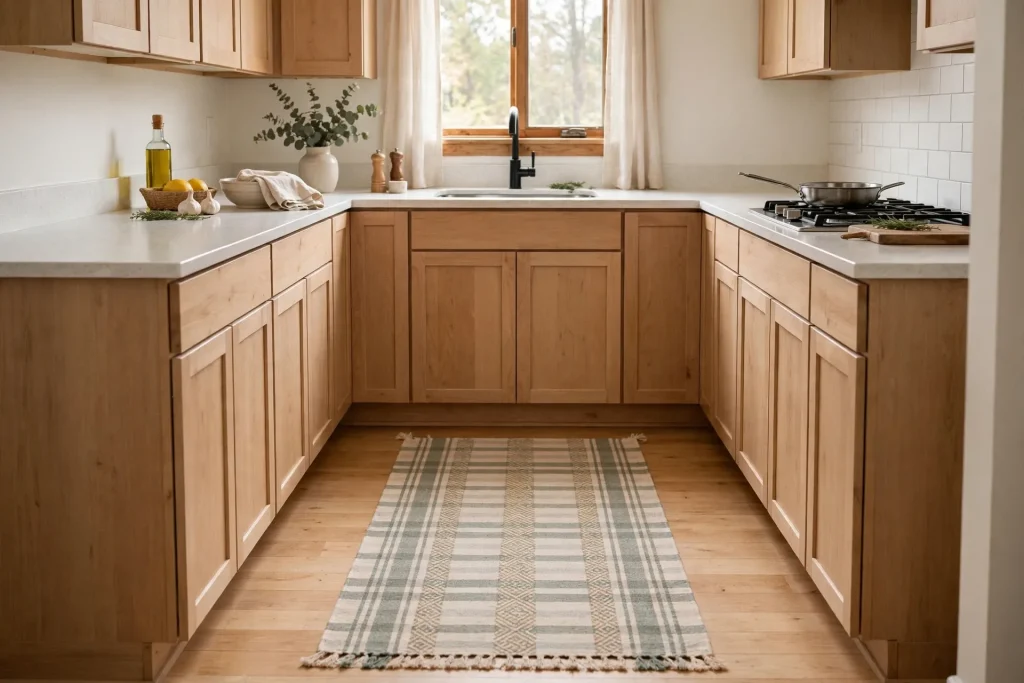
A runner adds color, pattern, and softness under your feet while you cook. It also helps hide wear on older floors.
For kitchens, washable rugs are usually the most practical. Flat-weave and low-pile styles are easier to clean than shaggy ones, and they’re less likely to catch your feet.
Faded vintage-style patterns, like rust and blue, look lovely in warm kitchens. Simple stripes suit modern or Scandinavian spaces.
Check the care label before buying. Some washable rugs still need a specific washing temperature or air-drying, and the rug pad should suit the floor underneath.
Always place a non-slip rug pad underneath, and keep the runner away from where it could catch on the oven door. Check that the edges lie flat so nobody trips while carrying something hot.
Picture a narrow galley kitchen with white cabinets and gray floors. A washable runner in faded terracotta and navy runs down the middle. Suddenly the space feels warmer, and the long walk to the fridge doesn’t feel so plain.
Hang Café Curtains or a Patterned Roman Shade
Good for: windows facing neighbors, or kitchens that need a pop of pattern
Watch out for: fabric near the stove
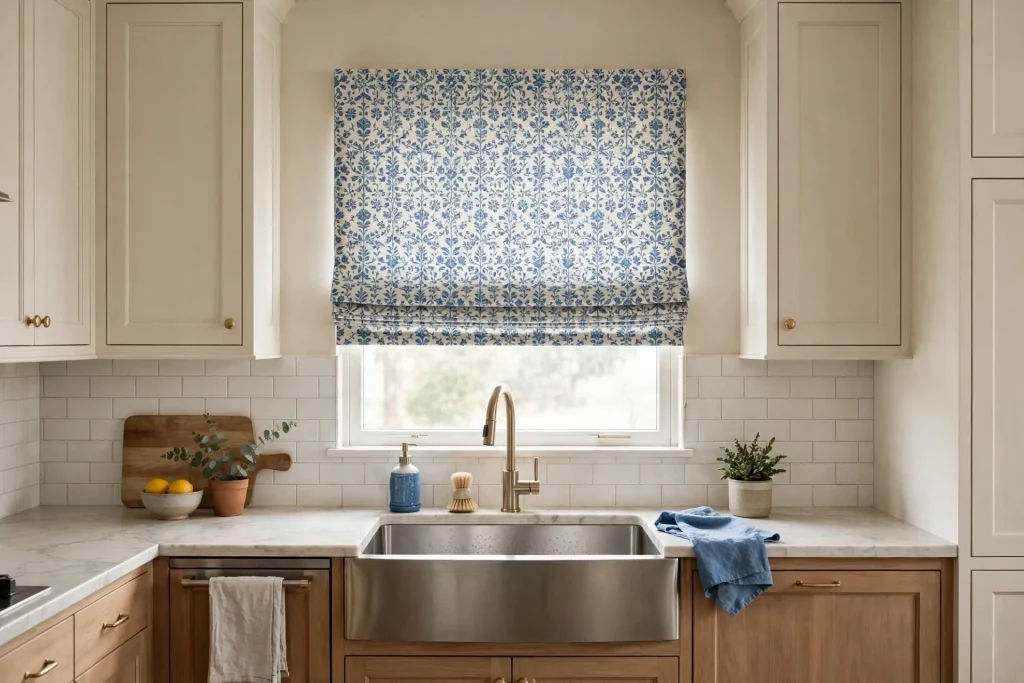
Windows are often left bare in kitchens, but a simple window treatment can make the room feel finished.
Café curtains cover just the bottom half of the window. They give privacy while still letting in plenty of light. Gingham, small checks, stripes, and cotton eyelet all suit the look.
Roman shades fold up neatly when raised and feel a little more tailored. A patterned fabric adds interest without taking up any wall space.
Keep curtains and shades well away from the stove and toaster, since fabric can catch fire. Kitchen curtains collect grease over time, so choose washable cotton or cotton-blend fabrics for easier care. Linen can also work, but check its care instructions first.
For homes with young children, choose cordless shades or tie cords up out of reach.
Skirt the Sink or Open Shelves With Fabric
Good for: cottage, farmhouse, or vintage-inspired kitchens
Watch out for: areas that get wet often
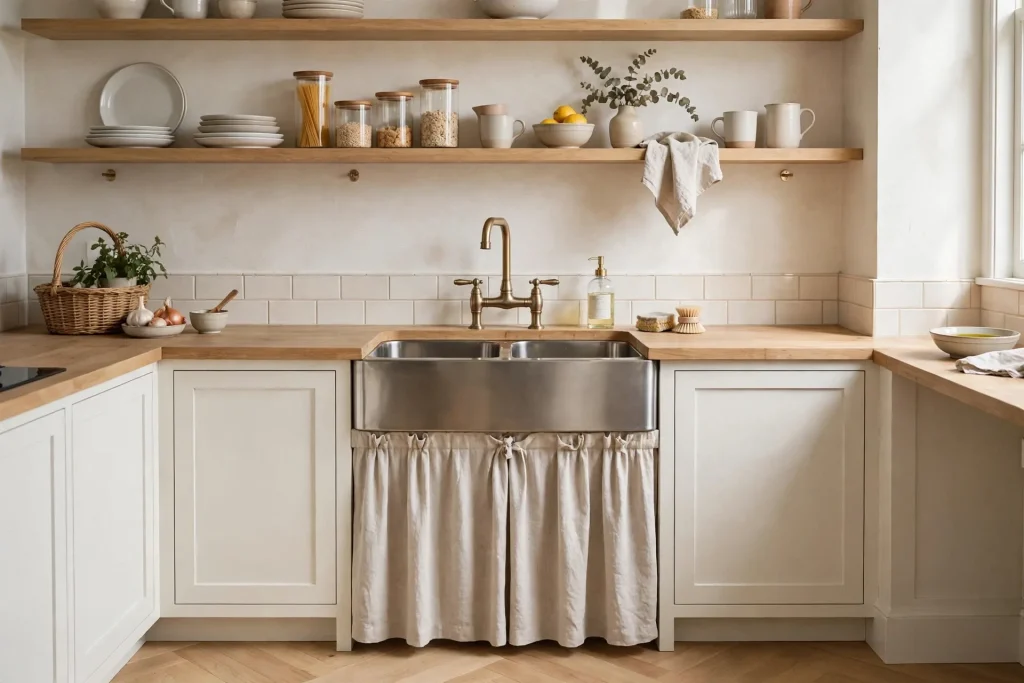
A fabric skirt under the sink, or across an open lower shelf, is a charming way to hide clutter and add softness. It’s a classic cottage kitchen detail that has made a big comeback.
Use a simple tension rod or a slim curtain wire, and hang a gathered or pleated panel of washable fabric. Ticking stripes, small florals, and soft checks all work beautifully.
It’s especially useful if you’ve removed cabinet doors, or if you have open shelving below the counter that you’d rather keep hidden.
Leave a small gap at the bottom so the fabric doesn’t touch the floor or get wet from mopping, and choose a fabric you can throw in the washing machine. Under the sink, make sure the panel pulls aside easily so you can check the pipes, reach shut-off valves, and spot leaks. Keep cleaning products behind a secure door or up high instead, especially if children or pets are around, since a fabric skirt doesn’t stop curious hands.
Bring In a Freestanding Vintage Piece
Good for: kitchens with a spare corner or wall
Watch out for: tall pieces that could tip
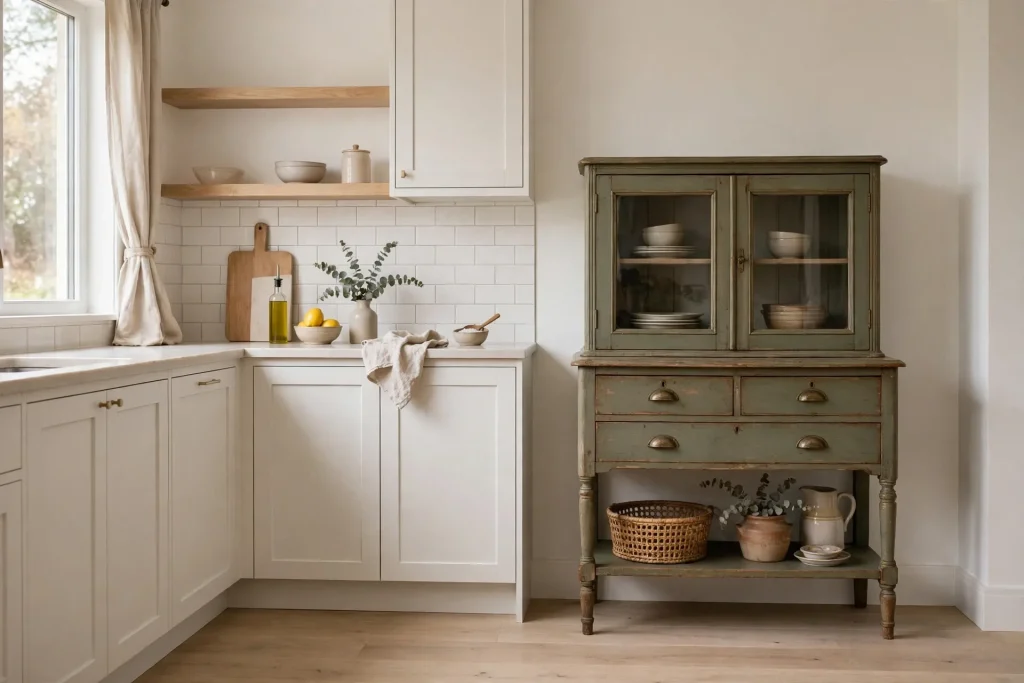
A freestanding piece of furniture, like a vintage hutch, a painted dresser, or a baker’s rack, adds instant personality. It makes the kitchen feel collected over time, rather than fitted all at once.
It’s also practical. A hutch can hold everyday dishes, a dresser can store linens and serving pieces, and a baker’s rack can hold cookbooks, bowls, and baskets.
Look at secondhand shops and online marketplaces for good finds. A vintage piece with a softly distressed green or cream finish can look beautiful in a white kitchen.
For example, imagine a small kitchen with a narrow wall next to the back door. A tall, sage-painted hutch fills the space, with plates on top and table linens in the drawers. It becomes the first thing people notice.
Tall freestanding pieces should be anchored to the wall to prevent tipping. If a piece has an old painted finish, don’t sand, scrape, or strip it until you know whether the paint contains lead. Use a testing kit, a testing service, or a professional if you’re unsure.
Corral the Counter With Trays and Crocks
Good for: every kitchen, especially busy ones
Watch out for: too many small items
Countertops collect clutter fast. Oil bottles, salt, phone chargers, keys, and that one lemon that’s been there for days.
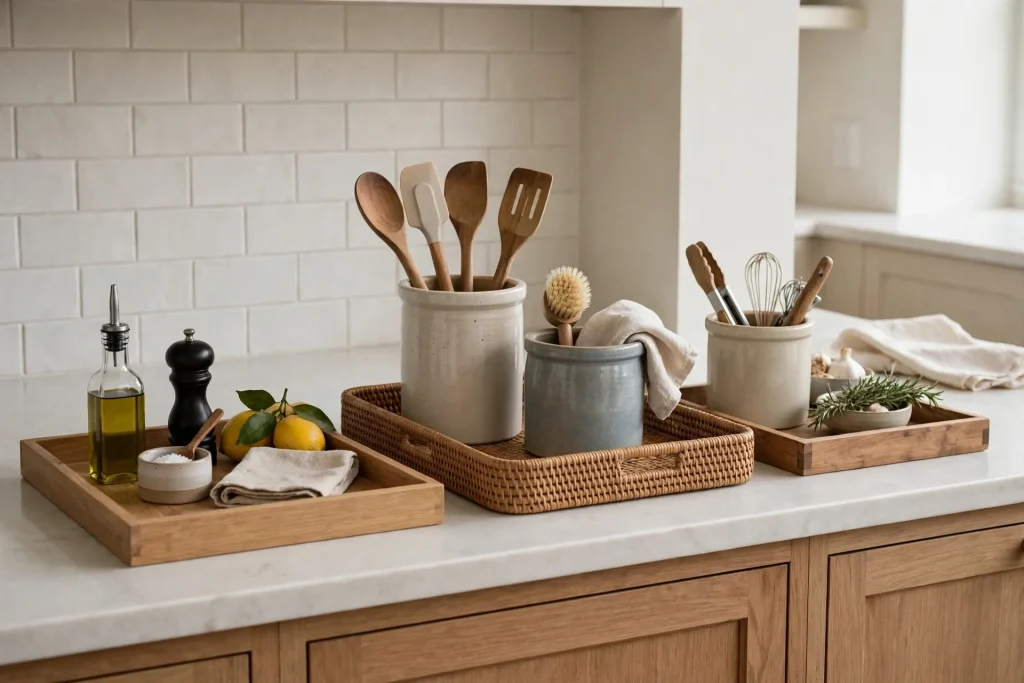
Grouping everyday items together on a tray turns clutter into something that looks styled. Place the tray on a nearby counter, well away from burners, hot pans, and direct heat. That keeps oils, salt, and pepper within easy reach without sitting beside the flame. A crock beside it can hold wooden spoons and spatulas.
Try this simple counter formula:
- One tray to hold small items together
- One tall piece, like a utensil crock or bottle
- One living thing, like a small herb pot or a bowl of fruit
Keep the tray close to where you actually use the items. If it’s in the wrong place, things will end up scattered again.
This is one of those kitchen decoration ideas that costs almost nothing, especially if you shop your own cupboards first.
Decant Pantry Staples Into Matching Jars
Good for: open shelves, glass-front cupboards, or a pantry corner
Watch out for: forgetting expiry dates
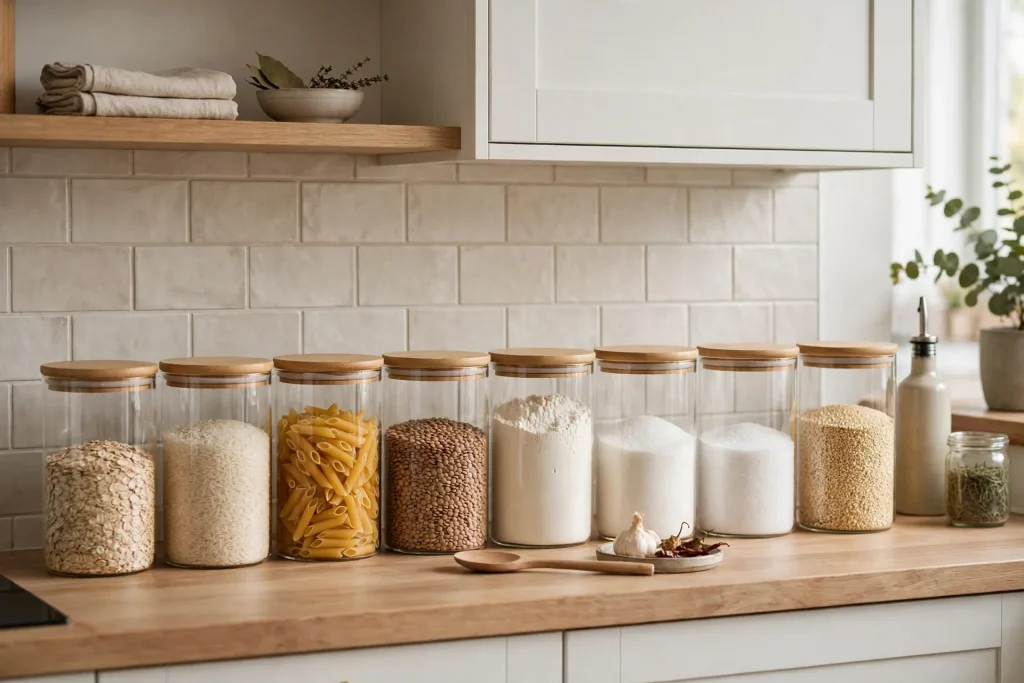
Clear glass jars filled with pasta, rice, oats, beans, and flour look tidy and cheerful on a shelf or counter.
They also make it easier to see when you’re running low.
Choose airtight jars with a good seal, especially for flour and grains, to help keep pests out. Label each jar with the contents and the use-by date, since it’s easy to lose track once the original packaging is gone.
Matching jars look neatest. A few different sizes in the same style keep the look consistent but not boring. Simple printed or handwritten labels in one style finish the look, and chalkboard labels are easy to update when you switch what’s inside.
Start small. Decant three or four things you use most, like pasta, rice, and oats, and see how you like it before buying a whole set.
Wash and dry jars completely before refilling them, and avoid mixing old and new batches of the same food. Decanting doesn’t reset a food’s shelf life, so use the original package date as your guide and rotate older supplies to the front.
Grow a Windowsill Herb Garden
Good for: sunny kitchens and anyone who cooks often
Watch out for: low light, overwatering, and pets
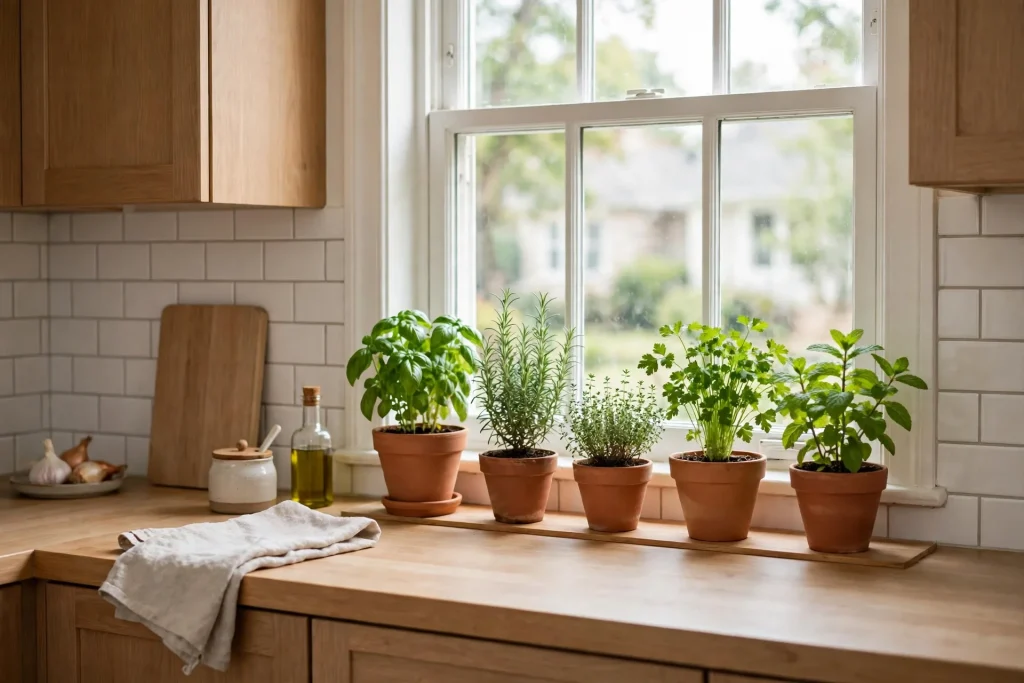
A row of herbs on the windowsill is both decorative and useful. Basil, parsley, chives, mint, and thyme are popular choices for kitchen growing.
Use matching pots, like small terracotta or white ceramic ones, for a neat look. Add a saucer under each one to catch water.
Most herbs need plenty of light, so a sunny south- or west-facing window often works well in the Northern Hemisphere. If your kitchen is darker, a small plant grow light can help.
Check the safety of each plant for your particular pet before growing it within reach. Don’t assume an herb is safe for animals just because it’s edible for people.
Mint spreads quickly, so many people grow it in its own pot rather than sharing space with other herbs.
There’s something lovely about snipping fresh basil straight into a pasta sauce. It also adds a soft splash of green to the room.
Water herbs when the top of the soil feels dry, rather than on a fixed schedule. Most herbs dislike sitting in soggy soil, so pots with drainage holes help them last longer.
Adjusting for Your Kitchen’s Size
Small kitchens. Focus on ideas that don’t use counter or floor space, like new hardware, café curtains, and a skirted sink. Keep the counter tray small, and choose one or two pantry jars rather than a full row.
Galley kitchens. A runner makes a big difference here, since it fills the long, narrow floor. Keep window treatments light so the space doesn’t feel closed in.
Larger kitchens. You have room for a freestanding hutch or baker’s rack, plus a longer row of herbs. Use repeated colors to stop a big kitchen from feeling scattered.
Rental kitchens. Focus on removable changes, like tension-rod curtains, washable runners, countertop trays, and hardware swaps you can reverse.
How to Bring It All Together
You don’t need all eight ideas at once. Many kitchens look great with just two or three well-chosen changes.
For a quick weekend refresh: corral the counter, decant a few pantry staples, and add a pot of herbs.
For a bigger change: new hardware, café curtains, and a freestanding vintage piece.
For a cozy, cottage feel: a skirted sink, a patterned runner, and herbs on the windowsill.
Tie everything together with a simple color theme. For example, choose two main colors, like sage and cream, then repeat them in your runner, curtains, and tea towels.
A Real-World Example
Imagine a renter with a small white kitchen and a tight budget. They can’t paint or replace cabinets.
They begin with a washable blue and white striped runner and let it set the color scheme. Blue gingham café curtains on a tension rod repeat those colors. Warm brass knobs, swapped in for the plain ones, add contrast, and three herb pots on the windowsill bring in green as a natural accent.
The originals go into a labeled bag for move-out day. The project can stay relatively inexpensive, and none of the changes need to be permanent. Because everything shares the same colors, the kitchen looks planned rather than pieced together.
Quick Mistakes Checklist
- Fabric or paper decor too close to the stove
- Every surface covered, with no clear prep space
- Decor that can’t be wiped or washed
- Tall furniture left unanchored
- Runners without a non-slip pad
Questions About Kitchen Decoration
How can I decorate my kitchen on a budget?
Start with what you already own. Group items on a tray, decant pantry staples into jars, and add herbs. Small changes like new hardware or a runner also make a big difference.
What is the best kitchen decoration for renters?
Washable runners, tension-rod curtains, trays, herbs, and swappable cabinet hardware are all renter-friendly.
How do I make my kitchen feel cozy?
Add soft textures like a runner or fabric curtains, warm metals like brass, and living plants.
Can I mix metals in the kitchen?
Yes. Choose one main finish and one accent finish, and repeat each at least twice so the mix looks planned.
How do I keep kitchen decor clean?
Choose washable fabrics, wipeable surfaces, and decor you can easily move. Clean items near the stove more often, since grease builds up quickly.
Make It Look Good on a Busy Night
The best kitchen decoration doesn’t get in the way. It works with your routine, looks good when the room is messy, and makes the space feel like yours.
Start with one or two of these ideas this weekend. Even a few thoughtful changes can make everyday cooking feel more pleasant.