Same Box, Different Room: 23 Dorm Room Design Ideas
Picture three dorm rooms on the same hallway. Same size, same two beds, same two desks, same window.
In the first room, everything is pushed against the walls exactly where housing left it. It works, but it feels like a waiting room.
In the second, the beds are bunked, the desks sit side by side under the window, and there’s suddenly a little open space in the middle for friends.
In the third, both roommates picked a simple style with warm wood tones and soft beige, and the room looks calm even when it’s a little messy.
Nobody in those rooms spent a fortune. They just made different design choices.
That’s what this post is about. These dorm room design ideas go beyond decor. They look at how the room is laid out, what style ties it together, how each corner works, and the small finishing details that make it feel finished.
Read This Before You Move Anything
Every college has its own rules, so check your housing handbook before rearranging or buying.
Common rules cover whether beds can be bunked or lofted, whether furniture can leave the room, what can go on walls and windows, and which electrical items are allowed. If you’re unsure, ask your resident advisor.
It also helps to measure the room on move-in day, or ask for the dimensions in advance. Take a few photos of the empty room from each corner, too. Together with a quick sketch on paper, they let you test layouts without dragging heavy furniture around.
Draw the door swing, the window, outlets, and the heater on your sketch. Those fixed points decide more about your layout than anything you’ll buy. And if you rearrange, do it with your roommate, since dorm beds and dressers are heavy and usually need two people to move safely.
Layouts (six ideas): start with furniture placement to make the most of every square foot.
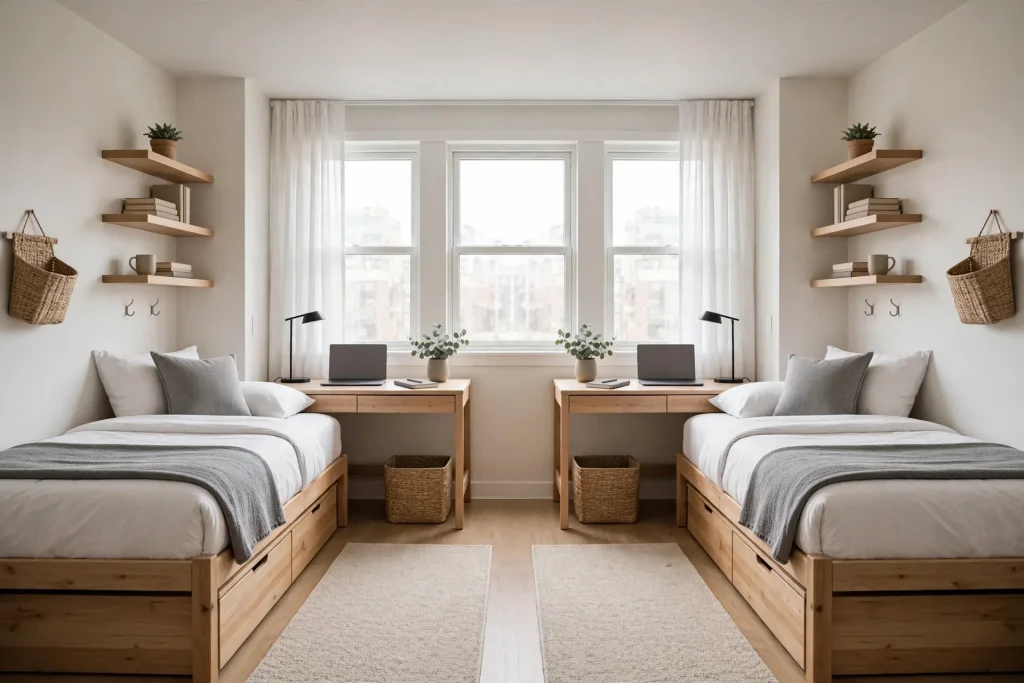
Try a Mirror-Image Layout
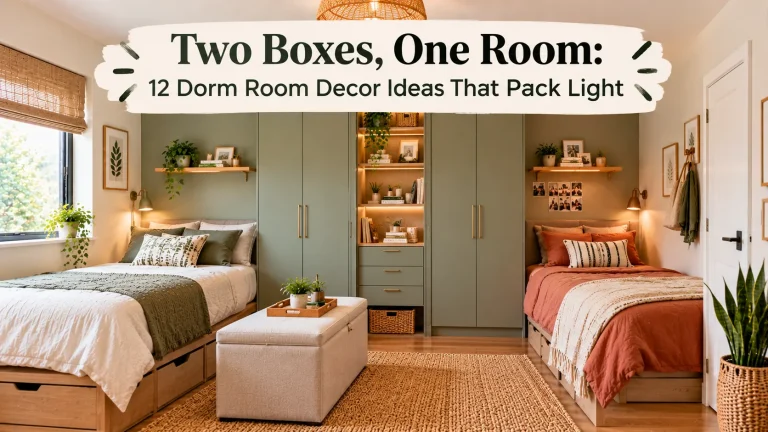
In a shared room, a mirror-image layout gives each person an identical side. Each bed sits on its own side of the room, against opposite walls, with desks and dressers placed the same way on each side.
It feels fair, and it’s easy to keep tidy since each person knows exactly where their space ends.
It works best in rectangular rooms with the door in the middle of one short wall. To make it feel less like a hospital ward, let each side differ in small ways, like bedding color or the art above the desk. The structure stays matching, while the personality doesn’t.
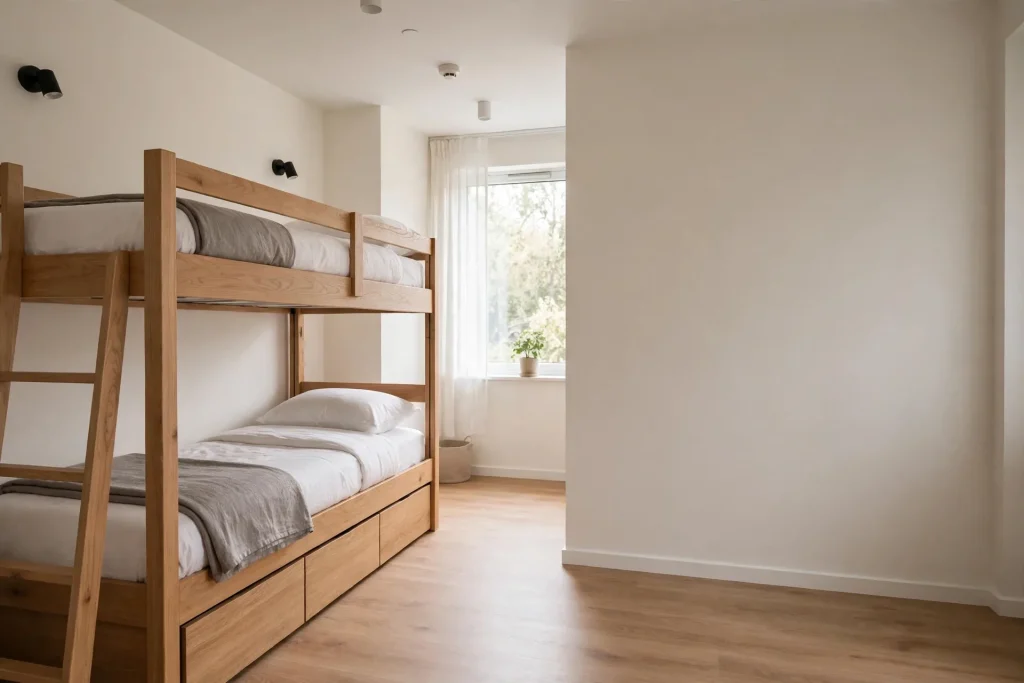
Bunk the Beds to Free a Whole Wall
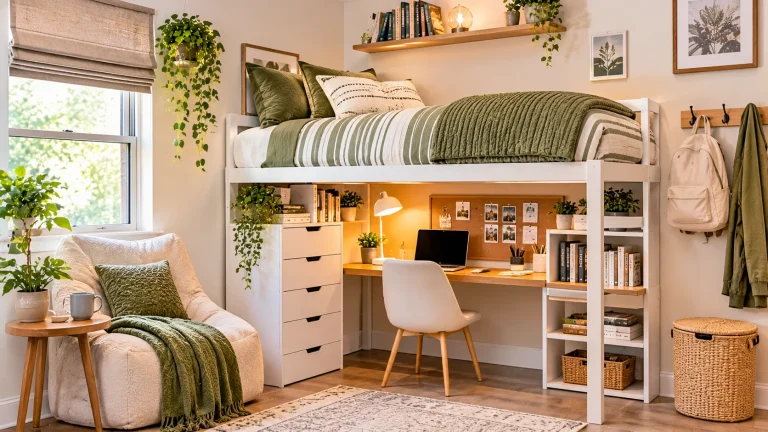
If your school allows it, bunking the beds can open up an entire wall. That space can hold both desks, a shared dresser, or a small seating spot.
Picture a narrow double where bunked beds leave room for a small loveseat and a shared rug between the desks. The room suddenly has a living area.
Only stack beds that are specifically designed for bunking, and use the approved hardware and guardrails provided or authorized by your housing office. Not every dorm bed can be stacked safely.
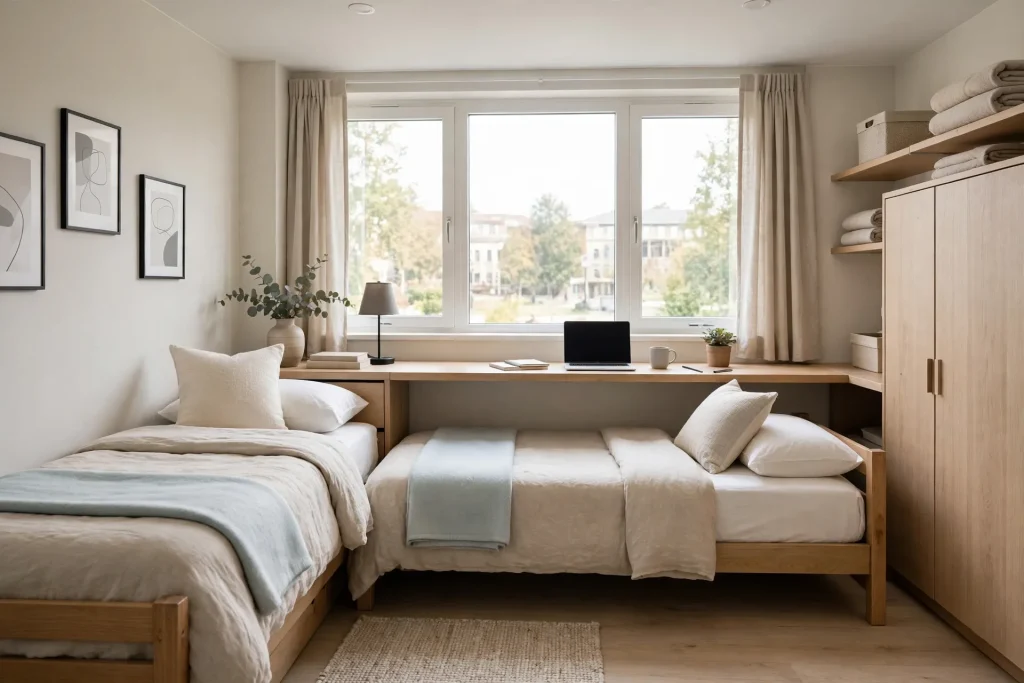
Put the Beds in an L-Shape
Placing the two beds in one corner, head to head in an L-shape, frees up the opposite corner for desks or open floor.
It also creates a shared corner where both roommates can sit and talk. It isn’t a real sofa, but it gives the room a natural gathering spot. A few large cushions along the wall side of each bed make it even more comfortable for movie nights.
Check that this layout doesn’t block the heater, window, or closet doors before committing.
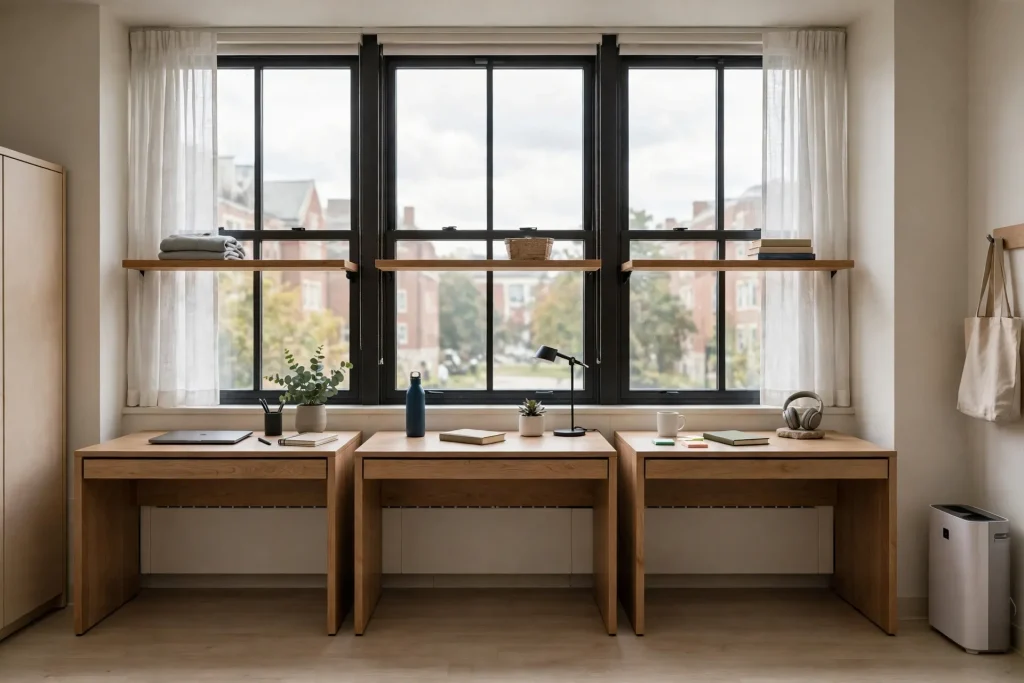
Line the Desks Up Under the Window
Desks placed side by side under the window turn into a shared study bar. You get natural light while you work, and the middle of the room stays open.
Things to keep in mind:
- Keep anything tall off the windowsill so the window can still open
- Watch for glare on laptop screens on sunny afternoons
- Leave a little space between chairs so you’re not bumping elbows
This works well for roommates who study at similar times. If schedules are very different, separate desks may be easier.
Divide the Room With a Bookshelf
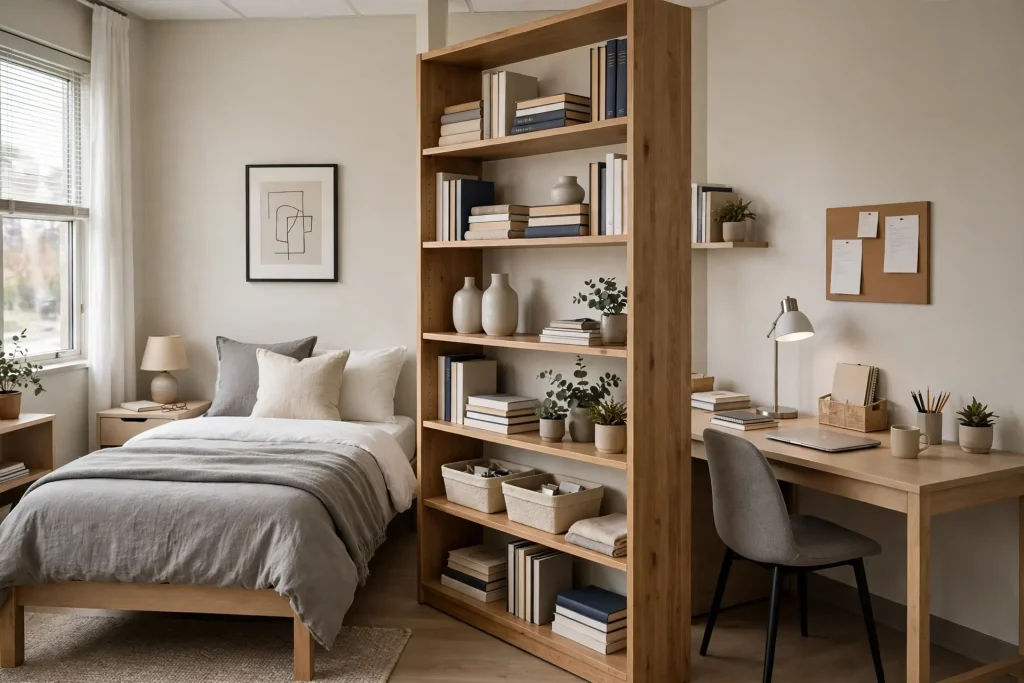
A low or medium-height bookshelf placed between two sides of the room can act as a soft divider. It adds storage and gives each person a little more privacy without a curtain.
An open-back shelf lets light pass through, so neither side feels dark.
Choose a low, stable bookshelf and secure it using an approved anchoring method if your housing rules allow. Keep heavier items on the bottom shelves to reduce the risk of tipping. Avoid tall, unsecured shelves as dividers.
Move the Dresser Into the Closet
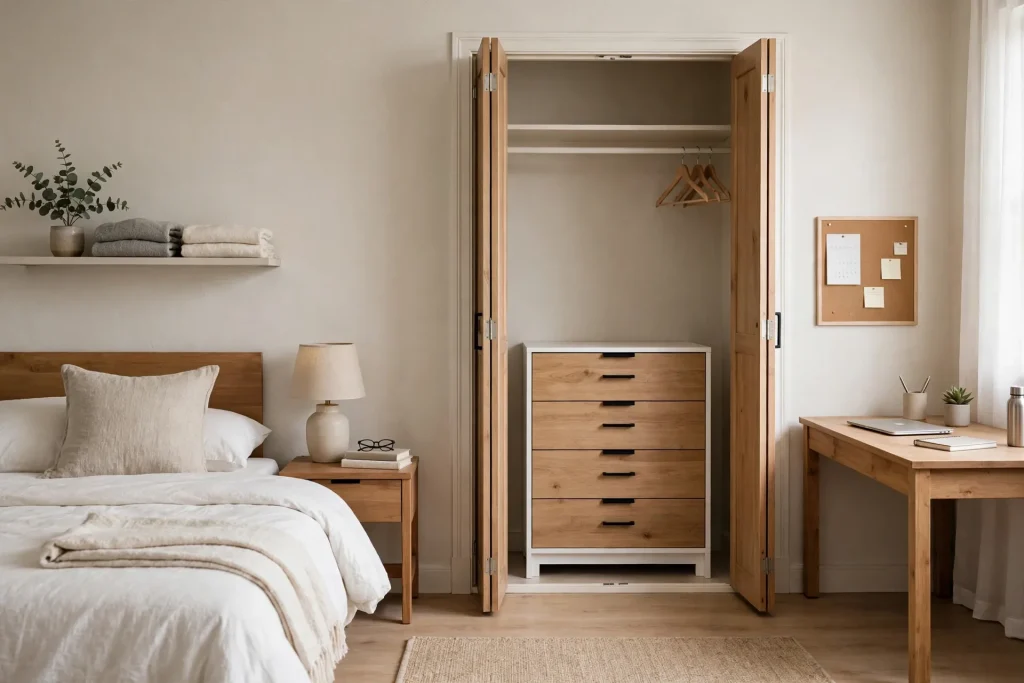
Many dorm closets are deep enough to fit a small dresser inside. Moving it there frees up valuable floor space in the main room.
It’s especially handy in rooms with built-in wardrobes or open closets. Check that the closet door can still close and that you can reach the drawers easily.
Design styles (six ideas): pick one look so the whole room feels connected.
Go Japandi
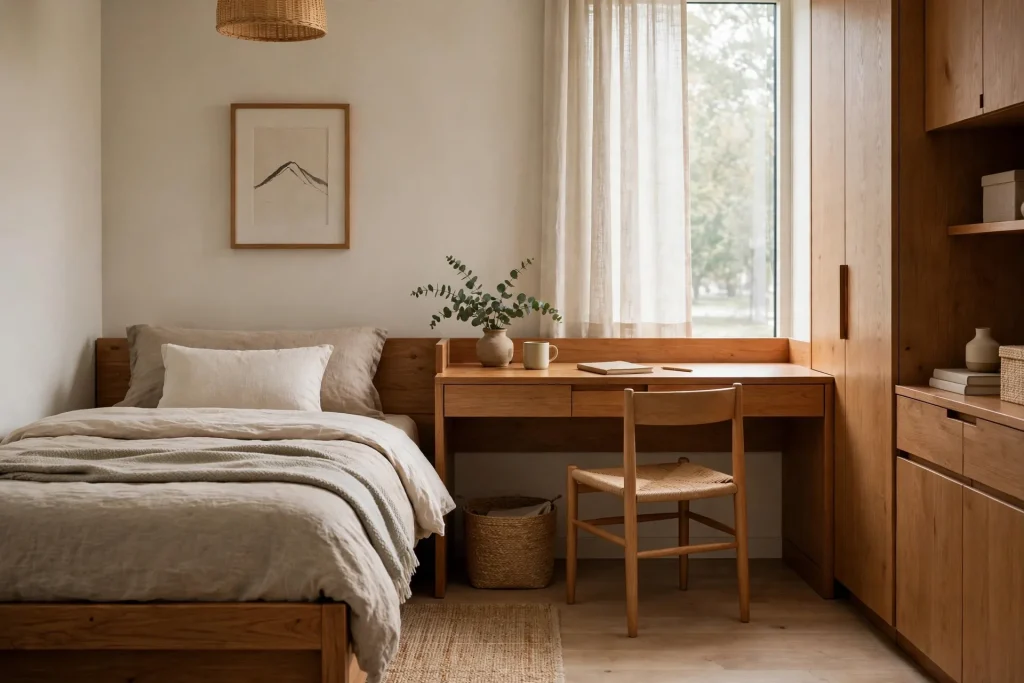
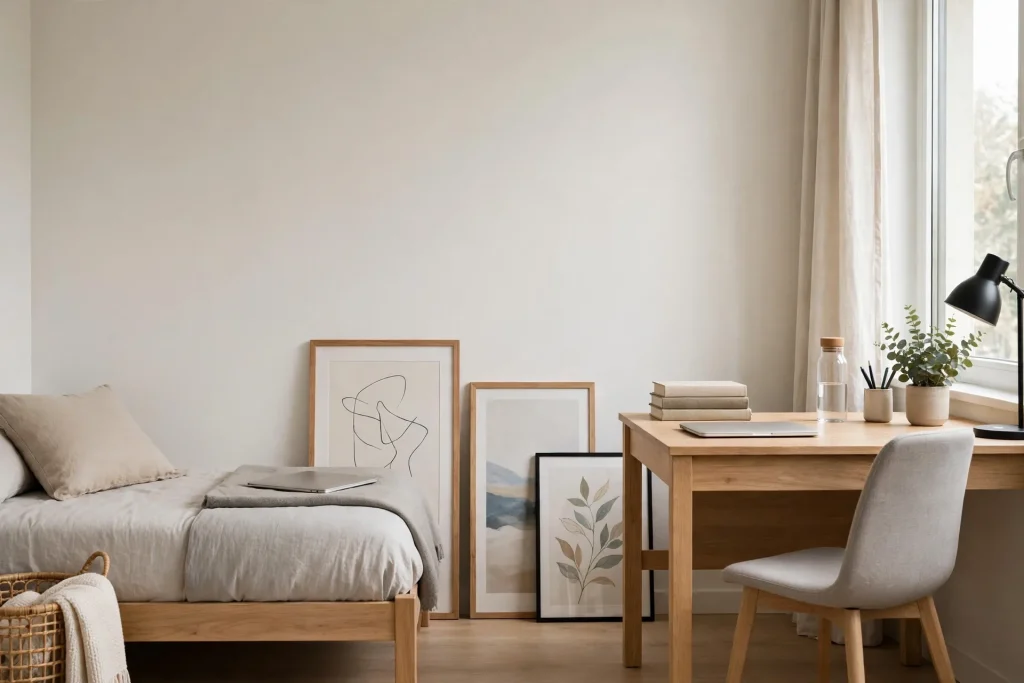
Japandi mixes Japanese simplicity with Scandinavian warmth. Think light wood, soft beige, gray, and a few natural textures.
In a dorm, it might look like a linen-look duvet, a wooden desk organizer, a paper lamp, and one small plant. Fewer items, chosen carefully.
It’s a calming style for busy weeks, and it’s easy to keep looking neat. Keeping the decor simple can help control spending because you need fewer accessories, though good natural materials can cost more. Start with affordable neutral bedding and add natural textures gradually.
Try Mid-Century Modern
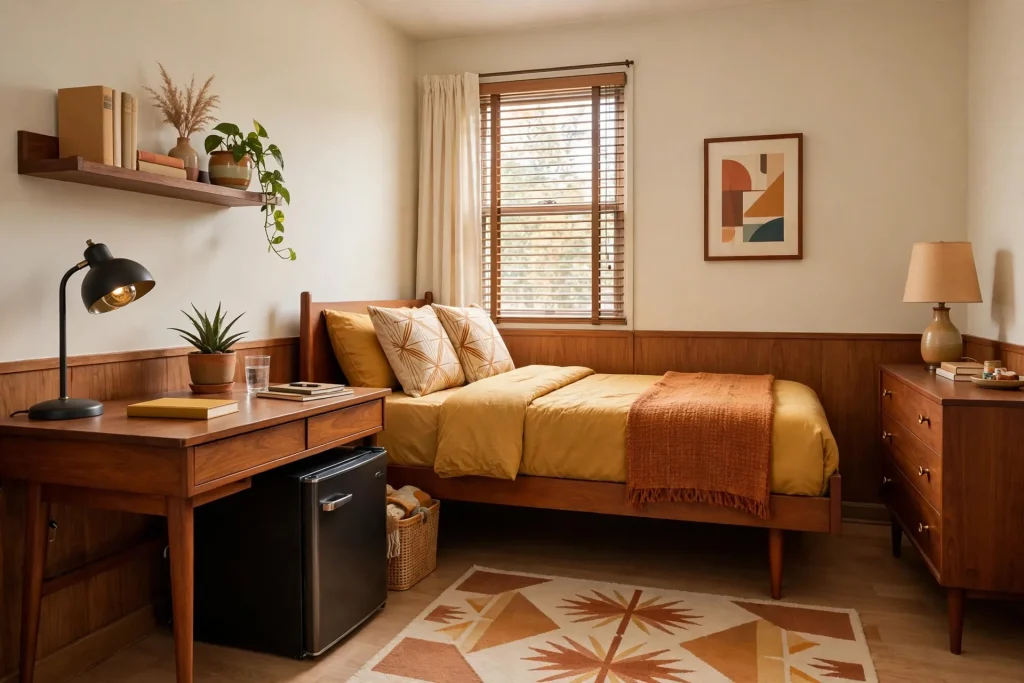
Mid-century modern style uses warm wood, simple shapes, and pops of color like mustard, teal, and orange.
A tapered-leg side table, a geometric throw pillow, a retro desk lamp, and an abstract print can bring the look into a small space.
You don’t need real vintage pieces, since many stores sell affordable mid-century-inspired items.
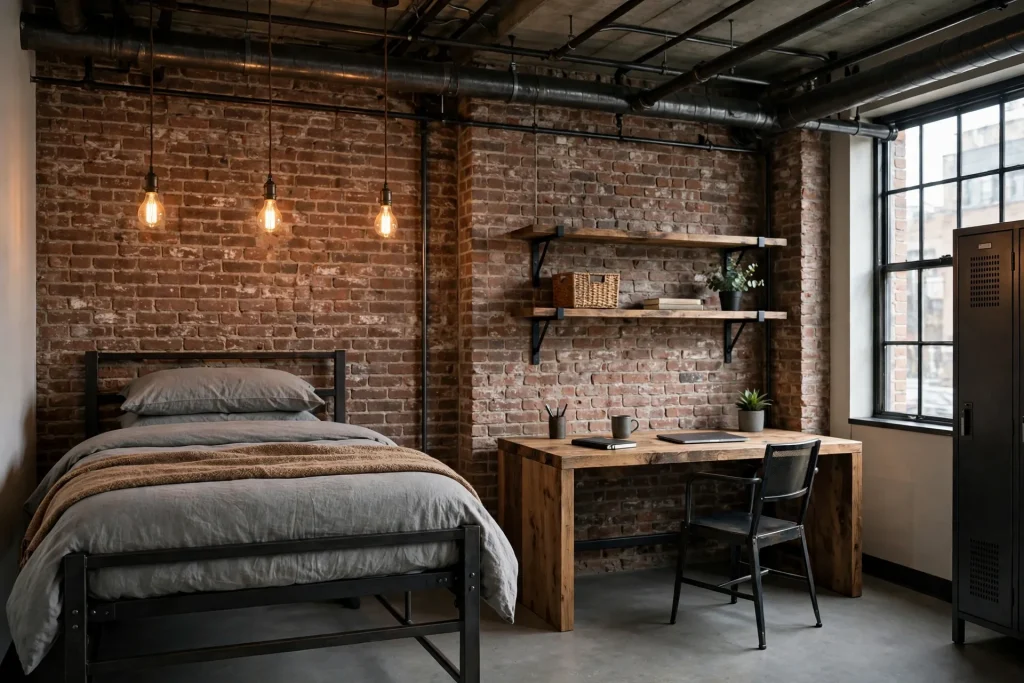
Lean Into Industrial
Industrial style works especially well in dorms with industrial details, like exposed pipes, brick, or concrete walls. It can still suit a plain room, too.
Add black metal shelving, a dark gray or charcoal duvet, a metal desk lamp, and a few brown or tan textures like a faux leather pillow.
The result feels urban and grown-up. Soften it with a chunky knit throw so it doesn’t feel too cold.
Bring in Mediterranean Warmth
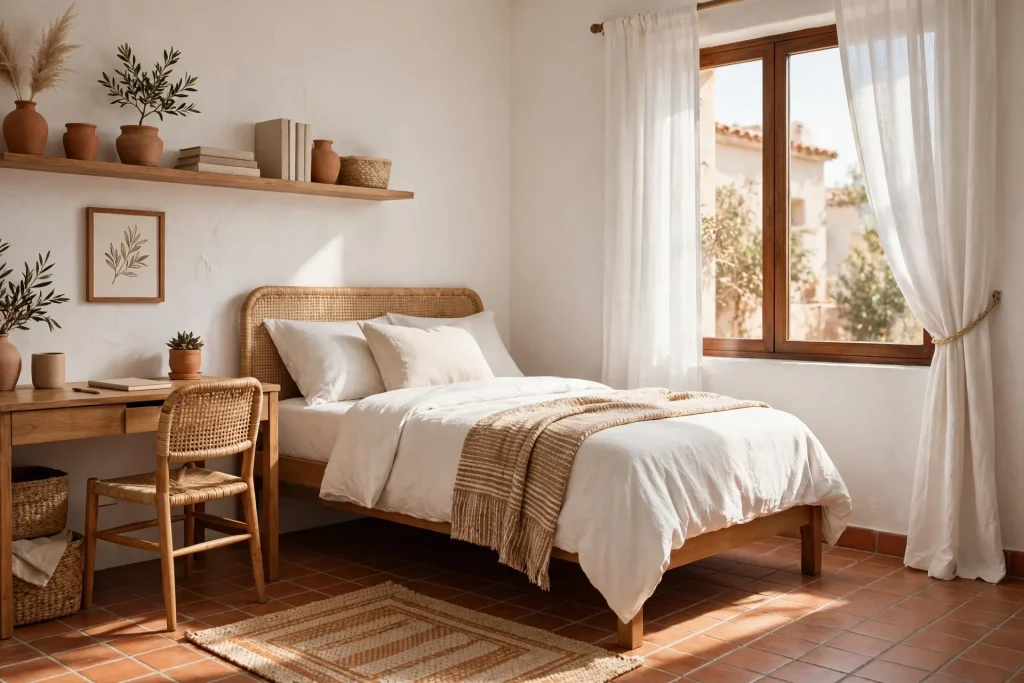
Mediterranean style uses terracotta, white, olive green, and blue, with natural textures like rattan and clay.
A terracotta-colored throw, a woven basket, a faux olive branch in a clay vase, and blue and white patterned pillows can make a plain room feel sunny and relaxed.
It’s a cheerful choice for long winters.
Keep It Preppy
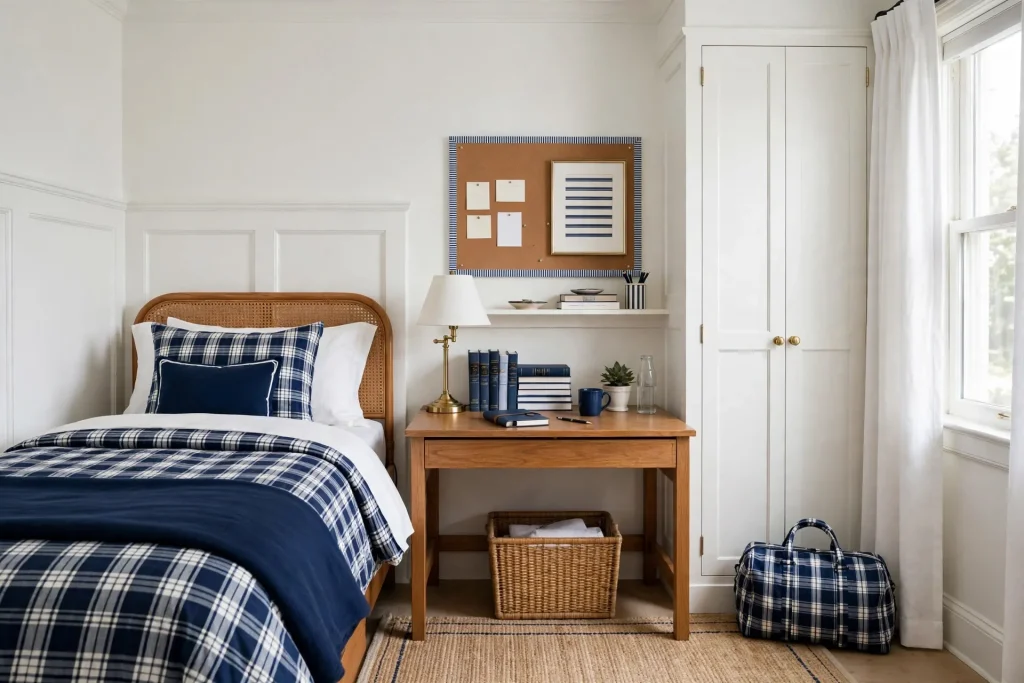
Preppy style is classic and tidy. Navy, white, green, and a touch of red, with stripes, gingham, and simple monograms.
Picture a navy and white striped duvet, a green gingham pillow, a framed college pennant, and a small brass desk lamp.
It’s easy to put together because many of the pieces are timeless and easy to find.
Split the Room Into Two Colors
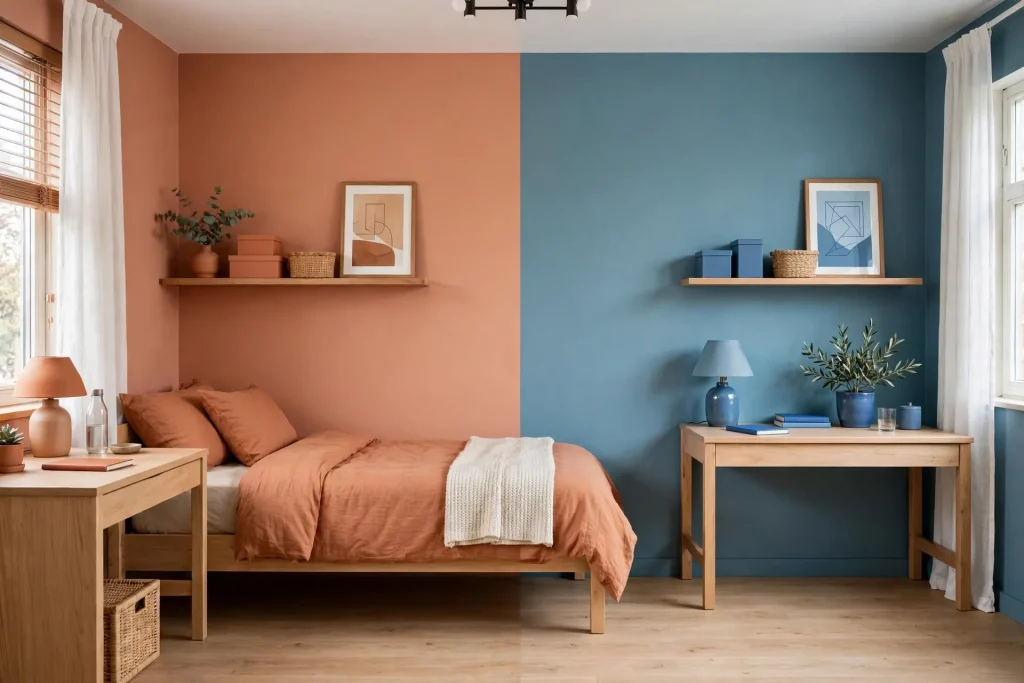
If roommates have very different tastes, try giving each side its own main color, with one shared accent color that links them.
For example, one side might be soft green and the other blush pink, with cream bedding and a shared cream rug tying them together.
Each person gets a side that feels like theirs, but the whole room still looks planned. Agree on the shared color before either of you shops, so nobody ends up buying something that clashes.
Function and zones (six ideas): set up each corner for studying, storing, and resting.
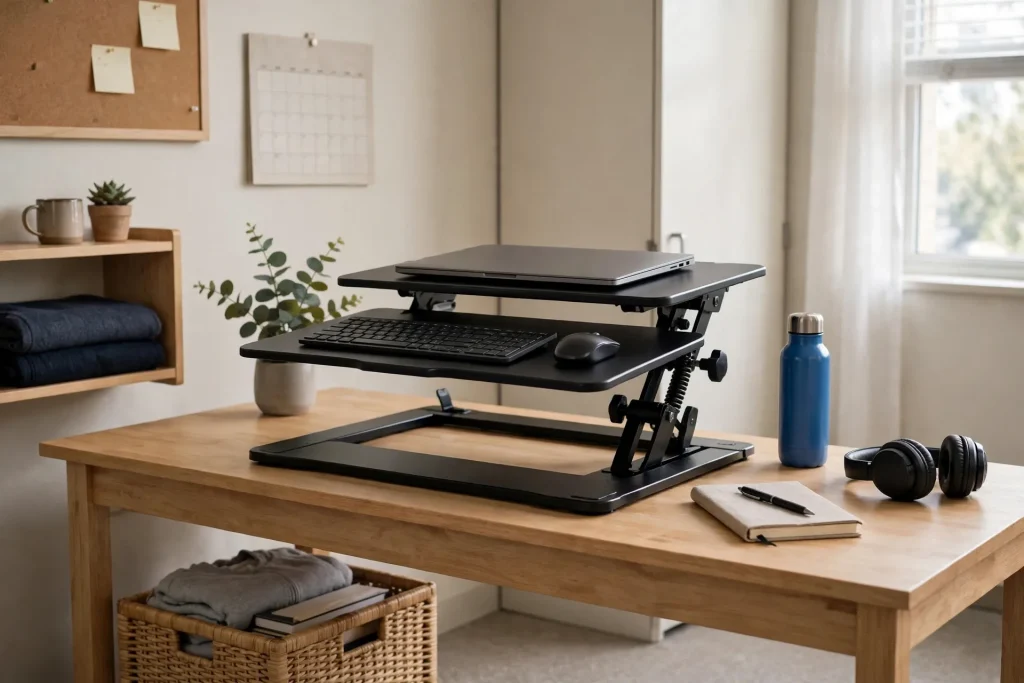
Add a Desk Riser or Standing Converter
A desk riser lifts your laptop to a more comfortable height. A standing desk converter lets you switch between sitting and standing.
Both can help during long study sessions. They also make a tiny desk feel more flexible, since you can tuck notebooks underneath.
Choose one that fits your desk size and holds your laptop’s weight, and follow the manufacturer’s assembly instructions.
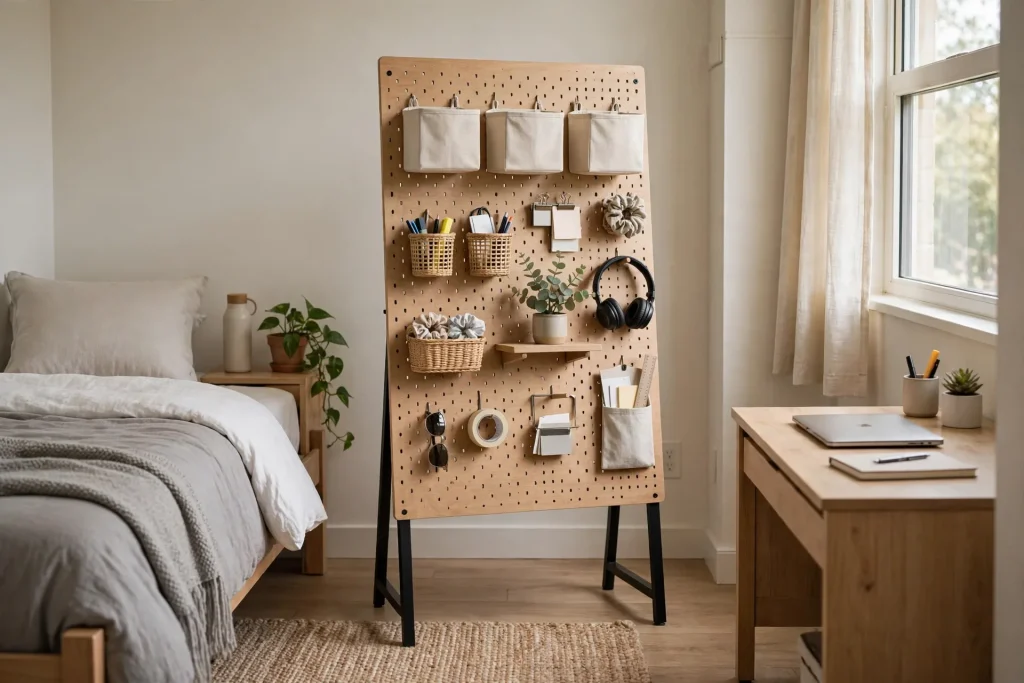
Set Up a Freestanding Pegboard
A freestanding or desktop pegboard gives you vertical storage without drilling into the walls.
Hang headphones, small baskets for pens, sticky notes, and a mini calendar. Many come with hooks, shelves, and clips you can rearrange through the year.
It’s one of the most practical dorm room design ideas for a cluttered desk.
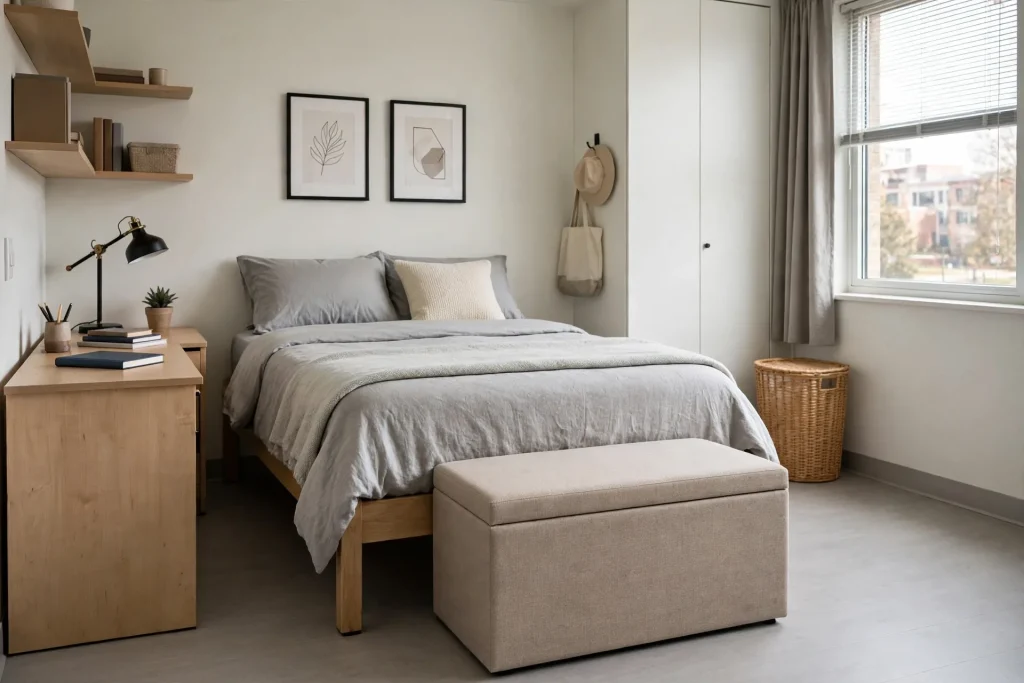
Put a Storage Ottoman at the Foot of the Bed
A storage ottoman or bench at the end of the bed adds seating and hidden storage at the same time.
Use it for extra blankets, shoes, or snacks. When friends visit, it’s an extra seat.
Choose a size that doesn’t block walking space, especially in narrow rooms.
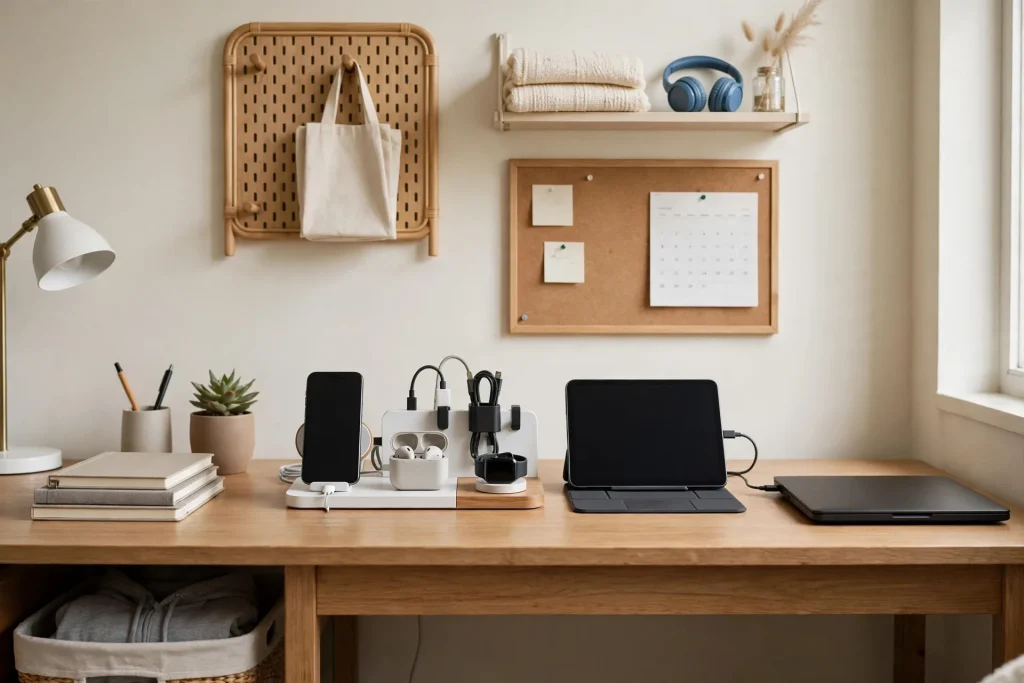
Create a Tidy Charging Hub
Phones, laptops, headphones, and tablets all need charging. Without a plan, cables end up everywhere, often tangled behind the bed where you can’t reach them.
A charging station with a few slots, plus cable clips along the desk edge, keeps everything in one place.
Use only school-approved, properly rated power strips, since housing policies vary. Avoid overloading outlets, and don’t run cords under rugs or beds.
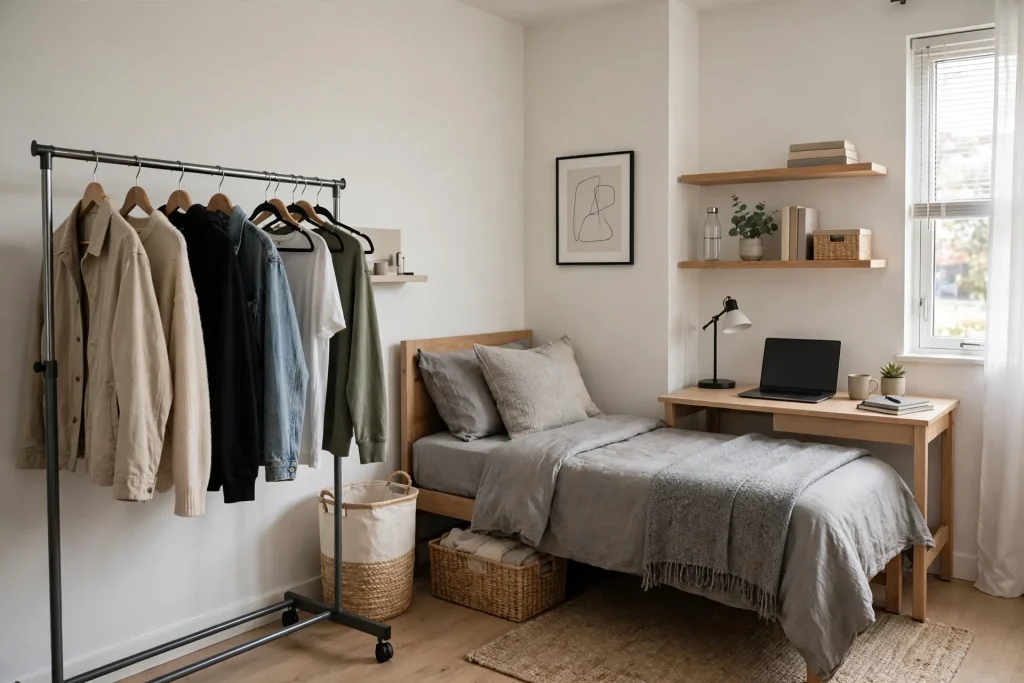
Add a Garment Rack
If the closet is tiny, a slim garment rack can hold coats, outfits for the week, or clothes you wear often.
Choose a rack with a shelf at the bottom for shoes or a basket. An open, slim rack keeps a small room feeling lighter, while a fabric cover hides clutter but can look bulky.
Make sure it’s sturdy and doesn’t block the door or window. Placing it near the door also works as a simple outfit station, so tomorrow’s clothes are ready the night before.
Soften the Sound
Dorms can be noisy. Thin walls, busy hallways, and roommates on different schedules can make sleep and study harder.
A few design choices can help:
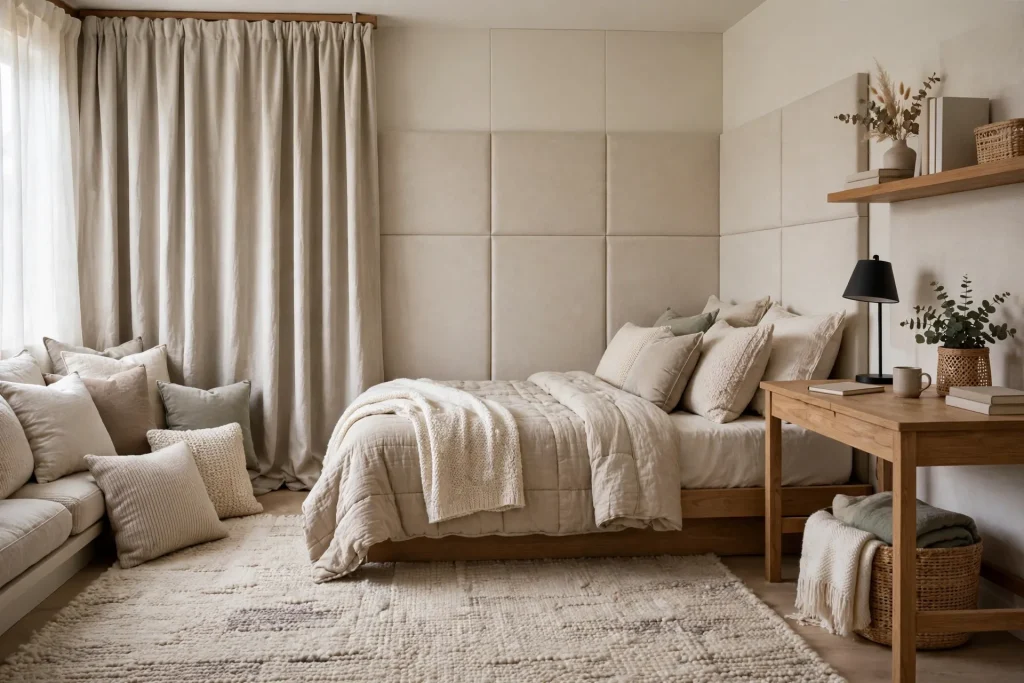
- Fabric items like curtains, rugs, and cushions absorb some sound
- Felt pinboards and fabric wall panels, where permitted, can help soften echoes and reduce some reflected sound
- A small white noise machine can mask background noise at night
These soften sound inside the room, but they won’t stop noise traveling through walls or doors. They can still make the space feel calmer.
Finishing details (five ideas): the small touches that make it feel like your room.
Refresh Furniture With Removable Contact Paper
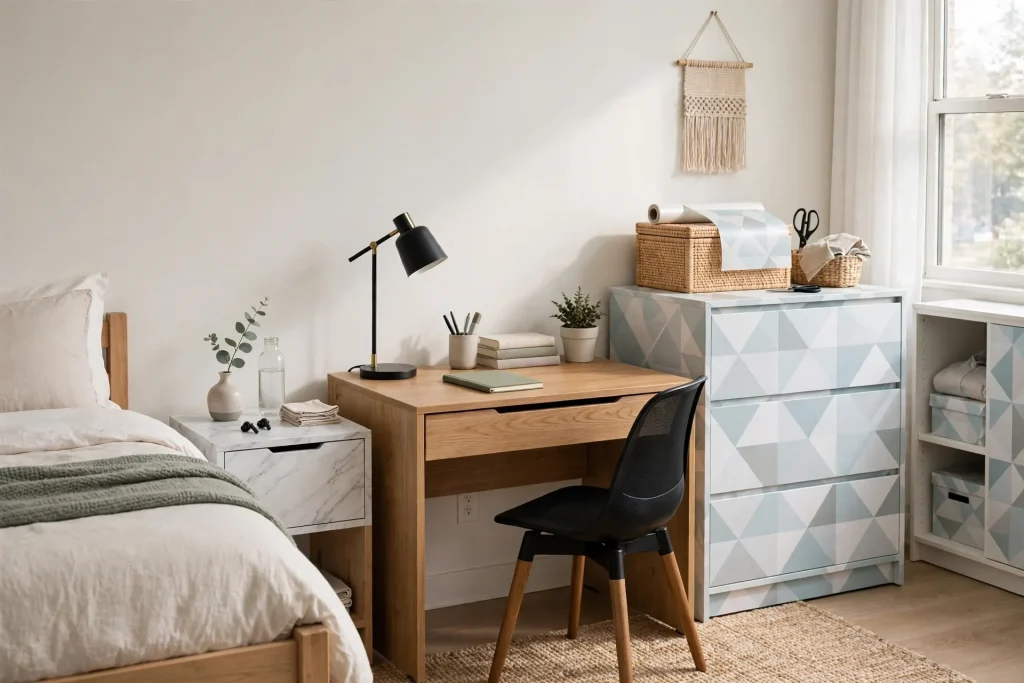
Dorm furniture is often scratched or dated. Removable contact paper in wood, marble, or a soft solid color can freshen up a desk top or shelf.
Choose a removable, residue-free product and check your housing rules first. Test it on a small hidden area before covering a whole surface.
Add Frosted Window Film
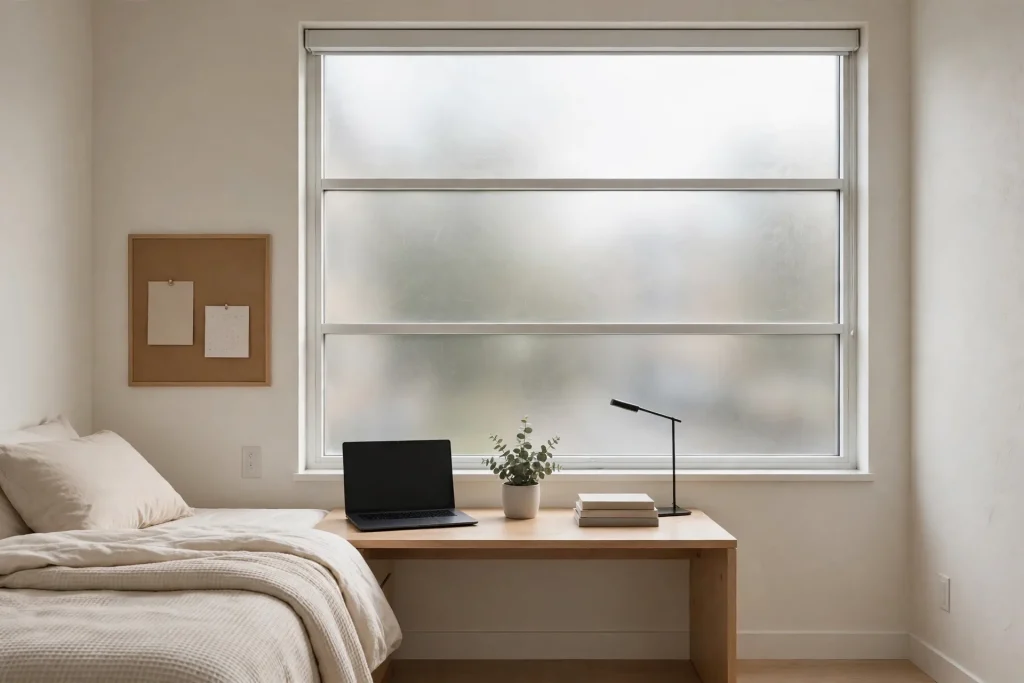
If your room faces a busy walkway, removable frosted window film adds privacy while still letting in daylight.
It’s a nice alternative to keeping blinds closed all day. Some films come in subtle patterns like stripes or florals.
Some colleges restrict anything attached to windows, so check first, and choose a film that’s easy to remove at the end of the year.
Lean Art Instead of Hanging It
Large art can be tricky in a dorm, since many walls can’t take nails. Instead, lean a framed print or poster on top of a dresser, shelf, or desk.
Layer two or three frames of different sizes for a casual, styled look. Use lightweight frames and keep them secure so they don’t fall.
Personalize Your Door
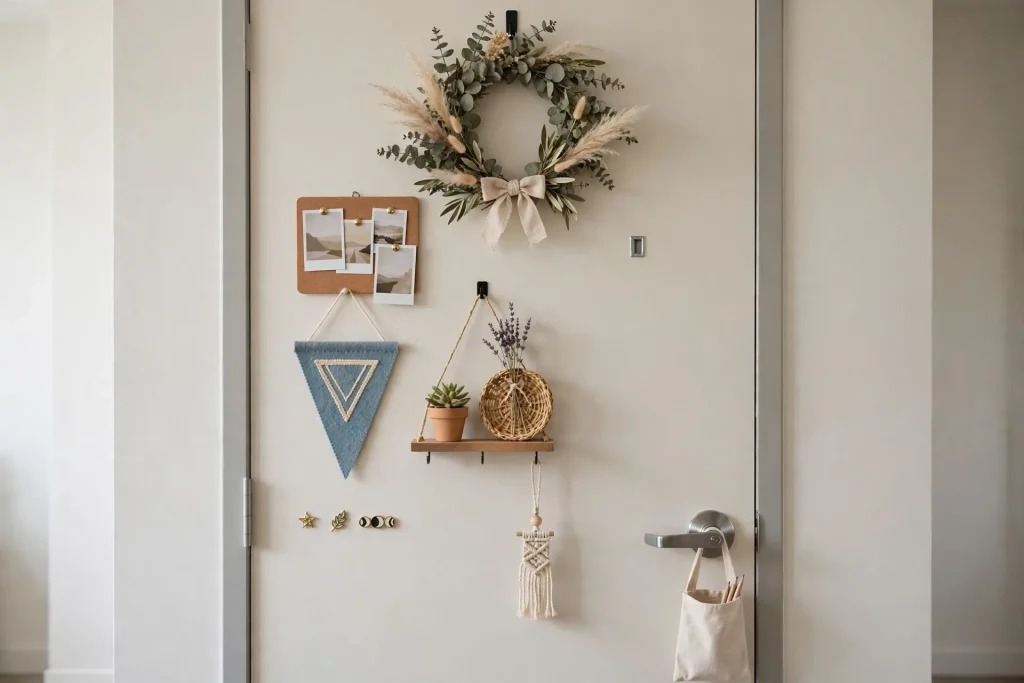
Your door is the first thing friends see. A simple name sign, a small whiteboard for messages, or a seasonal paper decoration can make it feel welcoming.
Many halls have rules about door decorations, so check first. Keep decorations small and flat, since large paper displays in hallways can be a fire risk.
Choose a Signature Scent
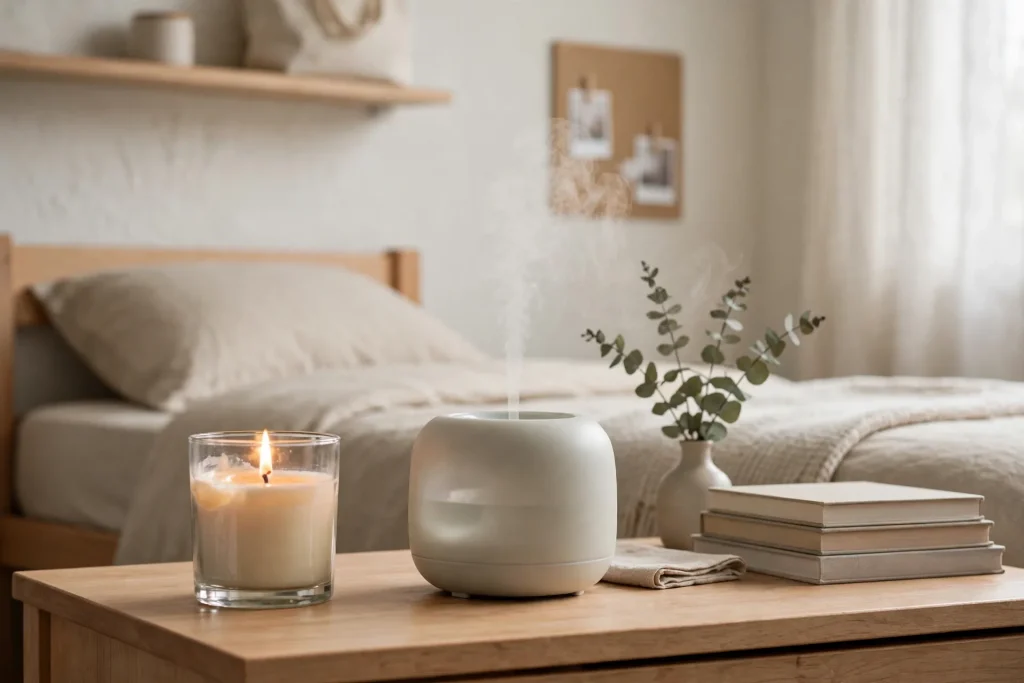
A scent you love can make a dorm feel more like home. Many residence halls restrict candles, plug-in diffusers, and other fragrance products. Check your housing policy before using reed diffusers, scented sachets, or linen sprays.
Keep scents light, and ask your roommate first, since some people are sensitive to fragrance.
A Real-World Example
Imagine two roommates with very different styles. One loves preppy navy stripes, and the other prefers Japandi neutrals.
Before decorating their own sides, they agree on the shared pieces: a cream rug, matching desk accessories, and roughly equal amounts of color on each side. Then they use the split-color idea, with navy on one side and beige on the other. They line their desks up under the window, add a pegboard each, and keep a storage ottoman at the foot of each bed.
The room looks planned and balanced, and both roommates feel like it reflects them.
Dorm Design Mistakes to Avoid
Ignoring housing rules. Some furniture moves, decorations, and appliances aren’t allowed.
Blocking exits and heaters. Keep doors, windows, and vents clear.
Overcrowding the room. Too much furniture makes a small room feel smaller.
Skipping the roommate talk. Agree on layout and shared items before you buy.
Questions About Dorm Room Design Ideas
How can I make my dorm room look bigger?
Keep the middle of the room clear, use light colors, add mirrors where allowed, and choose furniture that doubles as storage. Moving the dresser into the closet or bunking the beds, where permitted, can also free up a surprising amount of floor.
What is the best layout for a shared dorm room?
It depends on the room’s shape, but mirror-image and bunked layouts are popular choices for fairness and space.
How do I choose a dorm room style?
Start with colors you love and one or two pieces you already own, like a favorite throw or poster, then build around them. Saving a few photos of rooms you like and looking for what they have in common can help you spot your style quickly.
Can I rearrange my dorm furniture?
Often, yes, but some schools have rules about bunking beds or removing furniture. Check with your housing office first.
What dorm room design ideas work on a budget?
Rearranging furniture, contact paper, leaning art, and coordinated bedding can transform a room without spending much.
Make the Space Work for You
You don’t need to try every one of these dorm room design ideas. Pick a layout that suits your routine, choose a simple style, and add a few practical and personal touches.
Your dorm will likely change through the year. Start with the basics, and let the rest come together as you settle in.