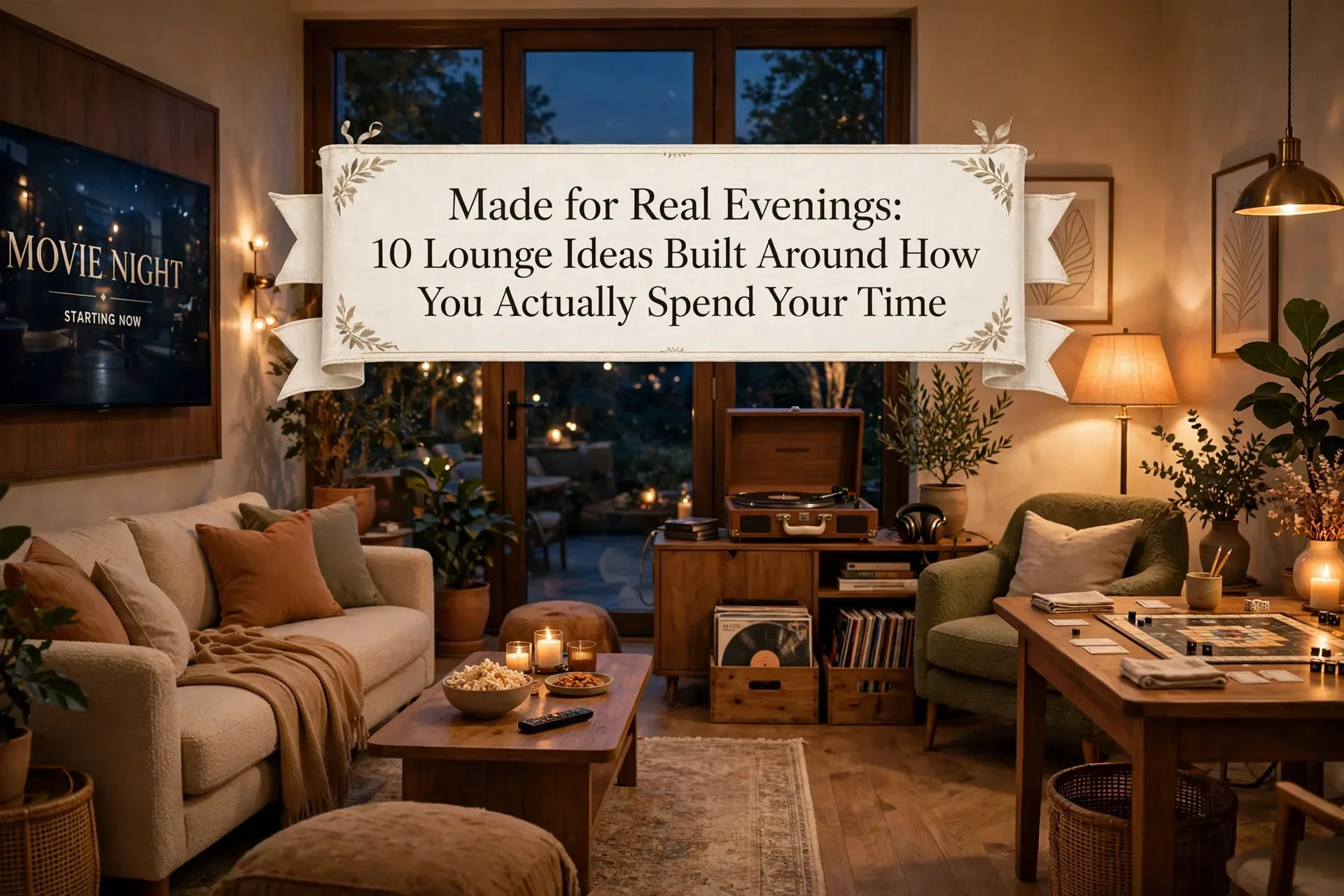
Made for Real Evenings: 10 Lounge Ideas Built Around How You Actually Spend Your Time
Before choosing any new lounge ideas, think about how you actually use the room. What do you really do in there?
Not what the magazine photos suggest, but what happens on a normal Tuesday night.
Maybe it’s movies under a blanket. Maybe it’s board games with the kids, records on a Sunday morning, or an hour with your knitting while a podcast plays. For some people, it’s where the laptop comes out after dinner. For others, it’s the one place the dog is allowed on the sofa.
Most advice focuses on how a room looks. This post starts with how it’s used. Each idea below is built around a real activity, so you can pick the one or two that match your evenings and set the room up to support them.
Start Here: Which Idea Fits You?
A quick way to choose:
- You watch a lot of films or series: start with the movie night setup
- You love music: try the listening corner
- You host friends or family often: look at the games table or the drinks station
- You work or study at home: the hideaway bureau might help
- You have pets: the pet-friendly lounge is worth a read
- You want somewhere calm: try the screen-free corner or the daybed
Most homes only need one or two of these. Trying to fit all ten into one room is a fast way to make it feel crowded.
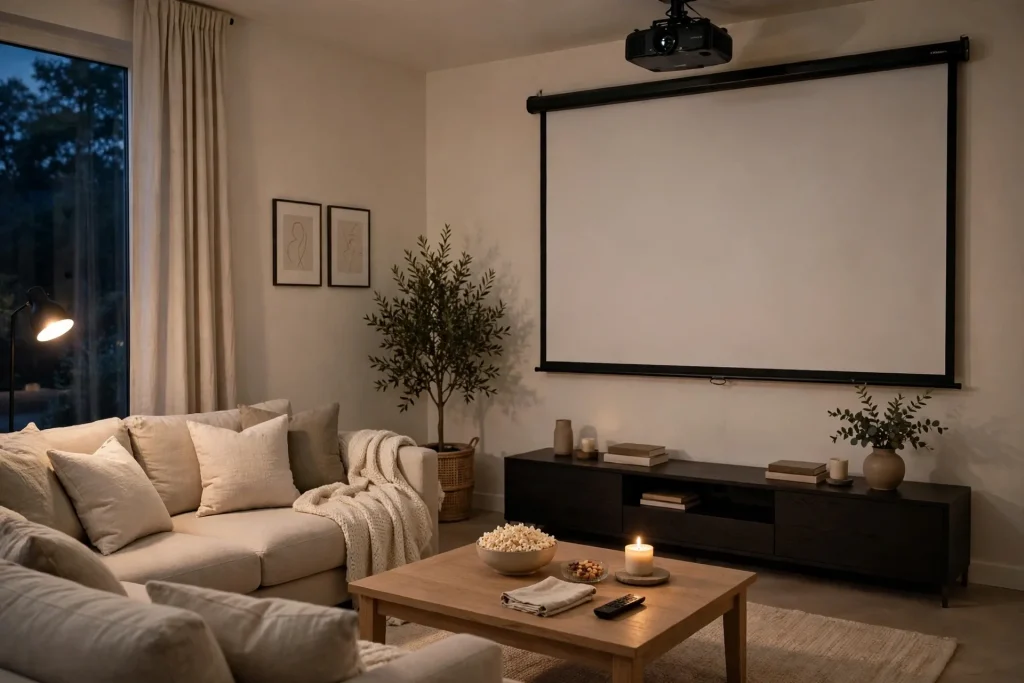
Set Up a Proper Movie Night Lounge
Works if: films, sports, or series are a big part of your week
A great movie night needs three things: comfortable seating, control over light, and decent sound.
Seating. A deep-seated modular sofa lets people stretch out or curl up. Some modules can be pulled apart into a chaise, which is handy for lying down.
Light. Blackout curtains or blackout lining on existing curtains help cut glare on the screen during daytime viewing. Dimmable lamps set the mood at night.
Sound. A soundbar is often an easy upgrade over built-in TV speakers, without the cables of a full surround system.
Some people also try a projector and pull-down screen instead of a large TV. It can create a more immersive, cinema-style experience, though image quality depends a lot on how dark the room gets.
Run cables along the wall behind the sofa or through a cord cover, so nobody trips in the dark.
If you have young children, choose cordless blinds or keep cords tied up and out of reach, since looped cords can be a strangulation risk.
Create a Listening Corner
Works if: you love music and want to hear it properly
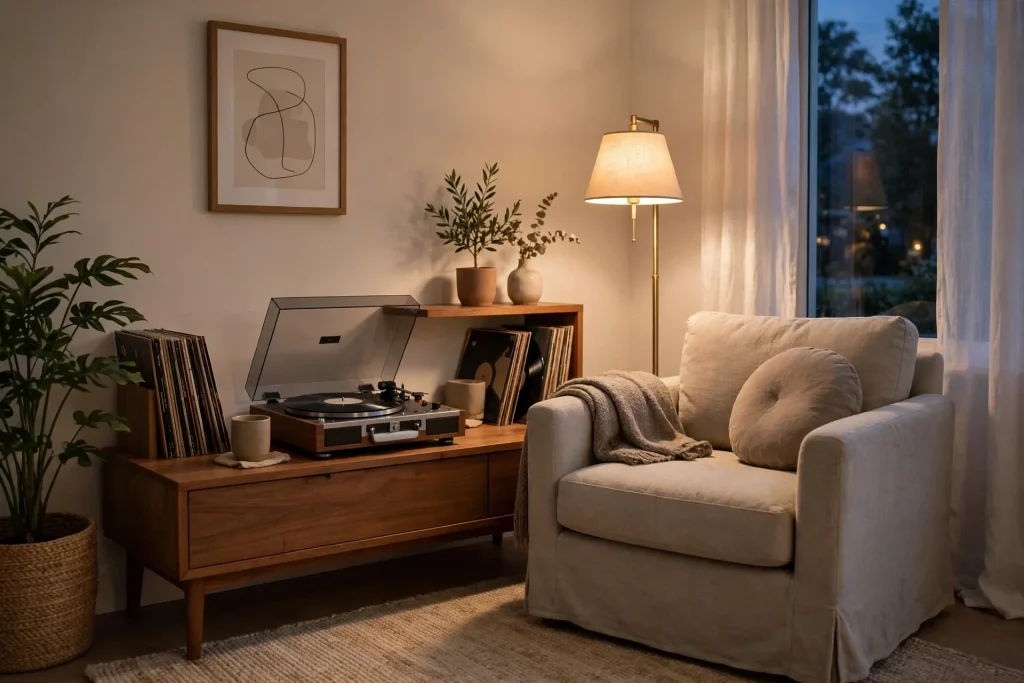
A listening corner is a small zone built around a record player, a speaker, or both.
You don’t need much space. A low sideboard can hold the turntable on top and records below. Add one comfortable chair nearby and a small side table for a drink.
Records are heavy, so check that your shelving or cabinet can take the weight. Store them vertically and keep the shelf full or use dividers, so they stand straight without leaning or being squeezed. That, plus steady temperatures, helps reduce the risk of warping.
Picture a corner by the window with a walnut sideboard, a turntable, two small speakers, and a leather armchair angled toward them. It becomes the spot people drift to when a favorite album goes on.
Keep the turntable away from direct sunlight and radiators, and position speakers on a stable surface so they don’t vibrate the record player.
Bring Back the Games Table
Works if: you host, have kids, or love a weekend puzzle
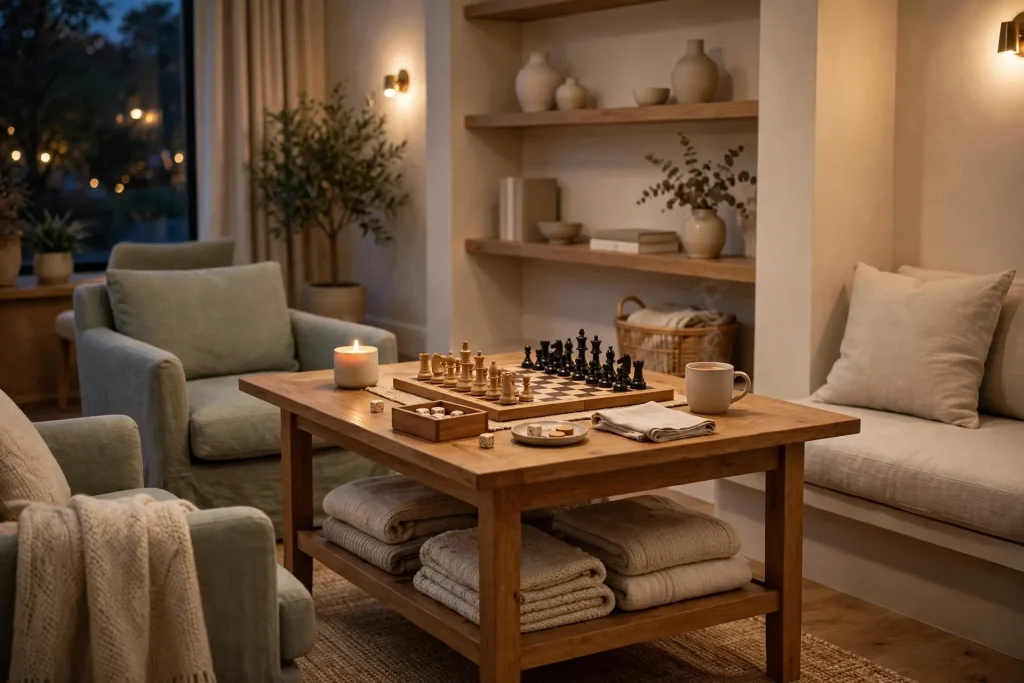
A small table in the lounge, separate from the dining table, gives you a permanent place for board games, jigsaws, cards, and homework.
A round or square table with four chairs fits neatly into a corner or bay window. A table with a drawer, or a nearby cabinet, keeps games organized and out of sight.
A few tips:
- Choose a table with a wipeable surface for snacks and drinks
- Add a pendant or floor lamp above, so pieces are easy to see
- Keep a basket for half-finished puzzles so they can be moved without breaking apart
Between game nights, the same table earns its space as a spot for homework, crafts, or a big project you want to leave out.
If space is tight, a drop-leaf or folding table can stay compact against the wall most of the week and open up on game night.
Swap the Second Sofa for a Daybed
Works if: you nap, read lying down, or need occasional overnight space
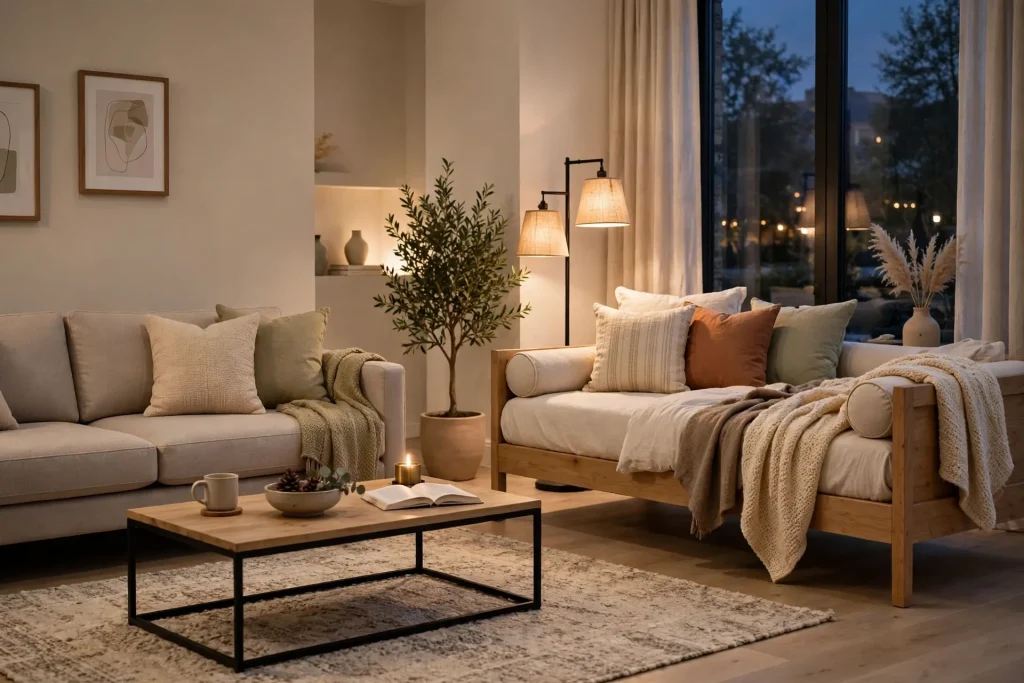
If your lounge has room for two sofas, consider replacing one with a daybed. It’s like a cross between a sofa and a single bed, usually with a back and sides.
It’s perfect for afternoon naps, long reads, or watching a film stretched out. With a few large cushions along the back, it still works as seating for guests.
Some daybeds have a trundle underneath, so they can sleep a second person when needed.
A cream daybed by the window, with a striped throw and plump cushions, can quickly become the favorite seat.
Measure the wall and the doorway before buying. Daybeds are long, and some don’t come apart for delivery. Check the mattress size too, since some need a specific one.
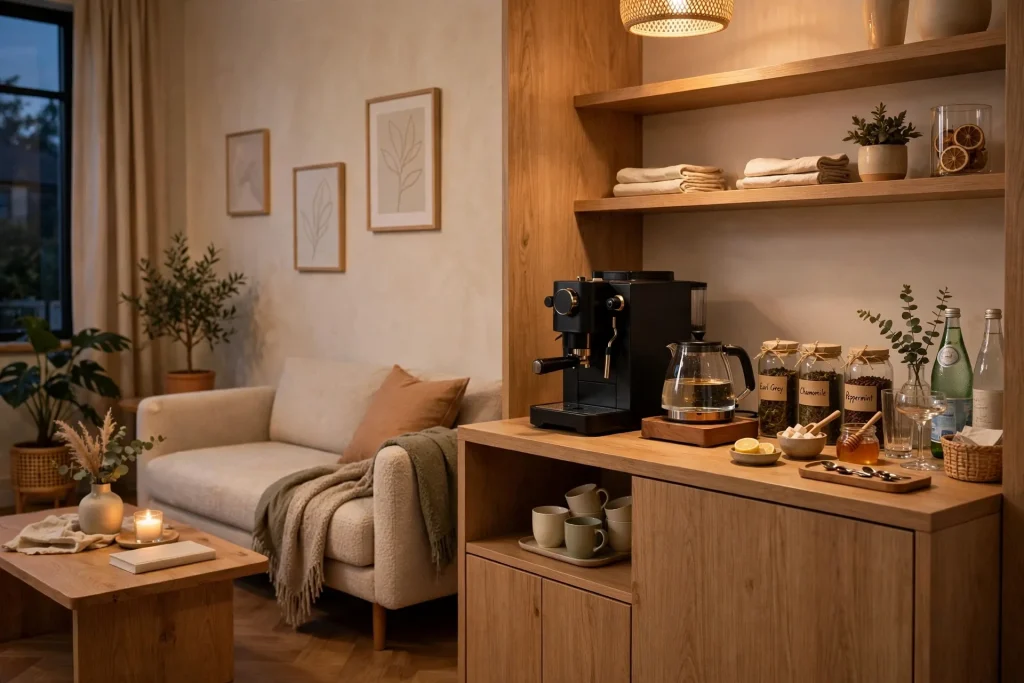
Add a Tea, Coffee, or Drinks Station
Works if: you entertain often or love a slow weekend morning
A small drinks station saves trips back and forth to the kitchen. A bar cart, a sideboard, or a tray on a console table all work.
What it might hold:
- Mugs and glasses
- Tea, coffee, or hot chocolate in jars
- Coasters and napkins
- A small tray for serving
If you plan to keep a kettle or coffee machine in the lounge, place it on a stable, heat-resistant surface near an outlet. Keep cords tidy and away from the edge, especially if children or pets are around.
A jug of water with citrus slices, sparkling drinks, and a few nice glasses can make guests feel welcome without much effort.
A bar cart on wheels can roll out for guests and tuck away afterward.
Tuck In a Hideaway Work Bureau
Works if: you work or study at home but don’t want the lounge to feel like an office
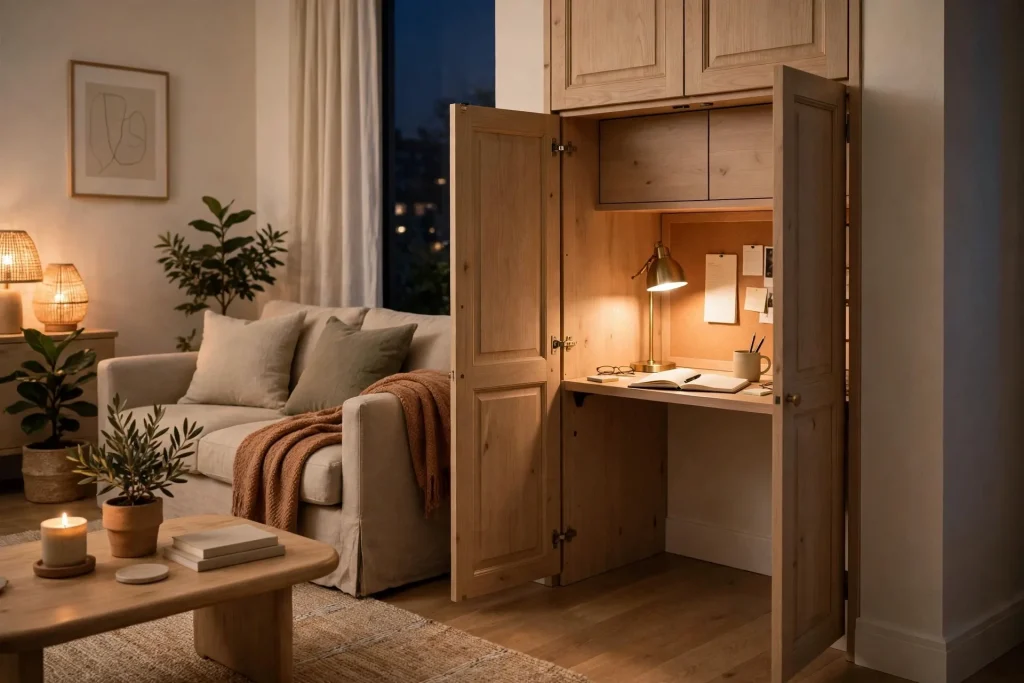
A bureau, or secretary desk, has a fold-down front that opens into a writing surface. Inside, there’s space for a laptop, notebooks, and chargers. When you’re done, you close the front and the work disappears.
This is one of the most practical lounge ideas for small homes. It gives you a proper workspace without a full desk taking over the room.
Choose a bureau that fits your laptop when open, and check that the fold-down front is strong enough to lean on.
Tall bureaus should be anchored to the wall to prevent tipping, especially in homes with young children. Plan for an outlet nearby so you’re not running cables across the floor.
Design a Pet-Friendly Lounge
Works if: your dog or cat spends as much time in the lounge as you do
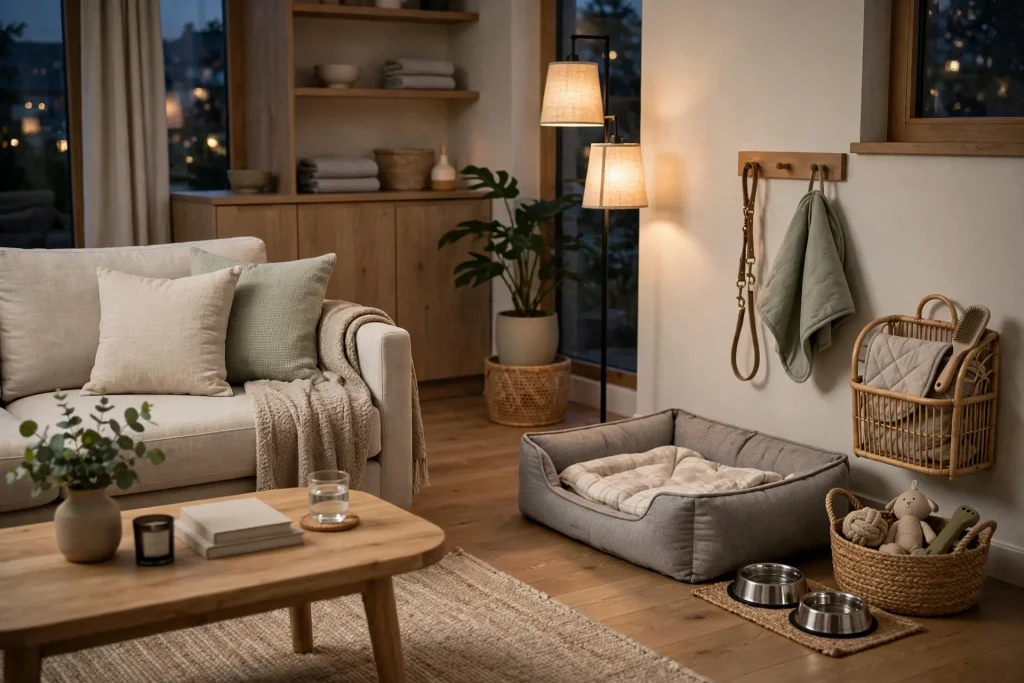
Pets and lounges can live happily together with a few smart choices.
Fabric. Tightly woven fabrics and performance fabrics tend to resist claws and hair better than loose weaves or delicate velvet. Leather wipes clean easily, but it can still show claw marks. Washable slipcovers help too.
A dedicated spot. A pet bed in a corner, or a built-in nook under a console, gives your pet its own space and may keep them off the sofa more often.
Floors. Machine-washable rugs and scratch-resistant flooring make cleaning easier. Check the label, since many natural-fiber rugs, like real jute, aren’t washable.
Plants. Many common houseplants are toxic to pets. Check before bringing any new plant into a room where your pet spends time.
Imagine a lounge with a charcoal performance-fabric sofa, a machine-washable flat-weave rug, and a round cushioned dog bed tucked beside the armchair. The combination keeps the lounge looking calm while making everyday pet mess easier to manage.
Make a Hobby Corner
Works if: you knit, sew, sketch, paint, or build models
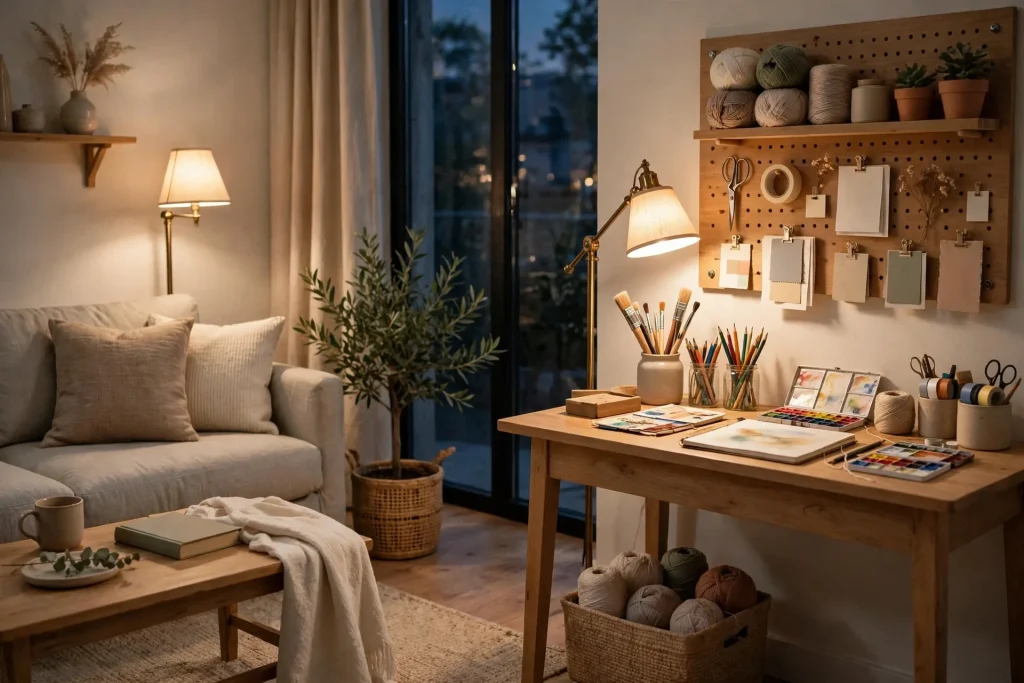
Hobbies often get packed away because there’s no place to leave them out. A hobby corner fixes that.
Unlike the quiet corner, this spot is about doing something with your hands. A comfortable chair, good task lighting, and storage within arm’s reach are the key pieces. A rolling cart or a storage ottoman can hold yarn, sketchbooks, or supplies.
For example, a knitter might set up an armchair by the window, with a floor lamp and a lidded basket for wool. A model builder might prefer a small table with a magnifying lamp.
Keep sharp tools, paints, and small parts stored safely if children or pets are around. A lidded box or a cabinet with doors keeps the corner looking tidy when you’re not using it, too. These are lounge ideas that pay off quickly, because hobbies get done when supplies are already out.
Use Smart Lighting Scenes
Works if: your lounge does a lot of different jobs
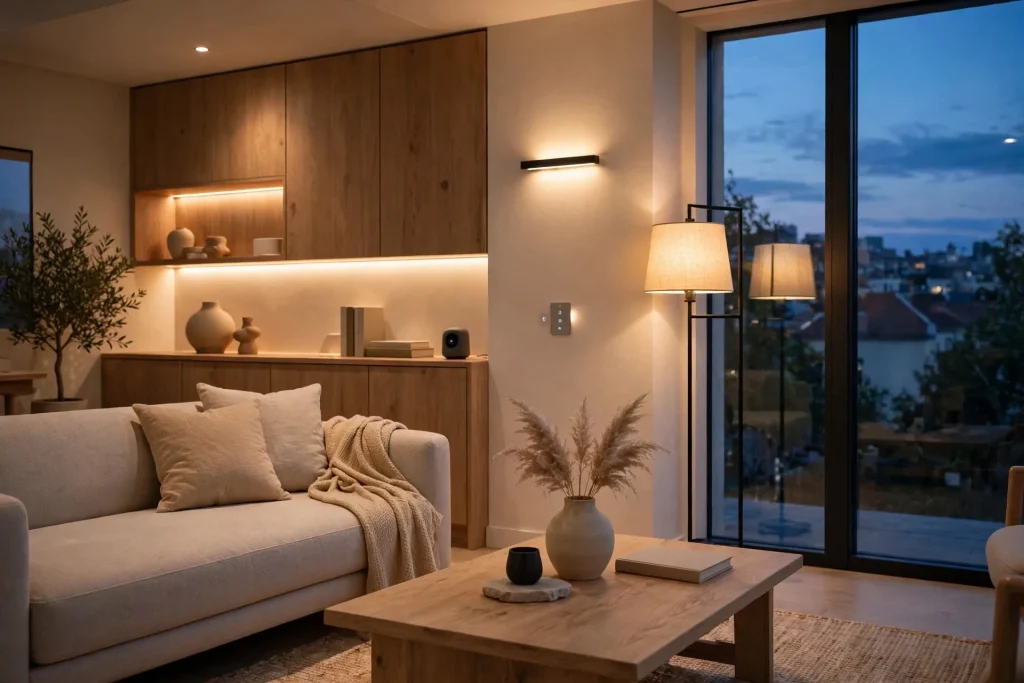
The movie setup handles one evening. Lighting scenes help the room switch between all of them. Smart bulbs let you change brightness and warmth for different moments, while smart plugs simply turn a lamp on or off on a schedule.
Example scenes:
- Morning: bright, cool white light for waking up
- Reading: focused warm light near the chair
- Movie: low, dim light behind the TV
- Evening: soft, warm light from lamps only
Most systems work through an app or a voice assistant. Check that the bulbs fit your lamps and are compatible with your system before buying.
No smart tech? You can create the same zones with ordinary lamps: one bright lamp for tasks, one warm lamp for evenings, and a dimmer switch where possible. Use daylight first, and add lamps as it fades.
Smart bulbs are an easy, renter-friendly way to change the feel of a lounge without rewiring anything. Start with two or three bulbs in your most-used lamps before buying more, so you can see what you actually use.
Create a Screen-Free Quiet Corner
Works if: you want a calm place to rest, read, or simply think
Not every corner needs a screen or a project. The listening corner is about music and the hobby corner is about making things, but this spot is simply for rest.
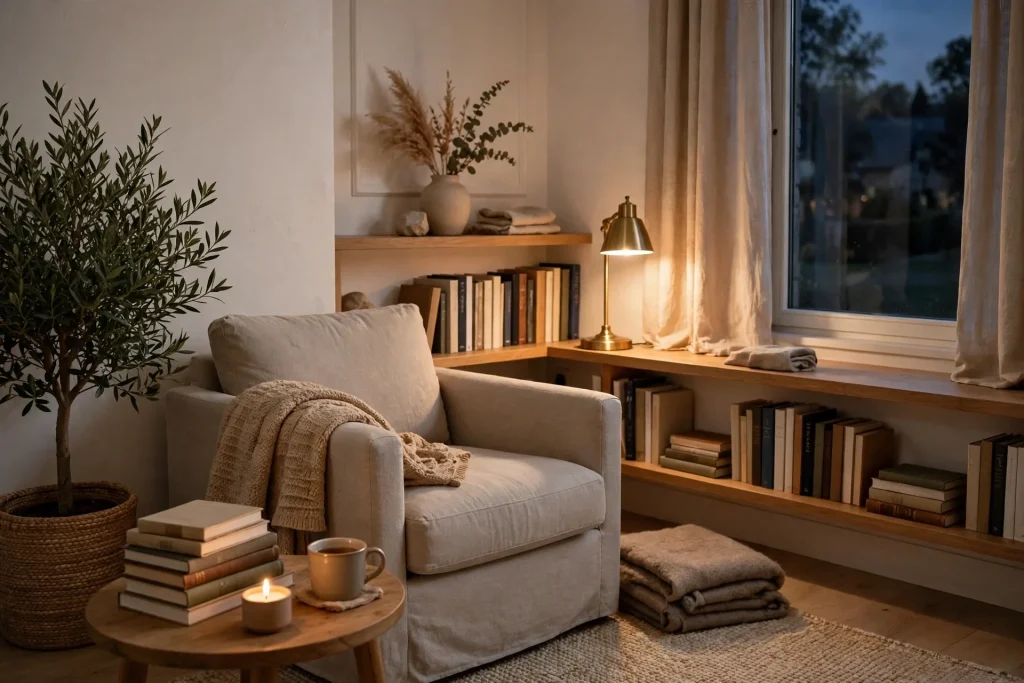
It might include a floor cushion or a low chair, a small shelf with a few books or a journal, a soft throw, and a candle-style LED light.
The idea is to keep phones and laptops away. Some people place a small basket nearby as a “phone parking” spot.
LED candles give a soft glow without an open flame, which is helpful in homes with children or pets. Use them according to the product’s safety instructions.
Even a small corner can make a difference. It gives everyone in the household somewhere to step away for a few minutes.
A Real-World Example
Imagine a family of four with one medium-sized lounge. The parents love films, the kids love board games, and one parent works from home two days a week.
They choose a movie setup, a games table, and a bureau. The key is placement. The sofa faces the TV on the long wall, the round table sits in the window corner, and the bureau goes on the short wall near an outlet. That keeps a clear path from the door to the sofa.
They skip the daybed and listening corner, since the room isn’t big enough for everything. Washable sofa covers handle snack spills, and the room works from morning to bedtime without feeling crowded.
Making It Work in a Small Lounge
Keep a clear walkway. Aim for an easy path from the door to the main seating, without stepping around furniture.
Choose slim proportions. A sofa with thin arms, or chairs on raised legs, takes up less visual space.
Go vertical. Wall shelves and tall, narrow cabinets hold more without using floor space. Anchor tall pieces to the wall.
Line up along the long wall. In a narrow lounge, placing the main seating along one long wall keeps the middle open.
How Two Ideas Can Work Together
Most lounges can comfortably hold two of these zones without feeling crowded.
Movie night plus daybed. The daybed becomes the best seat for films.
Games table plus drinks station. Perfect for hosting friends.
Listening corner plus quiet corner. Music and reading go well together.
Pet-friendly plus hobby corner. Just keep supplies stored high enough to stay away from curious noses.
Start with the zone you’ll use most, then add the second once you see how the room works day to day.
Lounge Mistakes to Avoid
Trying to do everything. Too many zones can make a lounge feel cluttered and confusing.
Ignoring traffic flow. Leave clear paths between doors, seating, and windows.
Forgetting outlets. Many of these ideas need power. Plan where cables will go before setting up.
Choosing looks over comfort. A beautiful chair that’s uncomfortable will rarely get used.
Questions About Lounge Ideas
How do I make my lounge more functional?
Think about how you actually spend time there, then create zones for those activities, like a reading spot or a games table.
Can a small lounge have more than one zone?
Yes, but keep it to one or two. Use multi-purpose furniture, like a storage ottoman or a fold-down bureau, to save space.
What is the best seating for a family lounge?
Durable, washable seating works well. A modular sofa can adapt as needs change.
How can I make my lounge cozy for movie nights?
Use blackout curtains, dimmable lamps, deep seating, and plenty of throws and cushions.
Are smart bulbs worth it for a lounge?
They can be, especially if your lounge is used for many different activities. They let you change the mood without extra lamps.
Build the Room Around Your Evenings
The best lounge ideas aren’t always the most stylish ones. They’re the ones that make your favorite evenings easier and more enjoyable.
Pick the activity you love most, whether that’s films, music, games, or quiet reading, and set up one corner for it this week. You’ll probably find yourself spending more time in the room than ever.