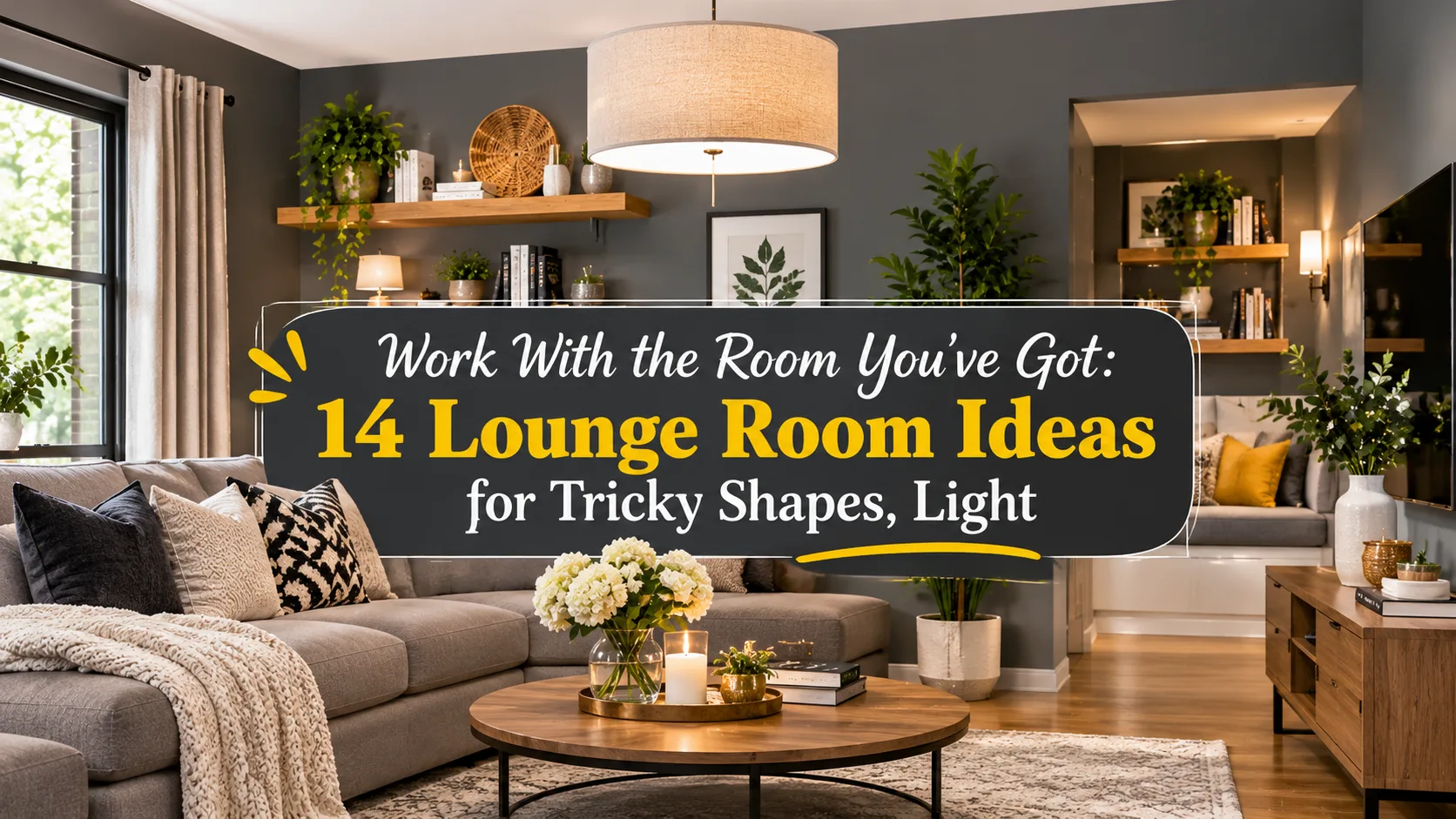
Work With the Room You’ve Got: 14 Lounge Room Ideas for Tricky Shapes, Light
You’ve saved dozens of pictures of beautiful lounges. Then you look up at your own room. It’s long and skinny, or it has four doors, or it barely gets any sun after lunch.
Those pictures were taken in big, bright, perfectly square rooms, and yours isn’t one of them.
These lounge room ideas are designed to bridge that gap. Each one starts with a common problem. An awkward shape. Light that’s too dim or too harsh. A household with toddlers, teenagers, or grandparents who need different things from the same sofa.
Find the problem that sounds like your room, and start there.
A Two-Minute Room Diagnosis
Stand in the doorway and answer three quick questions.
What’s the shape doing? Is the room long, square, low, tall, or broken up by doors and corners?
What’s the light doing? Is it dim most of the day, blazing in the afternoon, or centered on one big window?
Who’s using it? Little kids, teens, older relatives, or lots of guests?
Your answers point you to the right group of lounge room ideas below. Most rooms have one main problem and a smaller one. Fix the main one first. For example, if your room is long, gets little sun, and has a toddler, start with the layout, then look at lighting and family-friendly fixes.
When the shape is the problem (six ideas):
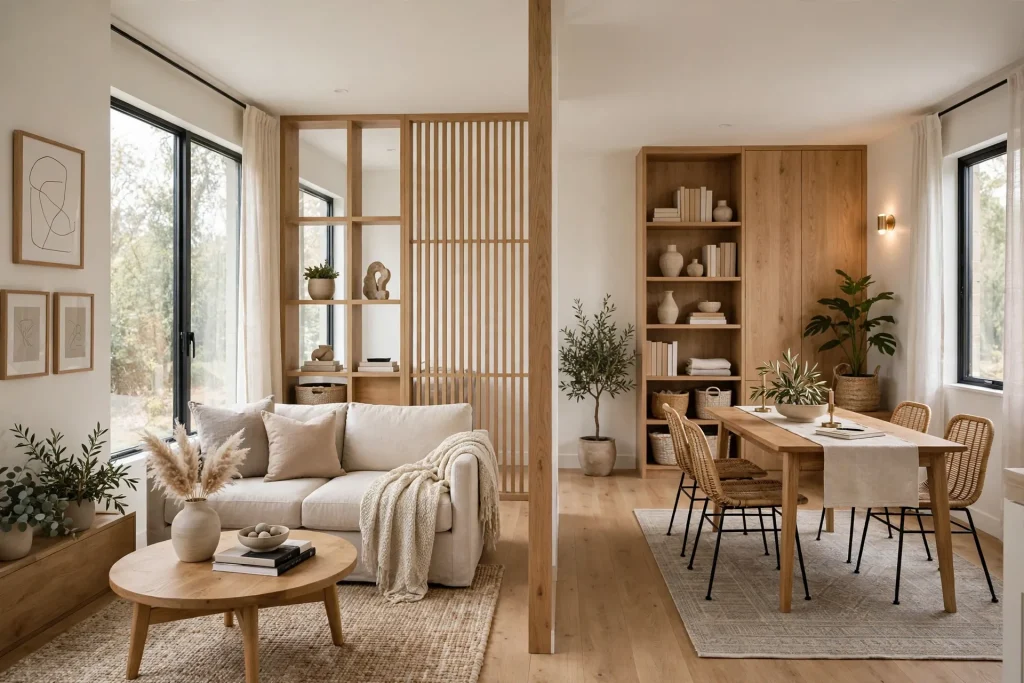
Split a Long, Narrow Lounge Into Two Zones
A long, skinny lounge often ends up with the sofa pushed against one long wall and the TV on the other.
Let the main seating area take up most of the room, with the sofa floated slightly away from the wall and a rug that anchors it. Adjust the proportions to suit the room’s length and walking routes. The remaining section can serve a completely different purpose. A reading chair and lamp, a small desk, or a games table.
A low bookcase or the back of the sofa can act as a soft divider between the two. Keep a clear walkway along one side, so people aren’t squeezing past knees.
Watch the scale of your furniture too. An oversized sectional can make a narrow lounge feel even tighter, so a slimmer sofa with low arms often works better.
Build a Balanced Layout in a Square Room
Square rooms may seem easy to arrange, but they can feel empty in the middle and crowded around the edges.
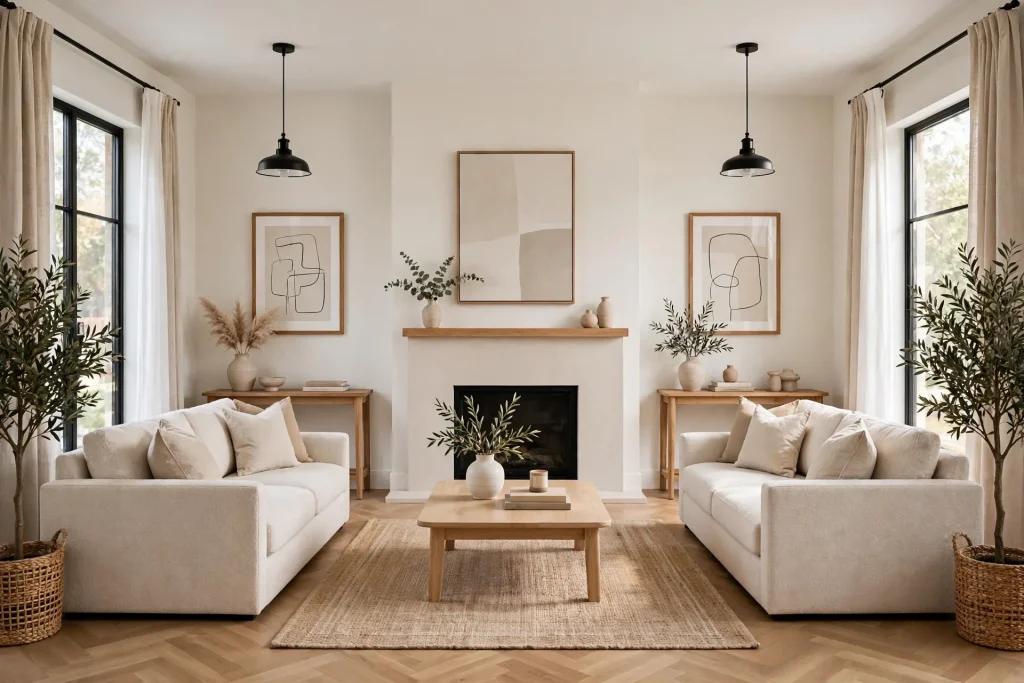
The fix is to pull everything toward the center. Picture a sofa facing two armchairs, with a coffee table between them, all sitting on a rug that’s large enough for at least the front legs of every piece.
In a compact square room, one sofa and one or two smaller chairs can do the same job.
This creates a strong, symmetrical “room within a room.” The rug matters here, since it marks the edges of the seating zone. The space around it becomes a walkway.
A round coffee table suits this layout, since it echoes the room’s even shape.
Plan Around Too Many Doors
Some lounges have a door on almost every wall.
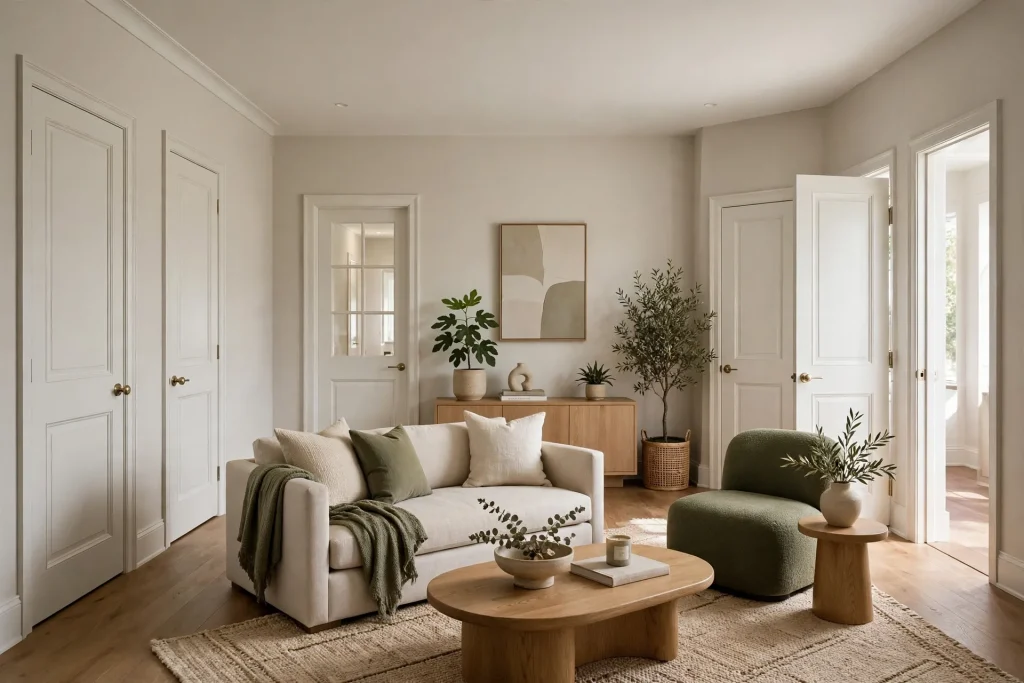
Start by mapping the walking routes with painter’s tape on the floor. Those paths need to stay clear.
Then place the seating in the space that’s left, even if that means floating the sofa in the middle of the room.
A few things that help:
- A sofa with a low back, so it doesn’t block sight lines across the room
- Armless chairs or slipper chairs, which take up less floor space
- Furniture on legs, so the floor stays visible and the room feels less crowded
Make a Low Ceiling Feel Higher
Low ceilings can make a lounge feel heavy.
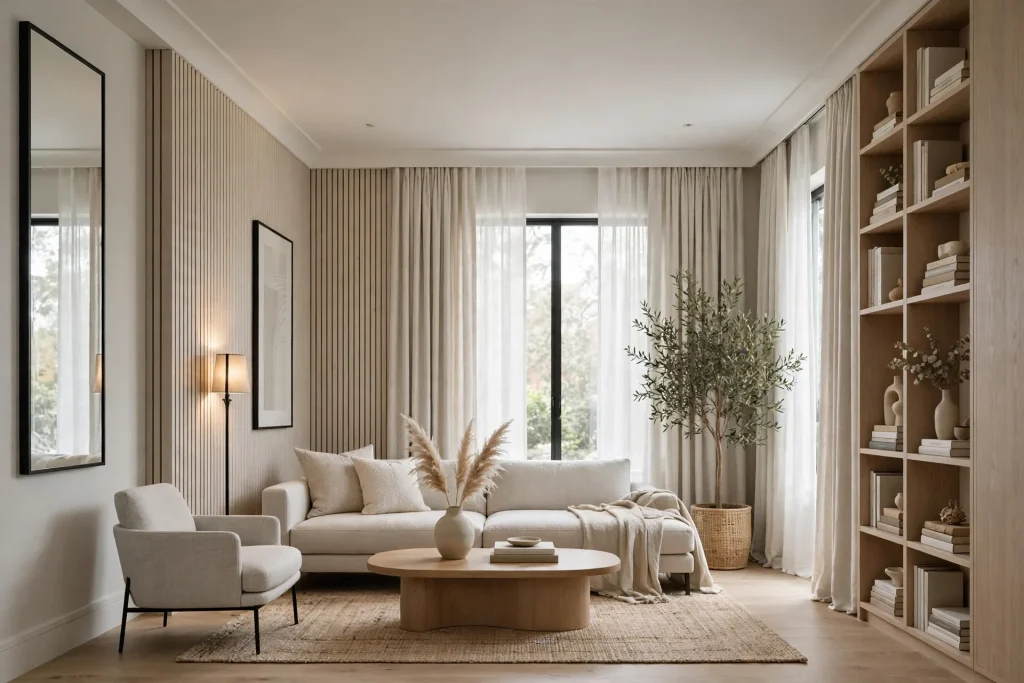
Choose lower, longer furniture, like a low-profile sofa and a long sideboard. When furniture sits low, the space above it feels more generous.
Swap a heavy ceiling light for floor lamps or uplighters that wash light up the walls. Hang curtains from a rail mounted close to the ceiling, so the window looks taller.
A ceiling painted slightly lighter than the walls can create a subtle sense of height, particularly when the room has enough light.
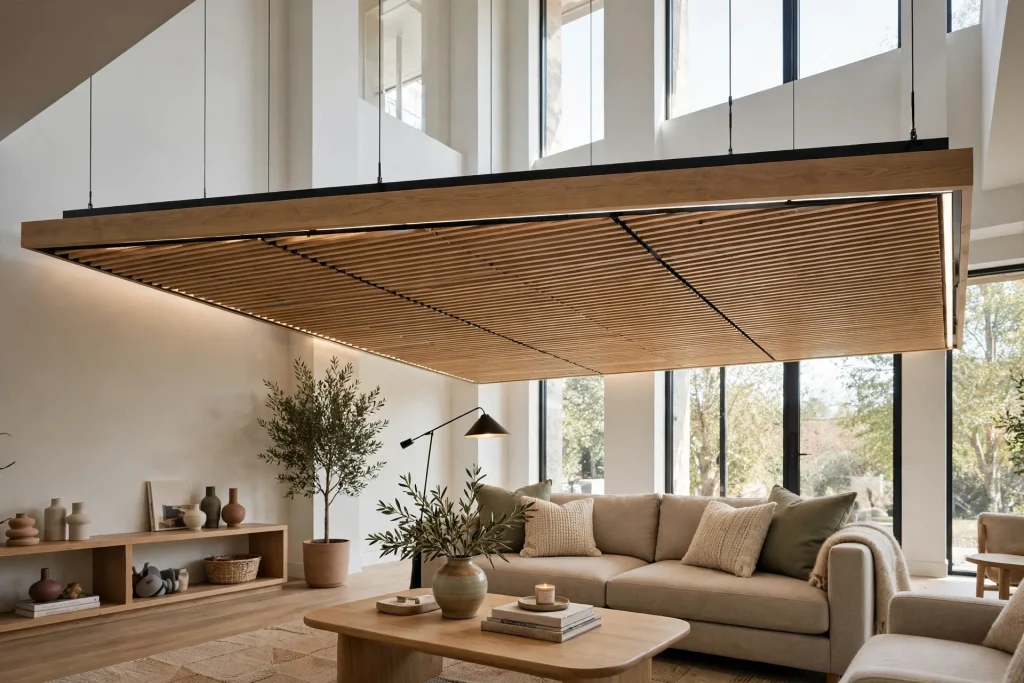
Bring a Tall Ceiling Down to Human Scale
The opposite problem is just as real. In a lounge with very high ceilings, normal-sized furniture can look tiny, and the room can feel cold and echoey.
The goal is to bring visual interest down to a more comfortable height.
- Hang art a little lower and in larger groupings, so it relates to the furniture rather than floating high on the wall.
- Choose a large pendant or chandelier and position it over a seating area rather than a main walking route, with comfortable clearance underneath.
- Add a picture rail or a painted band partway up the wall, with a slightly different shade above it.
Thick rugs, upholstered furniture, and soft curtains also absorb sound, so a tall room feels warmer.
Use the Awkward Corner in an L-Shaped Lounge
L-shaped lounges often have one small leg that becomes a dumping ground for laundry baskets and spare chairs.
Give that leg its own job.
Try a reading nook, a small music corner, or a kids’ play area with a low shelf and floor cushions.
Keep it visually connected to the main room by repeating one color or material. A cushion that matches the sofa or a lamp in the same metal finish is enough.
When the light is the problem (four ideas):
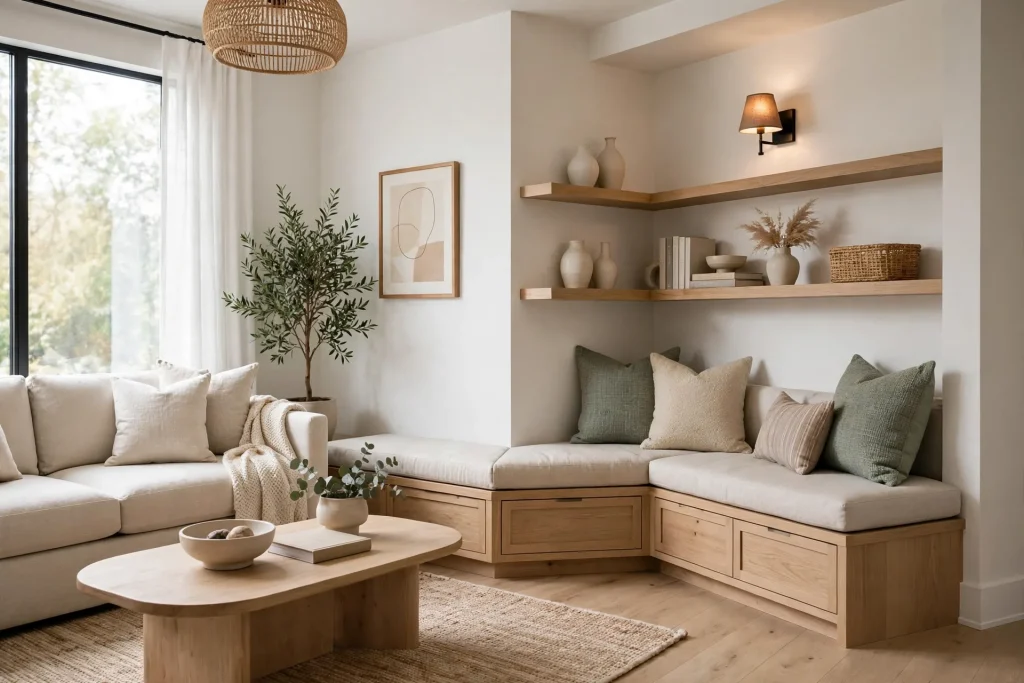
Warm Up a Lounge That Gets Little Sun
A lounge that sees little direct sunlight can feel gray and flat, especially in winter.
Bright white is the usual first instinct, but in a dim room it can look gray and chilly.
Warm neutrals, soft terracotta, muted greens, and creamy shades can make a dim room feel more welcoming. Deeper colors can also work, particularly when balanced with layered lighting and lighter furnishings. Test sample patches at different times of day first.
Then layer your lighting. Aim for light at three heights, like a floor lamp, a table lamp, and a ceiling or wall light, so the room never relies on a single overhead bulb. Warm-white bulbs help the space feel inviting in the evening.
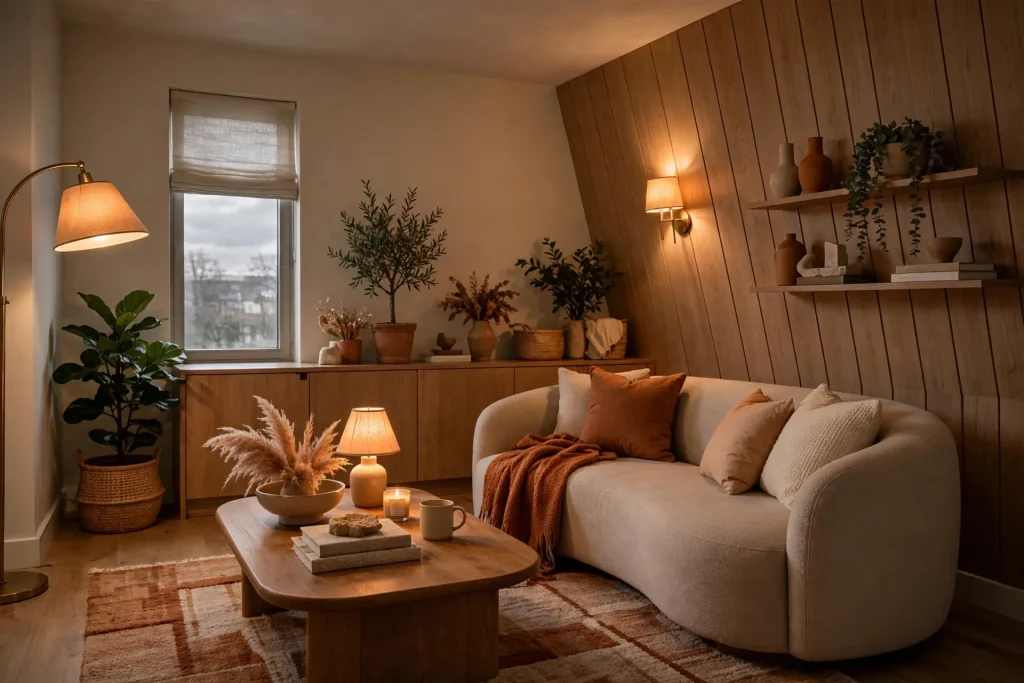
Calm a Lounge That’s Flooded With Sun
A sunny lounge sounds like a dream until the TV screen disappears in glare, the room overheats in summer, and the sofa starts to fade.
Try this combination:
- Sheer curtains or light-filtering blinds for the brightest hours, with heavier curtains for evenings
- Fabrics labeled as fade-resistant for sofas and cushions near the window
- A rug placed slightly back from the sunniest patch, or rotated every few months so it fades evenly
- A TV placed on a wall that doesn’t face the window, if your layout allows it, and tested at different times of day, since windows beside the screen can cause glare too
Cooler colors, like soft blue, sage, or stone, can make a hot room feel calmer. Many succulents enjoy bright sunlight, while fiddle leaf figs generally prefer bright, indirect light. Keep plants away from intense heat and sudden changes in sun exposure.
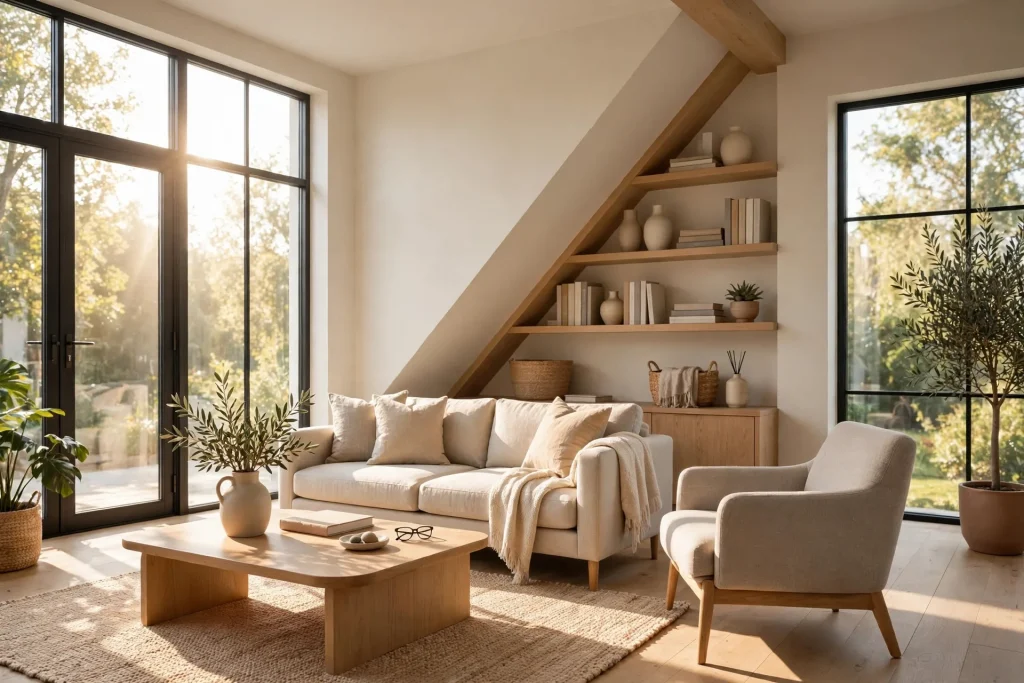
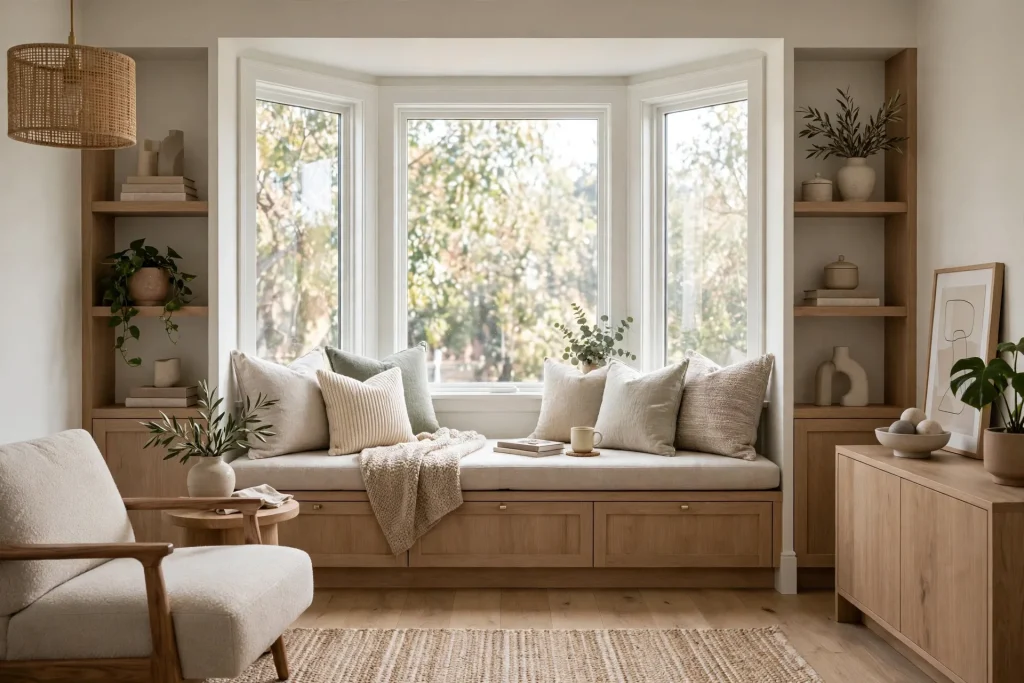
Turn a Bay Window Into a Destination
A bay window is lovely but hard to furnish. A sofa won’t fit inside it, and leaving it empty feels like wasted space.
One simple idea is to place a pair of small armchairs inside the bay, angled slightly toward each other, with a little round table between them. It becomes a sunny spot for morning coffee, chatting, or reading.
Measure the bay’s depth and width before buying anything. A narrower bay may suit a single chair or a built-in window seat better. Keep the furniture fairly low, so it doesn’t block the view or the light.
Create a Focal Point in a Plain Room
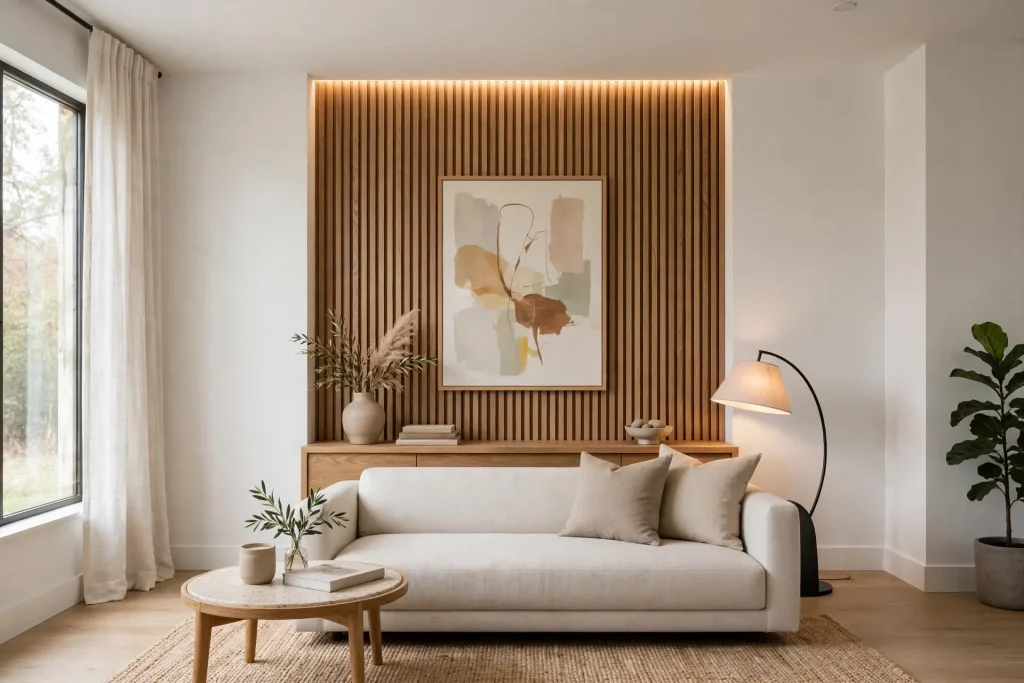
In a plain, boxy room with no fireplace or view, there’s often nothing for the furniture to face except the TV.
A focal point gives the room a center of gravity. It could be:
- A pair of tall cabinets with a low bench or sideboard between them
- A large painted color block behind the sofa
- A big statement floor lamp beside a favorite armchair
- A wall of floor-to-ceiling bookshelves, freestanding and anchored securely to the wall
Once you have a focal point, arrange the main seating so it faces or frames it. The TV can still be in the room, but it doesn’t have to be the star.
When the household is the problem (four ideas):
Toddler-Proof Without Turning It Into a Playroom
Toddlers can change a lounge overnight. Suddenly, sharp corners, glass tables, and dangling cords all feel like hazards.
Swap a hard coffee table for an upholstered ottoman. It’s soft and can double as extra seating. Choose a stable one that won’t slide easily, and avoid models with heavy lids or sharp hardware. Keep it away from windows, so it doesn’t become a climbing step.
Use lidded baskets or a low sideboard with doors for toys, so the floor can be cleared quickly at the end of the day.
Safety matters most here. Anchor bookcases, tall cabinets, and TVs to the wall, keep blind and curtain cords out of reach, and use outlet covers where needed.
Picture a family lounge with a soft gray ottoman, two big woven toy baskets beside the sofa, and a washable rug. By evening, the toys go in the baskets and it looks like a calm adult room again.
Give Teenagers a Reason to Stay
Teenagers often disappear to their bedrooms. A lounge that suits them a little better can help.
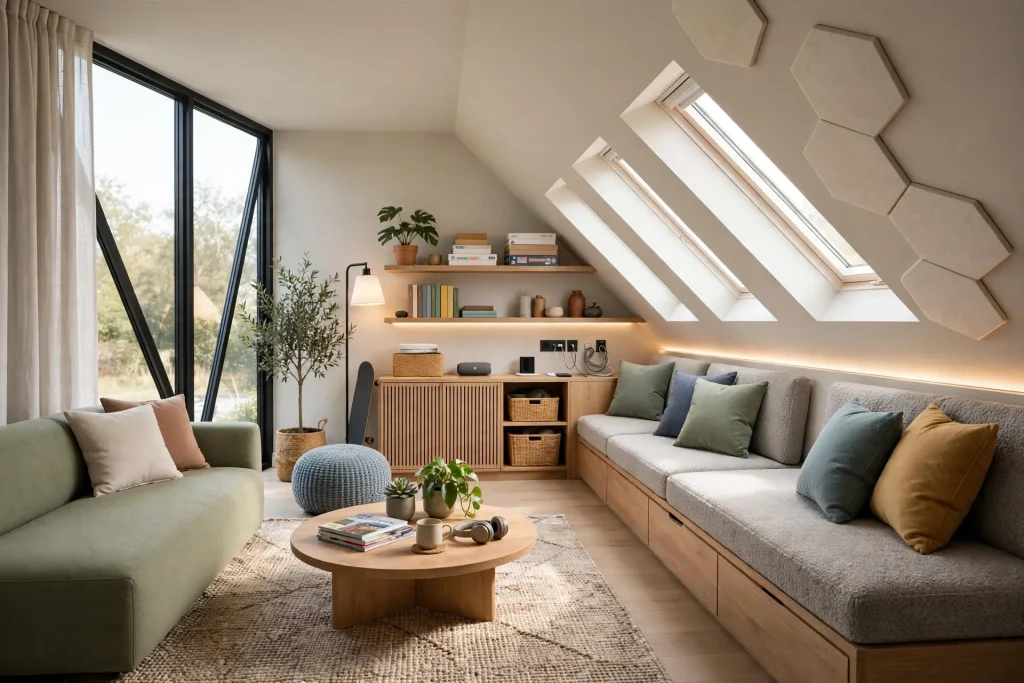
Comfortable floor seating, like large floor cushions or a bean bag, gives them somewhere to sprawl. A games console or streaming setup that’s tidy and easy to use helps too, especially if the cables are hidden and controllers have a basket of their own.
A few practical touches help:
- A charging spot for phones, like a small tray with a multi-port charger
- A side table or two within reach of every seat for snacks and drinks
The goal isn’t to turn the lounge into a dedicated teen hangout. It’s simply to make it a place they’d choose to be.
Make It Comfortable for Older Relatives
If parents or grandparents visit often, small changes make the room much easier for them.
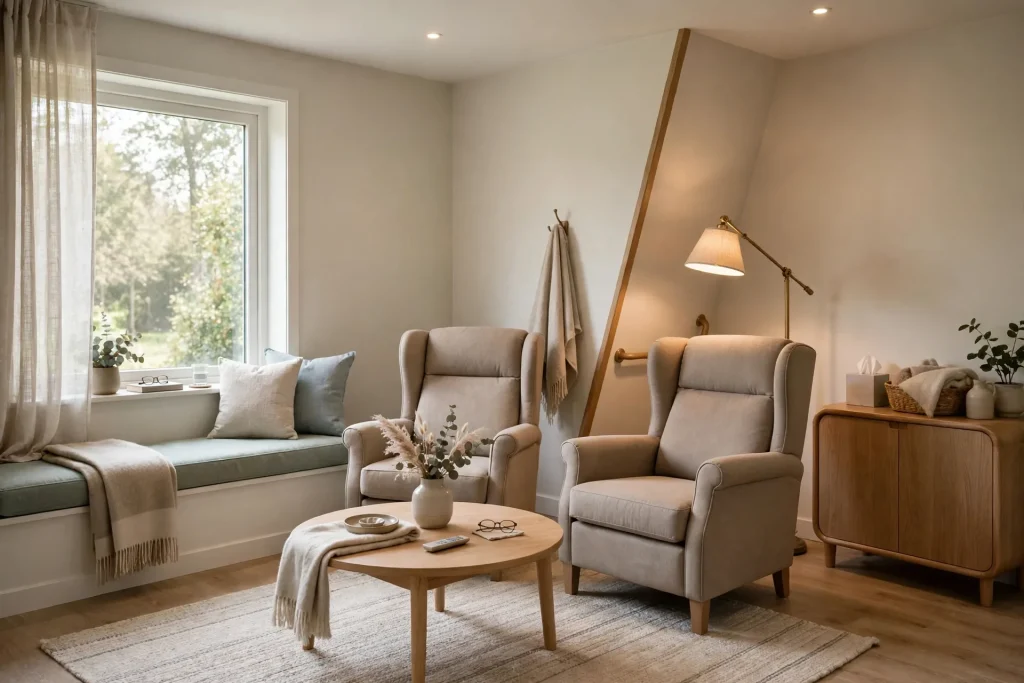
Very low, deep, or squashy sofas can be hard to get out of. A supportive chair with firm cushioning, armrests, and a seat height that feels comfortable for the person using it can make sitting down and standing up easier.
Keep walkways wide, avoid narrow gaps between furniture, and secure rug edges with non-slip pads, so they’re less likely to cause trips. Tuck trailing cords away from paths.
Good lighting matters too. A bright reading lamp beside their favorite chair, and easy-to-reach switches or plug-in lamps with simple controls, make evenings more comfortable.
A small side table beside that chair keeps glasses, a drink, and other everyday items within easy reach.
Set Up for Frequent Hosting
If friends and family often gather in your lounge, plan for more people than your sofa can hold.
Think of seating in three layers:
Main seating. The sofa and armchairs that are always there.
Flexible seating. Stools, poufs, or a bench that can be pulled in when needed.
Overflow seating. Folding chairs or floor cushions stored nearby for bigger gatherings.
Give every seat a surface within reach for a drink. Nesting tables tuck away when not needed.
Dimmable lighting helps the room shift from afternoon to evening. If you’d like candles, flameless LED versions are a safer choice around busy rooms with lots of people moving about.
One tip for every household: shared lounges collect remotes, chargers, toys, and blankets from everyone. A closed sideboard or a set of lidded baskets, with one basket per person or purpose, keeps that mix out of sight.
Putting Two Fixes Together
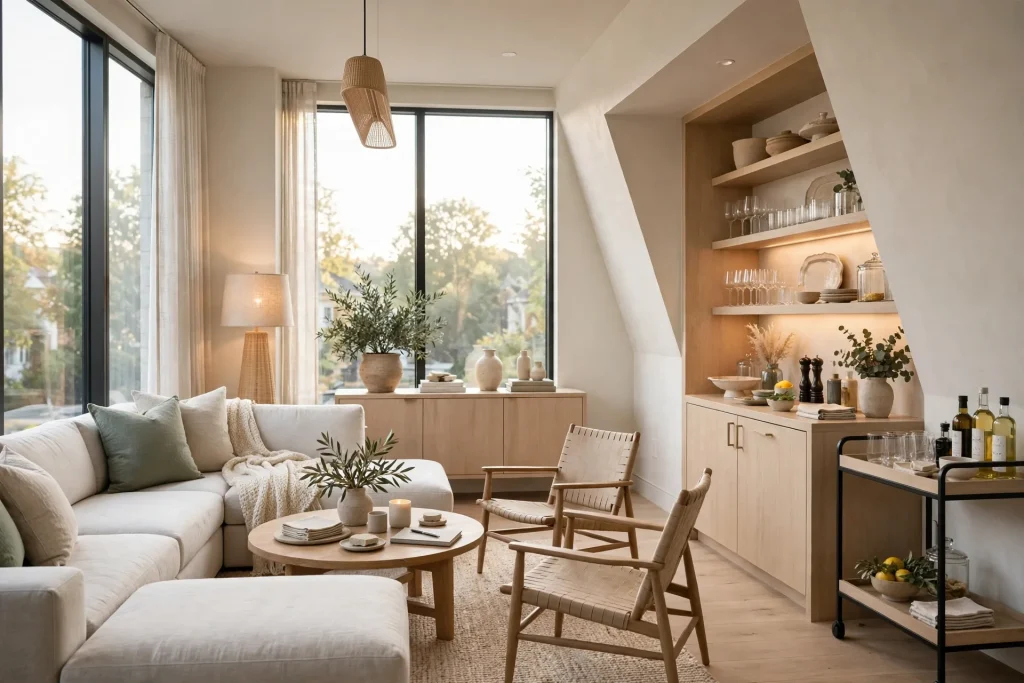
Imagine a long, narrow lounge that gets very little sun, in a home with a toddler. Instead of pushing the sofa against the long wall, the family floats it to create a main seating zone and turns the far end into a small play corner with a low shelf and two toy baskets.
The walkway runs along the window side, so nobody has to cross the play corner to reach the sofa. The play corner sits at the far end, away from the door, so toys stay out of the main path.
They paint the walls a warm, soft green, add a floor lamp and two table lamps, and replace the glass coffee table with a padded ottoman. The bookcase in the play corner is anchored to the wall.
None of these changes needs to be expensive. Each choice simply answers one of the room’s real problems.
Mistakes That Make Tricky Rooms Worse
Pushing everything against the walls. It often makes difficult rooms feel emptier and harder to use.
Painting a dark room bright white and hoping for the best. In low light, white can look dull. Warmer tones often feel better.
Buying furniture before measuring. Measure doorways, walkways, and wall space first.
Solving for one person only. If several people use the lounge, think about how each of them uses it.
Questions About Lounge Room Ideas
What can I do with a long, narrow lounge room?
Divide it into two zones, like a main seating area and a reading or play corner. Floating the sofa away from the wall usually helps too.
How do I brighten a dark lounge room?
Layer lighting at different heights and consider warm paint colors rather than stark white.
Where should I put the sofa in a room with lots of doors?
Mark the walking routes first, then place the sofa where it doesn’t block them, even if that means floating it in the middle of the room.
How can I make a lounge room work for kids and adults?
Use closed storage for toys, an ottoman instead of a hard coffee table, and washable fabrics. Anchor tall furniture and TVs for safety.
What’s the best seating for older family members?
A supportive chair with armrests and a seat height that suits the person is often easier to get in and out of than a deep, low sofa.
Start With the Problem You Notice Most
The most useful lounge room ideas aren’t always the prettiest ones in a magazine. They’re the ones that fix whatever bothers you every time you walk in.
Pick the problem you notice most, try one of these lounge room ideas, and live with it for a week or two. You’ll quickly see what to tackle next.