Made for the Way You Cook: 17 Kitchen Inspiration Ideas Beyond the Pretty Pictures
Picture two kitchens that look almost identical. Same white cabinets, same pale countertops, same pendant lights.
In the first, someone bakes bread every weekend. Flour ends up everywhere, the mixer lives on the counter, and there’s never enough flat space to roll out dough.
In the second, a family of five grabs breakfast in shifts. Cereal boxes, lunchboxes, a coffee maker, and a dog bowl all compete for the same few feet of floor.
Same kitchen. Completely different needs.
That’s the trouble with a lot of kitchen inspiration. It shows you how a room looks, not how it works for the people in it. These kitchen inspiration ideas start the other way around, with how you actually cook, eat, and live. Then they show how to make that space look good too.
Keep a Three-Day Kitchen Diary
Before you save another photo, try this for three days.
Every time something in your kitchen annoys you, jot it down. The coffee mugs are too far from the coffee maker. The bin is in the way. The kids keep asking for snacks from the top shelf.
By day three, you’ll have a short list of real problems. Those are the clues to which ideas below are worth your money. Some of these kitchen inspiration ideas take an afternoon, while others are part of a bigger renovation, so the diary also helps you decide where to start.
For keen cooks and bakers (five ideas):
Build a Baker’s Station
If you bake often, a dedicated baking zone can change everything.
What makes a great baker’s station:
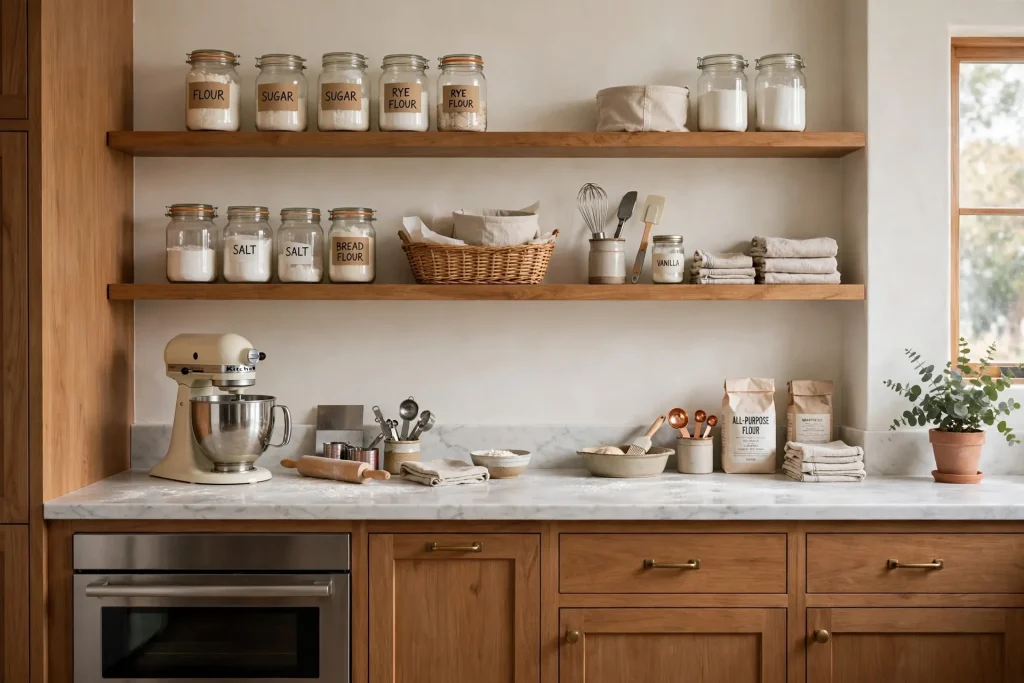
- A cool, smooth surface for rolling dough, like a marble or quartz section of counter, or a removable marble pastry slab you bring out when needed
- A mixer lift, which raises a heavy stand mixer from a base cabinet to counter height
- Deep drawers or clear bins for flour, sugar, and baking supplies
- Hooks or a shallow shelf for measuring cups and spoons
Think of a corner with a marble slab insert, a mixer that rises from the cabinet below, and labeled flour bins in the drawer underneath. Everything is within reach, and the rest of the kitchen stays clear.
Mixer lifts need to be fitted properly and rated for your mixer’s weight. Check the cabinet dimensions and clearance before buying, too.
Make the Range a Statement
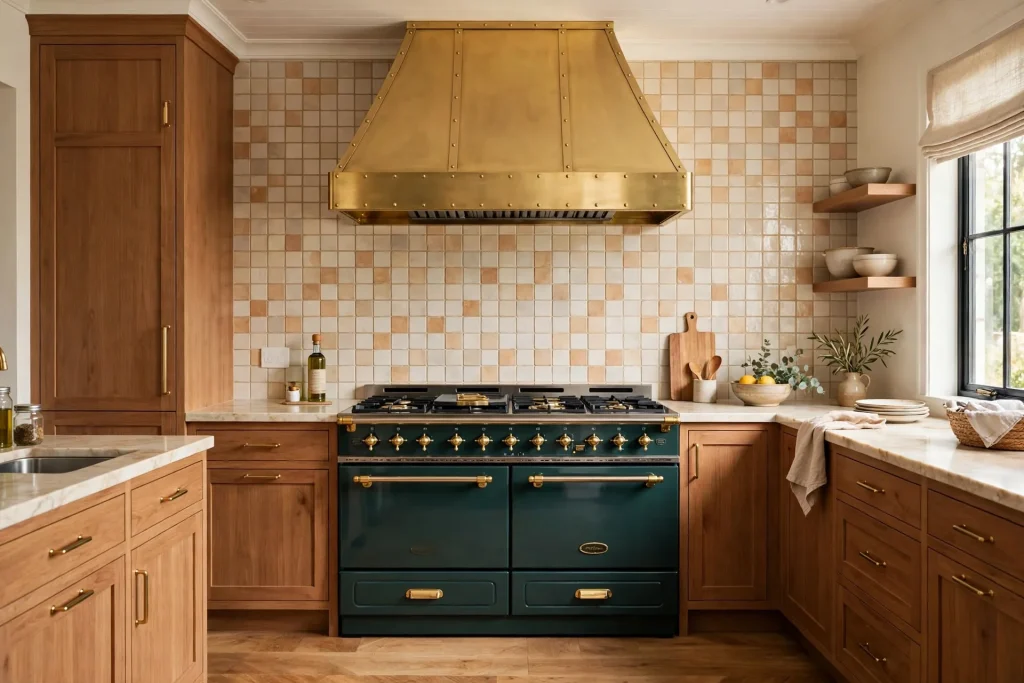
For people who cook most nights, the range can be the heart of the kitchen.
A large range, framed by tile, a plaster hood, or simple open shelves on either side, draws the eye the moment you walk in. The hood and the tile behind it act like a frame, so the cooking area becomes the room’s centerpiece. It also gives you more burners and oven space.
A pot-filler faucet above the stove saves carrying heavy pots of water from the sink. It needs a water line and should be installed by a licensed plumber.
Ventilation requirements depend on the appliance, the installation, and local building codes, so follow the manufacturer’s guidance and ask your installer what’s needed. If your range uses gas, a carbon monoxide alarm nearby is an important safety step.
Add a Scullery for the Messy Work
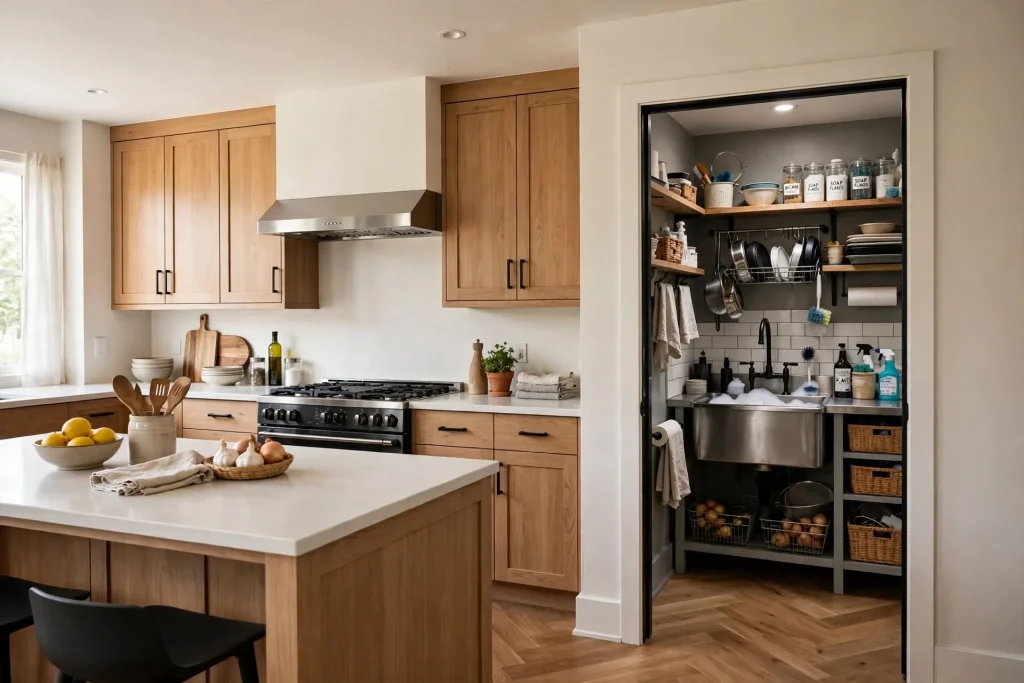
A scullery, sometimes called a back kitchen, is a small room or nook behind the main kitchen where the messy jobs happen.
It might hold a second sink, a dishwasher, open shelves for pots, and space for small appliances. When guests arrive, the dirty dishes and clutter stay out of sight.
You don’t need a big house. A converted laundry, a deep pantry, or a corner behind a sliding door can sometimes work as a mini scullery. Whether it’s practical depends on the plumbing, ventilation, and space you already have, so get advice before planning a second sink or dishwasher there.
This idea suits people who cook big meals, host often, or simply want their main kitchen to stay calm. Good lighting and an easy-clean floor matter here, since this is where the splashes and spills happen.
Plan for Weekly Meal Prep
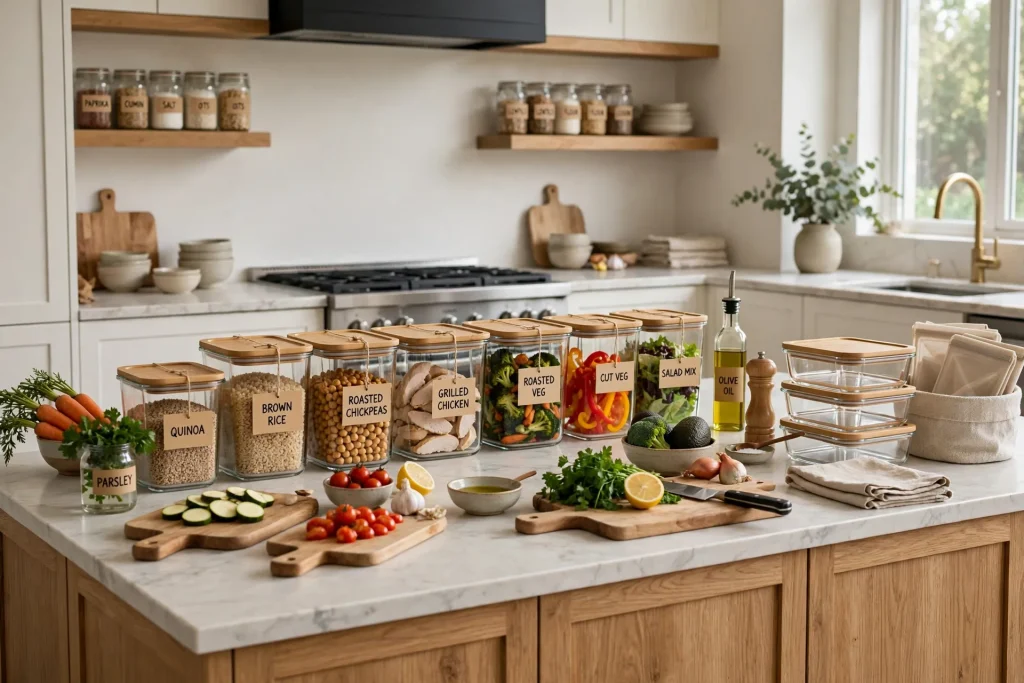
If you batch cook on Sundays, your kitchen should support it.
Helpful features:
- A long, uninterrupted stretch of counter for chopping and portioning
- A drawer just for food storage containers, with lids organized upright
- A well-organized freezer with clear bins and labels
- A large cutting board that fits over the sink to add workspace
Keep sharp knives in a drawer insert or on a wall-mounted strip out of children’s reach.
Label containers with the date, so food gets used in the right order.
Add a Second Prep Sink
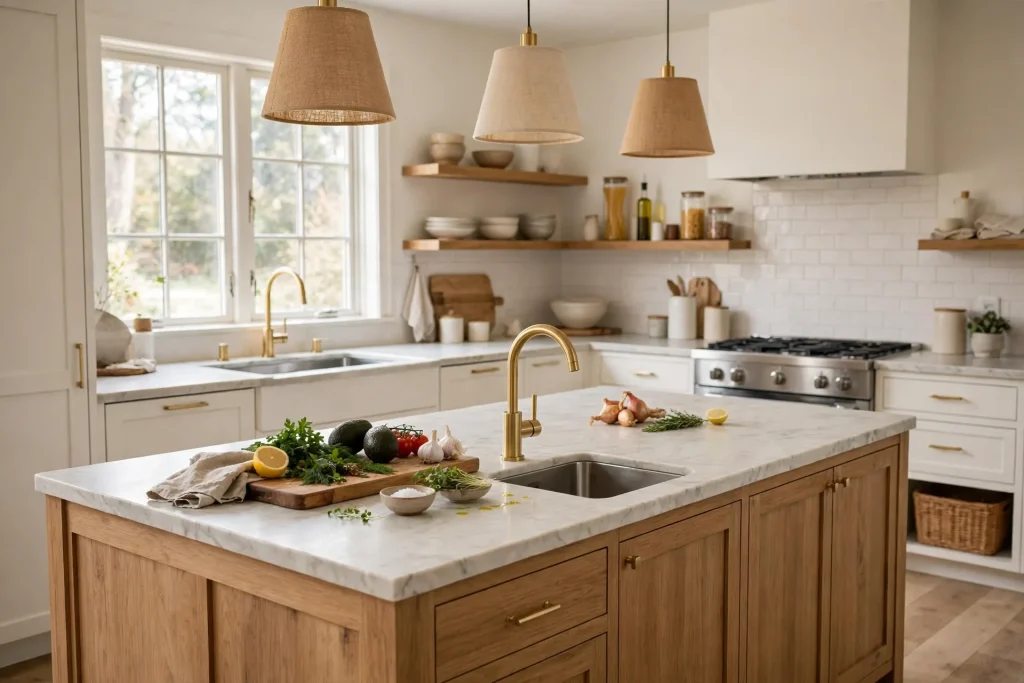
If you grow vegetables, cook with a partner, or simply hate waiting for the sink, a small second sink means two people can work at once without bumping elbows.
A prep sink is usually smaller than the main sink and sits in another part of the kitchen, often on an island or near the fridge. It’s perfect for washing herbs, rinsing produce, or filling pots while someone else does dishes.
Like any new sink, it needs plumbing for water and drainage, so work with a licensed plumber and check whether a permit is required.
For hosts and daily rituals (four ideas):
Create a Coffee Station
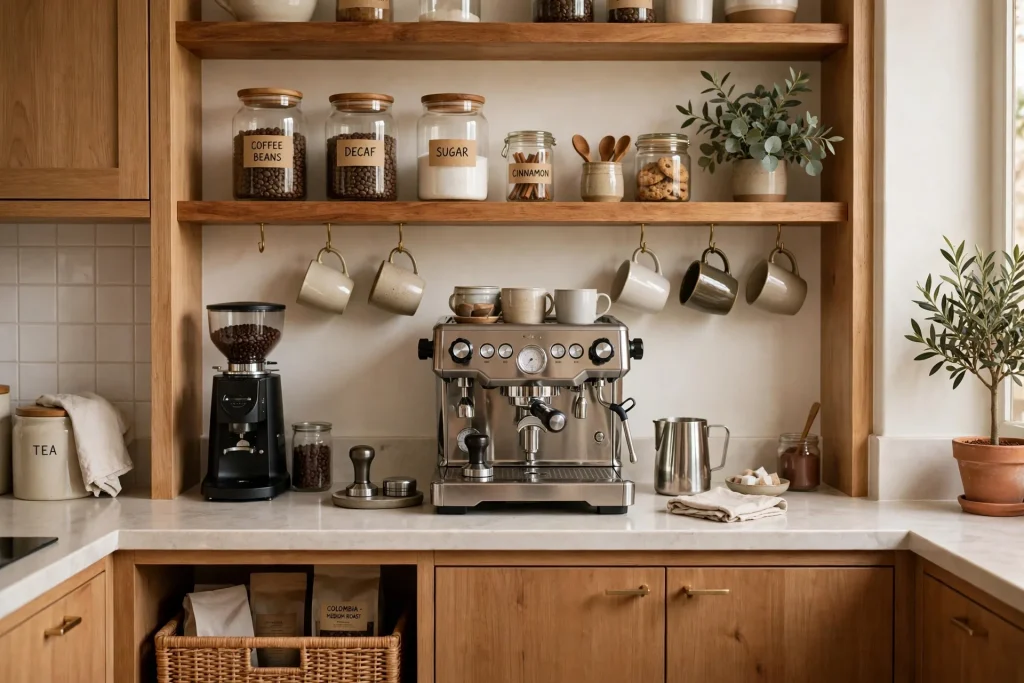
A coffee station gathers everything for your morning ritual in one place.
Imagine a short run of counter with a coffee machine, a coffee grinder, a shelf of mugs, a tray for sugar and syrups, and a drawer below for pods, filters, and beans.
Many people tuck it into a nook, a pantry with doors, or the end of a cabinet run. It keeps the main counter clear and means guests can help themselves.
Plan for an outlet close by, and avoid stretching cords across the counter near the sink.
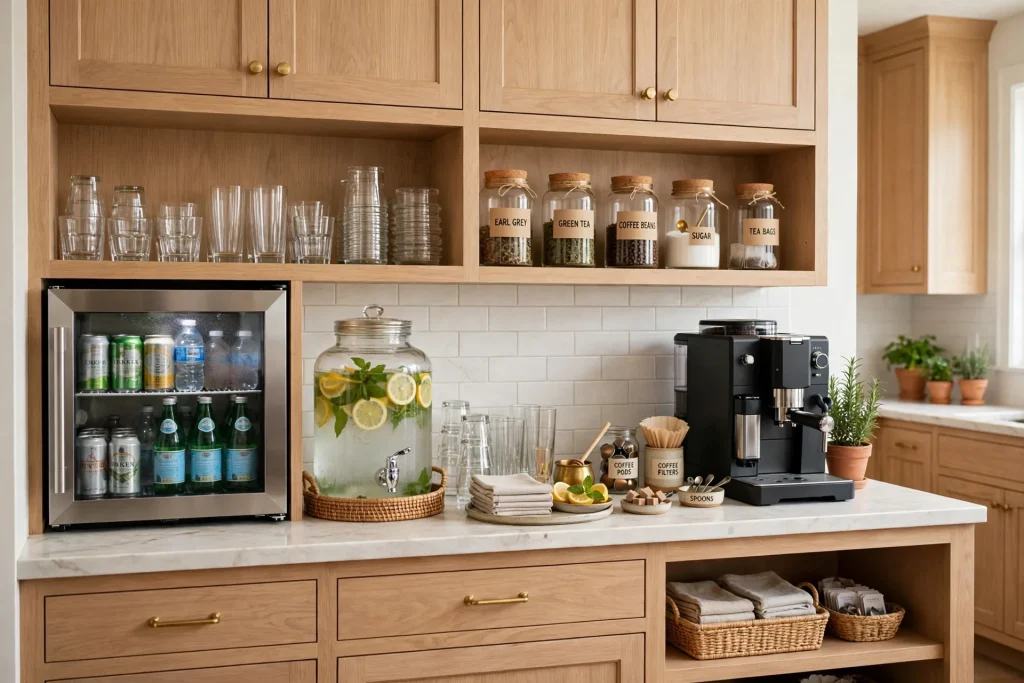
Set Up a Beverage Zone for Guests
If you entertain often, a beverage zone keeps guests out of the cook’s way.
It can include:
- An under-counter drinks fridge for sparkling water, juices, and sodas
- A shelf of glassware
- A small ice maker or ice bucket
- A tray of lemons, limes, and fresh mint for mocktails
Place it at the edge of the kitchen, near the dining or living area. Guests can grab a drink without crowding the stove.
Open a Pass-Through Window to the Outdoors
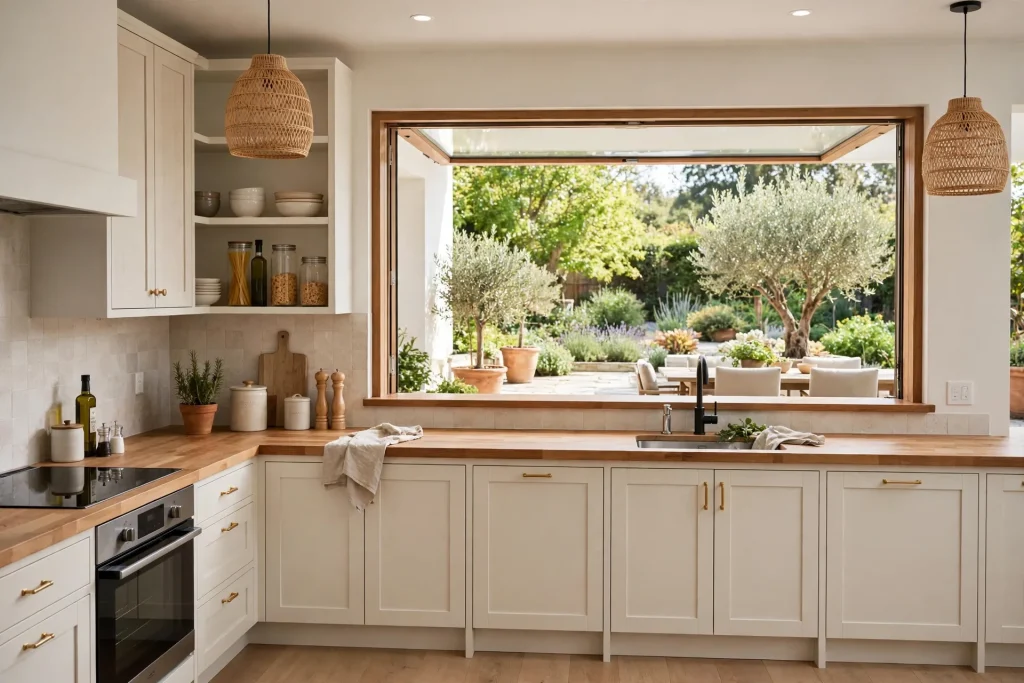
If your kitchen backs onto a patio or garden, a pass-through window can connect the two spaces.
A wide window with a counter on both sides makes it easy to pass food and drinks outside for barbecues and summer meals. Some designs use folding or sliding windows that open fully.
This is a bigger project. Changing an exterior wall usually needs a builder, structural advice, and possibly permits. Make sure the window seals well against weather and insects.
When it works, it feels like your kitchen grows into the outdoors every summer.
Display Dishes in a Plate Rack
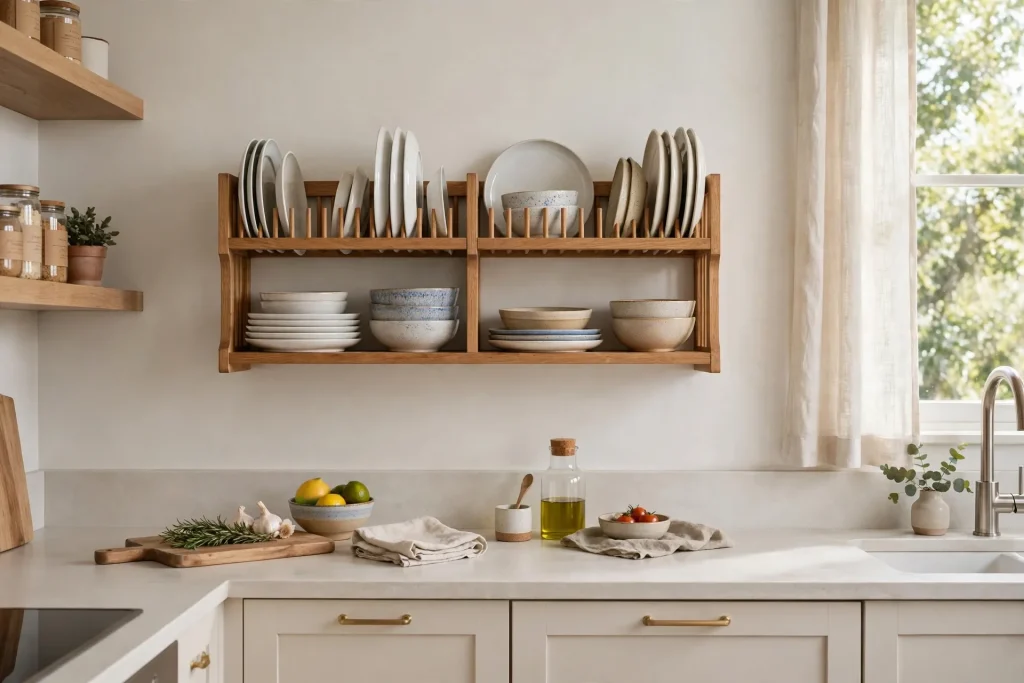
For people who love pretty plates, a wall-mounted or cabinet-built plate rack turns everyday dishes into decor.
Plates stand upright in slots, which gives you vertical storage and lets freshly washed dishes drain and dry. Wooden racks above the sink or beside a window feel especially charming.
Choose a sturdy rack and secure it properly to the wall, since a full rack of ceramic plates is heavy.
It suits farmhouse, cottage, and classic kitchens, and it’s a lovely way to show off a vintage collection.
For busy households (four ideas):
Give Kids a Snack Drawer and Helper Zone
Kids in the kitchen can be wonderful, and chaotic. A few design choices help.
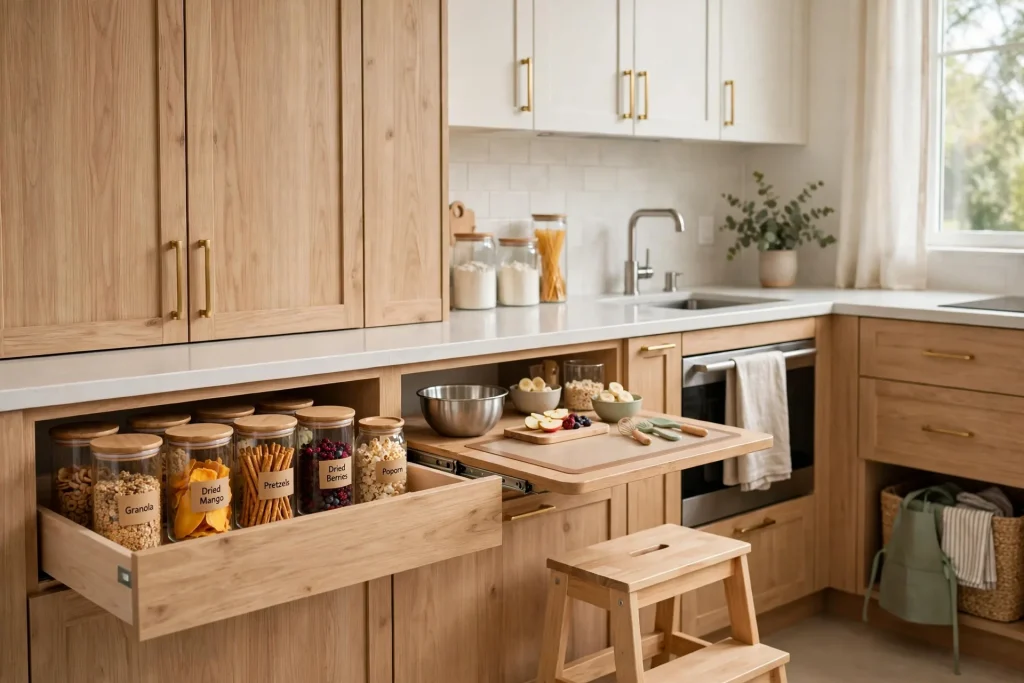
A low snack drawer or shelf lets children grab healthy snacks themselves, without climbing.
A kitchen helper stand or learning tower gives younger kids a safe way to reach the counter and help with cooking. Always supervise children in the kitchen, and keep the stand away from hot surfaces, sharp objects, and unstable edges.
Simple additions:
- A low hook for an apron
- A drawer of child-safe utensils and plastic cups
- Cabinet locks on cleaning supplies
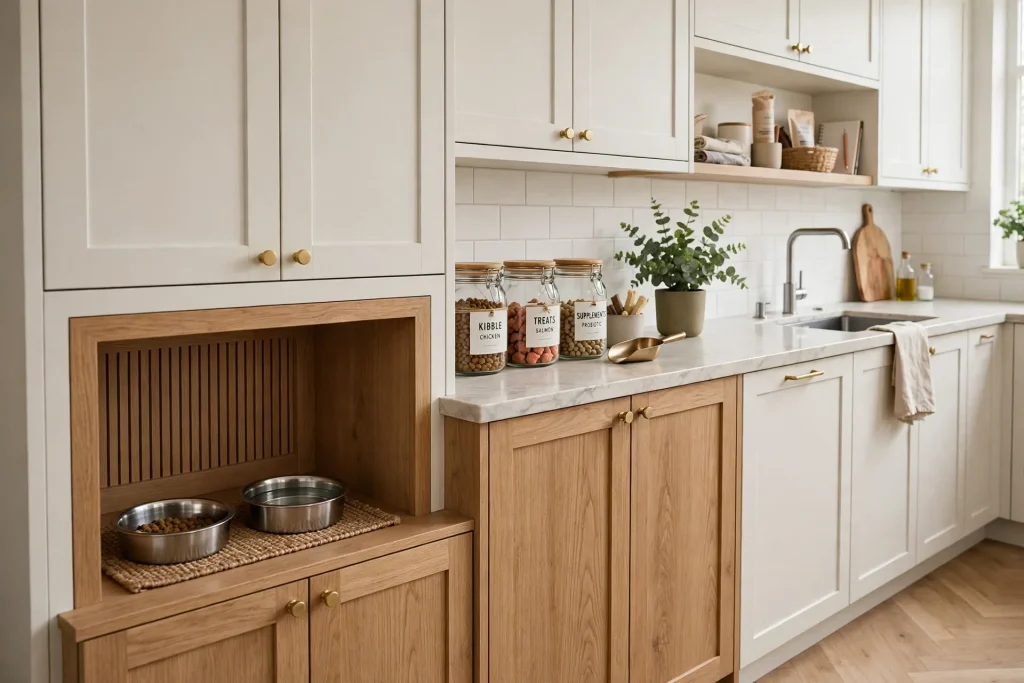
Build a Pet Feeding Station
Pet bowls on the kitchen floor get kicked, splashed, and tripped over. A built-in feeding station solves that.
Some people fit a pull-out drawer with bowls at the base of a cabinet. Others create a small nook at the end of a cabinet run with a mat, bowls, and a hook for the leash.
Keep pet food in a sealed container, which protects it from moisture and pests, and store it in a secure cabinet that’s easy for you to reach but not for your pet.
Choose bowls that are easy to clean, and keep the area away from main walking routes in the kitchen.
Tuck In a Kitchen Desk Nook
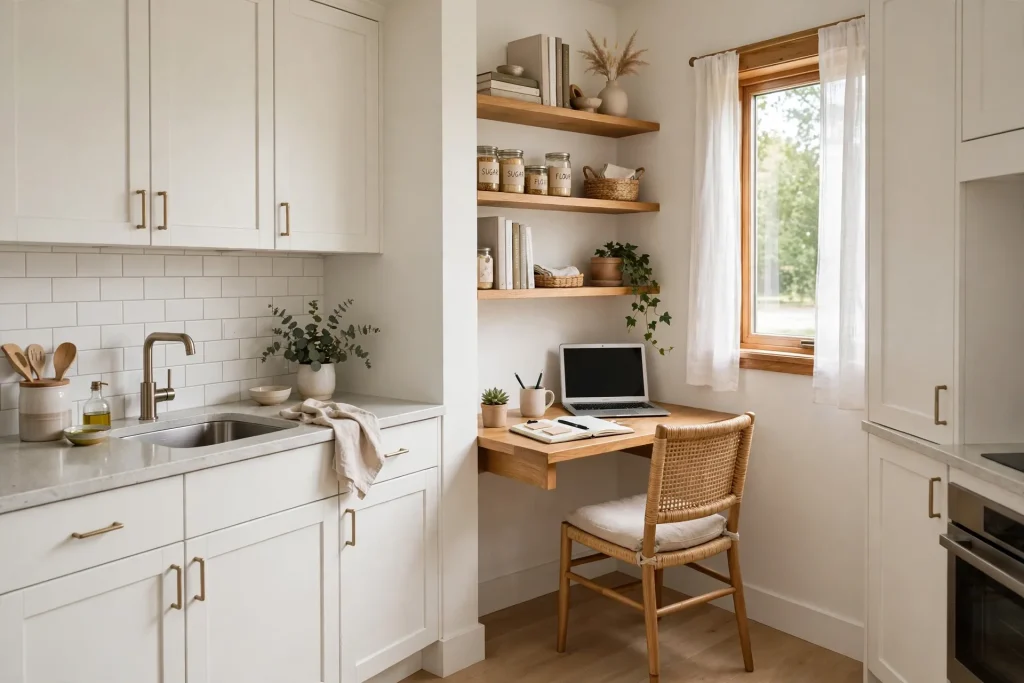
A small desk nook gives the kitchen a home office or homework spot.
It can be as simple as a lowered section of counter with a chair, a shelf above for cookbooks and paperwork, and a charging spot for phones and tablets.
It’s handy for planning meals, paying bills, or helping kids with homework while dinner cooks.
Keep it far enough from the sink and stove to stay dry and splatter-free.
Design an Eco-Friendly Kitchen
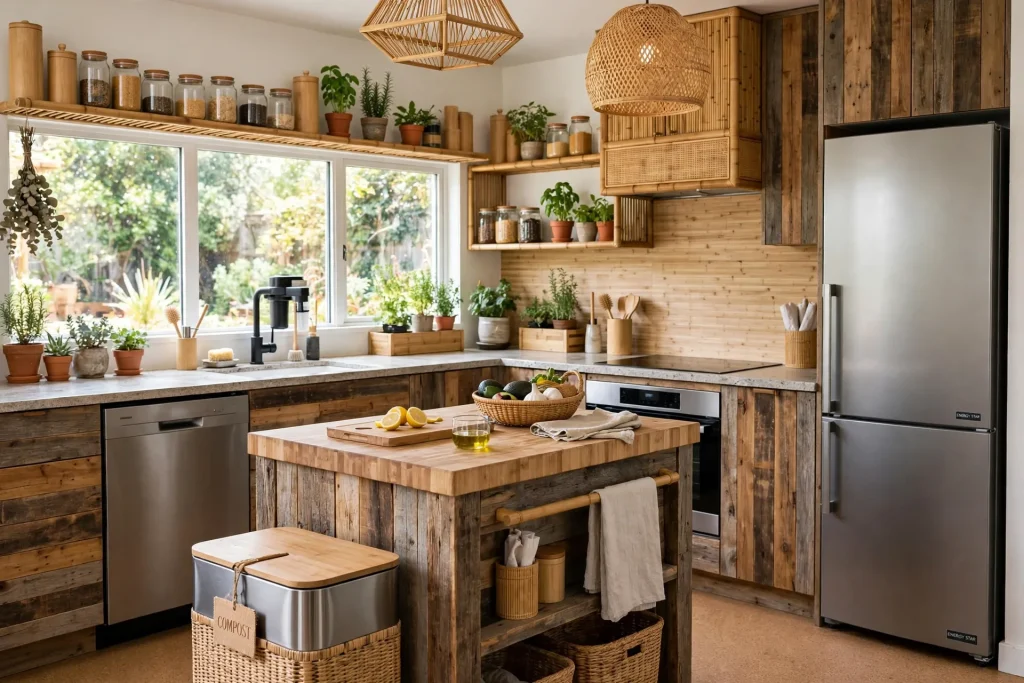
If reducing waste matters to you, design it into the kitchen.
Ideas to consider:
- A pull-out cabinet with separate bins for recycling, compost, and general waste
- A countertop compost caddy with a tight lid
- A filtered water tap to cut down on bottled water
- Open shelves for glass storage jars of bulk dry goods
Check with your local waste service for what can be recycled or composted in your area.
Small habits, like keeping reusable bags and produce bags near the door, also help.
For comfort, accessibility, and everyday ease (four ideas):
Plan an Accessible Kitchen
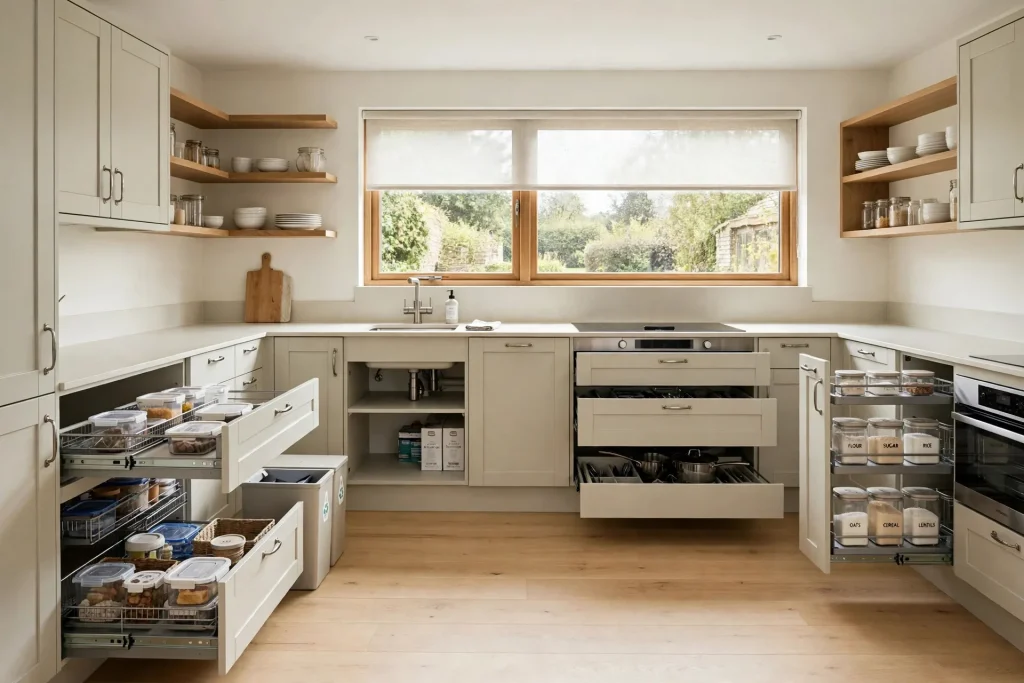
An accessible kitchen makes cooking easier for people with limited mobility, older family members, or anyone who wants a kitchen that will work for years.
Thoughtful features include:
- Lower or adjustable-height sections of counter for seated prep
- Pull-down shelves in upper cabinets
- Drawers instead of deep base cabinets, with everyday items stored between knee and shoulder height
- Lever-style taps and easy-grip handles
- Wall ovens and microwaves at a comfortable height
- Clear floor space for turning
If someone in your home has specific needs, an occupational therapist can offer helpful advice.
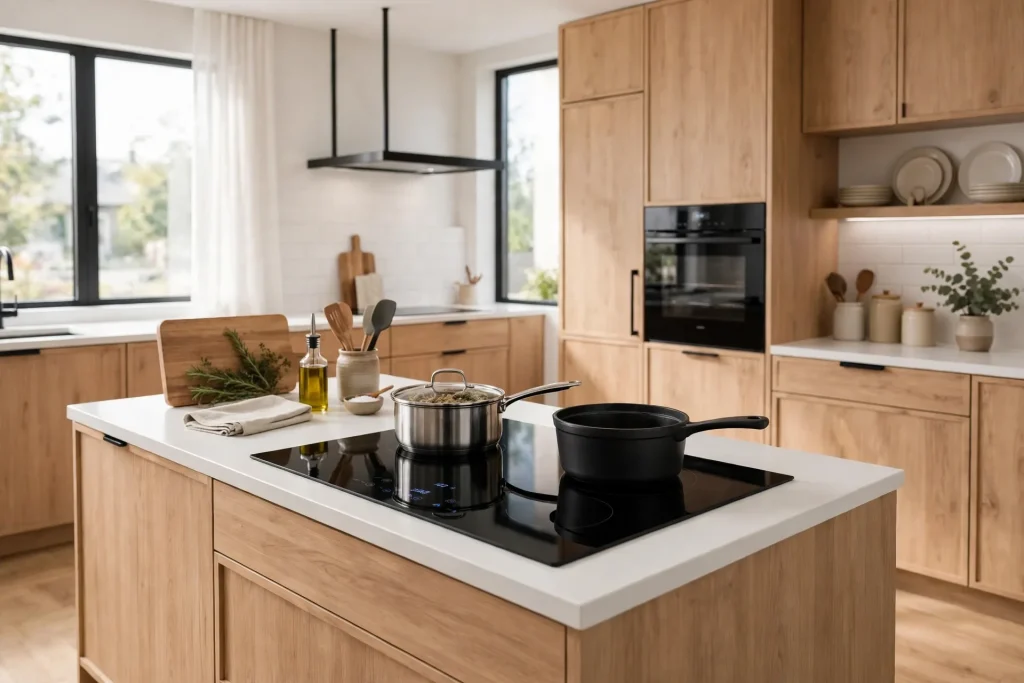
Switch to an Induction Cooktop
Induction cooktops use electromagnetic energy to heat the pan directly. They’re fast, precise, and the cooktop surface stays cooler than many traditional cooktops.
Things to know:
- They need compatible cookware, usually cast iron or magnetic stainless steel. A simple test is whether a magnet sticks to the base of your pan.
- The surface can still be hot after cooking, so take care.
- They often need a dedicated electrical circuit, installed by a qualified electrician.
If you have a pacemaker or another implanted medical device, precautions depend on the specific device, so follow your doctor’s advice and the device manufacturer’s guidance before using induction.
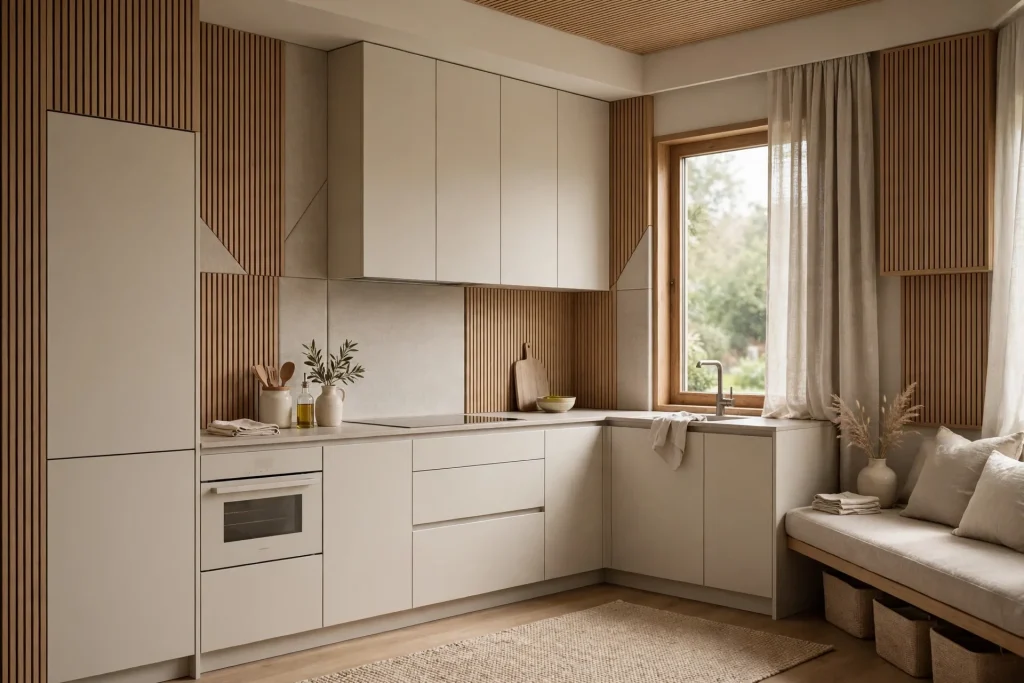
Design a Quieter Kitchen
In open-plan homes, a noisy kitchen can make it hard to relax in the living area.
Some simple choices keep things calm:
- Look for appliances with lower decibel ratings, especially dishwashers and range hoods
- Choose soft-close drawers and doors
- Add a large washable rug or runner to soften sound
- Use upholstered seating or cushions at a breakfast bar
A quieter kitchen is especially welcome if someone works from home or naps nearby.
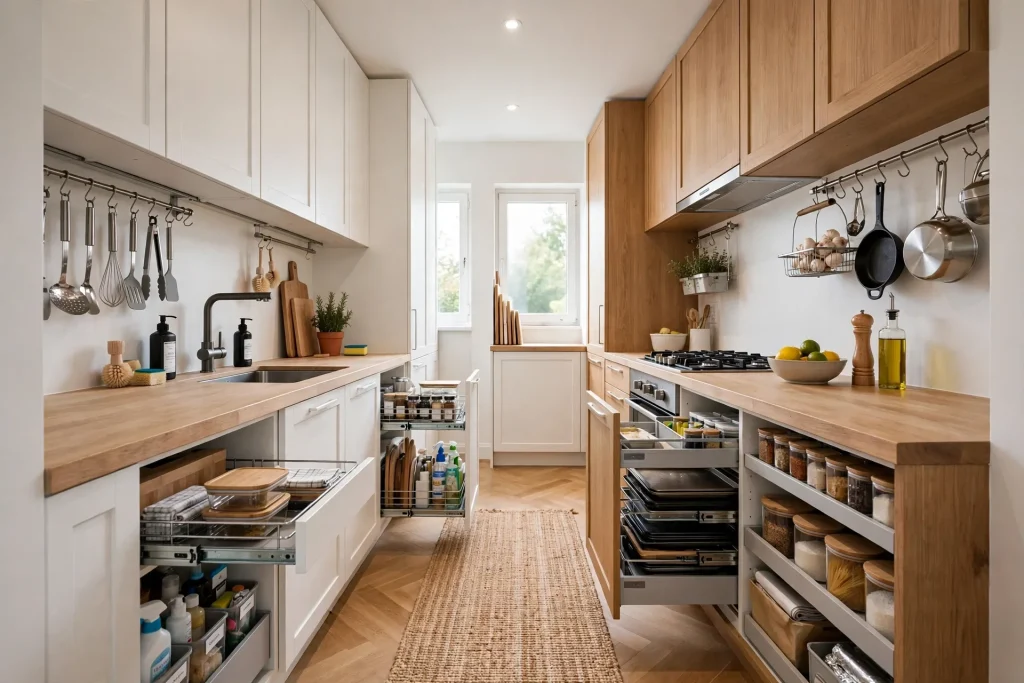
Make a Galley Kitchen Work Harder
Galley kitchens, with counters on two facing walls, can be surprisingly efficient. Everything is within a few steps.
Success comes down to keeping the space clear and well lit.
Keep the most-used tools near the stove and sink. Use the full height of the walls, with tall cabinets or rails for utensils. Light-colored cabinets, under-cabinet lighting, a reflective backsplash, and clear counters all help the narrow room feel brighter.
If there’s a window at the end, keep it clear so natural light reaches the whole galley.
A Real-World Example
Imagine a family with two young kids and a dog. Their kitchen diary shows three problems: snacks are hard to reach, the dog bowl gets kicked over, and the recycling overflows.
They add a low snack drawer, a pull-out pet feeding drawer at the end of the cabinets, and a two-bin pull-out for recycling and compost.
None of it changes the look of the kitchen much, but it makes every morning smoother.
Kitchen Inspiration Mistakes to Avoid
Copying a photo without thinking about your habits. A pretty kitchen that doesn’t match how you cook will frustrate you daily.
Skipping the trades. Plumbing, gas, and electrical work should always be done by licensed professionals.
Adding too many features. Pick the ideas that solve your biggest problems first.
Forgetting about storage. Every new station needs somewhere to keep its tools.
Questions About Kitchen Inspiration Ideas
How do I find kitchen inspiration that suits me?
Start with how you use the kitchen. A short diary of daily frustrations can point you to the right ideas.
What is a scullery kitchen?
A scullery is a small back kitchen for messy jobs like washing dishes and storing small appliances, so the main kitchen stays tidy.
Is induction cooking worth it?
Many people find it fast and easy to clean. You’ll need compatible cookware and may need an electrician to add a suitable circuit.
How can I make my kitchen more family-friendly?
Add a low snack drawer, child-safe utensils, cabinet locks on cleaning supplies, and a supervised helper stand for young kids.
What’s the easiest kitchen idea to try first?
A coffee station or a pull-out recycling bin can usually be added without major work.
Start With Your Diary
The best kitchen inspiration ideas aren’t always the prettiest photos. They’re the ones that fix what frustrates you every day.
Keep that three-day diary, pick the idea that solves your biggest problem, and build from there. A kitchen that works well almost always ends up looking better too.