
Your Pinterest Board, Decoded: 15 Bedroom Inspo Ideas Sorted by Aesthetic
Here’s a familiar situation. You’ve saved 200 bedroom pins over the past year. A dark green room full of books. A pink room with ruffled pillows. A bright, clean white room with one huge plant. A bedroom styled with bold primary-color accents.
You love all of them. But when you try to plan your own room, nothing fits together.
That’s normal. Most of us collect bedroom inspo without noticing which aesthetic each picture belongs to. Once you can name the look, it gets much easier to choose one, and to know which pieces will actually create it.
That’s what this guide does. Think of it as bedroom inspiration by style. Each of these 15 bedroom aesthetic ideas comes with its key colors, materials, and a few starter pieces, so you can go from a saved pin to a real plan.
Try the Five-Pin Test First
Before reading on, open your saved bedroom pins and pick the five you love most. Then look for what they share.
- Color. Are they mostly dark, mostly pale, or bright?
- Lines. Curvy and soft, or straight and sharp?
- Busyness. Lots of pattern and objects, or calm and spare?
- Materials. Wood, metal, velvet, linen, rattan?
Your answers usually point toward one or two of the aesthetics below. Start there, and you’ll avoid buying pieces that belong to five different rooms.
Cozy and moody (three aesthetics):
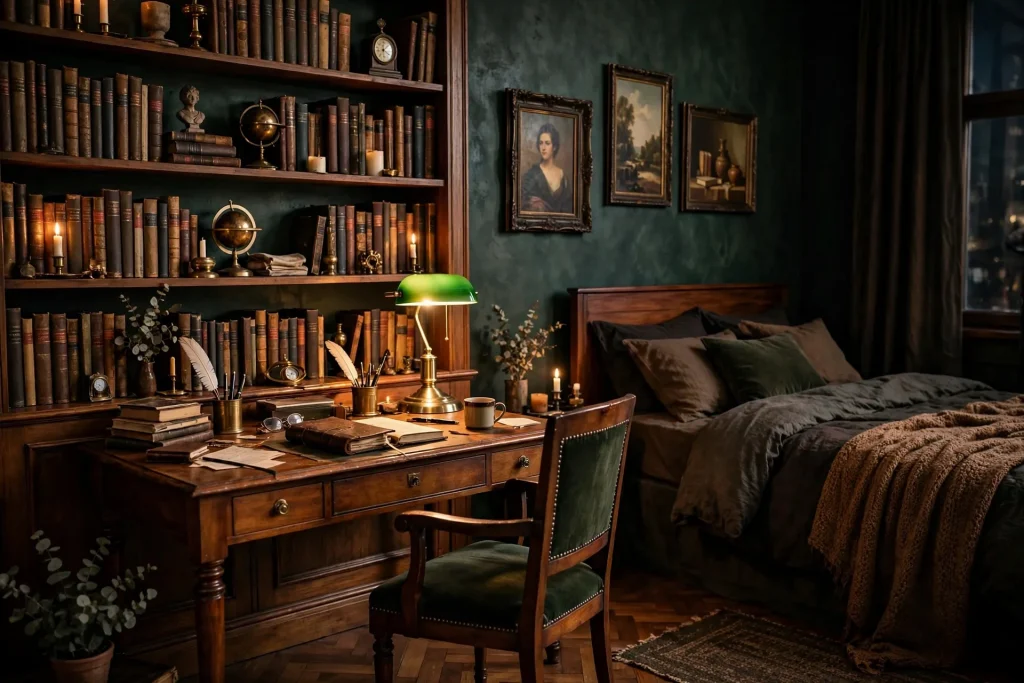
Dark Academia
The feeling: a quiet old library where you could read for hours.
Dark academia leans on deep greens, browns, burgundy, and navy. Think wooden bookshelves, a leather or velvet reading chair, brass lamps, tartan throws, and stacks of well-loved books.
Vintage maps, framed botanical prints, and a desk with a green banker’s lamp all fit the look.
Start with: a deep green or brown wall, a full bookshelf, and warm, low lighting.
Safety tip: anchor tall, heavy bookcases to the wall, especially if you have kids or pets, and keep the heaviest books on the lower shelves.
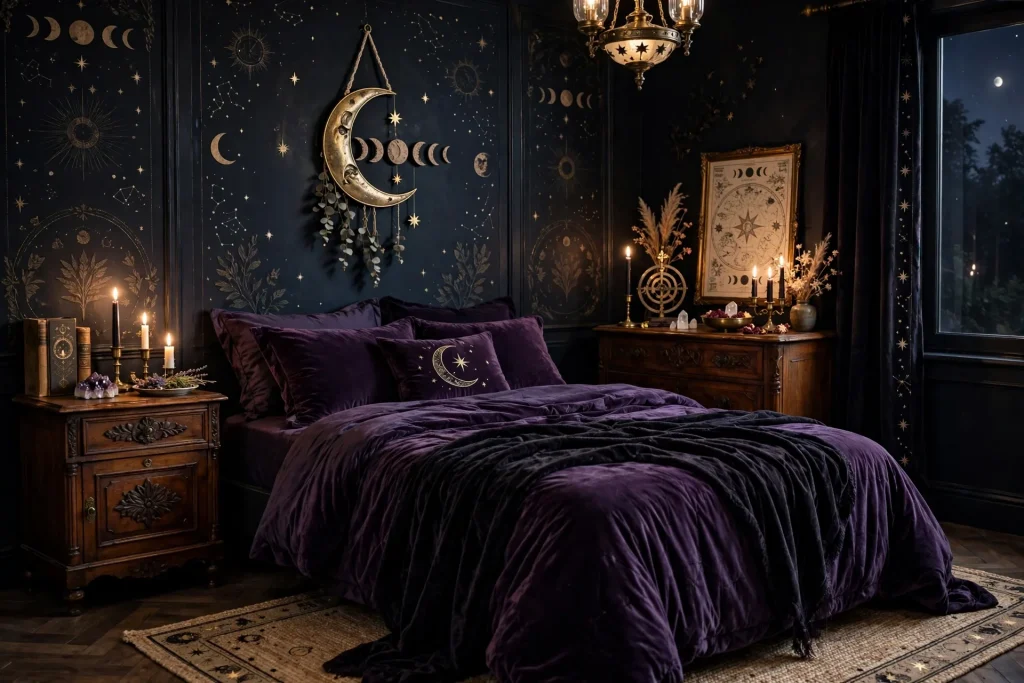
Whimsigoth Celestial
Whimsigoth mixes 90s witchy charm with soft romance. The mood is mystical, dreamy, and vintage-inspired, with dark velvet, star-and-moon prints, and fabrics that drape and flow.
Deep plum, midnight blue, and black work as a base, with touches of gold and silver.
Pieces that set the mood:
- A celestial-print duvet or tapestry
- Velvet cushions in jewel tones
- Crystal or glass suncatchers in the window
- A sheer, dark canopy over the bed
For that candlelit glow, choose flameless LED candles. Real flames near sheer fabric and bedding are a fire risk.
Maximalist Jewel Box
The mood: rich, layered, and full of personality.
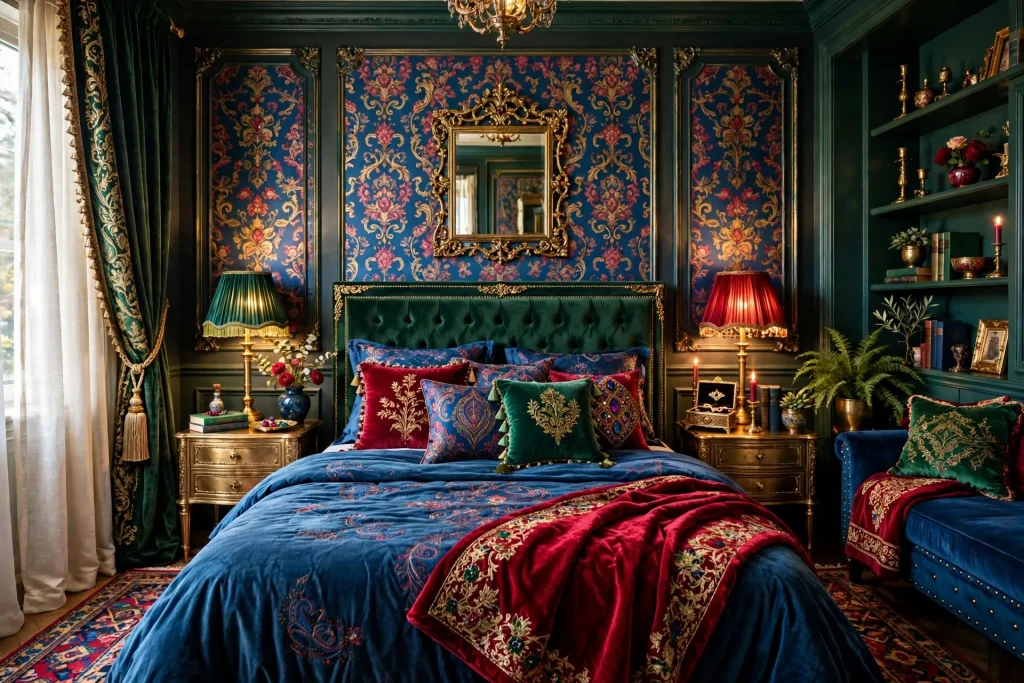
Maximalism isn’t about clutter. It’s about deliberate abundance. Bold wallpaper, saturated paint, patterned bedding, a gallery wall, and plenty of meaningful objects.
The trick is a shared color thread. Pick three or four jewel tones, like emerald, sapphire, ruby, and gold, and repeat them through fabrics, art, and accessories.
Picture a sapphire-blue room with an emerald velvet headboard, a patterned rug, gold-framed art from floor to ceiling, and a ruby throw. It’s busy, but every color connects.
Soft and romantic (three aesthetics):
Coquette Bedroom
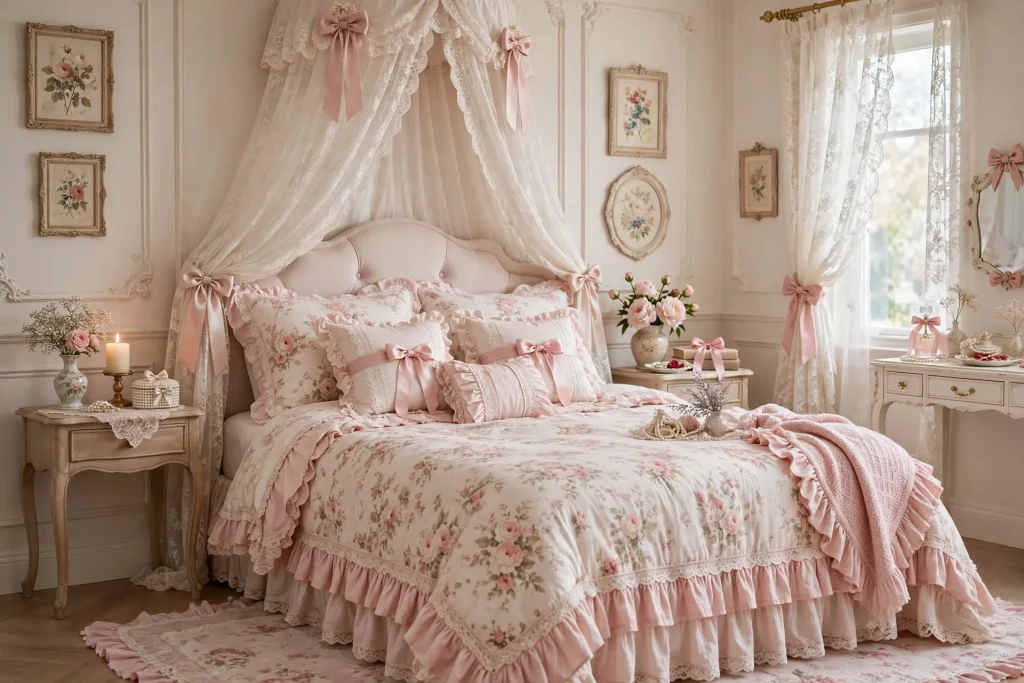
Coquette is soft, sweet, and very feminine. It loves blush pink, cream, lace, ribbons, and a touch of vintage charm.
A scalloped or ruffled bedspread, lace-trimmed pillowcases, a fluted lamp, and small bows tied onto curtain tiebacks or picture frames all fit beautifully.
Keep it grown-up by:
- Sticking to soft, muted pinks rather than bright candy shades
- Adding cream and white to balance the sweetness
- Choosing one or two vintage pieces, like an ornate mirror or a carved side table
A vase of fresh peonies or garden roses on the nightstand finishes the look. Buy first: lace-trimmed or ruffled bedding.
Grandmillennial
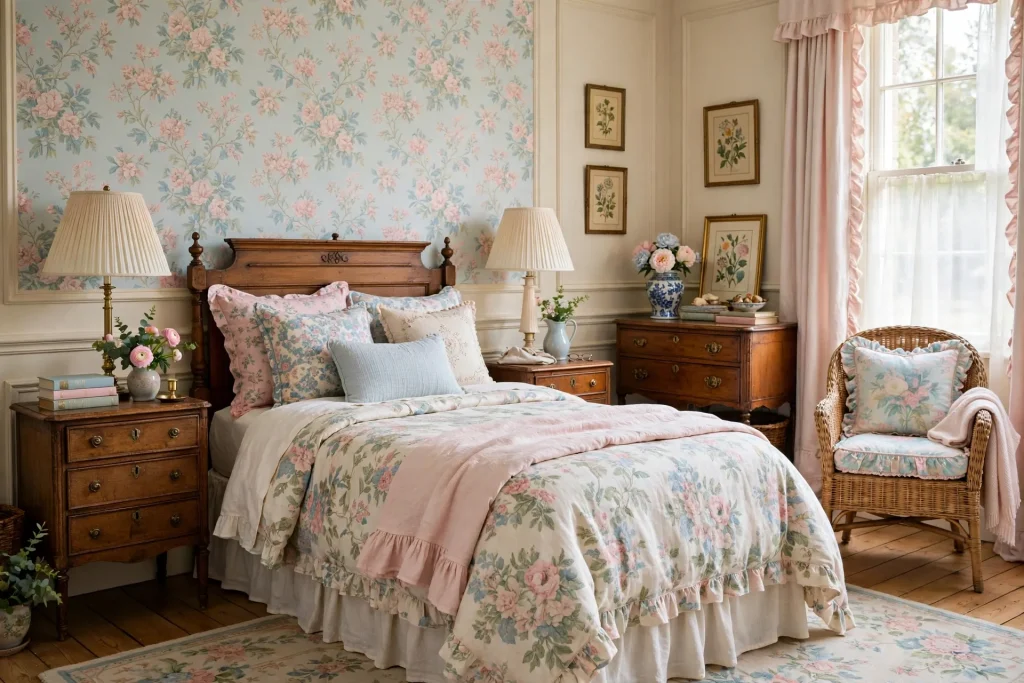
Grandmillennial style takes the things your grandmother loved and makes them feel fresh again. Chintz, ruffles, needlepoint cushions, rattan, scalloped edges, and pretty floral wallpaper.
It’s cheerful, a bit preppy, and very cozy.
Your first pieces: a floral or gingham bedspread, a pleated lampshade, and a skirted bedside table.
Mix patterns in the same color family, so the room feels collected rather than chaotic. A blue-and-white floral headboard with blue gingham curtains and a striped rug in the same blue is a classic grandmillennial combination.
Thrift and antique shops are great, affordable sources for this look, especially for brass candlesticks, vintage frames, and small upholstered chairs. A secondhand floral pillowcase or two can also start the look for very little.
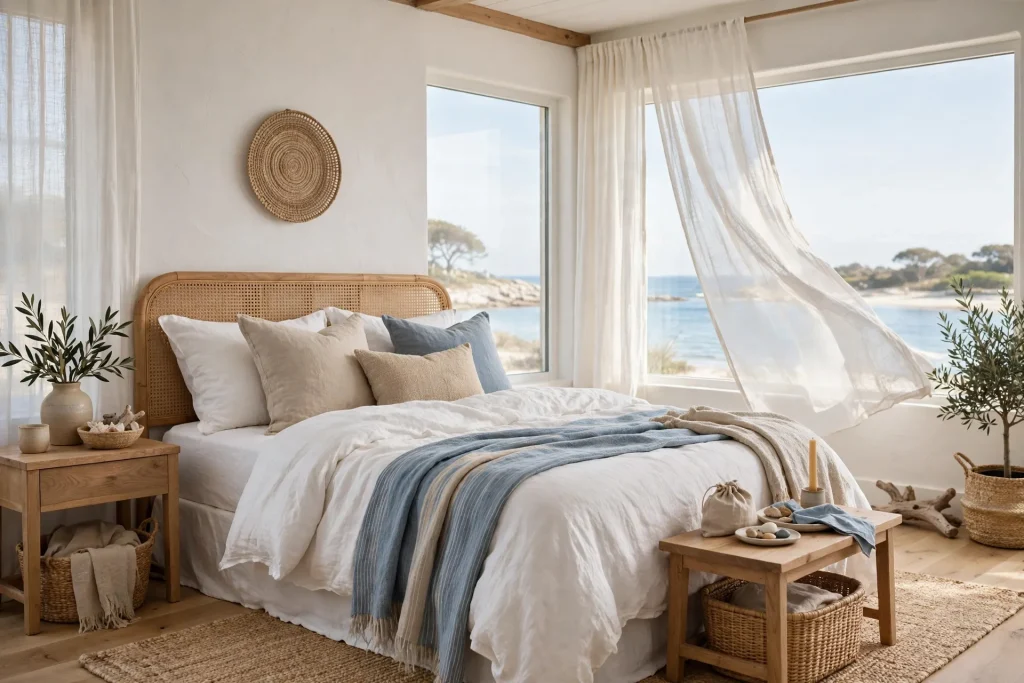
Coastal Linen
The feeling: a relaxed seaside bedroom with the windows open.
Coastal linen bedrooms stay light and breezy. White, sand, soft blue, and driftwood gray set the palette.
Linen bedding, a woven jute rug, a light wood or rattan headboard, and sheer white curtains do most of the work.
Avoid going too literal with anchors and seashells everywhere. One or two natural touches, like a piece of driftwood or a soft ocean photograph, feel more modern.
Linen’s soft, slightly rumpled texture is what makes this look feel lived-in and relaxed. Washed or stonewashed linen bedding gives that easy, just-woke-up-by-the-sea look without ironing. Buy first: linen bedding. Skip: shiny, crisp sateen, which feels too formal here.
Clean-lined and modern (four aesthetics):
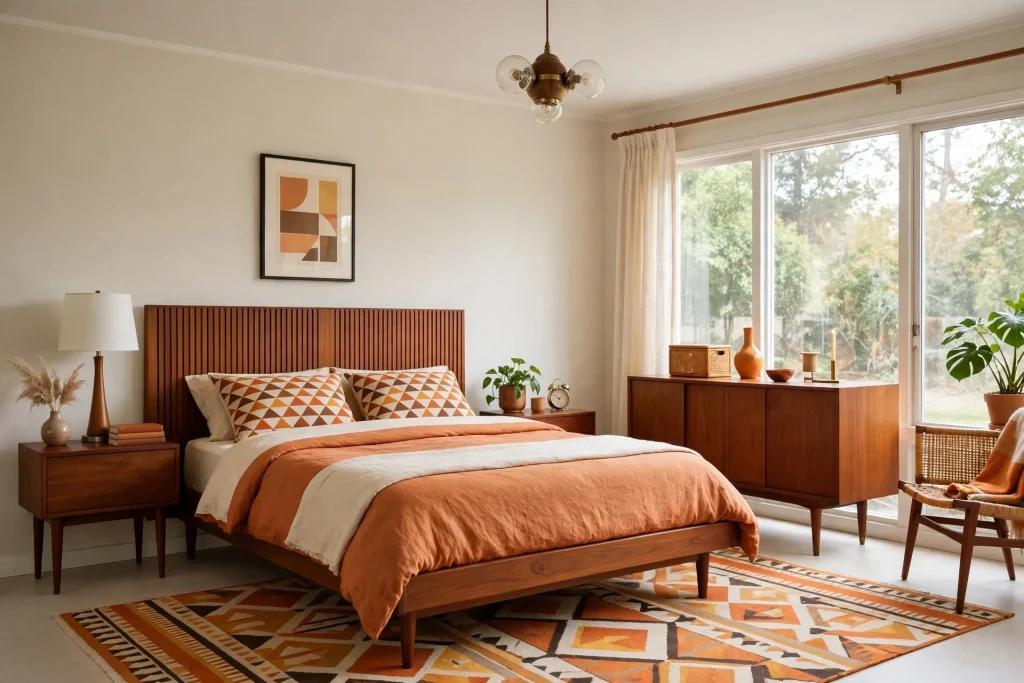
Mid-Century Modern
Mid-century modern draws from design between roughly the 1940s and 1960s. It’s known for clean lines, tapered legs, warm wood like teak or walnut, and pops of mustard, orange, or teal.
Key pieces:
- A low wooden bed frame with a simple headboard
- Nightstands with tapered legs
- A globe or mushroom-style table lamp
- Abstract or geometric art
Keep surfaces fairly clear so the shapes of the furniture stand out. Many affordable reproduction pieces suit this look, and vintage finds can be great value if you check them for wobbly joints and sturdy drawers.
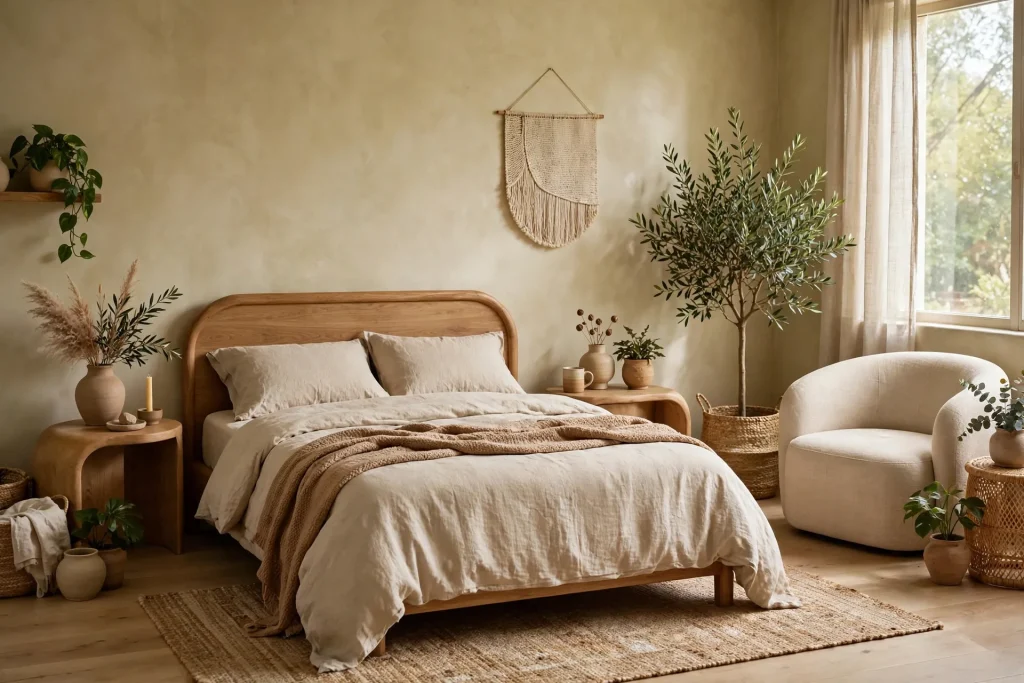
Organic Modern
Organic modern combines clean, modern lines with soft, natural materials. Think curves, warm neutrals, and textures you want to touch.
Bouclé, linen, travertine or stone-look surfaces, light oak, and plaster-style walls are common choices. Rounded furniture, like a curved headboard or a pebble-shaped side table, softens the room.
Colors stay calm: cream, oatmeal, mushroom, warm taupe, and soft clay.
Budget move: a single curved, upholstered headboard can bring the whole look together. Stone-look side tables and limewash-effect paint cost far less than real travertine or plaster. Skip: high-gloss surfaces, which work against the soft, natural feel.
It feels calm without being stark, which makes it a lovely middle ground for people who want something modern but warm.
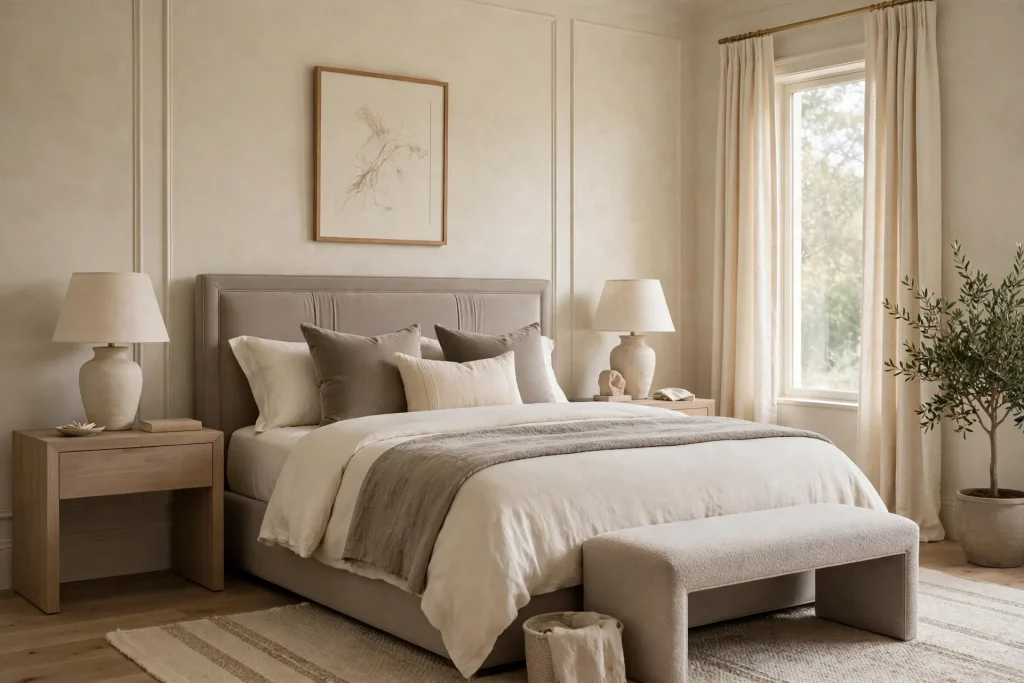
Quiet Luxury
Quiet luxury is about understated quality. No logos, no flashy trends, just beautiful materials in a tonal palette.
Picture a room in soft camel, cream, and warm gray, with a cashmere-blend throw, a tailored upholstered bed, thick linen curtains, and one or two carefully chosen pieces of art.
What makes it work:
- Fewer, better pieces rather than lots of decor
- Rich texture in a narrow color range
- Good tailoring, like neatly pressed bedding and curtains that skim the floor
You don’t need a huge budget. A soft cotton or wool-blend throw, secondhand upholstered furniture, and tonal bedding from a mid-range store can create the same calm effect. Buy first: good bedding in one tonal shade. Skip: anything with visible logos or busy patterns.
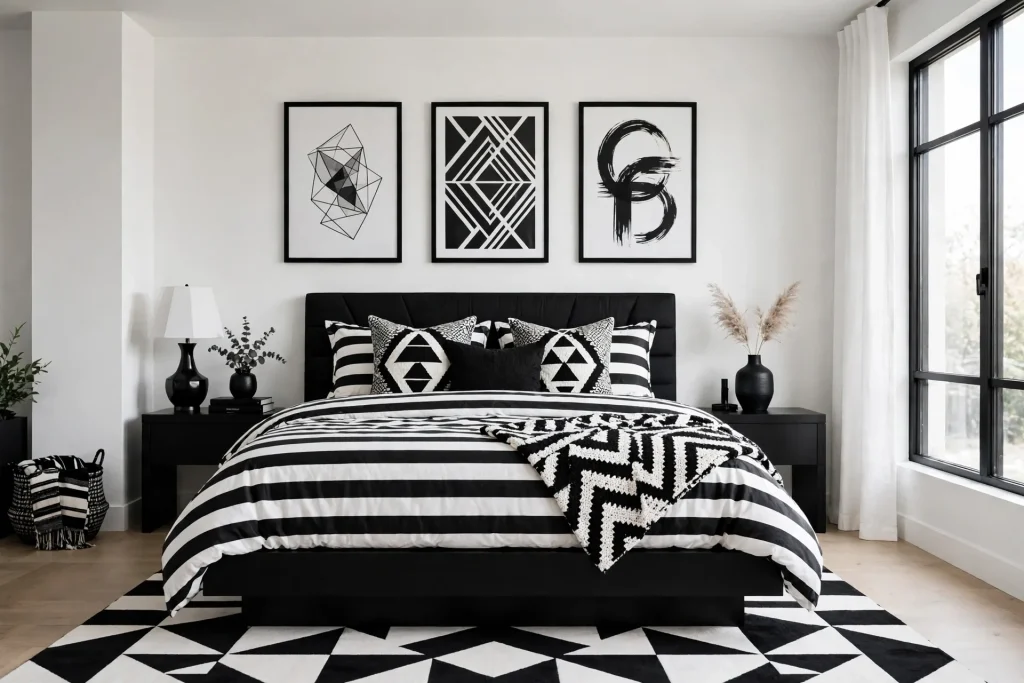
Black and White Graphic
For lovers of contrast, a black and white bedroom feels crisp, modern, and confident.
Use a white base with black accents, or reverse it with a dark wall and white bedding. Add graphic touches like a striped rug, a checkered throw, or bold black-framed art.
Keep it from feeling cold:
- Bring in warm wood, like an oak nightstand
- Add texture with a chunky knit throw
- Include a few plants for living green
Stick to just one or two patterns, so the contrast stays striking rather than dizzying. Soft gray or cream can stand in for pure white if bright white feels too stark in your light.
Bold and playful (two aesthetics):
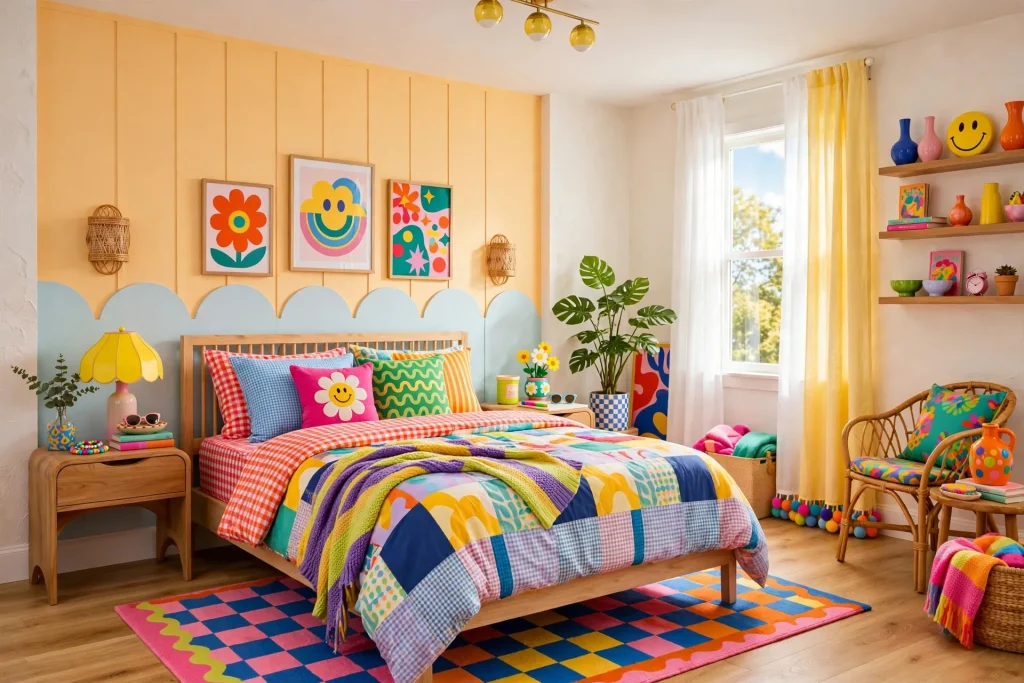
Dopamine Decor
Dopamine decor is all about color that makes you happy. Bright pink, orange, lime, lilac, and sunny yellow can all join the party.
It works best when the color feels deliberate. Choose two main colors and one accent, and repeat them around the room.
Picture a lilac wall, a tangerine velvet headboard, lime-green bedside lamps, and a playful wavy mirror. Bold, cheerful, and unmistakably fun.
If you rent, try colorful bedding, removable wallpaper, and painted furniture rather than repainting walls. Check your lease and test removable products in a small area first.
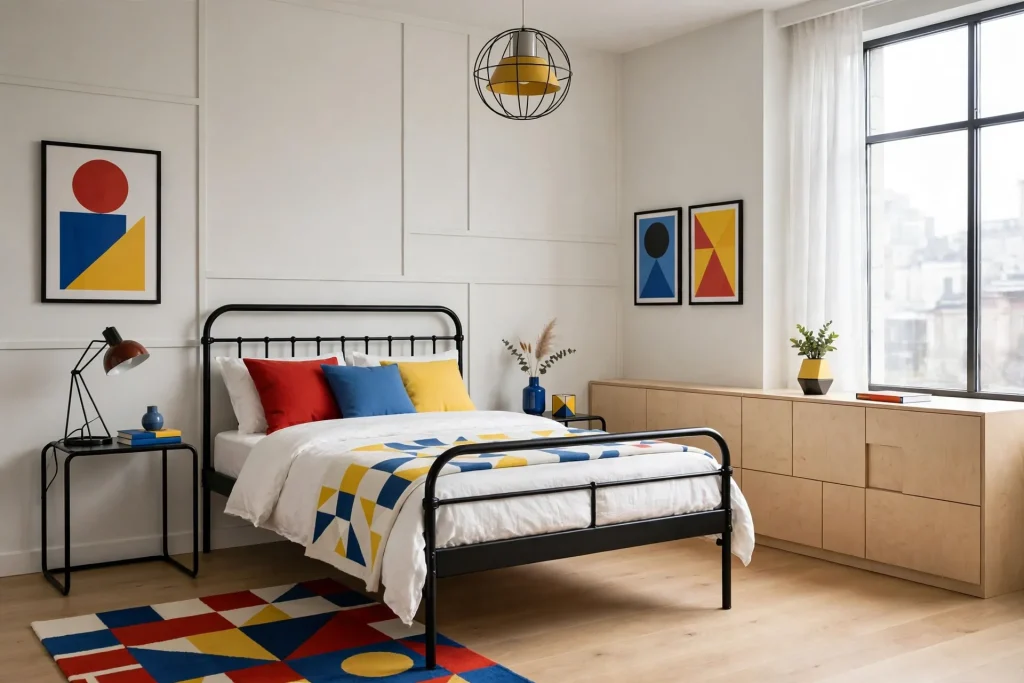
Bauhaus Primary
Inspired by the famous German design school, Bauhaus style uses simple geometric shapes and primary colors: red, yellow, and blue, often with black and white.
How to bring it in:
- Geometric art prints with circles, squares, and lines
- A tubular steel chair or side table
- A rug with bold blocks of color
- Simple, functional furniture with clean lines
Keep the rest of the room neutral, so the primary colors stand out. It’s a smart choice for people who like design history and bold, graphic looks.
Classic and lived-in (three aesthetics):
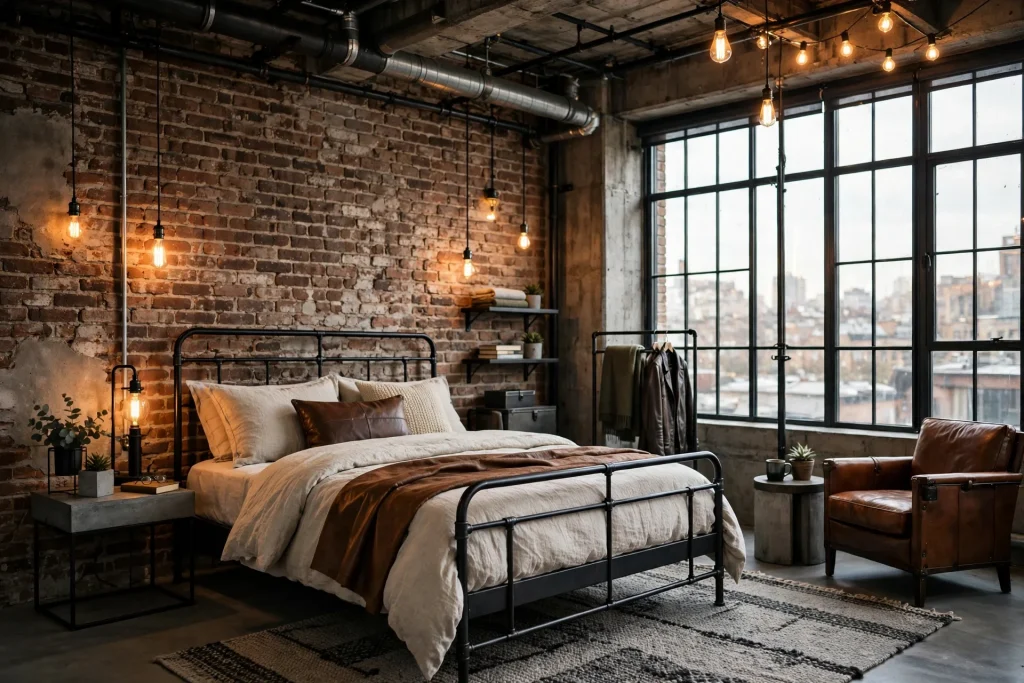
Industrial Loft
Industrial bedrooms borrow from converted warehouses. Exposed brick, metal, concrete, and reclaimed wood set the scene.
If you don’t have real brick walls, brick-effect wallpaper or panels made for indoor walls can work. Follow the installation guidance. A metal bed frame, a reclaimed wood dresser, and black pendant or cage lights complete the look.
Soften all that hard material with a big wool rug, layered bedding, and warm-white bulbs. Without softness, industrial rooms can feel cold.
A tall leafy plant, like a fiddle leaf fig or rubber plant, also helps break up the metal and brick.
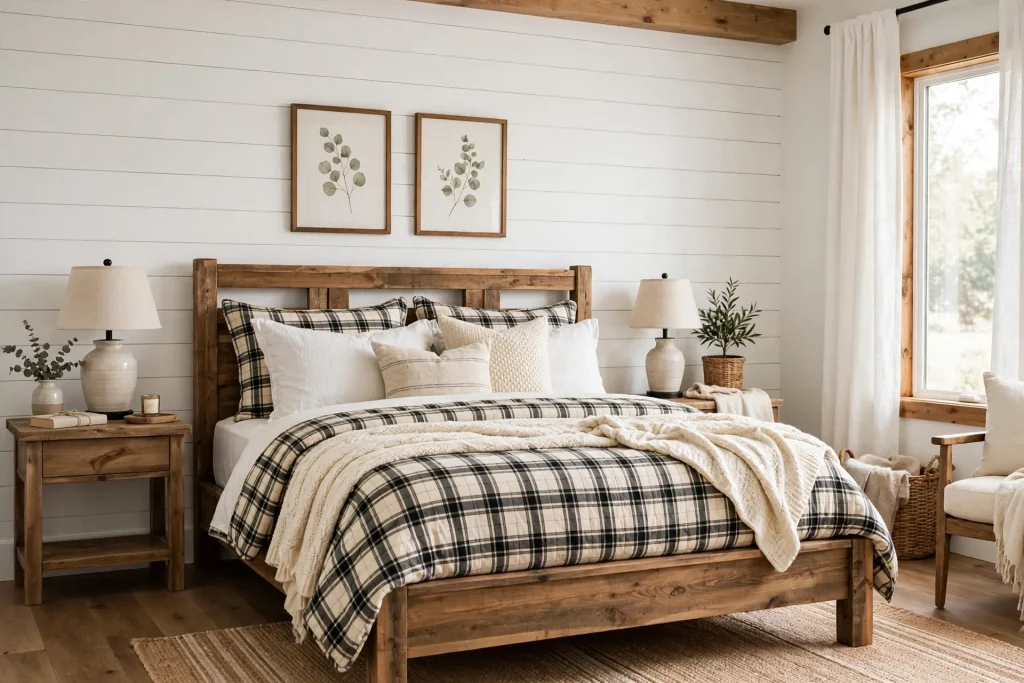
Modern Farmhouse
Modern farmhouse is warm, simple, and welcoming. It mixes rustic wood with crisp white, black accents, and cozy textiles.
Classic ingredients:
- A white or soft gray wall, or painted shiplap
- A wooden or black metal bed frame
- Black hardware and lighting
- Chunky knit throws and plaid accents
- A sliding barn-style closet door, if your space allows it
Keep the palette fairly neutral and let texture do the work. A woven basket for spare blankets at the foot of the bed and a simple vase of dried wheat or eucalyptus on the dresser add warmth without clutter.
Classic Preppy
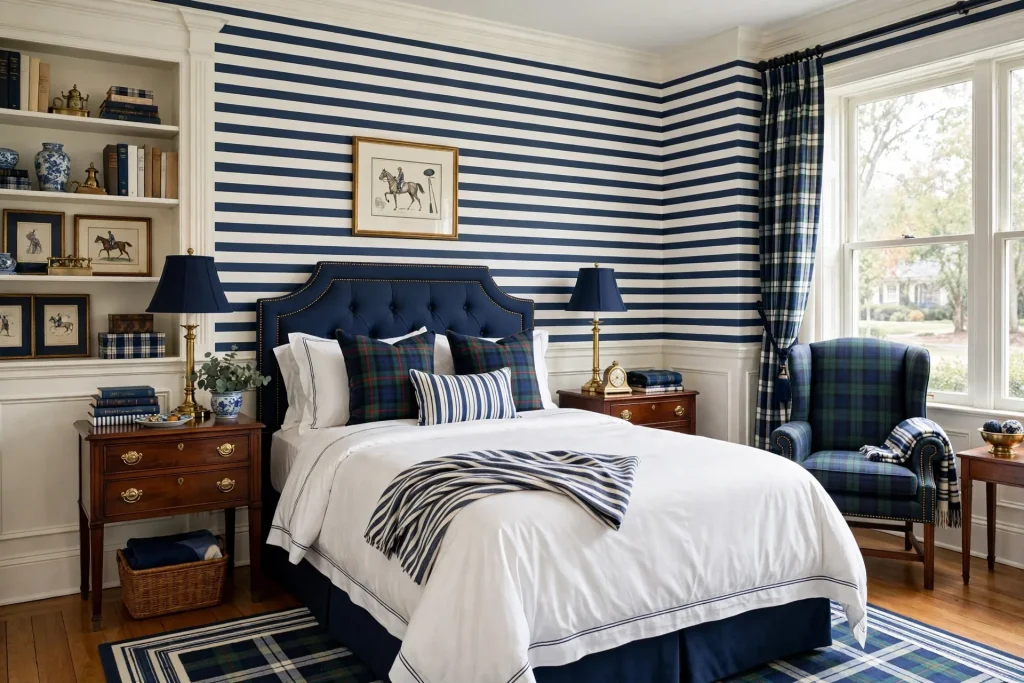
Preppy bedrooms feel tidy, crisp, and a little bit traditional. Navy, white, kelly green, and pink are popular, often with stripes, plaid, and monograms.
Think a navy upholstered headboard, crisp white bedding with a colored trim, a striped rug, and framed sporting or botanical prints.
Polished brass lamps and a neat stack of books on the nightstand add to the put-together feel.
It suits people who like order and a timeless look. To keep it from feeling stiff, add one relaxed element, like a slouchy cable-knit throw or a woven basket.
Telling Similar Aesthetics Apart
Some of these different bedroom aesthetics can look alike at first glance. Here’s how to tell them apart.
Dark academia vs. industrial loft. Both can be dark, but dark academia is warm and bookish, with wood, velvet, and brass. Industrial loft is raw and urban, with metal, brick, and concrete.
Coquette vs. grandmillennial. Coquette is soft pink, lace, and bows. Grandmillennial is bolder and more patterned, with chintz, gingham, and blue-and-white florals.
Organic modern vs. quiet luxury. Organic modern is about curves and natural texture. Quiet luxury is about tailored, high-quality pieces in one tonal palette.
Bauhaus vs. dopamine decor. Bauhaus sticks to primary colors and geometric shapes. Dopamine decor uses any happy color, often in softer, rounder, more playful forms.
Mixing Two Aesthetics
Many of the best bedrooms blend two styles.
Dark academia + mid-century modern: deep green walls with clean-lined walnut furniture.
Coastal linen + organic modern: soft curves, natural textures, and a calm, airy palette.
Grandmillennial + preppy: florals, stripes, and gingham in a shared blue-and-white palette.
Black and white graphic + Bauhaus: a neutral base with a few bold primary accents.
Choose one main aesthetic, then borrow just two or three details from the second.
A Real-World Example
Imagine someone whose top five pins include a deep green library, a walnut mid-century desk, and a bedroom full of plants.
They choose dark academia as the main aesthetic and borrow from mid-century modern. They paint one wall forest green, add a walnut bed frame with tapered legs, a brass reading lamp, a bookcase anchored to the wall, and two trailing plants.
The room feels cozy and full of character, but the clean lines of the furniture keep it from feeling heavy.
Bedroom Inspo Mistakes to Avoid
Copying a pin exactly. Your room has different light, size, and windows. Use pins as a guide, not a blueprint.
Mixing too many aesthetics. Two styles can blend. Five usually clash.
Buying everything at once. Build slowly so the room feels collected rather than bought in one weekend.
Ignoring comfort. A beautiful bedroom still needs a good mattress, soft bedding, and good lighting.
Questions About Bedroom Inspo Ideas
How do I find my bedroom aesthetic?
Look at your favorite saved images and note the colors, materials, and mood they share. That usually points to one or two styles.
Which bedroom aesthetics are popular?
Popular styles shift over time, and organic modern, quiet luxury, and colorful maximalist looks have all been widely shared. Rather than chasing a trend, choose what you’ll still love in a few years.
Can I create a bedroom aesthetic on a budget?
Yes. Start with bedding, paint, and lighting, since they make the biggest difference. Thrift stores and secondhand marketplaces are great for vintage-style pieces.
How do I make a rental bedroom match my aesthetic?
Focus on removable pieces, like bedding, rugs, freestanding furniture, and removable wallpaper. Check your lease before making changes.
Can I mix two bedroom aesthetics?
Yes. Pick one main style and borrow a few details from a second, using a shared color palette to connect them.
Pick One Pin and Start There
Good bedroom inspo gives you a feeling to chase, not a list of things to buy.
Choose the aesthetic that matches your favorite pins, start with one or two key pieces, and let the room grow from there. A year from now, it might look even better than the pictures that inspired it.