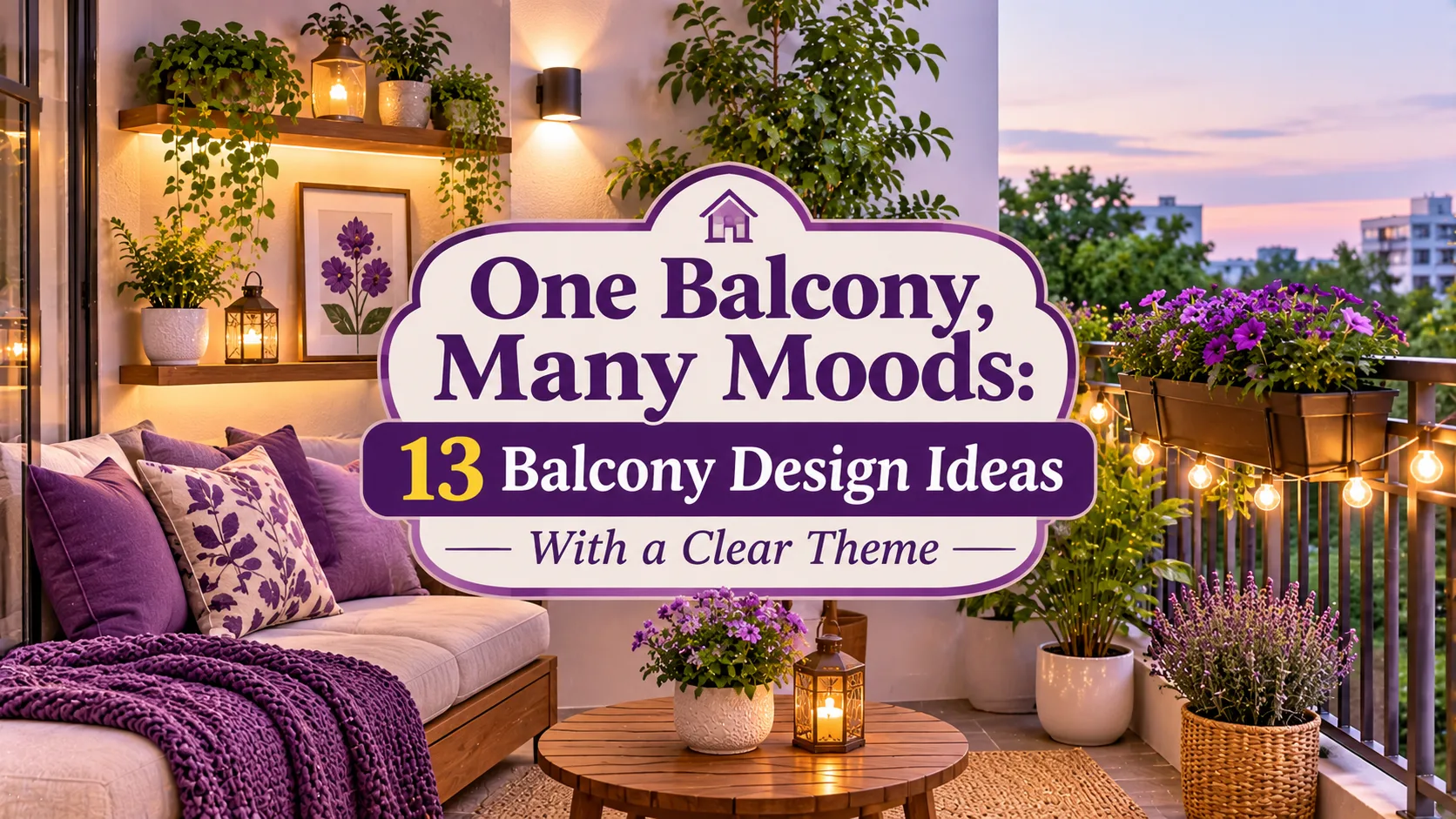
One Balcony, Many Moods: 13 Balcony Design Ideas With a Clear Theme
Before looking at balcony design ideas, it helps to know why so many balconies feel unfinished. Most end up as a collection of separate purchases. A chair from one shop, a plant from another, a string of lights, a cushion that looked nice online.
Each piece looks fine on its own, but together, they don’t create a cohesive space.
That’s the difference between decorating a balcony and designing one. Design starts with a single idea, a mood or a purpose, and lets every choice follow from it.
The 13 designs below are full concepts rather than single items. Most come with a color palette, key pieces, suitable plants, or a simple layout tip. Pick the one that fits your balcony and your life, and you’ll have a plan instead of a pile.
Write a Three-Word Design Brief
Before choosing a theme, try this. Describe how you want your balcony to feel in three words.
“Calm, green, private.” “Bright, social, easy.” “Cozy, sheltered, quiet.”
Those three words will guide every decision. “Calm, green, private,” for example, might lead to a muted green palette, natural wood furniture, and a tall leafy plant or screen for privacy, if your building allows it.
Then check the practical basics:
- Weight limits. Heavy planters, wet soil, and stone add up quickly. Check with your building manager or landlord before adding anything heavy.
- Building rules. Many buildings limit what can be attached to railings, walls, or ceilings.
- Sun and wind. Note how many hours of direct sun you get and how windy it is. This decides which plants and fabrics will survive.
- Drainage. Use saucers under pots and water slowly, so excess water doesn’t drip onto the balcony below.
Style-led designs (seven ideas): choose a look and build around it.
A Zen Retreat
Feels: calm, simple, grounded
Palette: natural wood, charcoal, moss green, stone gray
Key pieces: a low wooden bench or floor-level seat, a single ceramic water bowl or small tabletop fountain, a bamboo plant in a large pot
The goal is to keep the space minimal, calm, and uncluttered. Fewer items, chosen carefully, with plenty of open space around them.
A container-grown Japanese maple can add a beautiful focal point, but it needs protection from strong winds and harsh afternoon sun. Ferns and mosses suit balconies with shade and moisture. For bamboo, choose a clumping variety in a sturdy pot, and avoid running bamboo unless you can properly contain its roots.
Layout tip: place the seat facing the best view, with plants behind or to the side rather than in front.
A tabletop fountain adds gentle sound, but choose one with a recirculating pump and empty it in freezing weather. Standing water can also attract mosquitoes, so refresh it often.
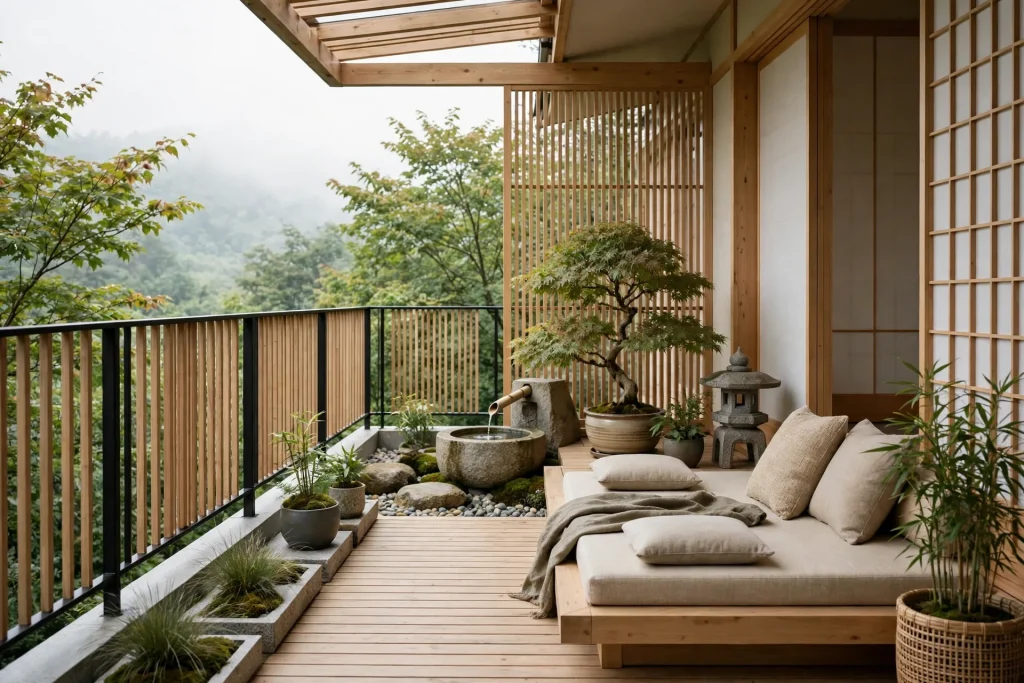
A Tropical Jungle Balcony
Feels: lush, warm, a little bit wild
Palette: deep green, terracotta, natural rattan, a pop of coral or yellow
Key pieces: a rattan lounge chair, large-leaved plants in clusters, a patterned outdoor cushion
Picture a balcony packed with banana plants, bird of paradise, palms, and trailing pothos, with a single rattan chair tucked in among them. It brings a little holiday feeling to even a small balcony. On a smaller balcony, choose compact palms, dwarf banana varieties, or smaller foliage plants, and save full-size bird of paradise and bananas for roomier spaces.
Many tropical plants need warmth and protection from frost. In cooler climates, choose hardy lookalikes or plan to bring tender plants indoors for winter.
Group plants at different heights so the leaves overlap. That layered effect is what makes it feel like a jungle. Of all the balcony design ideas here, this one needs the most watering, so it suits people who enjoy spending a few minutes with their plants each day.
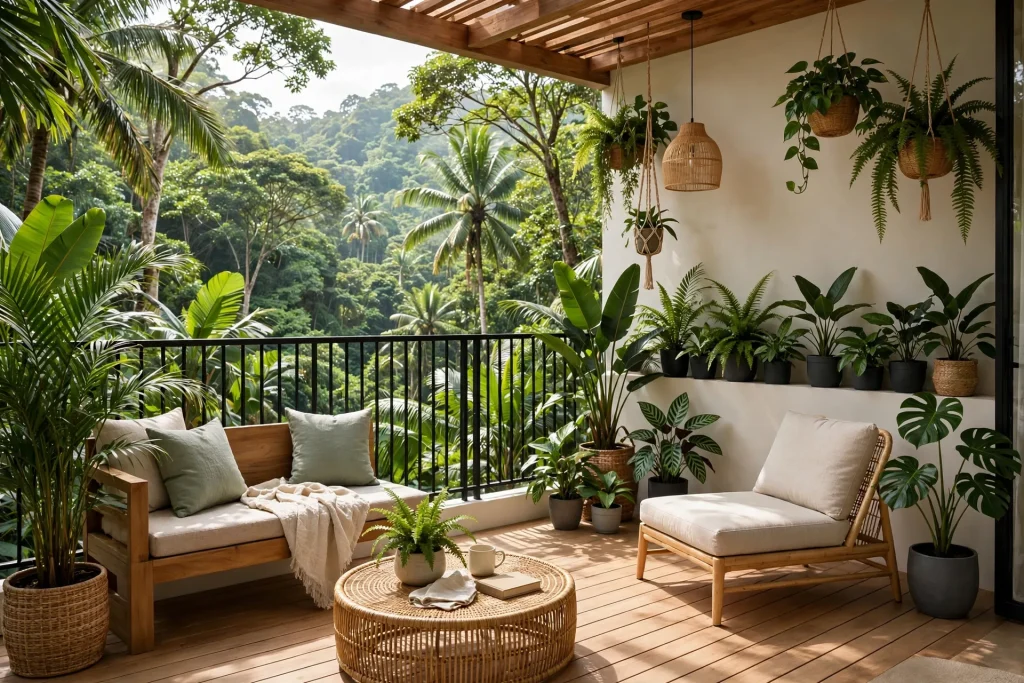
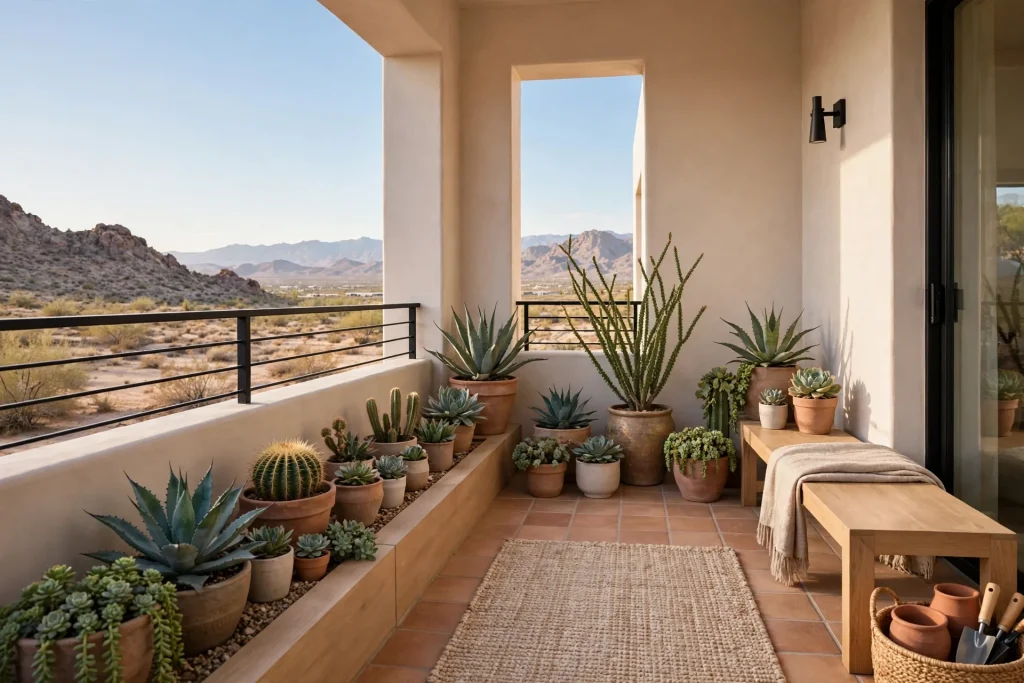
A Desert Succulent Balcony
Feels: sunny, earthy, low-maintenance
Palette: sand, terracotta, sage, clay pink
This one is perfect for hot, sunny balconies where other plants struggle.
Fill a mix of terracotta and clay pots with succulents, agaves, aloe, and small cacti. Add a woven outdoor rug in earthy tones and a simple wooden stool.
Succulents generally need very little water, which makes them ideal for busy people. Use a fast-draining cactus mix and pots with drainage holes. Even desert plants can scorch in a sudden heatwave, so a little afternoon shade on the hottest days helps.
Spiny plants can be painful for small children and pets, so place cacti up high or out of reach, and keep them away from walkways.
A Scandi Minimal Balcony
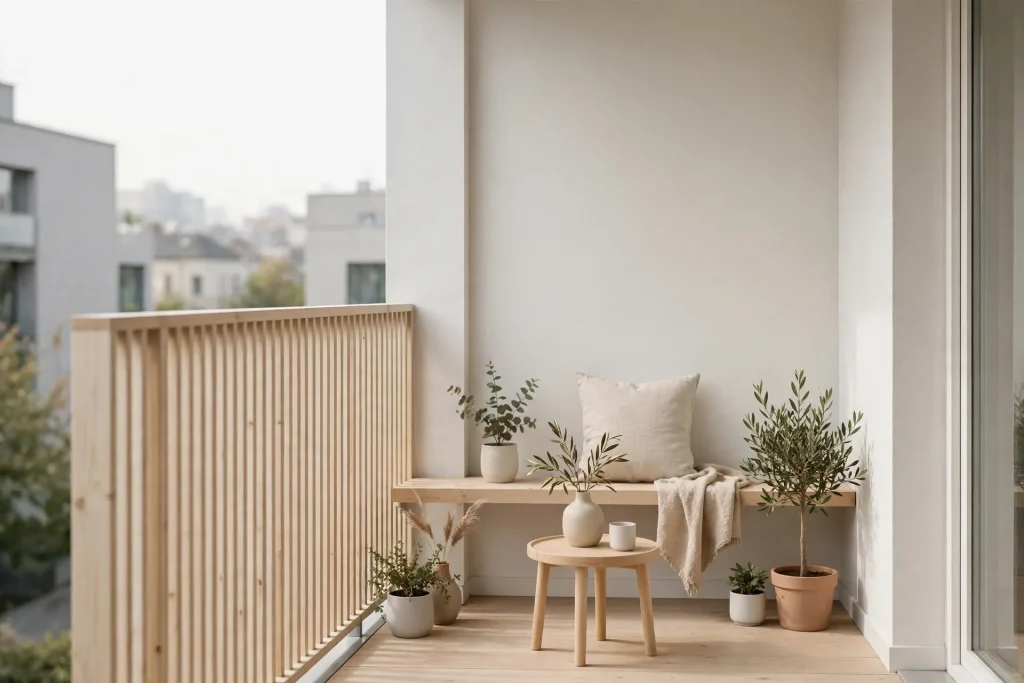
Feels: light, airy, uncluttered
Palette: white, pale wood, soft gray, a touch of black
Key pieces: a slim pale-wood table and chairs, a single large planter with an olive bush or ornamental grass, a weather-resistant outdoor throw
Scandinavian design is about simplicity and comfort. Choose clean lines, natural materials, and only a few pieces.
Layout tip: keep one side of the balcony completely clear. Empty space is part of the design.
A soft throw on the chair and a lantern make the space feel cozy on cooler evenings. Bring a wool blanket out only while you’re using the balcony, since ordinary wool absorbs moisture. Choose furniture that’s slim and light-colored, so the balcony feels bigger and brighter.
A Cottage Flower Balcony
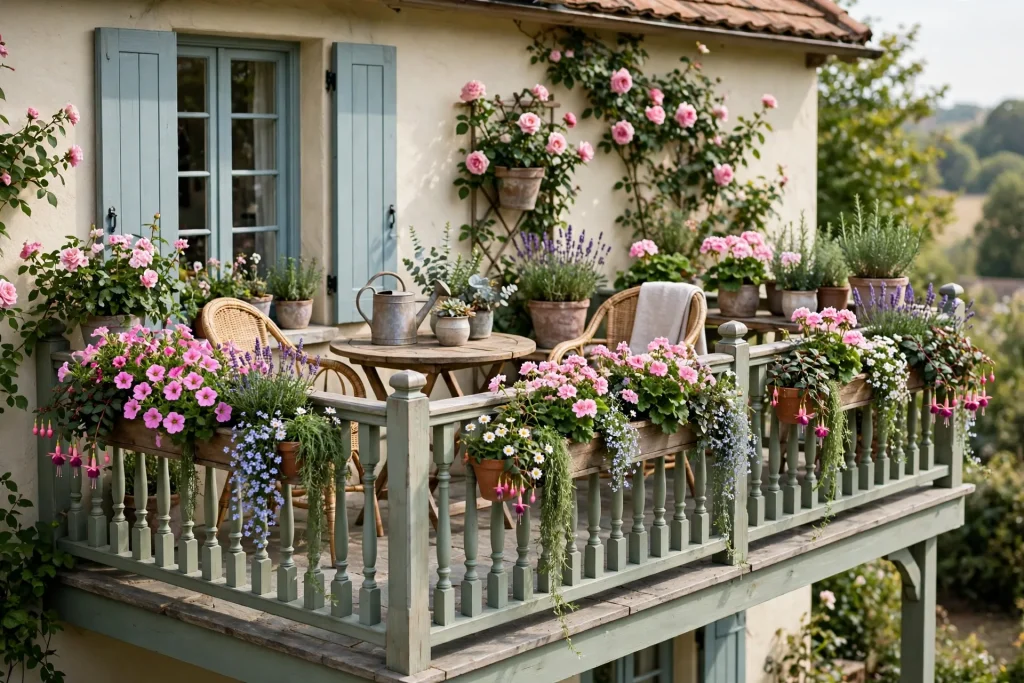
Feels: romantic, colorful, charming
Palette: soft pink, lavender, cream, leafy green
Think of a small English cottage garden in containers. Mix flowers like roses in pots, lavender, geraniums, sweet peas, and foxgloves in a jumble of shapes and heights.
A painted wooden chair, a small iron side table, and a cushion with a floral print complete the look. Let a few pots overflow slightly. Cottage design looks best when it feels a little unplanned.
Deadhead flowers regularly to keep them blooming. Some cottage plants, like foxgloves, are toxic if eaten, so choose carefully if you have pets or young children.
An Industrial Modern Balcony
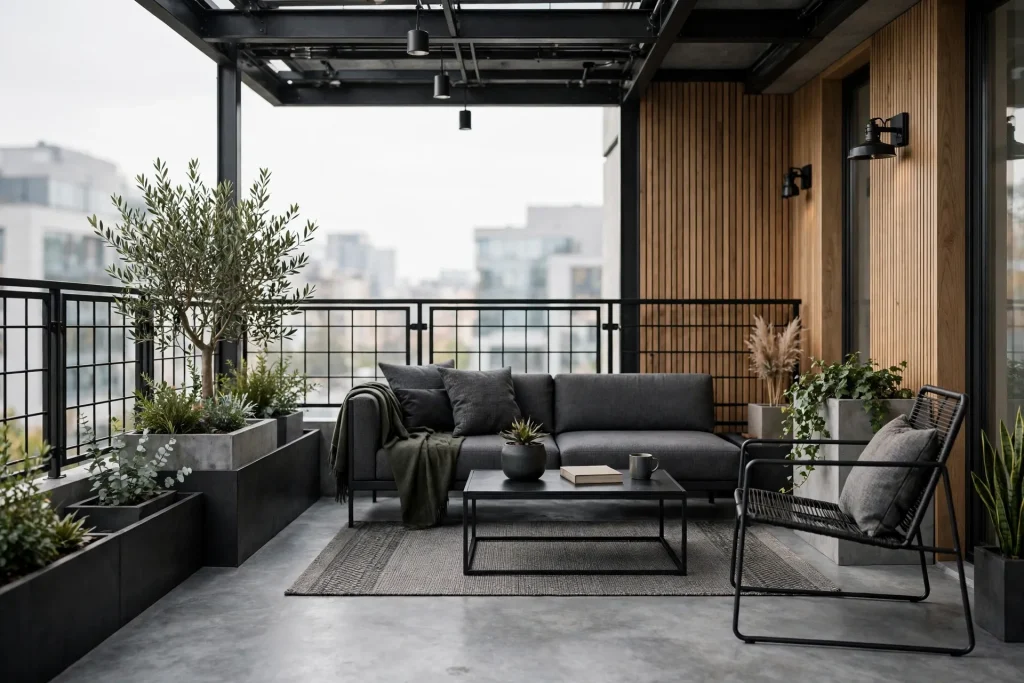
Feels: urban, sleek, grown-up
Palette: concrete gray, black metal, warm wood, deep green
Key pieces: concrete or fiber-cement planters, black metal furniture, a reclaimed wood bench
This look suits city balconies, especially in modern apartment buildings. Architectural plants like snake plants (in warm climates), ornamental grasses, and boxwood fit well.
Concrete planters can be very heavy. Fiber-cement or lightweight concrete-look planters give the same look with far less weight, which matters on a balcony. Repeat the black metal in one or two places, like a lantern or plant stand, so the look feels deliberate.
Metal furniture can get hot in direct sun, so add cushions or a light throw.
A Coastal Breeze Balcony
Feels: relaxed, fresh, holiday-like
Palette: white, sand, sky blue, navy
Key pieces: a striped outdoor cushion, a weathered wood or teak chair, a large woven basket for blankets
Coastal design works well on breezy balconies. Plants like ornamental grasses, sea holly, lavender, and rosemary often handle wind and sun nicely.
Choose fabrics labeled for outdoor use, since they’re more likely to resist fading and mildew.
In very windy spots, choose stable planters and furniture, and store or secure cushions, baskets, and loose accessories when strong winds are expected, so nothing blows off the balcony.
Designs built around how you use it (five ideas): start with the purpose, then add style.
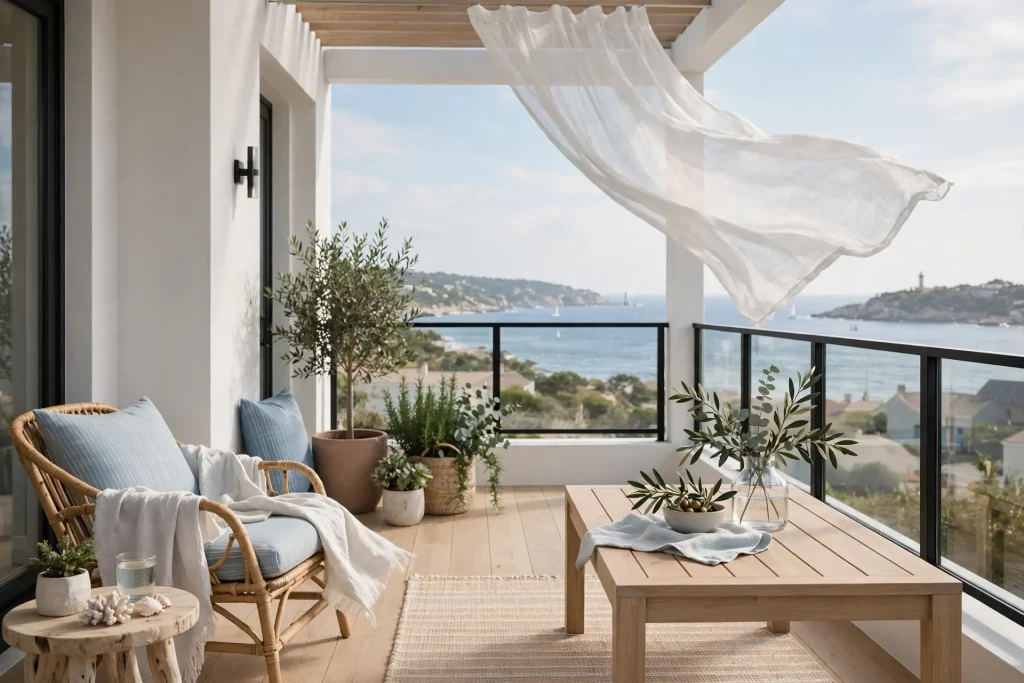
A Pollinator Haven
Feels: alive, colorful, purposeful
If you love the idea of helping nature, design your balcony around bees and butterflies.
Choose nectar-rich flowers like lavender, salvia, marigolds, cosmos, and herbs left to flower, such as thyme and oregano. A mix of bloom times helps provide food through the seasons.
A shallow dish with pebbles or stones gives insects a safe place to drink. Refresh the water often and clean the dish regularly, so it doesn’t become stagnant.
Check with your building before adding bird feeders, since some buildings discourage them to avoid attracting pigeons.
Many pollinator plants are also beautiful, so the balcony looks good while doing some good. Avoid using pesticides on these plants, since many are harmful to the very insects you’re trying to welcome.
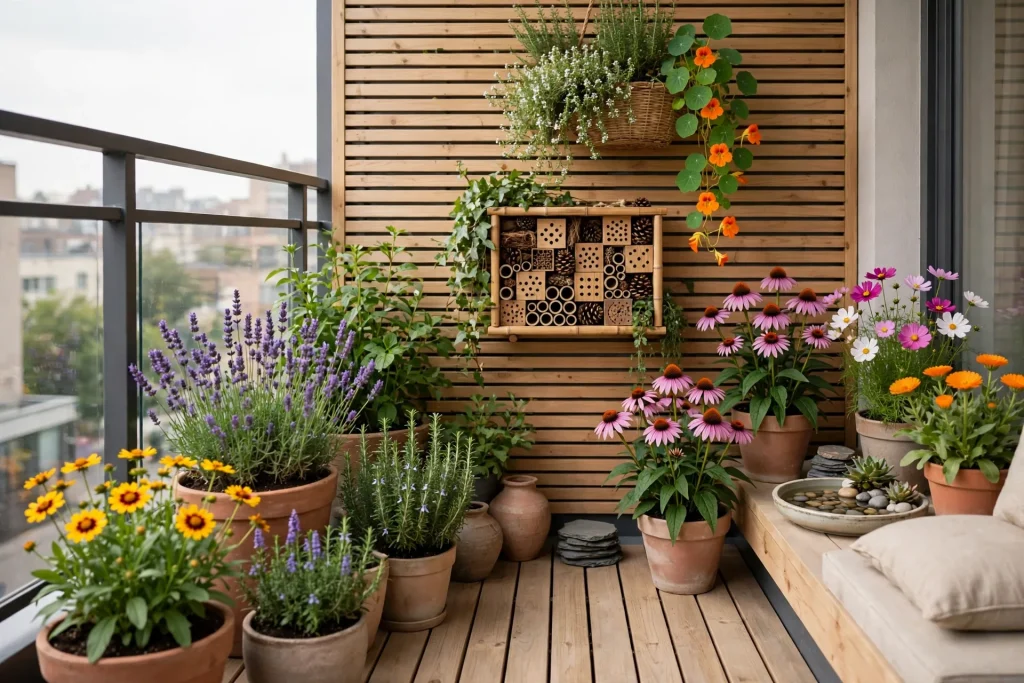
A Pet-Friendly Balcony
Feels: safe, comfortable, fun for everyone
Many cats and dogs love fresh air, but balconies come with risks. Designing with pets in mind makes the space safer and more enjoyable.
What to include:
- A patch of pet grass or cat grass in a sturdy tray
- A shaded spot with a water bowl
- A washable outdoor cushion or raised pet bed
For cats, a properly fitted, secure cat enclosure or balcony netting system can reduce fall risks. Check building rules first, and make sure there are no gaps or loose sections before letting your pet outside.
Avoid plants toxic to pets, and never leave pets unsupervised on a balcony with gaps they can squeeze through or furniture they can climb near the railing.
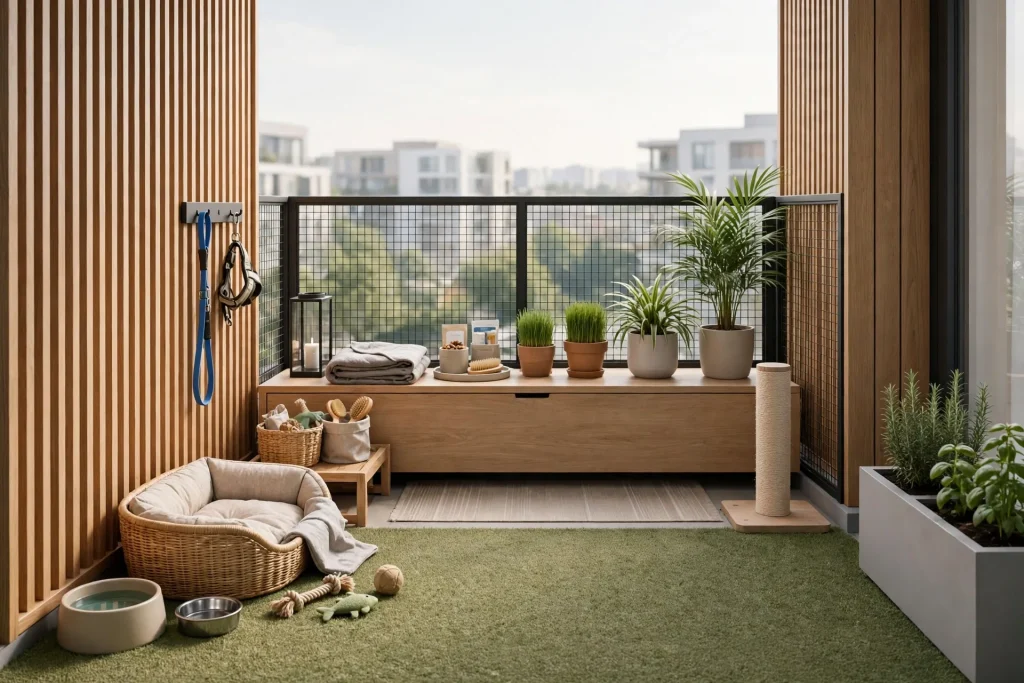
A Balcony Home Office
Feels: focused, fresh, productive
Even an hour of working outdoors can feel like a welcome change.
Choose a compact weather-resistant desk or a sturdy table, plus a comfortable chair with good back support. Add some shade, like a retractable awning if your building allows it, or simply position your desk where the screen won’t catch glare. Working in the morning or late afternoon, when the sun is lower, can help too.
Keep electronics protected. Bring laptops inside after use, and avoid running indoor extension cords outside. If you need power, have a qualified electrician install a weatherproof outdoor outlet.
A few potted herbs or a small citrus tree nearby make work feel a little more relaxing.
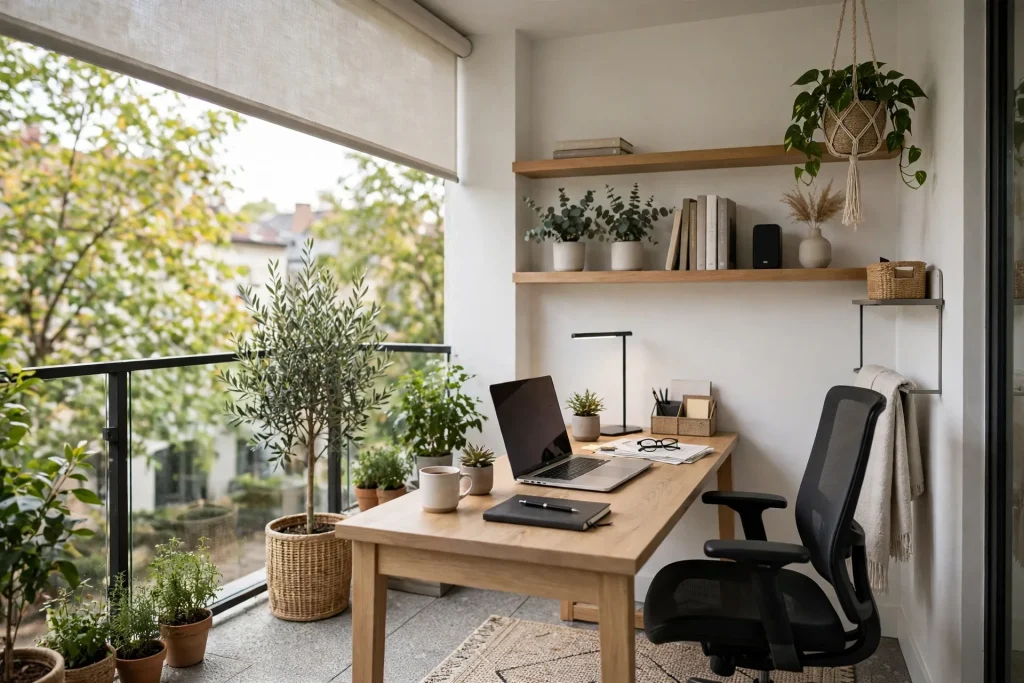
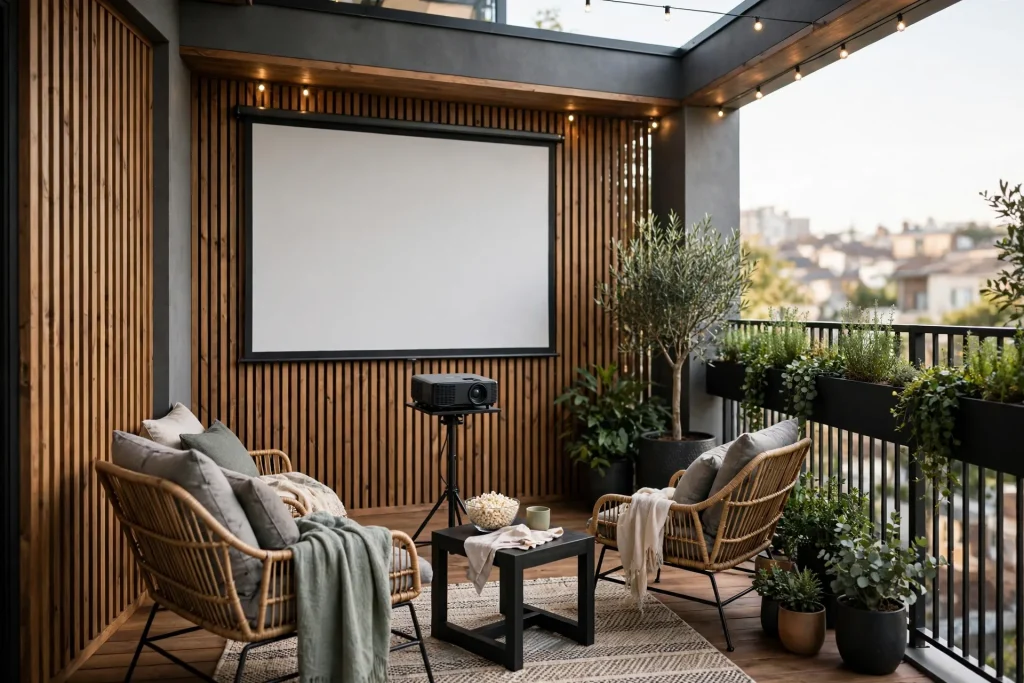
An Outdoor Cinema Corner
Feels: cozy, playful, social
On a balcony with a blank wall, a small portable projector can turn summer evenings into movie nights.
Use a pull-down or freestanding outdoor screen, or a smooth, light-colored wall if permitted. Add floor cushions or a small loveseat, a basket of blankets, and a side table for snacks.
Place the projector on a stable, level surface with a clear path to the screen, away from rain and accidental knocks. Battery-powered projectors and Bluetooth speakers help avoid trailing cables. Keep volume low out of respect for neighbors, and check building rules about noise in the evening.
Store electronics indoors when you’re done, especially if rain is possible. Movies look best once the sun has fully set, so this design suits late summer evenings best.
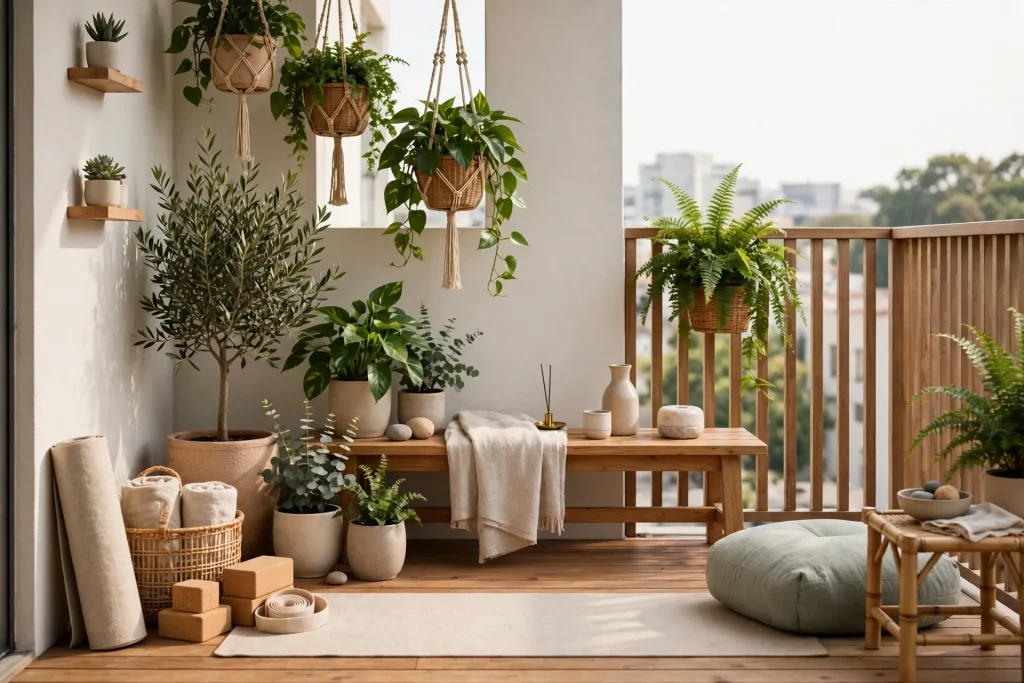
A Wellness and Yoga Deck
Feels: peaceful, restorative, open
If you love stretching, meditation, or quiet mornings, design your balcony around that.
Leave enough clear floor space for a yoga mat, roughly 6 by 2 feet, plus a little room to move around it. Add a soft outdoor rug, a small plant cluster with calming scents like lavender or lemon balm, and a weatherproof storage box for your mat and blocks.
Face east if you can, so you catch the morning light.
Keep the space uncluttered. A wellness balcony works best when there’s room to breathe, literally.
For year-round use (one idea): stretch the season.
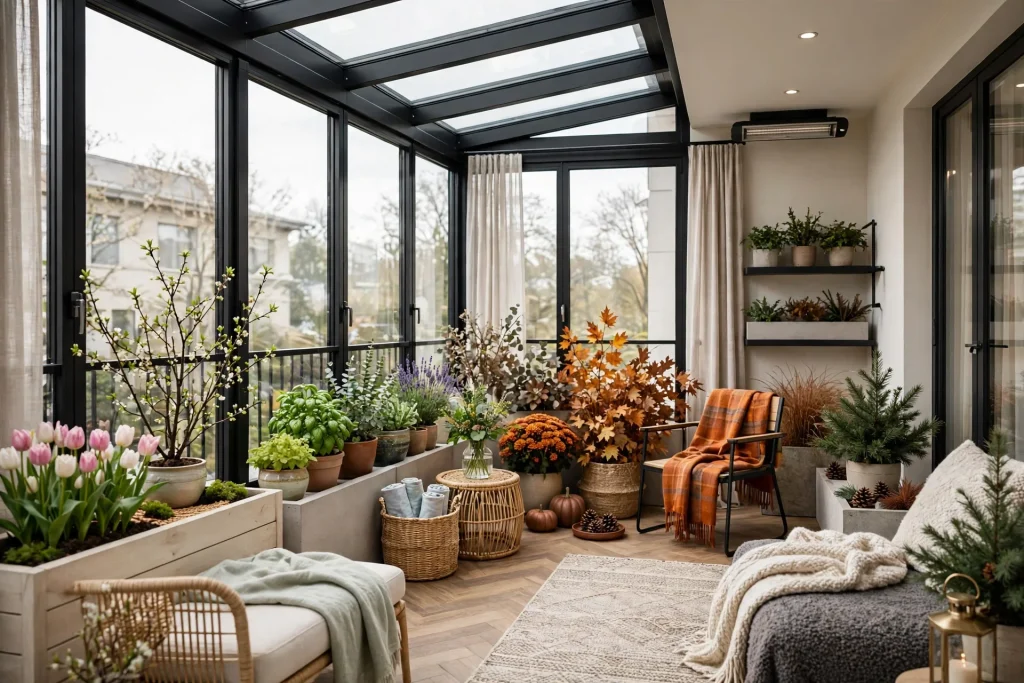
A Four-Season Sheltered Balcony
Feels: sheltered, cozy, usable all year
In cooler or rainy climates, a balcony often sits empty for half the year. Adding shelter can help you use it more often.
Options include weatherproof outdoor blinds, side screens, or, in some buildings, a fully glazed enclosure. These usually need approval from your building, and glazed enclosures often need professional installation.
Add an outdoor heater only if your building allows it. Use a model approved for that outdoor setting, follow all clearance and installation instructions, and keep it well away from cushions, curtains, blankets, plants, and other combustible materials. Blankets, warm cushions, and a hot drink can make a big difference too.
Winter-hardy plants such as evergreens, heather, and ornamental grasses keep the balcony green when other plants fade.
Mixing Two Designs
You don’t have to stick to one idea. Some combinations blend naturally:
- Zen retreat and wellness deck: calm, simple, and restful
- Tropical jungle and outdoor cinema: lush and cozy for evenings
- Cottage flowers and pollinator haven: colorful and alive
- Scandi minimal and home office: light and focused
Keep the color palette consistent so the space feels connected. Choose one dominant theme and borrow just one or two details from the second, so they don’t compete.
A Real-World Example
Imagine a renter with a small, sunny balcony on the sixth floor. Their three-word brief is “calm, green, easy.”
They choose the desert succulent design, since the balcony gets strong afternoon sun and they travel often. They group a dozen terracotta pots of succulents and aloe in one corner, which keeps the path from the door open. A sand-colored outdoor rug ties the corner together, and a single wooden stool works as a seat or a side table without crowding the space.
The balcony looks intentional, needs watering only occasionally, and stays tidy with almost no effort.
Balcony Design Mistakes to Avoid
Ignoring weight limits. Heavy planters and furniture can add up fast.
Choosing plants that don’t suit your light. Sun-loving plants won’t thrive on a shady balcony, and the reverse is true too.
Forgetting about wind. Lightweight items can blow away and become a hazard to people below.
Placing climbable items near the railing. Chairs, planters, and boxes can give children a step up.
Questions About Balcony Design Ideas
How do I choose a balcony design?
Start with how you want the balcony to feel and how you’ll use it. Then choose a theme that matches your light, climate, and space.
What is the best design for a small balcony?
Simple, uncluttered designs like Scandi minimal or zen retreat work well. Use vertical space and keep the floor as clear as possible.
Can I design a balcony if I rent?
Yes. Focus on freestanding furniture, pots, rugs, and removable screens, and check your lease before attaching anything.
How do I make my balcony usable all year?
Add shelter, like weatherproof blinds or screens if allowed, plus warm textiles and winter-hardy plants.
How can I make a balcony look more expensive?
Stick to one theme, repeat two or three colors, and choose fewer, better pieces. Matching planters and good outdoor fabrics make a big difference.
Are balcony enclosures allowed?
It depends on your building and local rules. Always check with your building management before installing an enclosure.
Design for the Way You’ll Use It
The best balcony design ideas aren’t the fanciest ones. They’re the ones that match your space, your climate, and the way you want to spend your time outside.
Write your three-word brief, choose a design that fits it, and build slowly. Even the smallest balcony can feel like a place you look forward to stepping into.