Wind, Neighbors, and No Outlet: 10 Apartment Balcony Ideas That Work With Real Building Life
Picture moving into a new apartment with a balcony. You imagine morning coffee out there, a few plants, maybe a comfy chair for reading.
Then real life shows up.
Wind on the eighth floor sends your first planter wobbling toward the railing. The lease says nothing can be drilled into the walls. Your neighbor’s laundry is flapping two feet away. Water from your watering can drips onto the balcony below. And there’s no outlet anywhere.
Apartment balconies come with their own set of challenges, and most balcony inspiration doesn’t mention them. These apartment balcony ideas are different. Each one deals with a real problem that comes with apartment living, from wind and pests to laundry, storage, and kids.
You won’t need all ten. Pick the ones that solve the problems you actually have.
A Quick Note on Building Rules
Before trying anything below, take ten minutes to check your lease and building rules. Apartment rules often cover:
- What can be attached to walls, railings, or ceilings
- Weight limits, counting furniture, planters, wet soil, and storage together
- Whether laundry can be visible from outside
- Grills, heaters, and open flames
- Items that hang over or outside the railing
If anything’s unclear, ask your building manager or landlord. It’s much easier than taking something down later.
Whatever you add, keep a clear path between the balcony door and the rest of the space. In an emergency, you or firefighters may need to reach or use the balcony quickly, so nothing should block the door or any access route.
If the weather is working against you (two ideas):
Tame the Wind on a High-Floor Balcony
Higher floors often get much stronger wind than street level. That can mean tipped pots, flattened plants, and cushions disappearing over the railing.
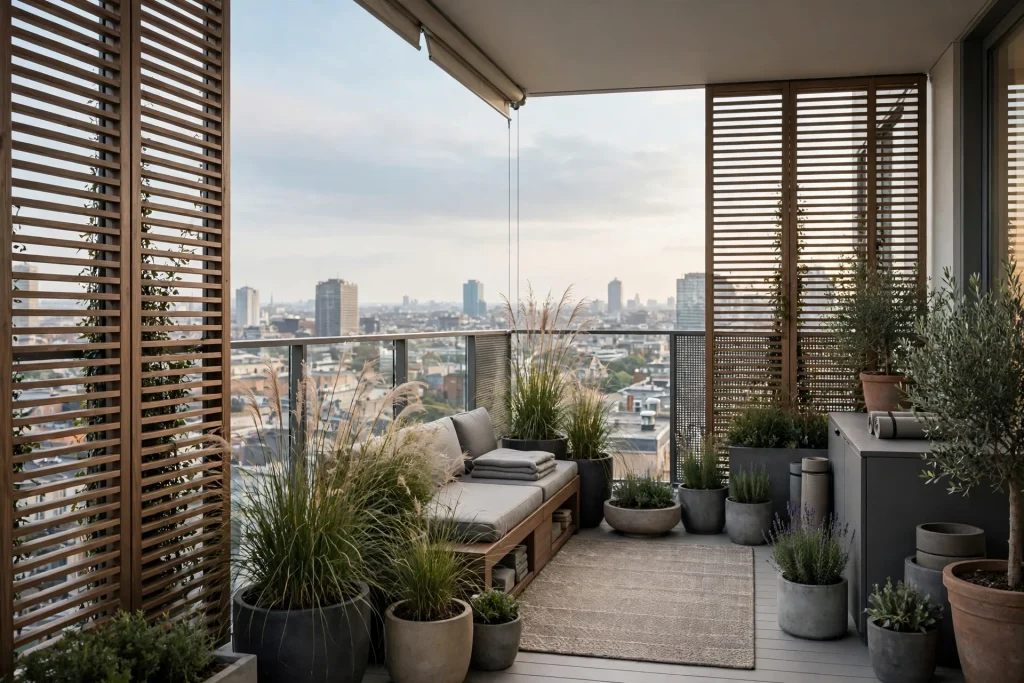
The goal isn’t necessarily to block the wind completely. Solid barriers can create turbulent airflow, so a breathable screen may be a better option. The aim is to slow it down.
Things that help:
- Windbreak mesh or perforated screens. These let some air through while reducing the force. Check whether your building allows them, and attach them only with approved methods.
- Low, wide planters. Tall, narrow pots tip easily. Wide-bottomed containers and planters with some weight at the base stay put.
- Heavier furniture. Lightweight folding chairs are easily moved by strong gusts. Sturdy teak, metal, or weighted furniture handles wind better. Heavier items still need to stay within your balcony’s approved load limit, so balance weight against stability.
- Tough plants. Ornamental grasses, rosemary, lavender, and many succulents often cope with windy, sunny spots.
Bring cushions and lightweight decor inside when strong winds are forecast. Anything that blows off a high balcony can be dangerous to people below.
Add Mesh Screens to Keep Bugs Out
If you’ve ever tried to enjoy a summer evening on the balcony while swatting mosquitoes, this idea is for you.
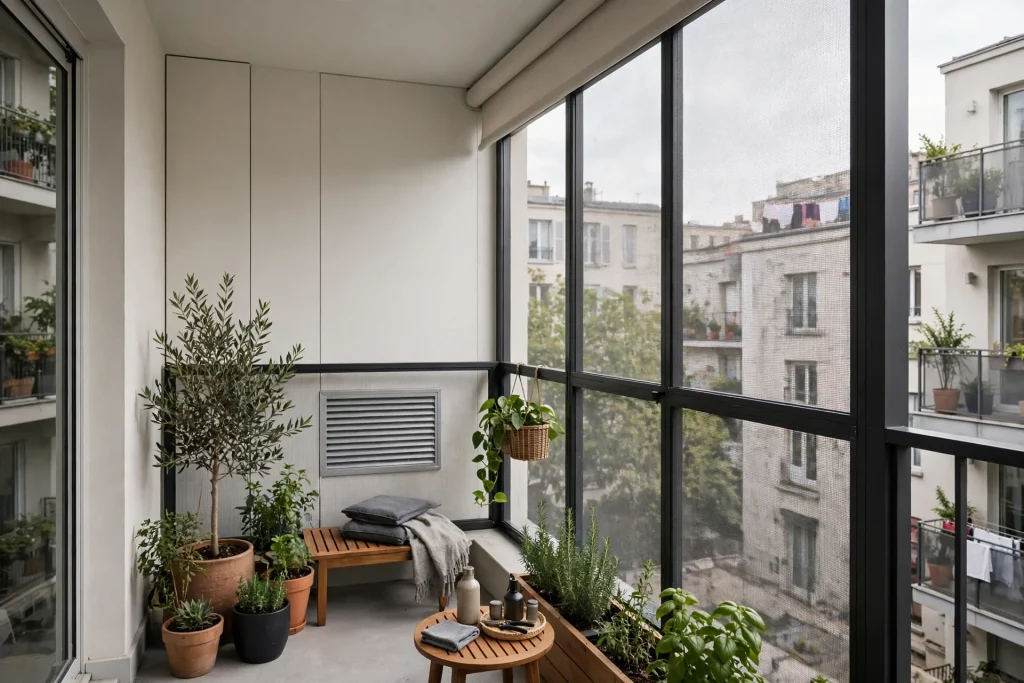
Some apartments allow mesh screen panels or magnetic screen curtains for the balcony opening. Others allow freestanding mesh panels or a pop-up screen tent on larger balconies.
Even without screens, small changes help:
- Empty saucers, buckets, and anything else holding standing water, since mosquitoes breed in still water
- Use a small battery-powered fan near your seating, since moving air makes it harder for mosquitoes to land
- Grow plants like lavender, basil, and lemon balm, which smell lovely, though they won’t keep bugs away on their own
Check with your building before installing anything permanent, and make sure any screen is securely fitted using a building-approved method. Some buildings have approved screen options for renters.
If you want to grow more (three ideas):
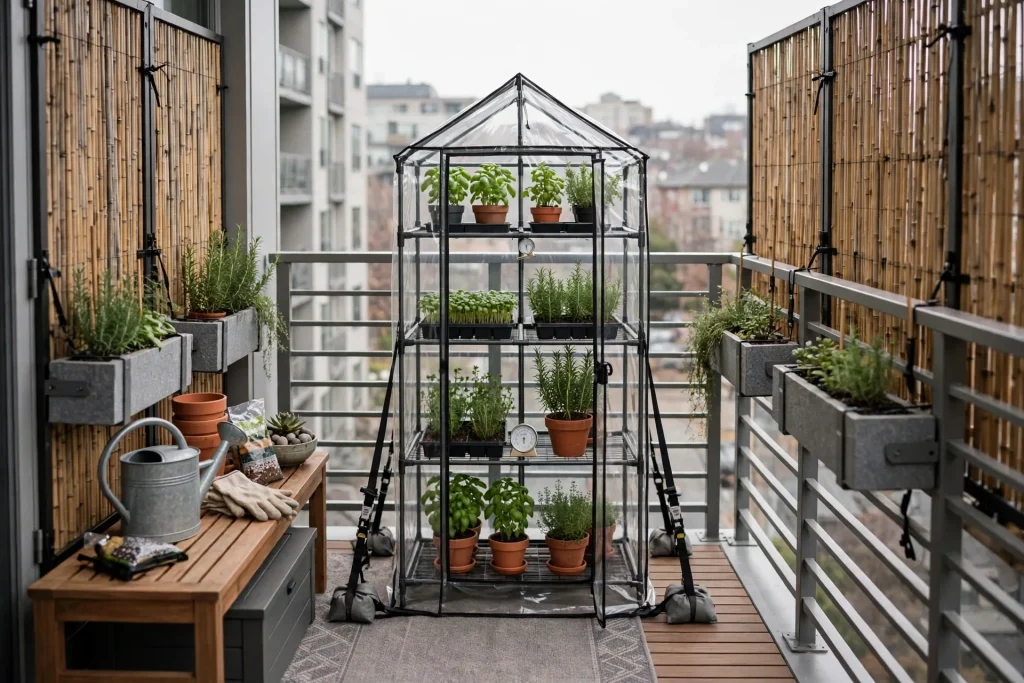
Set Up a Mini Greenhouse
A small balcony greenhouse is a simple way to start seeds early, protect tender plants from frost, and keep growing for longer each year.
Most are lightweight shelving units with a zip-up plastic cover. Some are tall and narrow, others are short enough to sit on a low table.
What you can grow inside:
- Herb and vegetable seedlings in early spring
- Tender plants like chilies and basil in cooler months
- Cuttings you’re trying to root
On sunny days, open the cover partway. Mini greenhouses can heat up quickly and cook plants if left fully closed.
Place it where it gets bright light but some shelter from the strongest afternoon sun, such as against a wall rather than right by the railing.
Secure it properly, especially on windy balconies. On a hard balcony floor, weighting the bottom shelf works well, or use an anchor point your building has approved. Avoid drilling or adding fixings without permission.
Use Self-Watering Planters and a Simple Drip Kit
Busy schedules and weekends away are hard on balcony plants. Small containers dry out fast, especially in sun and wind.
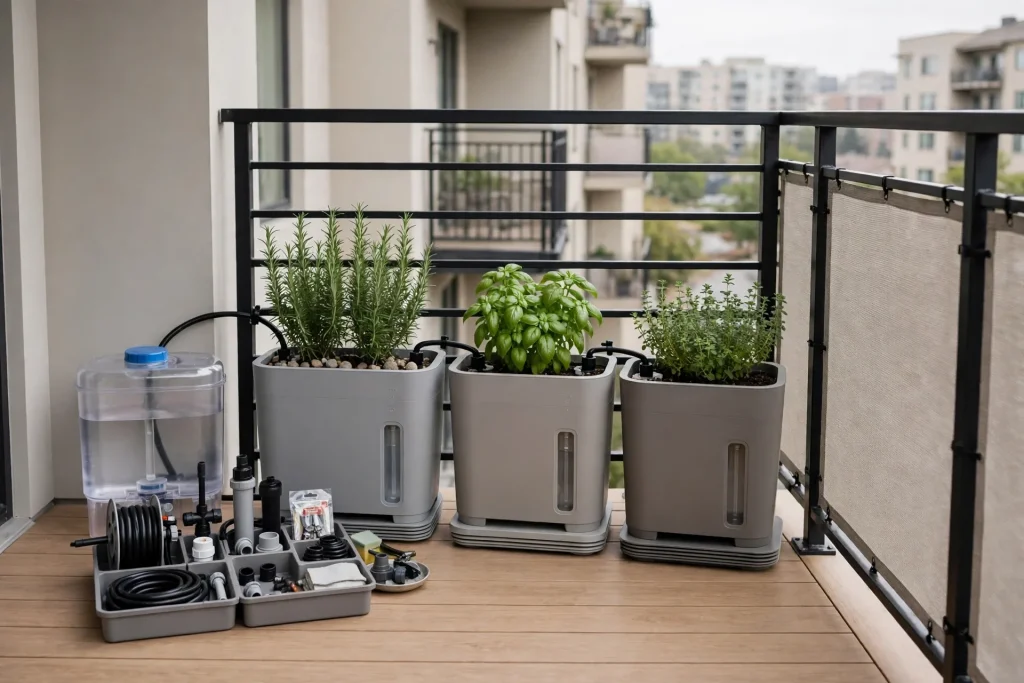
Self-watering planters have a water reservoir at the bottom. The plant draws moisture up as needed, so you water less often.
For several pots, a small drip irrigation kit can help. Some run from a gravity-fed water container, while others use a small battery or solar pump on a timer.
Why this works well in apartments:
- Less hand-watering means less chance of spills, though you still need properly fitted saucers or trays to catch overflow
- Plants stay healthier during heat waves or short trips
- It’s usually renter-friendly, with nothing attached to the building
Test any new watering setup for a few days before you leave, and check that excess water drains into saucers rather than off the balcony.
Start Balcony Composting
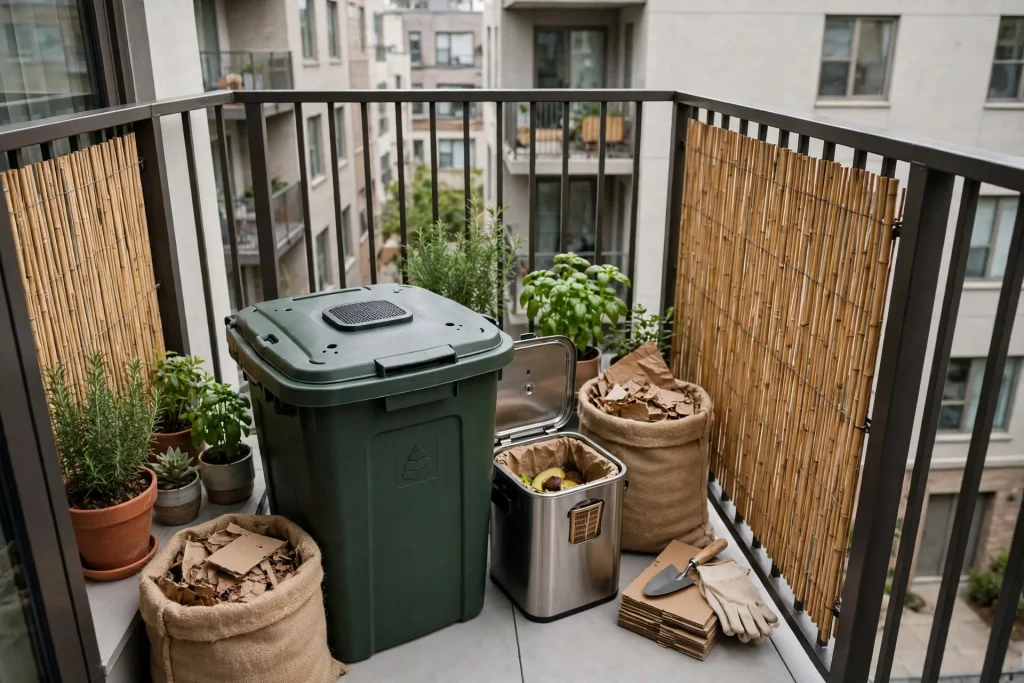
Composting isn’t just for big gardens. A small balcony can handle a compact composting system, which turns kitchen scraps into rich soil for your plants.
Two common options:
Bokashi bins. These use a special bran to ferment food scraps in a sealed bucket. They’re compact and usually low-odor when sealed properly. The fermented scraps then need to be buried in soil or added to a larger compost.
Worm bins. A worm bin, sometimes called a wormery, uses composting worms to break down scraps. They prefer shade and moderate temperatures, so they suit covered balconies better than very hot ones.
Keep bins lidded, avoid adding meat or dairy unless the system is designed for it, and follow the instructions that come with the kit. Keep the bin properly maintained to minimize odors and discourage pests, though occasional issues can still happen.
Check your building’s rules first, since some apartments have guidance on composting.
If you need the balcony to be practical (three ideas):
Make Room for Laundry Without Ruining the View
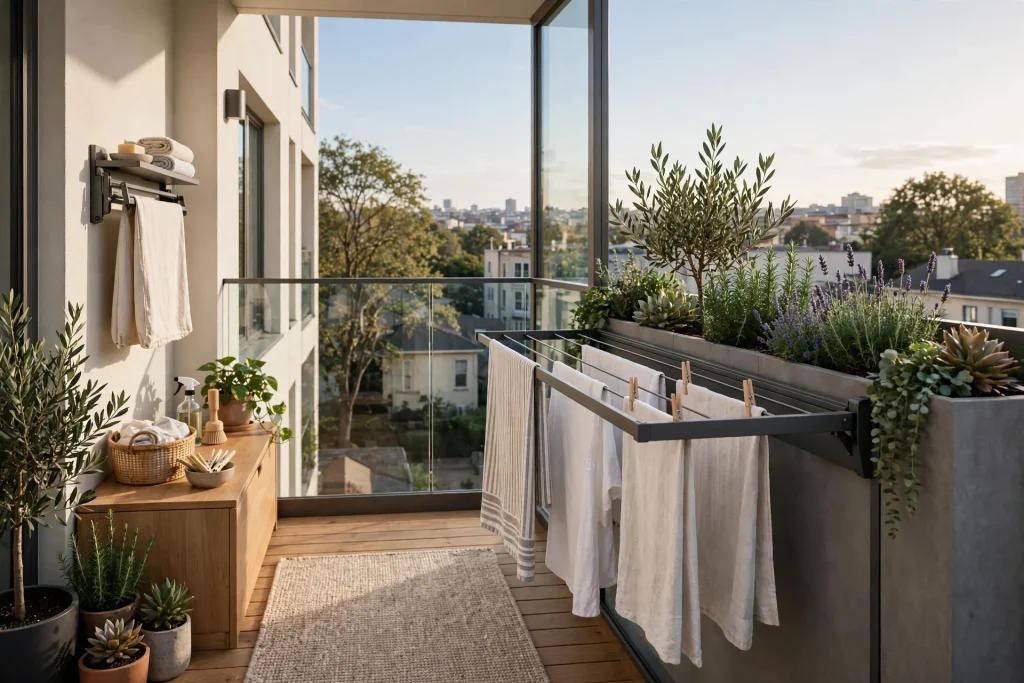
Many apartments don’t have a dryer, and the balcony becomes the drying spot. But a big drying rack can take over the whole space.
A few ways to make laundry work better:
- A retractable clothesline. It pulls out between two walls when needed and winds back into a small case. Check whether your building allows wall fixings.
- A wall-mounted folding rack. It folds flat when not in use.
- A slim freestanding rack. Look for one that folds narrow and stores behind a door.
Make sure lines and racks don’t block the balcony door or the path across the balcony.
Some buildings don’t allow laundry to be visible from outside. If that’s the case, place the rack below the railing line or behind a solid balcony wall.
On windy days, use extra clothes pegs, and avoid hanging very light items that could blow away. Drying in the morning often works best, since clothes have the whole day in the air and you can bring the rack in before evening dew settles.
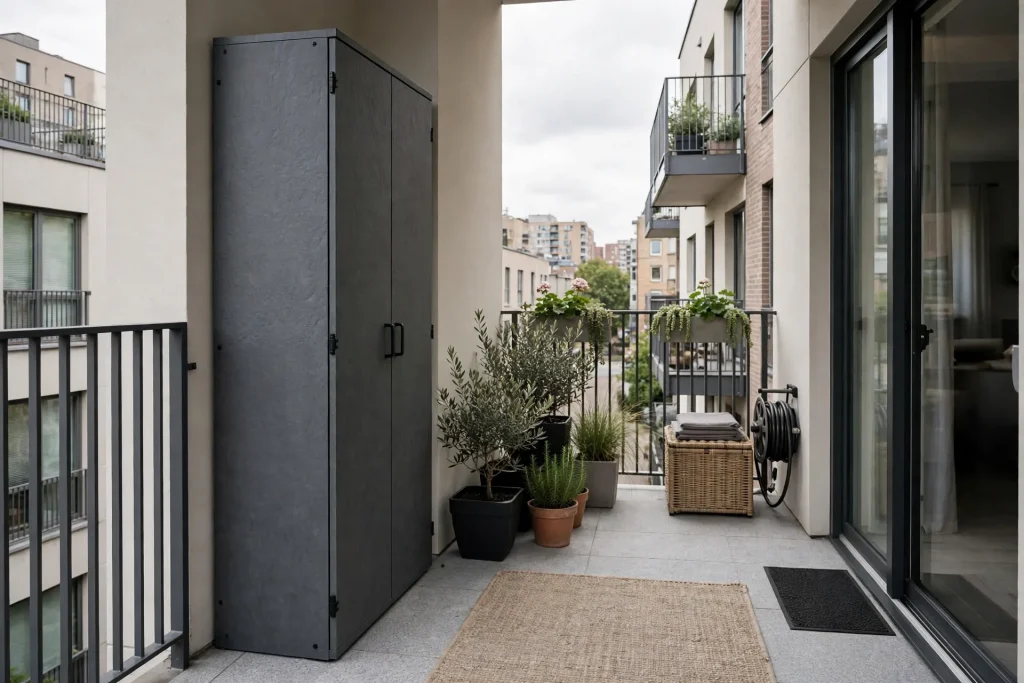
Add a Tall Weatherproof Storage Cabinet
Balconies often become the place where things go when there’s no room inside. Potting soil, watering cans, outdoor cushions, cleaning supplies, and sports gear can end up piled in a corner.
A tall, narrow weatherproof cabinet keeps all of that out of sight.
Look for resin, powder-coated metal, or treated wood. Many outdoor storage cabinets have adjustable shelves and lockable doors, which is useful if you store tools or garden chemicals.
A few tips:
- Choose a narrow model that fits in a corner without blocking the door
- Keep heavier items on lower shelves for stability
- Tall cabinets can catch the wind, so choose a stable, weighted model and secure it against tipping using a method your building allows
- Add a small cushion bin or lidded box inside for outdoor cushions during bad weather
Picture a compact apartment balcony with a slim gray cabinet tucked beside the door. Inside are cushions, a watering can, potting mix, and a small toolkit. The rest of the balcony stays clear for seating and plants.
Give Bikes and Gear a Proper Spot
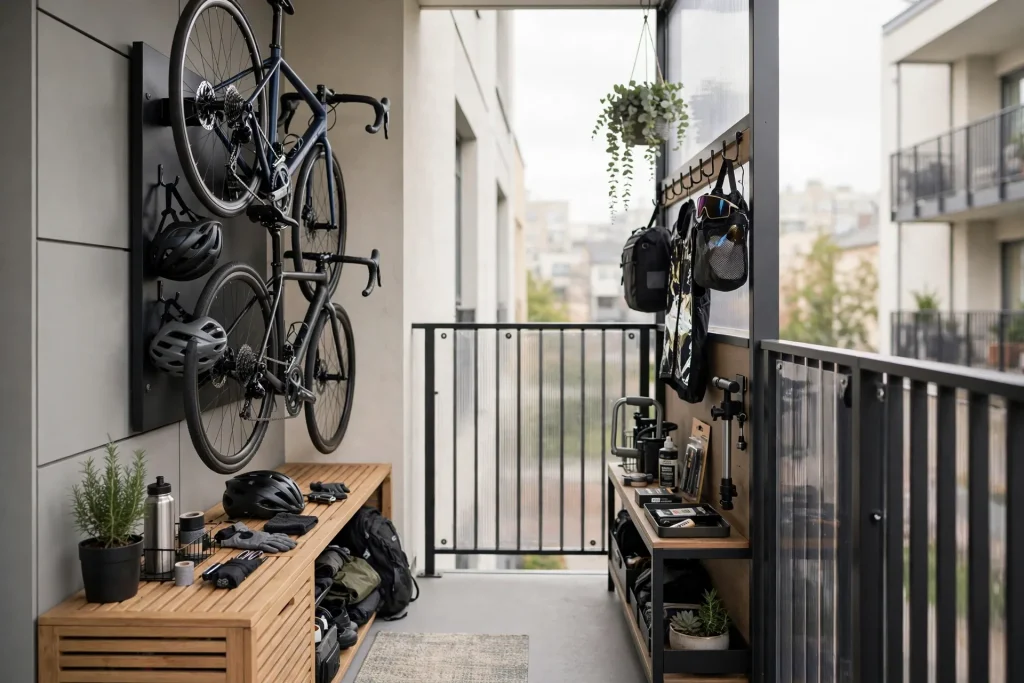
In apartments without a bike room or storage unit, the balcony may be the only option for a bike, scooter, or bulky sports gear.
First, check whether your building allows this. Some don’t, and some limit what can be carried through hallways and elevators.
If it’s allowed, keep it tidy and protected:
- Use a fitted, waterproof bike cover to protect it from rain and sun
- Stand it on a rubber mat to protect the balcony floor
- Choose a freestanding bike stand if wall hooks aren’t permitted
Keep bikes away from the railing so they can’t be used as a step by children, and make sure they never block the balcony door or the path across the balcony.
A small hook or basket nearby for helmets, locks, and lights keeps everything together, so you’re not hunting for gear on the way out. Wipe muddy tires before carrying the bike through the apartment, too.
If you want comfort and family time (two ideas):
Fit Modular Corner Seating
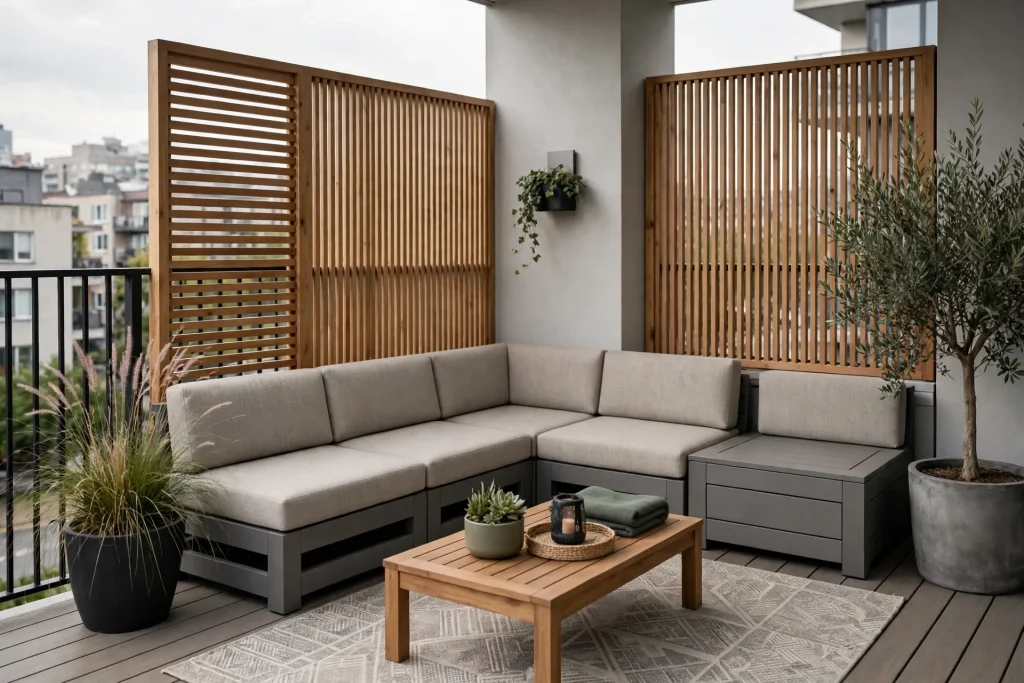
Modular outdoor seating is made of separate pieces, like corner units, armless seats, and ottomans, that you can arrange in different ways.
On an apartment balcony, that flexibility helps. You can fit an L-shape into a corner, line pieces up along one wall, or pull one piece out as an extra seat when friends visit.
Tips for choosing modular seating:
- Measure the balcony and door carefully, since bulky pieces need to fit through the apartment
- Look for weather-resistant frames like aluminum or synthetic rattan
- Choose cushions with removable, washable covers
Keep the corner unit away from the railing, especially if children use the balcony.
For a small balcony, even two armless modules and a single ottoman can create a cozy corner with flexible seating. The ottoman can double as a footrest, a side table with a tray on top, or an extra seat.
When bad weather is on the way, stack the cushions inside your storage cabinet or bring them indoors, so they last longer.
Create a Safe Play Corner for Kids
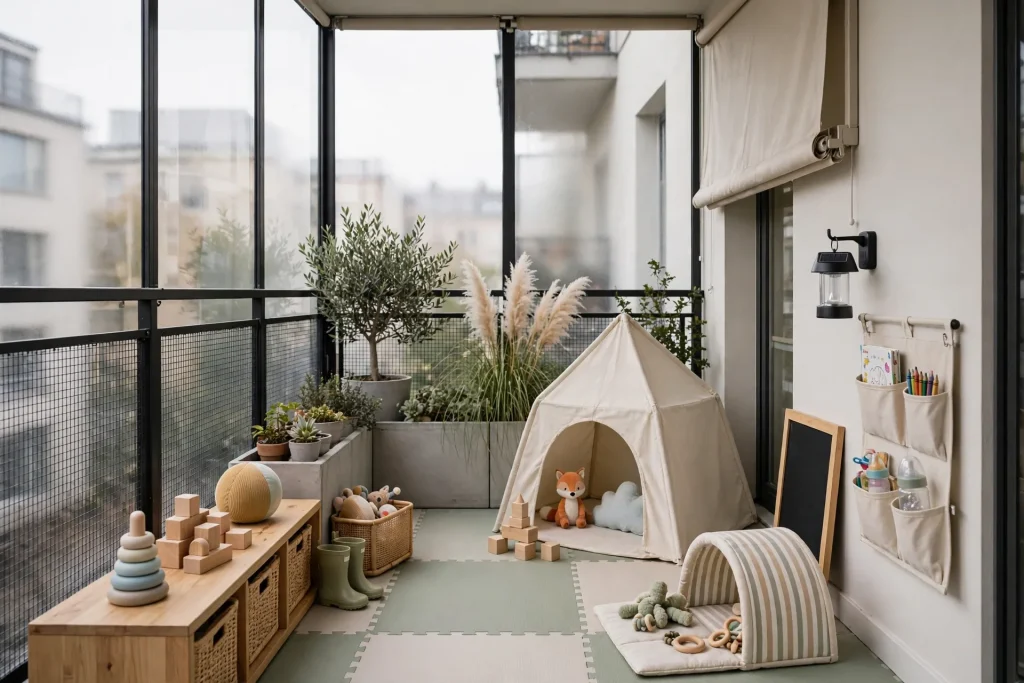
A balcony can be a lovely spot for kids to play, read, or garden with you. But safety needs to come first.
Start by checking the railing. Gaps should be small enough that a child can’t fit through, and there should be no horizontal bars they can climb. If you’re unsure, ask your building manager.
Ideas for a kid-friendly corner:
- A small play mat or outdoor rug
- A low storage basket with chalk, picture books, or small toys
- A child-sized table for drawing or snacks
- A planter where they can grow their own flowers or herbs
Move chairs, planters, and storage boxes well away from the railing, so they can’t be used as steps. Many families also keep the balcony door locked or use a high latch, but a latch alone doesn’t make a balcony child-safe. A secure, code-compliant railing and close supervision are what matter most.
Sunny balconies can get hot underfoot, so a shaded corner and a water bottle make playtime more comfortable in summer.
Always supervise young children on a balcony, even for a minute.
Two Apartment Balconies, Two Setups
Here’s how a few of these apartment balcony ideas might come together on two very different balconies.
A windy tenth-floor balcony for a working couple. Windbreak mesh along one side, wide planters with rosemary and grasses, self-watering pots for weekends away, and a narrow storage cabinet beside the door.
A ground-level family balcony. A screen to keep out mosquitoes, a play corner with a small table and books, modular seating in the corner, and a worm bin in a shady spot for kitchen scraps.
Each setup solves that balcony’s real problems.
Mistakes That Cause Trouble With Neighbors
Letting water drip onto the balcony below. Use saucers, water slowly, and check drainage.
Ignoring the wind. Lightweight items can blow off balconies and be dangerous to people below.
Skipping the building rules. Unapproved screens, hooks, or heavy planters can lead to problems with your landlord.
Overloading the space. Too much furniture or heavy planters can strain balcony weight limits and make the space hard to use.
Questions About Apartment Balcony Ideas
What can I put on my apartment balcony?
It depends on your building rules, but common options include seating, plants, storage, and drying racks. Check your lease before adding anything heavy or attached.
How do I make my apartment balcony private?
Freestanding screens, tall potted plants, and outdoor curtains are popular choices. Check whether your building allows them.
Can I compost on an apartment balcony?
Often, yes. Bokashi bins and worm bins are compact options. Keep them sealed and follow your building’s guidance.
How do I stop plants blowing over on my balcony?
Use wide, stable pots within your balcony’s weight limit, choose wind-tolerant plants, and group containers together so they shelter each other.
Is it safe to let kids play on a balcony?
It can be, with close supervision and a secure, code-compliant railing. Keep furniture and planters away from the railing so children can’t climb.
Solve One Problem First
The best apartment balcony ideas aren’t about having the most stylish space on the block. They’re about making the balcony work for your life, your building, and your neighbors.
Start with the problem that bothers you most, whether that’s wind, bugs, laundry, or clutter. Fix that one first, and you’ll probably find yourself using the balcony a lot more.