
Pull the Room Together: 11 Living Room Rug Ideas for Every Style, Budget, and Household
Many people choose a living room rug the same way. They find one they like online, check the price, guess the size, and hope for the best.
Then it arrives. It’s a little too small, the colors look different in daylight, and the corners curl up every time someone walks over them. After a few weeks, nobody notices it anymore.
A rug can do so much more than that. It can make a room feel finished, soften a hard floor, tie colors together, or stand up to kids, pets, and spilled coffee.
The trick is deciding what you want your rug to do before you choose how it looks. These living room rug ideas are organized around that idea. Each one comes with its main “job,” so you can pick the ones that solve your actual problem.
First, Decide What Your Rug’s Job Is
Every rug does a few things, but most rooms need one thing more than the others.
- Comfort: something soft and warm underfoot
- Color: a way to bring in pattern or tie a palette together
- Durability: a surface that handles heavy traffic, kids, or pets
- Zoning: a way to define one area in an open-plan space
Keep your main job in mind as you read. It makes choosing much easier.
Rug Sizing in One Minute
Size matters more than almost anything else.
A common guideline is to choose a rug large enough for at least the front legs of your sofa and chairs to sit on it. In many average living rooms, that means 8 by 10 feet (about 240 by 300 centimeters) or larger, but the right size depends on your room, your furniture, and how the seating is arranged. A compact apartment seating area may need something smaller.
Leave a strip of bare floor around the edges, often around 12 to 18 inches (30 to 45 centimeters), so the room doesn’t feel wall-to-wall.
If you’re unsure, mark the size on the floor with painter’s tape before you buy.
Layer a Patterned Rug Over a Large Jute Base
Main job: color, plus extra coverage on a budget
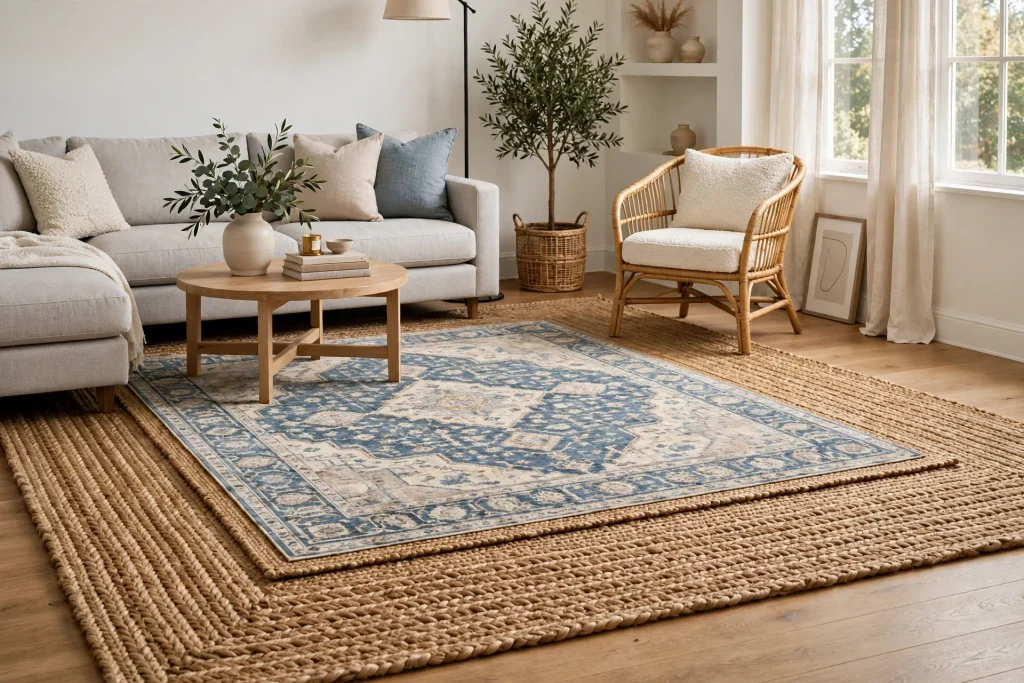
Large patterned rugs can be expensive. A big, affordable jute or sisal rug as a base, with a smaller patterned rug on top, gives you more coverage and layered style without the cost of a single oversized patterned rug.
The natural fiber base adds texture, while the top rug brings in color and pattern.
Picture a 9 by 12 jute rug under a sofa and two armchairs, with a smaller faded red and blue vintage-style rug placed slightly off-center on top. The room looks warm, layered, and collected.
Try to leave at least a foot or so of the jute showing on each side, so the layering looks deliberate rather than accidental. Keep the top rug flat and well secured, so the edges don’t catch toes. A thin rug pad or double-sided rug tape between the layers can help. Jute’s rough surface can make the top rug shift or ripple, so check that both rugs lie flat and that the top one doesn’t slide when you walk across it.
Choose a Faded Vintage-Style Rug
Main job: color and character
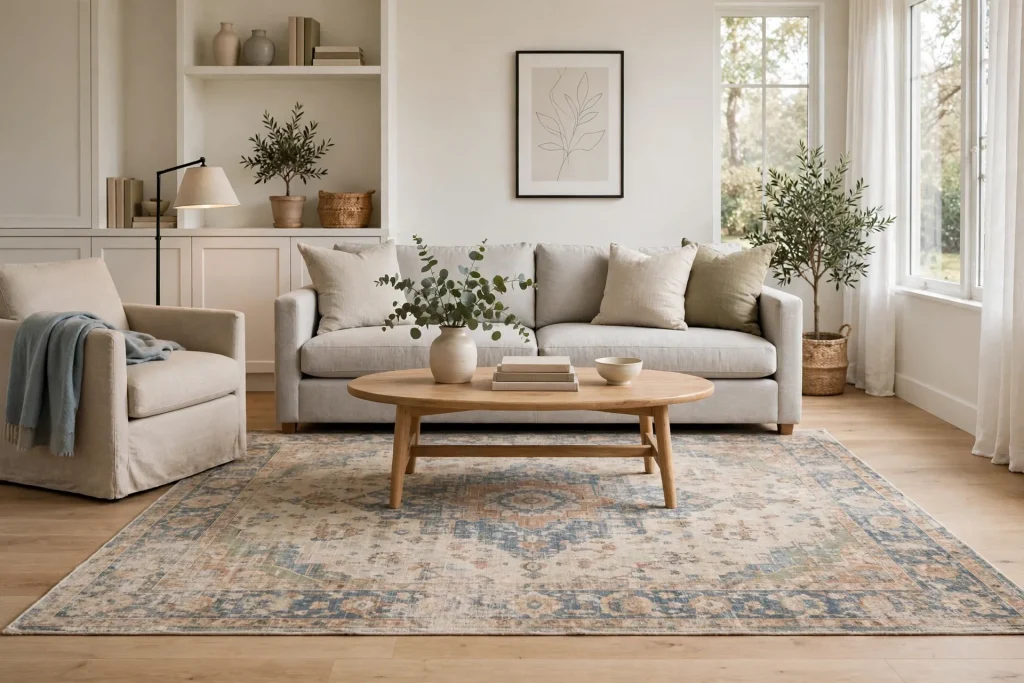
Faded, vintage-style rugs inspired by traditional Persian, Turkish, or Oushak designs have a soft, lived-in look. The muted colors make them easy to mix with modern and traditional furniture.
They’re also forgiving. Small stains, crumbs, and pet hair are often less noticeable against the pattern.
You can find real vintage rugs at antique shops or online, or choose new rugs made to look vintage, often at a lower price. Genuine vintage pieces are usually hand-knotted, often in wool, with natural wear and slight irregularities. A reputable seller should be able to tell you roughly how old a rug is and how it was made.
If you buy a real vintage piece, check it carefully for moth damage, worn spots, or loose edges before bringing it home.
To style one, pull a single color from the rug, like a dusty rose or faded teal, and repeat it in a cushion or throw. The rest of the room can stay simple.
Try a Round Rug
Main job: softening a boxy room
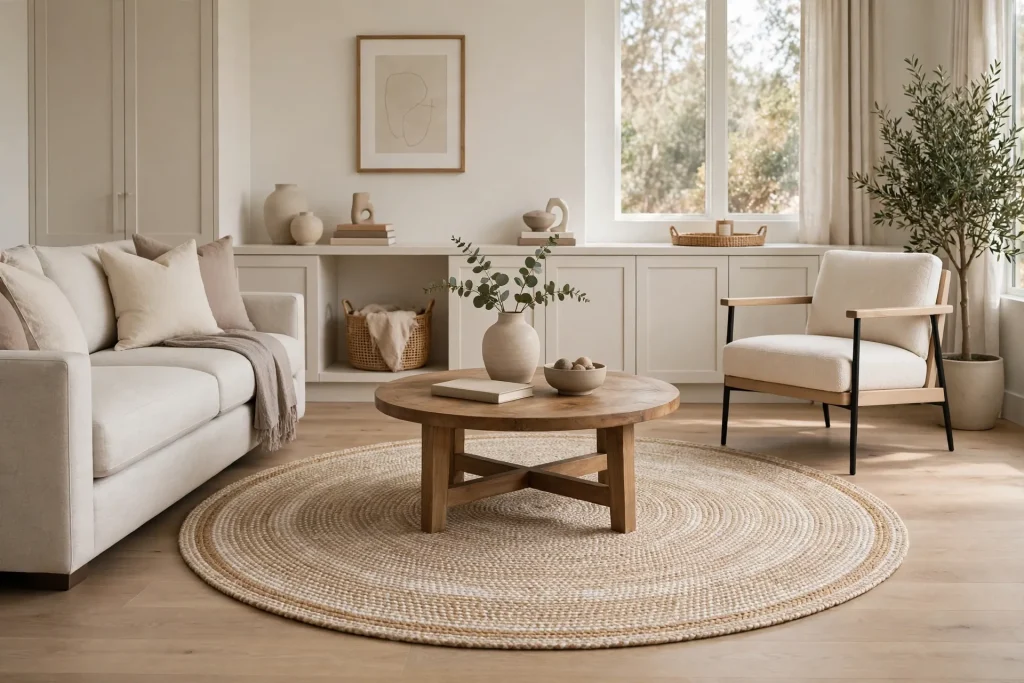
Round rugs aren’t just for dining rooms. In a living room, a round rug can soften straight lines and make a space feel more relaxed.
They work especially well:
- Under a round coffee table
- In a reading corner with a single armchair
- With curved sofas or rounded furniture
- In smaller or square living rooms
Choose a size that lets the coffee table sit comfortably in the middle, with plenty of rug showing around it. A round jute or wool rug in a neutral tone is an easy starting point, since it adds shape without competing with the furniture. If seating sits around the edge, try to fit at least the front feet of the chairs on the rug.
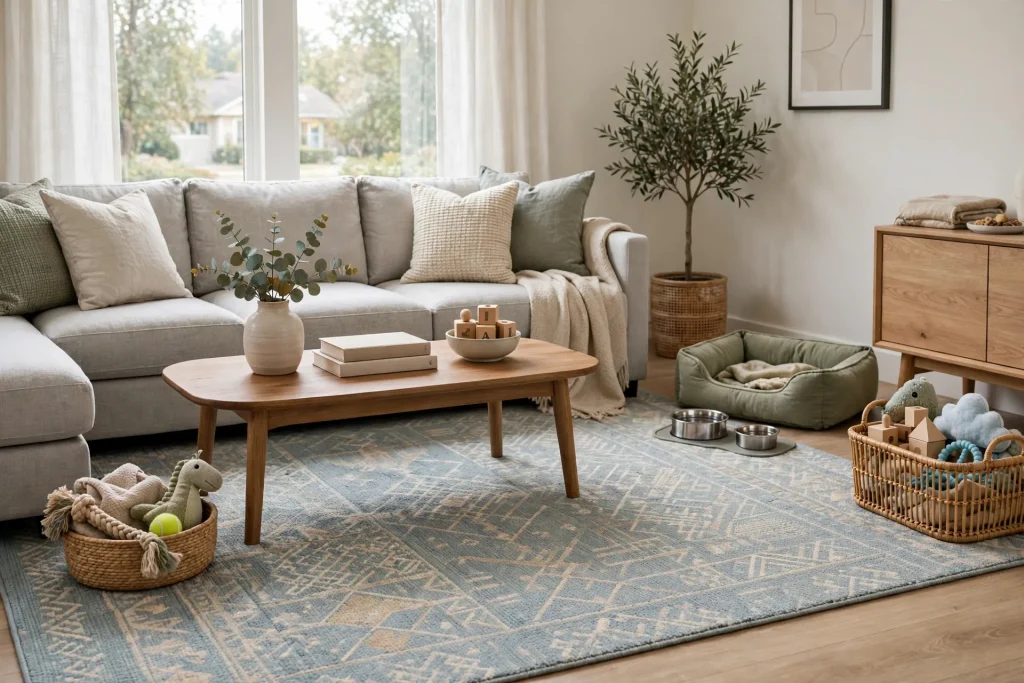
Go Washable for Kids and Pets
Main job: durability and easy cleaning
Washable rugs have come a long way. Many now come in stylish patterns and colors. Smaller sizes may fit in a home washing machine, but washable doesn’t always mean machine-washable at home.
They’re a smart choice for families with young kids, pets, or anyone who eats on the sofa.
Before buying, check the manufacturer’s instructions. Larger washable rugs may need a commercial machine or professional cleaning, and some need air-drying.
Washable rugs are often thinner, so a good rug pad underneath helps them feel softer and stops them from slipping. This is one of the most practical living room rug ideas for busy homes, since you’re not afraid to actually use the room.
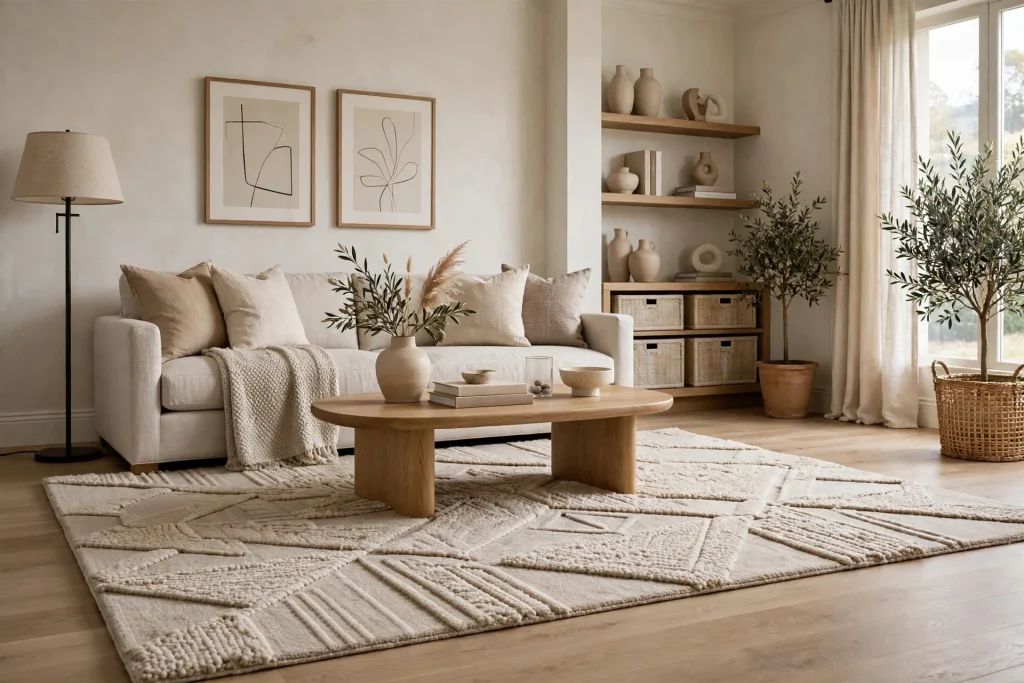
Pick a Sculpted Wool Rug in a Neutral
Main job: comfort and quiet texture
If you love a calm, neutral living room, a sculpted rug adds interest without adding pattern. Sculpted, or high-low, rugs have areas of cut and uncut pile, creating a raised texture you can see and feel.
Cream, oatmeal, soft gray, and warm beige work beautifully. Wool rugs tend to feel soft and warm, and they’re generally durable when properly maintained. Some new wool rugs shed at first, which usually settles with gentle, regular vacuuming.
Imagine a cream sculpted rug with a subtle geometric pattern under a linen sofa. It looks calm, but there’s plenty to notice up close.
Light-colored wool can show stains, so blot spills quickly and check the care instructions for cleaning.
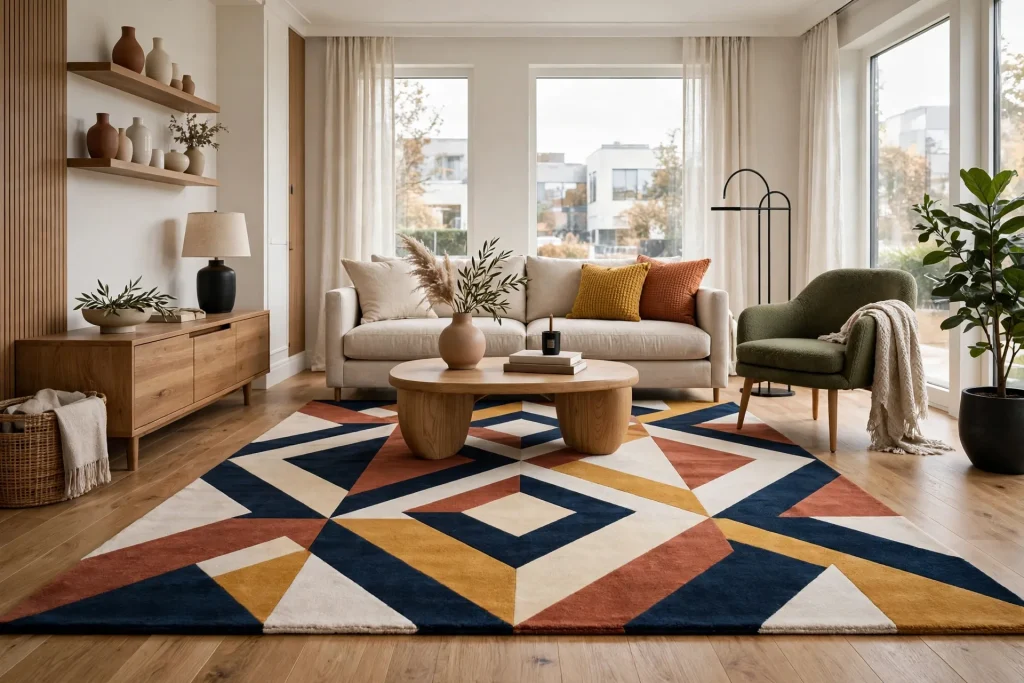
Let a Bold Geometric Rug Be the Art
Main job: color and a strong focal point
In a room with simple furniture and plain walls, a bold geometric rug can become the star of the space.
Think large-scale stripes, color-blocked shapes, checkerboard-style squares, or abstract designs in strong colors.
Pick one or two colors from the rug and repeat them in cushions, a throw, or artwork. That ties the room together. If you’re nervous about a bold pattern, choose one with a neutral background, like cream or gray, so the shapes stand out without overwhelming the space.
For example, a navy, mustard, and cream geometric rug might pair with mustard cushions on a gray sofa and a navy throw. The rug feels intentional, not random.
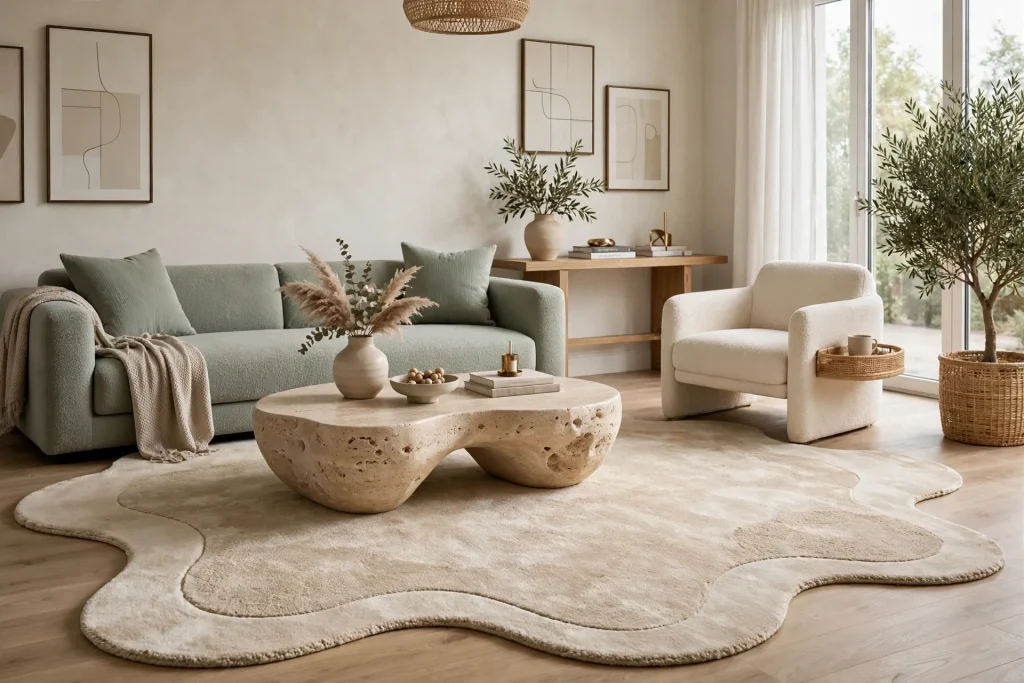
Try an Organic or Irregular Shape
Main job: making the room feel modern and relaxed
Rugs with soft, irregular, organic shapes have become a popular modern choice. Some look like pebbles or puddles. Others have wavy or rounded edges.
They look especially good in minimalist or contemporary living rooms, where the unusual shape adds interest.
Faux cowhide-style rugs are another irregular option. They work well layered over a larger rug or placed in front of a chair.
Irregular rugs usually don’t cover as much space, so they often work best in smaller seating areas or layered over a larger base. A sand-colored pebble rug beside a curved armchair, for example, makes a quiet corner feel modern and calm.
Use a Flat-Weave Kilim or Dhurrie
Main job: durability and easy movement
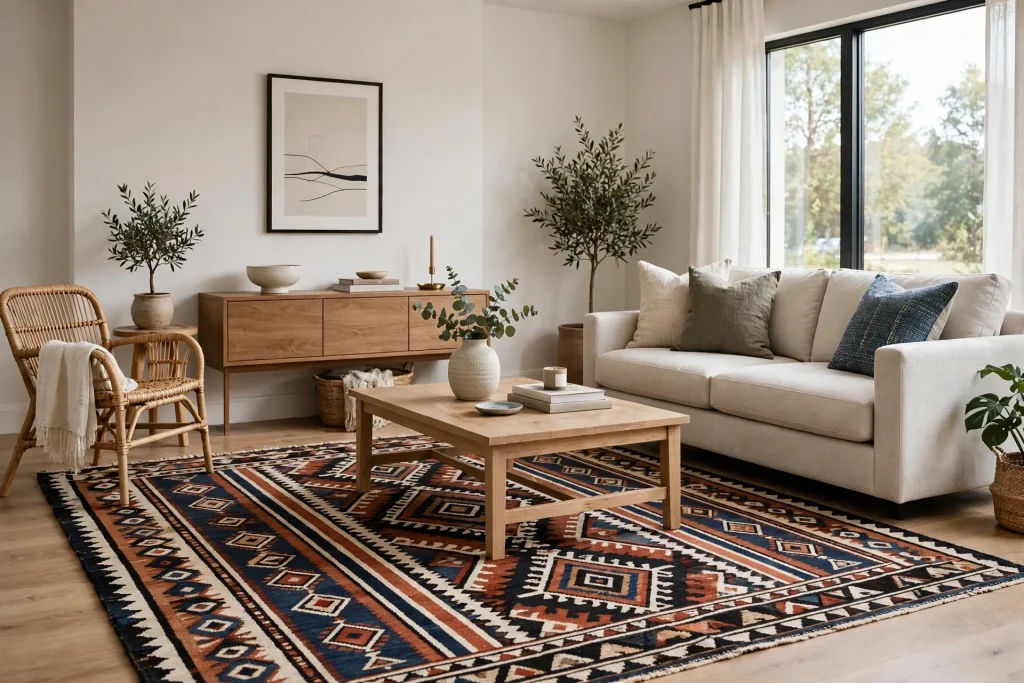
Flat-weave rugs, like kilims and dhurries, have no pile. They’re woven flat, which makes them thin, lightweight, and easy to move or shake out.
They suit high-traffic areas, homes with doors that need to swing over the rug, and rooms where furniture is moved often. Their low profile can make them easier for some robot vacuums, though fringe, curling corners, and loose edges can still cause problems depending on the vacuum.
Kilims are often colorful, with bold geometric patterns. Dhurries are usually cotton and can be softer in color.
Because they’re thin, they can slide. Always use a non-slip rug pad underneath.
Zone an Open-Plan Space With Two Rugs
Main job: zoning
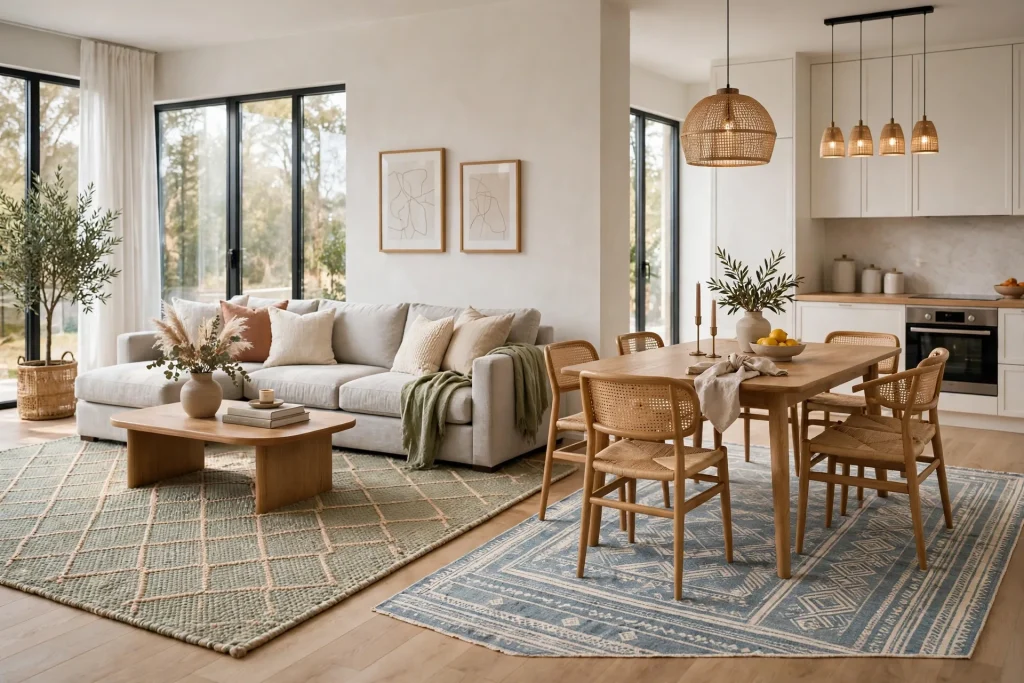
In an open-plan living and dining area, rugs can quietly define where one space ends and another begins.
Use one rug under the living room seating and another under the dining table. They don’t need to match, but they should feel related.
A few ways to connect them:
- Use the same color in different patterns
- Choose the same material in different shades
- Pair a bold rug with a calmer, coordinating one
Leave a little floor between the two rugs, so each area feels distinct. Under a dining table, choose a rug big enough for chairs to stay on it when pulled out, and a low-pile or flat-weave texture that’s easy to clean.
Bring in a Plush Shag for Coziness
Main job: comfort
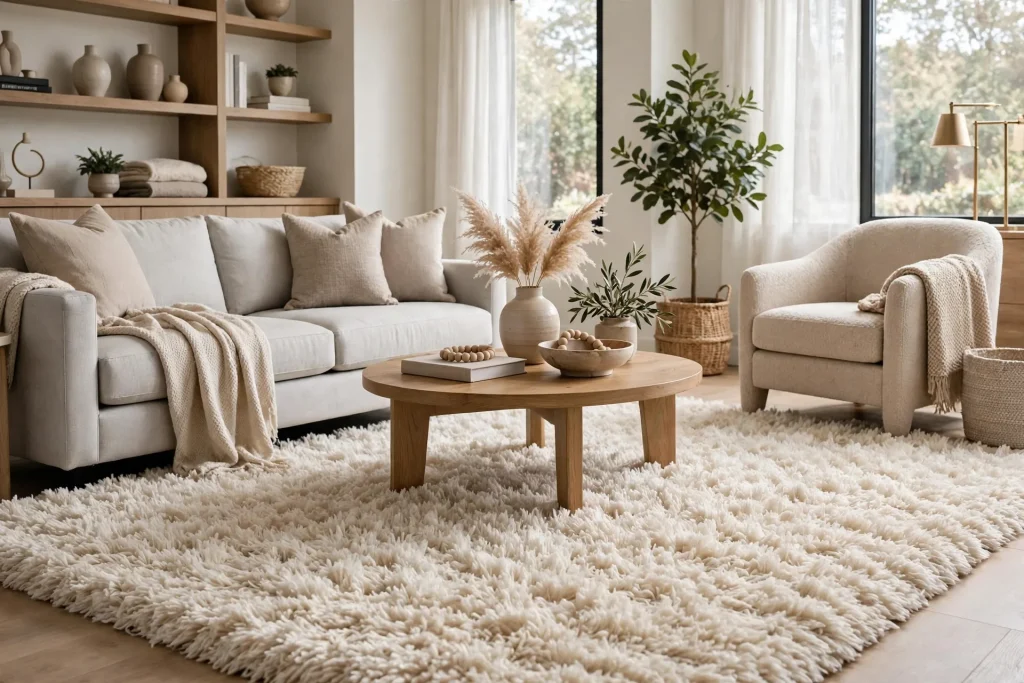
Few things feel cozier than sinking your feet into a soft shag rug. High-pile rugs are perfect for living rooms where people sit on the floor, lounge with kids, or watch movies.
Modern shags come in soft neutrals, warm tones, and even subtle patterns.
Picture a soft ivory shag in front of a deep sofa, with a basket of blankets nearby. It’s the kind of corner that invites movie nights and lazy Sundays.
They do need a little more care. Crumbs and pet hair can get trapped in the pile, and some vacuums struggle with long fibers. Check the rug’s care guidance before vacuuming, and consider whether it suits your home’s traffic.
Choose Different Rugs for Each Season
Main job: keeping the room fresh
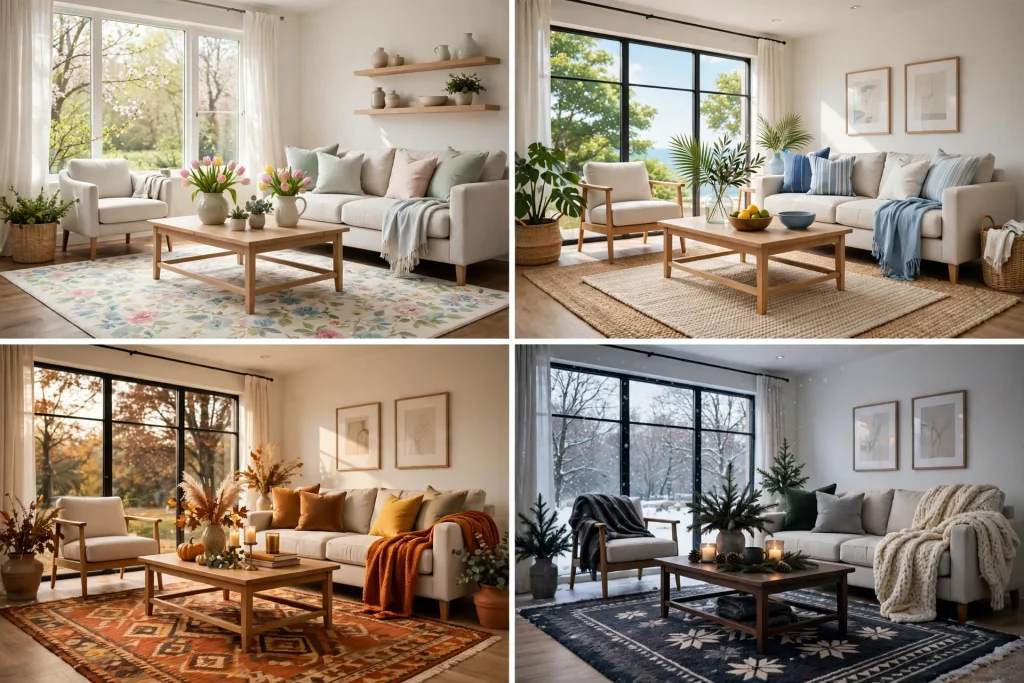
Some people like to change their living room rug twice a year.
In warmer months, a light-colored flat-weave or natural fiber rug feels fresh and cool. In colder months, a thick wool or plush rug adds warmth and comfort.
If you have space to store a rolled rug, this is an easy way to change the feel of your living room without buying new furniture. Swapping also spreads the wear across two rugs, so each one may last longer.
Roll rugs rather than folding them, and store them somewhere clean and dry. Wrapping them in breathable fabric, rather than plastic, can help prevent moisture buildup.
A Quick Guide to Rug Materials
Wool: soft, warm, and often durable, but can shed at first
Cotton: affordable and often washable, but can wear faster
Jute and sisal: natural texture and great for layering, but can feel rough and may be hard to clean
Synthetic fibers: often stain-resistant and budget-friendly, but quality varies
Viscose or art silk: shiny and soft, but can be delicate and may water-mark easily
Many new rugs have a slight smell when unrolled. Airing them out in a well-ventilated room may help reduce it.
Quick Match: Which Rug Suits Your Home?
- Homes with pets: washable or low-pile synthetic
- Cozy seating areas: wool or plush shag
- High-traffic spaces: flat-weave or durable synthetic
- Layered decorating: a jute or sisal base
- Calm, elegant interiors: sculpted wool
- Dark sofas: a lighter rug for contrast, or a pattern that repeats the sofa color
- Light sofas: a deeper or patterned rug to ground the seating
A Real-World Example
Imagine a young family with a beige sofa, a toddler, and a dog. Their living room has an old, small rug that slides around and looks a little sad.
They decide durability is the main job. They measure the seating area and choose an 8 by 10 rug, which lets the front legs of the sofa and both chairs sit on it while leaving a border of floor. They pick washable synthetic, since the toddler spills and the dog sheds. And they choose a faded blue and cream vintage-style pattern, because a plain cream rug would show every mark against the beige sofa. A non-slip pad goes underneath.
The room suddenly feels bigger and more finished. Spills are easier to clean, and the pattern hides everyday crumbs.
Living Room Rug Mistakes to Avoid
Buying a rug that’s too small. A tiny rug floating in the middle of the room can make the space feel disconnected.
Skipping the rug pad. Pads help stop slipping, protect floors, and make rugs feel softer. Check that the pad suits your floor, since some rubber pads can mark certain finishes, and underfloor heating may need a specific type.
Ignoring traffic. Delicate materials may not suit busy living rooms.
Choosing color only from a screen. Order a sample if possible, or check the return policy, since colors can look different in person.
Questions About Living Room Rug Ideas
What size rug should I get for my living room?
Many living rooms suit an 8 by 10 or 9 by 12 rug. Ideally, at least the front legs of your sofa and chairs should rest on it.
Should a living room rug match the sofa?
It doesn’t have to. A rug that complements or contrasts with the sofa often looks more interesting than one that matches exactly.
What is the best rug material for pets?
Washable rugs, flat-weave rugs, and some low-pile synthetic or wool rugs are often good choices. Avoid delicate materials like viscose.
Can I layer rugs in a living room?
Yes. Layering a smaller patterned rug over a larger natural fiber base is a popular and affordable way to add style.
How do I stop my rug from slipping?
Use a non-slip rug pad suitable for your floor type. Double-sided rug tape can also help with curling corners.
Find the Rug That Does the Right Job
The best living room rug ideas start with a simple question: what does your room need most? Comfort, color, durability, or a way to define the space?
Answer that first, then choose a size, material, and style that fit. When the rug does its job well, the whole room tends to feel more pulled together.