
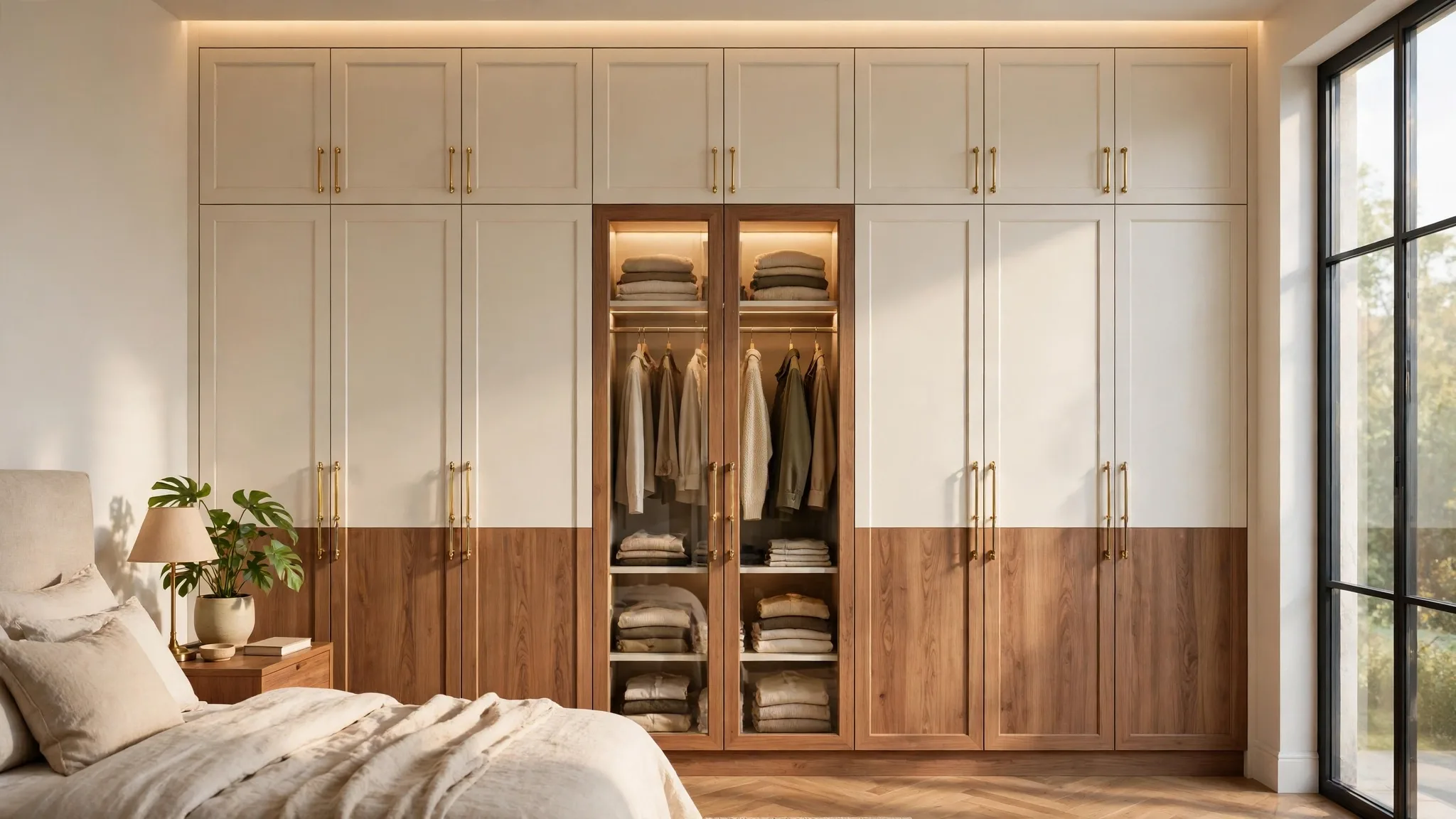
Beyond the Plain Box: 14 Wardrobe Design Ideas for Easier Mornings and Better Rooms
It’s 7:40 on a weekday. The ironing board is balanced on the bed. Yesterday’s clothes are draped over a chair because the wardrobe has nowhere to put them. A necklace has knotted itself around a pair of earrings in a drawer. And the shirt you wanted is somewhere at the back of a crowded rail.
None of that is really about how much storage you have. It’s about how the wardrobe is designed.
These wardrobe design ideas focus on more than storage, helping you create a bedroom that looks better and works harder. Some change how a wardrobe looks. Some change where it sits and how it’s laid out. A few add small features that quietly make mornings easier.
They’re grouped so you can jump to what matters most to you.
Three Questions Before You Design Anything
What annoys you most right now? If it’s the look, start with the door and finish ideas. If it’s the morning rush, the feature ideas may help more.
Is this a built-in or a freestanding piece? Some ideas, like a wardrobe framing a doorway, need a built-in. Others, like new handles or a hamper pull-out, can work with what you already have.
Who uses it? A wardrobe for a busy adult, a couple, and a growing child all need slightly different things.
Looks and doors (five ideas): these change the first thing you see.
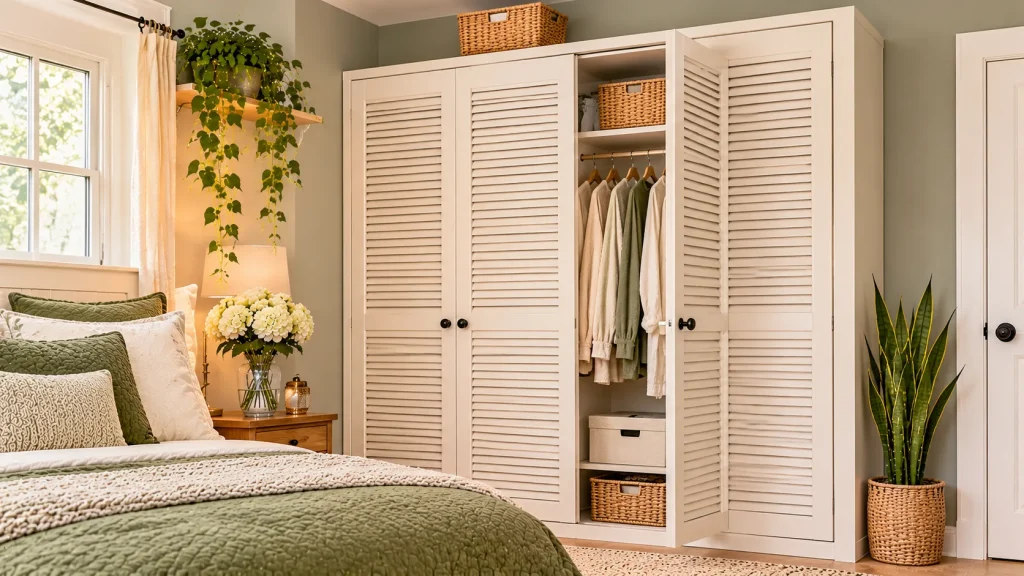
Choose Louvered Doors
Louvered doors have angled wooden slats running across them. They feel relaxed and slightly coastal, and they’ve been popular for a long time in warm climates.
The slats also allow some airflow, which many people like for wardrobes in humid rooms. It may help a little, but it doesn’t replace good room ventilation and moisture control if your bedroom tends to get damp.
Louvered doors look lovely painted white in a beach-style bedroom, or stained in warm oak for something more natural. They do gather dust between the slats, so a soft brush or microfiber cloth helps now and then.
Imagine a guest bedroom with a pair of white louvered wardrobe doors, a striped rug, and a woven pendant light. The doors alone give the room a breezy, holiday feel.
Wrap the Doors in Faux Leather
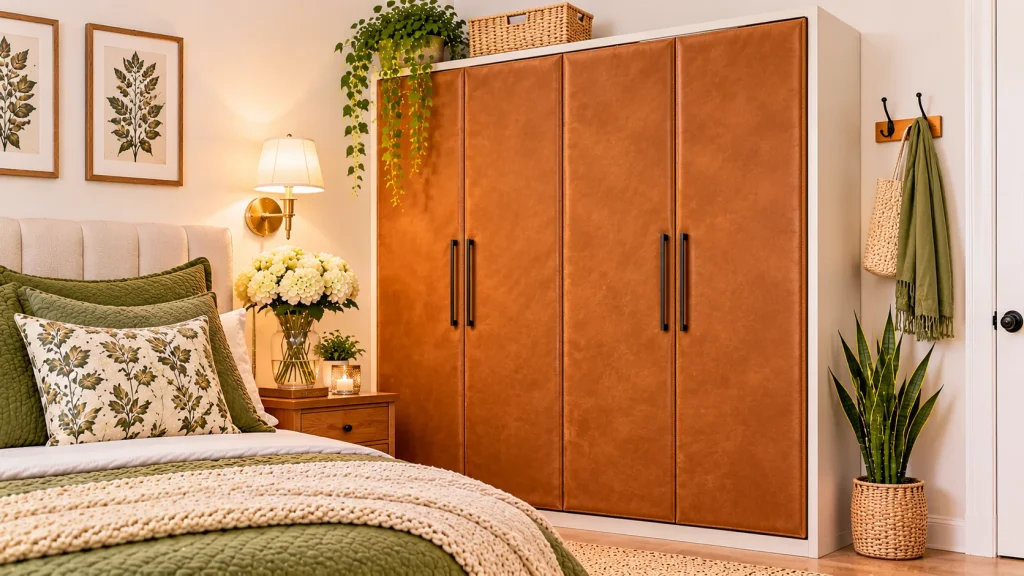
For a modern wardrobe design with a tailored, boutique feel, try faux leather or vegan leather door panels. Think soft tan, chocolate brown, or a deep olive.
Stitched edges or simple panel seams add detail without needing handles. The textured surface adds a tactile detail that makes plain wardrobe doors feel more luxurious. Two tan faux leather doors in the middle of a run of plain white wardrobes, for example, can look like a piece of tailored furniture set into the wall.
It’s a strong look, so it often works best on one section, like a pair of central doors, rather than a whole wall. Choose a material that’s easy to wipe clean, and check the manufacturer’s care guidance, since some faux leathers can crack over time if exposed to strong sunlight.
Go Two-Tone: Frame One Color, Doors Another
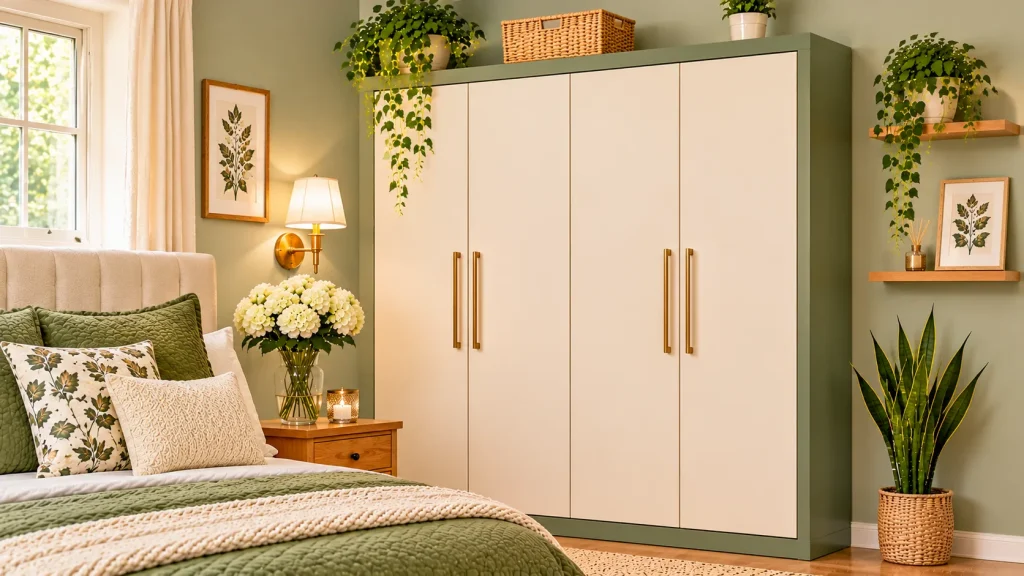
A two-tone wardrobe uses one color for the frame and another for the doors. It sounds simple, but it can make an ordinary built-in look custom.
Some combinations that tend to work well:
- Cream frame with soft sage doors
- Oak frame with painted navy doors
- Black frame with natural wood doors
Picture a run of white built-in wardrobes where only the doors are repainted a muted clay color. The white frame outlines each door, and suddenly the whole wall has structure and warmth.
This is a manageable DIY project if your doors come off easily. Follow the paint manufacturer’s preparation instructions and give the doors plenty of time to dry and cure before rehanging.
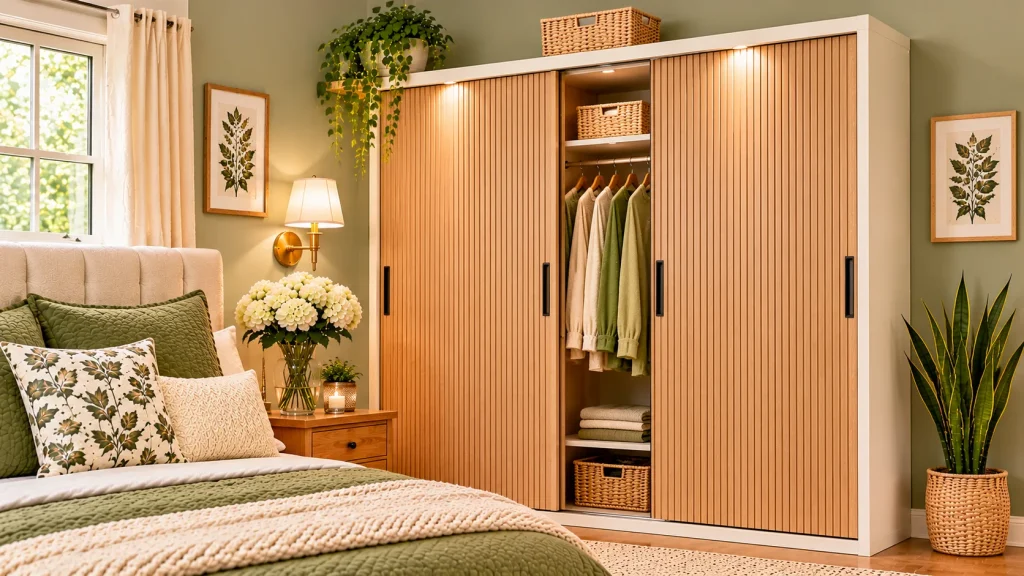
Try Tambour Roll Doors
Tambour doors are made of narrow strips attached to a flexible backing, so they roll up or sideways like a shutter. On a wardrobe, they create a soft, ribbed look that feels modern and a little retro.
Because they slide rather than swing out, they can suit tight spaces where a hinged door would hit the bed or a chair. In a narrow bedroom where the bed sits close to the wardrobe, a roll-up tambour front saves the space a swinging door would need. The mechanism still needs some clearance, so check the manufacturer’s measurements first.
Tambour wardrobe doors are usually a custom or specialist piece, so they can cost more. Make sure they run smoothly in their tracks, and be careful of small fingers near the moving parts.
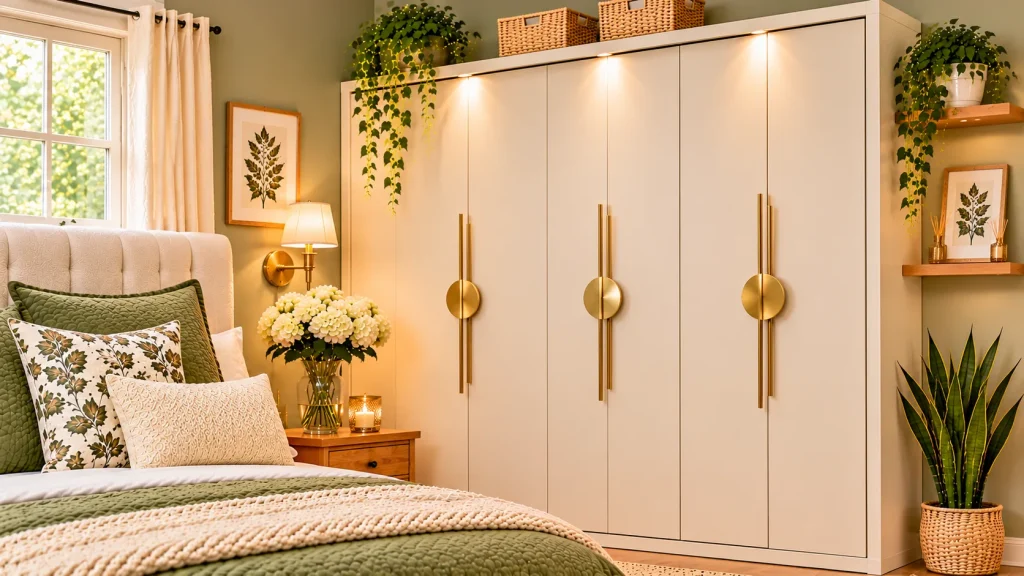
Make the Handles the Feature
Handles are often an afterthought, but on a wardrobe they’re touched every single day and seen all the time.
Sculptural or statement handles can transform plain doors:
- Long brass bar pulls running half the height of the door
- Chunky wooden knobs in a rounded shape
- Leather loop pulls for a soft, relaxed feel
- Ceramic or stone-look handles for a handmade touch
A plain, flat-fronted wardrobe with tall brass pulls can look like a far more expensive piece. Check that new handles fit the existing screw holes, or be prepared to fill and repaint old ones.
Layouts (four ideas): these change where the wardrobe sits and how the space works.
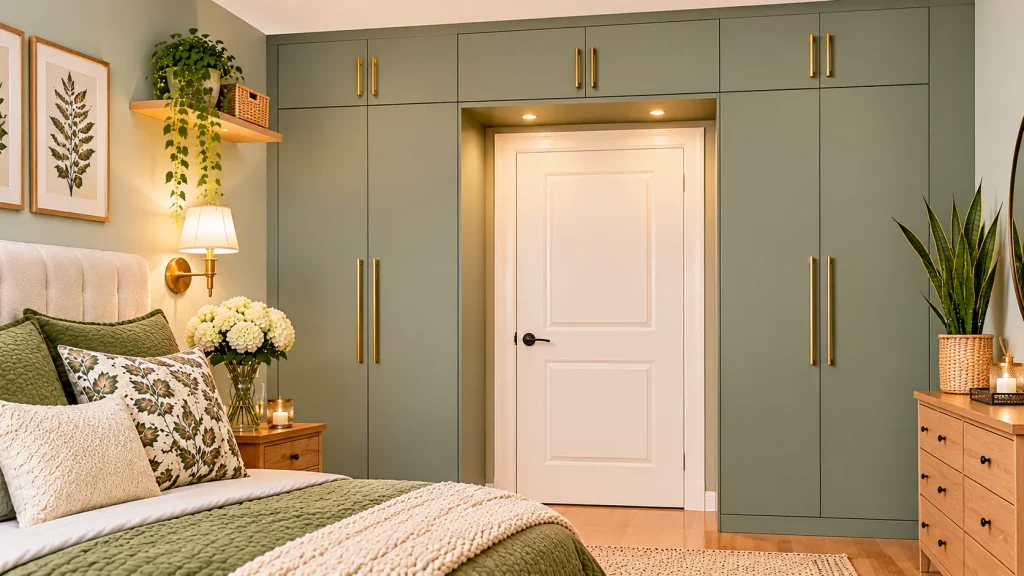
Build Wardrobes Around the Doorway
If a bedroom has a door in the middle of a long wall, built-in wardrobes can wrap around it. Tall wardrobes go on each side, with a bridging cupboard over the door.
It uses wall space that’s often wasted and makes the door look intentional, almost like a little entrance. Among built-in wardrobe design ideas, this one can add substantial storage without taking up additional floor space.
A long bedroom wall with the door off-center, for instance, might get one wide wardrobe on the longer side, a narrow one on the shorter side, and a shallow cupboard bridging over the door frame. Painted the same color as the walls, the whole run looks calm and built-in.
This is usually a job for a carpenter. It needs careful measuring so the bedroom door can still open and close freely, and the bridging cupboard must be fixed securely to the wall. Keep heavy items out of the top cupboard above the door.
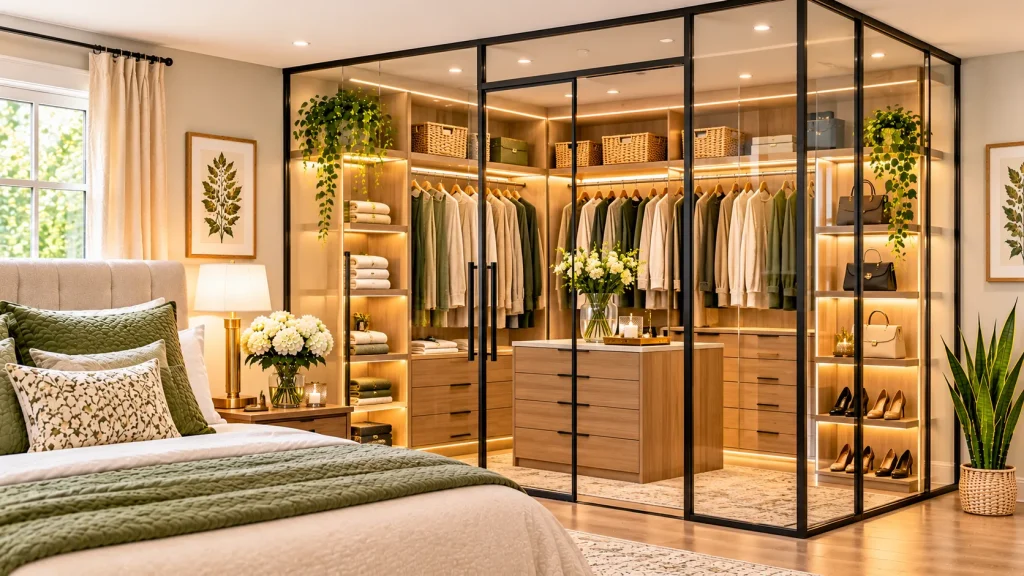
Design a Glass-Walled Walk-In
In a larger bedroom, a walk-in wardrobe with glass walls or a glass door can look striking. Clothes become part of the room’s design, a bit like a boutique window.
Because everything is visible, this style suits people who keep their wardrobe organized and enjoy displaying clothes, shoes, and bags. Tinted or reeded glass can soften the view if you want less on show. A slim black-framed glass partition in one corner of a large main bedroom, for example, can create a walk-in that feels open and light rather than closed off.
Glass also shows fingerprints and dust, so expect to wipe it down regularly. Any glass panels should be safety glass suitable for internal use, installed by a professional. Lighting inside a glass walk-in should also be planned and fitted by a qualified electrician.
Turn a Box Room Into a Dressing Room
If you have a very small spare room or a box room, converting it into a dressing room can free up the main bedroom.
A simple setup might include:
- Hanging rails on two walls
- A chest of drawers or shelving on the third
- A full-length mirror and a small stool
- A rug and a lamp to make it feel inviting
For example, a narrow box room next to the main bedroom might get open rails on one side, a run of drawers on the other, and a mirror on the back of the door. The bedroom then only needs a small dresser, which makes it feel much calmer.
Good ventilation matters here. Avoid packing rails too tightly, leave some space between clothes so air can circulate, and open the window or door now and then, since closed-up rooms full of clothes can feel stuffy.
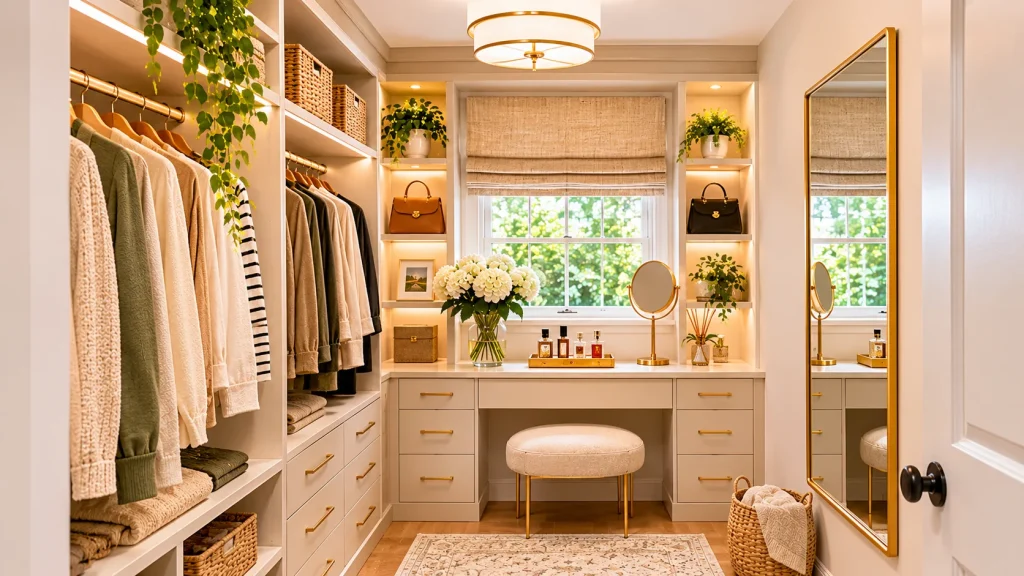
Add a Dressing Island
A dressing island is a freestanding unit in the middle of a walk-in or dressing room, usually with drawers below and a flat top.
It gives you a place to fold clothes, lay out an outfit, or keep watches and sunglasses in shallow drawers. It also makes a walk-in feel more luxurious.
Islands need plenty of space around them. As a rough starting point, many people aim for around 3 feet (about 90 centimeters) of clear walkway on each side. The space you actually need depends on the island’s size, how far the surrounding doors and drawers open, and how many people use the room at once.
Features that save mornings (four ideas): small details that make a big difference.
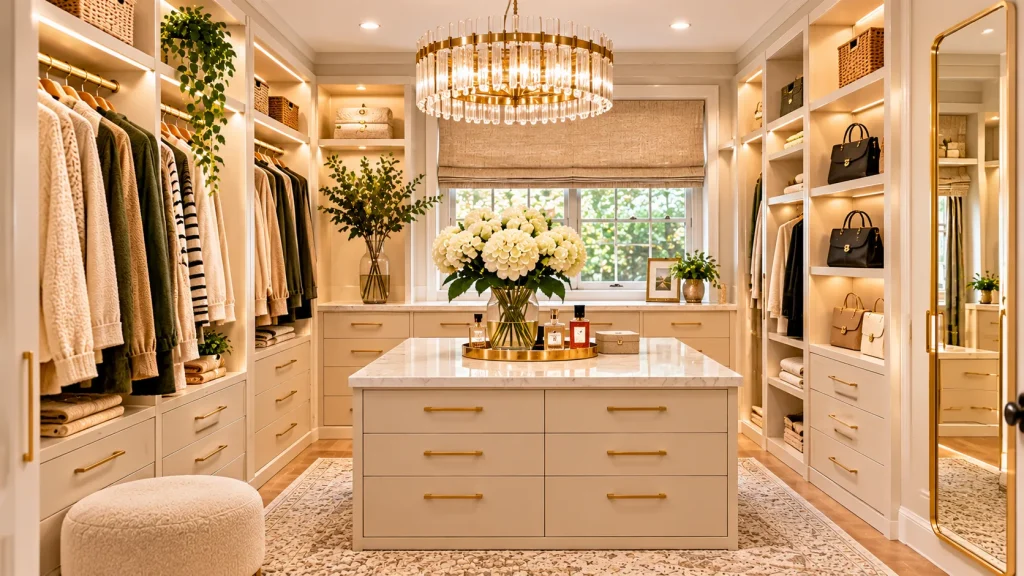
Fit a Rotating or Motorized Rail
A rotating or motorized rail brings clothes to you rather than making you reach. Some wardrobes have a carousel-style rail that turns at the push of a button. Others use a pull-down or rotating system.
They’re especially helpful in deep or tall wardrobes, and for anyone who finds reaching difficult. An older family member with limited shoulder movement, for example, may find a pull-down rail much easier than stretching up to a high hanging bar. Simpler options help too, like lowering one rail to a comfortable height and keeping everyday items between waist and shoulder level.
These systems are usually more expensive and need careful installation. Motorized versions must be installed according to the manufacturer’s instructions, and any wiring should be done by a qualified electrician.
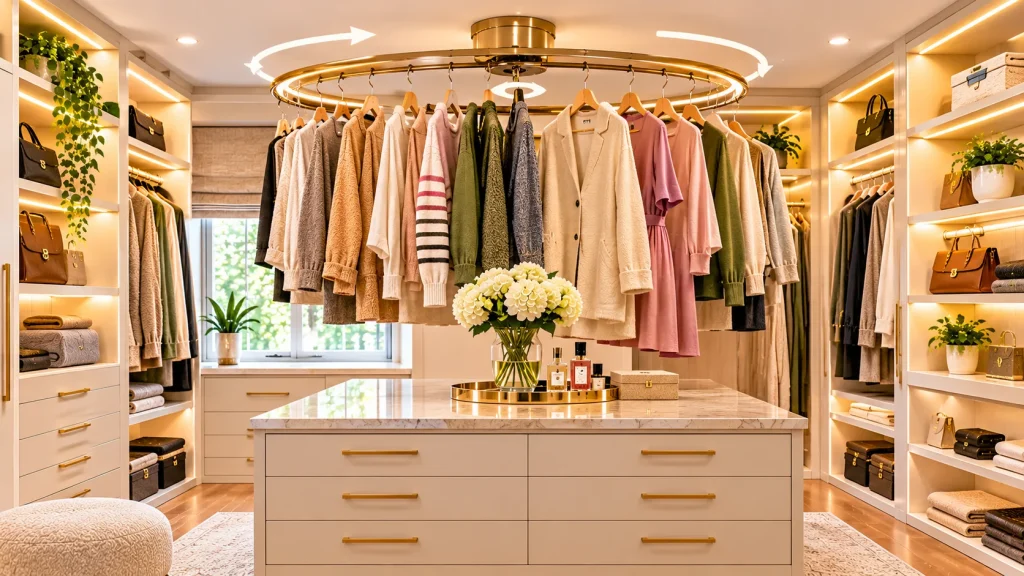
Build In a Pull-Out Laundry Hamper
A pull-out hamper hidden behind a wardrobe door or inside a drawer means dirty clothes have a place to go immediately.
It keeps chairs and floors clear, and it makes laundry day simpler because everything is already in one spot.
Many come as a tilt-out or slide-out basket that fits standard cabinet widths. Choose one with a removable, washable liner, and look for ventilation holes to help prevent smells.
This is one of the wardrobe design ideas that’s easy to add later, especially if your wardrobe has a lower cupboard section.
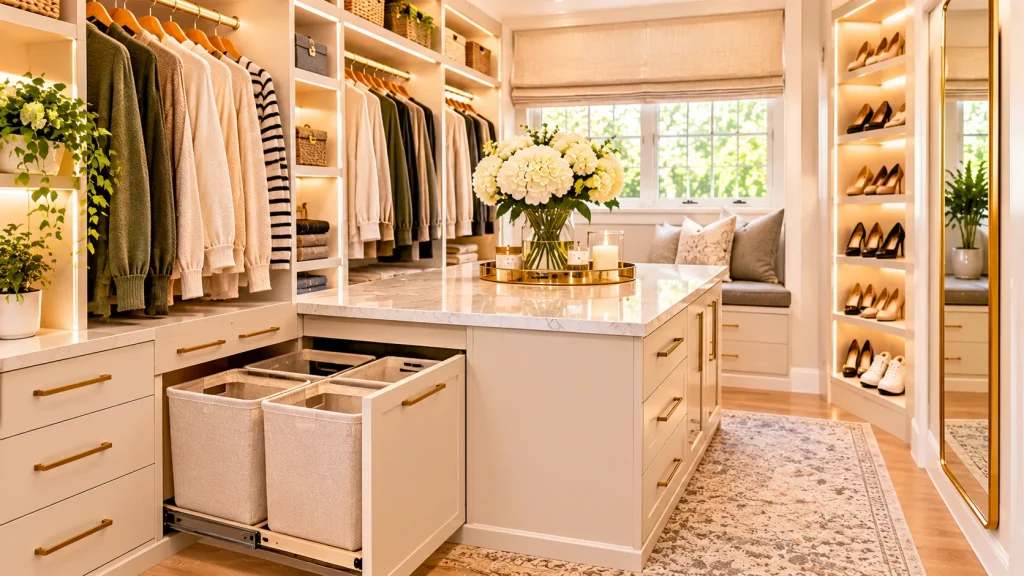
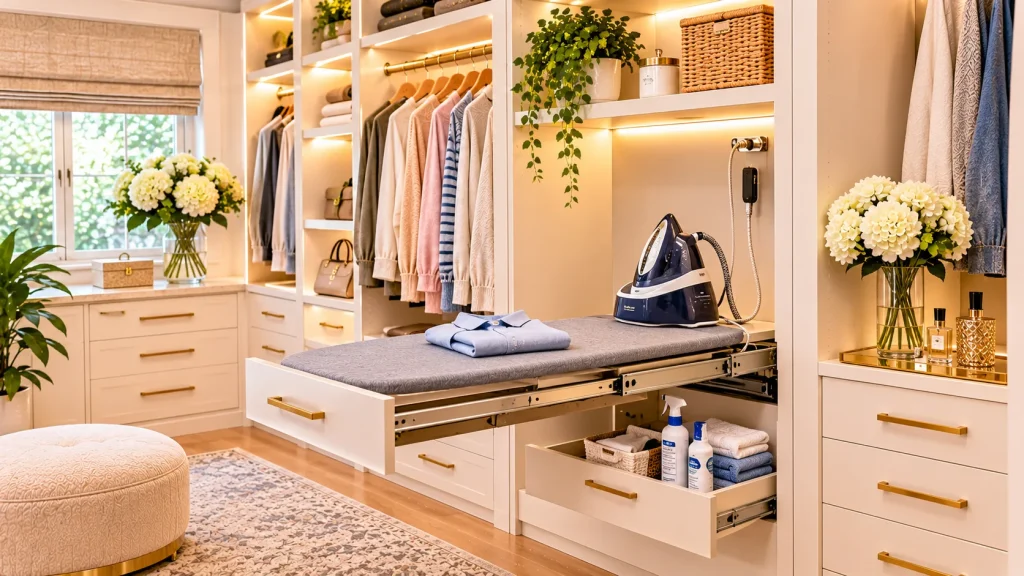
Add a Pull-Out Ironing or Steaming Station
Ironing on the bed is uncomfortable and not great for your bedding. A fold-out ironing board built into a wardrobe or a tall drawer can fix that.
Some fold-down boards attach inside a cupboard door. Others pull out from a drawer. A hook nearby can hold a garment steamer.
Irons and steamers get very hot, so let them cool fully on a heat-safe surface before storing them, and never leave them on unattended. Any new outlet inside the wardrobe should be fitted by a qualified electrician.
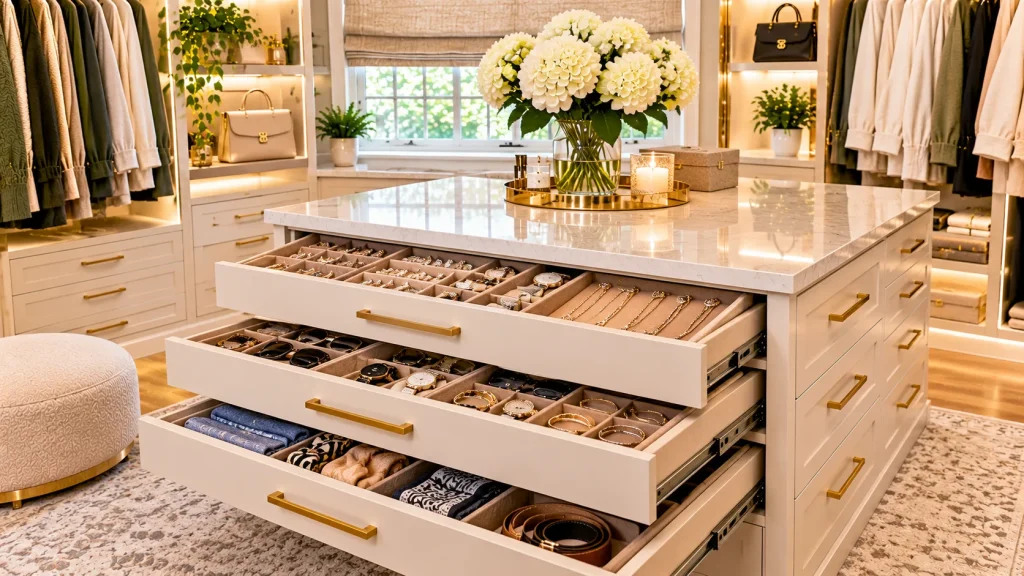
Line Drawers for Jewelry and Accessories
Shallow drawers with velvet or fabric-lined dividers keep jewelry, watches, belts, and sunglasses organized and easy to see.
Instead of rummaging through a tangle, you can pull open a drawer and see everything in neat rows.
Picture a wardrobe with a single shallow drawer at waist height. It’s lined with soft gray velvet, with small compartments for rings, earrings, and watches. Getting ready becomes faster, and pieces are less likely to get scratched or knotted.
Ready-made drawer inserts are available in many sizes, so this is easy to add to an existing wardrobe. Lockable drawers can be a good idea for valuables.
For kids (one idea): a wardrobe that keeps up as they grow.
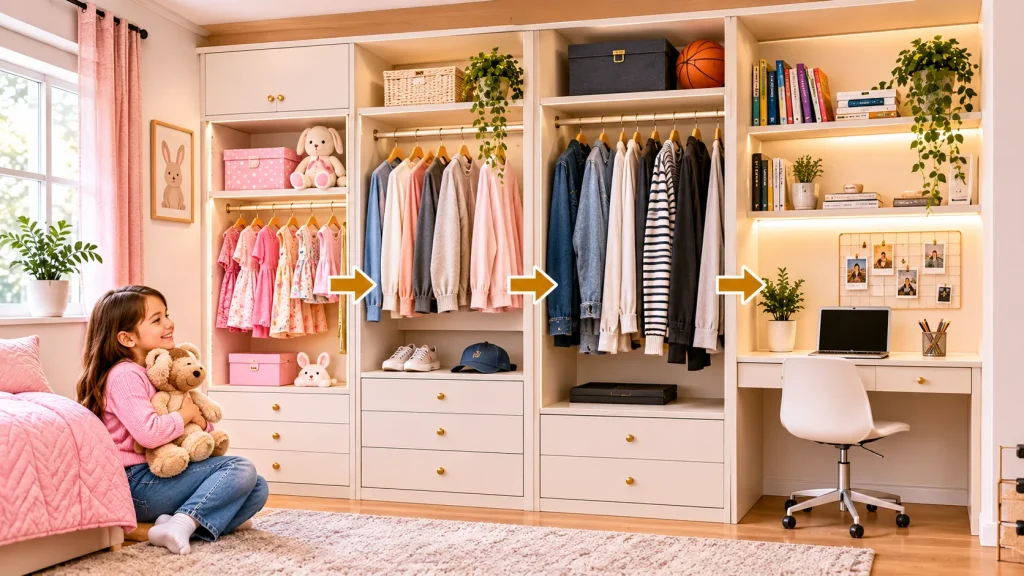
Choose a Wardrobe That Grows With a Child
Children’s wardrobes need to change a lot over the years. A design that adapts saves money and stress.
Some features that help:
- Adjustable or movable rails, so clothes are within reach at every age
- Low hooks and open baskets for little ones to tidy up themselves
- Playful touches, like a house-shaped top or painted door panels, that can be updated later
For example, a toddler’s wardrobe might start with a low rail and baskets, then gain a higher rail and drawers as they get older. A fresh coat of paint on the doors can update the look for a teenager.
Anchor children’s wardrobes securely to the wall, and avoid locks that could trap a child inside. Soft-close hinges slow doors down, but they don’t fully prevent pinched fingers, so finger guards and supervision still matter with younger children.
Wardrobe Design Mistakes to Avoid
Copying a trend without checking your space. Glass walk-ins and dressing islands look wonderful but need room to work.
Forgetting about daily use. Delicate finishes or tricky handles can become frustrating if you open the wardrobe many times a day.
Skipping safety basics. Anchor tall units, use safety glass, and leave electrical work to professionals.
Overcomplicating small rooms. In a small bedroom, simple doors and clever interiors often work better than elaborate exterior designs.
Questions About Wardrobe Design Ideas
What’s the most practical wardrobe design?
It depends on your routine. For many people, a mix of hanging space, drawers, and one or two smart features, like a hamper pull-out, works well.
Are glass wardrobes practical?
They can be, if you like keeping clothes organized and on display. Tinted or reeded glass gives a softer look if you want less on show.
Can I add these features to an existing wardrobe?
Many of them, yes. Handles, drawer inserts, hamper pull-outs, and painted two-tone doors can usually be added without a full replacement.
What wardrobe design works in a child’s room?
Look for adjustable rails, low storage, sturdy construction, and soft-close hinges. Always anchor the wardrobe to the wall.
What is the best wardrobe design for a small bedroom?
Simple, flat or handleless doors in a light color, tambour or sliding fronts that don’t need swing space, and smart interiors like drawer inserts and a hamper pull-out usually work best. A doorway-framing built-in can also add storage without using floor space.
How do I choose between built-in and freestanding?
Built-ins make the most of awkward spaces and can wrap around doors or alcoves. Freestanding wardrobes can move with you and are often easier for renters.
Start With Your Busiest Morning
Think back to your last rushed morning. What slowed you down? Was it the ironing, the laundry, the tangled jewelry, or just a wardrobe that doesn’t feel like yours?
Pick the idea that solves that first. Good wardrobe design isn’t only about looks. It’s about making the start of every day a little smoother.