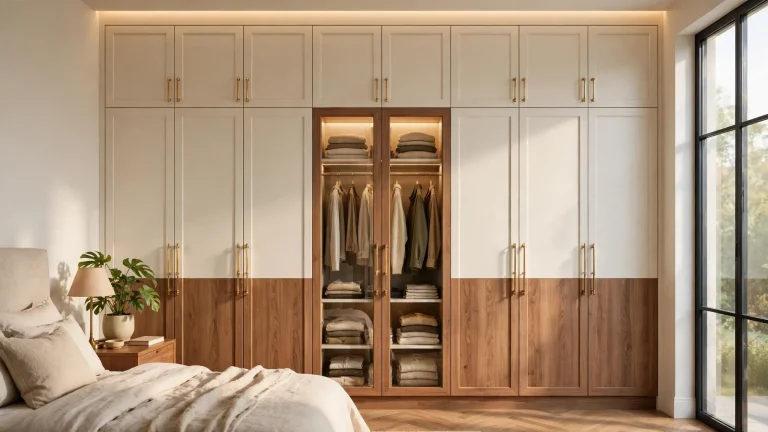

Doors, Finishes, and Layouts: 20 Wardrobe Design Bedroom Ideas With Real Personality
A wardrobe is usually the biggest piece of furniture in a bedroom. It’s often bigger than the bed. Yet most of us pick one based on how much it holds, then live with a plain white box for years.
Storage matters, of course. But because it takes up so much of the wall, its appearance can shape the look and feel of the entire room.
This post focuses on that side of things: door styles, finishes, layouts, and statement pieces. These wardrobe design bedroom ideas are about making the wardrobe something you actually enjoy looking at.
Match Your Bedroom Wardrobe Design to Your Style
If you already know your bedroom’s style, this quick guide points you to the ideas that usually suit it best.
- Japandi or minimal: shoji-style doors, fluted fronts, warm wood veneer, handleless grooves
- Boho or coastal: cane panels, arched doors, a painted interior in a soft color
- Classic or traditional: Shaker doors, a vintage armoire, upholstered panels
- Modern or bold: high-gloss lacquer, dark moody finishes, painted art doors
- Industrial: metal mesh doors, an open boutique-style wardrobe
There’s no need to stay in one lane. Plenty of bedrooms mix two styles, and the wardrobe is a great place to do it.
Room size matters too, since not all wardrobe design bedroom ideas suit every space. In a small bedroom, light colors, flat or handleless fronts, and translucent panels usually feel less heavy. Larger rooms can handle dark finishes, bold painted doors, and built-in layouts like a walk-in behind the bed.
Door styles (nine ideas): the doors are what you see every day, so they make the biggest visual impact.
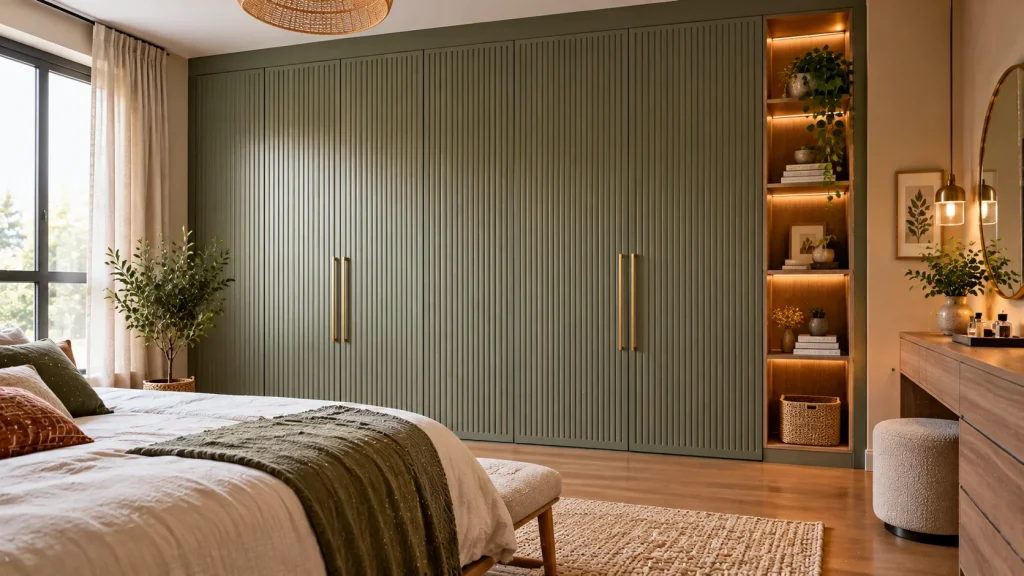
Choose Fluted Doors
Fluted doors have narrow vertical grooves running from top to bottom. They add texture and visual rhythm to a long row of wardrobe doors.
They suit modern and Japandi bedrooms especially well. In pale oak or a soft painted finish, they feel calm. In a dark stain, they look more dramatic.
The grooves do collect dust, so a quick wipe with a soft brush now and then keeps them looking sharp.
Add Cane or Rattan Panels
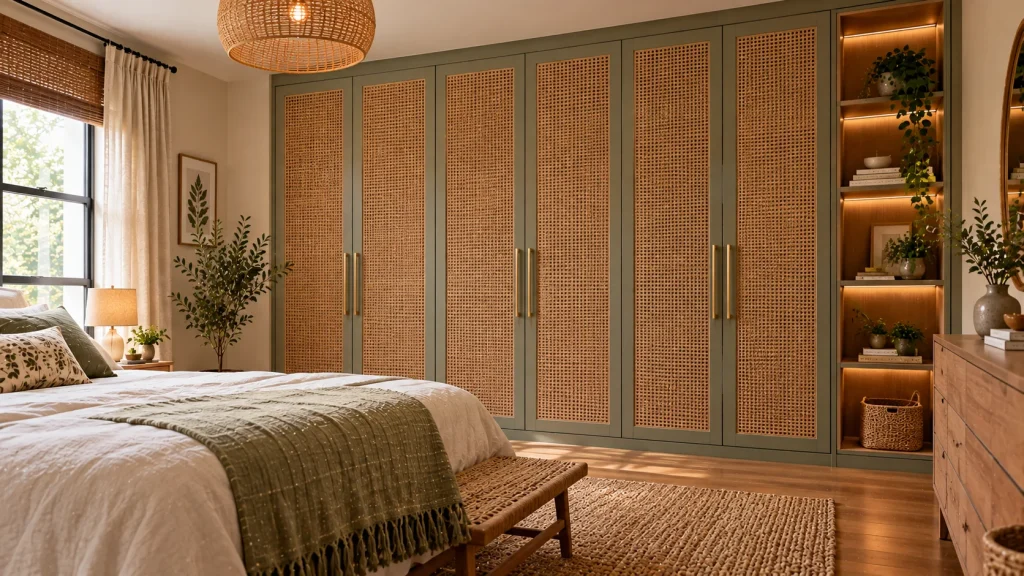
Cane panels set into wardrobe doors bring a light, natural texture. They’re popular in boho, coastal, and mid-century-style bedrooms.
The woven pattern allows some airflow, although the overall ventilation also depends on how the wardrobe is built.
Cane can be added to existing doors by cutting out the center panel and fitting cane webbing behind it. It’s a project for a confident DIYer or a carpenter. Keep in mind that cane shows what’s behind it in silhouette, so tidy shelves look best.
Go for Arched Doors
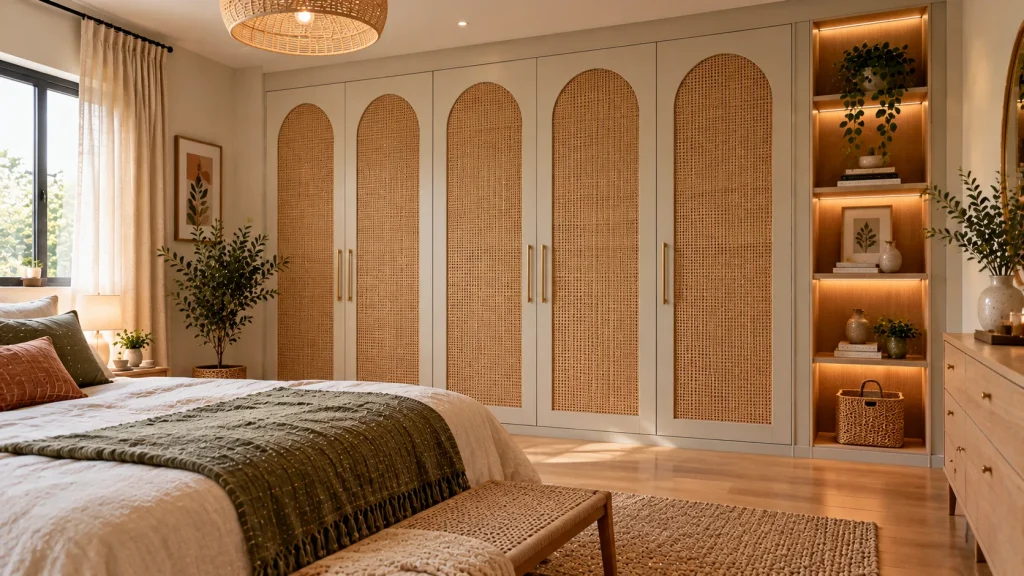
Arched tops soften the strong straight lines of a full-height wardrobe. They add an elegant, slightly unexpected touch.
Arches can be built into the doors themselves, or created by painting an arch shape onto flat doors.
Picture a pair of tall wardrobes in a soft sage, each with a gently curved top and slim brass knobs. Placed either side of a window, they turn a plain wall into the room’s focal point.
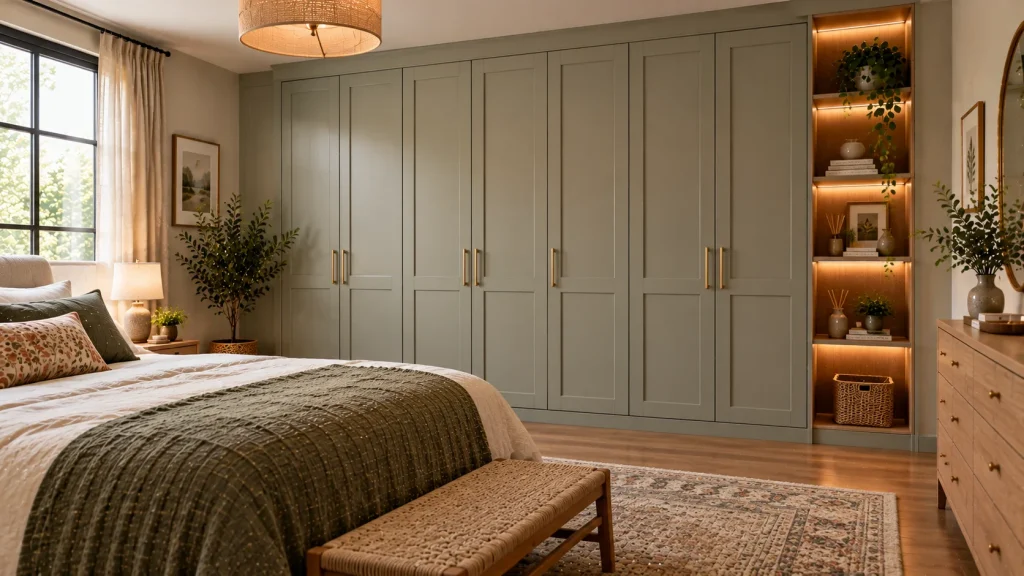
Try Classic Shaker Doors
Shaker doors have a simple recessed panel with a plain frame around it. They’ve been around for a very long time and still look fresh today.
Why they work in so many bedrooms:
- They suit traditional, country, and modern rooms alike
- They take paint beautifully, so color changes are easy
- They look good with almost any handle style
A run of Shaker wardrobes painted warm white, with round wooden knobs, feels timeless. Painted navy with brass handles, the same doors feel richer and more modern.
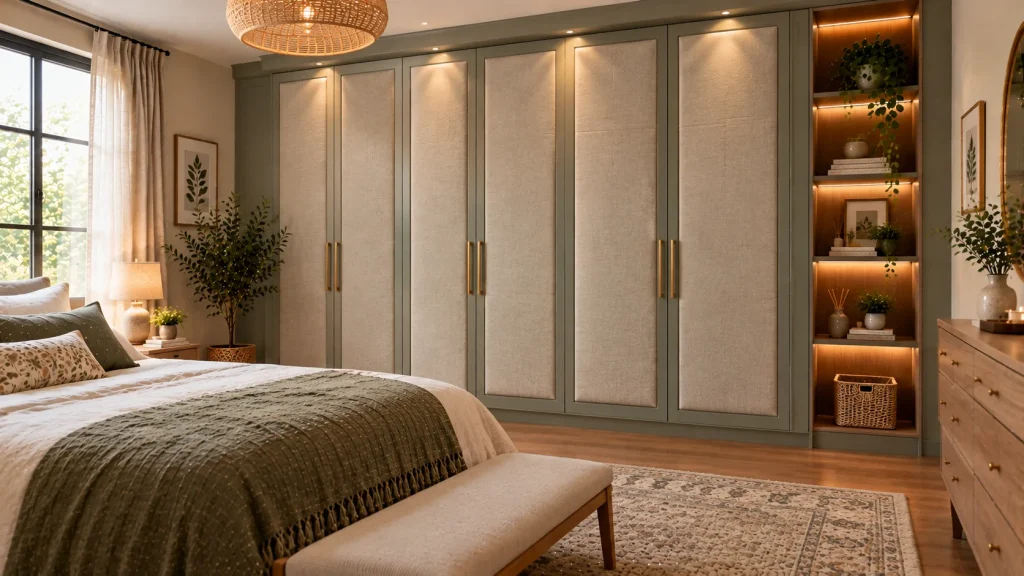
Upholster the Door Panels
Fabric-covered wardrobe doors feel soft and luxurious, a bit like a boutique hotel. They can also help the bedroom feel quieter, since fabric absorbs some sound.
Linen, wool blends, and velvet are all popular. A neutral fabric keeps things calm. A subtle pattern adds interest.
Upholstered doors are usually made by fitting padded fabric panels into a frame. Choose a fabric that’s durable and easy to spot-clean, since doors get touched often.
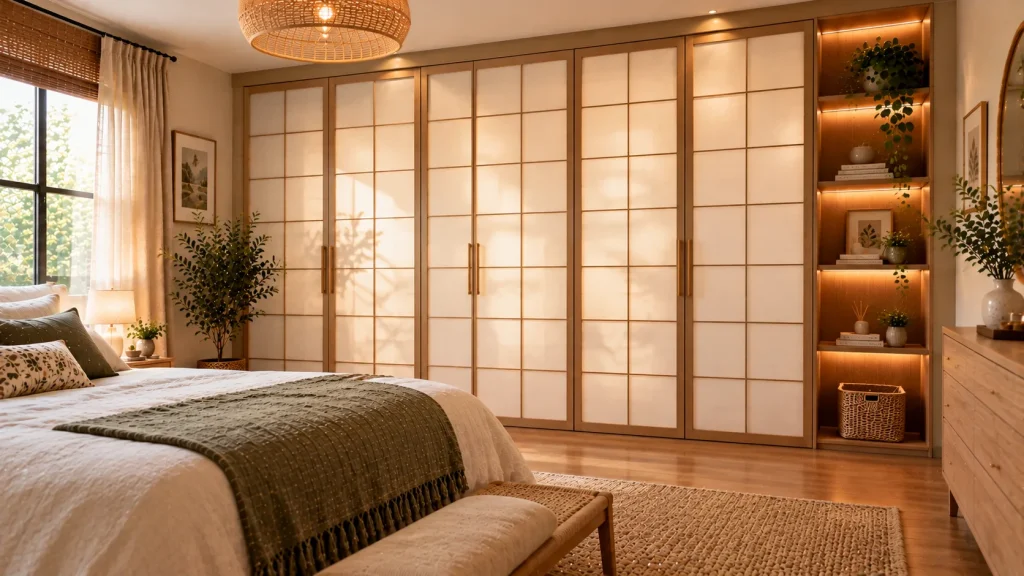
Try Shoji-Style Translucent Doors
Inspired by traditional Japanese screens, shoji-style doors use a wooden grid with a translucent panel behind it. Light passes through, while the contents remain partially concealed. Choose a frosted or more opaque panel if you want more privacy, since clearer translucent materials may reveal silhouettes.
Modern versions often use frosted acrylic or a durable translucent film instead of paper, which makes them more practical for everyday use.
They pair beautifully with low beds, linen bedding, and natural wood. In a small bedroom, the soft glow can make a wall of wardrobes feel lighter.
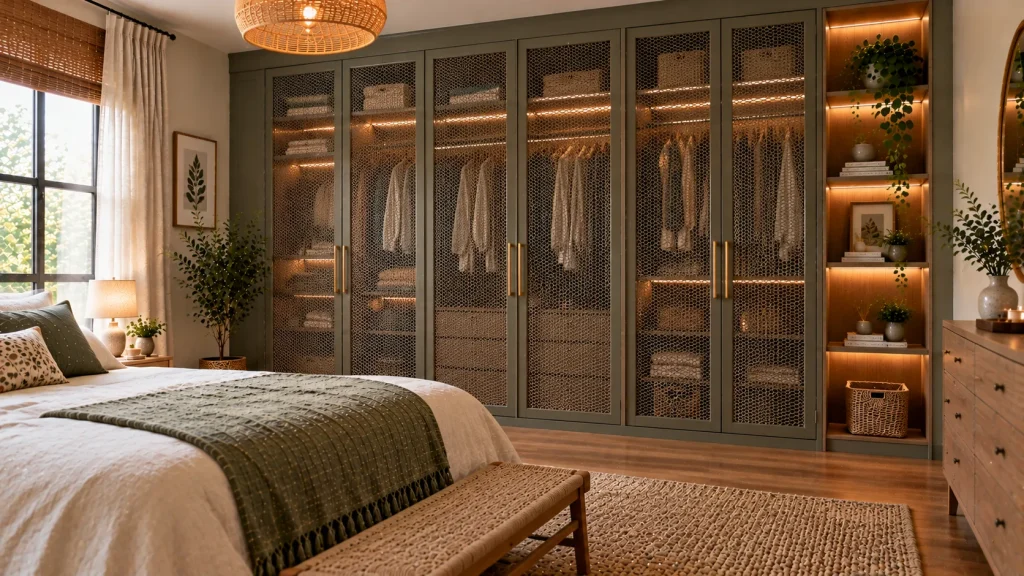
Use Metal Mesh Doors
For an industrial or modern look, wire mesh panels set into a wood or metal frame make a strong statement. They offer a glimpse of the contents while keeping the overall look understated.
Mesh works well for wardrobes that hold neatly folded clothes, baskets, or shoes. Good airflow is a bonus.
Picture a black metal-framed wardrobe with mesh doors in a loft-style bedroom with brick-effect walls. Folded denim and neat storage boxes show through, and the wardrobe looks almost like a store display.
Make sure the edges of the mesh are finished smoothly, especially in a child’s room.
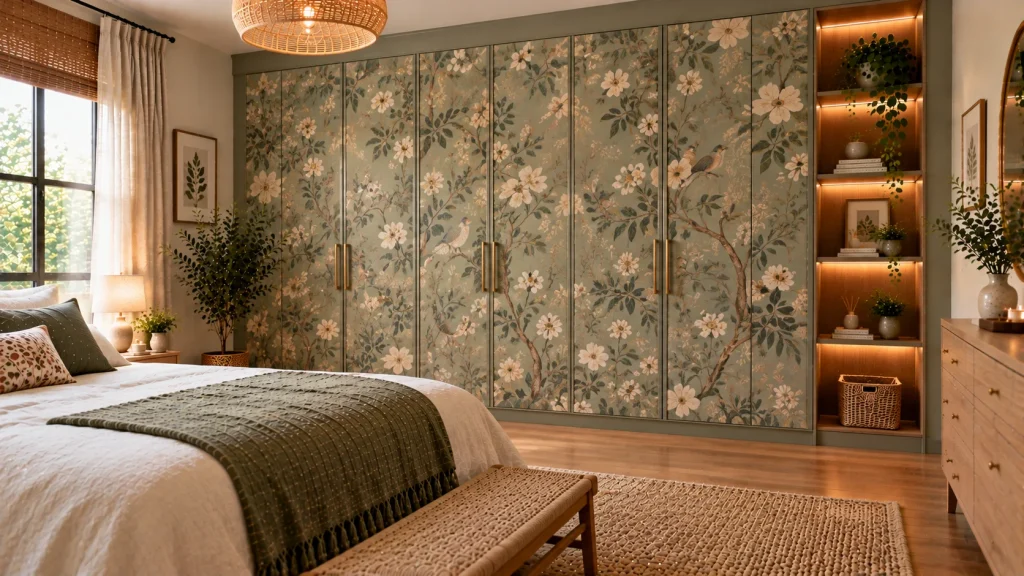
Wallpaper the Doors
Flat wardrobe doors can become a feature with wallpaper. A bold botanical, a small geometric pattern, or a soft grasscloth texture can all work.
This is one of the easiest ways to transform an old, plain wardrobe without replacing it.
Clean the doors well, use an adhesive suited to the surface, and follow the wallpaper manufacturer’s instructions. Peel-and-stick wallpaper can be a good option for renters, though test it on a small area first.
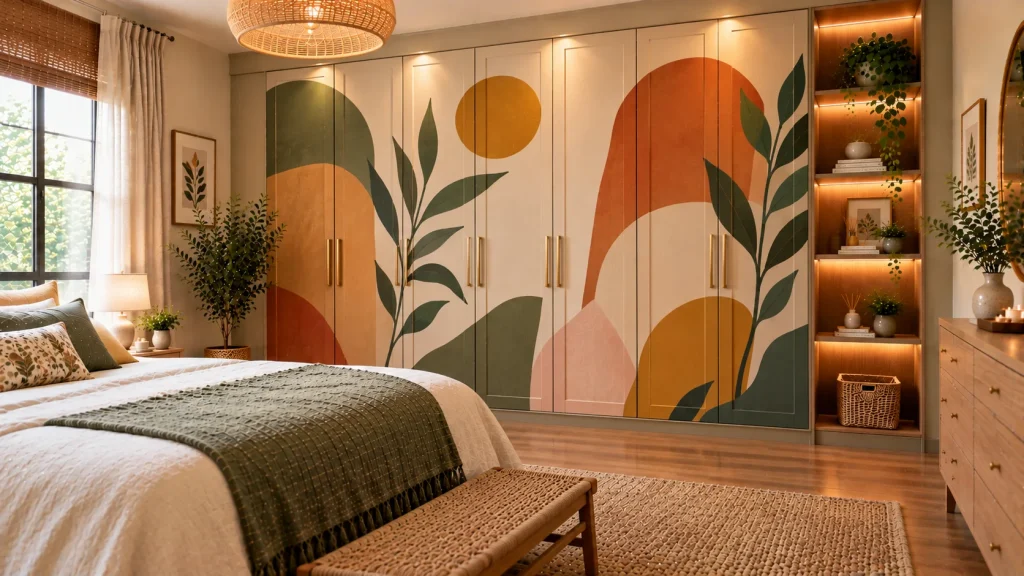
Paint the Doors Like Art
Instead of a single color, treat the doors as a canvas. Simple geometric shapes, color blocks, or a large curved design across several doors can turn a wardrobe into a piece of art.
For example, a set of three flat white doors might get a large terracotta circle painted across the middle, with a muted pink arch overlapping it. The design flows across all three doors when they’re closed.
Use painter’s tape for crisp edges, and a durable paint suited to furniture.
Finishes and color (four ideas): once you’ve chosen a door style, the material and color decide how bold or quiet it looks. The same Shaker door can feel cottage-like in pale oak or dramatic in deep green lacquer.
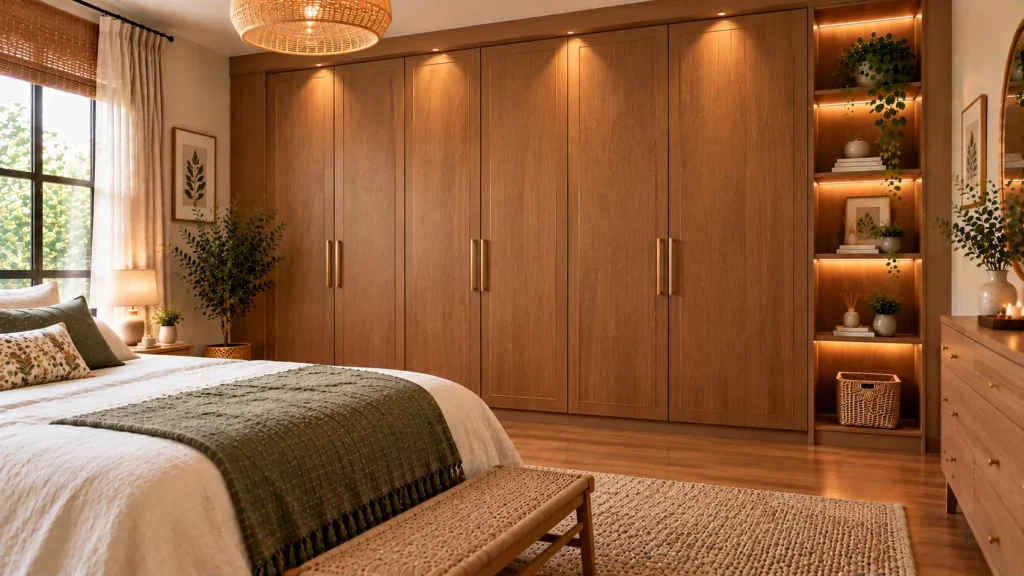
Choose Warm Wood Veneer
After years of white wardrobes dominating bedroom design, warm wood is making a welcome return. Oak, walnut, and ash veneers add warmth and texture, and veneer is often more affordable than solid wood.
Light oak feels fresh and Scandinavian. Walnut feels rich and slightly retro. Pair wood wardrobes with soft white walls and linen bedding for a calm, natural look.
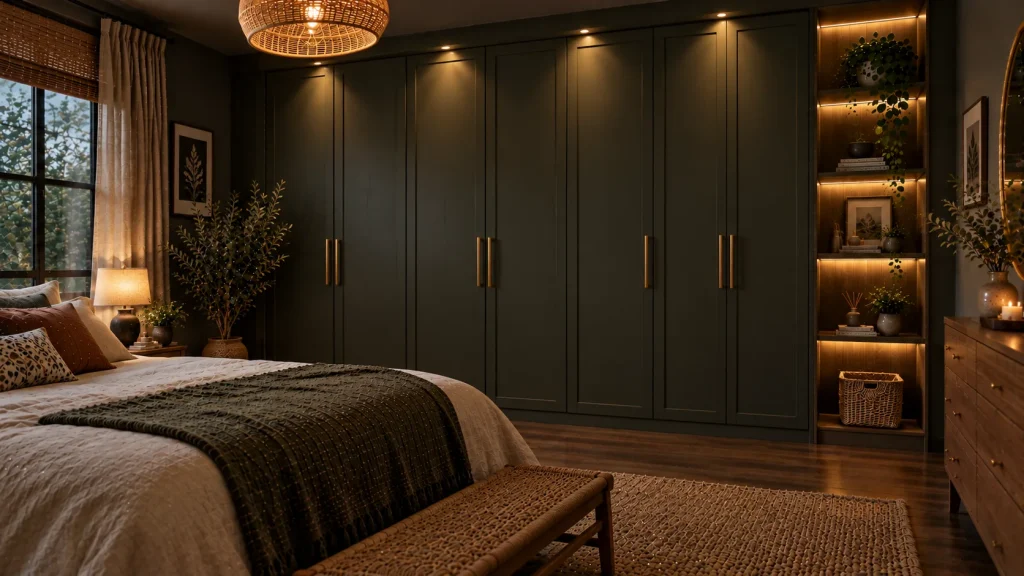
Go Dark and Moody
A dark wardrobe in deep green, navy, charcoal, or chocolate brown can make a bedroom feel cozy and enveloping.
It works best when the room has enough light, or when you lean into the mood with warm lamps and textured bedding. In a small, dim room, a dark wardrobe on just one wall can still look striking without closing the space in.
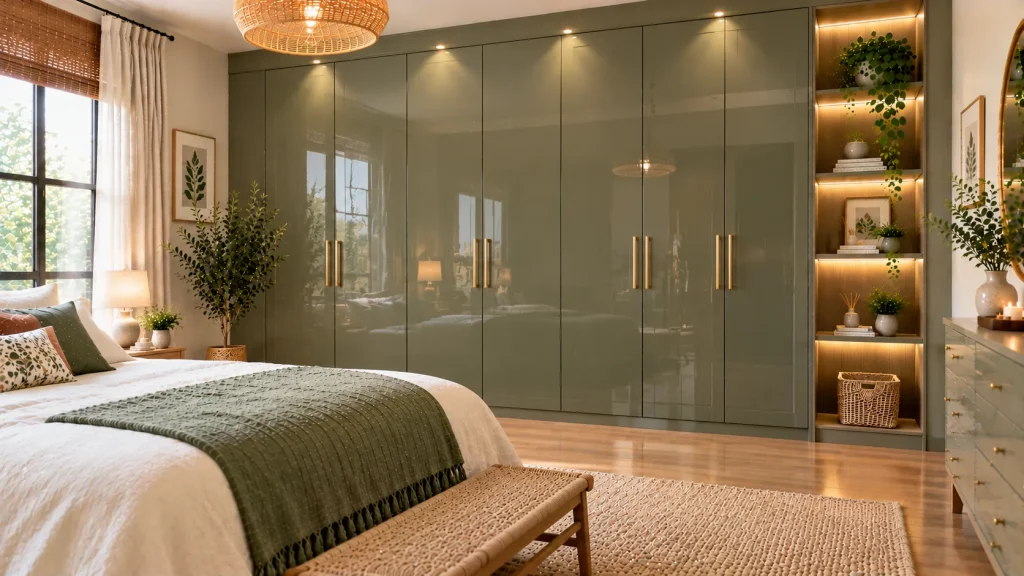
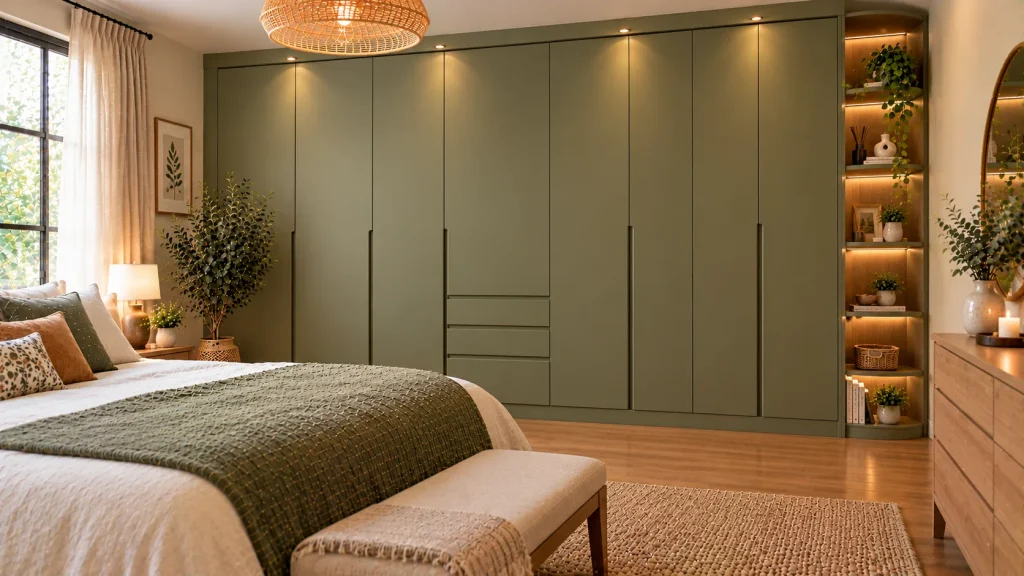
Imagine a bedroom with soft white walls and a full wall of deep green wardrobes with brushed brass handles. The bed linen picks up a touch of the same green, and the whole room suddenly feels pulled together and cozy.
Try High-Gloss Lacquer
High-gloss lacquered doors reflect light and feel sleek and modern. They work particularly well with handleless designs.
Lacquer shows fingerprints more than matte finishes, so it suits bedrooms where the wardrobe isn’t touched constantly by small hands. Choose a soft color, like dusty pink, pale gray, or cream, for a modern look that isn’t too stark.
If you’re applying a lacquer finish yourself, work in a well-ventilated room and follow the product’s safety guidance.
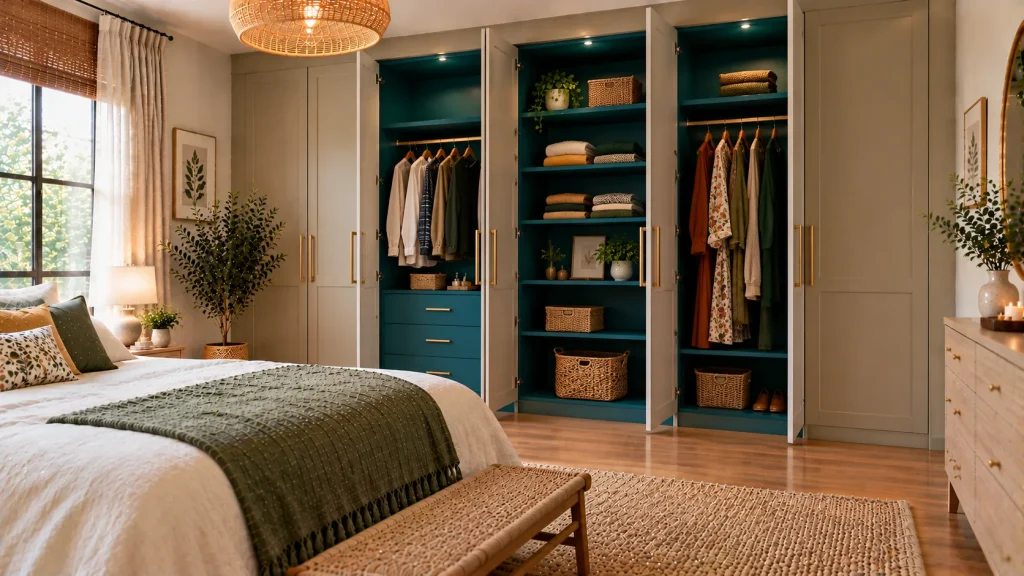
Paint the Inside a Bold Color
The outside of a wardrobe can stay calm while the inside surprises. Painting the interior a bright or deep color makes getting dressed a little more fun.
Think coral, cobalt, emerald, or mustard. Every time you open the doors, there’s a pop of color.
Let the paint dry and cure fully before hanging clothes inside, to avoid marks. A light color like pale yellow can also make it easier to see dark clothing.
Layouts and built-ins (five ideas): these change how the wardrobe fits into the room itself.
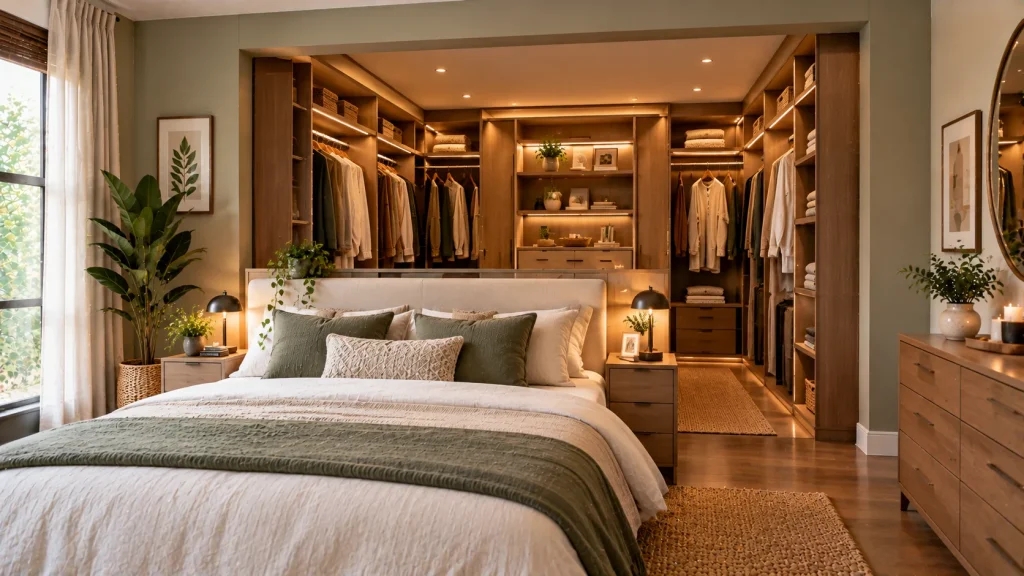
Build a Walk-In Behind the Bed
If your bedroom is long enough, a partition wall behind the headboard can hide a narrow walk-in wardrobe. The wall doubles as a headboard on the bedroom side.
You’ll need enough space for a comfortable walkway and hanging rails. As a rough planning estimate, that’s often around 4 feet (about 1.2 meters) of depth, though the real figure depends on your layout and whether you want hanging storage on one side or both. A professional can help check whether your room is suitable and plan the structure, lighting, and ventilation.
This idea works especially well in larger main bedrooms where the bed sits away from the wall.
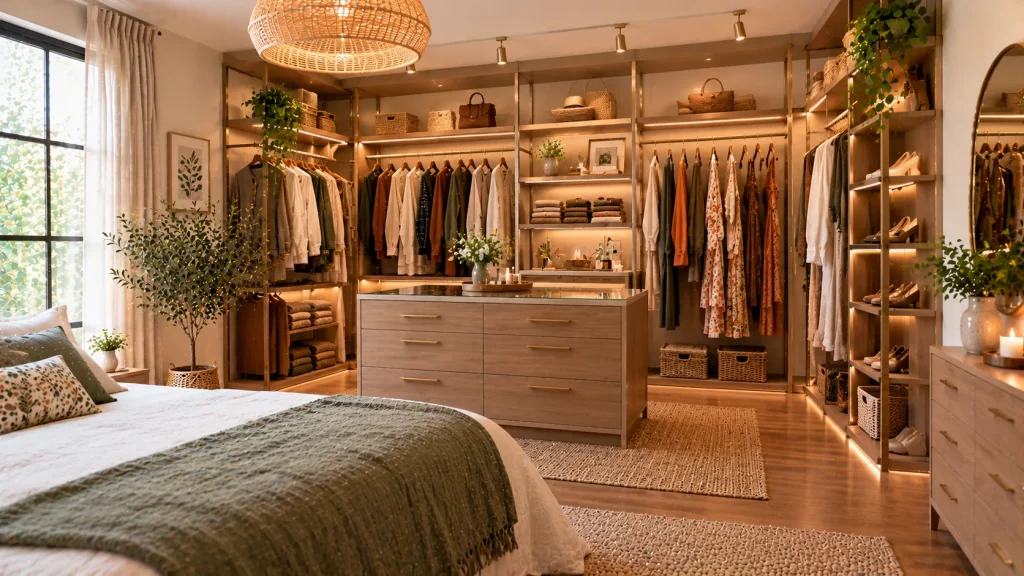
Design an Open Boutique-Style Wardrobe
An open wardrobe with no doors, built around a sturdy frame, feels like a little boutique. It suits people who enjoy displaying their clothes and keeping everything organized.
Mix hanging rails with open shelves for folded knits, a few baskets, and space for bags or shoes.
Open wardrobes do show dust and clutter. They work best in a room you’re happy to keep organized, or for a curated capsule wardrobe.
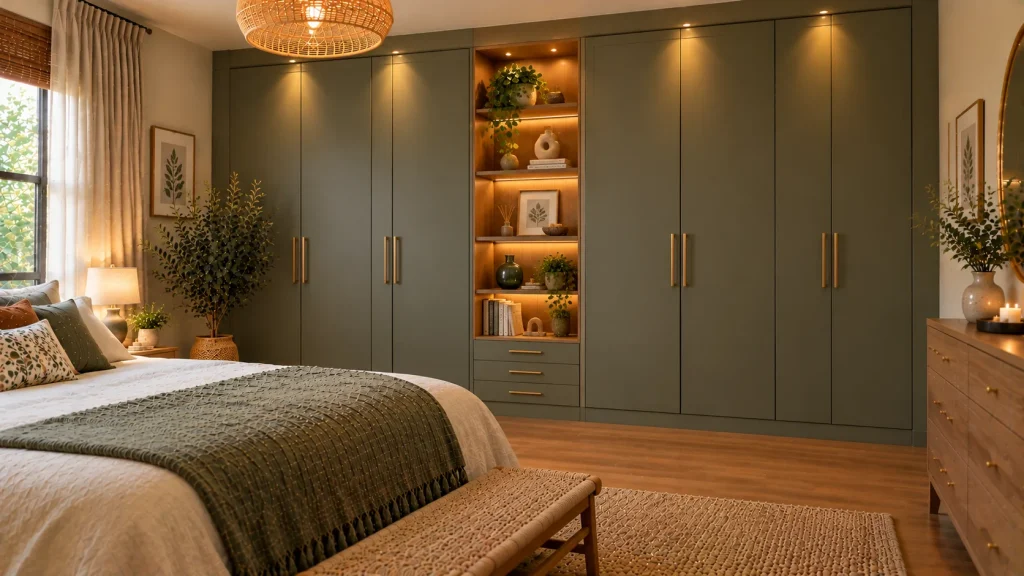
Add a Display Niche
A small open niche in the middle of a closed wardrobe run gives you a place to display something you love. It might hold a favorite bag, a vase, a small plant, or a framed photo.
The niche breaks up a long wall of doors and adds personality without giving up much storage. In a run of six white doors, for instance, swapping the middle section for an open shelf painted in a warm clay color can make the whole wall feel designed rather than plain.
If you’d like to light the niche, any built-in lighting should be installed by a qualified electrician.
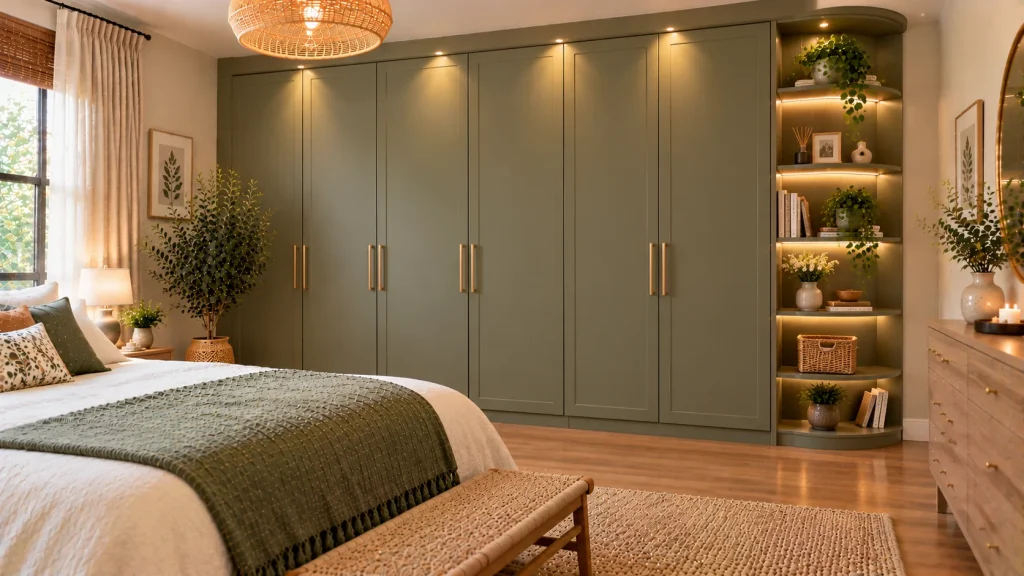
Round Off the End With Curved Shelves
Curved, open shelves at the end of a wardrobe run soften the corner and make it feel more finished. They’re especially useful when a wardrobe ends near a door or walkway, where a sharp corner might be in the way.
They give you space for a few books, a plant, or folded scarves. Rounded edges also make the end of the wardrobe gentler to brush past.
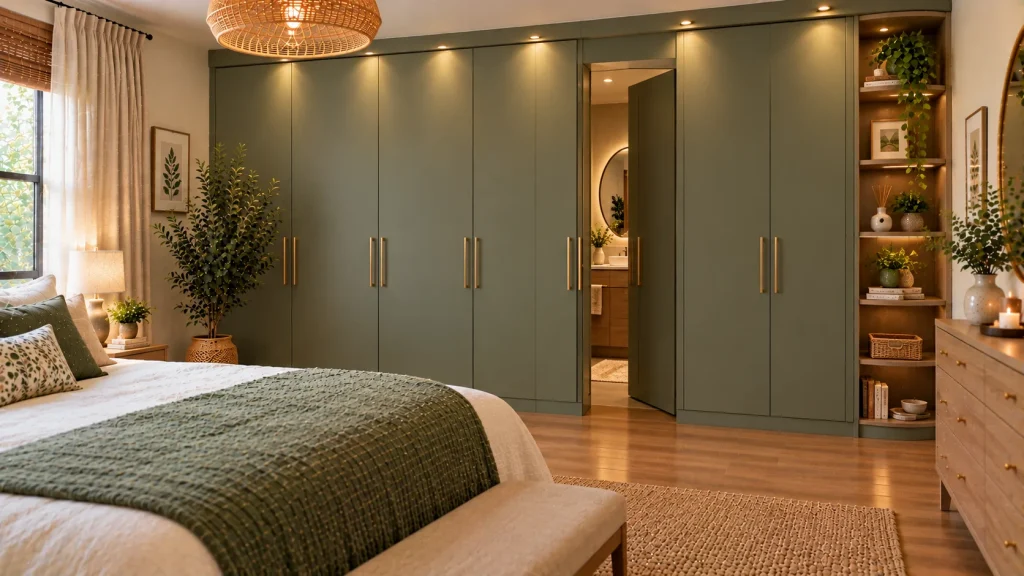
Hide a Door in the Wardrobe Run
In some bedrooms, the door to an en suite or a small dressing room can be hidden inside a run of wardrobes. When it’s closed, it looks like just another wardrobe door.
It’s a clever design trick, but it needs careful planning. A carpenter or builder can help make sure the door opens safely, the frame is sturdy, and ventilation and access aren’t compromised. Never conceal a door that serves as a required emergency exit, and make sure everyone in the household knows how to access the hidden doorway.
Character pieces (two ideas): these add personality without a big built-in project.
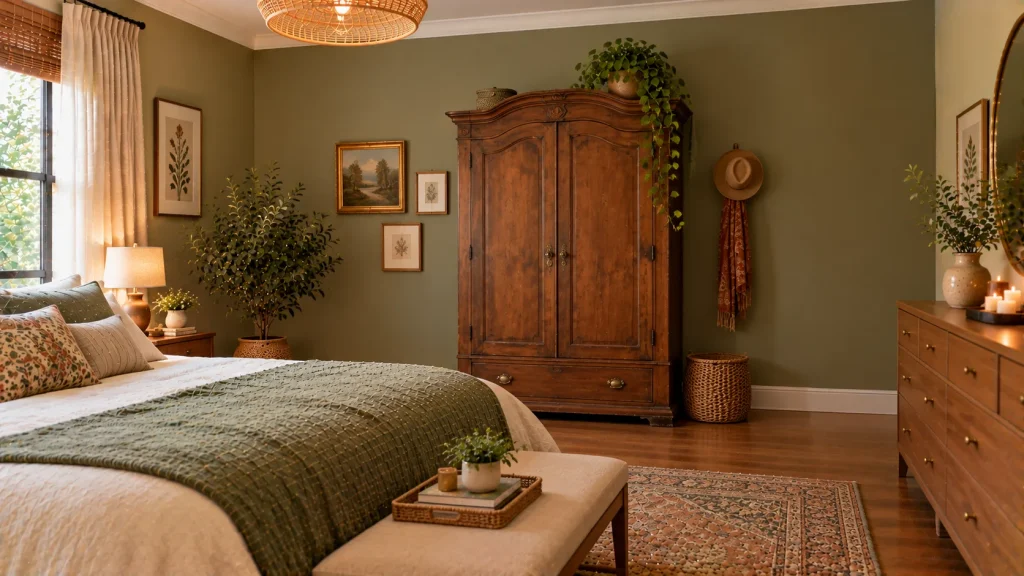
Bring In a Vintage Armoire
A vintage armoire brings instant character. Carved wood, painted finishes, and antique hardware feel very different from modern flat-pack furniture.
You can sometimes find secondhand armoires at reasonable prices through local marketplaces and antique shops.
A few things to check:
- The doors open and close smoothly, and the frame is stable
- There’s no woodworm or water damage
- Old locks and keys are removed or made safe, so children can’t get shut inside
Anchor it to the wall, since tall, heavy furniture can tip. Be careful sanding old painted pieces, as some older paints may contain lead.
Go Handleless With Integrated Grooves
Handleless wardrobes use finger grooves, angled edges, or push-to-open catches instead of knobs. The result is clean and calm, which suits minimal and modern bedrooms.
They also reduce the chance of snagging clothes or bumping into handles in a narrow room. A long run of handleless wardrobes painted the same soft white as the walls can almost disappear, leaving the bed and bedside tables as the main features.
Push-to-open catches are worth testing before buying, since some need a firm push. Grooves are often easier for everyday use.
Mistakes That Make Wardrobe Design Look Off
Ignoring the rest of the room. A wardrobe that clashes with the bed, flooring, and walls can look out of place, however lovely it is on its own.
Choosing style over function. Cane, mesh, and open designs look great but show what’s inside, so they suit tidy storage.
Skipping safety checks. Tall wardrobes and armoires should be anchored to the wall, and any electrical work should be done by a professional.
Forgetting the door swing. Check that hinged doors can open fully without hitting the bed or other furniture.
Questions About Wardrobe Design Bedroom Ideas
What wardrobe design works best in a small bedroom?
Light colors, handleless doors, shoji-style translucent panels, and mirrored or glossy finishes can help a small room feel lighter.
Can I update an old wardrobe without replacing it?
Yes. Painting, wallpapering, new handles, or adding cane panels can completely change an old wardrobe’s look.
Are open wardrobes practical?
They can be, if you keep clothes organized and don’t mind a bit of dusting. Many people use open sections for some clothes and keep the rest behind doors.
Which wardrobe finishes are easiest to keep clean?
Matte painted finishes and wood veneers usually show fewer fingerprints than high-gloss lacquer. Fluted and cane doors need occasional dusting.
Should a bedroom wardrobe match the bed or wall color?
It doesn’t have to. Matching the walls helps a large wardrobe blend in, which suits small rooms. Matching the bed’s wood tone can feel cohesive in a traditional room. A contrasting color works when you want the wardrobe to be a feature.
Choose the Detail You’ll Notice Every Day
You don’t need to use all of these wardrobe design bedroom ideas at once. Pick one detail that excites you, whether that’s arched doors, a moody color, or a display niche.
Start there. The wardrobe you open every morning can become one of your bedroom’s most beautiful features, not just its biggest.