

The $200 Makeover: 19 Living Room Ideas on a Budget That Still Look Good
Picture a living room that’s done its time. The sofa sags in the middle. The ceiling light is a dated glass dome. The coffee table has a ring from a hot mug that’s been there for years. And the budget for fixing it all? About $200.
That’s not a lot. But it’s more than enough to make a real difference, if you spend it in the right places.
The ideas below are organized by cost. Some are free. Some need a small spend. A few take a bigger chunk of the budget but change the room the most. At the end, there’s an example of how that $200 might be split.
Prices vary a lot by where you live and where you shop, so treat any figures as rough guides rather than promises. The same goes for the $200 itself. These living room on a budget ideas work just as well with $50 or $500. You’re not meant to do all nineteen. A slipcover or a secondhand sideboard can use up a large part of the budget on its own, so pick the ideas that matter most to you.
Free Ideas (4 Ideas): start here, because these often show you what the room really needs.
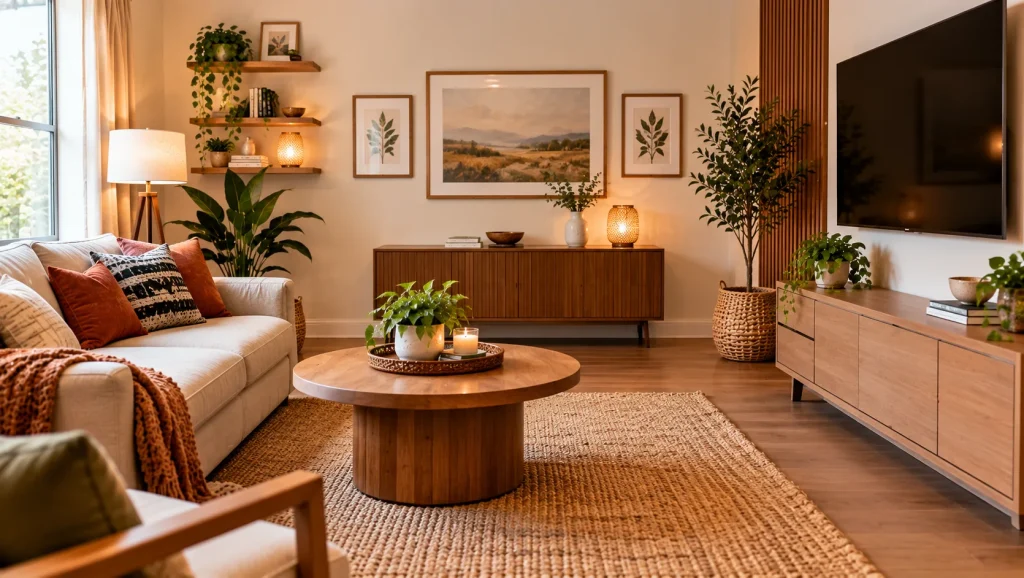
Clear the Clutter and Hide the Cables
This one costs nothing, and it often makes the biggest difference.
Take everything off the coffee table, side tables, and shelves. Put back only what you use or love. Box up the rest for a week and see if you miss it.
Then look at the cables. A tangle of wires behind the TV or snaking across the floor can make a room look messy even when it’s tidy. Bundle them with spare twist ties or hair ties, and run them along the back of furniture.
Cables crossing walkways are a trip hazard, so reroute them or cover them once you can.
Shop Your Own Home
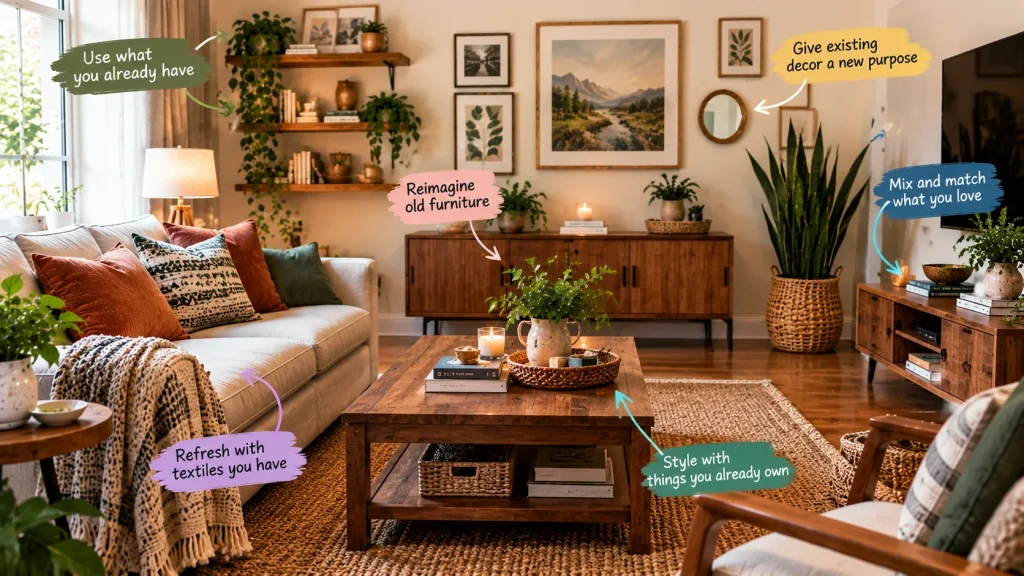
Of all the living room on a budget ideas here, this one may be the most underrated. Before buying anything, walk through every room with fresh eyes.
That lamp in the bedroom might look better beside the sofa. A plant from the kitchen windowsill could brighten a shelf. A throw from the guest room, a framed print from the hallway, or a basket from the bathroom can all find new life in the living room.
Picture a small living room that feels bare. Moving in a bedside lamp, a stack of books, and a blanket from elsewhere in the house can make it feel lived-in by the end of the afternoon. Nothing new, nothing spent.
Deep Clean and Make Small Repairs
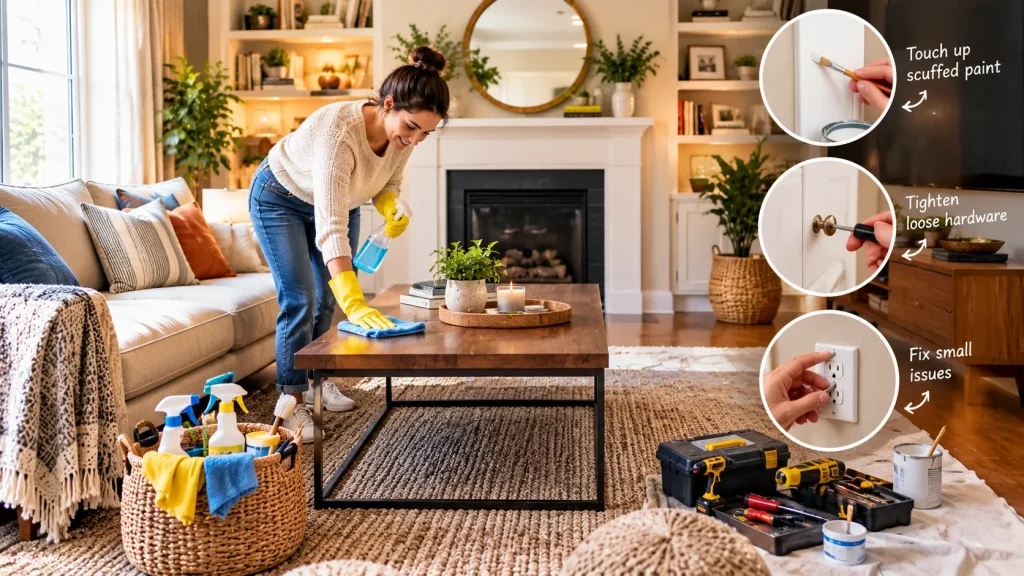
A tired room often looks tired because it’s dirty or slightly broken. Fixing that is cheap.
Things worth doing:
- Vacuum the sofa, including under the cushions
- Spot-clean upholstery, following the care label
- Wash cushion covers and throws
- Wipe skirting boards, light switches, and door frames
- Tighten wobbly table and chair legs
- Touch up scuffed paint with leftover paint, if you have it
Always test a cleaner on a hidden spot first, especially on fabric.
Grow Plants From Cuttings
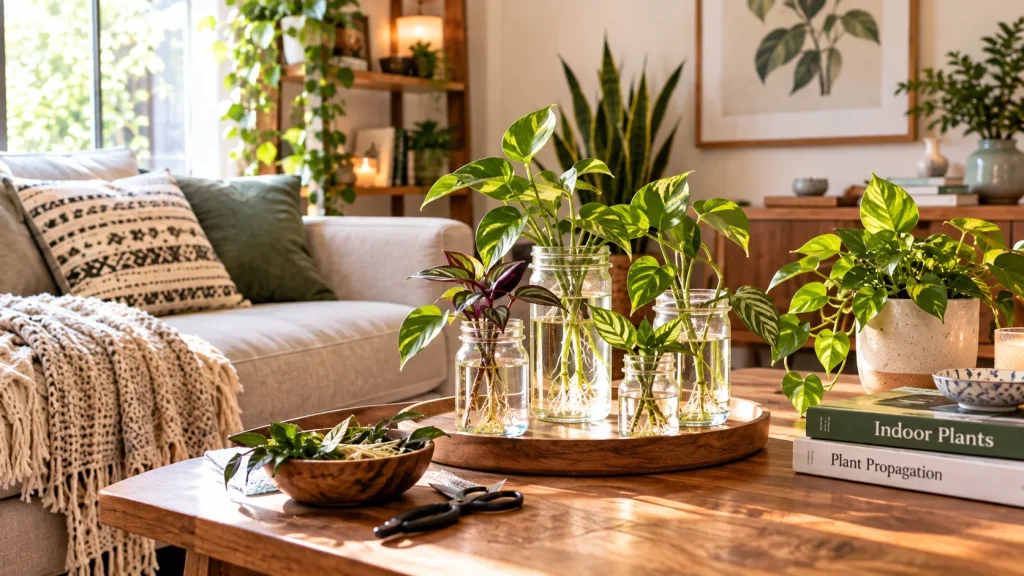
Plants make a room feel alive, but buying large ones can get expensive. Growing them from cuttings costs almost nothing.
Pothos, spider plants, and some philodendrons root easily in a glass of water. Ask friends or neighbors for a cutting, or take one from a plant you already have. Once roots appear, pot it up in soil.
A row of mismatched glass jars on a windowsill, each holding a cutting, looks charming on its own.
Some common houseplants, including pothos and philodendrons, can be harmful to pets if chewed. If you have cats or dogs, consider pet-safe alternatives instead. Spider plants, for example, are commonly listed as non-toxic to cats and dogs, but always check a reliable source, such as an animal welfare organization’s plant list, before bringing any plant home.
Small Spends (8 Ideas): most of these cost the price of a takeaway dinner or two.
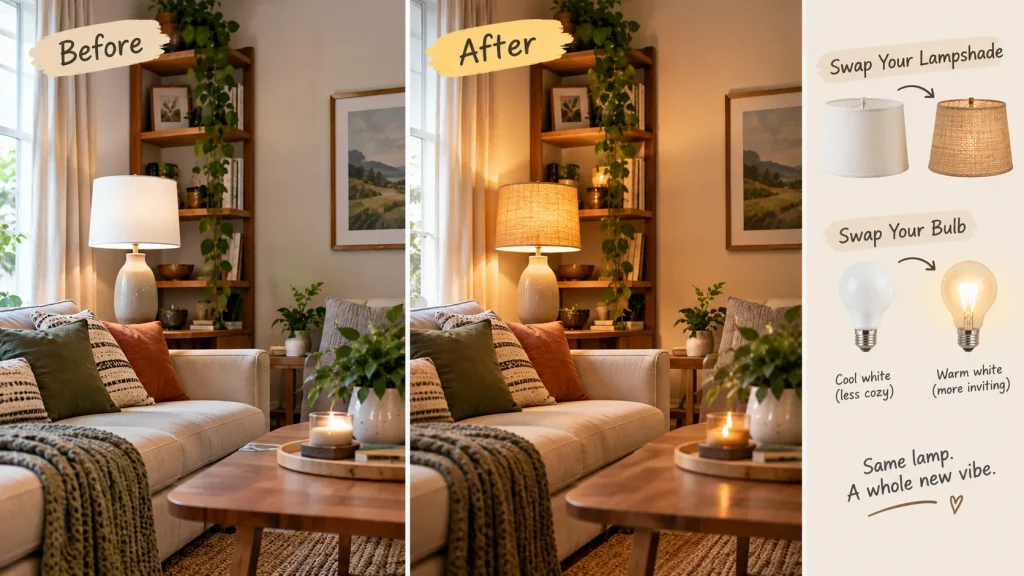
Swap Lampshades and Bulbs
An old lamp base can look brand new with a fresh shade. Pleated, linen, or rattan shades all feel current.
While you’re at it, check the bulbs. Cool white bulbs can make a living room feel flat and harsh. Warm white bulbs often feel cozier in the evening.
Always check the maximum wattage on the lamp and choose bulbs suited to the shade. LED bulbs run cooler, which is a safer choice for paper, fabric, and rattan shades.
Replace a Dated Ceiling Light With a Paper Lantern
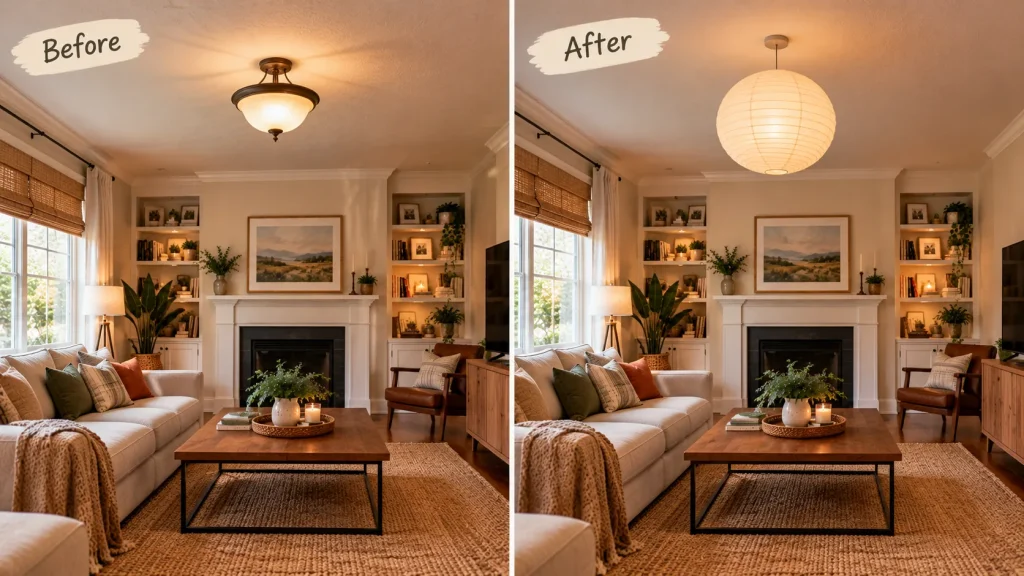
A large paper or rice-paper lantern is one of the cheapest ways to update a ceiling light. It softens the light and adds a relaxed, modern feel.
Many lanterns simply hang around an existing pendant fitting. If you’re renting, keep the original shade so you can put it back when you move out.
Use an LED bulb, since it runs cooler, and keep paper shades well away from heat. If changing the fitting itself is needed, that work should be done by a qualified electrician.
Add Plug-In Wall Sconces
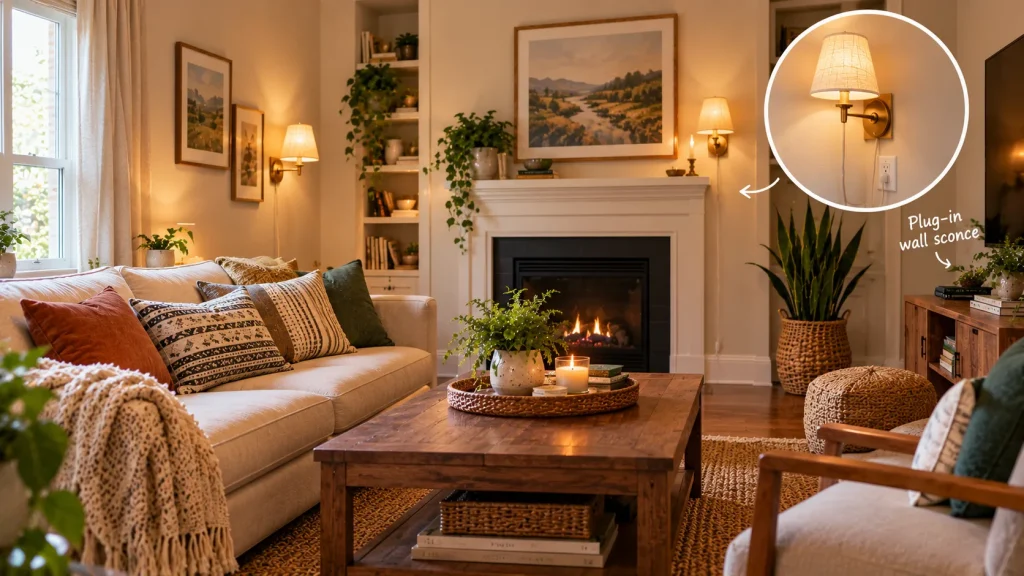
Wall lights used to mean rewiring. Plug-in sconces avoid that. They screw to the wall and run on a cord to a nearby outlet.
They’re handy beside a sofa, above a reading chair, or either side of a TV. A pair of simple swing-arm sconces above a sofa, for instance, frees up both side tables and gives soft evening light right where people sit.
To keep the cord tidy, run it straight down the wall and cover it with a paintable cord cover. Choose sconces from reputable brands that meet local safety standards, and ask your landlord before drilling if you rent.
Give Old Furniture New Legs or Knobs
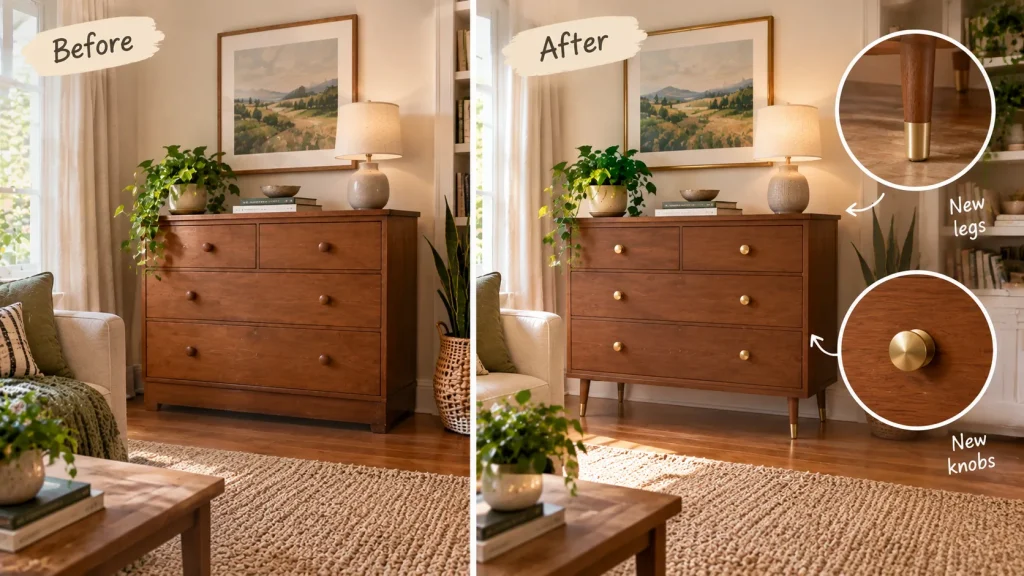
Swapping the legs on a sofa, coffee table, or sideboard can completely change its style. Tapered wooden legs feel mid-century. Slim brass legs feel modern. Chunky turned legs feel more traditional.
Many legs screw on with a standard fitting, but check the size before buying. Make sure the new legs are rated for the weight of the furniture and the people who’ll sit on it.
New knobs or handles on a sideboard or TV unit work the same way. A few brass, leather, or ceramic pulls can make a flat-pack piece look more expensive.
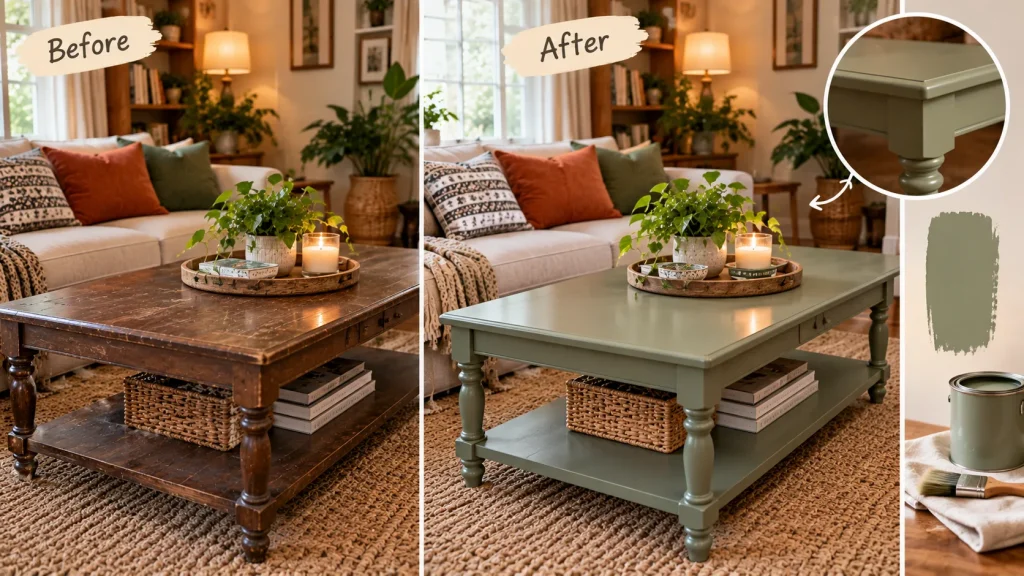
Paint or Refinish a Tired Piece
A scratched coffee table or a dated side table can look new with paint, stain, or a bit of sanding.
For example, an orange-toned pine coffee table might get two coats of soft sage paint on the base and a clear protective finish on the top. It goes from dated to fresh in a weekend.
Clean the piece first, follow the paint manufacturer’s instructions for preparation, and work in a well-ventilated room. Be careful when sanding older furniture, since some old paints may contain lead. If you’re unsure, test it before sanding, or choose a different project.
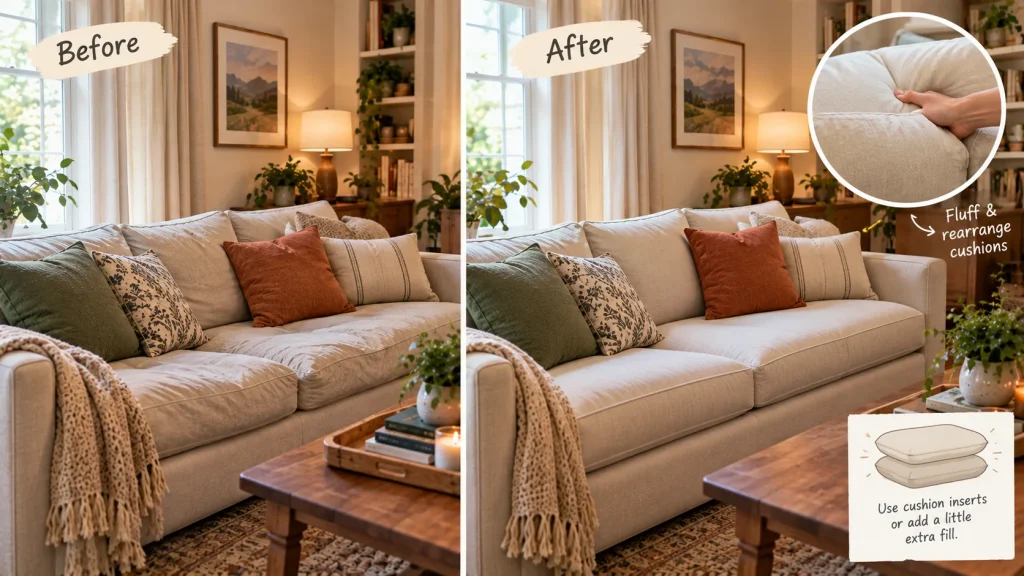
Plump Up Tired Sofa Cushions
A sagging sofa often doesn’t need replacing. The cushions might just need help.
Some ideas:
- Add a layer of fiber wadding inside the cushion covers
- Replace old foam with new foam cut to size
- Flip and rotate cushions regularly to spread the wear
Check the care label before unzipping covers, since some aren’t designed to be removed. Choose replacement foam that meets local fire-safety requirements for furniture.
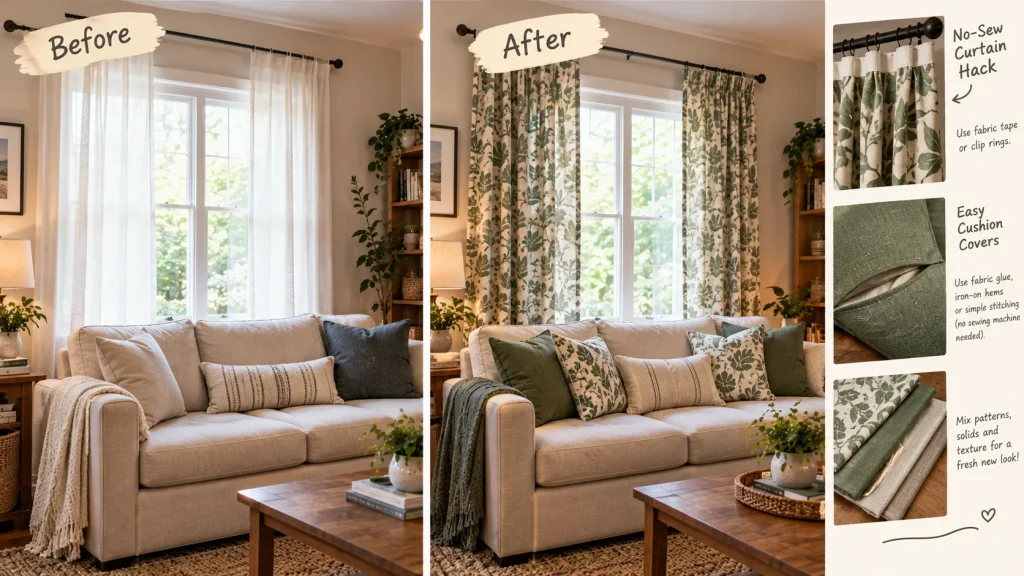
Sew or No-Sew Curtains and Cushion Covers
Fabric from the store can be expensive. But flat sheets, tablecloths, and fabric remnants are often much cheaper.
A plain linen-look flat sheet can become a curtain panel with clip rings. No sewing needed. Fabric remnants can become cushion covers with an envelope back, using a simple sewing machine or iron-on hem tape.
Wash fabric before you start, in case it shrinks.
For example, two plain white flat sheets hung from clip rings on a simple rod can soften a bare window for a fraction of the cost of ready-made linen curtains.
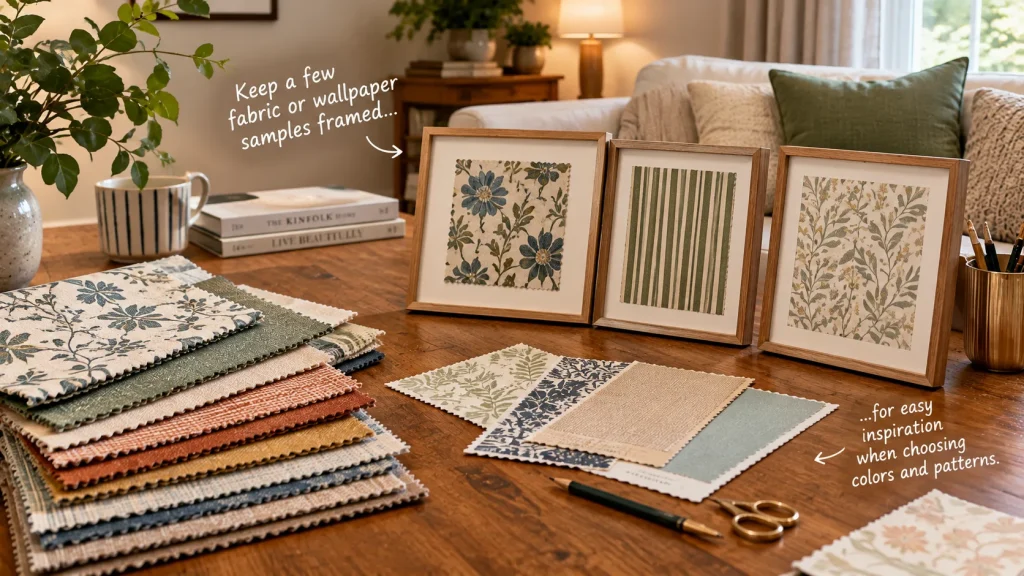
Frame Fabric or Wallpaper Samples
Art doesn’t have to be expensive. A large piece of patterned fabric, a wallpaper sample, or a vintage tea towel can look striking in a simple frame.
Secondhand frames are often inexpensive. Paint them all the same color so a mismatched group looks planned.
Picture three thrifted frames painted black, each holding a different botanical wallpaper sample. Hung in a row above the sofa, they look like a set of prints.
Bigger Budget Moves (7 Ideas): these take a bigger share of the money but often change the room most.
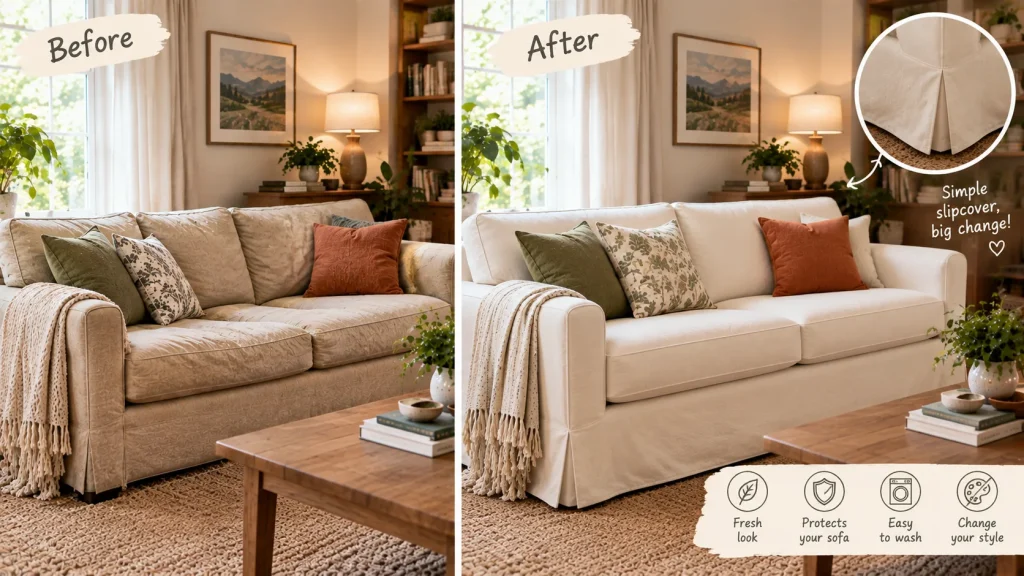
Cover the Sofa With a Slipcover
A slipcover can hide a stained or dated sofa and buy you years before replacing it.
Stretch covers are usually cheaper and fit many shapes. Fitted covers made for specific sofa models look neater but cost more.
Choose a washable fabric, especially if you have kids or pets. A neutral cover in oatmeal, gray, or soft white lets you change the look with cushions and throws later.
Shop Secondhand for Big Pieces
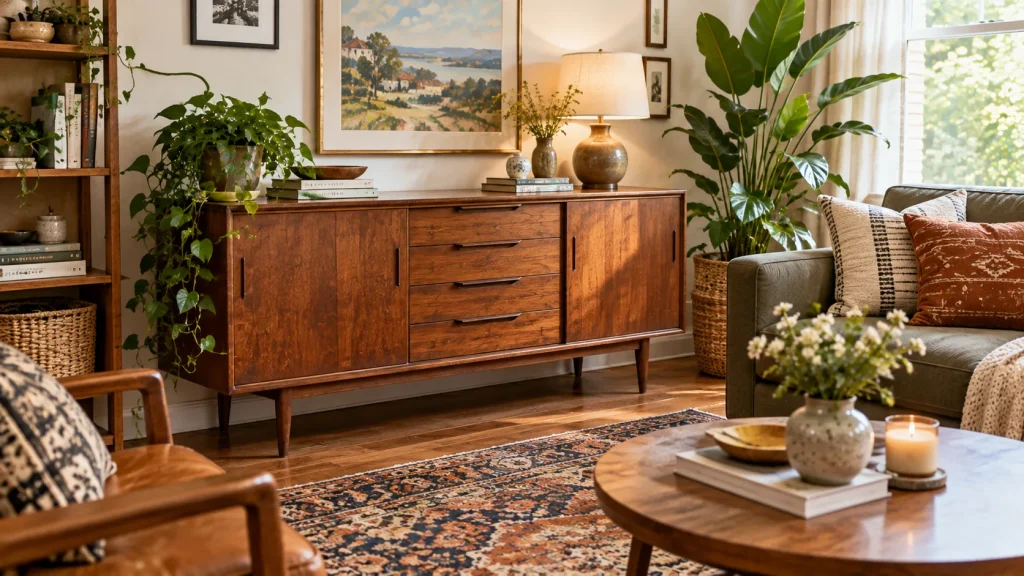
Large pieces like sofas, armchairs, and sideboards are where secondhand buying saves the most.
Local marketplaces, charity shops, and estate sales often have solid wooden furniture for a fraction of the price of new.
Before you buy:
- Measure your space and doorways
- Check for wobbly joints, cracks, and water damage
- Inspect upholstered pieces carefully for stains, smells, and signs of pests like bed bugs
- Look for fire-safety labels on upholstered furniture where your local rules require them
A solid oak sideboard, for example, might cost less secondhand than a new flat-pack version, and it could last much longer.
Try Peel-and-Stick Wallpaper on One Wall
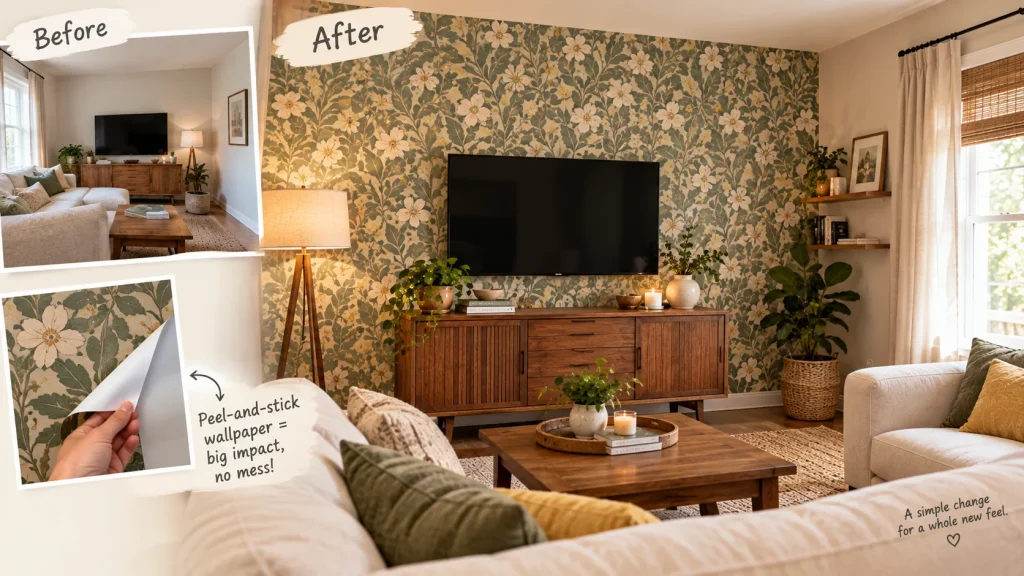
Peel-and-stick wallpaper can give a living room a feature wall without the mess of paste.
It works especially well behind a sofa, in an alcove, or on the wall behind open shelves.
Test a small piece first, since removal can sometimes pull off paint. Smooth, clean walls usually give the best results. If you rent, check with your landlord before starting, and follow the product’s removal instructions.
Paint the Doors and Trim
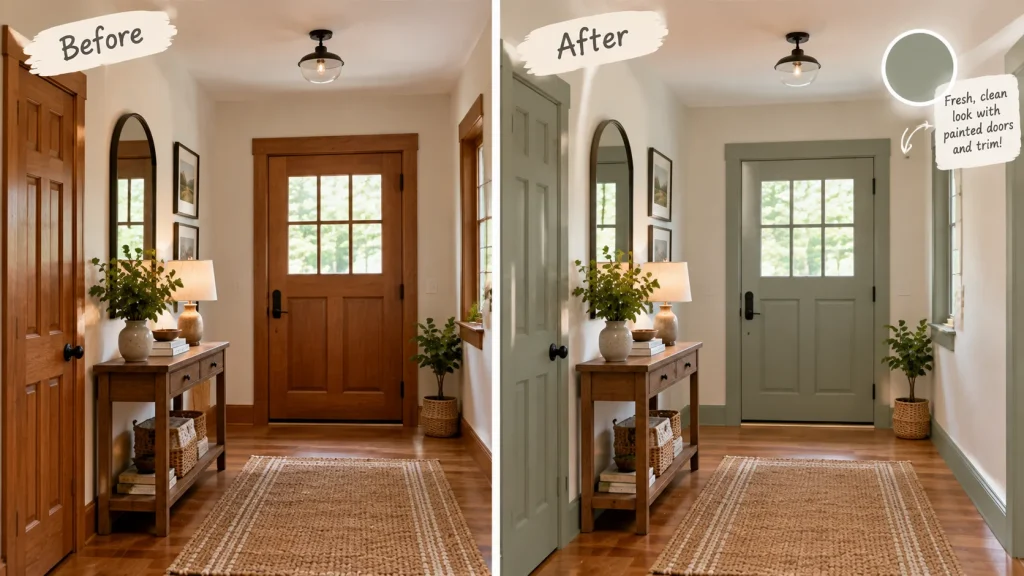
Most living rooms have plain white doors and skirting boards. Painting them a deeper color is an easy, affordable update that feels very current.
Deep green, navy, charcoal, or a warm clay shade can make plain doors look intentional. Leave the walls light for contrast, or match them for a cozier feel.
One small can of paint often covers a door and its frame. Use a durable finish suited to woodwork, and follow the preparation instructions. In older homes, test old paint for lead before sanding.
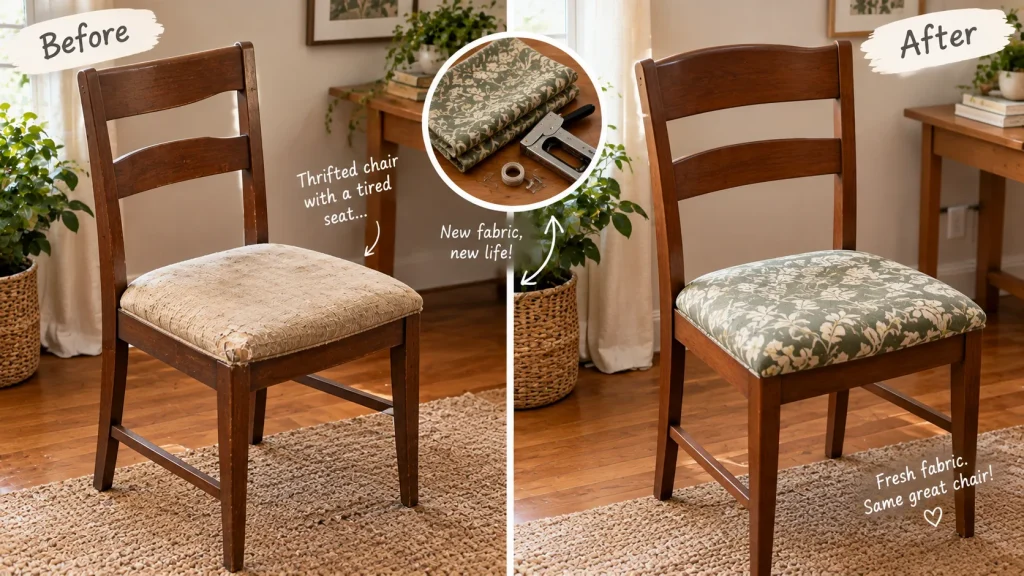
Reupholster a Thrifted Chair Seat
Dining or side chairs with removable seat pads are some of the easiest pieces to reupholster.
The seat usually unscrews from underneath. Remove it, stretch new fabric over the top, and staple it to the underside. A staple gun and a piece of fabric are often all you need.
A pair of thrifted wooden chairs with fresh patterned seats can make a cozy reading corner or extra seating for guests.
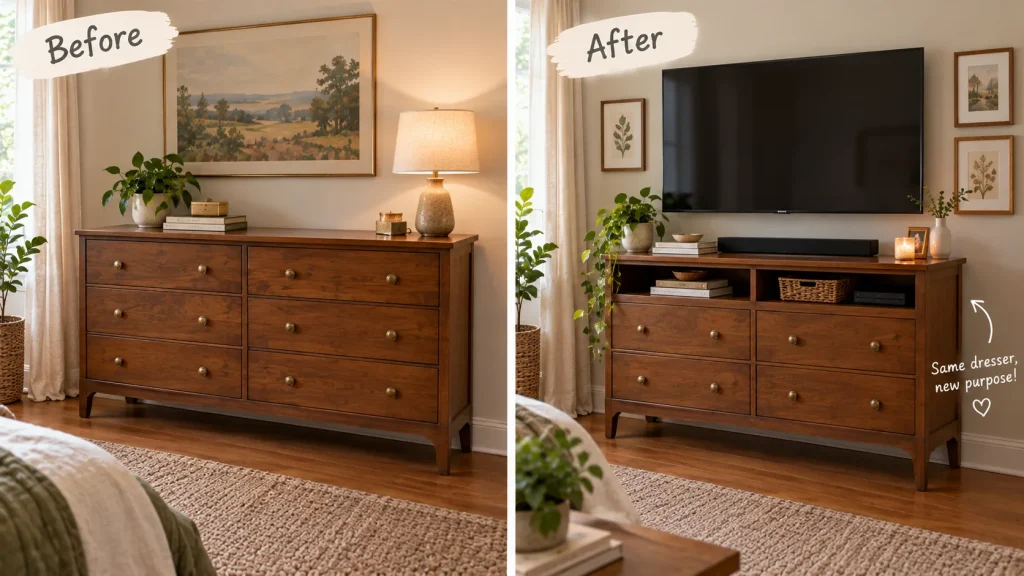
Turn a Dresser Into a Media Unit
TV stands can be surprisingly pricey. A secondhand dresser or sideboard often costs less, offers more storage, and has more character.
Drill a hole in the back for cables, or remove part of the back panel. Use the drawers for games, remotes, and chargers.
Anchor the dresser to the wall, especially if you have children. Make sure the top can safely support the weight of your TV, and keep the TV well back from the edge.
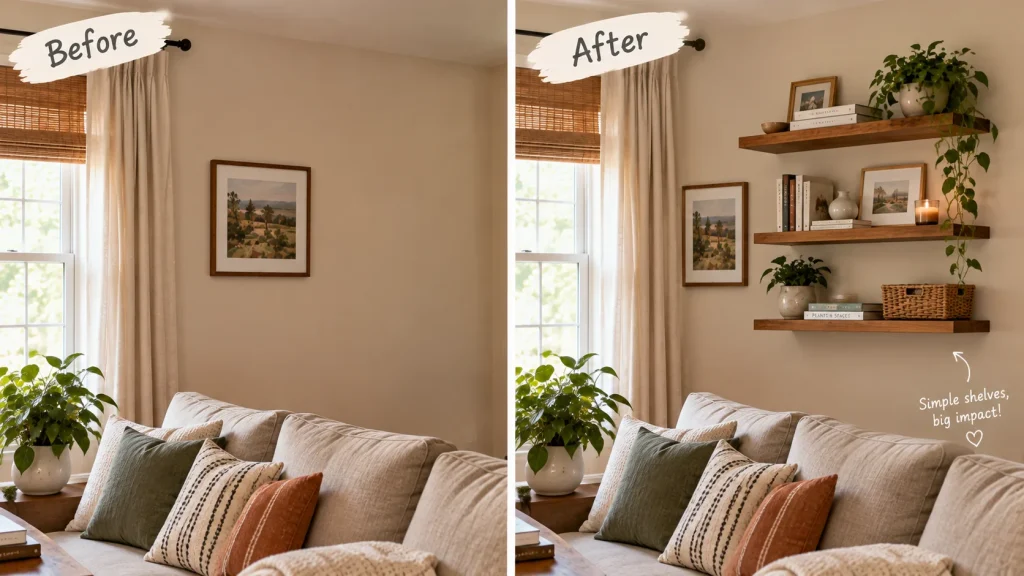
Build Simple Floating Shelves
Wall shelves add storage and display space without taking up floor area.
Basic wooden boards from a hardware store, cut to length, plus sturdy brackets can be much cheaper than buying ready-made shelving.
Before drilling, use a stud and cable detector to check for hidden wiring and pipes. Fix brackets into studs or use wall anchors rated for the weight. Keep heavy items like books on lower shelves and lighter decor up high.
Two stained pine boards above a sideboard, holding a few books, a cutting from the windowsill, and a framed photo, can fill a blank wall nicely.
How the $200 Might Be Spent
Here’s one example of how a budget like that might stretch, using rough US prices. Your own costs will vary depending on where you live and shop.
- Paper lantern for the ceiling light: about $20
- New lampshade and two warm LED bulbs: about $35
- Paint for an old coffee table: about $20
- A stretch slipcover for the sofa: about $60
- Fiber wadding to plump up sofa cushions: about $15
- Fabric remnants for cushion covers: about $25
- Three thrifted frames and wallpaper samples: about $25
Total: about $200
The free ideas, like clearing clutter, shopping your home, and deep cleaning, come first and cost nothing.
Budget Mistakes Worth Avoiding
Buying lots of cheap decor. A pile of small, inexpensive accessories often looks cluttered. One or two good pieces usually look better.
Skipping measurements. A bargain sofa or rug isn’t a bargain if it doesn’t fit.
Rushing DIY projects. Poor prep, like painting over grease or dust, often means doing the job twice.
Ignoring safety for savings. Check secondhand furniture for damage, anchor tall pieces, and don’t skip proper fixings to save a little money.
Questions About Decorating a Living Room on a Budget
What’s the cheapest way to update a living room?
Decluttering, deep cleaning, and moving things around from other rooms cost nothing and often make a noticeable difference.
Where can I find cheap living room furniture?
Local marketplaces, charity shops, thrift stores, and estate sales are worth checking regularly. Flat-pack furniture can also be affordable and easy to customize.
How can I make a cheap living room look expensive?
Stick to a simple color palette, choose a few larger pieces instead of many small ones, swap dated hardware, and use warm lighting.
Are these living room on a budget ideas good for renters?
Many are, including plug-in sconces, peel-and-stick wallpaper, slipcovers, and paper lanterns. Check with your landlord before painting or drilling.
Should I save up or decorate in stages?
Decorating in stages often works well. It spreads the cost and gives you time to see what the room really needs.
Start With the Free Ideas This Weekend
You don’t need all nineteen of these living room on a budget ideas to make a real change. Start with the free ones. Declutter, clean, and borrow decor from other rooms.
Then pick one or two small spends and see how the room feels. A tired living room can change a lot with patience and a modest budget.