
Forget the Old Rules: 12 Bedroom Ideas for Small Rooms That Actually Feel Bigger
Paint it white. Buy tiny furniture. Push everything against the walls.
That’s the advice most people hear when they have a small bedroom. It isn’t wrong, exactly. But follow all of it and you often end up with a room that’s pale, fussy, and a little bland. It’s still small. It just feels less like you.
The bedroom ideas for small rooms in this post take a different approach. Several of them break those familiar rules on purpose. Others use space you might not have thought about, like the ceiling or the doorway.
Each idea notes the “rule” it bends, where there is one. Use as many or as few as suit your room.
Three Measurements to Take First
Before trying any of these, grab a tape measure and note down:
- The longest clear wall, without windows, doors, or radiators
- The ceiling height, since several ideas use vertical space
- The door swing, meaning how far the door sweeps into the room
Those three numbers will tell you quickly which ideas fit your space and which ones don’t.
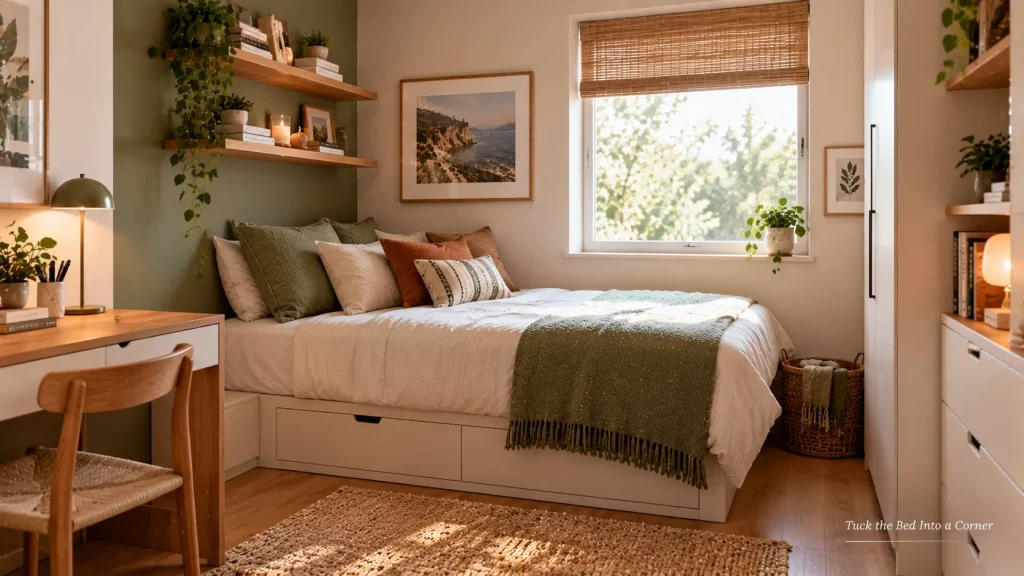
Tuck the Bed Into a Corner
The rule it breaks: “Always center the bed on a wall.”
A centered bed looks balanced. In a small room, though, it can split the floor into two narrow strips that nobody can really use.
Pushing the bed into a corner, with one long side against the wall, frees up a single, wider area of floor. That space might fit a desk, a reading chair, or simply a clear path.
To make a corner bed feel intentional, style it a little like a daybed. Add a few large cushions along the wall side and a throw at the foot. In the daytime, it can work almost like a sofa.
One practical point: making a bed tucked against the wall is more awkward. Fitted sheets with deep corners help, and some people switch to a duvet only, without a top sheet.
Build a Cozy Bed Nook
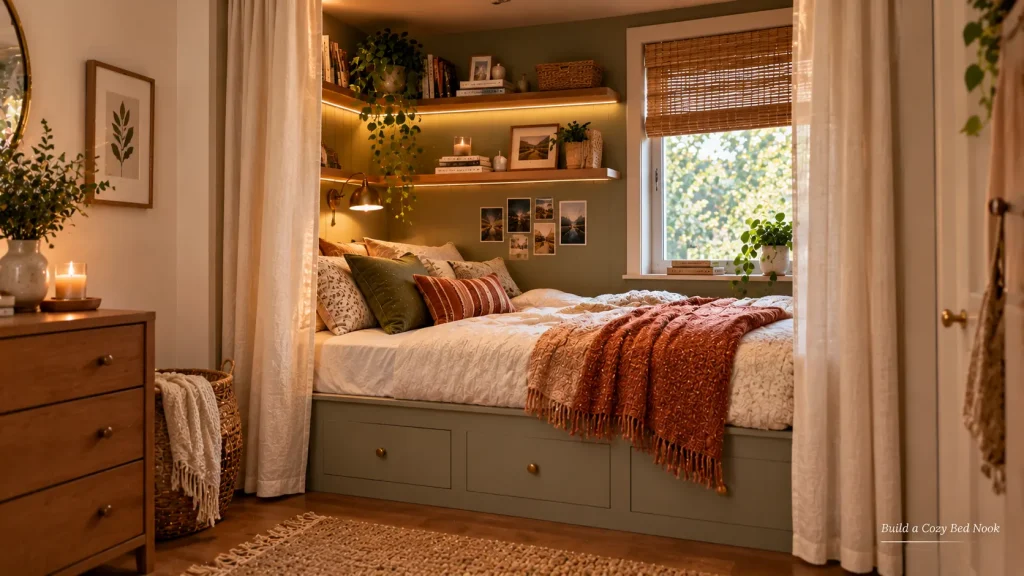
A bed nook makes a lot of sense in a small bedroom. It’s a built-in structure that frames the bed. Usually that means tall cupboards on either side, with a bridging cupboard or shelf above the headboard. The bed sits snugly in the middle, like a little cabin.
Why it works in a small room:
- It packs a lot of storage into a single wall
- Built-in reading lights can be fitted into the sides
- The rest of the room stays clear of bulky furniture
A carpenter can build one to fit, or you can create a simpler version with off-the-shelf tall cabinets and a wall-mounted shelf. Overhead cupboards should be fixed securely into the wall, and any built-in lighting should be wired by a qualified electrician.
Go Low With a Floor-Level Layout
The rule it breaks: “Raise furniture on legs so you see more floor.”
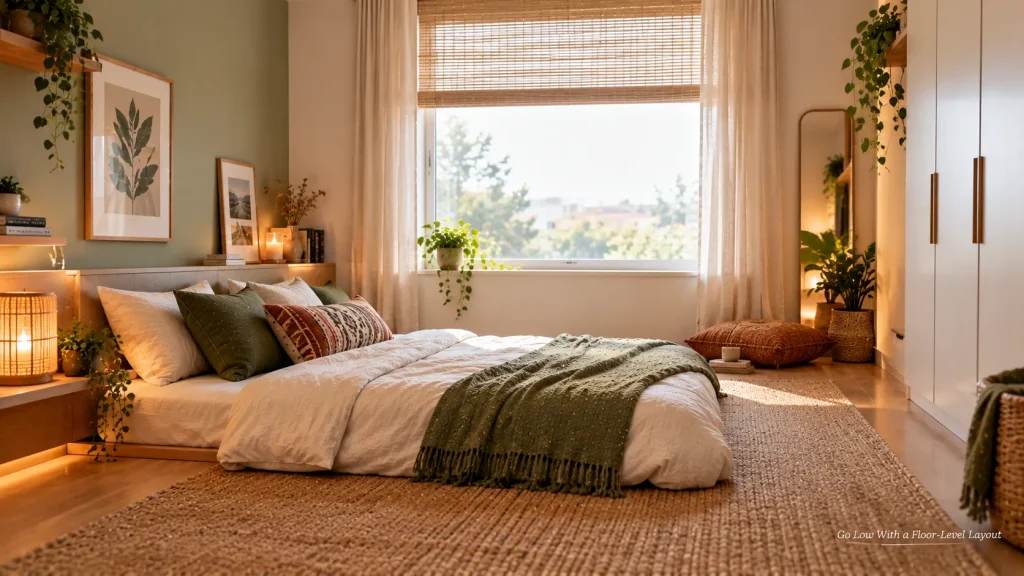
Leggy furniture does help a room feel airy. But there’s another way to make a ceiling feel higher: bring everything else down.
A low platform bed, floor cushions, and low storage units leave more visible wall space above them. That extra wall space can make a room feel taller and calmer. This approach is common in Japanese and Japandi-style bedrooms, which often use natural wood, linen, and soft neutral tones.
Picture a box room with a low wooden platform bed, a single woven lamp on the floor beside it, and a long, low dresser under the window. The eye travels up a lot of open wall before it reaches the ceiling.
A very low bed isn’t for everyone. It can be harder to get in and out of, especially for anyone with knee or back trouble. Test the height before you commit.
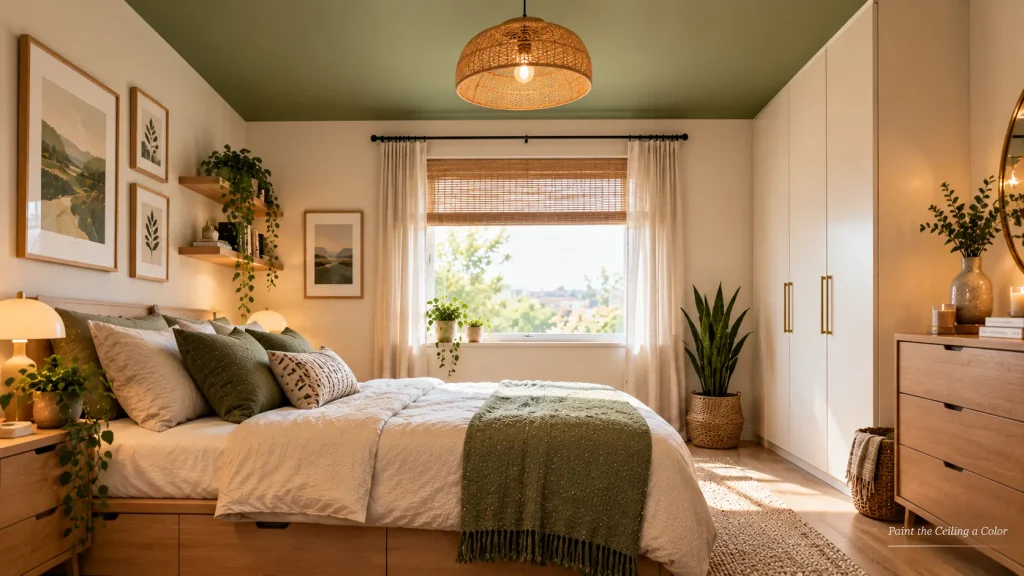
Paint the Ceiling a Color
Most ceilings are painted white without a second thought. Yet in a small bedroom, the ceiling is often the biggest empty surface.
Painting the ceiling a soft color can make the room feel more cohesive and cozy. Some ideas:
- Pale blue or blush for a gentle, airy feel
- A warm terracotta or clay for a cocooning effect
- The wall color, a shade lighter, for a calm, seamless look
There’s no fixed rule about whether a colored ceiling makes a room feel higher or lower. It depends on the shade and the light. Paint a sample board, then view it from different spots in the room, at night as well as during the day.
Ceiling painting is messy work. Cover the floor and furniture well, and use a sturdy stepladder or a roller on an extension pole.
Paint an Arch Behind the Bed
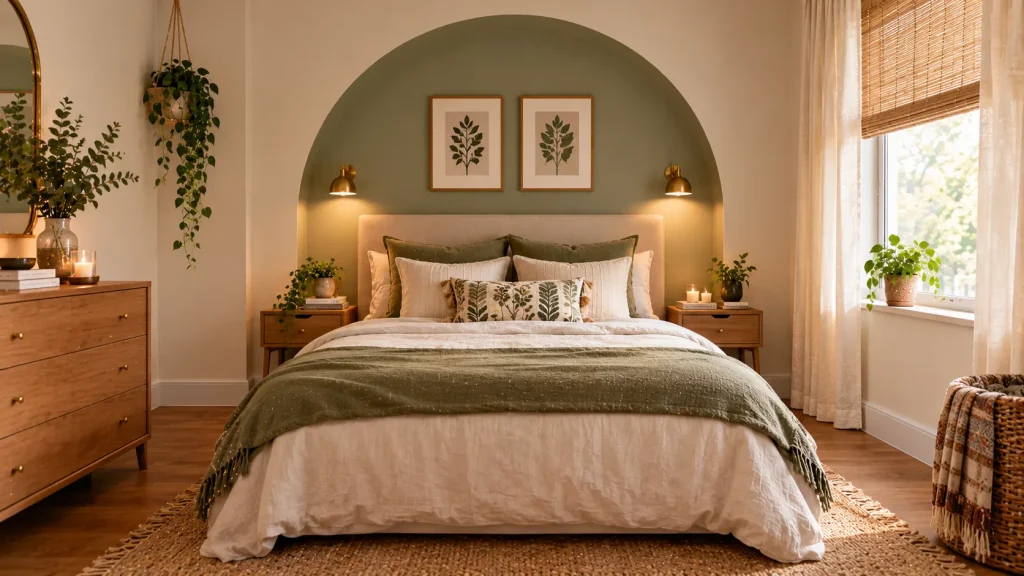
If there’s no room for a chunky headboard, paint one instead.
A painted arch or simple rectangle on the wall behind the bed frames the bed like a headboard would. It takes up no floor space, needs only a small can of paint, and adds a modern touch.
How to do it:
- Mark the center of the bed on the wall
- Use a pencil tied to a piece of string to draw a curve for the arch top
- Mask the edges with painter’s tape
- Paint two coats, then peel the tape off while the paint is still slightly wet
A muted green, rust, or deep blue usually works well against lighter walls. Renters should check with their landlord first. A small painted shape is often easy to repaint when moving out.
Choose See-Through Furniture
The rule it breaks: “Small rooms need small furniture.”
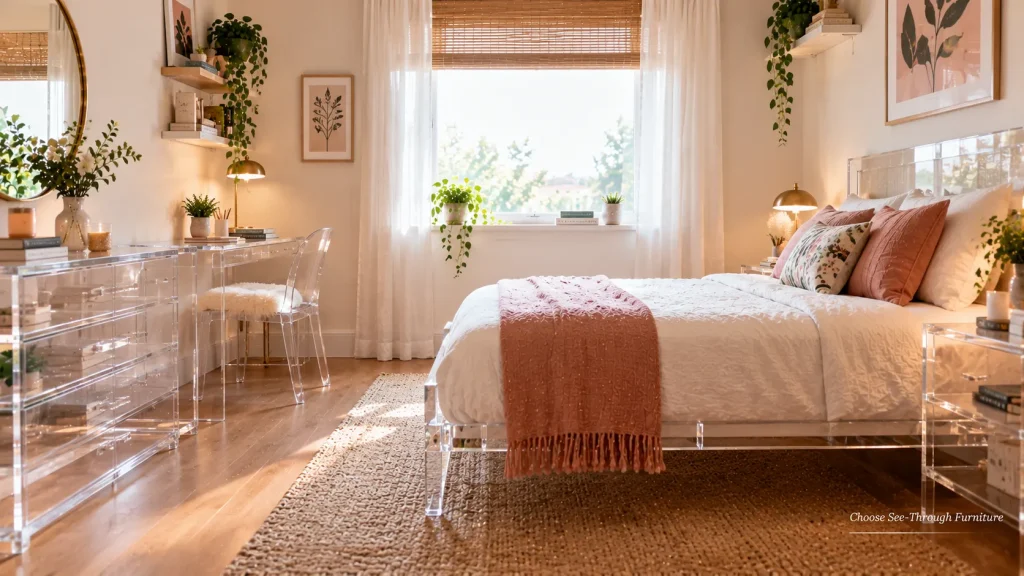
You can often keep a normal-sized piece if you can see through it. Clear acrylic side tables, glass-topped desks, and open metal frames take up the same footprint as solid ones, but they don’t block the view.
Because of that openness, a full-size desk or bedside table can fit into a small room without making it feel as cramped.
A few options:
- An acrylic bedside table or a clear acrylic desk chair
- A glass-topped desk on slim metal legs
- An open-frame shelving unit instead of a solid bookcase
- A cane or rattan headboard, which lets the wall show through
Acrylic can scratch, so use coasters and avoid abrasive cleaners. Glass furniture should use safety glass, especially in homes with young children.
Lay One Big Rug Instead of Several Small Ones
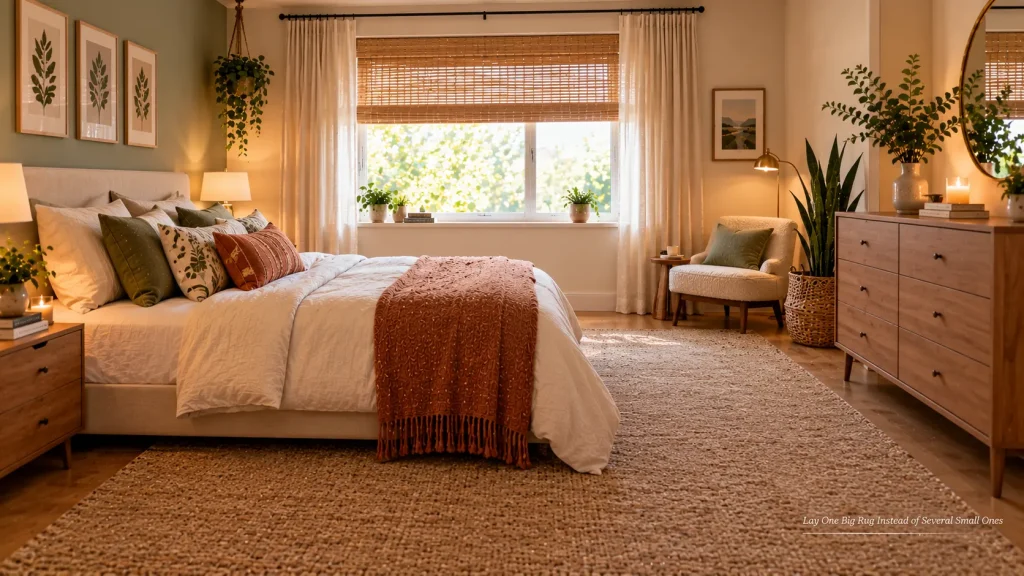
A few small rugs dotted around a little bedroom can make the floor look chopped up. One larger rug, placed well, tends to look calmer and can make the floor read as one space, though the effect depends on your layout.
In a small bedroom, a rug that runs under the bottom two-thirds of the bed and extends out on the open sides is often enough. Your feet land on something soft every morning, and the room feels pulled together.
Plain or subtly patterned rugs usually suit small rooms better than very busy designs. A rug pad underneath stops it from slipping, which is especially important on hard floors.
This is one of the easier bedroom ideas for small rooms to test. Mark the size of a rug on the floor with painter’s tape before buying, so you can see how it fits around the bed and door.
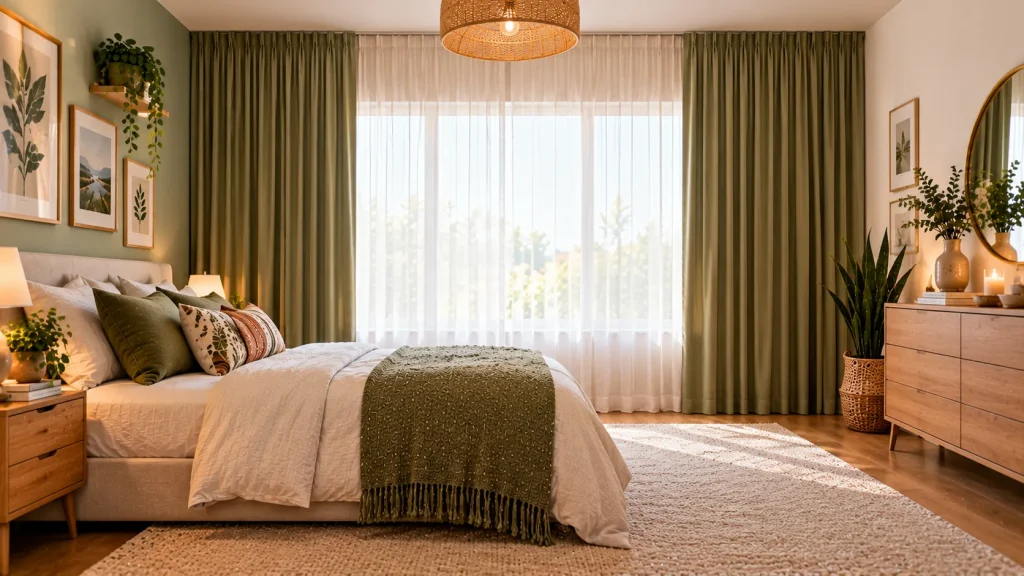
Hang Curtains Ceiling-High and Wall-Wide
The rule it breaks: “Hang curtains just above the window frame.”
Mounting a curtain track close to the ceiling, and extending it well past the window on both sides, makes the window look bigger. When the curtains are open, they stack beside the glass rather than covering it, so more daylight gets in.
In a very small room, you can even run the curtains across the whole wall. When closed, the fabric covers the window wall entirely, which can look soft and hotel-like.
A ceiling-mounted track often creates a neater look than a curtain pole. Choose a fabric color close to the walls for a calm effect, or a contrasting shade for something bolder. Make sure tracks are fixed securely, and keep any cords well out of children’s reach.
For example, a small bedroom with a narrow window on one wall might get a ceiling track running the full width of that wall, with floor-length linen curtains in a warm off-white. Open, the window looks wider. Closed, the whole wall turns soft, and the room feels quieter.
Hang a Canopy to Create a Room Within a Room
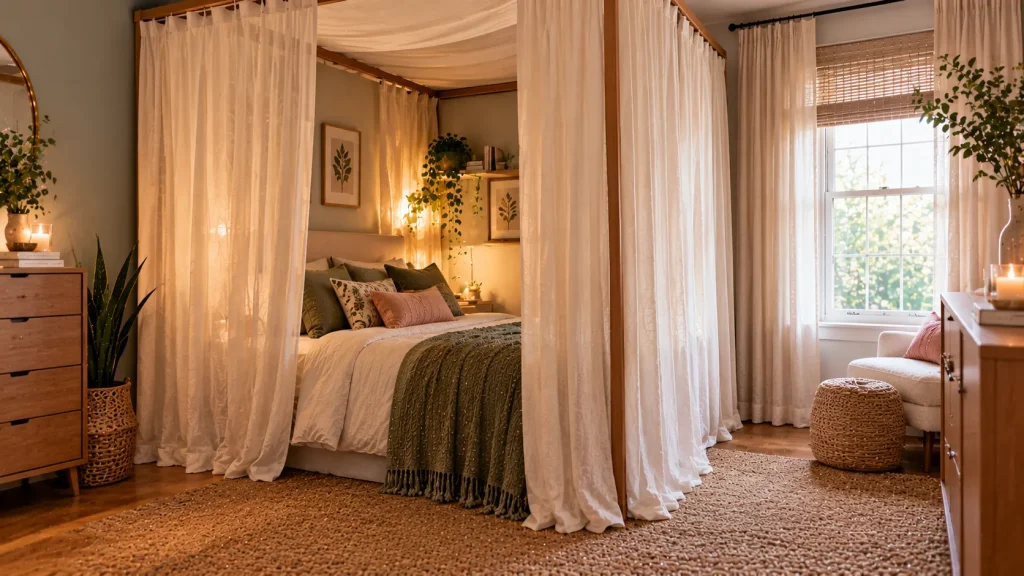
A canopy over the bed gives a small bedroom a clear “sleep zone” without needing any extra floor space.
Modern canopies are lighter than the heavy four-poster drapes of the past. Think sheer linen or cotton panels hung from a ceiling-mounted track or a simple metal rail above the bed.
For example, in a studio apartment where the bed sits in the main living space, a ceiling track with sheer curtains around the bed can separate it gently from the rest of the room. When the curtains are drawn back during the day, they take up very little visual space.
Ceiling-mounted fixtures should be secured to joists or installed with fixings suited to your ceiling type. Keep fabric well away from lamps and any heat source, and ask your landlord before drilling into a rented ceiling.
Swap the Door for a Sliding or Pocket Door
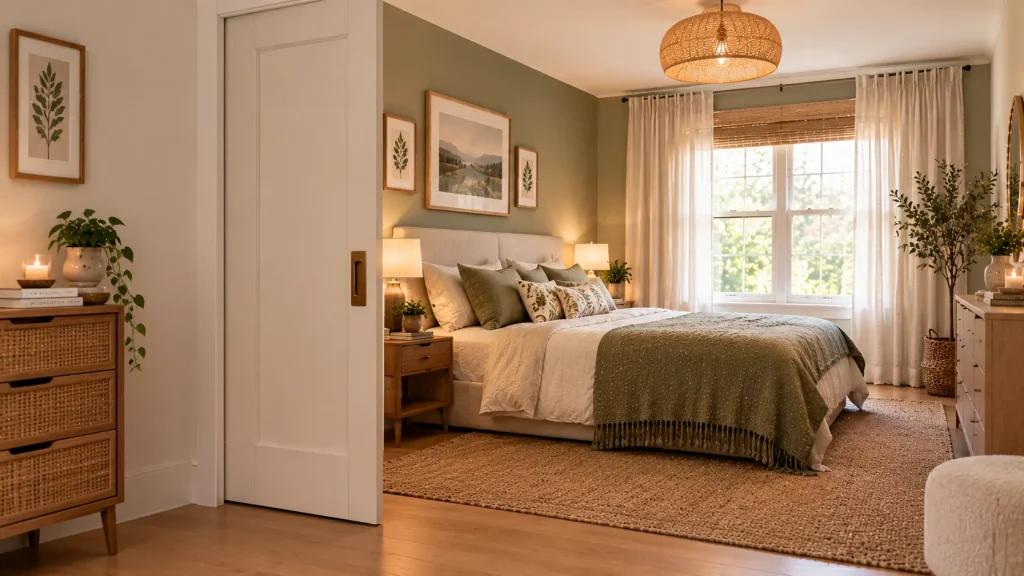
In a tiny bedroom, the door swing can eat up a surprising amount of floor. It decides where the bed can go and often blocks a corner completely.
Replacing a hinged door with a sliding one can free that space. There are two main options:
- A sliding barn-style door that runs along a rail on the wall outside the room
- A pocket door that slides into a cavity inside the wall
Barn-style doors are simpler to fit, but they need clear wall space beside the doorway and usually don’t seal out sound or light as well as a standard door. Pocket doors are neater but involve opening up the wall, so they’re best done during a renovation and fitted by a professional.
Even reversing the swing of an existing door, so it opens against a different wall, can free up a better corner for furniture.
Use a Projector Instead of a TV
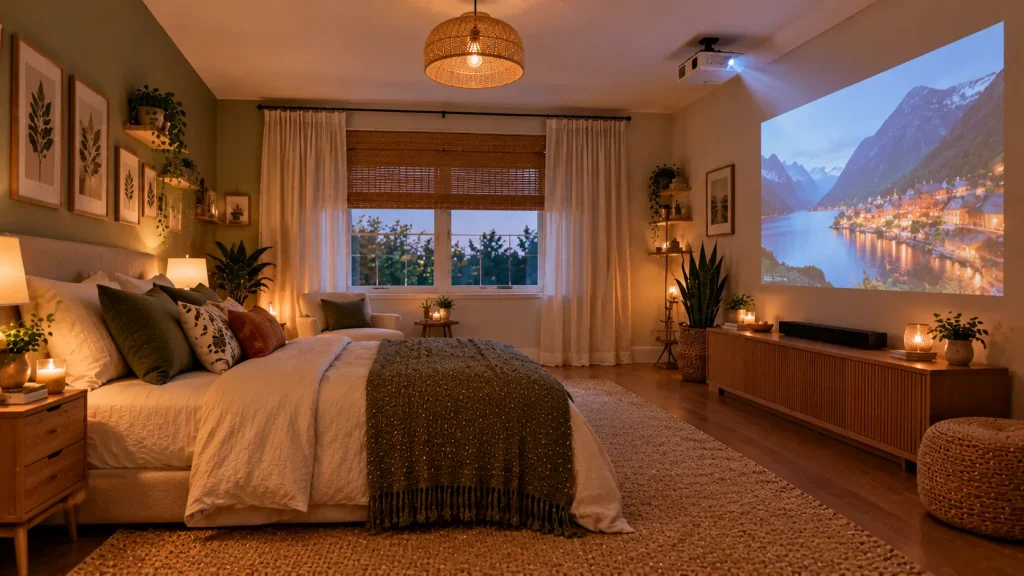
A TV, its stand, and its cables can take up valuable space along one wall of a small bedroom.
A compact projector pointed at a clear stretch of wall, or a pull-down screen, gives you a big picture, and the image disappears when it’s switched off. Compact models are usually small enough to tuck onto a shelf. Some models have speakers built in.
A few things to check before buying:
- Brightness, since some models struggle in rooms that aren’t fully dark
- How far it needs to sit from the wall to fill it
- Fan noise, if you’ll use it at night
A plain, light-colored wall works best as a screen. If you’d rather keep screens out of the bedroom altogether, that’s a valid choice too.
Go Big With One Oversized Piece
The rule it breaks: “Keep everything small in a small room.”
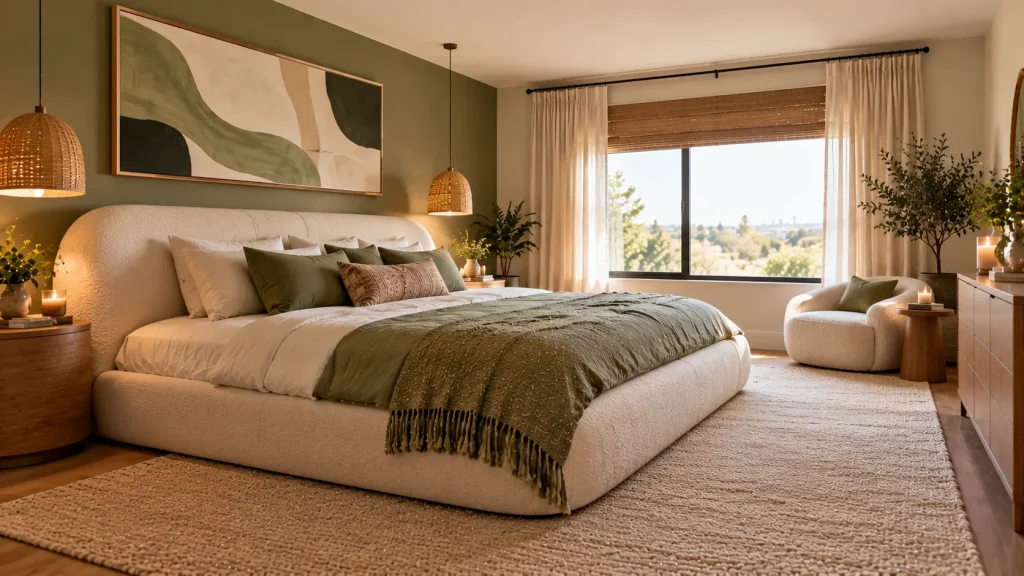
A wall covered in lots of little frames can make a small bedroom feel busy. One oversized piece, such as a large print, a tall mirror, or a substantial wall hanging, can make the room feel more balanced and calm.
The same applies to headboards. A tall headboard that extends above the pillows gives the bed more visual presence and draws the eye upward, potentially making the room feel taller.
Imagine a narrow bedroom with a single large abstract print above the bed, roughly two-thirds of the bed’s width. There’s nothing else on that wall. The room feels designed, not crowded.
Large pieces need secure fixings. Use hardware rated for the weight, fix into studs or with suitable wall anchors, and avoid hanging heavy glass-fronted frames directly over the pillows.
Mistakes That Make Small Bedrooms Feel Smaller
Too many small things. Lots of tiny frames, cushions, and ornaments can look cluttered. Fewer, larger pieces are usually calmer.
Furniture that blocks the window. A tall wardrobe or dresser in front of the glass cuts daylight and makes the room feel closed in.
Ignoring the door swing. If the door hits the bed or a dresser every time it opens, the room will always feel awkward.
Following every “small room rule” at once. All-white walls, tiny furniture, and everything pushed to the edges can make a room feel bland rather than bigger.
Questions About Bedroom Ideas for Small Rooms
What color makes a small bedroom look bigger?
There’s no single answer. Light colors can feel airy, while deeper shades can blur the corners and make a room feel cozy. Test samples in your own light before deciding.
Can I fit a double bed in a small bedroom?
Often, yes. Pushing it into a corner or building a bed nook around it can make it work. Measure carefully and leave enough space to get in and out of bed safely.
How do I make a small bedroom feel less cluttered?
Choose fewer, larger pieces, keep surfaces clear, and use built-in or wall-mounted storage where possible.
Are these ideas good for renters?
Some are. A corner bed, one big rug, see-through furniture, and a projector need no permanent changes. Painting, ceiling tracks, and new doors usually need landlord permission.
What are the cheapest bedroom ideas for small rooms?
Moving the bed into a corner, painting an arch behind the bed, and editing down small decorations cost little or nothing.
Start With the Rule You’re Ready to Break
You don’t have to try all twelve of these bedroom ideas for small rooms. Pick the one that solves your biggest frustration, whether it’s an awkward door, a bed that eats the floor, or a room that just feels flat.
Small bedrooms will always be small. But with a few bolder choices, they can feel calm, personal, and much more comfortable to live in.