Warm, Bold, or Calm? 30 Kitchen Interior Ideas That Give Your Kitchen Real Character
Here’s a quick exercise before you start scrolling.
Close your eyes and picture walking into your dream kitchen on a Sunday morning. Is it bright and sunny, with yellow cabinets and a checkered floor? Dark and moody, with green walls and brass taps? Or calm and pale, with wood and plaster?
Hold on to that first picture. It often reveals more about your taste than any trend list.
Many kitchens start to look alike when they rely on the same white cabinets, gray counters, and subway tiles. These kitchen interior ideas are about breaking that pattern. You’ll find 30 ideas grouped into colors, surfaces, statement pieces, architectural details, and finishing touches, so you can pick the ones that match the kitchen in your head.
Three Rules That Make Any Idea Work
Pick one star. A bold color, a statement hood, or a patterned floor. One star per kitchen keeps it from feeling chaotic.
Repeat your materials. If you add brass, use it at least twice. If you add wood, echo it somewhere else.
Think about wear. Kitchens deal with steam, grease, spills, and heavy foot traffic. Beautiful finishes still need to be practical.
Color moods (six ideas):
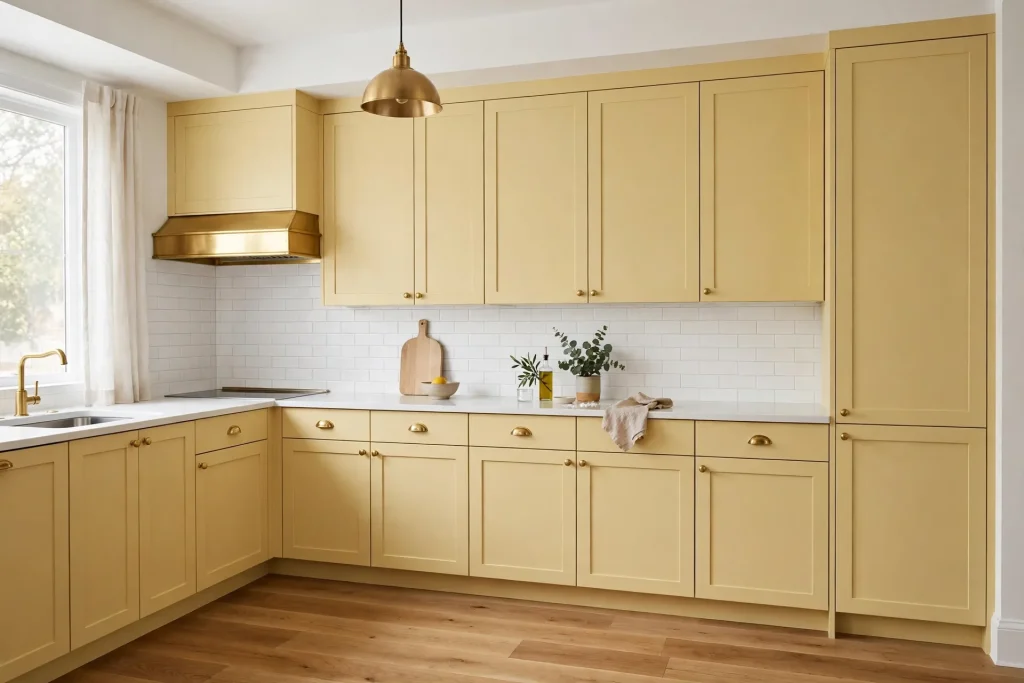
Butter Yellow Cabinets
Soft, buttery yellow feels cheerful without being loud. It works beautifully with white walls, brass handles, and warm wood counters. Morning light makes it glow.
If full yellow feels like too much, start with just the island or the lower cabinets, and keep the uppers white.
A Deep Green Kitchen
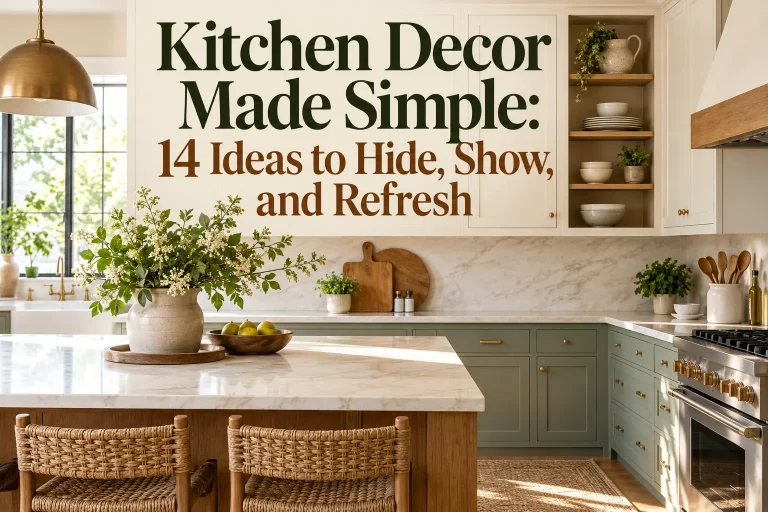
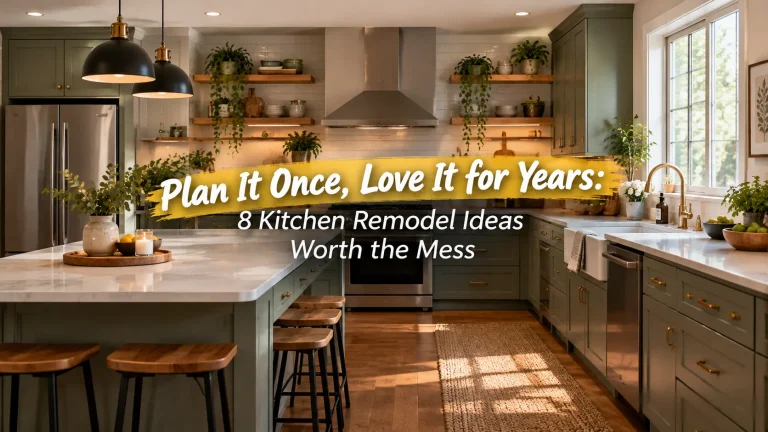
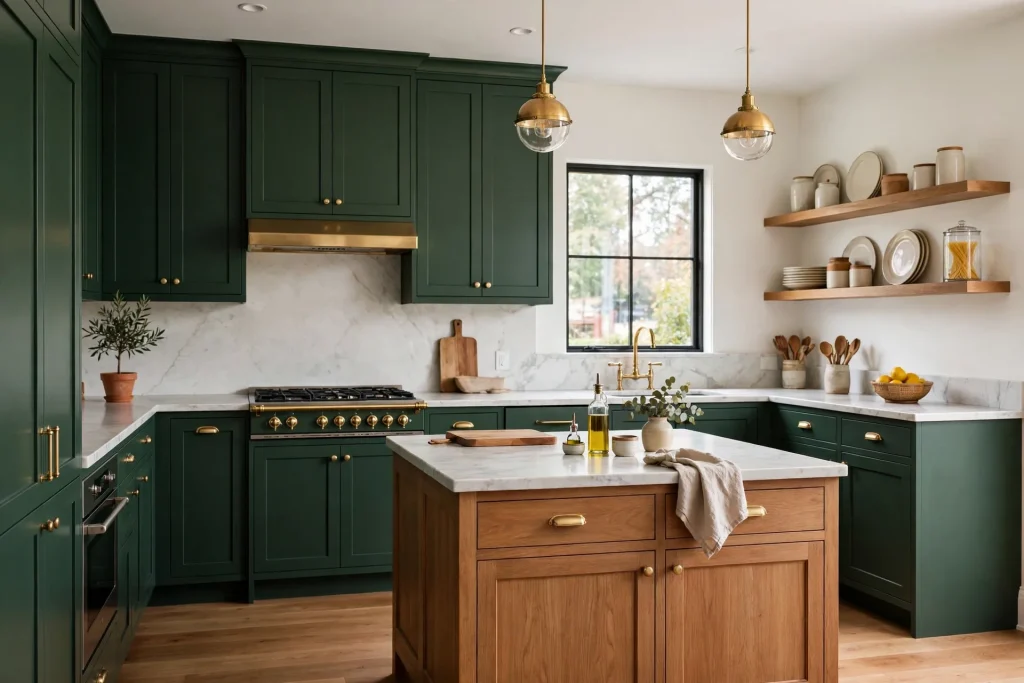
Forest, olive, or bottle green cabinets feel rich and calming. Pair them with marble-look counters and brass hardware for a classic look, or with oak and matte black for something more modern.
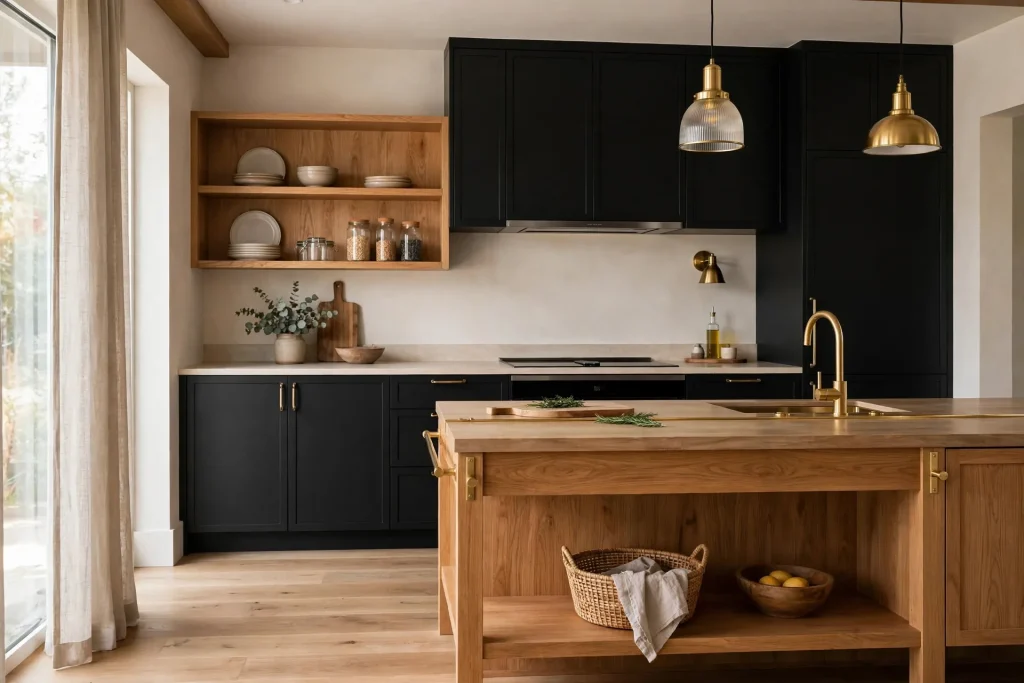
Matte Black Cabinets With Warm Wood
Black cabinets look sleek and dramatic. To stop them feeling cold, add warmth with wood shelves, a wood island top, or a wooden floor.
Good to know: matte black can show fingerprints, so choose a finish that wipes clean easily.
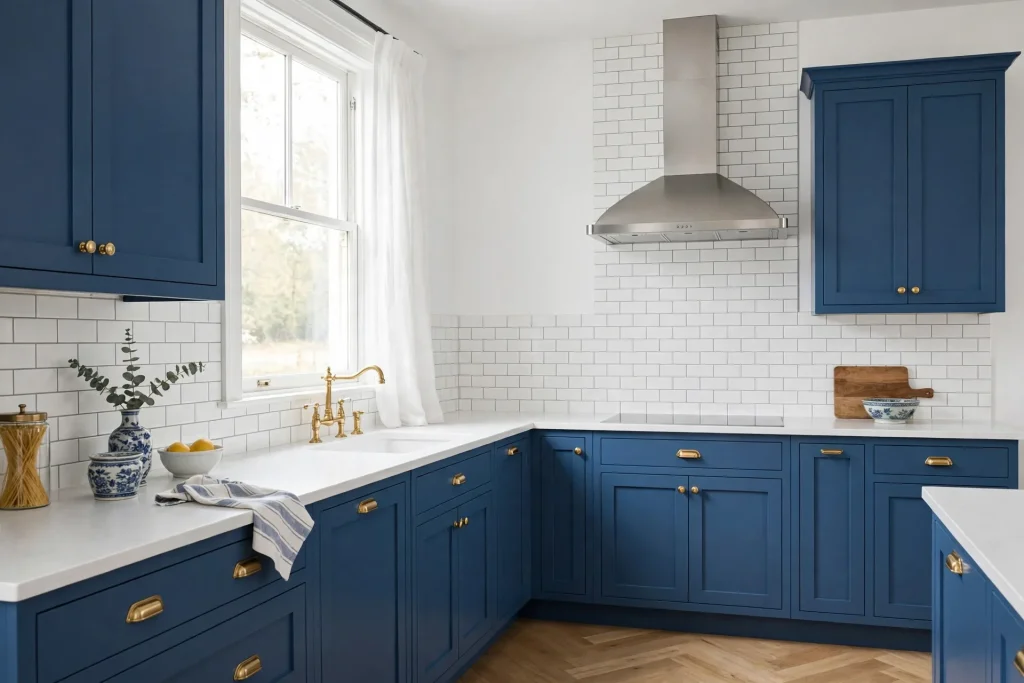
A Blue-and-White Kitchen
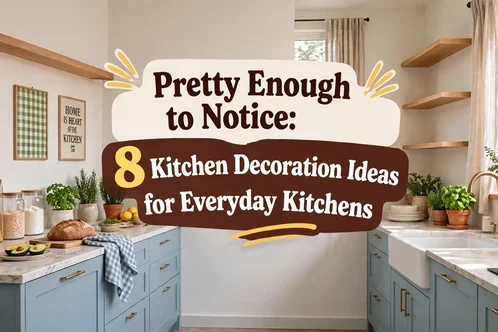
Inspired by traditional blue-and-white pottery, this palette feels fresh and timeless. Try navy lower cabinets with white uppers, or white cabinets with a blue patterned tile.
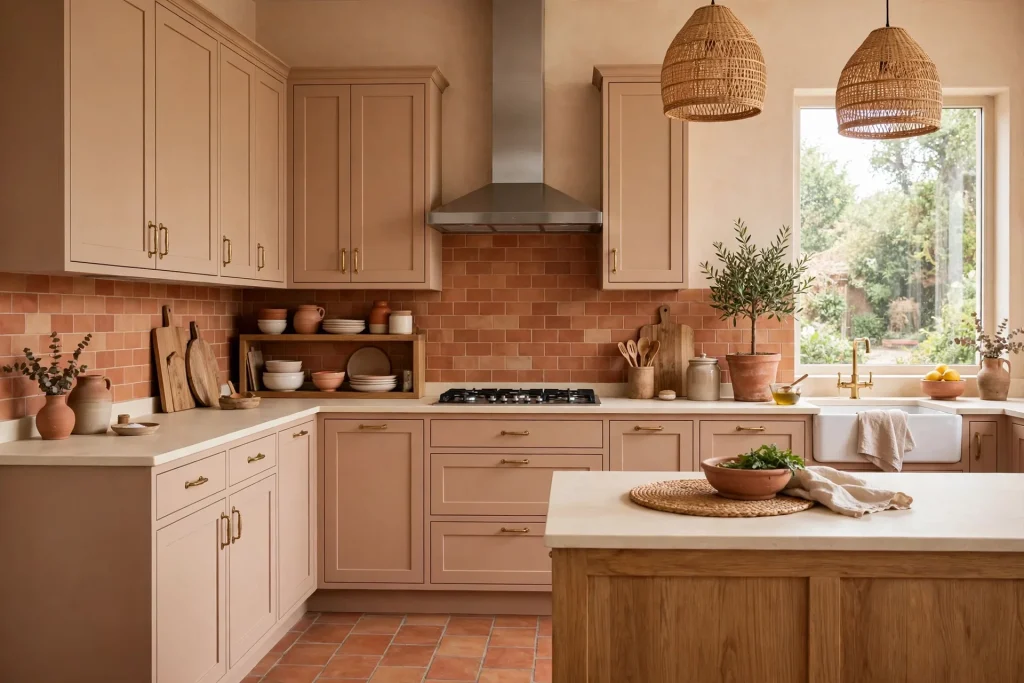
Terracotta and Clay Tones
Warm terracotta, clay, and rust tones bring a sun-baked, Mediterranean feel. Use them on walls, an island, or a tile backsplash, with creamy whites and natural wood to keep them soft. Linen textiles and woven baskets complete the warm, relaxed feel.
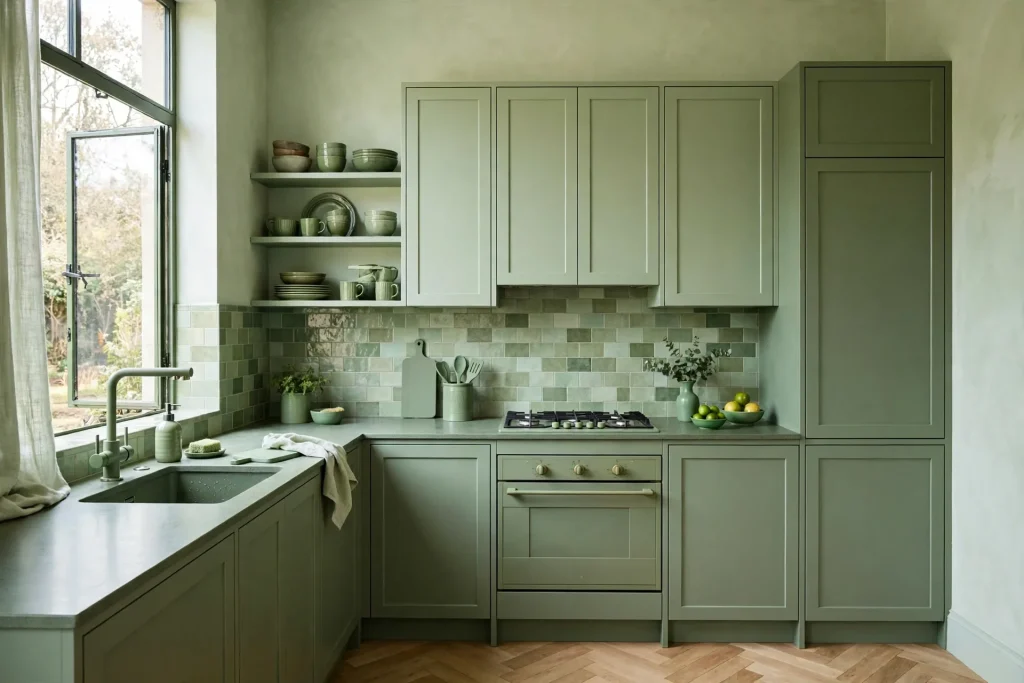
A Tonal, One-Color Kitchen
Choose one shade, like greige, sage, or mushroom, and use lighter and darker versions on cabinets, walls, and tile. The result feels calm, cohesive, and thoughtfully designed, even with simple materials.
Surfaces and materials (six ideas):
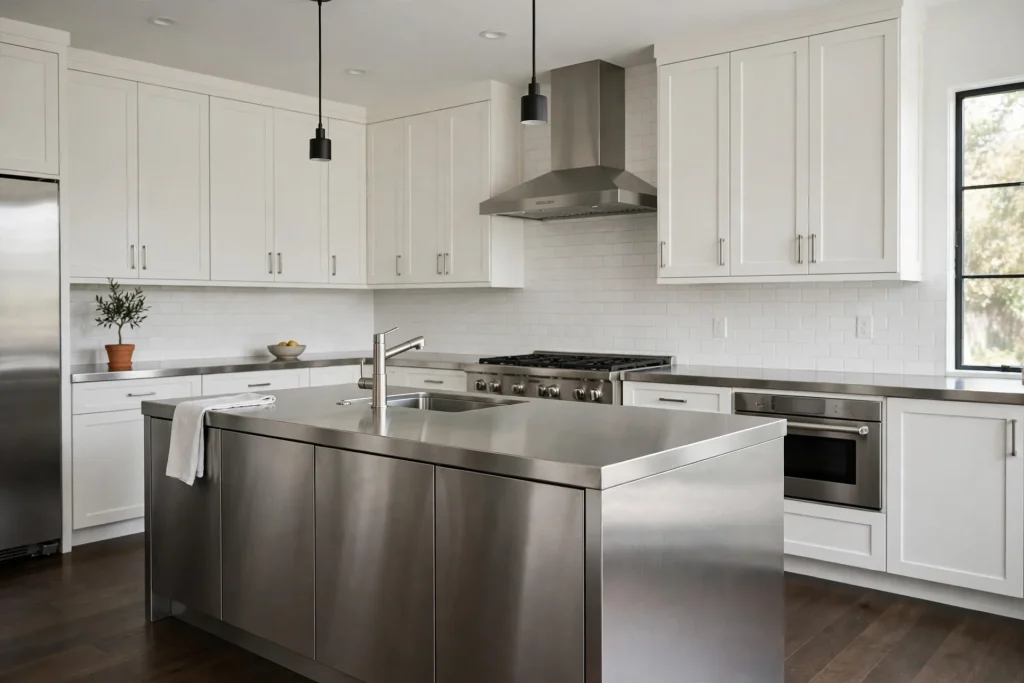
Stainless Steel Countertops
Often seen in restaurant kitchens, stainless steel counters are heat-resistant, nonporous, and easy to clean. They suit modern and industrial spaces.
However, they can scratch, dent, and show fingerprints over time. Many people like the soft, worn patina that develops.
Honed Soapstone Counters
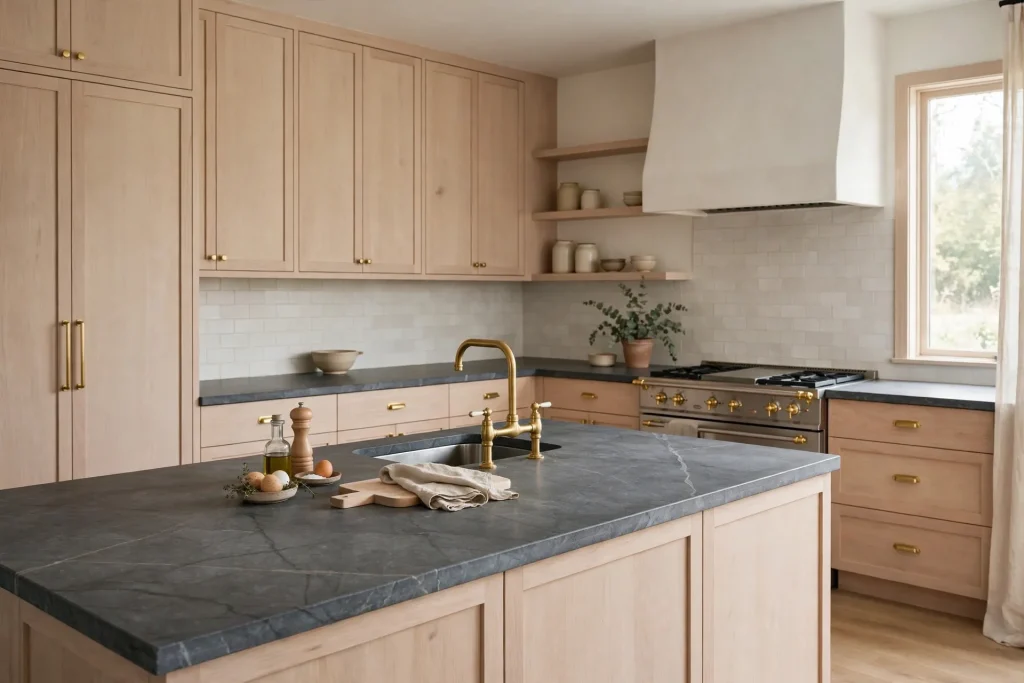
Soapstone has a soft, matte feel and a deep gray color that darkens with oil. It’s naturally resistant to many stains and heat, though it can scratch and nick. Some owners apply mineral oil to deepen the color and create a more even appearance, although regular oiling isn’t essential.
A Checkerboard Floor
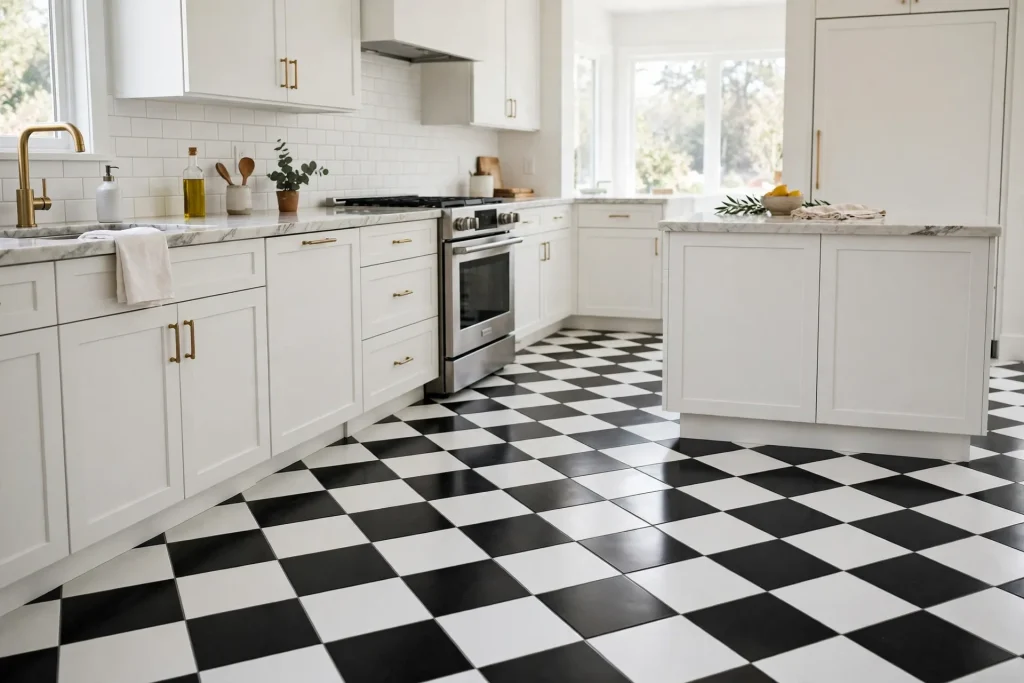
Black and white is classic, but checkerboard floors also look great in softer combos like cream and terracotta, or sage and white.
Lay tiles straight for a classic retro feel, or on the diagonal to create more visual movement in a small kitchen. Porcelain, vinyl, and natural stone versions are all available, so you can match the look to your budget.
Terracotta Floor Tiles
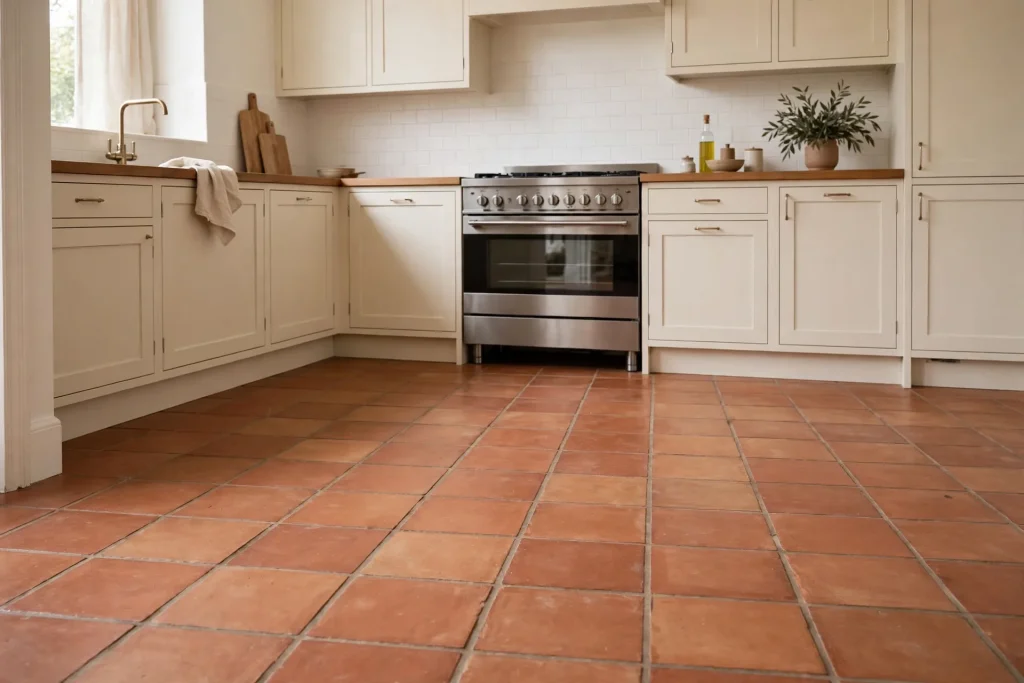
Terracotta floors feel warm and earthy underfoot. They suit farmhouse, Spanish, and Mediterranean kitchens.
Natural terracotta is porous, so it needs sealing to resist stains. Glazed or porcelain terracotta-look tiles are lower maintenance.
Microcement or Plaster Walls
A smooth, softly mottled plaster or microcement finish makes walls look handmade and calm. It pairs especially well with wood cabinets and simple, minimal hardware.
Plaster and microcement behave differently, so near the stove and sink, choose a finish specifically rated for the expected moisture and splashes. Follow the manufacturer’s sealing and cleaning instructions.
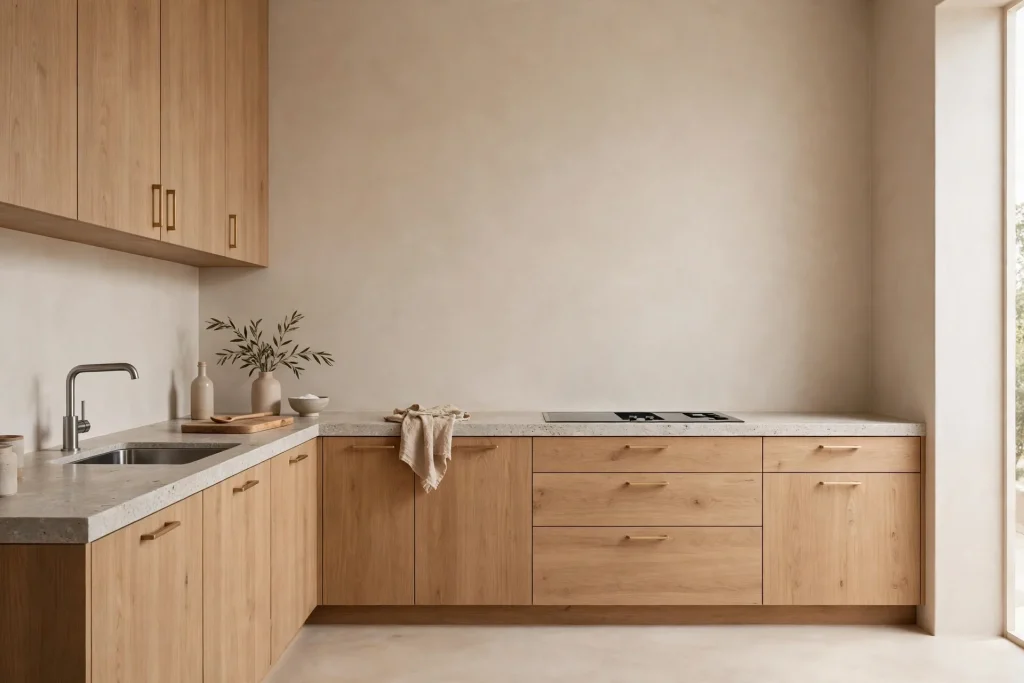
Beadboard Paneling
Beadboard adds cottage charm and texture. Use it on the island sides, along the lower walls, or even on the ceiling.
Paint it in a scrubbable eggshell or semi-gloss finish, since kitchens get splashed often.
Statement pieces (six ideas):
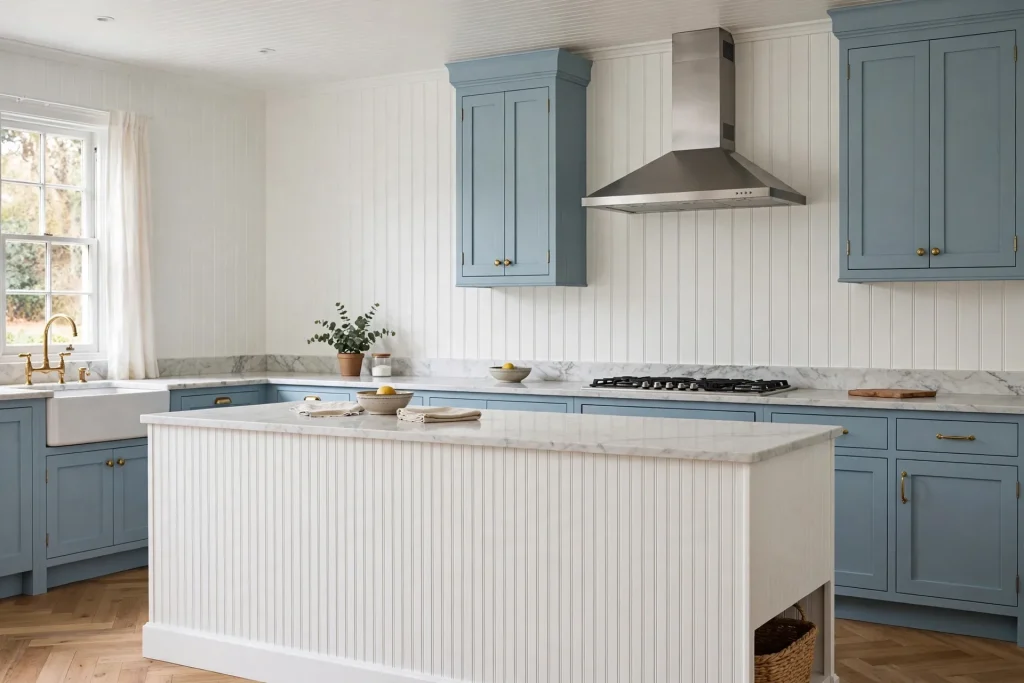
A Plaster Range Hood
A curved or tapered plaster hood over the stove looks sculptural and soft. It hides the ventilation insert inside while becoming the kitchen’s focal point.
Make sure the hood insert meets your cooking needs and is installed according to the manufacturer’s instructions. The design should allow access for maintenance and meet the insert’s clearance requirements.
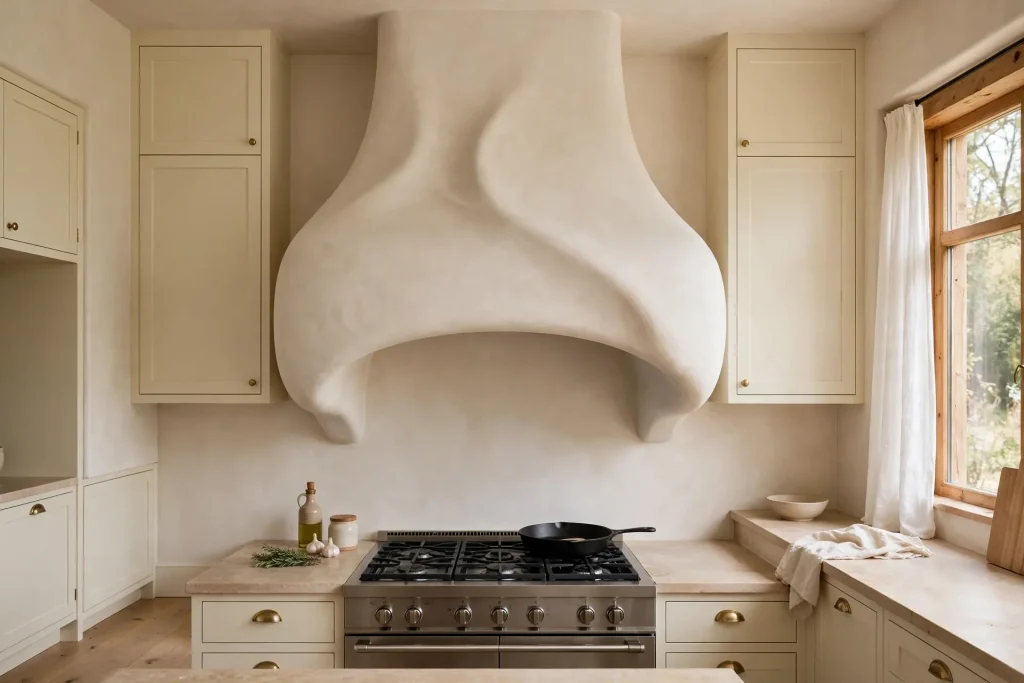
A Patterned Tile Panel Behind the Range
Instead of tiling the whole backsplash in a busy pattern, create a framed panel of decorative tile just behind the stove. It’s like hanging art where everyone looks.
Hand-painted, Moroccan-style, or vintage-inspired tiles all work. Keep the rest of the backsplash in a plain tile that picks up one color from the pattern.
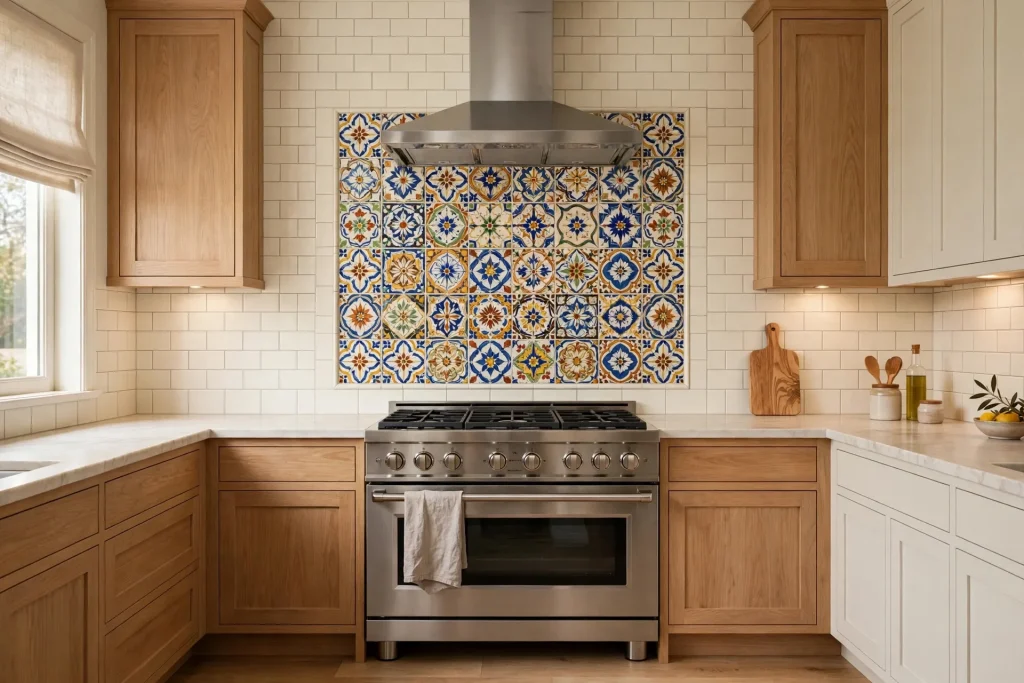
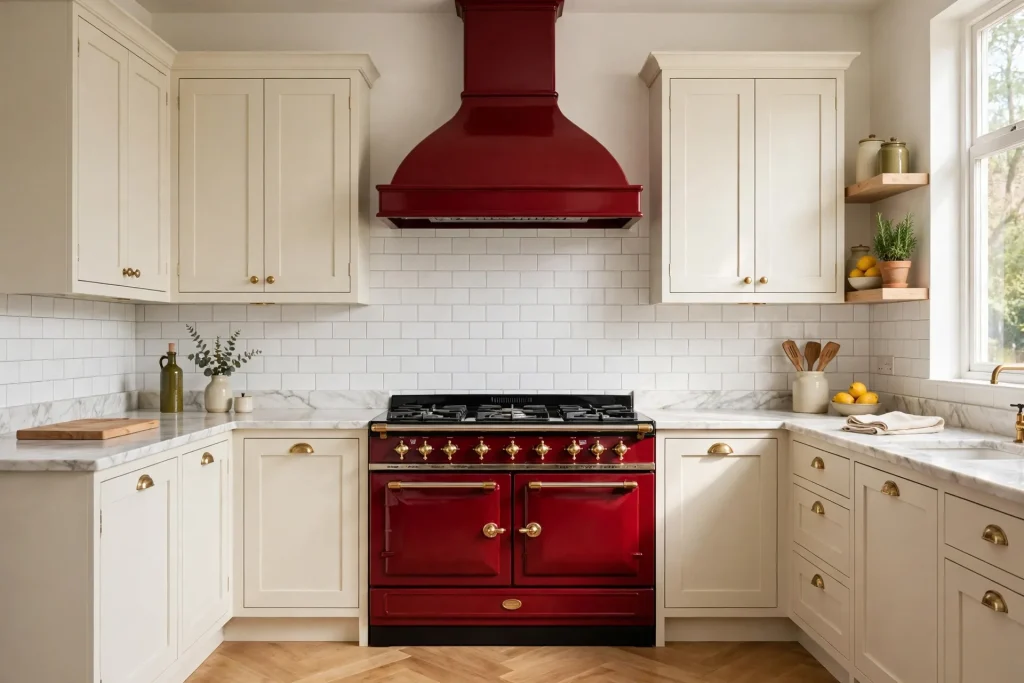
A Colorful Range
Ranges in red, green, blue, or cream instantly add personality. Pair a colored range with simple cabinets so it can shine.
A colorful range is a long-term choice, so pick a shade you’d be happy to see every day for years. Muted shades such as cream and deep green can be easier to live with long-term than very bright colors.
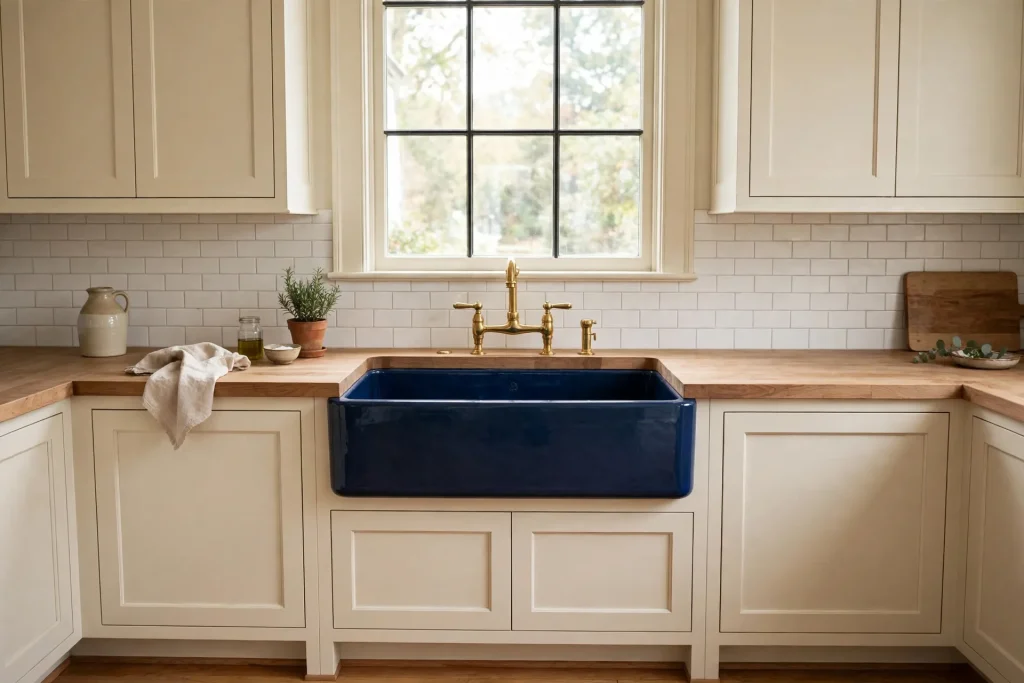
A Colored Fireclay Sink
Farmhouse sinks don’t have to be white. Fireclay sinks now come in soft greens, blues, and even black. A colored sink is a fun surprise in an otherwise neutral kitchen. Fireclay is tough and easy to wipe clean, though it can chip if heavy pans are dropped into it. Because fireclay sinks can be heavy, check that the supporting cabinet and installation suit the model.
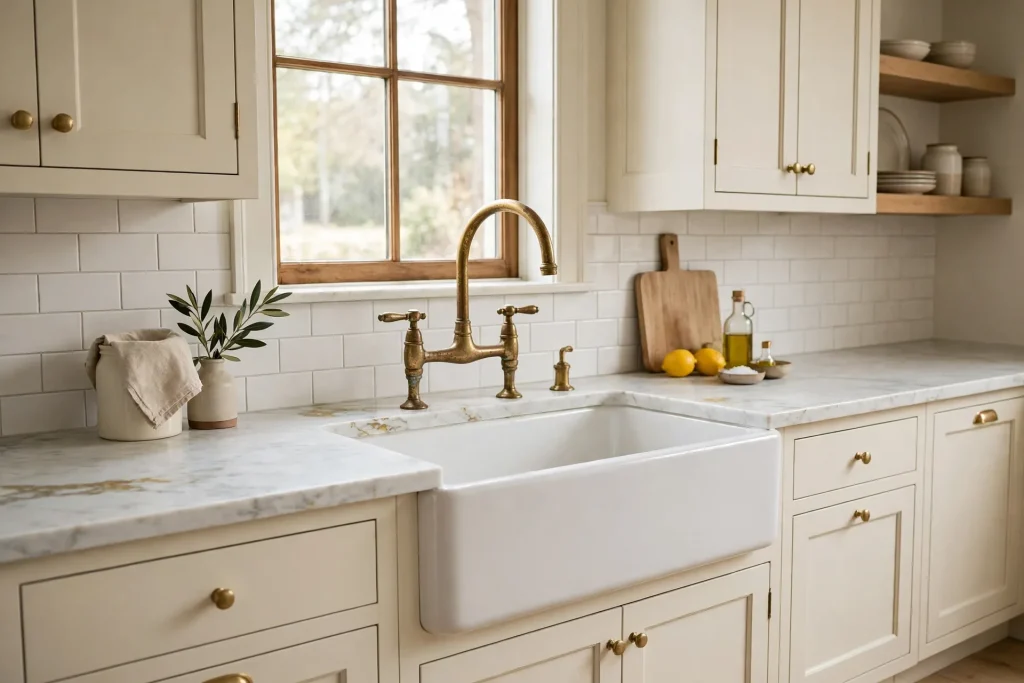
An Unlacquered Brass Bridge Faucet
A bridge faucet has two handles connected by a horizontal bar, giving a classic, almost vintage look. Unlacquered brass naturally darkens over time, which many people love.
If you prefer a consistently bright finish, expect to polish it regularly. Otherwise, let the brass develop its natural patina.
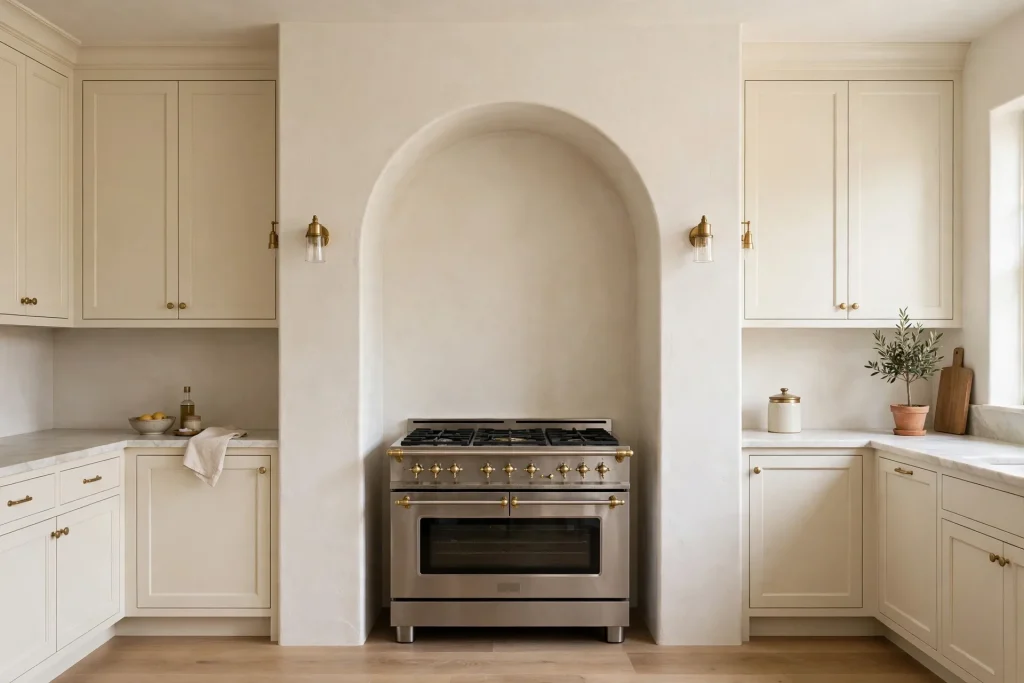
An Arched Range Alcove
Frame the stove inside an arched alcove of plaster or tile. It creates a cozy, European-style cooking nook.
This usually means building out the wall around the range, so plan it with a contractor and allow for ventilation and clearances.
Architectural details (six ideas):
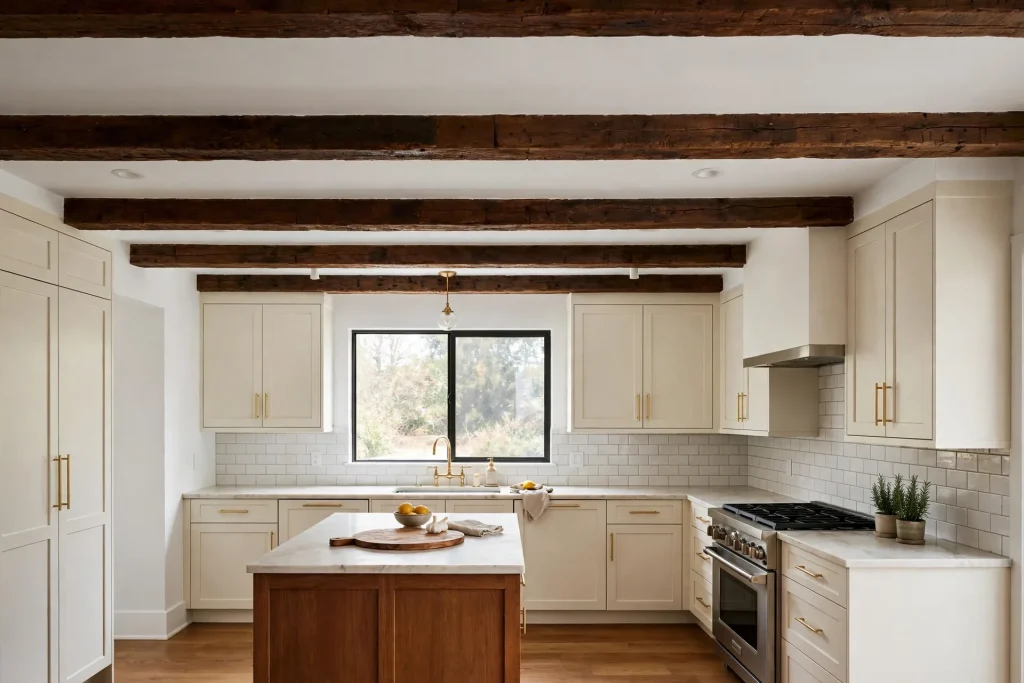
Exposed Ceiling Beams
Wood beams add warmth and character, especially in high or vaulted ceilings. Real beams are structural, while faux beams are lightweight and purely decorative.
Choose a wood tone that complements your floor or cabinets. Faux beams are a simpler option for most homes, while adding or exposing structural beams is a job for a builder or engineer.
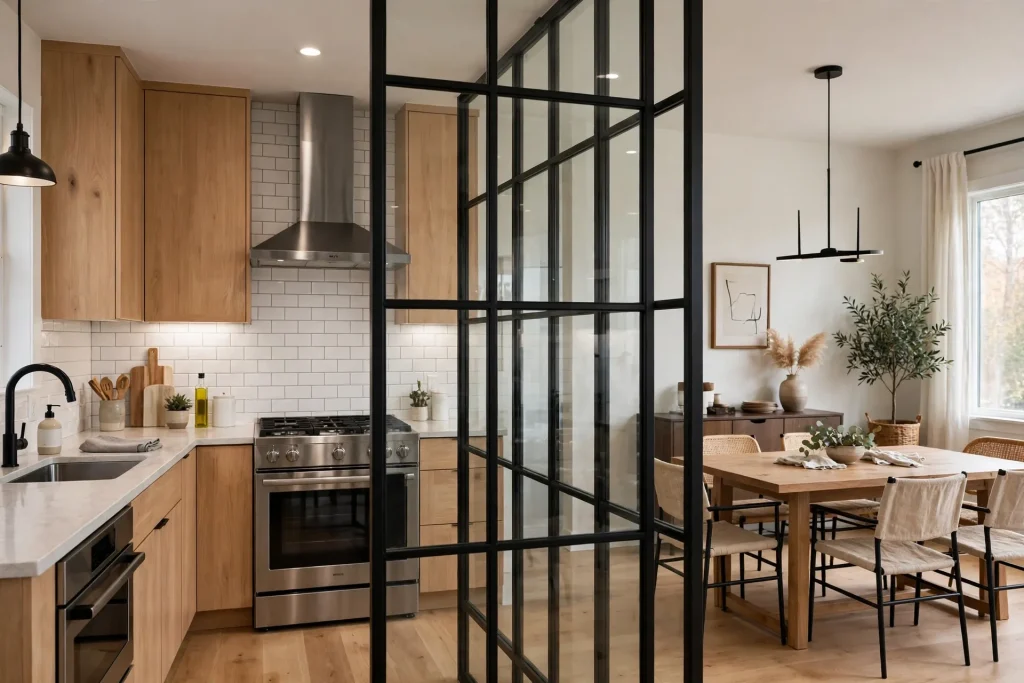
A Steel-Framed Glass Partition
Black steel-framed glass walls, often called Crittall-style, separate the kitchen from a dining or living space without blocking light. They can also help reduce the spread of cooking smells and noise, particularly when fitted with suitable seals.
Use safety glass and have the partition professionally installed.
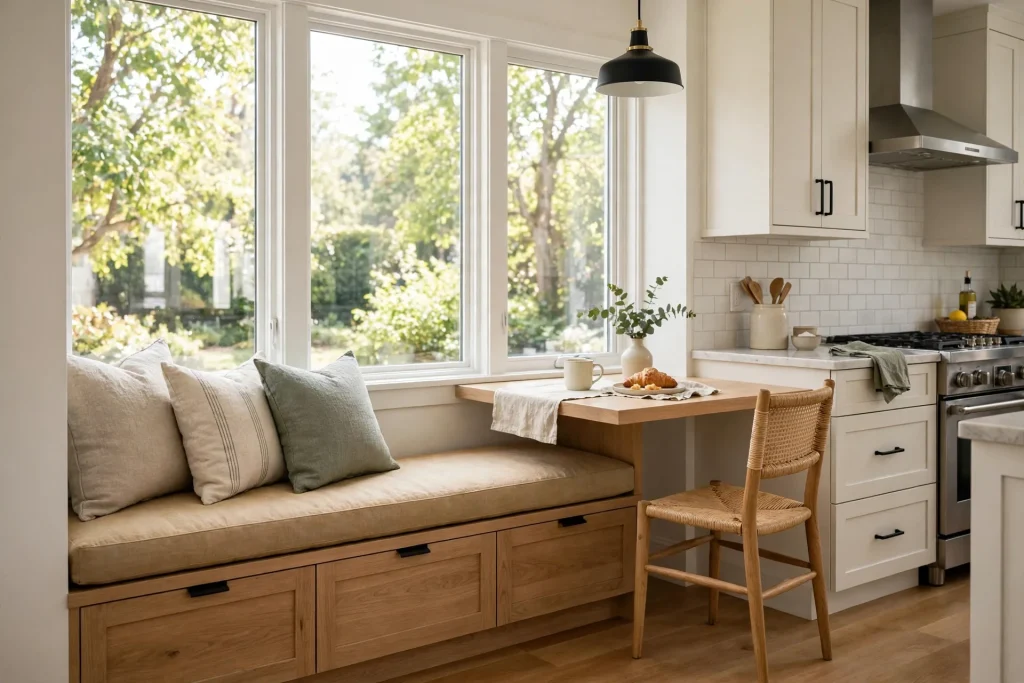
A Kitchen Window Seat
A built-in seat under a window gives you a cozy spot for coffee, reading, or chatting with whoever’s cooking. Add drawers underneath for storage.
Keep it far enough from the stove that cushions and fabrics stay safe.
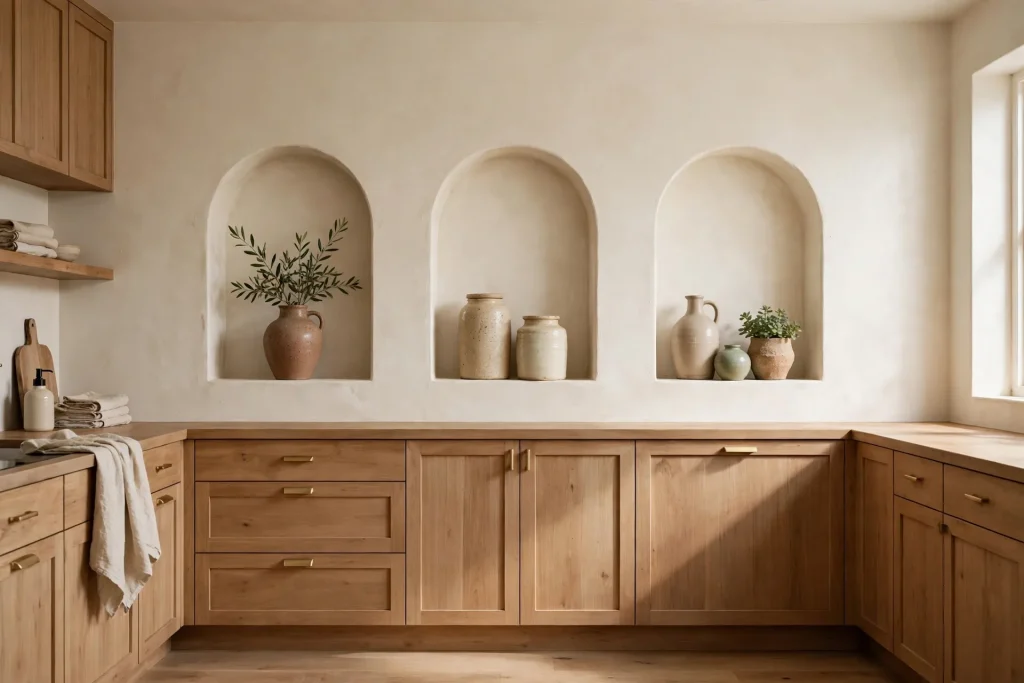
Built-In Plaster Niches
Small arched or rectangular niches built into the wall hold oils, spices, or a few favorite ceramics. They feel built-in and handcrafted, and they free up counter space. Niches are easiest to add during a renovation, when walls are already open, and should be planned around pipes and wiring.
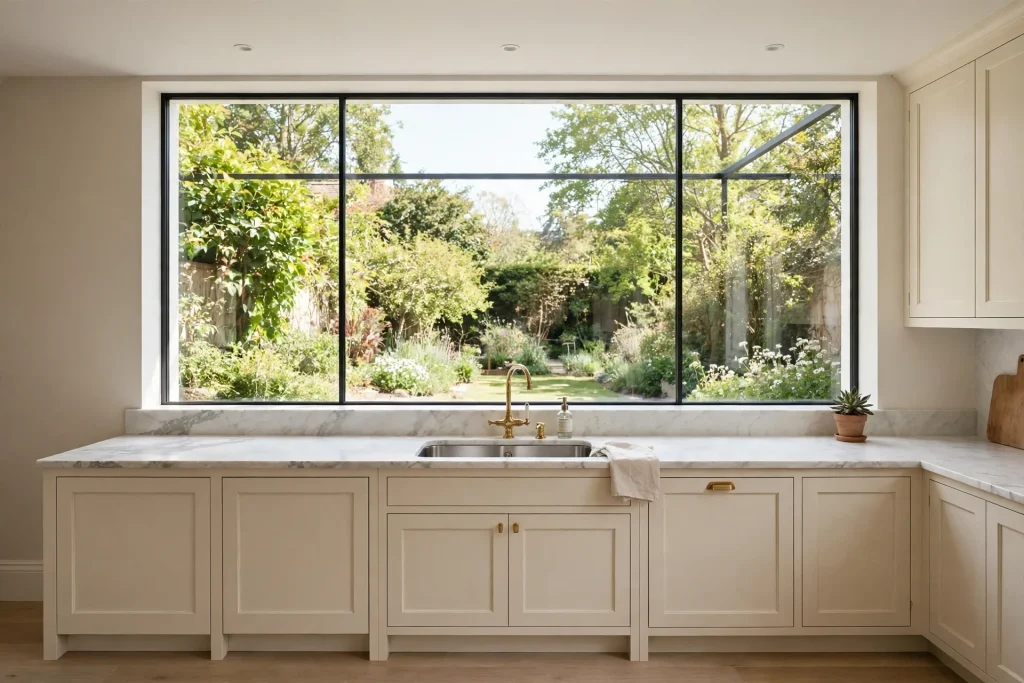
A Bigger Window Over the Sink
If you’re renovating, consider widening the window above the sink. More daylight changes how the whole kitchen feels.
Check with a builder about structural support, and in some areas, building permits.
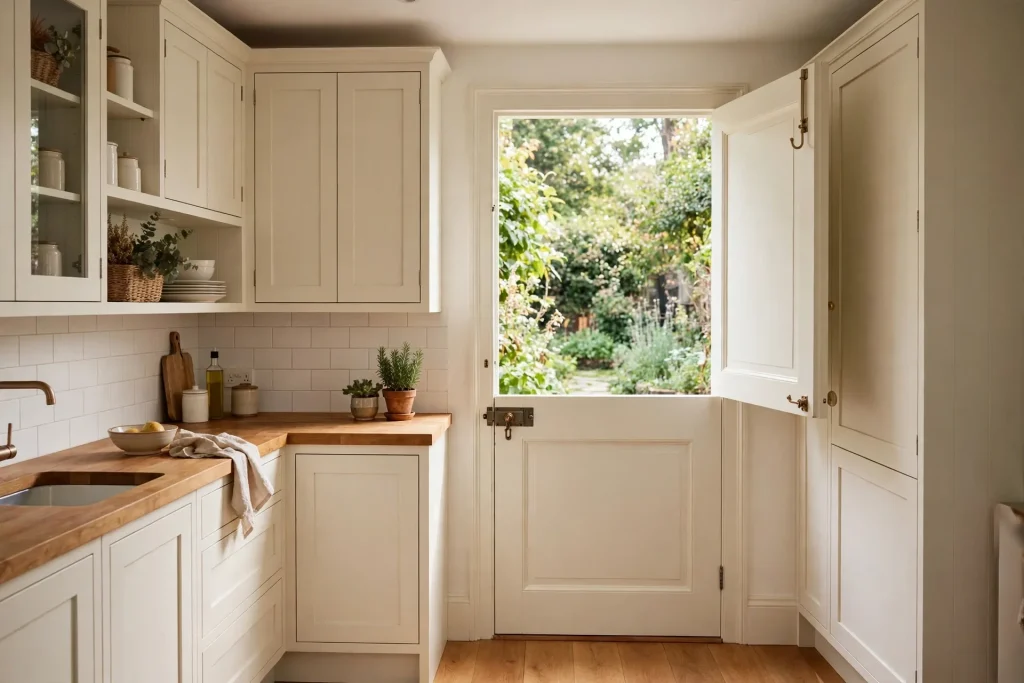
A Dutch Door to the Garden
A Dutch door splits horizontally, so you can open the top half for fresh air while keeping the bottom closed. It’s charming in country kitchens and can act as a partial barrier while the top half is open. Add a suitable safety latch if children or pets are around. Paint it a cheerful color, like sage or soft blue, so it becomes a feature from the garden side too.
Finishing touches and styles (six ideas):
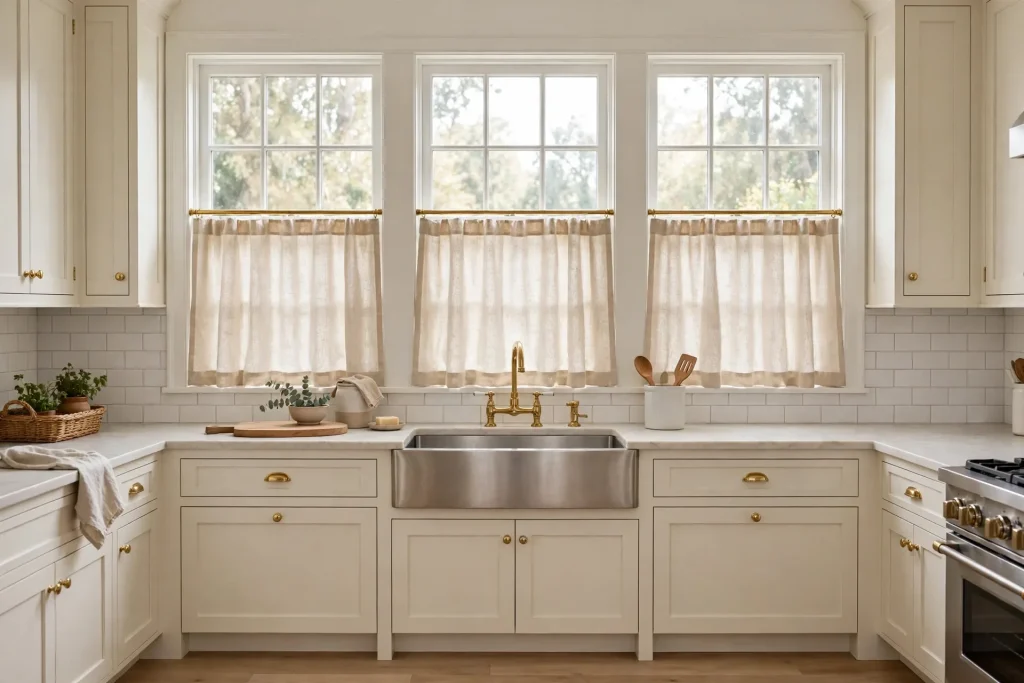
Café Curtains
Short curtains on the lower half of the window give privacy while letting in light. Linen, gingham, or a soft floral fabric all suit cottage and vintage-inspired kitchens.
Keep fabric well away from the stovetop.
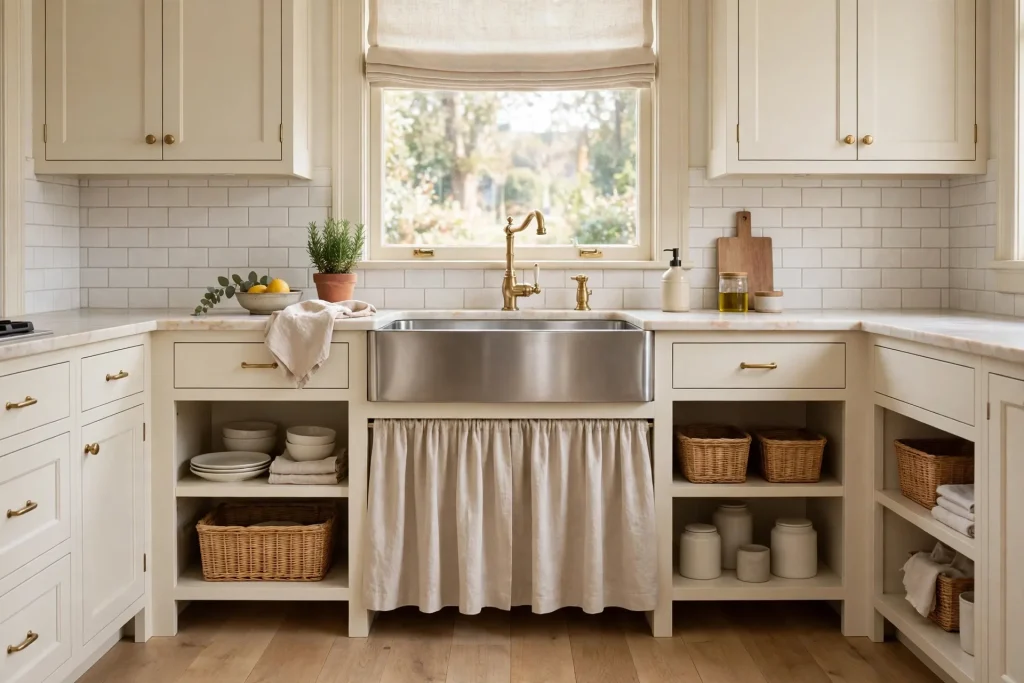
Skirted Lower Cabinets
Swapping a cabinet door for a fabric skirt on a slim rod adds softness and a relaxed, vintage feel. It works especially well under a sink.
Choose washable fabric, since it will get splashed.
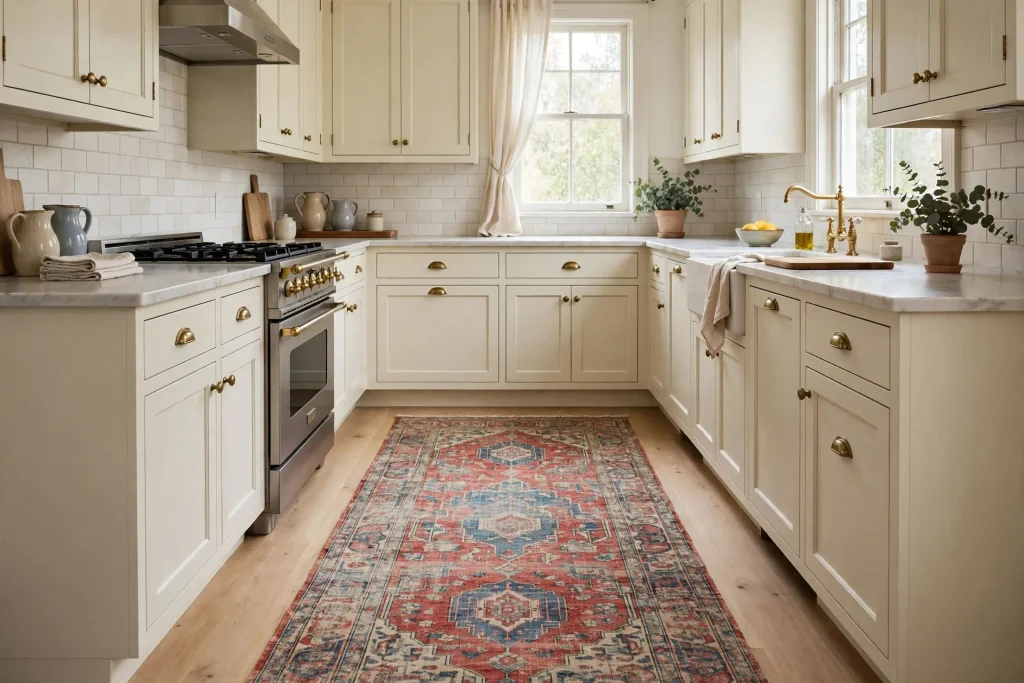
A Vintage Runner Rug
A long, washable runner in front of the sink adds color, pattern, and comfort underfoot. Vintage-style or flat-woven rugs are easy to clean.
Use a non-slip rug pad to prevent slips.
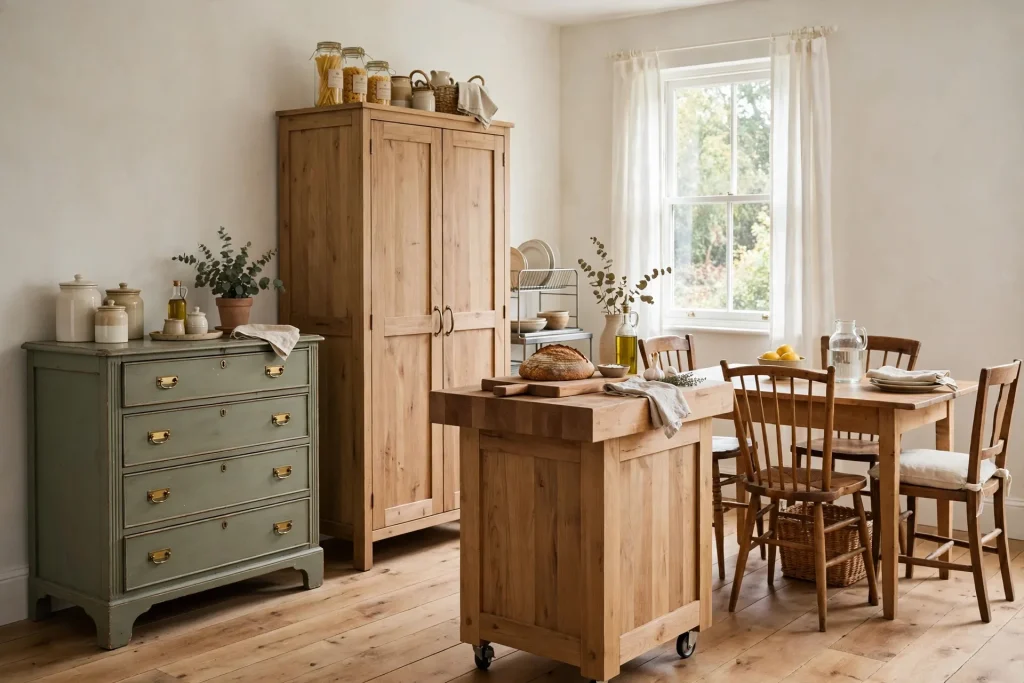
An Unfitted Kitchen
Instead of matching cabinets everywhere, an unfitted kitchen mixes freestanding pieces like a hutch, a dresser, a butcher-block table, and open shelves.
It gives the kitchen a collected-over-time feel and suits older homes particularly well. Anchor tall freestanding pieces to the wall to prevent tipping.
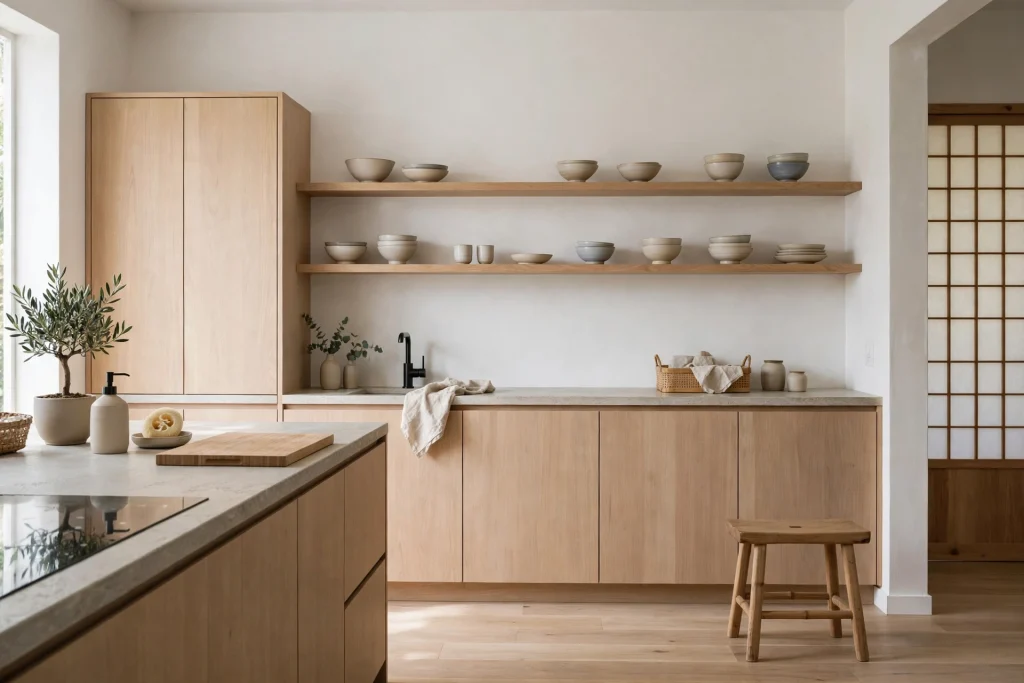
A Japandi Kitchen
Japandi blends Japanese calm with Scandinavian simplicity. Think pale oak, handleless or slim pulls, stone-colored surfaces, and very little on the counters.
A ceramic vase with a single branch is often all the decoration it needs. Closed storage matters here, since the look depends on clear, uncluttered surfaces.
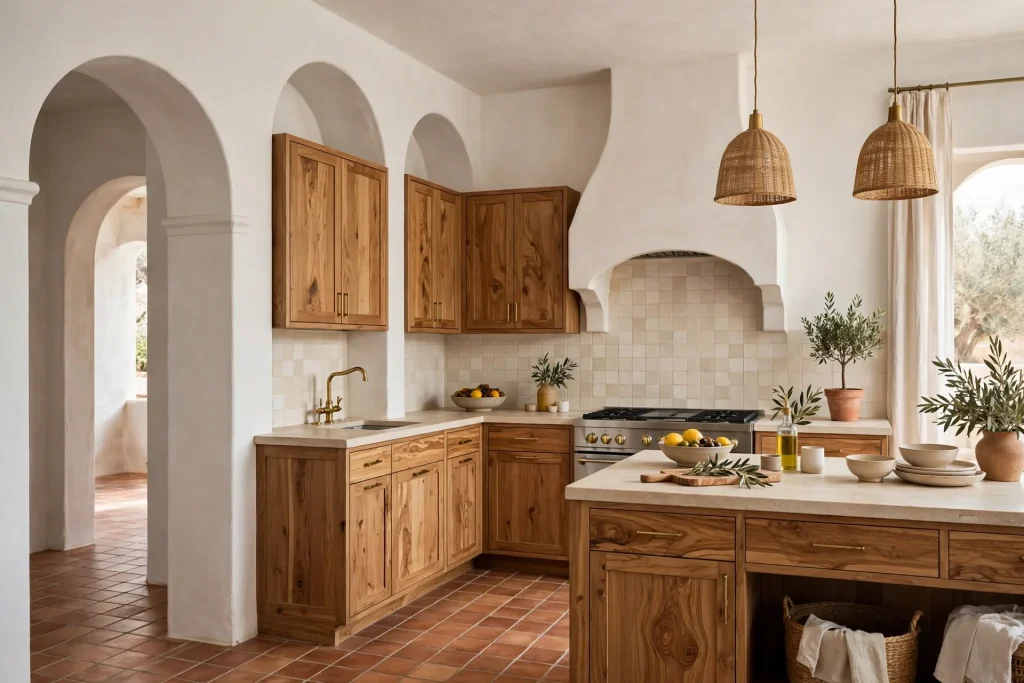
A Modern Mediterranean Kitchen
Warm white walls, terracotta tones, natural wood, and a few rustic ceramics create a relaxed, sun-warmed kitchen.
An olive tree in a pot near a sunny window adds a final Mediterranean touch.
How to Combine Ideas Without Overdoing It
With 30 kitchen interior ideas to choose from, it’s tempting to try them all. Like most good kitchen design ideas, these work best in small, considered combinations. A simple formula helps.
Choose one color idea. This sets the mood.
Add one surface idea. A floor, a counter, or a wall finish.
Finish with one statement piece and one soft touch. For example, a plaster hood and café curtains.
Some combinations that work well:
- Butter yellow cabinets, checkerboard floor, and café curtains
- Deep green cabinets, honed soapstone, and an unlacquered brass faucet
- Tonal greige, microcement walls, and a plaster hood
- Terracotta tones, terracotta floor, and an arched range alcove
Making It Work in a Small Kitchen
Keep the palette light or tonal. A one-color kitchen feels calm and larger.
Go bold in small doses. A colored sink, a patterned panel, or a vintage runner adds personality without overwhelming.
Use pattern on the floor. A diagonal checkerboard adds movement without taking up any space.
A Real-Life Example
Imagine a dated 1990s kitchen with oak cabinets, beige tile, and a laminate counter. The layout works fine, so the owners don’t want to move anything.
They paint the cabinets a soft butter yellow and replace the hardware with brass knobs. A cream-and-sage checkerboard vinyl floor goes down over the old tile, following the manufacturer’s guidance. Linen café curtains replace the heavy blinds, and a vintage runner sits by the sink.
The layout and counters stay the same, yet the kitchen feels bright, cheerful, and completely new.
Budget at a Glance
Costs vary a lot by location and materials, but these rough tiers can help you plan.
Smaller budget: paint, café curtains, a runner rug, skirted cabinets, or a new faucet.
Medium budget: a new sink, beadboard paneling, a patterned tile panel, or a tonal paint scheme across cabinets and walls.
Larger budget: new counters or floors, a plaster hood, a glass partition, beams, or a bigger window.
Many ideas can be done in stages, so start with color and add bigger pieces later.
Kitchen Design Mistakes to Avoid
Following trends you don’t love. If you won’t enjoy a color in five years, choose something calmer.
Choosing high-maintenance finishes for a busy kitchen. Natural stone, unlacquered brass, and plaster need care.
Forgetting the floor. It’s one of the biggest surfaces in the room.
Ignoring safety. Keep fabrics away from heat, and hire professionals for structural, gas, and electrical work.
Questions About Kitchen Interior Ideas
What color is best for a kitchen?
It depends on your light and style. Warm whites and greige are safe choices, while greens, blues, and soft yellows add personality.
How can I update my kitchen without remodeling?
Paint cabinets, change hardware, add a runner rug, hang café curtains, or swap the faucet. These simple kitchen decor ideas make a big difference for a small cost.
Are dark kitchens a good idea?
Dark kitchens can feel cozy and elegant, especially with good lighting and warm materials like wood and brass.
What flooring is best for kitchens?
Porcelain tile, sealed terracotta, luxury vinyl, and some engineered woods are popular because they handle spills well.
Can I mix different styles in one kitchen?
Yes. Keep one consistent element, such as a color palette or a repeated material, to tie the styles together.
Start With the Kitchen You Pictured
Remember that kitchen you imagined at the start? Pick the two or three ideas that match it most closely, and start there.
Good kitchen interior ideas don’t need to happen all at once. A new color this month, a faucet next season, and a runner rug when you find the right one can slowly turn an ordinary kitchen into one that feels truly yours.