Your Room, Your Story: 12 Dorm Room Inspiration Ideas Based on How You Actually Live
Walk down any dorm hallway in the first week of the semester and you’ll notice something. Most rooms look almost the same. The same twin beds, desks, beige walls, and strings of fairy lights.
Then you pass one room that feels completely different. Maybe there’s a guitar on the wall and records by the bed. Maybe it’s a tiny art studio. You can tell exactly who lives there before you even meet them.
That’s the kind of room this guide is about.
Instead of picking a color scheme or a trendy aesthetic, these 12 ideas start with you: your hobbies, your routine, and the way you like to spend your time. Use them as dorm room inspiration, mix two together, or borrow one small detail. Every idea works with standard dorm furniture and a student budget.
Rules That Apply to Every Idea
Before you buy anything, check your housing guide. Every campus has different rules, and it’s much easier to plan around them than to argue with an RA later.
Common things to check:
- Whether nails, screws, or adhesive hooks are allowed on walls
- Which electrical items are banned, like hot plates, space heaters, or certain extension cords
- Whether candles, incense, or open flames are allowed (usually they’re not)
- Rules about lofting beds or moving furniture
- Whether fabric hangings and tapestries need to be flame-resistant
- Rules on portable appliances, approved power strips, and attaching anything to ceilings, doors, or windows
- Furniture placement rules, including keeping exits and walkways clear
Use removable hooks and strips rated for the weight of each item, and test one in a hidden spot first, since some painted walls peel easily. Measure your desk, bed, and floor space before buying organizers or stools, and keep the path between beds and the door clear.
For creative personalities (four ideas):
The Film Buff’s Screening Room
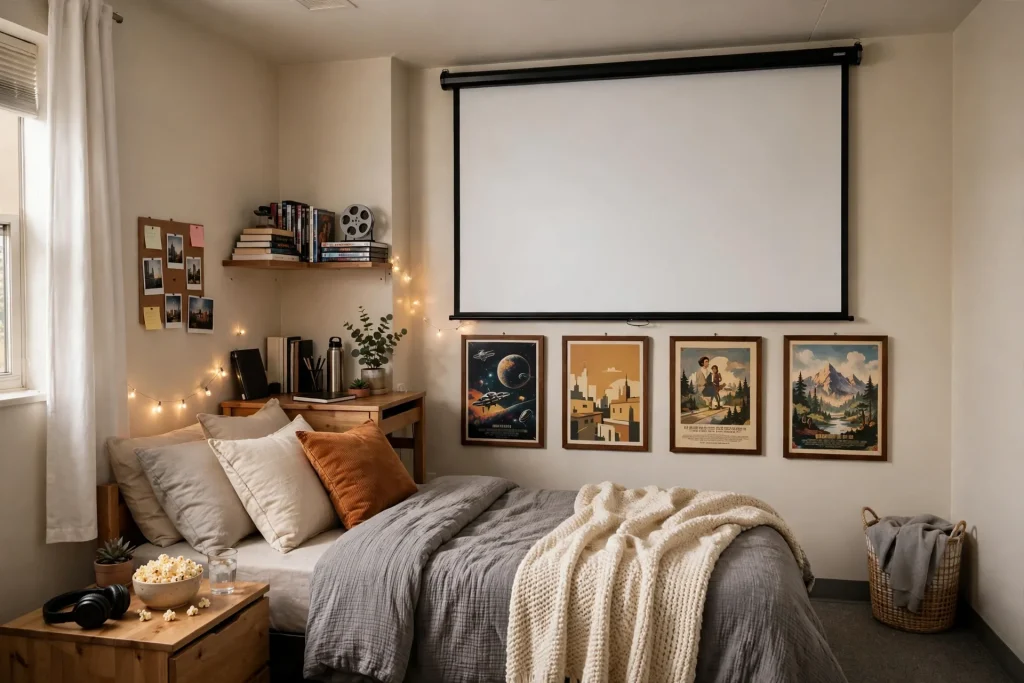
If movie nights are your thing, turn your room into a mini cinema.
Start with a small, portable projector and a blank wall or a lightweight pull-down screen. Many students simply hang a plain white sheet. Make sure it’s securely supported, doesn’t block sprinklers or smoke detectors, and comes down without damaging the wall.
If a projector isn’t practical, a laptop stand, tablet holder, or small TV on an approved desk setup creates the same movie-night feel.
Make it feel like a theater:
- Frame two or three posters from your favorite films
- Add a big floor cushion or bean bag in front of the bed
- Keep a basket for popcorn bowls, blankets, and snacks
- Hang blackout curtains so you can watch during the day
Place the projector on a stable, hard surface and leave the clearance its manufacturer recommends around all vents. Never cover the vents or run it on bedding.
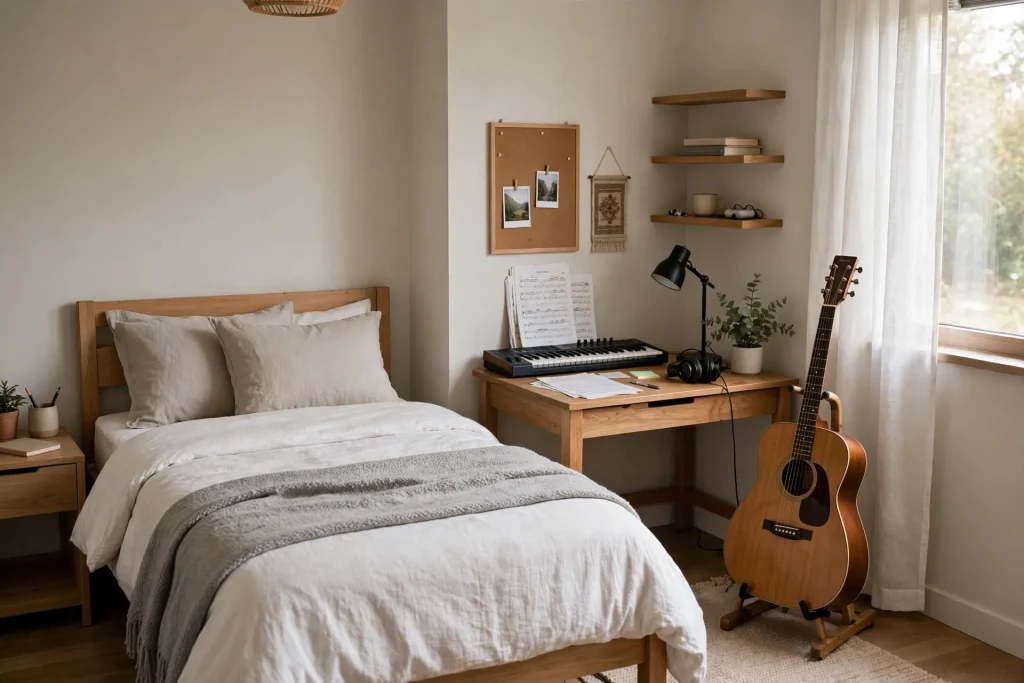
The Musician’s Corner
Instruments deserve to be seen, not stuffed under the bed.
A guitar or ukulele hanger turns your instrument into decor. Use one designed for your instrument, and mount it only with an approved, secure method, since removable adhesive hooks usually can’t hold a guitar safely. If wall mounting isn’t permitted, choose a stable floor stand.
Add a small rug under your practice spot to soften the sound, plus a shelf or crate for sheet music, cables, and picks. A few framed concert tickets or album covers complete the look.
Be a good neighbor: check your dorm’s quiet hours, and use headphones with electric instruments or a keyboard. Many campuses also have practice rooms you can book.
The Working Art Studio
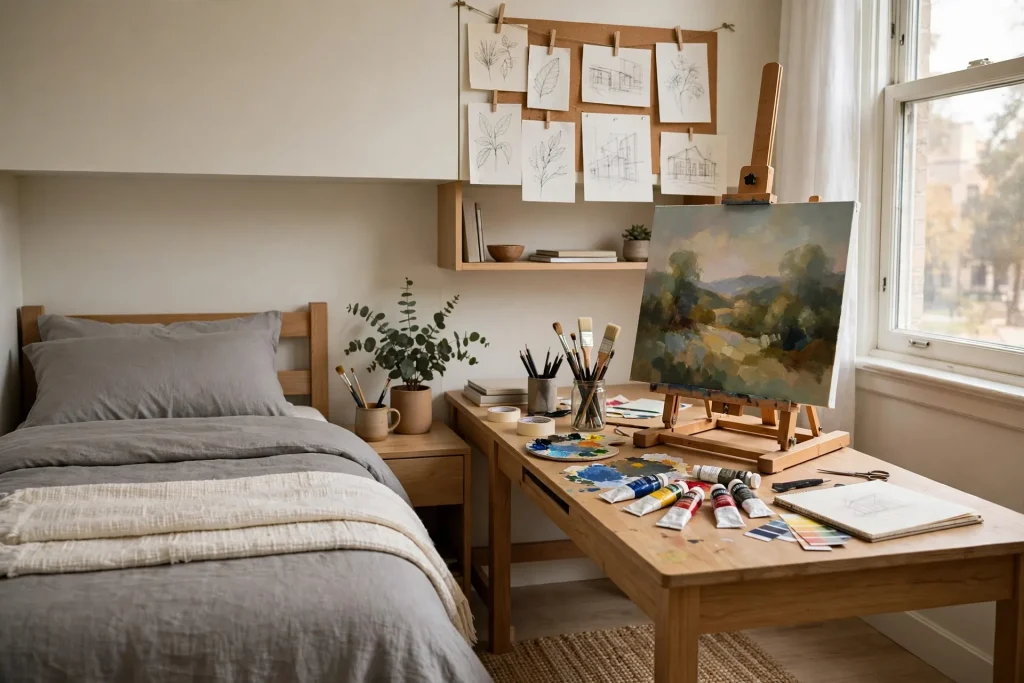
Some rooms are made to be looked at. Others are made to be used. An art studio dorm is both.
Set up a creative corner near the window for the best natural light. A tabletop easel, a rolling cart for supplies, and a clear cup for brushes keep everything within reach.
Protect the room:
- Lay a washable mat or drop cloth under your work area
- Choose water-based paints and markers, which are easier to clean, and check labels and campus rules for anything that needs ventilation, like solvents or sprays
- Store supplies in labeled bins, so the mess stays contained
Display your own work above the desk using removable clips or a wire grid. When you finish a new piece, swap it in. Your walls tell the story of your semester.
The Writer’s Journaling Nook
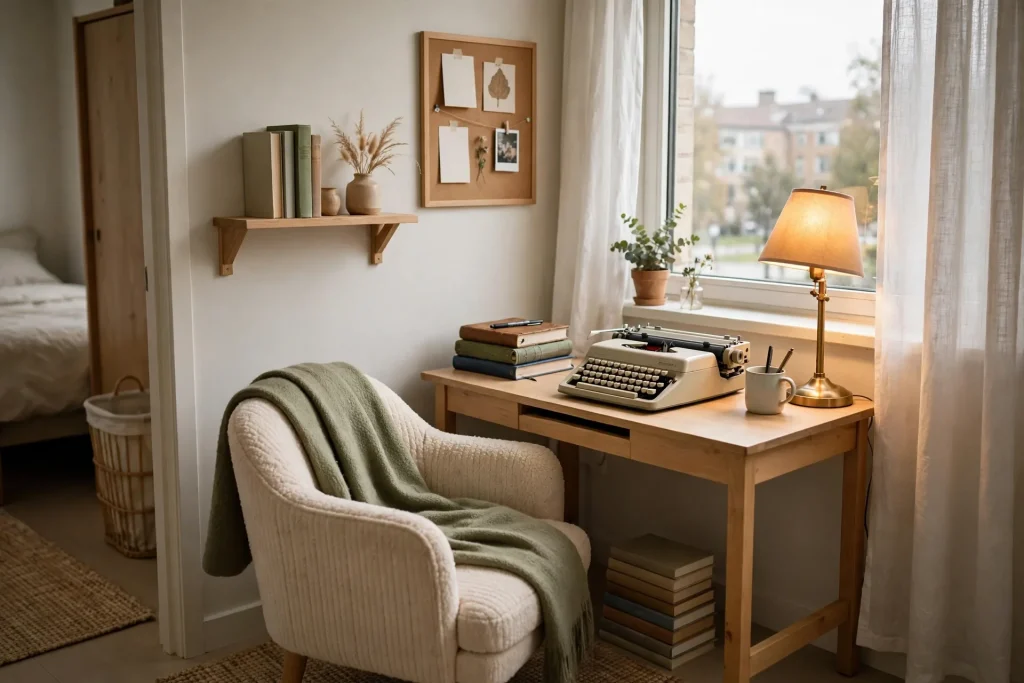
If you love writing, journaling, or quietly reading before bed, create a small spot just for that.
Pick a comfy chair if you have space, or simply a supportive cushion on your bed, and add a lap desk, a warm reading lamp, and a basket for notebooks and pens. A small corkboard or letter board nearby is perfect for quotes, ideas, or story notes.
It doesn’t need much space. What makes it feel special is that it’s used for one thing: putting thoughts on paper.
For active and social students (three ideas):
The Athlete’s Gear-Ready Room
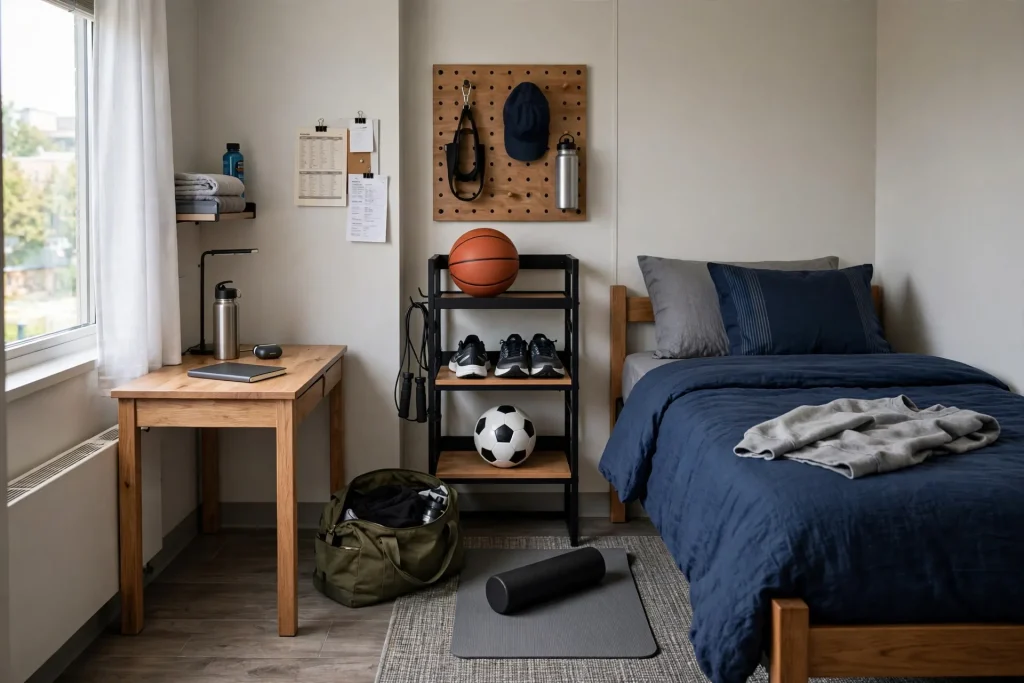
Sports gear has a way of taking over a dorm room. Sneakers by the door, a gym bag on the chair, a yoga mat rolled under the desk.
Give everything a proper home.
An over-the-door organizer holds shoes and small gear. A sturdy hook rack (if allowed) or a freestanding coat stand handles bags and jackets. A tall basket keeps yoga mats, foam rollers, and resistance bands standing upright.
Bonus tip: put a small, washable rug or boot tray by the door for muddy or sweaty shoes, and keep a mesh laundry bag for workout clothes. Let damp gear dry fully before storing it, and wash workout clothes regularly rather than leaving them in a packed bag.
A framed team photo, race bib, or jersey makes the room feel personal rather than like a locker room.
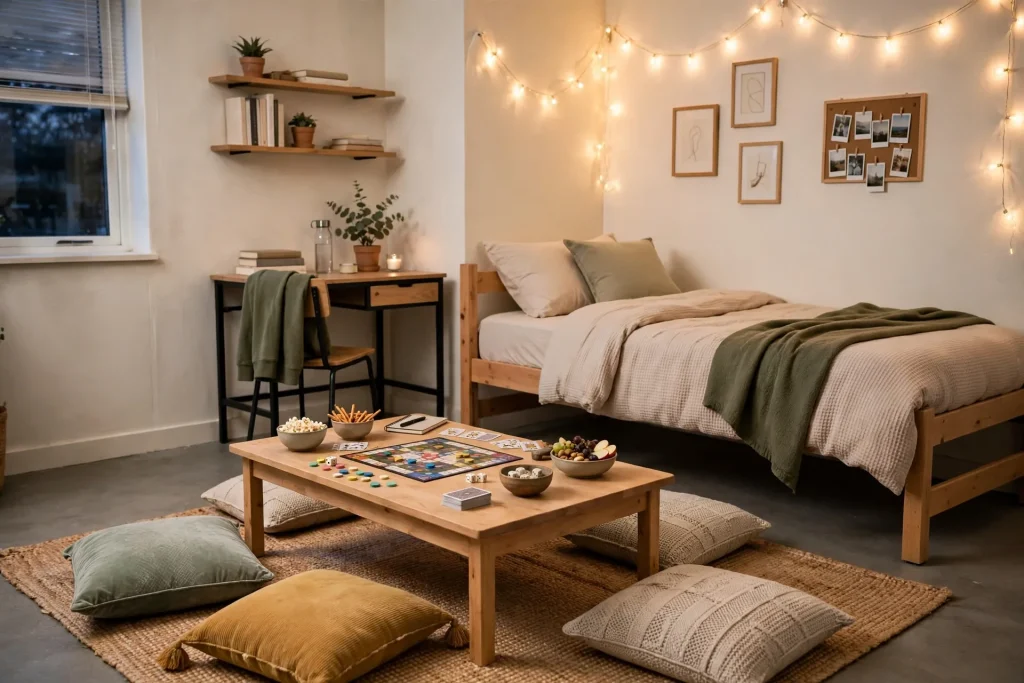
The Game Night Host
If your room is where friends gather, plan for it.
Board games and card games stack neatly on a shelf or in an under-bed bin. A folding lap table or a large tray turns the floor or bed into a game surface.
Easy upgrades:
- A few stackable stools or floor pillows that store away
- A puzzle board that slides under the bed, so you can pause a puzzle
- A small speaker for background music
Keep snacks in a lidded container, since crumbs attract pests quickly. Check with your roommate before turning your shared room into the weekly hangout spot.
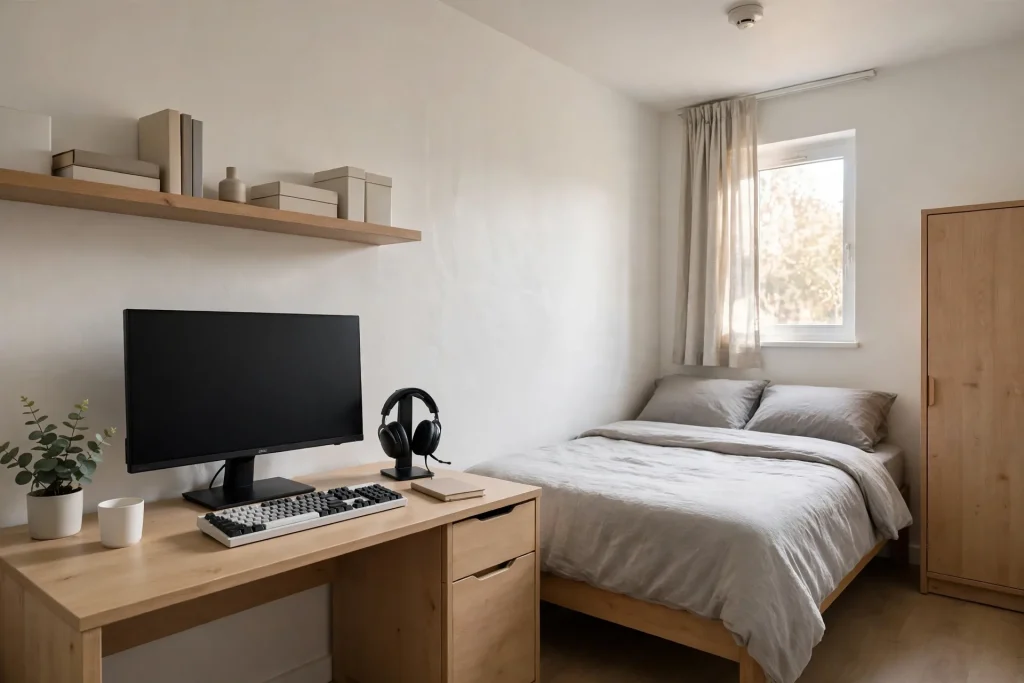
The Gamer’s Clean Setup
A well-organized gaming setup can look sharp without making the room feel cluttered.
The biggest improvement often comes from better cable management. Use cable sleeves and clips, and keep wires away from walking paths. Check your housing rules before bringing a power strip. If permitted, use an approved, properly rated model, and never plug one power strip into another.
Choose a monitor that fits your desk without crowding it, use headphones during quiet hours, and keep lighting soft so it doesn’t disturb your roommate.
Finishing touches:
- A desk mat that covers most of the desk surface
- A monitor riser with storage underneath
- A headphone stand to keep headsets off the desk
Keep it tidy, and a gaming corner can look surprisingly calm, even with a big monitor.
For different daily routines (three ideas):
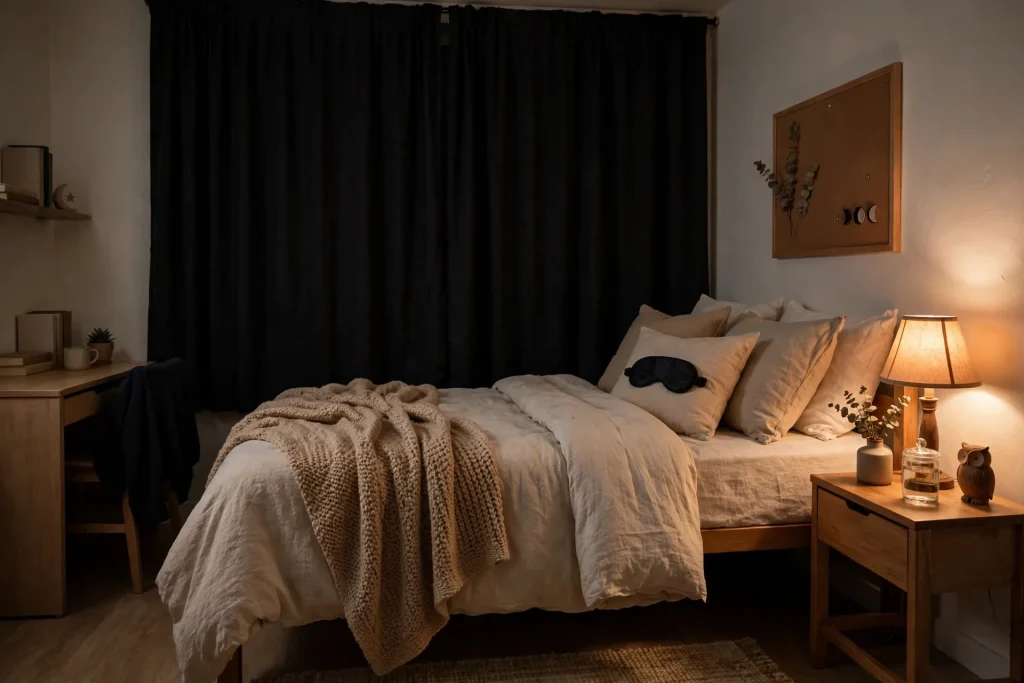
The Night Owl’s Sleep Sanctuary
Late nights are part of college life, but good sleep still matters.
If you tend to stay up late, set your room up so it’s easy to wind down whenever bedtime comes.
Helpful additions:
- Blackout curtains or a clip-on blackout panel that meet campus fire rules and don’t cover heaters, sprinklers, smoke detectors, or required windows
- A warm, dimmable lamp instead of harsh overhead lights
- A white noise machine or fan to cover hallway sounds
- A comfortable sleep mask and earplugs
Choose soft, deep colors for bedding, like navy, plum, or charcoal, which feel calm at night.
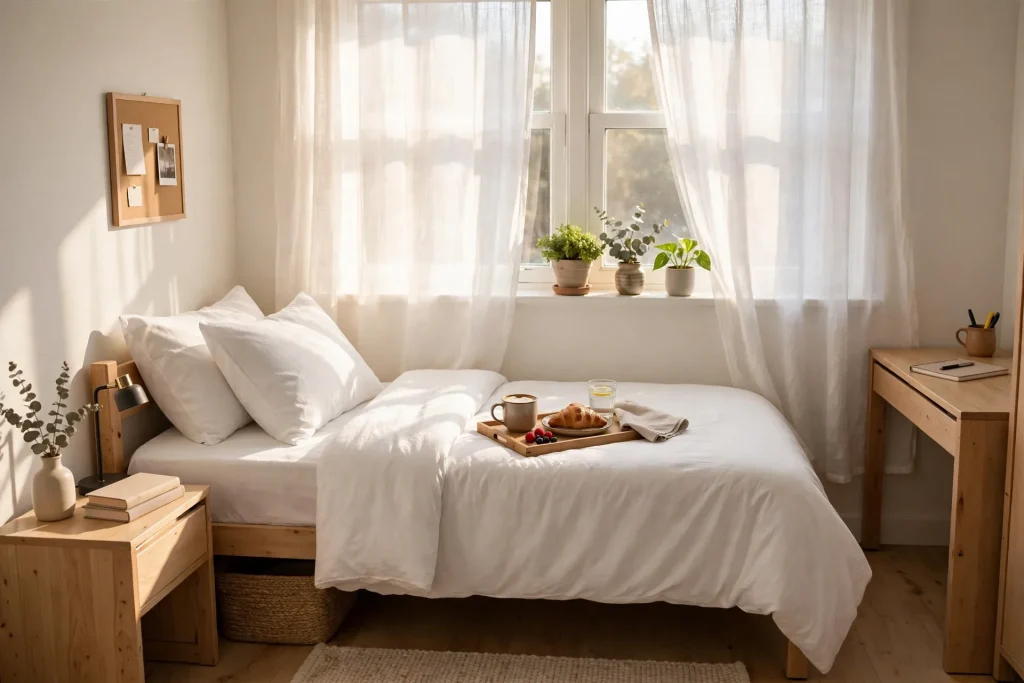
The Early Riser’s Bright Morning Room
Some people love early classes and quiet mornings. If that’s you, design for daylight.
Position your desk near the window so you get natural light while studying. Pale bedding, a light rug, and a mirror that reflects sunlight help the room feel bright.
A sunrise alarm clock, which slowly brightens before your alarm goes off, can make waking up feel gentler. If you’d like a coffee or tea station, check exactly which appliances your hall permits. Approval for one appliance doesn’t mean similar ones are allowed.
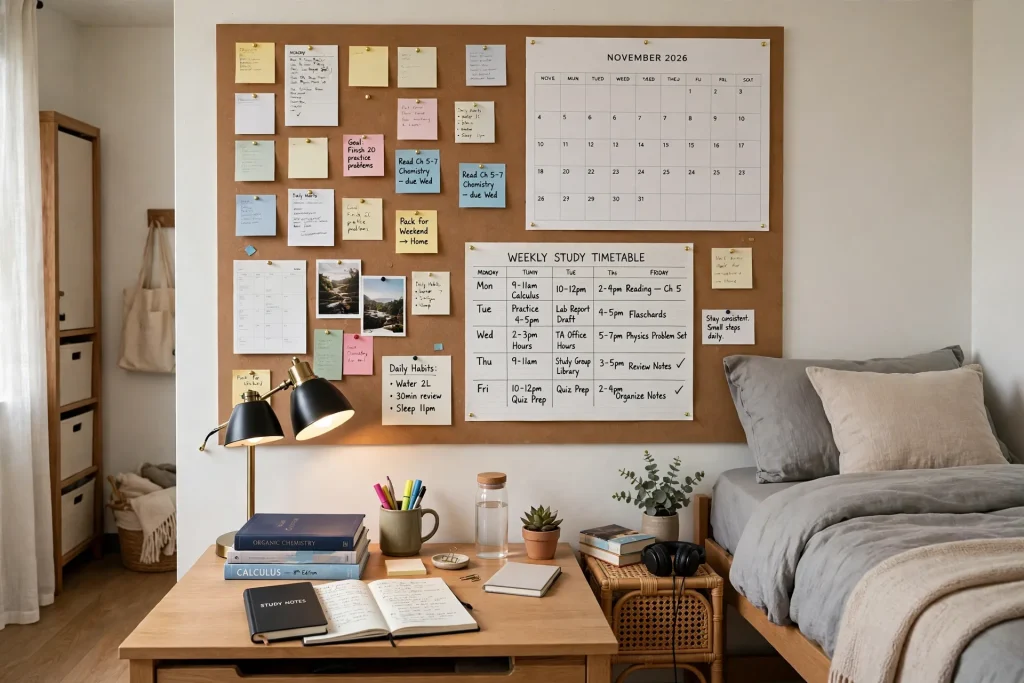
The Study Strategist’s Planning Wall
If you love lists, plans, and color-coded calendars, give them a wall.
A large removable whiteboard sheet or freestanding whiteboard turns available space into a planning center. Add a monthly calendar, a weekly to-do list, and an exam countdown.
Organization ideas:
- Color-code each class with a different marker
- Use magnetic or clip-on pockets for important handouts
- Keep sticky notes for quick reminders
- Clear the board every Sunday and plan the new week
It keeps deadlines in view, so nothing sneaks up on you. If you share the room, keep the board on your side.
For students who value sustainability and personal space (two ideas):
The Thrift-Flip Room
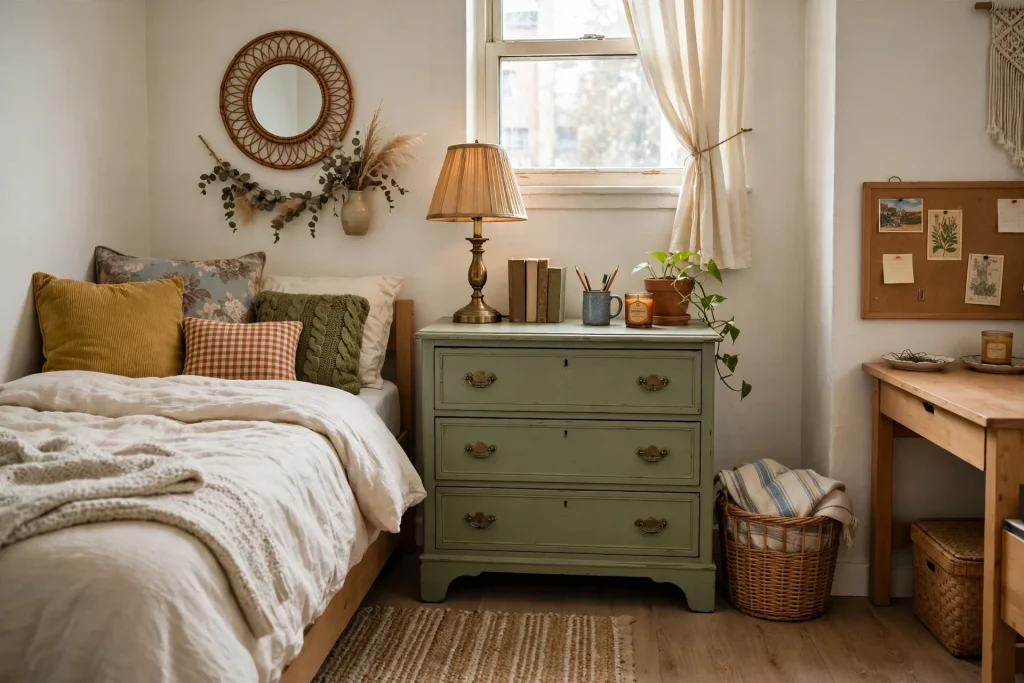
Who says dorm decor has to be new?
A thrifted room is budget-friendly, sustainable, and full of character. Look for vintage lamps, framed art, mismatched mugs, baskets, and quilts at secondhand stores and campus swap events.
Small DIY projects make thrifted finds feel personal. Paint a picture frame, add a new lampshade, or sew simple pillow covers from vintage fabric.
Clean secondhand items thoroughly, especially fabric pieces. Inspect thrifted lamps for damaged plugs, loose sockets, frayed cords, and exposed wiring, and skip any electrical item that looks damaged.
The Introvert’s Retreat
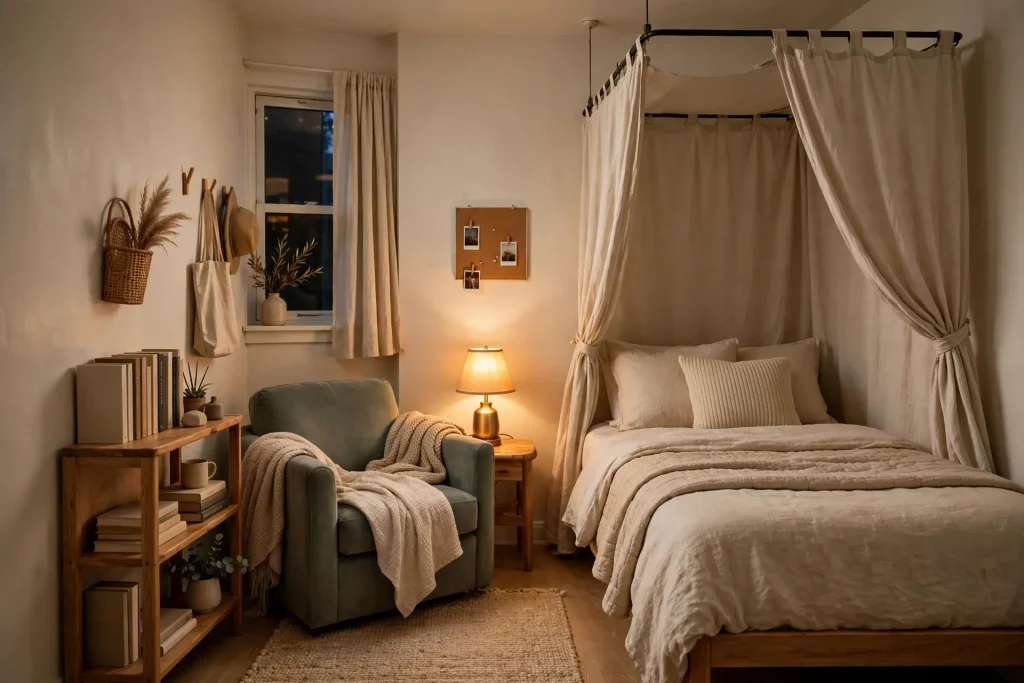
Sharing a small room can feel draining if you need quiet time to recharge.
Create a personal retreat on your side of the room. A bed canopy or a lightweight curtain hung from a clamp-on rod gives you a cozy, tucked-away feeling. Add soft pillows, a reading lamp, and noise-canceling headphones on a hook nearby.
Talk with your roommate about quiet times or signals, like headphones on meaning “please don’t disturb.” Clear communication makes sharing much easier.
Check that canopies and hanging fabric meet campus fire rules. Keep the curtain easy to open, away from lamps and heat, and clear of doors, windows, vents, sprinklers, and smoke detectors.
Mixing Two Ideas Together
You don’t have to pick just one. Many of the best rooms combine two ideas.
Some combinations that work well:
- The film buff and the game night host for a social entertainment room
- The early riser and the study strategist for a focused, productive space
- The night owl and the introvert’s retreat for a calm, cozy hideaway
- The artist and the thrift-flipper for a colorful, one-of-a-kind room
Choose one idea as your main theme and borrow a few details from the second. That keeps the room from feeling crowded.
Keeping It Affordable
Turning dorm room inspiration into a real room doesn’t have to cost much. A few habits help a lot.
Start with what you own. Posters, blankets, books, and hobby gear from home often do most of the decorating for free.
Buy the useful pieces first. Storage, lighting, and bedding make the biggest daily difference. Decorative extras can wait.
Shop after move-in. Once you see the room, you’ll know exactly what fits and what doesn’t.
Check campus groups. Many schools have swap events or online groups where students sell lamps, rugs, and shelves cheaply at the end of each year.
Plan for move-out. Choose removable decor and storage that packs easily and could work in an apartment later.
A Real-Life Example
Imagine a sophomore who plays guitar, loves movies, and shares a small double room.
On her side, a guitar sits on a sturdy floor stand beside the bed. Two framed movie posters sit above the desk. A portable projector lives on a shelf and comes out on Friday nights, pointing at a plain white sheet that’s securely hung and well clear of the smoke detector.
The rest of the room stays simple, with neutral bedding and a shared rug. Her roommate’s side has a reading nook, and the two styles sit happily together.
The room feels personal without feeling overcrowded, and friends always know where movie night is happening.
Common Dorm Decorating Mistakes
Buying everything before move-in. Wait until you see the room and meet your roommate. You may need less than you think.
Ignoring the rules. Banned appliances or damaged walls can lead to fines.
Forgetting your roommate. Shared spaces work best with a little planning and compromise.
Choosing looks over comfort. A beautiful room that’s hard to sleep or study in won’t feel good for long.
Your Questions, Answered
How do I find dorm room inspiration that fits me?
Start with what you love doing, like music, art, sports, or movies. Then build your room around that activity.
How can I decorate a dorm room without damaging the walls?
Use removable hooks, strips, and clips rated for the weight of each item. Leaning art and freestanding shelves are also wall-friendly.
How do roommates with different styles share a dorm?
Choose a few shared neutral items, like a rug or curtains, and let each person style their own side.
What should I bring to make my dorm feel personal?
Photos, posters, a favorite blanket, a few meaningful objects, and items connected to your hobbies.
Are projectors allowed in dorms?
Many dorms allow them, but always check your housing rules about electronics and power strips.
Make It Feel Like You
The best dorm room inspiration doesn’t come from copying a photo exactly. It comes from looking at your own life and asking what would make your days easier and more fun.
Pick one idea that matches who you are, add a few personal touches, and let the room grow with you over the semester.