Beyond Plain White Doors: 11 Wardrobe Aesthetic Ideas That Make the Whole Bedroom Prettier
Here are three bedrooms you might recognize. One has a flat white wardrobe that looks like an office cupboard. Another has a flat-pack wardrobe that was meant to be temporary four years ago. The third has a nice wardrobe buried under suitcases.
If any of those sound familiar, the good news is that a wardrobe doesn’t have to be boring, and making it beautiful doesn’t always mean buying a new one. The ideas below range from weekend updates to bigger built-in projects. Each of these wardrobe aesthetic ideas changes how the wardrobe looks, and in turn, how the whole bedroom feels.
Why the Wardrobe Sets the Mood
In most bedrooms, the wardrobe is the biggest piece of furniture after the bed. Sometimes it’s even bigger.
That means it has a huge effect on the room’s style. A heavy, dark wardrobe can make a room feel smaller. A bright, glossy one can feel cold. A thoughtfully finished wardrobe, on the other hand, can pull the whole space together.
Before choosing an idea, ask yourself two quick questions:
What feeling do you want? Calm and soft, elegant and classic, or warm and cozy?
How much change can you make? Renters and anyone on a budget may prefer reversible updates. Homeowners planning a renovation can go further.
Easy weekend updates (five ideas):
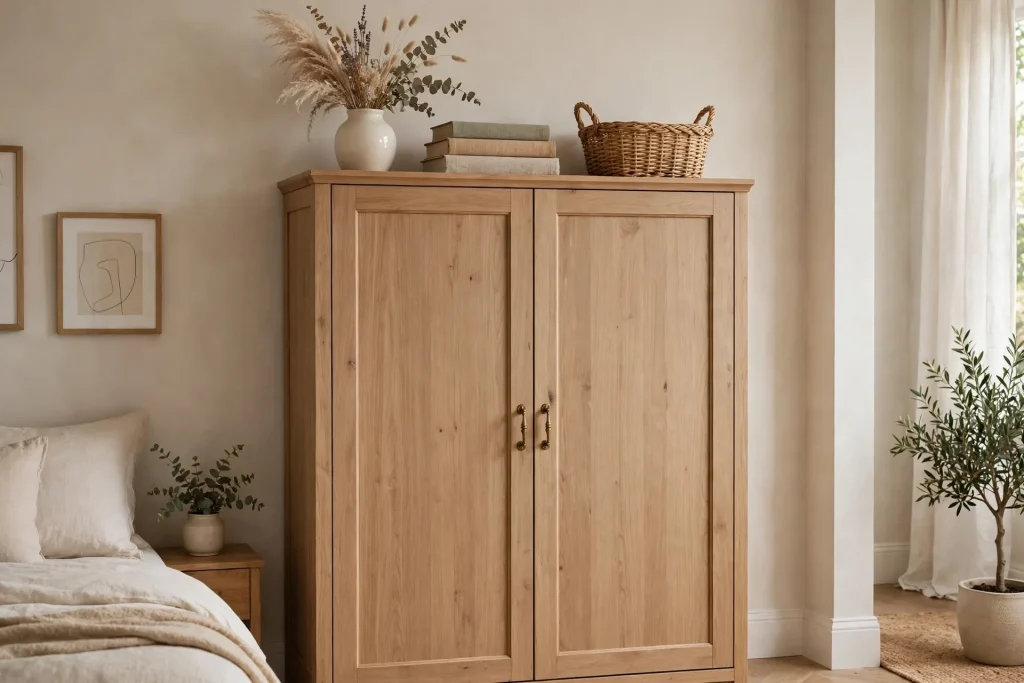
Style the Top of the Wardrobe
The top of a wardrobe often becomes a dumping ground. Suitcases, shoe boxes, and random bags pile up and make the room feel messy.
Turn that space into a styled shelf instead.
What works well:
- Matching woven baskets or lidded boxes for out-of-season items
- Two or three large storage boxes in the same color as the wardrobe
- A trailing faux plant to soften the edge
Keep it simple and repetitive. Three matching baskets create a more cohesive look, while ten different containers look cluttered.
Don’t stack anything heavy or breakable where it could fall, especially in rooms with children or in earthquake-prone areas.
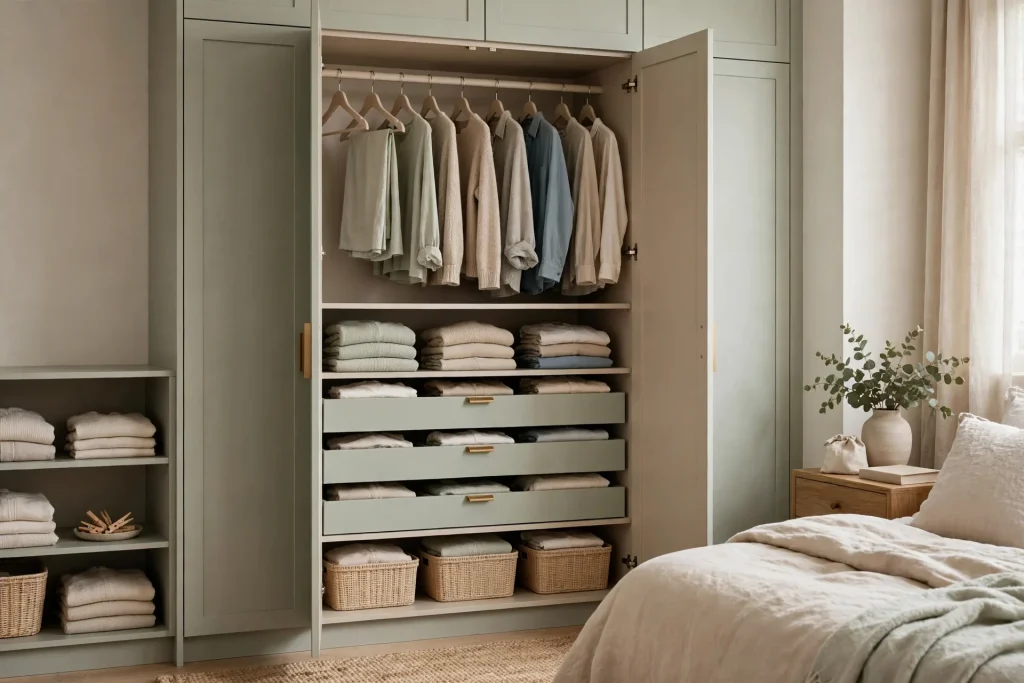
Create a Coordinated Interior
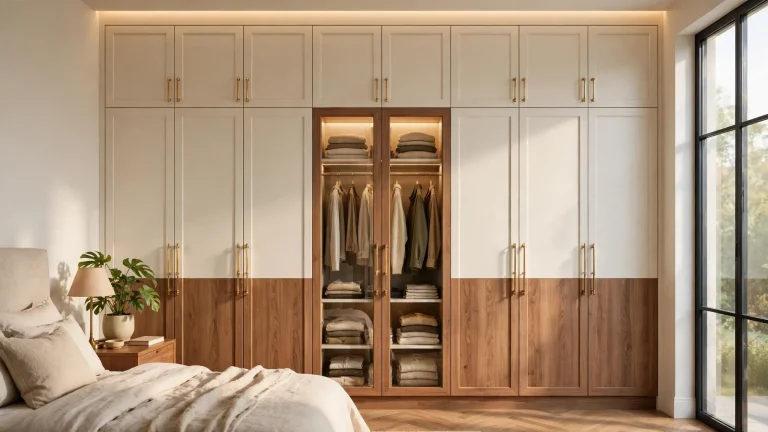
If your wardrobe has open sections or glass doors, the inside is part of the decor.
A coordinated interior makes even a plain wardrobe feel boutique-like. Start with matching hangers, since mixed plastic, wire, and wooden ones look chaotic.
Then try these small touches:
- Hang clothes by color, from light to dark
- Fold sweaters into neat stacks of similar height
- Use the same storage boxes or fabric bins on every shelf
- Add small labels for drawers or bins if you like order
It’s satisfying to open the doors every morning to something that looks calm and organized. Slim velvet hangers also save space, since they take up less width than chunky plastic ones.
Add a Linen Curtain Front
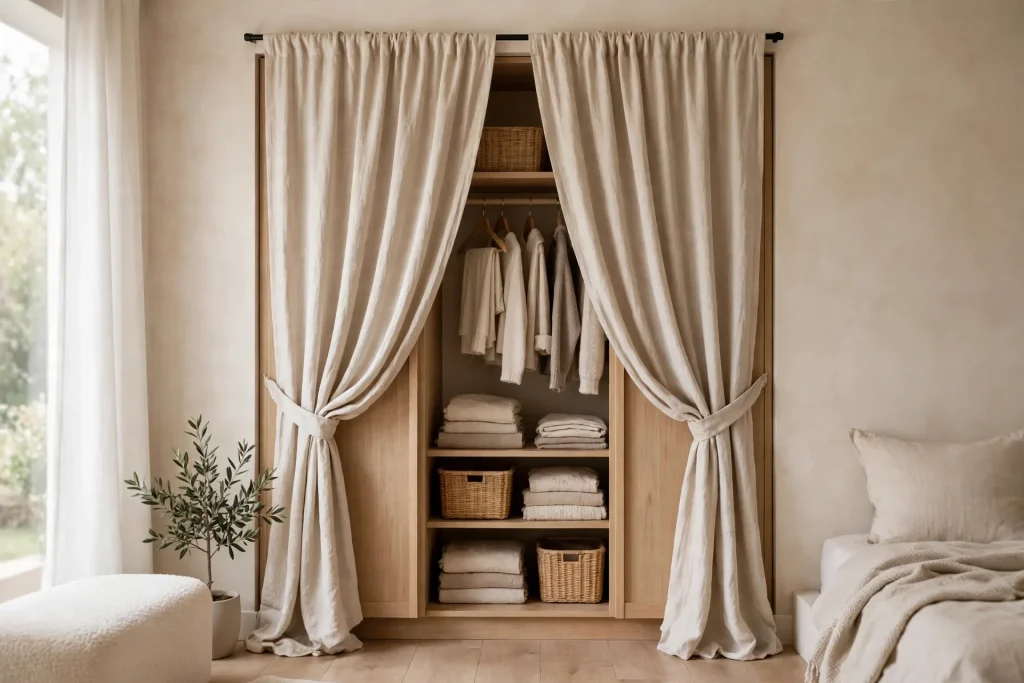
Not every wardrobe needs solid doors. A linen curtain hung from a ceiling-mounted track can soften the look of an open rail or a wardrobe with missing or ugly doors.
Curtains feel relaxed and airy, a little like a boutique changing room or a seaside cottage.
Tips for a polished look:
- Mount the track on the ceiling, so the curtain falls from the very top
- Choose a length that just kisses the floor
- Choose fabric measuring about 1.5 to 2 times the width of the opening, so it falls in soft folds
- Pick a natural color, like oatmeal, ivory, or soft gray
This can be a renter-friendly option if your lease allows ceiling-mounted hardware, since removing a track can leave small holes. For a no-drill alternative, try a tension rod or a freestanding curtain frame if the opening allows it.
Add Scalloped Trim
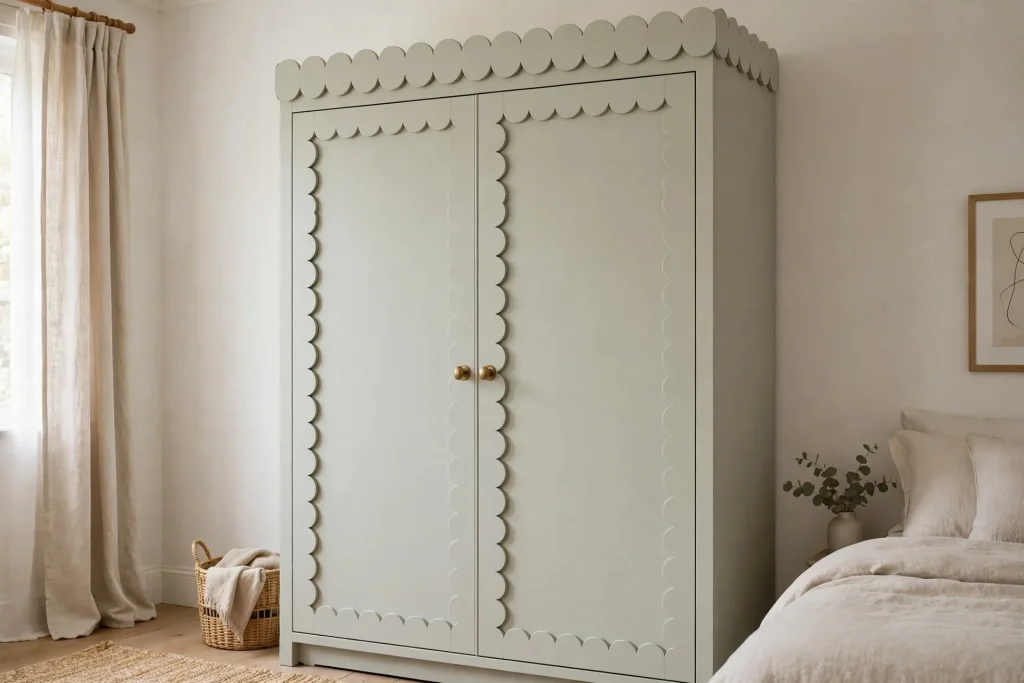
Scalloped edges are a sweet, playful detail that has become very popular in bedroom design.
You can add scalloped wooden trim along the top or bottom edge of a wardrobe, or around the doors. Pre-cut trim strips are available from many craft and DIY stores.
Paint the trim the same color as the wardrobe for a subtle effect, or a contrasting color for something bolder. A soft-pink wardrobe with cream-colored scalloped trim, for example, feels gentle and charming.
For a permanent update, use an adhesive suited to both the trim and the wardrobe surface, plus small finishing nails where suitable. If you rent, choose lightweight trim and removable products rated for that material and weight. Before fitting, check that the trim won’t stop doors or drawers from opening freely.
Light It From the Inside
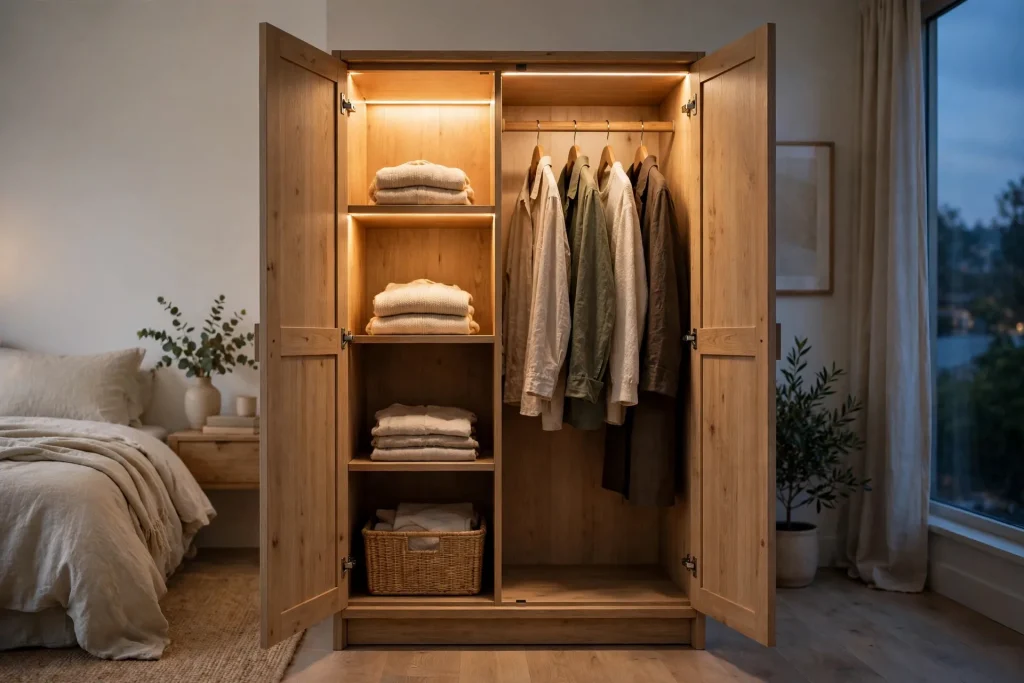
Interior lighting makes a wardrobe feel special, and it’s surprisingly practical too. You can actually see your clothes on dark mornings.
Battery-powered motion-sensor LED strips are the easiest place to start. Stick them under the top shelf or along the inside of the frame, and they switch on when the door opens. Choose rechargeable or replaceable-battery lights with an easy-to-reach power compartment, and place them where clothes won’t block the sensor.
For a softer look:
- Choose warm white light rather than cool white
- Hide the strip behind a lip or in a channel, so you see the glow rather than the bulbs
- In glass-front or open wardrobes, add a strip under each shelf
Hardwired lighting gives a clean, permanent result, but have a qualified electrician assess and install it according to local electrical requirements.
Decorative wardrobe upgrades (four ideas):
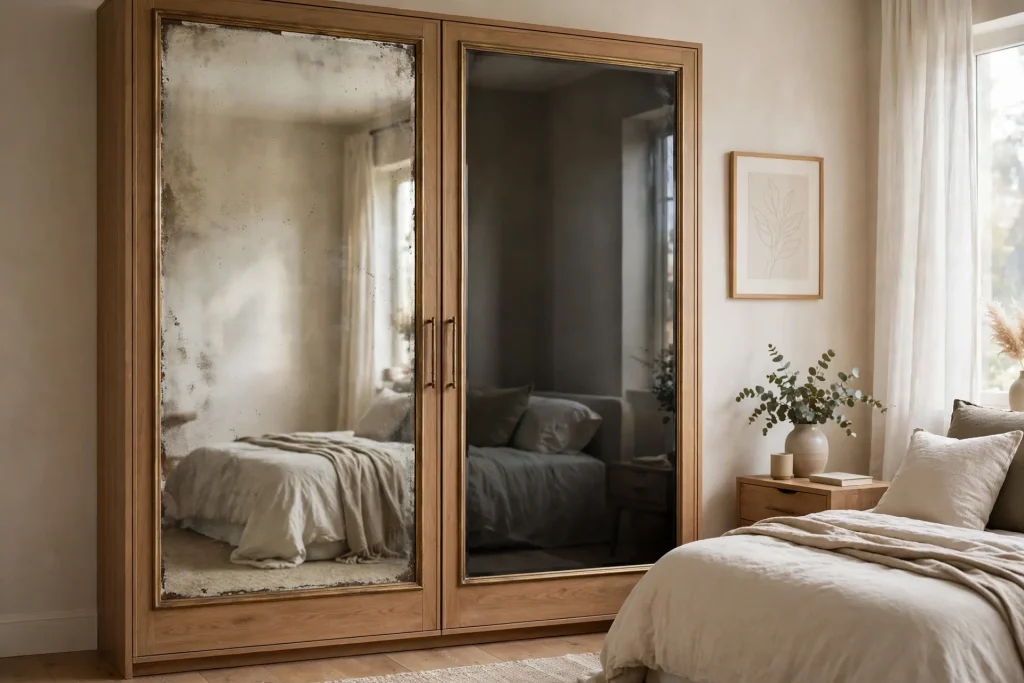
Try Smoked or Antique Mirror Doors
Mirror doors aren’t new, but smoked or antique mirror gives them a fresh, elegant feel.
Smoked mirror has a soft gray or bronze tint. Antique mirror has a gently aged, speckled finish. Both reflect light without feeling as harsh as a standard mirror.
They suit glamorous, Art Deco, and moody bedroom styles beautifully. Pair them with brass handles and a velvet bench nearby.
Safety first: choose mirror panels made for furniture doors, with a safety backing film, so the glass holds together if it breaks. Mirror also adds weight, so check that your hinges, tracks, and door frames can support it. Large or sliding mirror doors are best assessed and fitted by a professional.
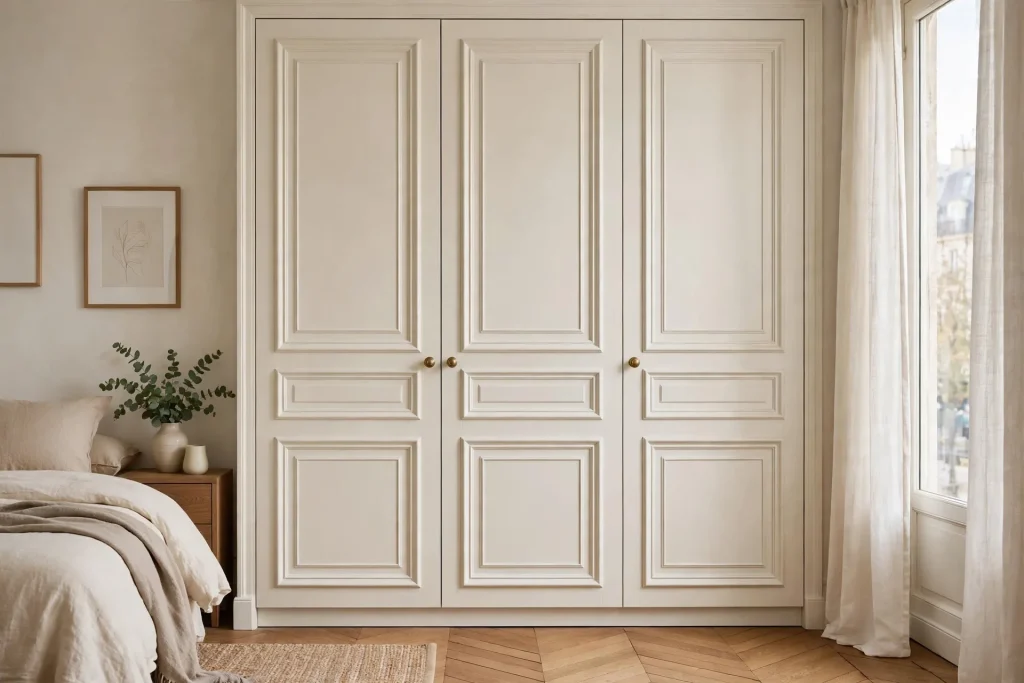
Add Parisian Molding Panels
Simple wooden molding glued to flat doors in rectangle or square shapes adds instant elegance. This style is often linked to classic Parisian apartments.
It works especially well on flat, plain wardrobes that need more character.
How it looks best:
- Paint the molding and doors the same color for a classic, subtle look
- Keep the panel spacing even on every door
- Use soft colors like warm white, greige, or pale sage
Add slim brass knobs, and suddenly a basic wardrobe looks custom-made. Check that your adhesive suits both the molding and the wardrobe surface, and prepare the doors as the product instructions say, since glossy laminate often needs extra prep. Draw your layout in pencil before gluing anything.
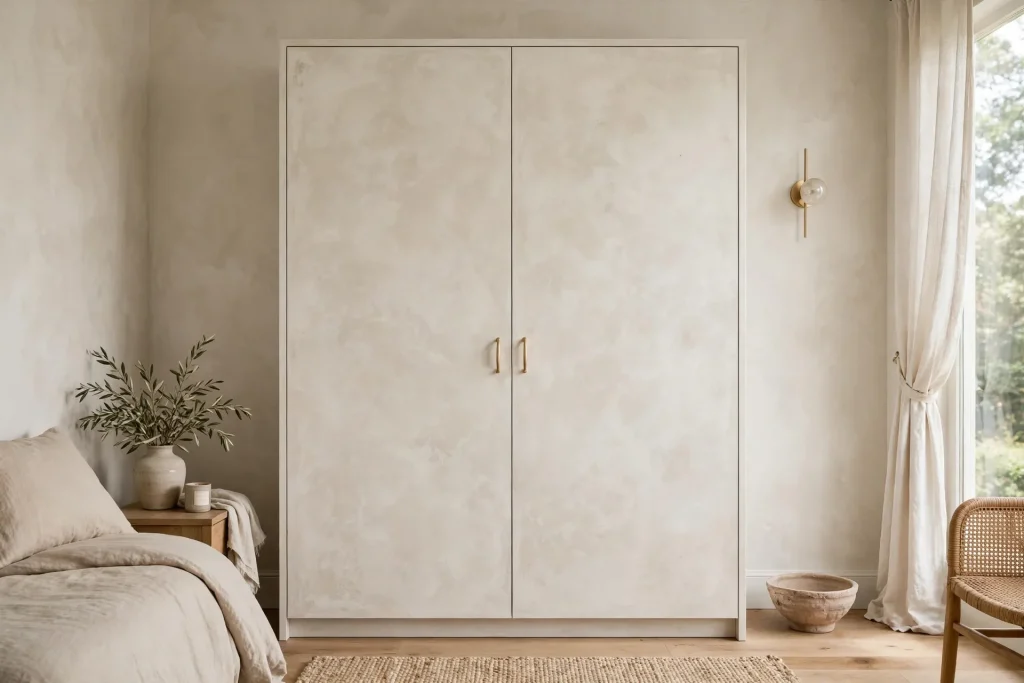
Finish It With Limewash or a Plaster Effect
Flat paint can look a little lifeless on big wardrobe doors. A textured, cloudy finish adds depth and warmth.
Limewash and plaster-effect paints create soft, uneven tones that look almost like old stone walls. They suit Japandi, Mediterranean, and rustic bedrooms.
Good to know:
- Traditional limewash is usually meant for porous mineral surfaces like plaster and brick. For wardrobe doors, choose a decorative finish made for wood or furniture, or follow the manufacturer’s primer and prep system
- Seal the finish if the product recommends it, since doors get touched a lot
- Test on a spare board or the back of a door before starting
Earthy tones like terracotta, sand, olive, and warm gray look especially lovely with this technique.
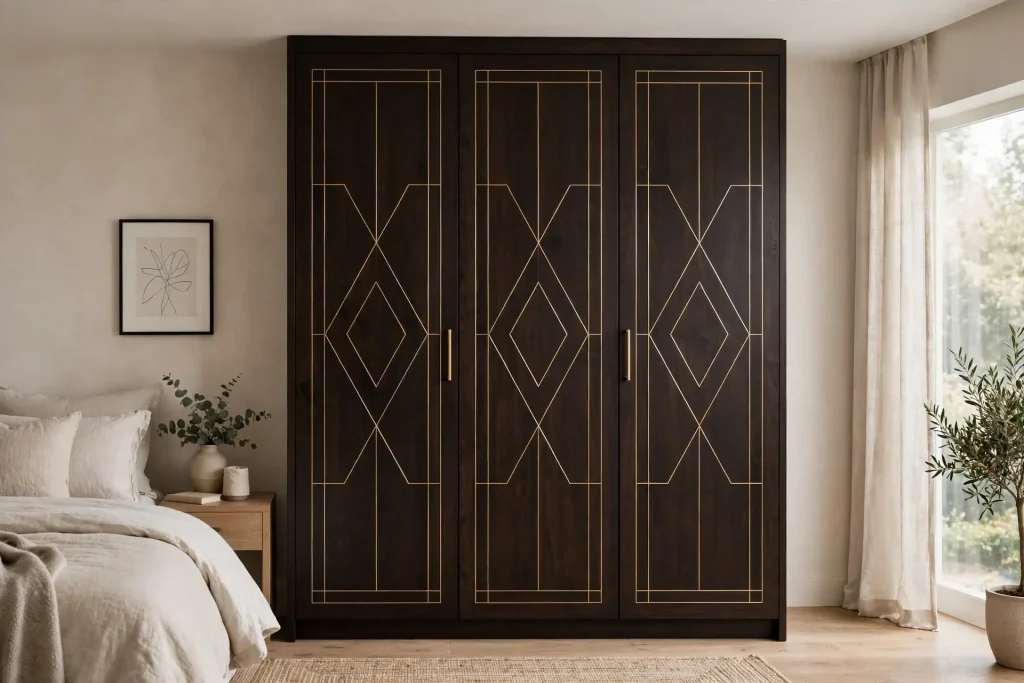
Add Brass Inlay Lines
Thin brass or gold lines running across wardrobe doors add a refined, hotel-like detail.
You can create the look with real brass strips set into routed grooves, which is a job for a skilled carpenter. For a simpler version, use thin metal or metallic trim strips glued onto the surface.
Design ideas:
- One horizontal line across all the doors at the same height
- A thin brass frame around each door
- Vertical lines that match the handle positions
Dark wardrobe colors, like navy, forest green, or deep charcoal, make the brass really stand out.
Custom built-in features (two ideas):
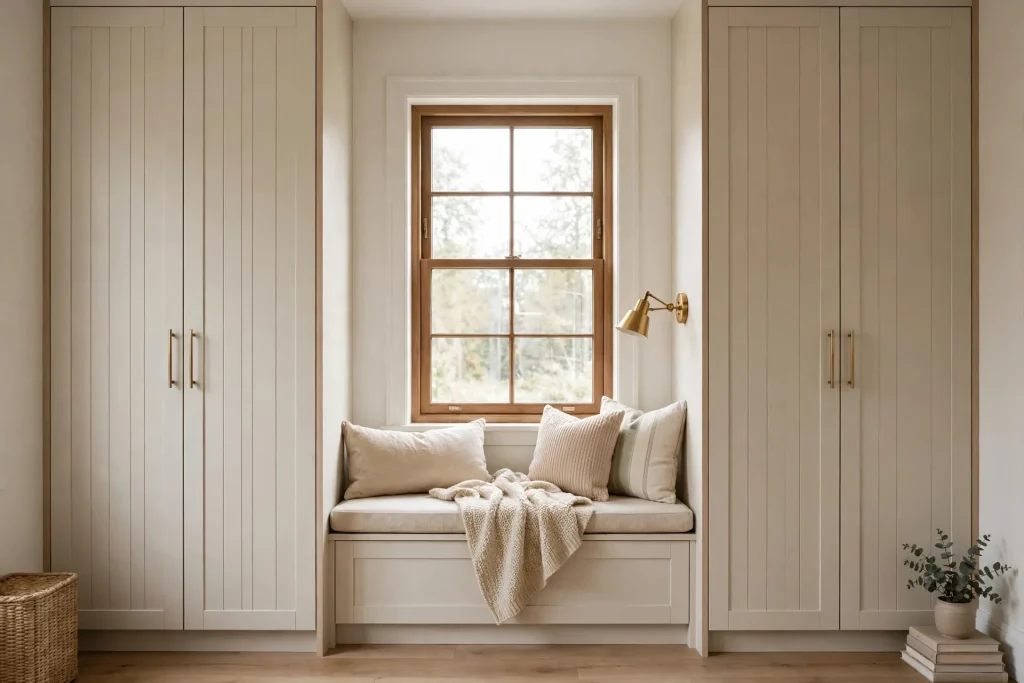
Build a Window Seat Between Two Wardrobes
If your bedroom has a window on the wardrobe wall, this idea turns it into a cozy feature.
Place tall wardrobes on either side of the window, then build a low window seat between them. Add a cushion, a few throw pillows, and drawers or lift-up storage underneath.
The wardrobes frame the window like bookends, and the seat becomes a reading nook.
Practical tips:
- Leave enough space around the window for curtains or blinds to work
- Make sure radiators or vents aren’t blocked
- Choose cushion fabric that can handle sunlight without fading quickly
It’s a bigger project, often done by a carpenter, but the result looks custom and very inviting.
Add a Library Ladder Rail
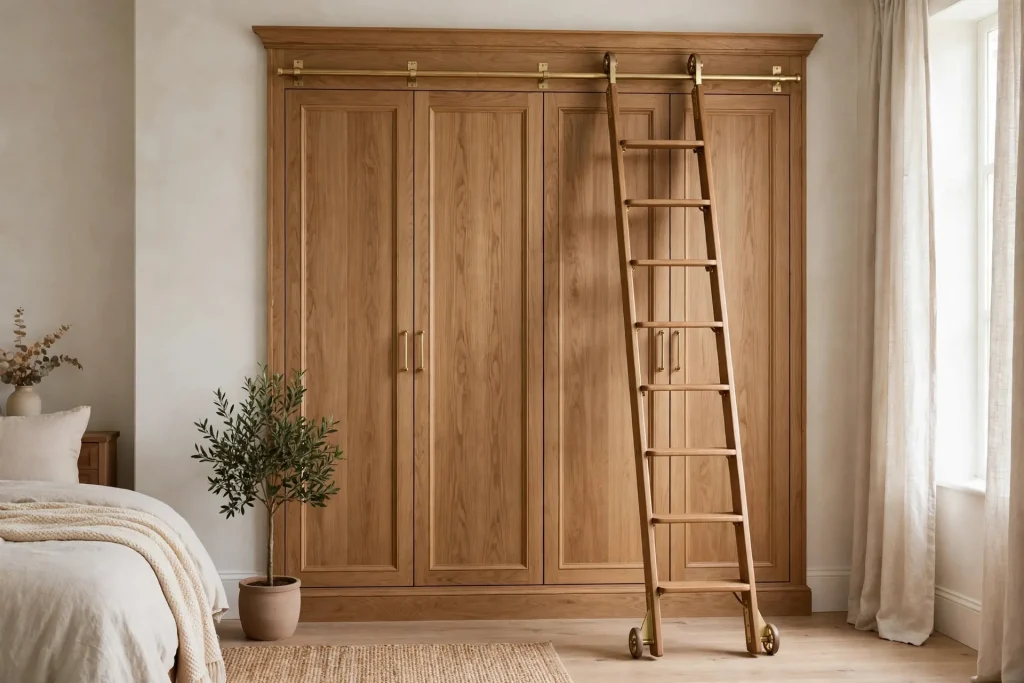
If your wardrobes go all the way to a tall ceiling, the top shelves can be hard to reach. A sliding library ladder solves that and looks charming at the same time.
The ladder attaches to a rail mounted across the wardrobe fronts, then slides along when needed.
It suits classic, traditional, and modern farmhouse bedrooms. It works best with tall wardrobes and high ceilings, but the right setup depends on wardrobe height, floor space, and the ladder system. Make sure it has room to slide without hitting furniture, doors, or people.
Safety notes:
- Use a ladder kit designed for this purpose, with a weight rating that suits your household
- Mount the rail securely into solid framing, ideally with a professional’s help
- Add non-slip feet or wheels that lock in place
It’s not ideal in homes with very young children, who may treat it like a climbing frame.
Matching the Look to Your Bedroom Style
Here are a few complete combinations that turn wardrobe aesthetic ideas into a finished room, with walls, bedding, and hardware working together.
Calm and minimal: an oatmeal limewash wardrobe, warm white walls, linen bedding, and matte black or wood knobs.
Classic and elegant: a greige wardrobe with Parisian molding, pale gray walls, crisp white bedding, and brass knobs.
Soft and playful: a blush wardrobe with cream scalloped trim, soft white walls, floral bedding, and simple round knobs.
Cozy and traditional: deep green wardrobes framing a window seat, warm beige walls, plaid or wool throws, and aged brass hardware.
Color Palettes That Feel Calm and Current
Color does a lot of the work in most wardrobe aesthetic ideas, so it’s worth choosing carefully.
Warm neutrals: oatmeal, mushroom, and warm white feel soft and timeless, and they suit almost any bedding.
Muted greens: sage, olive, and eucalyptus bring a calm, natural feel, especially with wood floors.
Earthy tones: terracotta, clay, and sand look lovely with limewash and linen.
Deep shades: navy, forest green, and charcoal feel rich and cozy.
Choose a shade that works with your flooring, walls, and other large furniture. Matching the wardrobe to the wall color can also make a big wardrobe feel less dominant.
Before committing, paint a large sample board and stand it against the wardrobe for a few days. Check it in morning light and under your evening lamps, since colors shift a lot.
Planning Your Update in the Right Order
If you’re combining a few ideas, the order matters.
Start with any repairs, sanding, or priming. Then add trim or molding, followed by paint or limewash. Fit lighting and hardware next, and finish with styling the inside and top.
Working this way means you won’t scratch fresh paint while installing trim, or get dust on newly organized shelves.
A Real Bedroom Makeover Example
Imagine a rented bedroom with a plain white flat-pack wardrobe that belongs to the tenant. The lease doesn’t allow drilling into walls.
The update:
- The wardrobe is painted a soft sage green
- Pre-cut molding panels are glued onto the doors and painted to match
- Battery-powered LED strips go inside
- Three woven baskets are lined up neatly on top
The project can stay relatively affordable, and nothing affects the walls. Yet the wardrobe now looks like a custom piece, and the whole bedroom feels calmer and more finished.
Mistakes That Make a Wardrobe Look Off
Ignoring scale. Huge molding panels on a small wardrobe, or tiny details on a giant one, can look awkward.
Mixing too many finishes. Brass handles, chrome rails, and black hinges together can feel messy. Stick to one or two metals.
Using the wrong products. Paint, primer, adhesive, and finishes all need to suit your wardrobe’s actual material, especially laminate and veneer.
Forgetting the inside. A beautiful exterior with a chaotic interior still feels stressful.
Overloading the top. Stacking too much on top of a wardrobe looks cluttered and can be unsafe.
Skipping the anchor. Tall freestanding wardrobes should be secured to the wall as the manufacturer recommends, especially in homes with children.
Questions About Wardrobe Aesthetics
How can I make my wardrobe look aesthetic on a budget?
Start with paint, matching hangers, styled baskets on top, and stick-on LED lighting. These updates make a big difference without a new wardrobe.
Can I paint a laminate wardrobe?
Yes, in many cases. Clean it, sand it lightly, and use a primer made for glossy or laminate surfaces before painting.
What color wardrobe makes a small bedroom look bigger?
Light colors that match or blend with the walls often help a small bedroom feel more open.
Are mirror wardrobe doors still in style?
Yes, especially tinted or antique mirror versions, which feel softer and more elegant than standard mirror.
How do I make an old wardrobe look modern?
Try new handles, molding panels, limewash paint, or interior lighting. Small changes can make an older piece feel fresh.
Choose the Detail You’ll Love Every Morning
The best wardrobe aesthetic ideas aren’t about following a trend exactly. They’re about choosing a detail you’ll enjoy seeing every day, whether that’s soft linen, warm brass, or a calm, organized interior.
Start with one change this weekend. Once you see how much it lifts the room, you might find yourself planning the next one.