Pots, Petals, and Patience: 10 Balcony Gardening Ideas for Sun, Shade
Picture two neighbors with identical balconies, one floor apart.
Both buy the same tray of petunias in spring. By July, one balcony is spilling over with color. The other has a row of sad, leggy stems and yellow leaves.
The difference usually isn’t skill. It’s light. One balcony faces the afternoon sun, and the other sits in the shadow of the building next door.
That’s the secret most guides skip. The best balcony gardening ideas start with knowing what your space can actually grow. So instead of a random list, this guide sorts ten ideas by how much sun your balcony gets, with practical tips on pots, watering, and keeping your neighbors happy.
First, Do a Simple Sun Check
Spend one day noting when direct sunlight hits your balcony floor. A few phone reminders through the day make this easy. The labels below are general gardening guidelines rather than strict rules.
Full sun: six or more hours of direct sun. Common on south-facing balconies in the Northern Hemisphere, or north-facing ones in the Southern Hemisphere.
Part sun or part shade: about three to six hours, often morning or afternoon only.
Full shade: less than three hours of direct sun, although bright, indirect light may still reach the space.
Remember that trees, overhangs, and nearby buildings matter as much as direction. Light also changes with the seasons, so a balcony that’s sunny in summer may be shady in winter.
A Few Ground Rules for Container Gardening
Before planting anything, keep these in mind.
- Check your building’s rules. Some buildings limit heavy pots, hanging planters, or anything over the railing.
- Respect weight limits. Wet soil is heavy. Use lightweight pots made from resin, fiberglass, or fabric, and place big containers near the wall rather than the middle of the balcony.
- Use potting mix, not garden soil. Potting mix drains better and weighs less.
- Catch the drips. Use saucers or trays, so water doesn’t rain down on the balcony below.
- Secure everything. Wind can tip tall pots and blow light ones off a ledge. Keep pots inside the railing and away from the edge.
Now, on to the ideas.
For sunny balconies (four ideas):
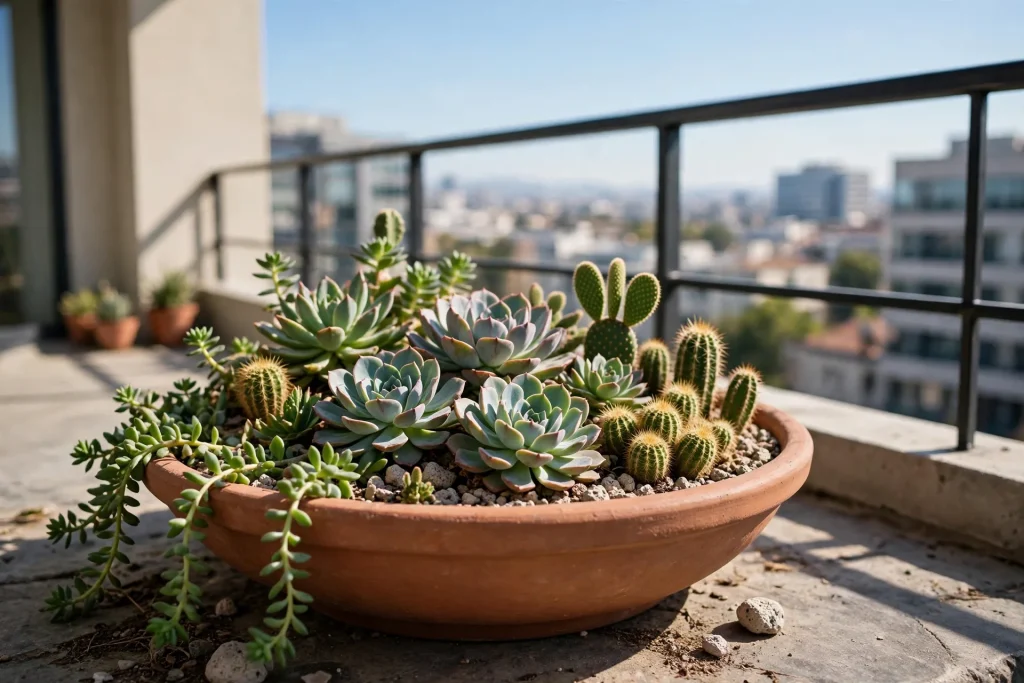
A Heat-Loving Succulent Bowl
If your balcony bakes in the afternoon, succulents are a gift. They store water in their leaves and cope with heat and dry spells better than most flowering annuals.
Try mixing a few textures in one wide, shallow bowl:
- Echeveria for its rose-shaped rosettes
- Sedum for trailing or spreading growth
- Aloe or agave for spiky contrast
- Hens and chicks (sempervivum) for cold-tolerant varieties
Some succulents, like haworthia and certain aloes, prefer protection from intense afternoon sun, so match your choices to how strong your light is. If plants have been indoors or in a shaded nursery, move them into full sun gradually over a week or two to avoid scorching.
Use a gritty cactus mix and a pot with a drainage hole. Water deeply, then let the soil dry out before watering again. Overwatering causes far more problems than underwatering.
In colder climates, many succulents need to come indoors for winter, so check the hardiness of each plant you buy.
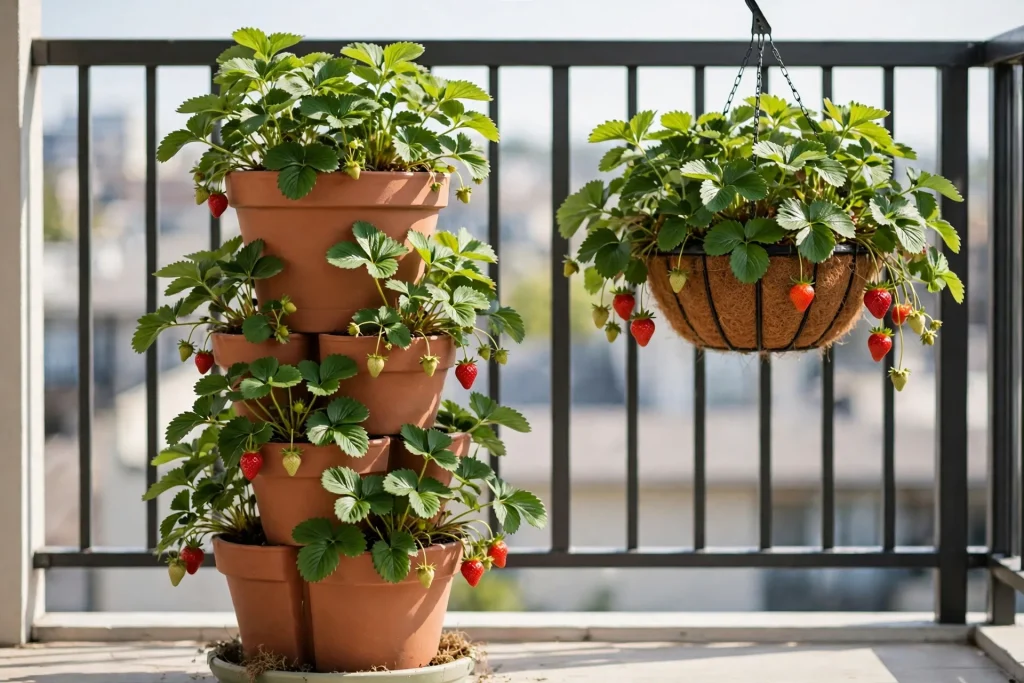
Strawberries in a Tower or Hanging Basket
Few things beat picking a ripe strawberry from your own balcony.
Strawberries love sun, stay compact, and grow happily in containers. A stacking planter tower or a hanging basket saves floor space and keeps fruit off the ground, away from slugs.
What helps:
- Choose “everbearing” or “day-neutral” varieties for berries over a longer season
- Water regularly, since containers dry out fast in sun
- Feed with a balanced or strawberry-specific fertilizer, following the product label. Too much nitrogen can give you lots of leaves and fewer berries
Expect a handful of berries at a time rather than a big harvest. On a small balcony, that steady trickle is part of the fun.
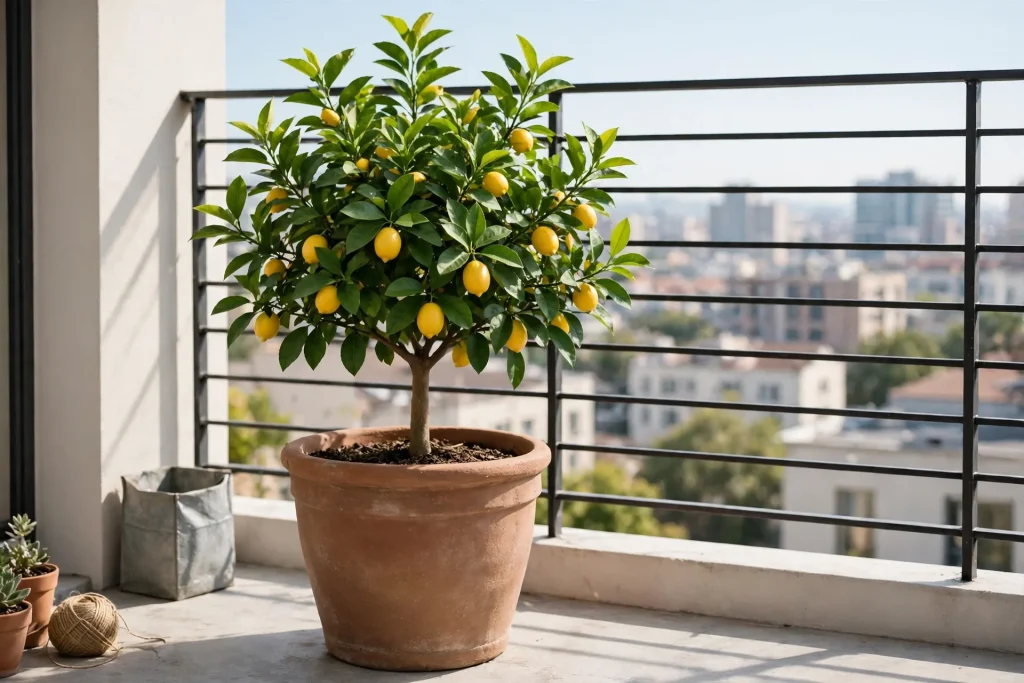
A Dwarf Fruit Tree in a Large Pot
Yes, you can grow a tree on a balcony. You just need the right kind.
Dwarf and patio varieties stay small enough for containers. Popular choices include:
- Dwarf citrus, like Meyer lemon or calamondin, for warm climates or indoor winters
- Fig trees, which handle pot life well and love heat
- Columnar apple trees, which grow tall and narrow rather than wide
- Dwarf olive trees for a Mediterranean feel
A container of around 15 to 20 gallons (55 to 75 liters) can be a starting point for some smaller varieties, but larger or maturing trees may need a bigger pot over time. Good drainage is essential.
A sturdy plant caddy rated for the pot’s full weight makes moving easier. Lock the wheels, and keep the tree sheltered or secured on windy days, since a tall tree in a heavy pot can tip.
Growing a fruit tree is a long-term project. You might wait a year or two for a good crop, but the leaves and blossoms are worth having in the meantime.
A Pollinator Pot for Bees and Butterflies
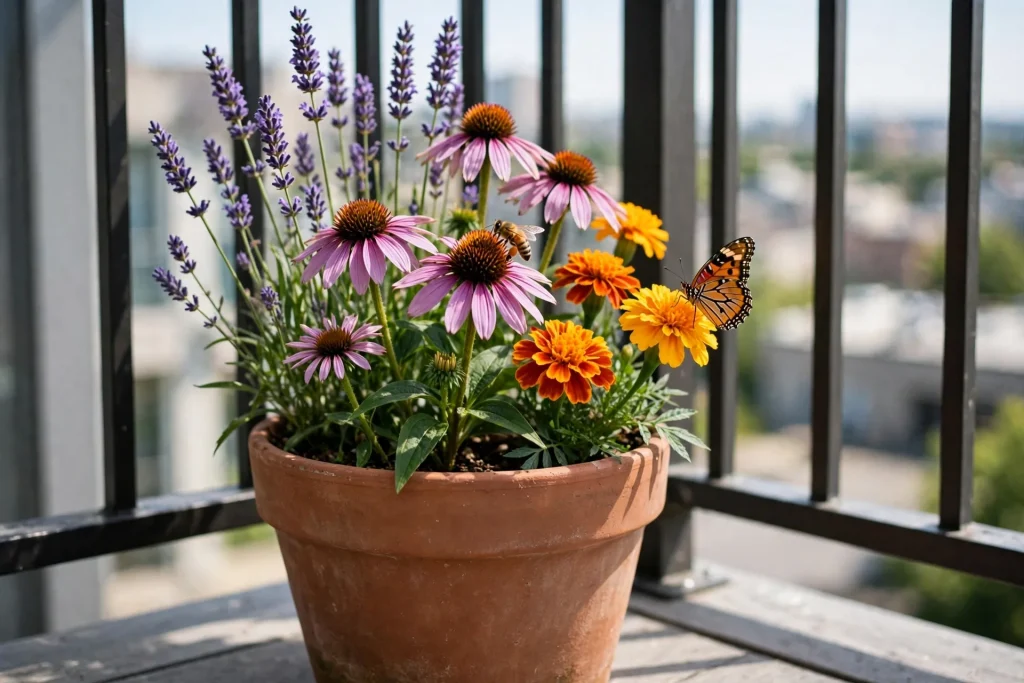
Even a high-rise balcony can help bees, butterflies, and hoverflies.
Fill a large pot with nectar-rich flowers that bloom at different times. Lavender, salvia, catmint, zinnias, and cosmos are all great choices for sunny spots. If possible, include a plant native to your region, since local insects often prefer them.
Skip pesticides on these plants, and add a shallow saucer of water with a few pebbles, so insects can land safely to drink.
It’s a small way to give back, and it’s surprisingly relaxing to watch the visitors come and go.
For part-sun balconies (four ideas):
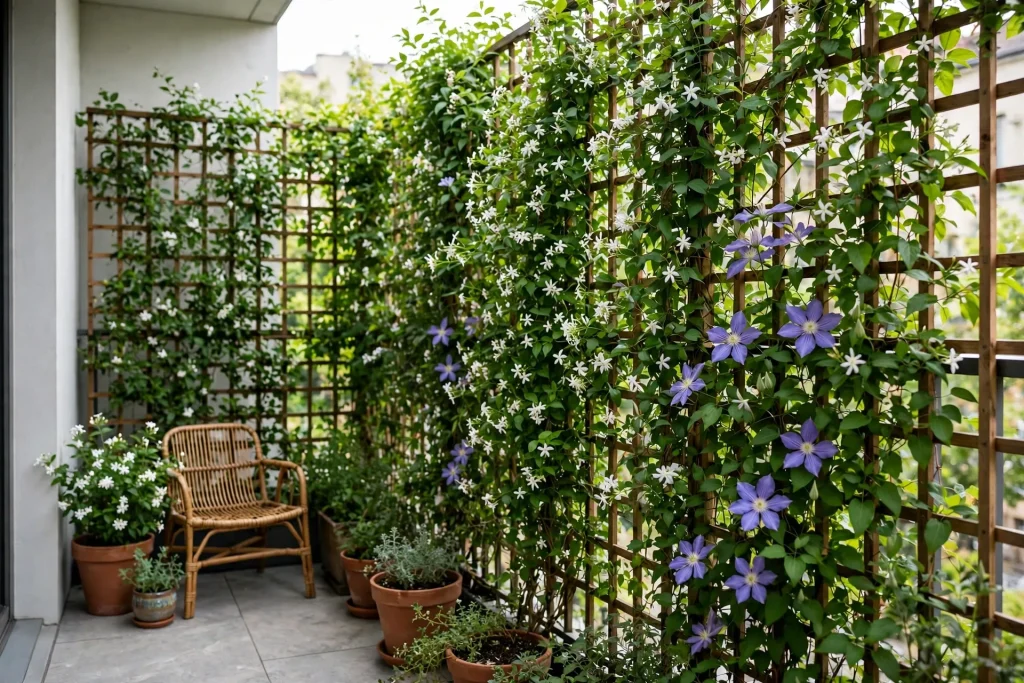
A Living Privacy Screen With Climbers
Instead of a plastic screen, why not grow one?
Place a long planter against the wall or railing (inside the balcony), add a sturdy trellis, and plant climbers that suit your light.
Good climbers for containers:
- Star jasmine for evergreen leaves and a sweet scent
- Clematis for big flowers, with roots kept cool and shaded
- Sweet peas for cool-season color and fragrance
- Runner beans for pretty flowers and an edible crop on brighter part-sun balconies, since they crop best with plenty of light
On cooler or less sunny balconies, sweet peas and shade-tolerant clematis varieties are usually a safer bet. Secure the trellis well, ideally to the planter itself or with your building’s permission. A tall, leafy screen can catch the wind like a sail.
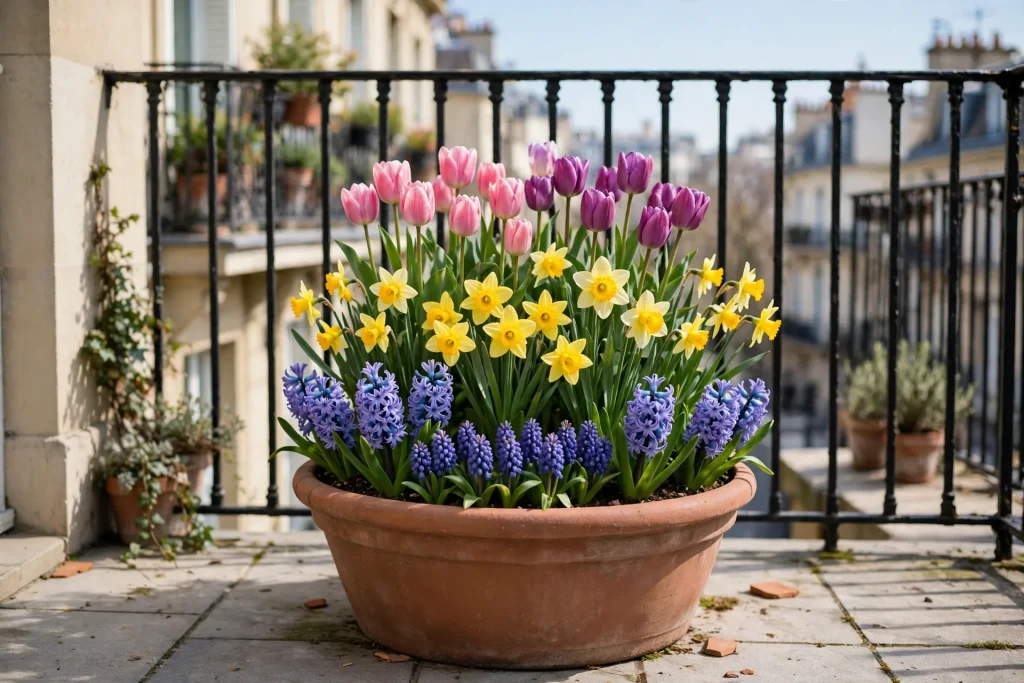
A Layered Bulb Lasagna Pot
This is one of the most satisfying balcony gardening ideas, especially if you plant it in fall.
A bulb lasagna means layering different bulbs in one deep pot, so they flower one after another in spring.
How the layers usually go:
- Large, late bulbs like tulips at the bottom
- Medium bulbs like daffodils in the middle
- Small, early bulbs like crocus or grape hyacinth near the top
Cover with potting mix, water well, and leave the pot somewhere cool. In spring, you’ll get weeks of flowers from a single container.
Some bulbs, including daffodils and tulips, can be harmful to pets if eaten, so keep the pot out of reach of curious cats and dogs.
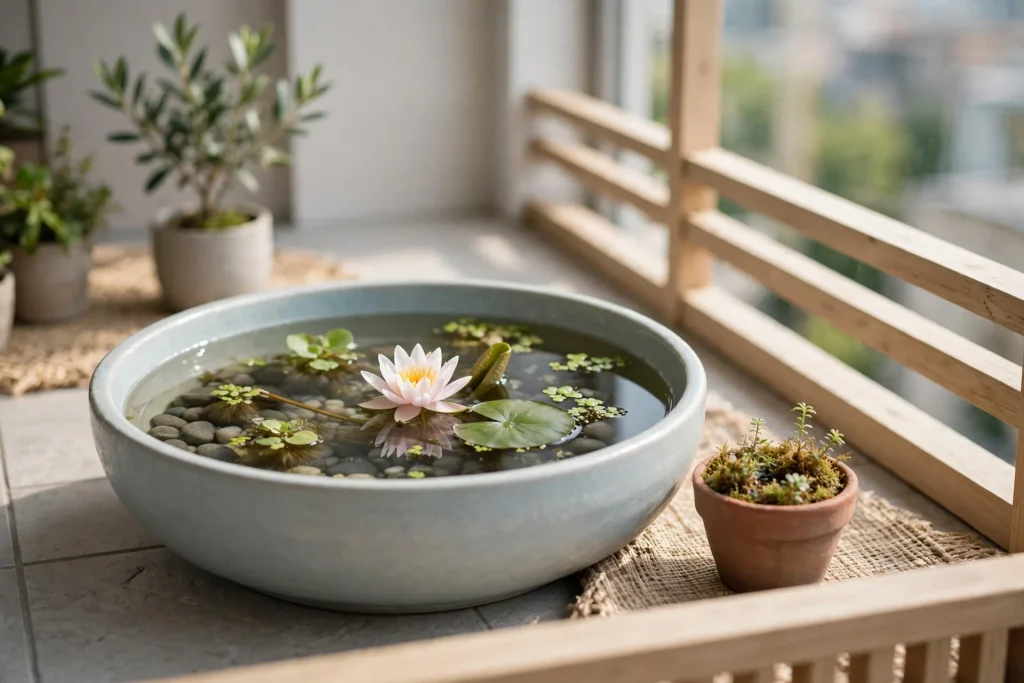
A Mini Container Water Garden
A small water garden adds movement, sound, and a sense of calm to any balcony. It’s also one of the heaviest ideas here, so plan it carefully.
Use a watertight glazed pot, half barrel liner, or large ceramic bowl. Add a few small aquatic plants, like dwarf water lilies, water lettuce, or miniature cattails, depending on what’s legal and sold in your area.
Important notes:
- Check your balcony’s load limit and building rules before buying the container. Water weighs about 8.3 pounds per US gallon (1 kg per liter), before adding the pot, plants, and stones
- Standing water needs regular attention. A small solar fountain keeps water moving, which can reduce mosquito problems, but check local mosquito-control guidance too
- Always supervise young children around any standing water, even a shallow bowl
Morning sun with afternoon shade usually suits these plants and keeps the water from overheating.
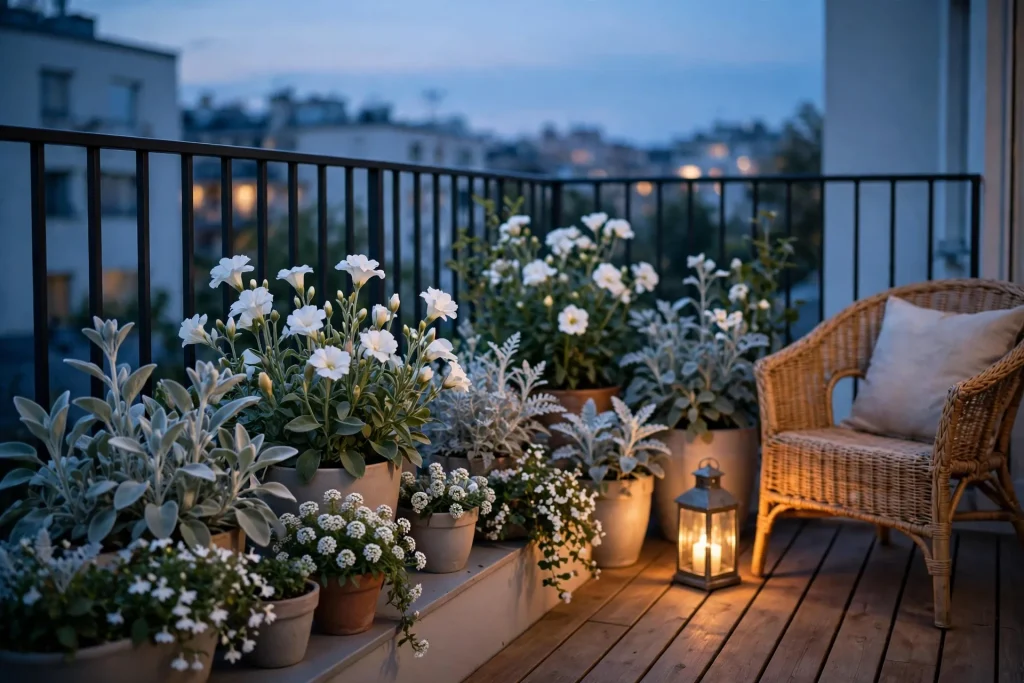
A Moon Garden for Evening Relaxing
If you mostly use your balcony after work, plan a garden that looks best at night.
A moon garden focuses on white and pale flowers, silver leaves, and evening fragrance. They seem to glow at dusk.
Plants to consider:
- White petunias or white impatiens
- Nicotiana (flowering tobacco), which often releases scent in the evening
- Silver dusty miller for soft, pale foliage
- White alyssum, which spills over pot edges
- Moonflower vine, which opens in the evening in warm climates
Nicotiana and moonflower are toxic if eaten, especially moonflower seeds. If you have pets or young children, place them out of reach or choose safer plants like petunias and alyssum.
Add a string of warm lights or a few solar lanterns, and your balcony becomes a calm place to unwind.
For shady balconies (two ideas):
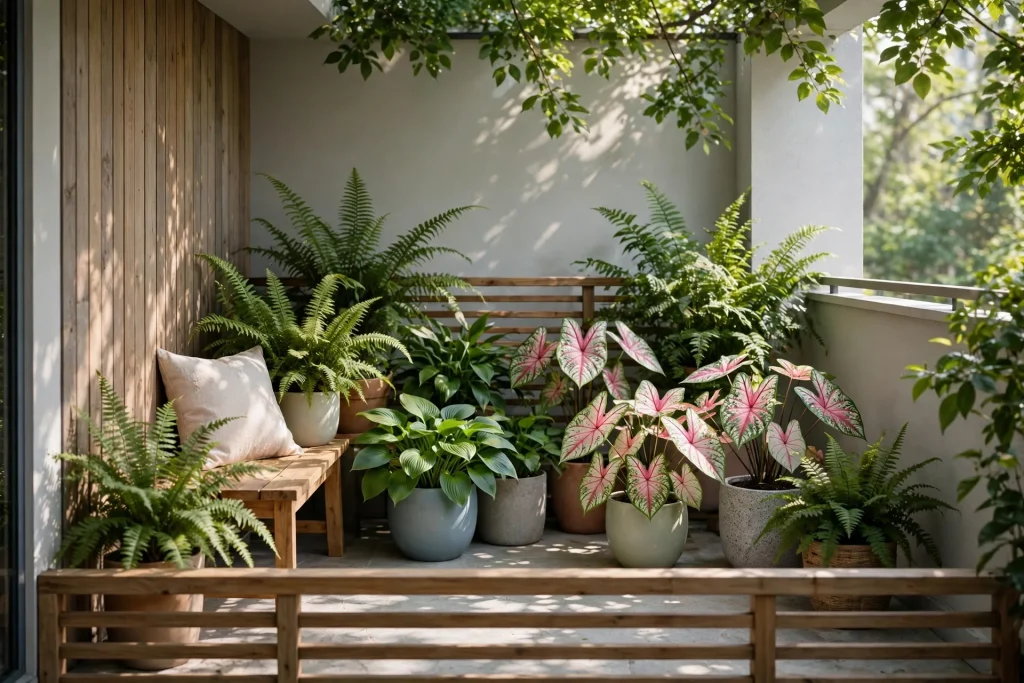
A Lush Shade Garden
A shady balcony isn’t a problem. It’s just a different kind of garden.
Many plants actually prefer filtered light and cooler temperatures. Think lush leaves rather than bright flowers.
Shade-friendly picks:
- Ferns, like Boston or maidenhair, for soft texture
- Heuchera (coral bells) for purple, lime, or caramel leaves
- Begonias and impatiens for color
- Hostas in larger pots for big, dramatic leaves
- Caladiums for pink and white patterned foliage in warm months
These shade-loving balcony plants often need less watering than sun lovers, but don’t let pots dry out completely. Group them together to create a small, humid microclimate.
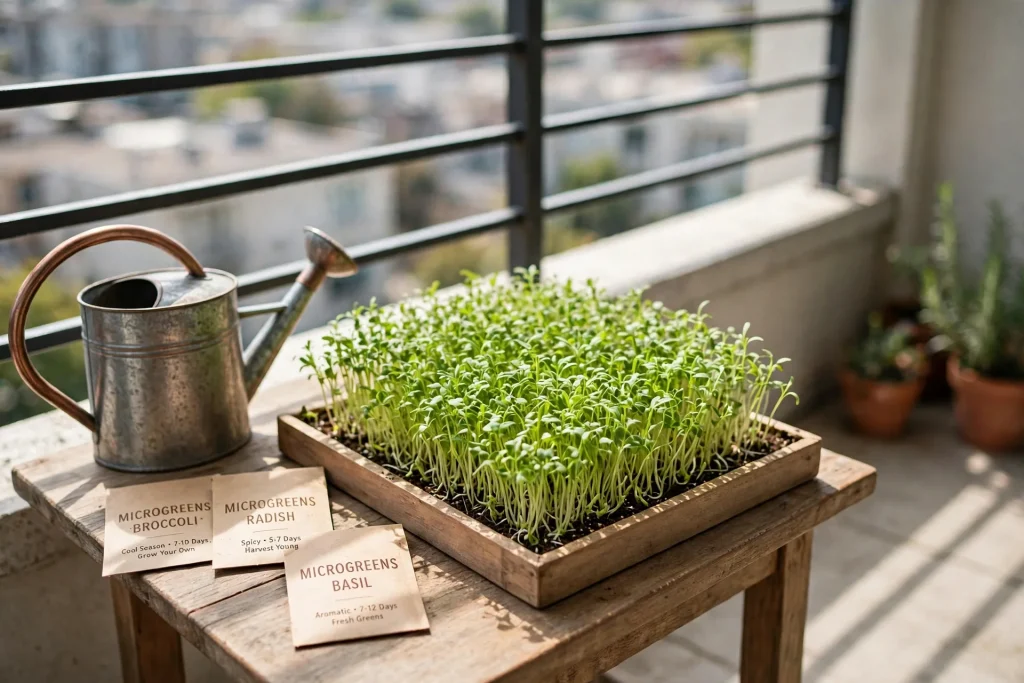
A Microgreens Tray
Microgreens are young seedlings harvested when they’re just a few inches tall. They’re packed with flavor, grow quickly, and don’t need much sun.
Try radish, pea shoots, sunflower, mustard, or basil microgreens. Sprinkle seeds thickly in a shallow tray of moist potting mix, keep it damp, and place it in bright, indirect light.
Many varieties are ready to snip in about one to three weeks. Add them to sandwiches, salads, and eggs.
On very shady balconies, or in winter, you can bring the tray indoors to a bright windowsill.
Watering Without the Stress
Watering is where most balcony gardens struggle, especially in summer.
Check before watering. Push a finger into the soil. For many plants, dry soil about an inch (2.5 cm) down means it’s time to water. Adjust for the plant and pot, though. Succulents like their mix to dry out much more thoroughly, while seedlings and shallow trays need more frequent checks.
Water in the morning. This gives plants a full day to use the water and reduces evaporation.
Water deeply. A quick splash only wets the surface. Water slowly until a little drains from the bottom.
Plan for vacations. Group pots together in the shade, use watering spikes, or ask a neighbor to help.
Sunny balconies may need daily watering in hot weather, while shady ones might only need it every few days.
Feeding and Refreshing Your Pots
Container plants can’t send roots out to find nutrients, so they rely on you.
Feed regularly in the growing season. Many flowering annuals appreciate a balanced liquid fertilizer every few weeks. Always follow the label, since more isn’t better.
Treat fruit trees separately. Container fruit trees often do best with a fertilizer made for fruit or citrus, on the schedule the product suggests.
Go easy on succulents and shade plants. They usually need much less feeding.
Refresh the soil each year. Potting mix breaks down over time. Each spring, gently replace the top inch or two in large pots where you can do it without damaging roots. Old, compacted mix will eventually need a full repot.
Deadhead flowers. Snipping off faded blooms encourages many plants to keep flowering.
A Simple Starter Kit
If you’re brand new, you don’t need much to begin. A watering can with a long spout, a pair of small pruners, gloves, a bag of good potting mix, and two or three lightweight pots with drainage holes are enough.
Pick one of the balcony gardening ideas above that matches your light, and start there. It’s much easier to care for a few happy plants than a crowded collection of struggling ones.
Two Balconies, Two Plans
Here’s how the same approach works on two very different spaces.
A hot, south-facing balcony:
A succulent bowl sits on a small table, a strawberry tower stands in one corner, and a pollinator pot of lavender and salvia brings in bees. A dwarf fig on a wheeled caddy anchors the space.
The strawberries and flowers get watered most days in summer, while the succulent bowl is watered separately and much less often.
A shady, north-facing balcony:
A trio of ferns and heucheras fills one corner, a microgreens tray sits on a shelf, and a small water bowl adds a calm sound. White impatiens brighten the edges in the evening.
Both are full and green, just in completely different ways.
Balcony Garden Mistakes to Avoid
Buying plants before checking light. Sun lovers sulk in shade, and shade plants scorch in full sun.
Using pots without drainage holes. Soggy roots can quickly rot.
Ignoring the wind. Upper floors can be very windy. Choose sturdy pots and avoid tall, top-heavy plants near the edge.
Forgetting the neighbors. Dripping water, fallen leaves, and loose soil can cause problems below.
Questions About Balcony Gardening
What are the easiest plants for a balcony garden?
Herbs like mint and chives, succulents, geraniums, and marigolds are often easy for beginners. The best choice still depends on how much sun you get.
Can I grow vegetables on a small balcony?
Yes. Strawberries, lettuce, cherry tomatoes, peppers, and microgreens all grow well in containers. Most fruiting crops need at least six hours of sun.
How often should I water balcony plants?
It depends on the weather, pot size, and sunlight. In hot, sunny conditions, some pots may need daily watering. Always check the soil first.
How heavy can my balcony garden be?
Every balcony is different. Check your building rules or ask your landlord, and use lightweight containers and potting mix to keep weight down.
Do I need special soil for containers?
Yes. Use a good-quality potting mix made for containers. Garden soil is heavier and can compact, which makes drainage worse.
Grow What Your Balcony Wants to Grow
The most successful balcony gardening ideas aren’t about copying a picture from social media. They’re about working with the light, space, and weather you already have.
Start with one or two containers that suit your balcony. Learn how they grow, then add more as your confidence builds. By next season, that bare concrete space could be your favorite little garden in the city.