

Not Just a Place for Keys: 20 Entryway Table Ideas for Every Hallway Shape and Style
When it comes to entryway table ideas, most people choose the same way. They see one they like, guess it’ll fit, and carry it home.
Then the trouble starts. The front door bangs into it. It sticks out so far that everyone turns sideways to get past. Or it’s so tiny it looks lost on a big wall.
The table itself matters more than what goes on top of it. Get the shape, size, and material right, and styling becomes the easy part.
That’s what these entryway table ideas focus on: the table, not the decor. You’ll find slim shapes for tight halls, materials for different looks, tables that work hard as storage, and a few creative alternatives. Start with the measurements, though, because they decide everything else.
Measure These Three Things First
Depth. In many hallways, a console around 10 to 14 inches deep fits without crowding. Very narrow halls may need something even slimmer, or a wall-mounted shelf.
Walkway. As a general planning guideline, aim for around 36 inches (about 90 centimeters) of clear walkway where possible. Local accessibility and building requirements may differ. Open the front door fully and check that it won’t hit the table.
Wall width. A table that’s roughly two-thirds to three-quarters the width of the wall usually looks balanced, though it depends on what else is nearby.
Mark the table’s footprint on the floor with painter’s tape and walk past it for a day. You’ll know quickly if it’s right.
Shapes that solve space problems (six ideas):
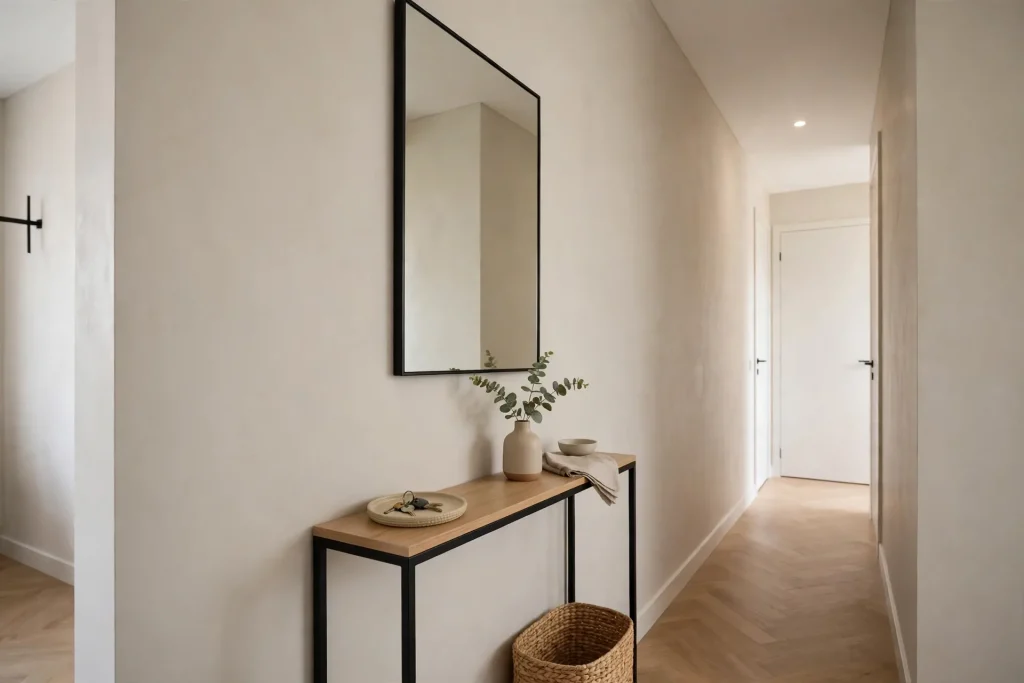
The Extra-Slim Console
Some consoles are only 8 to 10 inches deep, which makes them an ideal narrow entryway table for tight hallways and apartment entries.
They hold the essentials, like a small dish for keys and a lamp, without eating into the walkway. Check the overall depth, not just the tabletop, since angled legs or protruding hardware can make the real footprint deeper.
Because slim consoles can be top-heavy, especially tall ones, anchor them to the wall if you have kids or pets. Many come with anti-tip hardware.
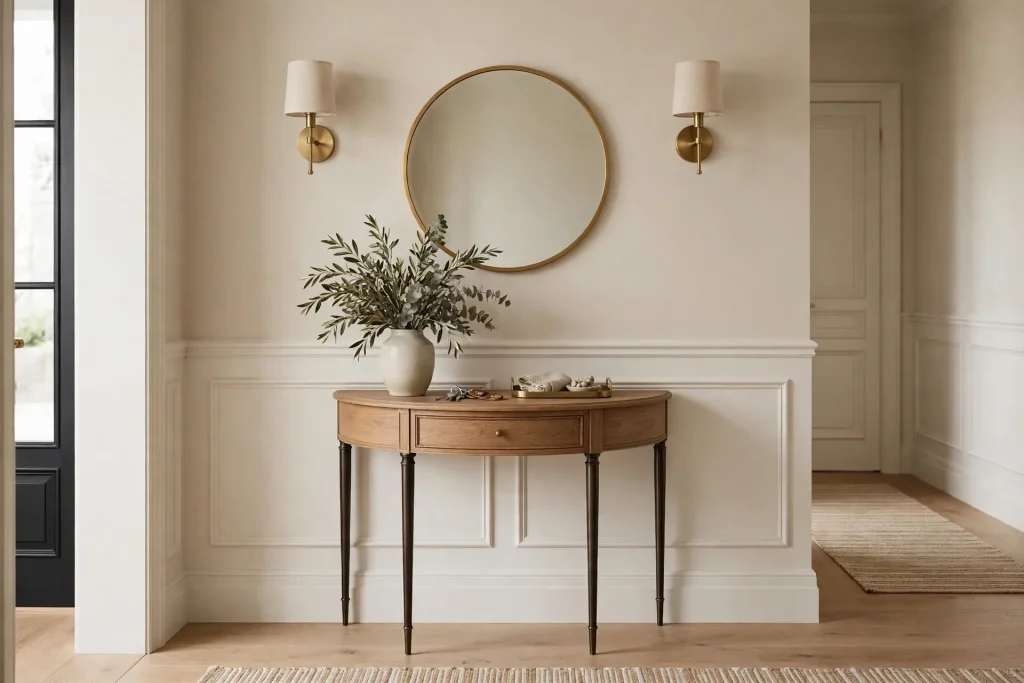
The Demilune Half-Moon Table
A demilune is a half-round table with a flat back that sits against the wall. The curved front has no sharp corners, making it easier to move around in a busy entry, especially when children are nearby.
It feels classic and a little elegant, and it suits traditional and transitional homes especially well.
A small demilune also works beautifully on a short wall between two doors. Some versions fold out into a full round table, which is handy if you ever need extra surface space for guests.
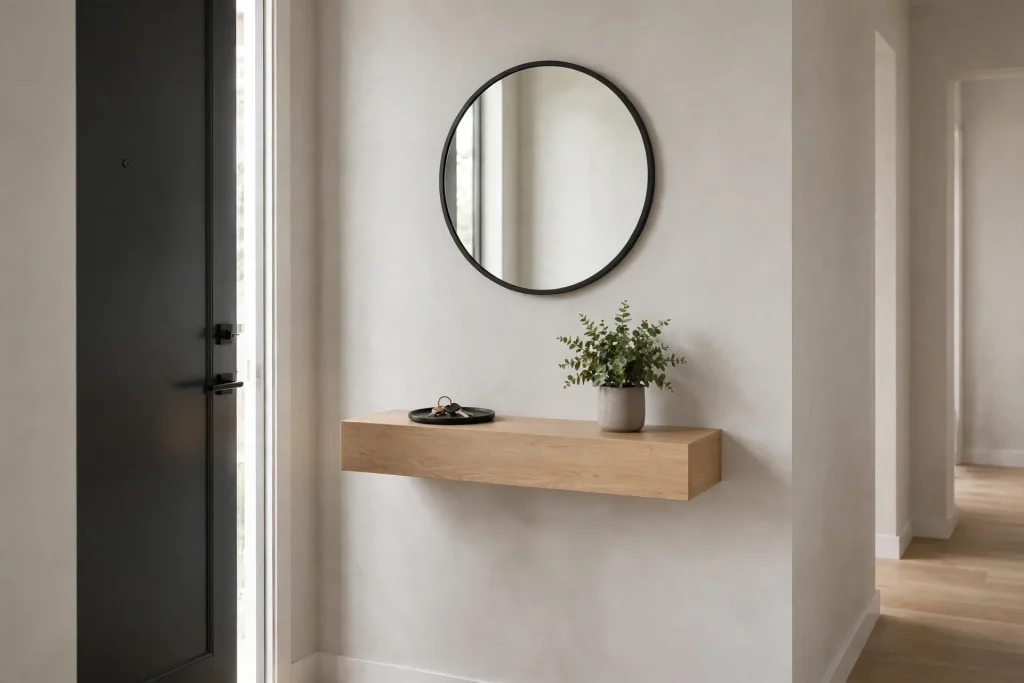
The Floating Wall-Mounted Console
A wall-mounted console has no legs at all. It attaches directly to the wall, leaving the floor underneath free for shoes, baskets, or easier cleaning, and making a small entry feel more open.
A bonus: you choose the exact height.
The wall and fixing system must support the combined weight of the table and everything you place on it, so fix it securely into wall studs or with anchors rated for that load. If you’re unsure about your wall type, a handyperson can help.
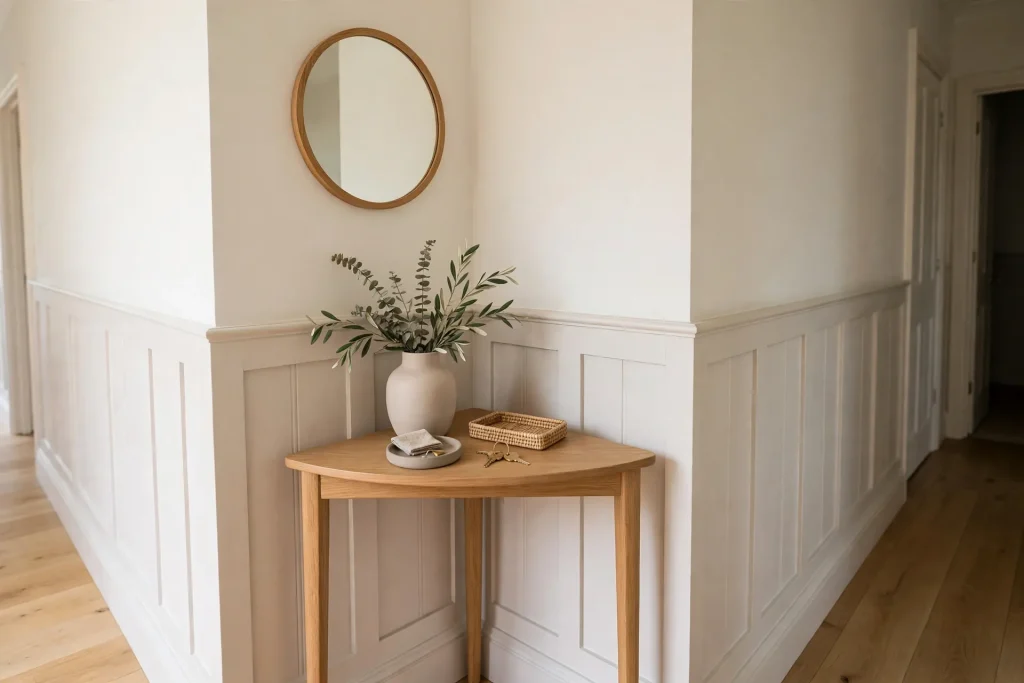
The Corner Entry Table
Not every entry has a straight wall to spare. A triangular or quarter-round corner table turns an unused corner into a landing spot.
It’s ideal for entries where the front door opens straight into the living room, or for an awkward corner beside a staircase.
A plant or a single lamp is often enough. Measure both walls of the corner, since many corner tables are sized for perfectly square corners and older homes don’t always have them.
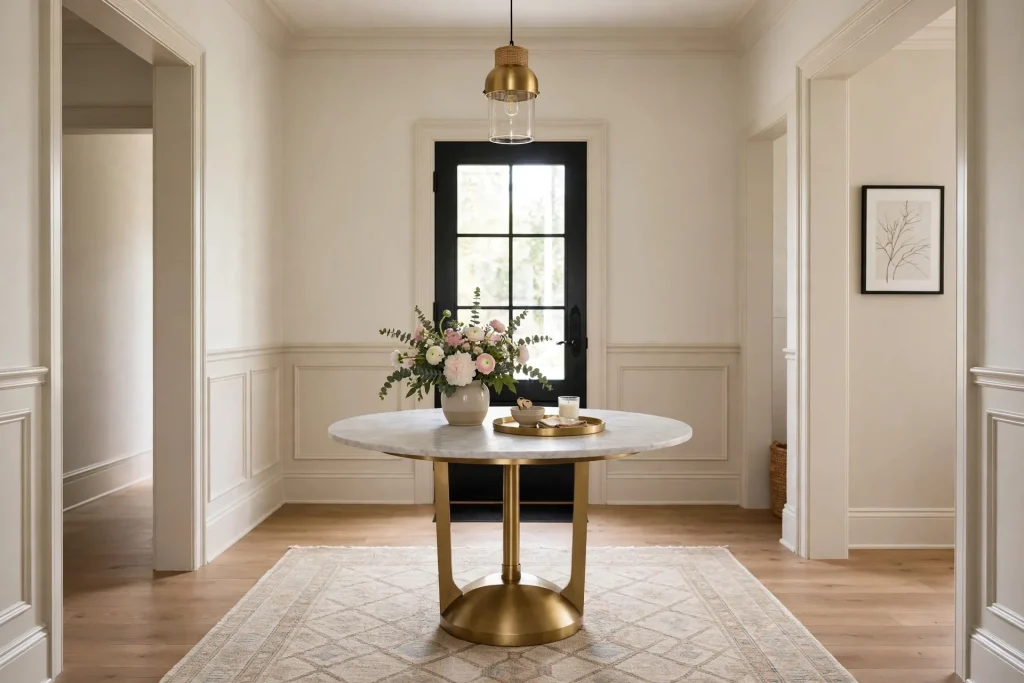
The Round Center Table
If you have a spacious foyer with room to walk all the way around, a round pedestal table in the center makes a grand welcome.
Imagine a round wooden table under a pendant light, with a large vase of seasonal branches in the middle. It feels like the entry of a boutique hotel.
Measure the full walking route around the table, not just the distance from the nearest wall, so people aren’t squeezing past it with bags. A pedestal base, rather than four legs, gives more room for feet and makes the table easier to walk around.
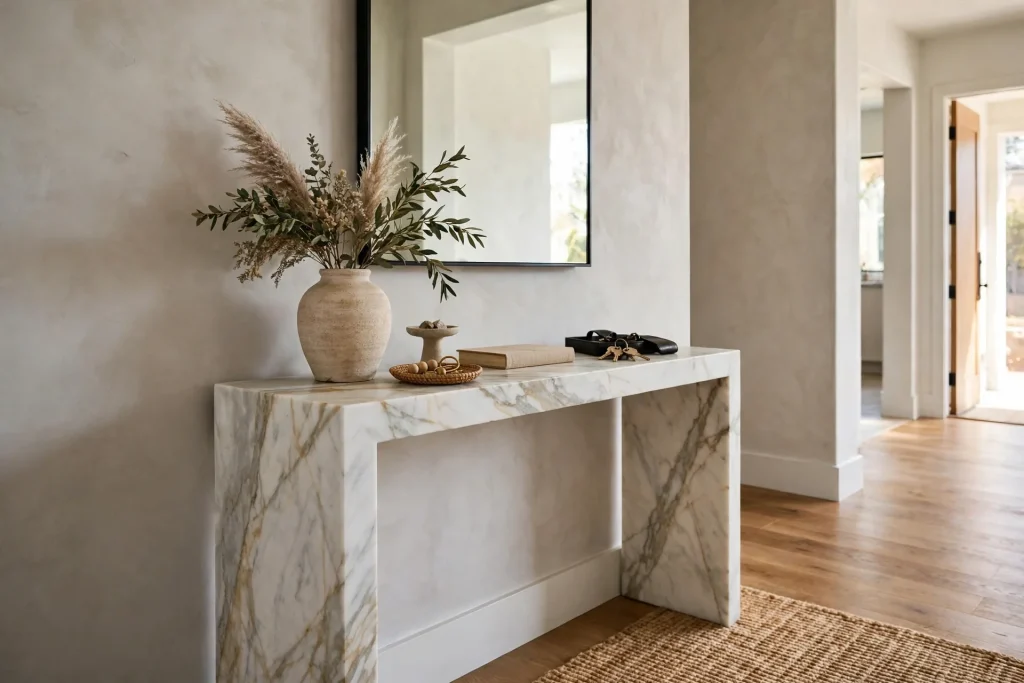
The Waterfall Console
A waterfall console is made from what looks like one continuous piece of material that flows from the top down the sides to the floor.
It has a sleek, modern look, especially in wood, acrylic, or stone-look finishes. Simple lines mean it looks good from every angle, including the side view as you walk in.
Minimal and contemporary homes suit it best, where one clean, sculptural piece is the goal. Since there’s no shelf or drawer, plan a separate spot for keys and mail, like a wall hook or a small tray.
Materials that set the mood (six ideas):
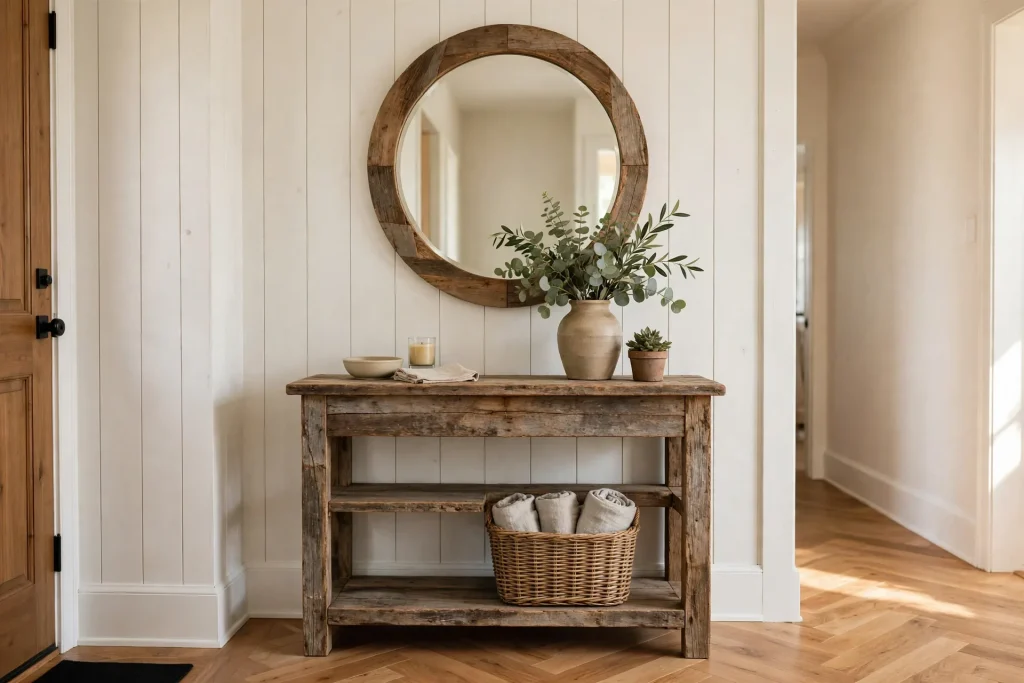
Reclaimed Wood Farmhouse Console
Reclaimed or rustic wood brings warmth and character to an entry. Knots, saw marks, and natural color changes make every piece a little different.
Pair it with black metal hardware or legs for a modern farmhouse feel, or keep it all wood for a cabin-style look. A coat of matte sealant protects the surface from wet keys, umbrellas, and coffee cups without hiding the grain.
Solid wood can be heavy, so check the weight before carrying it up stairs. When buying reclaimed pieces, look for loose joints, splinters, and any signs of pests.
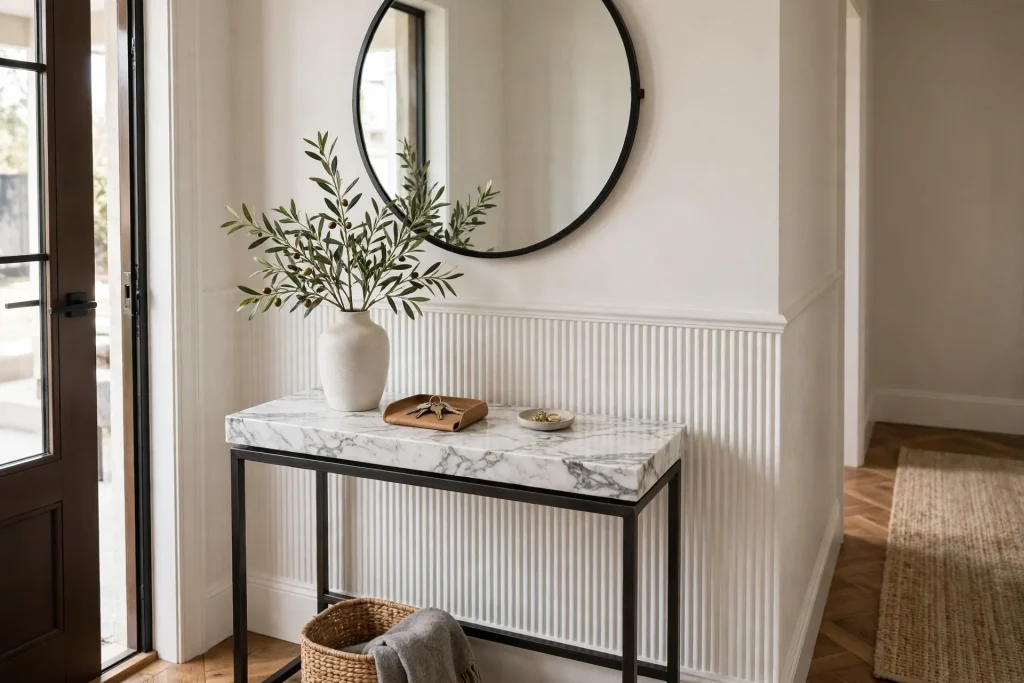
Marble or Stone-Top Console
A marble top instantly feels polished and a little luxurious.
Things to know before buying:
- Real marble can stain and etch when exposed to acidic spills. Sealing helps reduce staining, but it won’t prevent every mark or surface reaction
- It’s heavy, so make sure the base is sturdy
- Marble-look quartz, porcelain, or laminate can give a similar look with less upkeep
Place a small tray under keys and coins to help protect the surface.
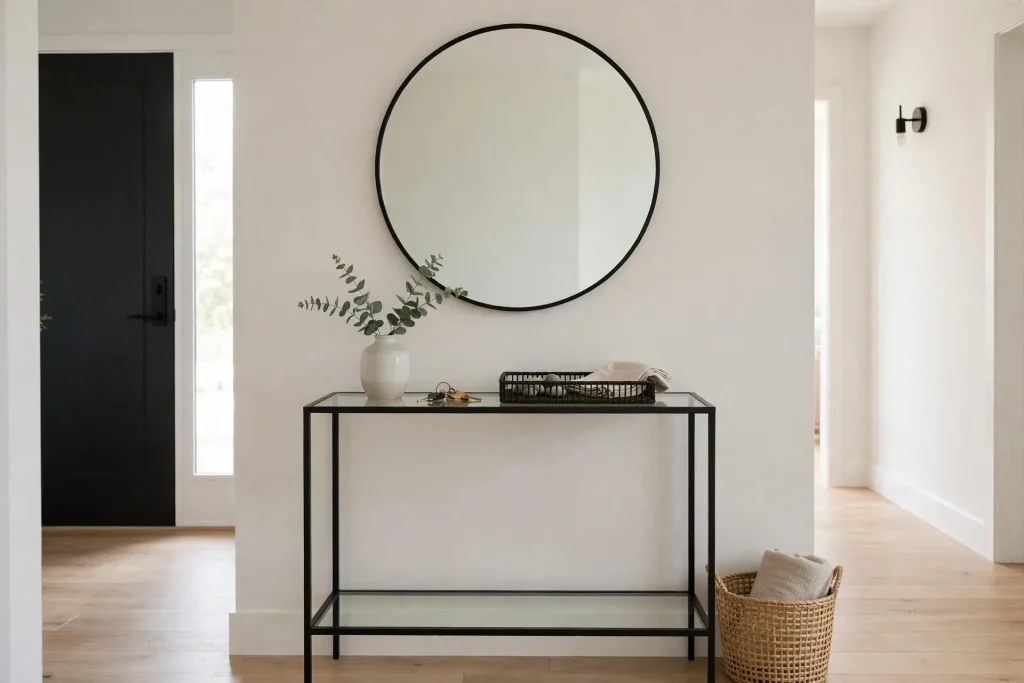
Glass and Metal Console
A glass top on a slim brass, gold, or black metal frame keeps a small entry feeling light and open, since you can see straight through it.
Apartment owners with limited hallway space often appreciate this design, since a solid table can feel heavy in a narrow hall. Fingerprints show easily on glass, so keep a microfiber cloth nearby for quick wipes.
Choose tempered glass, which is designed to be stronger and break more safely, and look for rounded or smoothed edges if you have small children. Check the weight capacity and make sure the frame feels stable, too.
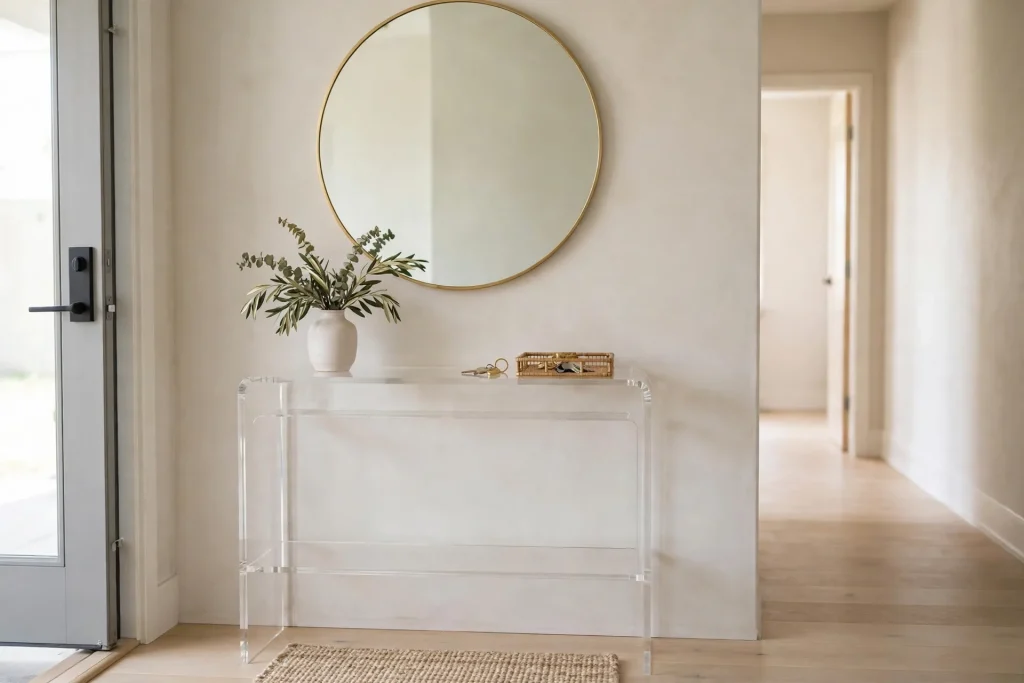
Clear Acrylic Console
Acrylic is a clear plastic that looks a little like glass but is lighter and less likely to shatter.
An acrylic console almost disappears, which makes it perfect for very small entries. It also lets a patterned rug or wallpaper show through.
Acrylic scratches easily, so use a clean microfiber cloth and an acrylic-safe cleaner. Avoid abrasive pads and harsh cleaning products.
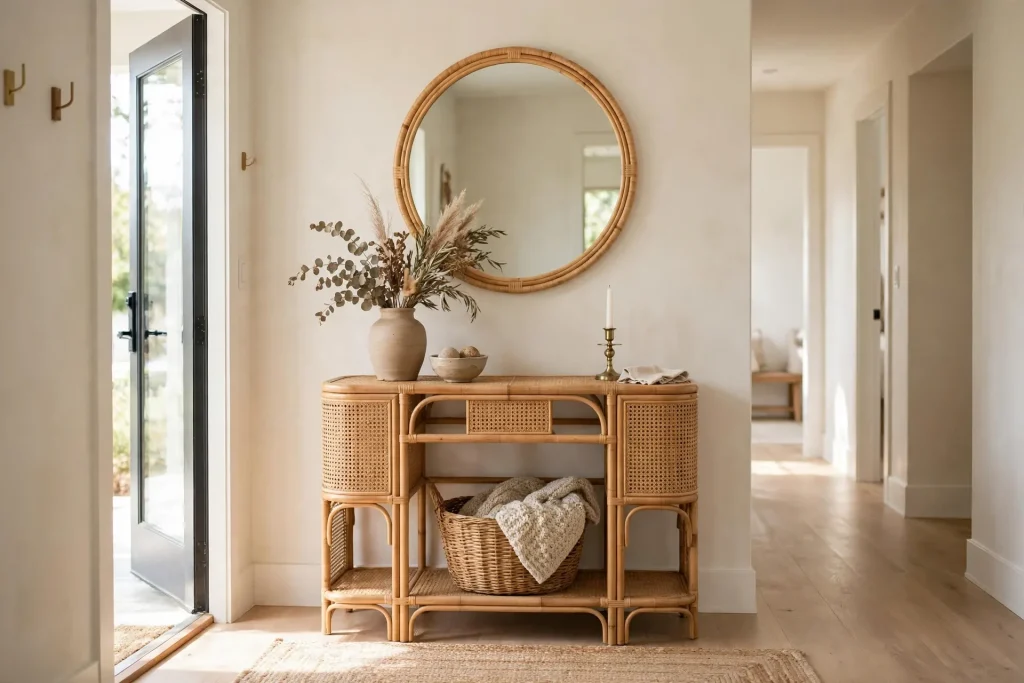
Rattan or Cane Console
Rattan and cane add texture and a relaxed, natural feel. They suit coastal, boho, and modern organic homes.
Cane-front drawers or a woven lower shelf soften the look of a hallway full of hard surfaces like tile and painted walls.
Keep rattan away from direct heat sources, like radiators, which can dry it out over time. A quick dust with a soft brush keeps the weave clean.
Lacquered Color Console
For a bold first impression, try a console painted or lacquered in a strong color. Deep green, cobalt blue, oxblood red, or even soft pink can make the entry feel cheerful and confident.
Keep the wall behind it fairly calm, so the table stands out.
You can buy one ready-made, or give an old console a fresh look with furniture paint and a protective top coat. Sand and prime first, and work in a well-ventilated space.
Tables that work hard (four ideas):
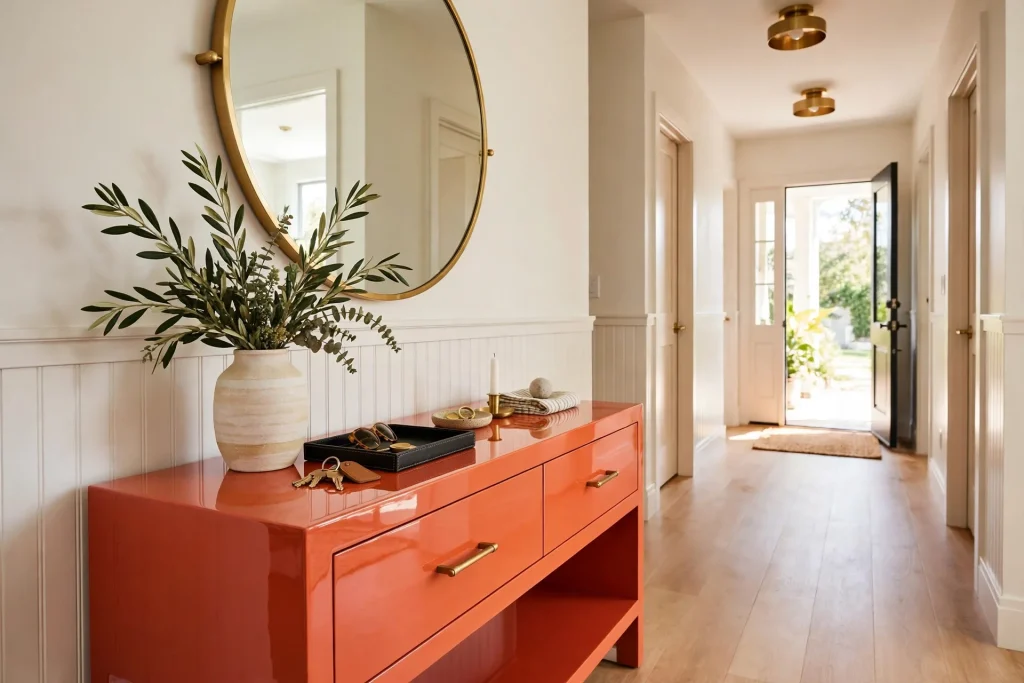
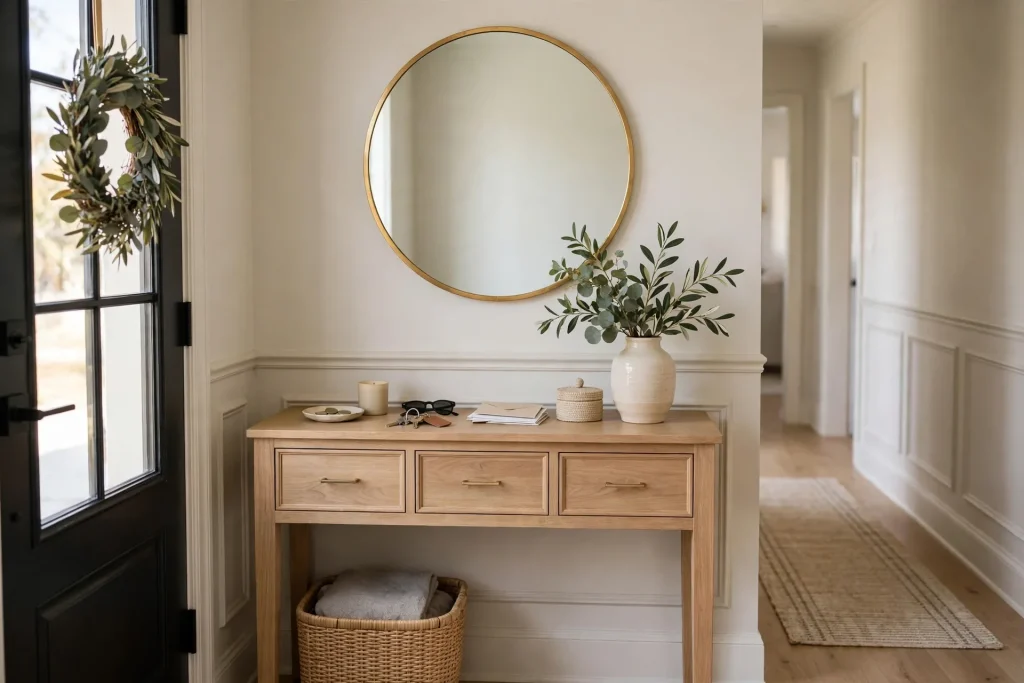
Console With Drawers
Drawers are one of the most useful features an entryway table can have. They hide keys, sunglasses, dog leads, spare masks, and the endless pile of small things that collect by the door.
Two shallow drawers are often more useful than one deep one.
Use small drawer organizers inside, so everything has a spot and nothing ends up jumbled. Picture one drawer for keys and sunglasses and another for pens, stamps, and spare batteries. Getting out the door gets much faster.
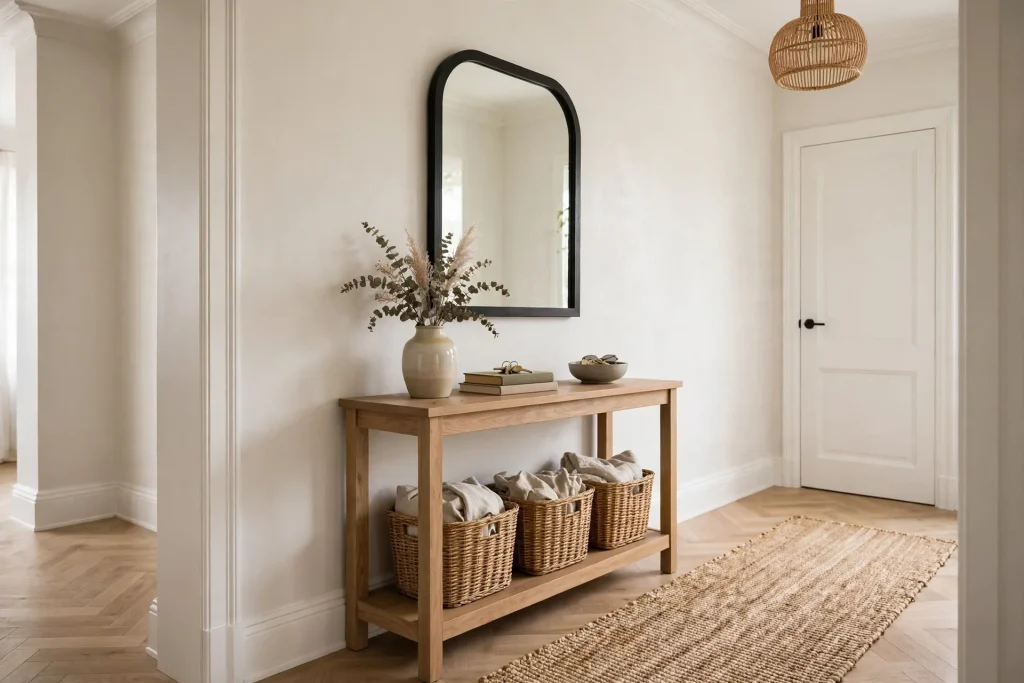
Two-Tier Console With an Open Shelf
A console with a lower shelf gives you two surfaces instead of one.
The top stays neat and decorative, while the bottom shelf holds practical things. Think a basket for gloves, a stack of books, or a tray for shoes.
It’s a simple way to double your storage without adding another piece of furniture.
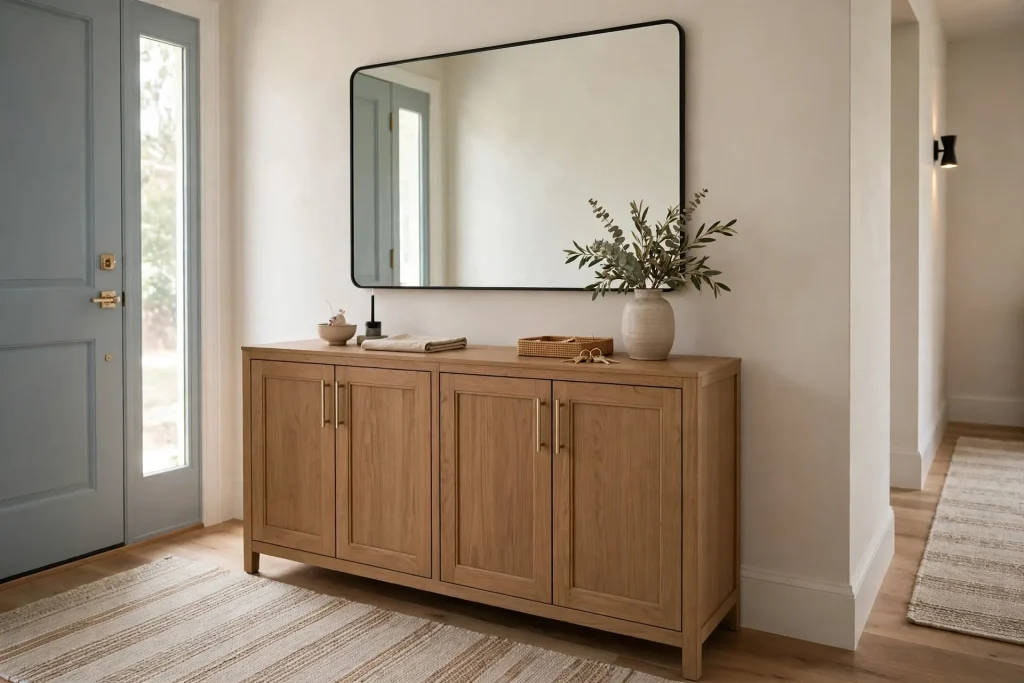
Cabinet-Style Sideboard
If you have space, a low cabinet or sideboard with doors hides much more than a slim console.
Family homes get the most from it, since you need somewhere to stash school bags, sports gear, or reusable shopping bags.
Choose one shallow enough not to block the walkway, including the space the doors need when open, and look for soft-close doors if you have little fingers around. Adjustable shelves inside make it easier to fit bulky items like helmets.
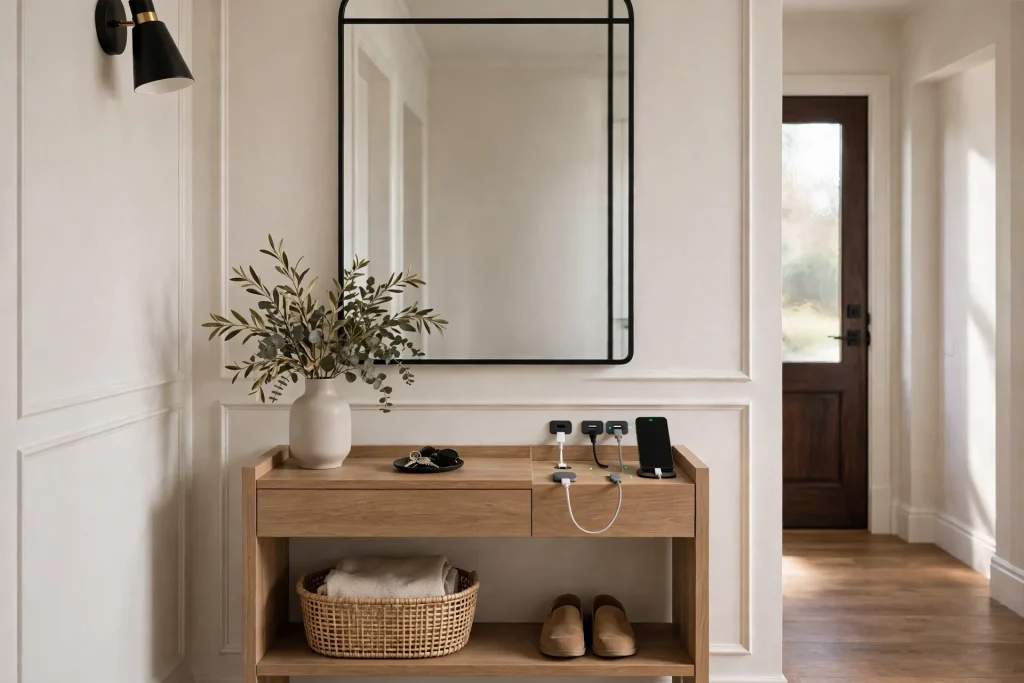
Console With Built-In Charging
Some modern consoles come with built-in outlets or USB ports, so phones can charge as you walk in the door.
It helps keep cords tidy and creates a natural habit: phone down, keys down, coat off. Check that any built-in outlets are certified by a recognized testing body, follow the manufacturer’s instructions, and avoid overloading them. Replace damaged cords, and avoid using extension leads in ways that create trip hazards.
If you’d rather not buy new, a small charging dock in a drawer or on a tray can do the same job. Keep cords tucked behind the table, away from walkways.
Creative alternatives (four ideas):
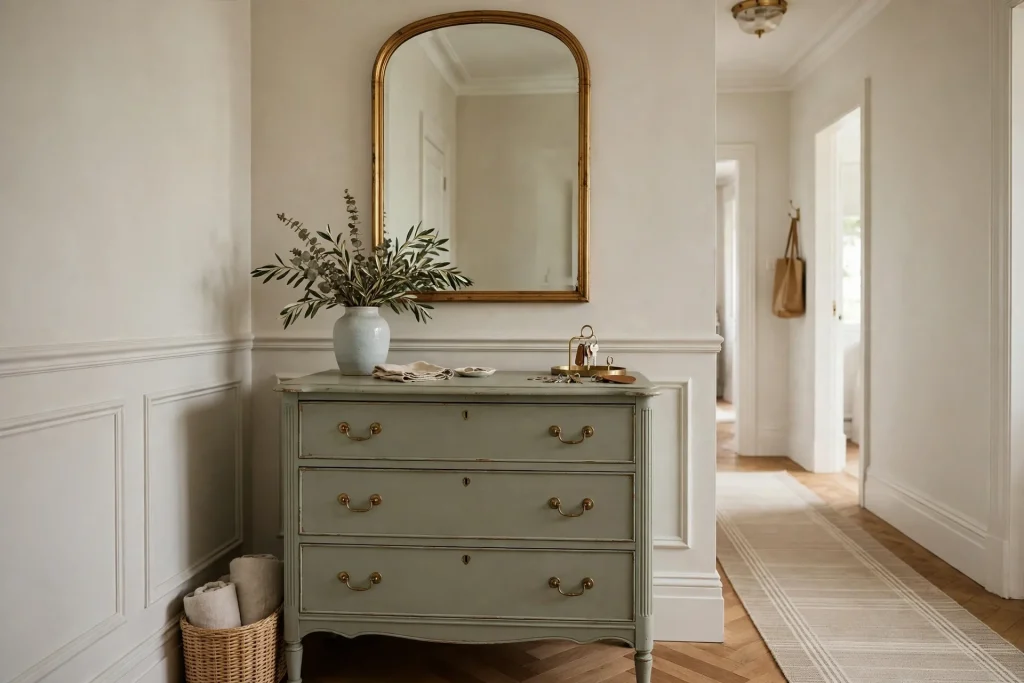
Repurpose a Vintage Dresser
A small vintage dresser or chest of drawers can make a characterful, hard-working entryway table.
You get plenty of drawer space, and a slightly taller surface that’s easy to drop things on.
Check the depth before buying, since dressers are often deeper than consoles. Anchor taller pieces to the wall to prevent tipping.
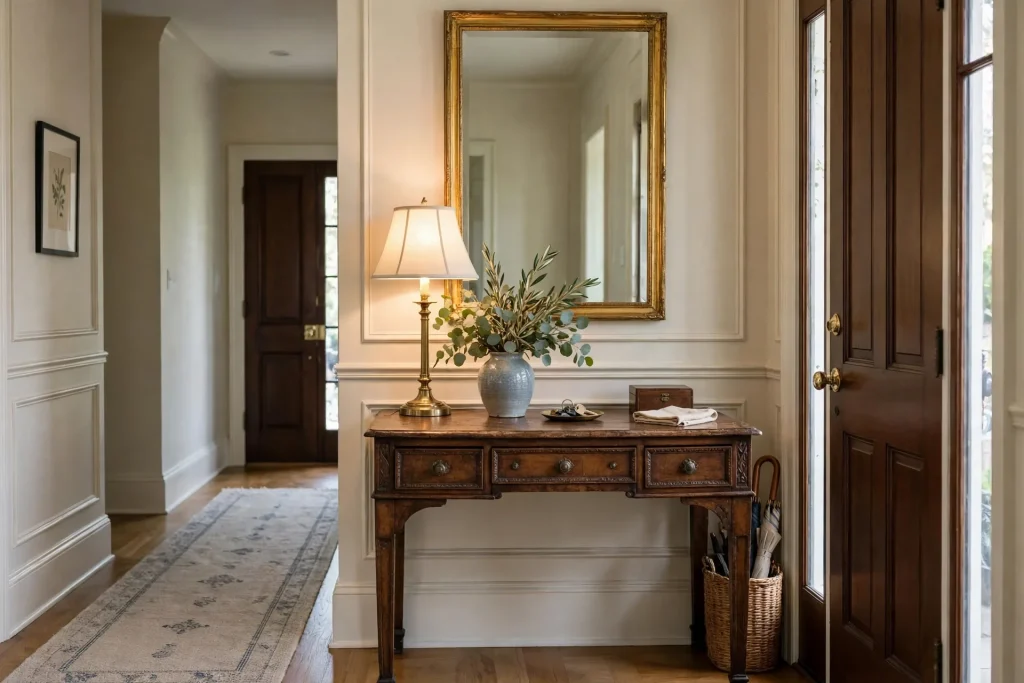
Use an Antique Writing Desk
An antique or vintage writing desk, sometimes with a small drawer or two, brings charm and history to an entry.
Pair it with a small chair or stool, and it can double as a spot to sit and put on shoes or write a quick note.
Look for one that’s sturdy, with legs that don’t wobble. If the finish is simply dull, a suitable furniture polish or wax may refresh it. Check the existing finish before applying anything, especially on older pieces.
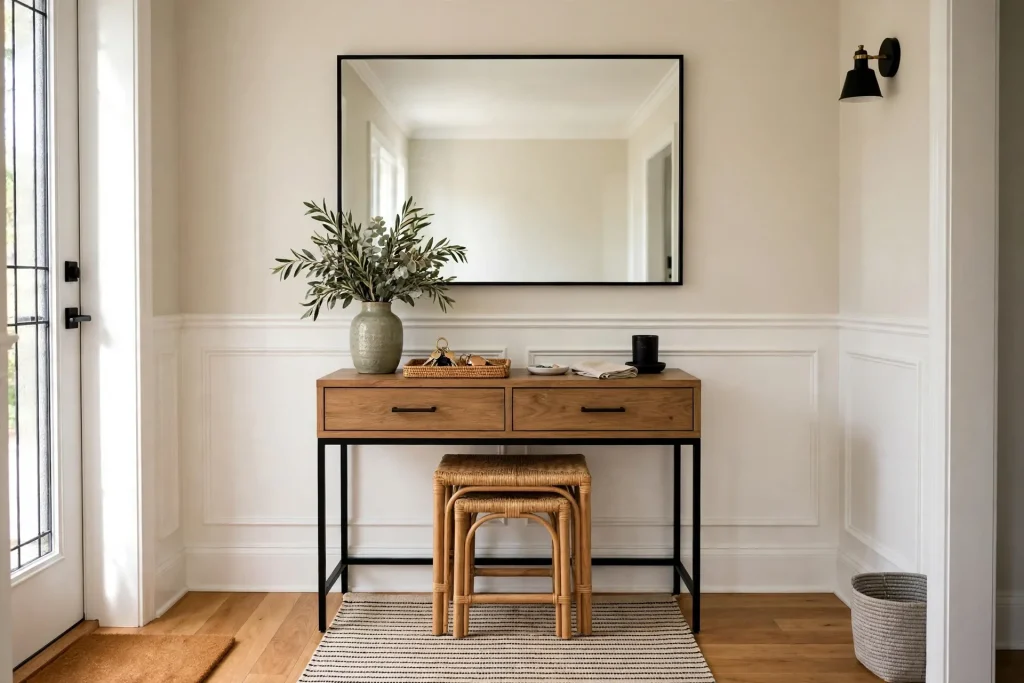
Console With Nesting Stools Underneath
Tuck two small stools or ottomans beneath a console. They fill the empty space under the table, and they pull out when someone needs to sit and tie their shoes.
Upholstered stools add softness, while wooden ones are easy to wipe clean.
Make sure the stools slide fully under the table, so they don’t stick out into the path.
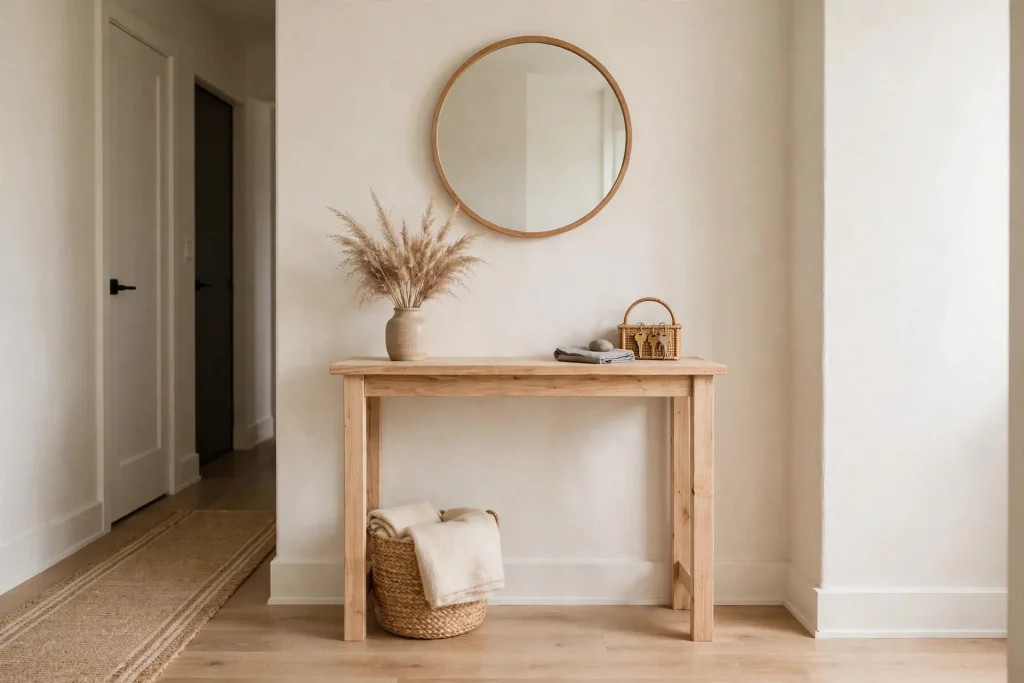
Build a Simple DIY Console
If you like making things, a DIY console can be a satisfying weekend project. Popular versions use a wooden board on hairpin legs, or a plank resting on simple wooden trestles.
Sand all edges smooth, seal the wood, and attach the legs to the top with proper fixings, like screws and brackets rated for the load, rather than relying on how stable it looks. If it’s narrow or tall, anchor it to the wall.
Building your own means you can size it exactly to your hallway, which is especially useful for awkward widths that store-bought tables don’t fit.
Two Hallways, Two Tables
Here’s how a couple of these entryway table ideas might work in real homes.
A narrow apartment hallway. A clear acrylic console only 10 inches deep barely takes up visual space. Add a small key dish on top and hang a round mirror above it.
A busy family entry. A cabinet-style sideboard with soft-close doors holds school bags and sports gear, with a lamp and a tray for keys on top.
Each table solves the main problem of that entry, which is what makes it work.
Entryway Table Mistakes to Avoid
Choosing a table that’s too deep. It can block the walkway and make the entry feel cramped.
Forgetting about the door swing. Always check that the front door opens fully without hitting the table.
Skipping anchoring. Tall, narrow tables and dressers can tip if bumped or climbed.
Picking a material you can’t maintain. Marble, acrylic, and unsealed wood all need different care.
Questions About Entryway Table Ideas
What size entryway table should I get?
Many hallways suit a console around 10 to 14 inches deep, with a width of roughly two-thirds to three-quarters of the wall. Always check your walkway first.
What can I use instead of an entryway table?
A wall-mounted shelf, a vintage dresser, a small writing desk, or a bench with storage can all work.
How high should an entryway table be?
Many consoles are around 30 to 36 inches tall, which is a comfortable height for dropping keys and bags.
What is the best entryway table for a small space?
Slim, wall-mounted, glass, or acrylic consoles work well, since they take up little space or visual weight.
Should an entryway table match my other furniture?
It doesn’t need to match exactly. It should feel connected through color, material, or style.
Choose the Table First, Then Style It
The best entryway table ideas start with the right size and shape for your hallway. Once the table fits, everything else falls into place.
Measure carefully, pick a material you’ll enjoy living with, and choose a table that solves your entry’s biggest problem. The styling can come later.