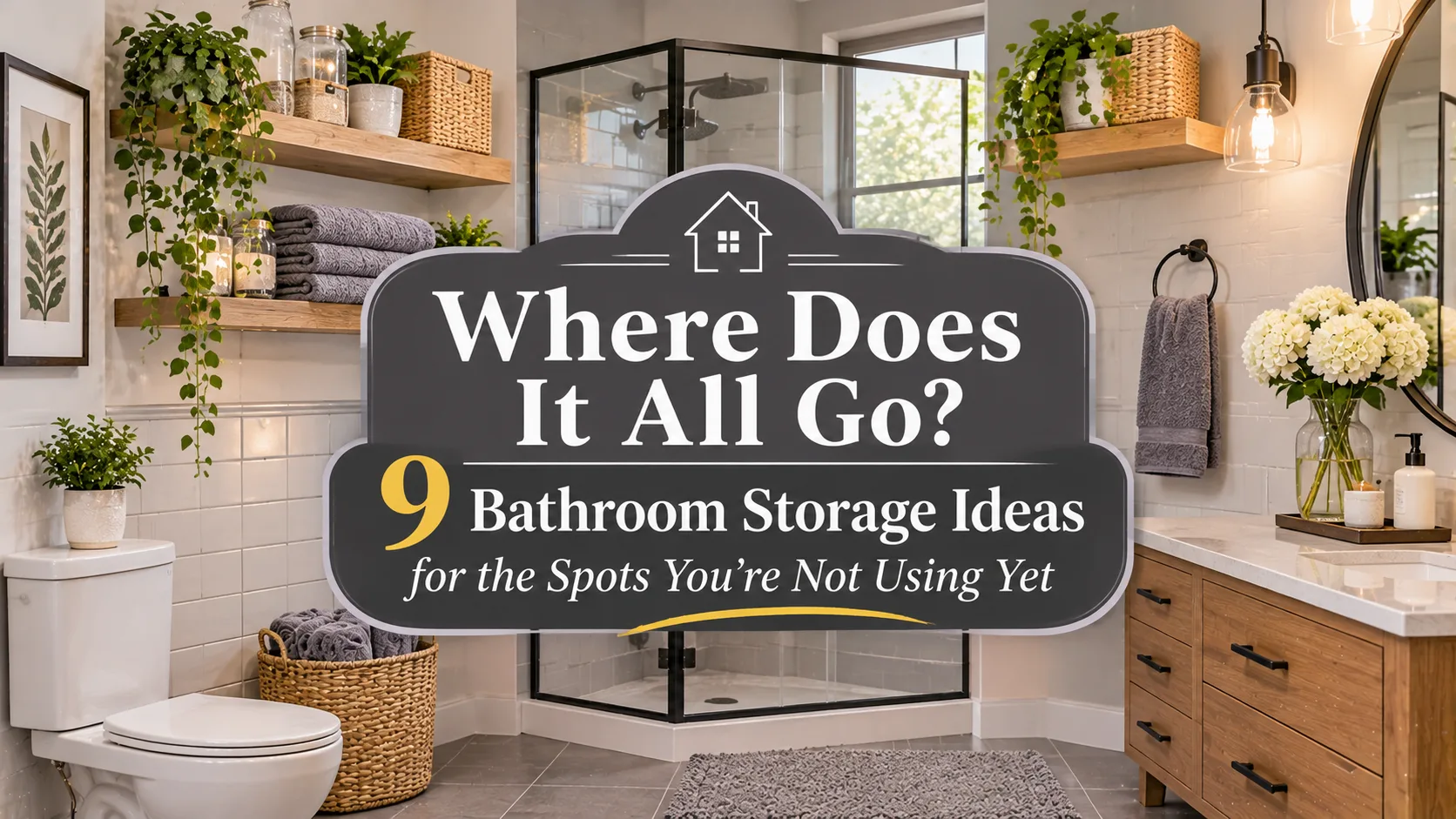
Where Does It All Go? 9 Bathroom Storage Ideas for the Spots You’re Not Using Yet
Try this before reading any further. Go to your bathroom and open the cabinet under the sink.
If you’re like most people, you’ll find a jumble of half-used bottles, a hair dryer with its cord wrapped around everything, three spare toothbrushes, and something at the very back you haven’t seen in a year.
Now look up. Above the toilet, there’s probably a bare wall. Above the door, nothing. Inside the cabinet doors, nothing.
That’s the real problem in most bathrooms. It isn’t that there’s no storage. It’s that the storage is all crammed into one or two spots, while plenty of useful space sits empty.
These bathroom storage ideas are organized by where that hidden space usually is. Some are renter-friendly and take ten minutes. A couple need a drill and a free afternoon. All of them are about using the room you already have.
The Five-Minute Sort Before You Buy Anything
Storage products are tempting, but buying them first is a common way to end up with more clutter.
Start with a quick sort instead. Pull everything out of one cabinet or drawer and divide it into three piles.
Daily. Things you use every day, like toothpaste, deodorant, a hairbrush, and skincare.
Weekly or occasional. Things like hair masks, nail kits, spare razors, and first aid supplies.
Gone. Expired products, empty bottles, and anything nobody in the house uses anymore.
Check expiry dates on sunscreen and medicines in particular. For old medicines, follow your local pharmacy or medicine take-back guidance rather than throwing them in the trash.
Once you know what’s left, you’ll have a much better idea of what kind of storage you actually need.
Under the sink (two ideas):
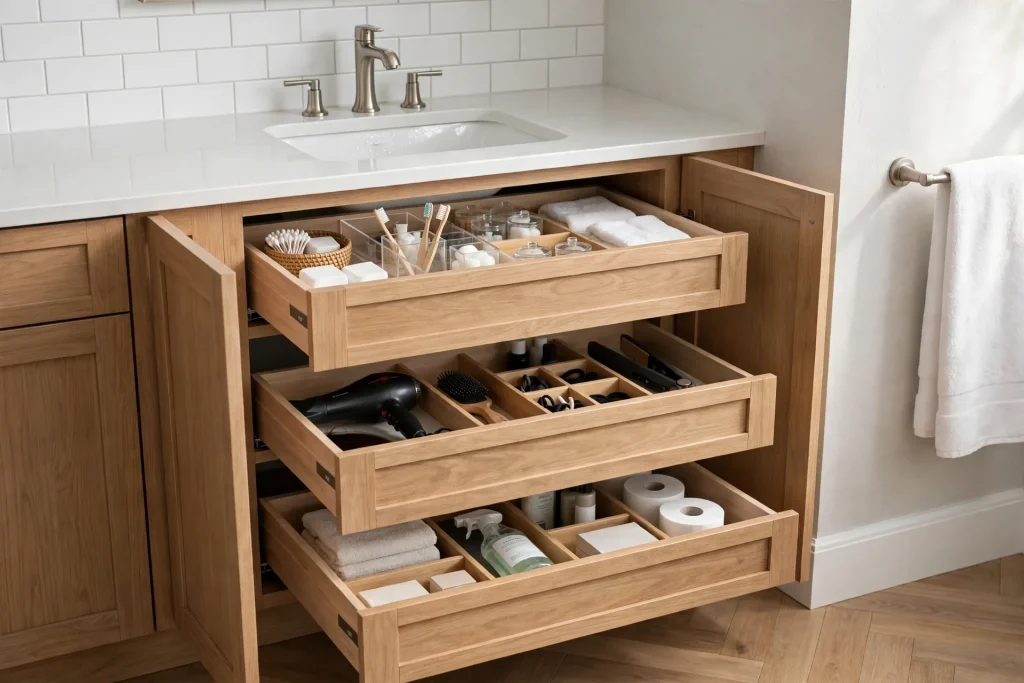
Fit Pull-Out Drawers Inside the Vanity
The space under a bathroom sink is often the biggest storage spot in the room, but it’s also the most awkward. Pipes run through the middle, the back is hard to reach, and things get pushed out of sight.
Pull-out drawers fix most of that.
Many are designed specifically for bathroom vanities, with a U-shape or a split design that fits around the drain pipe. Others are simple sliding baskets that sit on either side of the pipes.
How to choose the right one:
- Measure the inside width, depth, and height of the cabinet, not just the outside
- Note how far the drain pipe sits from the back and how high it starts from the cabinet floor
- Measure the door opening and check the hinges, since a center stile or hinge can block drawers from sliding out
- Look for moisture-resistant materials like coated metal or plastic
Picture a vanity with two slim pull-out baskets. One holds cleaning supplies, the other holds spare toiletries. Everything slides forward with one pull, so nothing gets lost at the back again.
Store cleaning products in their original containers. If you have young children, keep them in a cabinet with a child safety lock, separate from toiletries.
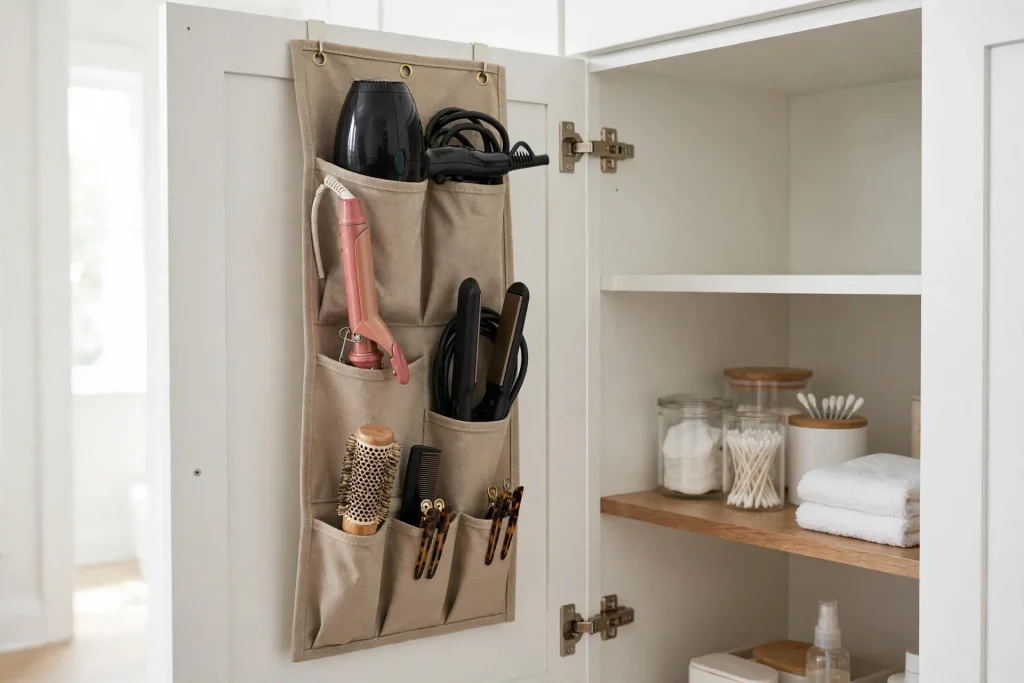
Hang a Hair Tool Holder Inside the Cabinet Door
Hair dryers, straighteners, and curling irons are bulky, awkwardly shaped, and come with long cords. They’re often the main reason a bathroom cabinet feels chaotic.
A door-mounted holder gives each tool its own slot.
Most are metal or heat-resistant plastic and screw or hook onto the inside of a cabinet door. Some hang over the top of the door without any tools.
This one comes with an important safety note. Always let hot tools cool down completely before putting them away, and unplug them first. Even holders labeled heat-resistant aren’t a substitute for letting tools cool.
Keep cords loosely coiled with a soft tie or a cord wrap, rather than wrapping them tightly around the tool, which can damage them over time.
Check that the door can still close properly once the holder and tools are in place.
On the walls (three ideas):
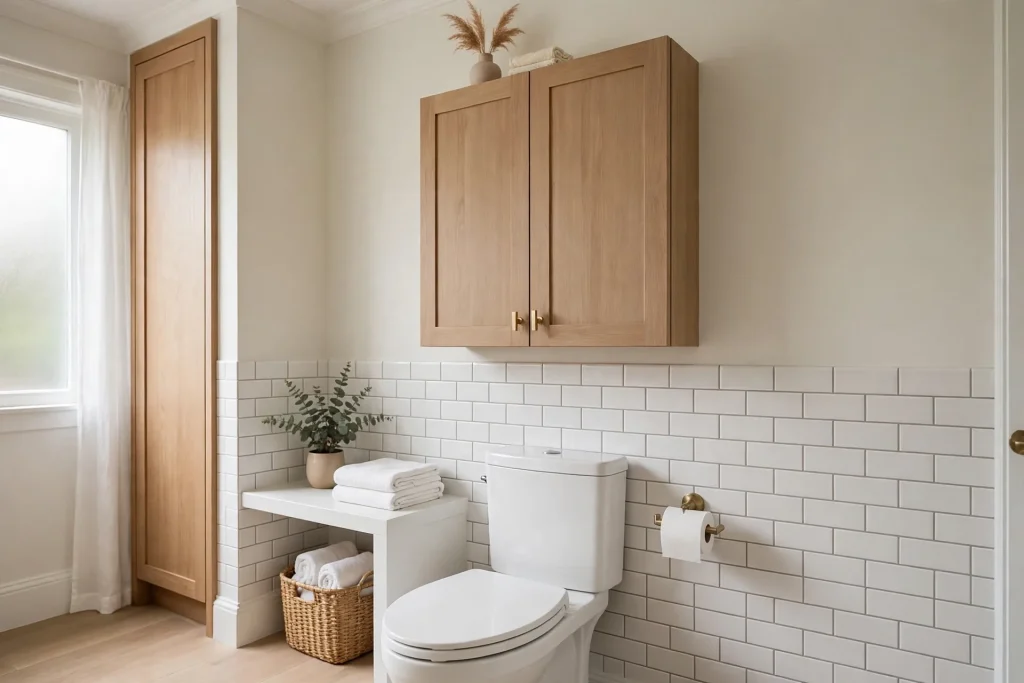
Mount a Wall Cabinet Above the Toilet
The wall above the toilet is one of the most wasted spaces in a bathroom. A shallow wall cabinet turns it into real storage.
Why a closed cabinet instead of open shelves? Doors hide the everyday mix of bottles and packets, so the bathroom looks calmer. They also help protect what’s inside from dust and direct splashes.
Choose a cabinet that’s slim enough not to stick out over your head. Many bathroom wall cabinets are only a few inches deep, which is plenty for toiletries, spare razors, or a first aid kit.
Mount it high enough that nobody bumps their head when standing up, but low enough that you can still reach the top shelf.
Secure it into wall studs or with anchors rated for the weight. Bathroom walls can be tile, plaster, or drywall, so use fixings that suit your wall type. If you’re unsure, a handyperson can help.
Bathrooms often get warm and humid, which isn’t ideal for most medicines. Keep medicines in a cool, dry place outside the bathroom, out of children’s reach, unless the label says otherwise. The cabinet is better used for toiletries and simple first aid supplies like bandages.
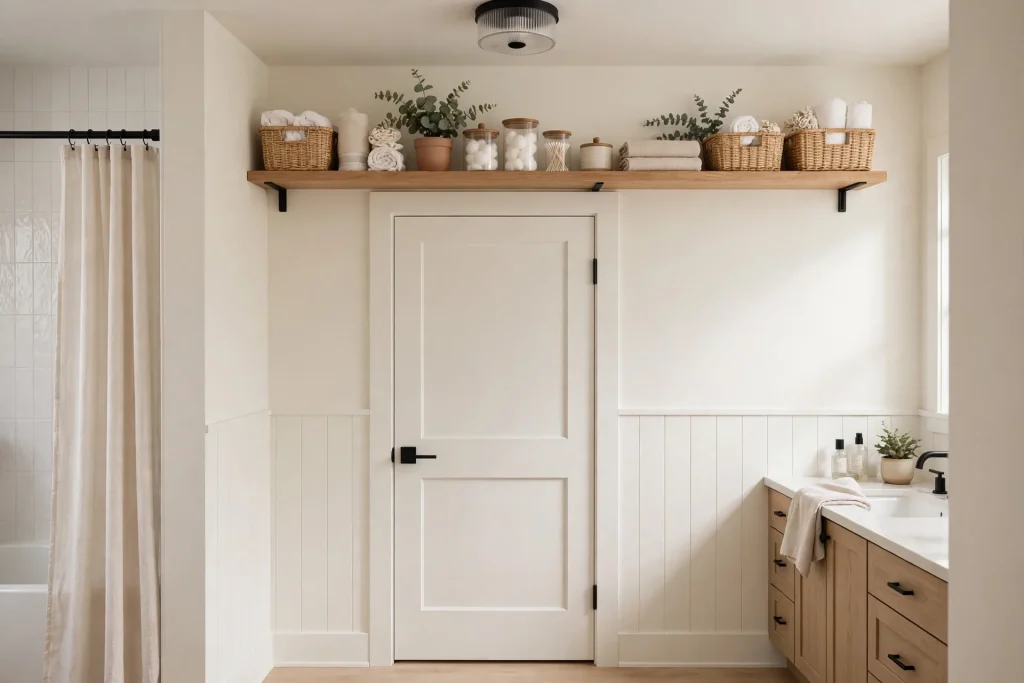
Add a Shelf Above the Bathroom Door
It’s easy to forget the space above the door. But in many bathrooms, there’s a strip of wall there that’s perfect for a single long shelf.
This spot works best for things you don’t need every day, like:
- Spare toilet paper rolls in a lidded basket
- Extra hand towels
- Backup bottles of shampoo or soap
Since it’s high up, keep it to lightweight items stored in baskets or boxes, so nothing can fall when the door closes.
Use sturdy brackets and screw them into studs where possible. Leave enough clearance so the door doesn’t hit the shelf when it opens fully.
Matching baskets make this shelf look neat rather than cluttered. Woven seagrass, white plastic, or fabric bins all work, depending on your bathroom’s style.
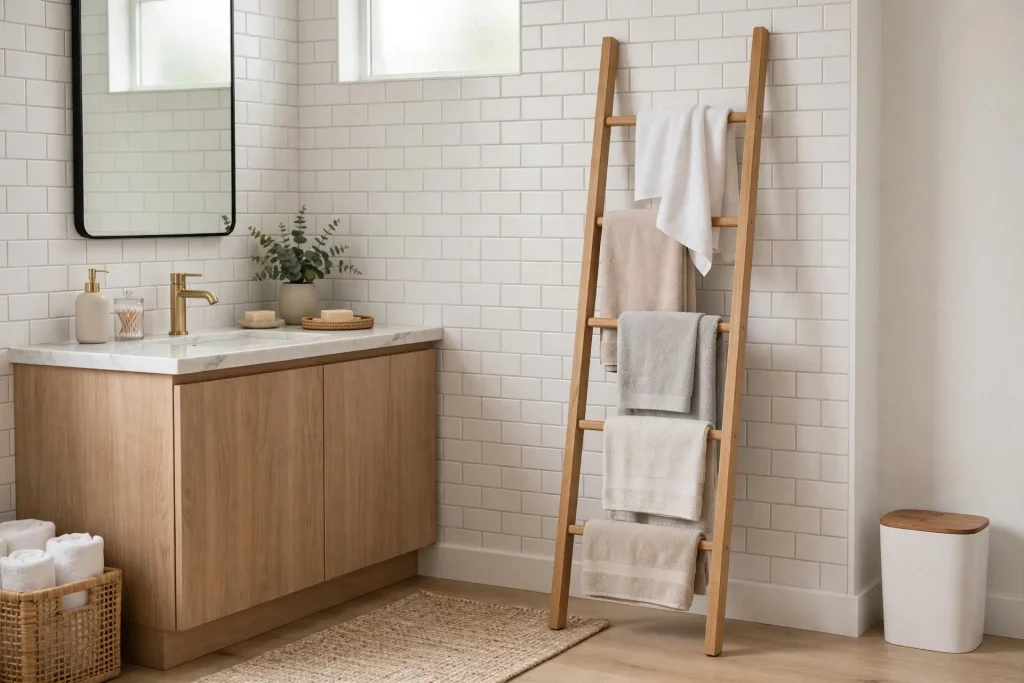
Lean a Towel Ladder Against the Wall
Towel bars hold one or two towels. Some towel ladders can hold five or six, depending on their design, and many don’t need any drilling.
Towel ladders are simple wooden or metal frames that lean against the wall. Each rung holds a towel, so they can air out properly between uses instead of staying folded and damp.
This works especially well when:
- Your bathroom has limited wall space for towel bars
- You rent and can’t drill into tiles
- You want towels for several family members in one place
Wood with a water-resistant finish, bamboo, or powder-coated metal all handle humidity better than untreated wood.
Leaning ladders can tip if pulled or climbed on. If you have young children, use the small wall clips that many ladders come with, or choose a wall-mounted version instead.
Imagine a narrow bathroom with a bamboo ladder in the corner, holding bath towels on the lower rungs and hand towels near the top. It adds storage and looks like a decorative piece at the same time.
Around the shower and bath (two ideas):
Try a Tension-Pole Corner Shower Caddy
Many showers end up with bottles lined along the tub edge or balanced on the floor. That’s messy and harder to clean.
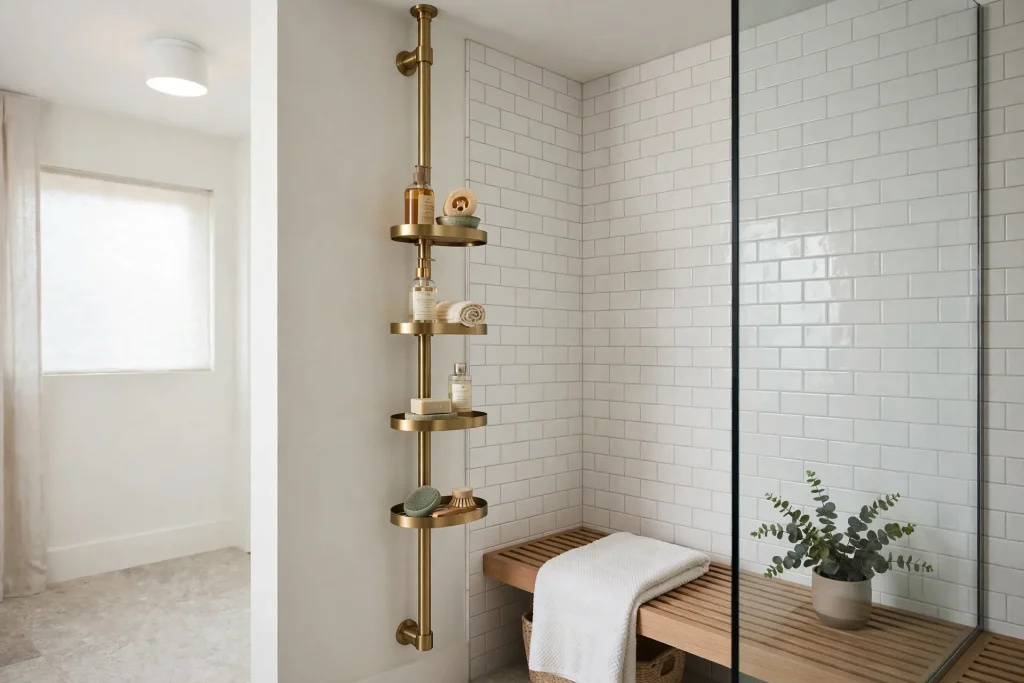
A tension-pole caddy fits into a corner of the shower and stretches between the floor or tub edge and the ceiling. It holds several shelves at different heights. Installation varies by model, so follow the manufacturer’s instructions and check that it suits your tub edge and ceiling surface.
It’s one of the most renter-friendly bathroom storage ideas, since it usually doesn’t need drilling.
A few tips for using one:
- Measure your ceiling height first, since poles only stretch so far
- Choose rust-resistant materials like stainless steel or aluminum
- Put heavier bottles on the lower shelves
- Check the tension regularly, since poles can loosen over time
Shelves with drainage holes or open wire bases help water run off, so bottles don’t sit in puddles. Wipe the shelves now and then to stop soap scum building up.
Switch to Wall-Mounted Pump Dispensers
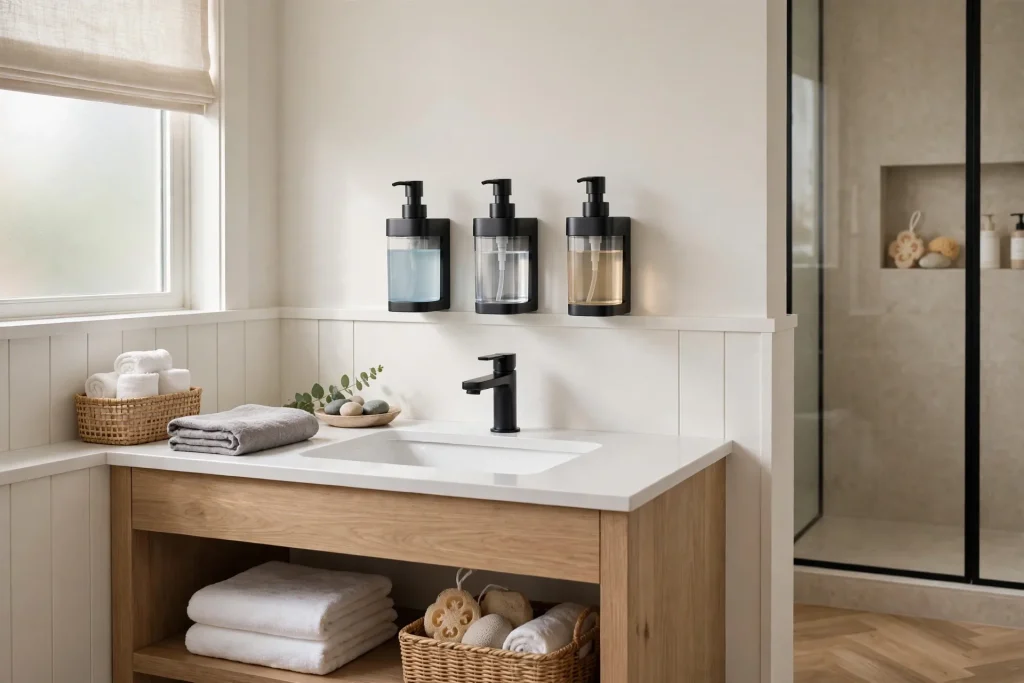
A lot of shower clutter comes from bottles in different shapes and sizes. Wall-mounted pump dispensers replace them with one neat unit.
Most hold two to four liquids, usually shampoo, conditioner, and body wash. You refill them from larger bottles, which can reduce packaging waste when you buy bigger refill containers.
Many attach with strong adhesive, which can work on smooth tile. Others screw into the wall for a more permanent fit.
Before you buy, think about:
- Whether everyone in the house uses the same products
- How easy the containers are to remove and clean
- Clear labels, so nobody washes their hair with body wash by mistake
Clean and dry the containers fully before refilling them, since leftover water can affect the products. Wash them out between refills, too.
If family members prefer different products, a dispenser for shared items plus a small caddy for personal ones works well.
In plain sight (two ideas):
Add a Fabric Skirt Under a Pedestal Sink
Pedestal sinks look pretty, but they offer zero storage. Many older bathrooms and small apartments have one.
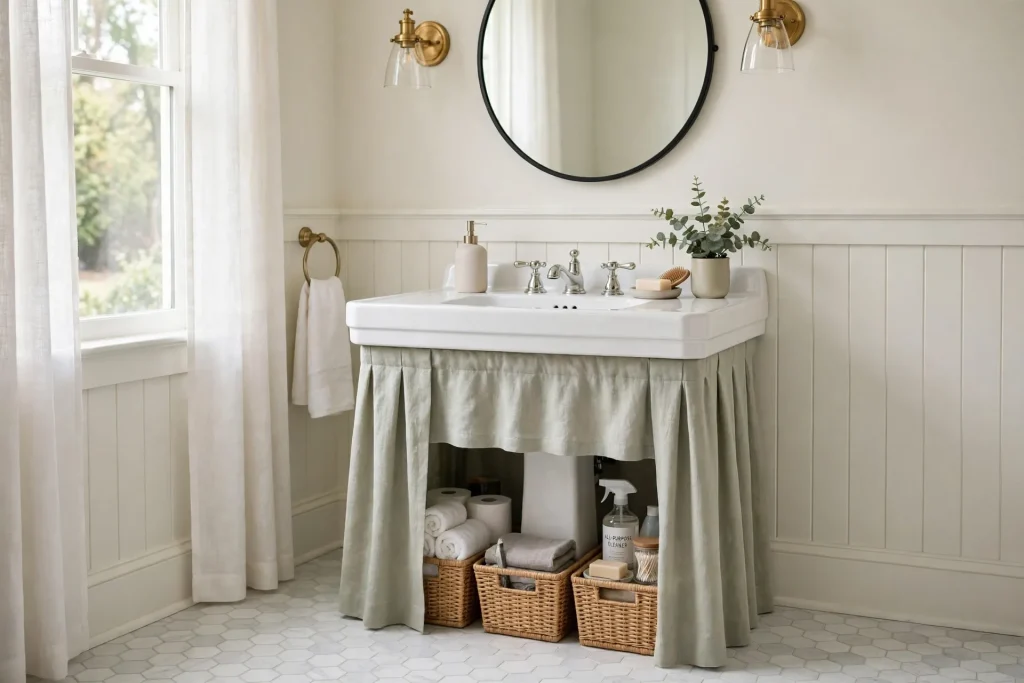
A sink skirt is a simple fix. It’s a fabric panel that wraps around the sink and hides the space beneath it, so you can store baskets or small bins out of sight.
Some attach with adhesive hook-and-loop strips around the edge of the sink, which makes them easy to remove for washing. That also makes them a good option for renters.
Choosing a skirt:
- A washable cotton or linen blend is easy to care for
- Striped, gingham, or plain fabric all suit different styles
- The hem should sit just above the floor, so it doesn’t soak up water
Behind the skirt, slide in two or three narrow baskets for spare toiletries or cleaning cloths.
Check under the sink occasionally for leaks or damp, since the skirt can hide early signs of a problem.
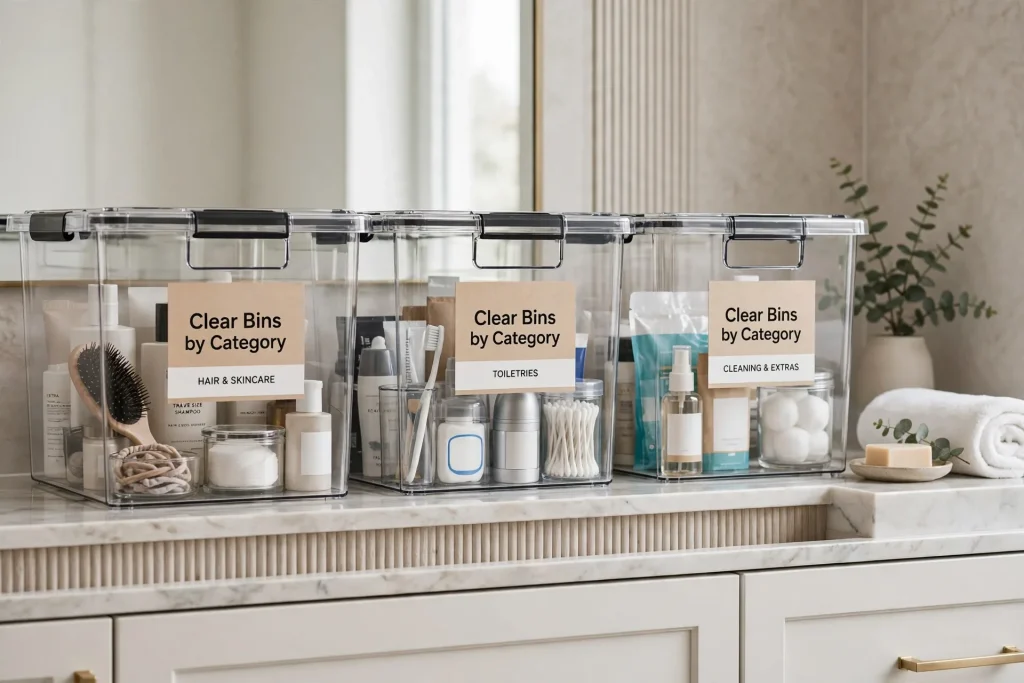
Label Clear Bins by Category
Clear bins are one of the simplest ways to bring order to any bathroom shelf, cabinet, or linen closet. You can see what’s inside, and labels make it easy for everyone in the house to put things back in the right place.
Group items by category rather than by person, unless you’re dealing with a shared bathroom and very different routines.
Simple category ideas:
- Hair care
- Skincare
- Dental care
- First aid
- Travel-size products
- Cleaning supplies
Stackable bins with lids make good use of tall shelves. Shallow bins with open tops work well for things you grab daily.
Picture a narrow linen closet where every shelf has two or three clear bins, each with a simple printed label. When someone needs a bandage, they don’t have to dig through everything. They just reach for the “first aid” bin.
A label maker is handy, but masking tape and a marker work fine to start.
How These Bathroom Storage Ideas Work in Three Different Homes
Here’s how a few of these ideas might come together.
A small rental bathroom with a pedestal sink. A sink skirt with baskets underneath, a tension-pole shower caddy, and a leaning towel ladder. No drilling, nothing permanent, and the floor stays clear.
A busy family bathroom. Pull-out drawers under the vanity, clear labeled bins in the linen closet, a wall cabinet above the toilet for toiletries, and a child safety lock on the cleaning cupboard.
A shared bathroom for two adults. A hair tool holder inside the cabinet door, wall-mounted dispensers for shared products, and a shelf above the door for spare toilet paper and towels.
None of these setups needs every idea. Each one simply uses the spaces that bathroom was ignoring.
Mistakes That Make Bathroom Storage Harder
Buying organizers that don’t suit the space. Pipes, hinges, and odd cabinet sizes catch a lot of people out.
Storing everything at eye level. Use high spots for backup supplies and low spots for heavier items. Keep daily things in the easiest places to reach.
Ignoring humidity. Cardboard boxes, untreated wood, and some fabrics can grow mold or warp. Choose materials made for damp rooms.
Keeping things “just in case.” Old products, free samples, and broken tools take up space that everyday items need.
Questions About Bathroom Storage Ideas
What is the best storage for a small bathroom?
Vertical storage usually helps most. Think wall cabinets above the toilet, shelves above the door, and slim pull-out drawers under the sink.
How can I add storage to a bathroom without drilling?
Try a tension-pole shower caddy, a leaning towel ladder, a sink skirt with baskets, or over-the-door hooks and racks.
How do I organize under the bathroom sink?
Measure around the pipes first, then add pull-out drawers or baskets that fit. Group items by category, and use a lock if there are young children in the home.
Should I keep medicines in the bathroom?
Usually not. Heat and humidity from showers can affect many medicines. A cool, dry place outside the bathroom, out of children’s reach, is generally better unless the label says otherwise.
How do I stop bathroom storage from getting messy again?
Do a quick five-minute sort every few months, and give every item a clear home. Labels help everyone put things back.
Start Under the Sink
Most bathroom storage ideas work best when you tackle one spot at a time. Under the sink is usually the messiest, so it’s a good place to begin.
Do the five-minute sort, measure the space, and choose one fix that suits your bathroom. Once that spot feels sorted, move to the walls, then the shower. Small changes add up quickly in a room this size.