
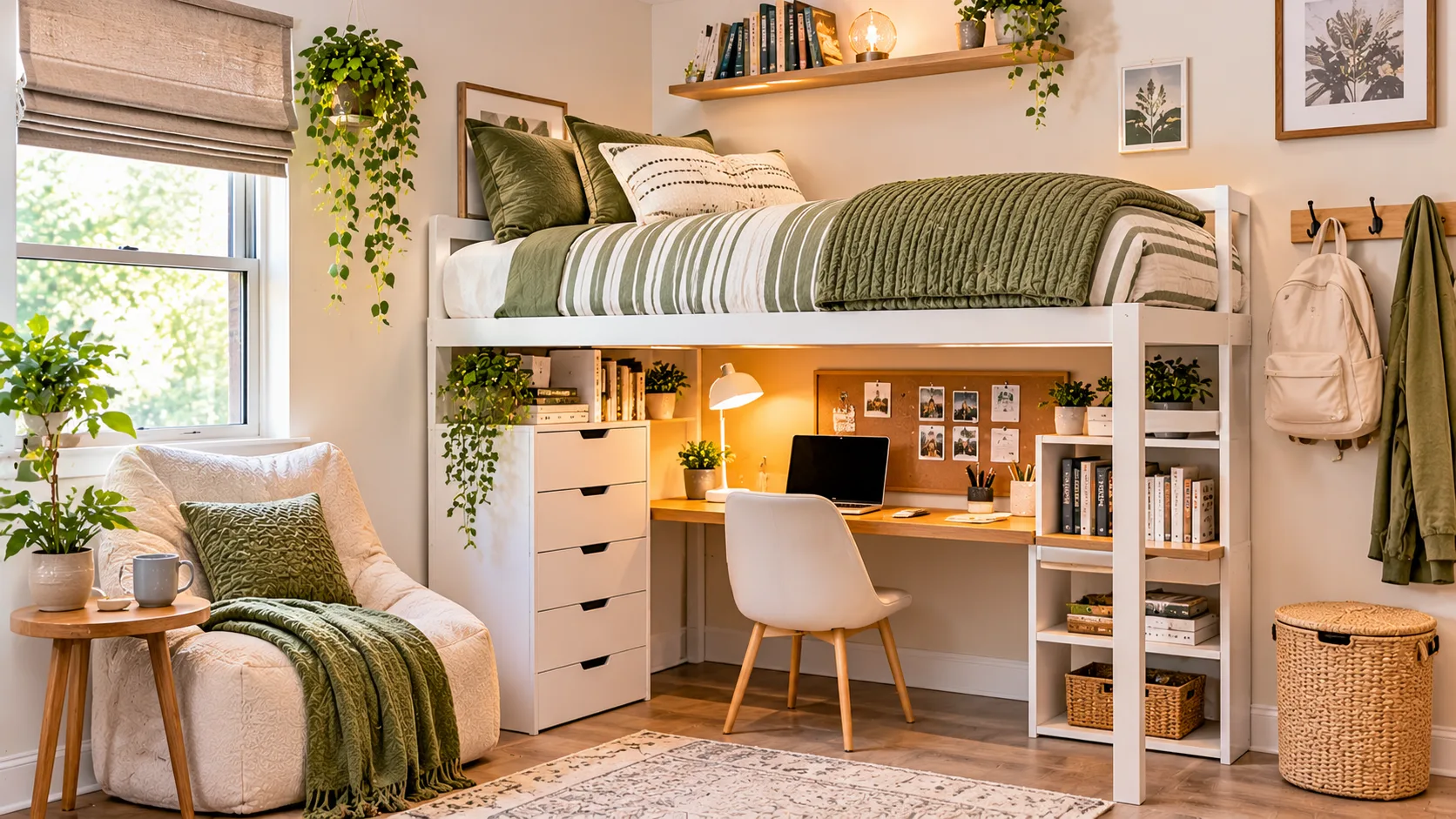
One Room, Four Jobs: 8 Dorm Bedroom Ideas That Make Small Spaces Work Harder
At home, you have separate spaces for sleeping, eating, relaxing, and getting out the door with everything you need. In a dorm, one small room often has to do all four.
You sleep there. You snack there. Friends drop by and sit wherever they can find space. And every morning, you rush out the door hoping you didn’t forget your ID card.
That’s why so many dorm rooms feel chaotic by the second week. It isn’t that students are messy. It’s that one room is quietly trying to do four jobs without any help.
The dorm bedroom ideas in this post are organized around those four jobs: bedroom, kitchen, living room, and entryway. Each one gives a different part of daily life a proper home, so the room feels calmer and easier to live in.
Before You Buy: Check Your Housing Rules
Almost every residence hall has rules about what you can bring. A quick read of your housing handbook before shopping can save money and stress.
Things that are commonly restricted include:
- Candles, incense, and anything with an open flame
- Space heaters and certain cooking appliances
- Extension cords without surge protection
- Nails, screws, and some adhesives on walls
- String lights or certain types of lighting
Rules vary a lot between schools, so check yours rather than relying on general advice. Some halls also provide items like mini fridges, which saves you buying one.
The bedroom job (three ideas): where you sleep, dress, and wind down at the end of the day.
Swap the Nightstand for a Rolling Cart
Most dorm rooms don’t come with a bedside table, and there’s rarely space for one. A slim three-tier rolling cart solves that neatly.
It works as a nightstand, but its wheels make it easy to move around. Roll it beside the bed at night, then push it to the desk when you need extra supplies, or tuck it into a corner when friends come over.
A typical setup might look like this:
- Top tier: a small lamp, phone charger, water bottle, and glasses
- Middle tier: a book, earplugs, lip balm, and tissues
- Bottom tier: a basket for spare chargers, snacks, or skincare
Choose a cart with locking wheels so it doesn’t roll away when you lean on it. Metal carts are sturdy and come in lots of colors. If your bed is high, look for a taller model so the top tier is easy to reach.
This is one of the simplest dorm bedroom ideas, but it often makes the biggest daily difference.

Clip a Shelf to a Raised Bed
Many dorm beds are raised or lofted to make room for storage underneath. The downside is that there may be nowhere convenient to put your phone or glasses once you’re in bed.
A clip-on bedside shelf fixes that. It attaches to the bed frame or rail, usually without tools, and gives you a small ledge right beside your pillow.
Look for one with:
- A lip or edge so things don’t slide off
- A cutout or gap for a charging cable
- A weight limit that suits a phone, glasses, and a water bottle
For example, a student on a lofted bed might clip a shelf to the side rail, run a charging cable through the cutout, and keep a small clip-on reading light beside it. Everything they need at night is within arm’s reach, without climbing down.
Check that the shelf fits your bed frame before buying, and never overload it. Avoid charging devices on soft bedding or under pillows, since they can get hot.
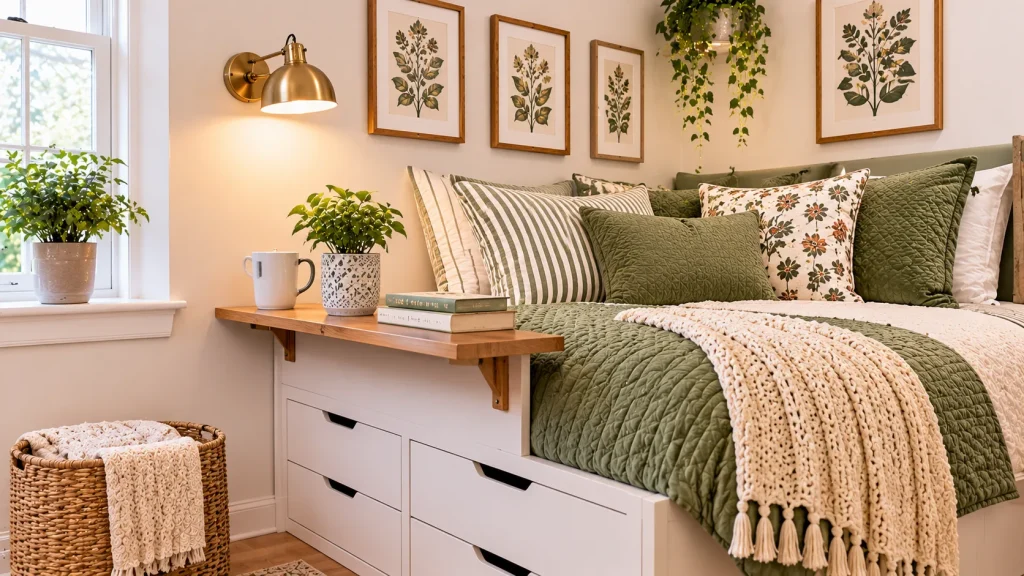
Prepare for a Room You Can’t Control
Dorm rooms are famous for being too hot, too cold, or both in the same week. Many have shared heating systems, and some don’t have air conditioning at all.
A small comfort kit can make changing temperatures easier to manage:
For warm weather: a clip-on or small desk fan, lightweight cotton or linen sheets, and blackout curtains or a blind to block afternoon sun, if your hall allows them.
For cold weather: a warm blanket, a thick throw, and flannel sheets or a cozy duvet.
For both: layered bedding, so you can add or remove warmth without buying new things.
Imagine a top-floor room that’s stuffy in September and chilly by December. A small clip fan on the bed frame handles the warm weeks. Later in the term, a fleece throw and a heavier duvet come out of an under-bed bag. The same room feels comfortable all year without any extra appliances.
Space heaters are often banned in residence halls because of fire risk. If your room is uncomfortable most of the time, it’s worth contacting your residence staff, since there may be a maintenance issue with the heating or ventilation.
The kitchen job (one idea): where snacks, drinks, and quick meals happen.
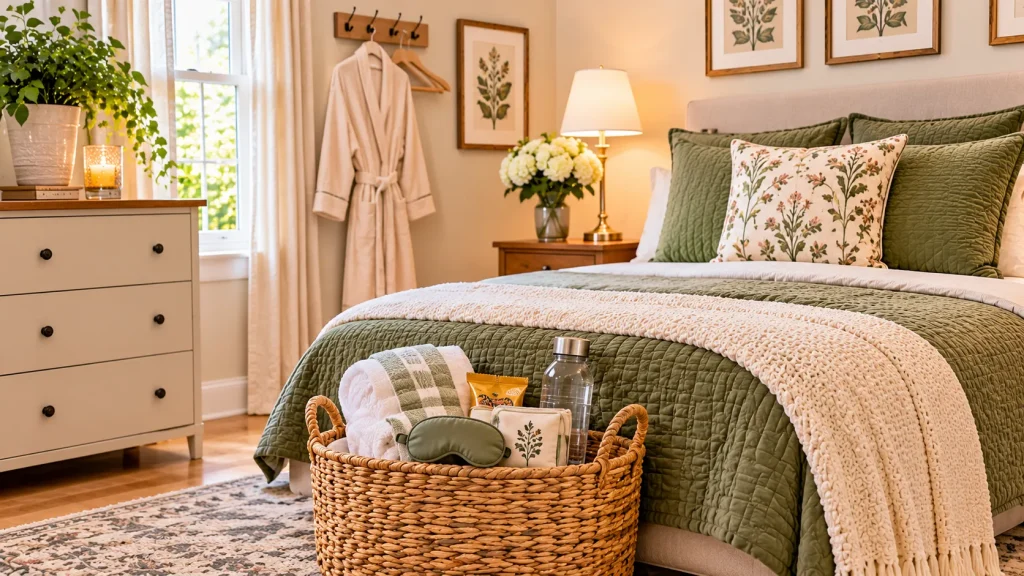
Set Up a Mini Kitchenette Corner
Even without a real kitchen, most students end up eating in their room at least sometimes. A tidy kitchenette corner keeps snacks and food supplies from taking over your desk and bed.
The setup depends on what’s allowed, but it often includes:
- A mini fridge, if permitted or provided
- A small shelf or set of drawers for dry snacks, cereal, and instant meals
- A few reusable plates, bowls, cups, and cutlery
- A small dish tub for carrying dishes to the shared kitchen or bathroom to wash
- Sealed containers to keep food fresh and away from pests
Picture a mini fridge in the corner with a small two-drawer storage unit beside it, rather than on top, so the fridge’s vents stay clear. One drawer holds snacks and tea bags. The other holds cutlery, a can opener, and napkins. Any permitted kettle or microwave sits on its own stable surface nearby. Everything food-related lives in one spot.
Follow each appliance manufacturer’s electrical and ventilation requirements, and avoid plugging high-power appliances like microwaves or kettles into extension cords or power strips unless your hall specifically allows it. Never leave cooking appliances unattended. Keep food sealed and clean up crumbs quickly, since shared buildings can attract pests.
The living room job (two ideas): where friends hang out and you relax.
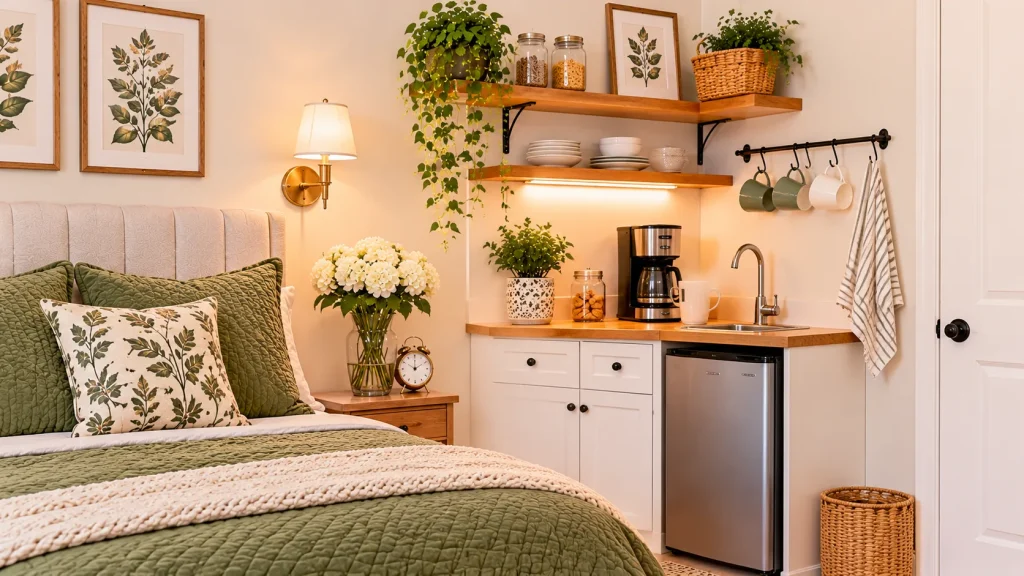
Add Floor Seating for Friends
Most dorm rooms have one desk chair and a bed. When two or three friends drop by, everyone ends up squeezing into whatever space is available.
Floor seating solves that without taking up much space:
- Large floor cushions that stack in a corner when not in use
- A pouf or two, which double as a footrest
- A foldable bean bag, which can be squashed into a closet
- A collapsible stool, which slides under the bed
A soft rug underneath makes floor seating comfortable and warmer, especially on hard floors.
Imagine a small room with a pair of round floor cushions stacked under the desk. When friends come over for a movie night, the cushions come out, the rolling cart becomes a snack table, and suddenly the room seats four.
Choose covers you can remove and wash, since floor cushions get a lot of use. Stack or store them when they’re not needed, and keep them clear of the doorway so nobody trips on the way in or out.

Create a Small Self-Care Corner
College can be busy and stressful. A small corner for relaxing, stretching, or enjoying some quiet time can make your room feel more like a personal retreat.
It doesn’t need much space. A few things that work well:
- A rolled yoga mat tucked against the wall
- A small basket with a journal, a book, and headphones
- A plant or two, which many students find calming to care for
- A soft throw and a cushion for sitting on the floor
The point isn’t to buy lots of new things. It’s to have a spot that signals “this is where I unwind,” separate from where you study.
For example, a student might keep a rolled yoga mat, a small speaker, and a basket of skincare beside the window. Fifteen minutes of stretching or listening to music there after classes can help them switch off before starting homework. In a shared room, keep the volume low or use headphones.
Real plants need light and regular watering, so choose something easy like a pothos or snake plant if you’re new to plant care. You’ll also need a plan for watering during holidays.
If stress or low mood starts to feel overwhelming, most colleges have counseling and wellbeing services. They’re there to help, and reaching out is a good step.
The entryway job (two ideas): where belongings get put away and you head out each day.
Build a Modular Cube Storage Wall
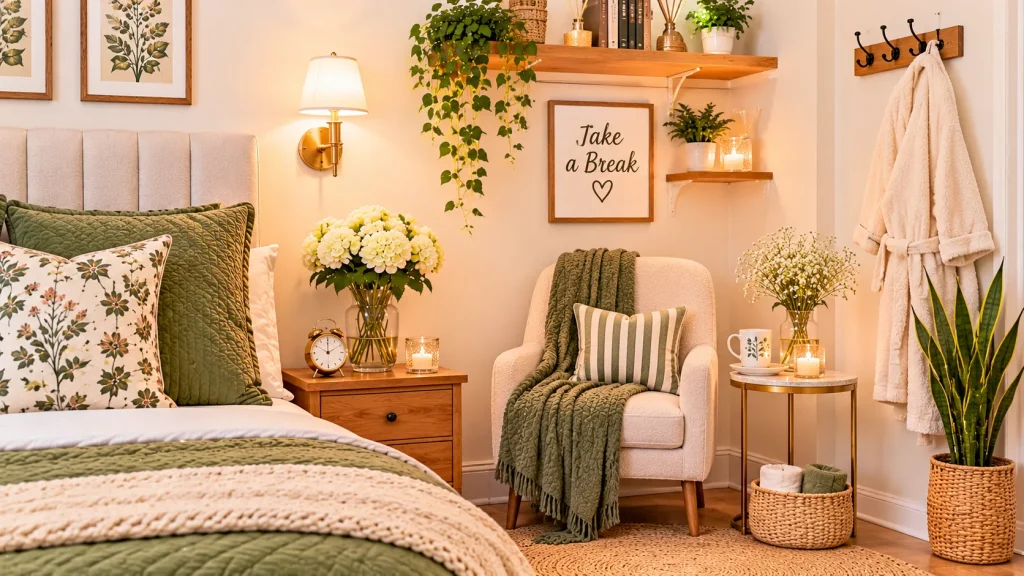
Dorm closets are often tiny, so storage space can run out quickly. A modular cube storage unit adds flexible storage without permanent fixings, and placed near the door, it gives bags, shoes, and outdoor gear a home before they spread across the room.
Cube units come in many shapes. You can stack them, set them on their side, or use them as a room divider in a shared room. Fabric bins slide into the cubes to hide clutter, while open cubes can display books or a few favorite things.
For example, two four-cube units laid on their sides near the door can become a long, low bench. Fabric bins inside hold shoes, sweaters, and spare bedding, while a couple of cushions on top turn it into a spot to sit and pull on boots. Before using a cube unit as a bench, check its weight capacity and make sure it’s designed to support someone sitting on it.
Some ways to use them:
- As a bookcase and display shelf
- As extra clothing storage with fabric bins for folded items
- As a low bench or TV stand
- As a divider between two halves of a shared room
Tall cube units can tip, so keep heavier items in the lower cubes. Many halls don’t allow screws in the walls, so a low, wide arrangement is often safer than a tall one. If anchoring is allowed, use the anti-tip kit that comes with the unit.
This is one of the more flexible dorm bedroom ideas, since the same cubes can move with you into an apartment after college.
Set Up a Grab-and-Go Station by the Door
Few things are more stressful than realizing you’ve left your ID card or keys behind just as the door locks behind you.
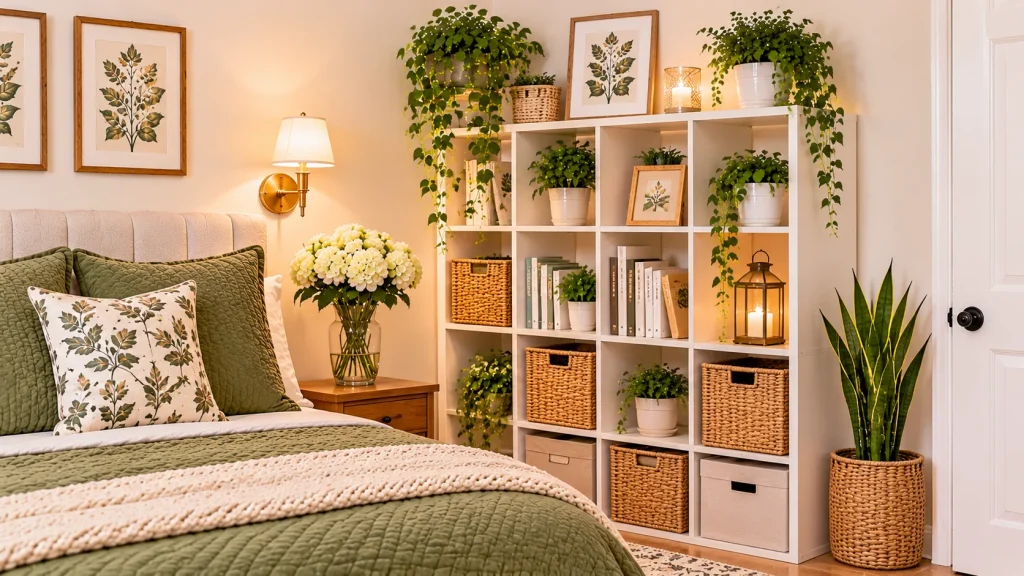
A small grab-and-go station by the door can help:
- A few adhesive hooks for keys, lanyards, and a tote bag
- A small tray or pocket organizer for your ID, earbuds, and wallet
- A spot for an umbrella or rain jacket
- A small mirror for a last check before you leave
Many students use an over-the-door organizer or a slim shelf near the entrance. The key is to keep it in the same place every day so leaving becomes automatic.
Picture three hooks on the back of the door holding keys on a bright lanyard, a tote bag, and a rain jacket. Below them, a small pocket organizer holds an ID card, earbuds, and a spare hair tie. Heading to an early class becomes one quick grab on the way out.
Use removable hooks that are suitable for your door or wall surface, and follow the weight limits. Make sure hooks and organizers don’t stop the door from closing fully or get in the way of emergency access, since many dorm room doors are fire doors with their own rules.
A Simple Order for Move-In Day
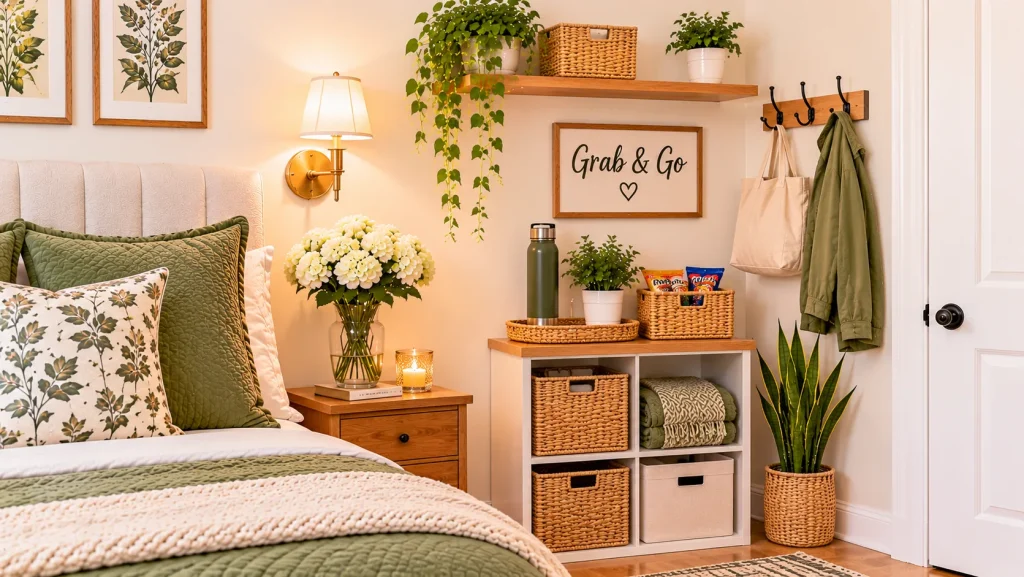
Setting up everything at once can feel overwhelming. Working through the four jobs in order usually helps:
- Bedroom first. Make the bed, set up the rolling cart or clip shelf, and sort your bedding for the weather. If you’re tired later, at least you can sleep.
- Entryway next. Set up the cube storage and your grab-and-go station, so shoes, keys, and ID have a home from day one.
- Kitchen corner. Plug in any allowed appliances and stock the snack drawer.
- Living space last. Add floor cushions and your self-care corner once everything else is in place.
Dorm Bedroom Mistakes Worth Avoiding
Bringing everything at once. Many students overpack, then find there’s no space. Bring the essentials first and add more once you know the room.
Ignoring the handbook. Items your hall doesn’t allow can be confiscated.
Forgetting about a roommate. Shared rooms need shared agreements, especially about food, guests, and noise.
Overloading outlets. Too many devices plugged into one outlet can be a fire risk. Use approved surge protectors and unplug things you aren’t using.
Questions About Dorm Bedroom Ideas
What are the most essential things for a dorm bedroom?
Comfortable bedding, a reading light, a rolling cart or bedside shelf, and storage bins usually cover the basics. Among small dorm room ideas, these are the ones that tend to make daily life easier first.
How can I make a shared dorm room feel more private?
Use furniture like a cube unit to create a gentle divider, agree on quiet hours with your roommate, and keep a self-care corner just for you.
Can I have a mini fridge or microwave in my dorm room?
It depends on your residence hall. Some provide them, some allow them, and others don’t.
How do I keep a dorm room from getting cluttered?
Give every type of item a home, like snacks in the kitchenette corner and keys at the grab-and-go station. A quick tidy each evening helps too.
What should I agree on with a roommate?
Shared items, guests, quiet hours, and food. A quick chat in the first week often prevents bigger disagreements later.
Are these dorm bedroom ideas expensive?
Most aren’t. A rolling cart, floor cushions, and adhesive hooks are fairly affordable, and many items can be found secondhand or shared with a roommate.
One Room, Sorted
A dorm room will never offer the space of an entire home. But giving each of its jobs a small, clear spot can make it feel surprisingly calm.
Start with the job that causes the most chaos right now, whether that’s food spreading across your desk or keys vanishing every morning. Fix that one first, then build from there.