
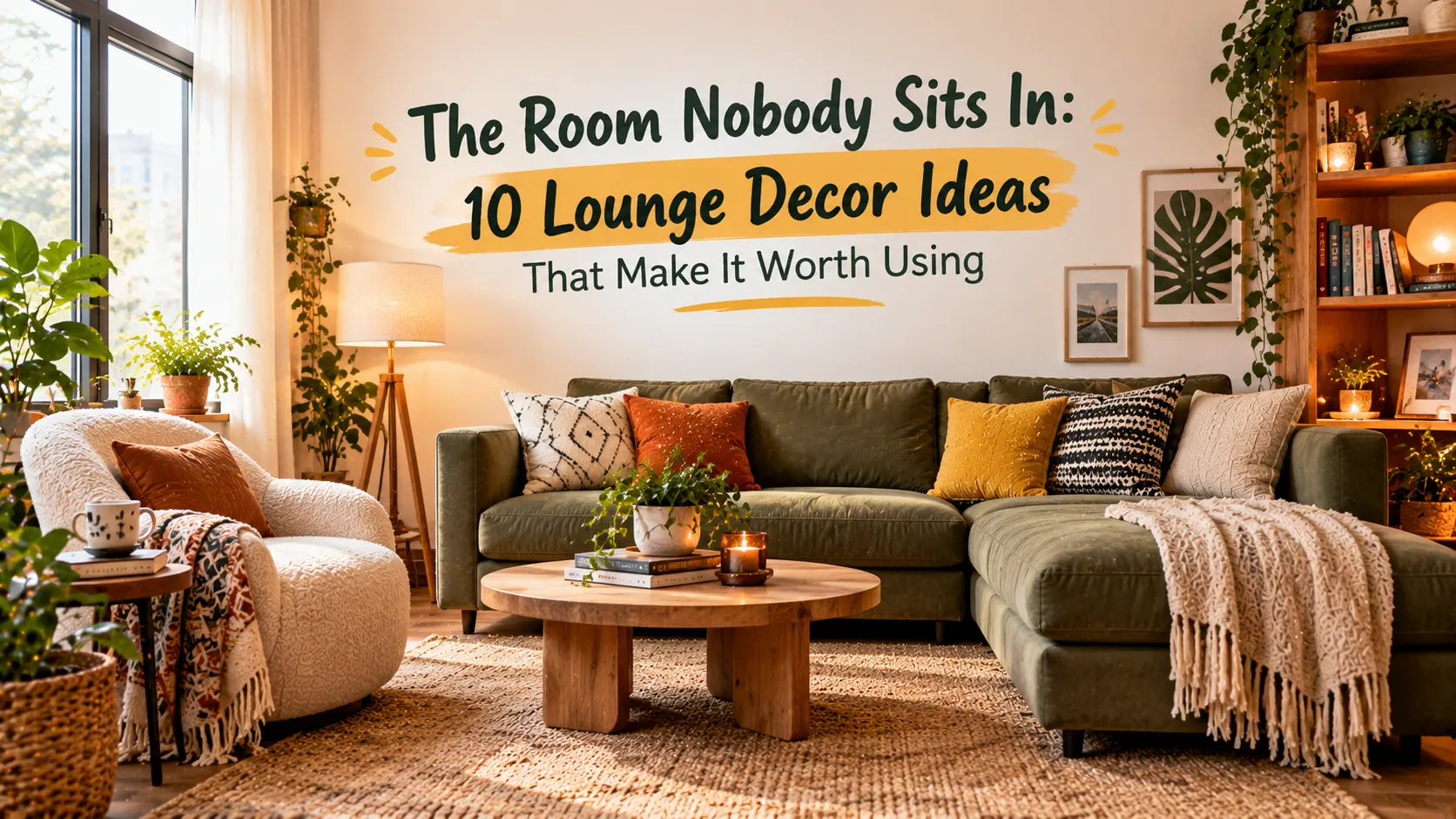
The Room Nobody Sits In: 10 Lounge Decor Ideas That Make It Worth Using
Here’s a scene that plays out in a lot of homes. There’s a perfectly nice lounge with a sofa, a TV, and a coffee table. And yet, when friends come over, everyone ends up standing around the kitchen counter. On a quiet evening, someone takes their laptop to bed instead of curling up in the lounge.
Nothing is exactly wrong with the room. It just lacks the layout, comfort, or personality that makes people want to stay, and that usually comes down to a handful of small things. The rug floats in the middle of the floor. The sofa is pushed flat against the wall. The coffee table is either bare or buried. The TV is the only thing anyone notices.
The lounge decor ideas below are aimed at fixing those quiet problems, so the room feels comfortable to sit in, not just to look at. Some cost nothing. A few take a weekend. Each one comes with a rough sense of effort so you can pick where to start.
Try These Before You Buy Anything
A few changes take ten minutes and cost nothing. They’re worth testing first, because they often reveal what the room actually needs.
- Clear the coffee table completely, then put back only what you use
- Pull the sofa a little way off the wall, even just a hand’s width
- Move one chair so it faces the sofa rather than the TV
- Remove or move any decoration that no longer suits the room or the look you want
Live with it for a few days. If the room already feels better, you’ll know which ideas below to focus on.
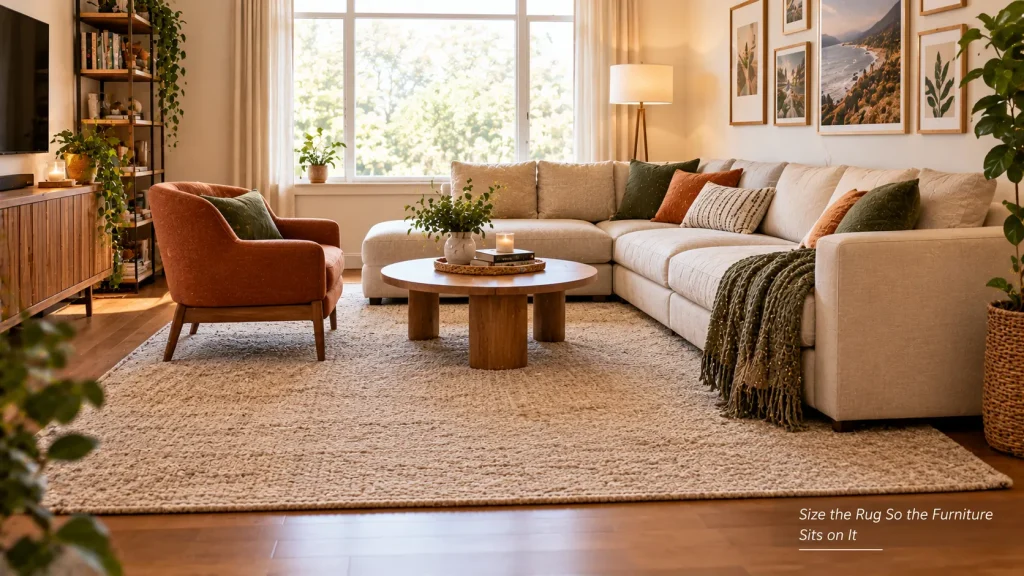
Size the Rug So the Furniture Sits on It
Effort: low to medium, depending on whether you need a new rug
A small rug floating in the middle of the floor is one of the most common reasons a lounge looks unfinished. It can make the whole room feel disconnected.
As a starting point, choose a rug large enough for the front legs of the main seating to rest on it, if your layout allows. That pulls the seating together into one group. In a very small lounge, a rug that sits just in front of the sofa can still work, as long as it’s clearly wider than the coffee table.
Before buying, try this. Mark the rug’s size on the floor with painter’s tape, then sit on the sofa and look at it. It’s much easier to judge than numbers on a website.
A rug pad underneath helps stop slipping, which matters on wooden or tiled floors, and it can make the rug feel softer underfoot. If you already own a rug that’s too small, layering it over a larger, plain jute or flatweave rug is a budget-friendly fix.
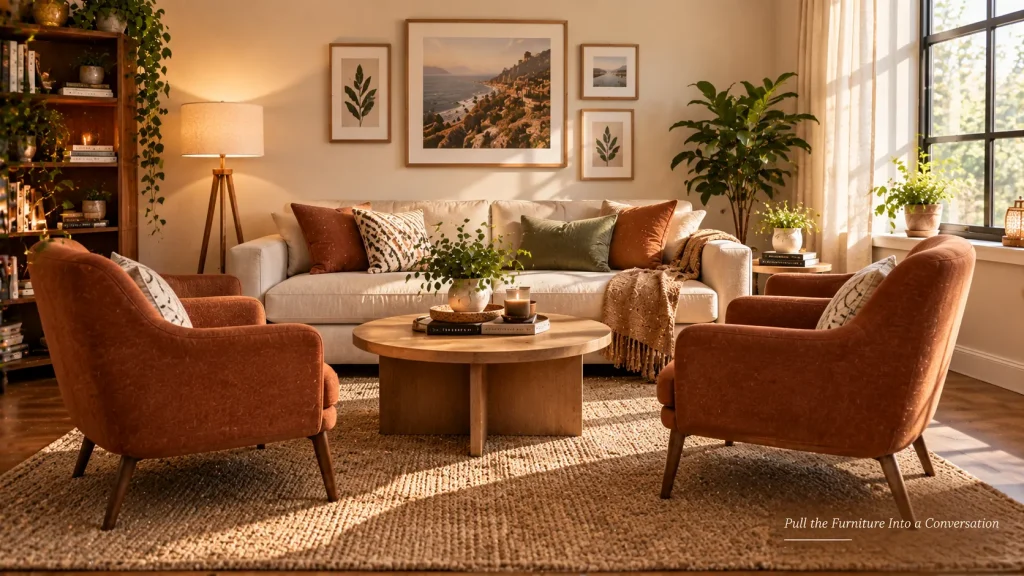
Pull the Furniture Into a Conversation
Effort: free, just some lifting
Lining every piece of furniture against the walls can leave a big empty space in the middle and make conversation feel awkward.
Instead, try grouping the seating so people can see each other without twisting. The sofa might face two chairs, or an L-shaped arrangement could wrap around the coffee table.
In a longer lounge, pulling the sofa slightly forward and angling a chair toward it can make the seating feel more conversational. If there’s room, a narrow console table behind the sofa can fill the gap and hold a lamp or a few books.
Keep walkways clear, ideally wide enough for people to pass without squeezing between knees and the coffee table. If cables need to cross the floor to reach a lamp, use a flat cord cover so nobody trips.
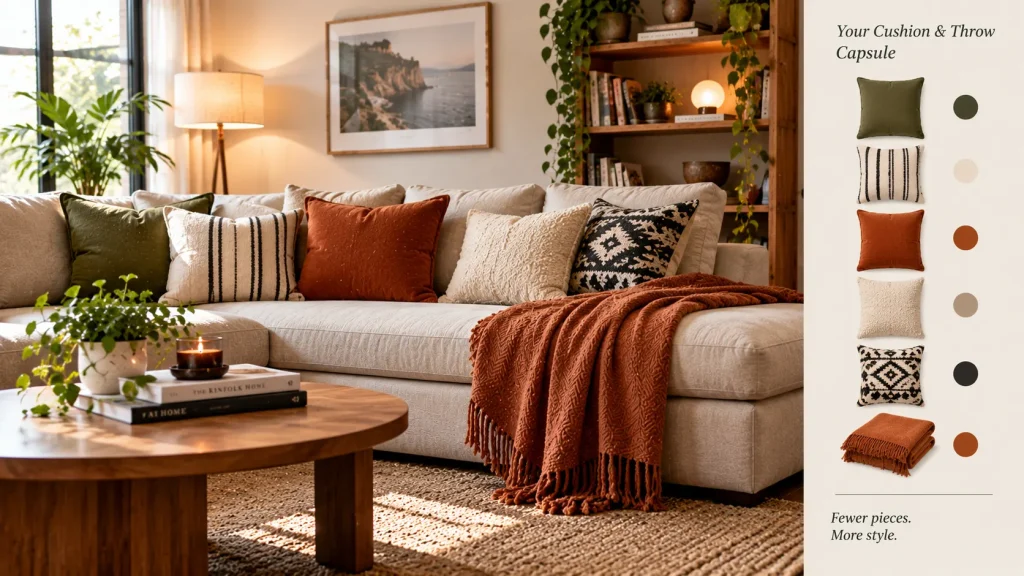
Build a Cushion and Throw Capsule
Effort: low
Rather than collecting random cushions over the years, think of them as a small capsule that works together.
A combination that suits many lounges is:
- One solid color pulled from the rug or a piece of art
- One subtle pattern, like a stripe or small check
- One textured piece, such as bouclé, chunky knit, or velvet
Two or three cushions in that mix, plus one throw folded over the arm, is often enough for a standard sofa. A larger sofa can take more, but keep the number manageable so it stays comfortable to sit on rather than crowded with cushions.
Choosing cushion inserts with removable covers makes it easy to swap the look seasonally. Linen and cotton covers suit warmer months, while wool, velvet, and knit feel cozy when it’s cold. The inserts stay the same, so it’s an affordable change.
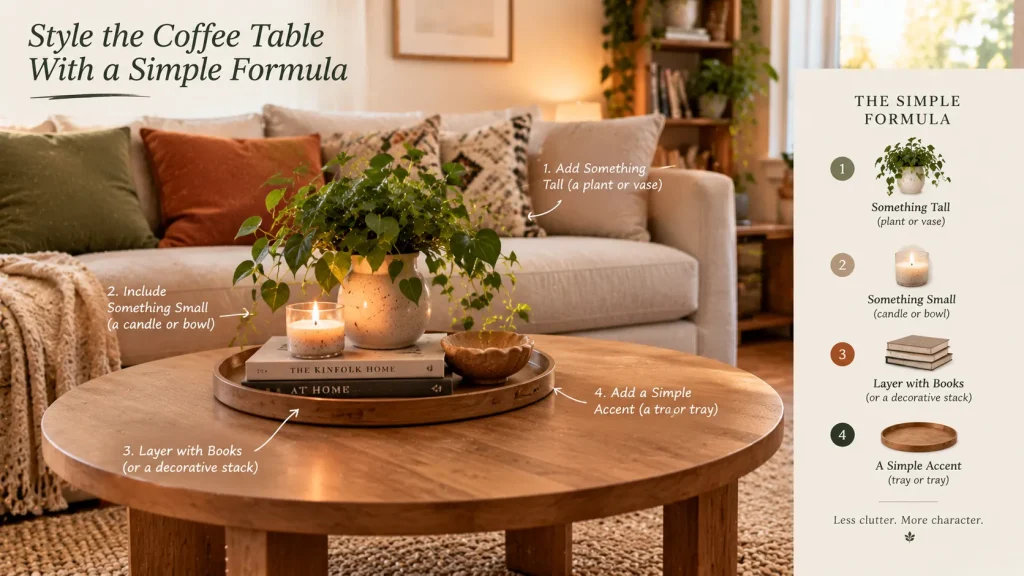
Style the Coffee Table With a Simple Formula
Effort: low
A coffee table is often either completely empty or covered in remotes, mugs, mail, and chargers. Neither looks great.
Start with two or three items that suit the table’s size and leave room for everyday use. If you’d like a loose formula, choose from:
- Something tall, like a small vase with a few stems or a candle holder
- Something low, such as a stack of two or three books
- Something natural, like a bowl of pinecones, a small plant, or a piece of driftwood
- Something useful, such as a box or tray for remotes and coasters
Placing everything on a tray makes it easy to lift off when you need the table for games, snacks, or putting feet up.
If you have small children, leave out breakable items and anything small enough to be a choking hazard. Real candles should never be left burning unattended, and many families use flameless candles instead.
Make the TV Wall Less About the TV
Effort: medium
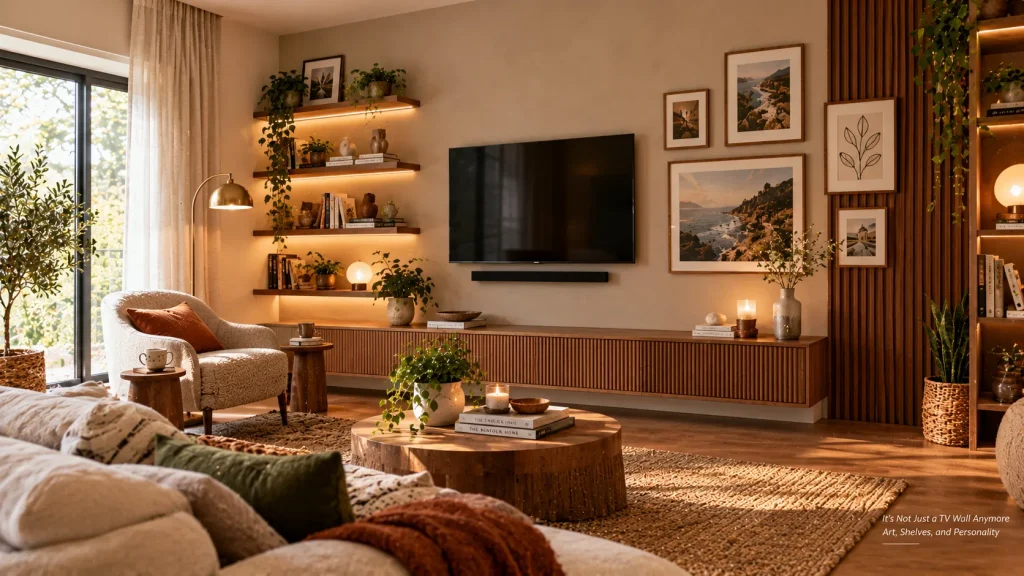
In many lounges, the TV is the biggest dark rectangle in the room, and it’s the first thing people notice. A few decor ideas can help it blend in.
Paint the wall behind it a deeper color. A charcoal, navy, or deep green wall makes a black screen less noticeable, since the contrast is lower.
Surround it with shelving. Open shelves or a media unit on either side, with books and objects, turns the TV into one part of a larger display.
Use a cabinet designed to hide it. Some specially designed cabinets can conceal a TV when it’s not in use, though they need enough space and the right dimensions for your screen.
Consider a picture-style display. Some TVs can show artwork when they’re not in use, though these usually cost more.
If you’re mounting the TV on the wall, fix it securely into studs or masonry with a bracket rated for its weight, or ask a professional. Tidy the cables with a wall-mounted cable channel, and if you rent, ask your landlord before drilling.
Try a Color Drench in One Shade
Effort: medium to high, it’s a painting project
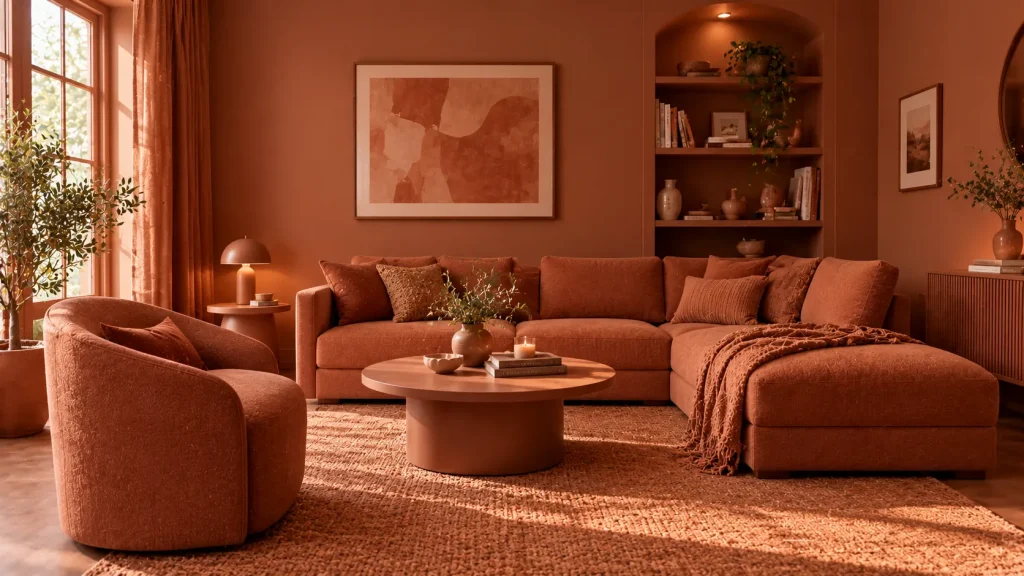
Color drenching means painting the walls, trim, and sometimes the ceiling in the same color, or very close shades. It sounds bold, but it can make a lounge feel calm and cohesive.
It works particularly well in rooms with awkward angles, lots of doors, or uneven walls, because there are fewer sharp lines between colors to draw attention.
Soft, muted shades like sage green, warm taupe, terracotta, or dusty blue tend to be easy to live with. In a small or dark lounge, it’s worth testing a mid-tone alongside a lighter shade. Depending on the light and the paint’s undertones, either can look cohesive, and some pale colors can look grayer than expected in dim rooms.
Imagine a boxy lounge with a door on almost every wall and builder’s white trim around each one. Painting the walls, frames, and skirting boards in one warm clay shade can make all those openings blend in, so the room reads as one cozy space rather than a collection of interruptions.
Test samples on a few walls and look at them in the morning, afternoon, and evening, since color can change a lot with the light. Choose a washable finish for areas that get touched often, like door frames and skirting boards.
If you rent, check with your landlord first. Some allow painting as long as the walls are returned to the original color before you move out.
Add Seats That Aren’t the Sofa
Effort: low to medium
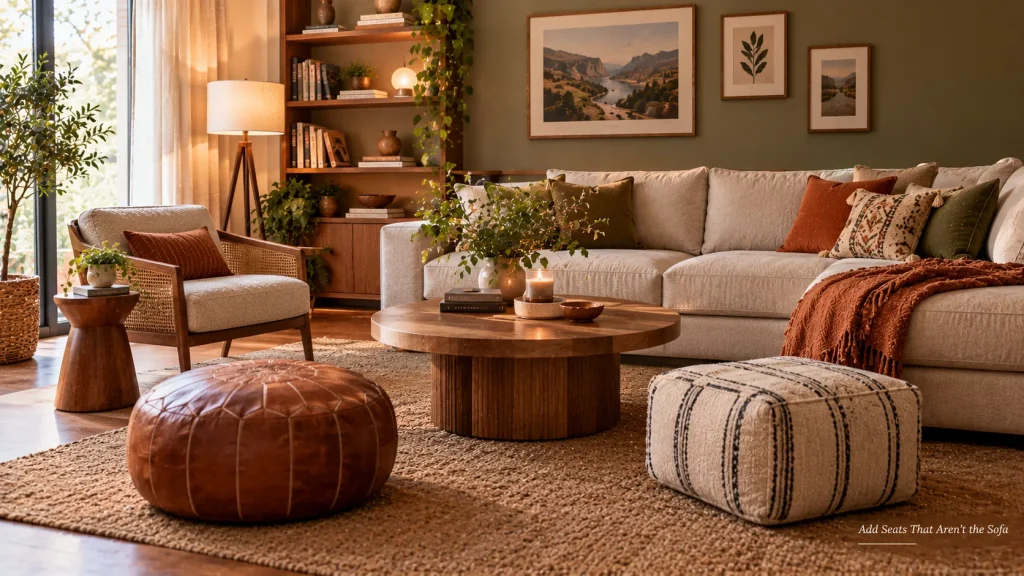
A sofa usually seats two or three people comfortably, and then everyone else hovers.
Flexible extra seating fixes that without crowding the room:
- Floor cushions or poufs, which can be stacked or tucked under a console table when not needed
- A small accent chair in a corner, angled toward the main seating
- A storage ottoman that works as a footrest, extra seat, and place to hide blankets
- A bench under a window, if there’s space
For example, a family that hosts game nights might keep two poufs under a console table. On a normal evening, the poufs stay tucked away. When guests arrive, they’re pulled up to the coffee table, giving a couple of extra places to sit without permanently taking up floor space.
This is one of the more practical lounge decor ideas for small homes, because the pieces earn their place without needing permanent floor space.
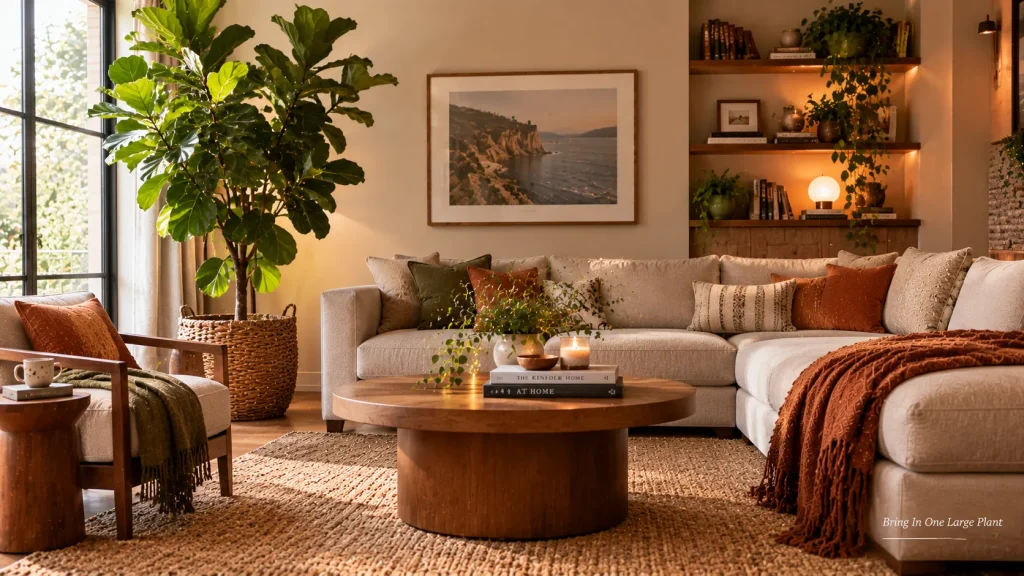
Bring In One Large Plant
Effort: low, though plants need ongoing care
One large floor plant often makes more of an impact than lots of small pots on every surface.
Choose a plant that suits your light. Snake plants and ZZ plants can tolerate lower light, though they still need some indirect daylight. Fiddle-leaf figs and bird of paradise plants generally need brighter conditions near a window to thrive. A plant that struggles in the wrong place won’t look good for long.
A large basket or ceramic pot gives it a finished look. Use a pot with drainage and a saucer, or a waterproof liner inside a basket, so water doesn’t damage the floor.
Many popular houseplants can be harmful to pets if chewed. If you have cats or dogs, check whether a plant is pet-safe before bringing it home, using a reliable source such as a veterinary or animal welfare organization.
If keeping plants alive isn’t realistic right now, a good-quality artificial plant or a vase of dried branches can still bring in that natural touch.
Style the Bookshelves So They Breathe
Effort: free to low
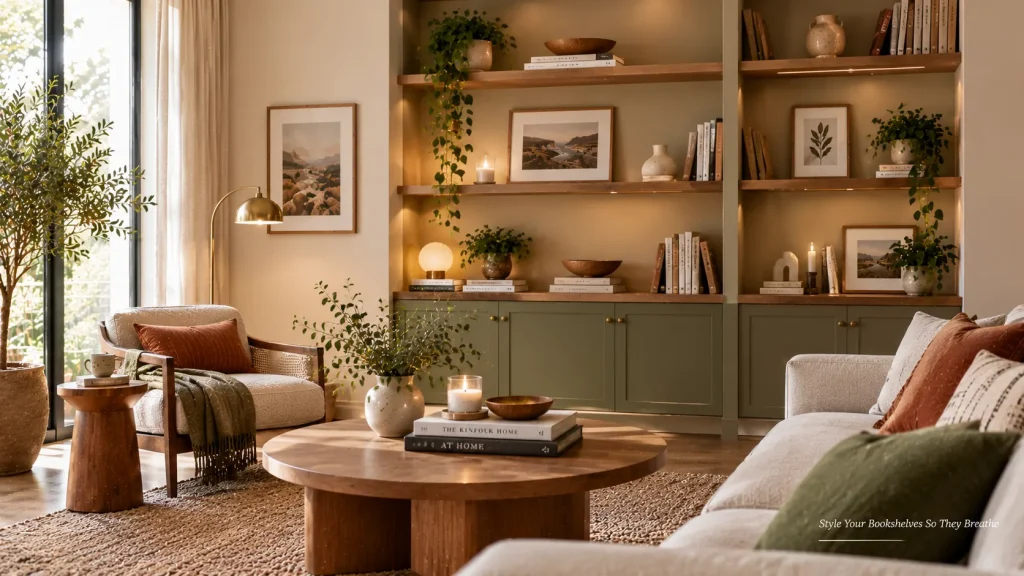
Bookshelves packed tightly with books from end to end can look heavy. Shelves with too many small objects can look cluttered. A few ideas for finding the balance:
- Stack some books horizontally and stand others upright, so the shelves don’t look like one long row
- Leave a little empty space on each shelf
- Mix in a few objects, like a small vase, a framed photo, or a bowl
- Group books by color for a playful look, or by size for a calmer one
Step back and look at the shelves as a whole, rather than one at a time. If one side feels heavier, move a few items around until it balances.
Tall, freestanding bookcases should be anchored to the wall, especially in homes with young children, since they can tip if someone climbs or pulls on them.
Give the Room One Piece With a Story
Effort: varies
When every piece of furniture comes from the same collection, the room can miss the personal details that make it feel lived-in. Adding one piece with history brings some of that back.
It might be:
- A vintage side table found at a flea market
- A chair inherited from a relative and reupholstered in a fresh fabric
- A handmade pottery bowl from a trip
- An old trunk used as a coffee table or side table
You don’t need many. One or two pieces with a story, mixed in with newer furniture, can make the room feel collected over time rather than bought in a single weekend.
Secondhand furniture is also an affordable, lower-waste option. Check older pieces for wobbly legs, loose joints, or flaking paint before using them, and be cautious with very old painted items if you have children, since some older paints may contain lead.
Where People Usually Go Wrong
Buying everything to match. A sofa, armchair, and coffee table bought as a set can look flat. Mixing wood with metal, or linen with velvet, adds interest.
Ignoring the floor. Before buying another piece of furniture, check whether the room needs a rug to anchor the seating and soften hard flooring.
Choosing looks over daily use. If the lounge gets heavy use from kids, pets, or dinners in front of the TV, prioritize washable covers and durable surfaces.
Changing too much at once. Test one or two changes for a week or so before investing in more furniture or decor.
Questions About Lounge Decor
What’s the difference between a lounge and a living room?
Mostly the word. “Lounge” is common in the UK, Australia, and New Zealand, while “living room” is more common in the US. Both describe the main sitting room in a home, so the same decor ideas apply.
How can I make a small lounge feel bigger?
Choose a rug large enough to anchor the seating, keep walkways clear, and use furniture with visible legs, which shows more floor. Fewer, larger pieces often work better than lots of small ones.
What are some budget lounge decor ideas?
Rearranging furniture, restyling bookshelves and the coffee table, swapping cushion covers, and adding a secondhand piece all cost little or nothing.
How do I decorate a lounge with a TV?
Make the TV one part of the room instead of the main feature. A darker wall behind it, shelving around it, or a cabinet that hides it can all help.
How often should I change my lounge decor?
There’s no rule. Many people swap cushions and throws with the seasons and make bigger changes only when furniture needs replacing.
Make It a Room You Actually Use
The goal of these lounge decor ideas isn’t to fill every corner. Start with a more comfortable layout and the free changes, make room for everyday activities, and add personal touches as the space begins to work better.
If people start lingering in the lounge instead of drifting off to the kitchen, you’ll know it’s working.