

Small Touches, Big Charm: 16 Balcony Decoration Ideas for Every Corner
When people decorate a balcony, the first things on the list are usually a couple of chairs, some pots, and maybe a string of lights. Those are great starting points. But stand on almost any balcony and look around properly, and you’ll notice whole surfaces nobody thought to decorate.
There’s the ceiling above your head. The railing you lean on. The door you walk through. The tops of the pots. Even the glass in the balcony door.
The balcony decoration ideas in this guide focus on those overlooked spots. They work just as well on a balcony that’s already furnished as on one you’re starting from scratch, and most of them are small, affordable changes.
Before You Start: Mistakes Worth Dodging
Four slip-ups cause most balcony decorating headaches: skipping building rules on painting and drilling, forgetting the balcony’s load limit, buying indoor materials that rot or fade outside, and underestimating wind on upper floors. Each idea below flags whichever of these matters most for that project.
With that in mind, let’s start at the top.
Paint the Balcony Ceiling
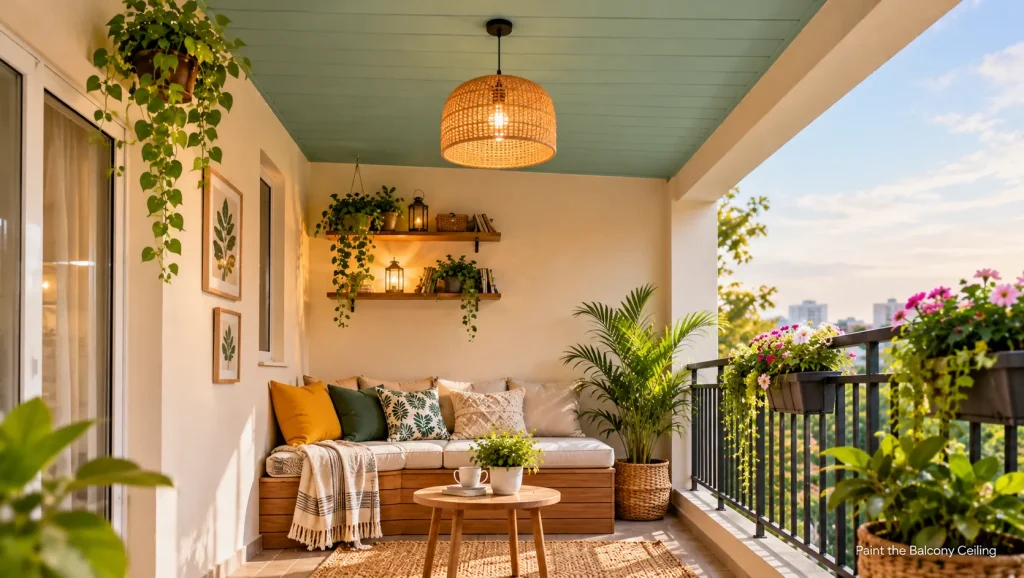
The underside of the balcony above, or the balcony’s own ceiling, is rarely noticed until it’s painted.
A soft sky blue is a traditional porch ceiling color in some regions, and it makes a covered balcony feel airy and bright. A warm white or pale terracotta can feel cozy, while a deep color can make a shallow balcony look like a snug outdoor room.
Picture a narrow covered balcony with a plain gray concrete ceiling. Painted a pale, chalky blue, it suddenly feels taller and lighter, and the whole space reads as a finished outdoor room rather than a concrete shelf.
First, find out who owns the surface. In an apartment, the ceiling is often part of the shared structure, so you’ll need permission. Then check its condition, since flaking or damp concrete needs repair before painting, and choose a primer and paint the manufacturer recommends for that specific material, rather than any exterior paint off the shelf.
Cover One Wall With Panels or Tiles
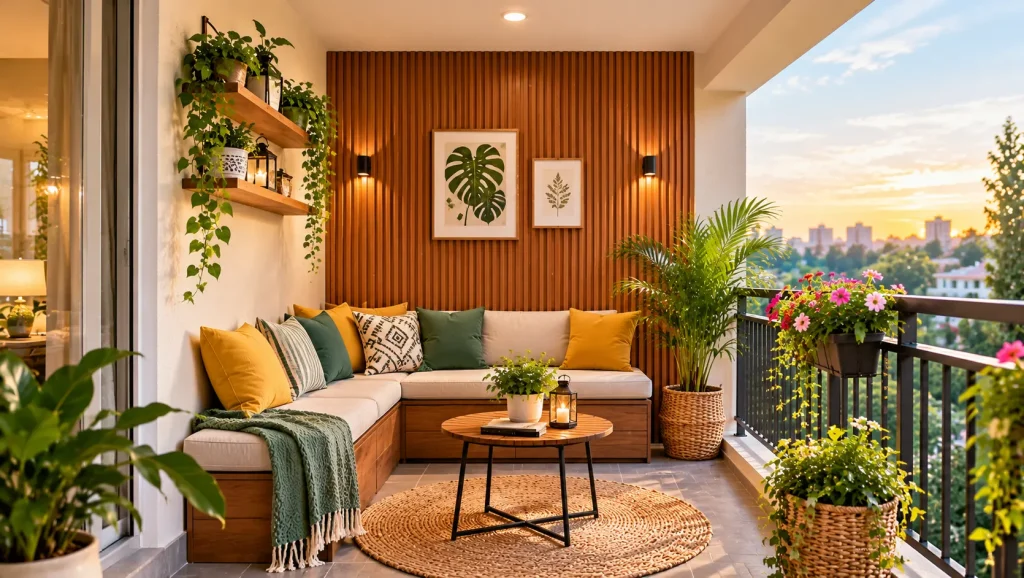
A plain rendered or concrete balcony wall can be transformed with exterior wall panels, outdoor tiles, or slatted screens fixed to the wall.
Wood-look composite slats feel warm and modern, while patterned outdoor tiles suit Mediterranean or Moroccan-inspired balconies.
Of all these balcony decoration ideas, this is the one most likely to need approval. Many buildings have strict rules about balcony wall coverings, including fire safety requirements for materials. A product label alone doesn’t guarantee compliance, so confirm with your building manager and local building rules that both the material and the installation method are allowed, and use a professional installer if fixings go into the structure. In many apartments, this is an idea for homeowners with approval rather than renters.
Refresh the Railing Color
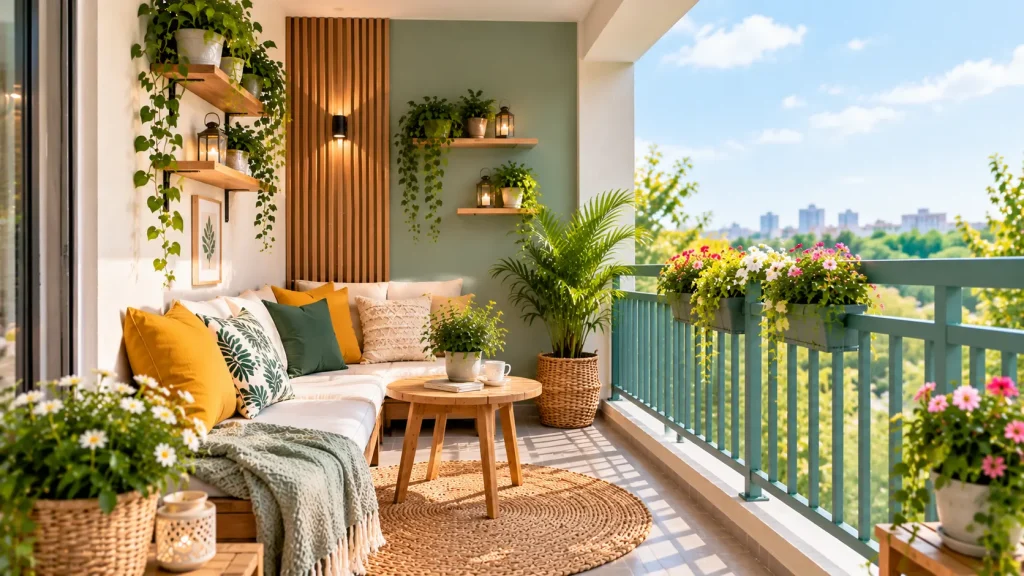
Railings are often the most visible part of a balcony from both inside and outside. A fresh coat of paint, if allowed, can change the whole look.
Classic black looks smart against most building colors. Deep green or navy suits traditional homes, while white keeps things light.
Metal railings need proper preparation: removing rust, cleaning, and using a primer and paint designed for exterior metal. Since railings are a safety feature, check that they’re in good condition before painting, and report any loose or damaged sections to your landlord or building manager. In many apartment buildings, railing color is set by the building, so permission is essential.
Hang Plants From Above
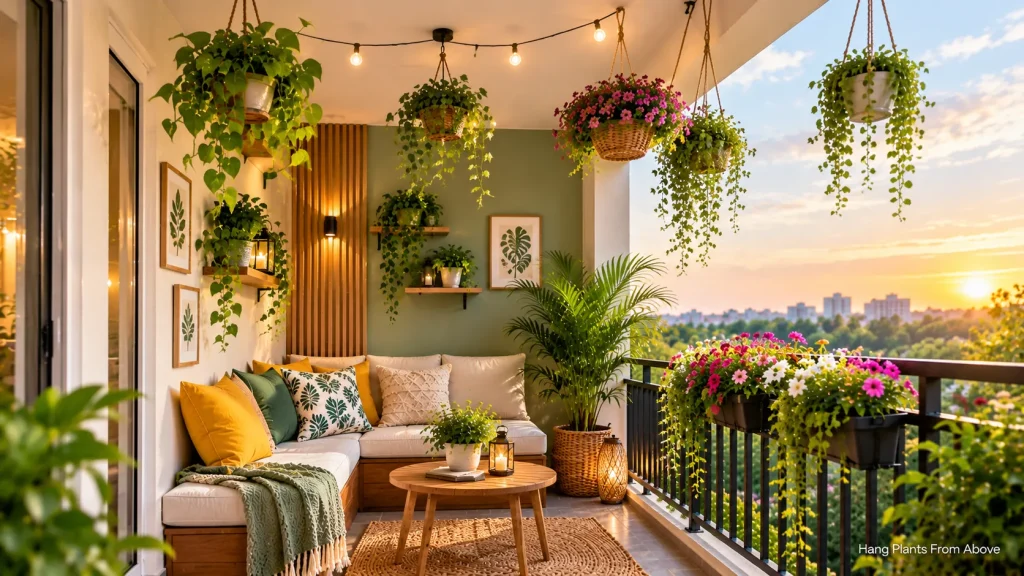
Most balcony plants sit on the floor or on the railing. Hanging some from the ceiling brings greenery up to eye level, where you notice it more.
Rope or macramé plant hangers suit boho and natural styles, while simple metal hanging pots look cleaner and more modern. Trailing plants like string of pearls, ivy, or trailing petunias look lovely spilling over the edges.
A row of three hanging pots at slightly different heights along the front edge of a covered balcony creates a soft green fringe that also gives a little privacy from the street.
A few practical points:
- Get permission before drilling if you rent or live in an apartment
- Use hooks rated for the weight of a watered plant, with a fixing that suits the actual ceiling material
- Hang plants where nobody will walk into them
- Water carefully, or use pots with saucers, so water doesn’t drip onto furniture or the balcony below
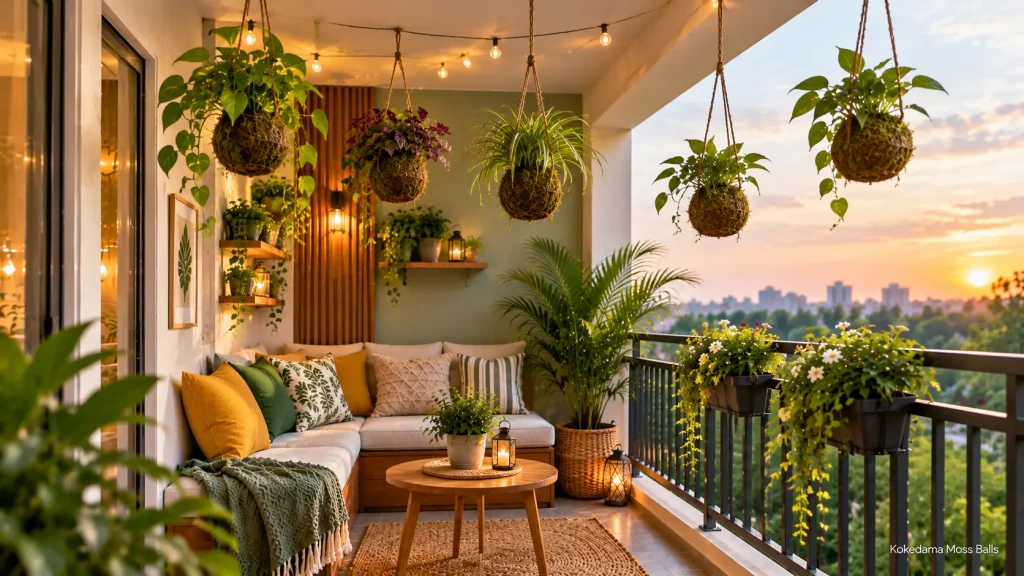
Try Kokedama Moss Balls
Kokedama is a Japanese technique where a plant’s roots are wrapped in a ball of soil and moss, tied with string, and either hung or set on a dish.
They look sculptural and take up very little space, which suits small balconies. A cluster of three kokedama hanging at different heights from a sheltered part of the balcony ceiling can look like living art.
Care depends on the plant inside the moss ball, so check its light and water needs. Most are watered by soaking the ball until it’s saturated, then letting it drain, and many suit sheltered, shadier balconies better than spots with drying wind and full sun.
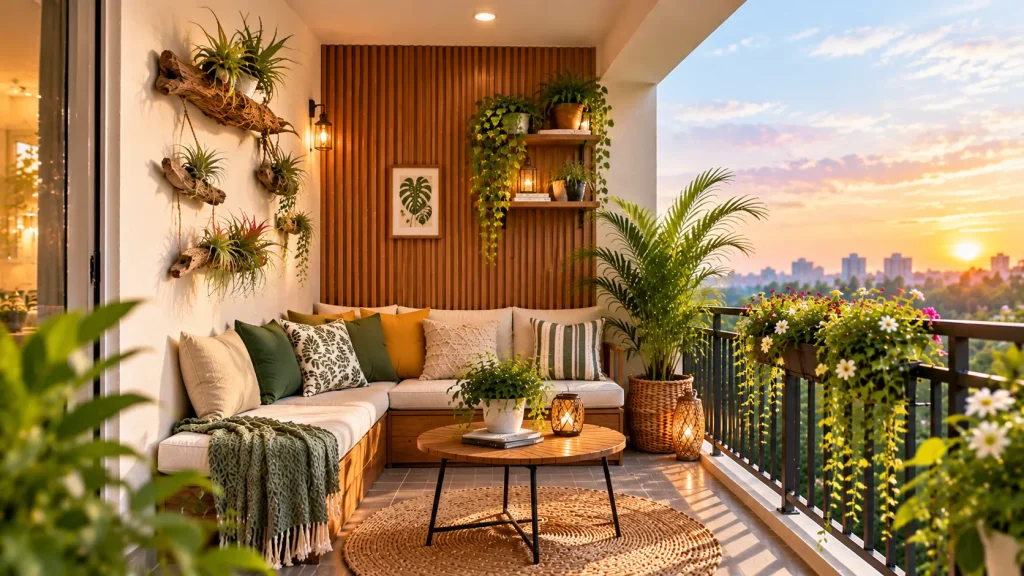
Display Air Plants on Driftwood
Air plants, also called tillandsia, grow without soil, which makes them easy to display in creative ways. They can sit on a piece of driftwood, nestle into a seashell, or perch on a small wire frame on a table.
They like bright, indirect light and don’t enjoy harsh midday sun or frost. How often to soak or mist depends on the species, temperature, humidity, and wind, and they should dry fully within a few hours afterward, so check them more often on hot, breezy days. On many balconies, they’re best kept in a sheltered spot during warmer months and brought indoors when it turns cold.
For example, a weathered piece of driftwood on a side table, with three or four air plants tucked into its curves, looks like something you’d find in a seaside cottage.
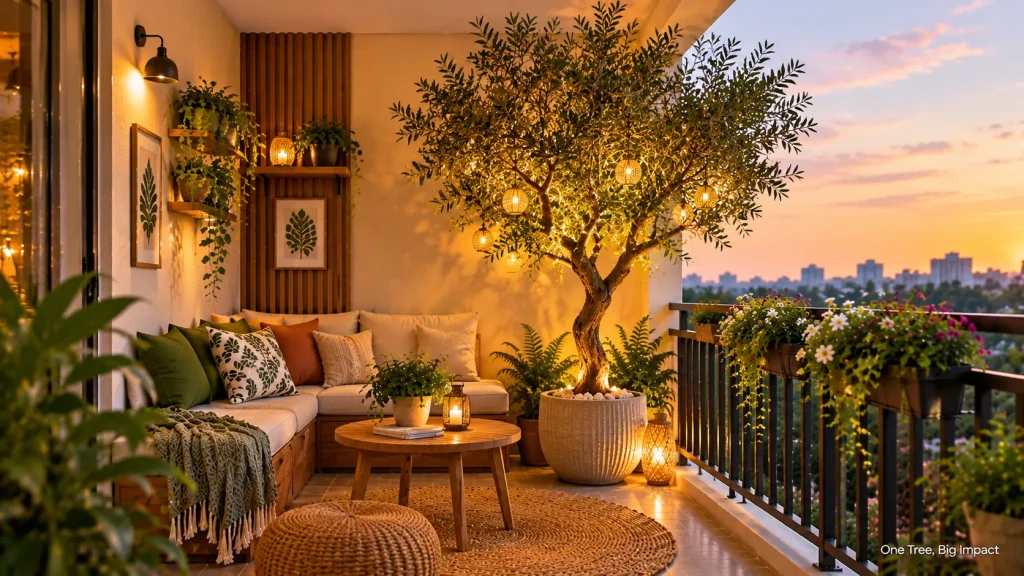
Make One Tree the Star
Instead of lots of small pots, a single small tree in a large container can anchor the whole balcony, and it’s one of the few balcony decoration ideas that changes with every season.
Olive trees, dwarf citrus, Japanese maples, bay trees, and small conifers are popular choices, depending on your climate and how much sun the balcony gets. A tree gives height, structure, and a natural focal point.
On a small balcony, a single olive tree in a tall matte gray planter, placed in the corner beside the door, can be the first thing you see from inside and the last thing you notice at night when a little light catches its leaves.
Choose a variety suited to container growing, and check its mature size. A fiberglass or resin pot helps, but it doesn’t make the whole planted container light, since soil, water, and roots are heavy and the tree may eventually need a bigger pot. Check your balcony’s load capacity first, and in windy spots, place it in a sheltered corner where it can’t tip.
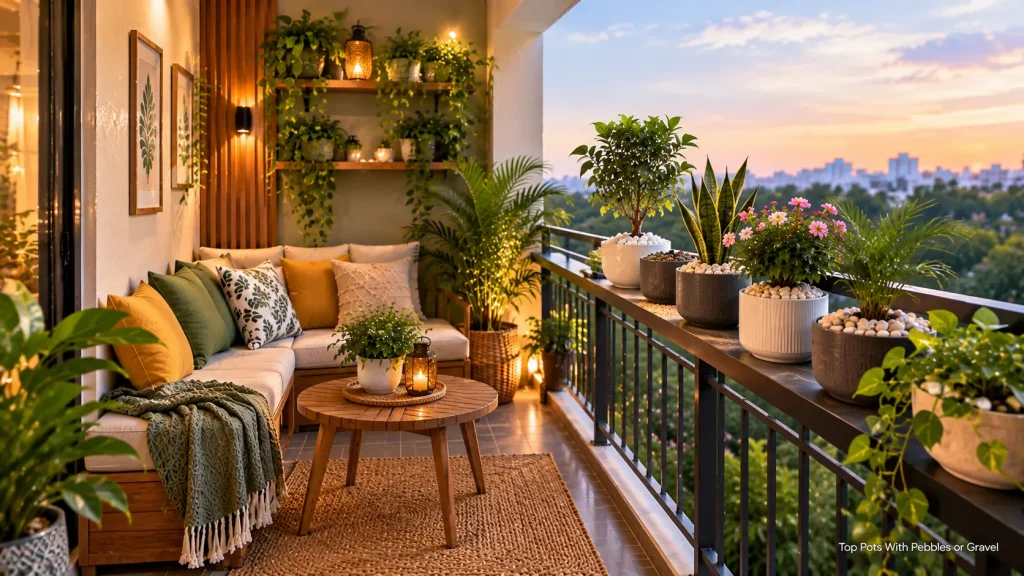
Top Pots With Pebbles or Gravel
This tiny detail makes potted plants look finished. A layer of smooth pebbles, small stones, or gravel on top of the soil hides bare earth, looks tidy, and can help reduce splashing when you water.
White pebbles look crisp, river stones look natural, and dark slate chips suit modern balconies.
Keep layers thin, since stones add weight, and leave some soil visible around the stem so you can still check moisture and water reaches the roots.
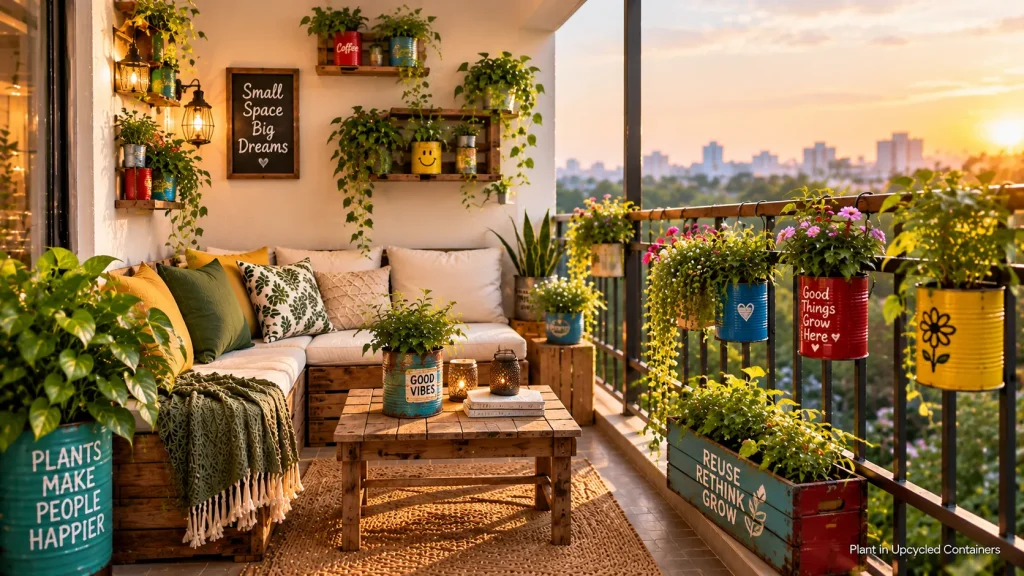
Plant in Upcycled Containers
Unusual containers add personality and a bit of humor. Old watering cans, enamel colanders, large tins, teapots, wooden crates, and even old boots can become planters.
A few tips make them last:
- The simplest route is to plant in a plastic nursery pot with drainage holes and slip it inside the decorative container, tipping out any water that collects
- Only drill containers that can be drilled safely; thin ceramic may crack and cut tin can leave sharp edges
- Liners for wooden crates need drainage holes too, so they don’t trap water around the roots
- Group upcycled planters together so they look like a collection, not clutter
An old metal colander, which already has drainage, makes a charming hanging planter for trailing flowers.
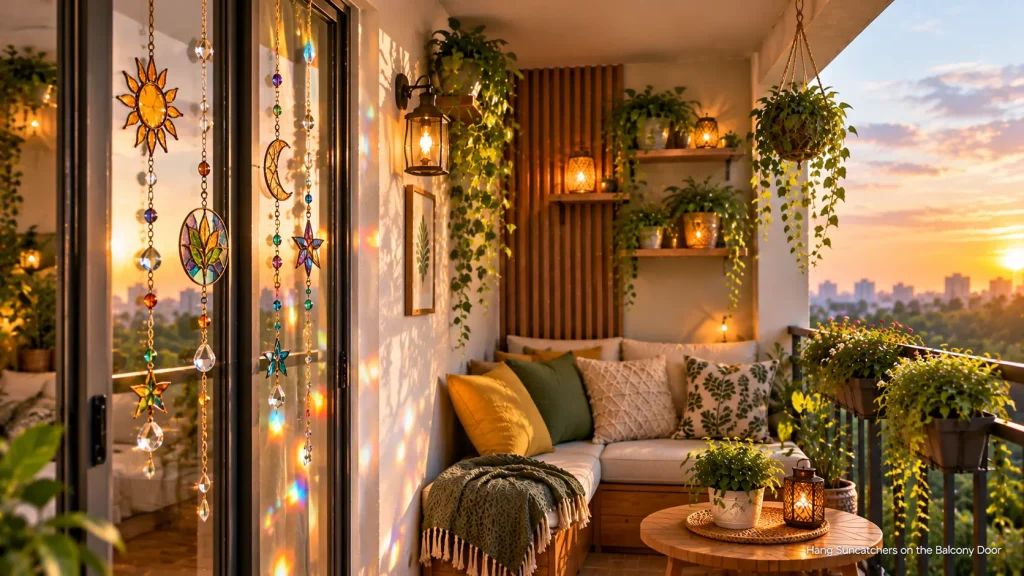
Hang Suncatchers on the Balcony Door
A flat glass or crystal prism suncatcher hung in the balcony door or window throws small rainbows across the room when the sun hits it. It links the balcony and the inside of the home in a playful way.
Be careful with glass spheres and crystal balls. Depending on their shape and the strength of the sun, some can focus sunlight like a magnifying glass and scorch nearby materials. Flat prisms and panels are a safer choice, and any decorative glass is best kept away from curtains and other combustible materials.
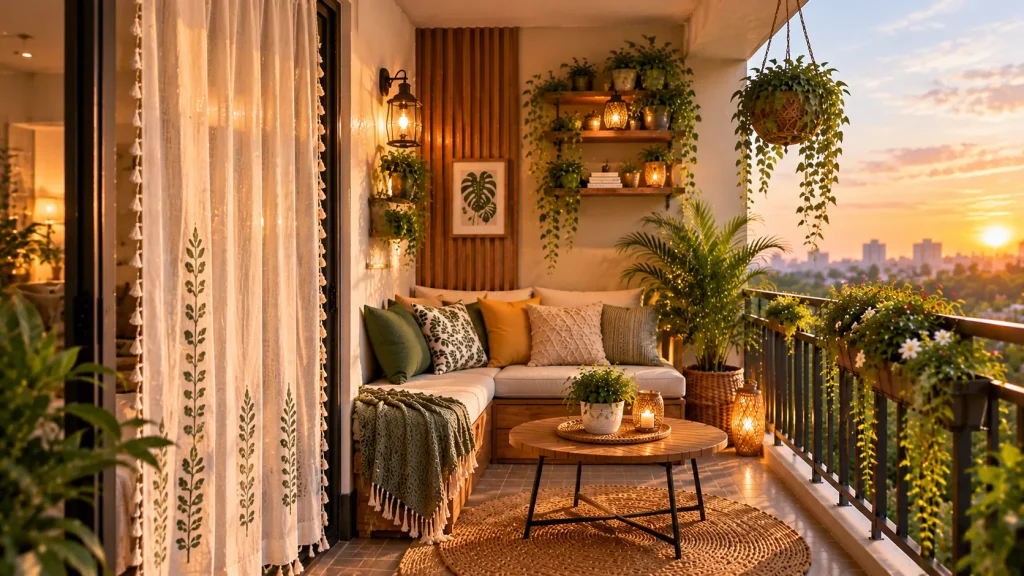
Add a Doorway Curtain
A light curtain at the balcony door softens the transition between inside and out. It can also offer a little privacy when the door is open and help keep insects out.
Options include a sheer outdoor-fabric panel on a tension rod, a linen curtain tied back during the day, or a beaded or chain-style door curtain for a more playful look.
A sheer white panel, gathered to one side with a simple fabric tie during the day and let down in the late afternoon, can also soften strong evening sun coming through the door.
An open balcony door lets wind catch a curtain, so choose one you can tie back securely and make sure it never gets in the way of the door or the threshold. Keep it away from heaters and lamps, and off the floor, where it can become a tripping hazard. Beaded curtains may not suit homes with very young children, since small beads can come loose.
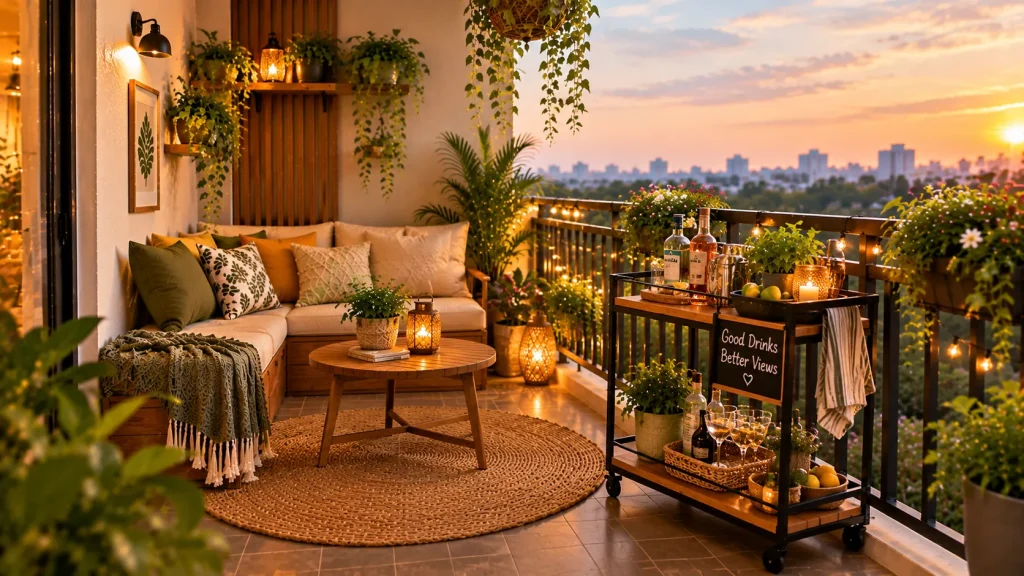
Roll Out an Outdoor Bar Cart
A small rolling cart made for outdoor use holds drinks, glasses, a jug of water, or snacks, and it doubles as a decorative display of plants and accessories when you’re not entertaining.
Metal carts with a powder-coated finish tend to suit outdoor use better than wooden ones. Park it on a level spot with the wheels locked, keep heavier items like jugs on the bottom shelf, and don’t overload it. In windy weather, bring it in or tuck it against a wall.
Dressed with a small potted herb, a stack of melamine cups, and a jug of water with sliced lemon, even a basic cart looks ready for guests.
Set the Table for Outdoor Meals
Eating outside feels special when the table is set with a little thought. Outdoor tablecloths, linen napkins, a small vase of flowers, and colorful melamine or enamel plates can turn a simple balcony table into a dining spot.
Melamine and enamel tableware are less likely to break than glass and ceramics if something gets knocked over, which matters on a balcony.
Outdoor-rated fabrics can cope with being left out for a while, but ordinary linen napkins and cloths are best brought inside after the meal, along with anything fragile. Tablecloth clips or weights stop cloths from blowing around while you eat.
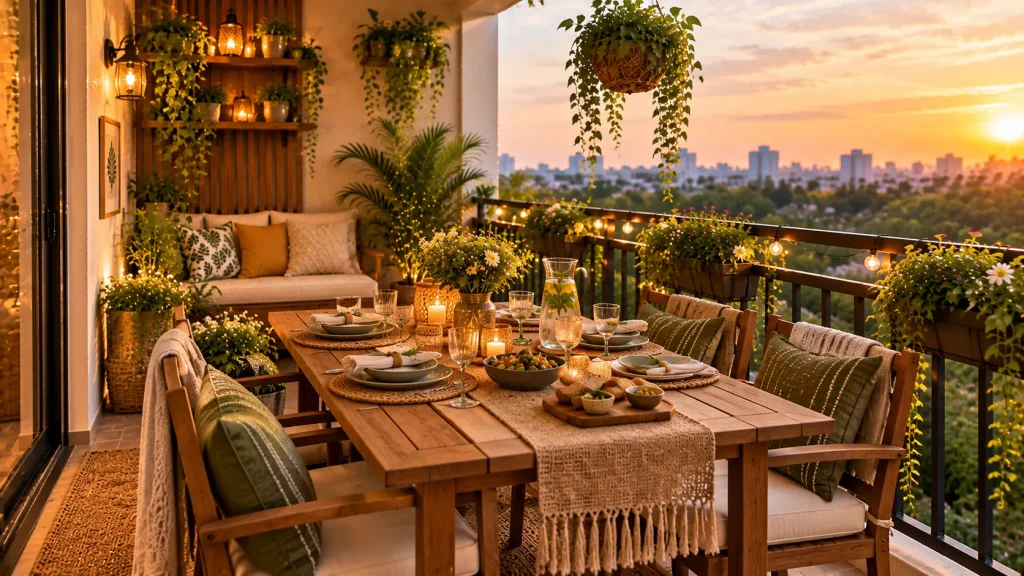
Put a Doormat at the Balcony Door
A doormat at the balcony threshold is a small detail that’s often overlooked. It catches dirt and leaves before they’re tracked indoors and adds another layer of color or texture.
Choose an outdoor mat with a non-slip backing suited to your balcony floor and good drainage, since a wet mat on smooth tile can slide. It should lie flat, with no raised edges to catch feet or the door.
A mat that matches the colors of your cushions or pots ties the balcony together without much effort.
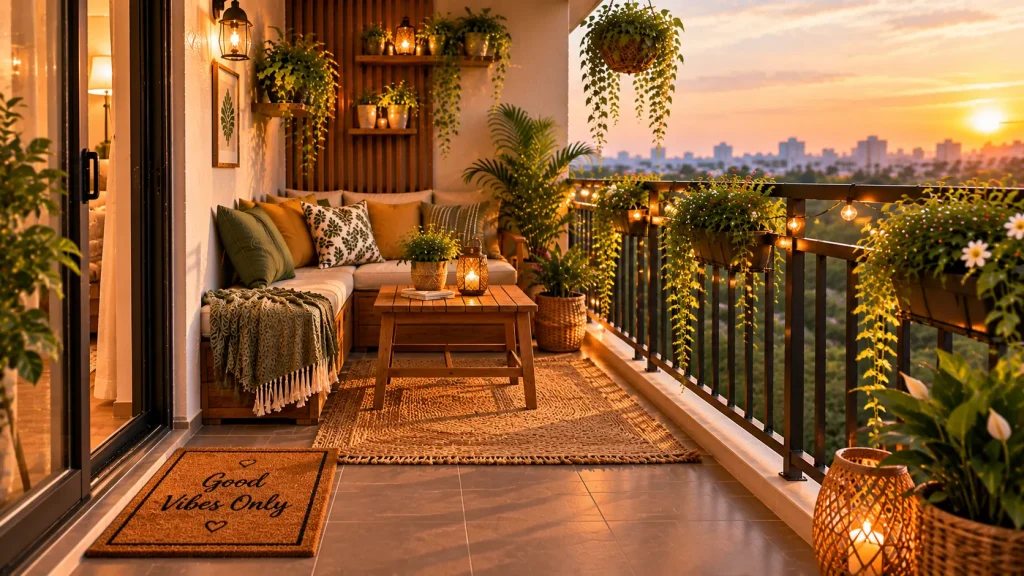
Decorate the Door Glass With Window Film
Decorative window film can turn plain balcony door glass into a feature. Frosted patterns, stained-glass looks, and geometric designs add privacy while still letting light through.
A balcony door that faces a neighbor’s window could get a frosted film on the lower two thirds of the glass, keeping the view of the sky while adding privacy where it matters.
Static-cling films, which stick without glue, are easier to remove and suit renters. Before applying, check the film manufacturer’s guidance for your specific glass type. Some films aren’t recommended for certain glass, including some double-glazed units, where the wrong film can add heat stress to the glass.
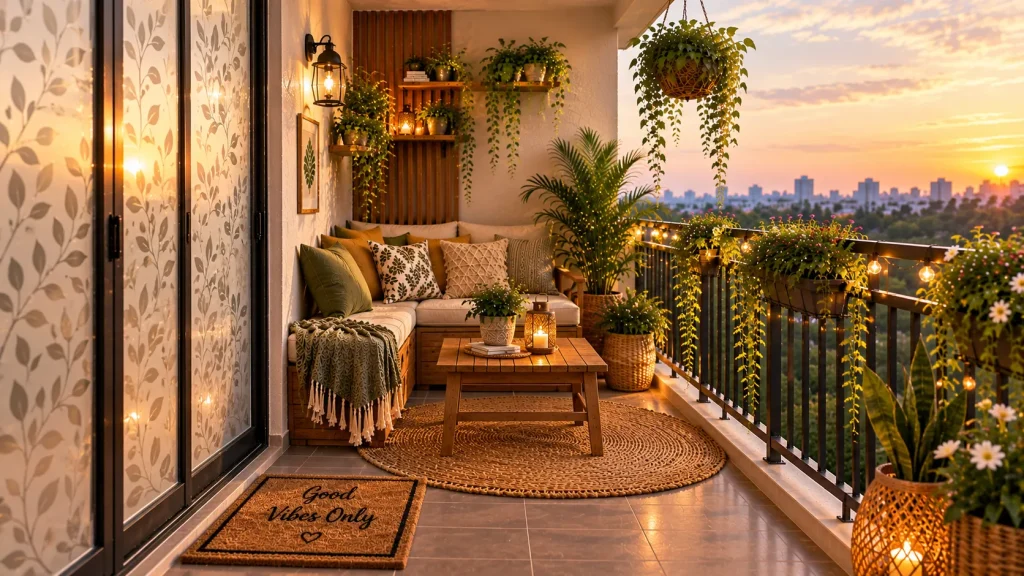
Add Rope and Jute Textures
Rope details bring a relaxed, coastal feel to a balcony. Rope-wrapped planters, a rope-handled tray, rope-wrapped table legs, or a woven rope basket for cushions all add texture.
Natural jute looks lovely but can rot or grow mildew outdoors, so choose synthetic outdoor rope that looks like natural fiber, or keep jute items in a sheltered spot.
A tall planter wrapped in thick outdoor rope is a simple project that makes a plain plastic pot look far more expensive. Secure the ends with an outdoor-rated adhesive or stainless fixings, and check the wrap now and then for loosening or wear.
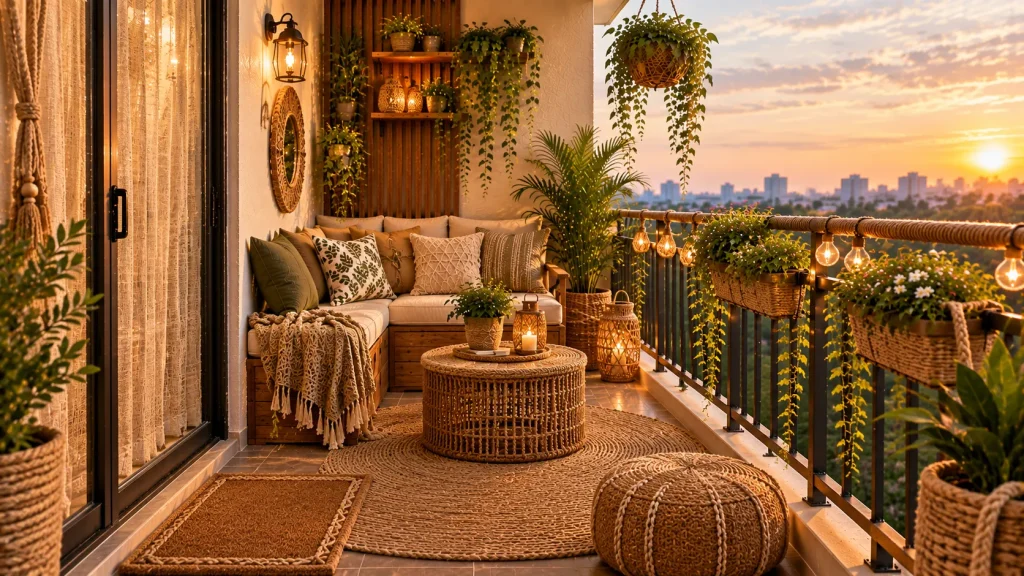
A Quick Budget Snapshot
Not sure where to start? These are relative categories rather than price estimates, since costs vary a lot by product and place. Ideas that reuse what you already own sit lowest.
Low cost, often DIY: pebble top-dressing, upcycled planters, suncatchers, a doormat, rope accents, and a new tablecloth.
Moderate, usually a purchase: kokedama, air plants, a bar cart, a doorway curtain, window film, and hanging planters.
Bigger projects, often needing permission: painting the ceiling or railing, wall panels or tiles, and a statement tree in a large pot.
Questions About Balcony Decorations
What are good balcony decorations for renters?
Anything freestanding or removable is usually fine: plants, upcycled planters, a doormat, a bar cart, and static-cling film. Painting, drilling into the ceiling for hangers, and fixing wall panels are the changes that need permission first.
How can I decorate a covered balcony differently from an open one?
Covered balconies can take more delicate items, like kokedama, hanging plants, and fabric curtains, since they’re protected from heavy rain. Open balconies need tougher, weather-resistant materials and more secure fixings.
How do I keep balcony decorations from blowing away?
Start with whatever is lightest and highest, since that catches the wind first: hanging planters, suncatchers, and tablecloths. Then check anything tall, like the bar cart and statement tree. Heavy, low items rarely move.
Start With What Nobody Else Noticed
You don’t need to try all sixteen of these balcony decoration ideas. Notice how much wind and rain your balcony gets first, then pick one idea that suits those conditions, like kokedama for a sheltered spot or pebble-topped pots for an exposed one. Once that works, add the next layer.