
Coffee, Plants, and Quiet Evenings: 13 Balcony Ideas for Any Size
Picture three balconies in the same building.
The first holds a drying rack and a plastic chair nobody sits on. The second has a folding table and a few pots of herbs, and someone eats breakfast out there most mornings. The third is barely deep enough to stand on, but warm lights and one comfortable seat make it the place its owner heads to every evening.
The difference usually isn’t money or space. It’s deciding what you want to do out there, then choosing a few things that support it.
That’s how the balcony ideas in this guide are grouped. Instead of a random list, they’re sorted by what you’d like to use the space for: sitting with a drink, growing things, relaxing in the evening, getting some shelter, or simply squeezing value out of a tiny ledge.
Three Things to Check Before Buying Anything
A balcony isn’t quite like a room, and a few quick checks can save you from buying something you can’t use. These apply to every idea below, so it’s worth doing them once now.
How much weight it can take. Balconies have load limits. Large planters filled with wet soil, stone tiles, and heavy furniture add up quickly. If you’re planning anything heavy, check with your building manager, landlord, or the building documents first.
What the building allows. Many apartment buildings have rules about screens, awnings, plants on railings, open flames, and even what can be seen from the street. A quick read of your lease or building rules now beats taking something down later.
Where the water goes. Find the drain or the slope that carries rainwater away. Anything you add, from rugs to deck tiles, should leave that path clear. And remember that water from your plants may drip onto the balcony below.
With those answers in hand, the ideas below get much easier to choose from.
Make Room to Sit
Pick Furniture That Folds Away
A folding bistro set, usually a small round table and two chairs, is probably the most popular balcony furniture for good reason. It fits narrow spaces, it’s light enough to move, and you can fold it flat against the wall when you need the floor back.
Look for weather-resistant materials such as powder-coated metal, treated wood, or outdoor-rated resin. Check the size before buying, too. A table that looks small in a shop can feel crowded on a balcony where you also need to open a door.
In windy spots, very light chairs can blow around or tip, so fold and store them, or choose a slightly heavier set.
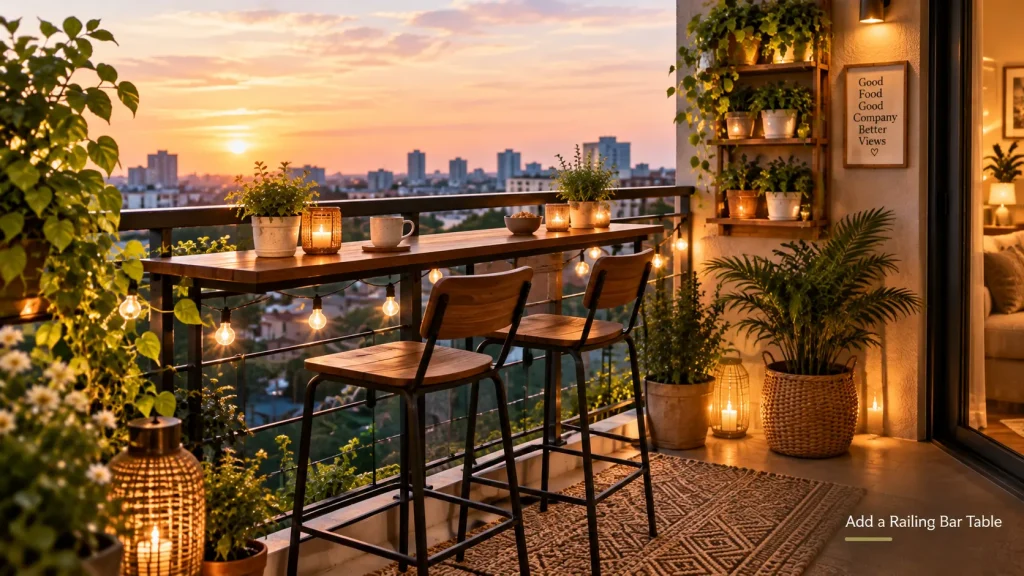
Add a Railing Bar Table
On a very narrow balcony, even a bistro table can block the walkway. A railing bar table is a slim shelf that hooks over or clamps onto the balcony railing, giving you a perch for a cup of coffee or a plate without using any floor space.
A single slim stool can work if it tucks fully underneath, but the walkway from the door should stay clear, and stools shouldn’t sit where a child could use them to climb toward the railing.
Choose a table made for your railing’s shape and thickness, check its load rating, fit it exactly as instructed, and inspect the clamps now and then. Keep it for light things like a cup or a small plate.
Change What’s Under Your Feet
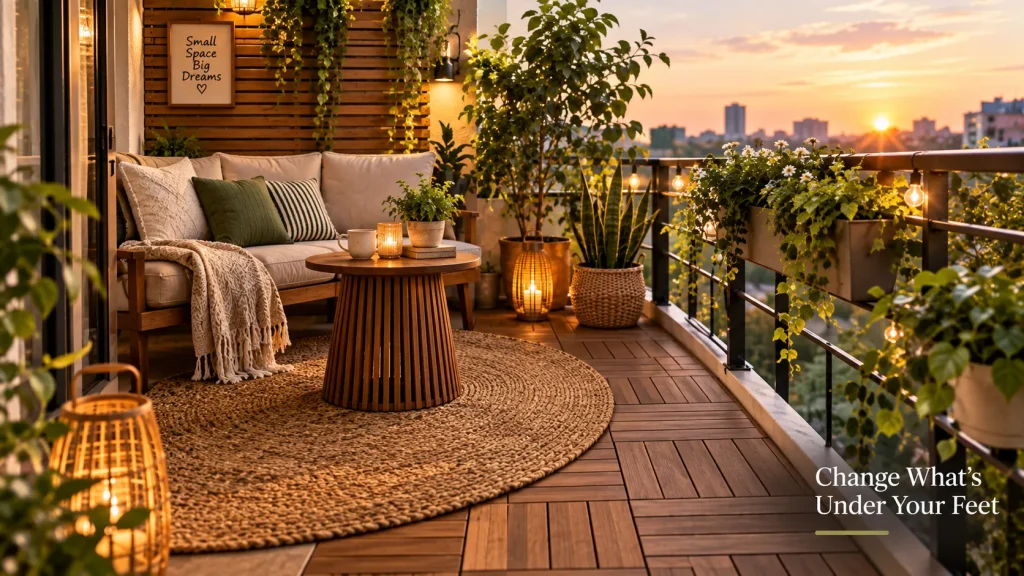
Many balconies have a plain concrete floor that looks cold and gets hot in the sun. Changing the surface makes a big difference to how the space feels.
There are two easy routes:
- Interlocking deck tiles in wood or composite sit on top of the existing floor. Many connect without glue, though installation varies by product, and some need clips or cutting to fit. They can usually be lifted when you move.
- An outdoor rug made from polypropylene or another weather-resistant material adds color and softness and can be rolled up for cleaning.
Whichever you choose, pick a product that lets water drain freely underneath. Lift tiles or rugs now and then to clean away dirt and leaves, since trapped moisture can stain the floor or encourage moss.
Grow Something
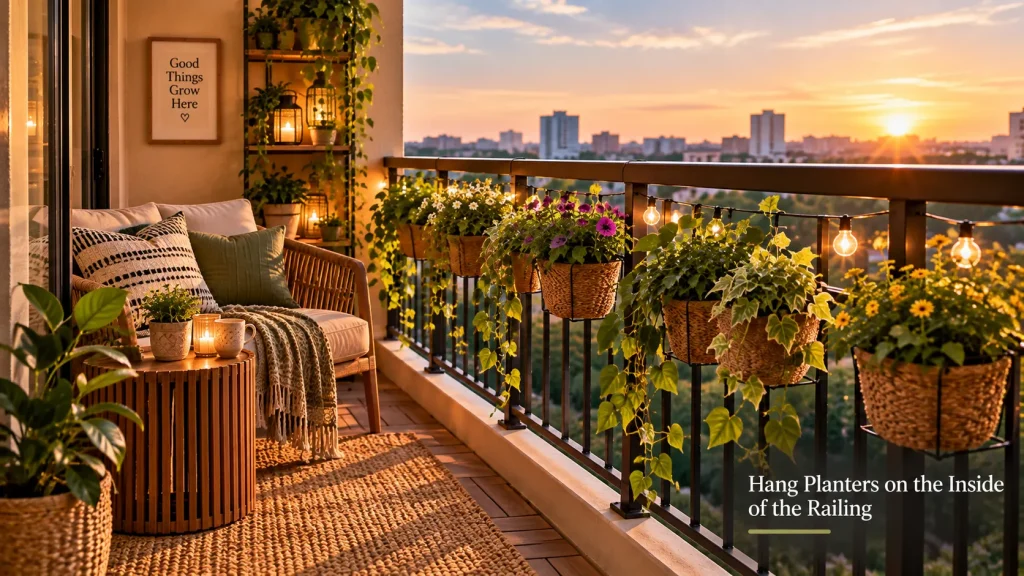
Hang Planters on the Inside of the Railing
Railing planters are long, narrow boxes that sit over the top rail or hang from it. They’re one of the easiest balcony garden ideas because they use space you weren’t using anyway.
Petunias and geraniums are common railing choices in sunny spots, and sun-loving herbs like thyme and oregano often cope well too. Whatever you pick, match it to the light, wind, and climate your balcony actually gets.
Hang planters on the inside of the railing so nothing can fall onto people below, use brackets made for your railing, and don’t overfill them.
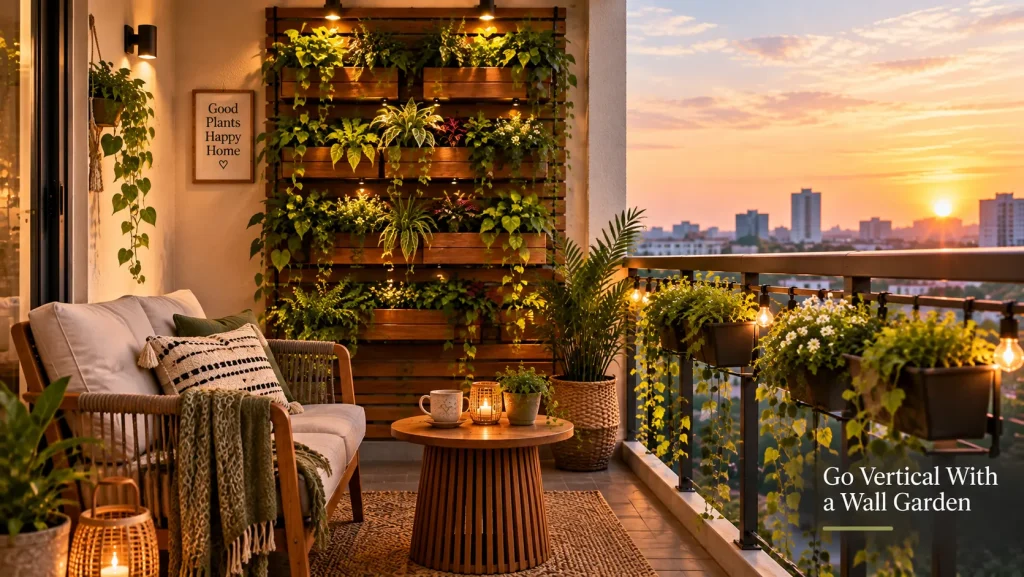
Go Vertical With a Wall Garden
A bare wall is an invitation to plant upward. A vertical garden can hold far more plants than the floor would allow.
Options range from simple to more involved:
- A wooden ladder shelf or tiered plant stand leaning against the wall
- A trellis with climbing plants such as jasmine or sweet peas growing up it
- Fabric pocket planters or modular wall planters, which may need fixings into the wall
For example, a bare wall beside a balcony door could hold a three-tier plant stand with herbs on the top shelf, flowers in the middle, and a trailing plant at the bottom. It takes up less than a step’s worth of floor and gives the wall some green where there was only paint.
Wall-mounted planters need fixings suited to the wall and the weight of wet soil.
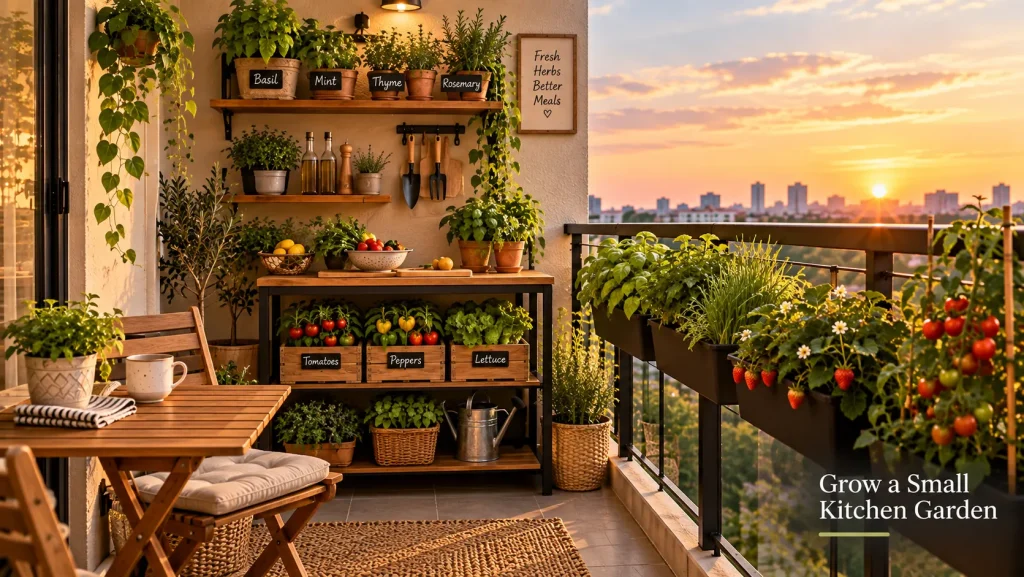
Grow a Small Kitchen Garden
A sunny balcony can produce a surprising amount of food in containers. Herbs are the easiest place to start, with basil, mint, parsley, and chives all happy in pots. Cherry tomatoes, chillies, lettuce, and strawberries are also popular choices for container growing.
A few tips make it more likely to work:
- Check how many hours of direct sun your balcony gets before choosing plants
- Use pots with drainage holes and saucers to catch runoff
- Plant mint in its own pot, since it spreads quickly
- Group compatible pots together to cut down on drying wind, while leaving room for airflow and light
Containers dry out faster than garden beds, especially in wind and sun, so be ready to water often in hot weather. A self-watering pot or a watering can kept by the door makes that easier to keep up with.
Not much sun? Leafy herbs like mint and parsley tolerate less light than tomatoes or chillies, so they’re a better bet on a shadier balcony.
Set Up an Evening Spot
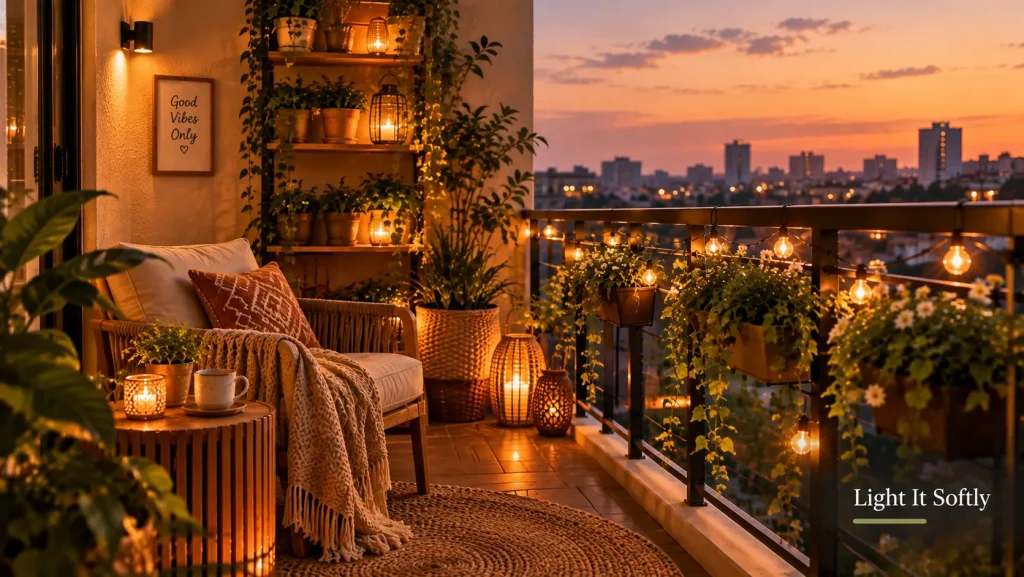
Light It Softly
Once the sun goes down, a balcony without lighting usually gets abandoned. A little soft light changes that.
Solar string lights are popular because they need no wiring. Battery-powered lanterns and LED candles give a similar glow and are safer than real flames, which some buildings don’t allow on balconies anyway.
Wrap lights loosely along the railing, hang them from existing hooks, or place a cluster of lanterns in a corner. Warm white tends to feel cozier than very bright or cool light. Plug-in lights need to be rated for outdoor use, with cables kept away from water and walkways.
Make a Floor Cushion Lounge
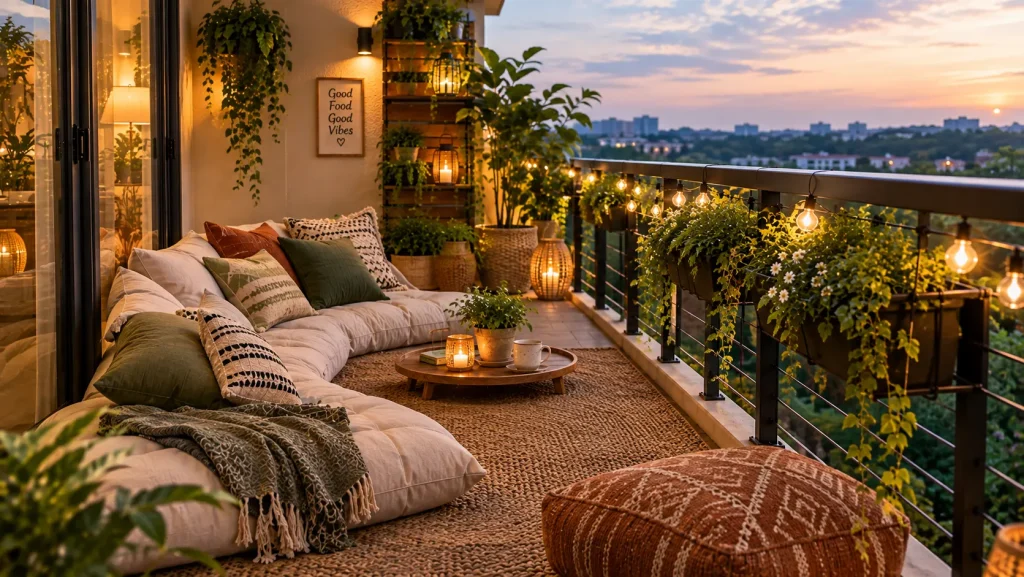
Not every balcony needs chairs. A low lounge, made from an outdoor rug, a couple of large floor cushions, and a low side table, feels relaxed and takes up less visual space than full-size furniture.
Choose cushions with outdoor fabric covers that resist fading and dry quickly. Even so, bringing them inside or storing them in a waterproof box when rain is coming helps them last much longer.
This setup works especially well on balconies with solid walls or high railings, where sitting low still gives you privacy.
Try a Hanging Chair on a Stand
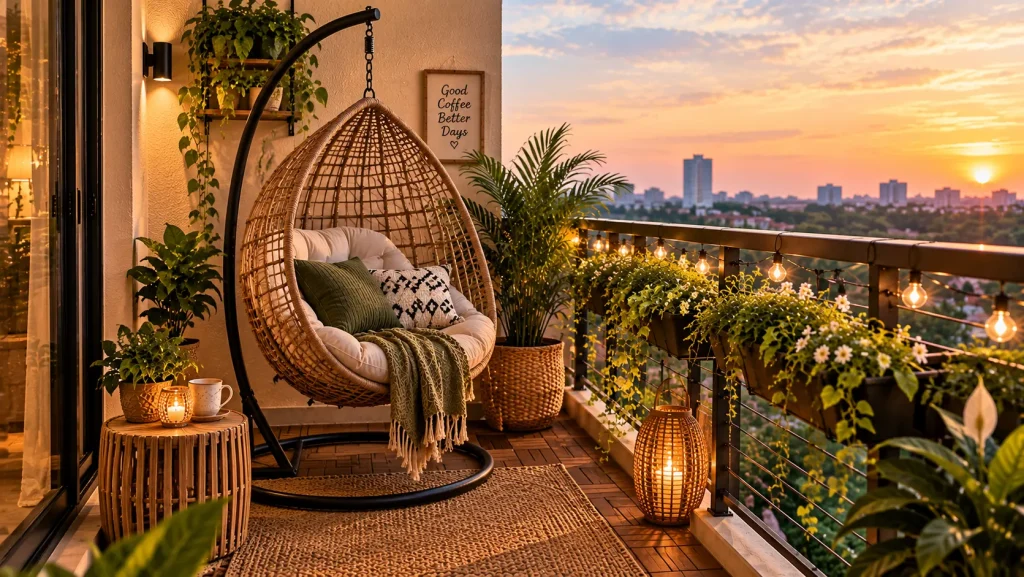
A hanging egg chair or swing seat gives you somewhere to curl up with a book that feels completely different from an ordinary chair.
On a balcony, a chair with its own freestanding stand is usually the sensible choice, since fixing a hanging chair to the ceiling depends on the structure and may not be allowed. Check the chair’s size and swing range before buying, so it doesn’t knock into walls or railings.
Stand it on a level surface, stay within the manufacturer’s weight limit, and follow their stability instructions, since a stand on an uneven floor can tip. Keep it well away from the railing, especially in homes with children.
For Shade and Privacy
Add a Privacy Screen
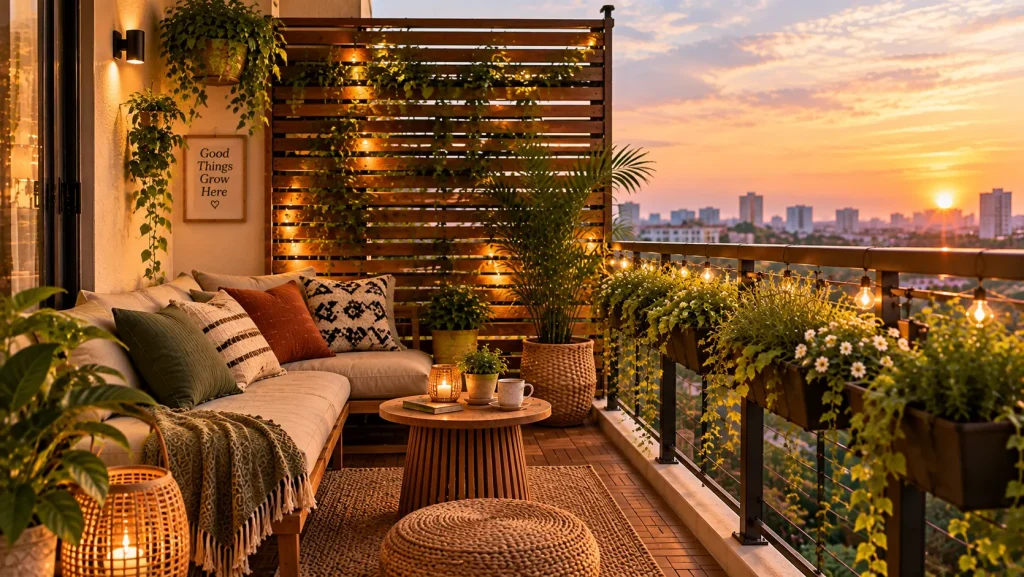
Overlooked by neighbors? A screen along the railing or on one side can make the balcony feel much more private.
Bamboo or reed roll screens, fabric screens, and freestanding panels are common choices. Screens are one of the things buildings most often have rules about, so this is one to confirm first.
Wind matters here too. A solid screen can catch the wind like a sail, so it needs to be secured firmly and, ideally, allow some air to pass through. A row of tall planters with grasses or climbing plants is a softer alternative that does a similar job.
Shade It With an Umbrella
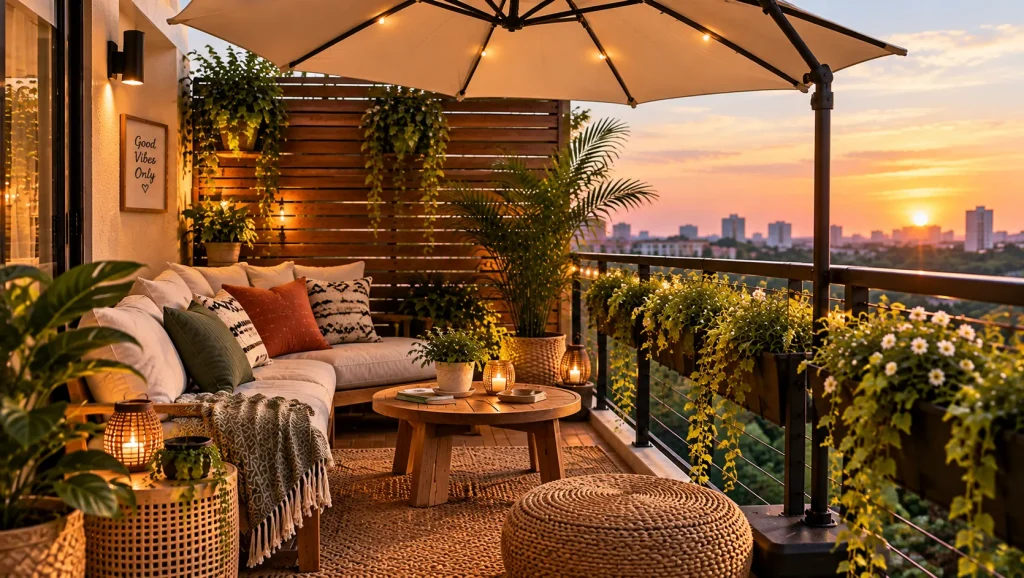
A sunny balcony can be too hot to use in the middle of the day. A small parasol or a half umbrella, which sits flat against the wall, adds shade without taking up much room.
Use a base heavy enough for the umbrella’s size and close it when it’s windy. A strong gust can lift a poorly weighted umbrella, which is especially dangerous on a balcony. For something more permanent, like an awning, you’ll usually need permission from the building or landlord, and professional installation.
Tricks for Tiny Balconies
Some balconies are really a ledge with a door. Small balcony ideas need to work harder, so these two focus on pieces that fold away or do double duty.
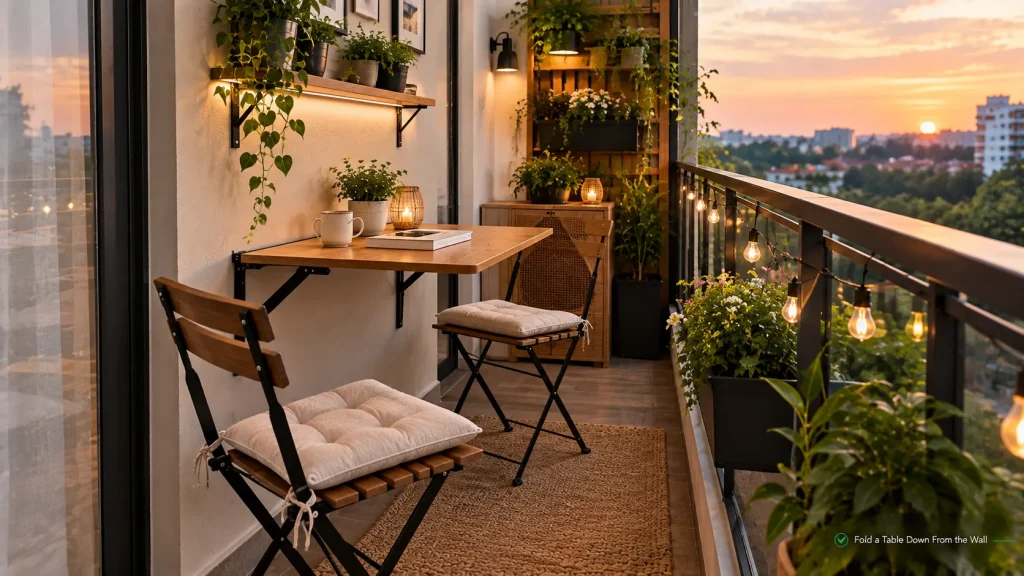
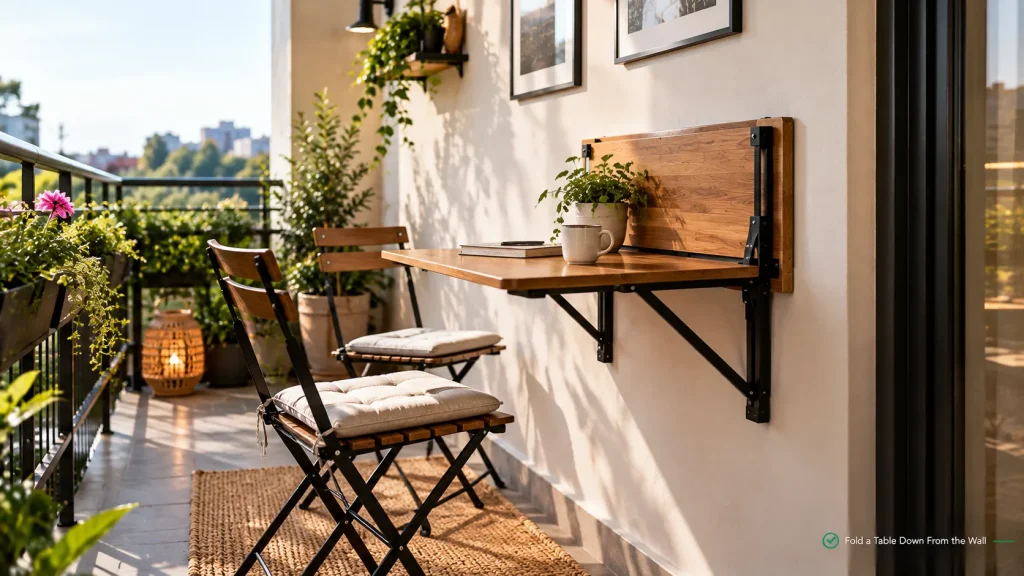
Fold a Table Down From the Wall
On a balcony that’s only deep enough for one chair, a wall-mounted drop-leaf table is often the only table that fits. It folds up to make a small surface when you need it and lies flat against the wall when you don’t.
It needs secure fixings into a suitable wall, so check what your wall is made of and whether you’re allowed to drill. When folded down, it leaves the floor almost completely clear.
For example, on a narrow balcony off a bedroom, a drop-leaf table at about counter height with one stool tucked underneath can be a breakfast spot in the morning and disappear entirely by the afternoon, when the drying rack comes out.
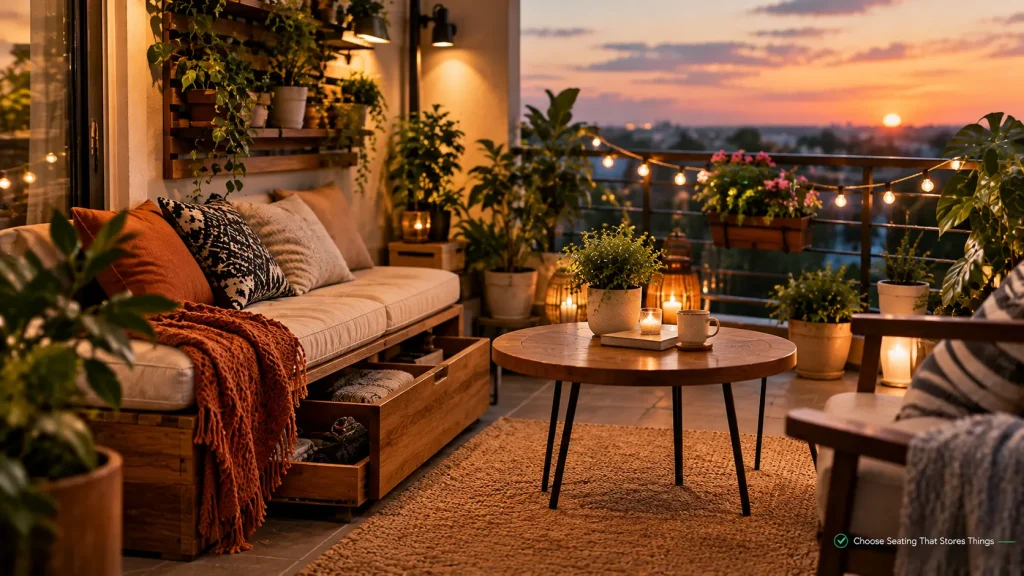
Choose Seating That Stores Things
A weatherproof storage bench or deck box gives you a seat and keeps cushions, watering cans, and gardening tools close at hand, without adding another piece of furniture to a small floor.
Look for one with a lid that sheds water and a sturdy frame that can take an adult’s weight. Add a seat cushion and a couple of pillows, and it becomes the main seat on the balcony.
Putting It Together: A Bare Balcony in One Weekend
Seeing how a few of these combine can make it easier to plan your own. Here’s one flexible example for a small apartment balcony. Treat it as a menu rather than a shopping list, and drop anything that won’t fit.
Saturday morning: clear out everything that doesn’t belong, sweep, and check the drain is working. Lay interlocking deck tiles, leaving the drain uncovered.
Saturday afternoon: fit two railing planters on the inside of the rail and plant them with herbs. Set a three-tier plant stand against the wall beside the door.
Sunday: add either a folding bistro set or a storage bench, whichever fits while keeping a clear route from the door, plus solar string lights.
Most of these steps are straightforward, though the tools you need depend on the products you choose. Nearly everything here can also come with you when you move, which is why it works well as a set of renter-friendly balcony ideas: the space improves without changing the building.
Balcony Mistakes Worth Avoiding
Ignoring the wind. Upper floors can be much windier than ground level, so secure or store anything light enough to blow away.
Putting climbable things next to the railing. Chairs, stools, planters, and storage boxes placed against the railing can give children a step up. Keep them away from the edge if young children use the balcony.
Overfilling with furniture. A balcony packed with pieces becomes hard to move through. Leave a clear route from the door.
Forgetting about neighbors. Water dripping from plants, smoke, and bright lights can all affect people around you. A little consideration helps keep the peace.
Questions About Balcony Ideas
How can I make a small balcony feel bigger?
Keep the floor as clear as possible, choose furniture that folds or doubles as storage, and use the walls and railing for plants and lights. A single rug or set of deck tiles can also make the floor feel more unified.
What plants grow best on a windy balcony?
Tough, low-growing plants usually cope better than tall, delicate ones. Many herbs, ornamental grasses, and succulents handle wind well. Group pots together and choose heavier containers so they don’t blow over.
Can I use a grill on my balcony?
That depends on your building rules, your lease, and local fire regulations, which can treat charcoal, gas, and electric grills differently. Many apartment buildings restrict or ban them, so check all three before buying one.
How do I keep pigeons off my balcony?
Start by removing anything that attracts them, such as food scraps, standing water, or sheltered nesting spots. Humane deterrents can help, and for persistent problems, netting fitted by a professional is an option where your building and local rules allow it.
Start With One Reason to Go Outside
You don’t need to try all these balcony ideas at once. Pick the one thing you’d most like to do out there, whether that’s drinking your morning tea, growing herbs, or unwinding after dark, and set the balcony up for that first.
Once you’re actually using the space, it becomes much clearer what to add next.