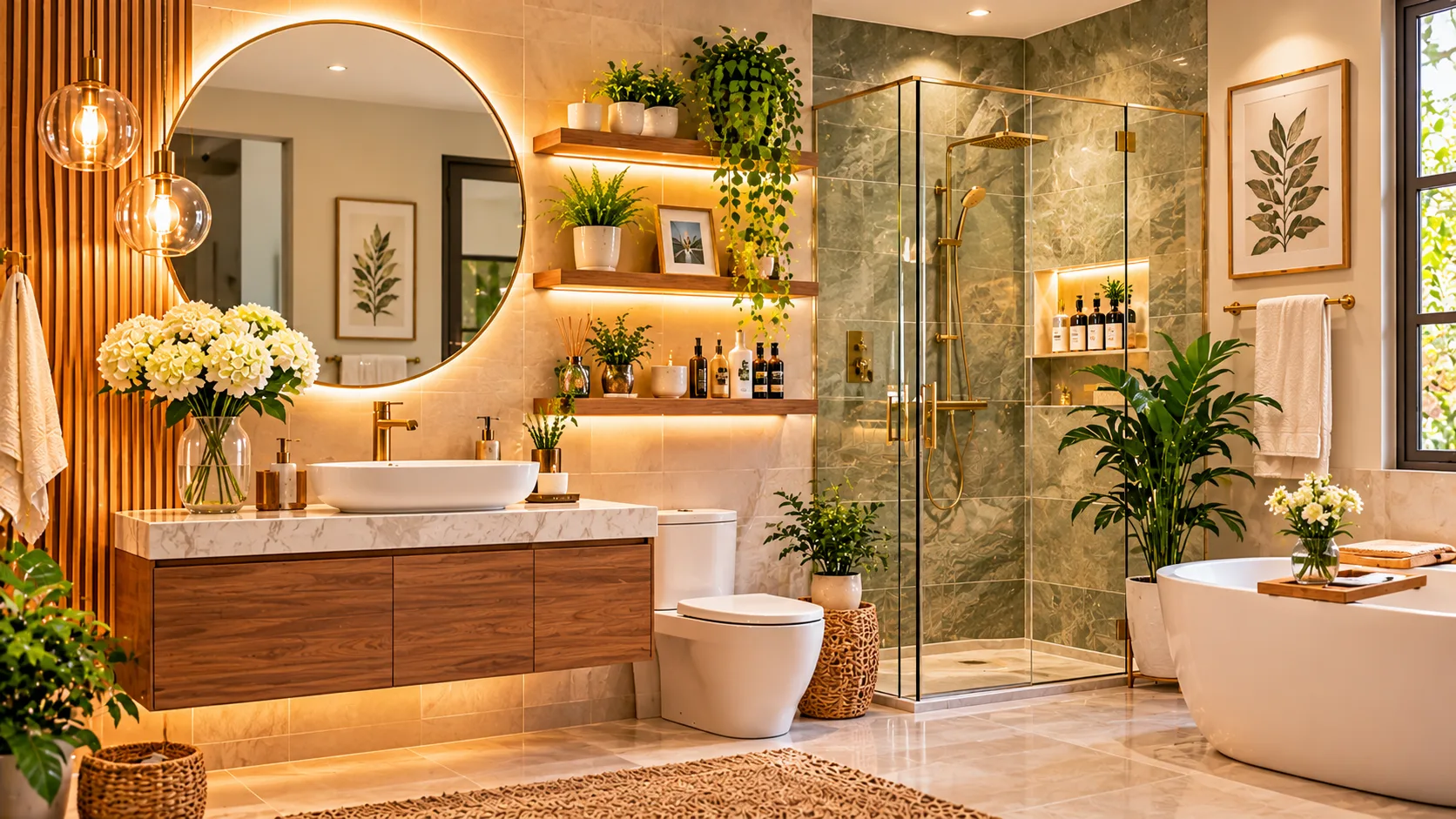
Beyond White Tile: 13 Bathroom Interior Design Ideas With Real Personality
You’ve saved hundreds of bathroom photos. Some are moody and dark. Some are bright and Scandinavian. One has a pink tub you can’t stop thinking about.
Then you stand in your own bathroom, look at the plain white tiles and builder-grade vanity, and have no idea where to start.
That gap between inspiration and reality is where most bathroom projects stall. The trick is to stop thinking in whole rooms and start thinking in design moves. One strong decision, like a color, a material, or a shape, can shape everything else.
These 13 bathroom interior design ideas are grouped by the kind of decision they involve: color, surfaces, shape, and fixtures. Pick one or two that excite you, and build from there.
Write a Quick Design Brief First
Before choosing tile or paint, answer four questions on a scrap of paper.
How should the room feel? Calm, energizing, cozy, or dramatic?
Who uses it? A family bathroom needs tougher finishes than a guest powder room.
What’s staying? Keeping the tub, toilet, or floor tile changes what will work around them.
What’s your budget range? A paint-and-hardware refresh and a full renovation lead to very different choices.
Keep your answers on your phone and look at them before every purchase. It stops you from buying a beautiful tile that doesn’t fit the plan.
Design with color (four ideas):
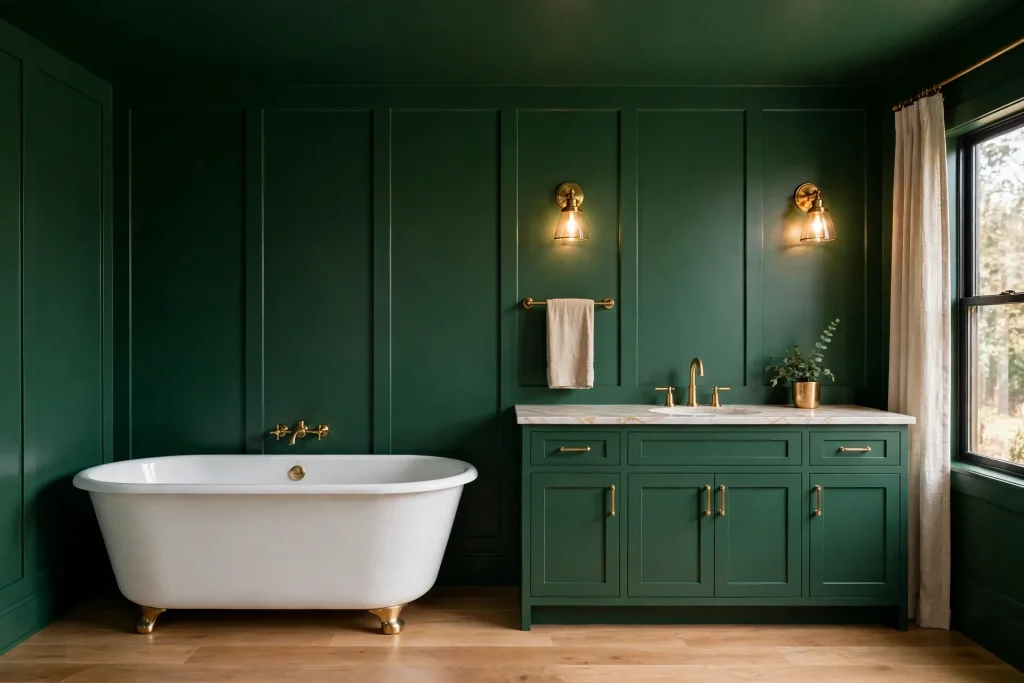
Color-Drench the Whole Room
Color drenching means painting the walls, ceiling, trim, and sometimes even the door in the same shade. It makes a bathroom feel wrapped and intentional, not boxed in.
Deep colors like forest green, ink blue, or terracotta feel cozy and dramatic. Softer shades like sage, clay, or dusty pink feel calm and enveloping.
Make it last in a bathroom:
- Use a paint made for bathrooms or high-moisture rooms, often labeled mildew-resistant
- Choose an eggshell or satin finish, which wipes clean more easily than matte
- Run the extractor fan during and after showers
Small, windowless bathrooms often benefit most. When there’s no natural light to work with, a rich, all-over color can make the room feel deliberate.
Pick a Colored Grout
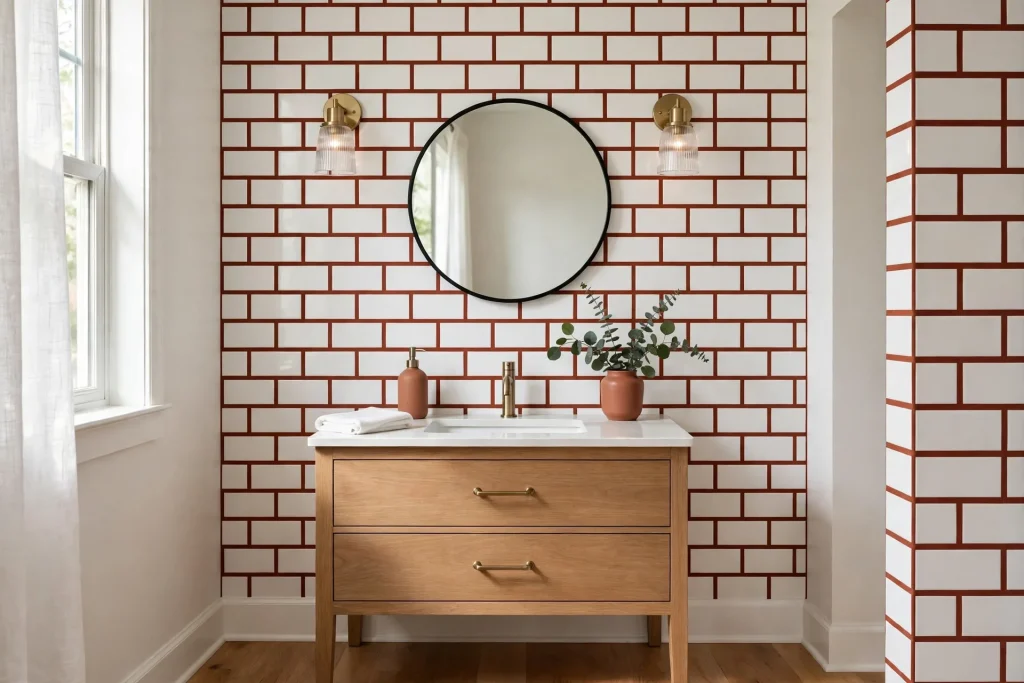
Grout is often an afterthought, but it can completely change how a tile looks.
White tiles with charcoal grout look graphic and crisp. Pink tiles with matching pink grout look soft and seamless. Green zellige-style tiles with cream grout feel handmade and relaxed.
Colored grout is one of the cheapest ways to add personality, especially if you’re using simple, inexpensive tiles.
Test a few colors on a spare board before committing. Grout often dries lighter or darker than it looks when wet. Stain-resistant or epoxy grout can be easier to keep clean in showers and on floors, but the right grout depends on your tile type, the location, and the manufacturer’s instructions.
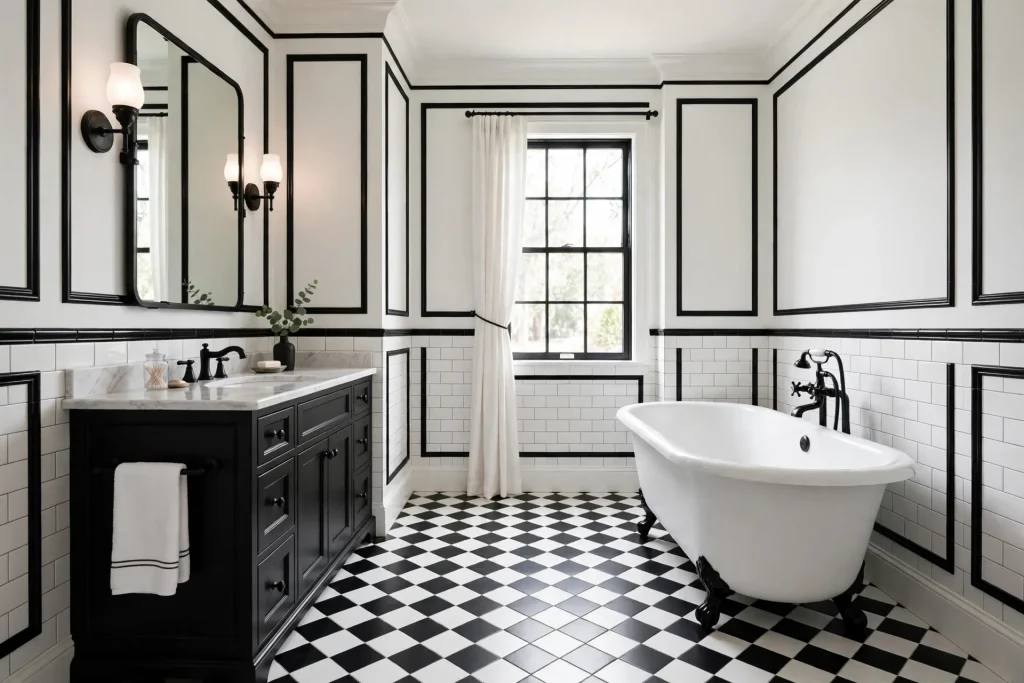
Go Classic With Black and White
A black-and-white bathroom never really goes out of style. It can look vintage, modern, or somewhere in between, depending on the details.
Try white walls with a black hexagon or penny-tile floor. Or pair black-framed fixtures with white subway tiles and crisp white towels.
Ways to keep it warm:
- Add a wood stool, a woven basket, or a linen shower curtain
- Bring in plants for soft green contrast
- Use warm white lighting rather than cool white
A monochrome palette also makes the room easy to update. Change towels or art, and the whole mood shifts.
Bring Back Retro Pastels
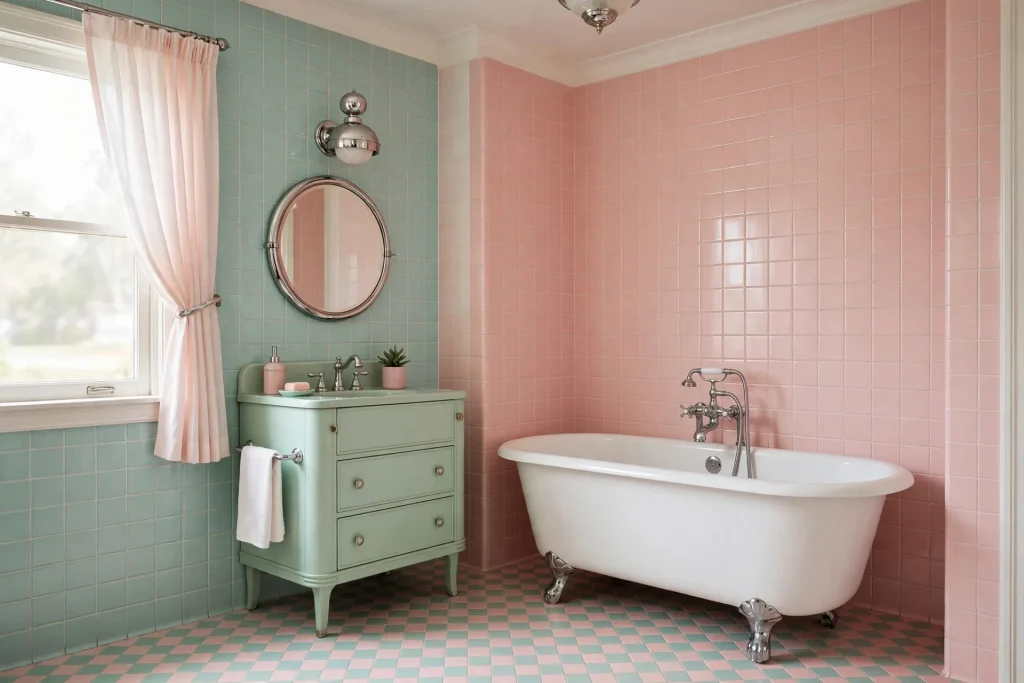
Mid-century bathrooms often had mint, pink, butter yellow, or powder blue tiles. Instead of ripping them out, many people now celebrate them.
If you already have a vintage pastel bathroom, lean in. Add matching towels, a scalloped mirror, and simple brass or chrome fixtures that suit the era.
If you’re starting fresh, pick one pastel for tiles or a vanity and keep the rest simple. A soft pink basin with white walls, or mint tiles with a creamy floor, feels playful without being overwhelming.
Design with surfaces (three ideas):
Lay Simple Tiles in a New Pattern
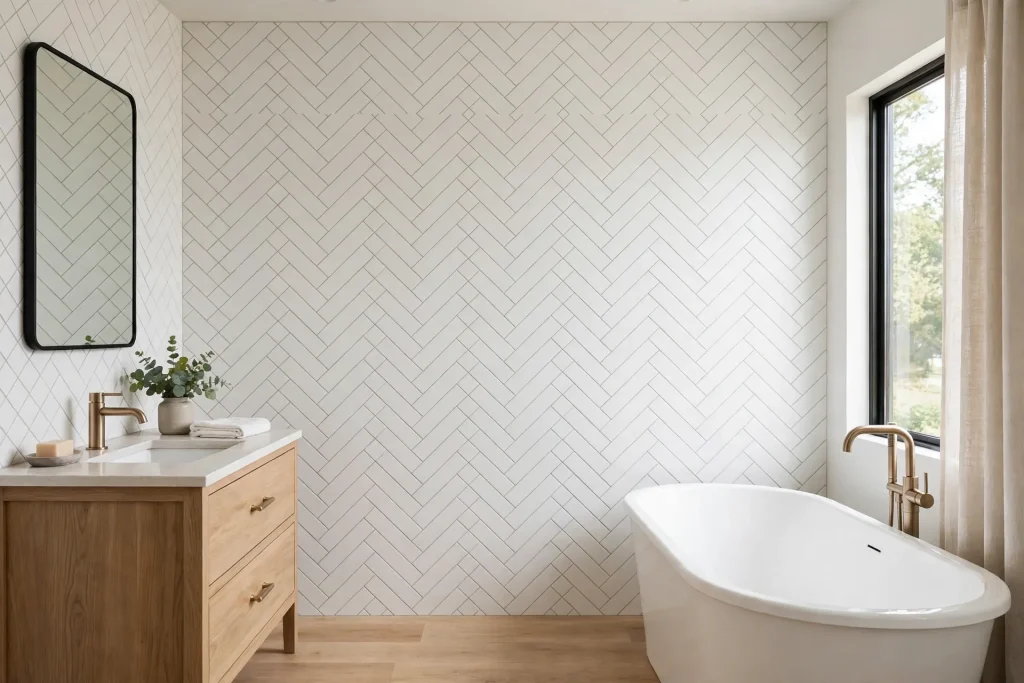
You don’t need expensive tiles to get an interesting result. Changing the layout can make basic tiles look custom.
Patterns to try:
- Vertical stack bond: rectangular tiles stacked straight up, which can make a low ceiling feel taller
- Herringbone: tiles set at angles in a zigzag, great for floors or a shower wall
- Basketweave: pairs of tiles alternating direction, for a classic look
- Offset thirds: a modern twist on the usual brick pattern
Some patterns take more time to lay and create more tile cuts, so get a quote that reflects the layout. Always order extra tiles, usually around 10 to 15 percent, to allow for cuts and breakages.
Install a Stone or Slab Wall
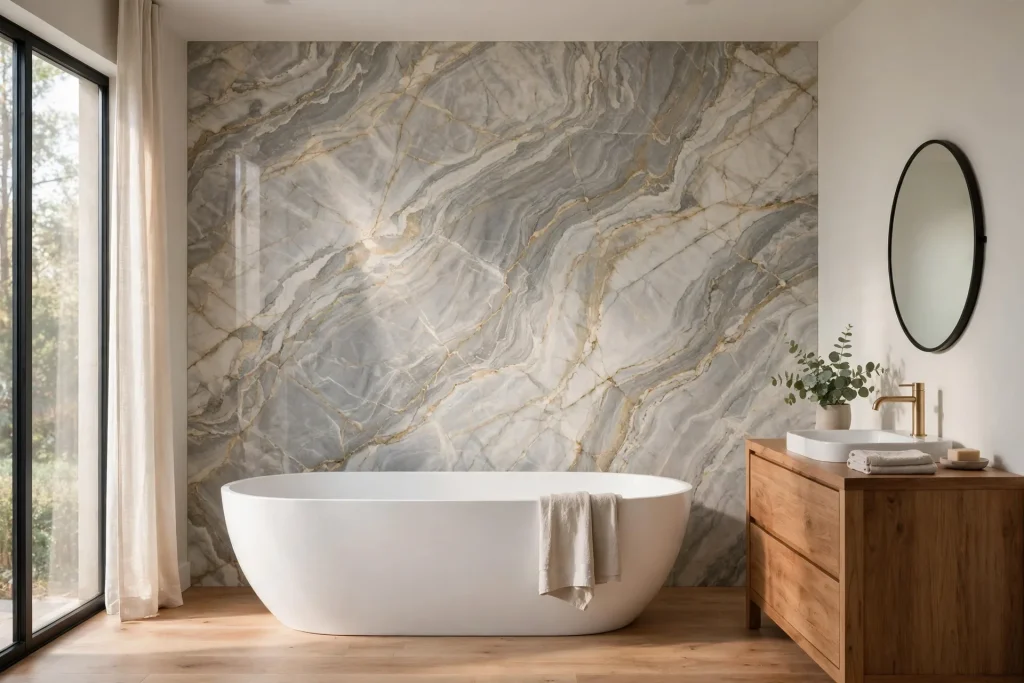
A single large slab of stone or quartz behind the vanity or in the shower creates a luxurious look and is easier to clean, since there are fewer grout lines.
Marble feels classic. Quartzite brings dramatic natural veining. Engineered quartz and large porcelain slabs offer the look with less maintenance.
Good to know:
- Natural marble can stain and etch, so it needs sealing and gentle cleaners
- Slabs are heavy and usually need professional installation
- A slab backsplash with a matching countertop creates a seamless, high-end look
For a smaller budget, use a slab only on the vanity wall and keep the rest of the room in simple tile or paint.
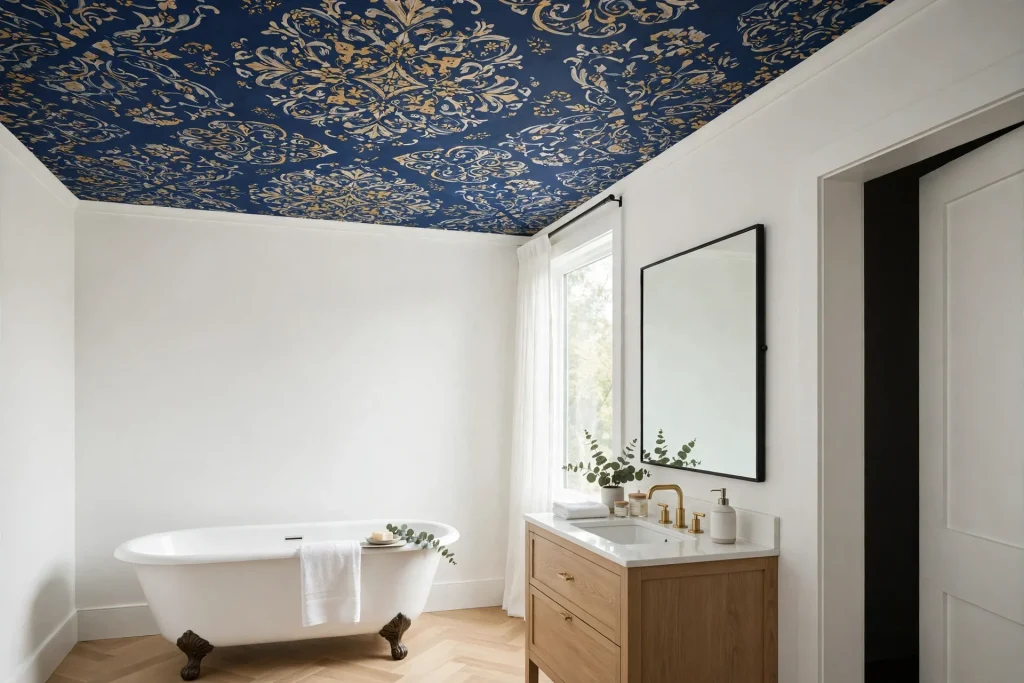
Make the Ceiling the Fifth Wall
Most bathroom ceilings are plain white, which makes them easy to forget. A painted or patterned ceiling instantly makes the room feel designed.
Try a deep color on the ceiling with lighter walls, or a soft stripe or small pattern overhead. In a small bathroom, it draws the eye up and adds character without taking any floor space.
Use moisture-resistant paint, and if you choose wallpaper, pick a vinyl or bathroom-rated paper. Good ventilation matters most here, since warm, steamy air rises.
Design with shape (three ideas):
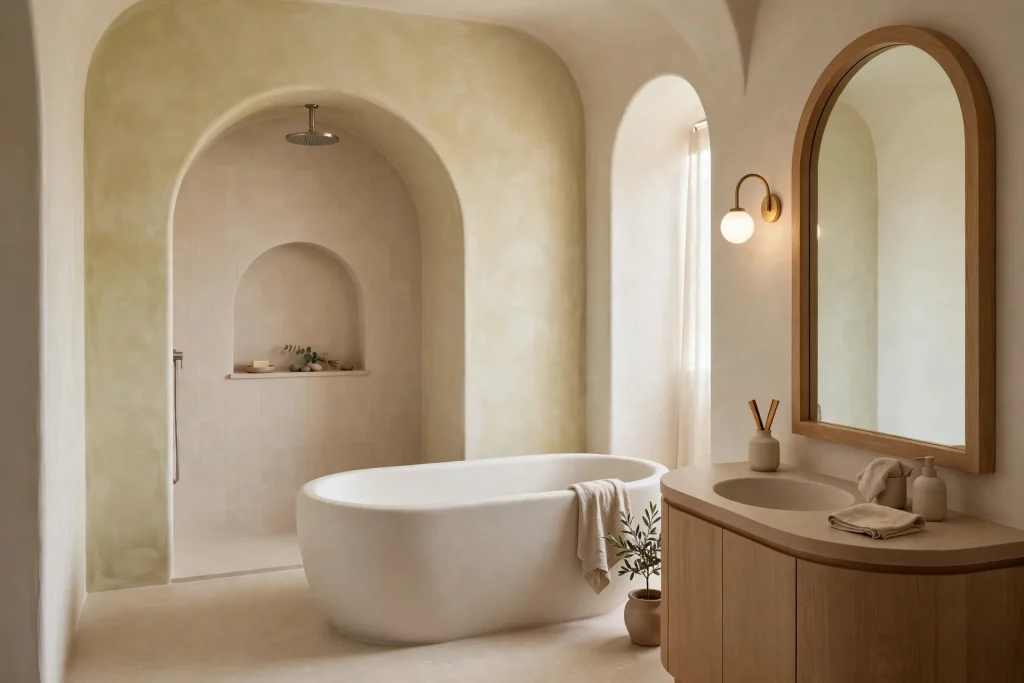
Add Arches and Curves
Soft curves make a bathroom feel gentle and welcoming, especially in a room full of straight tile lines.
You can add curves in several ways:
- An arched shower opening or shower niche
- An arched or rounded mirror
- A curved vanity with rounded corners
- A tile border that follows an arch shape on the wall
Even one curved element can soften a boxy space. Arched openings in walls or showers are a structural and waterproofing job, so plan them with an experienced contractor.
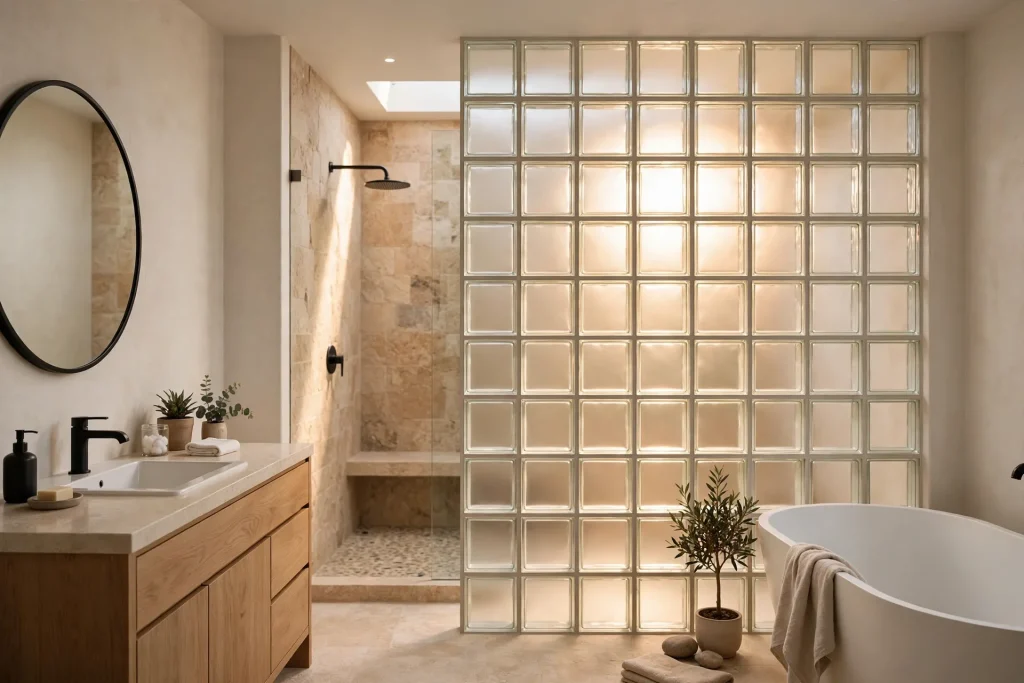
Build a Glass Block Partition
Glass blocks were huge in the 1980s and 1990s, and they’re making a comeback in a fresh way.
A glass block wall between the shower and the rest of the bathroom lets light through while still giving privacy. Clear, frosted, or lightly tinted blocks all work.
They’re especially useful in bathrooms with one small window, since the light can pass through instead of being blocked by a solid wall.
Glass block walls need proper support and installation, so this is usually a job for a professional. If the partition sits in or beside the shower, it should be designed for water exposure and built so it doesn’t compromise the shower’s waterproofing.
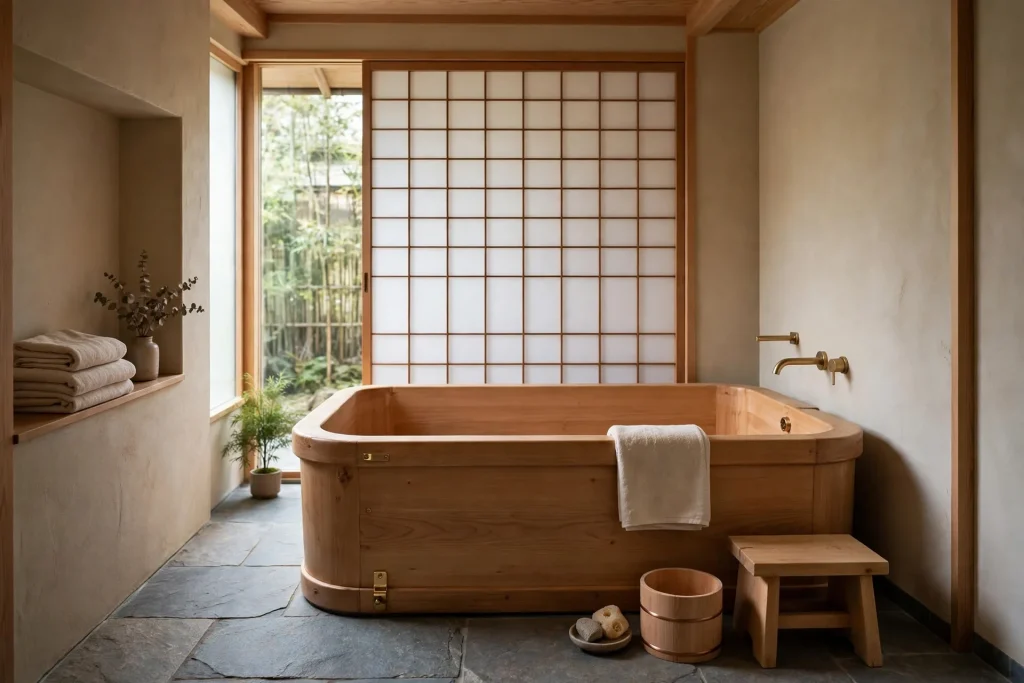
Choose a Japanese-Style Soaking Tub
A Japanese soaking tub, called an ofuro, is deeper and shorter than a standard bathtub. You sit upright with water up to your shoulders instead of lying back.
Its compact footprint can make it suitable for bathrooms where a full-size freestanding tub would not fit.
Traditional versions are made from hinoki cypress wood, which has a soft, fresh scent. Modern versions also come in acrylic, stone resin, or concrete-look finishes.
Pair it with simple materials like pale wood, stone tiles, and a few green plants for a calm, spa-like feel. Before buying, check the tub’s exact dimensions, your floor’s weight capacity, and your water heater’s size, since deep tubs hold a lot of water. Also make sure the tub can actually be carried through doorways and up stairs into the room.
Design with fixtures and furniture (three ideas):
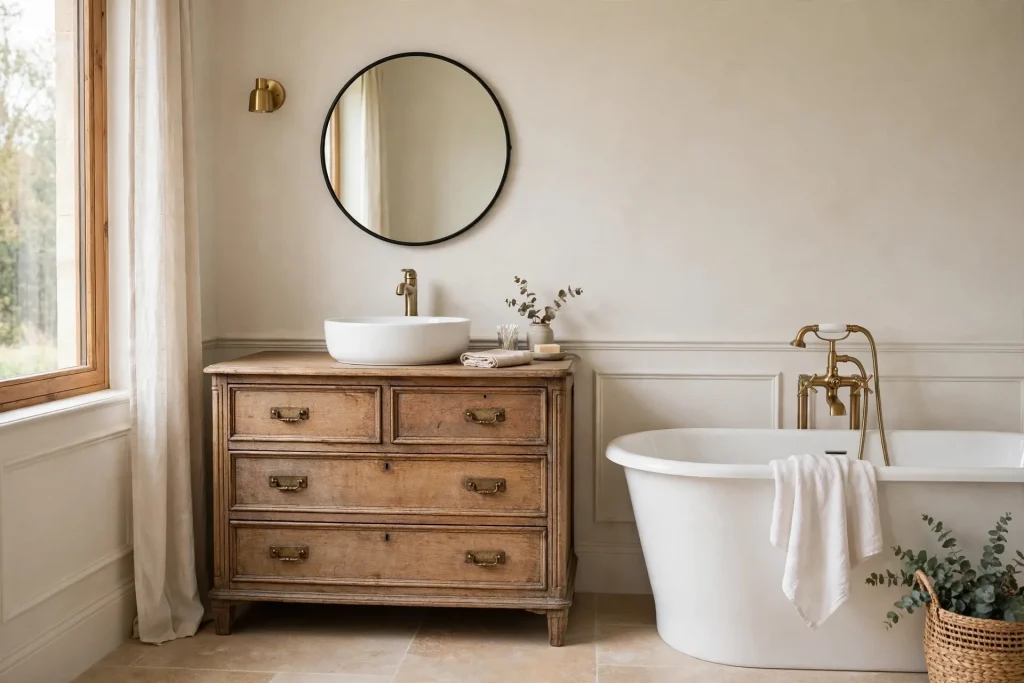
Turn a Dresser Into a Vanity
A vintage dresser or sideboard turned into a vanity gives a bathroom instant character.
The top is modified to fit a sink, and the drawers are adjusted around the plumbing. Solid wood pieces work best.
Before you start:
- Plan around the finished sink height, not just the dresser. Many people aim for a sink rim around 32 to 36 inches (81 to 91 cm), so a vessel sink may need a lower dresser
- Seal all wood surfaces well, especially the top, with a water-resistant finish
- Hire a plumber for the sink and drain connections
A painted dresser with a stone or marble top feels classic. A warm wood dresser with a white vessel sink feels relaxed and natural.
Make the Sink a Statement
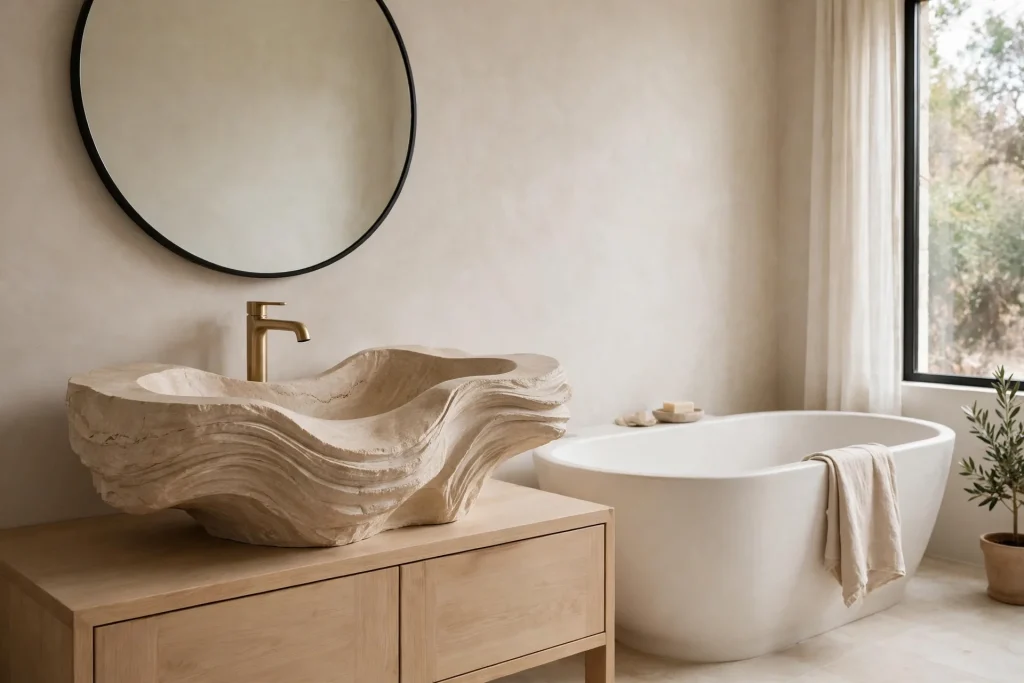
The sink is often the most-used fixture in the bathroom, so why not make it a feature?
Statement sink ideas:
- A carved stone vessel sink in marble, travertine, or granite
- A colorful ceramic basin in green, blue, or terracotta
- A rectangular concrete-look sink with clean lines
- A hammered copper or brass basin for warmth
Vessel sinks sit on top of the counter, so check the faucet height and choose a taller or wall-mounted faucet to avoid splashes. Natural stone and metal sinks may need special cleaning products.
Show Off Exposed Brass Plumbing
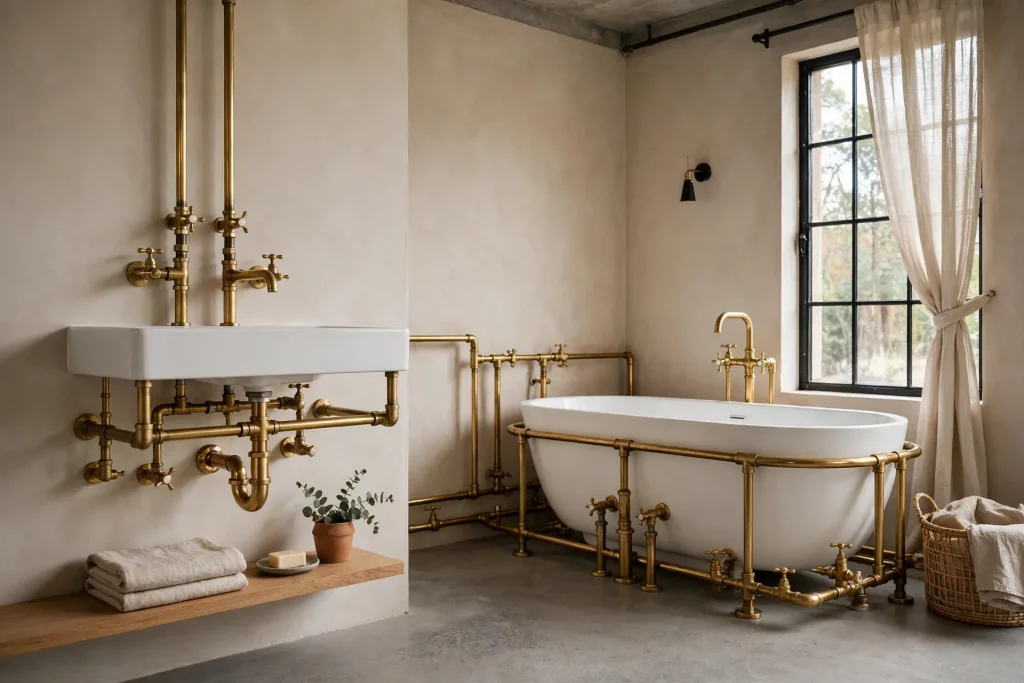
Exposed plumbing, where the shower pipes run visibly along the wall, adds a vintage, industrial feel.
Unlacquered brass develops a natural patina over time, while polished nickel or chrome looks crisp. Exposed shower systems often include a fixed rain head and a handheld wand on the same visible pipe.
It’s a beautiful focal point, especially against plain white or green tile.
Not every bathroom can take exposed plumbing easily, since it needs suitable wall connections and compatible fittings. Choose a system designed to be exposed, and have a licensed plumber install it to make sure joints and connections are watertight.
Combining Bathroom Interior Design Ideas
Pick one hero idea, then choose up to two supporting ideas from different groups. For example, a color-drenched room (color) with a stone vessel sink (fixtures), or black-and-white tiles (color) with exposed brass plumbing (fixtures).
Avoid pairing two big statements from the same group, like a slab wall and a patterned ceiling, in a small room. They’ll compete instead of working together.
Making It Work in a Small Bathroom
Small bathrooms can handle bold bathroom interior design ideas, as long as you choose carefully.
In a narrow bathroom: run vertical stack bond tiles on the end wall to draw the eye forward, and keep the side walls in one drenched color.
In a tiny powder room: put the budget into one statement sink and a painted ceiling, since there’s little wall space for more.
In a small family bathroom: keep the floor in one simple tile and add personality with colored grout and a curved mirror, which are easy to live with every day.
Design Choices at Different Budgets
Costs vary a lot by location, materials, and labor, so treat these as rough tiers rather than prices.
Small budget: paint, a colored grout refresh, a new mirror, or a painted ceiling.
Medium budget: a statement sink, dresser-turned-vanity, or retiling one wall in a new pattern.
Larger budget: stone slab walls, glass block partitions, soaking tubs, or exposed plumbing.
Many of these ideas can be done in stages. Start with color, then upgrade fixtures over time.
A Real-Life Example
Imagine a narrow, windowless guest bathroom with white tiles, a basic vanity, and a flat white ceiling.
The plan:
- Walls, ceiling, and trim are color-drenched in a deep olive green
- The old vanity is replaced with a vintage oak dresser, sealed and fitted with a white vessel sink
- A round brass mirror and warm wall lights finish the look
- The existing white floor tiles stay, but the grout is cleaned and refreshed
The tiles and toilet didn’t change, yet the room now feels warm, cozy, and completely different. Most of the cost went into the dresser and plumbing work.
Materials and Maintenance at a Glance
Natural marble: beautiful but can stain and etch. Seal regularly and use gentle cleaners.
Porcelain slabs and tiles: durable and low maintenance.
Sealed wood: warm and natural, but needs good ventilation and occasional resealing.
Unlacquered brass: develops a patina. Polish it if you prefer it shiny.
Glass block: easy to wipe clean, though grout lines need regular attention.
Bathroom Design Mistakes to Avoid
Ignoring ventilation. Poor airflow leads to peeling paint, mold, and damaged finishes.
Choosing slippery floor tiles. Glossy tiles can be dangerous when wet. Look for slip-resistant floor tiles.
Skipping waterproofing. Any wet area needs proper waterproofing behind the tiles.
Mixing too many styles. Pick a clear direction so the room feels cohesive.
Forgetting maintenance. Natural stone, wood, and brass look beautiful but need regular care.
Your Bathroom Design Questions, Answered
What is the cheapest way to change a bathroom’s look?
Paint is usually the most affordable starting point. Colored grout refresh kits and a new mirror are other low-cost options.
What colors work well in a small bathroom?
Both light and deep colors can work. Light colors feel airy, while deep colors can make a small bathroom feel cozy and intentional.
Can I use wood in a bathroom?
Yes, if it’s sealed well and the room has good ventilation. Teak, oak, and hinoki are popular choices.
Is exposed plumbing practical?
Yes, when you choose a system designed for exposed use and have it installed by a licensed plumber.
Are glass blocks still in style?
They’re coming back in a modern way, especially as partitions that let light through while keeping privacy.
Design the Room You’ll Use Every Day
You walk into your bathroom more often than almost any other room, so it deserves more than a quick white-tile solution.
Start with one of these bathroom interior design ideas that matches the feeling you want. Make that choice well, and the rest of the room will be much easier to plan.