

One Night as Your Own Guest: 18 Guest Room Ideas That Make Visitors Feel at Home
It’s the evening before your visitors arrive. You open the door to the spare room and remember why you’ve been avoiding it. There’s a box of winter clothes on the bed, an exercise bike in the corner, and a stack of paperwork on the only chair.
Rooms used a few weeks a year tend to drift that way. The good news is that a comfortable guest room doesn’t take a big budget. It mostly takes thinking like the person who’ll stay there. The 18 guest room ideas in this post follow a visitor’s stay in three stages: five for arrival, seven for the night, and six for the morning and beyond.
The One Test Worth Doing First
Before you buy anything, sleep in the guest room yourself for one night.
It’s a quick way to spot problems. As you go, note down:
- Anything uncomfortable about the bed
- Light or noise that keeps you awake
- Whatever you reached for and couldn’t find
That short list will tell you which of the ideas below matter most for your room.
When they arrive (ideas one to five): the first few minutes in a guest room set the tone. Guests want to put their bags down, unpack a little, and know where things are without having to ask.
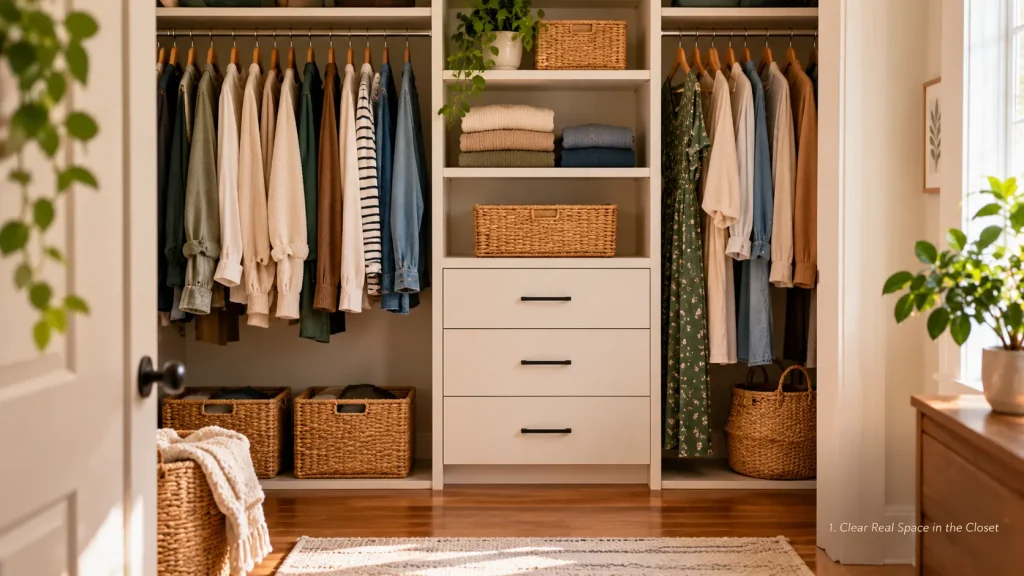
Clear Real Space in the Closet
Empty at least part of the closet and a drawer or two, even if the rest stays full. Leave a handful of matching hangers on the rail.
Guests often feel awkward living out of a suitcase for a week, but they won’t move your things to make space. If you need to keep some belongings in there, put them in labeled boxes on the high shelf, and leave the hanging rail and at least one drawer free for visitors.
If there’s no closet at all, a freestanding clothes rail with a few hangers and a small basket underneath for folded items works well. It can fold away or move to another room between visits.
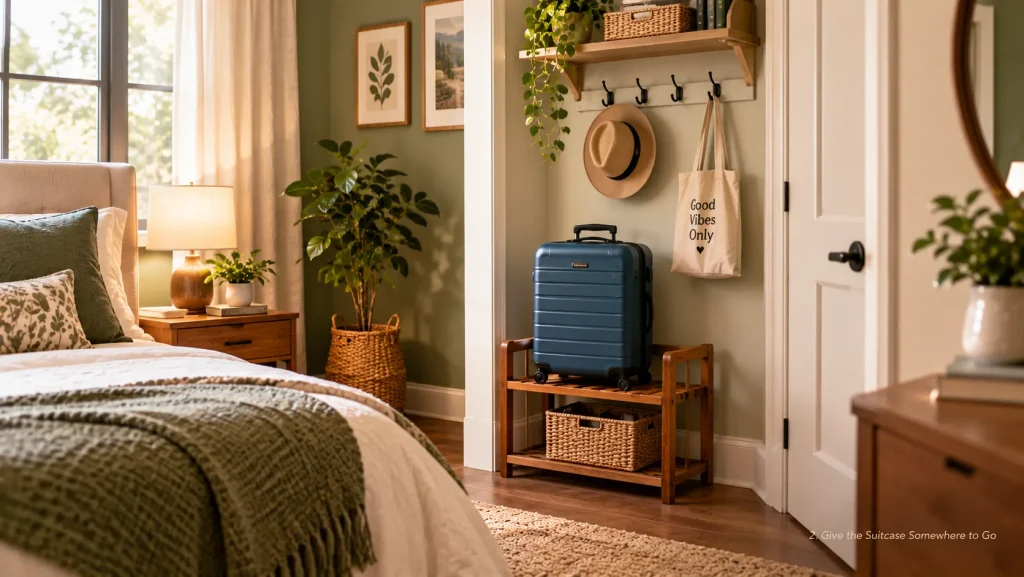
Give the Suitcase Somewhere to Go
A folding luggage rack, a sturdy bench, or even a low trunk at the foot of the bed saves guests from opening their suitcase on the floor or the bed covers.
Folding racks are inexpensive and tuck behind a door or under the bed when nobody’s visiting. They keep suitcases off the bed and make packing and unpacking easier, especially for guests who’d rather not crouch over a case on the floor.
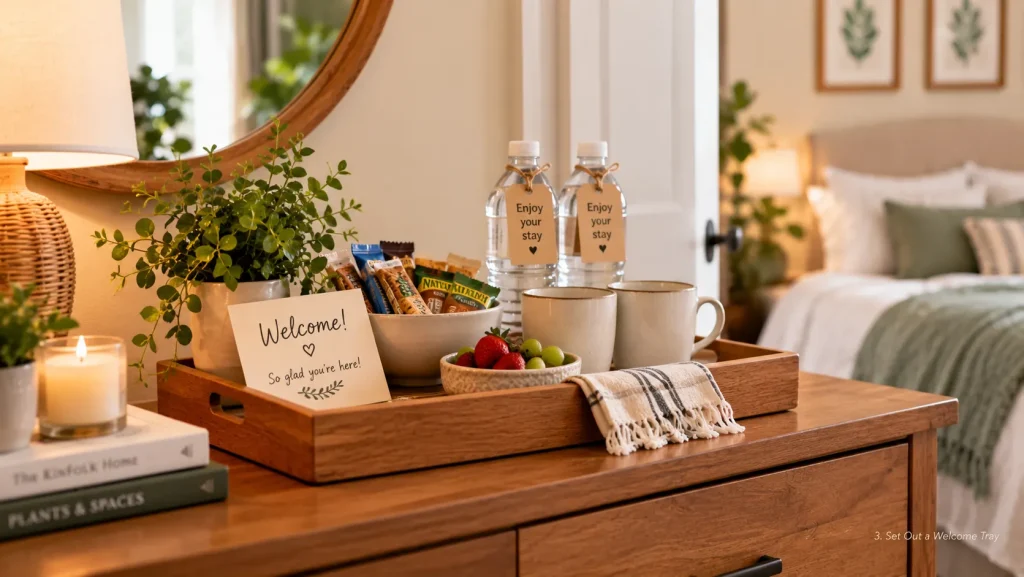
Set Out a Welcome Tray
Keep this one simple. A small tray on the dresser with a card showing the Wi-Fi name and password, a short note on any essential house information, and spare keys if guests will be coming and going is usually enough.
Picture a guest arriving late after a long drive. Instead of searching for you to ask about the Wi-Fi, they find it on the tray and can settle straight in. Towels and water have their own spots, covered further down.
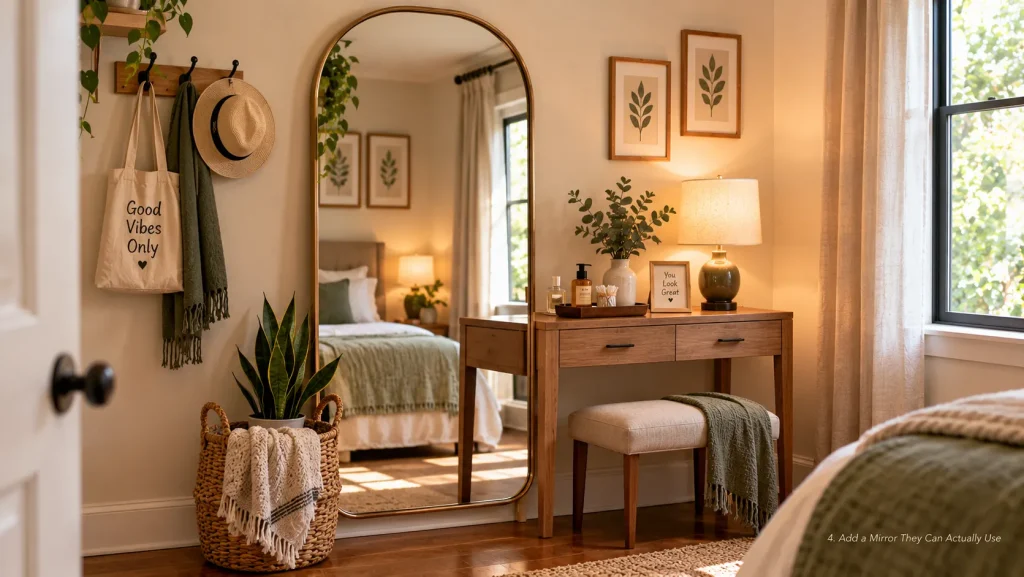
Add a Mirror They Can Actually Use
A full-length mirror on the back of the door or leaning against the wall lets guests check their outfit without lining up for the bathroom. If you lean one, secure it to the wall so it can’t tip, especially if children ever stay. An over-the-door mirror is a renter-friendly option that needs no drilling.
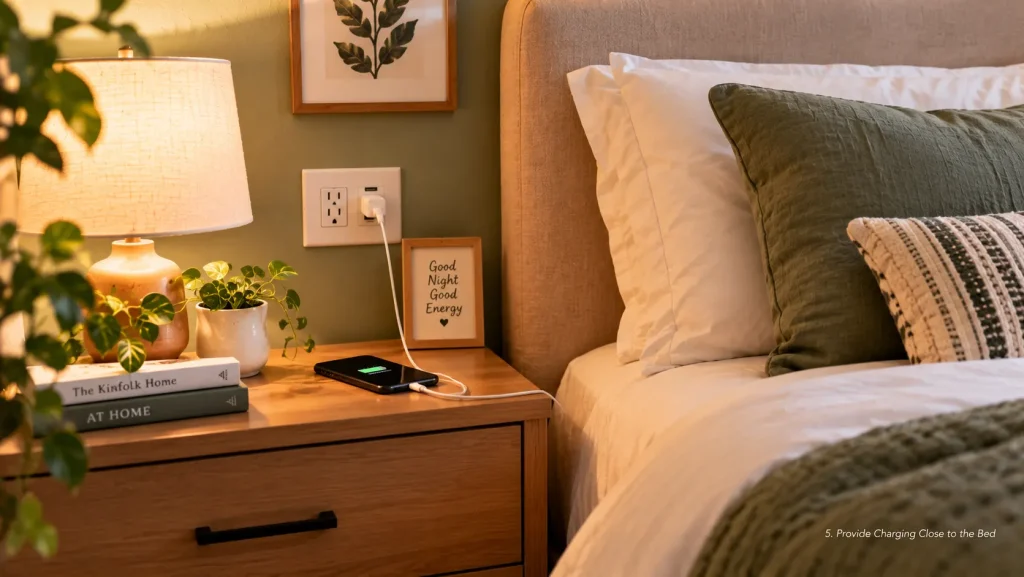
Provide Charging Close to the Bed
Many guest rooms have only one outlet, often hidden behind furniture. If that’s the case, a power strip with a surge protector, placed where the cord won’t be a trip hazard, makes it easy for guests to charge a phone overnight and use it as an alarm. Guests will usually bring their own chargers, so the main job is giving them an accessible outlet.
If you often host visitors from abroad, a travel adapter that fits your local sockets can help, though guests should check it suits their device. Choose products from reputable brands that meet local safety standards.
Settling in for the night (ideas six to twelve): this is where most guest rooms either shine or fall short. A good night’s sleep is probably the most valuable thing you can offer.
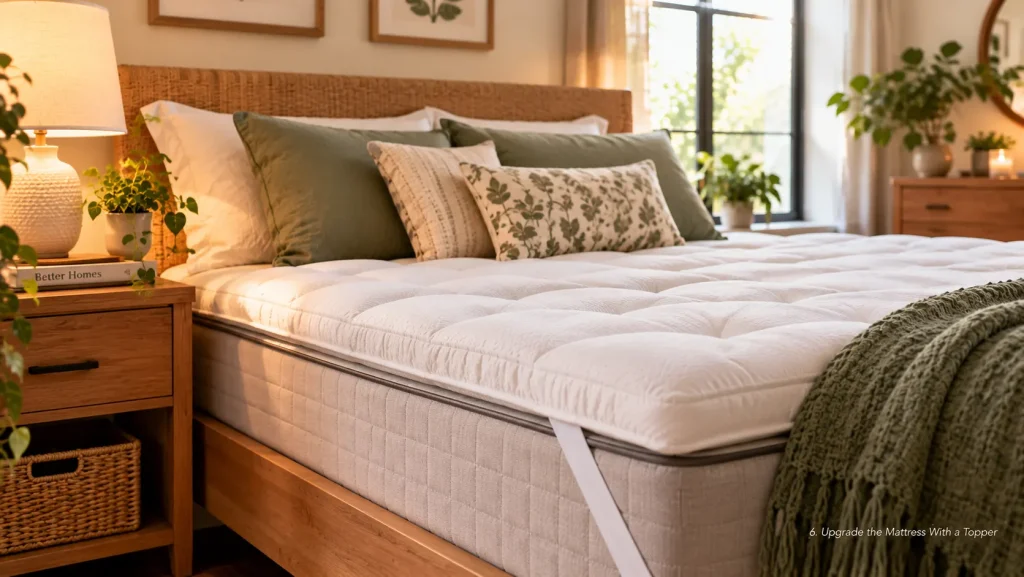
Upgrade the Mattress With a Topper
Guest beds are often old or inexpensive, since they get so little use. Replacing the mattress is one option, but a good mattress topper can make an older bed noticeably more comfortable for much less money.
Memory foam, latex, and fiber-filled toppers all feel different, and comfort preferences vary from person to person, so a medium feel is often a safe middle ground if you’re unsure.
A spare bed may feel fine for one night but become uncomfortable over a longer stay. A thick topper, a fresh mattress protector, and new pillows can turn it into a bed guests actually sleep well in, without replacing anything major. Check the bed frame too, since a creaky or wobbly base can be fixed with a few tightened bolts.
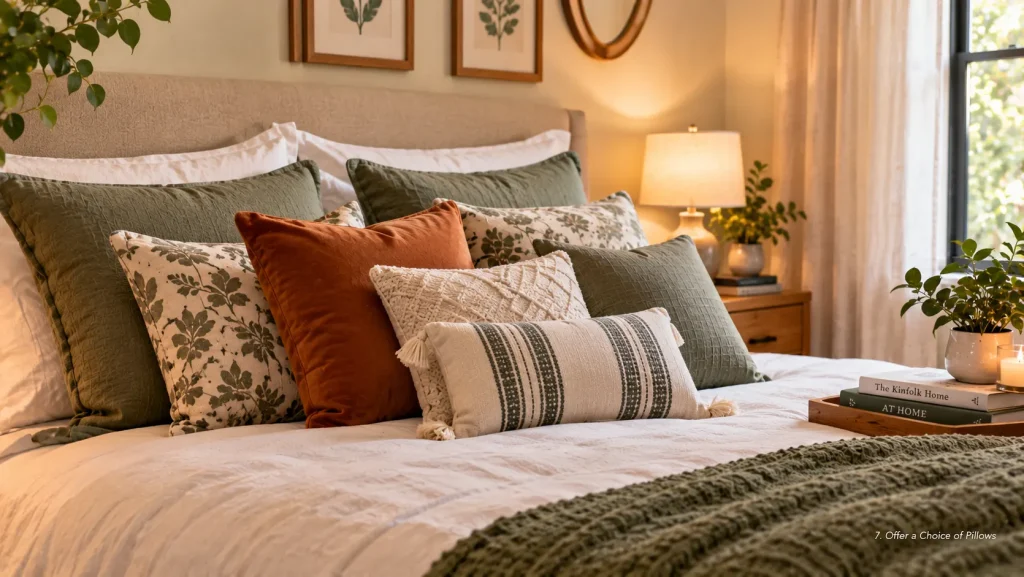
Offer a Choice of Pillows
People are surprisingly particular about pillows. Putting out two kinds, such as one firmer and one softer, lets guests pick what suits them.
Using washable pillow protectors under the pillowcases helps keep pillows fresh between visits. If a guest has known sensitivities, ask what works for them. Freshly washed bedding and, if they’d find it helpful, pillows labeled hypoallergenic are options, though the label alone isn’t a guarantee.
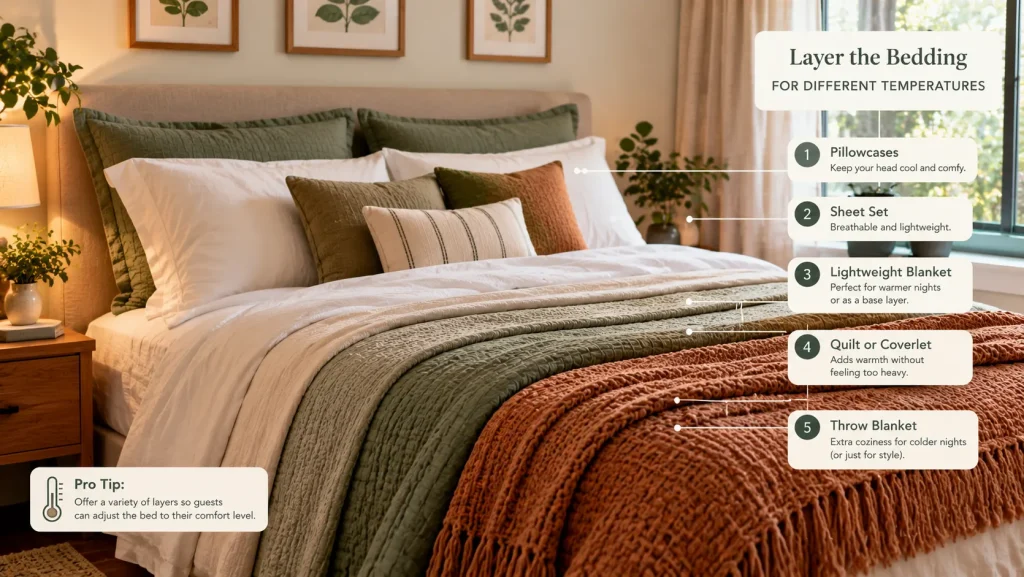
Layer the Bedding for Different Temperatures
Everyone sleeps differently. A guest from a cold climate might feel chilly in a room that seems fine to you, while someone else might overheat under a heavy duvet.
Layering helps. A sheet, a light quilt or blanket, and a duvet folded at the foot of the bed let guests add or remove warmth without needing to ask. A spare blanket in the closet covers chilly nights.
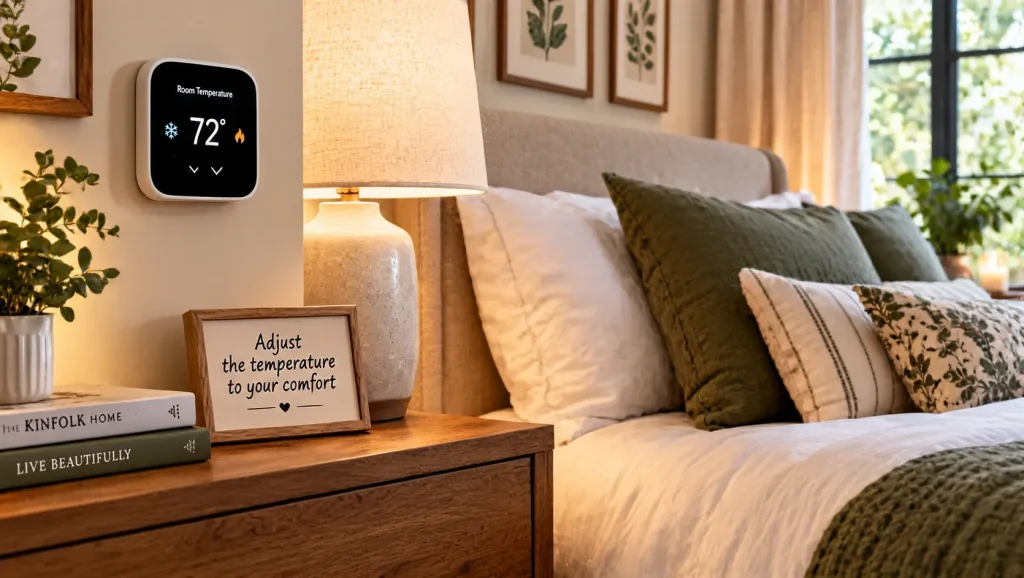
Let Them Control the Room’s Temperature
Beyond bedding, a few options give guests some control, depending on the weather and the room:
- A small, quiet fan, which won’t lower the air temperature but can make a warm night feel more comfortable
- Curtains drawn during the day, which may help reduce some heat from direct sun
- Windows that open easily, for times when outdoor temperature, air quality, and security allow
If you provide a portable heater, choose one with tip-over and overheat protection, use it according to the manufacturer’s instructions, plug it straight into a suitable wall outlet rather than an extension cord, and keep it well clear of bedding and curtains.
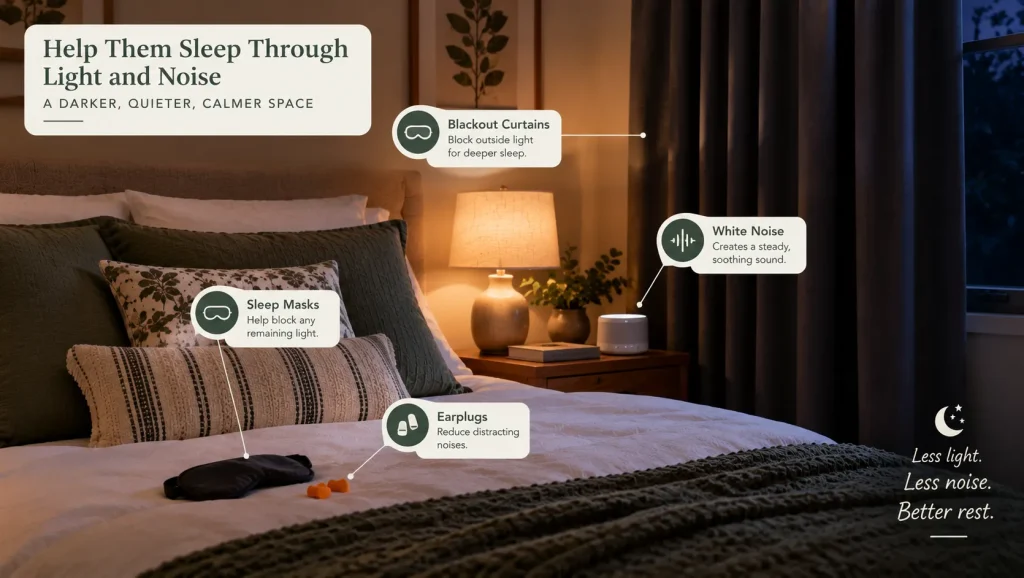
Help Them Sleep Through Light and Noise
An unfamiliar room often feels brighter and louder than home.
Blackout curtains or a blackout blind can block streetlights and early sunrise. If you can’t change the window covering, a new sleep mask in its packaging on the bedside table is a simple alternative.
Noise is a separate problem. A door draft stopper can soften some hallway sound, though it won’t block everything. A small white noise machine can mask household noises like a dishwasher or someone else’s early alarm, and a pack of new earplugs is a low-cost backup.
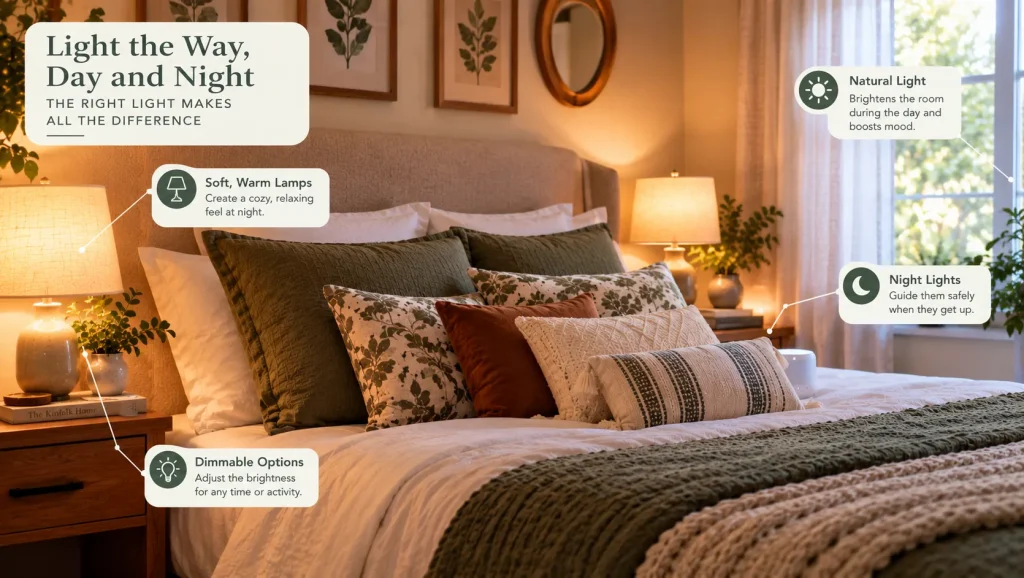
Light the Way, Day and Night
Guests need light in two places: beside the bed and along the route to the bathroom.
A lamp on each side of the bed, or at least one reachable from the pillow, means nobody has to cross a dark room to switch off the light. For the trip to the bathroom in a house they don’t know, a plug-in motion-sensor night light in the hallway, angled toward the floor, helps them find their way without switching on bright lights and waking anyone.
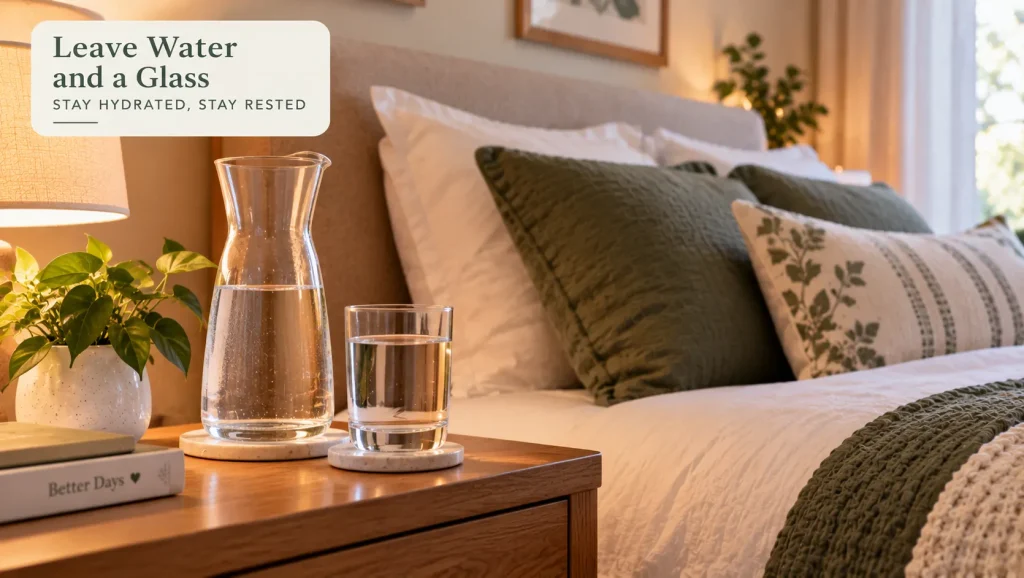
Leave Water and a Glass
A carafe or bottle of water with a glass is an optional touch many guests find handy, since it saves wandering to the kitchen in the dark.
Place it on a stable surface, ideally on a small tray, and away from chargers and lamps to limit any spills. If the bedside table is tiny, the dresser works too.
The morning and beyond (ideas thirteen to eighteen): mornings in someone else’s home can feel awkward. A few thoughtful touches help guests feel relaxed rather than in the way.
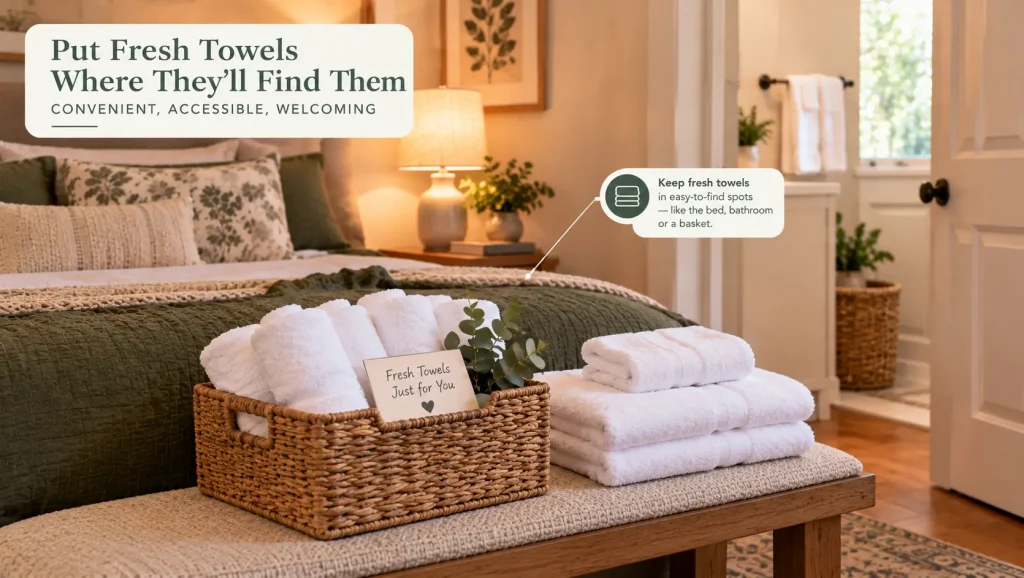
Put Fresh Towels Where They’ll Find Them
Set out a full set for each guest: a bath towel, a hand towel, and a washcloth. Folding them at the foot of the bed or on the luggage rack makes it obvious they’re for the guest.
A couple of hooks on the back of the door give guests somewhere to hang damp towels, so they don’t end up draped over a chair or the end of the bed.
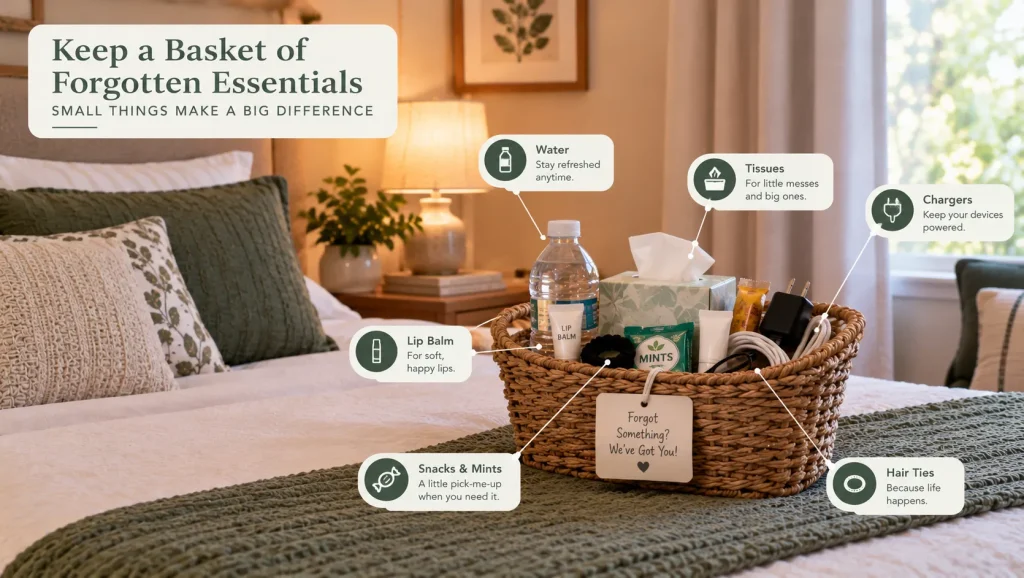
Keep a Basket of Forgotten Essentials
Almost every guest forgets something. A small basket in the room or the bathroom can save a late-night trip to the store.
Good things to include:
- A new toothbrush and travel toothpaste
- Travel-size shampoo, conditioner, and body wash
- Cotton pads, cotton swabs, and hair ties
- Adhesive bandages and a small comb
It’s better to leave medicine out of the basket. If a guest needs something, they can ask, and you can check together whether it suits them. Check toiletry expiry dates now and then.
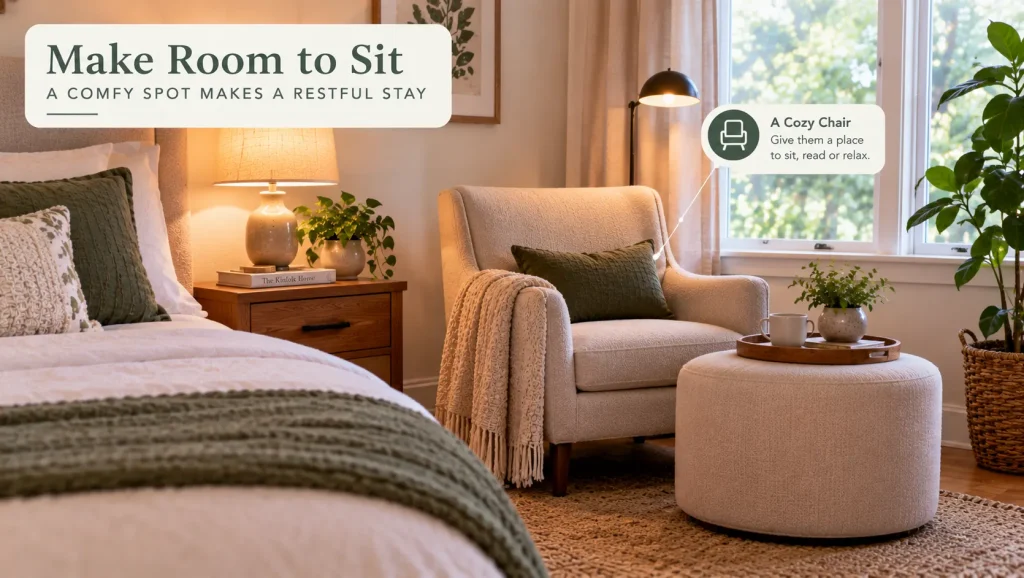
Make Room to Sit
Guests often need somewhere other than the bed to sit, whether that’s getting dressed, reading in the evening, or taking a private phone call.
A small armchair in a corner with a side table works well. In a tight room, a slim upholstered stool or a folding chair that hangs on a hook between visits does the job without crowding the floor.
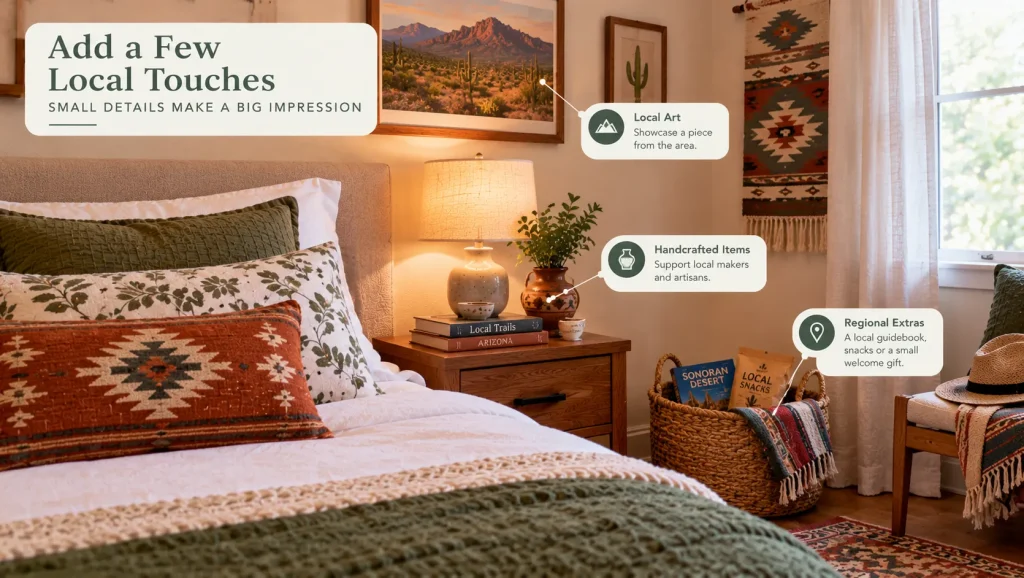
Add a Few Local Touches
A short list of local favorites helps guests plan their own time, which takes pressure off you as the host. A handwritten note with your top three spots, like the bakery that opens early or a park with a good morning walk, feels more personal than a printed brochure.
For quiet evenings, a couple of books or a puzzle book on the bedside table are welcome. A small vase of flowers is a lovely touch, though it’s worth avoiding strongly scented ones in case a guest has allergies.
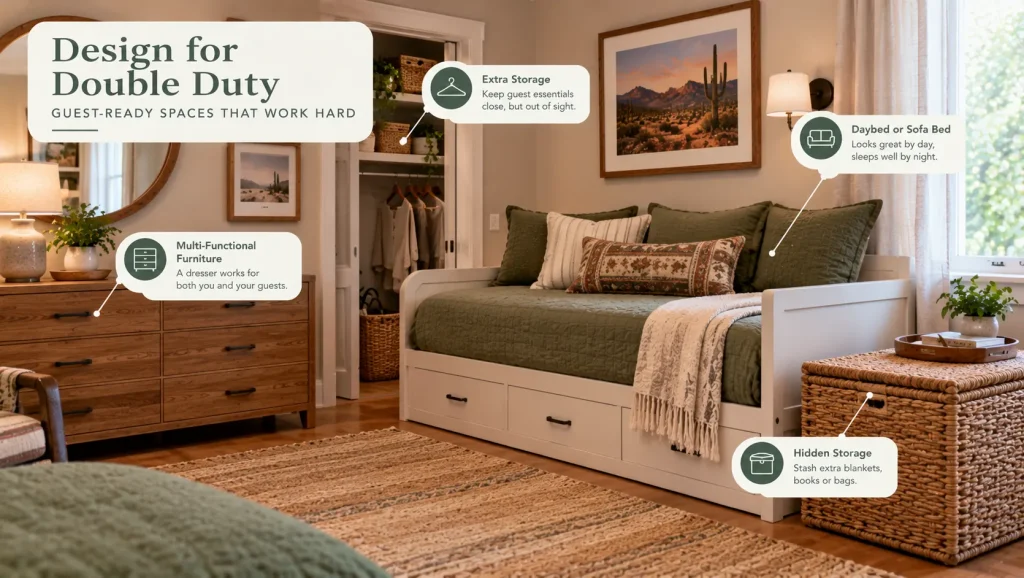
Design for Double Duty
Many guest rooms also serve as a home office, hobby room, or playroom. These guest room ideas help the space work well both ways:
- A sofa bed or daybed gives seating most of the year and a bed when needed
- A wall bed folds away completely, freeing floor space, though it should be installed by a professional and secured to the wall
- A desk that clears quickly, with a drawer or box for papers, so the guest doesn’t feel they’re sleeping in your office
- A folding screen that can hide the work area during a visit
For example, someone who works from home in their spare room might keep a daybed against one wall and a desk against the other. Before a visit, papers go into a lidded box, work equipment moves to another room, and a screen hides the desk.
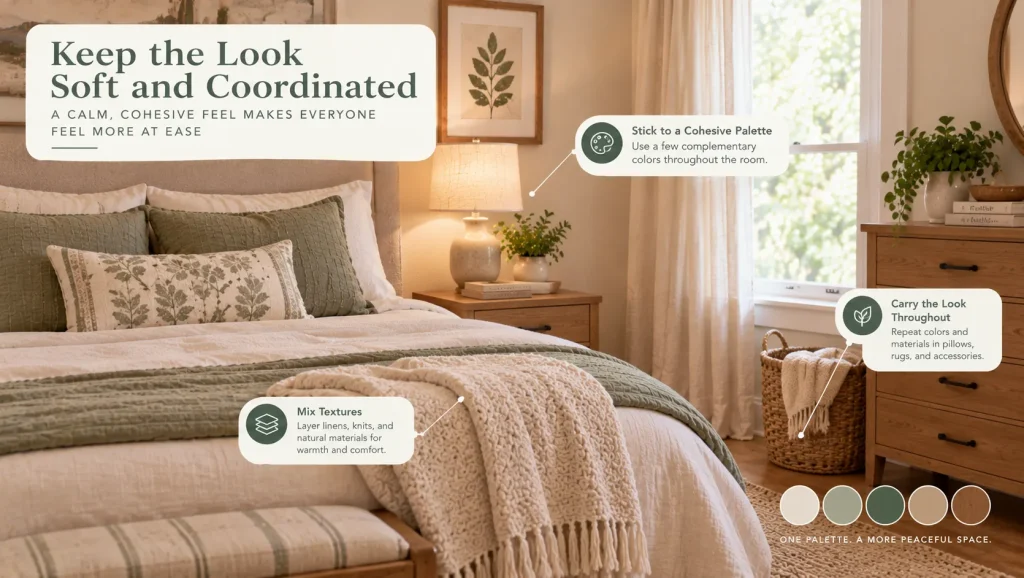
Keep the Look Soft and Coordinated
The overall look matters too. Many guests feel most relaxed in a room with a gentle, coordinated feel rather than lots of competing patterns.
Soft wall colors, like warm white, pale sage, or light greige, are an easy base. Bedding in one or two coordinating shades looks fresh and inviting, and a textured throw or knitted blanket adds warmth.
Keep the artwork restrained. One framed print above the bed or a small pair on one wall usually feels more restful than a full gallery. A spare room styled this way can feel calm even if it’s small.
Guest Room Mistakes to Avoid
Leaving bedding on for months. Bedding that sits unused can feel musty. Wash it shortly before a visit, even if nobody has slept in it.
No free surfaces. Guests need at least one clear spot for a phone, glasses, and toiletries.
Skipping the bed test. The bed is what guests remember most.
Too many decorative extras. A pile of cushions ends up on the floor every night.
Questions About Guest Room Ideas
How do I make a small guest room feel comfortable?
Prioritize the bed, a reachable lamp, and an outlet. Space-savers like a folding luggage rack and wall hooks take up very little room.
What should every guest room have?
Clean, comfortable bedding, a lamp, somewhere for clothes, towels, and the Wi-Fi password. Everything else is a bonus.
How do I set up a guest room in a home office?
Choose a bed that doubles as seating or folds away, and plan a quick way to put work out of sight before a visit.
How often should I wash guest room bedding?
Wash it after every visit, and again shortly before the next guest arrives if it’s been sitting for a while.
Do I need a guest room to host overnight visitors?
Not at all. A comfortable sofa bed or an air mattress in a quiet corner of the lounge, with a small basket of essentials, a lamp, and some privacy, can still make visitors feel welcome.
Start With One Night in the Room
You don’t need all 18 of these guest room ideas to be a good host. One night in the room yourself will show you where to start.
The goal is simple: a clean, comfortable room where visitors can rest well and look after their own needs without having to ask. Get that right, add the small touches over time, and your spare room can become somewhere people genuinely look forward to staying.