

Entryway Decor With Character: 10 Ideas From the Front Step to the Hallway
Try walking up to your own front door as if you were a guest.
Start at the end of the path or the hallway outside your apartment, and notice what you see first. Then step through the door and keep looking. Does anything make you want to linger, or does your eye land on a tired doormat and a blank wall?
Most entryway decor advice starts inside, with consoles and hooks. But a first impression begins a few steps earlier, and it keeps going a little further than most people think, up the stairs and even onto the ceiling.
The 10 ideas below follow that route. The first four are about the approach to the door. The other six are about what greets you once you’re inside, with an emphasis on character rather than a full entryway organization makeover.
A Quick Walk-Up Checklist
As you do your guest walk, jot down anything that catches your eye for the wrong reasons:
- Is the door easy to find, and do the house numbers stand out?
- Does the doormat look worn or too small for the door?
- Is the porch or hallway light working and in proportion with the door?
- Inside, do the floor, stairs, walls, or ceiling feel forgotten?
You probably won’t need all ten ideas. The list will show you which two or three are worth starting with.
Decorate the Approach to Your Front Door
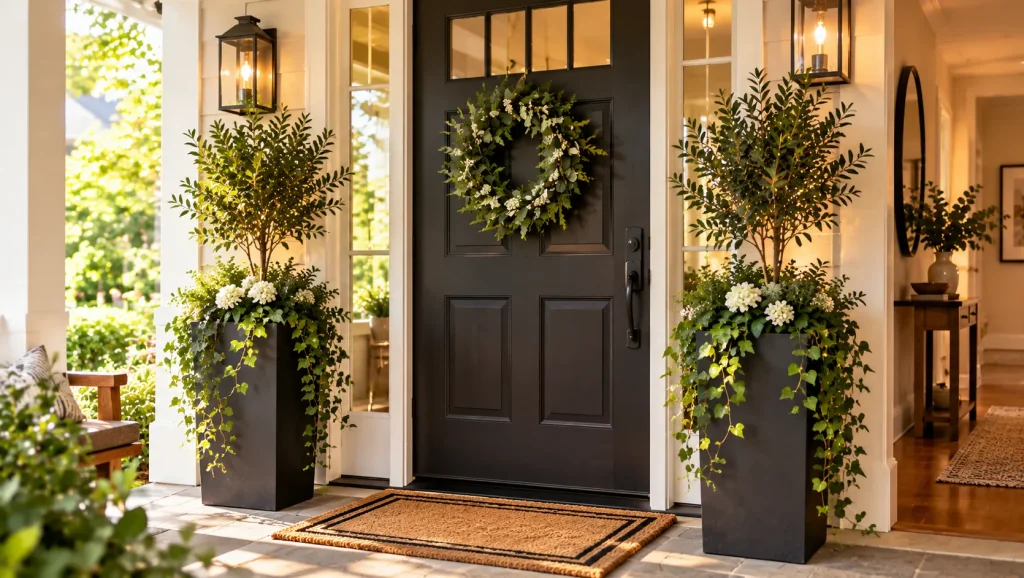
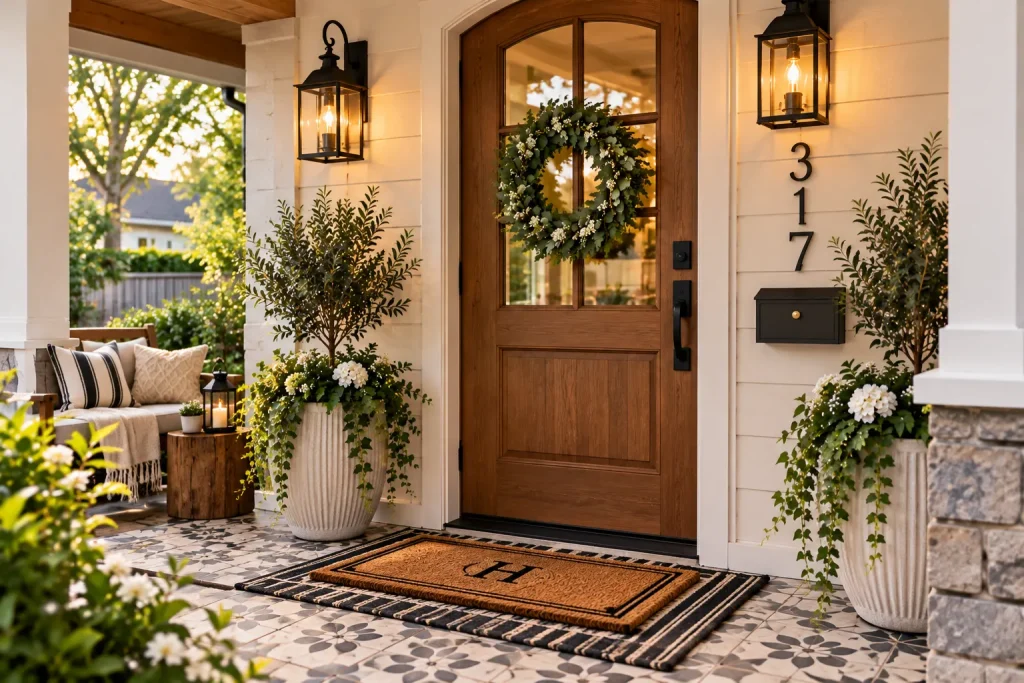
Frame the Door With Planters
A pair of planters on either side of the door frames the entrance and draws the eye straight to it.
Matching tall planters suit a symmetrical doorway. If the space is uneven or narrow, a cluster of three pots in different heights on one side can look more relaxed.
Planters can also echo something about the house. A pair of simple concrete pots suits a modern entrance, while glazed ceramic or terracotta suits a cottage or older home. Picking up a color from the front door or trim helps the pots look like part of the house rather than an afterthought.
Choose plants for the conditions, not just the look. A shady porch needs very different plants from a sunny step, and plants in exposed spots may need regular watering in hot weather. Evergreen shrubs give year-round structure, while seasonal flowers can be swapped through the year.
A few practical points:
- Use pots with drainage holes so roots don’t sit in water
- Raise pots slightly on feet or blocks to protect the step from staining
- Keep the walkway and door swing clear, so the planters don’t become a trip hazard
- Choose heavy, stable pots for windy or exposed spots, or weigh down lightweight ones so they can’t blow over
If you live in an apartment building, check whether planters are allowed in shared hallways before setting anything outside your door.
Update House Numbers and Door Hardware
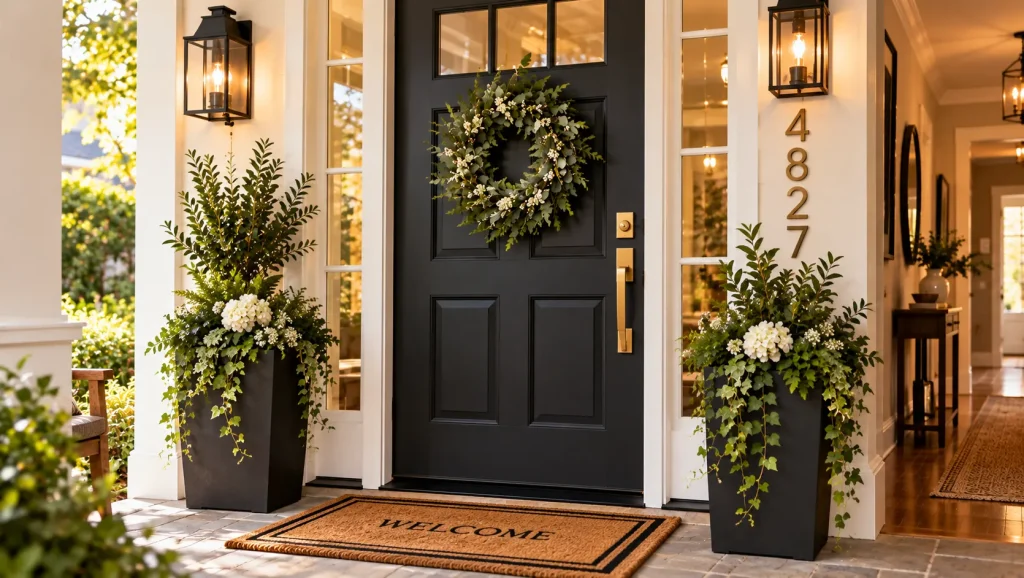
These are small details, but they’re seen by every visitor, delivery driver, and neighbor.
House numbers that are easy to read from the street are useful as well as decorative, especially for deliveries and emergency services. Clear numbers that contrast with the wall or door behind them, mounted where they’re visible from the approach and not hidden by plants or shadow, tend to work best. The right size depends on how far the door is from the street. Check whether your local area has any guidance on how numbers should be displayed.
Think about night too. Numbers placed near the porch light, or a lit number sign, are much easier to read after dark than ones tucked into a shady corner.
Door hardware is the other piece. A tarnished handle, a mismatched letterbox, and a loose knocker can make even a freshly painted door look tired. Replacing them in one matching finish, such as matte black, brass, or brushed nickel, makes the door look finished rather than pieced together over the years.
If you rent, ask before changing anything on the door itself. Removable adhesive numbers or a freestanding number plaque in a planter are alternatives that leave no trace.
Layer Your Doormats
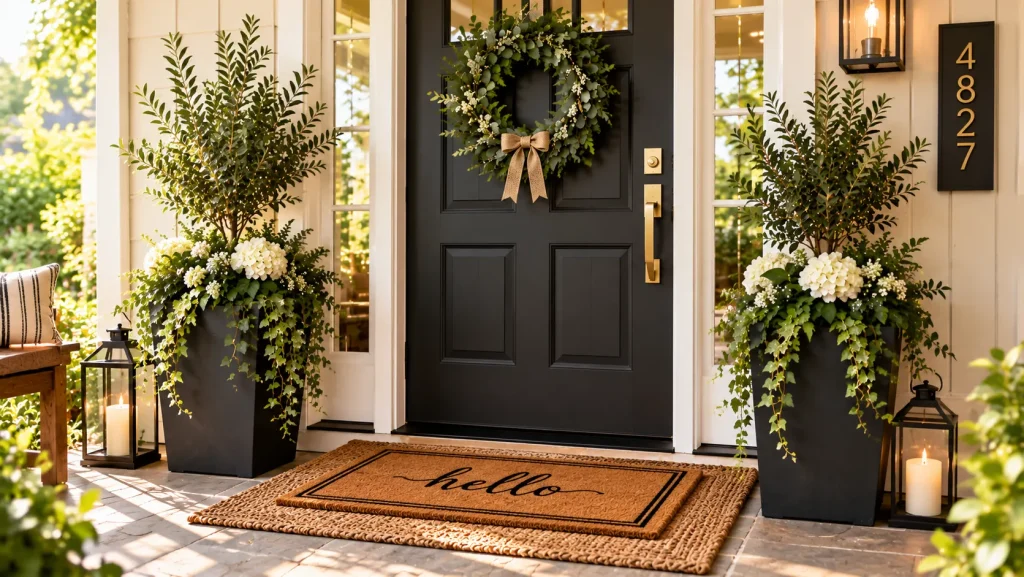
A single small doormat can look lost in front of a wide door. A mat that’s in proportion with the doorway usually looks more balanced, as long as it fits the step safely and doesn’t block the door. Layering two mats, a larger patterned or striped outdoor rug underneath and a classic coir mat on top, gives the doorstep more presence.
The bottom layer adds color and pattern. The top layer does the scraping. Choose both for outdoor use, with a backing that won’t trap water against the step and stain it.
Make sure the layered mats sit flat and don’t curl at the edges. Where the door opens outward, or where there’s a step, check that the mats don’t catch on the door or create a tripping edge.
Shake them out and let them dry regularly, especially after rain, so they last longer.
Choose a Porch Light With Some Character
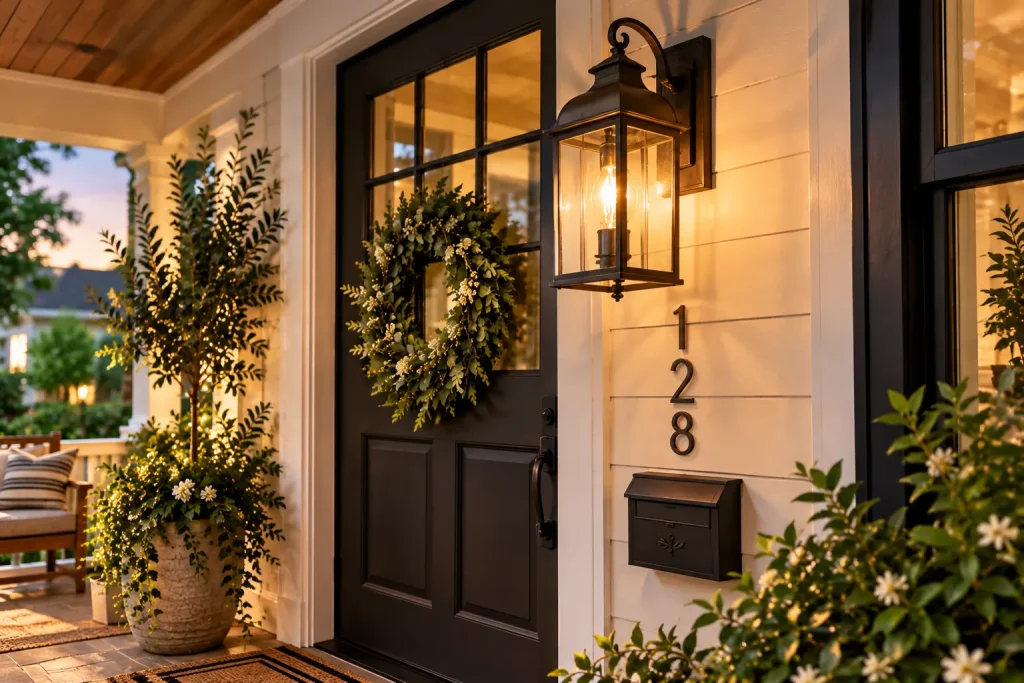
The outdoor light by the front door is often a basic fixture that came with the house. Replacing it is one of the more noticeable entryway decor updates, because it’s seen both day and night.
Think about scale first. A fixture that’s too small can look like an afterthought next to a full-size door. Some people use a quarter to a third of the door’s height as a rough starting point, but what matters most is how the fixture looks next to the door and the wall around it, so holding up a cardboard cutout before buying can help.
Style comes next. Matching the light’s finish to the door hardware keeps the entrance consistent. Lantern shapes suit traditional homes, while simple cylinders or globe lights suit modern ones. Warm white bulbs tend to look more welcoming than very cool white.
Choose a fixture rated for outdoor use, and have a qualified electrician install anything hardwired. A motion sensor or timer can mean the light is on when you need it.
Add Character Just Inside the Door
Give the Floor a Pattern
Entry floors take a lot of wear, and they’re often plain tile, laminate, or wood that blends into the rest of the house. A patterned floor can add visual interest and help the entry look like a deliberate space.
There are a few routes, from permanent to temporary:
- Patterned tile is durable and easy to clean, though it’s a bigger project
- Painted floors, with a stencil on wood or concrete, suit a DIY approach but need the right floor paint and sealer for heavy traffic
- Peel-and-stick vinyl tiles can suit quick refreshes, as long as the product is rated for floors and the surface underneath is suitable. Renters should check their lease first, since some adhesives can leave residue when removed
For example, a hallway with plain wood floors could get a painted checkerboard in two soft tones just inside the door, stopping where the hallway opens into the living room. It marks the entry as its own space without changing the rest of the floor.
A black and white checkerboard, a geometric cement-look tile, or a simple border around the edge of a plain floor can all work. In a very small or busy entry, a quieter pattern or a border may look calmer than a bold all-over design.
Whatever you choose, slip resistance matters, especially near the door where wet shoes land. Check the product’s rating for wet areas.
Paint the Stair Risers or the Banister
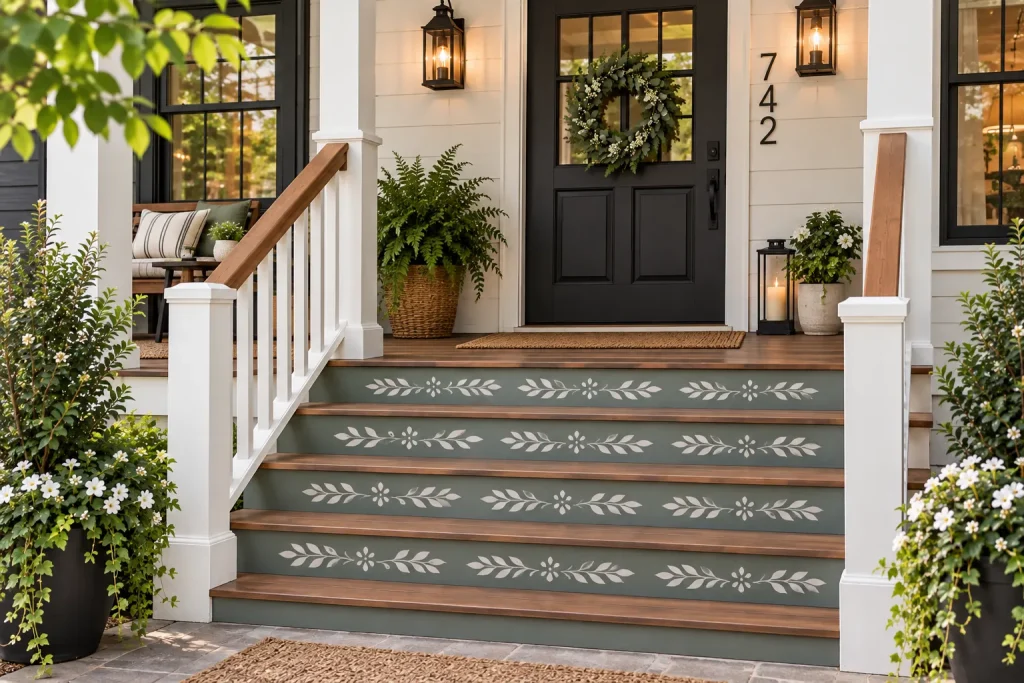
In many homes, the front door opens near the bottom of a staircase. That staircase is one of the first things people see, yet it’s often left completely plain.
Painting the stair risers, the vertical part of each step, is a way to add color or pattern without touching the treads you walk on. Some people paint them a single contrasting color. Others use a soft gradient, getting lighter or darker as the stairs go up. Stenciled patterns or patterned risers are another option.
The banister and spindles are worth considering too. Painting a white banister in black, deep green, or navy can give the whole staircase more definition.
Use a durable paint suited to the surface, and keep the stairs out of use until it has fully cured, following the manufacturer’s times. Avoid slippery finishes on the treads, and keep stair edges easy to see.
Look Up at the Ceiling
The entry ceiling is often one of the most overlooked surfaces in a home. Painting it a color, or covering it with wallpaper, gives people something unexpected to notice when they look up.
A soft color slightly deeper than the walls gives a cozy, finished look. A bolder shade, or a small-patterned wallpaper, draws more attention upward. Since entries tend to be small, a ceiling treatment can look striking without being overwhelming.
For example, a narrow hallway with white walls might get a pale sage ceiling and a simple pendant. The walls stay calm, but the space no longer looks like a plain corridor.
Ceiling work is awkward, so use a sturdy stepladder and an extension pole, and consider professional help for ceiling wallpaper, which is harder to hang than on a wall. Keep paint and paste away from light fittings, and leave any fixture removal to a qualified electrician.

Hang One Piece You See as You Walk In
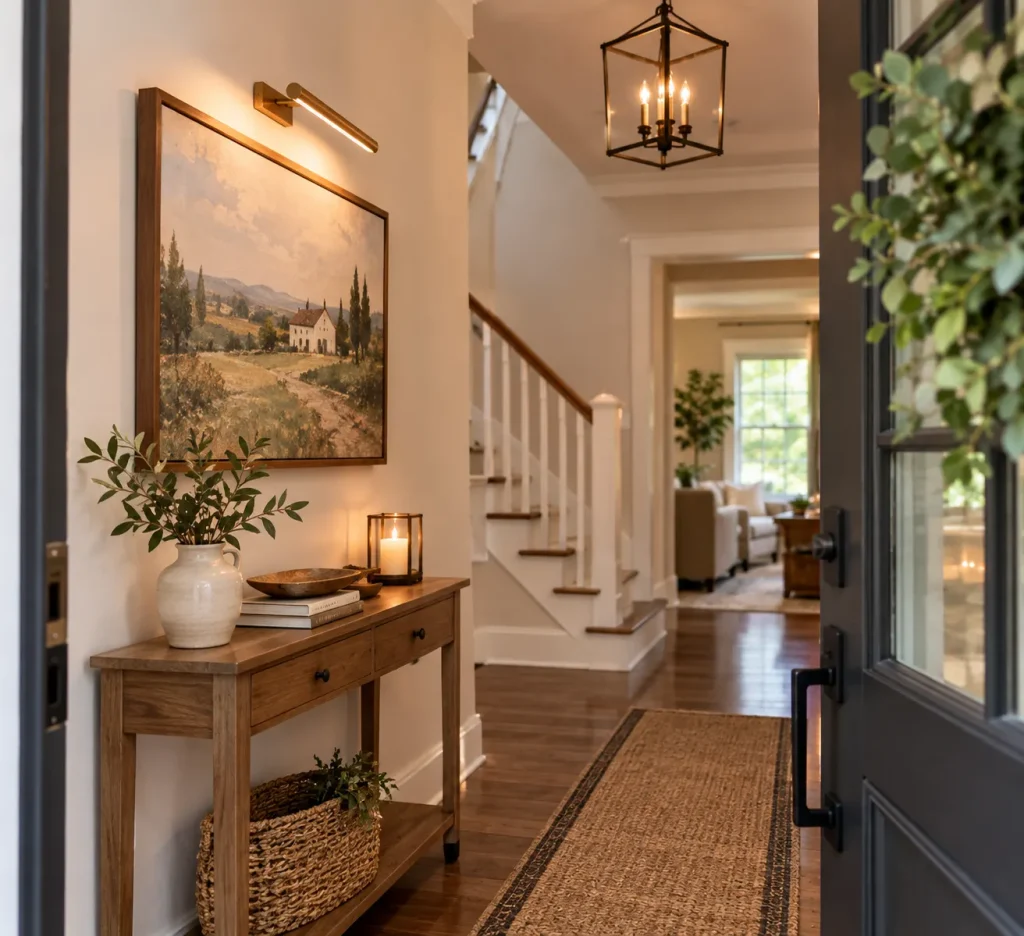
Stand inside the front door with it closed behind you. The wall directly ahead, or the first wall your eye goes to, is the ideal spot for one piece of art that sets the tone for the home.
This doesn’t need to be large or expensive. A framed print, a textile, a vintage map, or a painting by someone you know can all work. What matters is that it’s something you like seeing every time you come home.
Think about how it relates to the rooms beyond. A piece that picks up a color from the living room, visible through the doorway, helps the entry feel connected to the rest of the house instead of like a separate corridor.
If the wall at the end of the hallway is narrow, a vertical piece can suit it well, but let the wall’s shape decide. Hang it at a height that’s comfortable to look at, and use hardware rated for its weight, since entry walls get bumped by bags and coats.
Make the Umbrella Stand a Feature
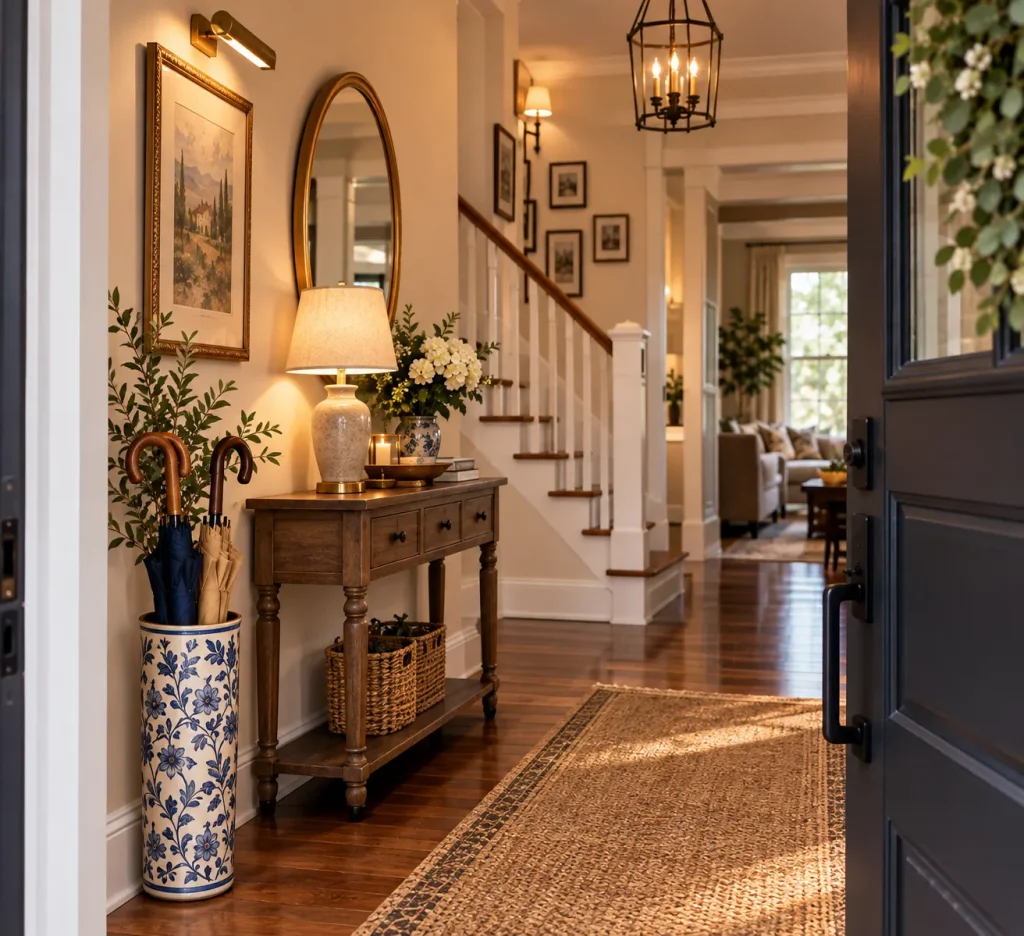
Umbrellas tend to end up leaning in a corner or dripping on the floor. A good-looking stand turns a practical item into part of the decor.
Tall stoneware crocks, woven baskets with a waterproof liner, ceramic vases, or a metal bucket can all hold umbrellas and walking sticks. Choose something heavy enough not to tip when umbrellas are added or pulled out.
Put a small tray or mat underneath to catch drips, and empty any water that collects at the bottom so it doesn’t damage the floor or start to smell. A removable liner makes cleaning easier, and opening wet umbrellas to dry before putting them away helps them last.
Swap Flowers or Branches With the Seasons
A vase of flowers or a few branches on a console or shelf gives the entry life, and it can change with the seasons.
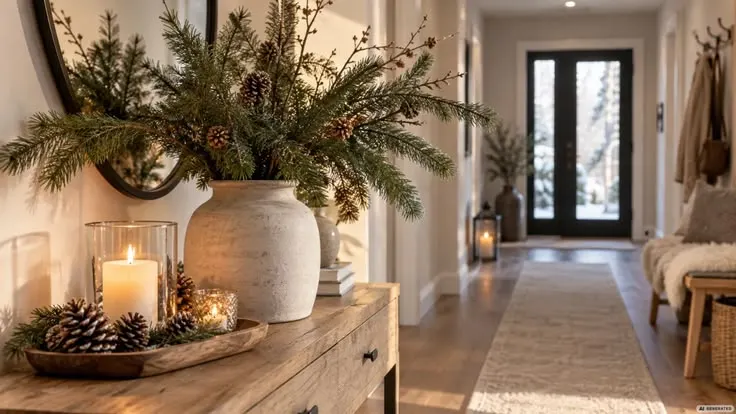
Branches tend to last longer than cut flowers and need less fuss. Think flowering branches in spring, leafy stems in summer, autumn foliage, and evergreen sprigs in winter. A single large vase usually looks more intentional than several small ones.
If fresh flowers aren’t practical, good-quality dried stems or faux branches work too. If you have pets, check that any plants or flowers are safe for them, since some common varieties can be harmful to cats and dogs.
Place the vase where it won’t be knocked by bags or coats as people come and go, and freshen the water every few days.
Entryway Decor Mistakes to Avoid
Choosing outdoor finishes that won’t last. Some metal finishes corrode or tarnish quickly in coastal or very wet climates. Check that hardware and lights are made for outdoor use in your conditions.
Forgetting the view from inside. Many people decorate the entry from the outside in, then forget what they see when they come home. Both directions matter.
Lighting the door but not the steps. A handsome fixture by the door doesn’t help much if the path or steps below stay dark. On a long or uneven approach, low path lights or a second fixture make it easier to walk in at night.
Leaving seasonal pieces up too long. A faded wreath or a dried-out arrangement still sitting by the door months later can make the entry look neglected. Take seasonal items down once they’ve had their moment.
Changing too many things in the same style at once. Matching planters, mat, numbers, light, and wreath all from one collection can look a little staged. Mixing a few textures and finishes usually looks more natural.
Questions About Entryway Decor
How can I decorate an apartment entry I share with neighbors?
Check your building’s rules first, since many restrict items in shared hallways for fire safety. Inside your own door, the ceiling, art, and a seasonal vase are all good options that don’t affect anyone else.
How do I choose a color for a dark entryway?
Test samples on the wall and look at them at different times of day, including in the evening under your usual lighting. In an entry with little natural light, a mid-tone or warmer shade often looks better than a stark bright white, which can look gray in shadow.
How can I refresh my entryway decor without permanent changes?
Swap the things that aren’t fixed in place: the doormat, the flowers in the vase, the art, or the planters’ contents. Changing two or three of these with the seasons can make the entrance look different without touching paint, floors, or fittings.
Which of these ideas costs the least?
Layering doormats, updating the vase arrangement, and moving a piece of art you already own are usually the most affordable. Flooring, ceiling wallpaper, and new light fixtures tend to cost more, so they’re worth planning for.
Pick One Spot to Start
You don’t need to tackle the whole route at once. Pick one spot, whether it’s the house numbers, the doormat, the stairs, or the ceiling, and give it some attention this month. Seeing what that one change adds will make the next choice much easier.