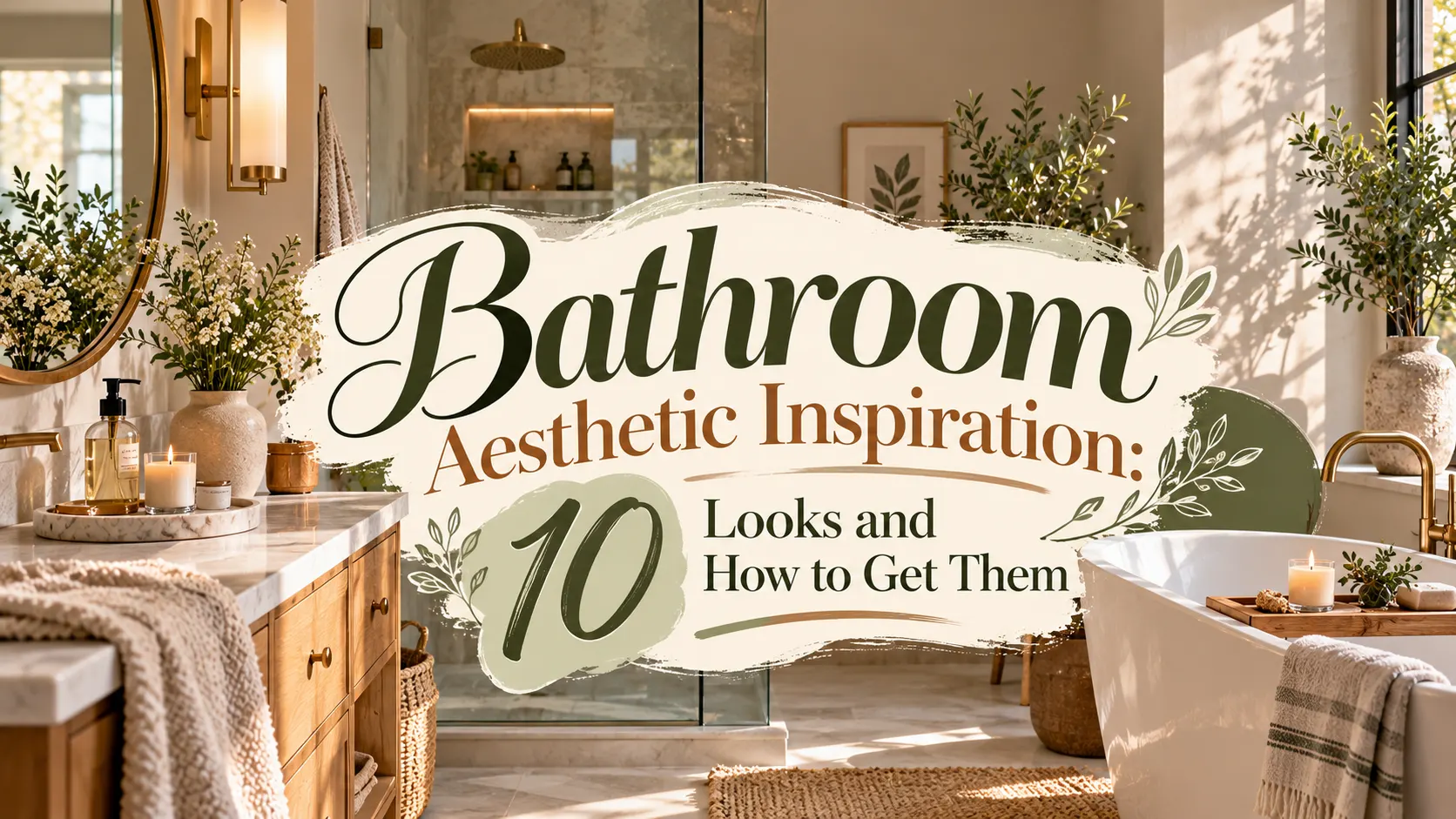
Bathroom Aesthetic Inspiration: 10 Looks and How to Get Them
Saving bathroom photos is easy. Turning them into a real room is harder.
Inspiration folders tend to fill up with rooms that have nothing in common, like a marble spa bathroom saved next to a moody green powder room. Both are lovely, and neither looks much like a bathroom with builder-grade tile, one small window, and no budget for a renovation.
The good news is that most aesthetics come down to a handful of choices: color, materials, metal finishes, lighting, and a few carefully picked accessories. Once you understand what sets a look apart, you can recreate a lot of it with towels, hardware, paint, and smart styling.
Below you’ll find 10 bathroom aesthetic ideas, grouped by the mood they create, with a focus on what makes each one different from its neighbors and how to bring it into an ordinary bathroom.
Find Your Direction Before You Shop
A useful starting point is to look at the rest of your home rather than at social media.
Ask yourself:
- Which room do you like spending time in most, and why?
- Do you lean toward plain surfaces or pattern?
- Are you drawn to warm wood and brass, or cooler grays and chrome?
- Do you like a tidy, empty counter, or a few things on display?
Your answers can help narrow things down, though plenty of people happily decorate different rooms in different ways. A bathroom can be the place where you try something you wouldn’t do elsewhere.
It also helps to note what’s staying. Existing tile, the tub, and the vanity will influence which looks are realistic without bigger work.
Calm and Minimal
These three looks are easy to confuse, so it helps to know what separates them. Spa is about softness and hiding things. Japandi is about contrast and craft. Scandinavian is about everyday practicality.
The Spa Retreat
A spa bathroom is mostly about what you don’t see.
The look depends on clear surfaces, so storage does the heavy lifting. A drawer or lidded basket for the everyday clutter of hairbrushes, razors, and half-used bottles matters more than any decorative object. Towels stored rolled in a basket or stacked on an open shelf become part of the decor, while everything else disappears.
Lighting is the other half. A single bright overhead bulb works against the calm mood. A dimmable light, or a softer lamp or sconce for evening baths, makes a much bigger difference than another accessory.
Once the clutter is out of sight, a few soft-colored towels and a stone or ceramic dispenser for hand soap are often enough. Most other products are better left in their original containers, which carry usage and safety information.
A small stool or bench beside the tub or shower, for a towel or a cup of tea, is one of the few additions that genuinely adds to the experience rather than just the look.

Japandi Simplicity
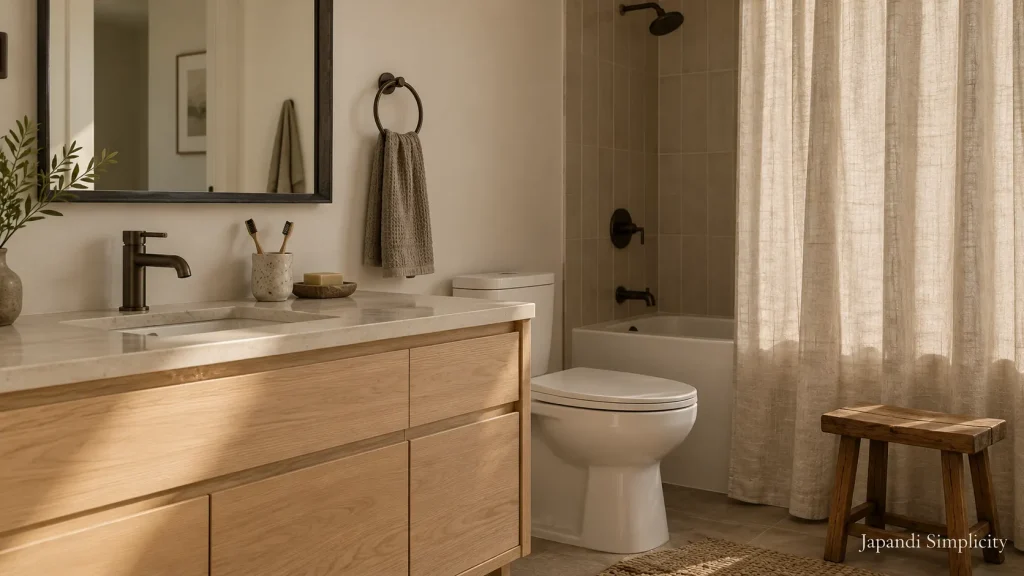
If the spa look is soft and pale, Japandi has more contrast and character. It blends ideas from Japanese and Scandinavian design, though in decor terms it usually shows up as pale wood paired with darker accents, simple forms, and pieces that look handmade.
Imperfection is part of the appeal. A slightly irregular ceramic cup for toothbrushes, a linen shower curtain with visible texture, or a low wooden stool with obvious grain gives the room warmth without adding clutter.
If your bathroom has chrome fittings, you don’t need to replace them. Adding a darker finish through a mirror frame or towel ring can work, and if it suits the room, repeating that finish once or twice more helps it look planned rather than accidental.
The easiest way to lose the look is to add too much. One meaningful object on a surface usually says more in this style than a row of them.
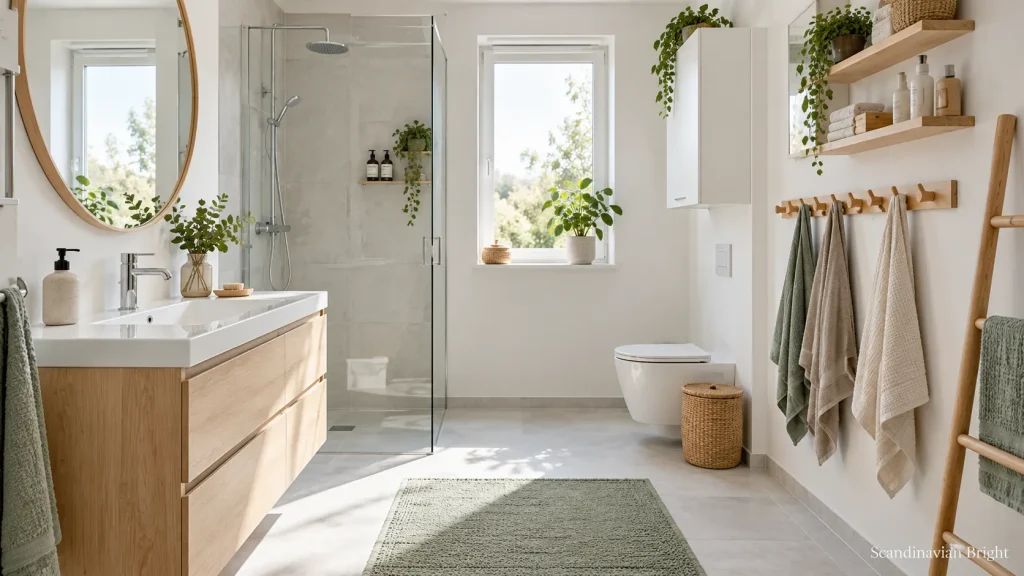
Scandinavian Bright
Where a spa bathroom hides things, a Scandinavian bathroom organizes them in plain sight.
Hooks for the towels in daily use, a simple open shelf, a wall-mounted cabinet, and a wooden ladder for drying are all part of the style. The aim is a room that’s easy to use every day, with pale walls, light wood, and one soft color, such as sage or dusty blue.
Pale surfaces help reflect whatever light the room has, which can be helpful in small bathrooms, but they don’t replace good lighting. A bright, even light at the mirror still matters.
Choosing storage pieces in white or light wood keeps them from dominating the room, even when they’re all on show.
For example, a plain white rental bathroom can lean Scandinavian with a pale wood shelf, a row of peg hooks, and a sage bath mat, all of which can move with you later.
Warm and Earthy
These looks bring in color from nature, but in very different ways. Mediterranean relies on warm surfaces and color, while boho is built on layers of texture and plants.
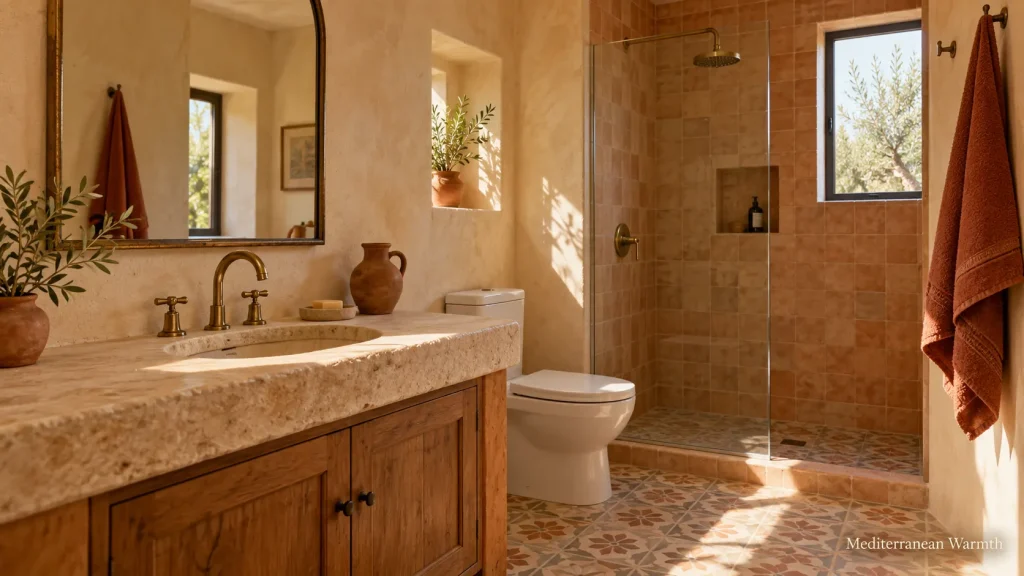
Mediterranean Warmth
This aesthetic draws loosely from Mediterranean and North African-inspired interiors. Rather than a set list of objects, it’s mostly about warm, textured surfaces.
Walls do a lot of the work. A soft, plaster-like finish in warm white or sand, or a terracotta-toned wall, can shift the whole mood. Limewash is a popular way to get that texture. If you use it in a bathroom, check that the product is suitable for humid rooms and follow the manufacturer’s sealing advice.
Pattern often comes from tile, especially encaustic or cement-look designs. If your tile is staying, a patterned bath mat or a printed towel can hint at the same idea. Aged brass or black metal fixtures tend to suit the warmth better than bright chrome.
For example, a bathroom with plain white wall tile might take on this aesthetic with a sand-colored, textured finish above the tile, rust-toned towels, and an aged brass mirror, without touching the tile at all.
Relaxed Boho
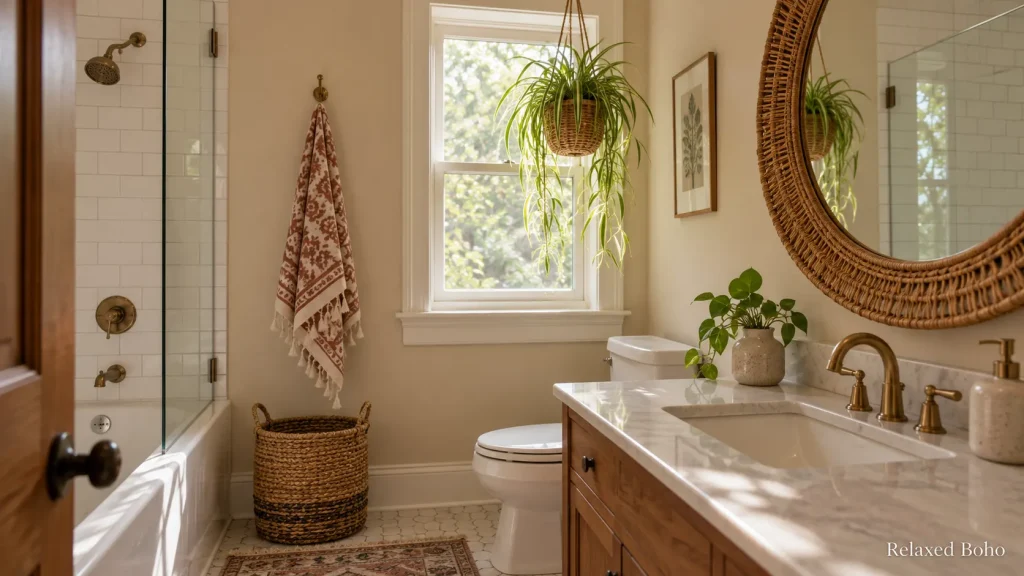
The biggest challenge with boho in a bathroom is space. Layered textiles, plants, and collected objects can quickly overwhelm a small room.
Using one recurring texture, like rattan, can help the layers look connected. From there, a patterned Turkish towel, a woven basket, and plants placed up high rather than on the counter keep the look relaxed rather than crowded.
Plants need light, so a window helps. In darker bathrooms, faux greenery can fill the role. If you have pets, check that any real plant is safe for them. Natural fibers can mildew in very damp spots, so keep them out of the splash zone.
In a small bathroom, a single hanging planter by the window and one patterned towel can carry the mood surprisingly well. Boho doesn’t have to mean lots of things, just things that look collected rather than bought as a set.
Bold and Characterful
Dark and Moody
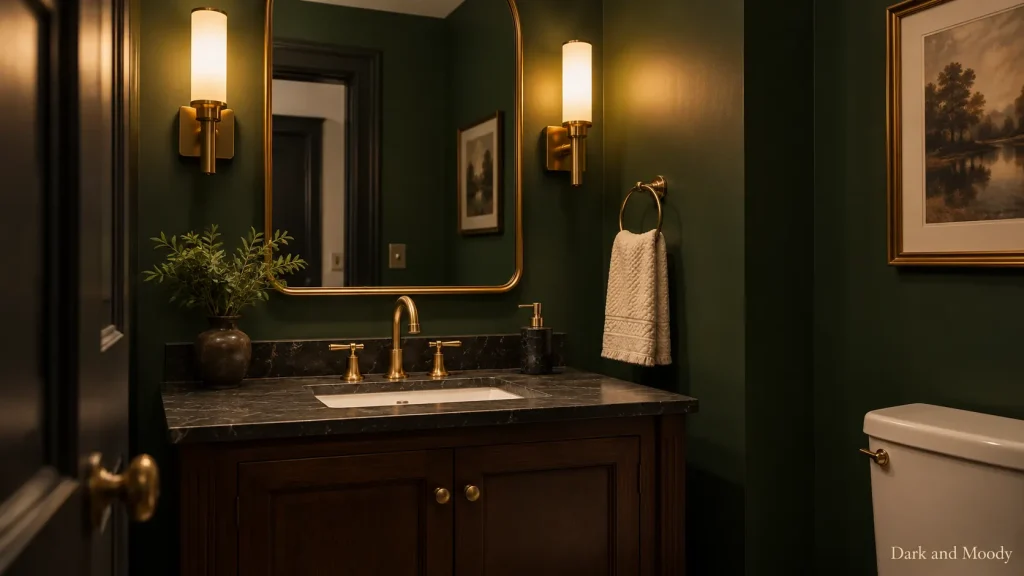
Deep colors like forest green, navy, charcoal, or chocolate brown can make a bathroom look intentional and dramatic.
Powder rooms are a popular place to experiment, since their smaller size and shorter use make a bold color easier to commit to. In a main bathroom, good lighting becomes essential, especially at the mirror.
If you’re nervous, painting the vanity or a single wall is a lower-commitment way to start. A dark ceiling has a big visual effect, so it’s better saved for when you’re sure you like the color. Test samples in the evening as well as during the day, since deep shades shift a lot under artificial light.
Choose paint suitable for humid rooms, and consider warm metal accents like brass or bronze, which tend to stand out nicely against dark walls. Towels in a lighter, warm shade can stop a dark room from looking heavy.
Art Deco Glam
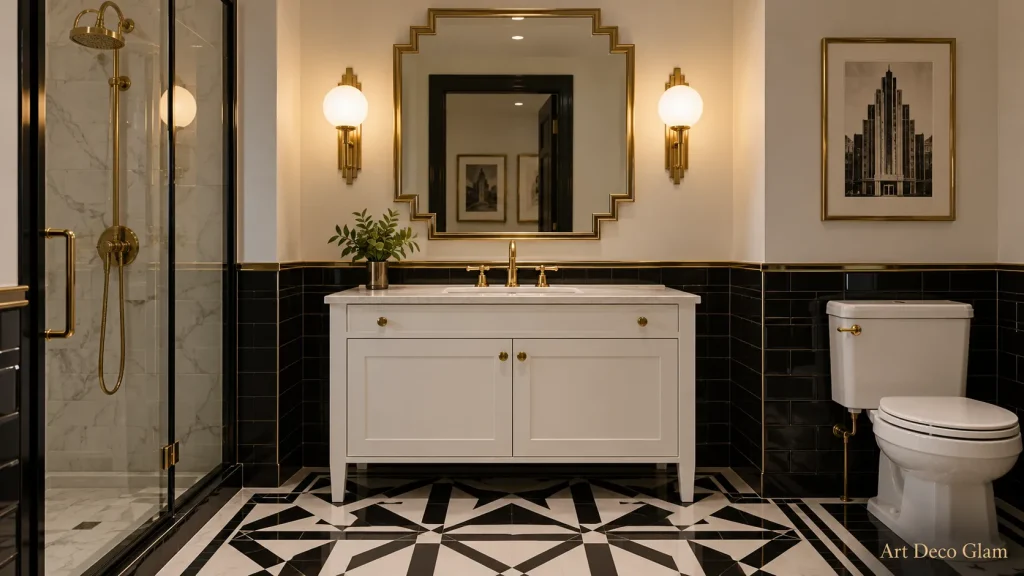
Art Deco draws on the geometric, glamorous style of the 1920s and 1930s. In bathrooms, it often appears as strong contrast, symmetry, and polished metal.
Not every arch or globe light is Deco, though. What tends to make the style recognizable is geometry, such as stepped shapes, fan patterns, or bold black and white contrast, combined with a sense of polish.
The look can overwhelm a room if every element is ornate. One or two statement pieces, such as a geometric floor or a stepped mirror, with the rest kept simple, usually works better.
In a plain white bathroom, a black and white hexagon floor mat, a mirror with a stepped frame, and polished brass taps or hardware can be enough to suggest the style. Any new hardwired light should be fitted by a qualified electrician in accordance with local requirements and rated for bathroom use.
Nostalgic Charm
Vintage Cottage
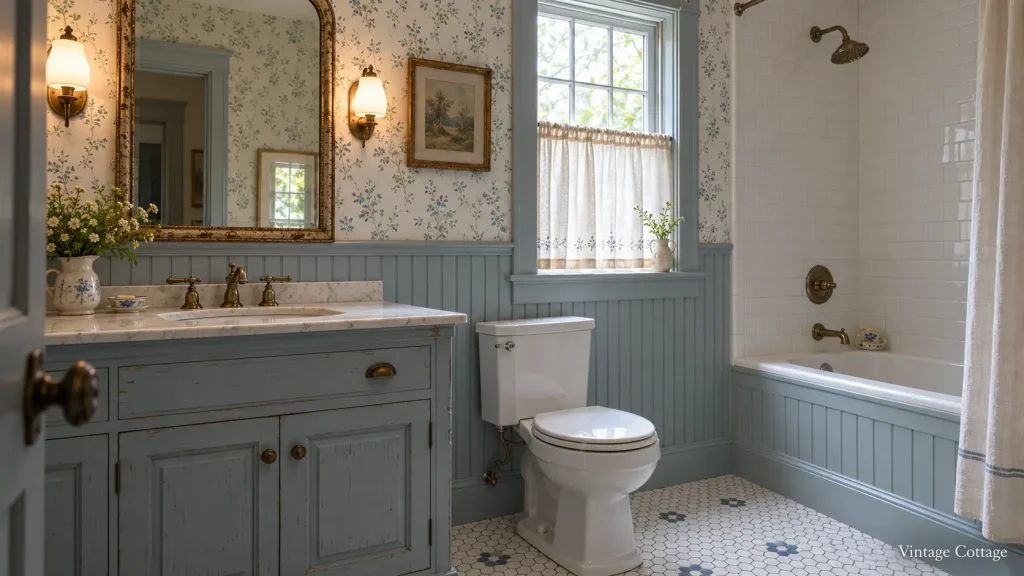
What sets cottage style apart from other soft looks is pattern and age. Small florals, painted paneling, and pieces that look like they’ve been around for a while give it a gentle, homey character.
You don’t need a clawfoot tub. A skirted vanity, a framed print, or a painted wood cabinet can bring in the style. Moisture-resistant wallpaper, kept away from the shower, and good ventilation help keep paper and fabric in good condition.
Secondhand shops are great for small decorative pieces, like glass bottles or little dishes for display. Keep those for decoration rather than storing toiletries in containers of unknown origin.
For example, a small family bathroom with plain white tile can take on a cottage feel with a pale blue painted wall above the tile, a framed mirror, and a linen café curtain on the window.
Retro Mid-Century
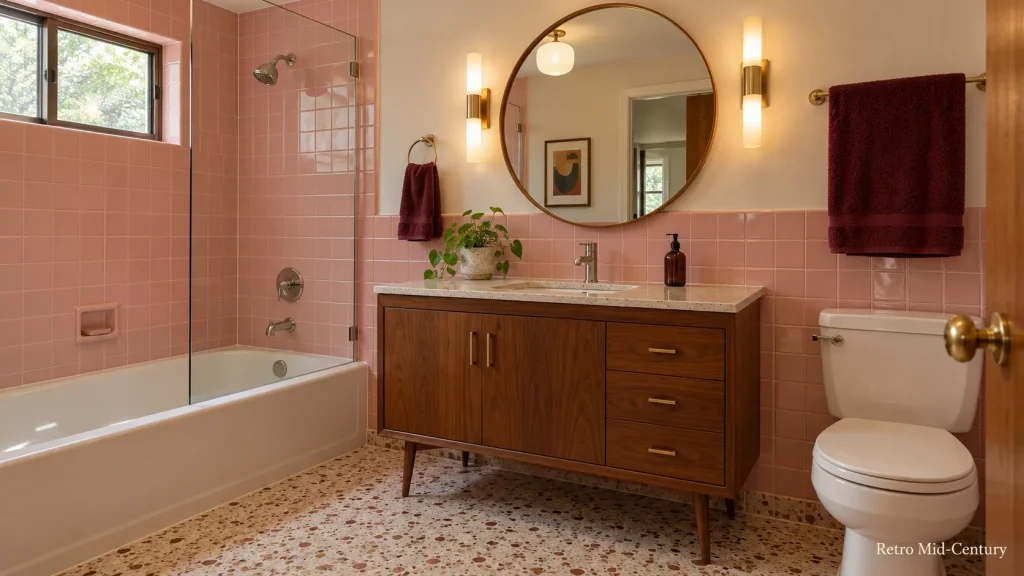
This look can be the answer if your home has original colored tile. Pink, mint, or yellow tile often looks dated when surrounded by modern gray, but intentional when paired with colors and shapes from the same era.
Coordinating towels, a round mirror, and a wood-toned vanity can make original tile look like a deliberate choice rather than something waiting to be removed. Pink tile, for instance, often pairs well with deep green, burgundy, or warm gray towels, which make the pink look richer rather than sugary.
For bathrooms without original features, terrazzo-look accessories or a pastel shower curtain are an easy way in. The style can tip into looking overly themed if every piece is retro, so mixing in a few plain modern basics keeps it grounded.
Fresh and Breezy
Coastal Calm
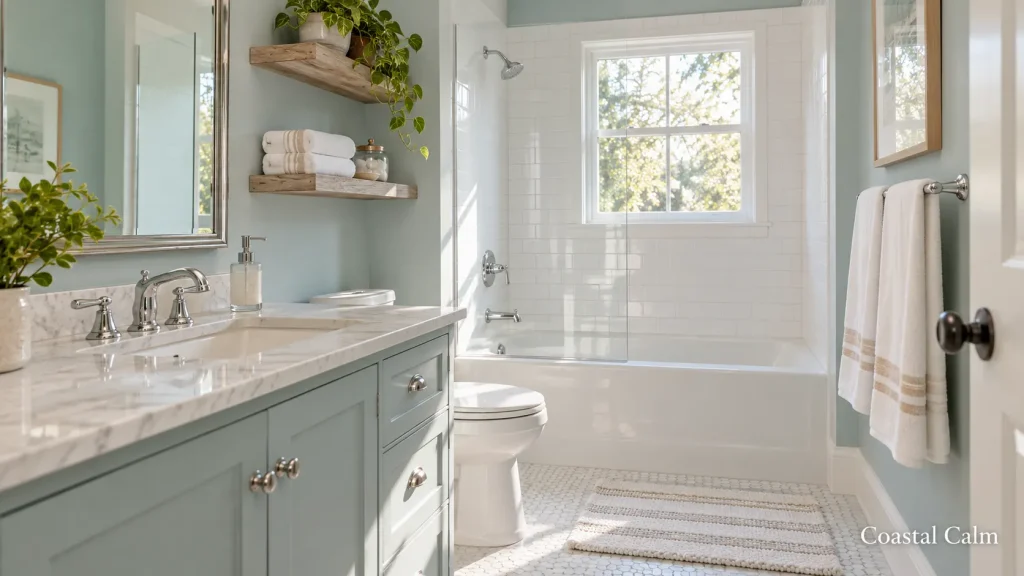
Coastal bathrooms are light and relaxed, inspired by beach houses, but the most convincing versions are quite restrained.
Rather than nautical decorations, think about the colors and materials of a beach: soft whites, sandy neutrals, pale blues and greens, and weathered or pale wood. A striped towel or a simple wooden stool suggests the setting without spelling it out.
White paint behaves differently under different light, so test samples under the bathroom’s actual lighting before choosing. For the bath mat, choose a material made for wet floors, such as cotton or a quick-drying fabric, and keep natural fibers like jute out of the wettest areas.
For example, a small bathroom with white tile and chrome fixtures could lean coastal with pale blue-green walls, white towels with a sand-colored stripe, and a simple pale wood shelf. Nothing in it needs to mention the sea directly.
Mixing Two Aesthetics
Many bathrooms end up somewhere between two styles. One simple approach is to choose a main direction and borrow specific elements from a second:
- Spa base with Japandi details: keep the calm, hidden storage of a spa bathroom, and borrow Japandi’s darker accents and handmade ceramics for contrast
- Mediterranean base with boho details: keep the warm walls and tile, and borrow boho’s woven textures and plants
- Dark and moody base with Art Deco details: keep the deep walls, and add one Deco-inspired mirror or geometric floor
- Cottage base with coastal details: keep the painted paneling and soft pattern, and borrow coastal’s pale blues and lighter wood
Bathroom Aesthetic Mistakes to Avoid
Ignoring what’s already there. Existing tile, fixtures, and the tub color affect every other choice. Working with them is often easier and cheaper than trying to hide them.
Changing metal finishes without considering fixed fixtures. Adding brass hardware next to chrome taps you can’t replace can look mismatched. Decide whether to complement the existing finish or introduce a second one deliberately.
Choosing materials that don’t suit moisture. Untreated wood, delicate fabrics, and standard paper can warp, mildew, or peel in a humid bathroom.
Copying a photo exactly. Inspiration rooms often have different light, layouts, and budgets. Use them as a guide, then adjust for your own space.
Questions About Bathroom Aesthetics
Can I change my bathroom aesthetic in a rental?
Yes, to a large extent. Towels, bath mats, shower curtains, storage baskets, accessories, and a freestanding shelf can shift the look without permanent changes. Check your lease before painting or swapping fixtures.
Which aesthetic suits a small bathroom best?
There’s no single answer. Lighter looks can help a small room look more open, while a dark, moody look can make it feel intentional and cozy, as long as the lighting is good.
Which looks are easiest to keep tidy?
Scandinavian and spa styles tend to be the simplest to maintain, since storage is built into the look. Boho and cottage styles involve more decorative pieces, so they usually need a little more regular dusting and editing.
How do I keep a styled bathroom looking good day to day?
Give everyday items a home that’s easy to use. A lidded basket or drawer for hairbrushes and skincare, a hook for the towel in daily use, and a quick end-of-day reset of the counter go a long way.
Finding the Style That Fits
The best bathroom aesthetic isn’t necessarily the one with the most saves online. It’s the one that suits your home, works with what you already have, and still looks good on an ordinary weekday morning.
Choose the style that matches the mood you want, and begin with the pieces you could take with you if you moved: textiles, accessories, and small hardware. Once those are in place, it’s much easier to see whether bigger changes like paint or lighting are worth it.