
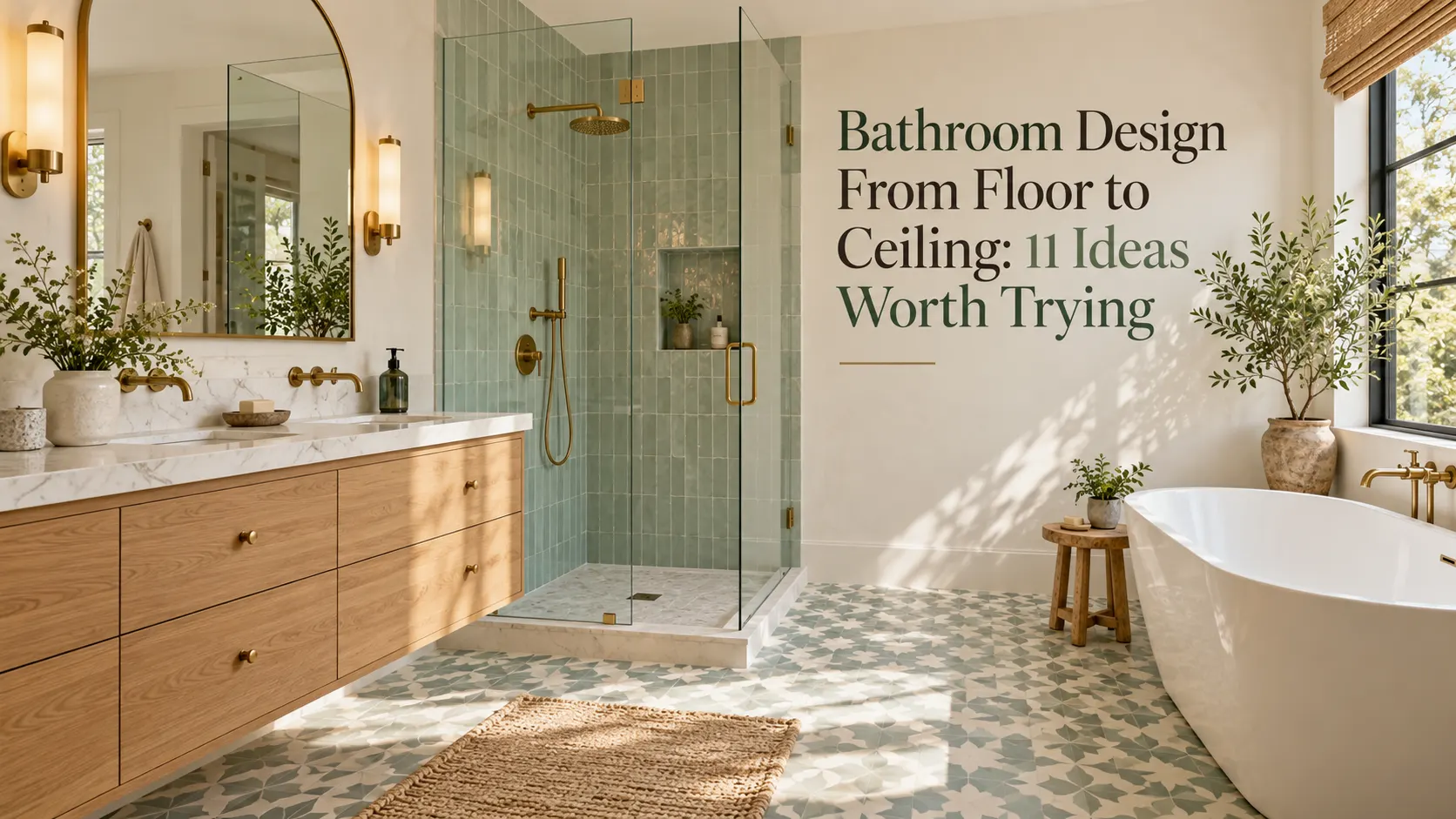
Bathroom Design From Floor to Ceiling: 11 Ideas Worth Trying
Bathrooms are small, but they ask a lot of us.
They need to handle steam, splashes, rushed mornings, and long evening baths. They have to store more than seems possible in a few square feet. And because they’re expensive to change, it’s easy to end up living for years with beige tile, a wobbly towel bar, and a light that makes everyone look tired.
The good news is that a better bathroom doesn’t always mean a full renovation. Some of the most useful changes are surprisingly simple. Others are bigger projects, but they’re worth knowing about before you start pricing tile.
This guide works through the room the way your eye does, from the floor up to the ceiling. Along the way, you’ll find 11 bathroom design ideas, along with the practical details that tend to get missed.
Four Questions to Answer First
Before looking at tile samples or vanities, it helps to get clear on a few basics. These answers will shape almost every decision that follows.
Who uses this bathroom? A family bathroom shared with young kids needs durable, easy-to-clean surfaces. A guest bathroom can be more decorative. A primary bathroom might prioritize storage for two people.
What’s the real budget? Decide whether you’re refreshing surfaces, replacing a few pieces, or changing the layout. Moving plumbing is usually where costs climb quickly.
Do you own or rent? Renters will lean toward ideas that can be undone. Owners have more freedom but should think about how long they plan to stay.
What annoys you most right now? Not enough storage, poor lighting, a cramped shower, or a dated look. Fixing the biggest frustration first tends to give the most satisfaction.
On the Floor
The floor sets the tone for the whole room and gets a lot of wet, everyday wear.
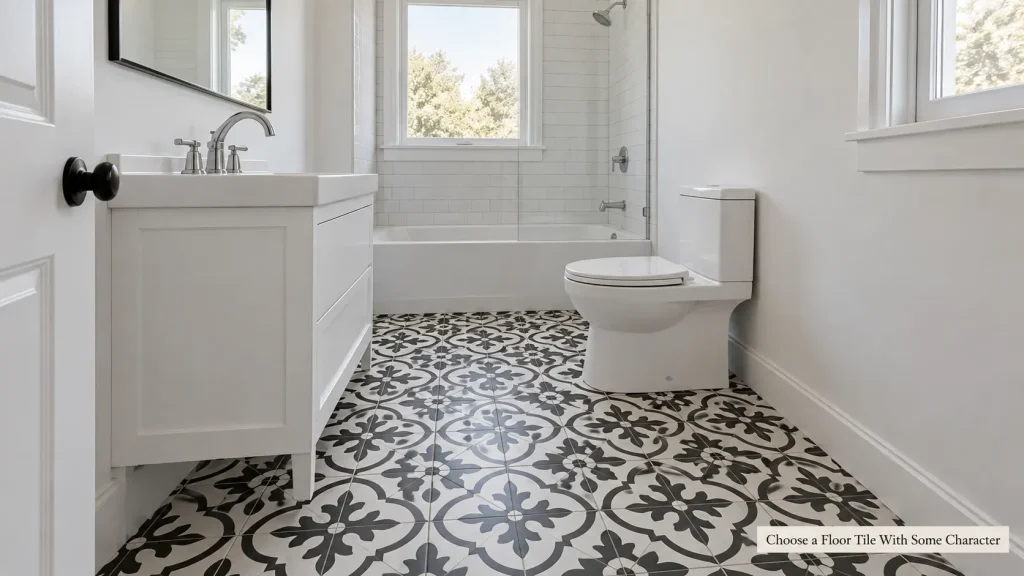
Choose a Floor Tile With Some Character
Bathroom floors don’t have to be plain. Patterned cement-look tiles, small hexagons, checkerboard layouts, or large stone-look porcelain can all give the room personality from the ground up.
Slip resistance matters as much as style. You can’t judge it reliably by how a tile looks or feels in the store, so check the manufacturer’s rating and make sure the tile is listed as suitable for wet floor areas.
A bold floor can become the main feature in a bathroom of any size, letting walls and fixtures stay simple. If you’d rather put pattern on the walls or in the shower instead, a quieter floor gives it room to stand out.
For example, a narrow family bathroom with plain white walls can gain a lot of personality from a black and white patterned floor, without the walls needing any changes at all.
On the Walls
Walls in a bathroom deal with moisture every day, so materials matter as much as color.
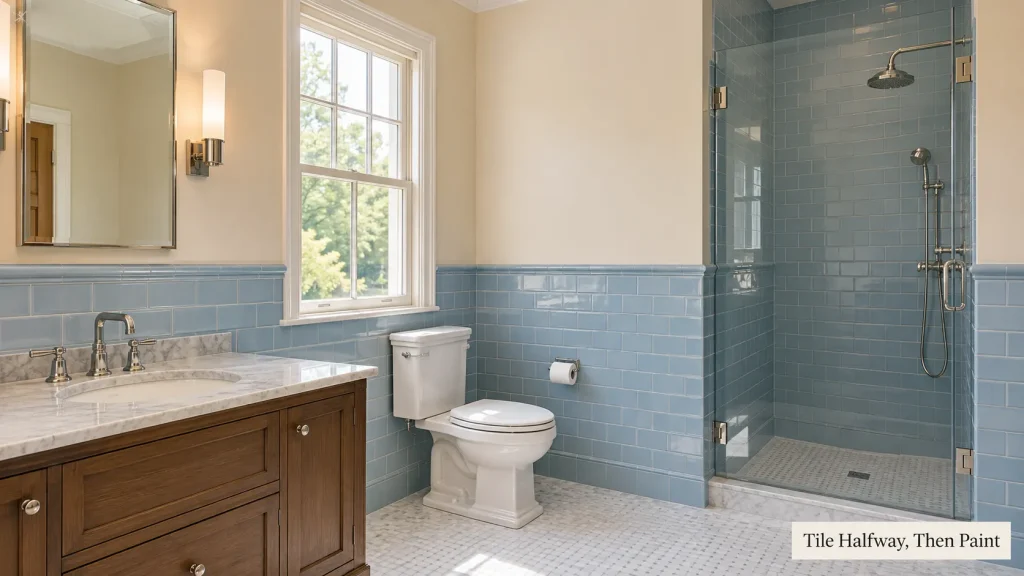
Tile Halfway, Then Paint
Tiling every wall from floor to ceiling can be expensive. Tiling the lower half, then painting above, gives a classic look and protects the area most likely to get splashed.
Simple rectangular tiles laid horizontally or vertically suit many bathroom styles. A narrow trim or ledge where the tile ends can hold small items like soap or a little decorative dish.
There’s no fixed rule for how high to go. What tends to look best is one consistent line that runs around the room, perhaps lining up with a window sill or another feature. The exception is wet zones: around a tub or shower, the tile or waterproof surface needs to go as high as the water reaches, whatever that does to the line elsewhere.
If tiling isn’t practical, waterproof wall panels or beadboard sealed for bathroom use can give a similar wainscot effect. Check that any product is rated for damp areas before installing it near a tub or shower.
Use Color More Boldly Than You Would Elsewhere
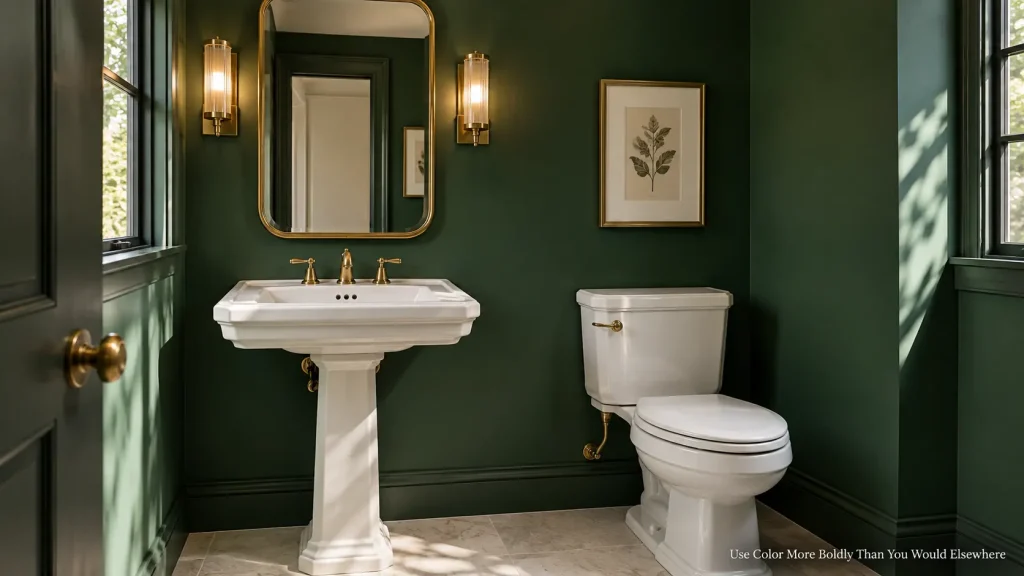
Since bathrooms are small and used for short periods, they’re a good place to try a color you might hesitate to use in a living room. Deep green, navy, terracotta, or soft pink can all look striking.
Choose a paint the manufacturer specifically rates or recommends for high-humidity rooms like bathrooms. A satin or semi-gloss finish is often easier to wipe clean than flat paint.
Darker colors look best with good lighting, so plan both together. If you’re unsure, painting just the vanity or the ceiling can be a gentler way to test a bold shade.
For example, a small powder room with white fixtures and a plain floor can become one of the most memorable rooms in the house with deep green walls and a brass mirror, while the larger family bathroom stays light and simple.
At the Vanity
The vanity area is where most of the daily routine happens, which makes it worth extra thought.
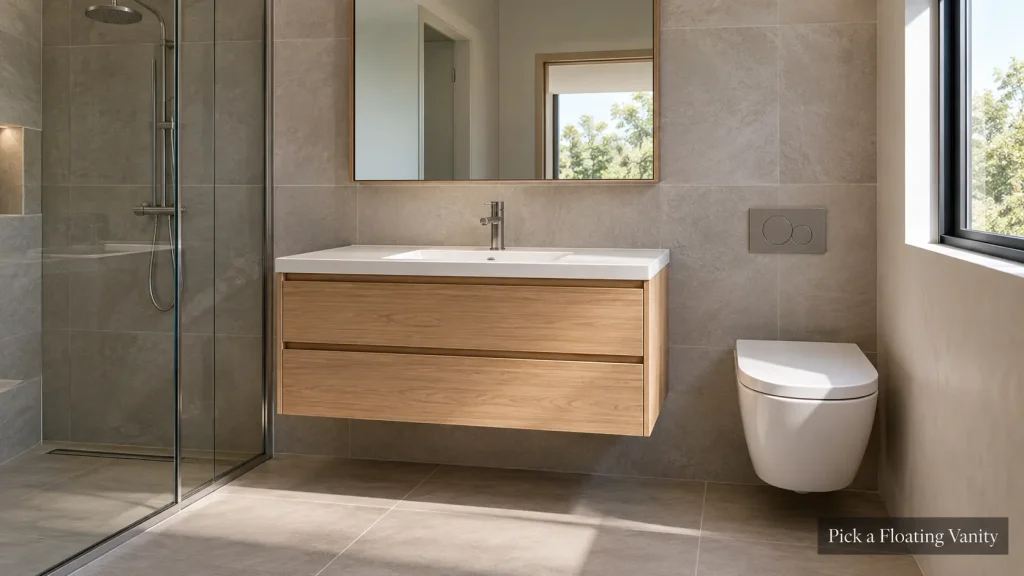
Pick a Floating Vanity
A wall-mounted vanity leaves the floor visible underneath, which can make a small bathroom look larger. It also makes cleaning the floor much easier.
Floating vanities need solid support in the wall, so installation is often best handled by a professional, especially if the plumbing needs adjusting. Consider drawers rather than doors, since drawers can make it easier to see and reach what’s inside, though plumbing layout will affect how much drawer space you actually get.
Floating vanities also offer some flexibility in mounting height. Within the limits of the plumbing, sink type, and installation requirements, it may be possible to set the counter a little higher or lower to suit the people using it, including anyone with accessibility needs. It’s worth discussing with your installer before the wall is closed up.
Make the Mirror Work Harder
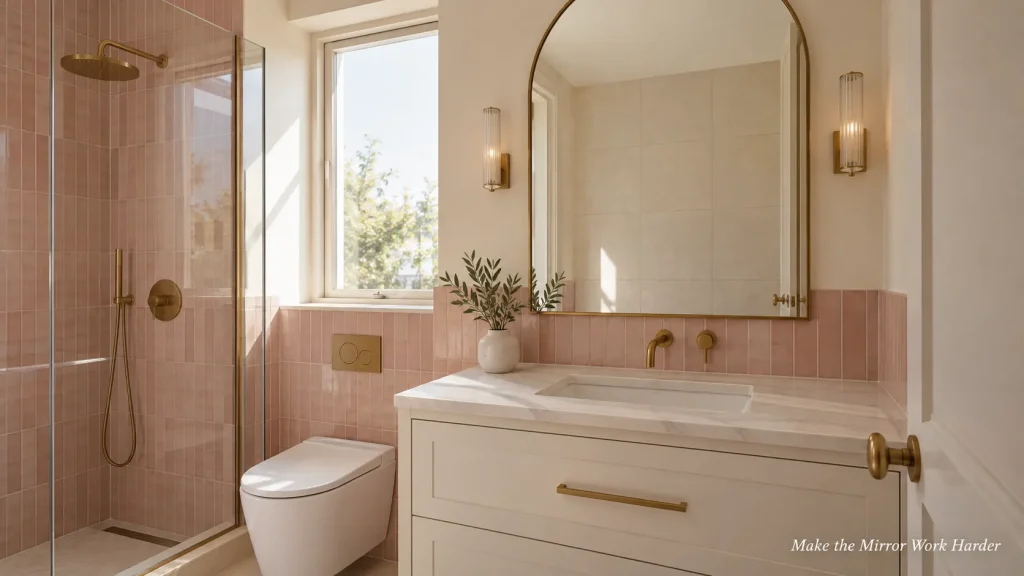
The mirror is one of the most noticeable pieces in a bathroom, and it can do more than just reflect.
A large mirror helps a small bathroom look brighter and more open. A round or arched mirror softens a room full of straight lines. A recessed medicine cabinet with a mirrored door adds storage without taking up extra space.
Size is flexible. A mirror slightly narrower than the vanity is a common choice, but a wide frameless mirror running the full width of the wall can work just as well. For a double vanity, two separate mirrors are one option, and a single long mirror is another.
Height matters more than people expect. If the bathroom is shared by people of very different heights, a taller mirror makes it easier for everyone to see themselves without the mirror being hung too high for one person.
Mix Metal Finishes on Purpose
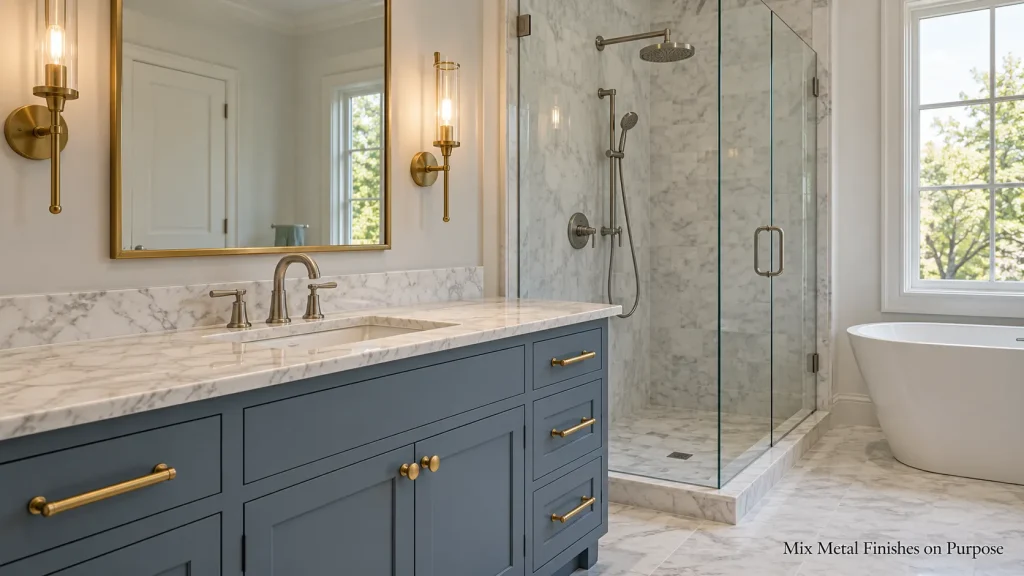
Faucets, towel bars, cabinet pulls, and light fixtures don’t all need to match. Mixing metals can make a bathroom look more layered and less like a showroom.
A simple approach is to choose one main finish for the plumbing fixtures, like brushed nickel or matte black, and one accent finish for lighting or hardware, like warm brass. Repeating a finish somewhere else in the room can help the combination look intentional.
Finish can affect maintenance too. How much water spotting shows depends on the color, coating, and your water, but some people find brushed finishes a little more forgiving than highly polished ones.
For example, brushed nickel taps and shower fittings paired with brass sconces and a brass mirror frame can look warm and considered.
In the Shower
The shower or tub takes up a large part of the room, so it has a big effect on how the bathroom looks and works.
Open It Up With Glass
Replacing a heavy shower curtain or framed door with a frameless glass panel can make a bathroom look larger and more modern. The tile inside becomes part of the room’s design rather than being hidden.
This isn’t always a simple swap. Shower glass should be tempered safety glass, and the existing curb or tub edge, wall support, waterproofing, and measurements all affect what’s possible, so installation is usually a job for a professional. A fixed panel without a door can work in larger showers, as long as the layout keeps water from splashing out.
For a tub and shower combination, a fixed glass screen that covers part of the tub’s length can replace the curtain while still leaving the tub easy to get in and out of.
Glass shows water spots, so a squeegee kept in the shower makes daily upkeep quicker. If glass isn’t an option, a long fabric shower curtain hung from a rod mounted close to the ceiling can make the room look taller.

Build In a Niche Instead of Using a Caddy
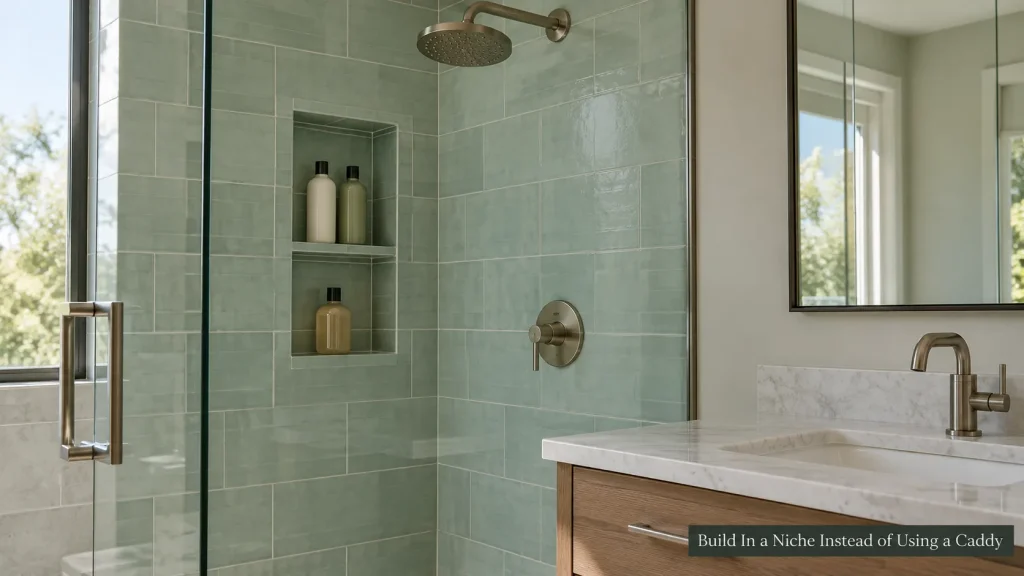
Shower caddies and corner racks often end up crowded and rusty. A recessed niche built into the shower wall holds bottles neatly and keeps the walls clear.
Niches are easiest to add during a renovation, when the wall is open. Because they sit inside a wet wall, they need to be built and waterproofed according to the waterproofing system manufacturer’s requirements, usually by an experienced installer, with a slight slope so water drains out. Placing the niche on a wall that isn’t directly in the spray helps keep bottles drier.
Measure your tallest shampoo bottle before deciding on the niche height, and consider whether two smaller shelves inside the niche would make better use of the space.
For renters or anyone not renovating, a stainless steel or teak shelf can be a tidy alternative. No-drill versions vary a lot in how much weight they hold and which surfaces they stick to, so check the product’s requirements before trusting it with heavy bottles.
Up High
The upper part of the bathroom is often overlooked, but lighting and storage up here can change the whole room.
Layer the Lighting
A single ceiling light often casts shadows on your face at the mirror. Bathrooms benefit from more than one light source.
Sconces on either side of the mirror, positioned around face level, give more even light for shaving or makeup. A ceiling fixture provides general light, and a small night light or dimmable option is useful for nighttime trips.
Bathroom lighting needs to be rated for damp or wet locations, depending on how close it is to the shower or tub. Electrical work in bathrooms should be done by a qualified electrician in line with local electrical requirements, since these rooms usually have specific safety rules.
Bulb choice matters as well. Bulbs with good color rendering show skin tones and makeup more accurately, and choosing a color temperature you find comfortable makes the room more pleasant to use early in the morning and late at night.
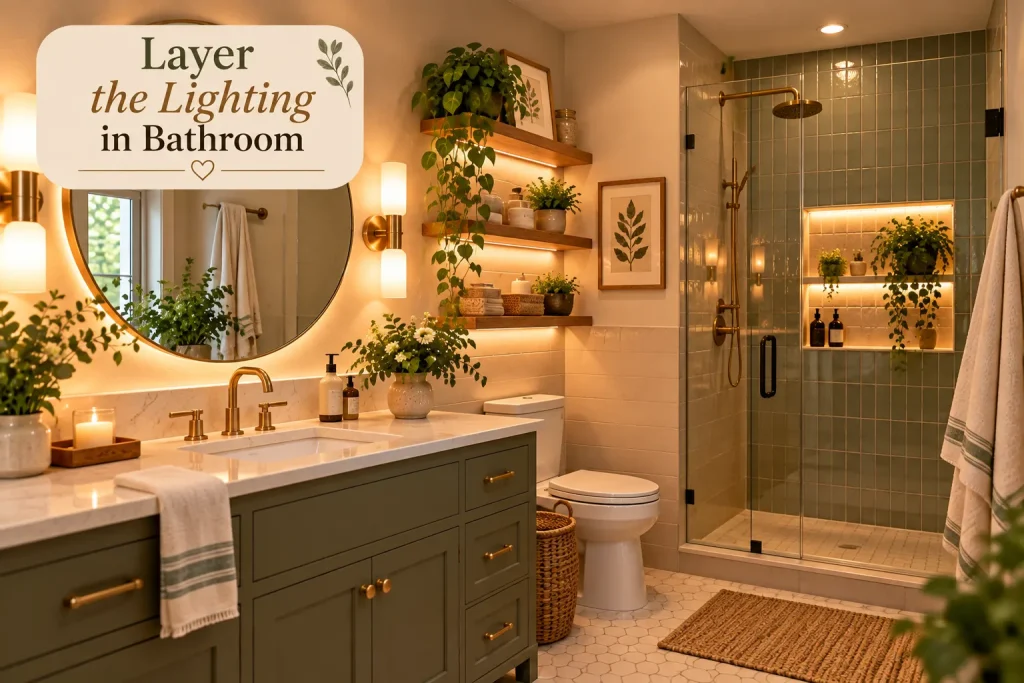
Use the Wall Above the Toilet
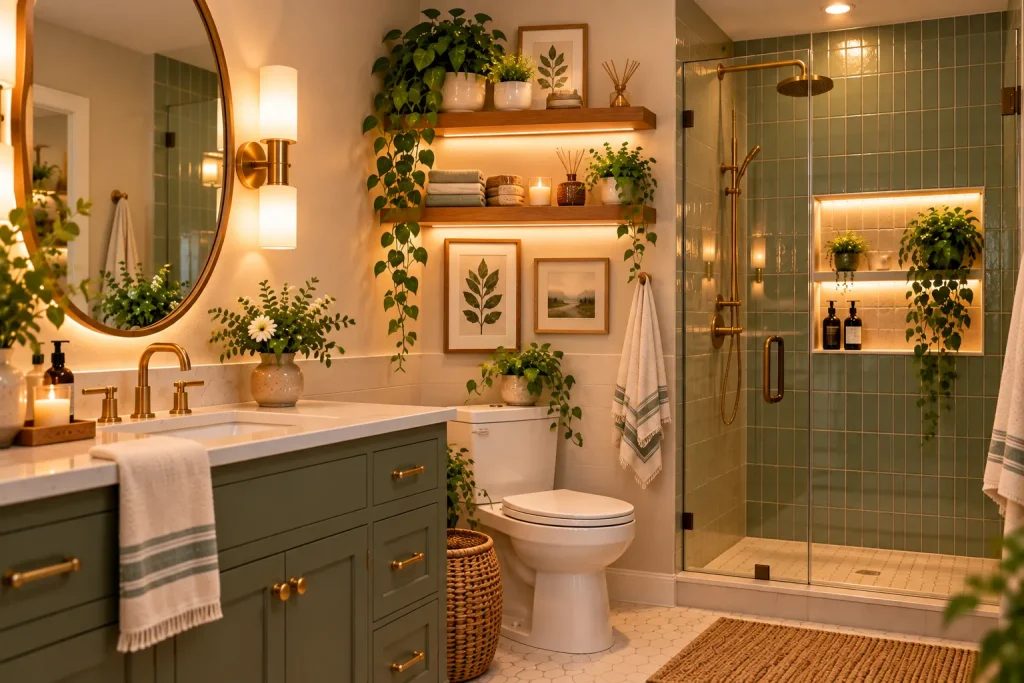
The space above the toilet is one of the most underused spots in many bathrooms. A couple of floating shelves, a narrow cabinet, or an over-toilet shelving unit can add storage for towels and toiletries.
Since anything here hangs over the toilet, mount shelves and cabinets securely into studs or with anchors rated for the weight, and avoid stacking heavy items on the top shelf. Leave enough clearance above the tank so it can still be opened for repairs. Closed cabinets hide clutter, while open shelves work for rolled towels, a plant, or a few baskets.
Finishing Touches
Add Wood, Stone, and Plants
Hard, cold surfaces like tile and porcelain can look stark on their own. Natural materials add warmth.
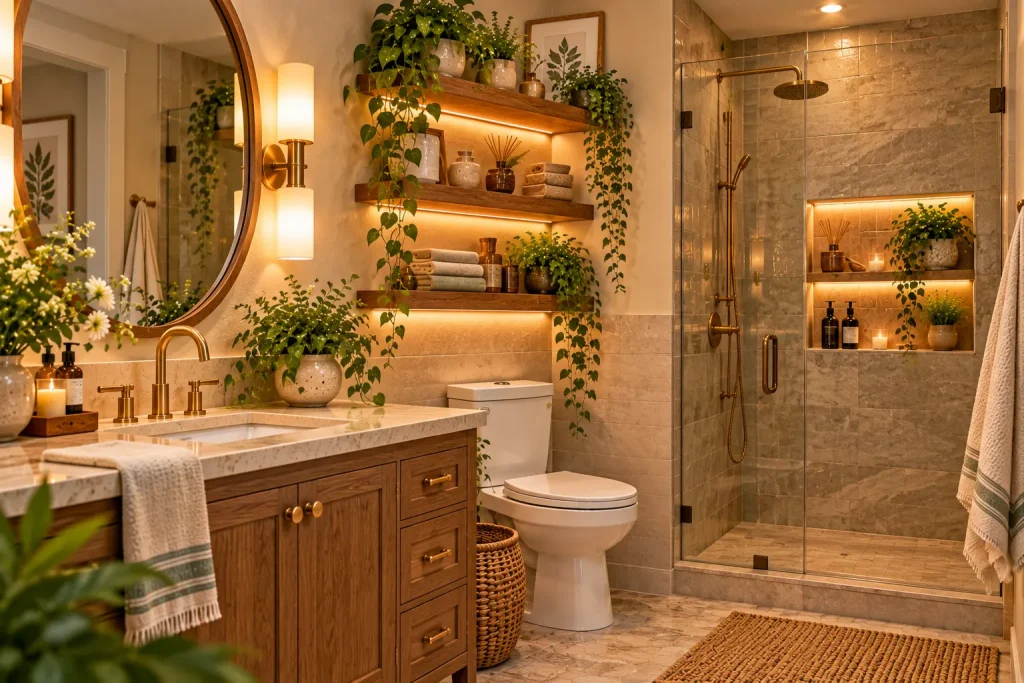
A teak bath mat or shower bench, a wooden stool, a stone soap dish, or woven baskets for towels all soften the room. Wood used in bathrooms should be naturally water-resistant, like teak, or properly sealed.
Some plants, such as ferns or pothos, can do well in a bathroom, but light matters more than humidity, so they still need a window nearby. If your bathroom has no window, faux greenery is a low-maintenance option.
These small touches are easy to change later, which makes them a good way to try out a new look before committing to bigger bathroom design decisions.
Common Bathroom Design Mistakes
A few issues come up again and again, and they’re much easier to prevent than fix.
Skipping ventilation. Without a good exhaust fan, moisture can lead to peeling paint, mildew, and damaged finishes. If you’re updating the room, choose and install the fan according to the manufacturer’s guidance and local building requirements, which usually include venting it outside rather than into the attic or wall space.
Choosing grout without thinking about cleaning. Bright white grout looks crisp but tends to show discoloration on floors. A mid-tone or darker grout may show it less readily, though sealing and regular cleaning matter whatever color you choose.
Forgetting outlets. It’s easy to overlook where hair dryers, toothbrushes, and razors will plug in. Outlets in bathrooms also usually need extra protection, such as GFCI, depending on local requirements.
Removing the only bathtub in the home. A walk-in shower can be lovely, but families with young children often find a tub useful for bath time. Whether buyers in your area expect one varies, so it may be worth considering if you plan to sell.
Questions About Bathroom Design
Can I use wallpaper in a bathroom?
Yes, in many cases. Choose vinyl or other moisture-resistant wallpaper, keep it away from direct water, and make sure the room has good ventilation. Powder rooms without showers are the easiest place to start.
Should my bathroom match the style of the rest of the house?
It doesn’t have to match exactly, but some connection helps. Repeating a color, wood tone, or metal finish from nearby rooms can make the bathroom feel like part of the same home.
How can I update a rental bathroom without permanent changes?
Swap the shower curtain, bath mat, and towels for a coordinated set, add a freestanding storage unit, and replace the toilet seat or shower head where your lease or landlord permits. Keeping the original pieces lets you put them back when you move.
Can I paint over old bathroom tile?
It’s possible on wall tile in areas that don’t get soaked, using a tile-specific paint or primer system and careful cleaning beforehand. Results and durability vary, and painted tile inside a shower or on a floor tends to wear much faster, so many people treat it as a temporary fix rather than a long-term one.
A Room You’ll Use Every Day
A bathroom doesn’t need to be large or expensive to work well. It needs good light, enough storage, surfaces that are easy to keep clean, and a few details that make it pleasant to walk into.
Go back to the four questions at the start and pick the idea that solves your biggest frustration. Then work upward the way this guide did. Get the floor and walls right first, and the vanity, shower, and lighting choices tend to fall into place much more easily.