

Bedroom Decor With Personality: 17 Ideas for a Room You’ll Love
Picture three different bedrooms.
The first is pale and quiet. Soft white walls, linen bedding, a single plant by the window, and almost nothing on the surfaces.
The second is warm and wrapped up. Deep green walls, a patterned quilt, a stack of books by an armchair, and a lamp glowing in the corner. It’s the kind of room that makes a rainy afternoon seem like a gift.
The third is bright and personal. A wallpapered wall, framed family photos, a vintage dresser painted a cheerful color, and bedding in two or three happy patterns.
None of these rooms is better than the others. They just have a clear mood, and most decisions in them support it.
That’s the best place to start with bedroom decor. Before choosing paint or buying pillows, decide which kind of room you want to walk into at the end of the day. The 17 ideas below are grouped by where they go in the room, so you can pick the ones that match the mood you’re after.
Choose a Mood Before You Shop
A quick way to find your mood is to think about how you want the room to be when you close the door at night.
- Calm: quiet, space, and very little visual noise
- Cozy: warmth, softness, and a room that wraps around you a bit
- Personal and bright: color, pattern, and things that tell your story
You can mix moods, of course. Plenty of rooms are mostly calm with a few cozy touches. But having one main direction helps you say no to things that don’t fit.
If you want a shortcut, here’s roughly how the ideas line up:
- Leaning calm: panel molding, a painted ceiling, a tonal color palette, plants
- Leaning cozy: a canopy, a reading corner, layered textures, bookshelves
- Leaning personal: wallpaper, mismatched nightstands, pattern on the bed, a vintage dresser, photos, a wall textile
Painted trim, a statement light, and a dressing table can suit any of the three, depending on the colors and materials you pick.
Walls and Ceiling
The walls are the largest surface in any bedroom, so changes here have a big effect.
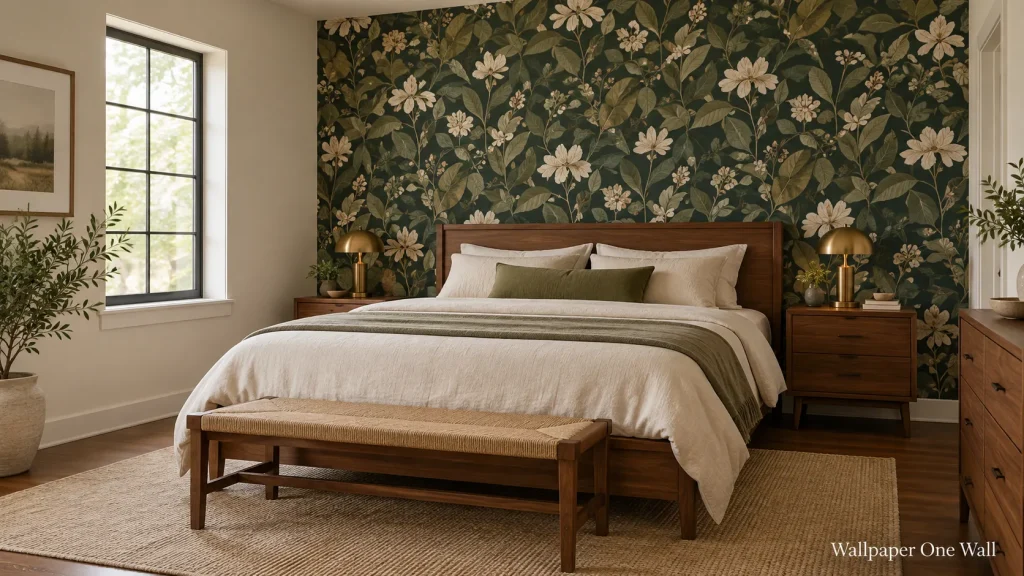
Wallpaper One Wall
An accent wall of wallpaper behind the bed gives the room a focal point without covering every surface. Small florals and soft stripes look gentle. Bold botanicals or geometric prints make a much louder statement.
Peel-and-stick wallpaper is a good option for renters, though the finish and removability vary by product, so it’s worth testing a sample on your wall first. For traditional wallpaper, a smooth, clean wall and careful pattern matching make a big difference to the result.
Add Panel Molding or Board and Batten
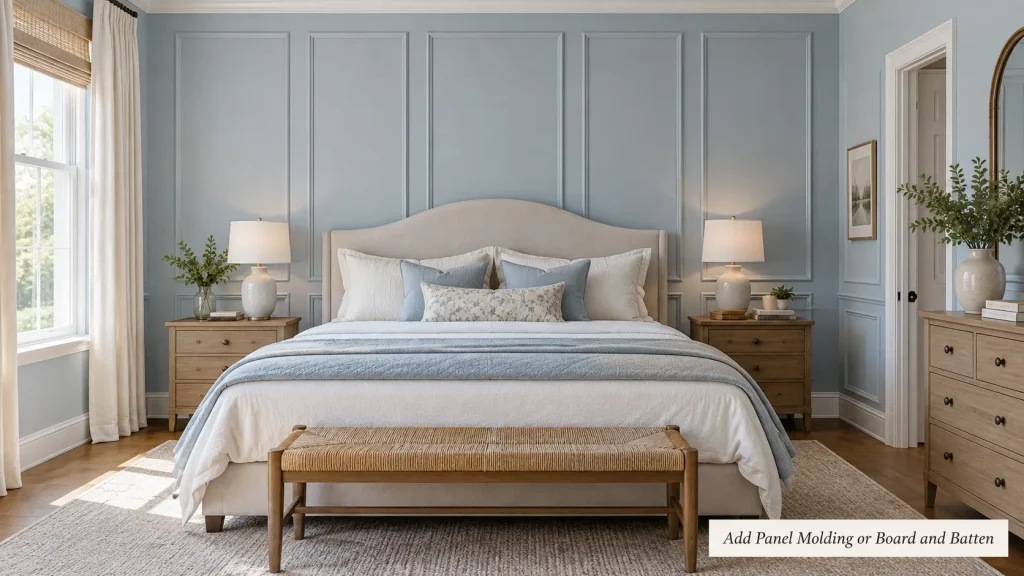
Wall paneling adds texture and a bit of architectural detail, especially in plain modern bedrooms.
Board and batten uses vertical strips of wood over a flat panel or the wall itself. Picture frame molding uses thin rectangles of trim. Both can be painted the same color as the wall for a subtle look, or a contrasting shade for something more striking.
For an experienced DIYer, it can be a manageable weekend project. If you’re newer to woodworking, allow more time, and sketch the layout on paper first so the spacing looks even.
Paint the Door and Trim
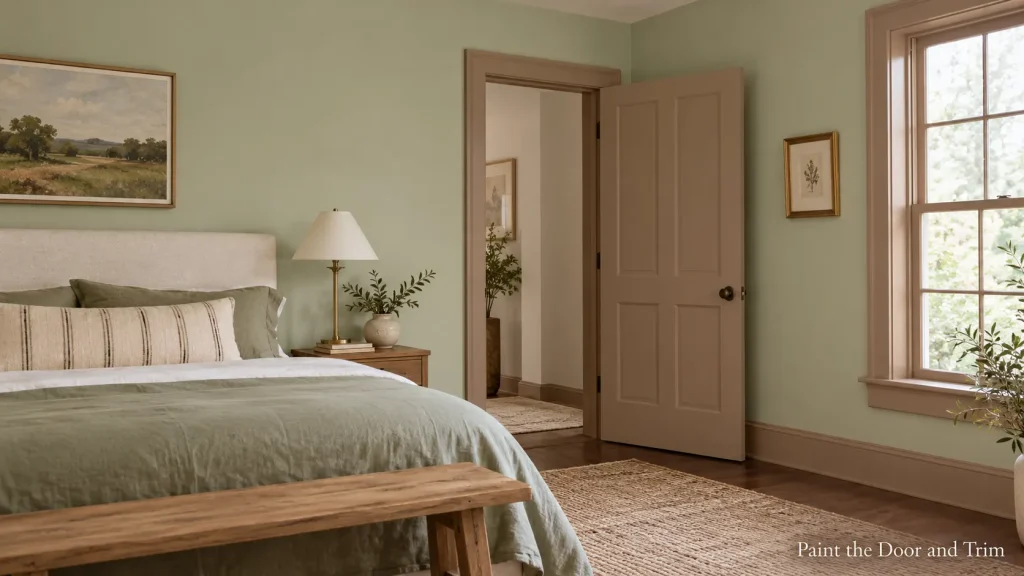
Most bedroom doors, window frames, and baseboards are painted plain white without much thought. Giving them a color instead is a quieter change than painting a feature wall, but it can make the room look far more considered.
A shade a few steps darker than the walls adds depth without much contrast. A completely different color, like a soft clay door in a pale green room, gives the space more character.
Use a durable semi-gloss or satin paint for trim, since it gets touched and bumped more than walls. Light sanding and a primer help the new color stick, especially over older glossy paint.
Don’t Forget the Ceiling
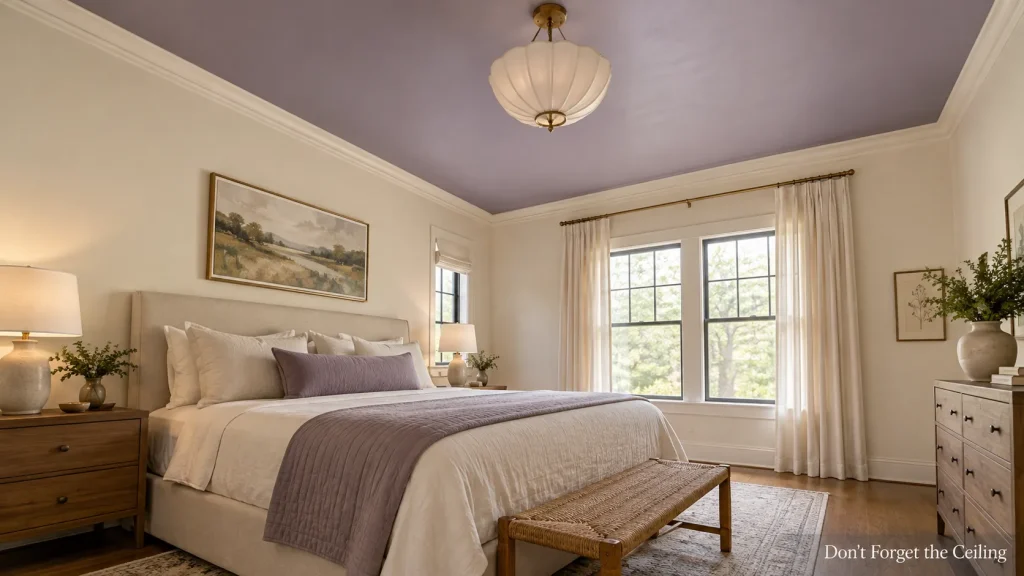
The bedroom ceiling is one surface you regularly see while lying down, so it deserves a little attention.
Painting it a soft color, slightly lighter than the walls, can make the room look more finished. A deeper shade can make a large bedroom look cozier. Wallpaper on the ceiling is more work but can look lovely in a small room with a simple pattern.
Common Bedroom Decor Mistakes
Before moving on to the bed area, here are a few things that often hold a bedroom back.
Not leaving room to open things. A dresser that’s beautiful but sits too close to the bed can leave no space to pull the drawers out. Check clearance for drawers, closet doors, and the bedroom door before placing furniture.
Picking paint in the store. Bedroom light changes a lot from morning to night. Test samples on the wall and look at them at different times of day.
Ignoring the view from the bed. You spend hours looking at the wall opposite the bed. It deserves as much thought as the wall behind it.
Buying small decor for big spaces. Lots of tiny objects can look cluttered. A few larger pieces tend to work better in a bedroom.
Around the Bed
The bed is the main event in any bedroom. These ideas help it look like it belongs there.
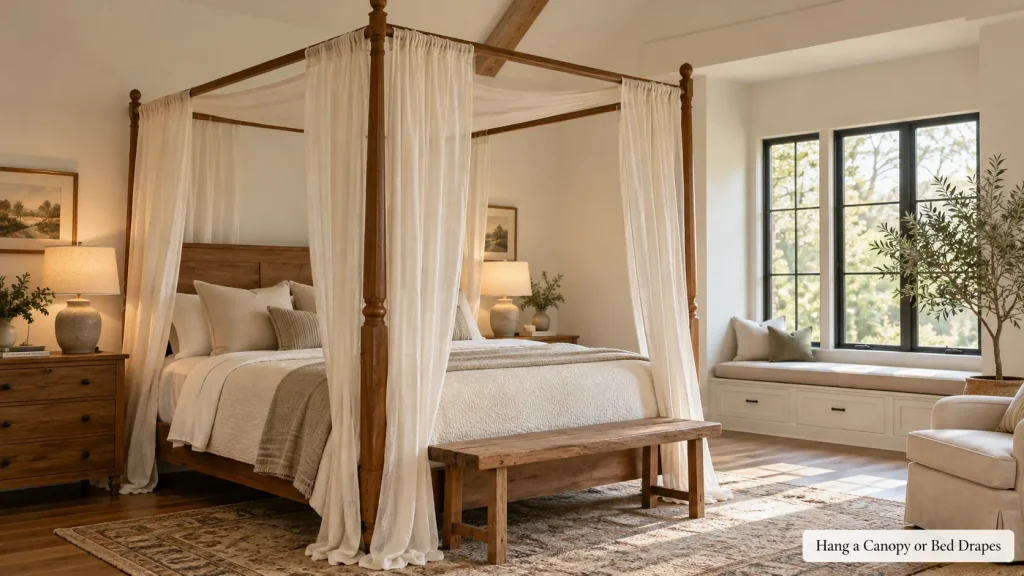
Hang a Canopy or Bed Drapes
A canopy adds softness and height, and it can make even a simple bed look special.
If you have a four-poster frame, drape light fabric over the top rails. If not, a ceiling-mounted curtain track or a simple hoop above the head of the bed can hold fabric panels that fall behind or around it.
Use mounting hardware that suits your ceiling material, whether that’s drywall, plaster, or wood, and is rated for the weight of the fabric and track. Screwing into a ceiling joist is the most secure option. Keep all fabric well away from lamps and heaters.
Sheer cotton or linen keeps the look light. Heavier fabric creates a cozier, enclosed feeling.
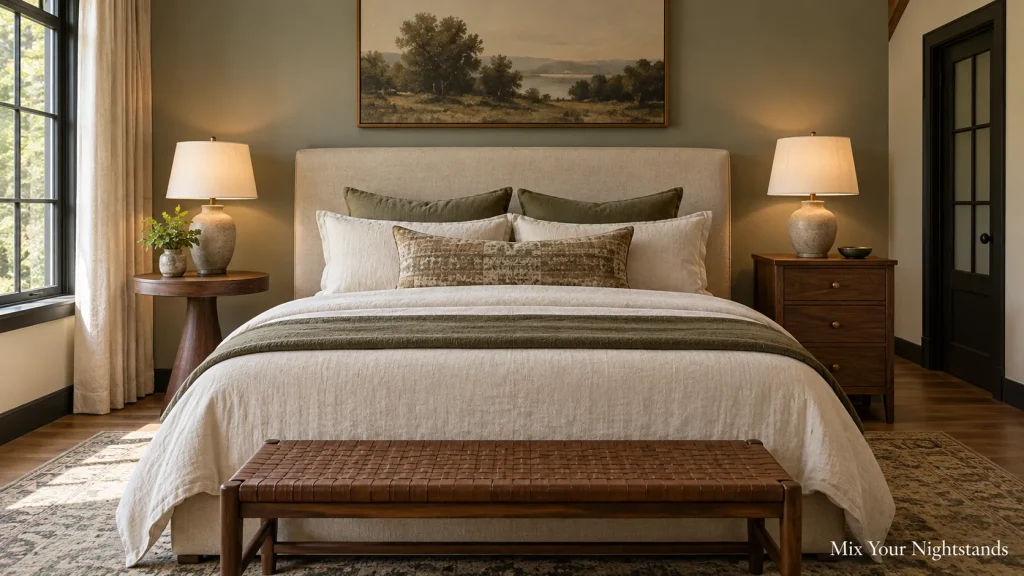
Mix Your Nightstands
Matching nightstands look tidy, but mismatched ones can give a bedroom more personality.
The trick is to keep something in common. The same wood tone or matching lamps can tie two different pieces together, and keeping both tops at a similar height, close to the top of the mattress, helps them look balanced and keeps things easy to reach.
A small round table on one side and a narrow chest of drawers on the other can work well, especially if one person needs more storage than the other.
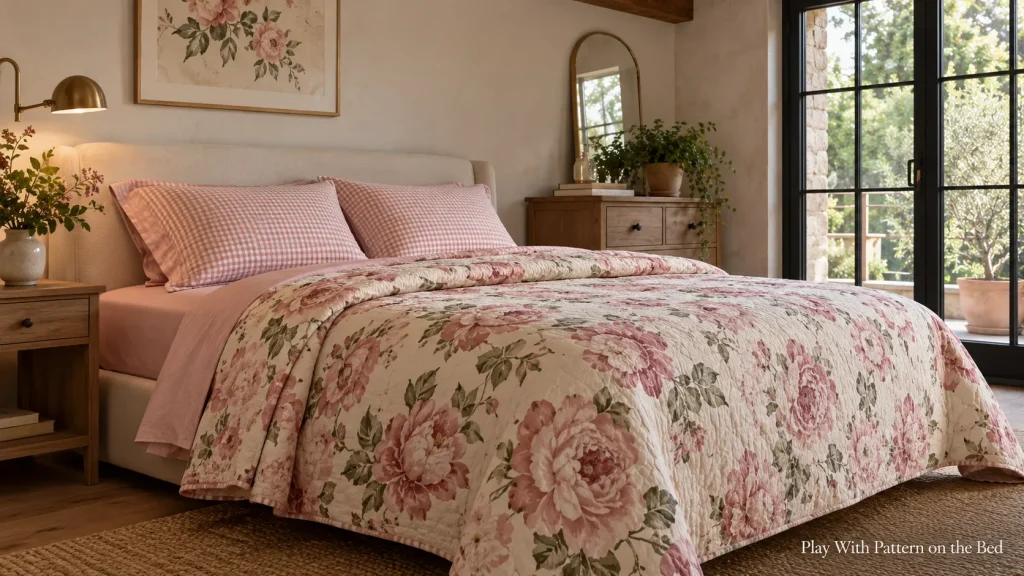
Play With Pattern on the Bed
Solid bedding is easy, but a little pattern can bring a bedroom to life.
One easy approach is to pair a large print, a small print, and a solid that share at least one color. For example, a large floral quilt, a small gingham pillowcase, and plain sheets in a shade pulled from the floral.
If you prefer a quieter room, keep patterns subtle, like a fine stripe or a tonal design. If you love color, bolder combinations can look great.
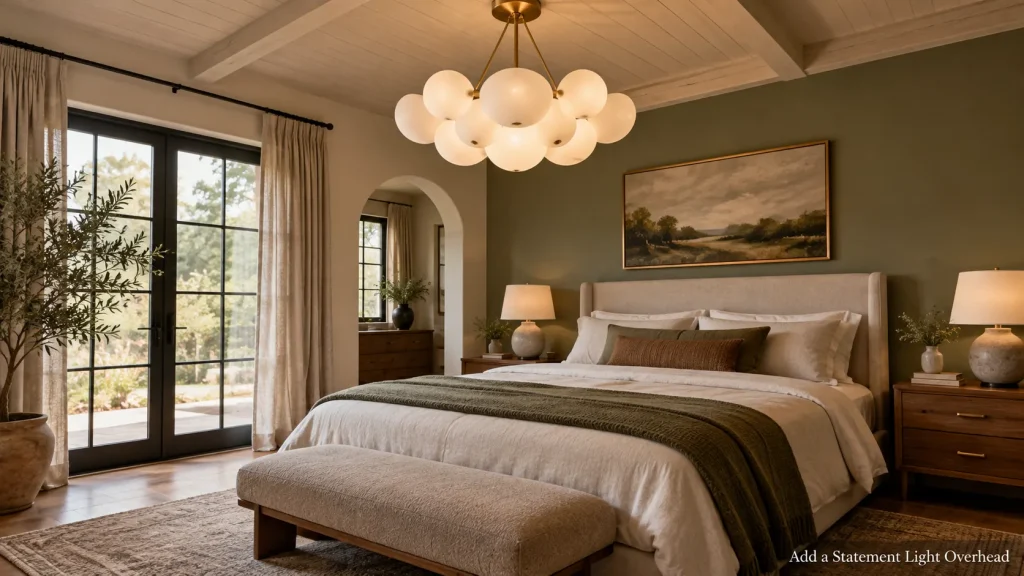
Add a Statement Light Overhead
Many bedrooms rely on a basic ceiling fixture that nobody really notices. Replacing it with something more interesting gives the room character.
A few practical things to check before choosing one:
- Height. Where people walk underneath, the bottom of the fixture usually needs to sit high enough to avoid bumping heads. Around 7 feet (about 2.1 m) from the floor is a common minimum, so low ceilings suit flush or semi-flush designs.
- Light quality. Fabric, frosted glass, or woven shades spread light softly, which tends to suit a bedroom better than a bare bulb.
- Control. A dimmable fixture lets the same light work for getting dressed in the morning and winding down at night.
Hardwired fixtures should be installed by a qualified electrician. If you rent, a plug-in swag pendant hung from a ceiling hook is a simpler alternative.
Furniture and Corners
These pieces fill the room and give it a lived-in feel.
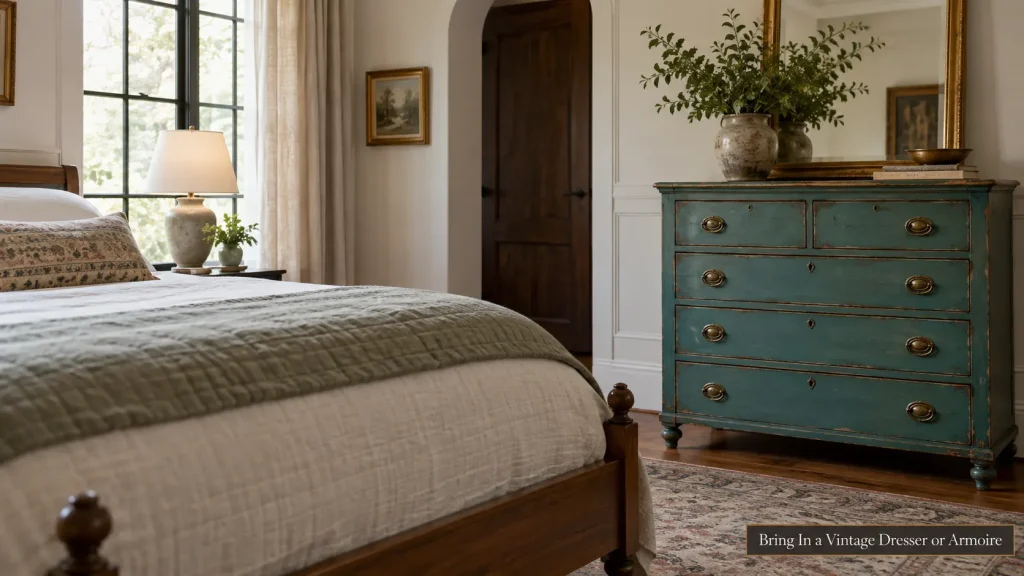
Bring In a Vintage Dresser or Armoire
A secondhand dresser or armoire can add a sense of history and character alongside newer pieces.
Look for solid wood pieces with drawers that slide smoothly. A worn finish can be cleaned and waxed, or the piece can be painted to suit your room. New knobs can also make a big difference.
Tall dressers and armoires can tip, especially when drawers are pulled out. Use an anti-tip kit and wall anchors suited to your wall type, and follow the manufacturer’s instructions where they’re available.
Create a Dressing Table Corner
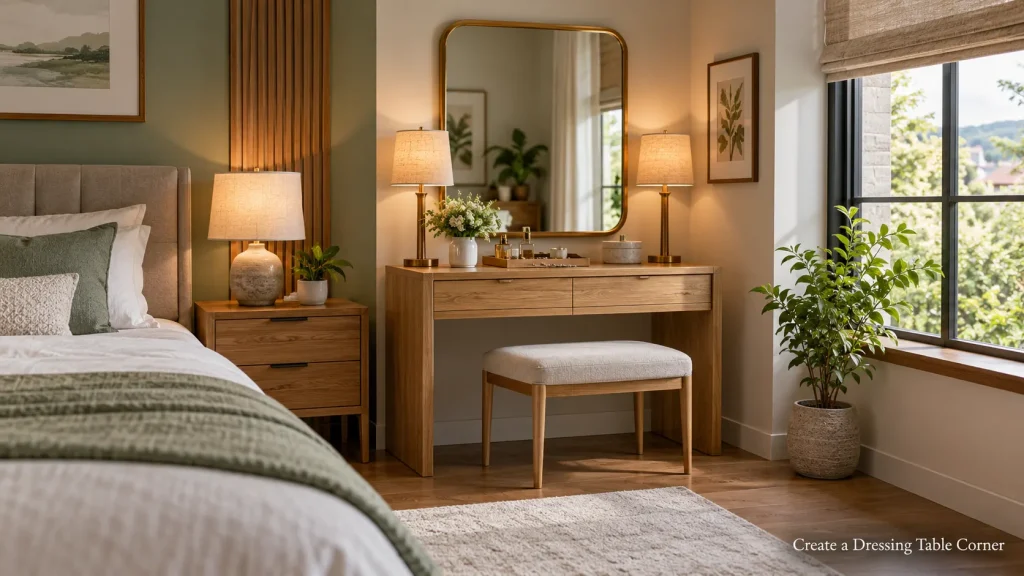
A vanity or dressing table gives you a dedicated spot for getting ready, away from the bathroom.
A simple table with a mirror above, a comfortable stool, and a small lamp is all you need. Trays and small boxes keep makeup, skincare, or jewelry tidy. If you don’t have much space, a wall-mounted shelf with a fold-down mirror can work as a mini version.
Place it near a window if you can, since natural light makes getting ready easier. In the evening, lamps on both sides of the mirror can give more even light than a single fixture overhead.
Give One Corner a Job
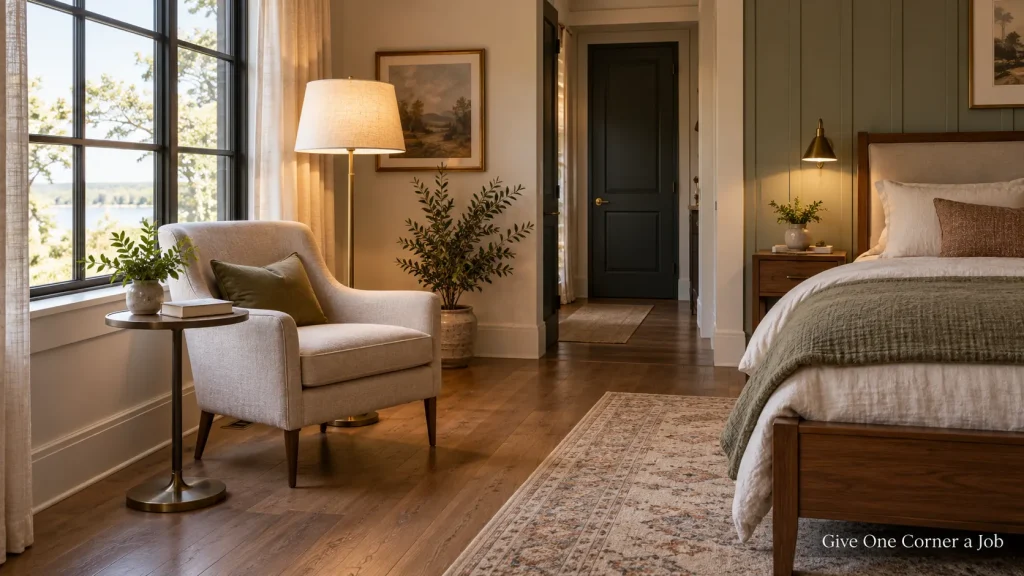
Many bedrooms have an empty corner that never quite gets used. Turning it into a place to sit, other than the bed, makes the room more useful.
Start by measuring the space. A slim armchair needs less room than you’d expect, but there should still be space to walk past without bumping into it. A corner by the window is often the nicest spot, since daylight makes reading easier.
Test the chair before buying if possible. Seat depth and back height matter more for comfort than looks, and a chair you only perch on for a minute won’t get used.
Use Bookshelves as Decor
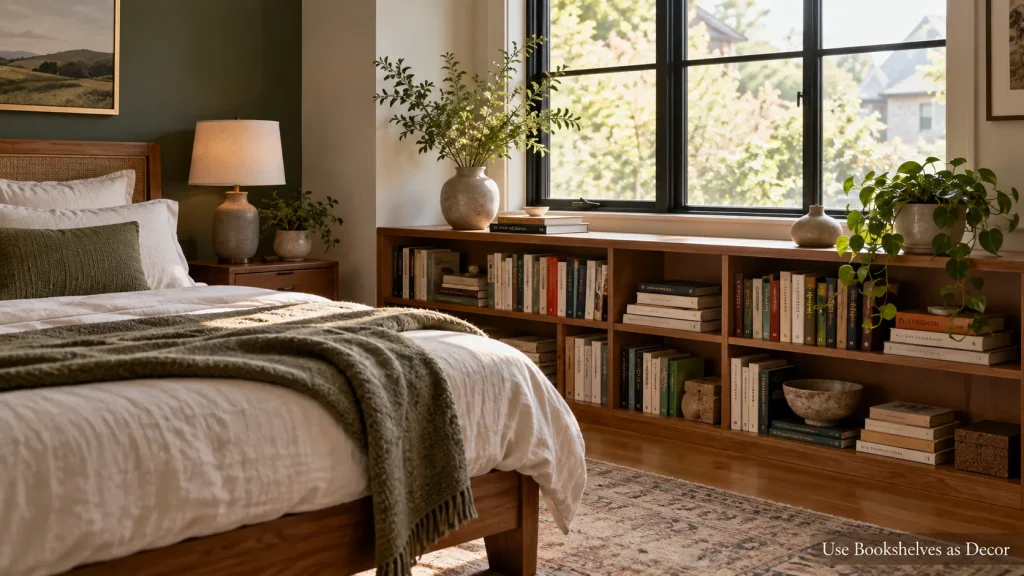
If you love books, a bookshelf can be one of the most personal pieces in a bedroom.
A low bookcase under a window or a tall, narrow one beside the bed adds color and texture. Stacking some books flat and standing others upright, with a plant or a small object here and there, keeps it from looking like storage. As with any tall furniture, secure it to the wall with suitable anchors.
The Personal Touches
These ideas make the room yours.
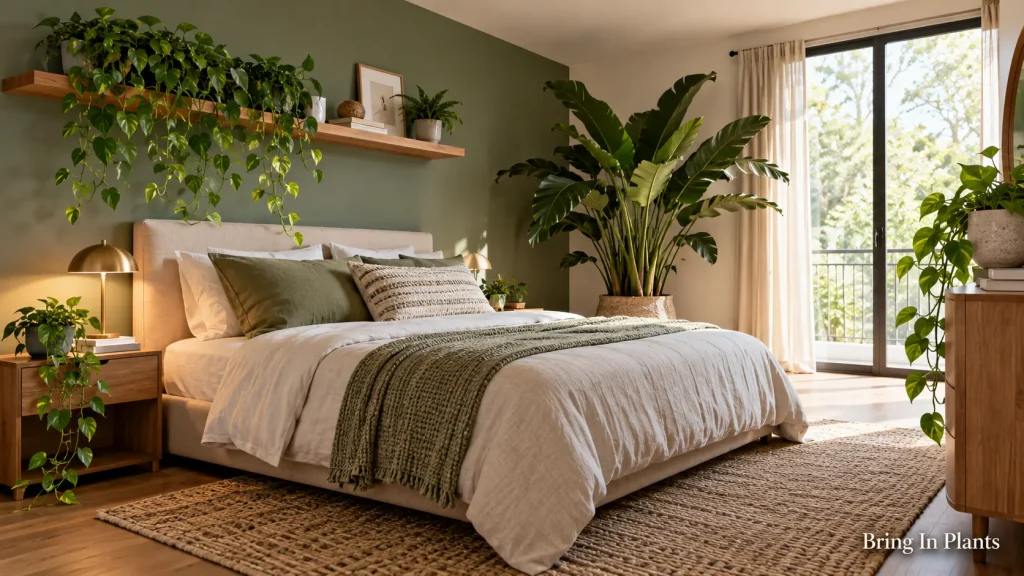
Bring In Plants
Plants soften a bedroom and add life. Pothos, snake plants, and ZZ plants can tolerate lower light than many houseplants, though they still need some natural light to grow well.
A large plant in a corner, a trailing plant on a high shelf, or a small pot on the nightstand all work. If you have pets, check whether a plant is safe for them before bringing it home, since some common houseplants can be toxic to cats and dogs.
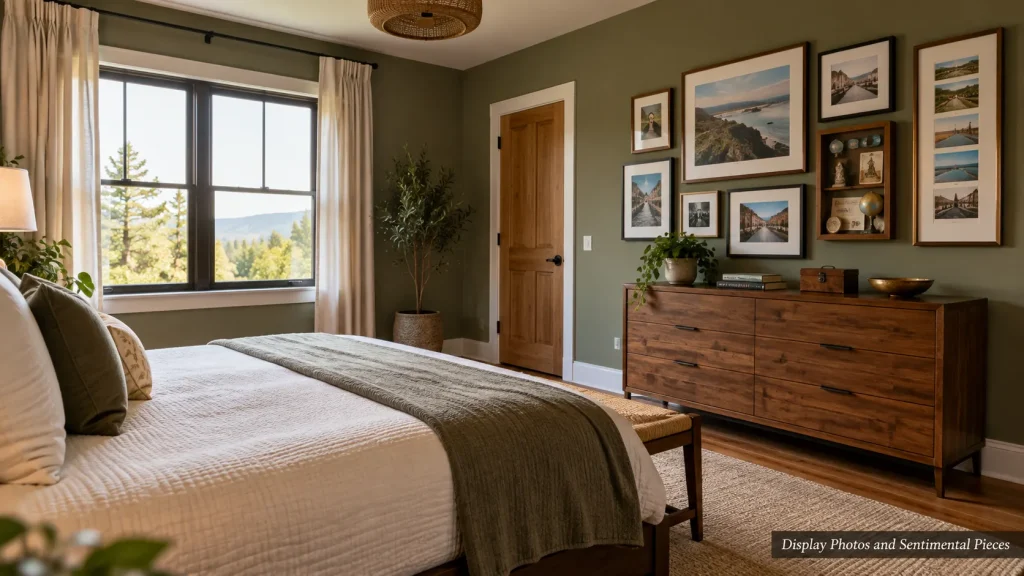
Display Photos and Sentimental Pieces
A bedroom is a private space, which makes it a lovely place for personal photos and keepsakes.
A small gallery of family photos on the wall opposite the bed, a shadow box holding a meaningful object, or a few framed postcards from favorite trips all add warmth. Matching frames keep a gallery looking tidy, while mixed frames look more relaxed.
Personal pieces like these are what turn bedroom decor from something that looks nice into something that means something.
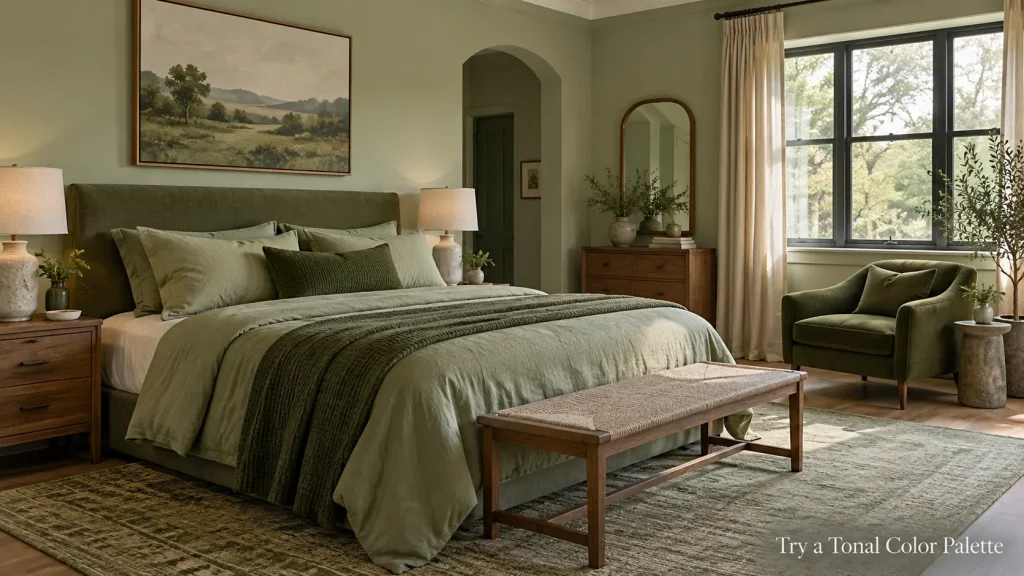
Try a Tonal Color Palette
Using one color family in several shades across walls, bedding, curtains, and accessories can make a bedroom look pulled together.
The key is variation in lightness. Pick a light, a medium, and a darker shade of the same color, then spread them around the room. For example, pale sage walls, mid-green bedding, and a deep olive cushion or chair. Without that range of shades, a single-color room can look washed out.
This approach to bedroom decor is also forgiving when you shop. Since everything belongs to one color family, new pieces tend to fit in without much planning.
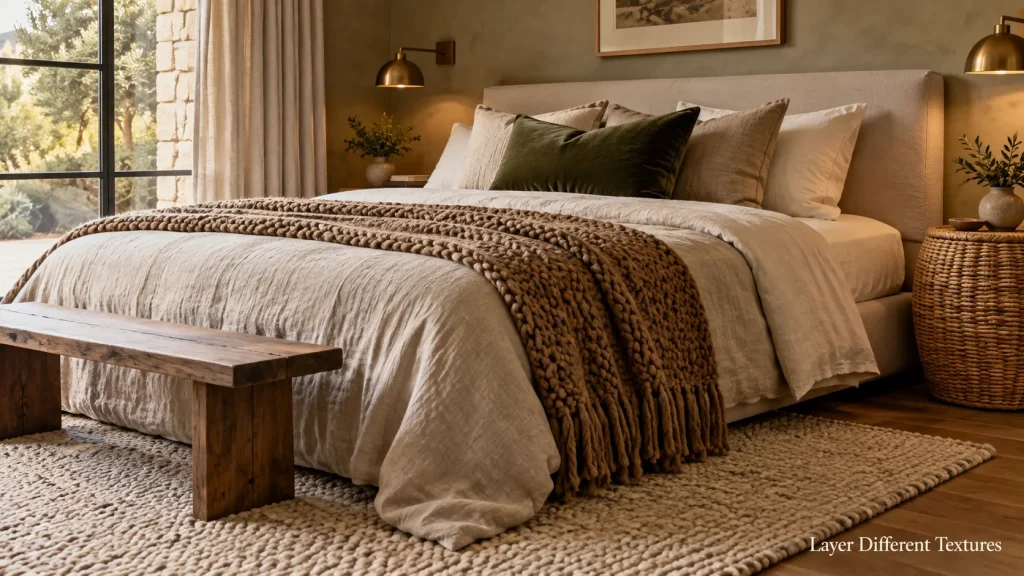
Layer Different Textures
Texture adds warmth without adding more color. Think rattan baskets, a linen duvet, a chunky knit throw, a velvet cushion, or a wool rug.
A good mix usually includes something smooth, something rough, and something soft. This works especially well in neutral bedrooms, where texture does the job that color would do elsewhere.
An easy test is to look at the bed. If the sheets, duvet, and pillows are all the same smooth cotton, swapping just one layer for a knit throw or a linen cover is often enough.
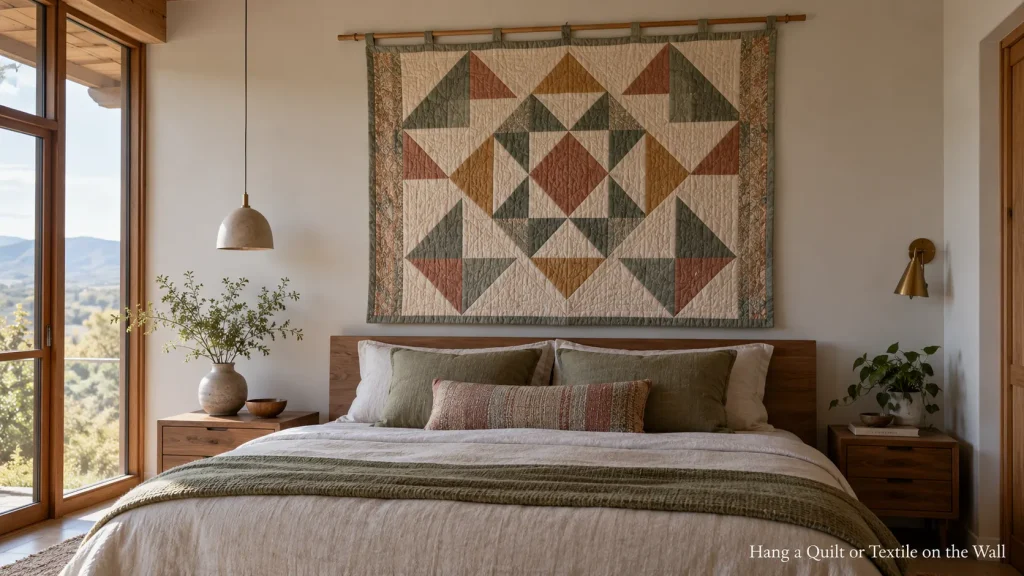
Hang a Quilt or Textile on the Wall
A quilt, woven hanging, or piece of embroidered fabric on the wall adds pattern and softness in a way framed art can’t.
Family quilts, travel textiles, or handmade pieces work especially well, since they bring a story with them. A wooden dowel slipped through a fabric sleeve sewn on the back is a simple way to hang most pieces. For delicate or valuable textiles, keep them out of direct sunlight, which can fade fabric over time.
Questions About Bedroom Decor
How do I decorate a bedroom with very little budget?
Start with paint, since it changes the look of the room for relatively little money. After that, rearranging furniture, restyling what you already own, and adding a plant or new pillowcases are affordable next steps.
How can I make a dark bedroom look brighter?
Use light wall colors, add a mirror opposite or near the window, and choose lighter bedding. Layered lamps at different heights help in the evening.
What size rug works under a bed?
Many people choose a rug that extends well beyond the sides and foot of the bed, so feet land on it when getting up. A rug that sits under the lower two thirds of the bed, leaving the nightstands on the floor, is a common setup.
How do I make a small bedroom look less cramped?
Wall-mounted nightstands and lights free up floor space, and a bed with drawers underneath can replace a separate dresser. Keeping a clear path around the bed also makes a small room easier to move through.
A Room Worth Coming Home To
Bedrooms often get decorated last, with leftover furniture and whatever bedding was on sale. Yet it’s the room you see first in the morning and last at night.
You don’t need to try all 17 ideas. Pick two or three that suit the way you want the room to look, start with whichever is easiest, and give the rest time. A bedroom that grows slowly usually ends up looking far more like the person who sleeps in it.